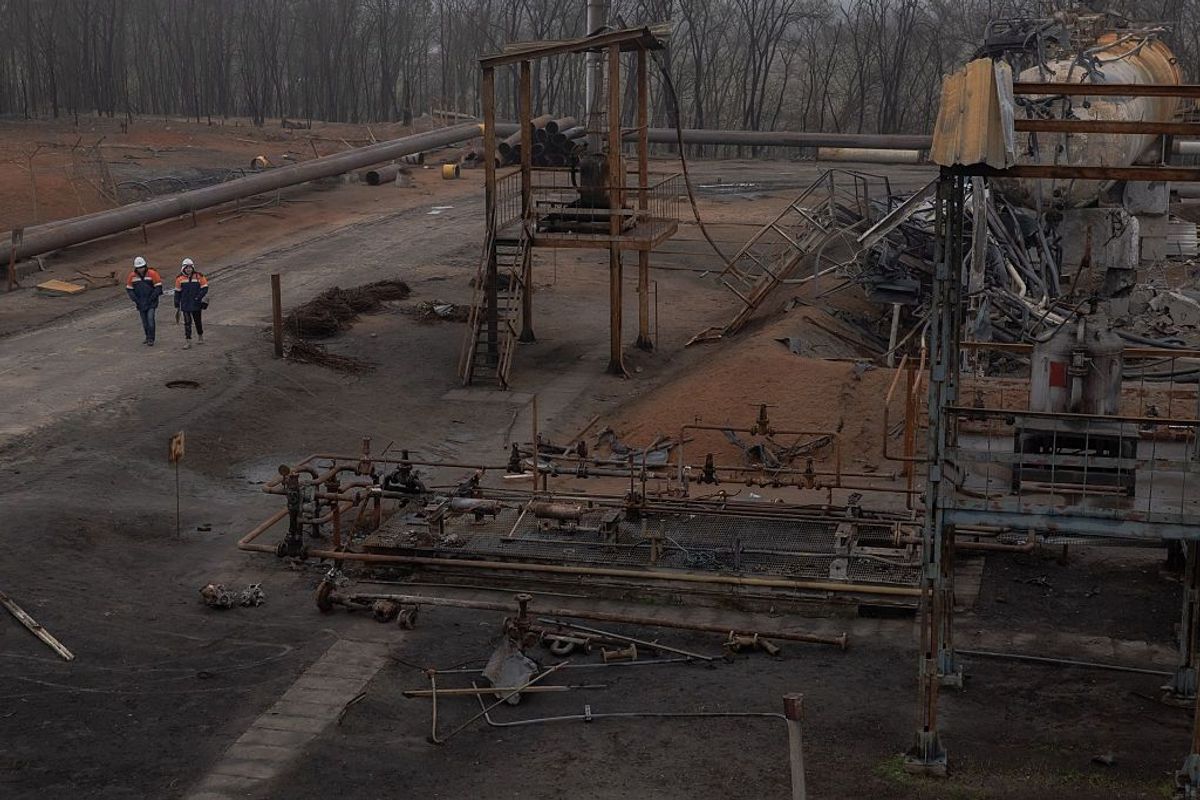
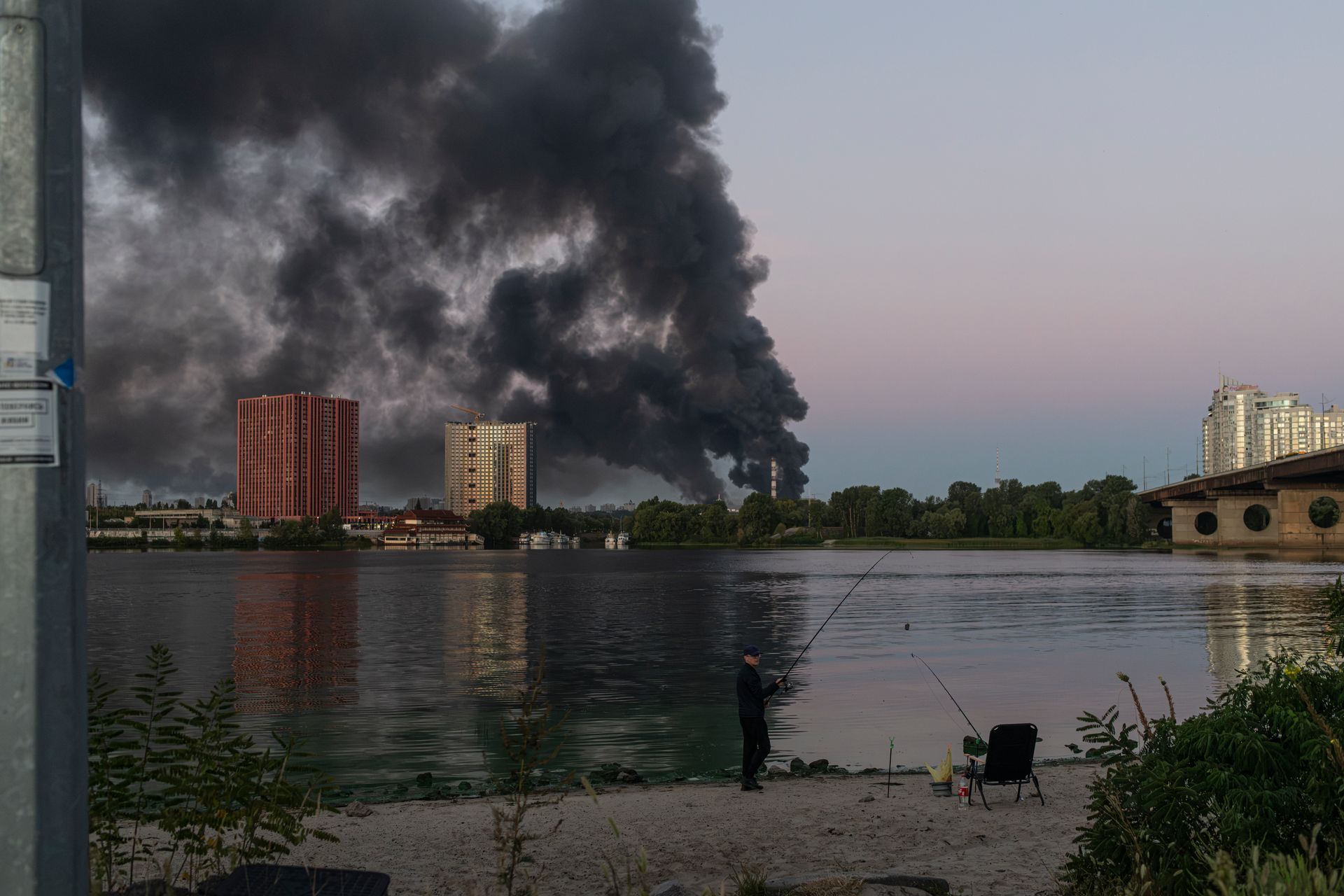
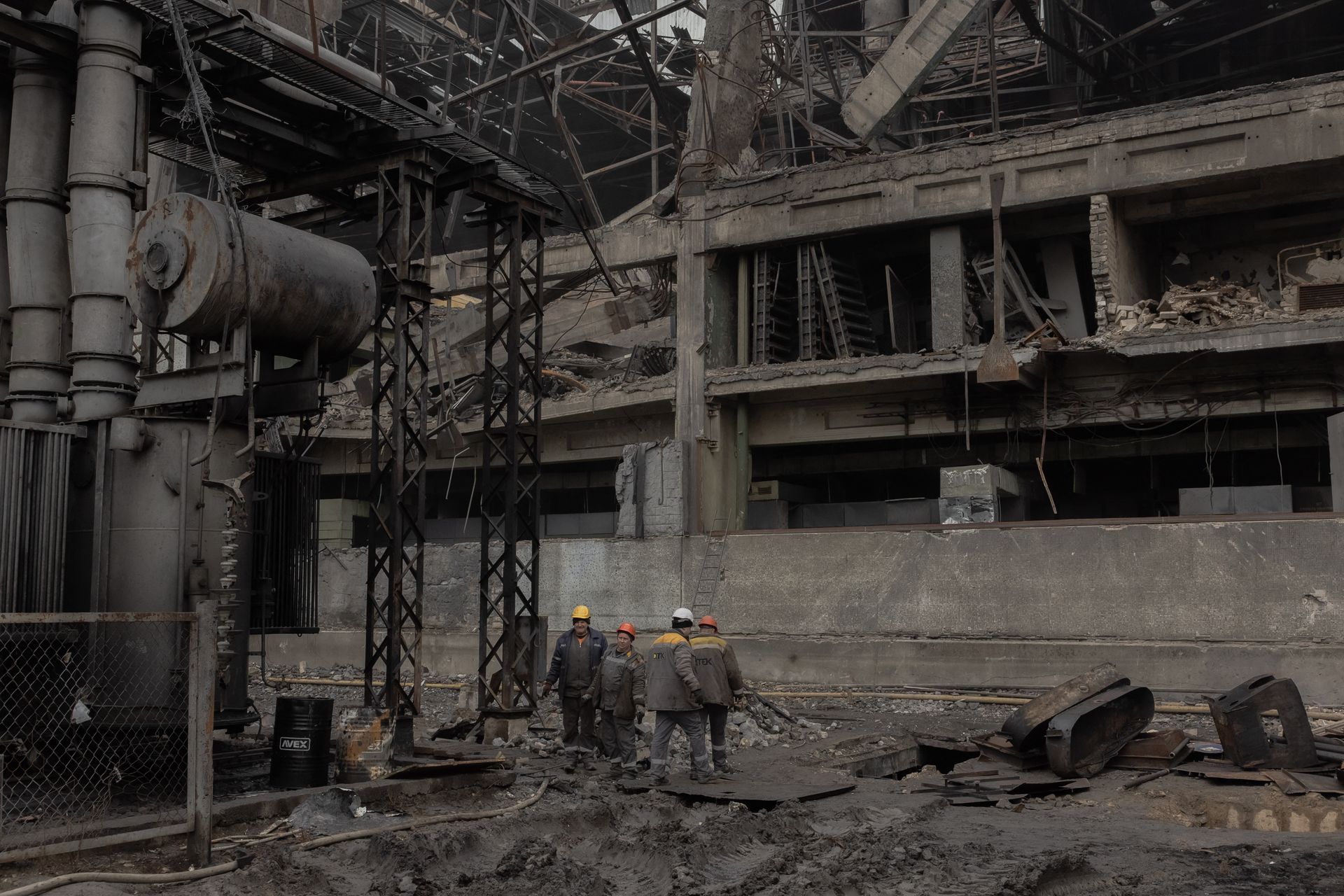
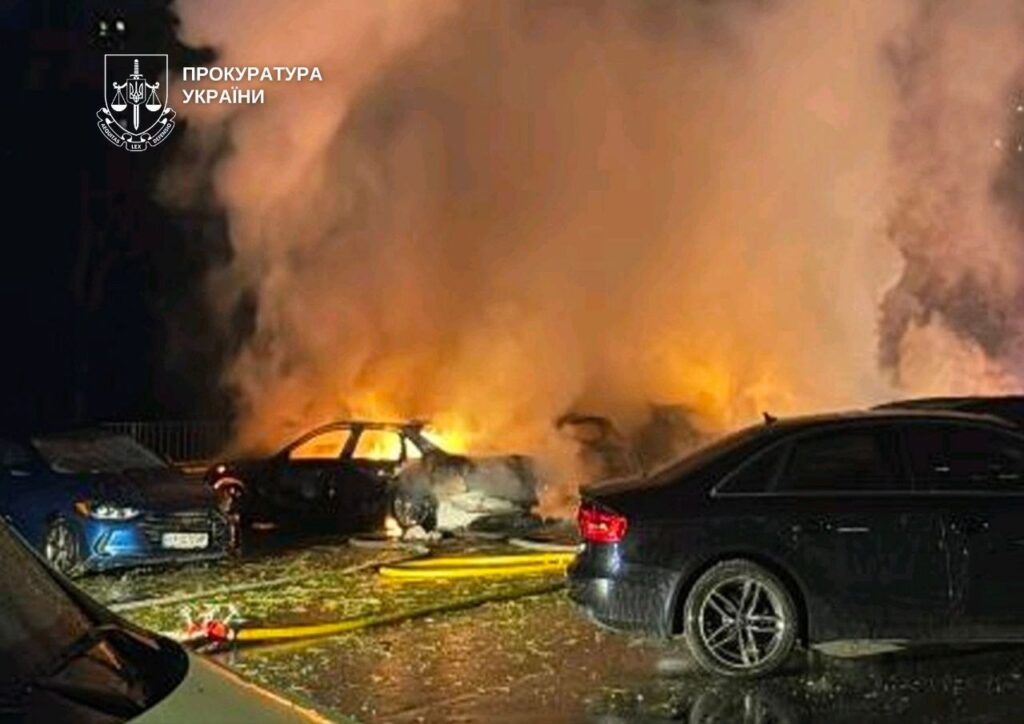
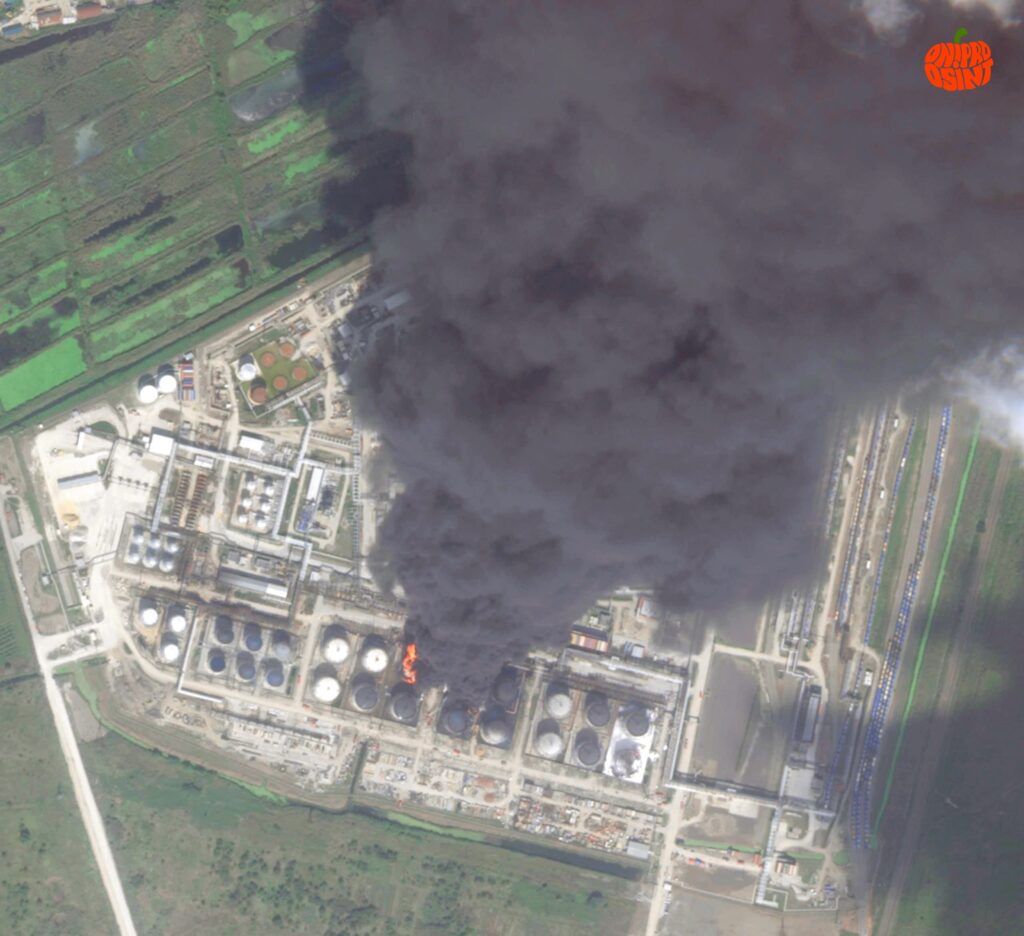
Russia hits gas production facility in Kharkiv Oblast, critical infrastructure in Dnipro, leaving 30,000 consumers without power


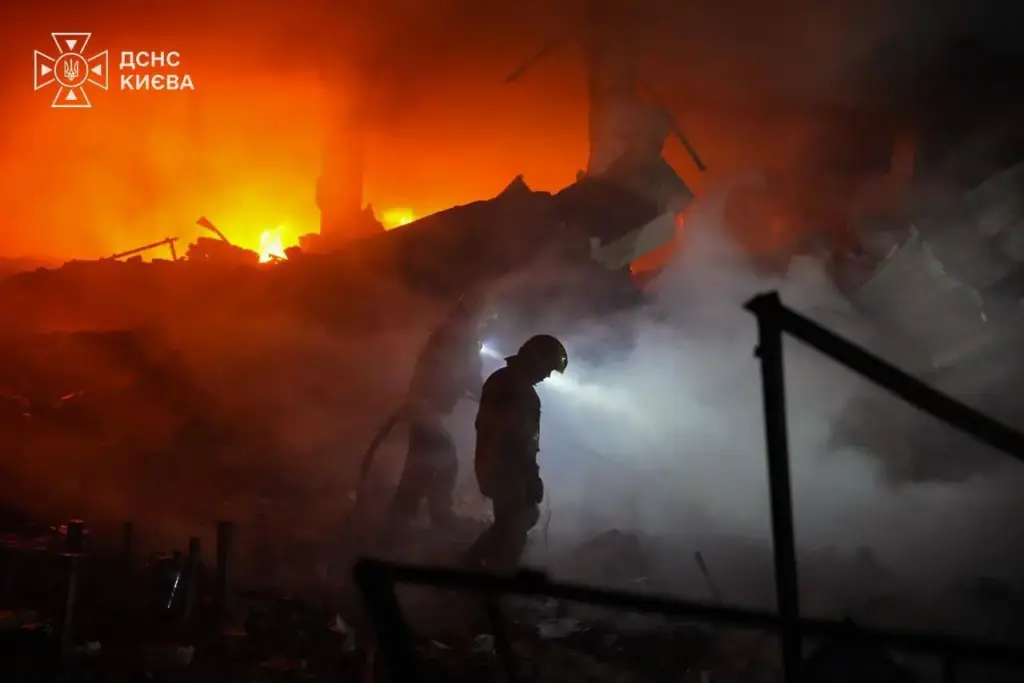
Russia attacked Kyiv with ballistic missiles in two waves overnight on 18–19 October. Information from partners did not arrive before the first wave, at around 23:00, Air Force spokesperson Yurii Ihnat said on national television. A warning came before the second wave, at around 03:00, but the window was short, he told NV.
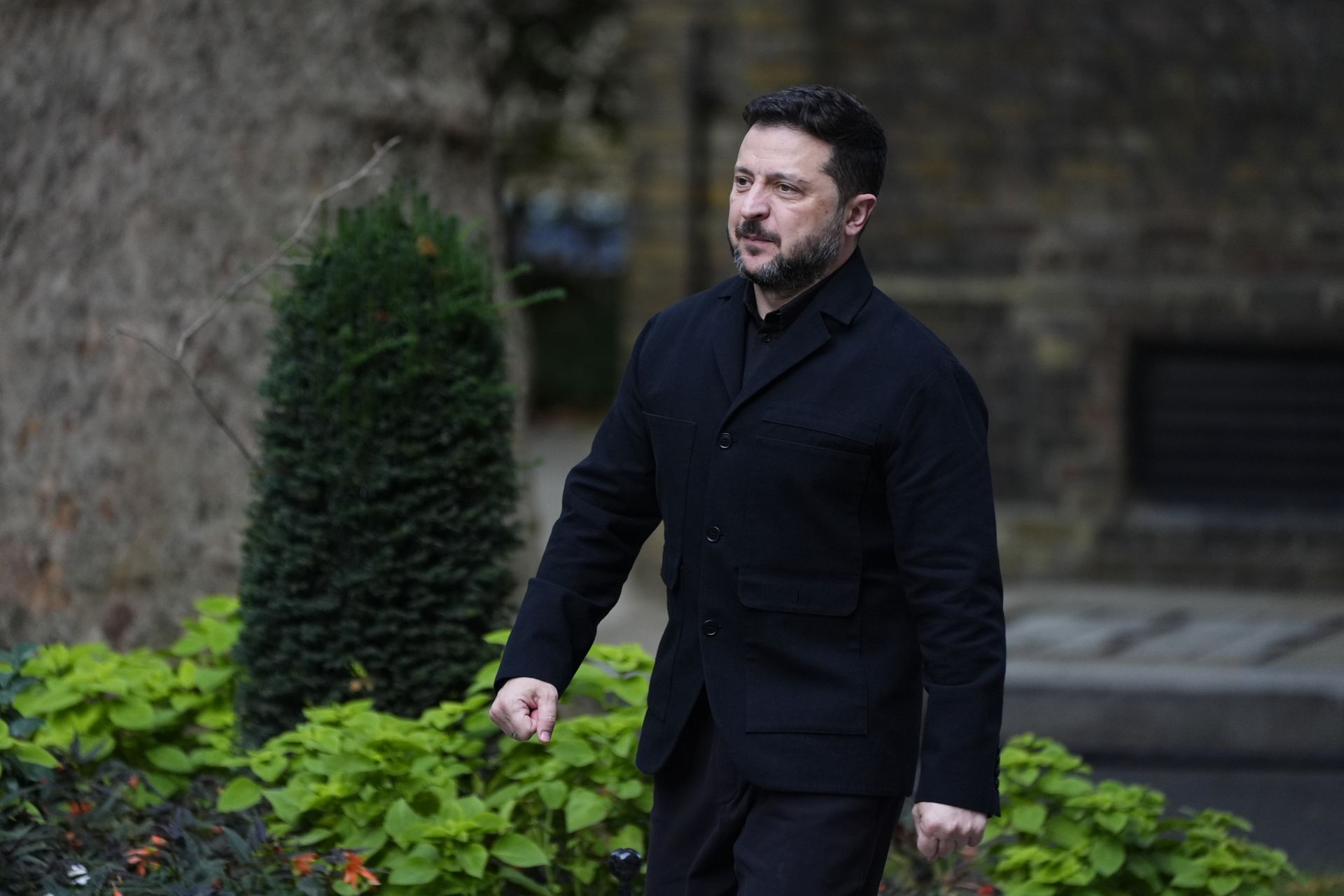
Hours earlier, Ukrainian President Volodymyr Zelenskyy told NBC that US warnings of Russian ballistic launches were working again after three days without them, and that only the United States has that intelligence. Those warnings have for years given Ukrainian authorities several minutes to sound alarms and let civilians reach shelters before ballistic missiles hit.
“Once again, a Russian ballistic attack in several waves overnight, and once again there was no warning from partners,” Zelenskyy wrote. It was at least the third ballistic strike on Kyiv in a week to begin without warning from partners, following attacks on 12 October and 13 October.
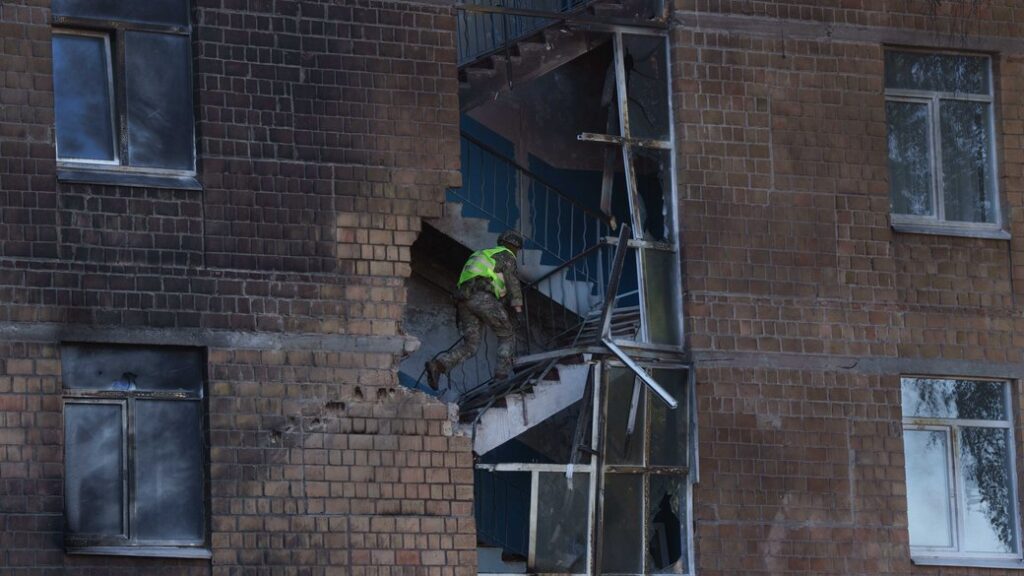
One person was killed and eight injured in Kyiv, Ukrainian Prime Minister Serhii Koretskyi said. A strike damaged a metro station on Kyiv’s left bank, and debris broke the rails beside it, Mayor Vitali Klitschko said. City authorities said the damaged station was above ground, closed Chernihivska and Lisova stations, and said red-line trains would run only between Akademmistechko and Darnytsia. The attack also damaged a 25-story building, a medical facility, and the Cosmo Multimall shopping center in the Solomianskyi district, NV reported, and Zelenskyy said a school was hit too.
The attack also damaged one of Ukraine’s main ice arenas, on Shalett Street in Kyiv, which hosts Ukrainian championship hockey games and youth training, hockey Telegram channel Flamingo reported. Parts of the facade, metal structures, and roof were damaged, but the ice surface showed no significant visible damage, according to preliminary information, Suspilne reported.
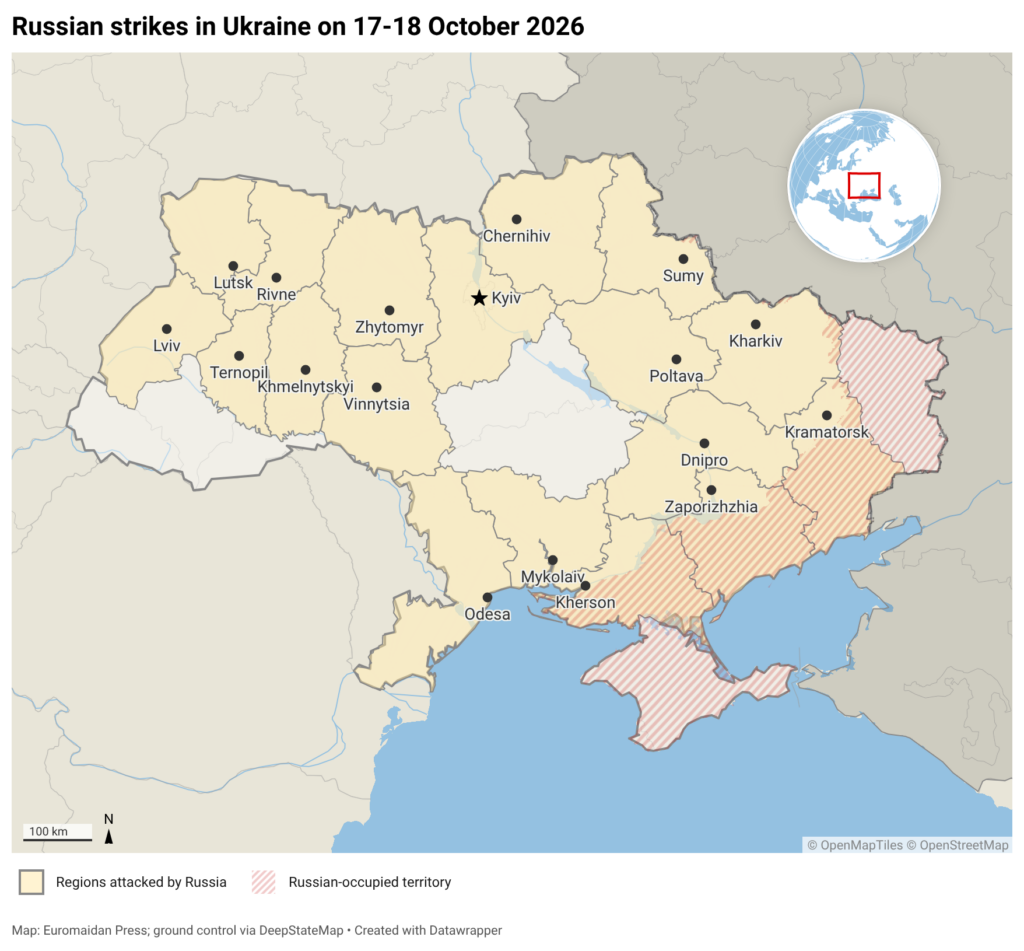
Koretskyi said energy and infrastructure were the main targets, with damage in 11 oblasts. Russia also hit warehouses of medicines, railway stations, shops, and homes, he said. In Kyiv Oblast, Russian strikes injured six people in Irpin, including three children, and three more were missing, oblast head Tymur Tkachenko said. In Kharkiv Oblast, six people were injured, including two children, Koretskyi said. In Rivne Oblast, four people were injured, and one of them was hospitalized, regional police reported.
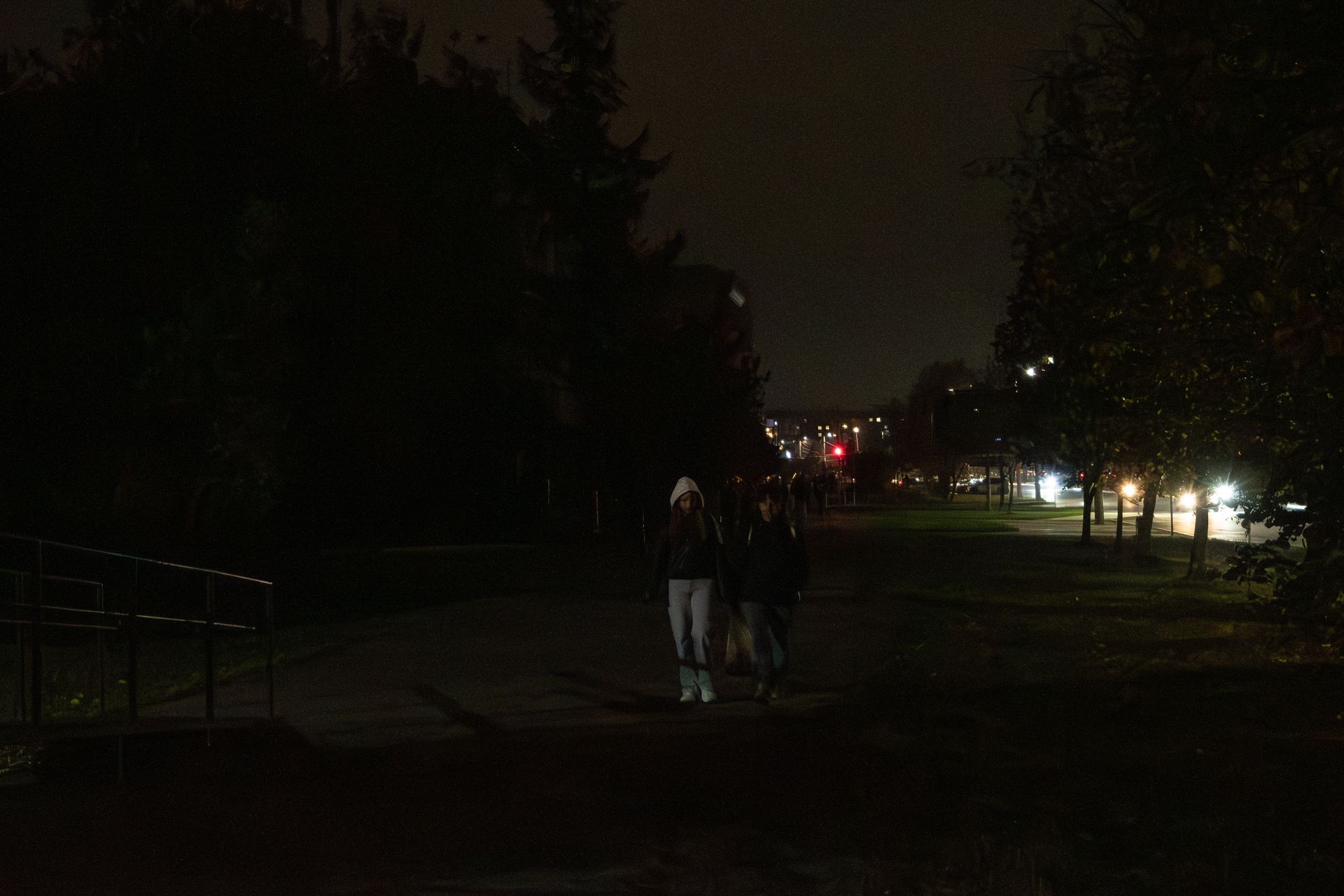
Zelenskyy said that more than 10 energy facilities were damaged and at least 550,000 families lost power. Ukrenergo reported new outages in 10 oblasts: Volyn, Zhytomyr, Rivne, Ternopil, Khmelnytskyi, Vinnytsia, Kirovohrad, Kharkiv, Odesa, and Mykolaiv. In Volyn Oblast, about 15 jet-powered Shahed-type drones targeted the region, and around 66,000 customers were without power on the morning of 19 October, oblast head Roman Romaniuk said. Kovel, Manevychi, and Lutsk were hit hardest, and no casualties were reported. In Vinnytsia Oblast, a critical infrastructure facility in Koziatyn was damaged, and power there would stay unstable for some time, city council secretary Iryna Repalo said, Suspilne reported.
Zelenskyy said Russia fired 16 ballistic missiles at Kyiv and Kyiv Oblast. The Air Force reported that Russia also used Iskander-K cruise missiles and 269 drones, and that by 09:00 air defenses had shot down or suppressed four Iskander-K cruise missiles and 243 drones. Its preliminary count did not list any ballistic missiles among the intercepted targets.
On 19 October, Rubio told reporters in Samarkand, Uzbekistan, that “there’s been no pause” in intelligence-sharing with Ukraine, Reuters reported. He said he did not know where Zelenskyy was getting such claims and that he should focus on ending the war. He also said he did not know whether a failure had happened the previous night, but that a few nights earlier there had been a software problem with “their early warning system,” and that US European Command was looking into the strikes, The Guardian reported. US officials had not mentioned a software glitch before, and in at least one case Ukraine was told that bad weather over southern Russia had hidden launch preparations, the newspaper noted.
Ihnat said Ukrainian specialists and their partners were working to establish why information about the first launch had not arrived. He added that similar gaps had occurred during earlier attacks.
Zelenskyy wrote that when missile supplies for Ukraine’s air defense are blocked while Russia gets sanctions relief or delays, “this is, unfortunately, a denial of reality on the part of partners.” A night earlier, Russia had hit Ukraine’s energy system again, while Ukrainian drones set fire to St. Petersburg’s oil terminal despite Washington’s pressure to stop refinery strikes.

Key developments on Oct. 17-18

Russia has kept striking Ukraine’s energy sector throughout the week since US President Donald Trump announced an energy ceasefire, Ukrainian President Volodymyr Zelenskyy said on 18 October. From overnight into Sunday, Russian drones and a ballistic missile hit substations, homes, and industrial sites from Odesa to Volyn. They killed civilians and left tens of thousands of families without power.
Russia fights along the front line while hitting cities and the grid behind it with drones, missiles, and glide bombs. Ukraine says Moscow plans up to 1,000 such munitions against 60 key infrastructure sites this winter, and jet-powered drones partly free it to concentrate missiles on fewer targets, the Institute for the Study of War assessed. With Graham Act penalties on hold and US sanctions on Russian diesel suspended, Russia faces no new US cost for its strikes on Ukraine’s grid. Protecting and restoring the grid falls to Ukraine’s air defenses and repair crews.
Zelenskyy counted 76 deliberate Russian strikes on energy and oil-and-gas facilities since Trump’s announcement. Overnight, Russia hit substations in Vinnytsia, Zhytomyr, Khmelnytskyi, and Odesa oblasts, he said. In the past week, Russia fired almost 2,700 attack drones, 1,700 aerial bombs, and 66 missiles, most of them ballistic, mainly to cause a blackout. His message was aimed at Washington.
“America must see that Russia is not taking steps in return for the lifting of sanctions or deals. On the contrary, they take every signal that they can make money as proof that their bet on war is working and they can keep fighting,” Zelenskyy wrote.
Overnight, Russia launched one Iskander-M ballistic missile and 180 Shahed-type drones, 26 of them jet-powered, the Air Force reported. Air defenses downed or suppressed 152 drones, but strikes hit 20 locations.
Strikes left about 24,000 consumers in Odesa Oblast without power, oblast head Oleh Kiper said. In Vinnytsia Oblast, the attack damaged critical infrastructure and forced emergency outages, oblast head Natalia Zabolotna wrote. Drones hit three energy facilities in Ternopil Oblast, one of them for the second time, and cut power to some consumers, oblast head Taras Pastukh said.

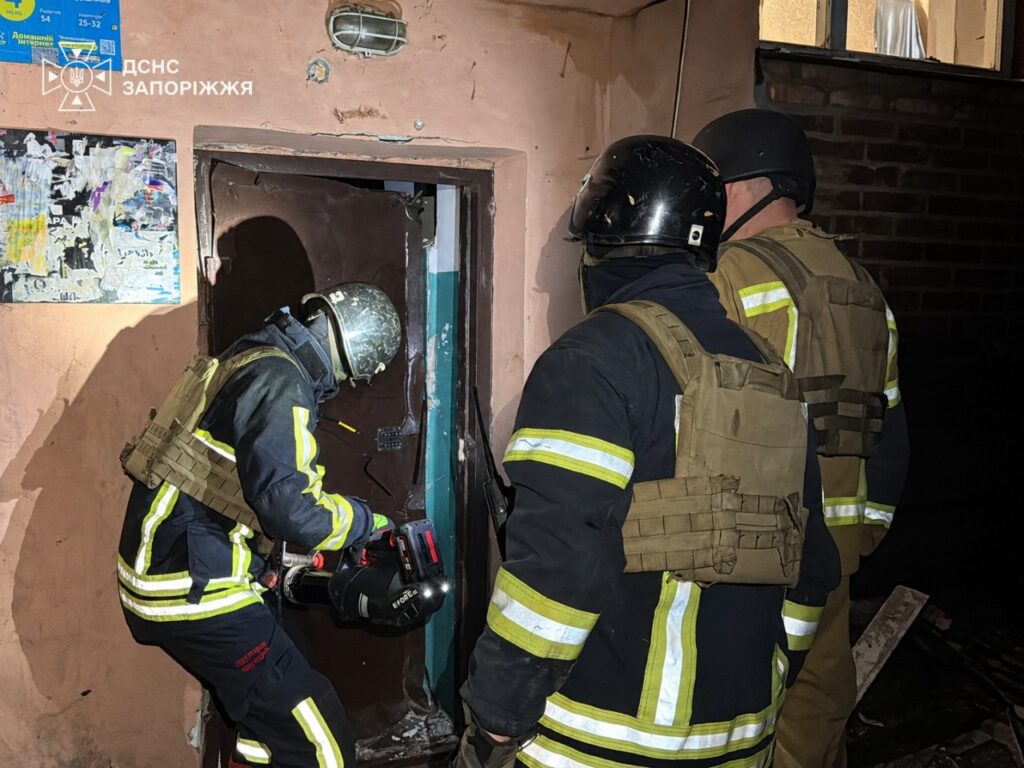
A Russian strike on Zaporizhzhia killed a 27-year-old woman and injured two others, including a 16-year-old, the State Emergency Service reported. In Poltava, an evening attack killed one person, injured four, and damaged 10 detached houses, city council secretary Kateryna Yamshchykova said.
A drone hit a high-rise in Odesa and set its roof on fire. A 13-year-old girl was hurt, city military administration head Serhii Lysak said, and Kiper put the number of injured at two.
In Dnipropetrovsk Oblast, Russian drones and artillery injured three people, oblast head Oleksandr Hanzha said. In Donetsk Oblast, Russian attacks killed seven civilians on Saturday, six of them in Sloviansk, oblast head Vadym Filashkin reported.
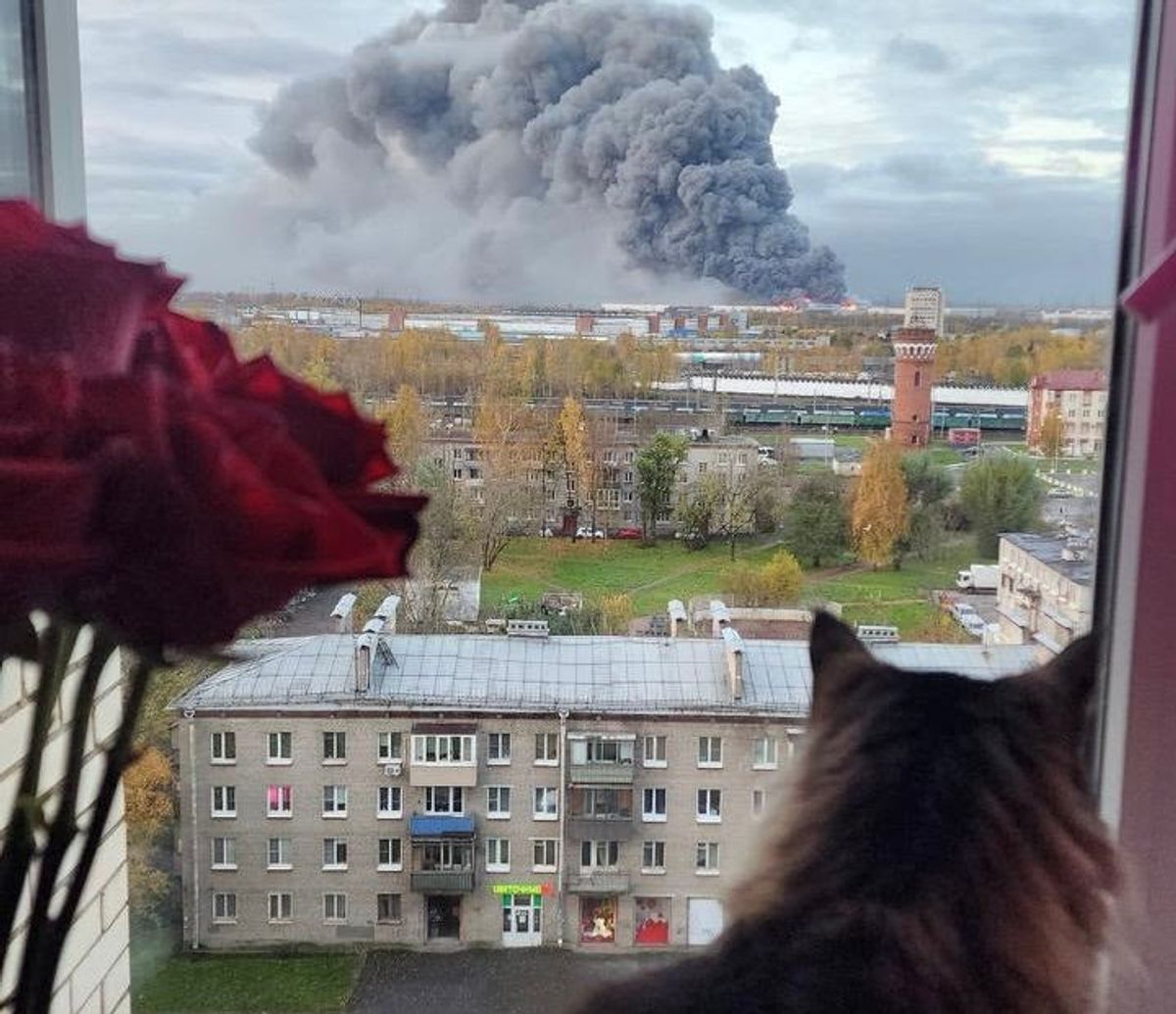
A morning drone strike set warehouse and production buildings ablaze at an enterprise in Manevychi, Volyn Oblast, oblast head Roman Romaniuk said. With heavy smoke blowing toward the town, Romaniuk urged residents to stay indoors, shut windows and doors, and switch off ventilation. A repeat strike set an enterprise in the district on fire again, the State Emergency Service said, adding that air tests found no dangerous concentrations outside the site. In Lviv Oblast, drone debris damaged a logistics warehouse and two houses, oblast head Maksym Kozytskyi said.

Polish military aircraft operated in Poland’s airspace twice during the attack, as the Government Security Centre warned residents of Lublin Voivodeship and later alerted Subcarpathian Voivodeship. In Lithuania, NATO jets failed to identify an object that apparently entered from Poland, Defense Minister Robertas Kaunas said.
Trump announced the energy ceasefire on 11 October, news that surprised Zelenskyy. A White House official said Russia was still weighing it. Hours later, Russia hit a Kharkiv power plant, and on 14 October it fired 39 ballistic missiles at the grid. Then Trump waived Graham Act penalties on buyers of Russian oil, and Secretary of State Marco Rubio said the administration wants 60 days to weigh the economic effects.

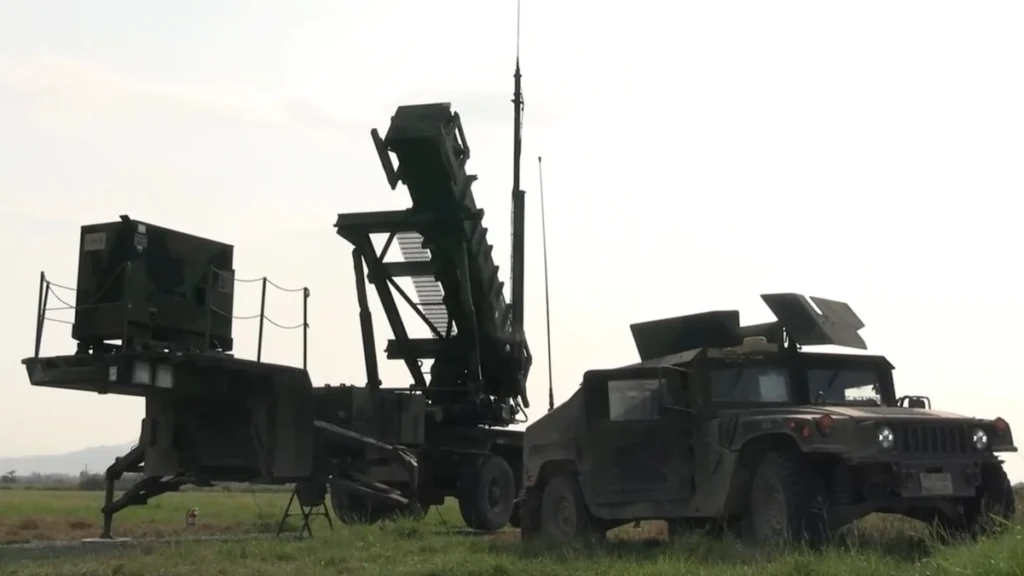
Ukrainian President Volodymyr Zelenskyy has disclosed that Kyiv offered to suspend attacks on Russian oil refineries in exchange for temporary American anti-ballistic missile protection for Ukraine’s energy infrastructure. Washington did not provide the requested systems, leaving Ukraine exposed to continued Russian missile strikes while the United States sought to restrict Ukrainian operations against Russia’s oil industry.
Speaking at a press conference in Brussels on Friday, 16 October, Zelenskyy said the proposal had been presented to Washington as a compromise following President Donald Trump’s agreement with Vladimir Putin on Russian diesel supplies and restrictions on attacks against energy facilities.
The Ukrainian president confirmed that Kyiv had not been consulted before Washington reached its understanding with Moscow. He described the diesel agreement as a surprise and objected to arrangements determining Ukraine’s military actions without its participation. Any agreement concerning Ukrainian strikes on Russian territory, he argued, required consultation with the Ukrainian government.
Nevertheless, Zelenskyy said Ukraine had been willing to accommodate American demands, even under an arrangement that did not require Russia to suspend its own attacks. Instead of insisting on reciprocal restrictions, Kyiv proposed receiving sufficient anti-ballistic missile systems to protect its electricity network for the duration of the requested suspension.
The proposal reflected Ukraine’s immediate security requirements. Russia has repeatedly targeted power stations, substations and other critical infrastructure, while Ukrainian forces have attacked Russian refineries to disrupt fuel production and reduce revenues available to Moscow. Halting the Ukrainian campaign without additional defensive capabilities would have left Kyiv surrendering one means of economic pressure while remaining vulnerable to Russian bombardment.
Zelenskyy said he had asked Washington for a limited number of systems, rather than a substantial new military commitment. The proposed deployment would have lasted only as long as the United States required Ukraine to refrain from attacking Russian refineries. However, according to the president, no such assistance was provided.
The disagreement follows the diesel arrangement announced by Trump on 9 October, under which Russia agreed to resume substantial petroleum product exports to American and international markets. Washington also authorised certain transactions involving Russian diesel, easing restrictions previously intended to reduce Moscow’s energy revenues.
The agreement created a direct conflict between American energy policy and Ukraine’s strategy of targeting Russian refining capacity. Washington wants additional diesel supplies to ease pressure on fuel markets, while Kyiv regards attacks on oil infrastructure as a means of weakening Russia’s ability to sustain its invasion.
That disagreement intensified after Ukraine resumed attacks on Russian refineries, including a strike against a facility in the Ryazan region. Trump criticised the operations, accusing Kyiv of contributing to higher global oil prices. Zelenskyy, meanwhile, argued that increased Russian diesel revenues would provide Moscow with additional resources to finance its military campaign.
The Ukrainian president’s proposal also exposed the limitations of the temporary energy ceasefire promoted by Washington. Russia continued attacks against Ukrainian civilian infrastructure, including electricity facilities, despite the American initiative. Kyiv’s proposed compromise would have addressed the resulting imbalance by providing defensive protection rather than relying on Russian restraint.
The urgency of Ukraine’s request was illustrated by renewed Russian attacks during Zelenskyy’s visit to Brussels. According to the Ukrainian presidency, strikes on 15 October damaged energy infrastructure in several regions, leaving almost 15,000 people without electricity in Volyn and disrupting supplies in parts of Kyiv and the surrounding region.
Ukraine continues to face shortages of the interceptors required to defend against ballistic missiles. Zelenskyy has identified anti-ballistic capabilities as an immediate priority, particularly as Russia intensifies attacks ahead of winter. During talks with NATO Secretary General Mark Rutte, he stressed the need for additional missile interceptors and other air defence equipment.
The president also raised these requirements during Friday’s meeting with European Commission President Ursula von der Leyen and European Council President António Costa. Discussions covered air defence, protection of energy infrastructure and financial assistance needed to sustain Ukraine’s resistance to Russian aggression.
Zelenskyy said European leaders had supported Ukraine’s position in the dispute with Washington. His remarks came as the EU reaffirmed its intention to maintain economic pressure on Moscow despite the Trump administration’s decision to facilitate Russian diesel exports.
As EU Today reported earlier on Friday, von der Leyen and Costa rejected any relaxation of European sanctions while Russia continues its war. The Commission is preparing a further sanctions package, maintaining a policy intended to restrict Moscow’s ability to finance its military operations.
The contrasting American and European positions have become increasingly significant for Kyiv. Washington is seeking to stabilise fuel markets through arrangements with Moscow, while European governments remain committed to reducing Russian energy revenues and strengthening Ukraine’s military and economic resilience.
For Zelenskyy, the unresolved question is whether Ukraine can be expected to limit attacks on Russian oil infrastructure while receiving neither reciprocal guarantees from Moscow nor additional protection against Russian ballistic missiles. His account of the unsuccessful American negotiations indicates that Kyiv was prepared to compromise, but only if its immediate defensive needs were addressed.


US President Donald Trump called Ukraine’s renewed strikes on Russian oil refineries a disgrace in an interview with Newsmax and questioned President Volodymyr Zelenskyy’s will to settle the war on 15 October. His statements came after he made a deal with Russian President Vladimir Putin to allow Russian diesel back into the US ahead of the mid-term elections in the US.
Kyiv says its long-range strikes have knocked out more than half of Russia's refining capacity, one of the few levers it controls on Moscow's war income, according to Ukraine's Defense Ministry. This is part of efforts to reduce the aggressor's capabilities to launch assaults, including the latest, during which four Russian regions fired 39 Iskander-M, North Korean KN-23, hypersonic Zircon, and supersonic anti-ship cruise Oniks missiles, Zelenskyy said.
Earlier, Zelenskyy said that Ukraine stopped refinery strikes for three days to meet US wishes after Trump announced an “energy ceasefire” on 11 October. At the same time, Russia struck a Kharkiv heat-and-power plant within hours of the announcement, he emphasized.
Meanwhile, in the interview with Newsmax, Trump said Zelenskyy is only pushing world oil prices higher.
“Well, I think that’s a disgrace,” he said.
He added that Ukraine has other options: “There are a lot of targets that you can hit.”
At the same time, Trump didn't say a word about Russian strikes on Ukraine's civilian buildings and power infrastructure ahead of the winter.
The US leader said he is “not a big fan” of Zelenskyy. He claimed both sides “would like to see it end,” but that he finds Zelenskyy “more difficult to deal with than Putin.”
He also said that he believes the depletion of US ammunition stockpiles is linked to the aid provided to Ukraine under the Biden administration, rather than the war with Iran.
Ukraine has repeatedly offered to help the US counter Iranian drones during the operation. The New York Times reported that a Ukrainian team departed the day after the US made such a request.
Nevertheless, despite Kyiv’s offers and actions, Trump once again compared Zelenskyy to P. T. Barnum, the 19th-century American circus showman, saying that he received a tremendous number of Patriots and Tomahawks.
However, there is no public confirmation that Tomahawk missiles were transferred to Ukraine during the Biden administration.


Russia has found a way to cut Ukraine’s power lines that no repair crew can undo. A unique power transmission tower that a Russian drone cut down at the Dnipro River crossing in Kyiv cannot be restored, Ukrenergo board chairman Vitaliy Zaichenko says, as the grid operator rushes to build alternative ways to keep electricity flowing, Interfax reports.
Russia has spent the war trying to switch off Ukraine’s lights. Now, it is widening the campaign before winter with a new tactic: drones that slice through the steel towers carrying high-voltage lines.
“Everyone has seen the video showing the destruction of one of the unique power transmission towers at the crossing over the Dnipro in Kyiv. It was severed, and it is impossible to restore it,” Zaichenko continues.
He adds that now the company is developing new technical solutions "on the fly, and very fast." It will start the procedures for those solutions from 15 October, he notes. Russia’s use of drones able to sever metal towers is a new and serious challenge for Ukraine’s power engineers.
Zaichenko did not say when the tower was hit. On 30 September, Russia first used a jet-powered drone carrying a 40-kilogram charge built to cut steel towers, and that evening an eyewitness filmed one striking a power line tower in Kyiv, which cut electricity in parts of three districts, Informator reported.
Rebuilding is colliding with a global shortage. Ukrenergo faces serious difficulties getting backup equipment, Zaichenko explains, because the whole world’s energy system is expanding at once and everyone needs the same hardware.
“There is a real problem with equipment. The global power system is expanding, and everyone needs energy equipment. There is a tough queue,” Zaichenko says.
Ukraine has faced such challenges since August 2026, when Russia began launching its jet-powered drones. Kyiv still has no effective solution against them and relies more on a mix of air defenses, such as automated turrets and interceptor drones.
Kyiv has also engaged over 100 private air defense system brigades to protect its enterprises in the ranks of the Ukrainian Air Forces.

Volleys of explosions deafened Kyiv in the early hours of Oct. 14, as Russia targeted multiple energy facilities powering the embattled capital amid a new campaign to isolate and disconnect the city following a brutal summer of relentless strikes on businesses and


The Ukrainian government on Tuesday night said that its access to the SpaceX-owned Starlink satellite internet service was throttled, prompting critics to question the wisdom of depending on any company owned by far-right billionaire Elon Musk. According to a Wednesday report in The New York Times, Ukrainian officials suspect that orders to restrict their access […]
The post Throttling Ukraine’s Starlink access heightens concerns over Musk appeared first on Asia Times.

Russian attacks have injured 1,125 Kyiv residents since the start of 2026. Of these, 379 people, or nearly 34%, were injured in just five weeks, from 27 August to 7 October, Tetiana Mostepan, director of the Kyiv City State Administration’s Department of Health, said in an interview published on 13 October.
Russian air attacks on Kyiv have intensified since late August. Air attacks occur both day and night, and Russian drones target not only military facilities but also civilian buildings, including apartments. As a result, the number of casualties is also increasing. More than 40% of emergency medical responses to attacks this year occurred between late August and early October, Mostepan noted.
During this period, the capital’s emergency medical teams responded to 782 calls related to the attacks, the department director said. She also released data showing that 138 medical facilities in Kyiv have been damaged since the start of Russia’s full-scale invasion, including 47 this year.
“And when we talk about statistics, I always emphasize that behind every number is a human life. These are people who have been injured, as well as medical workers who respond to attack sites to save them,” Mostepan said.

Russia attacked Kyiv with drones throughout the day, Suspilne Kyiv reported on 27 August. Air raid alerts were issued 12 times in the capital, drone debris was found in five districts, and at least four people were injured, the report said. Russian forces used about 140 attack drones against Ukraine throughout the day, more than 100 of them jet-powered, the Ukrainian Air Force reported at the time.
At least 38 people were killed and dozens injured in a Russian drone strike on an ammunition depot in the Bucha district near Kyiv, triggering a massive fire and hours of explosions in a residential area, CNN reported. The attack in the Bucha district came amid near-constant Russian airstrikes, which continued into Sunday, the outlet reported.
Russian forces were likely seeking to exhaust Ukraine’s air defenses, disrupt civilians’ daily lives, and increase the scale of destruction, analysts at the Institute for the Study of War (ISW) said, citing CNN’s reporting.
On 8 September, NATO Secretary General Mark Rutte stressed the urgent need to strengthen support for Ukraine, particularly by providing air defense systems. Delays in delivering assistance cost human lives, he said.
On 1 October, a Russian drone struck a school in Kyiv’s Solomianskyi district while 104 children were inside, Suspilne reported. Students and school staff took shelter, so no one was injured, the report said.

Following US President Donald Trump’s announcement of an energy ceasefire, Russia continued striking Ukraine’s energy infrastructure, including in Kyiv. On 13 October, Russian ballistic missiles struck Kyiv, hitting a thermal power plant in the second attack in 24 hours without advance warning from Ukraine’s allies, Zelenskyy said. The evening and morning strikes killed four people in Kyiv, three of them women in a high-rise in Desnianskyi district, Kyiv prosecutors said.

Russia attacked energy and critical infrastructure in Kyiv, Kyiv Oblast, and Kharkiv with 39 ballistic missiles and more than 120 attack drones, Ukrainian President Volodymyr Zelenskyy said on 14 October. At least 600,000 people were left without electricity, he said. Later that day, an accident on the grid cut power to part of Kyiv’s right bank, energy company DTEK said.
On Wednesday, Ukrainian President Volodymyr Zelensky confirmed that at least 600,000 people in Ukraine were left without power after a Russian missile and drone attack on energy and critical infrastructure.
RELATED:
Trump’s ‘Energy Ceasefire’ Claim Raise Tensions with Ukraine
The attack targeted Kiev, its surrounding region, and the eastern city of Kharkiv, causing significant damage to 26 power system facilities and four oil and gas sector facilities.
Kiev Mayor Vitali Klitschko said one person was killed and another injured in ballistic missile strikes against the capital’s energy infrastructure.
The Ukrainian Air Force said that Russia launched 128 drones of various types and 39 ballistic missiles in the attack. Ukrainian air defense intercepted 115 drones and four missiles, while several missiles failed to reach their targets. The impact of the attack was recorded at 22 sites, while debris from intercepted projectiles fell at eight locations.
🇷🇺 Another infrastructure facility is engulfed in flames following a Russian Geran drone strike, with before-and-after images revealing the scale of the fire.
— Super Poutine (@SPoutineFR) October 14, 2026
The footage shows the building before the attack, followed by flames rising above the complex. The exact location and… pic.twitter.com/5aDtjkwN6m
On Wednesday, the Russian Defense Ministry announced that its forces had struck seven Ukrainian energy infrastructure facilities and a data center in a massive overnight attack.
U.S. President Donald Trump wrote in a social media post on Sunday that “Effective immediately, there is an ENERGY CEASEFIRE in the War between Russia and Ukraine. Both parties have agreed. Do not break it!” But there is no sign either side is ready for such a ceasefire.
The U.S. aerospace company SpaceX introduced speed limits for Starlink terminals in Ukraine, Ukraine’s presidential advisor Serhii Beskrestnov said on Wednesday.
“Our defense forces received no warning of such a restriction, and this led to the disruption of a number of missions,” he said, suggesting that the move could be linked to the “current political situation.”
teleSUR/ JF
Source: Xinhua

Ukraine is drafting crisis scenarios for November to March as Russian strikes target the country’s biggest cities, Head of the Presidential Office Kyrylo Budanov said on 13 October after chairing a meeting with donor-country diplomats and humanitarian organizations. His deputy Iryna Vereshchuk warned the same day that this winter may bring a new type of humanitarian crisis. She asked donors to be ready with fast extra funding.
Russia has struck Ukraine’s grid deep into winter before: last February, it launched more than 500 missiles and drones as temperatures fell below −20°C. Strikes have continued despite a US-announced energy truce Moscow has not confirmed. Kyiv now wants donors ready to pay for the humanitarian fallout in advance.
The core task is clear crisis scenarios and synchronized response plans for that period, Budanov wrote. The government is building a baseline threat scenario through the State Emergency Service, while the military and intelligence will provide a risk assessment.
“The available resource must be concentrated where people will have the hardest time,” Budanov wrote.
Ukraine, he added, must hold its rear as reliably as the Defense Forces hold the front line.
A war of rear areas is underway, Vereshchuk wrote. Russia is changing tactics in an attempt to deepen the humanitarian crisis, especially in Kyiv, Kharkiv, Odesa, and Dnipro, she added.
Vereshchuk did not define what makes the crisis new, but she tied her warning to the big cities.
“This winter, it is the big cities that may become the testing ground of our national resilience,” she wrote.
Humanitarian organizations must adapt their plans to protect and support civilians, Vereshchuk wrote. Donors, she said, must be ready to provide additional crisis-response funding quickly.
Ukrainian President Volodymyr Zelenskyy wrote on 13 October that even border and frontline oblasts were ahead of Kyiv on resilience plans as of mid-October. Even single hits by Shahed attack drones can cut power and water across much of the capital, he noted. He also began consultations on urgent security and management steps to fix the situation in the city.
Russia carried out more than 200 strikes on Ukraine’s power generation and transmission in the week to 11 October, Zelenskyy said. Overnight on 14 October, Russia fired 39 ballistic missiles and more than 120 drones at energy and critical infrastructure. The barrage left at least 600,000 people without power, Zelenskyy said.

Russia fired 39 ballistic missiles and more than 120 drones at Ukraine’s energy system overnight into 14 October, President Volodymyr Zelenskyy said. The barrage came three days after US President Donald Trump announced an energy ceasefire, which the Kremlin never confirmed, saying on 12 October only that contacts were continuing.
Ukraine held off strikes on Russian energy for two days after the announcement, Zelenskyy wrote on 13 October. Russia’s barrage opened that evening with a ballistic strike on Kyiv. For the second time in two days, it came without a launch warning from partners.
The Air Force described one massive combined strike that began at 18:00 on 13 October. By 09:00 the next day, it had counted 39 missiles on ballistic trajectories and 128 drones, aimed mainly at Kyiv, Kyiv Oblast, and Kharkiv Oblast. Air defenses downed or suppressed four missiles and 115 drones, but missiles and drones hit 22 locations, the Air Force said.
The first wave hit Kyiv late on 13 October. Its primary target was CHP-4, a key power plant in the city, and there were hits, Zelenskyy said. Ukrainian systems spotted the missiles only on approach, with no warning from partners. After a call with Canadian Prime Minister Mark Carney, Zelenskyy wrote that Ukraine had not been warned for the second time. On 13 October, Trump said the US was still sharing intelligence with Ukraine.
A Russian strike also hit a high-rise in Desnianskyi district. Rescuers saved 16 residents, the State Emergency Service reported, and three women were killed there, the Kyiv City Prosecutor’s Office said. The prosecutor’s office counted 19 injured in the building, including a girl officials described as seven or eight, and five more hurt by shattered windows next door. Across Kyiv, the evening and morning attacks killed four people and injured 25, the prosecutor’s office said, while Suspilne counted 32 injured.

The second wave came early on 14 October and hit several of the capital’s energy facilities, Kyiv Mayor Vitali Klitschko reported. It killed one person in Holosiivskyi district, he added. Russia attacked all three of Kyiv’s combined heat and power plants and key facilities in Kyiv Oblast that power the capital, Prime Minister Serhii Koretskyi said. Energy company DTEK reported emergency outages in five Kyiv districts.
Zelenskyy reported damage to facilities and equipment at 26 elements of the power system and at four oil and gas facilities. At least 600,000 people lost electricity, he said, and outages could grow. He called the strike deliberate and said Russia had never before shown such demonstrative disrespect toward America.

He asked Trump for strong sanctions under the Lindsey Graham sanctions law, which he said was recently passed and signed. He also asked for additional Patriot interceptors.

Ukrainian forces hit 12 large Russian refineries in September, Ukraine’s Ministry of Defense said, according to ArmyInform on 12 October. The farthest on the ministry’s list, Lukoil’s refinery in Perm, lies about 1,500 kilometers from Ukraine’s border. Since Trump's 11 October announcement, Euromaidan Press has found no reports of new Ukrainian refinery strikes in the official and unofficial Ukrainian and Russian sources it monitors.
A refinery-for-refinery pause would limit Ukraine’s ability to disrupt Russia’s oil industry while leaving Moscow free to keep attacking Ukraine’s energy system, giving Russia an advantage in a war where both sides use energy infrastructure as a target. The issue has become urgent since Trump announced an “energy ceasefire” on 11 October, after which Ukraine reported holding off strikes on Russian energy facilities while Zelenskyy said Russia attacked several Ukrainian energy sites.
The campaign continued into October. Ukraine’s General Staff said Ukrainian forces struck the Samara oil pumping station overnight into 10 October, the third attack on the station that month, according to Radio Svoboda.
Zelenskyy said Ukraine had refrained from striking Russian energy facilities overnight on 11–12 October following Trump's announcement. Monitoring channels and official Russian sources did not report any new refinery strikes on 13 October.
“Last night, we did not attack any energy facilities on the territory of Russia because President Trump said that there would be an energy ceasefire,” Ukrainian President Volodymyr Zelenskyy said.
He added that Ukraine does not announce its next operational steps. Zelenskyy said Russia attacked six Ukrainian energy facilities on 12 October alone, according to Radio Svoboda.
A White House official told Axios that the proposal would begin with both sides halting attacks on oil refineries, with a possible agreement covering power plants to follow. Axios reported that Russia had not accepted a ceasefire.
The Institute for the Study of War (ISW) said the proposal, as described, would give Russia a major concession without offering Ukraine anything in return: Russia has scores of operating refineries, while Ukraine has one. ISW also said the proposal would allow Russia to continue its winter strikes on Ukrainian power stations.