Lawyers who represented Olympic canoeist David Hearn in a now-defunct criminal case alleging he vandalized the Lincoln Memorial Reflecting Pool are urging the Department of Justice’s (DOJ) internal watchdog to reconsider a probe into how the indictment and prosecution were handled. A letter sent Wednesday from Hearn’s legal team to Inspector General Don Berthiaume said…
Lawyers who represented Olympic canoeist David Hearn in a now-defunct criminal case alleging he vandalized the Lincoln Memorial Reflecting Pool are urging the Department of Justice’s (DOJ) internal watchdog to reconsider a probe into how the indictment and prosecution were handled. A letter sent Wednesday from Hearn’s legal team to Inspector General Don Berthiaume said…
Justices Clarence Thomas and Samuel Alito further distanced themselves from their Supreme Court colleagues on Wednesday when they were the only two jurists to note their objections to the court’s refusal to let the Trump administration immediately enforce its preferred policy on gender-affirming care in prison.
The court’s unsigned order contained no explanation from the majority or the dissenting duo. Still, it’s the latest data point showing Thomas and Alito backing the administration even when their fellow GOP appointees — including President Donald Trump’s own three appointees — decline to do so.
Wednesday’s order follows last month’s Supreme Court rejection of Trump’s desired mail-ballot restrictions for the midterm elections. That loss led the president to lash out at the court, including his own appointees, while calling Thomas and Alito “legends.”
Asked during a recently published CBS News interview about a Wall Street Journal study showing that Alito sided with Trump more than any of his colleagues, the justice said he’s “not trying to decide cases to help President Trump.”
Whatever his or Thomas’ intentions, their latest actions spotlight their dynamic of voting for the president’s position when other justices don’t. Their votes come ahead of the rapidly approaching Election Day in less than two weeks, with voters set to determine which party will control Senate confirmation of justices for the near future.
Alito said he’s staying on the court at least through this court term, even if Democrats win back Senate control. Thomas has likewise not signaled that he is stepping down imminently. If he stays on the court through the next term, he will become the longest-serving justice ever. In their late 70s, Thomas and Alito are the two eldest members of the current court, but they aren’t very old by the court’s historical standards.
Yet if Trump has an opportunity to appoint their successors or any other justices before he leaves office in 2029, their latest votes underscore why he will likely model his next selection(s) on them, rather than on the justices he has put on the bench thus far, who have backed him in a series of significant cases but not all of them.
Subscribe to theDeadline: Legal newsletterfor expert analysis on the top legal stories of the week, including updates from the Supreme Court and developments in the Trump administration’s legal cases.
The Supreme Court on Wednesday refused to allow the Trump administration to immediately enforce new medical restrictions for transgender people in prison. The decision leaves in place a lower-court block on the policy.
With Americans deciding the congressional balance of power in November’s midterm elections, Justice Elena Kagan is reminding the nation of how the Supreme Court’s decisions have shaped the ballot.
It’s an antidemocratic shape, according to the Obama-appointed justice’s remarks Tuesday at Catholic University’s law school in Washington.
Kagan said the court “has kind of blinded itself to the very deleterious effect of their rulings on how the political system works and has created a democracy that does not work as well as it should.”
Her off-bench comments reprised impassioned criticisms she has made in dissenting opinions from the GOP-appointed majority’s rulings on gerrymandering in 2019 and earlier this year on the Voting Rights Act and campaign finance.
In 2019’s Rucho v. Common Cause, the majority said partisan gerrymandering claims present “political questions” that courts can’t answer. Writing the dissent for what was then a four-justice minority, she said the case marked “the first time ever” that the court “refuses to remedy a constitutional violation because it thinks the task beyond judicial capabilities.”
Writing for the current three-justice minority this year, Kagan called the six-justice majority’s decision in Louisiana v. Callais the “latest chapter in the majority’s now-completed demolition of the Voting Rights Act.” Leading the same trio on campaign finance, in dissent from a ruling that struck down more limits and overturned another precedent in the process, she said the majority “jettisons a rule needed to protect our democracy’s integrity.”
On Tuesday, she said the American people “look around this political system and think that all this money chasing all these political candidates is a nightmare.” She added, “And they’re right.”
The justices are in between their October and November hearing sessions, but they will continue to field any emergency applications that come to them regarding the midterms or anything else. Currently, there is a pending application from New Hampshire Republicans to prevent the use of student IDs in voting.
The justices have weighed in on an array of election disputes already this year — and they haven’t always backed the GOP. But whatever the outcome in the midterms, Kagan’s comments provide a useful backdrop for understanding the political landscape the court has helped set.
Subscribe to theDeadline: Legal newsletterfor expert analysis on the top legal stories of the week, including updates from the Supreme Court and developments in the Trump administration’s legal cases.
The Supreme Court on Wednesday denied the Trump administration’s application to enforce its ban on gender-affirming medical care for federal inmates after a judge blocked the policy.
The denial came in an unexplained order. Justices Clarence Thomas and Samuel Alito noted they would have granted the administration’s application, but they also did not explain their reasoning.
Human Rights Campaign President Kelley Robinson said the high court’s action “protects incarcerated trans people from the administration’s attempt to steamroll over constitutional rights for now.” But she added, “the fight to uphold the dignity and respect our community deserves is far from over.”
Urging the justices to lift the judge’s order while it appeals, the administration argued that the public interest favors such a result because the policy “provides appropriate, individualized treatment for gender dysphoria, while disallowing only interventions that are medically unnecessary.”
Lawyers for inmates with the American Civil Liberties Union implored the high court not to back the government’s attempt to “overturn a three decades-long status quo.” They said the government turned to the justices at this preliminary stage of the litigation not because it has a pressing legal claim but rather because it is upset about how the district judge applied settled law to the facts in this case.
Over the past couple of years, the Supreme Court has ruled against transgender people in a series of cases involving sports, the military, passports and gender-affirming care for minors.
When he granted a preliminary injunction for inmates in June, U.S. District Judge Royce Lamberth, a Reagan appointee, said he didn’t want to wade into “the culture war being waged against transgender individuals.” He said he was merely making a legal decision that the government had failed to follow proper procedures when it implemented the new policy.
The Washington judge called the government action “arbitrary and capricious” because it “failed to seriously consider its own experience providing gender-affirming care to inmates for years under its prior policy.” Lamberth issued a subsequent order in August maintaining the injunction, finding that despite officials’ claims, it wouldn’t cause safety issues to continue inmates’ medical care while the litigation proceeds.
Over dissent from a Trump appointee, a federal appellate panel declined to lift Lamberth’s injunction.
In the administration’s application to the justices, Solicitor General John Sauer said the Bureau of Prisons had previously provided both what he called “mental-health treatment (such as psychotherapy and psychiatry services)” and “sex-rejecting interventions (such as sex-trait-modification surgeries, hormone interventions, and social accommodations).”
Sauer said the government concluded it could no longer justify the second category for two reasons: that such interventions weren’t supported by the latest evidence and that they “raised security and prison-administration concerns that outweighed whatever limited benefits they had.”
Subscribe to theDeadline: Legal newsletterfor expert analysis on the top legal stories of the week, including updates from the Supreme Court and developments in the Trump administration’s legal cases.
Open letter signed by 150 actors, writers, public figures including Nobel laureates, says ban is 'affront to basic principles of free speech,' calls for government to change course
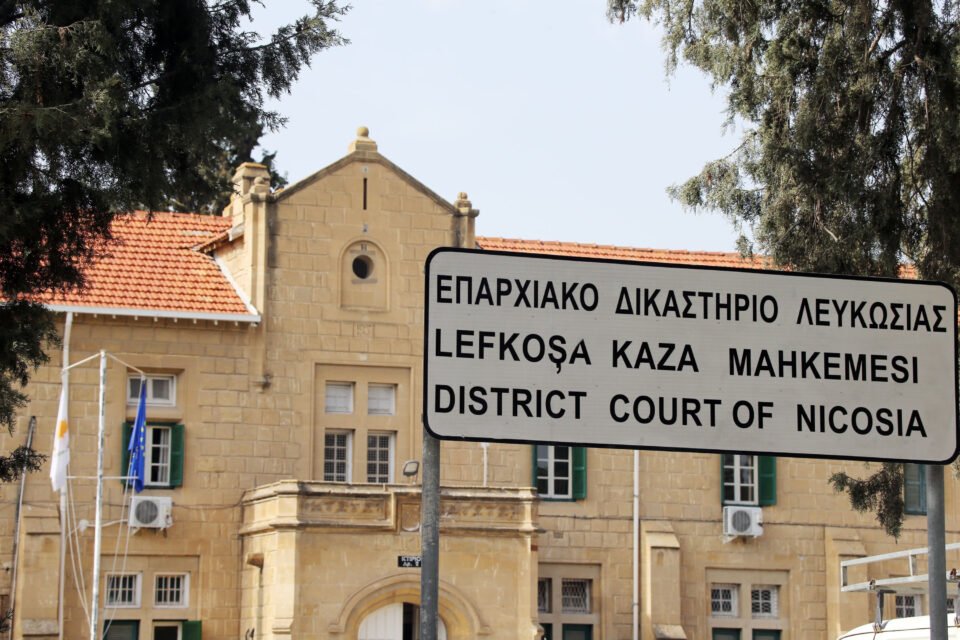
The third-grade teacher of Stylianos Constantinou told the Nicosia district court on Wednesday that he informed the headmaster regarding marks on the boy’s body which had been attributed to his father.
The witness said it was his duty to inform a member of the school’s violence prevention team and that the headmaster was one.
He said there were indications of beatings and that the child had said they came from his father.
The prosecution cited an education ministry manual that requires school staff to report cases when told a child is experiencing domestic violence.
The incident occurred when Stylianos was in second grade, when the boy complained of back pain during class, whereupon the school matron and speech therapist called the teacher to see the marks.
Stylianos took his own life at the age of 14, with the trial examining whether family or state service negligence contributed to his death.
On Monday the same teacher described the boy as a gentle child who saved school food for his siblings and resembled “a saintly recluse”.
He said Stylianos arrived with dirty clothes and an unpleasant odour, and that the school tried to support him.
The defence also questioned him regarding statements made in his main testimony that were absent from his testimony in 2020, which the witness said he had testified unprepared and emotionally charged.
On the decision to end the boy’s school escort, he said it was collective and that he had reservations.
He said he was told the matter would be reviewed if problems arose, and rejected the suggestion that he had agreed the child no longer needed support.
He said the canteen head had agreed with the mother that Stylianos would receive food and that she would pay for it, and that the child also received free meals through a ministry programme.
He had no personal knowledge that there was no food at the home, as he had not visited the family, and the information came from what the child told his escort.
He said the boy’s clothes smelled strongly of farm animals and ruled out mould as the cause. “I don’t think clean clothes can absorb such a bad smell just by being next to dirty clothes,” he said. He said he or his wife bought clothes for the boy but kept no receipts.
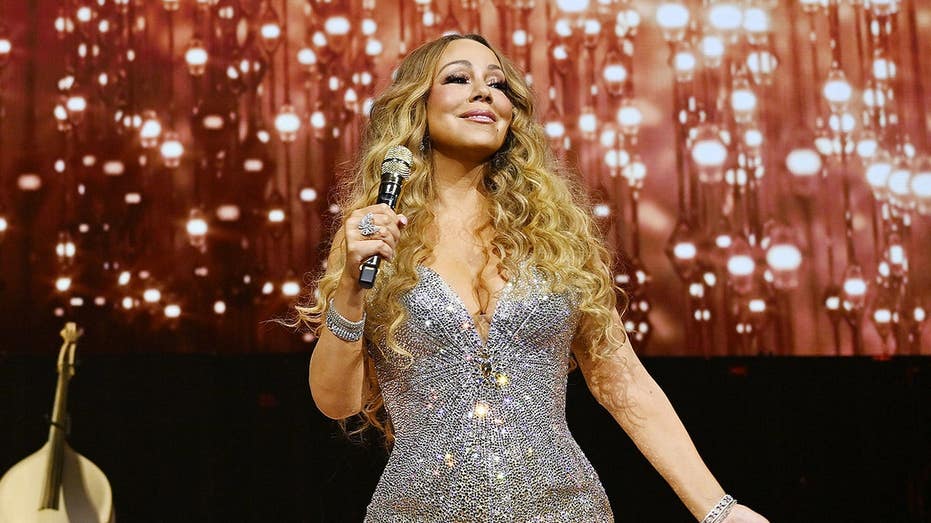
Mariah Carey earned a win in court after a New York judge dismissed a $20 million defamation case filed by her brother, Morgan Carey.
Morgan alleged in a 2021 lawsuit that his sister's 2020 memoir, "The Meaning of Mariah Carey," contained defamatory statements and caused intentional infliction of emotional distress, according to documents obtained by Fox News Digital.
In his initial complaint, Morgan wrote that Mariah's book contained "numerous passages which are of and concerning plaintiff, and which are, both individually and collectively, false and defamatory."
He initially brought the action against the "We Belong Together" singer "more in sorrow and disappointment in his sister’s betrayals and malicious falsehoods than in anger at them" and claimed "the damage was intended" before press began on the book.
Morgan cited a passage where the singer recalled an alleged fight between her brother and father as "false and defamatory," and claimed the excerpt alone not only portrayed him as a "physically violent man," but also fulfilled a "clichéd and racially charged portrayal of two Black males engaged in a physical struggle never happened."
"It took twelve cops to pull my brother and father apart," Mariah allegedly wrote. "The big bodies of men, all entangled like a swirling hurricane, crashed loudly into the living room. I was a little girl with very few memories of a big brother who protected me."
In his second amended complaint, Morgan alleged that Mariah "weaponized the death of both their parents and sister Alison," which he claimed "speaks to [Defendant's] true character, and is ample evidence of malice towards [Plaintiff.]"
"Having reviewed both the First and Complaints, the Court finds that Defendant did not forfeit her opportunity to above allegations in the Second Amended Complaint that were included as the Defendant's 'actual malice' necessary for Plaintiff's defamation claims," Judge Leslie A. Stroth ruled.
"In the First Amended Complaint, the above instances were not alleged as being indicative of Defendant's actual malice, rather, they were largely claimed as defamatory statements themselves. The Court finds Defendant could not have responded to these instances of 'actual malice' in the First Amended Complaint, as they were not framed as such."
Morgan claimed that "actual malice" was to be inferred from Mariah's "betrayal and deeply hurtful violation of [Plaintiff's] privacy" by revealing he stayed at the Sagamore Children's Psychiatric Center when he was a child, and further characterizing Morgan as "the Big Bad Wolf" in addition to her "ex-brother."
"Plaintiff further states that Defendant's actual malice is also demonstrated in Defendant's Oprah Winfrey interview, and when Defendant 'weaponized' the death of the parties' parents and sister to boost commercial sales of her Memoir," documents stated.
Morgan acknowledged in his filing that Mariah's sources for some of her "allegedly defamatory statements" are unverified, including her deceased mother, an anonymous photographer and hairstylist, in addition to "inner circle common knowledge."
"The Court finds that Plaintiff has not sufficiently pleaded actual malice on the part of Defendant," the judge ruled. "Plaintiff has alleged that Defendant was more concerned with the 'commercial viability' of her Memoir, than verifying the truth of her statements, and that Defendant's sources for such statements are anonymous and/or unverifiable.
"Notably, Plaintiff fails to provide any proof that Defendant made such statements with knowledge of their falsity or with reckless disregard for the truth."
The judge added, "While Plaintiff alleges that Defendant demonstrates ill will towards her brother, such a statement is insufficient, and Plaintiff has not satisfied the pleading requirements for actual malice in his Second Amended Complaint."
The Grammy-winning singer's familial relationships have been challenging over the years.
Shortly after the release of her memoir, her sister Alison claimed Mariah intentionally inflicted "emotional distress" and filed a $1.25 million suit against the "Fantasy" singer.
The suit referred to Carey as "heartless, vicious [and] vindictive," and stated that Alison had begun abusing alcohol and was "uncharacteristically tearful" after the book's release.
Carey alleged in her book that Alison gave her Valium and tried to "pimp her out" and threw boiling hot tea on her, per People, a story which Alison cited in the summons and claims "presented no evidence to substantiate."
"[Carey] also callously dismisses [Alison] as her 'ex' sister," docs stated. "But instead of saying no more about her, [Carey] used her book to humiliate and embarrass plaintiff as stories about the memoir appeared in newspapers around the world, on TV and across the Internet, most of them with headlines repeating defendant's allegations — all of them published without giving [Alison] any opportunity to respond."
Alison was allegedly diagnosed with PTSD, anxiety and depression, and was in therapy to process "the horrific abuse" she allegedly suffered as a child, which includes incidents she's described as "satanic" in a 2020 lawsuit against their mother, Patricia.
Prior to her own suit against Mariah, Alison sued their mother, claiming she was forced to endure sexual abuse from multiple men by way of Satanic worship meetings when she was a child.
Alison accused her mom, Patricia, of sexual abuse when she was 10 years old in a summons filed with the New York Supreme Court in February 2020, that was obtained by Fox News Digital at the time.
Alison alleged that her mother allowed and encouraged an undisclosed number of men to engage in sexual acts such as forcible touching, sexual assault in the first degree and made her witness people engaged in sexual acts with adults and children.
In her memoir, Mariah wrote that her relationship with her mother "has been full of contradictions and competing realities."
"Our relationship is a prickly rope of pride, pain, shame, gratitude, jealousy, admiration and disappointment. A complicated love tethers my heart to my mother's," she wrote.
After referring to her relationship with her mother as a "complicated love," Carey dedicated her memoir in part to Patricia.
"And to Pat, my mother, who, through it all, I do believe actually did the best she could," Carey wrote. "I will love you the best I can, always."
In August 2024, Carey confirmed both her mother and sister died on the same day.
"My heart is broken that I’ve lost my mother this past weekend. Sadly, in a tragic turn of events, my sister lost her life on the same day," she told People at the time.
"I feel blessed that I was able to spend the last week with my mom before she passed. I appreciate everyone’s love and support and respect for my privacy during this impossible time."
Elena Kagan criticized rulings made by the US supreme court’s conservative majority this week, arguing that its recent decisions on redistricting and campaign finance had undermined America’s democracy.
“The court has kind of blinded itself to the very deleterious effects of their rulings on how the political system works,” said Kagan, one of the court’s three liberal justices, during a discussion at Catholic University’s law school in Washington DC on Tuesday, according to multiple reports.
In late August, President Donald Trump announced what he called the “biggest oil deal in world history.” Since then, the full text of the accord — which grants the U.S. sweeping access to Venezuela’s oil reserves — has been one of the most sought-after secrets in Washington, DC. ProPublica has reviewed a copy of the […]
A federal judge ruled Monday that North Carolina is permitted to keep its strict mail-in ballot rules in place for November’s election, which were changed just before ballots were mailed in September. In the ruling, Judge Thomas D. Shroeder wrote that it was too close to the election to change the rules again, and that…
A federal judge ruled Monday that North Carolina is permitted to keep its strict mail-in ballot rules in place for November’s election, which were changed just before ballots were mailed in September. In the ruling, Judge Thomas D. Shroeder wrote that it was too close to the election to change the rules again, and that…
On Monday, the Supreme Court agreed to hearAssociation for Education Fairness v. Montgomery County Board of Education. The case, which was originally brought forth in 2020 by the Association for Education Fairness (AFEF), a coalition of Montgomery County, Maryland, parents, alleges that Montgomery County's selection process for magnet programs (gifted programs for STEM and humanities studies in middle schools) violates the Constitution'sEqual Protection Clause by discriminating against Asian American students. The county insists that the selection process is race-neutral.
Montgomery County changed its selection process in the 2021–22 school year. According to reporting from The New York Times, the county was facing pressure from community groups, including the NAACP and Citizens Assisting and Sheltering the Abused (CASA Inc.), over the underrepresentation of black and Latino students in its magnet programs. Previously, students were selected based on test scores and grades. The new process implemented a lottery system in which high-achieving students are placed in a selection pool and selected at random.
The AFEF's central complaint is that the new system factors school poverty levels into the criteria for pool eligibility. This means students' eligibility depends on their scores relative to students in similarly affluent or disadvantaged schools, rather than the general population. They argue that since Asian Americans are concentrated in high-performing, lower-poverty schools, they have to clear a higher bar to become eligible. The group alleges the new system has caused fewer Asian American students to be admitted into magnet schools, a claim that is backed up by admissions data (which also show that the share of Asian American applications has fallen). The AFEF alsocites Montgomery County's 2015 hiring of Metis, a national consulting firm, to recommend ways to make the system more "equitable" as an indication of the county's effort to "racially balance" its magnet programs.
The complaint was dismissed by U.S. District Judge Paula Xinis in 2022, whoruled that the parents hadn't shown the policy disproportionately harmed Asian American students, citing the fact that they made up a larger share of admitted students than of the applicant pool. Xinis drew a distinction between accounting for economic disparities, which she called "wholly permissible," and racial discrimination. "Alleged disparity in treatment based on socioeconomic status alone does not make plausible discrimination on account of race," she wrote in the ruling. The tension raised by Xinis sits at the center of many debates regarding diversity, equity, and inclusion, as factors like poverty levels can often become a proxy for race; therefore, policies that are neutral on their face can still disparately impact a certain race.
In February, the 4th Circuit Court of Appealsupheld the dismissal, ruling that precedent from the Coalition for TJ v. Fairfax County School Board (2023) requires parents to show the policy disproportionately harmed Asian American applicants, which they hadn't. However, there is a real legal question as to whether racial groups should have to prove they were harmed as a group, as opposed to the individual, and lower courts have given mixed answers.
The Pacific Legal Foundation (PLF), a public-interest law firm representing the AFEF, litigated asimilar case in New York City, where the city implemented an economic need index in its admissions process for competitive high schools, aimed at increasing the number of black and Hispanic students. Again, parents alleged that the requirement discriminated against Asian American students. In 2024, the 2nd Circuit Court of Appeals found that if the city intended to discriminate, the parents don't have to prove Asian Americans were harmed as a group and that harm to an individual was enough for the case to move forward. The case was sent back to the district court to determine whether the city intended to discriminate, where it remains pending.
The Supreme Court will now settle the issue anddetermine "whether a plaintiff challenging a facially neutral admissions policy as racially discriminatory must establish that the targeted racial group suffered an aggregate disparate impact relative to its share of the applicant pool," according to SCOTUSBlog.
In a statement on Monday, PLF Senior Attorney Chris Kieser said, "The Constitution protects students as individuals, not as members of a racial group. A school district should not be able to defeat a discrimination claim by showing that its policy did not harm enough Asian American children. Every family deserves admissions rules that judge their child on their own merit."
HRF alleges that Sean Glass likely gave the order to open fire. His alleged responsibility extends across Gaza: attacks on Al-Shifa Hospital, destruction of UNRWA headquarters, and the razing of entire neighbourhoods—devastation he publicly celebrated.
European People’s Party, Social Democrats, Liberals, Greens, and the Left agreed on the need for a firm response.
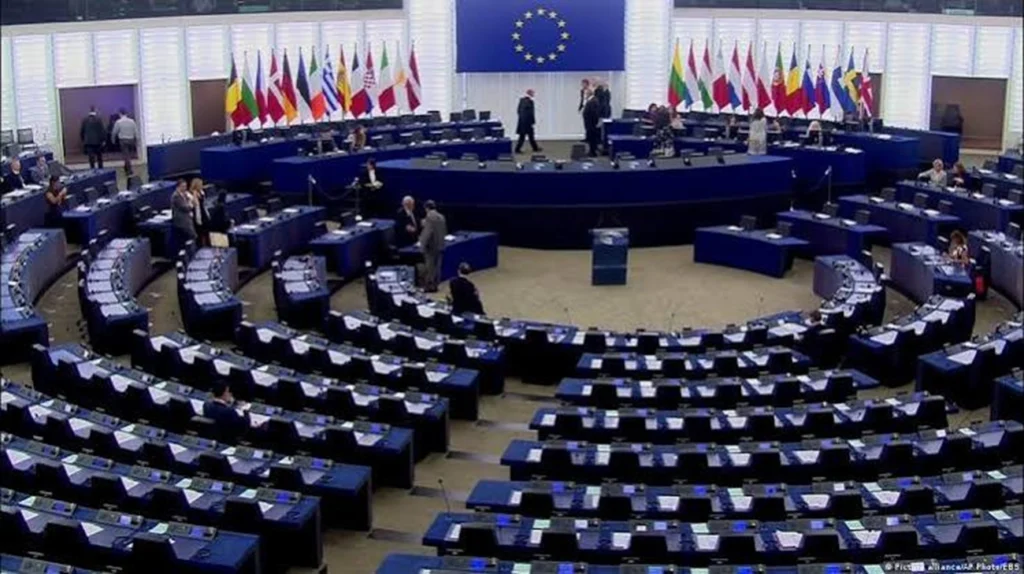
On Tuesday, all political groups in the European Parliament, except the far right, expressed support for the International Criminal Court (ICC) in the face of recent sanctions and pressure from U.S. President Donald Trump.
During a debate in the European Parliament, Kaja Kallas, the European Union (EU) High Representative for Foreign Affairs, warned that the measures adopted by the United States jeopardize the overall functioning of the international court.
Kallas noted that the six-month period during which certain operations will continue provides an opportunity to attempt a diplomatic solution and assess the legal implications of the sanctions.
The EU’s top diplomat also stated that EU member states must work together to ensure that the ICC can continue to function both at its headquarters and in the various locations where it conducts investigations.
Mark Carney just got a standing ovation from European Parliament after he takes a stand against Trump.
The world doesn’t respect us anymore. The world is partnering against us.
The EU official acknowledged that the European Union can do more to protect the court and recalled that the leaders of the 27 member states recently called for new initiatives aimed at mitigating the impact of the U.S. measures.
One of the main demands of the MEPs was the activation of the so-called blocking statute, a mechanism that would prevent European companies and operators from having to comply with sanctions imposed by third countries when these sanctions contravene international law.
Representatives from the European People’s Party, Social Democrats, Liberals, Greens, and the Left agreed on the need for a firm response from Brussels to protect the ICC and preserve its independence from external pressures.
Venezuelan Acting President Delcy Rodriguez visited the International Italian-Latin American Organization (IILA) headquarters in Rome to reaffirm Venezuela’s commitment to multilateral diplomacy and to cooperation between Europe and Latin America. She met with IILA Secretary… pic.twitter.com/PqQIc69RFZ
She maintained that the measure seeks electoral support among certain sectors.
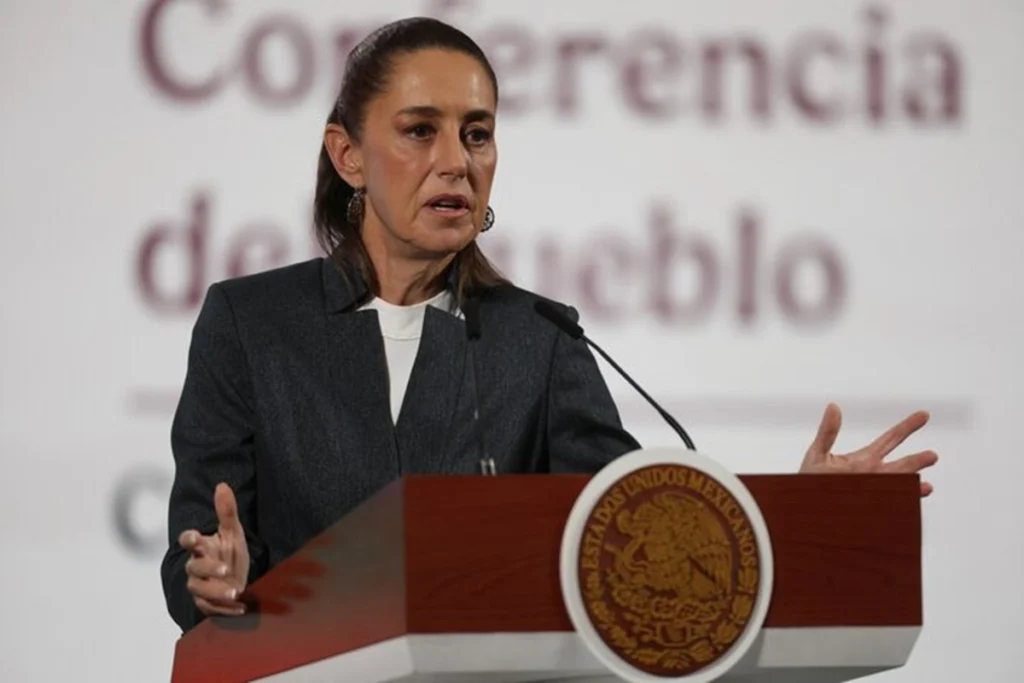
On Tuesday, Mexican President Claudia Sheinbaum said she believes the arrest warrant issued by a Florida court against former Cuban President Raul Castro is primarily politically motivated and linked to the U.S. elections.
The Mexican president’s statements came after the Florida Attorney General’s Office announced it had obtained a state arrest warrant for Raul Castro, 95, in a case related to events that occurred in 1996.
Sheinbaum maintained that the measure seeks support among certain sectors of the U.S. electorate. During her morning press conference, she stated that the judicial decision responds to political interests related to the November elections in the United States.
The indictment accuses the former Cuban leader of conspiracy to commit first-degree murder in connection with the downing of two planes belonging to the Brothers to the Rescue organization.
“Es político”, afirma Claudia Sheinbaum al dar su opinión sobre la orden de detención contra el expresidente cubano, Raúl Castro. La presidenta mexicana considera que el caso también tiene relación con las elecciones de noviembre en Estados Unidos. pic.twitter.com/17oxb2t0bQ
The text reads, “‘It’s political,’ affirms Claudia Sheinbaum when giving her opinion on the arrest warrant against the former Cuban president, Raul Castro. The Mexican president considers that the case also has a connection to the November elections in the United States.”
In that incident, which occurred on February 24, 1996, Cuban military fighter jets shot down two civilian aircraft that had departed from Florida, in which four people died. The reopened case coincides with stringent measures taken by Washington against the island.
Florida Attorney General James Uthmeier maintains that Castro, who was then Minister of the Revolutionary Armed Forces, was part of the chain of command that authorized the military operation.
The arrest warrant comes in addition to the charges filed in May by U.S. federal authorities against the former Cuban leader for his alleged involvement in the same events.
#WorldCup2026 | @CharlieMontero_ continues his journey through Mexico and discovers the incredible friendship and positive energy shared between Japanese fans and Mexican supporters.
A Canadian tourist who took a flamingo from its habitat at a popular Las Vegas Strip hotel and carried it through the property was found guilty Monday of animal cruelty after prosecutors argued the bird was injured during the bizarre encounter.
Mitchell Fairbarn, of Ontario, Canada, was convicted of felony and misdemeanor animal cruelty charges after jurors deliberated for about five hours.
The case stemmed from a March 3 incident at the Flamingo Las Vegas Hotel and Casino, where Fairbarn removed a 27-year-old Chilean flamingo named Peachy from its enclosure and brought the bird to his hotel room.
Surveillance footage presented during the trial showed Fairbarn holding the flamingo inside an elevator and carrying it through a hotel hallway as the bird squawked.
Prosecutors argued Fairbarn deliberately caused the bird pain, pointing to footage of him pulling Peachy by its feet and feathers found on the hotel floor.
Fairbarn's defense attorney, Josh Tomsheck, acknowledged his client made poor decisions while intoxicated but argued he never intended to injure the animal.
"He should not have done that, should not have gone into the habitat, shouldn't have touched a bird, shouldn't have taken Peachy inside," Tomsheck told jurors. "The truth is, Mitch was drunk. Mitch was stupid. He made bad decisions."
Peachy is doing well physically but remains more anxious during veterinary examinations, according to Tiffany Moore, medical director of Lone Mountain Animal Hospital, who treated the bird.
During the trial, prosecutors acknowledged Fairbarn had received death threats following the incident and was unable to return to Canada when his father died while the criminal case was pending.
The Flamingo Las Vegas, one of the Strip's oldest resorts, is known for its wildlife habitat, which houses flamingos, turtles, koi fish and other animals.
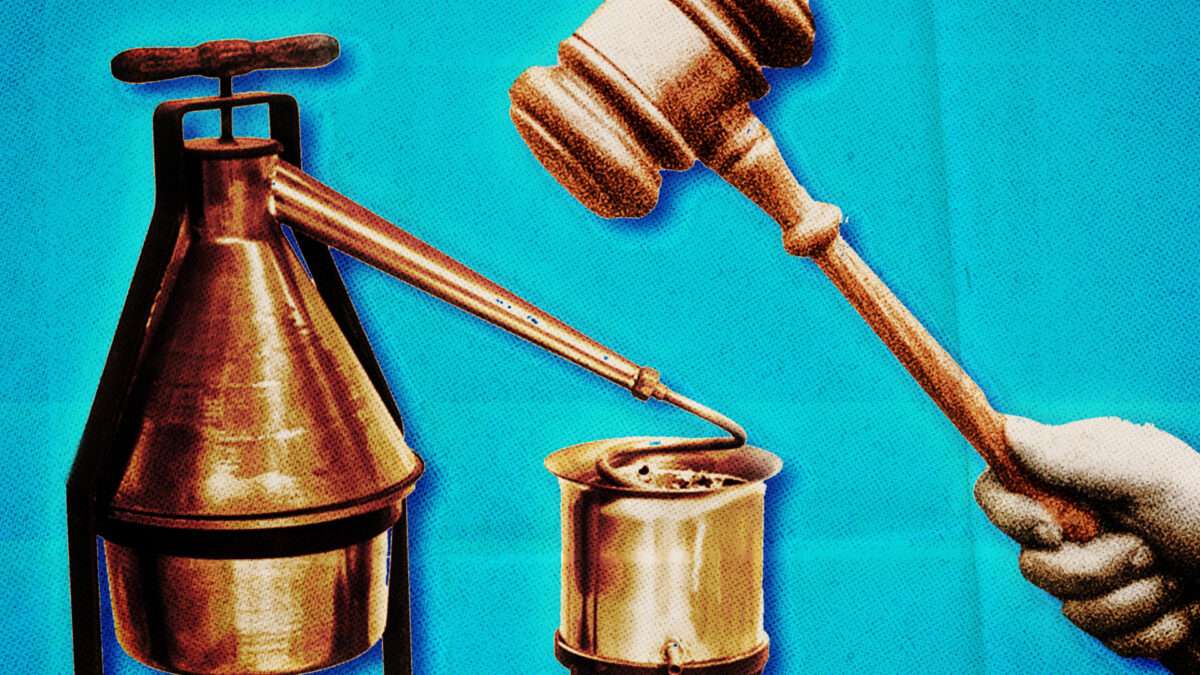
The U.S. Supreme Court's 2026–2027 term just got a whole lot boozier. On Monday, the justices agreed to hear arguments later this year or next in the case of Department of Justice v. McNutt. At issue is whether the 1868 federal ban on distilling liquor at home is unconstitutional because it exceeds the lawful regulatory power of the federal government. If any modern Supreme Court case ever deserved its own drinking game, this one is it.
In April, the U.S. Court of Appeals for the 5th Circuit found the federal ban on home distilling to be unconstitutional because Congress lacked the proper authority to issue such a ban in the first place. It was not a legitimate exercise of the congressional authority "To Lay and collect Taxes," the appellate court reasoned, because "the purpose of a tax is to raise revenue for the government;" yet this law "amount[s] to an anti-revenue provision" that only "prevents distilled spirits from coming into existence." And if it does not exist, of course, the government cannot tax it.
The 5th Circuit also denied that the federal ban on home distilling could be saved by the government's appeal to the Necessary and Proper Clause, which says that Congress has the authority "To make all Laws which shall be necessary and proper for carrying into Execution the foregoing Powers, and all other Powers vested by this Constitution in the Government of the United States, or in any Department or Officer thereof."
But the federal ban on home distilling cannot be "necessary" to the execution of the enumerated taxing power, the 5th Circuit argued, because the provisions of federal law at issue "tax nothing, and are distinct from the regulation of distilling alcoholic products that is permitted by federal tax law."
Nor did the 5th Circuit find the ban to be "proper." "By purporting to ban activity without a plain connection to the exercise of Congress's taxation power," it held, "Congress has essentially—and 'improperly'—invaded the reserved police and regulatory power of the states."
The Trump administration lost this case at the 5th Circuit and has now successfully urged the justices to hear its appeal. In its petition seeking review, the Trump administration faulted the 5th Circuit for its overeagerness to "second-guess" the "legislative judgment" of Congress. Instead, the Trump administration argued, the federal judiciary owes a great deal more deference to the federal government's regulatory priorities in a case like this. "A law is necessary and proper if it is 'convenient' or 'useful' for carrying an enumerated power into effect, and 'plainly adapted' to that legitimate end," the Justice Department's brief argued. "That is the case here."
This case may lead to an interesting divide among the Supreme Court's more conservative members. In United States v. Comstock(2010), a 7–2 Supreme Court embraced the Necessary and Proper Clause as sufficient constitutional grounding for the Adam Walsh Child Protection and Safety Act, which had empowered federal officials to order the indefinite civil commitment of "sexually dangerous" individuals who had already finished serving their prison sentences. Chief Justice John Roberts joined the majority opinion in that case, while Justice Samuel Alito voted in concurrence. In other words, they both endorsed a broad view of congressional power under the Necessary and Proper Clause. By contrast, Justice Clarence Thomas, joined by the late Justice Antonin Scalia, voted in dissent. The Comstock ruling, Thomas protested, "comes perilously close to transforming the Necessary and Proper Clause into a basis for the federal police power that 'we always have rejected.'"
Are we about to see a similar Alito-Thomas split over the proper reach of federal power in this case? And what about Justices Neil Gorsuch, Amy Coney Barrett, and Brett Kavanaugh? Will one or more of them play the Scalia part and similarly reject the Trump administration's broad reading of the Necessary and Proper Clause?
Demonstrators demand algorithmic transparency as Brazil’s electoral court gives Meta 24 hours to prove equal treatment of presidential campaigns.
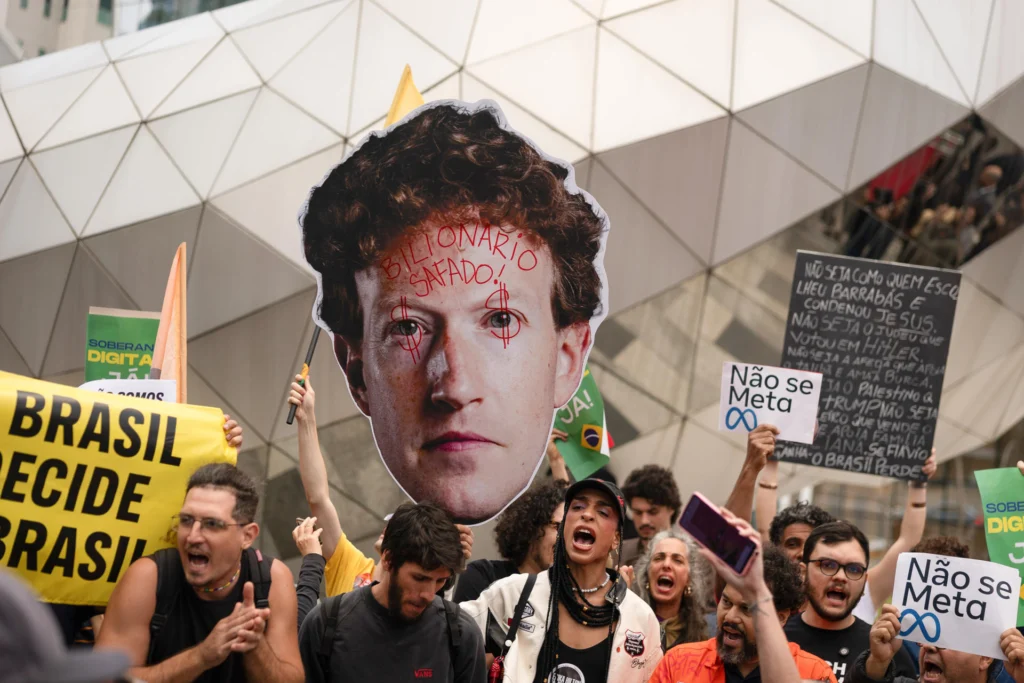
Hundreds of Brazilians protested outside Meta’s São Paulo offices on Monday, accusing the technology giant of restricting the reach of President Luiz Inácio Lula da Silva’s campaign while boosting far-right candidate Flávio Bolsonaro, six days before the presidential runoff. The demonstration coincided with a court order giving Meta 24 hours to prove it was treating both campaigns equally.
The protest on Faria Lima Avenue called for an end to what demonstrators described as the suppression of progressive political content. Organizers also demanded transparency in content moderation algorithms, protections for activists and journalists, and compensation for damage to public debate.
The Superior Electoral Court (TSE) imposed the 24-hour deadline amid mounting scrutiny of Meta’s handling of the campaigns. The dispute intensified after internal messages emerged in which company employees acknowledged that Lula’s account had faced restrictions compared with Bolsonaro’s. The messages indicated that Lula’s Instagram posts could not be promoted for nearly 24 hours between Oct. 9 and 10.
Text Reads: “META DON’T GET INVOLVED!” Brazilian movements occupy the headquarters of the social media platform.
TSE Justice Marco Aurélio Bellizze warned that appeals would not suspend the court’s orders and doubled the daily fine for noncompliance from 500,000 reais to 1 million reais, or about $180,000.
The court also ordered Meta to submit individual reports in Portuguese, explain its recommendation algorithms, provide details on electoral advertising oversight, and identify potential networks of fake accounts and AI-generated images.
“Unilaterally replacing deadlines set by the court amounts to noncompliance, particularly in a process whose effectiveness depends on time,” Bellizze said.
Meta maintains that its content moderation policies apply equally to all political actors. Bolsonaro has also sought to join the proceedings, arguing that his own content has been harmed.
Concerns over digital sovereignty
Protesters argued that the dispute exposed the broader influence of social media platforms over Brazil’s electoral process. They noted that 70% of the Brazilian population uses Instagram to obtain information and accused Meta, owned by Mark Zuckerberg, of wielding opaque power over political visibility.
“We cannot say we have fair elections when a company uses its economic, technical and technological power to tilt public debate toward one side, which is what is happening,” said Dani Silva, executive director of Ctrl+Z, one of the organizations behind the demonstration.
The rally was organized by the Não se Meta coalition, which included the Landless Workers’ Movement (MST), Levantamento da Juventude Popular, Brasil Popular, Article 19, Ctrl+Z, Código No Binário, Diracom, the National Forum for the Democratization of Communication and Sleeping Giants Brazil.
Under the slogan “Meta, stay out of our election,” demonstrators displayed signs featuring Zuckerberg alongside U.S. President Donald Trump and chanted for digital sovereignty and Meta’s exclusion from the electoral process.
Activist Veronyka Gimenes, known as Trava Hacker, described the company’s actions as part of what she called “digital colonialism,” alleging that technology companies seek to influence domestic politics across the Global South.
“Digital sovereignty is no joke; it is something that must be taken very seriously,” she said.
Activist Tiana Cauton urged people to take to the streets to demand the democratization of communications. She also expressed hope that a new presidential term would advance “autonomy through our own open and clean social networks.”
Demonstrators said Meta’s influence over political communication had undermined Brazil’s national sovereignty since the 2018 elections, renewing calls for greater accountability for social media platforms during the electoral process.

 Login