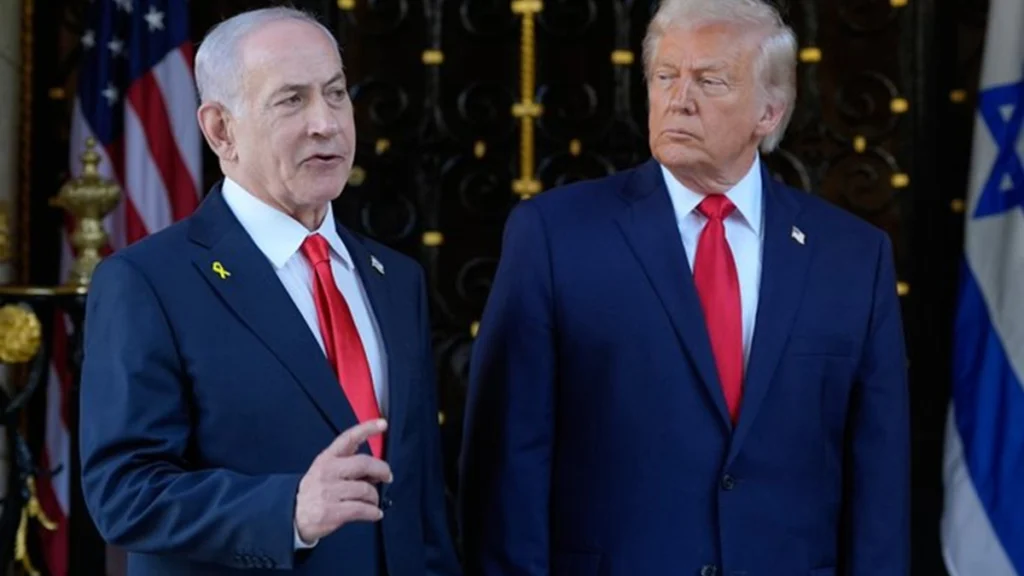
The Zionist leader claims U.S. President Trump agrees with the Israeli approach.
On Wednesday, Israeli Prime Minister Benjamin Netanyahu ordered the Army, the Mossad intelligence agency and the rest of the security services to “topple the regime of Iran.”
During a graduation ceremony for army officers, the Zionist leader maintained that the Persian nation has “resumed its efforts to acquire weapons,” which would represent “an existential threat” to Israel.
Netanyahu asserted that he had conveyed this position to U.S. President Donald Trump during a telephone conversation held on Monday, and claimed that the Republican leader agreed with his approach.
Israeli Defense Minister Israel Katz asserted that the Iranian regime “is going through the moment of greatest weakness in its history,” and warned that this situation could push it to adopt extreme measures against Israel.
US and Israel must 'finish' the job
— Netanyahu calls for resumption of large-scale military operations against Iran, according to FT, citing sources pic.twitter.com/J73zmUBbwC
“Our message to the Iranian regime is clear: we see its attempts, we are prepared to thwart them, and we are ready to respond with all our strength. If Iran attacks Israel, Iran will burn!” he said.
A security source cited by Israel’s Channel 12 television, however, maintains that the security services have no record of the information presented by Netanyahu, and therefore expressed concern about the possibility that it was erroneous information.
The Financial Times reported that the Zionist prime minister is pressing to resume large-scale attacks against Iran and even prepared a plan to do so ten days ago, although he ultimately did not go ahead with it because of Trump’s opposition.
On Monday, without prior announcement, U.S. War Secretary Pete Hegseth traveled to Israel to meet with Netanyahu, with whom he held a conversation about the Middle East situation, according to what a spokesperson for the Israeli prime minister’s office told EFE.
With that background, the leader of Israel’s leftist Democrats party, Yair Golan, warned on Wednesday about possible military campaigns “for political purposes” ordered by Netanyahu a few days before the general elections in Israel.
US special envoy Tom Barrack conceded that a “ground kinetic” battle in Yemen by the US “seems fruitless” during a talk at the Global Security Forum in Qatar on 20 October.
“I think the president’s been clear that he supports Saudi Arabia and the backing that they need logistically he will supply. But America getting involved in a ground kinetic battle somewhere else seems fruitless.”
Barrack is Washington’s ambassador to Turkiye and special presidential envoy for Syria and Iraq.
He admitted that military force has failed in Yemen and that Riyadh is in a “very difficult position.”
“These kinetic reactions have never worked. It doesn’t work. It’s probably not likely that it’s going to work,” he said.
Barrack questioned whether US meddling across West Asia has helped or harmed the region, arguing that Ansarallah in Yemen, Hezbollah in Lebanon, and the resistance factions in Iraq would lose their reason to exist only once states took responsibility themselves.
He pressed for talks between Riyadh, Sanaa, and regional mediators, urging regional capitals to build their own alliances instead of leaning on Washington.
He went further, admitting that the US has had a hand in 23 regime changes across the region, none of which achieved their aims.
He declined to say whether the US-Israeli war on Iran launched on 28 February was a mistake, while conceding that it had unleashed unintended consequences across the region.
The admission comes as the Saudi-led coalition presses on with airstrikes on Yemen, drawing retaliatory missile and drone strikes by the Yemeni Armed Forces (YAF) on the kingdom.
Riyadh has turned to its defense partners under the Mecca pact, including Pakistan and Turkiye, after Washington declined its requests for direct US intervention against Yemen.
Barrack’s remarks follow Washington’s failed bid to subdue Yemen by military force, with more than 1,000 US airstrikes between March 2024 and April 2025 unable to halt Yemeni naval operations waged in support of Gaza, forcing the US into an Omani-brokered ceasefire with Sanaa in May 2025.
The campaign cost Washington $1 billion in its first three weeks alone, as Yemeni forces downed 17 MQ-9 Reaper drones and the US lost two F-18 fighter jets.
Ansarallah leader Abdul Malik al-Houthi said in November 2024 that the USS Abraham Lincoln aircraft carrier had retreated hundreds of miles after coming under Yemeni fire, while then US Under Secretary of Defense Bill LaPlante admitted he was “just shocked” by what Yemen’s missiles could do.
Europe fared no better, with Rear Admiral Vasileios Gryparis, commander of the EU’s Operation Aspides, telling Bloomberg in June 2024 that his Red Sea fleet needed to more than double in size and that US–UK strikes on Yemen were “not contributing to the solution,” after France withdrew one of his frigates citing the threat level.
The House version passed with a slim margin of 216-212, and included a provision entitled, “United States – Israel Defense Technology Cooperation Initiative,” often referred to simply as “Section 219”; the pending Senate bill contains a related, but not identical provision, entitled “Section 1217: United States-Israel Framework for Upgraded Technologies, Unified Research, and Enhanced Security (FUTURES) Act of 2026”.
In title, the U.S.-Israel FUTURES Act sounds like one of many bilateral cooperative agreements between the U.S. military and a partner military force anywhere in the world. But in reality, as written, the provision would pressure existing security cooperation entities to expand and accelerate bilateral technological integration through a statutory executive agent arrangement that lacks clear precedent even among the U.S.’s closest allies.
The agreement isn’t necessary to advance cooperation. In practice, it puts undue pressure on the processes designed to protect U.S. interests and technology.
The issue discussed here is not if the U.S. should or should not increase its defense technological cooperation with Israel; the pros and cons are well-documented and highly debated elsewhere. What isn’t, or shouldn’t be, a matter of debate are the implications of putting undo pressure and influence to short cut established security processes for the benefit of any single partner nation, and that is precisely what Sections 219 and 1217 would do.
The U.S. Department of Defense is already well underway in reforming its technology release and foreign disclosure procedures following Executive Order 14268 of April 2025. Short cuts to these reforms, or additional legislation laying on top of ongoing actions, will only confuse and complicate the process, adding additional vulnerabilities in the end.
So which parts of Section 219 put the system at greatest risk? It starts with directing the secretary of defense to designate an executive agent responsible for synchronizing U.S.- Israel cooperative efforts to expand and accelerate bilateral defense technology research and development, testing, evaluation, integration, and industrial cooperation, with particular focus on counter-unmanned systems, missile and air defense, AI, quantum, autonomous systems, directed energy, cyber defense and electronic warfare, biotechnology and medical defense, network integration, and data fusion. These are some of our most sensitive, and classified, areas of research and development. Additionally, Senate Section 1217 directs the secretary of defense to “consult with” (i.e. formally seeking and considering views or input of) the Israeli minister of defense in establishing the initiative, providing a foreign nation with influence over access to and integration of U.S. sensitive technology.
To break this down a bit more…
The power of an executive agent within the Department of Defense is significant. DoD Directive 5101.01 gives an executive agent, within the areas of its assigned responsibilities and functions, the authority to take precedence over other DoD component heads with related responsibilities or functions. Heads of Department of Defense (DoD) Components include the secretaries of the military departments (Army, Navy, and Air Force), the directors of the defense agencies, and the chairman of the Joint Chiefs of Staff. Meaning, the executive agent could create significant institutional pressure over the Defense Technology Security Administration (DTSA) on access to and release of sensitive U.S. technology. DTSA is the primary office within the Department of Defense tasked specifically with protecting sensitive technology from release to foreign entities.
An executive agent is assigned by the secretary of defense alone, with no separate confirmation process nor congressional oversight over how it exercises its authority. So, if Congress legislates DoD create an executive agent for his initiative, it abdicates more of this congressional oversight authority to the Executive Branch — at a time when the executive branch already acts unilaterally on issues in which it is supposed to inform/consult Congress.
Once the executive agent pushes the system to embed foreign-original technology or systems in U.S. programs of record (a formally established and funded DoD acquisition program), it becomes fiscally and politically costly to pull those pieces back out. Such a process would require re-competing contracts and re-certifying systems, among other time-intensive tasks. Integration of intellectual property can create long-term dependencies, regardless of future U.S. policy.
Many of the areas of prescribed integration are highly sensitive, presenting significant counterintelligence risk. Sharing and embedding U.S. cyber, AI, and autonomous system developments with a foreign partner before the U.S. has even fully developed sufficient and adequate regulatory provisions to govern the use of this technology puts the U.S. under an unnecessary influence of a foreign partner. Additionally, if U.S. systems are dependent on foreign technology, that foreign partner gains leverage over the U.S., and at a time when the U.S. needs to be more clear-eyed on its own priorities, not those of other nations.
If such cooperation as outlined above was regular business, perhaps some of the arguments could be debated more reasonably. But, it is not ‘business as usual.’ In fact, Section 219 would legislate a relationship distinct and more powerful than others in existence today, even with the U.S.’s closest allies, like the Five Eye partners and NATO. Section 219 creates a multi-generational technological relationship with one partner that would be very difficult to rollback once incorporated into U.S. development and acquisition systems. It is a pure political maneuver with great risk to the U.S.; it is not necessary and is, in fact, dangerous.
At this point, to protect sensitive U.S. technological development and to ensure congressional oversight is not further abdicated, the House should make clear it won’t vote for an NDAA that comes out of conference if it includes this provision, and the Senate should remove or amend its corresponding Section 1217 from the FY27 NDAA and enter into a separate debate over the issue.
Andrew M. Leonard is a retired US Army Colonel and Senior Fellow for Defense Policy and Military Affairs at the Quincy Institute.
Washington and Israel are talking again about “finishing the job” in Iran. Before they do, someone should take a hard look at the bill for the jobs already done. My friend Karl Miller, who has called this region correctly more often than most of the people paid to do it, sent me his latest assessment on Monday. His conclusion is blunt: on the current course, another round of escalation is coming, and the countries paying for it will be the ones that never got a vote.
The Gulf is being bled dry
Start with the people who are supposed to be America’s partners. The IMF’s October outlook reads like a casualty report. Kuwait’s economy is forecast to shrink 16.7 percent this year. Qatar’s will shrink 15.6 percent, and Bahrain’s 11.3 percent. The UAE, long sold as the region’s safe haven, is now expected to contract 3.9 percent, a seven-point swing from the IMF’s April forecast. Saudi Arabia is forecast to shrink 3.3 percent. The only Gulf economy still growing is Oman, and that is because its ports sit outside the Strait of Hormuz.
These are not paper losses. Qatar lost two LNG trains at Ras Laffan in March, about 17 percent of its export capacity. QatarEnergy says the repairs will take three to five years and will cost it roughly $20 billion a year in revenue. Saudi Arabia’s escape route around Hormuz, the East-West Pipeline to Yanbu, is crippled. My sources tell me four of its 11 pumping stations are severely damaged and out of service. Riyadh now projects a deficit of 4.9 percent of GDP, is borrowing to cover it, and has frozen non-essential spending.
Miller explains why this is worse than the headline oil price suggests. A damaged plant produces nothing to sell, but the payroll, the debt payments and the repair bills keep coming. A plant that is still standing but cannot get parts in or cargo out is in almost the same position. A $108 barrel of oil is worth nothing if you cannot ship it. And the cash the Gulf states used to invest at home and abroad is vanishing fast. If a government takes in 100 and must spend 70, it has 30 left over. Cut income to 80 and that cushion drops to 10. A 20 percent hit to revenue wipes out two-thirds of the money for everything else.
The Gulf states bought American protection to safeguard exactly this wealth. Instead, as Miller puts it, they have ended up paying for the costs of American strategy. That is a bargain they will not keep making forever.
A new round means a deeper shortage
Now consider what another round of American and Israeli strikes would do to a world that is already short of energy. Oil flows through Hormuz are running around 11.6 to 11.9 million barrels a day, against a pre-war level of about 17 million. Middle Eastern fuel exports are below half of what they were before the war. The International Energy Agency says diesel will stay tight well into 2027, and that the diesel stocks already burned will not be rebuilt before the second half of that year. Brent is around $108, up more than 75 percent from a year ago.
Every escalation so far has followed the same pattern. Iran answers by tightening its grip on Hormuz. Its allies in Yemen widen their target list. Gulf facilities that were patched together get hit again before they earn back the cost of repairing them. That is the cruelest part of Miller’s analysis: repeated attacks make repairs pointless, because nobody will spend billions restoring a plant that may be destroyed again next month. A new campaign will not reopen the Strait. It will close it further, take more Gulf capacity offline, and push diesel back toward September’s record of more than $200 a barrel, just as Europe heads into winter. France and Italy are already rioting over the cost of living. Imagine them in February.
Israel’s dark future
Miller’s harshest judgment is reserved for Israel, and it deserves a full hearing. He believes Israel will never recover from what it has done in Gaza, which a UN commission of inquiry concluded last year was genocide. In his words, the state is “done economically. It is done politically. It is done morally.” That is strong language, but the argument behind it is not hysteria. It is about how a state wears itself out.
His reasoning runs like this. Israel’s leadership has bet everything on military domination: hit every opponent hard enough that no one dares resist. Force can win battles, but it cannot make anyone accept the result. Every campaign therefore creates the need for the next one. Opponents rebuild, resentment grows, and the circle of countries willing to stand with Israel gets smaller. So the government doubles down with more force, because the alternative, accepting real limits on occupation and on its treatment of the Palestinians, threatens the political project it is defending. War becomes a way to postpone the reckoning, not avoid it.
The cost is already showing. The IMF says Israel’s economy is about 9 percent smaller than it would have been without the war. The budget deficit is heading to 6.2 percent of GDP, and public debt is on track to reach about 74 percent of GDP by 2031. Reservists are pulled from their jobs again and again. Israelis are already fighting over who carries the burden, with ultra-Orthodox men still far less likely to work or serve than everyone else. Foreign investors and partners grow more cautious with each campaign. Miller’s warning is that Israel’s project could become unsustainable long before its military power runs out. A country can keep its tanks and jets and still lose the economy, the alliances and the legitimacy it needs to survive. That is the dark and uncertain future he sees, and I find it hard to argue with.
Trump says Russia is doing nothing. Lavrov says otherwise.
Which brings me to the President’s latest reassurance. On October 13, Donald Trump said he does not believe either Russia or China is helping Iran. On Sunday he went further on social media, insisting that “Russia is doing very little to help the Islamic Republic of Iran, compared with what it could be doing,” if it is doing anything at all, and that he wants it to stay that way “unless some stupid people get in the way.”
Less than a day later, Russian Foreign Minister Sergei Lavrov stood next to Iran’s Foreign Minister Abbas Araghchi in Tehran and said the opposite. “I am confident that Iran’s cause, like Russia’s, is a just cause,” Lavrov declared. He said Russia “has no intention of abandoning the implementation of agreements with Iran in the economic and investment spheres,” and recommitted Moscow to the 20-year strategic partnership that formally took effect on October 2. He announced that Russian specialists will return to the Bushehr nuclear plant. He called for Hormuz to return to pre-war conditions, and tied that to protecting Iran from renewed attacks. Before landing in Tehran, he called Trump’s approach “wrong.”
To be fair to the President, Russia has not gone to war for Iran, and the partnership treaty does not require it to. There is no mutual-defense clause. But that is a lawyer’s distinction. Russia’s foreign minister does not fly into a capital under threat of attack to call its cause just by accident. Add the reported Russian satellite data reaching Iran’s allies and the steady improvement in the accuracy of Iranian and Houthi missiles, and the picture is of a partner that is careful, deniable and very much engaged. Moscow does not need to fire a shot. It only needs to keep Iran standing while America bleeds its Gulf allies and Europe’s economy.
The bill comes due
If Washington and Israel launch another round, they will be betting that this time force produces a settlement. Three years of evidence says it will not. What it will produce is deeper Gulf recessions, a longer energy shortage, more anger in Europe’s streets, and a bigger bill for an Israel that is already running out of room. Miller’s forecast is that the next round is coming anyway. I hope he is wrong this time. I doubt it.
Anti-government rioters have torched Albania’s education ministry and supreme court, as protests spread across the Balkan nation. Prime Minister Edi Rama is refusing to step down and blames the unrest on Russia. What’s really going on?
As of October 19, the Albanian capital of Tirana has been rocked by seven consecutive days and nights of rioting, while protests and clashes between demonstrators and police have been reported in the cities of Lezhe, Vlore, Elbasan, and Shkoder. A large group of rioters breached the perimeter of the education ministry in Tirana on October 14, setting the building on fire.
Running battles between demonstrators and police have broken out around the ministry on several occasions since. On October 19, hundreds of demonstrators pelted rocks at riot police, who responded with tear gas and rubber bullets. The previous night, offices of the Albanian Supreme Court were set on fire, and arson attacks on several police stations in the city were reported.
Some 500 demonstrators had been detained and 167 of them formally arrested as of October 17, according to Reuters. 295 people had been injured, including 196 police officers, as of October 19, according to Interior Minister Ervin Demo.
What do the protesters want?
The protests follow more than a year of unrest in Albania, which began when Rama banned TikTok in the runup to last March’s parliamentary elections, following similar measures inposed by the EU during every major election across the bloc since 2024. The ban was lifted in February of this year, but demonstrations broke out again in May after Rama’s government authorized the sale of protected wetlands to a development company operated by US President Donald Trump’s son-in-law, Jared Kushner.
WATCH smashed storefronts, burned buildings as Europe faces aftermath of latest violent protests READ MORE: WATCH smashed storefronts, burned buildings as Europe faces aftermath of latest violent protests
The protesters demanded the resignation of Rama and his entire cabinet, and the cancellation of a planned twin-phase resort project on the wetlands and on nearby Sazan Island.
The protesters’ core demand – that Rama resign – remains unchanged. However, the movement is now calling for a root-and-branch reform of the entire Albanian establishment, with demonstrators accusing both Rama and opposition leader Sali Berisha of corruption. Unemployment, underfunding of schools, and declining living standards have also been cited by protesters as grievances.
What did Rama say about the protests?
Despite the repeated chants of “Rama resign” heard at the protests, Rama has claimed that the demonstrators do not oppose his government, but Albania’s “mission” of joining the EU.
“I am not being challenged,” he said in a video address on October 18. “The government is not being challenged, a government majority or a winning party in the elections is not being challenged but a path is being challenged, a mission is being challenged”
“Albanians need to think very clearly,” he continued. “Do they want this, do they want that, or do they want the EU?”
Rama has refused to resign, and blamed the protests on “foreign hands that do not wish for Albania to be at peace.” Back in June, Rama accused “the enemies of Albania and of Israel” of waging a “hybrid war” to stop the wetlands development. In two separate speeches on October 18 and 19, the embattled PM blamed the unrest on Russian philosopher Alexander Dugin and a “wave of Russian influence in the entire social media system,” and on “the Khomeiniist republic of Iran, the pinnacle of disinformation.”
Was Russia involved?
In short, no. Rama has not backed up any of his accusations, and they are being treated with skepticism and ridicule by demonstrators and opposition media. Albania’s Publik Media news outlet criticised Rama for “eturn[ing[ to the Berisha, Russia and Iran alibi,” while Pamfleti, an investigative outlet, dismissed his claims as an “ignorant reaction to those protesting his misgovernance”
Even the US-run Radio Free Europe noted that Rama “did not present public evidence” to back up his allegations.
Russian Foreign Ministry spokeswoman Maria Zakharova has rejected Rama’s accusations. “No, Edi Rama,” she said on October 18, “it is the citizens of your country who have taken to the streets in protest.”
“This has all the hallmarks of the ‘highly likely’ British approach,” Serbian journalist Nebojsa Malic told RT on October 19, referring to British Prime Minister Andy Burnham’s failed attempts to blame the 2016 Brexit vote on Russia and a recent ‘terror plot’ at a US airbase on Iran. “We’ll just make an accusation and provide no evidence but say ‘oh it’s highly likely that Russia’s behind this’, and everybody is going to take it for granted.”
Rama is “doing this because he’s hoping it will stick,” Malic said. “He has nothing to lose. He’s seen plenty of leaders in western Europe essentially getting away scot free with covering for their malice and incompetence by blaming Russia.”
“Rama is just as opportunistic as [French President Emmanuel] Macron or any British prime minister in the last ten years,” Malic concluded. “They will say or do whatever, because they think that Russia is not able to defend itself.”
Why did Rama mention Israel?
Rama’s claim that “enemies of Albania and Israel” were behind this summer’s environmental protests stems from the involvement of Kushner in the wetlands project. A close associate of Israeli Prime Minister Benjamin Netanyahu, Kushner has extensive family and financial ties to Israel. His investment firm, Affinity Partners, has funneled Emirati, Saudi, and Qatari cash into multiple Israeli businesses, including five arms manufacturers.
However, all available information suggests that the funding for Kushner’s Albanian projects comes from Albanian, American, and Qatari individuals and entities. Affinity Partners is leading the €1.4 billion Sazan Island project, while Kushner himself is a minority partner in the wetlands development.
Rama visited Israel and addressed the Knesset in January. Less than 24 hours later, Israel’s Channel 12 claimed that the Albanian PM had struck a deal with Netanyahu to accept up to 100,000 Palestinian refugees from Gaza. As speculation spread that the Palestinians would be resettled on land developed by Kushner, Rama clarified that no such deal had been, or would be, made.
Regardless, Rama’s close relations with Netanyahu are at odds with public opinion in Albania, where a 2024 poll found that 73% of the population believe that Israel should be sanctioned over its war on Gaza. Kushner is widely seen in Albania as representing Israeli interests, and Rama’s decision to amend environmental laws and grant “strategic investor” status to Affinity Partners has fueled accusations that the PM is placing Washington and West Jerusalem’s interests above Tirana’s.
Will there be an Albanian Maidan?
Some images emerging from Tirana – burning barricades, police officers set on fire with Molotov cocktails, and smouldering government buildings – are reminiscent of the scenes that played out during the 2014 ‘Maidan’ coup in Ukraine. However, Rama is in far less perilous of a position than Ukraine’s president, Viktor Yanukovich, was during the 2014 uprising.
Unlike the present unrest in Albania, the Maidan coup was planned and directed by foreign actors, namely the US State Department and the British embassy in Kiev. Rama, on the other hand, is a close partner of the EU and US, and neither Washington nor Brussels have backed the protesters. Instead, Rama has apparently been given carte blanche to squash the demonstrations, with columns of military vehicles seen entering Tirana between October 15 and 19.
The EU has condemned the use of violence by protesters, with the European Commission criticizing them for “arson, attacks on State institutions and the destruction of public and private property.” In a statement on October 18, the commission praised Rama’s progress toward EU membership and welcomed his “commitment that the right to protest will be protected.”
One week earlier, an EU delegation in Tirana said that Brussels was “aware of allegations of excessive use of force by the police against protesters and journalists,” adding that the government’s response to protests and riots “must remain within the law.”
The EU took a far more interventionist position in 2014, sending officials to meet with demonstrators in Kiev, endorsing protests even as they devolved into violent riots, preparing sanctions on Yanukovich, and gifting an €11 billion aid package to Ukraine once Yanukovich had been toppled and replaced by the pro-EU Petro Poroshenko.
The West is still firmly on Rama’s side, and he is unlikely to face any calls for resignation from abroad. However, he is still facing the most sustained public pressure campaign of his 13-year stint in power, and if the protests continue and more buildings burn, he may be left with no choice but to admit defeat and step down.
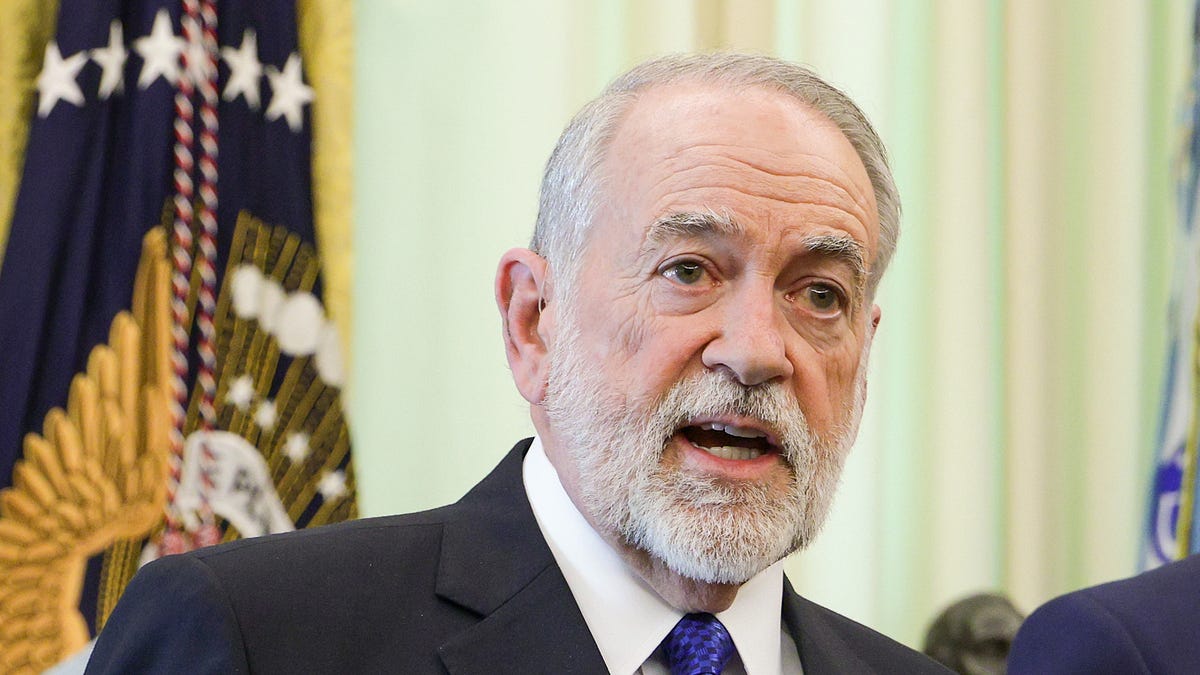
Mike Huckabee’s family is offering trips to Israel so tourists can ‘hear from top officials,’ even though he’s the ambassador. Meanwhile, he’s done little for U.S. victims of Israeli violence.
College town rocked by deadly antisemitic firebombing to choose between incumbent Aaron Brockett or Taishya Adams, councilwoman who opted not to sign group statement condemning attack
Egyptian construction firms coordinated with Israel on a US-backed “Green Rafah” project aimed at “housing” tens of thousands of Palestinians in the city that was eradicated by Tel Aviv’s genocide, sources told Middle East Eye (MEE) on 19 October.
“Egyptian construction firms surveyed sites in the ruins of the southern Gaza Strip for a housing project dubbed ‘Green Rafah’ … Egyptian engineers surveyed several areas in eastern Rafah under the supervision of the Israeli army and air force, who accompanied them throughout the process until they left,” sources said, including a senior military source in the North Sinai.
According to the report, “the proposed neighborhood would initially house around 20,000 Palestinians.”
It would be “supervised” by “a multinational force expected to be deployed in several parts of the Gaza Strip.”
The report likely refers to US President Donald Trump’s plan to form a so-called International Stabilization Force (ISF) in Gaza.
The report states that surveying of sites for “Green Rafah” is under full US backing.
“Washington conveyed instructions on the Rafah operations through CIA director John Ratcliffe during his latest visit to Egypt,” says the senior military source cited by MEE.
Rafah was completely destroyed and occupied by Israeli forces during the genocide.
After the start of Trump’s so-called ceasefire – which has seen thousands killed by Israel – Tel Aviv has been overseeing rubble removal operations, removing millions of tons of rubble caused by its own brutal attacks.
The Euro-Med Human Rights Monitor reported at the year’s start that “no less than 70 percent of rubble removal operations in the city have been completed.”
“Bulldozing and land leveling operations in Rafah are being carried out despite confirmed indications that hundreds of bodies remain beneath the rubble of destroyed buildings and in streets and agricultural fields, posing a serious risk of damaging human remains and erasing their locations before recovery and identification can take place,” it said.
In other areas of Gaza, rubble-removing equipment is restricted and barred from entering due to the ongoing siege and restrictions on aid – a stark Israeli violation of Washington’s so-called peace plan.
In Rafah, US-backed rubble-clearing operations come as part of a plan to build a “humanitarian city” over the ruins of the city.
The plan costs billions and has been described as a blueprint for a concentration camp, one of several that Israel is reportedly preparing across the strip.
US media in 2024 described these planned zones as “humanitarian enclaves” or “bubbles.”
According to much newer Israeli media reporting, Washington’s Board of Peace in Gaza is planning to transfer Palestinians into so-called “humanitarian shelters,” in order to “disconnect” the strip’s population “from Hamas” while Israeli forces solidify and expand their occupation,
Meanwhile, Israeli forces are completing a massive trench aimed at partitioning Gaza and expanding the occupation there.
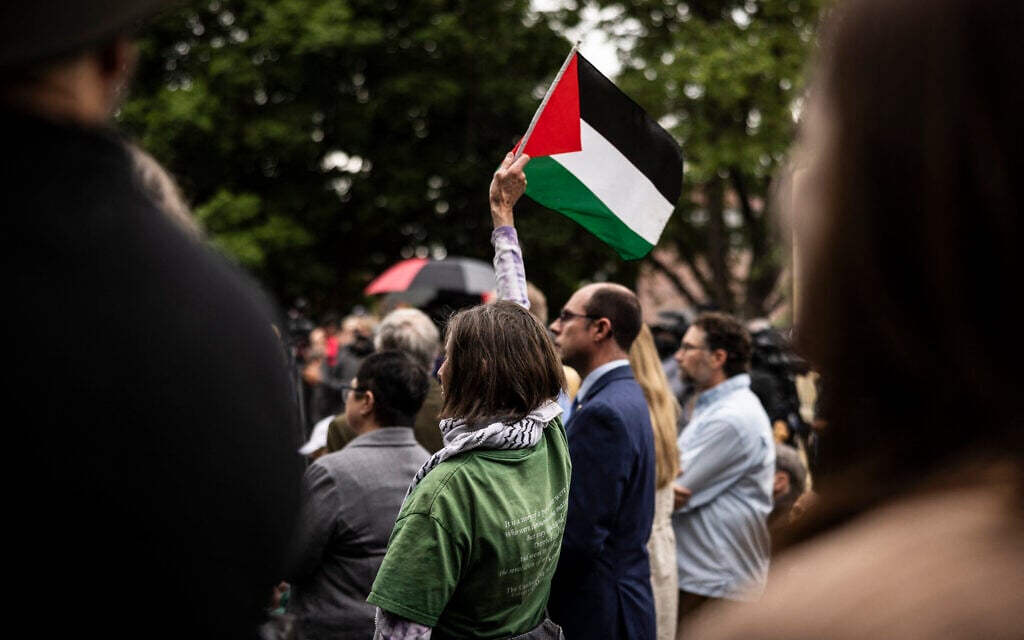
Thousands of pro-Palestinian demonstrators gathered outside Japan’s National Diet in Tokyo, demanding Prime Minister Sanae Takaichi’s resignation over her government’s stance on Palestine and its alignment with US and Israeli military policies.
The protesters expressed solidarity with the Palestinian people and condemned the ongoing Israeli war on the Gaza Strip and aggression across West Asia.
Demonstrators criticized Japan’s refusal to recognize the State of Palestine, its failure to impose sanctions on “Israel,” and its continued purchases of weapons from Israeli companies.
Protesters oppose Japan’s military expansion
Participants also voiced opposition to the government’s plans to increase military spending, revise Article 9 of Japan’s Constitution, which renounces war, and ease restrictions on arms exports.
Speakers criticized military cooperation between Tokyo and “Israel”, particularly reports of plans to purchase Israeli-made drones.
Protesters argued that these drones had been developed and tested through operations involving the direct targeting and killing of Palestinians. They called on the Japanese government to end all military partnerships with the Israeli occupation.
Protestors demand closure of Israeli embassy
In September, over 100 pro-Palestine demonstrators gathered outside of the Israeli embassy in Tokyo and called for the expulsion of the newly appointed Israeli ambassador to Japan, Emmanuel Navon, and the closure of the embassy.
The protesters denounced the Israeli war on Gaza and criticized Tokyo’s and Tel Aviv’s military relationship.
Protesters carried Palestinian flags and banners condemning the Israeli aggression, while chanting slogans calling for freedom for Palestine and an end to the war.
The Network Against Japan Arms Trade (NAJAT), one of the main groups organizing the protest, stated that the demonstration was intended to formally convey its demands to the Japanese state.
NAJAT said the appointment of a new Israeli ambassador provided an opportunity to renew calls for his expulsion and urge Japan to take a stronger stance against “Israel.”
Protesters further called on Japanese authorities to arrest Israeli Prime Minister Benjamin Netanyahu and demanded that the government close the Israeli embassy in Tokyo.
Israel has arrested more than 2,000 Palestinian children since the start of the genocide in the Gaza Strip, with at least 350 still detained in severe conditions, the Palestinian Prisoners Society said in a report this week.
The organization warned of an escalation in attacks on Palestinian children through practices including intimidation, arrest, torture, starvation, isolation and denial of medical care. It said information on the number of children detained in Gaza since the war began remains unclear, particularly due to missing-person figures in the enclave and the continued practice of forced disappearance by Israeli forces.
The group said Israel’s administrative detention policy, under which Palestinians are held without publicly filed charges or a clear release timeframe, leaves children facing an uncertain future and deprives them of family and educational stability. It added that Zionist courts contribute to continued violations against children amid a lack of effective accountability.
— WAFA News Agency – English (@WAFANewsEnglish) October 18, 2026
The report cited the case of Walid Khaled Ahmad, who died in Megiddo prison in March 2025 amid medical findings indicating severe emaciation and signs of malnutrition and dehydration. The group questioned accountability for his death, noting the investigation had been closed.
It also highlighted Mohammed Hamid, 15, who contracted scabies while detained in Ofer prison, leading to severe infections affecting vital organs. He underwent heart surgeries and was admitted to intensive care in critical condition before one of his legs was amputated. The group said Hamid continued receiving treatment for about three months after Israeli authorities released him following his health deterioration, a measure it described as an evasion of responsibility for his medical care.
The Palestinian Prisoners Society called for international action to secure the release of arbitrarily detained children, end administrative detention and coercive interrogations, and stop torture, starvation and denial of medical treatment. It said protecting Palestinian children requires firm international intervention to guarantee respect for their rights, lives and dignity.
According to UN reports and the Gaza Ministry of Health, Israeli forces have killed at least 21,638 children in the Strip since October 2023, including more than 1,000 infants under one year old.
A report by an independent UN commission of inquiry released in June said continued attacks have caused unprecedented deaths, injuries and trauma to children, consolidating the legal characterization of these acts as war crimes and crimes against humanity through deliberate violations of global treaties prohibiting extermination and collective punishment.
Since October 2023, more than 74,000 Palestinians have been killed and more than 175,000 wounded by Israeli fire in Gaza, where around 90% of infrastructure has been damaged or destroyed by massive bombardment. Israeli Army raids and settler attacks against Palestinians and their property have intensified in the occupied West Bank, including East Jerusalem, since the start of Israel’s genocide against Gaza in October 2023.
Iran’s ambassador and chargé d’affaires to the UN has stressed that any arrangements for the Gaza Strip’s future must fully respect Palestinian rights and self-determination, denouncing the United States and the Israeli regime for the current situation affecting the Strait of Hormuz.
Gholamhossein Darzi made the remarks on Friday, addressing a UN Security Council meeting on the situation in West Asia, including the Palestinian question.
He noted that Gaza remained devastated and continued to be subject to military aggression, despite the announcement of a ceasefire last year.
The ceasefire was announced last October as part of a United States-proposed plan to bring an end to two years of Israeli genocide, supposedly.
The Israeli regime has, however, killed more than 1,400 Palestinians during attacks across the territory ever since, in addition to the tens of thousands it had already killed throughout the genocide that began on October 7, 2023.
Darzi called for a permanent end to the Israeli aggression, lifting of the Israeli blockade on the coastal sliver, and realization of a lasting ceasefire in the territory.
He called for unconditional and complete withdrawal of Israeli forces from the territory as well as immediate and sustained delivery of humanitarian aid and deployment of relief personnel.
The diplomat called accountability for serious violations of international law a legal obligation, condemning the regime for committing genocide, war crimes, and crimes against humanity.
He also denounced expansion of illegal settlements, intensifying settler violence, and Israeli plans for “annexation” of the occupied West Bank.
Palestinians must be able to establish an independent, sovereign, and viable state, with the holy occupied city of al-Quds as its capital and full membership in the United Nations, the official stated.
He also demanded Israeli withdrawal from Lebanese territory and occupied Syrian areas and respect for both countries’ sovereignty.
Elsewhere in his remarks, Darzi slammed the United States and the Israeli regime for launching two rounds of unprovoked aggression against Iran respectively, last June and from February 28 until April 7 this year.
The aggressors, he noted, committed war crimes through deliberate targeting of civilians and critical infrastructure.
He also attributed the situation affecting the Strait of Hormuz to the American-Israeli atrocities, including an American naval blockade.
“Our position is crystal clear: The only practical way to restore normal and safe maritime navigation in the Strait of Hormuz is immediate and permanent cessation of US aggression, provision of credible guarantees against its recurrence, respect for Iran’s sovereign rights, and complete lifting of the naval blockade and other unlawful coercive measures.”
Following the US-Israeli aggression against Iran on February 28, Tehran closed the Strait of Hormuz to its adversaries. The key waterway has remained largely closed ever since, driving up fuel prices worldwide and increasing the cost of living for millions of people.
Tehran has made it clear that it will not reopen the strait until Washington meets its demands, including a permanent end to the war.
BEIRUT – The number of books destroyed by Israeli bombings of libraries, as well as religious and cultural institutions since October 2023, has exceeded 3 million copies, founder and coordinator of the National Network for the Protection of Libraries, Archives, and Cultural Heritage in Lebanon Hadi Bekdash told Sputnik on Saturday.
“There are reports of the burning of more than 700,000 books belonging to Lebanese and Arab publishers, as well as more than 3 million books from homes, libraries, religious centers, family collections, researchers’ libraries, and universities, publishers, cultural institutions, and private collections since 2023,” Bekdash said.
In 2026, practically confirmed information appeared about the destruction of dozens of public and hundreds of private libraries during the conflict with Israel, he added.
These data do not reflect the full scale of losses, since Lebanon still does not have a unified national database of destroyed libraries, archives, and book collections, the coordinator said.
Bekdash added that it will be possible to finally assess the damage only after conducting a nationwide inventory of lost and damaged collections.
A national campaign, A Million Books for Lebanon, is currently underway in the country, aimed at restoring destroyed and damaged libraries.
by Aaron Hanscom, PJ Media: Iran may be planning a preemptive strike on Israel as Israel’s October 27 election approaches. That’s the assessment of Brigadier General (Ret.) Amir Avivi, the founder and CEO of the Israel Defense and Security Forum (IDSF). Avivi noted on October 14 that Chief of Staff Eyal Zamir recently canceled a […]
Chinese Foreign Minister Wang Yi delivered a sharp rebuke to Israeli President Isaac Herzog during a diplomatic meeting in Baku, calling the Palestinian cause “the greatest historical injustice of this century” and demanding that “Israel” halt its expansion in the occupied West Bank, according to statements released Friday by Beijing’s Foreign Ministry.
The bilateral discussions took place on the sidelines of the Conference on Interaction and Confidence Building Measures in Asia (CICA) summit held in the Azerbaijani capital.
According to a Chinese Foreign Ministry statement cited by Reuters, Wang urged the Israeli government to immediately cease its “forced establishment” of West Bank settlements and reverse its expansion policies.
He emphasized that Beijing’s long-standing position remains rooted in resolving the core conflict through a “two-state solution,” calling for the full reopening of access routes to the Gaza Strip to relieve ongoing humanitarian suffering.
Summit walkout and diplomatic tension
The direct exchange between Beijing and Israeli leadership unfolded against a backdrop of heightened diplomatic friction at the summit.
Earlier in the proceedings, several delegations representing Arab and Islamic nations walked out of the CICA conference hall during Herzog’s address in protest against Israeli aggression and continued settlement expansion in the West Bank.
Despite the firm pushback from Beijing, Herzog emphasized what he described as Israeli security imperatives during the meeting, pointing to strategic threats posed by regional groups while highlighting the importance of maintaining economic and trade ties between China and the occupation.
China, which has historically supported the Palestinian cause and recognized Palestinian statehood since 1988, has increasingly positioned itself as an active diplomatic mediator in the region. Wang’s remarks signal Beijing’s continued insistence that the Palestinian cause cannot be stabilized without addressing Palestinian sovereignty and halting unilateral territorial changes on the ground.
A study by University of Maryland researcher Shibley Telhami points to a major shift in US public opinion, with sympathy for Palestinians surpassing support for “Israel” and growing numbers of Americans viewing the occupation as responsible for genocide.
Drawing on Gallup data, Telhami noted that sympathy for “Israel” among the US public has fallen from around 50% to 36%, while sympathy for Palestinians has risen to 41%.
Among Democrats, support for “Israel” has plunged from more than 50% in 2001 to just 17% today, while sympathy for Palestinians has climbed to 65%, according to the researcher.
Telhami’s Critical Issues Poll at the University of Maryland also found that more than 60% of respondents believe US military and diplomatic support enables “Israel” to carry out its actions.
Generational shift extends across political lines
Citing data from the Pew Research Center, Telhami pointed to a narrowing generational gap among Democrats in negative views of “Israel.” The figures showed that 71% of younger Democrats and 66% of older Democrats held negative views of the occupation.
One of the most significant changes, however, has emerged among young Republicans under the age of 35. According to the cited polling, the share of young Republicans expressing negative views of “Israel” rose from 35% to 57%.
Only 22% of young Republicans agreed that “Israel’s” actions in Gaza were “justified as self-defense,” compared with 52% of their older counterparts.
Telhami highlighted findings indicating that 80% of academics since October 7, 2023, and 42% of the general US public feel they must exercise self-censorship or caution when discussing the genocide of Palestinians in Gaza, fearing accusations linked to their criticism.
The findings point to growing public criticism of “Israel” and US support for it, alongside continued concerns about the social and professional consequences of expressing such views.
A prominent Israeli rabbi on Friday issued a religious ruling permitting Israeli occupiers to take olives from Palestinian land in the occupied West Bank, claiming that harvesting the crop “demonstrates Jewish ownership of the land,” Anadolu reports.
The ruling was issued by Rabbi Dov Lior, one of the most prominent religious authorities among Israeli occupiers in the West Bank, and was published by Israeli Channel 13.
It comes amid escalating occupier violence against Palestinians and their property, particularly farmers during the olive harvest season.
Lior claimed that Palestinians do not own their land, arguing that they had not purchased it from the “people of Israel” or from any Jewish person and describing the land as “stolen property.”
Citing Jewish religious law, he claimed that ownership of land cannot be transferred through theft and that Palestinian land therefore remains the property of the “people of Israel.”
He also argued that Palestinians planting olive trees on their land does not give them ownership rights over either the land or its produce.
Lior claimed Palestinians had already received sufficient compensation for planting the trees by consuming their fruit over previous years, and said both the land and harvest should return to what he called their “rightful owners.”
His ruling was not limited to land near illegal settlements, however, and also permitted occupiers to take olive crops from Palestinian areas farther away.
The ruling comes as attacks on Palestinian farmers during the West Bank olive harvest season have intensified, including assaults, preventing farmers from reaching their land, damaging trees and stealing crops.
Such attacks recur during the olive harvest, which peaks in October each year, while this month has seen an increase in attacks by occupiers against Palestinians and their property.
Palestinian, Israeli and international rights organizations have accused Israeli authorities of failing to stop occupier violence or hold perpetrators accountable despite attacks targeting Palestinians, their homes, farmland, vehicles and other property.
Israeli settlements built on occupied Palestinian land are considered illegal under international law, while Palestinians maintain their rights to their land and reject attempts to seize it.
Espionage novels portray the spy as a person in a trench coat carrying stolen documents and disappearing into a dark alley. Israeli spy, Jonathan Pollard, certainly fit that picture. A Navy analyst who stole American secrets including the complete ten-volume manual of the National Security Agency exposing how the US gathers its signal intelligence and the names of thousands of foreign individuals who worked for US spy agencies. Intelligence officials believe Israel shared stolen documents with the Soviet Union. According to several intelligence assessments, Pollard was one of the most damaging spies in US history.
Pollard received a life sentence in 1987 and was released in 2015. At first, Israel claimed he was a rogue, apologised and did not admit he had been its agent until 1998. In 2007, Israel named a square in Jerusalem after him, honouring him for his services.
Pollard was neither the first nor the last Israeli asset. Lawrence Franklin, a Pentagon analyst, pleaded guilty in 2005 to passing classified information to an Israeli embassy official and two AIPAC staffers. Ben-Ami Kadish, a former Army engineer, pleaded guilty in 2008 to passing secret documents to an Israeli consulate official, and served no prison time. Stewart Nozette from NASA was charged with attempted espionage following an FBI sting operation. In 1970, Richard Perle was caught in an FBI wiretap discussing classified information with an Israeli embassy official.
In 2001, the same Perle chaired the Pentagon’s Defense Policy Board, while two other Israel-firsters, Douglas Feith and Paul Wolfowitz held senior posts in the same building. Franklin had worked in Feith’s policy office when he was indicted for espionage. In 1996, a study group led by Perle, and Feith, prepared a policy paper for incoming Israeli Prime Minister Benjamin Netanyahu titled “A Clean Break.” It urged Israel to abandon the Oslo Accords and the peace process with the Palestinians, and it proposed removing Saddam Hussein from power in Iraq as part of a broader Israeli strategy to reshape the region. Five years later, as leaders in the Pentagon, they delivered America’s first made-for-Israel war in Iraq.
The above is in no way intended to insinuate or allege that anyone, least of all these Zionist Americans, has dual loyalties. No. It is so profound, there is only one way to describe it: Israel-first loyalty.
Fast forward to 2026. David Milstein, stepson of Israeli propagandist Mark Levin and a senior aide to Ambassador Mike Huckabee, effectively the ambassador’s chief of staff. An unabashed Israel-first American Zionist, Milstein oversees the embassy’s West Bank and Gaza portfolio, placing the fox in charge of the henhouse. According to The New York Times, citing a dozen people who have worked with him, Milstein has repeatedly quashed or rewritten embassy reports to the U.S. State Department to favour Netanyahu’s government.
When the Israeli government accelerated the approval of building more Jewish-only colonies in occupied West Bank, embassy staff drafted an urgent memo warning that the move might cross President Trump’s own red line against annexation. According to The Times, the memo never left Jerusalem.
In response to the surge in attacks by Israeli Jewish mobs on Palestinian homes and farms, embassy staff prepared a report documenting Israel’s failure to rein in violence by Zionist youth. Milstein rewrote it and sent an embassy cable to Washington titled “Government Cracks Down on Escalating West Bank Violence.” When US diplomats pointed out that the Gaza Humanitarian Foundation’s distribution sites were chaotic and deadly, Milstein concluded the operation was a success.
Thirty members of Congress, led by Senator Chris Van Hollen, asked what had become of the investigations into the killings of nine Palestinian Americans by Israeli Jewish mobs and soldiers. Embassy staff compiled a report showing little progress and no charges. According to The Times, the report was set aside in favor of a letter saying Israel was handling the cases properly.
Cable traffic from the section covering Palestinian affairs fell from several a week to a few a month, because American embassy staff feared their work would be blocked, rewritten or impact their diplomatic career. Milstein would question embassy staff if they were “pro-Israel” or “pro-Hamas,” not if they were loyal Americans. A diplomatic mission that polices loyalty with questions like that ceases to function as an American embassy.
I once shared a lunch table with an American ambassador serving abroad. He recounted how, during George Shultz’s tenure as Secretary of State, Shultz would meet newly appointed ambassadors, point to a world map in his office, and ask the appointee to identify their country. Most would point to the country where they had been assigned. Shultz would correct them: “No, your country is the United States. Your duty is to serve your own country’s interests, not those of the country to which you are assigned.”
Ambassador Huckabee and Milstein either never heard that lesson, or serving Israel was their priority.
Rather than representing American interests in Jerusalem, the embassy operates as Israel’s envoy within the US government. Turning the US embassy into a Zionist mission run by the evangelical church, and an indoctrinated Zionist whose stepfather is referred to as “Tel Aviv Levin.”
Here again, no one is accusing Huckabee or Milstein of being foreign agents. Frankly, Israel does not need them to be. It need not recruit them or pay them like Pollard. Officials ideologically devoted to Israel can do the same work from within the U.S. government, under legitimate titles and without risking arrest.
No country receives more American financial and military aid than Israel. Yet US counterintelligence assessments have identified Israel as one of the most aggressive intelligence-gathering threats to the American homeland. Jonathan Pollard and others may have been the quintessential trench-coat spies. But the more dangerous risk is not someone stealing classified files; it is Americans whose loyalty to Israel overrides their duty to the U.S., operating in the halls of the White House and the Pentagon with one focus: serve Israel.
Consider David Frum, who coined President George W. Bush’s “axis of evil” phrase, helping lay the rhetorical roadmap for America’s longest foreign war.
Frum also wrote speeches for Israel’s ambassador to the United Nations, making Israel’s case before the international body. The same writer, serving an Israel-first agenda from two different platforms: first helping sell America a war in the Middle East, then making Israel’s case before the world.
In the 21st century, with Zionist control of mainstream corporate media, and these implants inside America’s halls of power, Israel does not require trench coats, or stolen documents. It operates through officials who occupy positions of power deciding what American policymakers read by shaping diplomatic reporting, suppressing information and steering American decisions in ways that advances Israel’s strategic interests over America’s own. And whenever Israel’s interests and Washington’s information needs diverge, the information bends, delivered in plain sight, through official channels, under official titles, and on the American taxpayer’s payroll.
I’ve had this article sitting in storage waiting for the right moment to publish it. Tonight, Mario Nawfal hosted a debate on Iran that featured Robert Barnes and Matt Tardio. Matt put out so much disinformation and falsities that I believe now is the time to set the record straight about what happened to the JCPOA. I was tempted to attach the prefix, “RE” to Matt’s last name but decided not to go down the ad hominem path. Instead, let’s just deal with the facts.
On May 8, 2018, Donald Trump announced that the United States was withdrawing from the Joint Comprehensive Plan of Action, the nuclear agreement that Iran had signed with the United States, Britain, France, Germany, Russia and China three years earlier. He reimposed every sanction the deal had lifted and then piled on more under a policy he called “maximum pressure.” Iran had not violated the agreement. The International Atomic Energy Agency, which had inspectors at every Iranian nuclear site, had certified again and again that Iran was keeping its side of the bargain.
Most people in Washington expected Tehran to respond in kind: throw out the inspectors, restart the centrifuges and race for the bomb. Some in the administration hoped it would, because that would have justified the next step. Iran did the opposite. For a full year it continued to abide by every limit in the agreement, keeping its enrichment at 3.67%, its stockpile under 300 kilograms and its doors open to the IAEA. Understanding why tells you a great deal about how Iran’s leaders actually think, and it undercuts the caricature of a reckless regime that dominates American commentary.
It put the United States in the wrong
The first reason was legitimacy. By staying in the deal, Iran turned the dispute from “Iran versus the world” into “the United States versus everyone else.” Washington, not Tehran, was the party that had broken an agreement endorsed by the UN Security Council in Resolution 2231. Europe, Russia and China all said so. For the first time in decades Iran held the diplomatic high ground, and its leaders understood that giving it up would reunite the coalition that had sanctioned them before 2015.
That calculation paid off in a way few predicted. In August 2020 the Trump administration tried to invoke the deal’s “snapback” clause to restore all UN sanctions on Iran. Thirteen of the fifteen members of the Security Council rejected the move, on the grounds that the United States had left the agreement and could not use its provisions. Had Iran walked out in 2018, the snapback would have been automatic and unanimous. Patience bought Iran protection at the United Nations.
It gave Europe a chance to deliver
The second reason was economic hope. The deal’s value to Iran was sanctions relief, and the Europeans promised to preserve some of it. They created a special trade channel, INSTEX, designed to let European companies do business with Iran without exposure to American sanctions. Tehran gave Europe time to make it work. It never did. INSTEX completed its first transaction, a shipment of medical supplies, only in March 2020, and European companies fled Iran rather than risk being cut off from the American market and the dollar. Iran’s oil exports collapsed from about 2.5 million barrels a day to a few hundred thousand. But Iran’s leaders had to test the European promise before they could declare it worthless, and they did.
It denied Washington and Israel a pretext
The third reason was security. Iran’s leaders knew that any visible move toward a bomb would be used to justify military strikes. Hawks in Washington and Jerusalem had argued for years that the deal only delayed the inevitable; an Iranian walkout would have proved their case. By staying inside the agreement, with inspectors on the ground, Iran made it far harder to sell a war. The IAEA’s reports were Iran’s best defense.
This was consistent with the position Iran’s leadership has held publicly for two decades. Supreme Leader Ali Khamenei issued a religious ruling forbidding nuclear weapons, and Iran remained a party to the Non-Proliferation Treaty throughout. Whatever one thinks of the sincerity of that position, Iran’s conduct after May 2018 matched it.
It bet on outlasting Trump
The fourth reason was time. Iran’s leaders had watched American politics closely, and they knew presidents come and go. The deal had been negotiated by one administration and abandoned by the next; it could be restored by a third. Staying in the agreement kept that door open. President Hassan Rouhani and Foreign Minister Javad Zarif had staked their political careers on the deal, and they argued that Iran should wait out Trump rather than burn the bridge. Khamenei, who had always been skeptical of American promises, allowed them to make that case. It was a wager that the United States would return to its word.
Why the patience ran out
Iran’s patience was not unlimited, and it was never unconditional. On May 8, 2019, exactly one year after Trump’s announcement, Rouhani said Iran would begin to scale back its commitments in stages. Iran invoked paragraph 36 of the deal itself, which allows a party to stop performing its obligations if another party is in significant non-compliance. Each step was announced in advance, carried out under IAEA observation and described as reversible the moment the United States returned and lifted sanctions. In July 2019 Iran exceeded the stockpile limit and enriched to 4.5%. In November it resumed enrichment at Fordow.
Then came the events that hardened Tehran. The United States killed General Qassem Soleimani in January 2020. Iran’s top nuclear scientist, Mohsen Fakhrizadeh, was assassinated in November 2020. The Natanz enrichment plant was sabotaged in April 2021. Each attack was answered with another step: 20% enrichment, the end of expanded inspections, and finally 60%. The Biden administration had a chance to restore the deal in Vienna in 2021 and 2022, and those talks collapsed too.
Sixty percent as leverage
The most alarming of Iran’s steps, the decision in April 2021 to enrich uranium to 60%, is usually cited as proof that Tehran was racing for a bomb. Look at the timing and the terms and it reads very differently. Talks to restore the deal opened in Vienna on April 6, 2021. Five days later the enrichment hall at Natanz was sabotaged in an attack widely attributed to Israel. Iran announced 60% enrichment two days after that.
The move was a message aimed at the negotiating table. Iran was telling the remaining parties, and the United States, that every month they failed to honor their commitments would cost them, and that the cost would rise. Iran’s government spokesman, Ali Rabiei, said publicly on April 20 that the step “can quickly be reversed” if the other parties returned to their obligations, and that enrichment would then go back to the level set in the 2015 accord. The parliament’s law of December 2020, which ordered higher enrichment and fewer inspections, was written the same way: it tied every escalation to the absence of sanctions relief.
That is leverage, not a breakout. Iran had watched Europe fail to deliver for three years and the United States refuse to return without new concessions. Staying at 3.67% had won it praise and nothing else. Raising the stakes was the only tool it had left to make the other signatories take their own commitments seriously. Iran enriched to 60% so that it would have something to give back.
What the critics will say
Critics make three arguments that challenge my thesis. The first is that Iran was provoking the United States all along through its missile program and its support for allies across the region. But neither was covered by the JCPOA. The deal was deliberately limited to the nuclear program because that was the only issue on which agreement was possible. Holding Iran responsible for breaking terms that were never in the agreement is not a fair test.
The second is that 60% enrichment has no civilian purpose. That is largely true, and it is the point. A bargaining chip has to be valuable to the other side, and 60% was valuable precisely because it worried Washington, Europe and Israel. Iran never enriched to 90%, never left the Non-Proliferation Treaty and never expelled inspectors during this period.
The third is that in early 2023 the IAEA found uranium particles enriched to 83.7% at Fordow. Iran said they were the result of unintended fluctuations in the enrichment process, and the agency did not report any stockpile at that level. Particles are not a stockpile, and a stockpile is not a weapon. Iran’s accumulated 60% material did grow, to about 87.5 kilograms by that report and far more later, and that growth was dangerous. But it was the predictable price of a policy of pressure that gave Iran no reason to stop.
The lesson
The record shows a government that responded to the breach of an international agreement with restraint, then with measured and reversible pressure, and only escalated after its economy had been strangled and its officers and scientists killed. That is not the behavior of a regime determined to build a bomb at the first opportunity. It is the behavior of a government that wanted the deal to survive and concluded, slowly, that the United States would not let it.
There is a lesson here for Washington. When the United States walked away from an agreement that was working, it did not get a better deal. It got an Iran with near-weapons-grade uranium, fewer inspectors and every reason to doubt American promises. Iran kept the JCPOA alive for a year after Trump abandoned it. The question we should be asking is not why Iran eventually stepped back, but why the United States walked away from a deal that was keeping Iran a year away from a bomb.
The World Zionist Organization was founded in 1897. It has an elaborate structure, including a World Zionist Congress, a Zionist General Council, a Zionist Executive, and a Zionist Supreme Court. And this is just one of the many such entities…

 Login