Login

The Real Trump Tower
Trump’s grotesque rerun of the Gilded Age demands a rebuke.


© John Tully for The New York Times

© The New York Times

© Brandon Bell/Getty Images


© Pool photo by Robin Buckson
Rev. Franklin Graham is urging Americans to "look prayerfully at what both parties stand for," laying out a few key differences between the Republican Party and Democrat Party in a viral social media post less than two weeks before Election Day.
The post Franklin Graham Lays Out the Differences Between Parties Ahead of Midterms: ‘Look Prayerfully at what Both Parties Stand For’ appeared first on Breitbart.

In this segment of Free Media, Reason Senior Editor Robby Soave and Daily Caller Editor in Chief Amber Duke discuss worrisome remarks from Sen. Elissa Slotkin (D-MI) and journalist Kara Swisher, suggesting retribution for those in the Trump Administration if and when Democrats regain control of Congress.
If you enjoy Free Media, come watch Robby debate at our upcoming Reason Versus in D.C. Tickets are available here.
The post Elissa Slotkin and Kara Swisher Want Democrats To Go After MAGA if They Win appeared first on Reason Magazine.

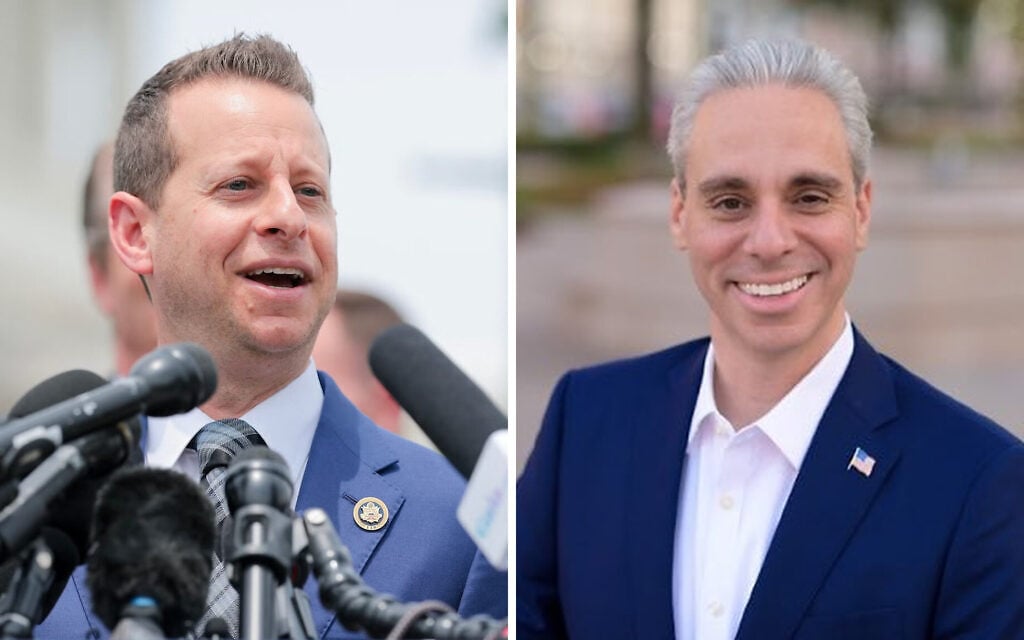
Minnesota Democratic U.S. Senate nominee and Lt. Gov. Peggy Flanagan previously claimed she graduated Phi Beta Kappa despite never belonging to the prestigious honor society, while her official state biography suggests she completed two college majors when she actually earned one major and a minor, according to an exclusive report published Wednesday by the Wall Street Journal.
The post Report: Minnesota Dem Senate Nominee Peggy Flanagan Falsely Claimed Phi Beta Kappa Membership, Misrepresented College Credentials appeared first on Breitbart.
Rep. Scott Perry (R-PA) has released a campaign advertisement highlighting allegations that Democrat congressional challenger Janelle Stelson was naked outside her home in view of a neighbor's grandchild, referencing a written statement from a neighbor who claims to have photographed the incident.
The post Rep. Scott Perry Ad Highlights Police Complaint Alleging Democrat Janelle Stelson Exposed Herself to a Child appeared first on Breitbart.

© The New York Times
Niculescu secured 280 votes in favour and 58 against, comfortably exceeding the 233 required for confirmation. His ministers were sworn in before President Nicuşor Dan at the Cotroceni Palace in Bucharest later that evening, formally ending the prolonged government formation process.
The new administration comprises 18 ministers, including two delegated ministers. The Social Democratic Party (PSD) controls the majority of portfolios, while independent specialists hold several important positions, including finance and foreign affairs.
The appointment represents a political success for President Dan, who nominated Niculescu on 5 October following three unsuccessful attempts to assemble a functioning government.
EU Today reported earlier this month on Niculescu’s nomination, which followed the collapse of previous negotiations and growing pressure on Romania’s political institutions.
The new cabinet is heavily dependent on agreements between parties that have frequently disagreed over economic policy and public spending. Although the parliamentary vote demonstrated sufficient support for its installation, the arrangement does not provide the government with a permanent majority.
The National Liberal Party (PNL) and the Democratic Alliance of Hungarians in Romania (UDMR) supported the investiture while remaining outside the administration.
The arrangement gives Niculescu an opportunity to govern, but each major legislative proposal will require continued cooperation between parties with competing priorities.
The Social Democrats, who hold 11 of the ministerial positions, will exercise substantial influence over domestic policy, particularly decisions involving public-sector spending, welfare and taxation.
Romania’s public finances represent the government’s most urgent problem.
The previous administration, led by Ilie Bolojan, collapsed in May following unpopular austerity measures. Political opposition to fiscal consolidation has complicated efforts to stabilise the budget and meet Romania’s commitments under the European Union’s fiscal framework.
Niculescu has indicated that addressing the deficit will be an immediate priority. Finance Minister Alexandru Nazare, appointed as an independent, faces the task of establishing a credible budget programme without provoking another parliamentary crisis.
The choices are politically difficult. Spending reductions risk resistance from public-sector employees and households already affected by higher living costs, while substantial tax increases could place further pressure on businesses and consumption.
Failure to establish a credible fiscal programme would prolong uncertainty over Romania’s borrowing requirements and its ability to comply with European budgetary obligations.
Brussels has a direct interest in the outcome. Romania remains subject to EU fiscal oversight, and the European Commission will assess whether the new administration’s financial plans are consistent with the country’s obligations.
The government’s credibility will depend on whether its parliamentary supporters are prepared to approve the measures that fiscal consolidation requires.
The change of government also comes at a sensitive moment in Romania’s relationship with European institutions.
Romania has faced scrutiny over reforms linked to the EU’s Recovery and Resilience Facility, particularly legislation concerning public integrity and institutional accountability.
EU Today previously examined the European Commission’s assessment of Romania’s integrity legislation and its implications for recovery funding.
Although the EU recovery programme reached its principal implementation deadline in August, outstanding assessments and financial decisions continue to carry consequences for national budgets.
A functioning government is therefore important not only for domestic legislation but also for negotiations with Brussels over fiscal commitments, investment and the wider EU budget.
Romania must also address longer-term weaknesses in public administration, infrastructure financing and the implementation of European legislation.
Niculescu takes office against the background of Romania’s unusually turbulent political history since the annulment of the 2024 presidential election amid allegations of Russian interference.
The subsequent institutional disputes damaged confidence in the political system and contributed to the fragmentation of parliamentary support.
Opposition parties, including the nationalist Alliance for the Union of Romanians (AUR), are positioned to challenge the government’s legitimacy and economic measures as the administration begins work.
Romania’s strategic importance extends beyond its domestic political difficulties. As an EU and NATO member bordering Ukraine and Moldova, it plays a substantial role in Black Sea security, military logistics and regional infrastructure.
Prolonged instability in Bucharest has therefore affected a country whose decisions carry consequences for European security and cross-border economic cooperation.
For the new prime minister, the immediate objective is to translate Tuesday’s parliamentary majority into support for legislation. His first serious test will come when the cabinet presents the fiscal measures that its supporters have so far struggled to agree upon.
The parliamentary vote has ended Romania’s government formation crisis. It has not resolved the disagreements that produced it.

© The New York Times


Early voting began Monday in Texas and most Florida counties, setting the stage for closely watched midterm contests in two Republican strongholds where Latino voters’ concerns over inflation, immigration and public safety could shape the electoral landscape.
RELATED: Cuba Accuses United States of Pressuring UN Votes on Blockade
With Latinos accounting for 40% of Texas’ population and 28.7% of Florida’s, both states offer a key test of the parties’ ability to attract Hispanic voters. Economic pressures, rising living costs, immigration policy and public safety are among the issues shaping voters’ priorities.
In Florida, voters turned out early in heavily Hispanic areas, including Miami-Dade County and Doral. Their concerns varied: some pointed to rising food and fuel prices and the strain on households and small businesses, while others emphasized public safety, education and support for the Trump administration.
Foreign policy and immigration have also exposed divisions within the community. In Doral, home to a significant Venezuelan population, tensions over the conflict with Iran and its potential impact on oil prices have added to debate over the administration’s tougher immigration policies.
🗳️ EE. UU.: comenzó la votación anticipada en Texas, que se suma a Georgia y Arizona. Las elecciones del 3 de noviembre definirán el control del Congreso. #teleSUR #19oct pic.twitter.com/EHFa1yUbOU
— teleSUR TV (@teleSURtv) October 19, 2026
Text Reads: 🗳️ U.S.: Early voting has begun in Texas, joining Georgia and Arizona. The November 3 elections will determine control of Congress.
The early voting period coincides with a decline in Trump’s approval among Hispanic voters, according to a recent Pew Research Center study. His approval rating stood at 24% in October, down from 38% in February 2025, at the beginning of his term.
The figures come as both parties compete in high-profile state and congressional races. In Florida, Republican Byron Donalds and Democrat David Jolly are vying for the governorship in a contest that has proved closer than expected. Republican Representative María Elvira Salazar is seeking re-election in the state’s 27th Congressional District against Democratic challenger Eliott Rodríguez.
In Texas, Republican Attorney General Ken Paxton faces Democrat James Talarico in the Senate race, while Republican Governor Greg Abbott is challenged by state legislator Gina Hinojosa.
Democrats are hoping that declining support for Trump among Hispanic voters, combined with greater participation in early and mail-in voting, will help them contest key seats in the House of Representatives and Senate. Republicans, meanwhile, are seeking to maintain their dominance in both states through the end of the voting period.
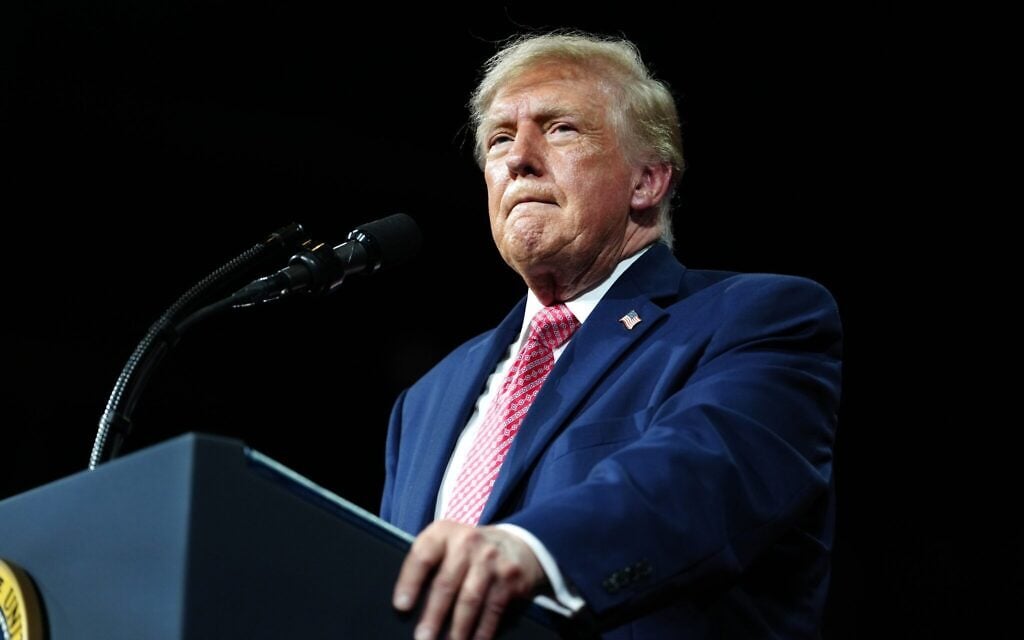

With little more than two weeks to go until the midterm elections, it seems increasingly possible that the Democrats, already a big favorite to win control of the House of Representatives, will also take charge of the planet's most elite nursing home, the United States Senate, where the median age is 64 years old. RealClearPolitics' poll aggregator has moved control of "the world's greatest deliberative body" (as its members are grandiosely wont to call it) to "toss up," status and prediction markets are now breaking big toward a blue wave. As of this writing, Kalshi has its Senate odds at 63 percent for the Dems vs. 37 percent for the GOP; Polymarket is at 62 percent vs. 39 percent.
As gratifying as it might be to see unprincipled Trump enablers reduced to minority status after signing off on economy-wrecking tariffs, inhumane immigration detentions, and wars of choice, there's at least one good reason to dread a Democratic majority too: Sen. Elizabeth Warren, the Massachusetts progressive who is spending the run-up to the midterms freaking out over possible consolidation in the condiments business and accusing private equity firms of gutting such shopping-mall favorites as Claire's and Toys R Us. There's every reason to believe that a Senate run by Warren and other economic interventionists will waste time, money, and resources trying to prevent a world in which, per the X wag Iowahawkblog, "a panopticon conglomerate owns two brands of hot sauce."
On October 13, Warren posted this dire warning to X:
Hellmann's mayo
McCormick spices
Cholula hot sauce
Frank's RedHotWhat do these products have in common? One company could soon control them all.
I have concerns that McCormick and Unilever's $45 billion merger could increase YOUR grocery prices.
— Elizabeth Warren (@SenWarren) October 13, 2026
It's hard to think of a more competitive and varied market than the one for hot sauces, which is expected to more than double over the next decade. The barriers to entry are generally low, as are the key ingredients, and new entrants can easily market and sell online, avoiding the costs of buying shelf space in conventional supermarkets. Yet Warren is urging regulators at the Department of Justice and the Federal Trade Commission to halt mergers of both product makers like McCormick and Unilever and grocery stores like Kroger and Giant Eagle.
The latter complaint is particularly picayune. Kroger is one of the country's largest supermarket chains, operating around 2,800 stores under its own name as well as Harris Teeter, Ralph's, and others. Giant Eagle operates about 170 stores. This merger is no more the stuff of nightmares than a single company producing both Cholula and Frank's RedHot. If Warren gains more clout from being in the majority, expect her to butt in more and more on such mergers.
Making it harder for businesses to adapt is not a recipe for making goods and services more affordable. But Warren is keen to blame economic creative destruction not on "new forms of industrial organization that capitalist enterprise creates" (as Joseph Schumpeter would have it), but on pure greed. In a TikTok released earlier this month, she shows a poster board with corporate logos from once-thriving companies that she says have been "gutted" by "private equity" firms.
"Here's your local mall," she piously intones. "Now, private equity wants you to believe that Red Lobster went bankrupt because of their endless shrimp….They want you to believe that Claire's went bankrupt because teens stopped shopping at the mall." In Warren's telling, private equity firms magically take over thriving businesses and then strip them bare. The typical pattern is that private equity enters the picture after a business is failing.
Virtually all accounts of the decline of, for example, Red Lobster, note that the chain had been spiraling for several reasons before the private equity firm Golden Gate Capital got involved in 2014. As this CNN article notes, the chain, which started in 1968, had seen drops in sales as customer desires changed. Management compounded the difficulties with a series of bad decisions, including continuing various all-you-can-eat menu specials, before coming out of Chapter 11 bankruptcy last year.
Similarly, it's true that some teens still go to malls and get their ears pierced at Claire's. But anyone who has spent time in retail America over the past few decades knows that malls are no longer the destination that they once were. As CapitalOne Shopping Research documents, "in 1986, there were 25,000 malls, large and small, nationwide." By 2023, that number had shrunk to just 1,200. While some malls are coming back, most are not, and for reasons that have nothing to do with private equity. Online retails plays a role (though a smaller one than usually imagined, with e-commerce accounting for less than 20 percent of all retail sales). But mostly, it's that people today tend to want a different sort of retail environment. Anchor stores—think Macy's and J.C. Penney—are shadows of themselves, and younger people have less unstructured time in which to prowl food courts and arcades.
For politicians like Elizabeth Warren, though, there can be no financial gains or losses that aren't the result of shadowy, conspiratorial forces. If her party takes control of the Senate, her words will carry more weight. But it will be American consumers that ultimately shoulder the burden of an even-more-regulated economy. The market for hot sauces will almost certainly stay spicy, but many other parts will surely suffer.
The post Be Prepared for Elizabeth Warren's Reign of Economic Error appeared first on Reason Magazine.

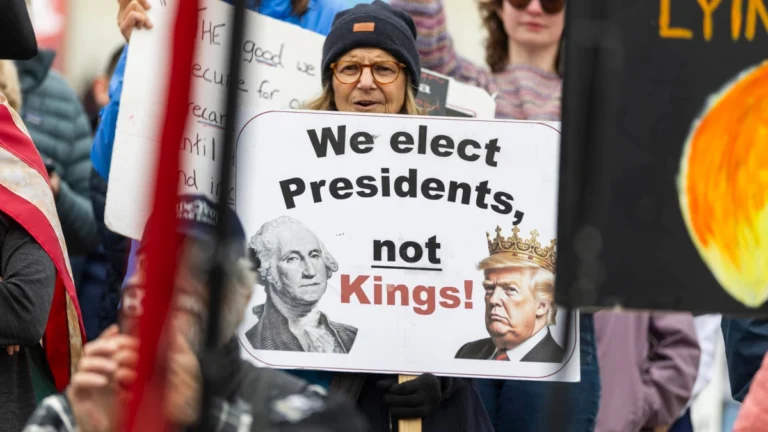
The No Kings movement held nearly 3,000 rallies and marches across the United States on Saturday, urging voters to cast their ballots early in the November 3 midterm elections, as the Trump administration intensified its efforts to challenge mail-in voting and scrutinize ballots cast by suspected noncitizens.
RELATED: Trump’s Attack on Mail-In Voting Seeks to Create an Advantage for Republicans
The nationwide mobilization, held under the slogan “No Kings: Vote Early,” drew millions of participants, according to USA Today, with events in all 50 states and Washington, D.C. The demonstrations came two weeks before elections that will determine whether Republicans retain control of Congress for the final two years of President Donald Trump’s term.
Organizers said the campaign aimed to turn mass mobilization into electoral participation by encouraging voters to make voting plans, cast their ballots early and help protect every eligible vote. They argued that historically high turnout would make it harder for the Trump administration to challenge the results by alleging fraud.
“Across thousands of events in all 50 states and DC today, we are turning enormous people power into direct voter power,” the No Kings Coalition said in a social media statement. It described the initiative as a nationwide effort to encourage early voting and build a network of Americans prepared to defend eligible ballots.
Text Reads: Demonstrations in Washington, U.S., under the slogan “No Kings: Vote Early,” seek to channel political protest into electoral participation. They call for placing limits on President Trump and protecting the Constitution ahead of the elections.
The coalition also pointed to the rising cost of groceries, gasoline, electricity and other daily necessities, arguing that decisions made by political leaders directly shape families’ lives and economic prospects. It presented the early-voting campaign as the next step in reclaiming political influence after a year of mass demonstrations.
In Atlanta, city council member Michael Julian Bond urged rally participants to encourage others to vote before Election Day rather than wait until the last minute.
“The Constitution gives you a power. That is the power of the vote,” Bond told the crowd.
In Phoenix, Arizona, Democratic Senator Rubén Gallego linked the campaign to opposition to the Trump administration’s policies, accusing the president and congressional Republicans of worsening economic conditions for ordinary Americans while enriching their allies.
“Today, we voted early to send a message loud and clear: no to separating our families, no to corruption, no to no oligarchs, no to stupid forever wars, and no kings.,” Gallego wrote on X.
Today, we voted early to send a message loud and clear: no to separating our families, no to corruption, no to no oligarchs, no to stupid forever wars, and no kings. https://t.co/qtT9Gp7Lwf
— Ruben Gallego (@RubenGallego) October 17, 2026
Democratic Representative Yassamin Ansari, who also attended the Phoenix rally, called the upcoming election “the most important election of our lives.” She cited the administration’s deportation policies, the war in Iran, cuts to health care and food assistance, and widespread corruption allegations as central issues facing voters.
Ansari questioned whether Americans would accept immigration enforcement practices that frighten communities and separate families, policies that leave millions without health care, or what she described as a transfer of wealth from working people to billionaires.
The protests unfolded amid heightened political tensions over Trump’s deployment of military personnel to several cities governed by Democrats. The administration has justified the deployments as a way to combat crime and support immigration enforcement operations.
The demonstrations were backed by a broad coalition of organizations, including the American Civil Liberties Union, the American Federation of Teachers, Black Voters Matter Fund, Indivisible, MoveOn, Public Citizen, State Voices and Voto Latino.
The push for early voting also came as the Trump administration pursued legal action against mail-in ballots. Trump has repeatedly attacked mail voting and continued to claim, without evidence, that electoral fraud cost him the 2020 presidential election.
On Thursday, the administration sued California election officials, asking a judge to bar the state from counting mail-in ballots in the midterm elections cast by people the federal government considers likely to be noncitizens until their immigration status can be verified.
On Friday, the Justice Department warned local election officials that processing and counting ballots submitted by suspected noncitizens could expose them to criminal investigations and prosecution.
Also on Friday, Democratic Senators Alex Padilla of California, Sheldon Whitehouse of Rhode Island and Dick Durbin of Illinois wrote to Attorney General Todd Blanche, demanding assurances that the Justice Department would not seize ballots or other election materials before the midterm results were certified.