❌

Reading view

Peter Pan Tariffs for Companies That Never Grow Up
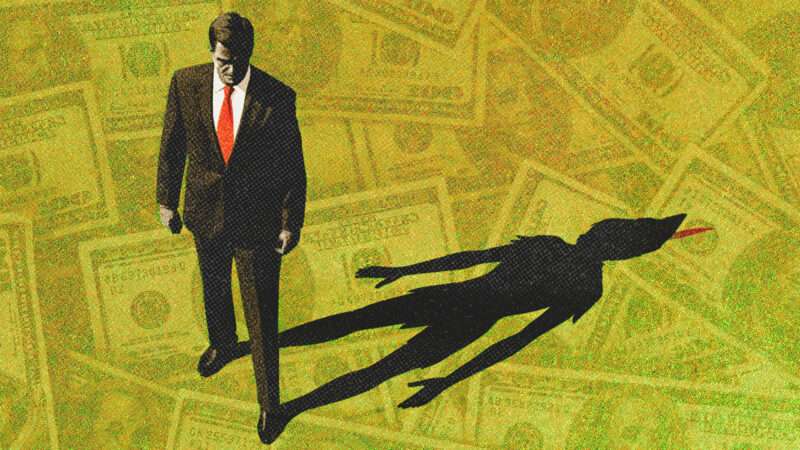
A green tinted background of U.S. paper money with a businessman standing on it who has a shadow that looks like Peter Pan | Illustration: Patrick Bryk/Dreamstime./Midjourney

Of all the arguments for protectionism, the infant industry argument probably has the strongest theoretical appeal. By protecting a new industry from its more developed foreign competition, the story goes, tariffs give domestic producers the time to grow, learn, and become efficient enough to stand on their own. Domestic consumers feel the short-term pains of higher prices, but they enjoy the long-term gains of job growth and lower prices as the new industry blossoms.

It's no secret that tariffs have driven significant price increases over the last year and a half. A study from the New York Federal Reserve finds that tariffs "contributed 2.9 percentage points to goods price inflation" and that without tariffs those prices would have slightly declined. Tariff defenders, looking for a new reason to claim these higher prices are only temporary, have reimagined the infant industry argument. Now it's being used to support trade barriers in industries that are over a century old, but the promise is exactly the same: Domestic firms need the protection so they can compete, innovate, and cut costs until prices come back down even further than they were before the tariffs.

Michael Brendan Dougherty recently made such an argument in National Review, arguing that "tariffs can, over time, bring prices below where they started." When economist Don Boudreaux called the argument "bizarre," Dougherty replied that critics had failed to acknowledge the dynamic process by which markets respond to tariffs "by adapting and cutting costs." Although he is light on specific details, he posits that the changed incentives of a "paradigm shift" in tariff policy will spur domestic competition, leading to the theorized price reduction. Of course, firms would still respond to the dynamic processes of domestic competition without a tariff wall, but the point stands.

From there, the reworked infant industry argument becomes the standard version advanced more than two centuries ago by Alexander Hamilton and his disciple Friedrich List. When Hamilton made this claim in 1791, his argument may have seemed suitable for a new nation seeking to firm up its economy and security against established European powers.

Others at the time pointed out that special interest groups—a manifestation of the "violence of faction" so thoroughly dissected in the Federalist Papers—had already begun to coalesce around the fledgling iron industry in Pennsylvania, clamoring for protective tariffs. Two years earlier, James Madison had warned about a "premature policy of stimulating manufactures" driving tariffs too high. In the end, Hamilton recommended and Congress enacted a far more moderate tariff schedule than his theoretical musings portended. American iron manufacturers received a consolation prize of a higher tariff on their competitors than the rate for most general imports. Hamiltonians have been touting the infant industry argument ever since.

Nearly 250 years later, those same infants apparently have yet to advance into adulthood. Steel, the direct successor to the founding-era iron manufacturers, remains a singular focus of President Donald Trump's protectionist tariff policies, just as it was under former President Joe Biden. And former President George W. Bush before him. Indeed, steel has been a recurring beneficiary of protectionism for most of America's existence.

This extended period of protectionist infancy suggests that the argument needs a new name. We propose the "Peter Pan industry argument" for companies that never grow up because tariffs make sure they never have to.

The question tariff advocates rarely ask is: Why do some American producers have higher costs than foreign rivals even in the face of lower-cost foreign competition? The answer comes down to specific rules and choices within particular firms and industries. Tariffs, and protectionism in general, address none of these. No industry illustrates this like steel, but it is far from the only one.

In 1947, United Steelworkers won a contract provision known as Section 2-B. Among other things, this barred mill managers from changing established work practices unless new technology required it. Steel companies tried to get rid of this in 1959, finding it difficult (given union incentives) to establish that technology required change. In response, 500,000 steelworkers went on strike for 116 days. This strike sent buyers abroad, causing 1959 to be the first year the U.S. imported more steel than it exported. One of the then-new technologies that was delayed was basic oxygen furnaces, which could produce steel far faster and cheaper than the open-hearth furnaces that were so common. In 1965, only about 17 percent of steel made in the U.S. was made using the basic oxygen furnace. Japan produced 55 percent of its steel with this faster, more efficient method.

Change finally came from a steel customer. Vulcraft, a maker of steel joists, grew tired of paying Big Steel's prices and waiting for Big Steel's deliveries. In 1969, free from steel unions and preconceived notions, the company looked for new steel-producing technologies and found the answer in the electric arc furnaces that had been adopted in much of the world throughout the 1950s and '60s. Vulcraft's parent company later renamed itself Nucor, and minimills like the ones it pioneered now make most of America's steel.

So the modern steel industry was built by a frustrated steel buyer who found a way around protected companies. In other words, the U.S. steel industry has lagged behind the technologies found around the world.

We could go on, but the broad point here is that the "relatively higher domestic production costs that made the tariff 'necessary' in the first place," as one critic put it, are often the result of preventing competition in the first place. It's odd to suggest that further preventing competition through tariffs will somehow alleviate the ills of already-prevented competition.

Tariff advocates fail to acknowledge that the ability to import steel also comes with the benefit of access to cheaper steel for steel-using industries, such as manufacturing. A 50 percent tariff on steel further closes the release valve that imported steel offers. Buyers of steel are then left to purchase more of the more expensive domestic steel. Because new steel mills take years to bring online, this causes delays and longer delivery times for manufacturers.

We don't have to wonder what happens when a country lowers its tariffs on materials used by manufacturers. India did this in the '90s, and researchers found that newly available inputs accounted for 31 percent of the new products that Indian manufacturers introduced. And what happens when the U.S. imposes tariffs on steel? Downstream U.S. firms become less competitive. This is why American businesses clamor for exemptions to tariffs, especially for tariffs on materials like steel.

Perhaps all this could be forgiven if tariffs advanced national security concerns, as tariff advocates assert. They point out that an adversarial nation could cut off supplies of critical materials during wartime and cripple America's ability to defend itself. Unfortunately, tariffs fail there too.

First, this conflates production with access. While domestic production does ensure domestic access, access can be secured without production. In the case of steel, the Commerce Department reports that in 2025, the U.S. imported steel from 79 countries, with Canada being our top foreign supplier. The top 10 sources of steel are responsible for 77.8 percent of America's steel imports. None of those countries were considered adversaries—at least not until the tariff crusades pushed these friends away. What's more, according to the American Iron and Steel Institute, only 23 percent of finished steel in the U.S. was imported in 2024. Far from being exposed to foreign states' whims, American access to steel is incredibly resilient.

Second, this view ignores the positive effects of trade and globalization on national security. The Center for Strategic & International Studies finds that increased trade between countries reduces the likelihood that they'll go to war against one another. Globalization helps ensure that domestic access continues unabated should war break out, thanks to the diversity of trading partners.

When Hamilton made the infant industry argument, he at least assured us that the industry would at some point advance to adulthood and stand on its own. Steel, like so many other Peter Pan industries, has proven Madison right. These industries have refused to grow up, and it's time to stop pretending that tariffs will fix that.

The post Peter Pan Tariffs for Companies That Never Grow Up appeared first on Reason Magazine.
  •  

New York City Passes Horse Carriage Ban, Ending a Central Park Tradition

A passenger’s death in June became the impetus for the City Council to ban the practice, but the bill will likely face a court challenge before being implemented in 2028.

© Eduardo Munoz/Reuters

The proposed ban on horse carriages gained steam after the death of Romanch Mahajan, an 18-year-old passenger who was thrown from a carriage.
  •  

Watch: JD Vance Checks on Woman Who Collapsed at Rally, Leads Crowd in Prayer for Her

Vice President JD Vance led a crowd in prayer after he checked on a woman who experienced a medical event and collapsed during a Thursday rally in Nebraska.

The post Watch: JD Vance Checks on Woman Who Collapsed at Rally, Leads Crowd in Prayer for Her appeared first on Breitbart.

  •  

Carville says he still believes Trump will quit by Easter

Democratic strategist James Carville doubled down Wednesday on his prediction that President Trump will leave office by Easter next year. Fox News’s Laura Ingraham asked Carville during an interview on “The Ingraham Angle” if he stuck by the prediction he made earlier this year and why. Carville said he does, adding that Trump’s “not particularly…

  •  

Abdul El-Sayed Funded by Fellow Co-Signers of Muslim Brotherhood Support Letter

Michigan Muslim Socialist Abdul El-Sayed received over $25,000 from at least six men who co-signed a letter supporting the Muslim Brotherhood.

The post Abdul El-Sayed Funded by Fellow Co-Signers of Muslim Brotherhood Support Letter appeared first on Breitbart.

  •  

Ramaswamy’s new ad is the most vile Hail Mary I’ve seen in my 40 years of journalism

In political campaigns’ waning days, candidates behind in their races may hope for an October surprise, like a news story or a gaffe in their favor, to propel them to victory.

Particularly panicked campaigns, however, may reject waiting for the organic October surprise in favor of tossing a Hail Mary. I’ve been in journalism for more than 40 years, and I’ve never seen a Hail Mary as desperate, vicious and vile as the one released this week in Ohio by gubernatorial candidate Vivek Ramaswamy.

The Republican nominee has spent his campaign portraying his Democratic opponent, Dr. Amy Acton, as a mentally unstable and violent drunk who is unfit for office.

Portraying an opponent as trigger-happy or lying about her faith is one thing. Going after a sexual abuse survivor is quite another.

In a normal election cycle, that would be repulsive enough, but this week, a video appeared on social media featuring Donna Arthur, Acton’s estranged mother. In the video, after touting her work with sexual abuse survivors, Arthur says her daughter has a “serious problem: She is a liar … She has lied her entire life.”

Writing what Arthur said doesn’t do justice to the wickedness of the spot. Acton is a victim of sexual abuse. Her stepfather, Cledith Arthur, was arrested and indicted by a grand jury in 1978 for raping Acton, who was 12 at the time. Donna Arthur lost custody of Acton and her brother, but she stayed married to Cledith Arthur, who reportedly fled after the indictment and died in 2004 in Pennsylvania. Donna Arthur had not spoken to Acton or her brother in nearly 50 years.

That’s the cliff notes version of a painful family history — and Ramaswamy is looking to capitalize on the agony. Back in April, he appeared to criticize Acton for being sexually abused when he said that he had “a positive vision for our state versus a governor who has none at all other than to complain about what someone else did to her.”

The video caused a firestorm that repulsed Democrats and Republicans. Ohio Gov. Mike DeWine asked Ramaswamy to take down the ad. Sen. Jon Husted, R-Ohio, who is in a close race against former Sen. Sherrod Brown, said that he “would not have run” the ad.

The backlash seems to have only fueled Ramaswamy, however. He acknowledged his campaign was behind the video and will spend $4 million to further advertise it. At a rally for Ramaswamy and Husted, Vice President JD Vance said he was “disgusted” by Republicans “whining” about the ad. Republicans should be more concerned with winning, he argued, echoing remarks Ramaswamy made about the domestic abuse allegations against Rep. Max Miller, R-Ohio. And on Thursday, President Trump defended the ad while calling DeWine “disloyal to the Republican Party.”

Perhaps Ramaswamy has no other tactic. A recurring pattern in his campaign is an emphasis on character assassination instead of issues.

Sometimes Hail Mary ads work. In 1964, Lyndon Johnson’s campaign commissioned the “Daisy” ad, which showed a little girl holding a flower before she’s killed by a nuclear blast. It only aired once, but subsequent news coverage frequently repeated the commercial, spotlighting Republican Barry Goldwater’s controversial views on the use of low-grade nuclear weapons. “Daisy” was the nail in the coffin of Goldwater’s campaign, and a landmark in political advertising.

But most times, Hail Marys fail. In 2008, the campaign of Republican Elizabeth Dole released an ad attacking Democrat Kay Hagan, her challenger for a North Carolina Senate seat. The ad questioned Hagan’s faith in God and featured statements from atheists. That might have been effective, but Hagan was a Sunday school teacher and elder in her church. The ad backfired, and Hagan won.

Portraying an opponent as trigger happy or lying about her faith is one thing. Going after a sexual abuse survivor is quite another.

Donna Arthur calls the daughter she had not seen in decades a “liar,” using the same innuendo Ramaswamy did when he said Acton was simply complaining about what happened to her before she was even a teenager. Doubting victims of sexual assault is bad enough, but using their pain and suffering for political gain is a low point in American politics.

Yet perhaps Ramaswamy has no other tactic. A reoccurring pattern in his campaign is an emphasis on character assassination instead of issues. One ad featured a woman accusing Acton, who ran the Ohio Department of Health during Covid-19, of being responsible for her 88-year-old mother’s death. The mom, however, lived in Kentucky. Other ads from Ramaswamy-aligned PACs have accused Acton of lying on her medical license application and abusing alcohol and prescription drugs. The Acton campaign has rebutted the allegations, and media outlets have found multiple claims “that are unsupported by the facts.”

“It’s not surprising that Vivek Ramaswamy has stooped to such a despicable low as to attempt to turn the sexual abuse Amy endured at 12 years old from our birth mother’s husband into a political talking point,” Philip Stearns, Acton’s brother, said in a statement.

But it should be surprising. Men continue to marginalize women who have experienced an unimaginable violation. These women demand support. Full stop.

I’ve been a reporter and editor, run the largest (at the time) journalism organization in the country and covered my share of elections. The Ohio gubernatorial contest is gutter politics at its best. The Ramaswamy ad featuring a mother who supported her husband over a preteen daughter who said he raped her is the worst I’ve ever seen. Let’s hope it doesn’t get worse from here.

The post Ramaswamy’s new ad is the most vile Hail Mary I’ve seen in my 40 years of journalism appeared first on MS NOW.

  •  

Venezuela Reaffirms Sovereign Control of Oil Revenue as Deals Advance

The president of the Venezuelan National Assembly has ratified that the country autonomously manages the resources captured through energy exports. Photo: EFE.

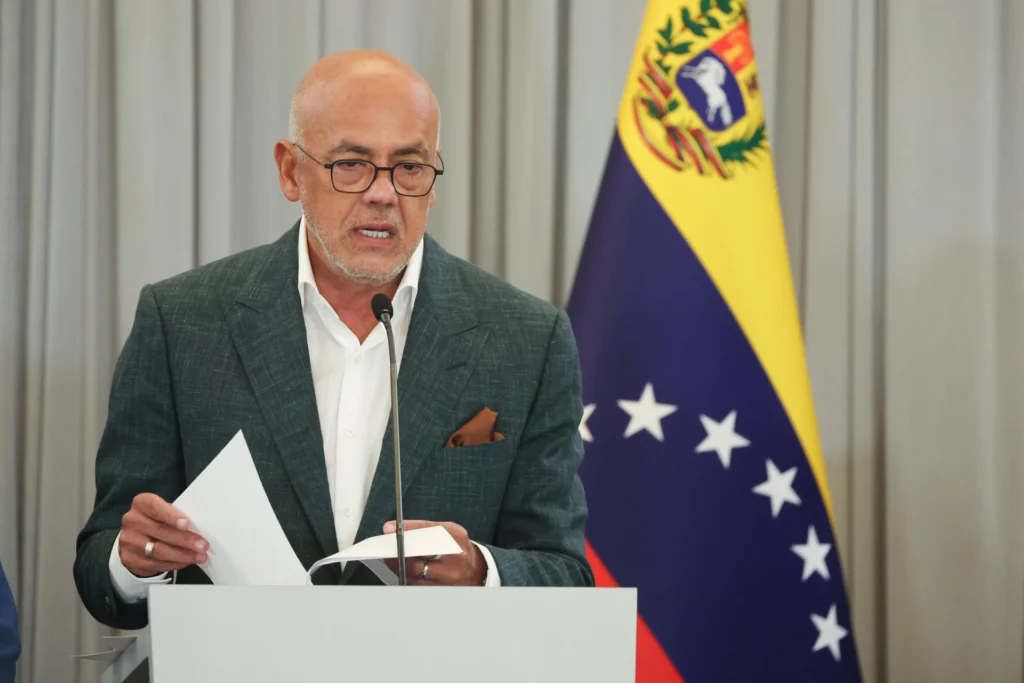
Venezuela’s National Assembly President reaffirmed sovereign control over the country’s oil revenues and reported 71 active energy agreements alongside 44 contracts under negotiation, framing the figures as evidence of a sector revival after years of financial restrictions.


The statements came amid what officials called a strategic reconfiguration of the Venezuelan hydrocarbon industry. After years of intense global financial restrictions, the gradual operational reactivation of agreements between state-owned oil company Petroleos de Venezuela (PDVSA) and international firms aims to restore a steady flow of foreign currency into the national treasury.

“No foreign agency or international financial entity administers or safeguards the public funds that enter the country from hydrocarbon sales,” National Assembly President Jorge Rodriguez said.

RELATED: Venezuela’s Acting President Reviews Wage Consensus With Business, Unions

Rodríguez detailed that the money enters the public treasury under the supervision of authorized national banks, and he ruled out any external trust or any management of accounts by third parties outside the country’s institutions. In this sense, he called autonomy over foreign currency “a non-negotiable principle” for the country’s macroeconomic stability.

71 agreements are currently in force, while another 44 contracts are being negotiated. For the government, that volume confirms an operational momentum geared toward diversifying investment across the country’s main extraction fields.

The National Assembly President presented this dynamism as the result of a deliberate push to reopen the sector to international capital without surrendering control. Over the past several years, sweeping financial measures limited Venezuela’s ability to sell crude, collect payments and maintain production infrastructure. The current wave of deals represents a step-by-step return to commercial activity.

#EnVideo📹 | Coordinador del diálogo por el Gobierno Nacional, Jorge Rodríguez, aseveró que Venezuela mantiene el control sobre los recursos financieros obtenidos a través de la comercialización de petróleo hacia distintos países del mundo. pic.twitter.com/MUoEuwKXQI

— Ministerio de Comunicación e Información (@mippci_ven) October 22, 2026

Text reads: “Coordinator of the dialogue by the National Government, Jorge Rodríguez, asserted that Venezuela retains control over financial resources obtained through the marketing of oil to different countries in the world.”

Each reactivated agreement carries a single objective, officials indicated, the capture of hard currency for the public coffers. That revenue is meant to fund the productive apparatus and national infrastructure rather than remain subject to outside oversight.

By spreading investment across the country’s principal extraction zones, the government seeks to reduce dependence on any single field or partner.

Sovereign Control Defended

Reaffirming sovereign control over monetary flows stands as a central pillar of the government’s message. The leadership projected institutional stability at a moment when Washington continues to review and adjust the licenses it grants for oil operations.

Rodríguez also denounced continuous pressure and unilateral coercive measures against the country’s financial system by foreign powers. He said that, despite what he described as an economic siege, the government has consolidated alternative mechanisms to receive payments directly for oil-product exports.

Against that backdrop, the government is working to shield energy agreements legally, dismiss any suggestion of foreign tutelage and guarantee direct financing for public budgets.

Official strategy insists that autonomous management of oil income is an indispensable guarantee for preserving fiscal balance, defending the national currency and sustaining social development programs.

For the Bolivarian government, legal protection of the energy agreements goes hand in hand with financing priorities. The revenue is meant to flow directly toward the productive apparatus and public infrastructure, a framework that Rodriguez described as essential to institutional stability.

  •  

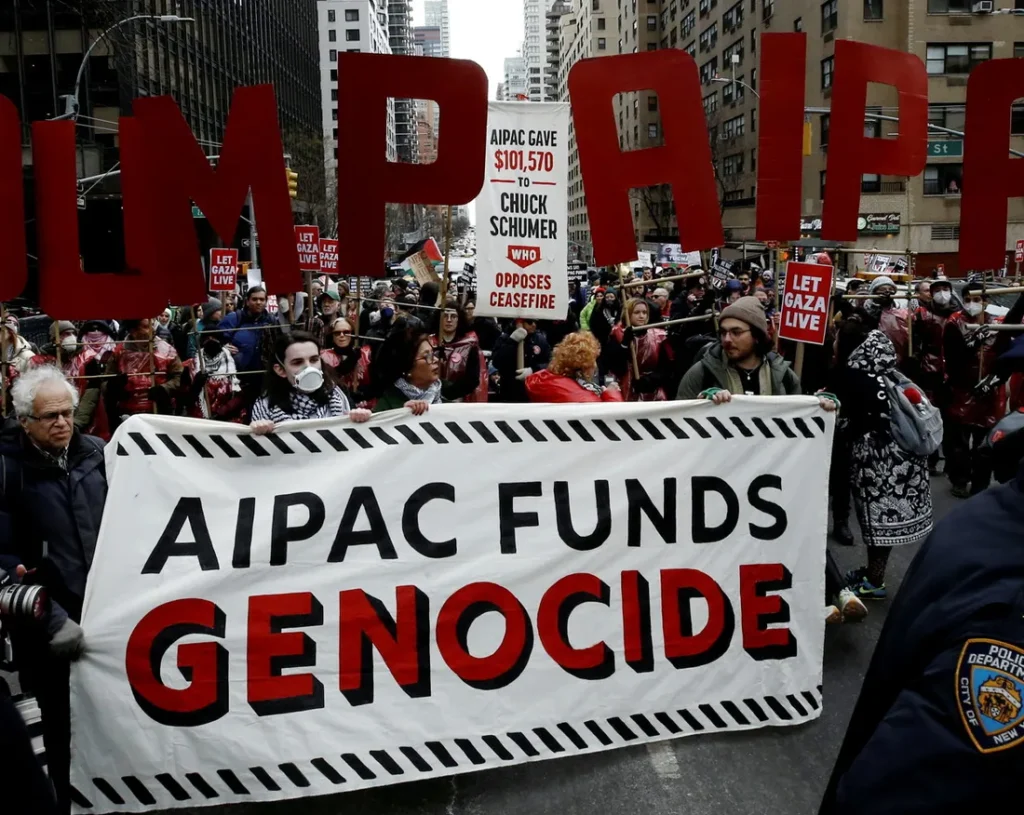
AIPAC has become such a political liability that it’s shifting to a more “nimble” approach to buying politicians

A letter to its supporters announced that instead of high profile endorsements and PAC donations, it will quietly mobilize individual donors for direct contributions

  •  

At least 160 Israeli settler attacks in 2 weeks

Israel is preventing thousands of Palestinian farmers in the West Bank from reaching their olive trees, while settlers harvest their crops. 90 per cent of Gaza’s two million olive trees have been destroyed since October 2023

  •  

Christa Pike’s IV team warned vein might be ‘blowing’ before failed execution

New account from Pike’s lawyer suggests team was racked by doubts even before pentobarbital began to flow

The Tennessee execution team tasked with setting an intravenous line in the arms of the death row prisoner Christa Pike through which she could be injected with a lethal dose of pentobarbital repeatedly warned that her vein might be “blowing”, before they went ahead with the procedure, her lawyer has revealed.

Members of the intravenous (IV) team used up to 10 needles as they sought to establish a line through which Pike could be killed with a massive dose of the sedative. About 20 minutes into the attempt, they began discussing among themselves whether the prisoner’s vein “might be blowing”.

Continue reading...

© Photograph: J Miles Cary/Reuters

© Photograph: J Miles Cary/Reuters

© Photograph: J Miles Cary/Reuters

  •  

U.S. urges Greece, Turkey to resolve maritime disputes through negotiations

While the European Union expressed its full solidarity with Greece, regarding Libya’s approval of the Maritime memorandum with Turkey, Washington appeared distanced to the issue and urged both neighboring countries to find a solution through negotiations. In a statement issued on Thursday, the U.S. State Department has encouraged its partners in the Eastern Mediterranean “to […]

The post U.S. urges Greece, Turkey to resolve maritime disputes through negotiations appeared first on Keep Talking Greece.

  •  

TÉMOIGNAGE. Manifestations du 24 octobre : Excédé par les pillages et les casseurs, ce commerçant toulousain traumatisé s'est armé pour défendre sa boutique, "je n'aurais jamais cru en arriver là"

La tension est montée indéniablement d'un cran. Face aux violences du 17 octobre, un commerçant du centre-ville de Toulouse, qui a souhaité rester anonyme vu le contexte, a acheté dans une armurerie plusieurs armes de...

  •  

REPORTAGE. Manifestations du 24 octobre : "Si c'est comme ça tous les week-ends jusqu'à la présidentielle..." Sur le plus grand marché de Toulouse, la crainte de voir des scènes de chaos se répéter

En centre-ville de Toulouse, la crainte de voir des scènes de violence se répéter chaque week-end, en marge des manifestations, est bien réelle. Le sujet est évidemment un sujet de discussion, sur fond de campagne...

  •  

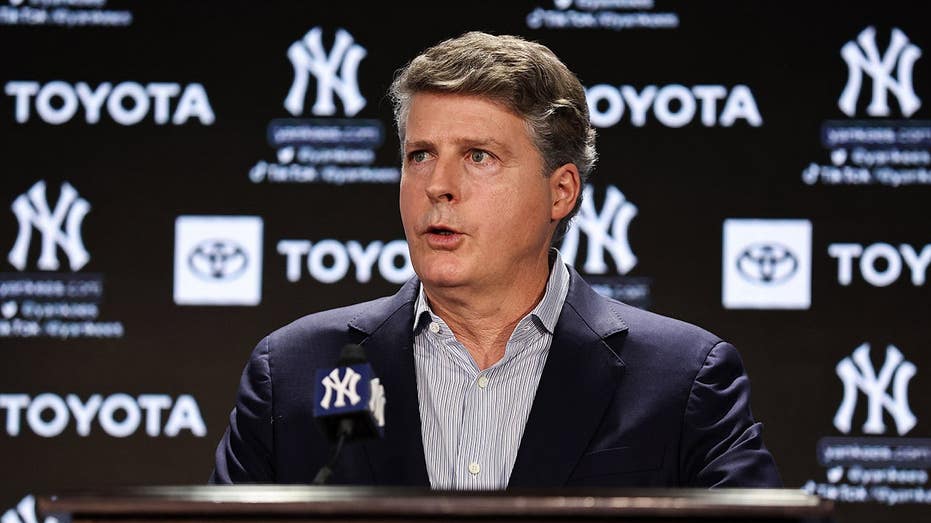
Yankees owner Hal Steinbrenner confirms he supports owners' salary cap proposals ahead of likely MLB lockout

Hal Steinbrenner was not fond of answering questions about Major League Baseball's labor negotiations with the players' association, but he came as close as possible to answering a very important one.

When asked at the New York Yankees' postmortem presser if he was in favor of a salary cap, the team's owner said he "support[s]" the owners' proposals - all of which include a cap.

"I've said before - let me put it this way as a member of the labor policy committee - I helped craft, one of many, the proposals that we have given at the bargaining table. And I support those proposals in their entirety. That's absolutely the case, so that should answer your question," Steinbrenner told reporters.

CLICK HERE FOR MORE OUTKICK SPORTS COVERAGE

"What I will say is as a member of the labor policy committee is that we are working hard on our end. We are completely focused on the task ahead of us, on the negotiating. And I'm optimistic we're gonna get a deal done, and we''e gonna get a deal done that's favorable for both sides."

Players have adamantly opposed a salary cap and said it is non-negotiable. The owners are expected to lock out the players on Dec. 1, when the current collective bargaining agreement expires.

The Yankees' $336 million payroll was the third-largest in baseball during the 2026 season, behind the Los Angeles Dodgers ($422 million) and New York Mets ($338 million).

Arguments skew both ways, but a constant has remained in that the highest payrolls continue to go up, while the lowest payrolls remain at a stall. The Marlins' payroll is actually roughly half of what it used to be in 2017, despite a sale of the team and everyone in the league making more money than ever. Meanwhile, the Dodgers have already committed more money in 2030 than 12 teams have this season.

HAL STEINBRENNER MAKES CLEAR WHO HE BLAMES FOR YANKEES' TROUBLES AS BRIAN CASHMAN MAKES ANNOUNCEMENT

MLB commissioner Rob Manfred has said that owners are simply "listening to our fans" regarding a salary cap and said it "defies human experience... to think that the bottom end of that [payroll] gap has the same opportunity to win the top end." It should be noted, though, that the National League-winning Milwaukee Brewers swept the Dodgers with the 11th-smallest payroll, and they will be facing the Tampa Bay Rays, who have the league's third-smallest payroll. They defeated the Cleveland Guardians, who rank 29th in payroll, in the American League Division Series.

Major League Baseball has never had a salary cap.

"Salary cap is the ultimate excuse not to compete. It's the ultimate excuse for an owner to say, ‘Gee, I would like to make the team better, but you know I can’t,'" interim MLBPA executive director Bruce Meyer said during the All-Star break. "Salary caps are bad for fans. Salary caps prevent teams from doing the things that they believe are in their interest to make the team better."

SIGN UP FOR THE DAILY OUTKICK NEWSLETTER

"Every team in baseball can afford to compete, many are choosing not to," Meyer added. "To me, that's the biggest problem right now."

CLICK HERE TO DOWNLOAD THE FOX NEWS APP

Steinbrenner mentioned Wednesday that the Yankees' payroll in 2026 was the highest in franchise history.

  •  

Thursday’s Campaign Round-Up, 10.22.26: GOP opposition to Ramaswamy attack ad grows

Today’s installment of campaign-related news items from across the country.

* In Ohio’s closely watched gubernatorial race, JD Vance publicly urged Republicans to stop criticizing GOP nominee Vivek Ramaswamy’s abhorrent attack ad, but a growing chorus of conservatives is ignoring the vice president’s appeal.

On Thursday morning, Republican Gov. Mike DeWine of Ohio denounced the ad featuring the estranged mother of Dr. Amy Acton, the Democratic nominee, calling it “deeply, deeply troubling.” The governor added, “It’s wrong to run this ad. I would urge Ramaswamy’s campaign to take this down.”

The comments came a day after Ohio Secretary of State Frank LaRose, a Republican who is running for state auditor, similarly said during a local radio interview, “I probably wouldn’t run an ad like that, but every candidate gets to make their own decision.”

For his part, President Donald Trump defended the ad and said it doesn’t have “anything to do with” Ramaswamy, despite the fact that the Republican candidate’s campaign created and aired the ad.

Trump on Vivek Ramaswamy's ad featuring Amy Acton's estranged mother:I don't know anything about it. It's a very unusual situation to have a mother hate a daughter that much. But I don't think that has anything to do with Vivek.

— FactPost (@factpostnews.bsky.social) 2026-10-21T20:57:12.498374172Z

Hours after the president’s comments, the latest Fox News poll found Acton narrowly leading Ramaswamy, 50% to 48%, though the poll was conducted before the latest controversy.

* Speaking of Ohio, in the state’s closely watched U.S. Senate race, the aforementioned Fox News poll found former Democratic Sen. Sherrod Brown with a 5-point advantage over appointed Republican incumbent Sen. Jon Husted, 52% to 47%.

That said, Brown is facing a daunting new challenge: Politico reported that a super PAC funded by the cryptocurrency industry is dumping an additional $9 million into the effort to defeat him, raising the group’s total spending in the race to a staggering $55 million.

* Though Mississippi was assumed to be a safe red state, Trump’s political operation confirmed that the president will hold a rally Monday in the hopes of boosting Republican Sen. Cindy Hyde-Smith, who’s facing an unexpectedly tough challenge from local prosecutor Scott Colom, the Democratic nominee.

The news coincides with an Axios report that said Senate Republicans are so concerned about the Mississippi race that it’s “weighing a cash infusion” for the contest.

* In Minnesota’s closely watched U.S. Senate race, The Wall Street Journal reported Wednesday that Democratic U.S. Senate nominee Peggy Flanagan did not qualify to be a member of Phi Beta Kappa when she graduated from college, as she had previously claimed, but Phi Beta Kappa soon after provided evidence of her membership in the academic honor society, defusing the story.

* And it appears New York’s gubernatorial race is slipping away from Republicans: The latest Quinnipiac University poll found Democratic Gov. Kathy Hochul with a double-digit lead over GOP nominee Bruce Blakeman, 55% to 41%.

The post Thursday’s Campaign Round-Up, 10.22.26: GOP opposition to Ramaswamy attack ad grows appeared first on MS NOW.

  •  
❌