Da Washington a Tel Aviv una filiera documentata lavora da mesi per delegittimare la sovranità spagnola sulle enclavi e punire la Spagna di Sánchez per Gaza, per l’Iran, per il no al 5% alla NATO. E l’Europa risponde nel modo peggiore: chiudendo le frontiere al proprio interno. In palio c’è lo Stretto di Gibilterra, oltre centomila navi l’anno, il cancello tra Atlantico e Mediterraneo. Affrontiamo insieme: La cronologia del rubinetto: dalla Festa del Trono all’impennata del 30 luglio, con almeno 88 vittime accertate La filiera Washington-Tel Aviv: gli editoriali del Middle East Forum, il deputato Díaz-Balart, l’analisi su Ynet che teorizza la pressione israeliana su Madrid La posta vera: lo Stretto, Gibilterra, le basi di Rota e Morón, il collo di bottiglia che nessuno può più dare per scontato Lo strappo di Roma: controlli di frontiera ripristinati con la Spagna, l’ambasciatore convocato, il riflesso che divide l’Europa Con Andrea Zhok: chi ha davvero smontato l’identità italiana, le illusioni «no border», la parola vuota «remigrazione» Cosa resta dell’Europa: attore politico o geografia amministrativa OSPITI Filippo Dellepiane, analista politico, dirigente nazionale di Liberiamo l’Italia, autore dell’analisi «Il rubinetto di Rabat» (dalle 18:30) Andrea Zhok, professore di Filosofia morale all’Università Statale di Milano (dalle 19:00) Conduce Margherita Furlan. I LIBRI DI ANDREA ZHOK Diario politico di un martirio. Palestina, 2023–2025, Il Cerchio, 2025 Critica della ragione liberale, Meltemi, 2020 La profana inquisizione e il regno dell’anomia [editore e anno da verificare prima della pubblicazione] SOSTIENI CASA DEL SOLE TV Casa del Sole TV è un progetto di giornalismo indipendente autofinanziato. Per donazioni: IBAN: IT63P0326822300052392596590 Intestato a: La Casa del Sole Edizioni Causale: Donazione Casa del Sole TV Membership YouTube: / @casadelsoletvchannel · Analista Multipolare €5/mese · Inviato della Verità €15/mese · Architetto del Futuro €25/mese I LIBRI DI MARGHERITA FURLAN BRICS Scacco Matto (disponibile in italiano, inglese, russo) SEGUI CASA DEL SOLE TV YouTube: @CasadelSoleTVChannel #Ceuta#news#geopolitics#talk#immigrazione
The US Navy has awarded a historic $76.6 billion contract to build 14 new submarines, as Washington races to maintain its dominance over China in undersea warfare.
The deal includes the construction of five Columbia-class nuclear-powered ballistic missile submarines (SSBNs), awarded to General Dynamics Electric Boat (GDEB).
The contracts also provide for the construction of nine Virginia-class nuclear-powered attack submarines (SSNs) during fiscal years 2025–2029. The nine-ship contract was awarded to GDEB and HII-Newport News Shipbuilding (HII-NNS).
Together, these new awards represent a historic investment in maritime modernization and supremacy, with a combined total value of US$76.6B. The award will also strengthen the U.S.’s nuclear triad capacity.
“The awards drive the critical, once-in-a-generation recapitalization of the Navy’s undersea forces and the Nation’s nuclear triad,” according to the U.S. Department of the Navy.
“This historic investment underscores the Department’s continued commitment to undersea superiority and the recapitalization of our nuclear triad,” said Vice Adm. Robert Gaucher, Director, Submarine Programs.
The Columbia-class submarines will replace the Navy’s aging nuclear deterrent fleet, ensuring the continuity of the United States’ sea-based strategic nuclear deterrent.
— Acting Secretary of the Navy Hung Cao (@SECNAV) July 29, 2026
As the most survivable leg of the nuclear triad, the Columbia Class ballistic missile submarine represents a modern platform of national security and remains the Department of War’s number one acquisition priority, the U.S. Navy statement said.
Furthermore, these contract awards support the fielding of enhanced Virginia Class submarines, a platform engineered for unparalleled stealth, heavy payload strike capability, and multi-domain lethality.
The Virginia Class submarine is the premier tactical strike and multi-mission platform, ensuring continuous global undersea dominance, the US Navy said.
“By securing the continuous production of both the Columbia and Virginia classes, we ensure we will continue to deliver the world’s most lethal, survivable and resilient combat platform to our global Combatant Commanders, while providing long-term stability to our shipbuilding industrial base,” Vice Adm. Gaucher said.
The U.S. Navy now has seven Columbia-class submarines under contract, complementing a force of 26 operational Virginia-class submarines with 23 more slated to be built.
U.S. Navy Seeks Revolutionary Submarine-Launched Surface-to-Air Missile
Separately, the U.S. Navy is also seeking a new family of modular surface-to-air missiles, including a version that will arm future variants of the Virginia-class submarine.
The information was provided in a draft request for solutions contracting notice recently posted online.
“The United States Navy (USN) is seeking a new, modular interceptor to serve as the basis for the Naval Modular Missile (NMM) program, a next-generation initiative designed to revolutionize surface naval capabilities through multi-mission utility, enhanced capacity, and a modular open architecture,” according to the recent draft request.
Under this new NNM program, the U.S. Navy seeks to develop at least four distinct surface-to-air missile interceptors.
Though all four NNMs will fall in the broad category of Terminal Stage Interceptors (TSI), the four variants will differ substantially in their role and capabilities.
The four variants are: NNM Multi-Mission Long Range (LR), NMM Extended Range Submarine (ER-S), NMM Dual-Pack Extended Range (DP-ER), NMM Quad-Pack Medium Range (QP-MR).
The NMM ER-S is an extended-range interceptor intended to be launched from future versions of Virginia-class nuclear-powered attack submarines.
Notably, US submarines do not have an operational dedicated SAM system for engaging aircraft or other aerial threats.
Traditional weapons of US submarines are Tomahawk cruise missiles, Harpoon anti-ship missiles, Torpedoes, and Trident ballistic missiles.
Therefore, the development and operationalization of submarine-launched NMM ER-S would add a critical, all-new capability to the U.S. submarine fleet and would provide protection against airborne threats such as anti-submarine warfare (ASW) aircraft, while also contributing to broader fleet air defense.
This would give US submarines a true anti-aircraft capability for the first time, allowing them to engage planes or drones while remaining submerged or semi-submerged.
Furthermore, given that no country has operationalized a submarine-launched surface-to-air missile capability, this would give the U.S. submarine fleet a critical and exclusive defensive capability that will enhance its survivability in contested waters.
However, Germany is also developing its own submarine-launched SAM.
Germany’s IDAS (Interactive Defense and Attack System for Submarines), based on the IRIS-T missile, is designed for fully submerged launch from standard 533 mm torpedo tubes.
Traditionally, submarines were armed with man-portable air-defense systems (MANPADS), and submarines had to surface or expose the conning tower so a crew member could fire them manually. A tube-launched submarine-based SAM would be a revolutionary addition.
The addition of 14 new submarines (Five Columbia-class and nine Virginia-class) and SAM capability on future Virginia-class variants will boost the U.S. Navy’s capabilities as it races to maintain its edge over China in the critical domain of undersea warfare.
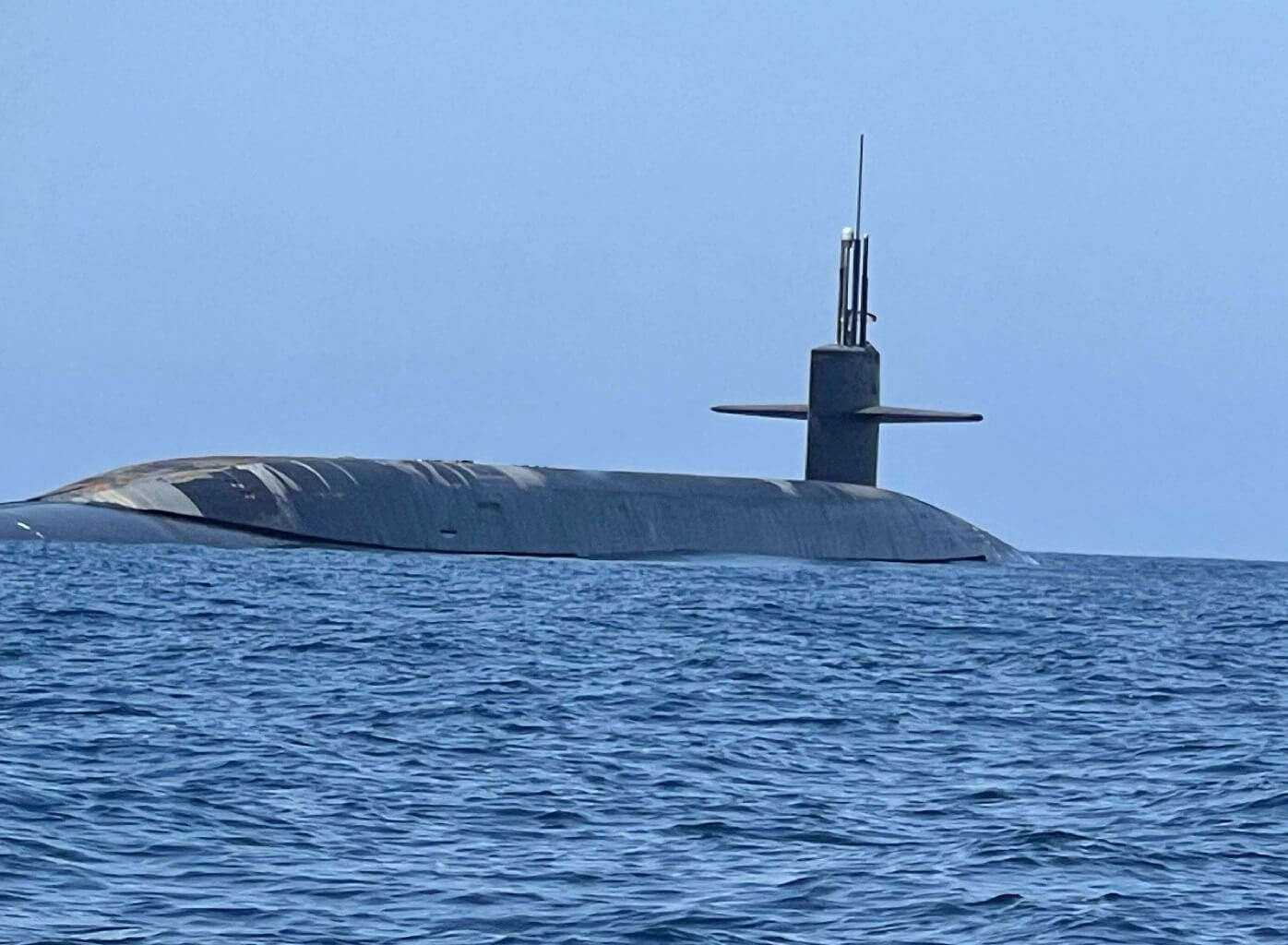
File Image: USS West Virginia Submarine: Via US CENTCOM
U.S. Vs China In Undersea Warfare
China already possesses the world’s largest maritime fighting force, with 234 warships compared to the U.S.Navy’s 219.
However, the U.S. still maintains an edge over China in undersea warfare.
But, according to a Pentagon report on the People’s Liberation Army (PLA), released in December last year, even in submarine fleet strength, Beijing is set to match U.S. capabilities by the end of this decade and might even surpass Washington’s submarine fleet by 2035.
According to the Nuclear Threat Initiative (NTI), the US Navy currently has 71 submarines, all nuclear-powered. However, some latest reports put the strength of the current U.S. submarine fleet at 66.
This list includes 14 Ballistic Missile Submarines (SSBNs), 53 Nuclear-Powered attack submarines (SSNs), and four Guided Missile Submarines (SSGNs).
Similarly, according to the NTI, China has 60 submarines, of which only 12 are nuclear-powered.
China has six Ballistic Missile Submarines (SSBNs), six Nuclear-powered attack submarines (SSNs), and 48 Diesel-electric attack submarines (SSKs). Of the 48 SSKs, 12 submarines feature Air-independent propulsion (AIP), a technology that makes them quieter and allows them to stay submerged longer.
While China has not yet operationalized a nuclear-powered aircraft carrier, Beijing has nearly half a century of experience with nuclear-powered submarines.
China’s first nuclear-powered submarine, which was a loud and slow vessel, entered service in 1974. Since then, Beijing has made considerable progress in improving its nuclear-powered subs. They are now larger, quieter, and faster.
In recent years, China has made particular strides in nuclear-powered submarines, whose greater speed, range, and endurance give its Navy greater reach.
New models under development include the Type 095, which analysts expect to feature vertical launch tubes capable of accommodating cruise missiles.
According to the Institute for National Defense and Security Research, the capabilities of China’s two new nuclear submarines – the Type 095 and Type 096 – match those used by the US and Russia.
Additionally, China is set to add more submarines each year than the US, meaning it will have far greater submarine strength than the US in the future.
According to the US Navy’s long-range shipbuilding and fleet inventory plan 2025, the US submarine strength will drop to 47 by the end of this decade, before hovering in the mid-50s for many years. The fleet isn’t projected to hit 66 until 2054.
On the other hand, China’s submarine strength will rise in the coming years. A 2023 US Department of Defense (DoD) report anticipates that China will grow its submarine force to 80 units by 2035. Nearly 20 of these subs could be nuclear-powered.
According to a 2024 CSIS report, China’s submarine technology is rapidly improving, and its submarine production capacity is growing.
China has added between seven and eight Type 093B submarines in just the past three years, a production rate that exceeds the number of attack submarines China has constructed over the past three decades.
When including conventional submarines, such as the new Type 039C, China’s total submarine fleet launched over the past three years exceeds 15, underscoring China’s impressive submarine-building capacity.
These numbers suggest that in the next decade, China might have nearly 20 more submarines than the US.
However, in qualitative terms, Washington still might have an edge over China. As noted earlier, while all of the US submarines are nuclear-powered, China will have only around 20 nuclear-powered submarines.
The addition of 14 new submarines and a SAM capability are, therefore, key to Washington’s efforts to maintain parity with Beijing in undersea warfare.
Nitin J Ticku holds a double master’s degree in Journalism and Business Management from the University of Glasgow. He has over 20 years of global experience in MARCOM, Journalism, and Digital Marketing, and has worked & traveled widely across Europe, the Americas, and Asia. Nitin is the Editor of the EurAsian Times.
He can be reached at editor (at) eurasiantimes.com
MI5 directors secretly pushed for Britain’s decision to designate the Islamic Revolution Guards Corps (IRGC) as a terrorist organization
MI5 directors secretly pushed for Britain’s decision to designate the Islamic Revolution Guards Corps (IRGC) as a terrorist organization and helped the government adopt the draconian National Security Act, a report says.
The report, published by The Grayzone on Friday, revealed that MI5 Director General Kenneth Douglas McCallum and former MI5 chief Baroness Eliza Manningham-Buller privately worked to advance the IRGC designation and expand state security powers before the measure was adopted.
McCallum discussed the proposed IRGC proscription with then-Shadow Home Secretary Yvette Cooper in 2023, while acknowledging that its “direct operational benefit” was likely to be “modest.”
The combo shows the former MI5 chief Baroness Eliza Manningham-Buller (L), and the current MI5 Director General Kenneth Douglas McCallum (Image via Press TV)
Despite recognizing the limited practical impact, McCallum told Cooper that granting authorities such powers was still “sensible to contemplate” as Britain debated whether to formally proscribe the IRGC.
The leaked emails showed that the IRGC designation gained momentum amid false claims by British security officials that Iran had been involved in plots inside the UK, including McCallum’s statements that MI5 had disrupted multiple Iran-related threats without disclosing any evidence.
The UK government officially designated the IRGC as a terrorist organization on July 13, granting authorities expanded powers to prosecute individuals for activities to support or promote the group under Britain’s so-called terrorism laws.
The intelligence campaign to the passage of the National Security Act,
The report also linked the intelligence campaign to the passage of the National Security Act, a controversial law that expanded government powers against activities considered threats to national security.
In one leaked email, McCallum thanked Manningham-Buller for helping secure the legislation, writing, “Many thanks for your support (and stamina) in getting the NS Act over the line.”
The report said the legislation introduced offenses targeting unauthorized disclosures of state information, while parliamentary debates explicitly referenced preventing future “WikiLeaks-type” disclosures.
Grayzone: “The Act could have a “chilling effect” on legitimate journalistic activity”
The Grayzone also cited warnings from lawyers involved in drafting the legislation that the Act could have a “chilling effect” on legitimate journalistic activity. The leaked correspondence showed McCallum continued promoting warnings about foreign threats, including unfounded claims that Iran had carried out plots against British targets.
In October 2024, Manningham-Buller praised McCallum’s public security warnings, writing, “You could not have hoped for fuller coverage. Hope it helps with SR,” referring to the government’s spending review.
The report said the exchange highlighted how claims of foreign threats were used to support calls for increased intelligence resources, with the government later announcing a seven-percent rise in spending on domestic and foreign intelligence operations.
The Indian Air Force (IAF) held a week-long counter-drone exercise to strengthen its capabilities against low-cost unmanned aerial systems.
The primary goal of the exercise, dubbed “Rotor Clap-III”, was reportedly to assess and refine operational principles to address emerging aerial threats from unmanned systems. The exercise concluded on August 2.
The Counter-Unmanned Aerial System (UAS) drill was held at the Pokhran Field Firing Range in the Thar Desert.
The site is best known as the location of India’s nuclear tests in 1974 and 1998, but its vast, sparsely populated expanse near the India-Pakistan border supports secure live-fire practice, helicopter operations, and high-intensity training while closely matching the terrain, climate, and conditions of the western theatre.
The drills were also aimed at improving the IAF’s helicopter fleet’s operational capabilities against threats posed by drones.
#IAF Helicopters undertook, Exercise ROTOR CLAP III themed "Counter-UAS" in Rajasthan.
Several IAF helicopter units participated in the exercise, conducting tactical missions such as coordinated actions against both aerial and ground-based threats, soldier insertion, reconnaissance, precision attacks, battlefield support, and casualty evacuation.
The drills evaluated integrated helicopter tactics, procedures, and coordination in simulated combat conditions.
Moreover, the aircrew and operational units had the opportunity to test and validate mission planning, inter-unit coordination, quick response, and cooperative operations in near-war scenarios throughout the exercise. According to reports, special emphasis was placed on ensuring smooth coordination among multiple helicopters in the desert terrain.
Notably, helicopters are increasingly being employed worldwide in counter-UAS roles, especially against slower, low-cost loitering munitions and reconnaissance drones. Russia and Ukraine, for example, routinely use military helicopters for this purpose, whereas Gulf countries have recently started deploying their own choppers to down Iranian drones.
File: IAF helicopters participated in ROTOR CLAP III themed “Counter-UAS” in Rajasthan
In general, helicopters make good counter-UAS platforms because many of them cruise at speeds similar to those of propeller-driven drones such as the Shahed class, enabling them to close the distance, match altitude, and make repeated engagement passes—advantages not available to fast jets, which are limited to a single high-speed pass.
Typically, helicopters can also operate from dispersed or improvised sites, fly low and slow, and loiter over threat areas. Equipped with thermal or electro-optical sensors and night-vision systems, they are effective at detecting and engaging low-flying drones after dark.
Once the helicopter matches the drone’s path, gunners or automated systems use proximity-fuzed rockets or brief bursts of cannon or machine-gun fire to neutralize a drone.
Therefore, these armed helicopters form one mobile layer alongside ground-based guns, electronic warfare, interceptor drones, and high-end surface-to-air missiles (SAM).
Using helicopters as counter-drone platforms is also cost-effective, given that machine guns, cannons, and rockets are far cheaper per engagement than surface-to-air missiles or fighter sorties. In fact, the US has now integrated its Apache helicopters with APWKS laser rockets to further reduce the cost of hunting drones.
The IAF operates a range of different military choppers—AH-64 Apache, the aging Mi-25 and Mi-35 attack helicopters, the LCH Prachand, Chinook Heavy-lift transport helicopter, the Mi-17 Medium utility helicopter, and the ALH Dhruv
Sources said the exercise reaffirmed the IAF’s commitment to high operational readiness and adaptation to new security challenges. It forms part of India’s broader push to strengthen counter-UAS capabilities at a time when inexpensive small drones, loitering munitions, and sophisticated unmanned systems have upended the cost calculus of conflict and changed the face of conventional warfare that India has participated in.
India’s Counter-Drone Effort Inspired By Op Sindoor
India’s heightened focus on counter-drone measures is driven by global trends, persistent cross-border drone activity, and, most significantly, experience gained during Operation Sindoor in May 2025, which it launched against Pakistan-based terror infrastructure.
Pakistan retaliated almost instantly and employed large numbers of drones as a core element of its response codenamed Operation Bunyan al-Marsus.
Indian official briefings stated that Pakistan launched swarms of drones in major coordinated waves. According to the Government of India’s official press briefing, Pakistan launched 400–500 drones in a coordinated reconnaissance and SIGINT (Signal Intelligence) operation. These were intended to clutter Indian radars, force air-defense systems to expend ammunition and attention, probe for gaps, and mask the presence of a smaller number of more capable surveillance or attack drones.
Pakistan has invested heavily in drone manufacture using indigenous capabilities acquired from allies like Turkey and China, as previously explained in detail by the EurAsian Times. During the conflict,it used Turkish Asisguard Songar, Turkish Yiha-III, Bayraktar TB2 drone, and Chinese drones like the CH-4 and Wing Loong II, to name a few.
India stated that the large majority of incoming drones were neutralized by a combination of kinetic systems (anti-aircraft guns, including the L-70, ZU-23, and Schilka, as well as surface-to-air missiles such as Akash), and non-kinetic measures (spoofing and jamming).
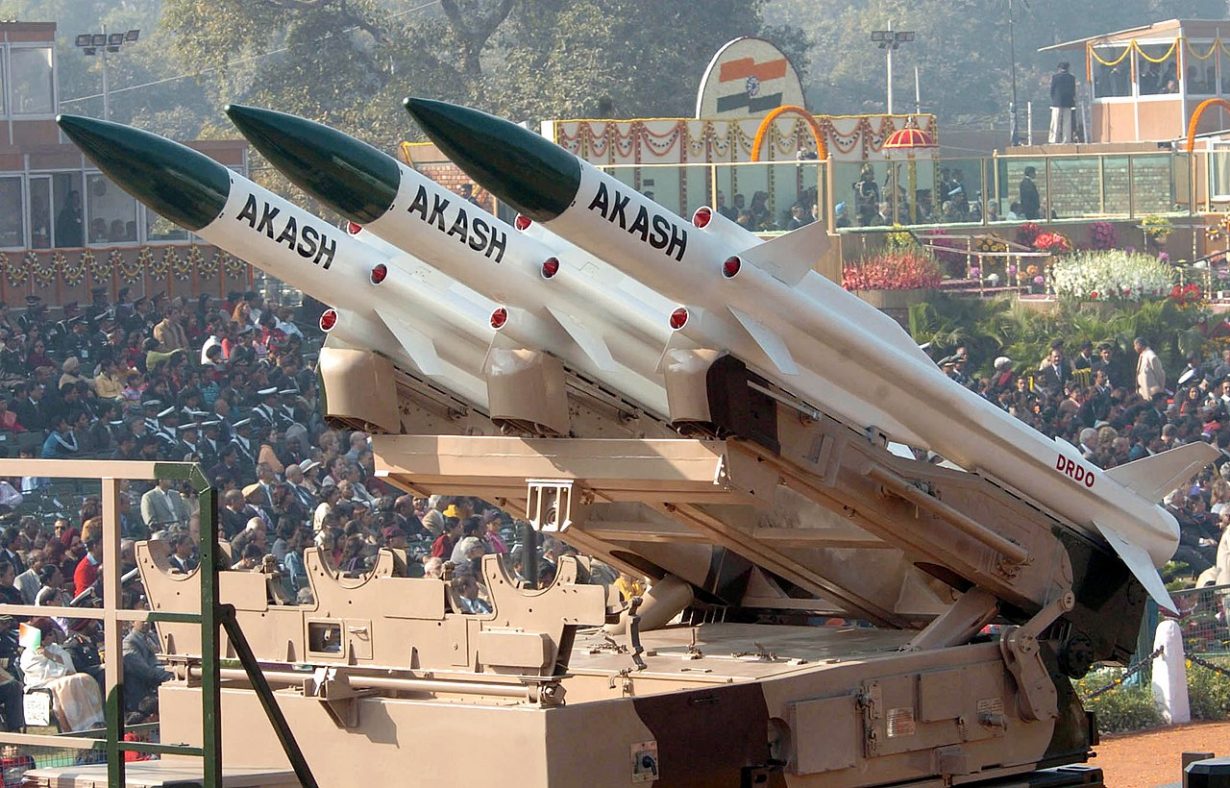
File Image: Akash Missiles
While India has significantly expanded its own inventory of drones, many of which were used successfully and decisively against Pakistani targets during the war, the intensity of drone use by the Pakistani military during the four-day intense conflict has accelerated Indian investment in counter-drone programs and tactics.
For example, counter-drone grids are being incorporated into Mission Sudarshan Chakra, a long-term, AI-enabled, multi-layered national air-defense shield announced last year.
In early July 2026, the Defense Acquisition Council granted Acceptance of Necessity for procurement proposals worth approximately ₹52,000 crore. These include the indigenous Akash Tarang anti-UAV electronic-warfare system for the Army, Very Short-Range Air Defense Systems (V-SHORADS) to bolster low-altitude defense against drones, and jet-powered kamikaze drones, underscoring the priority now attached to both unmanned systems and counter-UAS capabilities
A range of new counter-drone systems developed jointly by public- and private-sector entities are at various stages of testing.
Last year, for instance, India’s Defense Research and Development Organization (DRDO) unveiled the D4 (Drone Detect, Deter, Destroy) anti-drone system, which is now being deployed along key border areas. This integrated counter-drone solution is designed to detect and neutralize rogue unmanned aerial vehicles (UAVs) with precision.
Earlier this year, the Indian Ministry of Defense (MoD) announced the completion of development trials of the Unmanned Aerial Vehicle Launched Precision Guided Missile-V3 (ULPGM-V3) in air-to-ground and air-to-air modes. The ULPGM is designed for UAV integration to destroy soft and hard targets, on the ground and in the air.
Similarly, India-based Zen Technologies launched an enhanced variant of its counter-unmanned aircraft system (C-UAS) that is already in service with the Indian Armed Forces in May 2026. The new variant of the system reportedly has increased detection and jamming ranges and is integrated with AI for improved threat detection.
These are just a few examples of India’s counter-drone effort.
The armed forces are also conducting dedicated counter-drone exercises based on lessons from Operation Sindoor. In October 2025, for instance, India’s largest drone and counter-drone warfare drill, Exercise Cold Start, was conducted in Madhya Pradesh to evaluate the effectiveness of the existing air defense
Therefore, the recently concluded Rotor Clap-III, focused on the IAF’s helicopter fleet, is another step in preparing for operations on a battlefield increasingly dominated by drones.
Contact the author at sakshi.tiwari13 (at) outlook.com
Il mondo ha davvero sfiorato la più grave crisi energetica della storia. L’Agenzia Internazionale dell’Energia (AIE) ha rivelato che, durante la crisi in Medio Oriente, il mercato petrolifero globale ha rischiato un’interruzione senza precedenti. Eppure il collasso non c’è stato. In questa puntata di Casa del Sole TV, Clara Statello intervista Davide Martinotti per analizzare il ruolo della Cina, le dinamiche del mercato petrolifero, lo Stretto di Hormuz, le importazioni di greggio e gli equilibri geopolitici che hanno evitato uno shock energetico mondiale. Un approfondimento sui nuovi rapporti di forza tra Cina, Medio Oriente e mercati internazionali dell’energia. Secondo te il ruolo della Cina sarà sempre più decisivo per la stabilità dell’economia mondiale? Scrivilo nei commenti. Lascia un Like se hai trovato interessante questa analisi. Condividi il video per aiutarci a diffondere informazione indipendente. Iscriviti al canale Casa del Sole TV e attiva la campanella per non perdere le prossime interviste e analisi. Se vuoi sostenere il nostro lavoro, puoi acquistare un Super Grazie: il tuo contributo ci permette di continuare a realizzare contenuti di approfondimento. #Cina#Petrolio#Energia#DavideMartinotti#Dazibao#CasaDelSoleTV#Geopolitica#Mercati#Economia#Hormuz#MedioOriente#AIE#OilMarket#Analisi#PoliticaInternazionale#CrisiEnergetica
During the medieval period and early modern Japan, decapitation was a common method of execution for criminals and defeated enemy warriors. During the feudal period, particularly under the Tokugawa shogunate (1603–1868), beheading became a standard execution method for many serious crimes.
Decapitation was also common on the battlefield. During Japan's long era of civil wars, especially the Sengoku period, warriors routinely took the heads of defeated enemies and presented to the victorious lord. For criminals or rebellious warriors, the heads were displayed publically as a warning and deterrent to others.
A Japanese block print depicting the decapitation of violent Chinese soldiers. Circa 1894. Credit: Museum of Fine Arts
Scattered across Florence, in the narrow streets, is a curious architectural feature that many visitors walk past without noticing. Set into the walls of grand Renaissance palaces are tiny arched openings, barely large enough to pass a bottle through. These openings, known as buchette del vino or “wine windows,” were originally created to sell wine directly from aristocratic estates to ordinary citizens. While they were born out of economic necessity in the 16th century, these small windows gained renewed importance during periods of epidemic disease, helping Florentines conduct business while minimizing physical contact.
Long before the first commercial oil wells appeared in North America, Chinese engineers had already mastered the art of drilling deep into the earth. In the salt-producing region of Zigong in China's Sichuan Province, workers were sinking wells hundreds of meters deep using techniques that would not become common in the West until many centuries later. These remarkable salt wells not only transformed the economy of inland China but also helped inspire the drilling methods that fuelled the 19th-century oil boom in the United States.
Not all forms of communication are based on speech or writing. Just as the Inca encoded information in strings and knots known as quipus, and the inhabitants of the Marshall Islands created intricate navigational charts from sticks and seashells, the Aboriginal peoples of Australia developed their own sophisticated means of transmitting information across vast distances. Known as message sticks, these small carved pieces of wood, rich in symbolism, served as important tools of communication between different communities.
An early 20th century Aboriginal message stick, almost a meter in length, made of extremely dense hardwood, and with ochre coating message on both sides. Credit: Carter's
A remote village in north-western China, on the edge of the Gobi desert, is said to have been founded by Roman soldiers. According to this controversial theory, the village of Zhelaizhai in China's Gansu Province was established by Roman legionaries who were captured after a disastrous battle, carried across Central Asia, and eventually settled on the far eastern edge of the known world. While most historians remain sceptical of the claim, the story has become one of the most fascinating legends linking the ancient civilizations of Rome and China.
Somewhere in the hills of Virginia, the United States, according to an enduring legend, there remains buried a vast fortune in gold, silver, and jewels. The location of this treasure is obfuscated by a cipher first made public some 140 years ago. Whether the treasure is real or an elaborate hoax, the Beale Ciphers have fascinated treasure hunters, cryptographers, and historians alike.
The story first became public in 1885 through a pamphlet titled The Beale Papers. According to the pamphlet, a man named Thomas J. Beale led a group of about thirty adventurers from Virginia on a buffalo-hunting expedition to the American West in 1817. During their travels, they allegedly discovered a rich deposit of gold and silver somewhere near present-day Colorado or New Mexico.
A plaque at the Old City Cemetery in Lynchburg, Virginia, where a dig was officially authorized. Credit: Virginia Hill
More than two thousand years before modern engineers bored tunnels beneath rivers and seas, ancient writers told of an astonishing passage hidden beneath the waters of the Euphrates. According to these accounts, a brick-lined tunnel ran beneath the river at Babylon, linking the city's two halves and allowing people to cross unseen below the current. If the story is true, the Euphrates Tunnel may have been the world's first underwater tunnel—a feat of engineering centuries ahead of its time. However, no trace of the structure has ever been found, leaving historians to wonder whether it was a genuine marvel of ancient engineering or another one of history's enduring legends.
In the summer of 1953, a stray dog stepped off a freight train at the railway station of Campiglia Marittima, a small town in Tuscany, Italy. Nobody knew where he had come from or how long he had been wandering. Mirna, the daughter of the stationmaster Elvio Barlettani, fell in love with the dog and persuaded her father to let her adopt him. Barlettani reluctantly agreed because rail regulations strictly forbade employees from adopting dogs. Barlettani named him Lampo, the Italian word for “lightning.” It was a fitting name. Lampo was energetic, intelligent, and seemingly incapable of staying in one place for long.
Jerónimo de Ayanz y Beaumont was a Spanish polymath who was far ahead of his time. Centuries before the Industrial Revolution, this Spanish nobleman was designing steam-powered machines, diving suits, submarines, ventilation systems, and dozens of other inventions. But Ayanz was far more than an inventor. He served as a soldier, administrator, artist, musician, and engineer during Spain’s Golden Age. His remarkable versatility earned him a reputation as one of the great polymaths of his era. Yet despite receiving patents for dozens of inventions and successfully testing many of them, his achievements remained largely forgotten for centuries.
Île de Peilz, or Peilz Island, is small picturesque island in Lake Geneva in Switzerland, not far from the town of Villeneuve. Measuring somewhere between 20 and 77 square metres, depending on different sources, it is often described as the smallest island in Lake Geneva and possibly the lake's only natural island. A solitary London plane tree dominates the entire islet, its broad canopy visible from passing boats and from the shoreline. This tiny speck of land has inspired poets, generated local legends, and become one of the most photographed features of Lake Geneva.
Just off Bessemer Mine Road, not far from Pioneertown, in California’s Mojave Desert stands what appears to be an unremarkable ring of shrubs. To a casual observer, it looks like a cluster of ordinary creosote bushes growing in a circle. Yet this humble patch of vegetation is one of the most extraordinary living things on Earth. Known as King Clone, it is estimated to be about 11,700 years old—older than nearly every human civilization that has ever existed. Scientists consider it one of the oldest living organisms on the planet.
In 1905, a little-known journalist named Edgar Wallace was determined to make his first novel impossible to ignore. The book was The Four Just Men, a thriller about a group of vigilantes who take justice into their own hands when the law proves inadequate. The novel would eventually become one of Wallace's most famous works and launch a long-running series. Yet its initial publication is remembered less for its literary success than for one of the most spectacular marketing disasters in publishing history.
On Smedestraat, a shopping street in the historic center of Haarlem, in the Netherlands, is an unusual national monument. It’s not a house, church, or public building, but a 17th-century brick gateway with a wooden door. Its significance lies in both its architectural details and what it reveals about the historic urban fabric of Haarlem.
The gateway dates from the second half of the 17th century and is protected because it preserves a rare and attractive example of period brickwork. The most distinctive feature is the blind circular window (a decorative round opening that is not actually a window) incorporated into the masonry above the archway.
On 9 October 1917, during the Third Battle of Ypres, a battalion of Australian soldiers entered a place known as Celtic Wood, near Passchendaele in West Flanders, Belgium, to attack German positions. Most were never seen again. Of the 85 men to raid Celtic Wood, just 14 made it back to their lines. The rest vanished without a trace. The fate of the lost battalion has remained one of the greatest enigmas of Australia's Great War.
The windswept plateau in central Wales, near the village of Sennybridge in Powys, was once home to a thriving Welsh-speaking farming society whose roots stretched back generations. During World War 2, this community was evicted to make way for what is now the third largest military training area in the United Kingdom. The disappearance of Mynydd Epynt remains one of the most controversial episodes in modern Welsh history.
For many Welsh people, Epynt stands alongside the flooding of Capel Celyn as a symbol of a community sacrificed in the name of a greater national cause. The slogan “Cofiwch Epynt” (“Remember Epynt”) continues to appear on walls and roadside signs across Wales, ensuring that the story is not forgotten.
The 'Cofiwch Fynydd Epynt' (Remember Epynt Mountain) mural, in Llanrug. Credit: Daily Post

 Login

 La cronologia del rubinetto: dalla Festa del Trono all’impennata del 30 luglio, con almeno 88 vittime accertate
 La filiera Washington-Tel Aviv: gli editoriali del Middle East Forum, il deputato Díaz-Balart, l’analisi su Ynet che teorizza la pressione israeliana su Madrid
 La posta vera: lo Stretto, Gibilterra, le basi di Rota e Morón, il collo di bottiglia che nessuno può più dare per scontato
 Lo strappo di Roma: controlli di frontiera ripristinati con la Spagna, l’ambasciatore convocato, il riflesso che divide l’Europa
 Con Andrea Zhok: chi ha davvero smontato l’identità italiana, le illusioni «no border», la parola vuota «remigrazione»
 Cosa resta dell’Europa: attore politico o geografia amministrativa
 OSPITI Filippo Dellepiane, analista politico, dirigente nazionale di Liberiamo l’Italia, autore dell’analisi «Il rubinetto di Rabat» (dalle 18:30) Andrea Zhok, professore di Filosofia morale all’Università Statale di Milano (dalle 19:00) Conduce Margherita Furlan.
 I LIBRI DI ANDREA ZHOK Diario politico di un martirio. Palestina, 2023–2025, Il Cerchio, 2025 Critica della ragione liberale, Meltemi, 2020 La profana inquisizione e il regno dell’anomia [editore e anno da verificare prima della pubblicazione]
 SOSTIENI CASA DEL SOLE TV Casa del Sole TV è un progetto di giornalismo indipendente autofinanziato. Per donazioni: IBAN: IT63P0326822300052392596590 Intestato a: La Casa del Sole Edizioni Causale: Donazione Casa del Sole TV Membership YouTube:

 / @casadelsoletvchannel · Analista Multipolare €5/mese · Inviato della Verità €15/mese · Architetto del Futuro €25/mese
 I LIBRI DI MARGHERITA FURLAN BRICS Scacco Matto (disponibile in italiano, inglese, russo)
 SEGUI CASA DEL SOLE TV YouTube: @CasadelSoleTVChannel #Ceuta #news #geopolitics #talk #immigrazione


 Il mondo ha davvero sfiorato la più grave crisi energetica della storia. L’Agenzia Internazionale dell’Energia (AIE) ha rivelato che, durante la crisi in Medio Oriente, il mercato petrolifero globale ha rischiato un’interruzione senza precedenti. Eppure il collasso non c’è stato.
 In questa puntata di Casa del Sole TV, Clara Statello intervista Davide Martinotti per analizzare il ruolo della Cina, le dinamiche del mercato petrolifero, lo Stretto di Hormuz, le importazioni di greggio e gli equilibri geopolitici che hanno evitato uno shock energetico mondiale.
 Un approfondimento sui nuovi rapporti di forza tra Cina, Medio Oriente e mercati internazionali dell’energia.
 Secondo te il ruolo della Cina sarà sempre più decisivo per la stabilità dell’economia mondiale? Scrivilo nei commenti.
 Lascia un Like se hai trovato interessante questa analisi.
 Condividi il video per aiutarci a diffondere informazione indipendente.
 Iscriviti al canale Casa del Sole TV e attiva la campanella per non perdere le prossime interviste e analisi.
 Se vuoi sostenere il nostro lavoro, puoi acquistare un Super Grazie: il tuo contributo ci permette di continuare a realizzare contenuti di approfondimento.


