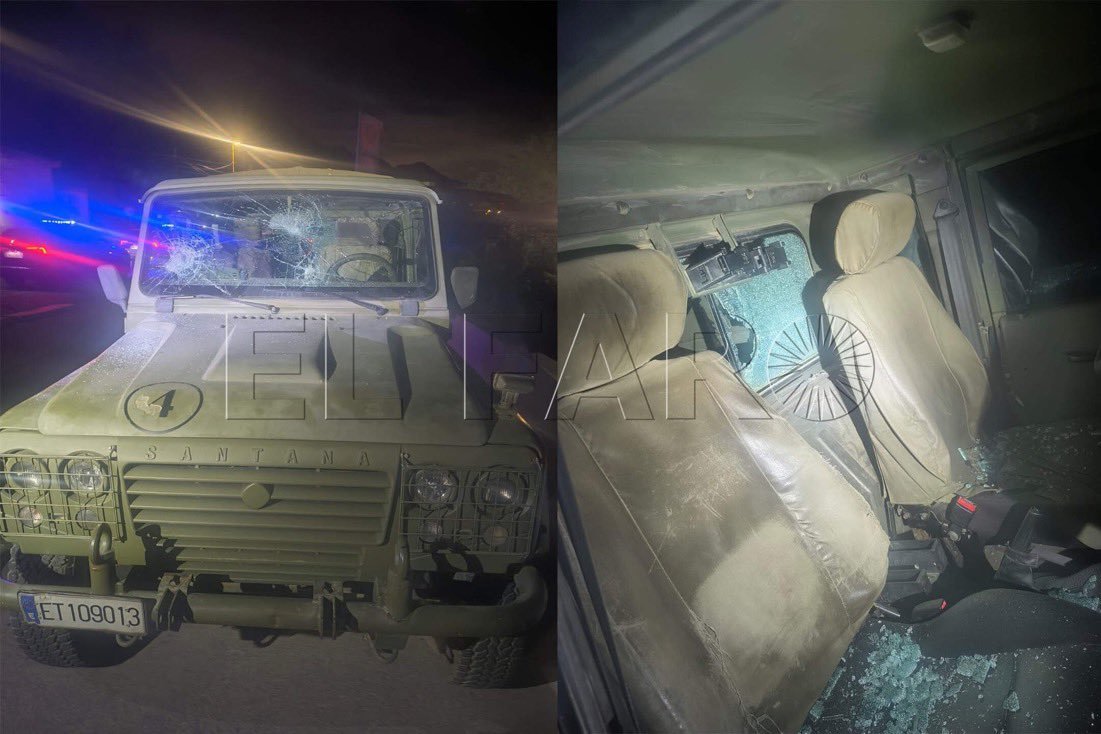
The attack targeting a military patrol in the Benzú area of Ceuta last night was a pre-planned ambush rather than a spontaneous clash, according to preliminary findings from the National Police. Now, military sources are speaking of soldiers who are unable to use physical force, have no weapons, and are vulnerable to such attacks in the future.
Regarding the ambush, police investigators at the scene discovered an abnormal accumulation of heavy stones that did not match the natural geology of the terrain. Police believe the projectiles were intentionally stockpiled at the location in advance, setting a trap for a vehicle or convoy passing through the area.
Images of damaged military vehicles have gone viral across social media. Multiple vehicles suffered smashed windshields and other damage in the attack.
#URGENTE | Los inmigrantes ilegales de Ceuta han atacado esta madrugada los vehículos de los militares españoles.
Este es el estado de algunos de los coches y camiones del Ejército que les ha ayudado a instalarse en polideportivos. pic.twitter.com/KnT9RU35AM
The ambush occurred while troops from the 54th Regular Group of Ceuta were conducting routine patrol duties. Dozens of illegal immigrants ambushed the patrol vehicle with a heavy barrage of rocks. The sudden intensity of the assault severely damaged the vehicle, shattering its windows and trapping the occupants inside.
Surrounded by a high volume of projectiles, the soldiers “feared for their lives,” according to statements later provided to investigators, as reported by Spanish newspaper El Debate. Four soldiers were left injured and officials told the press that sthe all-terrain logistical vehicles were not armored and not equipped to deal with such attacks.
Marco Antonio Gómez, president of the Association of Spanish Troops and Sailors (ATME), stated that the “very serious aggression” shows “our military is helpless.”
“They go without weapons. Our colleagues had to run away to save their own lives.”
Speaking to El Debate, military sources who are directly on the ground in Ceuta say that soldiers have their “hands and feet tied.”
Although the military is working with National Police, the situation remains dangerous. The source said “they have done what is necessary and have intervened in situations in which the illegal immigrants bothered the inhabitants of Ceuta.”
A young Spanish woman is fleeing Ceuta because she no longer feels safe.
"I don't want to feel anxious every time I step outside… It seems awful to me that all this is allowed to happen and nobody can close the border or do anything."
However, these military sources complain that various legal frameworks have left soldiers without weapons, and these policies also restrict soldiers from carrying out arrests and using any type of force.
Migrants may even be aware of these restrictions, empowering them to conduct ambush strikes against soldiers with near impunity.
5 migrants tried to gang rape a 12-year-old girl as she screamed for help, said locals in Ceuta who stopped the attack.
"There were five against a 12-year-old girl. She was a little girl, they were taking off her pants. She was screaming, screaming, screaming. She was… pic.twitter.com/g97pj8phUR
Since the attack, 12 suspects have been taken into custody at the scene by National Police’s Prevention and Reaction Unit (UPR). Some migrants reportedly tried to evade arrest by jumping into the sea. Reinforcement from the Civil Guard also helped secure the perimeter.
The Union of Military Troops (UMT) issued a statement expressing its “strong rejection and indignation,” stating they had warned about the conditions facing troops already ten days eariler.
The National Police investigation remains active as authorities work to trace all remaining individuals involved in the ambush.
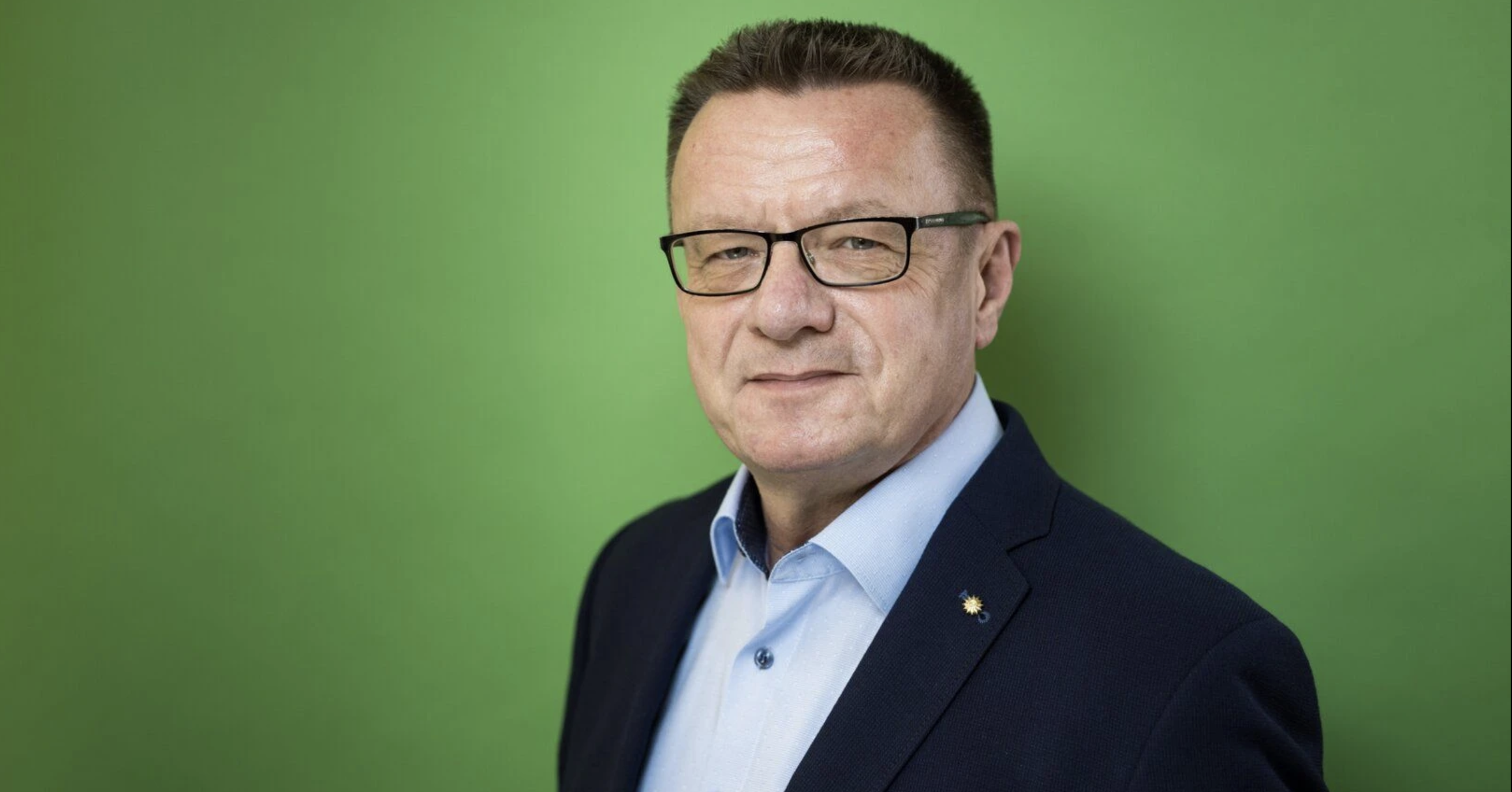
Sven Hüber, the deputy federal chairman of Germany’s Police Union (GdP), has stepped down from his post with immediate effect following public scrutiny regarding his service as a political officer for East Germany’s border guards. Hüber recently made headlines for his stance against the Alternative for Germany (AfD) party.
The resignation follows investigative reporting by the German media outlet Apollo News alleging that Hüber committed severe abuses at the East German border during the Cold War prior to joining the German Federal Police. The report claims that during his tenure as an SED political officer, Hüber placed a service weapon into the mouth of a captured East German refugee in the “death strip” and physically assaulted the individual while they were pinned to the ground.
Hüber vehemently denied the allegations, framing the coverage as a coordinated effort to dismantle his reputation. In a formal press statement, he characterized the reporting as “defamatory” and a “character assassination,” explaining that his resignation was intended to “avert the daily new, untenable accusations from the GdP during the necessary legal proceedings.”
The finger is also being pointed at right-wing media, with Hüber’s attorney Johannes Eisenberg stating the claims began in “right-wing extremist media and from there overflowing into well-known inflammatory media.” Eisenberg firmly maintained that his client “did not commit the misanthropic acts spread about him there,” adding that Hüber would refrain from further public comment as he prepares to challenge the outlets in court.
The GdP similarly confirmed it plans to pursue criminal and civil legal action against authors and publishers behind what it deems false accusations, targeted threats, and distorted reporting.
Hüber’s tenure at the union had already generated significant friction prior to the recent revelations.
Writing in the official GdP members’ magazine, Hüber recently urged police officers to actively counter a potential AfD administration in Saxony-Anhalt, arguing that “police officers personally take on enemies of the constitution because the oath they take stipulates the same” and asserting that an “AfD seizure of power does not release any civil servant from their oath.”
Since Hüber’s resignation, his anti-AfD article, entitled “Saying a True No,” has been scrubbed from the GdP website, according to Apollo News, but is still archived in the police union’s newsletter.
Regardless of whether the claims about torture prove true or not, Hüber has his own history of reportedly making false allegations against his rivals. He previously faced backlash for attempting to block the lifetime professorship of conservative academic Stephan Maninger at the Federal Police Academy using claims that were ultimately shown to be groundless. Attorney Ralf Höcker subsequently alleged that GdP federal chairman Jochen Kopelke backed Hüber during that campaign, using union membership fees to support the effort.
The controversy triggered a wave of exits within the organization. The Mitteldeutsche Zeitung confirmed that a “low double digits” number of police officers in Saxony-Anhalt severed their union membership following the initial reports.
Hüber finalized his decision to step down following discussions with GdP federal chairman Kopelke. The union has not yet named a replacement to fill the vacant deputy chair position.
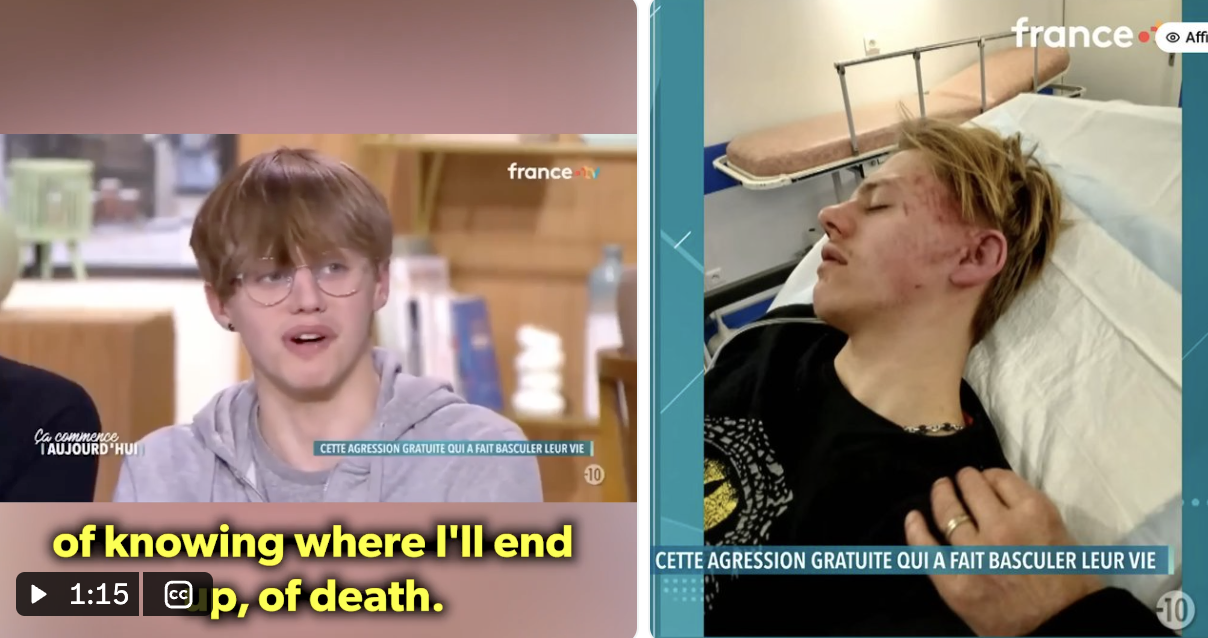
A French youth, 19-year-old Constant, was kidnapped, robbed, and beaten so badly by three suspects that he was left in a six-day coma in the hospital in 2025. Now, the case has come once more to the public’s attention after Constant described the attack on French television, including that his assailants were not speaking French when they nearly killed him.
Near dawn on April 12, 2025, 19-year-old Constant was on his way to work when three men changed his life forever. To this day, only one suspect has ever been arrested and convicted.
This French teen was kidnapped on his way to work and beaten into a 6-day coma by suspects who “did not speak French.”
19-year-old Constant, who has been an apprentice butcher since he was 15, was headed to work in Rouen at 5 a.m. when a car stopped near him. The suspects… pic.twitter.com/Y3u8y8qz2z
Constant was a hard-working French teenager, who had been an apprentice butcher since he was 15. Around 5:30 a.m., he left on his electric scooter for a 6:30 a.m. shift, traveling along Boulevard Jean-Jaurès in Petit-Quevilly, near Rouen. A car began following him, then cut him off and blocked the road. Occupants called for him to stop, appearing to need help or simply demanding that he approach. When a truck driver witnessed the scene and tried to intervene, the men threatened him. They forced Constant into the vehicle.
The suspects took him to Grand-Quevilly. Under threat of a knife, they demanded the PIN codes for his phone and bank card. After obtaining them, they beat him almost exclusively on his head. Family members later said the attackers “went after his head,” leaving a shoe tread mark across his face.
Once he was barely conscious, they abandoned him. In a state of shock, Constant managed to walk roughly two kilometers toward home before collapsing. His parents took him to the hospital, where he was also photographed with shoe tread marks across his face.
Constant was admitted to intensive care at CHU Rouen with a skull fracture and a subdural hematoma, then transferred to neurosurgery. Relatives described his head as massively swollen. Later accounts indicate he spent approximately six days in a coma. The attackers stole his e-scooter and phone and withdrew €1,170 from his account.
A witness had already called the police. Officers arrived at the initial scene and found no one. When family members tried to file a complaint the same day, they were told the adult victim would have to do it himself; police later opened an investigation and took his statement at the hospital.
Bank withdrawals allowed police to identify one of the three men. This suspect, who has not been named, was tried in court on Nov. 14, 2025, at the Rouen criminal court and sentenced to four years in prison with immediate detention. He was banned from contacting Constant and ordered to pay damages. He refused to name his two accomplices, who have not been arrested.
Months later, Constant appeared on France 2’s “Ça commence aujourd’hui” with Faustine Bollaert. In the clip that circulated widely in August 2026, he recounted being in the back of the car, being told not to look at the man on his right, and realizing the attackers were not speaking French.
As a result, it is clear that the attackers are not native French citizens, further highlighting the deteriorating security situation in the country due to mass immigration. Countless French youths have been the victim of foreigners over the last years, include Louis, Mégan, Thomas, Lola, and Théo, just to name a few of the victims.
On 26 August, Romania received its first payment of €2.5 billion under the Security Action for Europe (SAFE) defence instrument, representing 15% of its total allocation of €16.7 billion.
SAFE is a €150 billion financial instrument providing loans to member states. It primarily funds joint procurement of ammunition, missiles, air defence, and ground combat systems produced within the EU. It is part of the European Commission's ReArm Europe/Readiness 2030 plan, which aims to unlock over €800 billion in defence investment across the European Union.
The pre-financing will help Romania accelerate priority defence investments, strengthen resilience, and modernise its military capabilities in line with shared European goals. SAFE is designed to enable swift, co-ordinated action, improve the ability of European forces to work together, and strengthen Europe's defence industry, including through joint procurement and closer cross-border co-operation.
Defence and Space Commissioner Andrius Kubilius (pictured) said: "Today's €2.5 billion payment to Romania under SAFE is a major milestone for European defence and a more sovereign Europe. This funding will strengthen Romania's defence capabilities and industrial base, while contributing to Europe's overall security. SAFE is a clear demonstration of our strong commitment to European security, and to the resilience and to defence of our Eastern Flank."
This payment follows the completion of all required procedural steps and reflects the EU's commitment to providing timely, practical support through SAFE. Further payments will follow, as agreed milestones and implementation are met.
The SAFE instrument is financed by EU borrowing on the financial markets. This enables competitively priced and attractively structured long-duration loans to requesting Member States. The terms of the SAFE loans benefit from the EU's strong credit rating.
L’estate del 2026 potrebbe rappresentare uno dei passaggi più pericolosi dell’intero conflitto russo-ucraino. Non tanto perché sul campo sia comparsa una nuova arma decisiva, quanto perché stanno progressivamente saltando alcuni ...
C’è un passaggio dell‘intervista concessa dal vescovo di Kharkiv-Zaporizhzhia Pavlo Honcharuk a Tempi a margine di una conferenza al Meeting, che, a mio giudizio, merita molta più attenzione di quella ...
(Dollyland Media) Singer Dolly Parton just passed away, reportedly after a“brief (turbo) cancer battle.”
Dolly Parton didn’t just jab in public. She helped funded mRNA research at Vanderbilt University to help create the CV19 Vax that has killed and maimed millions.
Did they really need her money? Of course not. What they needed was someone to get on camera who had millions of fans who that would do anything she said. They are devious Satanic bastards that play on our souls though our pride.
They succeeded and Dolly paid the ultimate price.
They got her to get the shot she helped produce on camera. They even got her to adapt one of her songs to encourage people to get their CV19 Vax. She changed the name in her hit song “Jolene” to “Vaccine.”
While she was doing this in 2021, CV19 Vax deaths and injuries were already piling up and being covered up by the CDC and FDA. She should have known, but her myopic world was already thinned out in 2021 to declare any negative information about the Vax “misinformation”.
But, Truth is like a Lion and there was enough data out there to tell anybody with a brain that something was amiss. Over the years since she convinced many people to Jab, the massively strong evidence against the Jab surfaced against the tide. That evidence apparently never reached her eyes and ears.
I have no hatred for anyone, let alone someone like Parton who did a lot of great things to help people over her lifetime. On balance, that doesn’t tip the scales for me. So, how can we lionize Dolly Parton when she likely passed on the fate she suffered through at the end to so many of her adoring fans that followed her ignorant lead? My left wing local R&R radio station has been playing her music ALL DAY.
Nice lady. Good heart, good motives and jugs. But, no brain.
As she was dying from what we now call Vax induced “turbo cancer”, she made a statement to her nephew. Nowhere in her last, dying words was there any sense of humility about how she might have been wrong about the Jab and especially her financing of the project. No regrets at all? Were you really that brainwashed?
This makes her not just an innocent victim but an active player, even indirectly. In my view, that is hard to forgive, except by Him.
After the last 5 years, I have discovered how painfully hard it is for people to admit to either taking the Jab to begin with or (worse) inducing others to do so as opinion leaders in media, government, medical and education professions.
Vaccine, Vaccine sung to Jolene, Jolene and based on the hit Two Doors Down:
Two more jabs, were laughing and drinkin’ and having a party And, two jabs more, and we’ll soon be not around.
Cette fois nous y sommes : l'Allemagne est une puissance occidentale comme les autres. Et sa classe dirigeante, débarrassée des scrupules historiques qui l'empêchaient d'affirmer sa domination sur l'Europe autrement que par l'austérité budgétaire et l'excédent commercial, se sent à nouveau investie d'une ambition proprement nationale : construire « l'armée la plus puissante d'Europe sur le plan conventionnel ». Une priorité claironnée par M. Friedrich Merz dès son premier discours au Bundestag en tant que chancelier (14 mai 2025). Cette Bundeswehr « prête à la guerre », selon la formule fétiche du ministre de la défense Boris Pistorius, servira un triple objectif économique, militaire et stratégique : relancer un appareil industriel flageolant ; garantir aux franges septentrionales et orientales de l'Europe une protection contre la Russie ; et, en accord avec Washington, déléguer à l'Allemagne la direction européenne de l'Organisation du traité de l'Atlantique nord (OTAN).
« Nous ne sommes pas en guerre, mais nous ne sommes plus non plus en paix (1) », résume M. Merz. Pour preuve : en 2025, ses 114 milliards d'euros d'engagements de défense classaient l'Allemagne au quatrième rang mondial en matière de dépenses militaires. Après les États-Unis (954 milliards), la Chine (336 milliards) et la Russie (190 milliards). S'appuyant sur des ressources financières inégalées sur le continent, Berlin dépensera plus en armement d'ici à la fin de la décennie que Londres et Paris ensemble. Cette combinaison de suprématie économique et militaire conventionnelle déstabilise l'architecture de sécurité européenne édifiée à la fin de la guerre froide, et révèle un déséquilibre que ni le paravent de l'intégration européenne ni la fable du « couple franco-allemand » ne parviennent plus à masquer. Certes, contrainte par ses engagements internationaux, l'Allemagne dépend toujours pour sa dissuasion stratégique des capacités nucléaires américaines et, si le partenariat engagé par M. Emmanuel Macron porte ses fruits, françaises. Mais la page de la République fédérale cantonnée au rôle de « puissance civile », sans autonomie militaire, se tourne.
« Dans une ère où domine à nouveau la politique des grandes puissances, a expliqué le chef du gouvernement, l'Allemagne doit tracer sa propre voie (2). » Au printemps dernier, l'historienne Liana Fix a indisposé la chancellerie en détaillant les « dangers de la puissance allemande » : le retour des rivalités et des divisions continentales, notamment avec la France et la Pologne ; le risque que l'extrême droite, en tête dans les sondages, gouverne un jour un pays désormais surarmé (3). Dès à présent, le nationalisme industriel décomplexé dans le secteur de la défense (lire « Rheinmetall en roue libre »), les accords européens de libre-échange avec le Marché commun du Sud (Mercosur) et l'Inde dictés par les intérêts allemands, la capitulation douanière, en juillet 2025, de Mme Ursula von der Leyen face aux États-Unis, conforme aux souhaits de Berlin, exaspèrent le voisin français — qui s'y plie néanmoins.
Il aura fallu pour ouvrir ce nouveau chapitre du souverainisme allemand un chancelier banquier d'affaires moins empreint que ses prédécesseurs de cette retenue contrite propre à la culture diplomatique d'après-guerre. Et confronté à une situation hors du commun. Car le « changement d'époque » annoncé par M. Olaf Scholz lors de l'invasion russe en Ukraine n'a réellement pris corps que trois ans plus tard, début 2025, face à la convergence de trois difficultés. En premier lieu, la menace de récession industrielle déclenchée par la concurrence chinoise, la hausse des prix de l'énergie et les tarifs douaniers décidés par le président américain Donald Trump. Ensuite, le spectre d'une escalade face à la Russie, compte tenu de l'engagement croissant de Berlin aux côtés de l'Ukraine. Comme en France et au Royaume-Uni, le soutien financier et militaire à Kiev tient lieu de religion séculière aux élites. À une population profondément marquée par le pacifisme, surtout dans l'est du pays, le Service fédéral de renseignement (BND) dirigé par l'ancien ambassadeur d'Allemagne en Ukraine instille la peur : « La frontière entre la paix et la guerre s'estompe » ; la situation « peut à tout moment dégénérer en confrontation violente » (4). Enfin, l'angoisse d'un désengagement américain. Le 14 février 2025, lors de la 61e conférence de Munich sur la sécurité, cette perspective a frappé de stupeur les cercles dirigeants allemands qui écoutaient le vice-président américain James David (« J. D. ») Vance vilipender le « modèle » européen, au point que l'organisateur de l'événement a fondu en larmes. Des débuts chaotiques du second mandat de M. Trump, les élites rhénanes ont tiré la conviction qu'il faudrait à l'avenir moins dépendre des humeurs de la Maison Blanche, se doter de moyens propres pour soutenir l'Ukraine, mais demeurer quoi qu'il en coûte l'interlocuteur privilégié de Washington en Europe. Une autonomisation de la vassalité, en somme, que symbolise la construction d'une Bundeswehr à la fois puissante et garante des intérêts américains sur le Vieux Continent.
Récession, Russie, repli américain : le gouvernement parie qu'une même solution, le grand réarmement, conjurera ces trois menaces.
L'épiphanie martiale de Berlin s'accompagne d'un autre chambardement : l'écart de plus en plus assumé avec le droit international, dont le respect absolu devait conditionner la politique étrangère allemande. Un an après le discours de M. Vance à Munich, MM. Pistorius, Johann Wadephul et Markus Söder, respectivement ministre de la défense, ministre des affaires étrangères et ministre président de Bavière, lançaient le tonnerre d'applaudissements réservé au secrétaire d'État américain invité à son tour à Munich : une ovation contre les institutions internationales puisque M. Marco Rubio venait à la fois de calomnier l'Organisation des Nations unies (ONU), de glorifier le « Conseil de la paix » inventé (et présidé) par M. Trump et d'entériner la transformation de Gaza en colonie dudit conseil. Reçu à la Maison Blanche trois jours après l'agression israélo-américaine contre l'Iran (dont il n'avait pas été prévenu), M. Merz cautionnait ce viol de la Charte de l'ONU ; son ministre des affaires étrangères, M. Wadephul, préciserait à propos de Téhéran qu'« un tel régime ne peut guère se prévaloir du droit international (5) ».
Berlin, arbitre mondial de la vertu ? Les dirigeants du pays estiment avoir conquis cette aptitude morale particulière au terme de leur long « travail de mémoire », comme si l'unicité du crime commis rendait exceptionnel le peuple qui en aurait surmonté la culpabilité (6). Soixante-dix ans après la Nuit de cristal (novembre 1938), Mme Angela Merkel décrétait soudain que « la sécurité d'Israël [faisait] partie de la raison d'État de l'Allemagne » et institutionnalisait le soutien inconditionnel apporté à l'un des pays ayant le plus fréquemment enfreint les résolutions de l'ONU. Depuis le 7 octobre 2023, Berlin a armé les crimes contre l'humanité perpétrés par Tel-Aviv, rejeté des décisions de la Cour internationale de justice, coupé les aides au développement versées aux pays qui soutiennent la Palestine, et même justifié le bombardement d'écoles et d'hôpitaux gazaouis par la voix de son ex- ministre (écologiste) des affaires étrangères Annalena Baerbock.
Ironie de l'histoire, cette entorse aux principes de la Loi fondamentale se justifie au nom d'une identité nationale reconstruite dans les années 1990 autour de la mémoire du génocide. Une certitude dominait alors, exprimée par le chancelier Helmut Kohl dans son adresse aux gouvernements du monde prononcée le 3 octobre 1990, jour de la réunion des deux Allemagnes : « À l'avenir, seule la paix émanera du sol allemand. » Cette réunification, la première ministre britannique Margaret Thatcher s'y opposait ; François Mitterrand l'avait jugée en 1979 « ni souhaitable ni possible ». À leurs yeux, la réapparition d'une telle puissance économique, politique et démographique au cœur de l'Europe ne pourrait que bouleverser les équilibres stratégiques. La réunification achevée, l'ancien conseiller américain à la sécurité nationale Zbigniew Brzeziński estimait que « l'Allemagne est désormais capable de faire valoir sa propre vision pour l'avenir de l'Europe (7) ». Celle, inspirée par Washington, d'un élargissement de la Communauté européenne et de l'OTAN aux pays de l'ex-bloc de l'Est, atlantistes pour la plupart.
Très vite, l'Allemagne va se réconcilier avec la Pologne et militer pour l'adhésion à l'Union européenne des États de la Mitteleuropa, qu'elle transforme en base de sous-traitance pour Volkswagen et DaimlerChrysler. Dès le milieu des années 1990, la sphère d'intérêts et d'influence allemande s'étend des pays baltes à la Croatie et de la France à l'Ukraine. Nouveau barycentre européen, Berlin marginalise peu à peu Paris. « L'intérêt des États-Unis consiste à exploiter la position dominante de l'Allemagne dans l'Europe atlantiste », relève alors Brzeziński. Ce projet, qui s'oppose frontalement à celui de Paris d'une plus grande autonomie européenne vis-à-vis des États-Unis, triomphe trente ans plus tard…
Sitôt la Bundeswehr reconstruite, l'Allemagne, qui héberge déjà le commandement des forces américaines en Europe, sera prête à prendre le relais de son tuteur pour endiguer la Russie, voire la combattre. Cette guerre qui vient forme la colonne vertébrale de la stratégie de sécurité nationale publiée en juin 2023. Le général Carsten Breuer, chef d'état-major de l'armée allemande (son prédécesseur a été limogé en 2023 pour avoir douté de la victoire de l'Ukraine), estime qu'il incombe à l'Allemagne de fournir le « liant stratégique » entre les États baltes, ceux d'Europe centrale et orientale, ainsi que ceux de l'Ouest et du Sud (8) : rien de moins que le rôle de pivot militaire du Vieux Continent. Depuis l'année dernière, la Bundeswehr stationne sa Panzerbrigade 45 en Lituanie ; en juin, Berlin et Varsovie ont signé un nouvel accord bilatéral de défense.
Mais la charnière allemande sera solidement enchâssée à un cadre transatlantique : candidat à la présidence du Comité militaire de l'OTAN, le général Breuer pourrait prendre en septembre prochain la tête de la plus haute instance militaire de l'Alliance atlantique (9). Il y a soixante-douze ans, la France rejetait la Communauté européenne de défense, un projet d'armée continentale sous tutelle américaine destiné à camoufler un modeste réarmement allemand moins de dix ans après la chute du IIIe Reich. Le cauchemar du général de Gaulle est à nouveau sur les rails, piloté cette fois par Berlin.
Dans huit mois, M. Emmanuel Macron quittera l'Élysée. Et, suivant la tradition du journalisme politique, comme si une heure de dissidence rachetait une décennie de révérences, les critiques fusent. L'hebdomadaire The Economist moque un « canard boiteux » après avoir cru au « sauveur de l'Europe ». Deux courtisans parisiens racontent dans un livre « l'histoire d'un homme exceptionnel… qui s'est exceptionnellement planté ». Porte-voix des élites libérales, M. Alain Minc voit en lui le « pire président de la Ve République (1) ».
Ingratis servire nefas — « on ne gagne rien à servir les ingrats ». Car, depuis 2017, M. Macron a, largement, suivi les orientations du rapport Minc (1994) ou de la commission dirigée par M. Jacques Attali (2008), dont il était alors l'adjoint. De même celles de l'Union européenne ou de l'Organisation du traité de l'Atlantique nord (OTAN) sur les dépenses de défense. Davantage qu'aucun de ses prédécesseurs, ce président a débarrassé la diplomatie du Quai d'Orsay des traces d'indépendance qui la distinguait encore. Paris a désormais la politique russe de Kiev, la politique vénézuélienne de Washington, la politique iranienne d'Abou Dhabi, la politique commerciale de Berlin, et plus de politique africaine du tout depuis que les États du Sahel ont congédié son armée.
M. Macron a aussi achevé de transformer l'État en Comité de salut privé, assurant des dividendes record aux actionnaires (2). La France est devenue un paradis pour les fonds spéculatifs, qui ont désormais la main sur des milliers d'entreprises, dont plusieurs fleurons. La Sécurité sociale, elle, n'a plus vocation à allouer à chacun selon ses besoins, tandis que le service public, asphyxié, vire au cauchemar pour les agents et les usagers.
Le président a joué la partition de l'extrême centre libéral atlantiste en virtuose. Mais à contretemps. Héros de la mondialisation et du dépassement de la politique, il n'a vu venir ni l'éclipse de l'une ni le retour de l'autre. Démonétisée par la résurgence internationale de la souveraineté ou de la planification, sa stratégie de l'offre a échoué. Le chômage repart à la hausse, la croissance stagne. Le déficit commercial reste élevé, au point que la moitié de l'empreinte carbone nationale tient aux émissions importées ; celui des finances publiques justifierait le manque de pompiers comme de Canadair.
C'est donc un pays livré aux flammes que M. Macron nargue sur son Jet-Ski en trombe. L'allégorie d'un mandat qui s'achève dans une double fuite en avant. La cause ukrainienne doit, d'une part, ressouder son camp après la dissolution ratée de l'Assemblée nationale et relancer l'industrie de défense européenne. Au nom de l'autonomie stratégique. Au risque, surtout, d'un grand réarmement allemand (lire notre dossier), voire d'une confrontation avec la Russie. D'autre part, le choix récent d'un défenseur des droits réactionnaire ou le soutien du gouvernement à une présomption de légitime défense pour les forces de l'ordre confirment le verrouillage opéré depuis quelques années.
« Voilà un homme qui a réprimé les libertés (…) avec une violence sans précédent (…). Et qui vient dire ensuite que Marine Le Pen est un danger pour les libertés individuelles et la démocratie, constatait déjà la favorite de la prochaine présidentielle dans Le Figaro il y a cinq ans. C'est une plaisanterie. » Au soir du 7 mai 2017, M. Macron avait, lui, eu ce mot à propos des électeurs de Mme Le Pen : « Je ferai tout pour qu'ils n'aient plus aucune raison de voter pour les extrêmes. » Deux quinquennats plus tard, on mesure le résultat.
(1) The Economist, Londres, 8 janvier 2026 ; Nicolas Domenach et Maurice Szafran, Néron à l'Élysée. Comment il a tout gâché, Albin Michel, Paris, 2026 ; Alain Minc dans L'Express, Paris, 7 octobre 2025.
(2) Lire Pierre Rimbert et Grégory Rzepski, « Le Comité de salut privé », Le Monde diplomatique, septembre 2022.

 Login

#URGENTE | Los inmigrantes ilegales de Ceuta han atacado esta madrugada los vehículos de los militares españoles.
(@vitoquiles) August 27, 2026
 This French teen was kidnapped on his way to work and beaten into a 6-day coma by suspects who “did not speak French.”