[07/08/2026 08:15] Maurizio Blondet: LA PORNODESTRA
i leader di qualsiasi Paese che proponga di usare per primo le armi nucleari perde il diritto di governare. Deve essere immediatamente rimosso.”
❤️ Seg
[07/09/2026 22:04] Maurizio Blondet: 🇺🇸T
“Ero contrario all’impeachment. Mi sono fermamente opposto a entrambi i tentativi di mettere Trump sotto impeachment. Tutto ciò era assurdo. Credo nella stabilità. Credo che i leader eletti debbano rimanere in carica fino alla fine del mandato. Non provo alcun odio personale per Trump.
Ma con tutto ciò, non appena un presidente inizia a prendere seriamente in considerazione l’idea di usare per primo le armi nucleari, quella persona deve essere immediatamente rimossa dall’incarico. Immediatamente. Perché questa deve essere una linea rossa.
La distruzione dell’intera umanità con un attacco nucleare… Cioè, perché allora nessuno sta cercando di rimuoverlo dall’incarico – immediatamente? Qualsiasi persona che sia semplicemente disposta a tollerare tali discorsi da parte dei propri subordinati o collaboratori è, per definizione, inadatta alla propria carica.
Si tratta della completa distruzione del mondo. Ribadisco: qualsiasi leader di qualsiasi Paese che proponga di usare per primo le armi nucleari perde il diritto di governare. Deve essere immediatamente rimosso.”
– Trionfo AfD, trema l’establishment tedesco di Gionata Chatillard
– Il debito americano ha un padrone in casa di Margherita Furlan
– Ventuno banche, una sola moneta privata di Margherita Furlan
– Petrolio, Cina al posto dell’OPEC di Ivan Bodyan
– Witkoff e Kushner, i due tornano a Mosca di Ivan Bodyan
– Epstein, la Procura di Roma apre fascicolo di Ivan Bodyan
– Petroliere contro portaerei, Hormuz brucia di Jeff Hoffman
– Sfratto armato: il sud del Libano brucia di Jeff Hoffman
– Il conto delle guerre, paga l’Europa di Jeff Hoffman
– Bruxelles addestra le penne dell’Asia centrale di Jeff Hoffman
– Buon giro intorno al Sole
A cura di Margherita Furlan Con la collaborazione di Gionata Chatillard e Jeff Hoffman
Editing di Mario Ferdinandi e Simone Orletti
CASA DEL SOLE TV — Informazione libera e indipendente Il nostro lavoro è possibile solo grazie al vostro sostegno. Casa del Sole TV non ha editori forti né finanziamenti pubblici: siamo sostenuti da voi, il nostro pubblico. Se credi nel valore di un’informazione che non tace, aiutaci a continuare.
Dona tramite bonifico bancario: IBAN: IT63P0326822300052392596590 Intestato a: LA CASA DEL SOLE EDIZIONI Causale: Donazione Casa del Sole TV
The age of consent should be lowered to 11 years of age because it is “normal” for men to be attracted to barely pubescent children, according to the American Psychiatric Association. The “Classifying Sex: Debating [...]
When the French Egyptologist Auguste Mariette surveyed the necropolis at Saqqara in the mid-19th century, he catalogued hundreds of mastaba tombs and marked one more on his map that he never got around to excavating. It stayed there, noted but untouched, for more than 160 years. A joint Spanish-Egyptian mission has now finished what Mariette […]
“La religión oficial de Estados Unidos es el ‘patriotismo’, un fenómeno que ha convencido a muchos ciudadanos de que la ‘traición’ es moralmente peor que el asesinato o la violación.” ~ William Blum Un cliché chovinista sin sentido al que estoy expuesto...
Cuando el egiptólogo francés Auguste Mariette recorrió la necrópolis de Saqqara a mediados del siglo XIX y catalogó cientos de mastabas, dejó anotada la posición de una tumba a la que nunca llegó a excavar. Ahí se quedó, señalada en los mapas pero intacta, durante más de ciento sesenta años. Ahora, una misión arqueológica hispano-egipcia […]
Uma colisão rodoviária entre um automóvel ligeiro de passageiros e um motociclo provocou, na tarde desta segunda-feira, a morte de um homem no concelho de Vila Real de Santo António. O óbito do condutor da moto foi declarado no próprio local do acidente.
DR
O alerta para a ocorrência foi dado às 14h43. O sinistro deu-se ao quilómetro 146,551 da EN125, na zona de Carvoeira, pertencente à freguesia de Vila Nova de Cacela, no distrito de Faro. Devido à gravidade do impacto e às operações de socorro, a circulação rodoviária na EN125 encontra-se totalmente cortada.
Para o local foram mobilizados 23 operacionais e 6 veículos de emergência e socorro, tendo sido também acionado um meio aéreo para apoiar os trabalhos das equipas de socorro.
Segundo Proteção Civil.
Por: Dino Frazão 07/09/2026 ————————————————– Data: 7 de setembro de 2026
On the Turkish coast of the Black Sea, there is a Roman city called Pompeiopolis. Despite the name, it has nothing to do with the Pompeii buried by Vesuvius in 79 AD. This one takes its name from Pompey the Great, the Roman general who founded it in 64 or 63 BC as one of […]
Pentagon refuses payout for soldiers who died in Iran conflict ‘because it isn’t a war’
Il Pentagono rifiuta di risarcire i soldati morti nel conflitto con l’Iran “perché non si tratta di una guerra”
JD Vance offre supporto dopo che la vedova ha espresso la sua frustrazione in un post virale online in seguito alla sua morte in un incidente aereo.
Le famiglie dei soldati statunitensi morti nella guerra tra Stati Uniti e Israele contro l’Iran stanno lottando per garantire che ricevano un adeguato risarcimento e benefici per i loro cari…
“
Il Pentagono si trova ad affrontare un’urgente carenza di liquidità, dovuta principalmente al costoso conflitto militare con l’Iran e al ritardo nell’approvazione da parte del Congresso dei finanziamenti di emergenza.
The Washington Post
+1
Come riportato da NBC News, le linee di finanziamento cruciali per la difesa si stanno esaurendo a fronte dell’aumento delle spese operative.
NBC News
+1
Il deficit di bilancio
I costi della guerra in Iran: il conflitto militare in Iran prosciuga miliardi di dollari dal Dipartimento della Difesa. Le operazioni costano centinaia di milioni di dollari al giorno.
Fondi esauriti: i vertici della difesa avvertono che la liquidità operativa di base e le specifiche linee di finanziamento si esauriranno entro poche settimane.
WSJ
+2
La richiesta di finanziamento
Richiesta della Casa Bianca: l’amministrazione ha chiesto al Congresso un pacchetto di spesa supplementare che include 67,1 miliardi di dollari per la difesa.
Breaking Defense
Stime più alte: funzionari della difesa, tra cui il vicesegretario alla Difesa Stephen Feinberg e il segretario alla Difesa Pete Hegseth, hanno comunicato ai legislatori che il fabbisogno totale si avvicina agli 80 miliardi di dollari per coprire i costi della guerra e altri debiti non pagati.
The Telegraph
+1
Perché il Congresso non ha ancora stanziato i fondi
Slittamento politico: i legislatori hanno ritardato l’approvazione dei fondi di emergenza.
Mancanza di autorizzazione: alcuni membri del Congresso si oppongono al finanziamento del conflitto con l’Iran senza un’esplicita autorizzazione congressuale.
Ritardi dovuti alla pausa estiva: il Congresso rimane in gran parte inattivo in vista delle prossime elezioni, lasciando il Pentagono alle prese con la gestione dei costi operativi quotidiani senza un sollievo immediato.
NBC News
+2
NBC News
Il Pentagono sta esaurendo i fondi – NBC News
7 luglio 2026 — Il Pentagono sta esaurendo i fondi. I funzionari della Difesa hanno richiesto oltre 67 miliardi di dollari in finanziamenti supplementari. Ma il Congresso non ha…
WSJ
Il Pentagono avverte i legislatori che ha bisogno di 80 miliardi di dollari per la guerra in Iran…
18 giugno 2026 — I vertici del Pentagono hanno avvertito che potrebbero rimanere senza fondi quest’estate, con la conseguente possibilità di dover tagliare l’addestramento a causa della guerra in Iran e del dispiegamento al confine…
The Washington Post
Il Pentagono, che sta investendo miliardi nella guerra in Iran, sta rapidamente esaurendo…
21 luglio 2026 — Il Pentagono si trova ad affrontare un’urgente carenza di bilancio causata in gran parte dalla guerra in Iran, con alcune linee di finanziamento critiche destinate a esaurirsi…
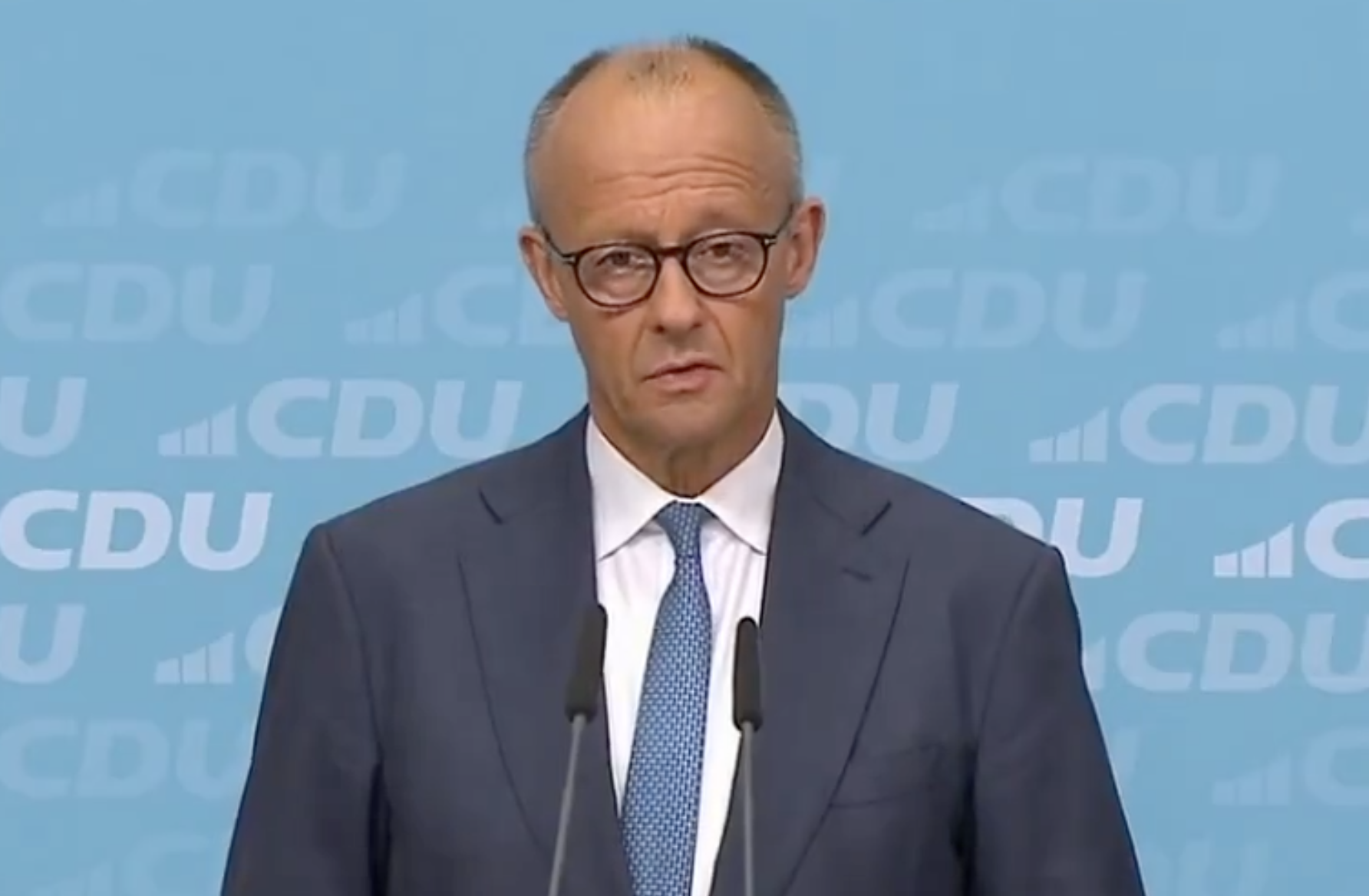
Germany’s political establishment is still absorbing the shock of Sunday’s state election in Saxony-Anhalt, where the Alternative for Germany (AfD) surged to 43.8 percent and the Christian Democratic Union (CDU) of Chancellor Friedrich Merz crashed to 17.2 percent. Merz called the result the CDU’s “heaviest defeat” in decades and said it could not simply be treated as business as usual.
“And I have to admit, this is the heaviest electoral defeat that the CDU has suffered in years, in decades,” Merz told reporters in Berlin after CDU leadership meetings. “We are all deeply shocked…We did not expect it to be like this.”
“That does something to us. Including me personally… All of this will, of course, have to have consequences,” he continued.
BREAKING: Merz just said he is "deeply shocked" by the AfD's landslide victory.
"And I have to admit, this is the heaviest electoral defeat that the CDU has suffered in years, in decades."
"That does something to us. Including me personally… All of this will, of course,… pic.twitter.com/L4cycKdH6h
It remains unclear what those “consequences” will be exactly, as Merz did not clarify. However, he did point to two upcoming elections in Berlin and Mecklenburg-Vorpommern, which will be held in the next two weeks. If the CDU faces further routs, there may be pressure for Merz to step down.
He accepted the democratic verdict but insisted the outcome had changed the political landscape “not only in Saxony-Anhalt, but throughout Germany.” When nearly 60 percent of voters backed parties that question the country’s democratic institutions, he said, “that is an election result with which we can not just treat as business as usual.”
Merz said he was searching for explanations, including in his own record: “What fear is there in the population that we may have underestimated?”
Merz has plans to hold talks in the coming days with SPD leaders on how the coalition could continue on its present course.
“Giving up is not an option,” he added.
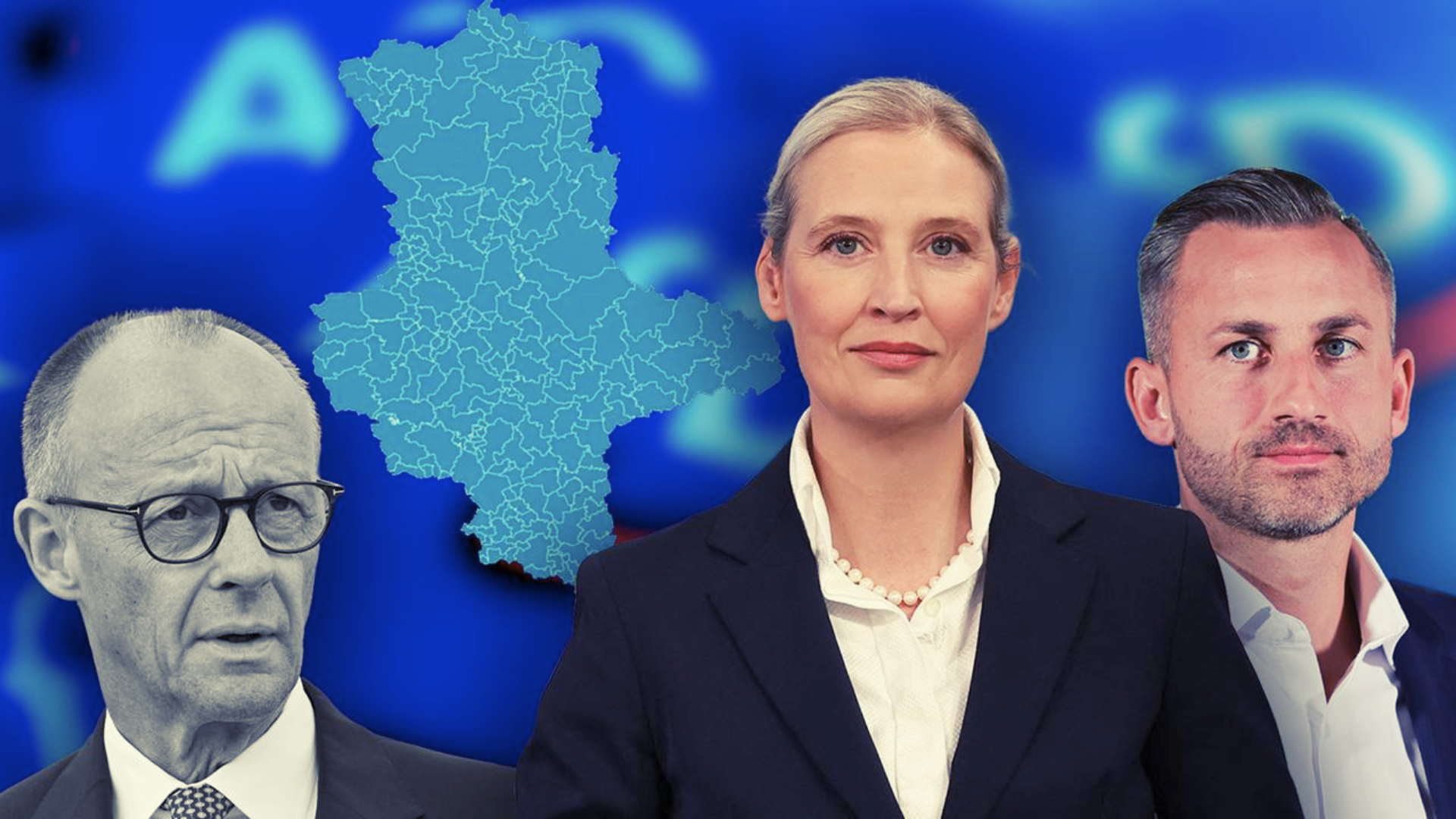
Meanwhile, the AfD federal co-leaders Alice Weidel and Tino Chrupalla pledged support for an AfD government in Saxony-Anhalt. Weidel called it a “dream result” and argued Merz had become “a great burden.” She predicted the CDU/CSU would never again win a federal election and said the AfD’s goal was to widen the gap to at least 40 percent by the next national vote. Chrupalla called the outcome “absolutely historic.”
Merz’s coalition partner, Bärbel Bas of the far-left Social Democrats (SPD), used her own press conference to argue that the government’s language on work and welfare had itself fueled public anxiety.
Outgoing Minister-President Sven Schulze was blunt: the CDU no longer held a government mandate and would sit in opposition. He ruled out CDU defectors joining any AfD-led arrangement and predicted the BSW would help put an AfD in power.
AfD lead candidate Ulrich Siegmund described the result as “a very clear government mandate” and said he could be “perhaps the next minister-president.”
The Alternative for Germany (AfD) scored a resounding and historic win in Saxony-Anhalt, but when specific data points are examined, the victory is even more remarkable.
Perhaps the most positive aspect of the election for the AfD is that the tremendous victory was achieved with a record high level of voter participation of 77.8 percent. In essence, more democracy equaled more votes for the AfD, according to calculations from the Infratest dimap. The firm pointed out that the AfD won 170,000 voters who stayed home during the last election in 2021, which is 10 percent of Saxony-Anhalt’s roughly 1.7 million eligible voters.
This means that the AfD’s total voting pool was made up of approximately 30 to 35 percent non-voters.
For those disillusioned by politics, the AfD’s program is drawing them back into participating in democracy. The country’s media should be celebrating this result in theory, but in reality, they would perhaps prefer that these voters simply stayed home, disillusioned and downtrodden.
Workers and those with financial problems backed the AfD
The AfD’s results show there might be futrher room for improvement. Approximately 65 percent of the AfD’s voters reported facing financial issues. As the German economy continues to falter, the pool of potential voters the AfD can tap into is likely to expand in other states.
It is important to note that just because many of these voters are facing financial difficulties does not necessarily mean they are unemployed. In fact, AfD won 61 percent of all blue-collar voters who actually voted. However, many of these often lower-income workers may also be struggling financially in a system that often rewards not working at all.
Some see the AfD’s results as a template.
“65% of AfD voters in Saxony-Anhalt reported facing financial struggles. Turns out that when you correctly link mass immigration to the decline in job security, homeownership, accessible healthcare, quality education, decent wages, and almost every other quality of life indicator for existing residents, they respond accordingly at the ballot box,” wrote Gabe Guidarini, the chief of staff for the Ohio Young Republicans wrote. Although an American, his post underlines that the AfD election results are being watched by the right-wing across the world, especially when they offer a clear blueprint for victory.
65% of AfD voters in Saxony-Anhalt reported facing financial struggles.
Turns out that when you correctly link mass immigration to the decline in job security, homeownership, accessible healthcare, quality education, decent wages, and almost every other quality of life indicator… pic.twitter.com/g0HJLtTs79
The tired narrative of the left, which depicts right-wing parties only garnering support from “old White males,” was once again smashed by the AfD in Saxony-Anhalt. The AfD won the youth by overwhelming numbers, reaching 42 percent of voters aged 18–24 vote and 44 percent of voters aged 25–40.
Martin Sellner, CEO of the Remigration Institute, celebrated the results, writing: “The kids are all right. The German youth are increasingly patriotic and reject ‘German guilt,’ replacement migration, trans ideology, and cultural Marxism.”
The kids are all right.
The German youth are increasingly patriotic and reject "German guilt", replacement migration, trans ideology, and cultural Marxism altogether. pic.twitter.com/LhcM3le7QX
In fact, it was the oldest voters that actually cost the AfD an absolute majority, with only 31 percent of voters 70 and older backing the party. Similar figures have been consistently found across Germany, with older voters turning to the establishment parties while young and middle-aged voters turning to the AfD.
While the AfD can celebrate its support among younger voters, the combined weight of the older voting population means the AfD will have to make inroads with these voters or continue to fail to reach a position of power at the state and federal level.
The CDU’s results are just as dramatic as the AfD’s results
The story of Saxony-Anhalt cannot be told without the collapse of the Christian Democrats (CDU). The party halved its support since the last election, dropping to 17.2 percent.
Political scientist Petra Dobner was asked if Chancellor Friedrich Merz will now resign. She responded: “That may also depend on how the next elections turn out. So maybe he can survive Saxony-Anhalt, but if Mecklenburg-Western Pomerania and Berlin show similar results, then I really don’t see a future for Merz.”
Notably, Merz famously said in 2018 that the CDU can cut the AfD’s support in half.
“We can achieve up to 40% again and halve the AfD. That’s possible! But we ourselves must create the conditions for it. That’s our task,” he said.
Since then, Merz has managed to cut the CDU’s support in half in Saxony-Anhalt and double the AfD’s support.
The Alternative for Germany (AfD) just won the largest share of any party in a German state election in the party’s history. Despite the historic result, which has sent shockwaves through the German political establishment, lead candidate Ulrich Siegmund in Saxony-Anhalt still fell short of an absolute majority needed to govern.
That gap, three seats in an 83-member Saxony-Anhalt Landtag, is now the focal point of unfolding drama in the capital city of Magdeburg, where the future direction of the state, and perhaps even of the country, will be decided. AfD has a political mandate and a number of options that could produce dramatic results. Here are three possible scenarios.
An AfD and BSW coalition?
On the preliminary official count, the AfD took 43.8 percent and 39 seats. The threshold for an absolute majority is 42. The BSW scraped in with 5.3 percent and five seats. Together they would have 44. Everyone else together also has 44. Without the BSW, the chamber splits 39–39.
The BSW has already been open that it is willing to pursue a coalition with the AfD, but this is not a comfortable coalition for the AfD.
Siegmund spent the campaign insisting he would not take office without a stable majority of his own. After election night he kept the hard line in one respect and loosened it in another. He still rejected the BSW’s preferred model, a non-partisan minister-president governing with shifting majorities, as messy power politics.
Siegmund called the offer “nonsense” and said he did not want to give up the AfD’s goals and values in the face of “power games.”
He still said the AfD would not trade away its program for power, but he also said he would extend a hand to anyone prepared to deliver a “fundamental political change,” including, if necessary, individual deputies rather than whole parties.
If that fails?
“In an emergency, there will simply be new elections.,” he said. In such a scenario, he predicts the AfD would score “50 to 55%.”
The question is whether cooperation with the BSW on some level is possible. Sahra Wagenknecht framed the result as a chance for a change of course on energy, Russia sanctions, education, and public broadcasting. State-level BSW figures say they will not join a “firewall” coalition against the AfD. They also say they will not elect Siegmund. Their offer is a third way, involving a new leader both parties can agree on, plus issue-by-issue majorities that could include the AfD.
However, the BSW is already hinting they may be willing to give up even more for an AfD government.
BSW’s lead candidate, Thomas Schulze, suggested that in the third ballot for minister-president, the BSW may abstain from the vote, which in theory, could let Siegmund through to become the state leader.
What the BSW would obtain in return remains to be seen.
However, despite the differences between the AfD and BSW, the two parties have much in common. The overlap involves a strict crackdown on migration, tackling energy costs, shifting policy on Ukraine, and hostility to the public broadcasters.
At the same time, BSW politicians have already flagged education policy and parts of the AfD’s economic and social agenda as unacceptable. A formal coalition was ruled out by Wagenknecht before the vote. What remains is only a quasi gray zone where both parties can exist together a vote a time.
For Siegmund, the political costs of that gray zone are obvious. He ran as the man who would reshape the state standing alone. Accepting a non-AfD premier, or even a minority premiership propped up only with the support of Wagenknecht’s left-wing party, would look like the opposite. However, stepping back from the deal would leave his party out of the halls of power once again.
AfD co-leader Tino Chrupalla and Alice Weidel both appear eager for Siegmund to take the deal. Chrupalla has already talked up the possibility of a minority government that would seek majorities case by case.
Peel off CDU MPs?
Siegmund’s second option may prove even more explosive for German politics. He spoke of not working with parties, but with individuals from the parties. He suggested individual deputies could “support an AfD government.” Some in the AfD’s federal circle even talk about CDU members crossing the floor to the AfD camp, and there are even suggestions that some MPs may defect.
If any CDU politician defected to the AfD, there would be a national firestorm. While if only one vote was needed, this might be in the realm of possibility, but finding three such MPs may prove a very tall order. The CDU has tried to build the firewall into its DNA, and if three CDU members helped bring the AfD to power in a state, it may be enough to collapse the federal government and end the chancellorship of Friedrich Merz.
Regardless of whether the AfD can peel off three CDU votes, the pressure on the party is tremendous after it collapsed to a mere 17.2 percent, effectively halving its support. The CDU is almost assured to continue facing a political reckoning in the future, which means the dam may break at some point, and CDU politicians may be more and more willing to jump ship to the AfD.
A repeat election possible?
An anti-AfD government is mathematically possible but politically? It would be a total mess.
It would need the CDU, SPD, Greens, Left, and BSW — five parties, two of which spent the campaign treating each other as the problem. The CDU already ruled out coalitions with both the AfD and the Left Party. The BSW campaigned to push the CDU out, with Wagenknecht also calling another firewall coalition an affront to voters.
That does not mean it cannot be attempted, and it very well might be, even despite the potential consequences for all the parties involved. If that project forms and then staggers, Siegmund’s threat of new elections stops being a far-fetched scenario. A second vote in such a scenario could indeed catapult the AfD above the 50 percent mark.
Procedurally, the clock is already running, as the new Landtag must convene by Oct. 6. The strongest group proposes the Landtag president in the first round. The minister-president is elected by secret ballot, with no fixed deadline once nominations begin. While the first ballot requires a majority of all votes, in the final round, a simple majority of votes cast can suffice to elect a new minister-president.
As far as the best outcome for the AfD, it is hard to argue against CDU defectors handing the AfD the keys to victory. It would allow the AfD to take control with a like-minded party on paper while sparking a major crisis for the ruling CDU.
However, remaining outside government also comes with plenty of bonuses, and as Remix News previously wrote, avoids serious pitfalls that the federal government and even the EU can put up against an AfD government.
Despite falling short of an absolute majority, the AfD appears to be in the driver’s seat.
Hay una ciudad romana en la costa turca del mar Negro que se llama Pompeyópolis. No la fundó nadie relacionado con la erupción del Vesubio del año 79 ni tiene ninguna relación con la Pompeya italiana: el nombre viene de Pompeyo Magno, que la creó en el 64 o 63 a.C. como una de las […]
Despite serious geopolitical challenges, the intensification of confrontational trends globally, and the overall deterioration of the international situation, India is successfully and worthily conducting an active chairmanship of this major and authoritative association of Global South states. On September 12–13, 2026, the next BRICS summit will take place in New Delhi. It is expected to […]
A Casa do Campino, em Santarém, recebe, no dia 12 de setembro, às 21h30, mais uma edição das Cartaxo Sessions, dedicada à música alternativa portuguesa, com atuações de Sereias, OKA e Cat Soup. Com entrada gratuita, o concerto é promovido pelas Cartaxo Sessions, em parceria com o Município de Santarém reunindo três projetos distintos da cena musical alternativa nacional. Vindos do Porto…
Cover image: picture alliance / ASSOCIATED PRESS | Jae C. Hong
Three features of today’s unordered world are converging to create a devastating food crisis. Russia’s war in Ukraine is disrupting agricultural exports from both countries. The enduring blockage of the Strait of Hormuz is restricting fertiliser shipments. And this year’s El Niño (a sporadic warming of the Pacific Ocean generating widespread knock-on effects elsewhere) could be the most drastic on record, causing widespread droughts. As this year’s United Nations general assembly (UNGA) draws near, global food affordability and availability are at risk, and with them millions of lives and global security.
This looming catastrophe coincides with an absence of political leadership, including in multilateral institutions. As recently as 2022 a coalition of leaders convened by the UN secretary-general, António Guterres, managed to curb a food crisis. Today even that convening power is missing, with potentially more dire consequences. Political leaders face a test: amid war, climate crisis and diplomatic turmoil, is it still possible for groups of states and institutions to confront the direst humanitarian urgencies?
This note argues that a solution could still be found, requiring a comprehensive global effort on several fronts: drought, support for farmers, the Black Sea, the Strait of Hormuz and access to fertiliser. In all of this, Europe should lead.
The emerging calamity
Global food prices are already almost 75% higher than their 1999 lows. Almost 2.2 billion people face food insecurity. The coming trio of threats to food supplies will make that worse.
A “super El Niño” will likely bring heat and drought to southern Africa and significantly reduce food production in south and south-east Asia. It may reduce already falling rates of wheat production—which is expected to fall by 3% globally in 2026-27 (8% in the EU, 12% in Australia and 19% in Argentina)—and drive up rice prices.
Meanwhile the Strait of Hormuz remains blocked. It is the largest single conduit for the nitrogen fertilisers most directly linked to yield and is the export route of about half the global supply of sulphur, a vital component of phosphate fertilisers. Thus, about one third of global seaborne fertilisers cannot reach fields, especially afflicting smallholder farmers in sub-Saharan Africa (where fertiliser prices are highest) and south Asia.
All this may well generate wider ripple effects lasting years. Rising prices and exhausted government subsidies in states like Malawi are deterring fertiliser use, which could depress future production. Historically, El Niño events are associated with protectionism (India has imposed export restrictions hitting countries in south-east Asia), which in turn raises prices, lowers margins and curbs investment in future output.
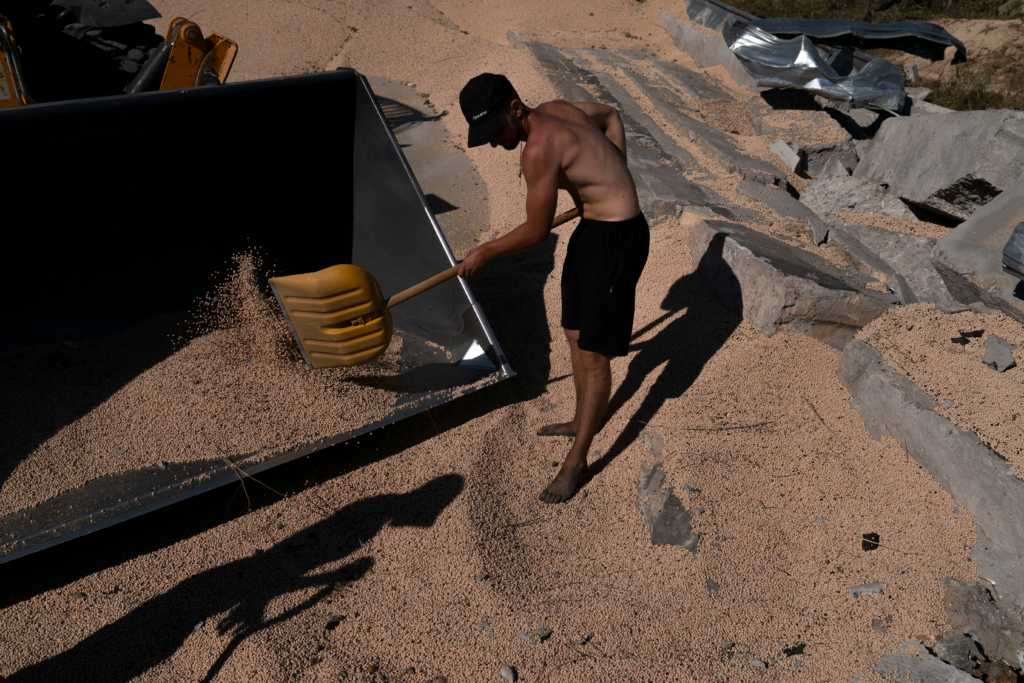
There are two bright spots among the big global agricultural producers: Ukraine and Russia, which together generate 30% of the world’s wheat exports, 20% of its corn, 60% of its sunflower oil and, from Russia alone, 20% of its fertiliser. But there too war has brought disruption. Russia’s attacks on Ukraine’s highly exposed grain and port infrastructure cut the latter’s exports by 75%, and more damage has already been done in August. Ukraine has been striking Russian port facilities and ships in the Black Sea and Sea of Azov, taking over 90% of Russia’s grain export capacity offline.
In 2022, a UN- and Turkey-facilitated arrangement mitigated a similar crisis and kept Russian and Ukrainian grain and fertiliser supplies flowing through alternative routes. US and EU agricultural aid in sub-Saharan Africa also helped. In 2026, by contrast, multiple challenges stand in the way of a similar solution. Logistically, war damage to infrastructure and low water levels in the Danube make it harder to get grain out of the region. Diplomatically, the UN is approaching a leadership transition, the US has turned against the organisation, and there is no global focal point for action.
Preventing the worst
European leaders, including those of the UK and Ukraine if it wants, should move fast to convene a coalition of states influential among the combatants in the Iran and Ukraine conflicts (India, China and Turkey especially) and of states especially exposed to this nutritional crisis (states in sub-Saharan Africa and south and south-east Asia). This coalition could draw on arrangements from the 2022 deal, as well as new links between UN agencies and initiatives like the CGIAR agricultural innovation network. It should seek to transcend political and diplomatic tensions, bringing leaders or at least ministers together on the margins of UNGA in the week of September 21st.
The joint initiative should have the following core elements:
A programme to distribute food relief and technical assistance on drought-resistant agriculture and soil fertility, headed by an adviser to the UN secretary-general and supported by UN agencies. Such assistance works: one led by the CGIAR reached almost 6m African farmers in 2023-5 and, to cite just one example, in Malawi delivered maize yields 64% higher than the national average.
This will need to be funded. The World Food Programme’s conservative pre-El Niño budget needs for 2026 should be covered (only 34% met so far). But the initiative should also marshal resources for the medium-term response to the “super El Niño” and its geopolitical intensifiers. This would include a financial mechanism to subsidise efforts by states to mitigate higher input costs and shift agriculture to drought-resistant strains. A CGIAR-led sustainable productivity growth push should have a budget of $500m over three years, with the first portion delivered fast enough to support the upcoming planting season.
Coalition members should strive for a partial ceasefire between Russia and Ukraine, to include an end to attacks both on ships carrying grain and on ports and infrastructure identified as central to grain, fertilisers and inputs. Its European participants especially could undergird this with support for Ukraine’s farms, including mobile storage units, fertilisers, seed and repairs to infrastructure. Some of this work is already underway.
The programme should also involve an agreement with Iran that fertiliser shipments be allowed to transit the Strait of Hormuz. Several attempts have been made in this direction already, with no results to date. Two elements should be added to make it more attractive. First, Iran’s own fertiliser and urea exports, and fertiliser shipments from other states, should be exempted from the US blockade and Iran’s imports of wheat and rice should be secured. Second, an expert-level group—akin to that used in the 2022 Black Sea arrangement—would oversee implementation and resolve disputes quickly and locally. Part-time negotiators must also secure practical arrangements to ensure results, not just agree on principles.
Unpalatable—but necessary
This effort would still face a series of obstacles. It would require multiple states to cross their red lines—or at least revisit established policies. There is a good chance that the two wars driving up food prices, in Ukraine and Iran, will escalate in the near future. Russia especially would likely be reluctant. The states most affected are a disparate and often antagonistic group. There is no single capital or organisation capable of appealing to all the decision-makers needed for a comprehensive solution.
But within this adversity dwells a constructive role for European governments. Along with the UN secretary-general, and a core group of middle powers including Brazil, Egypt, Kazakhstan, Mexico and Turkey, they can bring together the states most exposed to the crisis as the core of this new group. Along with partners from across the UN system, such as the UN Conference on Trade and Development, the World Food Programme and the Food and Agriculture Organization, they can amplify those countries’ voices and help marshal the resources needed to make the programme outlined above meaningful.
Besides winning over the most affected states, the next step would be to bring on board those states with influence on combatants in the Ukraine and Iran conflicts. This means especially China and India. The UN secretary-general can play a particularly vital role there. Europeans can also help by appealing to Chinese and Indian claims to speak for developing countries in general. In turn, Brazil, India and South Africa can invoke Russia’s claims to share that mantle, as fellow members of the BRICS formation.
Europeans can also play a crucial role in recruiting Ukraine into the programme—even if the latter’s commitment to any ceasefire would depend on Russia’s position. They could see this anti-hunger coalition also as a way to help rally support for Ukraine in the global south, as the Ukrainian president, Volodymyr Zelensky, did in 2022 with his Grain from Ukraine initiative.
In the Strait of Hormuz, meanwhile, the coalition could present free passage for fertiliser exports as a means of trying out the Omani-Iranian technical plans for opening sea routes. It would present this as a win-win proposition: Iran would get some of its exports to global markets; the US would be supporting its Gulf allies; and both parties and their European interlocutors might see the long-term geopolitical benefits of a stabilising anti-hunger act along these lines (for example, curbing mass migration).
This initiative is intended to be a “no regrets” effort. Even if it takes time for the combatants to join—and it will—supporting farmers and global trade will improve the food situation. Progress in addressing hunger should provide an opportunity to highlight the further contribution that progress in the Black Sea and the Strait of Hormuz could bring. This sense of momentum may bring some or all combatants closer to agreement.
It will take leadership from both the most affected states and from wealthier countries to achieve this defiantly cooperative act in a world of unorder. But its very defiance, its assertion that common action is still possible, makes it all the more valuable.
Years of emphatic denials that U.S. taxpayers never funded gain-of-function work at the Wuhan Institute of Virology have met their match in a federal courtroom. On August 18, 2026, David Morens—long-time senior adviser to Anthony Fauci—pleaded guilty to conspiring to hide the very paper trail those denials tried to bury. The emails about the cancelled […]
El gasto militar mundial alcanzó los 2,887 billones de dólares en 2025, con Estados Unidos a la cabeza con 954.000 millones de dólares, mientras que las tres principales potencias militares del mundo consumieron más de la mitad del gasto militar mundial...
Picture the Colosseum, and the image that comes to mind is almost always the same: a lion bursting into the arena, the crowd roaring, a doomed man backing away. Film and popular history have fixated on that single moment for so long that almost nothing survives in the public imagination about how the animal actually […]
La imagen que el cine y la literatura han transmitido de los anfiteatros romanos suele centrarse en el momento culminante del espectáculo: la bestia salvaje irrumpiendo en la arena, el rugido del león, el temor del condenado, el clamor de las gradas. Pero lo que ocurre tras esa escena, la trastienda de aquellos juegos que […]

 Login

 CASA DEL SOLE TV — Informazione libera e indipendente Il nostro lavoro è possibile solo grazie al vostro sostegno. Casa del Sole TV non ha editori forti né finanziamenti pubblici: siamo sostenuti da voi, il nostro pubblico. Se credi nel valore di un’informazione che non tace, aiutaci a continuare.
 Dona tramite bonifico bancario: IBAN: IT63P0326822300052392596590 Intestato a: LA CASA DEL SOLE EDIZIONI Causale: Donazione Casa del Sole TV
 Dona tramite PayPal: paypal.me/casadelsoletv
 Sostegno ricorrente: casadelsole.tv/sostienici




 DR


 BREAKING: Merz just said he is "deeply shocked" by the AfD's landslide victory.