
 Login

Iran reverses the asymmetry
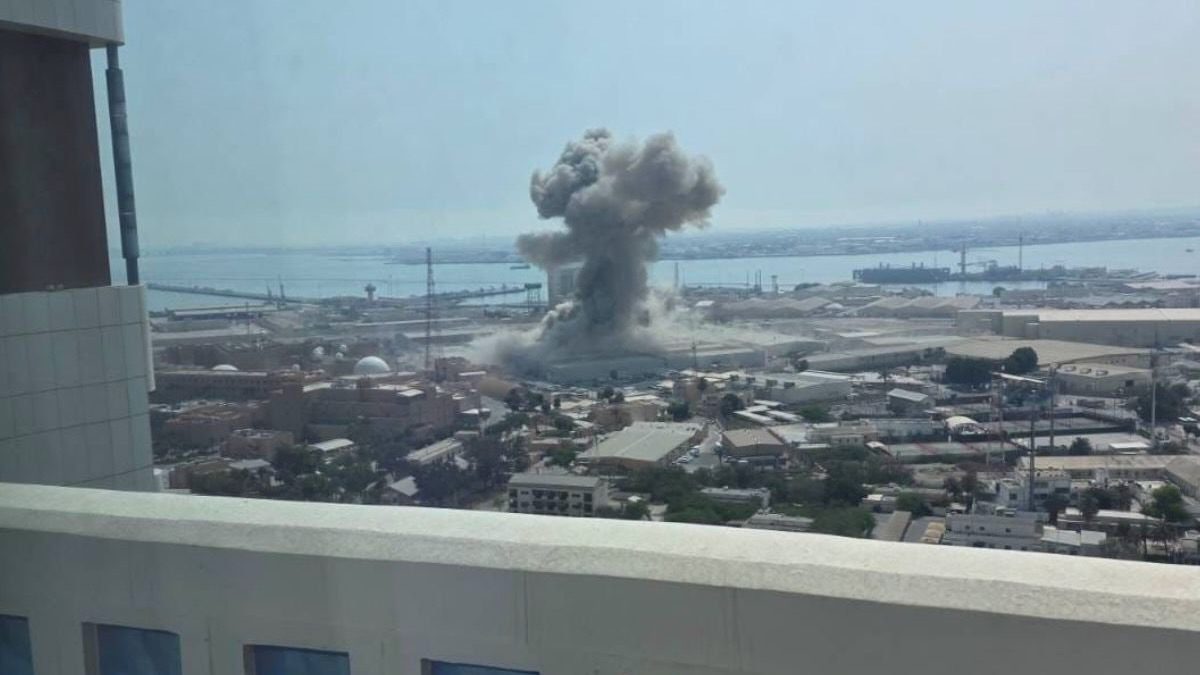
On September 2, fragments from a US missile tore through the roof of a wedding celebration in Kuhestak, in Iran’s southern county of Sirik. Four people were killed, including a child, and 68 were wounded. The United States has made a custom of bombing weddings – in Afghanistan, Iraq, Yemen, and now Iran. When US Vice-President JD Vance was asked about the dead, he shrugged: “Things happen.” The sentence should be entered into the record of this war. Imperialism turns other people’s catastrophes into the passive voice.
The attack on the wedding was part of a new round of US strikes along Iran’s southern coast and around the Strait of Hormuz. Washington said that it had targeted missile and mine-laying capabilities. Tehran replied with missiles and drones against US facilities in Jordan, Bahrain, Kuwait, Iraq, and the United Arab Emirates. This was not a ceasefire marred by occasional violations, as much of the North Atlantic press insists on calling it. For six months, the conflict has followed a recognizable cycle: the United States attacks, Iran retaliates, there is a pause and some indirect diplomacy, both sides prepare again, then Washington attacks once more. A pause between blows is not peace.
The Trump administration continues to claim that Iran’s navy, missile forces, and military infrastructure have been destroyed. Yet the evidence of Iran’s repeated retaliation refutes this boast. Iran’s systems have certainly been damaged by ferocious bombardment, but damaged is not disarmed. On September 4, Iranian army spokesperson Brigadier-General Mohammad Akraminia told IRNA that the first Iranian missiles and drones had been launched within fifteen minutes of the US attack. He said that the army struck four US bases in three countries: two in the UAE, Sheikh Isa Air Base in Bahrain, and a base in Kuwait. In separate communiqués, Iran said it hit satellite communications, equipment stores, and aircraft hangars at Ahmad al-Jaber Air Base in Kuwait, as well as troops and radar systems at Al Minhad in the UAE. The activation of air defenses and acknowledgments by regional governments of these strikes establish the central fact: Iran retains both the capacity and the will to reach the US base structure.
This is the war’s most important development. The United States built its power in West Asia on an asymmetry. It could bomb a country from protected airfields and command centers scattered across the region, while the attacked country was unable, or unwilling, to touch those bases. Iraq fired Scud missiles towards Israel in 1991 but did not systematically attack the vast US military architecture in the Gulf. Baghdad feared that striking US bases would bring down even greater destruction. Greater destruction came anyway. Iran studied that lesson.
Iran has now begun to reverse the asymmetry. The expensive network of bases designed to project US power has become a collection of targets. Al Udeid in Qatar, the headquarters of US air operations across the region; the Fifth Fleet facilities in Bahrain; air bases and logistical hubs in Kuwait and the UAE; Camp Titin in Jordan; and installations in Iraq and Syria can no longer be treated as a secure rear. An Arabic-language assessment published after the latest attacks described this precisely: bases in Kuwait and the UAE have become front-line positions, while combined waves of decoy drones, ballistic missiles, and cruise missiles seek to saturate Patriot and THAAD defenses and then strike command, radar, communications, and logistical systems. The technique matters because an interceptor costing millions of dollars can be drawn towards a drone costing a tiny fraction of that sum.
The vulnerability is political as well as military. Every US facility sits on another country’s territory. Governments in the Gulf must ask whether Washington’s military presence is a shield or a lightning rod. Iran need not destroy every base, only demonstrate that the bases impose danger on the states that host them. Gulf governments might then restrict the use of their territory for US attacks, pushing US operations towards distant facilities such as Diego Garcia, the UK’s base in Cyprus, and to US aircraft carriers (increasingly vulnerable themselves to long-term deployment fatigue).
Iran’s escalation ladder
Iran, moreover, has not climbed far up its escalation ladder. It could increase the volume of its launches, widen its targets to logistical hubs, ports, surveillance systems, and fuel depots, or encourage allied forces in Iraq, Lebanon, and Yemen to enter the conflict fully. It could further obstruct the Red Sea or close the Strait of Hormuz. Any step would deepen the economic crisis produced by the war. This is something that is not wanted by Trump, who faces mid-term elections in November.
Iraq is an especially important hinge. Arabic-language reports describe the government’s September 30 deadline to bring all weapons under state control and the refusal of several armed factions to disarm while US and Turkish troops remain in the country. The factions’ demands are not marginal: they place the continued US military presence at the center of the dispute. An attempt to coerce these groups into disarmament could produce an internal Iraqi crisis. Failure to disarm them leaves tens of thousands of fighters, including units with missiles and drones, as a latent front against US bases. Washington cannot assume that the geography of the conflict will remain wherever it wishes to draw the line.
Then there is the highest rung: the nuclear question. The last verified figure from the International Atomic Energy Agency was that Iran holds 440.9 kilograms of uranium enriched to 60%, recorded before inspections were disrupted by attacks on Iranian facilities. Nobody outside Iran now knows with confidence where all that material is, what condition it is in, or whether enrichment has advanced. Tehran has not declared that it will produce a weapon. But in August, Ebrahim Rezaei of the Iranian parliament’s National Security and Foreign Policy Committee argued that withdrawal from the Nuclear Non-Proliferation Treaty would be the best response to Trump’s intensified economic war. A withdrawal proposal has already circulated in parliament.
This uncertainty is itself a form of deterrence. US planners contemplating a nuclear or overwhelmingly destructive first strike cannot be certain that Iran has no small weapon or capacity to assemble one. Iran may decide to enrich above 90%, test a device, and demand that attacks cease, the path taken by the Democratic People’s Republic of Korea after watching Iraq and Libya. That decision would carry immense dangers and has not been taken. But Washington’s war is making imaginable what decades of US policy was meant to prevent.
Iran’s advantage does not lie in possessing greater explosive power. The United States retains the ability to inflict appalling destruction. Iran’s advantage lies in its capacity to impose costs, disperse its forces, keep Washington guessing, and endure blows without surrendering its sovereignty. The US military, meanwhile, is consuming scarce interceptors and long-range munitions while arming Israel and Ukraine, defending installations spread across an enormous arc, and facing an electorate that does not want body bags or another endless war. Iran has converted the US’s geographical reach from an advantage into an exposure.
This does not mean that Iran has won, nor that escalation is safe. A wounded empire is exceptionally dangerous. Trump wants an Iranian surrender that he can display before the US midterm elections, but coercion has not delivered it. The White House has force without a sequenced political strategy: it can strike harder, but each blow opens additional Iranian options. Tehran, by contrast, can move step by step while presenting each action as retaliation. Iran has informed the United Nations that the United States began the attacks and that its own operations are reciprocal acts of self-defense. The civilians dead at the wedding make Washington’s moral position more threadbare still.
The road out is not mysterious. It would require the United States to stop attacking Iran, end its blockade and coercive sanctions, and return to negotiations based on the June memorandum rather than seek capitulation. It would also depend upon regional states declining the use of their territory for further attacks. A credible diplomatic process would be strengthened by a United Nations investigation into the bombing of the wedding and other attacks on civilians. Otherwise, the institution, which is seeking a new secretary general, risks becoming an accountant who arrives only after the building has burned down.
Trump is caught between an opponent that will not surrender and an election clock that will not stop. He may yet order another spectacular strike in the hope that violence can manufacture victory. But Iran has shown that US bases are not sanctuaries, that US weapons are not inexhaustible, and that US escalation does not command the final move. The old asymmetry has been reversed. Washington can still destroy. It can no longer dictate.
Vijay Prashad is an Indian historian and journalist. He is the author of forty books, including Washington Bullets, Red Star Over the Third World, The Darker Nations: A People’s History of the Third World, The Poorer Nations: A Possible History of the Global South, and How the International Monetary Fund Suffocates Africa, written with Grieve Chelwa. He is the executive director of Tricontinental: Institute for Social Research, the chief correspondent for Globetrotter, and the chief editor of LeftWord Books (New Delhi). He also appeared in the films Shadow World (2016) and Two Meetings (2017).
This article was produced by Globetrotter.

