
❌

Reading view

Courtney Teasley: Breaking the cycle of incarceration

An American flag can be seen through the barbed wire surrounding the CoreCivic Otay Mesa Detention Center on October 4, 2025 in San Diego, California. Photo by Kevin Carter/Getty Images

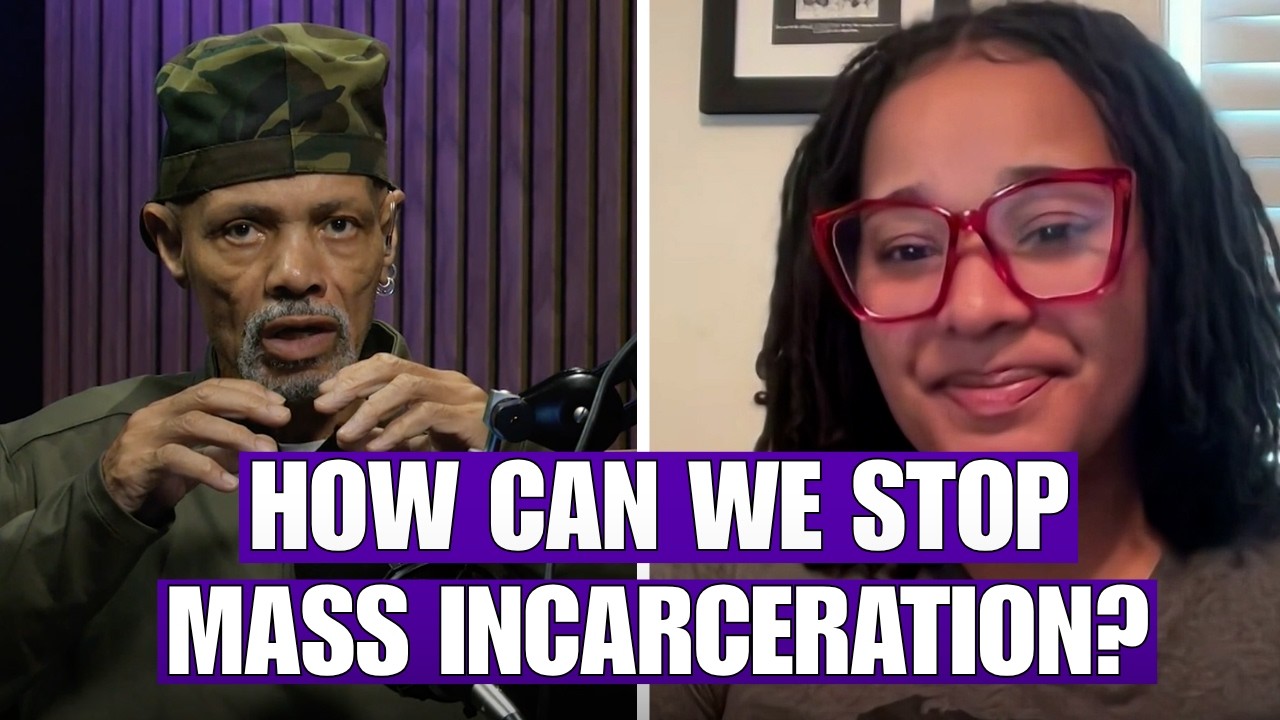
After running a historic campaign to unseat a criminal court judge for the first time in Nashville, Courtney Teasley created the legal education company emeffen to inform working-class communities about their civil rights. From combating police abuse to supporting vulnerable populations targeted by the criminal justice system, Teasley is a business and legal powerhouse redirecting people toward civic engagement and political-economic acumen. In this heartfelt interview, Mansa Musa and Courtney Teasley discuss grounded community organizing and political education that subverts the carceral system’s goal of turning citizens into captives.

Related links:

Credits:

  • Production/Post-production: Cameron Granadino
Transcript

The following is a rushed transcript and may contain errors. It will be updated.

Mansa Musa:

Welcome to this edition of Rattling the Bars. I’m your host, Mansa Musa. Today we are joined by Courtney Teasley, who consider herself and identify herself as a legal disruptor and justice strategist. We’ll be discussing her perspective on how she is intervening in the criminal injustice system and her work challenging the prison industrial complex as it exists today. Thank you, Courtney. Welcome to Rattling the Bars.

Courtney Teasley :

Thank you so much for having me. I’m really excited. I’ve heard a lot about this podcast, and so thank you so much for this opportunity to talk to your audience.

Mansa Musa:

Okay. Let’s start by introduce yourself to our audience and tell our audience how you came into this space, but more importantly, what is a legal disruptor and a justice strategist? What’s your identity as how you identify those things? So tell us a little bit about yourself.

Courtney Teasley :

Yes. So my name is Courtney Teasley. I am a licensed attorney in Nashville, Tennessee. I have practiced mainly criminal defense for the last 13 years and am now a retiring lawyer, a criminal defense lawyer, because I have done all the things within the criminal justice system from teaching and training in mock trial, training and coaching other lawyers to open their own law practices, and also then to teaching as a criminal justice educator over at a historically black college and university here in Nashville called Tennessee State University. So I taught there for a number of years as well. And then that is where I was able to see the big three that were creating this cycle. I call them the big three education topics that people from what I like to call the DAMM community, D-A-M-M, and that’s the disproportionately affected marginalized minority community. And people from that community are often not educated in the big three that I call financial literacy, criminal justice literacy, or legal literacy, and civics.

And these three lead directly to mass incarceration. And so after running a campaign, it was a historical campaign here, we unseated a criminal court judge for the first time ever in Nashville. I decided to create a legal education company to help fill that gap of legal literacy that so many of us never received and that basically you had the cops saying, “Hey, ignorance of the law is no excuse for breaking the law, but you never taught me the law.

That’s legal literacy and then financial literacy. You keep me in cycles of poverty. You keep me broke. You don’t teach me ever how to really make money.” And so that leads right back into the criminal justice system. And then finally civics, the last one we’re undereducated in, you teach us nothing more than go vote. You don’t teach us anything else around how to actively participate as a citizen. So we don’t really take advantage of the things that we should. We don’t really hold people accountable the way we should. We don’t show up the way we should when it comes to voting because of that. So that’s why I created my company is called MFN and I created it with the intent to help reduce mass incarceration.

Mansa Musa:

Okay. And it’s interesting that you identify three areas that you say are essential in disrupting this cycle. So let’s talk about those. Let’s talk about those things. Walk us through your program. How do you engage the community or who is your target audience?

Courtney Teasley :

Yeah, so like I was kind of telling you why I created it, I forgot to mention a very important part of that all the things we do are proactive in the criminal justice system, meaning I feel like if mass incarceration is going to go anywhere, the efforts to fight it must happen before someone has been found guilty or someone has pled guilty. We know 97% of people take pleas. And so the majority of efforts in the criminal justice system usually are happening after someone has already pled guilty and been found guilty. They have received that ultimate if, made a felon. Their rights may be restricted. They have a lot of different things. They have a lot of different hurdles at that area versus fighting proactively where I think we can be a lot more strategic and a lot more effective. So that’s my company focusing in on the proactive portion of fighting back.

And so how we do this and how I engage in the community, and I think you asked me also who is my targeted audience. And so the ways that we’ve been. My target audience is who I was telling you, the damn community, disproportionately affected marginalized minority community, the 97% of people who take pleas, the people from areas of town that others may look down on. I’m talking about the hood.

The people who most likely come into contact with the criminal justice system, that’s my target audience. And so we engage the community through multiple efforts, whether it’s through our partnerships and collaborations with schools, churches, community centers, organizations that care, from us going out and creating the activations where we’re bringing the legal literacy, but we’re bringing it in a fun way where people actually want to take part in and they’re getting to understand it, they’re getting to participate. So we do that and then we do some advocacy training where now we train organizations how to fight back proactively. So I’m a criminal defense attorney and when I say a justice strategist, I’m a fighter and I’m a strategic person first. And

So I’m going to pull back the veil and I’m going to show you what the criminal justice system really is and then I’m going to teach you how to do what I teach my lawyers how to do, play chess and not checkers, how to fight back unapologetically, vigorously. And so that’s what we do in our advocacy training. And so that’s how we engage the community. A lot of times we’re doing events where we’re going out to people who are having events in the community and a lot of people just don’t feel competent in teaching legal stuff. And so we bring that to you because we speak the language of the damn community, D-A-M-M community, African American English.That’s how I’m so successful as a lawyer because I’m bilingual. I speak two languages and that’s how the community resonates. If my life is on the line, I don’t need you speaking above my head.

So that’s how we engage in the community in an authentic way.

Mansa Musa:

When you saying legal literacy, are you educating me on understanding my rights somewhere like the Black Panther Party had, when they came out, they was going around, they was telling people they had the right one to be on, but they wasn’t saying your right to bear saying you have a right to be arm, but you have certain rights when the police pull you up and stop you. You have a right to not say nothing. You can ask to speak to somebody. When you say legal literacy, you talking about pre, post incarceration or do you deal with people at all sectors, like a person in society or people in prison or people that got out on what we call paper, out on parole?

Courtney Teasley :

Yeah. So with legal literacy, when I’m speaking about that, we’re talking about all facets of it. So I have books already for the Fourth Amendment, the Fifth Amendment, books on that. And I teach out on the Sixth Amendment because that book is not out yet. We have plenty of books that are coming out, but the Fourth and the Fifth Amendment, the Fifth Amendment is the one that just came out. And actually I’ll send y’all over a copy of it so you can check it out.

But the way that we really just break, it’s packed full of pre-protection. Now, and when I say pre-protection, that means protection that jumps in from the moment you’re accused of anything. A lot of times we like to rely on the Fifth Amendment and wait until the police tell us, oh, you got the right to remain silent or you’re being forced to testify and you’re like, oh, I plead the Fifth. However, no, the Fifth Amendment, it actually came into play the very moment you were suspected. So when that cop gave you a call and said, Hey, I want to talk to you, you know what I mean? We’ve heard from such and such. You mind coming down here talking to me? At that moment, even though they haven’t told you that you’re a suspect or whatever it may be, you have the power to say, oh, hold on.

I think I’m going to choose to stay silent. I’ll have my lawyer contact you. So you get to make a determination whether it’s in your best interest to talk about anything. So you have that pre-protection. And so that’s how we kind of engage with the amendments that really pop up in the criminal justice. The fourth, fifth, and sixth are the ones that we focus in on when we’re teaching our advocacy training. But those come into play when you’re incarcerated.

If you’re just on bail and you’re waiting, well, those are in play. Or even if you’ve been found guilty and you’re appealing, those are in play. You need to be able to understand those. And so then for other ones that we don’t have books on, then you rely on a person like myself to be able to train you on what that means for your organization or your specific

Mansa Musa:

Situation.

Courtney Teasley :

Okay.

Mansa Musa:

Yeah. And then in financial literacy, because I was telling off camera that when I got out, I hadn’t established no credit, but I had established a savings. So when I went to get an automobile, my mind was I ain’t want no car note. So I wind up paying $15,000 for 2015.

Courtney Teasley :

Oh

Mansa Musa:

God. And had I had established credit, I would’ve had made out better. But since then I had established credit. I went to a dealership in 2023 and I had the same amount of money and because I had good credit, I was able to get a 2023 and I paid the same amount of money I paid to get for that 2015. So my concern with the financial literacy, what is this? Because when you talking about the damn community, a lot of us don’t have a pot to piss in the window to throw it out. So we don’t have no funds. So are you teaching how to create your own business? Are you teaching how to go about getting grant, how to get money and then how to manage it? What is this, your financial literacy model? I

Courtney Teasley :

Love that you asked that. So after I declared retirement from the practice of law, I went and got certified as a business coach and I’m also a certified strengths coach. And so I basically am talking, when I’m teaching about financial literacy, I did that to go be able to teach my lawyers who were never taught anything about business. But when we transition it over here to people in the damn community, we started the very basics, like you said, learning about building credit. It’s just something so simple that it’s like a lot of times we don’t think about it or we’ve been so used to having not so good credit that we try to disregard it, that we never try to maybe get it back together. Well, and I understand that, but I think that there are multiple ways that you can start building your credit in smaller ways that a lot of people don’t talk about.

So we like to bring in financial strategists and people who are investors who actually have done these types of things to help you understand what to do. A lot of times, think about it like this. When you were just talking about you had a savings and the thing is you’re thinking about how can you make more money? How can you do whatever? You got your job. Then it’s like, well, who is here teaching us about investing? These are things we never learned about. Nobody’s sitting here giving us the playbook on what to do or how to do it. Like you said, you might be working a dead end job, a job that doesn’t promote you. Well, then you need to learn about what kind of jobs are out there, what kind of jobs, what kind of skill set do you have? What have you already done?

And then how can we use those same skills to get you a job that now has advancement opportunities? So it’s just all of those things that come together and that comes with us partnering with other organizations and actually bringing the experts to you to be able to help understand how do I segue now? I have not partnered yet and I’m open to it. I have not yet partnered with an organization for reentry where we’re teaching the coaching to them, but I have connections with one of the world’s top traders just in the last couple of years. I did an interview with him and he’s actually a Nashville native and he came down and he did a gig where he just talked to us all about investing, the bare minimum, how to start, what to do. Then you want to get somebody else. What’s a 401k?

How do I start it? What’s the IRA? You bring the experts to be able to bring it down, take all the high paid jargon out of it and speak the language of the damn community and explain to me, how do I get my ducks in a row? How do I protect myself and my children? And so that’s what I think we do well with partnering with other orgs to help

Mansa Musa:

That. And then we talk about civic and that in of itself speaks volumes in terms of our lack of understanding of electoral process, our lack of understanding of different institutions that regulate, responsible regulatory type things that affect us. So what is your civic model? Because when we learn civic in school, we know that at a certain age you get a right to vote. We know now that that’s not a guarantee with the latest Supreme Court decision, but be that as may, what’s your civic model?

Courtney Teasley :

Yeah. So with civics, my big thing has always been people get so mad, especially the new generation, it’s like, oh my God, they don’t vote. They won’t do this. They won’t do that. And it’s like, well, you got to teach them more than just go vote. It’s more to civics than just going to vote. And I like to bring up a case that I was fighting vigorously back in 2023. It was called disruptmanchester, if you look on Instagram or Twitter. And a family with five children, five Black children were driving through Manchester, Tennessee and had their children taken and forced into foster care all over marijuana. And so in that case, I had to publicly put it out to people and let them know what’s going on in this city that we consider a sundown town. A lot of Black people have known it to be that over the years.

And so we know what it is when these people are taking Black children and forcing them into foster care. And so when you’re making it public and you’re letting other people know what’s going on, and basically I call it criminal defense organizing, “Hey, this is what they’re doing to us in real time. We need you to be concerned about what’s going on.” I want to ignite their civic abilities and a lot of times they have to know what that means. And your civic abilities just meant, “Hey, you got the power to come court watch. You know that you can come. You have a right to come into a courtroom. You have a right to sit in here and see what they’re doing.” That’s accountability, making sure that the people that your taxes pay, that they’re accountable to you. And then also when we had issues where we were saying, “Okay, well, you guys took the children.

The state trooper did this, the county did this.” Well, people started to request records. So as citizens, like, “Hey, I’m requesting to see the stop. I’m requesting to see your personnel records. I’m requesting…” So that’s the type of thing when you’re igniting people to understand that as a citizen, because government officials, public officials, you pay them, your taxes pay them, you have the right to inquire into anything that’s going on, and you have the right to demand answers, you got the right to transparency, you got the right to ask for, you can file complaints, you can come court watch. So igniting them to see that your civic duty far exceeds just voting, right? You have power and you just need to know how to utilize it.

Mansa Musa:

In the District of Columbia, before you answer, we got the right returning citizens. Anyone formerly incarcerated, you’re a DC resident, you got the right to vote. And so we got that right. But with this latest decision that came out the Supreme Court, we looking at how they might try to take that back because the federal government got complete control over the District of Columbia, everything relative to District of Columbia, the federal government. We’re not a state. We got home rule. So talk about how you look at people that’s disenfranchised because that’s your costume population specifically. And not only that’s them and their family, because their family is highly affected by their incarceration.

Courtney Teasley :

Absolutely. So basically with what you’re talking about is probably going to go more into efforts that are reactive, but very necessary. And so what I did recently is incorporate a nonprofit so that way we are able to partner with organizations that do a lot of the rights restoration. And so most recently we hosted a judicial forum and in the judicial forum, we talked about, we educated them first on what all these seats, because right now we have a special election for judges going on right now. So we educated them around that. And then we had a forum so they could hear from the people. But one of the big pieces was we wanted people who did not have their rights, who may have been made felons at young ages. We wanted them to be able to come in and inquire about how to get your rights back so we can start that process with them.

And so what we do is we’ll have them come in, let us know, “Hey, I’m interested in getting my rights back or however, just let us know you’re interested.” And then we can do the connections with making sure you get that done. And we do that through collaborating with other orgs who are already doing it. So that’s how we try and fight back reactively by partnering and empowering, kind of like you were just saying, how you give amplify people’s voices. So we try to do that with other organizations. We’ll connect with them and allow them to do what they’re doing best in that field around rights

Mansa Musa:

Restoring. Yeah. And I mentioned earlier that I was incarcerated. Prior to being released, I did 48 years in the Maryland system. And a lot of what you’re saying, we would educate ourselves on all those levels. You had guys that did financial listing, they studied the stock market. They understood it and they invested their money. We had people that was jailhouse lawyers and did legal and was proficient at that. And then we had people that came together around organizing the community around social issues in general. If a person, and I’m looking at the prison population in particular, if a person in the prison population, when they let me out, they gave me $50.

They didn’t give me no bus ticket. They let me out in the city. They let me out in Baltimore City. I reached out to my family. I ain’t know if they had got the message or not, but that’s what I left out with $50 after serving all that time. The average person leave out a prison in the Maryland system with about that much money before they leave. If they leave with any kind of money, it’s not enough money for them to sustain themselves. So what’s your economic, that component and why you call it the missing curriculum and how do that factor into the system eradicating it or stabilizing the people that’s coming out?

Courtney Teasley :

Yeah. So I love that you asked this and I think you’re talking about when I call it why financial power is a prerequisite for social justice. Because one thing for me is as a criminal defense lawyer, I didn’t take the public defender route. I didn’t want to work for the government. I didn’t want my hands tied. I didn’t want to go to handcuffs. I wanted to be able to fight because the moment you fight a little too hard, guess what they going to do? Take your money from me, right?

Mansa Musa:

Yeah.

Courtney Teasley :

So that’s the way they keep us in order. And so I wanted to be able to fight without having that issue. And so I started to see that the fact that I was private practice, I was able to create, I charged my worth the majority of the times, but because of that, I was able to create scaling fees, sliding fees, low income, and represent people who really needed it because I charged my worth over here in my law practice the majority of the time. The people who can’t afford it were able to pay that and the people who were not able to afford it, I’m still able to represent you because I get to create that. I didn’t need the government to tell me to do a pro bono or to take a court appointment. I knew how to serve my community. And so one thing I kind of started to see is I would do all the things.

I told you I did the mock trial. I was the NAACP legal redress chair. I was the equality and justice committee chair for the Tennessee Association Criminal. I was all these things. And I started to see that real change. Y’all trying to burn me out. You know what I mean? And you’re not going to pay anybody for it. So I started to see that if the narrative being pushed is if you want to help your community, you need to do it for free and long hours, do it under a nonprofit, don’t get paid much. And I was like, well, that’s the reason none of these initiatives are long lasting.

Mansa Musa:

They

Courtney Teasley :

Only last for a little bit of time. And then as soon you run out of money and then now you can’t help anybody else. And so what we have to do is be able to be self-sustaining. So when people in our community are creating businesses, when I had my legal education company and 10% of all my product profits go back into the very people who are fighting proactively. So one of the Middle Tennessee National Action Network, I trained them and my trainings was $5,000. Well, they didn’t have to pay for that because people that actually were supporting and buying our product books and buying into our other things. And so that is, to me, a model that other businesses can take and see that, look, there are problems in our community. I’m making money over here. Well, let me figure out how to best assist.

And then that means in your situation, when you’re talking about a person coming from prison, well, if you have a business that actually cares, that you’re partnering with a business and they’re like, you know what? This is hard. People are trying to get back on their feet. We want to be able to make sure that they can do just that so that person can come and maybe they can do an externship. They can get a job over here and then they can get a stipend up front. Whatever it is, we are the ones who have to create the solutions. Nobody’s coming to save us. And the solutions that are coming through nonprofits are the monies. Come on, we’re under this administration. A lot of people aren’t getting money for anything that’s assisting Black people in general. So it’s going to be up to our community to be able to build financial power, to be able to become financially literate and to be able to be creative in actually helping assist.

For me, I care about any mass incarceration. For somebody else, it could be something different, but it’s going to be up to us to create those solutions and then partner with the ones that are doing it.

Mansa Musa:

And I think your approach to this mindfulness and skill building, it goes back to an era where we was educating for liberation. So I think we get caught up on how we see the problem and therefore we let that be determined the solution. But more importantly, who telling us what the problem is? Not so much as it how we see it. Let me rephrase that. Somebody telling us this is what the problem is, and then we say, okay, then the solution is, and trying to get a solution, it become, to your point, we try and get something from the government and the government ain’t going to fund you to get your freedom. That’s not happening. Government ain’t going to come and say, okay, because we still waiting on our 40 acres of the mule. And

Courtney Teasley :

It ain’t

Mansa Musa:

Coming. It ain’t coming. So the best thing we can do is do what we’ve been doing. But Courtney, I really appreciate you coming and having this conversation. And I hope our audience can really understand the importance of this approach, mainly when you’re dealing with the cost population. I know from experience that when people come into that system much like yourself and provide education, information and knowledge that we’re receptive. And there was a lot of people that was locked up with me, all of us that got out in the last 10 years. And a lot of what we learned while we was incarcerated, we’re doing it now in the Baltimore community and other communities. But you got the last one. What you want to tell our audience about how they can get in touch with you and how they can support your work?

Courtney Teasley :

Thank you so much, Mansa. First of all, what you just said is exactly why I’m doing the work I do and why I focus proactively prior to someone becoming incarcerated, prior to someone taking a plea or pleading guilty because I think it sucks that you did 48 years. Could you have helped me prior to that? And a lot of times you’ll see the Innocence Project, which is good and they’re doing good work, but it’s like people are only getting out and that effort’s only coming in after people have done 30 and 40 years. And it’s like, I think we can do something way before then while they’re fighting their cases more proactively. And so you can find me over on TikTok. I do a lot of legal literacy education over there. I have a whole course up there called Easy Way to On Your Right.

It’s Criminal Justice Literacy 101. It went most viral. We have over 30,000 followers and we have so many resources like a fight your case manual. So anyway, come over and follow us at MFN, that’s E-M-E-F-F-E-N. And we’re also over on, if you want to follow me personally, you can hit me up on LinkedIn, Courtney Teasley, or you can find me on Instagram @thecourtneyteasley. And so YouTube, again, we have the same thing. It’s not MFN, it’s @blacklawgirl. So if you want to find us on YouTube, it’s @blacklawgirl.

Wherever I am, look, come find me, come get me, and let me know. I love to come collaborate with y’all wherever you are. Let me bring the legal literacy and let me bring it in a fun way that’s easy to understand.
💾

“A Black family with five children [was] driving through Manchester, Tennessee, and had their children taken and forced into foster care all over marijuana. ... I had to publicly put it out to people and let them know what's going on in this city that we consider a sundown town. ... We know what it is when these people are taking Black children.”
  •  

L'adieu au Guide

PNG - 13.5 kio

Le 4 juillet, les funérailles du Guide suprême débutent dans la mosquée Imam-Khomeiny à Téhéran. Après une longue file d'attente, la foule entre par petits groupes dans ce bâtiment grandiose construit spécialement pour ce type de rassemblement. Les femmes et les hommes doivent emprunter deux portes séparées, après une fouille et un passage sous un portique. À l'extérieur, des systèmes d'arrosage rendent la chaleur plus supportable.

De nombreuses personnes venues des provinces ont planté leurs tentes autour du complexe. Les rues sont bondées, et il n'est pas facile de se frayer un chemin. Je suis venu avec quelques amis, dont deux femmes non voilées. À l'entrée, la première se voit demander de passer un foulard. La seconde peut entrer simplement coiffée d'un casque aux couleurs du drapeau iranien. Des thèmes patriotiques émaillent cette cérémonie essentiellement religieuse.

Deux jours plus tard, lundi 6 juillet, une grande marche d'adieu remplit les rues de la capitale. En 1979, j'avais participé aux manifestations monstres de la révolution iranienne contre le régime du chah, mais ce dont je suis témoin ce jour-là relève d'une autre dimension. Sans doute la population iranienne a-t-elle plus que doublé au cours des cinquante dernières années, mais rassembler autant de gens alors que le pays est en guerre apparaît comme une démonstration de force. Le gouvernement veut montrer qu'en cas d'attaque terrestre il dispose d'assez de partisans pour résister à la plus puissante armée du monde. L'atmosphère ressemble moins à celle d'une cérémonie de deuil qu'à une sorte de carnaval animé de musiques nationales.

La marche est lente et il devient même impossible d'atteindre la place Azadi, où les dépouilles sont installées. Certaines personnes portent des pancartes condamnant les négociations et réclament vengeance pour le Guide. D'autres, au contraire, estiment que les négociations sont approuvées par le nouveau Guide, M. Mojtaba Khamenei, fils du précédent.

La majorité des manifestants appartient aux classes populaires, qui sont pourtant les premières victimes des politiques économiques néolibérales du régime. Chercheur au Middle East Resarch and Information Project, à Téhéran, Mohammad Maljou estime que « les plus démunis des villes, comparés aux autres classes, présentent la plus grande proximité avec les composantes officielles du système politique ». S'appuyant sur des recherches menées en 2023 sur « l'attitude des classes sociales dans la société urbaine iranienne », il note que l'on « observe dans cette classe une participation électorale plus élevée, un plus grand soutien à l'“axe de la résistance”, une attitude plus positive envers le rôle du Guide suprême et un plus grand soutien à la transmission des idéaux de la révolution à la génération suivante ». Une grande partie des classes moyennes est restée à la maison. Le lendemain, les dépouilles du Guide et de ses proches sont transportées en Irak, pour des cérémonies d'adieu à Nadjaf et Kerbala, deux lieux sacrés du chiisme. L'inhumation a lieu le 9 juillet dans la ville sainte de Machhad.

Voir en ligne : /mav/209/AHMADI/69945
  •  

Les femmes soulèvent le voile

PNG - 13.5 kio

Depuis le début de la guerre, des manifestants se rassemblent sur les places et les carrefours. Dans la capitale et les autres villes, ils brandissent le drapeau iranien et scandent des slogans en défense de la « patrie ». Ils occupent aussi l'espace public en empêchant les opposants de manifester leur soutien aux États-Unis et à Israël.

Dans bon nombre de ces rassemblements, j'ai pu voir des femmes sans voile accueillies à bras ouverts. Pour la première fois, les médias officiels, y compris la télévision d'État, insistent sur leur présence. En réalité, leur nombre est faible, sauf sur la place Enghelab, au centre de Téhéran, où l'on peut voir chaque soir de nombreuses épouses et proches des cadres de la révolution dévoilées. Lors d'un rassemblement dans le nord de Téhéran, l'un des responsables de la sécurité m'avoue que sa femme y participe, car l'atmosphère y est plus ouverte. Un autre organisateur de ces manifestations me raconte discrètement qu'il travaillait dans l'organisation judiciaire et évoque l'époque où la Gasht-e-Ershad (police de la moralité ou police religieuse) arrêtait les femmes en infraction, pour me confier que beaucoup étaient des filles de hauts responsables.

La question du voile a perdu son caractère clivant. Dans les rues, des femmes déambulent cheveux au vent et en tenue occidentale à côté d'autres en tchador. Le gouvernement a reculé sur la question après l'arrivée au pouvoir du président Massoud Pezechkian, en juillet 2024. Depuis le début de la guerre, le régime iranien souligne même la présence de femmes sans foulard, présentée comme un signe de concorde nationale.

Lors de la grande cérémonie chiite de l'Achoura1, le 25 juin dernier, des femmes sans voile participaient à la distribution de thé ou à la préparation de nourriture votive. De telles scènes étaient inenvisageables quelques mois auparavant. Cette année, la commémoration des martyrs de la guerre occupait une place particulière et avait supplanté les rituels traditionnels. Au musée du cinéma, au Bagh-e Ferdows, musique et théâtre avaient remplacé les chants de deuil. Les acteurs jouaient le rôle des pères et des mères des « enfants martyrs » de l'école de Minab, où cent vingt élèves ont été tués par un bombardement américain. Sur un grand écran, on voyait notamment des images de femmes dévoilées présentes dans la foule. Lors de l'une des soirées, un chanteur nommé Gheisar, qui avait quitté l'Iran et se produisait à l'étranger, est monté sur scène pour donner un spectacle promouvant la défense de la patrie.

De nombreux jeunes soutiens du régime, notamment les membres des bassidji (miliciens), ont grandi dans une société iranienne en pleine mutation sur ces questions. Nombre de leurs proches ont ôté leur voile. Désormais, on peut être chiite, partisan de la République islamique et exposer sa chevelure aux yeux de tous.

(1) Jour de deuil majeur pour les chiites, qui commémorent le martyre de l'imam Hussein, petit-fils du prophète Muhammad, tué lors de la bataille de Kerbala en l'an 680.

Voir en ligne : /mav/209/A/69946
  •  

Ôter ses œillères, comprendre un pays

« Axe du mal » ou « axe de la résistance » ? On fustige ou on soutient l'Iran, son système politique comme son non-alignement. Pourtant, manichéisme ou « campisme » interdisent de saisir la viscosité des questions géopolitiques et l'âpreté du quotidien des Iraniens. La marche singulière de cette nation insubordonnée invite à interroger les certitudes, oublier les préjugés et repérer les subterfuges.

JPEG - 144.2 kio
Pooya Aryanpour //// « Gone With the Wind » (Parti avec le vent), vue d'ensemble, exposition au sein de la sucrerie de Kahrizak, Téhéran, 2022
© Pooya Aryanpour - Dastan Gallery

Le premier piège lorsque l'on s'intéresse à la République islamique d'Iran consiste à s'arrêter au second terme. Ou de ne voir dans son drapeau, choisi après la révolution de 1979, qu'« Allah » calligraphié en son centre sous la forme d'une tulipe, symbole des « martyrs ». Sous le régime du chah (1941-1979), l'absence de libertés, la répression et le contrôle de la vie publique limitaient fortement l'expression des revendications sociales. Dans ces conditions, l'islam est devenu un ciment révolutionnaire, une sorte de bélier politique et social enfonçant les murailles de l'ancien régime impérial. Le clergé chiite était partagé entre une fraction proche du pouvoir en place et une autre qui jouait un rôle de contre-pouvoir. Aujourd'hui, il occupe sans conteste une place atypique dans l'appareil d'État. Mais cette forme d'islam politique n'a guère à voir avec ses avatars contemporains, notamment dans la sphère sunnite, issus de lectures rigoristes et ultraconservatrices du Coran. Et elle a perdu beaucoup de sa force de cohésion idéologique des premières années.

Pour le penseur révolutionnaire Ali Shariati (1933-1977), la spiritualité éveillait d'autant plus les consciences qu'elle portait en elle une émancipation : la quête de liberté des plus pauvres qui alimenta la dynamique révolutionnaire. Mais le mouvement social porté par l'islam devait éviter toute institutionnalisation. Loin de prôner la résignation ou le fatalisme social, le premier Guide, Rouhollah Khomeiny (1900-1989), s'appuyait, lui, sur les principes de l'islam non pour refuser la modernité, mais pour trouver un chemin propre à son pays. Il a théorisé son modèle de pouvoir par le velayat-e-faqih, qui inspire la Constitution de décembre 1979 : une sorte d'« État de droit islamique », fondé sur la primauté d'un juriste-théologien, un « sage » religieux, dont l'érudition doit permettre de puiser dans les textes islamiques les fondements de ses arbitrages entre les composantes du pouvoir temporel. Mais, dans la pratique, les sources juridiques sont plurielles.

Car, sous la gouverne des clercs, la révolution de 1979 accélère la construction d'institutions modernes, paradoxalement de plus en plus sécularisées, comme la société. En revanche, si la nouvelle Constitution voulue par Khomeiny accorde une place importante à la souveraineté du peuple, celle-ci s'exerce par un suffrage universel… sous contrôle. En dernier ressort, le clergé s'est arrogé de nombreux pouvoirs, dont celui de sélectionner les candidats et de contrôler les élus (lire « Un pluralisme en trompe-l'œil »). Toutefois, parler de théocratie serait accepter la fiction qui fait officiellement du Guide un régent, le représentant du douzième imam le temps de son « occultation », entamée en 874. Les motivations de ses orientations appartiennent évidemment au profane et témoignent des luttes de pouvoir.

Assurer une continuité symbolique

La répression des mouvements sociaux, dès les premières années, signale l'abandon des idéaux de justice sociale et de liberté. La fin de la guerre Iran-Irak, en 1988, parachève le verrouillage de la société. Avec la nomination du second Guide, Ali Khamenei, en 1989, l'érudition a semblé moins compter que l'intrication, voire la compromission dans le premier cercle des décideurs. Autant de critiques redoublées après la nomination de son fils Mojtaba, à la suite de son assassinat revendiqué par Israël le 28 février dernier. Certes, ce choix de l'Assemblée des experts (tous religieux) visait à assurer une continuité symbolique du système, mais au risque de voir émerger une logique dynastique, alors que la force des institutions nées de la révolution tient à une dilution des pouvoirs. Cette dernière relativise d'ailleurs l'impact de l'élimination de nombreux chefs politiques ou militaires, contrairement à ce qu'imaginaient probablement les dirigeants aventuristes israéliens et américains.

Chez de nombreux progressistes et surtout au Maghreb, en Afrique ou en Amérique latine, les sanctions occidentales sous la dictée des États-Unis et les critiques du « régime » de Téhéran vaudraient comme autant de preuves de sa bravoure, le prix de son indépendance, un gage de vertu. Si elle a échappé à la colonisation, la Perse se bat, il est vrai, depuis le milieu du XIXe siècle contre les ingérences étrangères. Seule la mobilisation de sa population lui a permis de s'extraire du Grand Jeu qui opposait Russes et Britanniques pour le contrôle de la région, durant la guerre de l'hiver 1856-1857 par exemple, ou la révolte du tabac de 1890. Cette dernière dessine d'ailleurs une trame familière à tant de peuples vassalisés : un pouvoir politique autocratique, aux mains du chah Naser Al-Din Qajar, octroie à une compagnie britannique le monopole de la culture, de la vente et de l'exportation du tabac. Les marchands et le clergé protestent en vain jusqu'à la fatwa du grand ayatollah Mirza Hassan Shirazi, qui interdit la consommation de tabac. Manifestations et boycott obligent en définitive le chah à renoncer à cette concession britannique en 1892.

Double discours occidental

Le coup d'État anglo-américain de 1953 ou le large soutien économique et militaire reçu par Saddam Hussein (ex-URSS, États-Unis, France, pays du Golfe, etc.) durant la guerre Iran-Irak (1980-1988) ont inoculé une méfiance vis-à-vis des grandes puissances. Le double discours occidental actuel devient limpide quand on rappelle que le programme nucléaire a été lancé dans les années 1970 par le chah… avec l'aide des Américains, des Allemands et des Français. Les revendications iraniennes sur le golfe Arabo-Persique ne posaient pas de problèmes quand « notre ami » Mohammad Reza Pahlavi étendait les eaux territoriales de son pays, en 1959, ou s'empressait de prendre le contrôle de trois îles stratégiques proches du détroit d'Ormuz lors du départ des Britanniques de la région en 1971. Rien de neuf dans les revendications actuelles : le rôle-clé du Golfe pour le commerce maritime et les relations internationales est documenté depuis plusieurs millénaires.

JPEG - 263.9 kio
Pooya Aryanpour //// « Gone With the Wind » (Parti avec le vent), détail, exposition au sein de l'usine sucrière de Kahrizak, Téhéran, 2022
© Pooya Aryanpour - Dastan Gallery

Pastichée par l'impérialisme débridé de M. Donald Trump, l'animosité belliciste des États-Unis — dont les dépenses militaires représentaient en 2025 cent vingt-huit fois celles de l'Iran — ne justifie pas pour autant qu'un gouvernement tire sur les manifestants, pourchasse les femmes libres, ses opposants, ses artistes, propose une rançon pour la mort de l'écrivain Salman Rushdie, liquide bien d'autres auteurs moins célèbres en Occident, censure et contrôle la presse, sanctionne étudiants, enseignants, syndicalistes ou recoure massivement à la peine de mort (2 159 exécutions en 2025 selon Amnesty International). Le « campisme », ou le choix binaire d'un camp, conduit aussi certains à ne pas voir la nature profondément néolibérale, inégalitaire et oligarchique de l'économie iranienne, ou à ignorer tous ces jeunes qui « votent avec leurs pieds » et émigrent. Cette fuite des cerveaux dilapide un important capital humain et scientifique difficilement acquis, grâce à la généralisation de l'accès à l'éducation, à la construction de nombreuses écoles et à la démocratisation de l'enseignement supérieur, notamment au bénéfice des filles, qui représentent aujourd'hui près de 60 % des étudiants. La rhétorique antioccidentale égare également nombre d'observateurs, qui en font une lecture littérale, ignorant l'ambivalence des sentiments partagés jusqu'au sommet du pouvoir. Les enfants des dignitaires ne font pas leurs études en Chine ou en Russie, mais en Europe et aux États-Unis. Et pour éliminer Saddam Hussein en 2003 ou combattre l'Organisation de l'État islamique (OEI) entre 2014 et 2019, les Occidentaux ont pu compter sur la complicité de Téhéran.

Téhéran seul face à ses ennemis

Sans surprise, Israël et les États-Unis ont tenté d'embarquer une partie des forces kurdes iraniennes dans leur croisade, espérant peut-être que cette minorité lance une nouvelle rébellion comme celle qui fut écrasée après 1979 (lire l'article page 45). Il faudrait davantage que des incursions locales pour prendre le contrôle d'un pays grand comme trois fois la France. La diversité ethnolinguistique des plus de 90 millions d'habitants est trop souvent présentée comme une faiblesse. Certes, un peu plus de la moitié de la population seulement est d'origine persane (indo-européenne), les turcophones (Azéris, Turkmènes, Afsharis…) représentent près du tiers, le restant se répartit entre Kurdes, Arabes, Baloutches, Lors, Assyro-Chaldéens, Bakhtiaris, Gilakis, Arméniens, etc. Le persan, ou farsi, joue toutefois de longue date le rôle d'une lingua franca, un lien commun et d'échange vers les pays ou populations persanophones (en Afghanistan, au Tadjikistan, et ailleurs en Asie centrale). Inscrite dans une histoire plurimillénaire, cette civilisation a produit un sentiment d'appartenance, un nationalisme qui dépasse les divergences d'intérêt, d'origine ou d'opinion. On le perçoit notamment dans le rôle de la culture, de la littérature, et particulièrement de la poésie (lire l'article page 15). Partagé par près de 90 % de la population, l'islam chiite contribue également à forger une communauté de destin, héritée de l'époque safavide, lorsque le chiisme duodécimain fut érigé en religion d'État.

Plus délicate encore apparaît la perception du positionnement géopolitique de la République islamique. Elle participe à l'Organisation de coopération de Shanghaï (OCS) — très souple —, dialogue avec la Russie et la Chine, vend des drones à la première et achète beaucoup d'électronique à la seconde. Mais aucune alliance ne vient sceller cette entente « amicale », et non désintéressée. Téhéran est seul pour faire face à ses ennemis, la volonté d'indépendance demeurant l'une des seules revendications fondamentales de 1979 qui subsistent encore aujourd'hui.

Depuis, une nuée d'articles annoncent régulièrement une « exportation de la révolution », mais négligent les divergences culturelles ou religieuses qui l'empêchent. Les dirigeants iraniens ont beau jeu de rappeler que leur pays n'a jamais envahi ses voisins et ne fait que répondre aux agressions. Ils ont néanmoins construit un réseau de complices, ou de comparses, le plus souvent liés par une position dissidente au sein de l'islam : chiites d'Irak, du Liban (Hezbollah) ou d'Afghanistan, houthistes du Yémen, alaouites de Syrie, mais aussi sunnites du Hamas ou du Djihad islamique à Gaza, voire laïques du Front populaire de libération de la Palestine. Cet « axe de la résistance » à l'impérialisme d'Israël et des États-Unis comprend une dimension militaire, régulièrement à l'œuvre dans le conflit asymétrique ces derniers mois. Mais il a été ébranlé par la chute du régime syrien de M. Bachar Al-Assad et produit sans doute autant d'hostilité que de crainte dans le monde arabe.

En politique, le brouillage atteint son paroxysme. Les réformateurs ne sont pas nécessairement « de gauche » — certains sont ultralibéraux — et les conservateurs « de droite ». Même les politiques « sociales » attribuées au président (conservateur) Mahmoud Ahmadinejad, sur le logement notamment, sont inspirées par une approche libérale de l'économie. L'État social construit avec peine recule dans la santé, l'éducation, partout. Les audaces redistributives des premières années apparaissent bien lointaines. Les journaux réformateurs critiquent la Chine ou la Russie, mais cela ne les empêche pas d'appeler à serrer les coudes sous les bombardements.

Le mystère le plus difficile à percer tient au nucléaire. L'Iran a toujours déclaré vouloir développer un programme civil sans acquérir la bombe, une fatwa d'Ali Khameinei l'interdit d'ailleurs. Mais alors, pourquoi signer le traité de non-prolifération tout en produisant un uranium enrichi à 60 %, bien au-delà des besoins d'un programme électronucléaire civil ? Ambiguïté stratégique ? Dissimulation ? Cette volonté d'arriver au seuil de la maîtrise de la bombe fournit depuis plus de vingt ans le prétexte idéal à Israël et aux États-Unis pour s'agiter. Mais ne pas franchir ce seuil conduit à renoncer aux moyens de dissuader les agressions.

Les interventions constantes des États-Unis et la confrontation permanente voulue par Israël prolongent une logique de domination par la force aux relents colonialistes. Elles attisent les tensions régionales pour imposer un ordre injuste du monde qui fait le jeu des pouvoirs autoritaires. L'histoire contemporaine du peuple iranien se confond ainsi avec celle des ingérences étrangères et d'une double confiscation — intérieure et extérieure — de son aspiration à choisir librement et démocratiquement son destin.

Voir en ligne : /mav/209/DESCAMPS/69918
  •  

BRICS nations call for end of US blockade on Cuba, condemn Israeli and US violations in Iran 

The 18th BRICS summit concluded in New Delhi on Sunday, September 13, with the unanimous adoption of the New Delhi declaration condemning wars in West Asia and reiterating calls for a more democratic and multilateral world order. 

This year marks the 20th anniversary of the formation of the grouping with the core objective of democratizing global governance and promoting multilateralism and cooperation among the countries of the Global South.

This years’ summit was held around the theme of “Building for Resilience, Innovation, Cooperation and Sustainability.”

The summit, hosted by Indian Prime Minister Narendra Modi, was also attended by Chinese President Xi Jinping, Russian President Vladimir Putin, Iranian President Masoud Pezeshkian, South African President Cyril Ramaphosa, Indonesian President Prabowo Subianto among others.

Several heads of international organizations, including the secretary general of the UN, Antonio Guterres also attended the summit.

In the context of ongoing US attempts to outright control the region in complete disregard to the independence of the countries and the international law, the BRICS joint declaration underlined that “the character of Latin America and the Caribbean as a zone of peace, built on mutual respect, peaceful settlement of disputes, and non-intervention” must be respected.

It particularly expressed “deep concern on the situation relating to Cuba due to the tightening of unilateral [US] blockade measures against the country, their adverse effects on the Cuban economy, energy supplies and the worrying humanitarian impact on the Cuban people,” and demanded the immediate end of all such political and economic measures in accordance with UN General Assembly resolutions.

The 11 members of the BRICS (Brazil, Russia, India, Iran, Indonesia, China, Ethiopia, Egypt, UAE, and South Africa with Saudi Arabia yet to formally join) represent over 30% of the global economy and nearly half of the world’s total population. 

Israel and US must respect international law  

Though the joint declaration did not explicitly name the US and mentioned Israel once, it expressed great concern over the wars in Iran, Palestine, and Lebanon, demanding the aggressors respect international law and resolve all standing conflicts through the multilateral forums and diplomacy.

It also expressed serious concerns over “deliberate attacks on civilian infrastructure and peaceful nuclear facilities under full safeguards of the International Atomic Energy Agency (IAEA)” in Iran, calling them a violation of international law. 

The joint US-Israeli aggression, both in June 2025 and since February this year, targeted several civilian infrastructure, assassinated political figures and bombed civilian nuclear facilities in Iran in complete violations of existing laws and norms endangering massive human destruction.

The joint declaration also underlined the need to ensure the smooth flow of “global trade, supply chain and energy” in accordance with international law.

Both Iran and the UAE, which hosts US bases used for attacks on Iran, are full members of BRICS. The UAE has condemned the Iranian retaliation to US bases in the country and recently announced the suspension of all trade and economic relations with Iran. 

The Abu Dhabi crown prince Sheikh Khalid Bin Mohamed bin Zayed Al Nahyan, representing his country at the summit in New Delhi, had a brief conversation with Pezeshkian on the sidelines.

Read more: Iran reverses the asymmetry

The BRICS nations also criticized the continued violations of the ceasefire in Gaza, declared in October last year, by the Israeli forces. It demanded a halt of the plan for “forced displacement of Palestinians from Gaza” and asked Israel to fully respect the human rights of Palestinians. 

It reiterated its support for a two-state solution within the 1967 borders and full membership for the Palestinian state in the UN.

BRICS nations also condemned the continued violations of the ceasefire and sovereignty and territorial integrity of Lebanon by Israel, demanding the withdrawal of all its forces from occupied Lebanese territories.

Against unilateralism and attempts to undermine multilateral institutions

BRICS nations reiterated their joint commitment to “reforming and improving global governance” including the UN and global financial and trade institutions by promoting a more just and equitable, representative and accountable international and “multilateral system in the spirit of extensive consultation, joint contribution and shared benefits.”

BRICS also condemned the attempts to “unilaterally undermine the work of global multilateral institutions and impair the implementation of their respective mandates” in a likely indication to the recent US attacks on the UN and International Criminal Court (ICC). 

In the context of US attempts to “economically isolate” Iran and threats of secondary sanctions on countries who do not comply with its measures, its sanctions on Cuba and various other countries, the BRICS joint declaration condemned the repeated invocations of all forms of “unilateral coercive measures,” calling them contradictory to international law.

Such measures “have far reaching negative implications for human rights, including the rights to development, health and food security” with disproportionate effects on poor and vulnerable sections of the society, the declaration noted. 

Several leaders, including Chinese President Xi Jinping, called for greater unity and cooperation among the BRICS members and the countries of the Global South to pave the way for the democratization of the international order and greater mutual economic development. 

Xi called the Global South the key driver of world multipolarity, asking them to jointly defend the rule of law in international politics.

The BRICS joint declaration also called for a greater collective push for the achievement of the UN Sustainable Development Goals by 2030 and named the global eradication of poverty as one of its central objectives.

  •  

The Diver Who Held Up a Cathedral With His Bare Hands — for Six Years, in Total Darkness

Winchester Cathedral covers roughly 53,800 square feet (about 5,000 square meters) of floor space, making it one of the largest cathedrals in Northern Europe. At 558 feet (170 meters) long, it’s also the longest medieval cathedral in the world. Neither the congregation nor the more than 365,000 tourists who visit each year to admire its […]

  •  

Africa’s BRICS opportunity: from resources to productive power

The enlargement of BRICS presents Africa with a wider field of economic possibilities by bringing the continent into closer relationship with some of the world’s largest markets, important sources of development finance and countries possessing substantial capabilities in manufacturing, energy, infrastructure, pharmaceuticals, agriculture, and advanced technologies. At a time when international economic relations are becoming increasingly fragmented, this wider range of relationships gives African countries greater room for maneuver.

But a wider choice of trading partners, financiers, and technological partners will mean considerably less if Africa continues to export raw materials, import sophisticated technologies, and occupy the lower reaches of global value chains, because the destination of our commodities may become more diversified without fundamentally altering our position in the international division of labor. It is not the direction of extraction that has ever been the problem, but its structure.

20 years of BRICS

This should therefore be the central African question about BRICS as it enters its third decade: how do we use this changing configuration of economic relationships to build productive power on the continent? The measure of Africa’s engagement with BRICS cannot simply be the increase in trade, investment or infrastructure finance, but must increasingly be whether these relationships enable African economies to convert their minerals, energy resources, labor, knowledge and expanding continental market into greater productive, technological and institutional capability.

Africa’s experience gives this question particular historical significance. The continent has been deeply integrated into the world economy for centuries, but largely through an economic structure in which minerals and agricultural commodities traveled enormous distances while much of the processing, manufacturing, technology, and financial value associated with them accumulated elsewhere. That structure remains recognizable in economies that export crude oil while importing refined petroleum products, export mineral ores while importing machinery and manufactured components and export agricultural commodities while importing processed goods derived from the same productive base.

Barriers to development

The post-colonial challenge has therefore never been to trade more but to build the productive capabilities that allow African economies to retain more value from what they produce. Yet this has become more difficult as several economies have experienced premature deindustrialization before manufacturing reached the scale needed to absorb large numbers of workers and sustain productivity growth. Domestic firms are frequently small, supplier networks remain shallow, and the relationship between universities, technical institutions and industry is often weak. Infrastructure still too often reflects the historical logic of moving commodities from sites of extraction to ports rather than connecting African centers of production.

Read more: The International Monetary Fund’s Africa policy is underdevelopment

The African Continental Free Trade Area creates the possibility of changing the scale at which we approach some of these problems. A continental market can support forms of industrial specialization that smaller national markets cannot, but the agreement will acquire its full developmental significance only when African firms possess the productive capacity to supply that market. Lowering tariffs creates trade opportunities; it does not by itself produce the firms, electricity, logistics, finance, skills and technical standards required to take advantage of those opportunities.

The emergence of BRICS creates new possibilities within this African project, but it does not guarantee the outcome. Consider the minerals required for the global energy transition. African countries possess significant deposits of manganese, platinum-group metals, cobalt, lithium, and other minerals required for batteries, electric mobility, renewable-energy systems and the wider low-carbon economy. Several BRICS economies already represent substantial sources of demand for these minerals, and their industrial and technological ambitions are likely to further increase that demand. The question is whether it can be structured to support African processing, refining and manufacturing rather than simply accelerating the export of unprocessed ore. For South Africa, this means asking whether its mineral endowments, established industrial base, scientific institutions and engineering capabilities can support new activities in batteries, fuel cells, electric mobility, and renewable-energy equipment. Elsewhere on the continent, mineral extraction can be progressively connected to refining, processing, component manufacturing, engineering services, and technical skills.

Regional integration consequently must become as much an industrial project as a trade project. A viable African battery value chain need not be reproduced inside the borders of a single country. Minerals extracted in one economy can be processed in another, components can be manufactured where industrial capabilities already exist, with assembly occurring close to sufficiently large markets. The strategic objective should be to connect these capabilities across the continent so that regional integration progressively expands the number of African firms, workers, and economies participating in higher-value activities. Regional institutions have recognized this opening. Both SADC and SACU have recently developed strategies to leverage their members’ critical mineral endowments for industrial development rather than raw export, embedding the beneficiation agenda within regional frameworks rather than leaving it to individual countries to negotiate alone. The question for BRICS partners is whether their infrastructure finance can connect regional production rather than reinforcing the extractive economic geography that routes everything to ports.

The experience of Indonesia is instructive in this respect. By restricting the export of unprocessed nickel ore, Indonesia used its resource endowment as an instrument of industrial policy, compelling downstream investment in domestic refining and processing and generating a measurable expansion of manufacturing activity around the minerals sector. The conditions in Indonesia differ from those across African mineral-producing economies, and no single approach transfers without adaptation, but the underlying logic, that a country with significant mineral endowments can use its position in global supply chains to anchor productive capability rather than to service demand, is directly relevant to the African debate. SADC and SACU frameworks enable the collective pursuit of that logic rather than individually, which considerably strengthens the negotiating position of member states.

Read more: For Africa to have digital sovereignty, it must control data and AI technology

A vehicle for regional integration and development

BRICS cooperation can be brought directly into this developmental space. Its members collectively possess capabilities that African economies require industrial finance, advanced manufacturing, energy technologies, digital systems, agricultural technologies, pharmaceuticals, logistics expertise and large consumer markets. The strategic African objective should therefore be to use these relationships to close specific productive gaps, rather than to approach BRICS principally as another destination for commodities. The test of each partnership is whether it leaves firms stronger, engineers more capable, supplier networks deeper, and regulatory institutions better equipped than before.

This requires developmental statecraft, understood not as a rhetorical commitment to the state’s role in development but as the organized capacity of public institutions to identify productive opportunities, direct finance towards them, negotiate technology partnerships on terms that leave capabilities behind, coordinate the different policy instruments that productive transformation requires, and sustain that effort through the inevitable difficulties of implementation. State capability, in this sense, is the operational form of sovereignty in practice. A government may possess all the formal attributes of sovereign authority whilst systematically lacking the institutional capacity to negotiate effectively with international capital, enforce agreements, direct finance towards developmental ends or build the regulatory knowledge that separates a beneficial technology partnership from another form of dependency.

The infrastructure and technology challenges illustrate the practical implications. Much of Africa’s transport network still reflects an extractive economic geography. The next generation of infrastructure must connect African economies and link transport corridors to processing facilities, industrial parks, energy systems, universities, cities, and regional markets rather than simply moving commodities more efficiently to ports. When an African country acquires sophisticated technology, the relevant question is what remains after the transaction: whether our engineers understand it, whether our universities can teach and improve it, whether domestic firms can enter its supply chains and whether we can progressively adapt it to local circumstances. The developmental value of technology partnerships lies ultimately in the capabilities they leave behind, and state capability is what determines whether those conditions are written into agreements and enforced when partners resist them.

Finance is an equally pressing matter in the African context. Large infrastructure projects can attract BRICS capital, but smaller domestic manufacturers and regional suppliers frequently lack the patient finance required to expand production, meet technical standards, and enter value chains. BRICS financing mechanisms, including the New Development Bank, could make a particularly consequential African contribution by complementing large infrastructure investment with financing for productive enterprises, supplier networks, and industrial projects.

Africa and BRICS

For Africa, these possibilities will not materialize automatically. The continent possesses many of the minerals upon which emerging industries will depend, the youngest population of any continent, enormous renewable-energy potential and a continental market whose importance will grow considerably during this century. But history provides ample evidence that endowments do not, by themselves, produce development, and the responsibilities that follow from this understanding fall primarily on African states rather than on any external partner. BRICS cannot perform these functions on Africa’s behalf, nor should it. What it can do is enlarge the range of instruments available to countries pursuing productive transformation.

Africa, therefore, confronts BRICS with both an opportunity and a test: the opportunity is a wider range of markets, finance, technologies, industrial partners, and development experiences, while the test is whether the continent uses this greater room for maneuver to change its productive structure or merely to diversify the destinations to which its commodities are exported. BRICS can enlarge Africa’s field of possibilities, but it cannot determine what Africa builds within it. The changing international order can give Africa greater room to act, while productive power will determine what we can do with that room.

Busani Ngcaweni is Director of the Centre for Public Policy and African Studies at the Johannesburg Business School, University of Johannesburg.

This article was produced by Globetrotter.

  •  
❌