
❌

Reading view

Apache Crew Rescue Highlights Need For AI In Combat Says Joint Chiefs Chairman

The U.S. military’s top officer on Wednesday talked about how AI is changing the character of warfare and offered two examples to illustrate his points. His comments included new insights into how two U.S. Army AH-64 Apache crew members were rescued after being shot down by an Iranian drone near the coast of Oman in June. The recovery effort involved America’s first known use of an uncrewed surface vessel (USV) executing a personnel recovery action as part of a military search and rescue operation.

“Information moves so fast that leader decision times have compressed from weeks down to days down to seconds,” explained Air Force Gen. Dan Caine, chairman of the Joint Chiefs of Staff, during his keynote speech at the Air & Space Forces Air, Space and Cyber Conference that TWZ is attending. “In the future fight, advantage will go to the side who can see first, who can understand first, decide first, and act first, and along the way, be a learning organization, and no factor is accelerating change as fast as artificial intelligence and advancing cyber capabilities.”

“AI is here now, and it’s already changing the way militaries see, sense, decide, and act across the joint force,” the chairman proclaimed.

The first example Caine used to highlight these changes took place on June 8. After the Apache went down, “U.S. CENTCOM launched a rapid, responsive joint search and rescue effort to recover the crew. That response drew on the totality of the joint force, and ultimately was required to use enabled unmanned vessels to participate in the rescue of downed U.S. service members for the first time ever.”
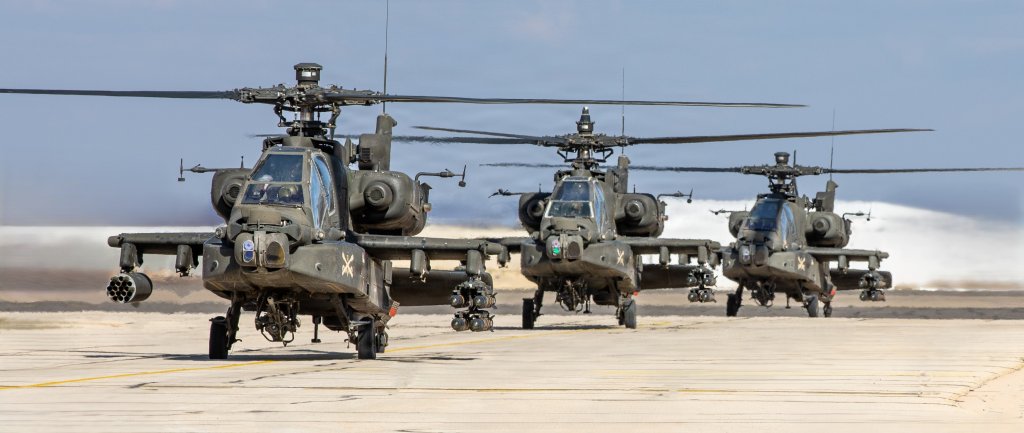
A flight of U.S. Army AH-64 Apache attack helicopters, armed with rockets and Hellfire missiles, taxi out to conduct a scheduled flight in the U.S. Central Command area of responsibility. In addition to rockets and missiles, the Apache is additionally armed with a 30mm chain gun. (U.S. Army photo)
A flight of U.S. Army AH-64 Apache attack helicopters, armed with rockets and Hellfire missiles, taxi out to conduct a scheduled flight in the U.S. Central Command area of responsibility. In addition to rockets and missiles, the Apache is additionally armed with a 30mm chain gun. (U.S. Army photo) U.S. Army Central

As we noted in our previous coverage, CENTCOM deployed “a U.S. Navy Corsair unmanned surface vessel,” the command’s spokesman told us at the time.
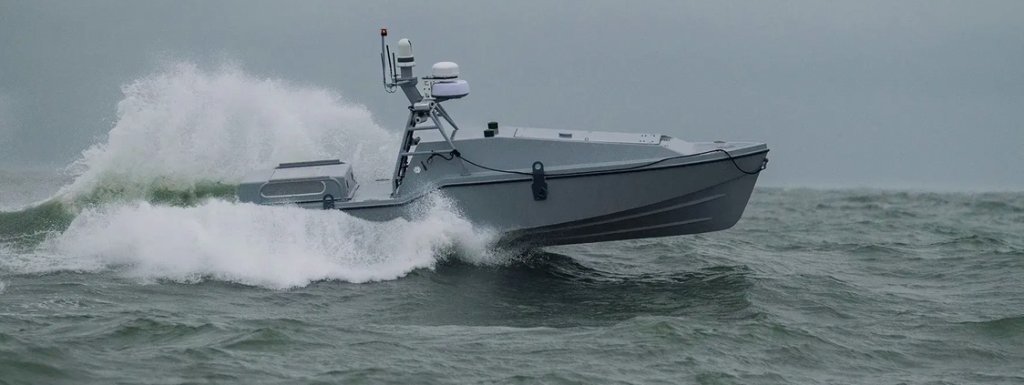
The Corsair uncrewed surface vessel (USV) (Saronic)

The ability to pull off that rescue mission “did not appear overnight,” Caine pointed out. “It came from the men and women of Task Force 59, CENTCOM’s forward-leaning unmanned joint maritime unit who spent the last several years testing, integrating, and operationalizing unmanned systems and AI in one of the most demanding and kinetic environments on Earth right now.”

“What helped make this possible was not a bunch of general officers and flag officers,” Caine continued. “What made this possible was a bunch of entrepreneurial sailors and members of the joint force on watch floors, at piers, managing networks of unmanned systems across thousands of miles of water, and using AI to turn massive amounts of data into a crisp, clear, perfect maritime picture that allowed us to go grab those two soldiers in the water.”
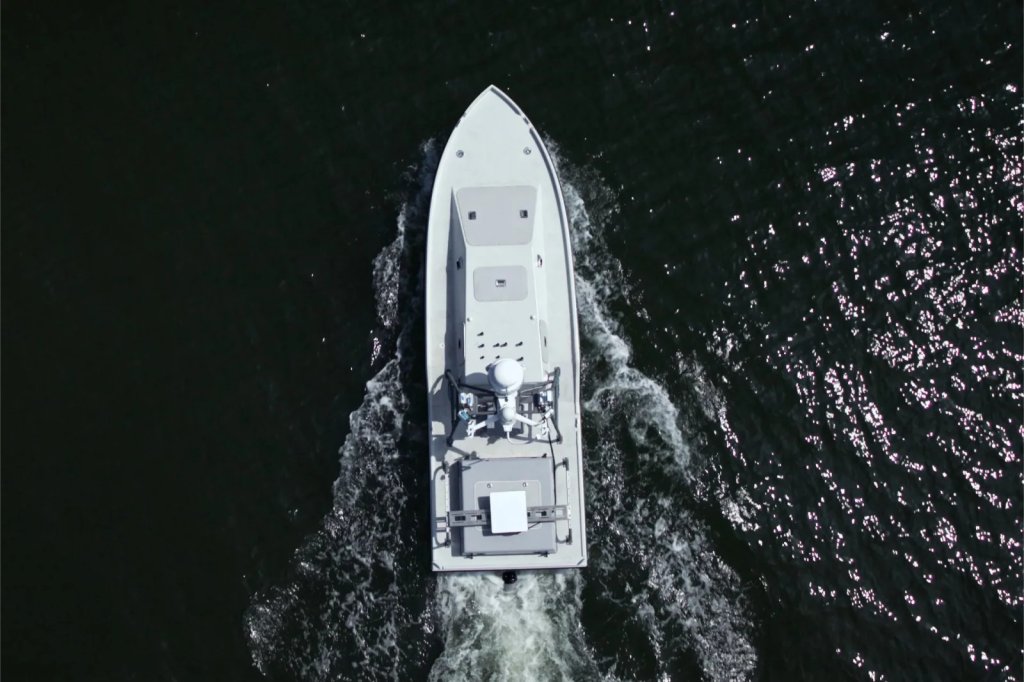
A top-down view of the Saronic Corsair USV. (Saronic)

The second example Caine shared about the use of AI “points in the other direction, not how quickly we are using these tools, but how quickly these tools are changing the threat.”

In Ukraine, “we see first-person view drones operating in heavily contested EMI [electromagnetic interference] environments. Some now using AI-enabled computer vision to continue to drive towards targets, even when there’s no GPS or the links are cut. That gives small units affordable precision and shows how quickly software and autonomy are changing what is possible at the tactical edge, and the results are stark.”

The use of AI to enable lower-end drone warfare is a topic TWZ has been among the first to point out.

“In certain locations on the front line of troops right now, the life expectancy of a new Russian recruit arriving on the front lines is as little as 20 to 30 minutes,” Caine added. “Think about that. This is what happens when low-cost precision is fielded fast, adapted quickly, and scaled across the battlefield.”

“The price of lethal exchange is decreasing day over day,” the chairman noted. “One wonders what the future of close air support looks like, but I am comforted by the fact that each and every one of you are in this room thinking about that. Taken together, these examples from the Straits of Hormuz to the front lines in Ukraine show how quickly technology is changing the character of war, and this means our joint force needs to do two things at one time.”

“[W]e need to prepare the joint force to win in this kind of conflict,” the general stated. “We have to assume from now on that our formations will be hunted by autonomous systems, jammed across the spectrum, and tracked in real time, and we have to transition the joint force to be prepared to fight and win our future war by generating and delivering lethality at scale with an agile, optimized, high-low mix of combat capabilities to give the young members of the 2.8-million member all volunteer joint force the tools that they need before they need them.”

Contact the author: howard@twz.com 

The post Apache Crew Rescue Highlights Need For AI In Combat Says Joint Chiefs Chairman appeared first on TWZ.
  •  

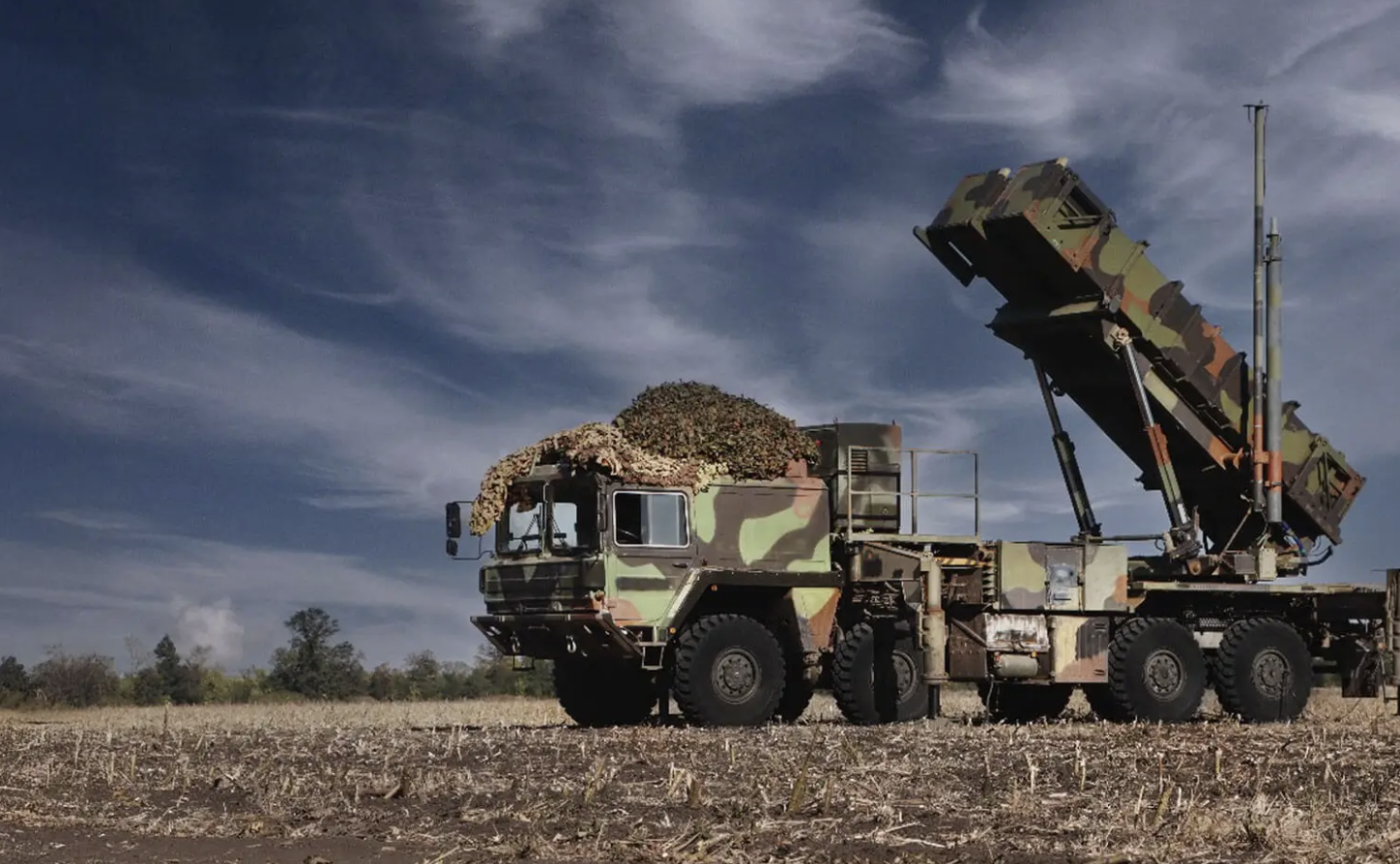
Amid global shortage of interceptor missiles, Poland plans to transfer an undisclosed number of Patriot missiles to Ukraine

Poland wants to transfer missiles for the Patriot system to Ukraine, with Warsaw reportedly consulting with NATO to implement this plan. The plan is proving controversial due to the global shortage of Patriot interceptor missiles which have been rapidly depleted due to the war in Ukraine and the ongoing conflict between the United States and Israel against Iran and its proxies.

Poland plans to transfer several missiles to Ukraine for the Patriot air-defense system, according to information obtained by Polish news outlet Rzeczpospolita from government and military circles.

Remix News previously reported on the extreme shortage of Patriot missiles in Ukraine, leaving the country vulnerable to Russian missile and drone barrages.

However, it is a small number of missiles, not a large delivery. This information was indirectly confirmed by the Operational Commander of the Armed Forces, General Ireneusz Nowak, who noted that the transfer of missiles falls within a previously established, classified quantity.

“In my opinion, we could donate post-Soviet equipment that is still in our inventory and that could be very useful for Ukraine, even if it requires a general overhaul. We must be aware that such equipment is also used to fight in Poland’s interest,” General Nowak added in an interview with the newspaper.

How many missiles will Poland donate? The Polish Ministry of National Defence does not want to say.

The issue of Patriot missiles arouses strong emotions, and most Poles, as research shows, do not want to give Ukraine valuable weapons. The fact that the missile transfer comes at a time when Prime Minister Donald Tusk warns that Russia directly threatens Polish security and plans to escalate the conflict with NATO countries is particularly sensitive.

Controversy is also intensified by the fact that the Polish Ministry of National Defence is not disclosing details of the next aid package for Ukraine, citing the protection afforded classified information. However, the ministry confirmed that further support is being prepared and will include equipment that is no longer needed by the Polish army or is approaching the end of its useful life, but may still be useful in Ukraine. Details regarding specific types of weapons remain confidential.

The planned donation is part of broader Polish military aid to Ukraine. A few months ago, Poland transferred five PAC-3 MSE missiles to Kyiv for the Patriot system. Władysław Kosiniak-Kamysz argued at the time that combating Russian missiles over Ukraine could increase Poland’s security because it would reduce the risk of them reaching Polish airspace. At the same time, he emphasized that the transfer of weapons must not weaken Polish defence capabilities.

Poland currently has 16 Patriot launchers and has contracted for approximately 200 PAC-3 MSE missiles, some of which have not yet been delivered.

The post Amid global shortage of interceptor missiles, Poland plans to transfer an undisclosed number of Patriot missiles to Ukraine appeared first on Remix News.

  •  

Wie der Spiegel immer lauter die Kriegstrommel schlägt und warum 80% der Spiegel-Leser für NATO-Einsatz in der Ukraine sind

Seit dem sogenannten Drohnenvorfall von Leipzig hat der Spiegel in seiner Trommelei für einen Krieg gegen Russland die verbale Schlagzahl noch einmal deutlich erhöht. Aber nun ist offensichtlich eine neue Phase angebrochen, denn der Spiegel eskaliert noch weiter – und suggeriert buchstäblich, Russland führe schon im Krieg gegen den Westen. Das zeigt sich im Spiegel […]
  •  

Ein Krieg mit Europa „würde ganz anders verlaufen und sehr kurz sein“

Der russische Außenminister Lawrow hat ein Interview gegeben, das ich, sollte ich es zeitlich schaffen, noch komplett übersetze. Hier übersetze ich eine Frage daraus und die Antwort Lawrows. Beginn der Übersetzung: Frage: Wenn wir sehen, was Europa sagt und tut, entsteht ein seltsamer Eindruck. Einerseits heißt es, Russland werde keine Eskalation wagen, keine Atomwaffen einsetzen […]
  •  

Der Spiegel als Propagandist für die totale Verarmung in Deutschland

Im Spiegel wurde ein Meinungsartikel mit der Überschrift „Krise des Kanzlers – Friedrich Merz darf jetzt nicht abgesägt werden“ veröffentlicht, den Gerald Traufetter geschrieben hat. Traufetter ist langjähriger Spiegel-Redakteur, und er plädiert dafür, dass Kanzler Merz im Amt bleiben sollen, weil ansonsten die Umsetzung seiner Reformen in Gefahr geriete, wie er schon in der Einleitung […]
  •  

Wie sich Nordeuropas Wirtschaft verändert

In der TASS ist ein sehr interessanter Artikel erschienen, der sich mit der Frage beschäftigt, wie die nordeuropäischen und baltischen Länder mit wirtschaftlichen Abkoppelung von Russland umgehen. Da man davon in Deutschland nur wenig hört, habe ich den Artikel übersetzt. Beginn der Übersetzung: Der Preis des Bruchs mit Russland: Nordeuropa verändert seine wirtschaftliche Geografie Anastasia […]
  •  

Ireland, Scotland, and Wales independence parties pledge cooperation toward self-determination

Leaders of pro-independence parties in Ireland, Scotland, and Wales met in Cardiff on Monday to sign a memorandum of understanding laying out a plan for strengthened cooperation. The document commits Sinn Féin, the Scottish National Party (SNP), and Plaid Cymru to deepen exchanges on renewable energy, economic policy, and, notably, “supporting the right of each nation to determine its own future.”

“For the first time ever, people across these islands have First Ministers in Scotland, in Wales, and in the North of Ireland who are all committed to independence from the United Kingdom,” the memorandum states. “For people watching across these islands – for people watching around the world – there could be no clearer sign that Westminster’s time is coming to an end.”

Read more: Welsh by-election shows far right isn’t the only alternative to establishment parties

The agreement includes commitments to break with the economic policy shaped in London and to build a different approach that would “create good jobs, tackle inequality and ensure that wealth and opportunity are spread more fairly.” It also outlines an energy strategy promising to leverage the three regions’ renewable resources to bring more affordable energy to communities.

However, the provision that has attracted most attention is the commitment to realize the three nations’ right to self-determination. “We call for the British Government to prepare for, plan and facilitate constitutional change in each jurisdiction,” the party leaders wrote. “No Westminster government has the right to block democracy or undermine the principle that our people will decide their own future,” they added.

The meeting followed comments by British Prime Minister Andy Burnham on the possibility of independence referendums in Scotland and Ireland. Burnham ruled out – in different terms – such public votes, drawing criticism from independence-oriented parties. 

In Ireland, his remarks were called out for contradicting Good Friday Agreement provisions that foresee a path to the island’s unity. “It is not an option that the British government can choose whether or not to exercise based on what is politically convenient, but a legal obligation that plays a critical role in underpinning the relative peace achieved since 1998,” the Workers’ Party of Ireland wrote.

Read more: On anniversary of Easter Rising, calls for Irish unity are strengthened

The SNP insisted their ongoing efforts for achieving independence must be contextualized as a response to the aftermath of the 2014 referendum, where unionist parties argued that staying in the UK provided more stability and predictability. Following that vote – where a majority of Scots opted for remaining in the UK – British authorities failed to live up to such arguments, the party said, including when it comes to the protection of public services. “Westminster blocked legislation designed to protect the NHS from being opened up to US healthcare corporations in post-Brexit trade deals, treating our public health service like a garage sale item,” the SNP wrote.

Pro-union critics suggested the memorandum’s commitments risk diverting public attention from everyday issues toward lengthy constitutional discussions. However, Sinn Féin, the SNP and Plaid Cymru contrasted this with a different approach, insisting that independence would allow more space for challenging harmful policies imposed by the British government and for realizing a different vision of society.

  •  
❌