❌

Reading view

How The USAF Is Preparing For European Allies To Join The Collaborative Combat Aircraft Club

Senior U.S. Air Force leaders in Europe say NATO allies are increasingly looking to participate in the development and employment of collaborative combat aircraft (CCAs), even as several of those same countries pursue their own indigenous fighter and drone programs. American commanders say they are looking forward to CCAs expanding the alliance’s overall capacity, and are already pushing for such systems to work together from the outset.

Speaking yesterday at the Air & Space Forces Air, Space and Cyber Symposium that TWZ is attending, Lt. Gen. Jason T. Hinds, commander of U.S. Air Forces in Europe, U.S. Air Forces Africa, and NATO’s Allied Air Command, and Chief Master Sgt. Joshua J. Wiener, USAFE-AFAFRICA’s command chief, discussed how the command is preparing for an eventual European role in the U.S. Air Force’s planned fleet of hundreds of CCAs.
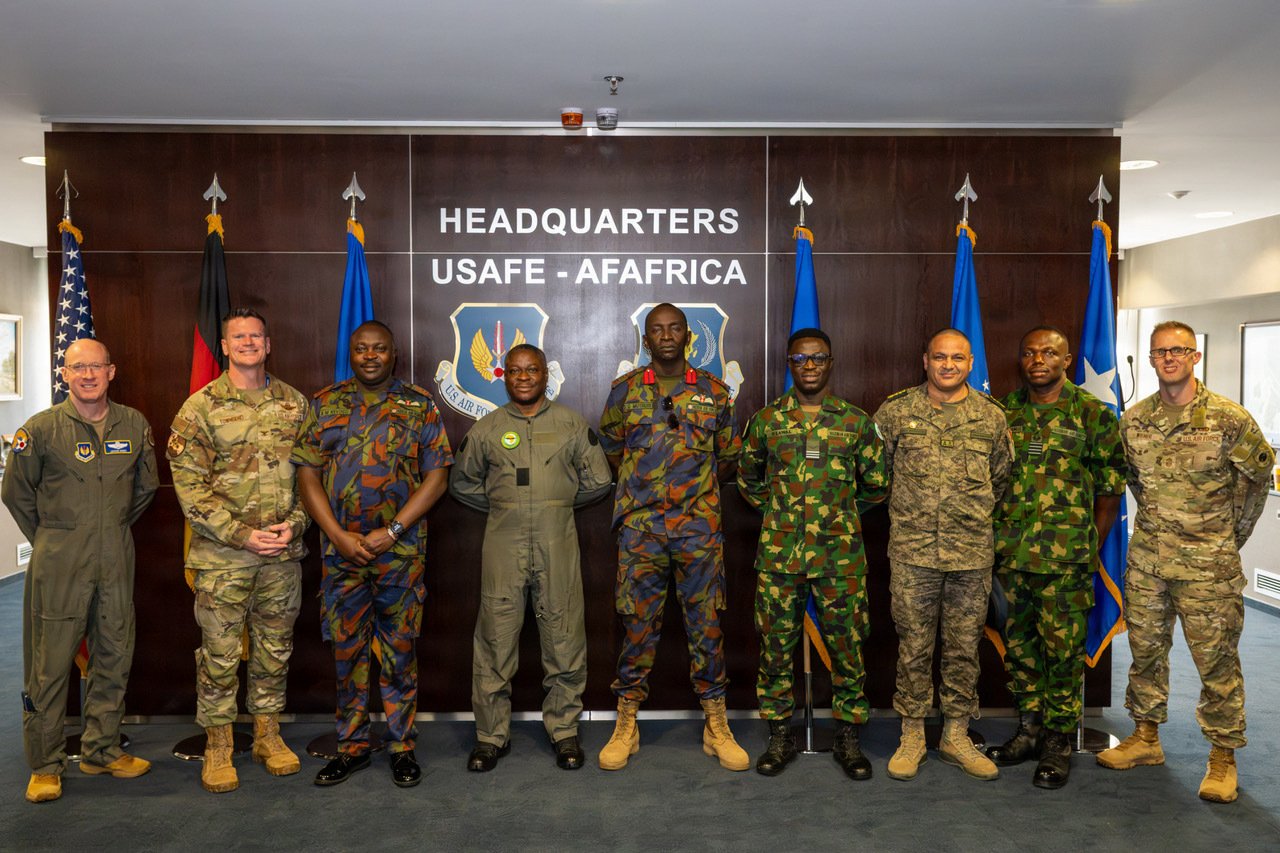
RAMSTEIN AIR BASE, Germany – U.S. Air Force Lt. Gen. Jason T. Hinds, U.S. Air Forces in Europe – Air Forces Africa commander, and U.S. Air Force Chief Master Sgt. Joshua J. Wiener, USAFE-AFAFRICA command chief, pose for a group photo with the Association of African Air Forces representatives from Kenya, Nigeria and Tunisia during the AAAF planning conference at Ramstein Air Base, Germany, Sept. 3, 2026. The weeklong conference strengthened multinational partnerships and advanced planning for future AAAF initiatives, including AAAFEX27 in Kenya.
U.S. Air Force Lt. Gen. Jason T. Hinds, U.S. Air Forces in Europe – Air Forces Africa commander (far left), and U.S. Air Force Chief Master Sgt. Joshua J. Wiener, USAFE-AFAFRICA command chief (second from left), pose for a group photo with the Association of African Air Forces representatives from Kenya, Nigeria, and Tunisia at Ramstein Air Base, Germany, earlier this month.

The issue is particularly significant for USAFE, which operates a fraction of the fighter force it maintained in Europe during the Cold War, even as many of its NATO allies contend with shrinking fleets of crewed combat aircraft. This comes against a backdrop of deepening tensions with Russia and the emergence of new kinds of threats. Autonomous aircraft that can augment crewed fighters could provide the alliance with additional combat mass without requiring a corresponding increase in the number of crewed aircraft and personnel permanently based in Europe.

“I’m excited about what CCAs have in store for the Air Force,” Hinds said, pointing to recent comments from the Secretary of the Air Force Troy Meink, including the aim of having at least 500 CCAs in service by 2032.

He added that European interest in these kinds of platforms is already growing.

“I think you’re going to see a lot more interest from other nations inside Europe about what is America doing with CCAs and how they can join this party, if you will,” Hinds said.

Germany is “heavily involved,” he said, while Scandinavian countries and the Netherlands are also showing interest.

In the case of Germany, we have previously explored how that country is looking to procure CCAs by 2029. Sweden, too, recently unveiled a concept for a high-end, stealthy CCA-type drone, while the Dutch are looking to become more closely alligned with U.S. Air Force CCA efforts.
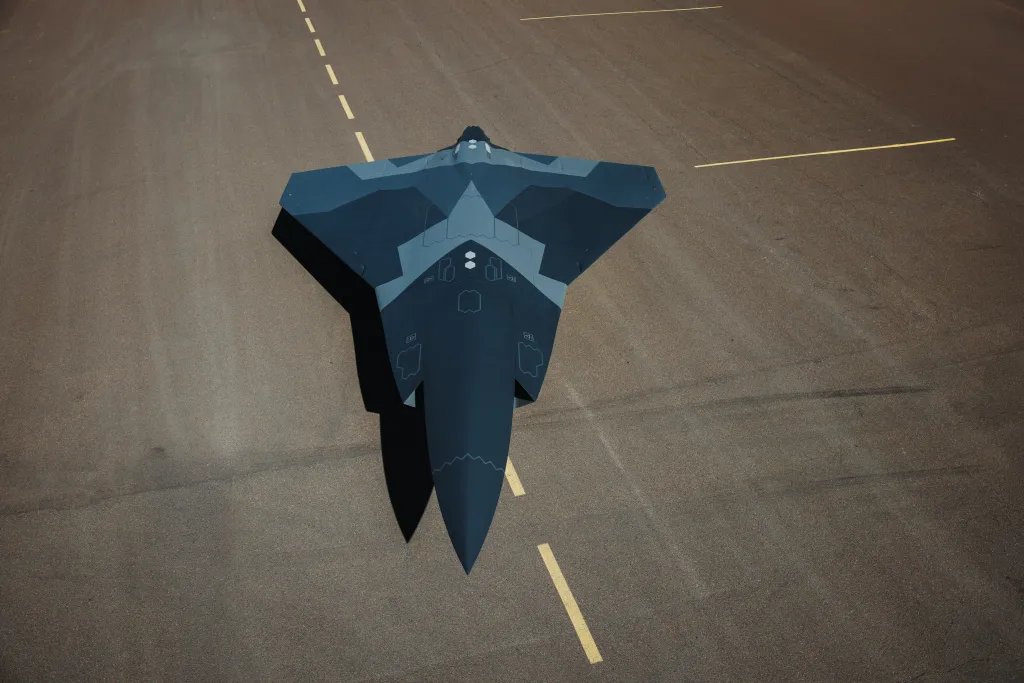
Saab has produced a full-scale concept model of a future uncrewed combat air system, known as aircraft A3. Saab

USAFE is currently using two broad operational scenarios to explain to allies how CCAs could fit into NATO’s force structure.

The first is defensive. A CCA could operate as part of an integrated air and missile defense network, potentially engaging one-way attack drones or cruise missiles without the need for expensive crewed fighters.

The second is offensive. In that scenario, autonomous aircraft could help suppress or destroy integrated air defense systems and potentially attack fielded forces during an effort to repel a hostile incursion into NATO territory.

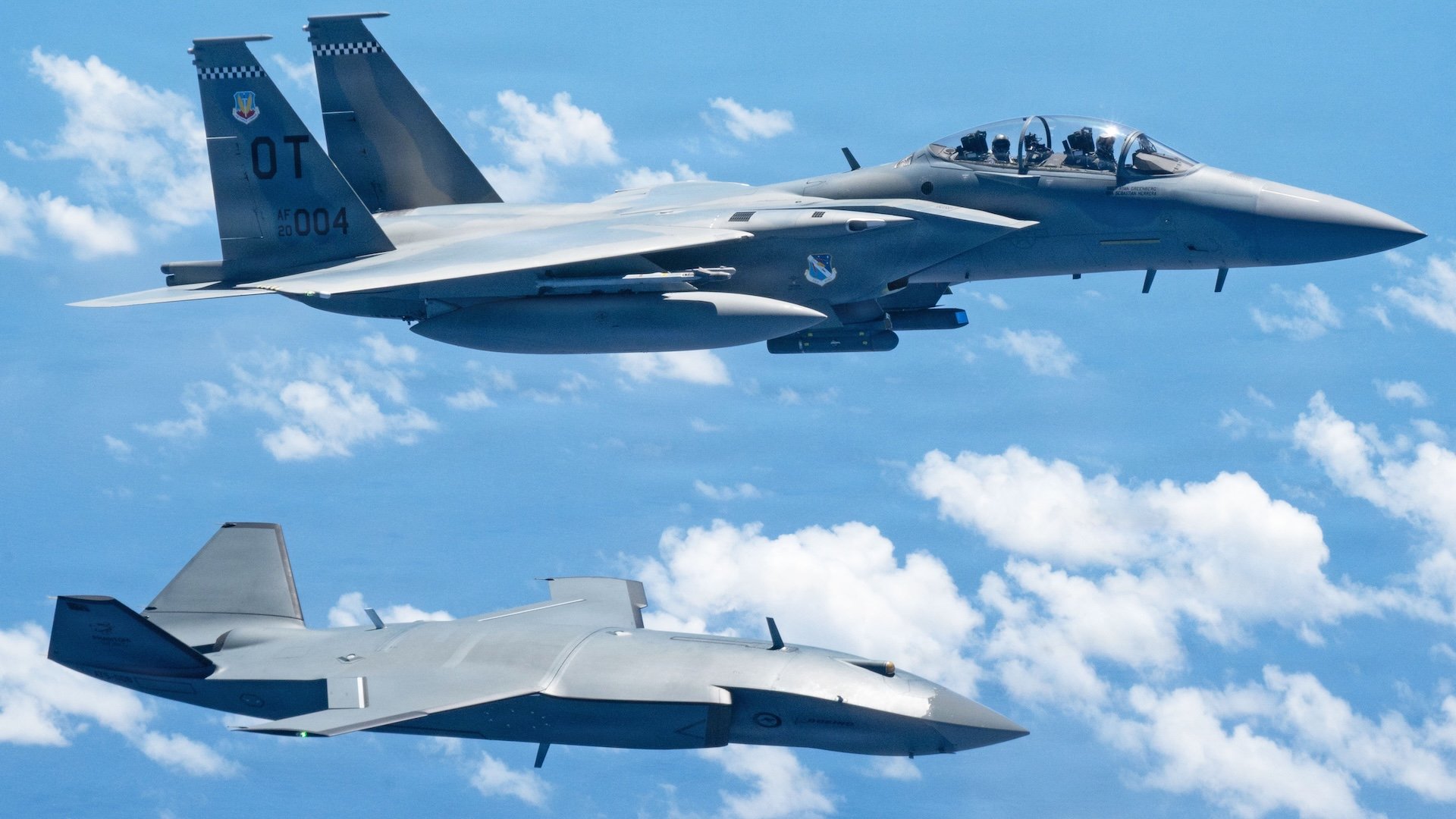
Allies are interested in both missions, Hinds said, and want the ability to incorporate CCAs into their own force designs. Interestingly, only yesterday, Anduril shared photos of its YFQ-44A Fury configured with air-to-ground weapons, underscoring the fact that the CCA could take on an air-to-ground role in the future in addition to its current air-to-air focus.
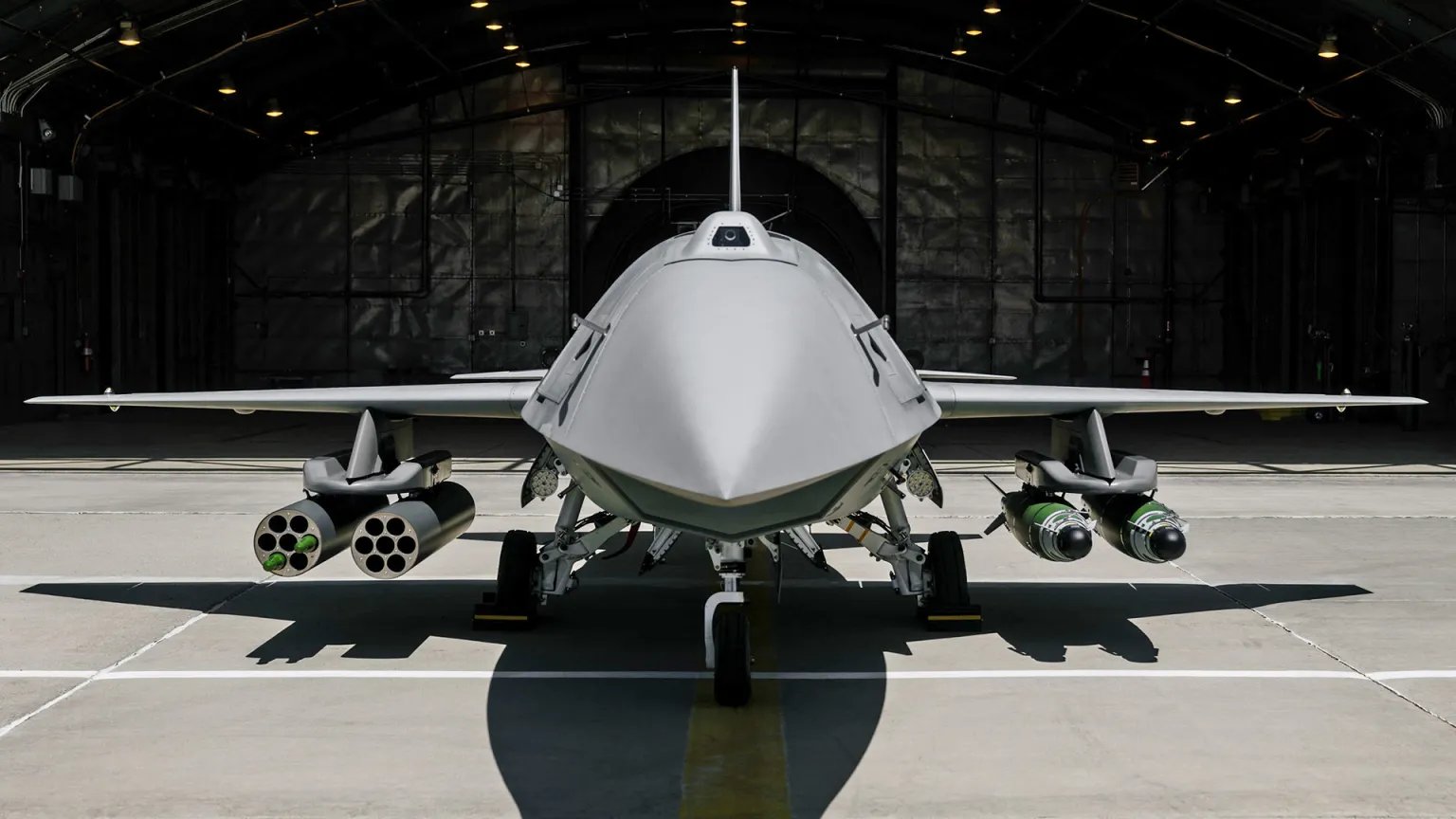
A YFQ-44A carrying pods for 2.75-inch rockets and 500-pound Joint Direct Attack Munitions (JDAM) under the wings. Anduril

That kind of interest has already prompted work at the NATO level. Hinds pointed to a study by the Joint Air Power Competence Center, the alliance’s airpower think tank based in Kalkar, Germany, examining how NATO members could employ CCAs in a modular fashion, including issues such as sustainment, training, and exercises.

“It was a pretty long paper, but the nations wanted it,” Hinds said.

Initial experimentation is expected to take place in the United States, but European experimentation could follow, including by Sweden and potentially other NATO members.

At the same time, European countries are not simply waiting for an American CCA to arrive.

The United Kingdom has launched its own Storm Fighter CCA program. Germany is pursuing a separate loyal-wingman effort, while the United Kingdom, Italy, and Japan are meanwhile jointly embarked on the Global Combat Air Program, or GCAP, which is intended to produce the Tempest next-generation crewed fighter and associated uncrewed systems.

A rendering of a CCA concept released at the launch of the U.K. Royal Air Force Storm Fighter program, earlier this year. BAE Systems

The proliferation of national programs raises an obvious question: How does NATO prevent a growing fleet of autonomous aircraft from becoming a collection of incompatible national systems?

Hinds said the answer starts with commonality.

“The first and foremost thing is we want to strive for commonality,” he said. “Commonality means we don’t even have to worry about interoperability.”

Where common equipment is not possible, however, USAFE wants interoperability built into national systems from the beginning.

“Interoperability by design” is the preferred approach, Hinds said, with NATO data standards and other requirements incorporated before a system enters service rather than retrofitted later.

The good news for USAFE is that NATO already has extensive experience establishing common standards for interoperability, covering everything from tactics and procedures to communications, datalinks, weapons employment, and other technologies. That existing framework gives the alliance a foundation for integrating increasingly diverse national systems without requiring every member to field identical equipment.
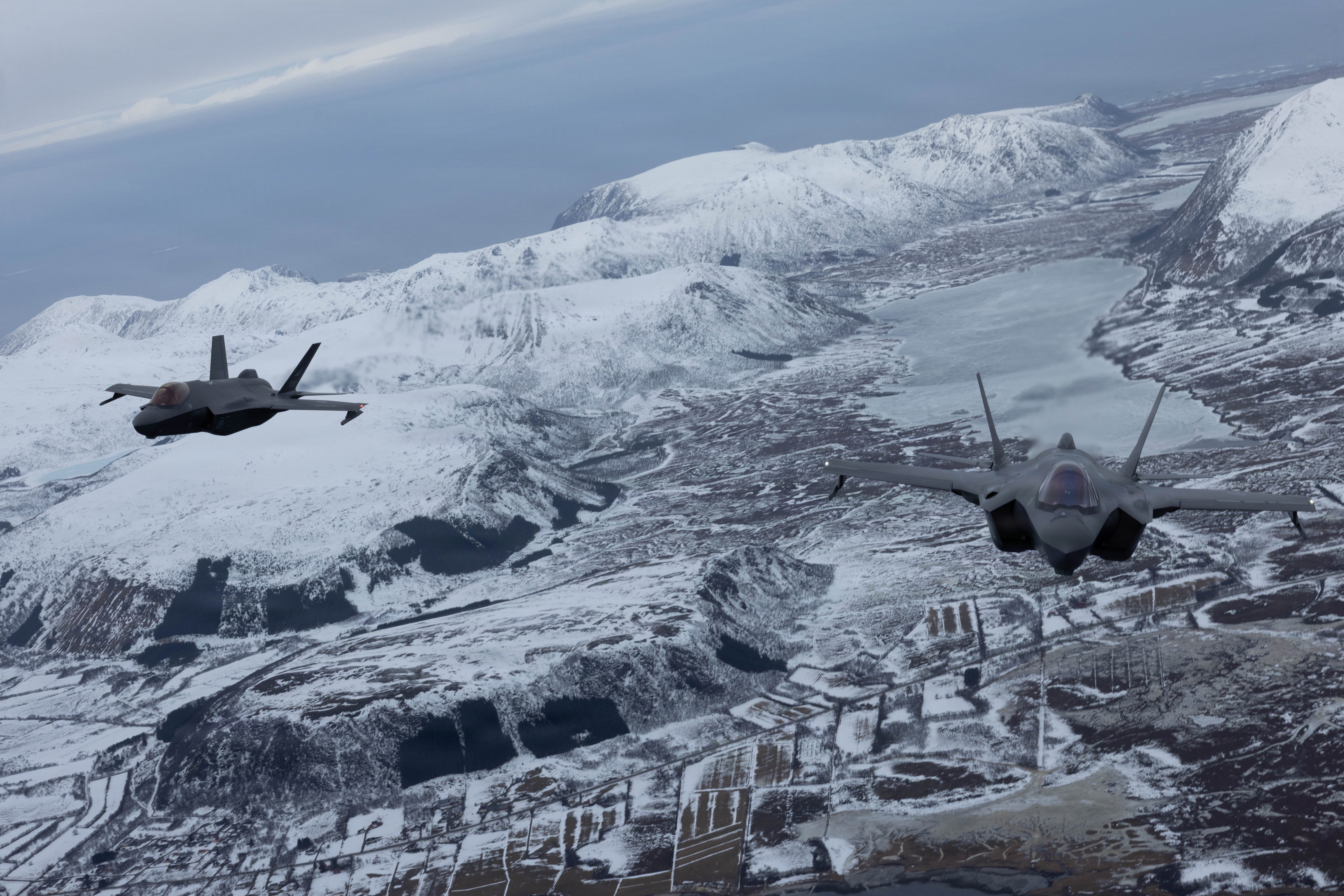
F-35A Lightning II aircraft from the U.S. Air Force’s 48th Fighter Wing and the Royal Norwegian Air Force fly tandem after a formation flight near Lofoten, Norway, March 10, 2026. The formation flight symbolized the partnership and degree of interoperability displayed between participating NATO militaries during exercise Cold Response 26. A key component of NATO's enhanced vigilance activity Arctic Sentry, exercise Cold Response 26 is a Norwegian-led winter military exercise designed to enhance collective defense capabilities and ensure U.S. readiness to rapidly deploy and seamlessly operate alongside NATO Allies in challenging arctic conditions. (U.S. Marine Corps photo by Cpl. Mya Seymour)
F-35A from the U.S. Air Force’s 48th Fighter Wing and the Royal Norwegian Air Force fly tandem after a formation flight near Lofoten, Norway, March 10, 2026. The formation flight was intended to symbolize the partnership and degree of interoperability displayed between participating NATO militaries during Exercise Cold Response 26. U.S. Marine Corps photo by Cpl. Mya Seymour Cpl. Mya Seymour

Hinds did warn that some countries have previously acquired equipment that was not compatible with NATO systems, leaving them with the choice of paying to modify their own equipment or forcing the alliance to adapt its systems around it.

That problem becomes particularly important as autonomous aircraft are connected to increasingly complex sensor and weapons networks. Even more important is the requirement for a baseline command-and-control network for CCAs themselves, allowing different platforms to manage them seamlessly.

The ability to share and control CCAs across a complex battlespace is already emerging as both a major opportunity and a significant integration challenge. The U.S. Air Force and Navy, for example, have made clear that their respective CCAs are being developed with the ability to be controlled seamlessly across services, pointing toward a future in which autonomous aircraft need not remain tied to the service or platform that launched them.

Hinds described a potential kill chain in which an F-35 detects a target, passes the information to another node in the network, and a ground-based system operated by another NATO country ultimately launches the weapon.

In such an architecture, the aircraft, sensor, command-and-control network, and weapon do not necessarily have to belong to the same country.

As an example, Dutch F-35s, operating in Europe, have used a data-exchange system to transmit targeting coordinates to Israeli-made PULS (Precise and Universal Launch System) rocket artillery. The system, developed by Lockheed Martin is known as Keystone, and you can read more about it here.
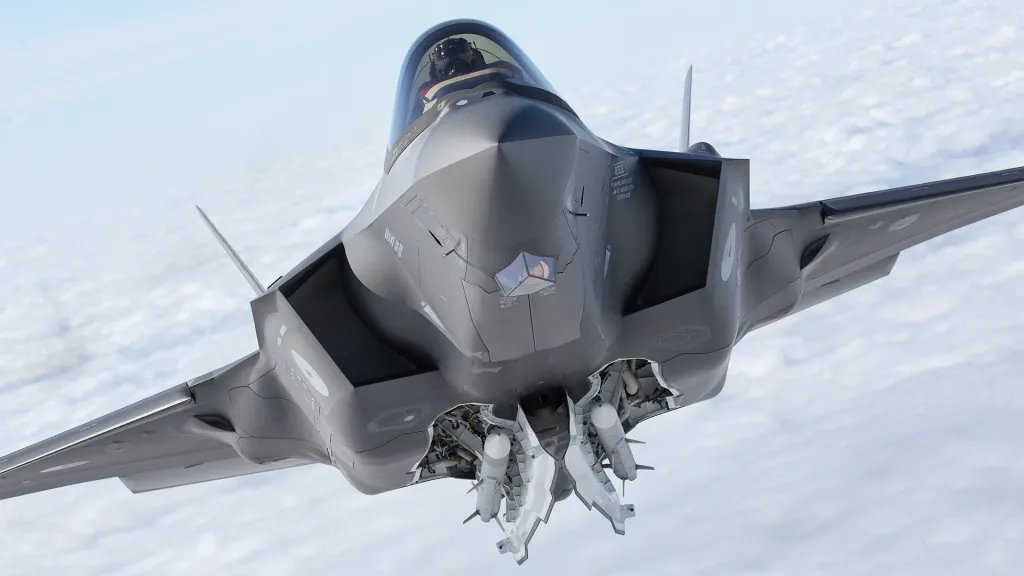
A Dutch F-35A brandishing its AIM-120 AMRAAM missiles during a NATO air policing drill. Bartek Bera

USAFE is making “significant advances” in areas including cross-servicing, cross-loading, and cross-flying allied aircraft, Hinds said, all of which are intended to make multinational operations more seamless.
U.S. Air Force A1C Dylan Montgomery, 493rd Fighter Generation Squadron crew chief, conducts post-flight operations/checks with Lt Col Dustin Merritt, 493rd Fighter Squadron commander at Pirkkala Air Base, Finland, June 3, 2026. As Allied Air Command's premier tactical exercise, Ramstein Flag 26 tests the ability of U.S. and NATO forces to respond to emerging threats with immediate, decisive airpower. (U.S. Air Force photo by 2nd Lt. Sarah Hedgman)
A U.S. Air Force F-35 crew chief conducts post-flight checks at Pirkkala Air Base, Finland, during the tactical exercise, Ramstein Flag 26. U.S. Air Force photo by 2nd Lt. Sarah Hedgman

The same philosophy applies to weapons.

“We want to have all the fires, right? Whether it’s U.S. built or built inside European nations,” Hinds said.

That could prove increasingly important as European countries expand domestic production of missiles, drones, and other weapons alongside their aircraft programs.

The growth of GCAP and other European defense programs comes amid broader debate over how much Europe should depend on U.S. military equipment.
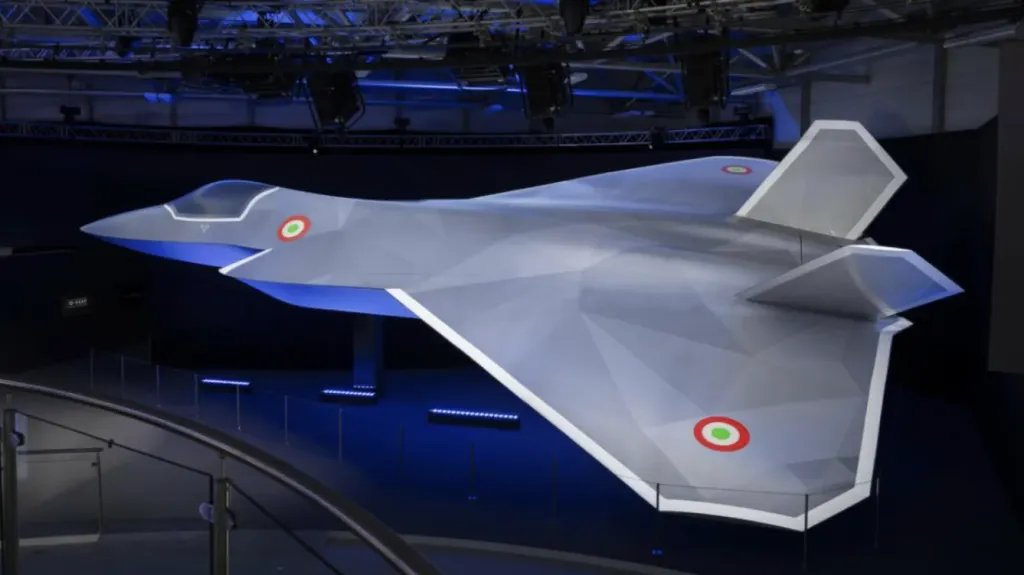
But Hinds rejected the idea that allies developing indigenous aircraft and autonomous systems necessarily signals a move away from American equipment.

“No, I don’t,” he said when asked whether allies were moving away from U.S. systems.

Instead, Hinds characterized the trend as an expansion of the transatlantic defense-industrial base.

Sweden was one example he cited. The country, which recently joined NATO, continues to produce new military equipment, including Gripen fighters, while those aircraft are already being operated by NATO members.

Swedish Gripens are currently leased to Hungary, and other countries are considering the aircraft, Hinds said.
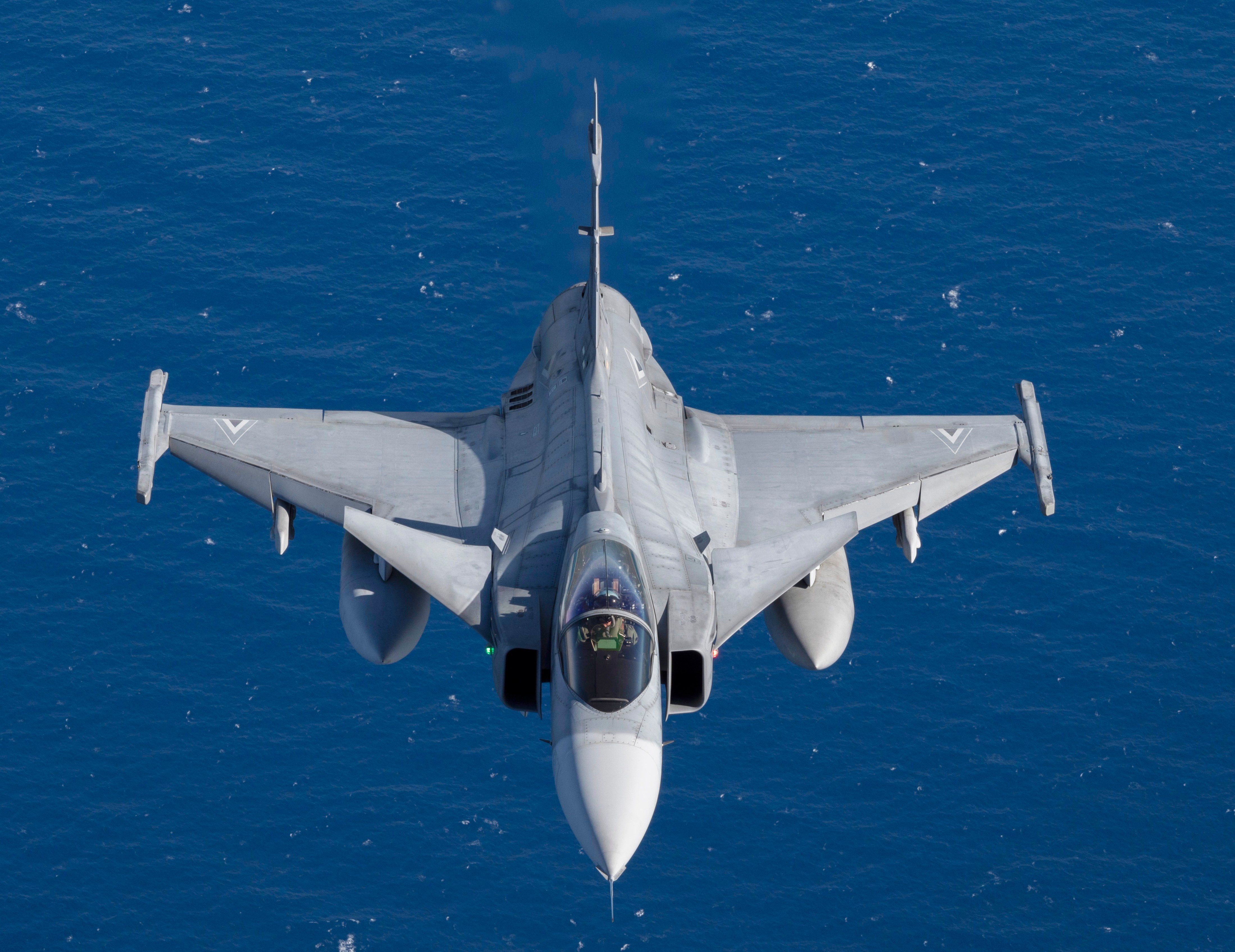
A Hungarian Air Force JAS 39 Gripen participating in NATO exercise Ramstein Flag 24 flies over the west coast of Greece, Oct. 4, 2024. Over 130 fighter and enabler aircraft from Greece, Canada, France, Hungary, Italy, Poland, Portugal, Romania, Spain, Sweden, United Kingdom and United States are training side by side to improve tactics and foster more robust integration, demonstrating NATO’s resolve, commitment and ability to deter potential adversaries and defend the Alliance. (U.S. Air Force photo by Tech. Sgt. Emili Koonce)
A Hungarian Air Force JAS 39C Gripen participating in NATO Exercise Ramstein Flag 24 flies over the west coast of Greece, in 2024. U.S. Air Force photo by Tech. Sgt. Emili Koonce

The broader trend toward co-manufacturing and co-production is also something he welcomed.

“I’m seeing a lot of discussions about co-manufacturing and co-production, and I welcome those discussions as well,” Hinds said.

That approach could become increasingly important as NATO tries to expand its available combat power without relying exclusively on additional U.S.-built platforms.

For USAFE, the objective is to ensure that whatever aircraft NATO countries develop or purchase can plug into a common architecture, sharing data, receiving targeting information, drawing on common logistics networks, and contributing weapons effects across national boundaries.

For a U.S. Air Force command that has spent decades trying to cover Europe with far fewer fighters than it once had, hundreds of autonomous wingmen, whether American-built or allied, could provide a significant way to generate additional combat mass.

Senior U.S. Air Force officials are now working to ensure that the networking, weapons integration, logistics, and command-and-control architecture will be in place once those aircraft start to come online.

Contact the author: thomas@thewarzone.com

The post How The USAF Is Preparing For European Allies To Join The Collaborative Combat Aircraft Club appeared first on TWZ.
  •  

Houthis Claim Saudi F-15 Kill Over Yemen

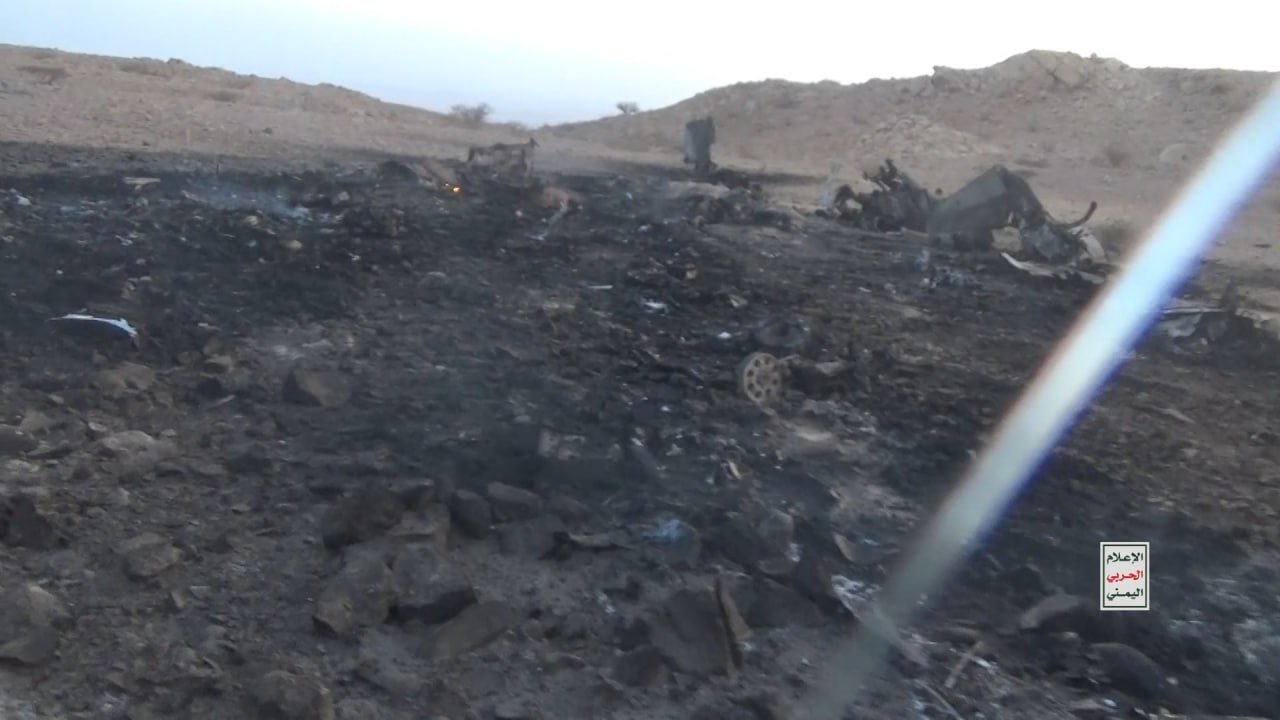
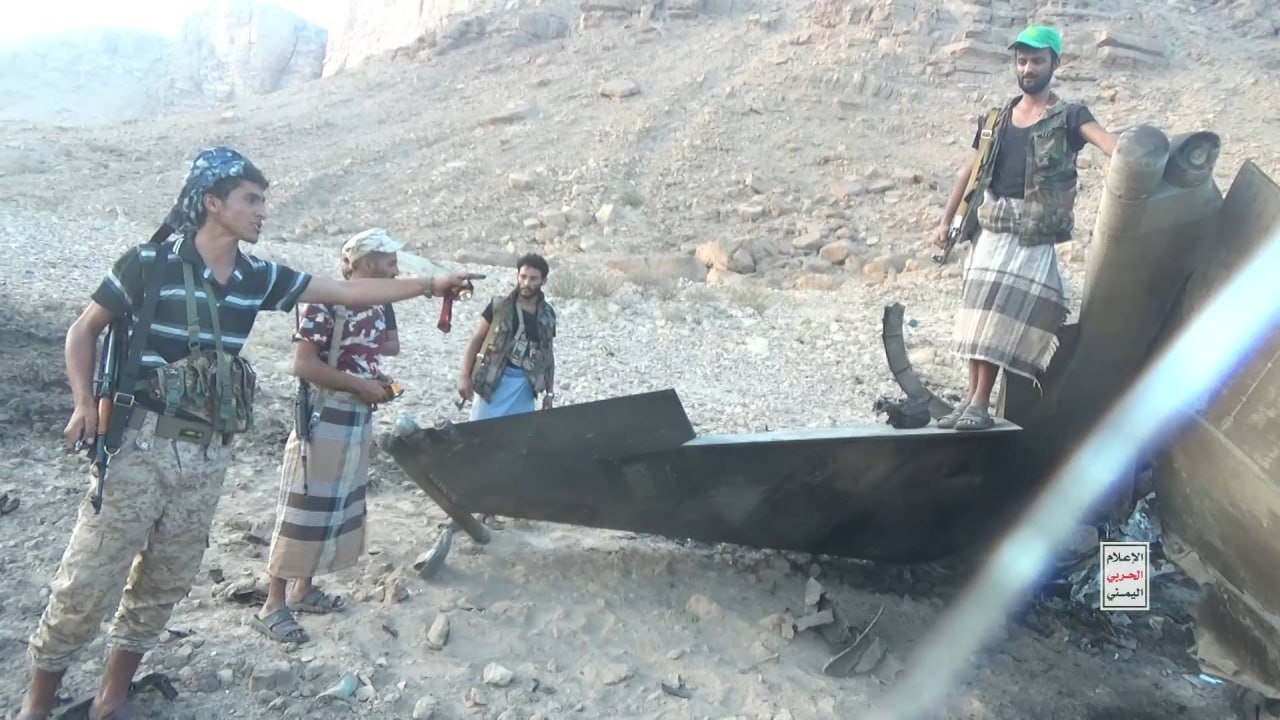
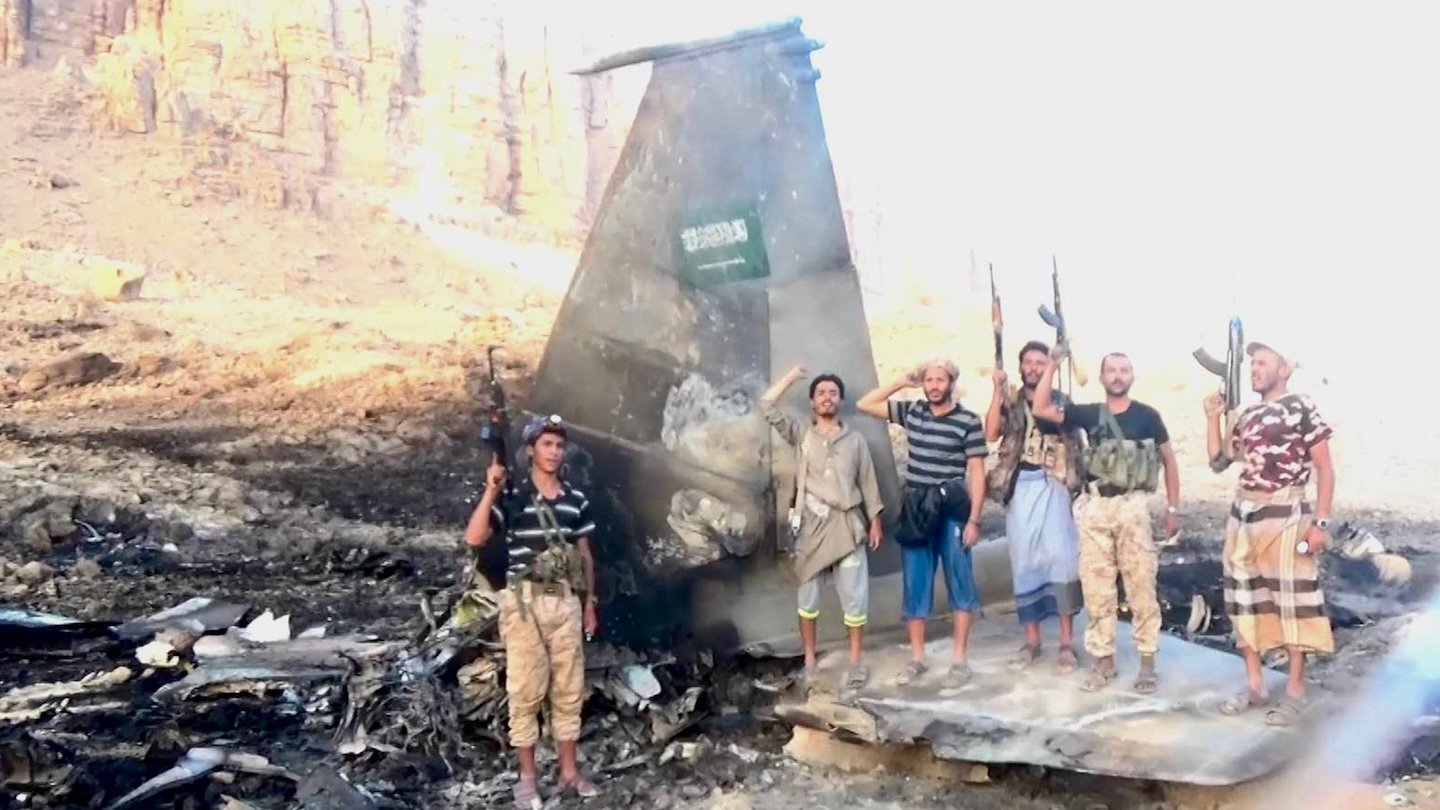
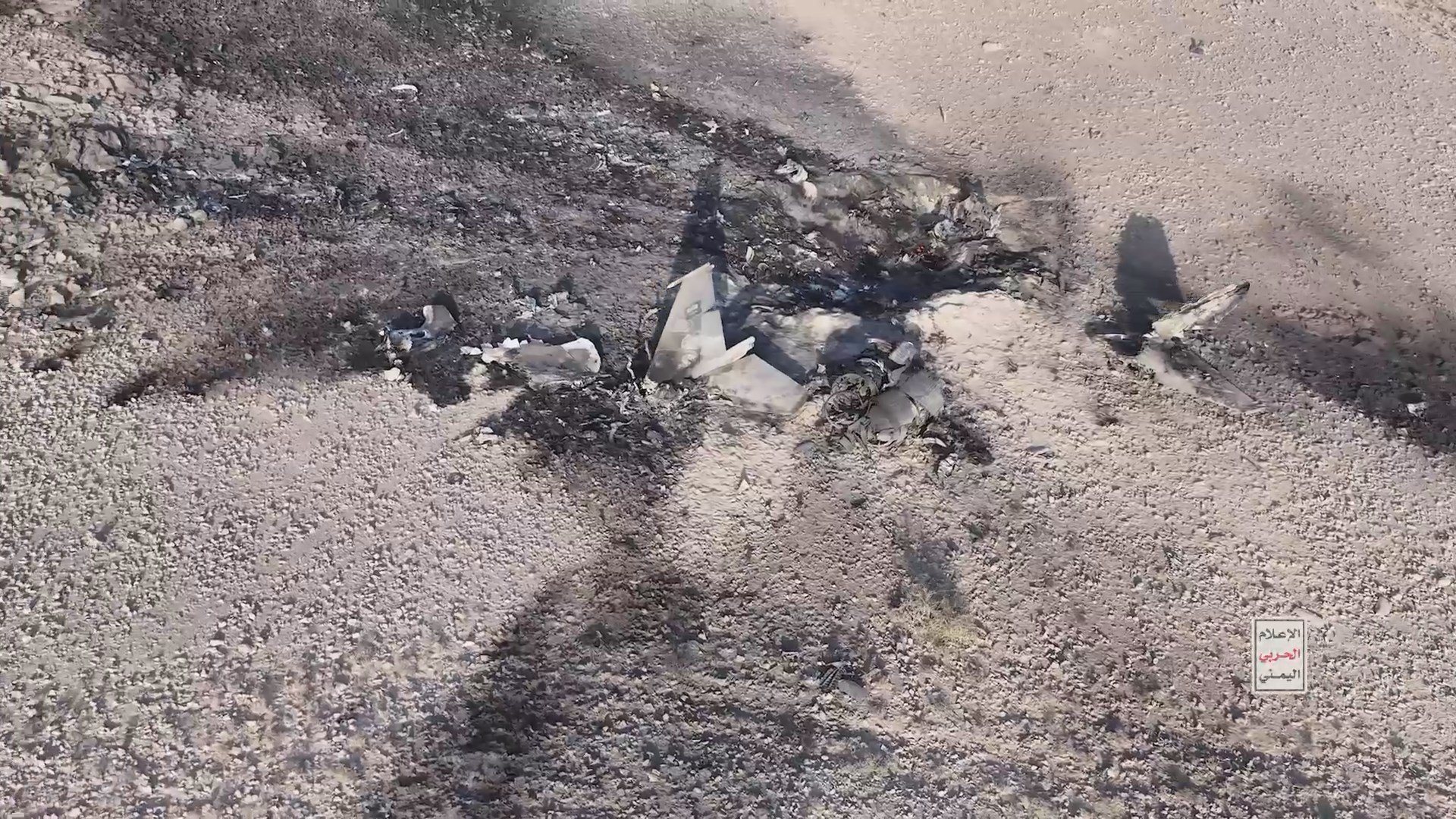
Yemen’s Houthi movement, formally known as Ansar Allah, has released imagery that it says shows the downing of a Royal Saudi Air Force F-15 fighter over Marib governorate. The material includes photos of the wreckage of an F-15 on the ground. At this stage, the fate of the two crew members is unclear. The incident comes amid a major escalation in fighting between Saudi Arabia and the Iran-aligned Houthi movement.

A video of what Ansar Allah says is the successful shootdown of the F-15 shows the typical ground-based forward-looking infrared (FLIR) systems we have seen in use by air defenses in Yemen previously, and, more recently, in Iran.

Onboard footage of a Houthi SAM system shooting down a Saudi F-15 overnight over Yemen’s Marib province. pic.twitter.com/6mh23B2Ovu

— OSINTtechnical (@Osinttechnical) September 16, 2026

After a period of relative calm following the 2022 truce, fighting has intensified in recent weeks, with Houthi forces making significant advances against Saudi-backed Yemeni government positions, including around the strategically important coastal areas of Marib and Taiz. The group has also stepped up missile and drone attacks against southern Saudi Arabia, targeting military and energy infrastructure while strangling the kingdom’s ability to move oil through the Red Sea. The Houthis have further declared the Bab el-Mandeb closed to Saudi oil traffic, directly challenging one of Riyadh’s key energy-export routes.

An aerial view of the apparent impact site. Houthi-controlled media
The impact site seen from the ground. Houthi-controlled media

Prior to the release of imagery, earlier today the Houthi military spokesman Brig. Gen. Yahya Saree claimed that Houthi forces had shot down a Saudi F-15 while it was conducting operations in support of Saudi-backed forces in Marib. Saree said the aircraft was engaged by a locally manufactured surface-to-air missile, although he did not identify the weapon. Reuters likewise reported that the Houthis had claimed the shootdown but that the claim had not been independently verified.

Saree also claimed that Houthi air defenses subsequently engaged formations of Saudi F-15s and Eurofighter Typhoons that entered the area while attempting to locate the downed aircraft. According to the Houthi account, those aircraft were forced to withdraw. That portion of the claim has likewise not been independently verified.

Saudi Arabia has not, at the time of writing, publicly acknowledged the loss of an F-15. Reuters reported that the Saudi-led campaign had intensified considerably in recent days, with Saudi aircraft striking targets across Yemen while the Houthis have launched missiles and drones toward Saudi territory.

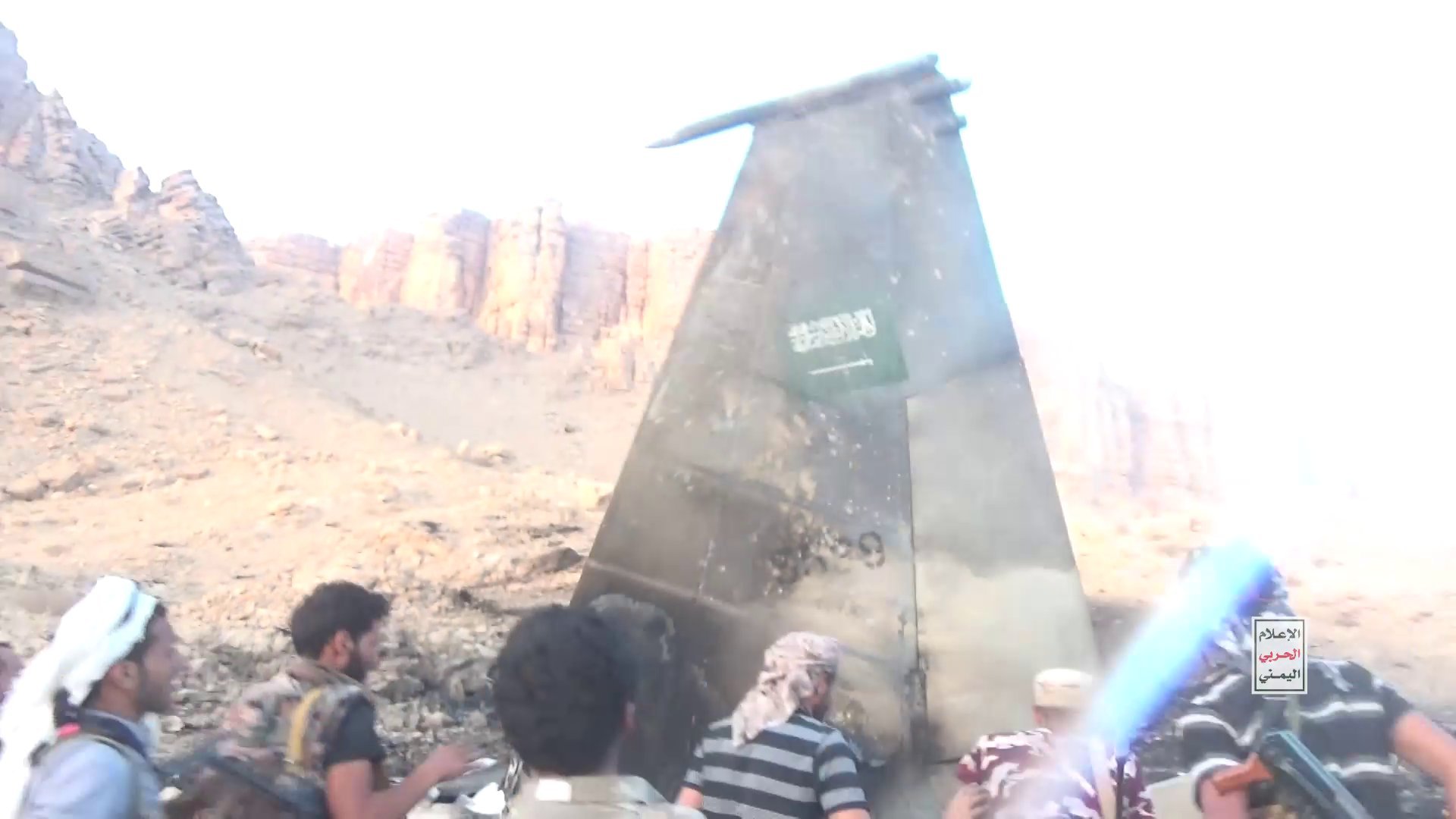
The aircraft appears to be an F-15SA, the most advanced variant of the Eagle operated by the Royal Saudi Air Force. Specifically, it appears to be tail number 5539, assigned to the 55th Squadron based at King Khalid Air Base.

A close-up of one of the tailfins with the apparent tail number 5539. Houthi-controlled media
Another view of one of the tailfins. Houthi-controlled media

The Royal Saudi Air Force received 84 of the new-build F-15SA. Meanwhile, the 68-strong fleet of earlier F-15S aircraft has been upgraded locally to a similar standard, also known as F-15SR (for Saudi Retrofit). Aircraft 5539 is understood to be among the latter.

The reported shootdown highlights the continuing threat posed by Houthi air defenses, which have proven considerably more capable and difficult to suppress than their improvised appearance might suggest.

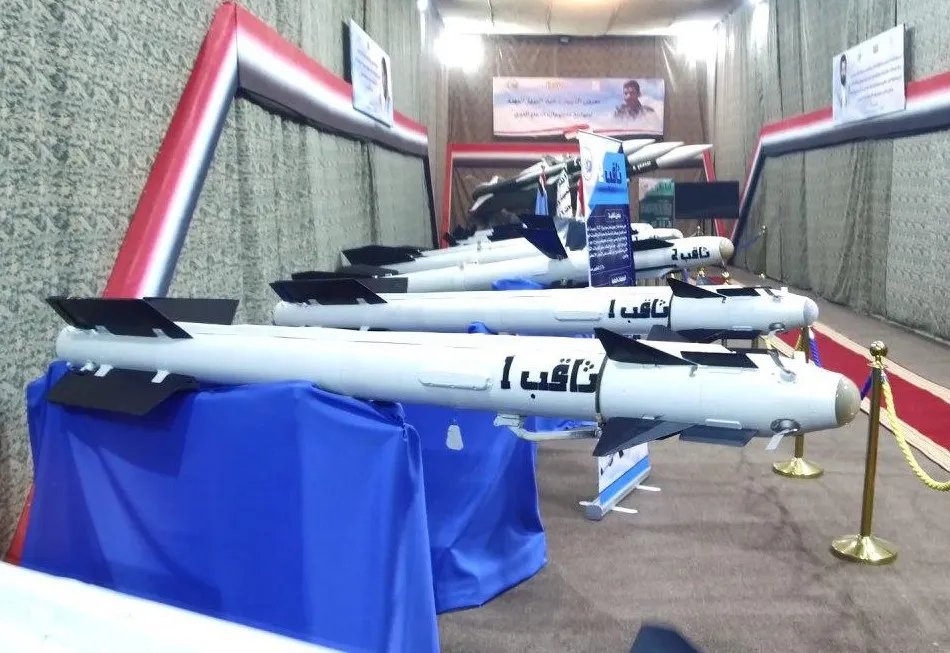
As TWZ has previously detailed, the Houthi air-defense network includes mobile surface-to-air missile systems, repurposed infrared-guided R-73 and R-27 air-to-air missiles, and Iranian-derived systems such as the Saqr/358.

Houthi Thaqib-1 surface-to-air missiles (repurposed R-73s) in front of Thaqib-2s (repurposed R-27). Other Houthi air defense missiles are also seen at the rear. Houthi-controlled media

Of particular concern is the group’s use of passive infrared sensors for detection, tracking, and missile cueing. Unlike conventional fire-control radars, these sensors do not provide an aircraft’s electronic-warfare systems with an early warning that it has been detected or targeted. TWZ has noted that this combination of mobility and passive sensing can create a difficult problem even for highly sophisticated combat aircraft, with the Houthis having previously demonstrated the ability to threaten U.S. crewed and uncrewed aircraft.

That capability does not mean that Houthi air defenses constitute a conventional, integrated air defense network comparable to those operated by major state militaries. However, they can still be effective through a combination of concealment, mobility, passive detection, unconventional employment of missiles, and the difficult operating environment over Yemen.

Previous Saudi aircraft losses attributed to Houthi air defenses during the Yemen war from 2015 to 2022 include several helicopters, fixed-wing aircraft, and drones. Total Saudi losses to all causes in the conflict amount to around a dozen helicopters, five jets, and as many as 30 drones. A Saudi F-15 crashed in the Red Sea at the start of the war in 2015 and Eagles were also reportedly engaged and damaged by Houthi surface-to-air missiles in 2018, although they returned safely.

Video footage that emerged in 2021 shows Saudi troops on the ground watching an F-15 swoop in a relatively low level to knock down a Houthi Qasef-series suicide drone:

In the past, Houthi forces have come close to engaging U.S. F-35s and have repeatedly demonstrated an ability to bring down MQ-9 Reaper drones. If the Saudi F-15 loss is ultimately confirmed, determining precisely how the aircraft was detected, tracked, engaged, and hit could therefore provide valuable insight into how this unusual air defense architecture is being employed against Saudi and other combat aircraft.

As we discussed at the time, the clear risk posed by Houthi air defenses is likely the main factor behind Saudi employment of a Chinese-made short-range ballistic missile (SRBM) in the current fighting with Yemen.

العثور على بقايا صاروخ صيني من طراز DF-15A في اليمن. pic.twitter.com/af9mGNNxiA

— إيران بالعربية (@iraninarabic_ir) September 14, 2026

The timing of the reported shootdown is also notable. It comes amid a sharp escalation in the conflict, with Saudi Arabia conducting air operations against Houthi positions in Yemen and Ansar Allah launching missiles and drones toward targets inside Saudi Arabia. Reuters reported that the Houthis had attacked the Saudi Red Sea port of Yanbu and a southern airbase at Khamis Mushait, while Riyadh has reported intercepting Houthi drones.

The F-15 incident also follows a separate confrontation over an alleged Houthi drone attack near Mecca. Saudi authorities said their air defenses intercepted and destroyed a Houthi drone south of Mecca before it entered the restricted airspace over the city. The Houthis denied targeting the holy city.

Meanwhile, there are reports that U.S. officials met representatives of the Houthis in Oman over the weekend, with the Houthis apparently telling the U.S. officials that they had no intention of attacking American vessels and that they remained committed to the 2025 ceasefire with ​the United States unless they stepped in on behalf of Saudi Arabia. The Kingdom reportedly requested exactly this in recent weeks but was denied.

For the moment, the most that can be established from the available imagery is that a Saudi F-15 was destroyed, with Ansar Allah claiming responsibility.

This is a developing story and will be updated as additional imagery, official statements, or other independently verifiable information becomes available.

Contact the author: thomas@thewarzone.com

The post Houthis Claim Saudi F-15 Kill Over Yemen appeared first on TWZ.

  •  

Israel Is Bringing SPICE 1000 Standoff Weapon To The F-35

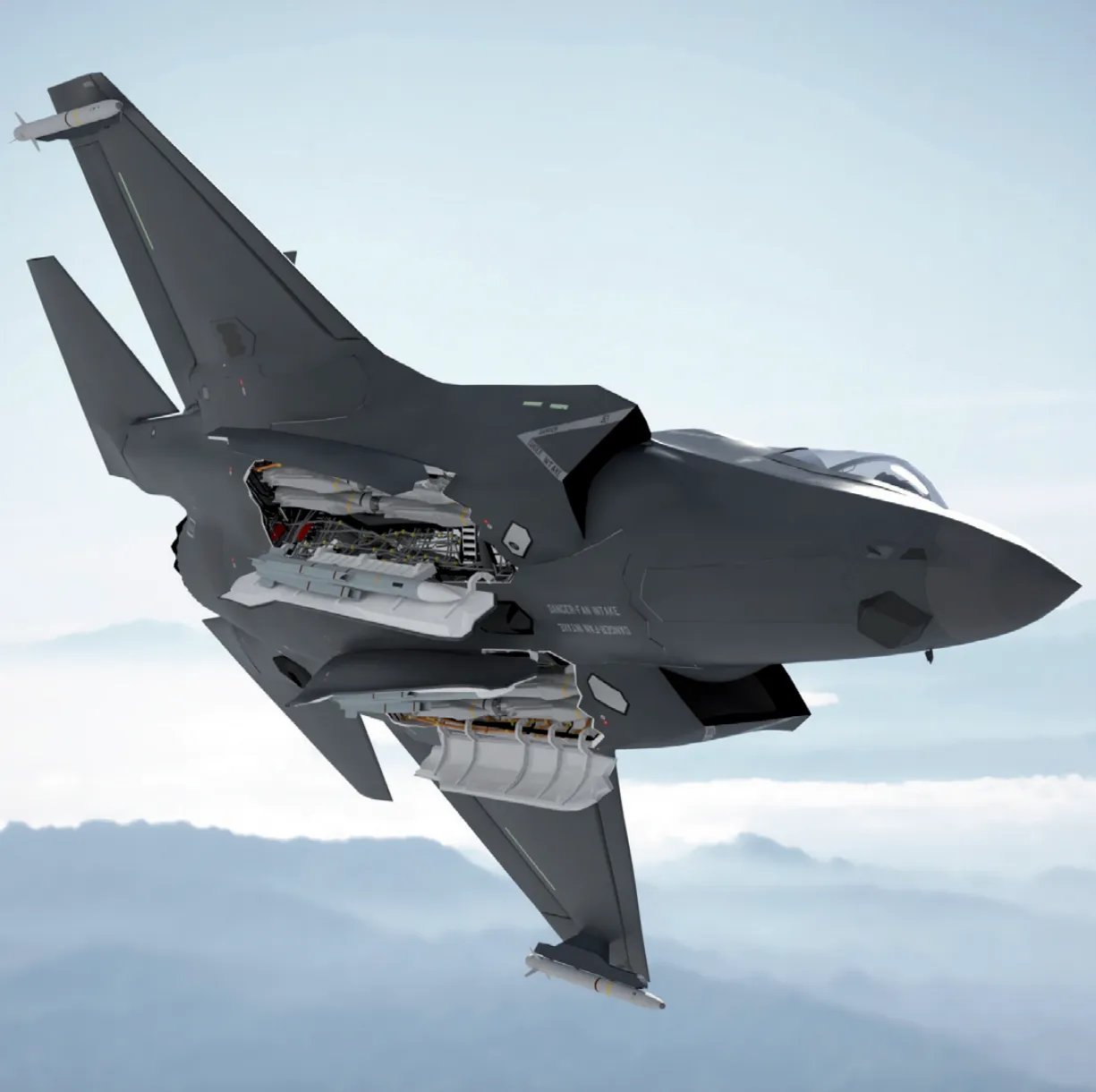
Israel’s Rafael and Lockheed Martin are working to accelerate integration of the 1,000-pound-class SPICE standoff weapon with the Israeli Air Force’s F-35I Adir. The development could potentially open the door for the precision-guided munition to be offered to other Joint Strike Fighter operators.

Rafael Advanced Defense Systems announced the effort September 15 during the Air & Space Forces Air, Space and Cyber Symposium that TWZ is attending. The work is being conducted as a joint project with Lockheed Martin at the U.S. contractor’s facilities in the United States and is expected to take several months.

AFA 2026: For the first time, Rafael's SPICE 1000 is being integrated on the F-35

Rafael Advanced Defense Systems Ltd. is integrating its SPICE 1000 air-to-surface munition on the F-35 Adir fighter aircraft.

SPICE 1000 is an advanced air-to-surface munition capable of striking… pic.twitter.com/QOeNISGKFE

— Rafael Advanced Defense Systems (@RAFAELdefense) September 15, 2026

Rafael says the effort could eventually make the weapon available to other F-35 operators. “At a later stage, F-35 operators worldwide will be able to field SPICE 1000,” the company said.

The effort was previously referenced in U.S. government documentation before Rafael’s announcement. Published in August, the Pentagon F-35 Modernized Selected Acquisition Report identified the weapon as the “Israel-unique Smart, Precise Impact, Cost-Effective 1000B,” or SPICE 1000B, and said its integration was progressing “with a strategy to accelerate the implementation via a SPICE Lite process.”

The report does not explain what the “SPICE Lite” process entails.

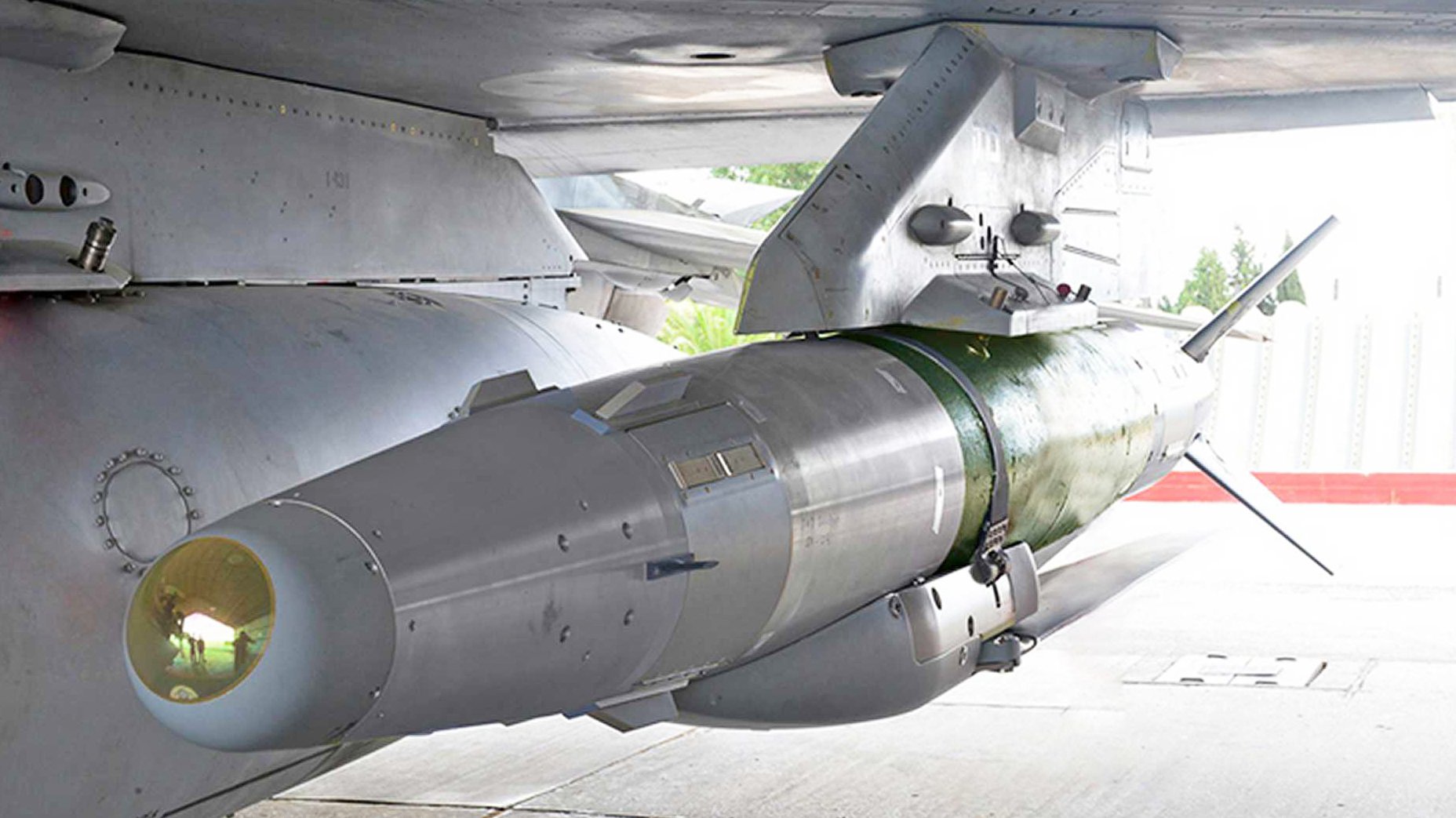
SPICE — which stands for Smart, Precise Impact, and Cost-Effective — is a family of electro-optically guided standoff weapons developed by Rafael. The family includes SPICE 2000, SPICE 1000, and SPICE 250, with the numbers corresponding broadly to the weight class of the underlying warheads.

Based around a 1,000-pound-class bomb, SPICE 1000 uses pop-out wings to achieve a manufacturer-stated range of approximately 125 kilometers, or 78 miles. Rafael gives the weapon a claimed circular error probable of around three meters.

The glide bomb combines inertial and satellite-aided navigation with an electro-optical seeker. During the terminal phase, its seeker can compare the observed target area with stored imagery using scene-matching algorithms, allowing the weapon to continue its attack without relying exclusively on GPS. That feature allows it to engage targets autonomously, offering the launch aircraft a true ‘fire and forget’ capability, and provides resilience in GPS-denied or GPS-degraded environments.

SPICE can also be programmed to approach a target from a particular azimuth and impact angle. This provides flexibility in selecting the terminal attack geometry and can support steep attack profiles against targets where penetration from above is desirable.

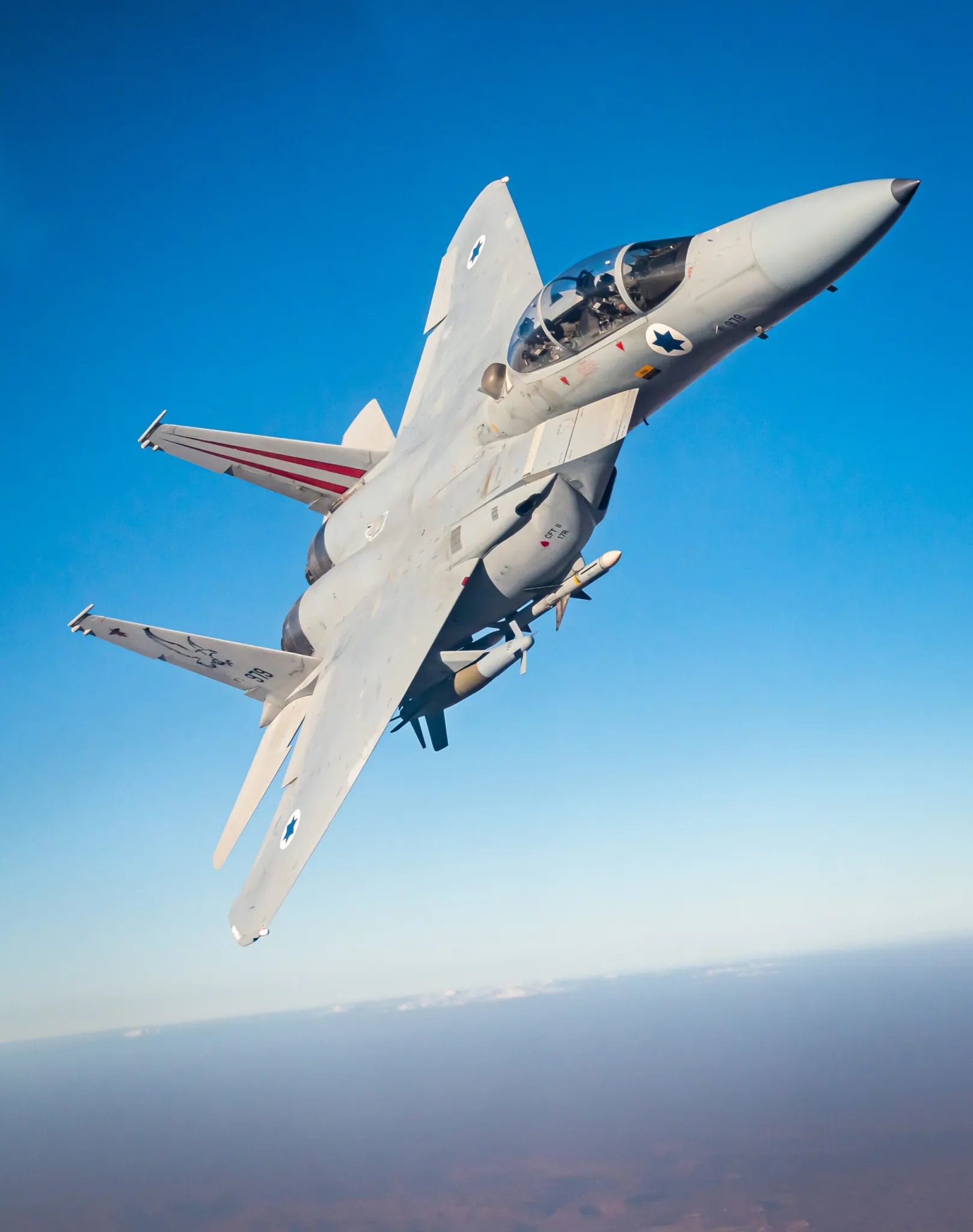
SPICE 1000 is not a new Israeli capability. It has been operational with the Israel Air Force since 2017 and is already integrated with Israeli F-16I Sufa, F-16C/D Barak, F-15I Ra’am, and F-15 Baz fighters.

An F-15 Baz configured for precision strike, with a pair of 2,000-pound Rafael SPICE standoff weapons on the underwing pylons. Amit Agronov

“SPICE 1000 has been sold to several countries and is in operational service with a number of air forces worldwide,” Rafael said. “It has served as a primary munition of the Israeli Air Force for several years, including extensive use in recent long-range operations flown from F-15 and F-16 aircraft.”

The Israeli Air Force has released footage showing SPICE weapons being used during recent operations, including imagery from the weapon’s own perspective during its terminal attack.

Israeli Air Force F-15 Bazs preparing for a strike on Iran, each carrying a pair of Spice 1000 glide bombs.

Notably, one of the F-15s, tail no. 450, took part in Operation Wooden Leg exactly 40 years ago, striking PLO targets in Tunisia. pic.twitter.com/FEy6PiDkdU

— OSINTtechnical (@Osinttechnical) June 15, 2025

Combat validated.
The stand-off strike capability air forces are asking about. SPICE 250 at Farnborough.
Pinpoint accuracy against high-value targets. Real operational results.

Full details in our exhibition press release: https://t.co/FWYYvcM0Vw pic.twitter.com/lQV8sw32zN

— Rafael Advanced Defense Systems (@RAFAELdefense) July 22, 2026

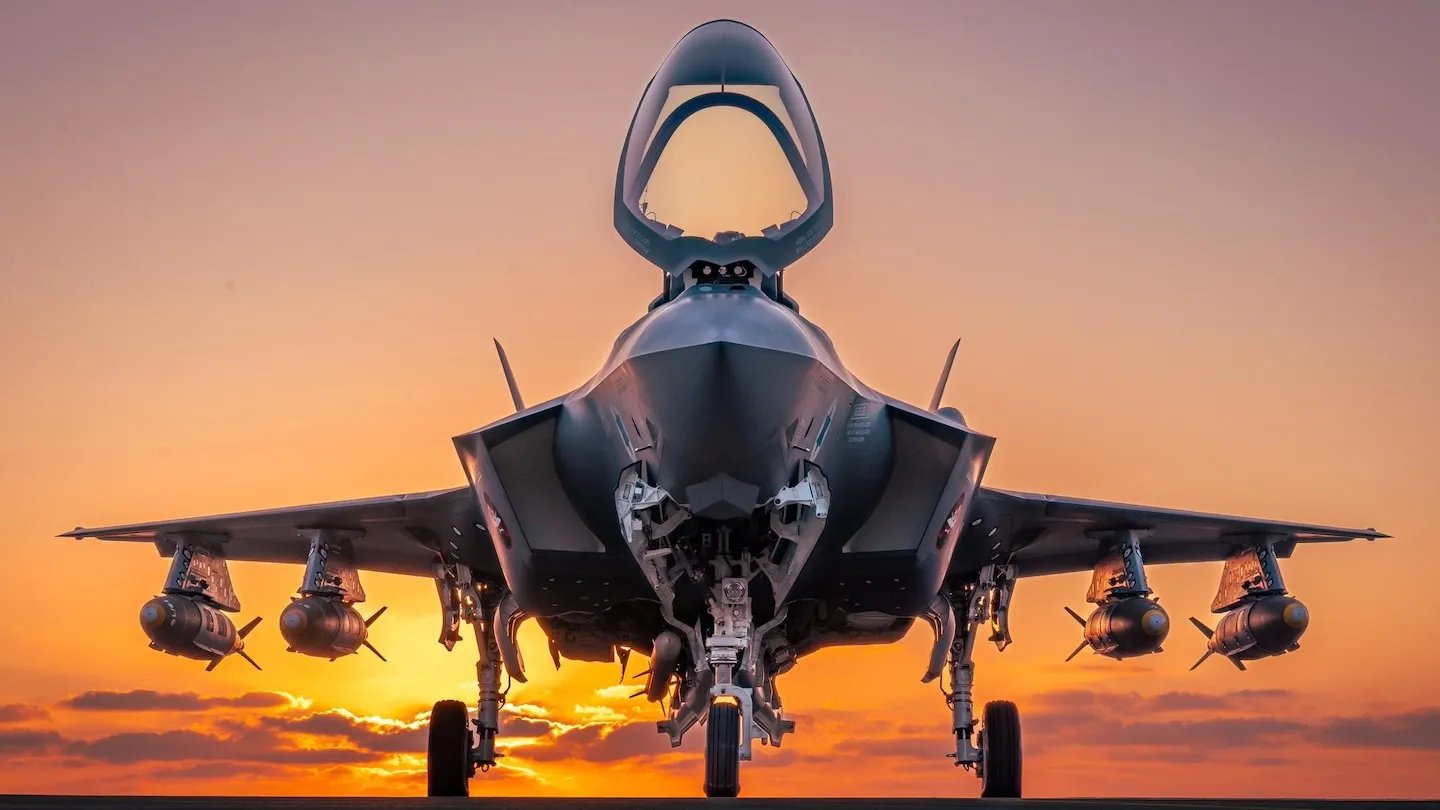
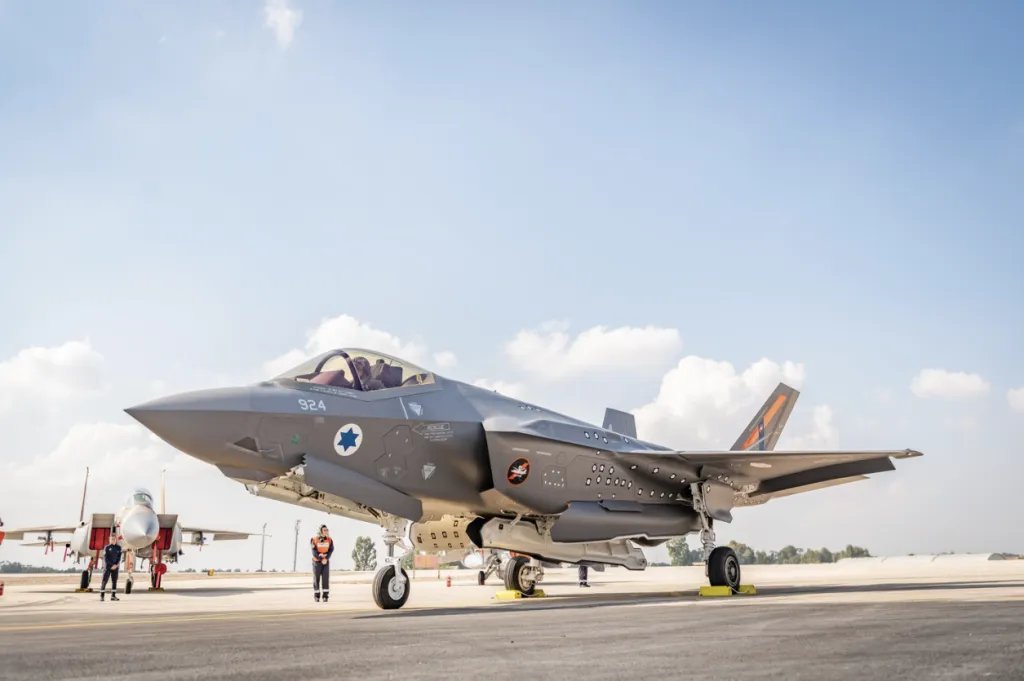
Israel’s F-35I is already unusual within the international Joint Strike Fighter fleet. The IDF has developed and demonstrated an external Joint Direct Attack Munition (JDAM) carriage capability, and said in March 2025 that the Israeli Adir was the only F-35 to have conducted operational strikes with an external weapons configuration. You can read more about that here.

The unique instrumented F-35I assigned to the Israeli Flight Test Center carrying four external 2,000-pound class GBU-31 JDAMs. A single AIM-120 AMRAAM air-to-air missile can be seen in one of the internal weapons bays, which may also house another internal JDAM. Israeli Air Force

However, according to The Jerusalem Post, the SPICE weapon is expected to be carried internally by F-35Is equipped with Technology Refresh 3, or TR-3, hardware, which would maintain its low-observable configuration. Neither Rafael nor Lockheed Martin has publicly detailed the specific carriage configuration, aircraft modifications or software associated with the current integration effort.

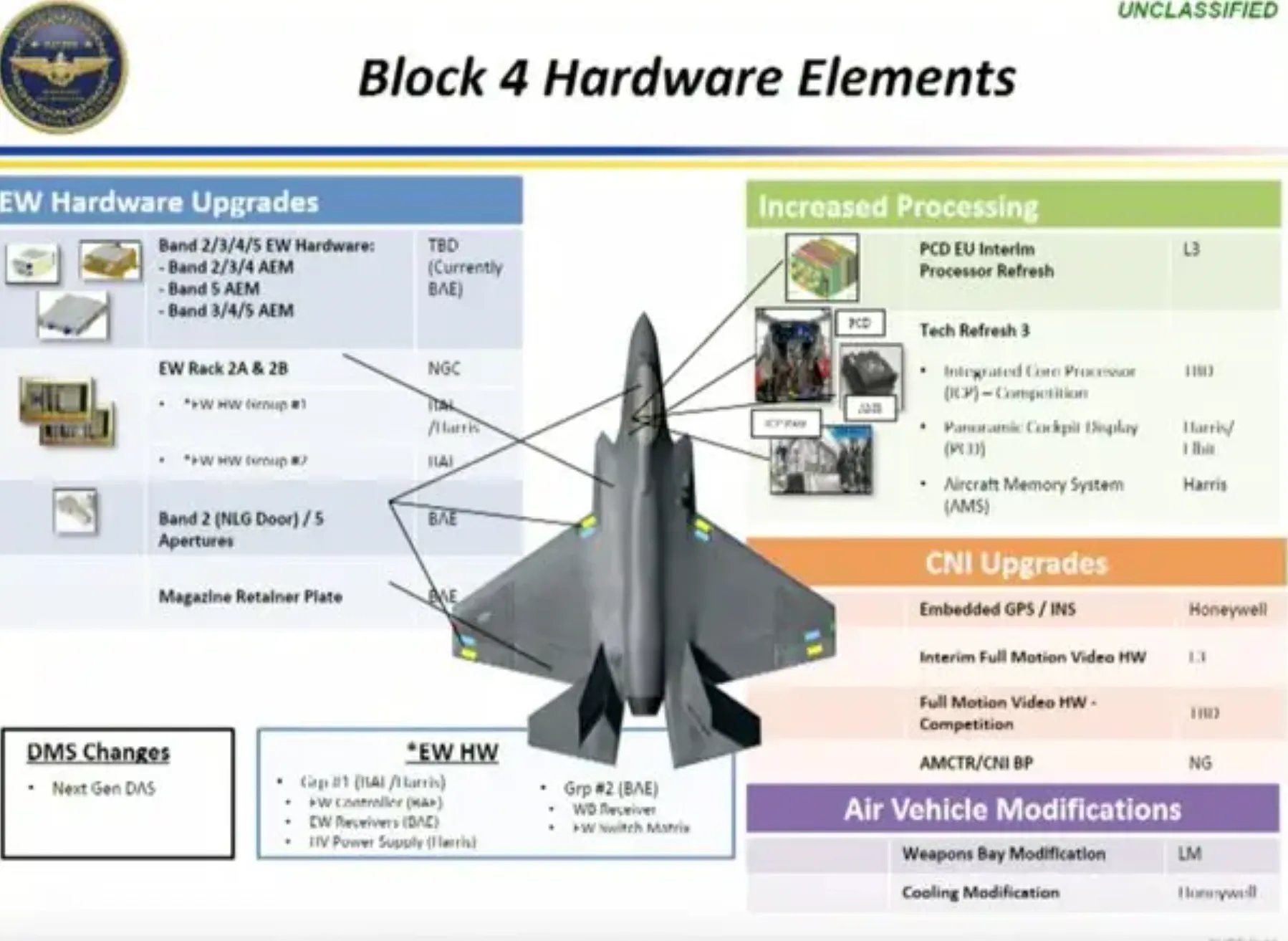
The long-delayed TR-3 is a major upgrade to the F-35’s computing architecture and provides the processing infrastructure required for subsequent Block 4 capabilities. Israel received its first three F-35Is equipped with TR-3 hardware in January of this year.

Lockheed Martin describes Block 4 as the F-35 program’s “most significant evolution of F-35 capabilities to date,” encompassing more than 70 major upgrades, including increased weapons capacity, advanced electronic warfare capabilities, and improved target recognition.

Some of the unclassified upgrades within Block 4. The exact configuration has not been publicly disclosed. U.S. Department of Defense

It remains unclear if the SPICE 1000 integration itself requires the full Block 4 configuration.

The potential significance of the Israeli integration extends beyond the Israel Air Force. If SPICE 1000 ultimately becomes available to other F-35 operators, the completed Israeli integration could provide those countries with another pathway toward fielding a precision standoff weapon rather than requiring them to begin an integration effort entirely from scratch.

Integrating national weapons onto the F-35 can be a lengthy process. It involves not only the weapon itself, but aircraft software, interfaces, weapons-bay compatibility, flight testing, mission-system integration and certification within the U.S.-led F-35 program.

The United Kingdom’s experience with MBDA’s SPEAR 3 provides a good example of the challenges.

In 2022, the U.K. Ministry of Defence said that scheduled delivery dates for SPEAR 3 had been delayed because of “prioritisation in the overall F-35 development programme,” which is managed by the U.S.-led F-35 Joint Program Office.

An artist’s impression of an F-35 armed with SPEAR 3 and Meteor missiles. MBDA

The program has continued to progress, including F-35B integration work and flight testing. But in June 2026, the U.K. government said that completion of mission-systems integration and jettison trials remained part of a wider weapons-integration program and that SPEAR 3 integration and subsequent release to service would occur in the early 2030s.

The United Kingdom has consequently approved the acquisition of the GBU-53/B Small Diameter Bomb II as an interim standoff weapon for the F-35B until SPEAR 3 enters service.

Nevertheless, another F-35 operator would not be able to adopt the Israeli SPICE integration without additional work. National configurations, software baselines, certification requirements, weapons procurement, and export approvals would still have to be addressed.

Already, however, aided by its uniquely configured test jet, Israel has demonstrated an unusual ability to integrate nationally developed capabilities onto its F-35I. This has been aided by privileged access to the Joint Strike Fighter’s closely guarded software codes.

The Israeli Air Force F-35I test jet on the flight line together with an F-15I strike fighter. Amit Agronov/Israeli Air Force

A U.K. parliamentary report noted delays in integrating British weapons onto the F-35B while contrasting that with Israel’s ability to integrate domestic electronic warfare systems, sensors, and communications technology onto its Adir.

Meanwhile, Rafael and Lockheed Martin already have experience working together on the SPICE family.

The companies signed a teaming agreement in 2019 covering the joint development, marketing and manufacture of SPICE guidance kits for the U.S. market. In 2021, they expanded the agreement to include SPICE 250, including development for potential sales to the United States and Poland. With some unque capabilities, SPICE could be of particular interest to the U.S. military, especially as it seeks to leverage multiple sources of precision munitions.

The SPICE family also extends beyond the 1,000-pound-class weapon now being integrated with the F-35.

At the other end of the family is SPICE 250, a much smaller weapon designed around a 250-pound-class payload. It incorporates a man-in-the-loop capability that allows an operator to redirect the weapon during its flight and abort the attack if necessary.

Its smaller dimensions also allow substantially greater weapon carriage. Rafael has marketed configurations in which a fighter can carry as many as 16 SPICE 250 weapons.

SPICE 1000, by comparison, is a substantially heavier weapon intended to provide longer-range precision attack capability with a larger warhead.

The SPICE effort is taking place alongside several other Israeli initiatives aimed at extending the F-35I’s range and weapons capabilities.

The Pentagon’s F-35 documentation has referenced ongoing work on extended-range fuel tanks and electronic warfare pods for the Israeli Air Force, although it did not provide fielding dates.

In May 2026, Israel’s defense ministry awarded an extended-range capability development contract for the F-35I to Elbit Systems subsidiary Cyclone. The capability is intended to increase the aircraft’s radius of action and reduce its reliance on aerial refueling during long-range missions.

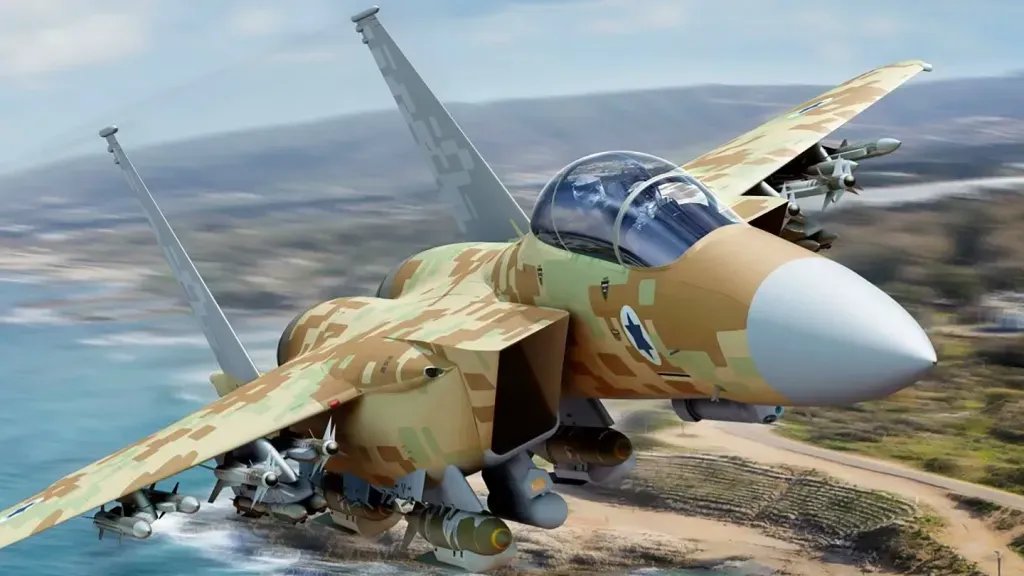
Israel has also announced a major expansion of its F-35I fleet, with plans to increase the number of aircraft from 50 to 100. The country is simultaneously expanding its forthcoming F-15IA fleet from 25 to 50 aircraft.

A rendering of the F-15IA for Israel. Boeing

For the F-35I, SPICE 1000 adds a long-range strike option that pairs the aircraft’s low observability with substantial standoff range and a relatively heavy warhead. This offers a survivability advantage in increasingly contested environments, allowing attacks from farther outside capable air defense systems and under heavy electronic warfare conditions. This factor will only become more important as integrated air defense systems become more capable and the F-35 more detectable.

Exactly how the weapon will be integrated remains undisclosed. Rafael and Lockheed Martin have not announced the final carriage configuration, aircraft software requirements, flight-test schedule, or expected date for operational clearance.

At the same time, Rafael is explicitly positioning the effort as a potential pathway for SPICE 1000 to become available to the wider F-35 community. This would conceivably give other operators another option at a time when integrating a new standoff weapon onto the fighter can take years.

Contact the author: thomas@thewarzone.com

The post Israel Is Bringing SPICE 1000 Standoff Weapon To The F-35 appeared first on TWZ.

  •  
❌