❌

Reading view

German Forces Surge Onto Baltic Island In First-Of-Its-Kind NATO Drill

Swedish and German forces are conducting what appears to be the first joint rehearsal of their rapid-reinforcement plans for the Baltic island of Gotland. The exercise is another step in Sweden’s defense planning for an island whose position in the middle of the Baltic gives it an outsized strategic importance for controlling access, protecting the Baltic states, and maintaining NATO’s freedom of movement in a region where Russian military activity remains a persistent concern.
Silver Wotan 2026 / Weiterer Text über ots und www.presseportal.de/nr/179237 / Die Verwendung dieses Bildes für redaktionelle Zwecke ist unter Beachtung aller mitgeteilten Nutzungsbedingungen zulässig und dann auch honorarfrei. Veröffentlichung ausschließlich mit Bildrechte-Hinweis.
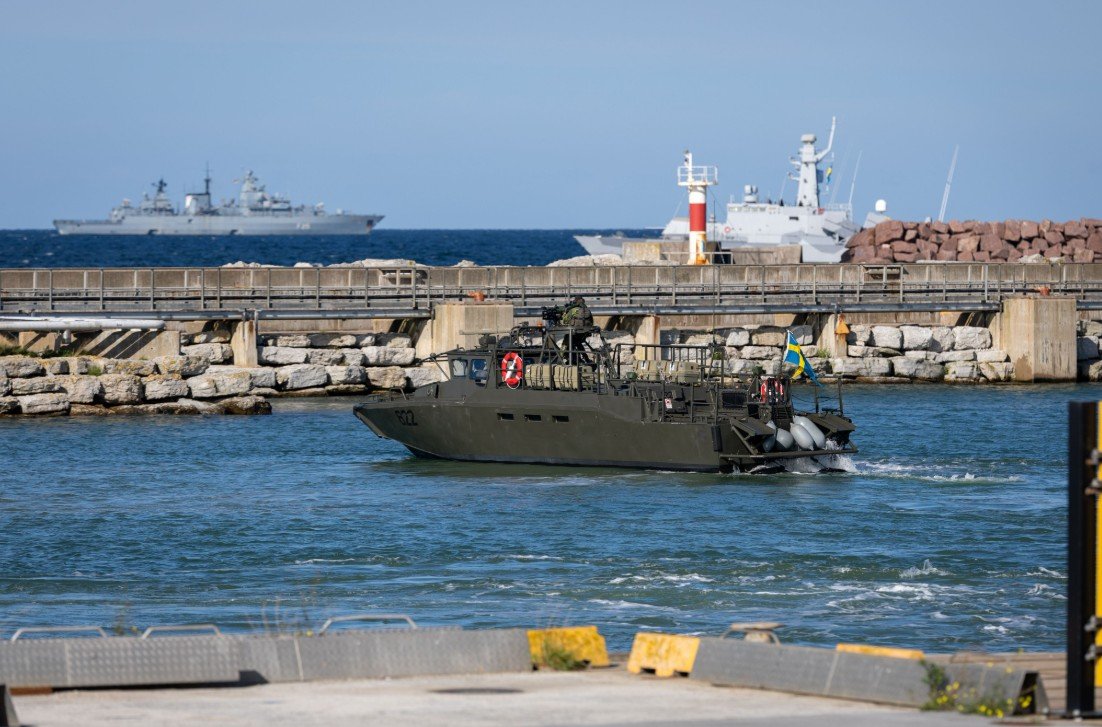
German and Swedish warships stand offshore while a Swedish CB90 fast assault craft operates in the harbor at Visby. Bundeswehr/Marc Tessensohn

The exercise, Silver Wotan 2026, running between September 14-23, brings together Swedish and German forces across the land, maritime, and air domains. The scenario is built around a Swedish request for allied assistance, with German forces moving personnel and equipment across the Baltic before integrating with Swedish units already defending the island. The operation is testing the entire process of getting allied combat power to Gotland, protecting it during the movement to Visby, and rapidly incorporating it into the island’s existing defensive network.

A video shows troops coming ashore on Swedish CB90 fast assault craft, a type that German soldiers are also trained to operate:

A rapid deployment of German and Swedish forces to Gotland island is being carried out today. Units from 🇸🇪 and 🇩🇪 are rehearsing the swift reinforcement of the strategic island in order to ensure the security of the Baltic Sea.#SilverWotan#NATO pic.twitter.com/A0r3LF8XUP

— Försvarsmakten (@Forsvarsmakten) September 18, 2026

The strategic importance of Gotland has grown considerably following Sweden’s accession to NATO in March 2024, which was a direct response to the full-scale Russian invasion of Ukraine.

Located approximately halfway between mainland Sweden and the Baltic states, the island occupies a central position in the Baltic Sea, close to the maritime approaches to the Gulf of Finland and within reach of the Russian exclave of Kaliningrad. Its location gives forces operating from Gotland a potentially significant position from which to conduct surveillance, air defense, and maritime operations, while also making the island an important part of the wider network connecting NATO’s northern and eastern members.
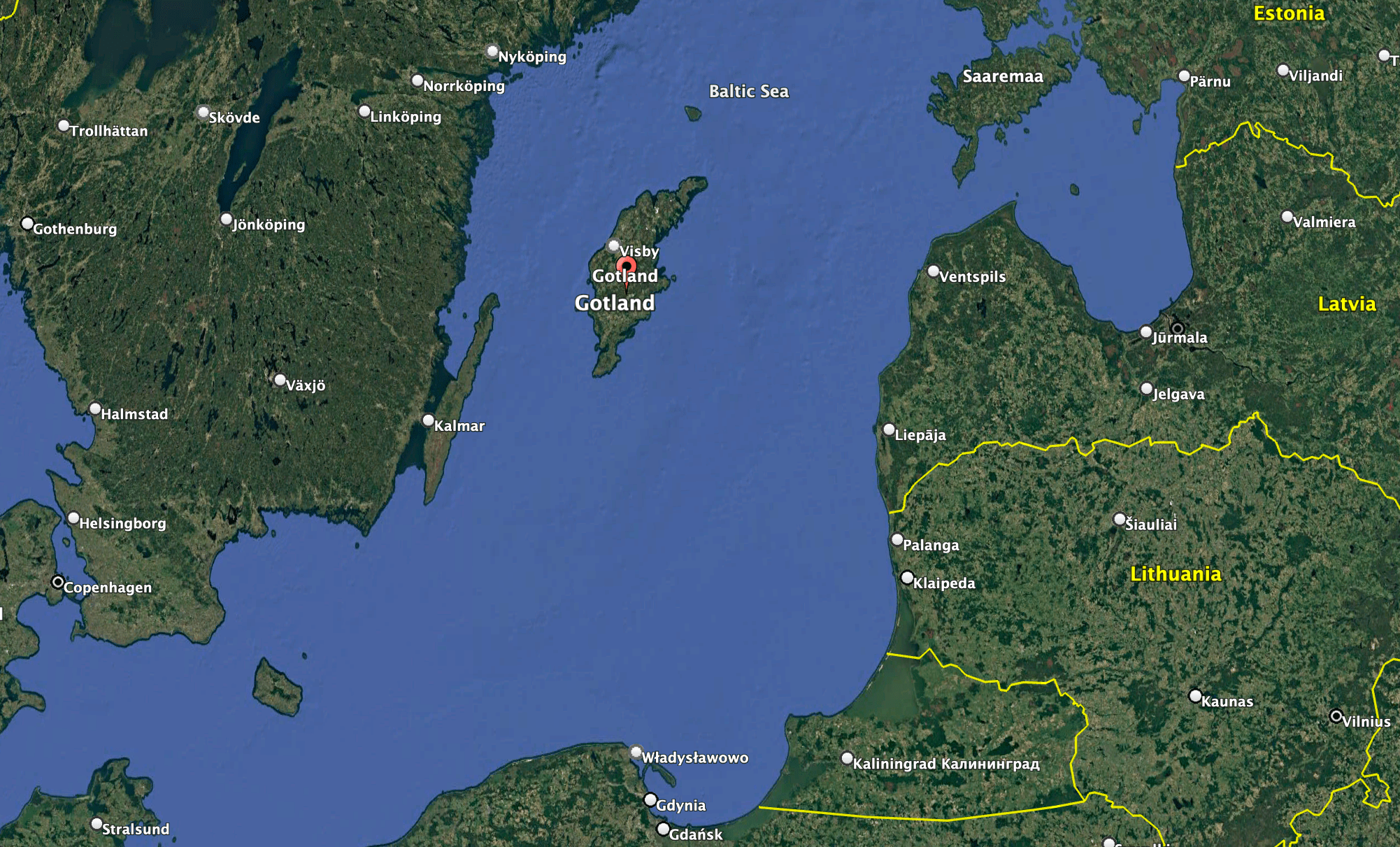
The location of Gotland within the Baltic region. Google Earth

At the same time, Gotland sits within an extremely complex littoral environment, where shallow waters, islands, narrow maritime approaches, and the proximity of multiple states can make both offensive operations and defensive planning more difficult. The region has also been shaped by longstanding Swedish concerns about Russian clandestine activity, including intelligence gathering and other forms of covert or deniable activity. The complexity of the Baltic operating environment can make such activities harder to detect and attribute, adding another layer of uncertainty alongside the more conventional military challenges facing the region.
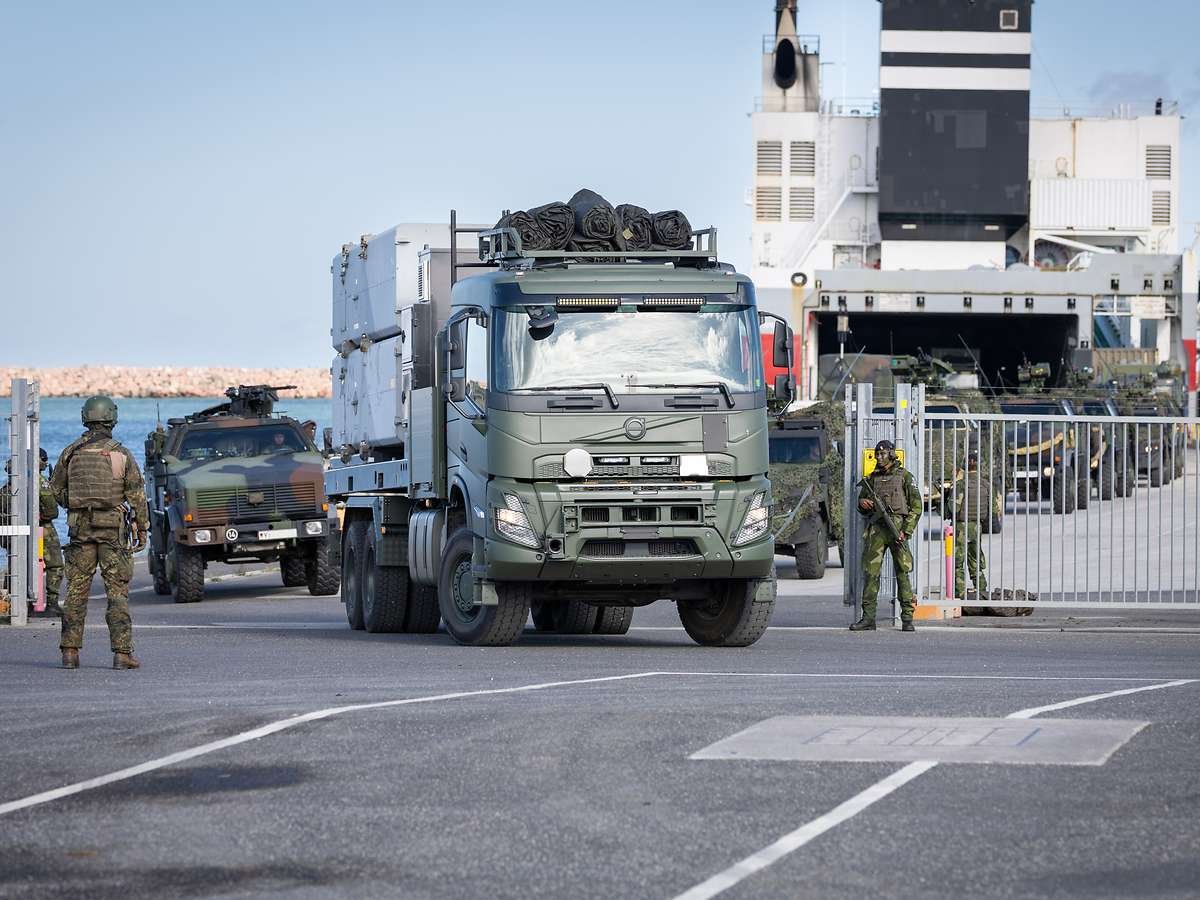
The unloading operation in Visby. The vehicles seen here were transported by sea from Karlskrona to the Swedish mainland. Bundeswehr/Marc Tessensohn

Geography has long made Gotland important to Swedish defense planning, but its significance has taken on a broader dimension since Sweden joined the alliance. NATO has described the island as strategically important to its freedom of maneuver in the Baltic, while Swedish officials have highlighted its potential role as a hub for military operations and logistics in the region.

The current exercise is designed around the practical difficulties of reinforcing such a position.

Military equipment is being transported by sea to Visby, Gotland’s principal port, including by commercial ferry. In Visby, Swedish and German personnel are securing the harbor and conducting the reception of the arriving force. Among the equipment being moved are air defense systems, while Swedish forces are also operating coastal defense systems armed with anti-ship missiles.
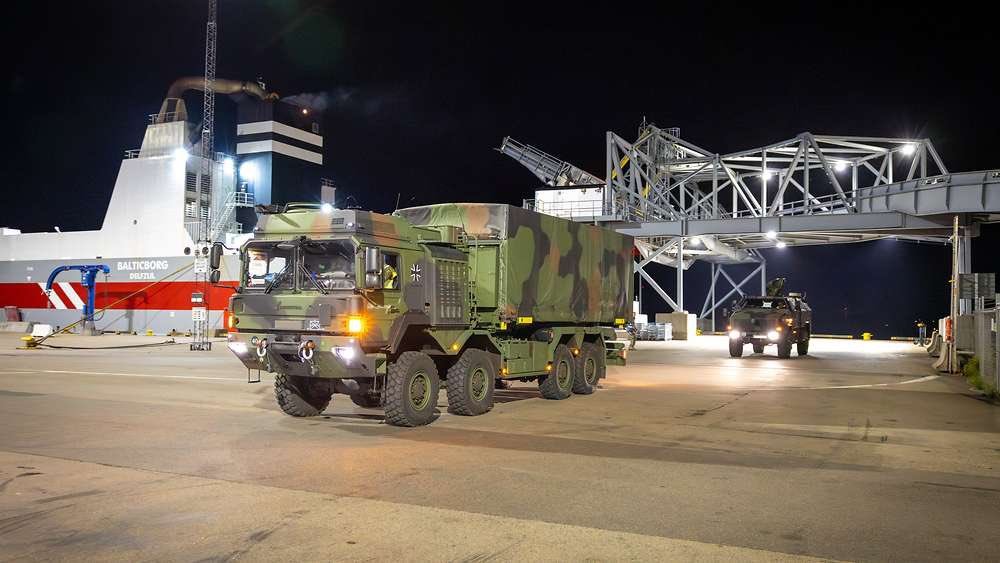
German Army vehicles roll into Visby during Silver Wotan. Bundeswehr/Marc Tessensohn

Meanwhile, publicly available flight-tracking data showed German Luftwaffe transport aircraft, including at least one Airbus A400M airlifter, apparently involved in the effort. The commercial airport at Visby has long also been used for military activities related to Gotland and the wider Baltic region.

”A rapid deployment of German and Swedish forces to Gotland island is being carried out today” https://t.co/z6oLs1LCT4 pic.twitter.com/n18MdST6r1

— Jamming (@balticjam) September 18, 2026

The movement is supported by Swedish and German naval forces and other aircraft, creating a scenario in which the maritime transit, protection of the port, air operations, and subsequent movement of troops and equipment ashore all form part of the same military problem. Once ashore, the arriving forces have to be moved into position and integrated with Swedish units already responsible for defending the island.

The Swedish Gotland Regiment, P 18, provides the core of the island’s permanent military presence. The regiment, Sweden’s youngest and smallest, has been rebuilding its capabilities since Sweden began expanding its military presence on Gotland. Its forces form the basis of the ground-defense structure into which allied reinforcements would be incorporated.
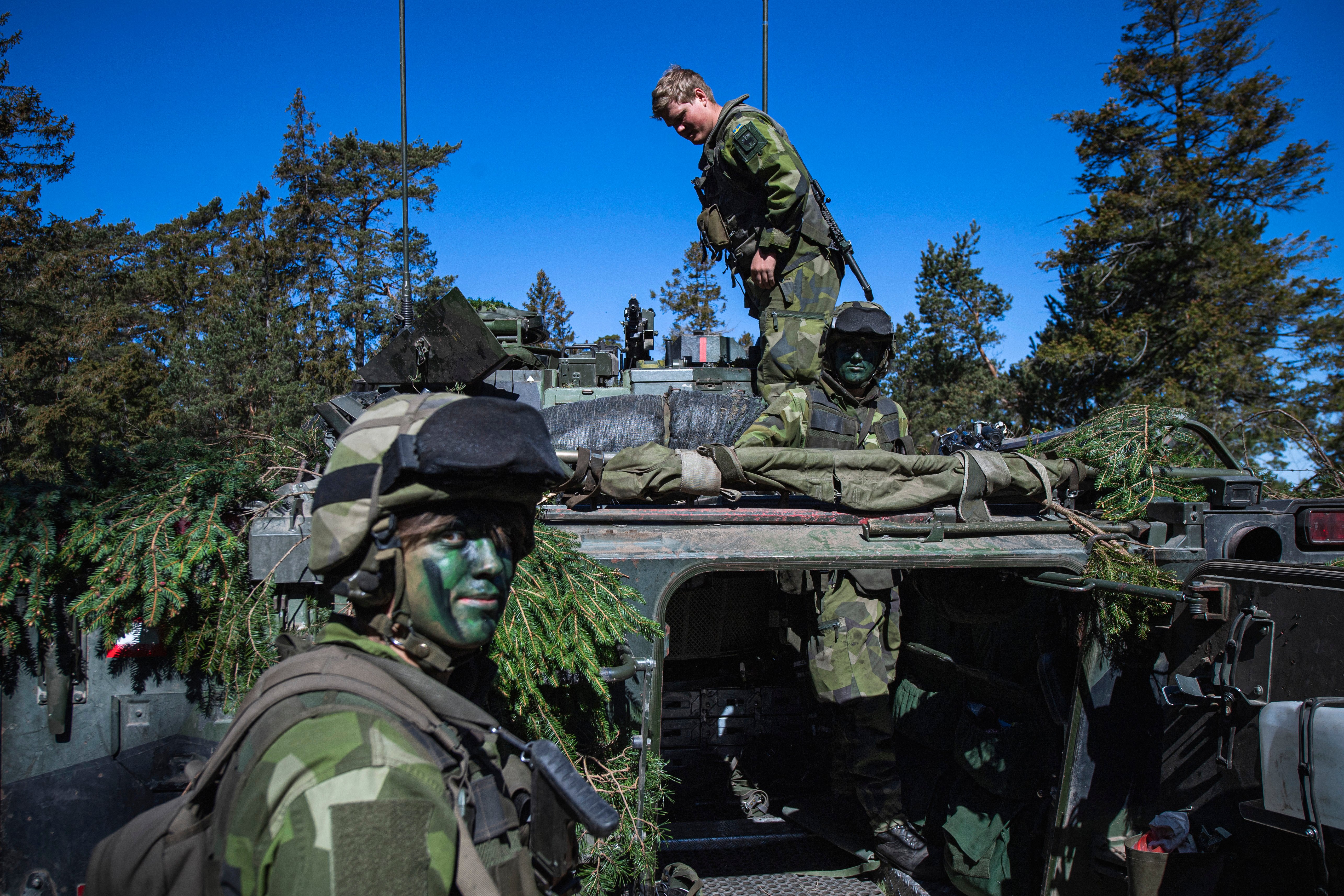
Soldiers of the P18 Gotland Regiment of the Swedish Army camouflage an armoured vehicle during a field exercise near Visby on the Swedish island of Gotland on May 17, 2022. Finland and Sweden are expected to announce this week whether to apply to join NATO following Russia's Ukraine invasion, in what would be a stunning reversal of decades-long non-alignment policies. On Sweden's strategically-located Baltic Sea island of Gotland, Home Guard troops were last week called in for a special month-long training exercise, coinciding with annual military exercises taking place across Finland and Sweden next week. (Photo by Jonathan NACKSTRAND / AFP) (Photo by JONATHAN NACKSTRAND/AFP via Getty Images)
Soldiers of the Gotland Regiment of the Swedish Army camouflage an armoured vehicle during an earlier field exercise near Visby. Photo by Jonathan NACKSTRAND / AFP

Swedish coastal defense capabilities are another important element of the drill. Land-based anti-ship missiles provide the island with a means of threatening hostile surface vessels operating in the surrounding waters, giving the defense of Gotland a direct connection to the wider maritime battle for the Baltic. During Silver Wotan, Swedish and German forces are also conducting anti-surface warfare activities alongside the broader reinforcement operation.

Germany is contributing more than 500 troops to the exercise, part of approximately 2,000 Bundeswehr personnel involved, including elements from the army, navy, and air force. The German Luftwaffe has deployed Panavia Tornado aircraft for surveillance, while German naval forces are participating in the maritime component, and German ground personnel are involved in the reinforcement and security activities on Gotland.
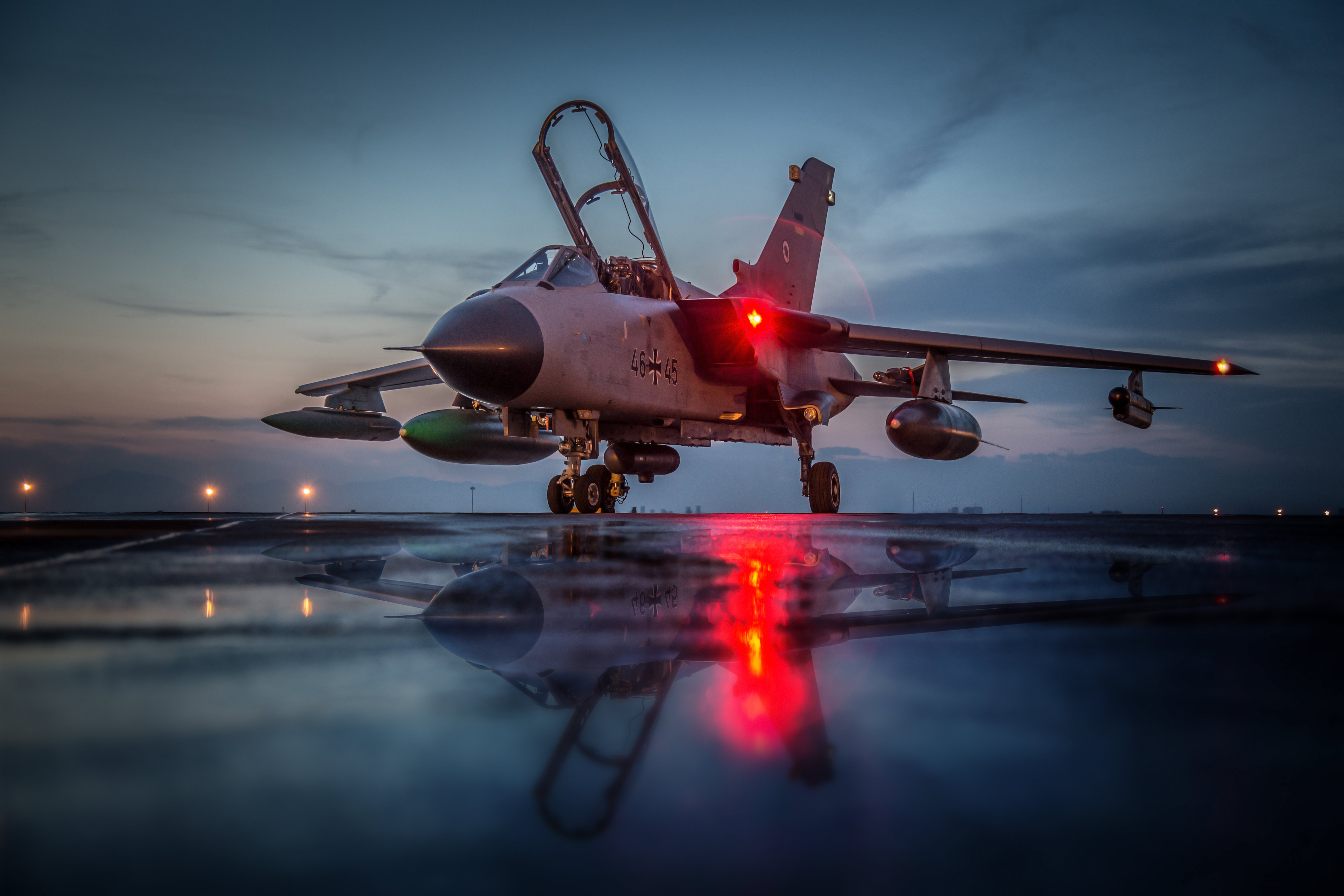
Piloten mit einer Nachtsichtbrille im Cockpit des Tornados 46+45 im Rahmen der Mission Counter Dash in Incirlik, Türkei, am 14.04.2016
Stock photo of a Luftwaffe Tornado ECR equipped for a reconaissance mission. Bundeswehr

The exercise scenario is particularly relevant against the backdrop of Russia’s continuing military presence in the Baltic region.

Russia maintains major military infrastructure in Kaliningrad, including naval, air, missile, and air defense capabilities, while the Russian Baltic Fleet operates from bases in the region. Kaliningrad’s position between Poland and Lithuania gives Moscow a significant military foothold inside the NATO area, while Russian forces and military infrastructure elsewhere along the Baltic add to the complexity of operating and reinforcing allied territory in the region.

The security environment around the Baltic has also deteriorated considerably since Russia’s full-scale invasion of Ukraine. NATO has increased its surveillance and military activity in the region, including the launch of Baltic Sentry in January 2025 following a series of incidents involving critical undersea infrastructure. The alliance has subsequently expanded efforts to monitor maritime activity and protect infrastructure and sea lines of communication.

A picture taken on February 4, 2025 shows a Helicopter 15 (HKP15) (L) on the flight deck of patrol ship HMS Carlskrona (P04) on open water near Karlskrona, Sweden, as part of the NATO Baltic Sea patrol mission, the Baltic Sentry, aimed to secure critical underwater infrastructure. The patrol ship HMS Carlskrona (P04) set off from the naval port in Karlskrona on February 4, 2025 to become part of NATO's Baltic Sentry operation as one of several Swedish ships that are part of Standing NATO Maritime Group One (SNMG1). This is the first time the ship has hoisted the NATO flag on board. The purpose of NATO's Baltic Sentry operation is to demonstrate presence and secure critical underwater infrastructure. (Photo by Johan NILSSON / TT NEWS AGENCY / AFP) / Sweden OUT (Photo by JOHAN NILSSON/TT NEWS AGENCY/AFP via Getty Images)
A Swedish Navy Helicopter 15 on the flight deck of patrol ship HMS Carlskrona as part of the NATO Baltic Sea patrol mission, Baltic Sentry, aimed to secure critical underwater infrastructure. Photo by Johan NILSSON / TT NEWS AGENCY / AFP

Swedish authorities have stressed that Silver Wotan was planned in advance and is not being conducted in response to a specific imminent Russian threat. The exercise nonetheless reflects the operational environment in which Swedish and NATO planners now have to consider the possibility that maritime and air movements across the Baltic could be monitored, disrupted, or contested.

The exercise also builds on a series of increasingly large Swedish-led activities designed to test the reception of allied forces on Swedish territory. During Aurora 26 earlier this year, more than 18,000 troops from 13 countries participated in operations across Sweden, including the deployment of allied forces to Gotland alongside the Gotland Regiment and Swedish Home Guard. NATO described that activity as an emergency deployment intended to test the reinforcement of the island.
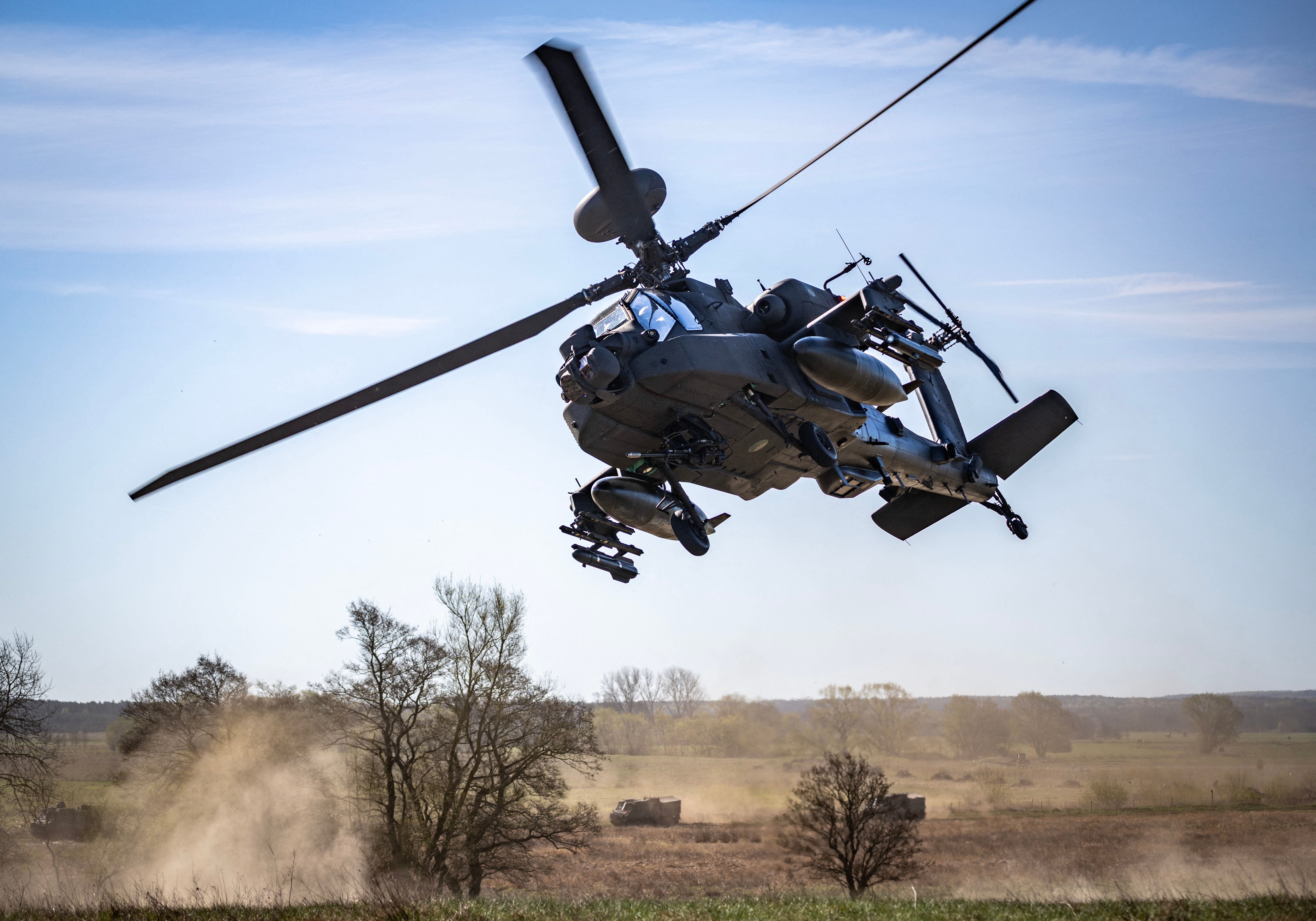
A Dutch Boeing AH-64 Apache attack helicopter takes part in a combat display during a press day for the military exercise Aurora 26 at the Revingehed training field outside Lund in Skane, Southern Sweden on April 29, 2026. The exercise at Revingehed includes personnel from several NATO countires with the focus on lessons learned from the war in Ukraine including drones. (Photo by Johan NILSSON / various sources / AFP via Getty Images) / Sweden OUT
A Dutch AH-64 Apache attack helicopter takes part in Exercise Aurora 26 in southern Sweden on April 29, 2026. Photo by Johan NILSSON / various sources / AFP

Silver Wotan places a more concentrated emphasis on the Swedish-German relationship and on the movement of an allied force into the island’s existing defensive structure.

Germany’s participation is also consistent with its growing military role in the Baltic and along NATO’s northeastern flank. Berlin is already providing forces for NATO’s forward defense in Lithuania and has increasingly emphasized the ability to move German forces rapidly across northern Europe in support of allied operations.

For Sweden, meanwhile, Gotland has become one of the clearest examples of how NATO membership has changed the country’s defense planning. The island remains a Swedish responsibility, but its location means that what happens there has consequences well beyond Sweden’s territorial defense.
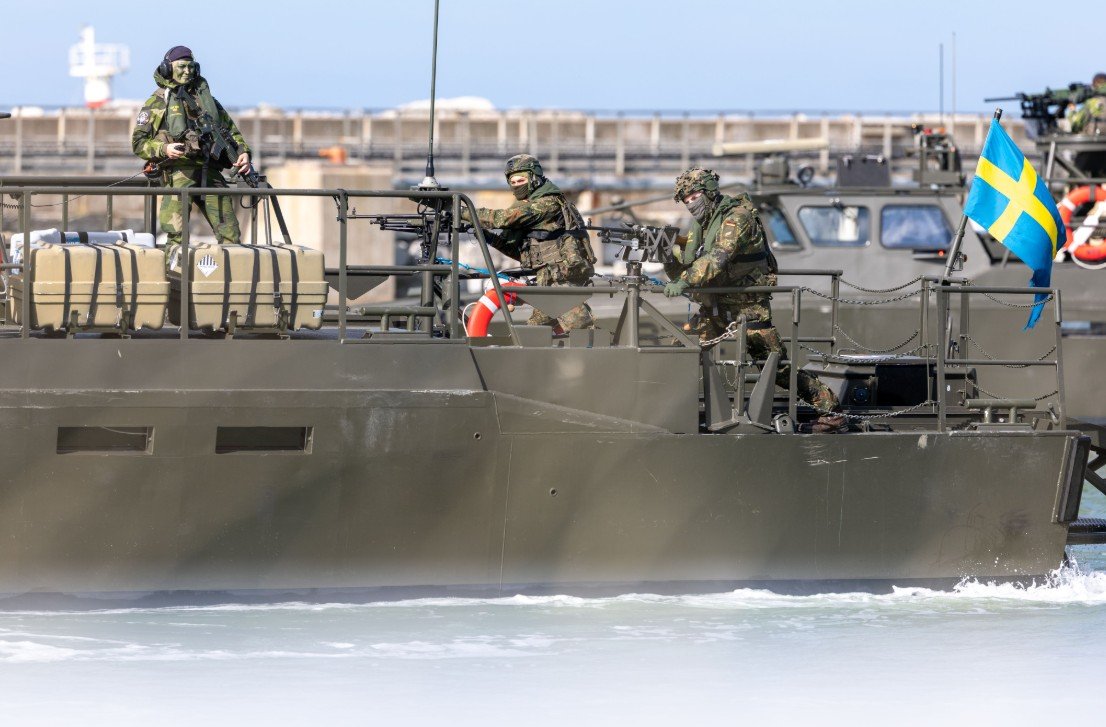
Silver Wotan 2026 / Weiterer Text über ots und www.presseportal.de/nr/179237 / Die Verwendung dieses Bildes für redaktionelle Zwecke ist unter Beachtung aller mitgeteilten Nutzungsbedingungen zulässig und dann auch honorarfrei. Veröffentlichung ausschließlich mit Bildrechte-Hinweis.
German and Swedish troops on a Swedish CB90 fast assault craft. Bundeswehr/Marc Tessensohn

A defended and adequately supplied Gotland provides NATO with a strategically positioned base for surveillance and defensive operations in the Baltic, while the ability to reinforce it demonstrates that the alliance can maintain access to the island even as the surrounding maritime and air environment becomes more contested.

The exercise comes as European allies are being forced to plan for a NATO in which the United States may provide less of the conventional military weight it has supplied for decades. The Pentagon is reviewing the size and posture of U.S. forces in Europe, including the forces and capabilities Washington would make available in a European crisis, while NATO’s top commander has said further U.S. troop withdrawals should be expected as European allies build up their own conventional capabilities.
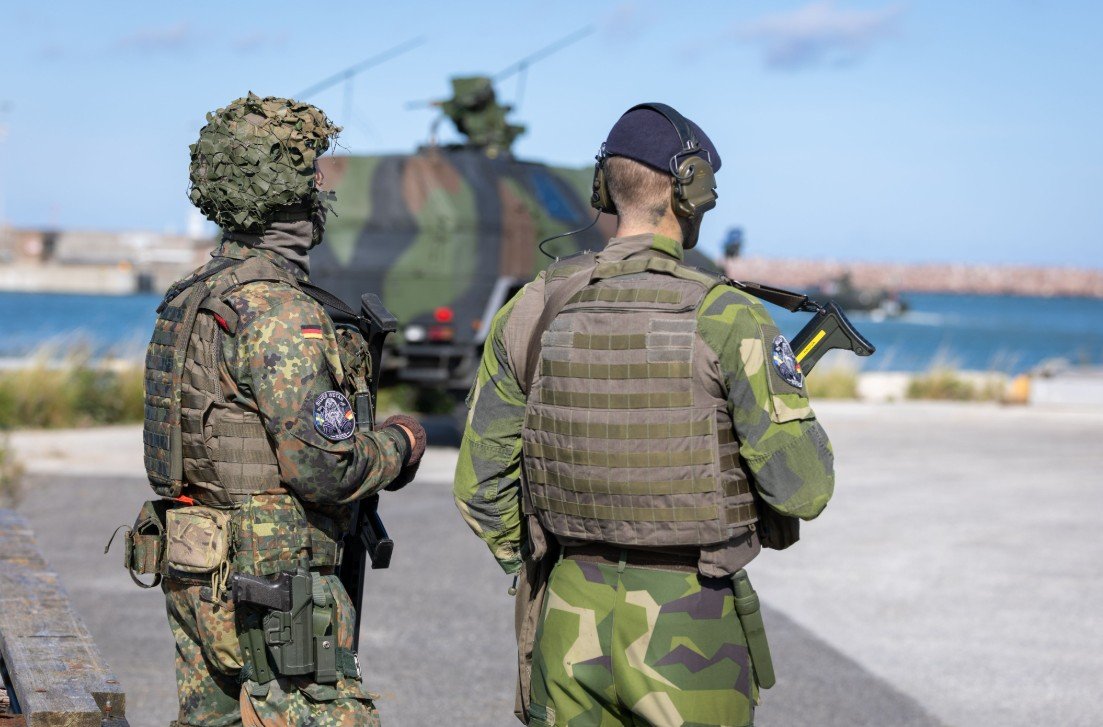
Silver Wotan 2026 / Weiterer Text über ots und www.presseportal.de/nr/179237 / Die Verwendung dieses Bildes für redaktionelle Zwecke ist unter Beachtung aller mitgeteilten Nutzungsbedingungen zulässig und dann auch honorarfrei. Veröffentlichung ausschließlich mit Bildrechte-Hinweis.
A German and a Swedish soldier involved in securing Visby during Silver Wotan 2026. Bundeswehr/Marc Tessensohn

At the same time, the alliance now describes Russia as its most significant and direct security threat, citing military activity alongside airspace violations, sabotage, cyber operations, and other forms of hybrid pressure. There are also growing concerns that Russia could try something in the Baltics, while it continues to step up its gray-zone activities regardless. NATO officials have warned that Russia could rebuild enough military capacity to pose a more serious conventional challenge to the alliance before the end of the decade.

There are escalating warnings from Poland that Russia is preparing to widen its war against Ukraine, with "accidental" missile and drone strikes on NATO territory.

Such a move – Russia falsely claiming air strikes that hit NATO allies happened by accident – would be designed to…

— Deborah Haynes (@haynesdeborah) September 18, 2026

For Sweden and Germany, the Silver Wotan exercise is a practical test of how quickly European forces can reinforce and defend one of the Baltic’s most strategically important positions. As the security environment grows more contested and Europe prepares for a future in which U.S. forces may not be as readily available, the ability to move allied combat power across the region and integrate it into existing defenses is becoming an increasingly important part of NATO’s deterrence.

Contact the author: thomas@thewarzone.com

The post German Forces Surge Onto Baltic Island In First-Of-Its-Kind NATO Drill appeared first on TWZ.
  •  

New Details About Secretive RQ-170 Sentinel Drone Squadron Shared With New Award

An annual award has gone to one of the U.S. Air Force’s most secretive drone squadrons, offering a very rare window into its activities. The 30th Reconnaissance Squadron is one of two units known to operate the stealthy RQ-170 Sentinel, and it is unusual to hear anything about its operational exploits. Much about the RQ-170 itself remains highly classified 17 years after its existence was first officially acknowledged.

The General Atomics Remotely Piloted Aircraft (RPA) Squadron of the Year award for 2025 was presented to the 30th Reconnaissance Squadron at the Air & Space Forces Association’s (AFA) 2026 Air, Space & Cyber Conference on Tuesday, at which TWZ was in attendance. The AFA’s Mitchell Institute for Aerospace Studies works together with General Atomics’ Aeronautical Systems, Inc. division (GA-ASI) to recognize an Air Force drone unit in this way each year.

“The RPA Trophy is awarded annually at the USAF level for outstanding performance of active duty, Air Force Reserve, and Air National Guard … squadrons in achieving persistent attack and/or reconnaissance over the preceding calendar year,” the Mitchell Institute told TWZ in a statement. “Squadrons are judged on performance across their specified mission sets, exercise participation, and squadron and individual achievements.”

The RPA Squadron of the Year trophy seen at the 2026 Air, Space & Cyber Conference this week. The name and unit insignia of the 30th Reconnaissance Squadron are seen on a plaque on the front of the base. Air & Space Forces Association

The institute sent an additional statement regarding this year’s particular award to the 30th Reconnaissance Squadron, which is as follows:

“Through relentless combat support, operational agility, and enterprise leadership, the 30th Reconnaissance Squadron – known as the Blackbirds – has set the standard for the remotely piloted aircraft community and strengthened the Joint Force’s intelligence advantage. In 2025, the 30th Reconnaissance Squadron conducted intrusive intelligence, surveillance, and reconnaissance missions across three areas of responsibility, filling critical intelligence gaps and disrupting enemy networks. In the face of urgent deployment requirements, the squadron demonstrated exceptional agility, rapidly pivoting resources to establish forward operating locations and execute critical missions under severely compressed timelines. The Blackbirds’ accomplishments paved the way for future remotely piloted aircraft capability, distinctly identifying them as the Air Force’s most outstanding RPA squadron.“

Larry Stutzriem, the AFA’s Executive Vice President, while presenting the award to representatives of the 30th Reconnaissance Squadron ahead of a panel at the Air, Space & Cyber Conference.

“In 2025, the 30th Reconnaissance Squadron conducted 87 ISR [intelligence, surveillance, and reconnaissance] missions across three different AORs [areas of responsibility], filled critical intelligence gaps, and disrupted enemy networks,” Stutzriem said. “On the unit mobility side, the Blackbirds executed 7.2 million dollars worth of airlift in six movements across four combatant commands, moving 250 tons of personnel, top secret material, and equipment to provide low-observable RPA support for a critical Secretary of War-directed mission.”

“With their deployments, the Blackbirds demonstrated exceptional agility under extremely compressed timelines,” he added.

The official unit insignia of the 30th Reconnaissance Squadron, with its prominent blackbird motif. USAF

Furthermore, during 2025, the squadron “also executed six large force exercises to develop tactics, techniques, and procedures; validated joint force tactical objectives in land and maritime environments; and provided combat-relevant training,” according to Stutzriem. “Instructors and evaluators graduated the largest ever combat mission-ready class, 30 percent ahead of schedule, and accelerated mission-ready status 33 percent, while increasing total unit aircrew by 26 percent.”

Though Stutzriem noted that the 30th Reconnaissance Squadron provided “low-observable RPA support,” no explicit mention was made of the RQ-170. Whether or not the squadron may now operate other kinds of low-observable (stealthy) drones is unknown. As mentioned, to date, the Air Force has only confirmed that Sentinels are assigned to two units, the other being the 44th Reconnaissance Squadron. Both the 30th and 44th are assigned to the 432nd Wing at Creech Air Force Base in Nevada. Between 20 and 30 RQ-170s, in total, are understood to be in the Air Force’s inventory.

What three specific AORs the 30th Reconnaissance Squadron operated in during 2025 is also not known.

However, at least one, and possibly two, RQ-170s took part in the mission to capture Venezuelan dictator Nicolas Maduro in January of this year, as you can read more about here. It’s very likely that the Sentinels were tracking Maduro ahead of the operation. In December 2025, Air Forces Southern (AFSOUTH) had also made a post on X that included a picture of an individual wearing a name patch with the silhouette of Sentinel and the sleeve insignia of the 432nd Wing, prompting questions about whether the drones were operating in the region. The post was subsequently deleted.

Another footage of U.S. RQ-170 stealth drone returning to Puerto Rico from Venezuela. https://t.co/c7yKubc7jc pic.twitter.com/PLaxEaxFcX

— Clash Report (@clashreport) January 3, 2026

The original AFSOUTH post, the RQ-170 patch is on the first image on the right. https://t.co/UdsT33sX6s pic.twitter.com/z7FjKBjgPl

— SA Defensa (@SA_Defensa) December 19, 2025

Further in the past, RQ-170s are also known to have been deployed to the Middle East, Central Asia, and the Pacific. The Sentinel first emerged publicly in Afghanistan in the late 2000s, prompting the U.S. military to confirm its existence in 2009. Sentinels are notably understood to have surveilled Al Qaeda founder Osama Bin Laden’s compound in Pakistan in the lead-up to the raid that led to his death in May 2011.

Later in 2011, one of the drones infamously went down in Iran while presumed to be on a mission to monitor aspects of that country’s nuclear program. With that in mind, it is possible, if not extremely probable, that RQ-170s likely played a role in relation to the Operation Midnight Hammer strikes on Iranian nuclear sites last year. Sentinels could have provided direct surveillance over the sites in question, as well as collecting post-mission bomb damage assessments and other intelligence. These are exactly the kinds of missions the drones were designed for and that operators have trained for.

A satellite image available through Apple Maps, seen below, also shows an RQ-170 at Naval Air Station Sigonella in Italy, likely in the 2023-2024 timeframe, based on the state of construction visible elsewhere at the base. It is not known how many Sentinels were deployed to Sigonella and for how long. The Apple Maps image does lend some credence to earlier reports that these drones may have flown missions in the Black Sea region, gathering intelligence on Russian forces on the heavily defended, occupied Crimean Peninsula, between 2022 and 2023.

Apple Maps

Overall, the RQ-170 does still appear to be a go-to for performing penetrating tactical reconnaissance missions, especially when there is a need to provide persistent surveillance in denied areas, resulting in extremely important intelligence collection.

Again, it is important to reiterate here that we do not know if the 30th Reconnaissance Squadron operates any other stealthy drones beyond the RQ-170, or has in the past. A very stealthy high-altitude, long-endurance (HALE) surveillance and reconnaissance drone commonly and unofficially referred to as the RQ-180, or an evolution thereof, burst into the public eye in March after it was spotted landing in broad daylight at a base in Greece. Much about the drone, including what units are involved in its operation and where the home base of the fleet is, as well as the reasons for its deployment to the region, has yet to emerge. It does seem unlikely that the 30th would have taken on operation of the RQ-180, which is a larger strategic reconnaissance-focused platform compared to the smaller, tactically-minded, and less exquisite RQ-170. This is also just one example of what could still be lurking in the classified realm.

American RQ-180 stealth drone landing in Greece, supporting US operations against Iran. pic.twitter.com/Go5YHBM1p8

— OSINTtechnical (@Osinttechnical) April 6, 2026

Whether or not the awarding of the 2025 RPA Squadron of the Year trophy to the 30th Reconnaissance Squadron might now point to a new willingness to talk about that unit’s activities and/or the RQ-170 remains to be seen. Regardless, the award and its description are yet more reminders of just how important the Sentinel remains nearly two decades after it first appeared.

Contact the author: joe@twz.com

The post New Details About Secretive RQ-170 Sentinel Drone Squadron Shared With New Award appeared first on TWZ.

  •  
❌