Construction and heavy machinery manufacturer Komatsu launched a telematics system for its kit in Saudi Arabia using technology from NTT Docomo Business and STC Group.
In a statement on the project, NTT explained the manufacturer is expanding its Komtrax telematics and remote monitoring system to the country using the equipment and expertise of the two telecoms partners.
The system captures operational data from construction machinery with the aim of providing greater visibility of equipment usage and improving operational efficiency.
It offers the means for remote monitoring, data analytics and predictive maintenance, and is already available in a number of Komatsu’s markets.
Komtrax is promoted by the Japanese-headquartered manufacturer as delivering cost savings to clients while helping achieve peak machine performance.
To support the launch in Saudi Arabia, NTT supplied platform design and delivery, helping “Komatsu address country-specific telecommunications requirements while minimising the need for changes to its connectivity model”.
STC provided network services, and a SIM and connectivity management platform offering “reliable and scalable connectivity for Komatsu’s construction equipment” while meeting local regulations.
The European Commission says it will not compromise on protecting the EU’s external borders, but will also respect human rights, while declining to specify if a new emergency rule could suspend people’s basic right to asylum.
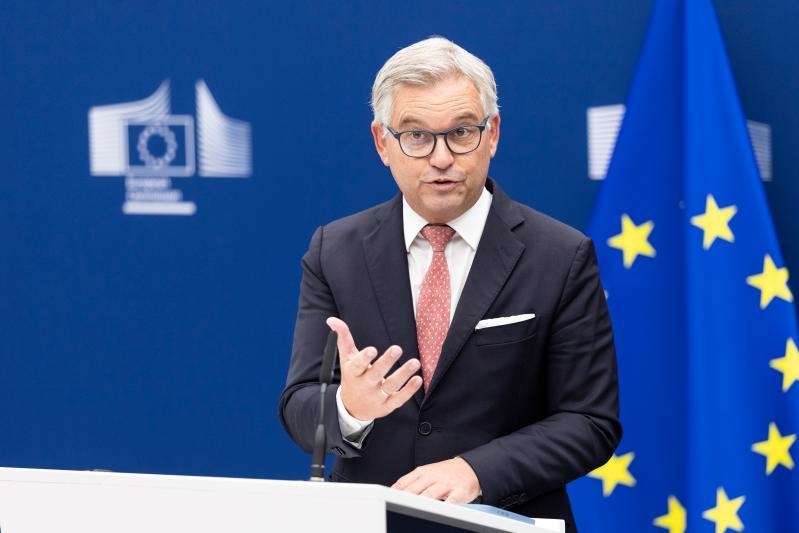
The vague statements by Magnus Brunner, the EU home affairs commissioner, in Brussels on Tuesday (29 September), followed an equally vague proposal announced by commission president Ursula von der Leyen in her State of the Union speech on 11 September, who pledged to create a “European emergency response framework”.
When asked if her new framework would include the possibility to suspend asylum at the EU’s external border in cases that mirrored this summer’s Ceuta crisis, when tens of thousands of people entered the Spanish enclave in north Africa, Brunner said: “I can’t go into details, because it’s a discussion which is going on at the moment”.
His non-committal take on the hot button issue also came after a resolution adopted by the centre-right European People’s Party (EPP) in Brussels on Tuesday, which is demanding that member countries, in some cases, be given the option to temporarily suspend asylum applications.
Specifically, it calls on the EU “to adopt legislative measures authorising refusal of entry or returns without individual asylum procedures for illegal migrants used in a hybrid attack”.
Meanwhile, Brunner and von der Leyen come from the same conservative party in the EPP, posing questions to what extent political pressure has influenced the latest commission initiative.
Greece’s prime minister Kyriakos Mitsotakis (also EPP) in early August had already gone public with demands for new EU rules allowing for asylum to be suspended for newly arrived people.
The Polish government (EPP) also weighed in, claiming credit for getting von der Leyen to cite the idea in her big speech.
Warsaw had earlier this month extended its asylum ban on people entering from Belarus, in what rights groups say involves pushbacks that cause loss of life.
But for Brunner, the issue had already been broached in a commission asylum strategy report that was published back in January.
That report references “weaponisation of migration” by hostile countries, such as Belarus and Russia, and links it back to another commission document from December 2024 that argues there are certain exceptional situations in which the ban on pushbacks cannot apply.
Celebrated novelists J.M. Coetzee and F.M. Siccardi recently published a co-written book, Un mal salvaje (A Savage Evil), about their experiences coming of age in South Africa and Argentina, respectively. Both states were created by colonial forces that all but wiped out indigenous populations and cultures. This excerpt juxtaposes the authors’ childhood memories of life in the shadow of genocide, though neither would have known to call it that when they were young. In particular they recall the workers on their families’ land—men they somehow knew both intimately and not at all:
Freek did not see himself as a tragic figure, did not even see himself as a survivor. To see yourself as a survivor of the past you must have a firm conception of that past, you must know where you come from; and Ros and Freek had no such historical consciousness. First, they were illiterate. Second, it was of the essence of the genocide which they had survived that communal memory was erased.
If I were magically able to return to the 1950s and tell Freek about the Khoi who had pastured their stock at the Cape for hundreds or perhaps thousands of years before the Dutch came and laid waste to their society, about a people who were his ancestors, he would have thought it was just a story I was making up. Genocide is not just the destruction of a people, it is also the obliteration of that people’s store of memories and, with it, the destruction of their ability to see themselves historically.

 Login