❌

Reading view

‘THAAD Delusion’: Iran war exposes US missile shield limits – The Atlantic

Al Mayadeen | September 30, 2026

The US-Israeli war on Iran has exposed a widening gap between Washington’s promises to protect its allies and its ability to sustain that protection, with expensive missile interceptors being consumed faster than American manufacturers can replace them, The Atlantic reported.

In an investigation titled “The THAAD Delusion,” Christopher Leonard argues that the Terminal High Altitude Area Defense system became a cornerstone of US security arrangements in the Middle East despite being developed for a more limited battlefield role.

Iran’s ability to maintain missile attacks has challenged the assumption underpinning that role: that American forces would survive an opening barrage, then rapidly destroy the launchers responsible.

Instead, a prolonged conflict has placed mounting pressure on interceptor supplies, exposing weaknesses in US military planning, weapons procurement, and industrial capacity.

A missile shield built around a short war

According to the report, THAAD was originally intended to protect critical military deployments during the initial phase of a conflict, allowing US aircraft and naval forces time to respond.

Washington subsequently promoted the system as a central component of broader missile shields for regional allies, including the United Arab Emirates and Saudi Arabia.

The distinction has become consequential during the war on Iran. While THAAD has intercepted ballistic missiles effectively, Leonard writes that Washington neither accumulated enough interceptors for sustained operations nor established the manufacturing capacity needed to replace them quickly.

US interceptor stocks depleted by sustained warfare

Drawing on estimates from the Center for Strategic and International Studies, the report says US forces used more than 150 THAAD interceptors during the 12-day war in 2025 and another 190 to 290 during “Operation Epic Fury.”

CSIS estimated that approximately 250 interceptors remained in the US stockpile. The report notes that additional deliveries could affect those calculations, while Washington has not disclosed its remaining inventories.

The depletion extends beyond THAAD. The investigation also described heavy consumption of Patriot interceptors and offensive weapons, including Tomahawk and JASSM missiles, placing pressure on multiple parts of the US arsenal.

Iran’s sustained attacks strain expensive defenses

The investigation identifies Iran’s combination of ballistic missiles and comparatively inexpensive drones as a major challenge to American defensive planning.

THAAD interceptors cost about $12 million each, according to the report. Repeated Iranian missile launches therefore impose substantial financial and logistical costs even when interceptions succeed.

At the same time, Shahed drones, which the article puts at $20,000 to $50,000 apiece, require separate defenses because THAAD cannot intercept them.

This combination forces defending militaries to confront different threats simultaneously while managing limited ammunition. The report describes regional forces using helicopters and costly air-to-air missiles against drones as pressure on their defenses increased.

Leonard’s central argument is that interception accuracy alone cannot deliver the lasting security Washington offered its partners when the attacker can sustain successive waves.

Industrial weaknesses slow replenishment

The article traces the shortage to years of budget decisions that favored major weapons platforms over ammunition reserves, alongside a concentrated defense industry dependent on vulnerable networks of specialized suppliers.

THAAD missiles require intricate assembly and components sourced from hundreds of companies. Expanding production involves increasing capacity throughout that network, rather than simply adding workers at a final assembly plant.

Pentagon assessments cited in the report found that substantial increases in production for several missile systems could require billions of dollars and take years.

The investigation also scrutinizes defense contractors’ spending priorities. Lockheed Martin distributed $6.8 billion through dividends and share buybacks in 2024, while RTX returned $3.7 billion to shareholders, even as industry representatives argued that factory expansion required advance funding or long-term government contracts.

Washington’s protection promises face scrutiny

The implications reach beyond ammunition shortages. US weapons sales helped bind allied militaries to Washington through shared equipment and reliance on American supplies, the report notes.

However, delayed deliveries and competing wartime demands have prompted some partners to seek alternatives, raising questions about the reliability of those arrangements.

In the Middle East, Leonard argues, attacks on infrastructure and military installations have also challenged the perception that hosting US forces guarantees security.

Stephen Wertheim, a senior fellow at the Carnegie Endowment for International Peace, told The Atlantic that the consequences could reshape Washington’s regional position.

“We could be moving away from a Middle East that can be fairly described as being an American-dominated region,” he said.

  •  

What does it mean to win the AI race?

When Donald Trump and Xi Jinping met in Washington last week, artificial intelligence was among the issues dividing their countries. Days earlier, Treasury Secretary Scott Bessent said the two sides had agreed to establish a formal AI dialogue, including an incident line, though its protocols had yet to be worked out. The summit produced no […]

The post What does it mean to win the AI race? appeared first on Asia Times.

  •  

The Government is Keeping a List of People Who Question its Policies

The Government is keeping a blacklist of people who question its policies, with social media posts criticising the Government being monitored and investigated by officials.

The post The Government is Keeping a List of People Who Question its Policies appeared first on The Daily Sceptic.

  •  

Obra de Sophia volta a inspirar jovens na 21ª Edição do Concurso Literário

As Bibliotecas Municipais de Lagos e Loulé promovem a 21ª edição do Concurso Literário Sophia de Mello Breyner Andresen, iniciativa que, há mais de duas décadas, aproxima as novas gerações da obra de uma das figuras maiores da literatura portuguesa do século XX.

Dirigido aos alunos dos 2º e 3º ciclos do Ensino Básico e do Ensino Secundário, o concurso contempla as categorias de Texto e Ilustração, tendo como ponto de partida a obra literária da autora. Mais do que estimular a criatividade e a expressão artística dos jovens, a iniciativa procura incentivar a leitura da obra de Sophia, aprofundando o conhecimento do seu universo literário.

Os trabalhos podem ser entregues até 6 de fevereiro de 2027, presencialmente nas Bibliotecas Municipais de Lagos ou Loulé, ou enviados por correio. Cada participação deverá estar obrigatoriamente identificada com pseudónimo, ano de escolaridade, categoria a que concorre e título do trabalho, de acordo com as condições estabelecidas no regulamento.

A apreciação dos trabalhos ficará a cargo de um júri constituído por representantes dos dois municípios organizadores, da Direção-Geral do Livro, dos Arquivos e das Bibliotecas, da Rede de Bibliotecas Escolares e por um autor convidado.

Em cada uma das categorias serão atribuídos 1º e 2º prémios, podendo ainda ser distinguidos trabalhos com menções honrosas. Os vencedores do 1º prémio receberão um cartão-oferta no valor de 400 euros para utilizar em livrarias locais de Lagos e Loulé e diploma de participação, enquanto o 2º prémio corresponde a um cartão-oferta no valor de 200 euros e respetivo diploma. As menções honrosas serão distinguidas com diploma de participação, livros e ofertas de cortesia dos dois municípios.

A cerimónia de entrega dos prémios da 21ª edição terá lugar no dia 17 de abril de 2027, no Centro Cultural de Lagos, reunindo participantes, famílias, comunidade educativa e entidades envolvidas numa celebração da literatura, da criatividade e do legado de Sophia de Mello Breyner Andresen.

  •  

What Boeing’s New Rendering Of Its Winning F/A-XX Fighter Tells Us

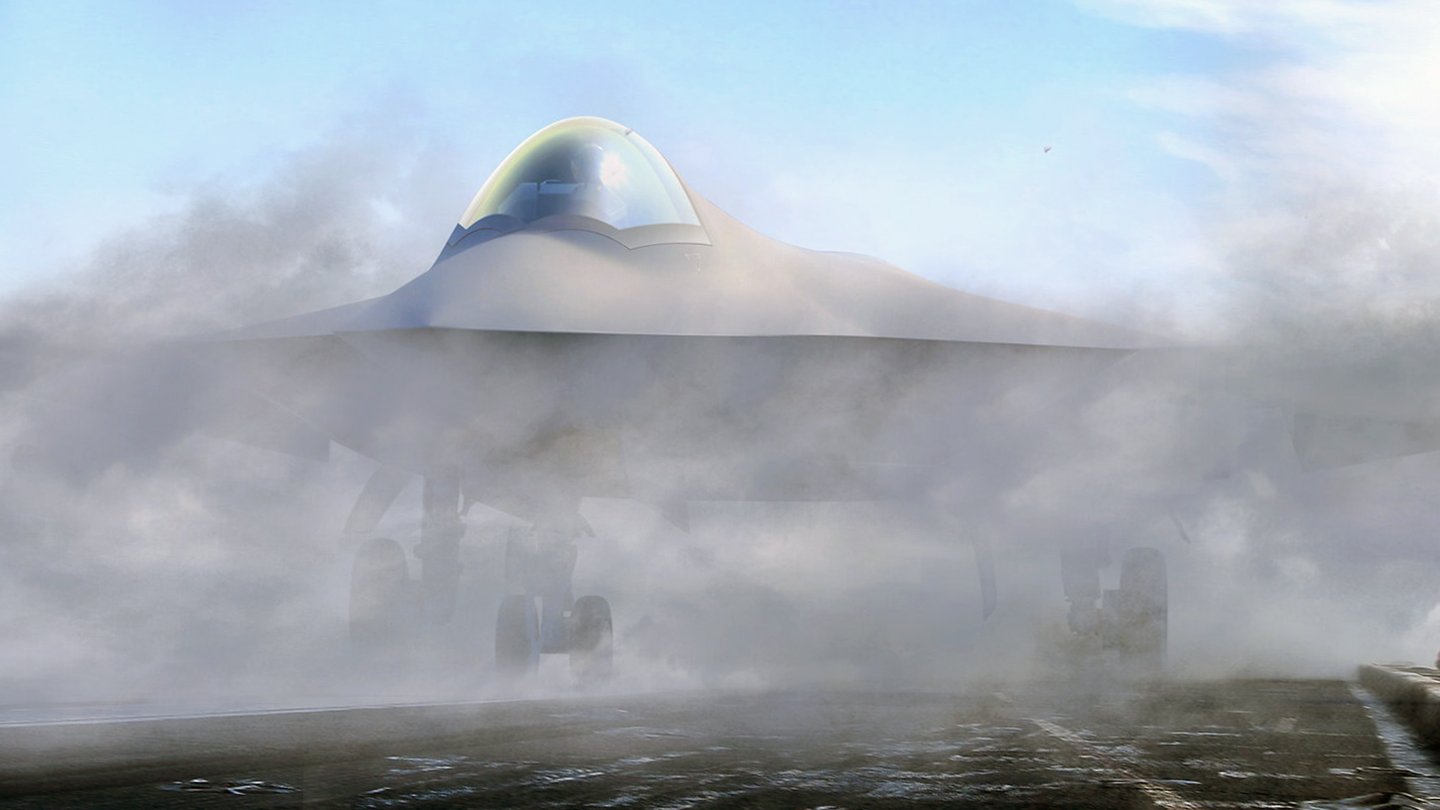
We have officially received our second rendering of Boeing’s F/A-XX concept, which has now officially won the tender, beating out Northrop Grumman to build the Navy’s next-generation stealth fighter. Let’s take a look at what we can see in this new image and discuss what insights it may provide.

Before we start, it’s worth reminding our readers that we are basing this analysis on two publicly released renders of a highly classified aircraft design. There are deliberate choices made in these renderings to obscure critical features and capabilities and mislead foreign intelligence as to the jet’s intended capabilities. So please keep in mind that the details are bound to change. This is also just a preliminary analysis. We will expand on it once we have more time to digest what we are seeing.

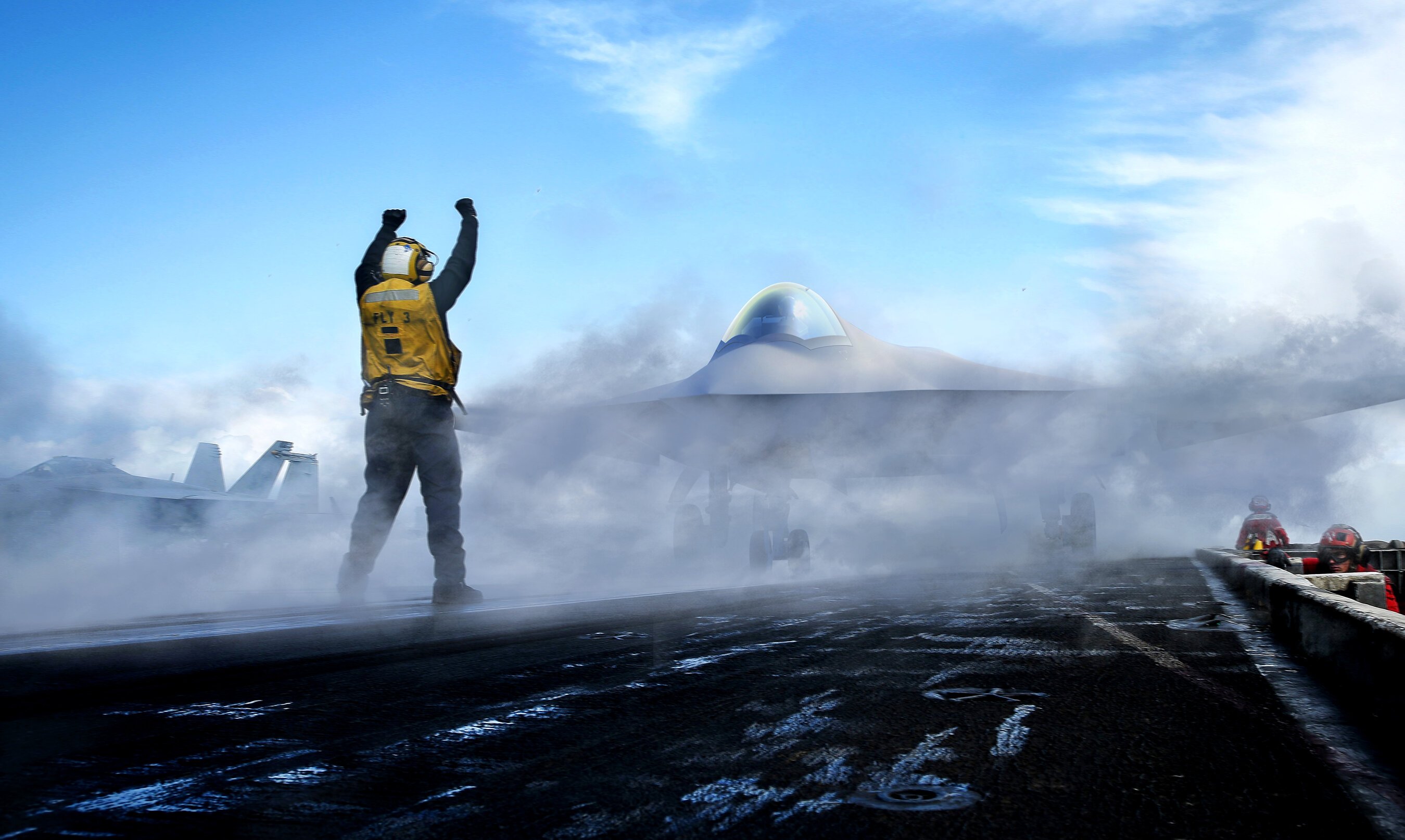
The front quarter view of the jet taxiing to a catapult aboard a carrier shows us a very broad, tailless, heavy tactical aircraft. This is a large jet. Clearly internal volume was a driving design factor, as it should be. You can read more about this in our past reporting here.

Boeing’s new F/A-XX render. Boeing

The aircraft is depicted with what appears to be a large single-piece canopy with a cockpit for just a pilot. Visibility to the rear looks limited at best. There has been much speculation about the possibility that F/A-XX will have the provisions for two crewmen in order to better take on its complex roles over long distances — in particular acting as a battle manager, including for Collaborative Combat Aircraft (CCA) and other drones. This appears not to be the case, and a high degree of automation and artificial intelligence (AI) will have to help with what will be extremely complex tactical problems the single pilot will face. It’s also worth noting that U.S. Navy carrier air wings have retained two-seat tactical jets for frontline use, with the F/A-18F Super Hornet and EA-18G Growler serving today. If F/A-XX replaces these aircraft, it will be the end of frontline two-seat tactical jet operations for the seagoing service.

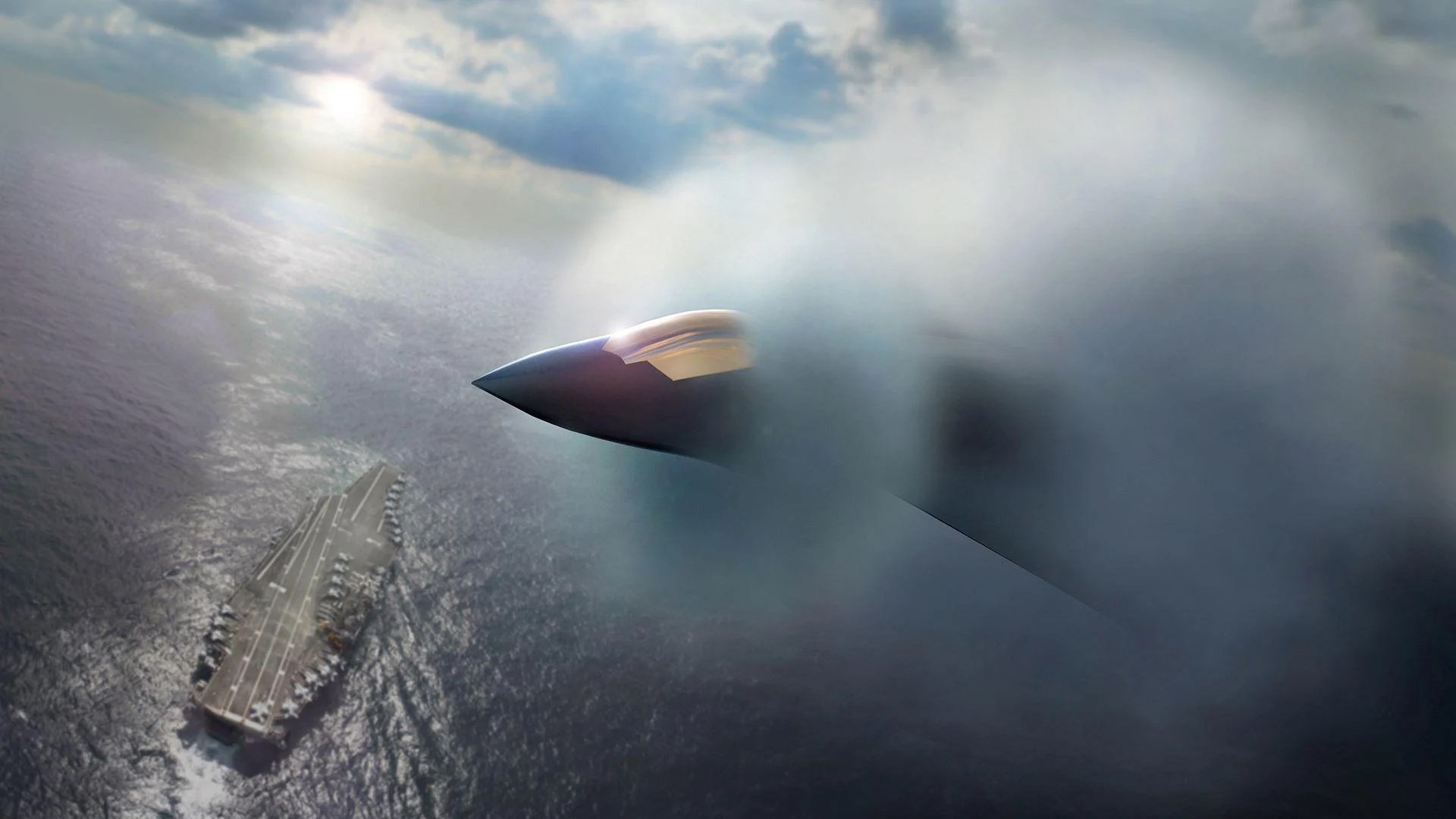
Boeing’s only other F/A-XX render, released months ago. Boeing

We see a very broad nose section, which could (and likely would) contain a relatively giant active electronically scanned array (AESA) radar. There is also a prominent chine-line edge wrapping around the forward fuselage, which is a normal trait of low-observable (stealthy) aircraft. The nose looks a bit more contoured, similar to the only other rendering we have of Boeing’s F/A-XX, compared to the shovel-like design of the company’s F-47 for the U.S. Air Force. Below the rear of this visible chine-line appears to be the engine intakes, mounted on the sides of the lower fuselage. They look to be a blended trapezoidal arrangement and are also set far back from the nose.

The F/A-XX’s extremely stout landing gear are depicted prominently in this new image, with a twin-wheel nose gear and thick mains. These are customary features for a carrier-based fighter and especially a heavy one like this.

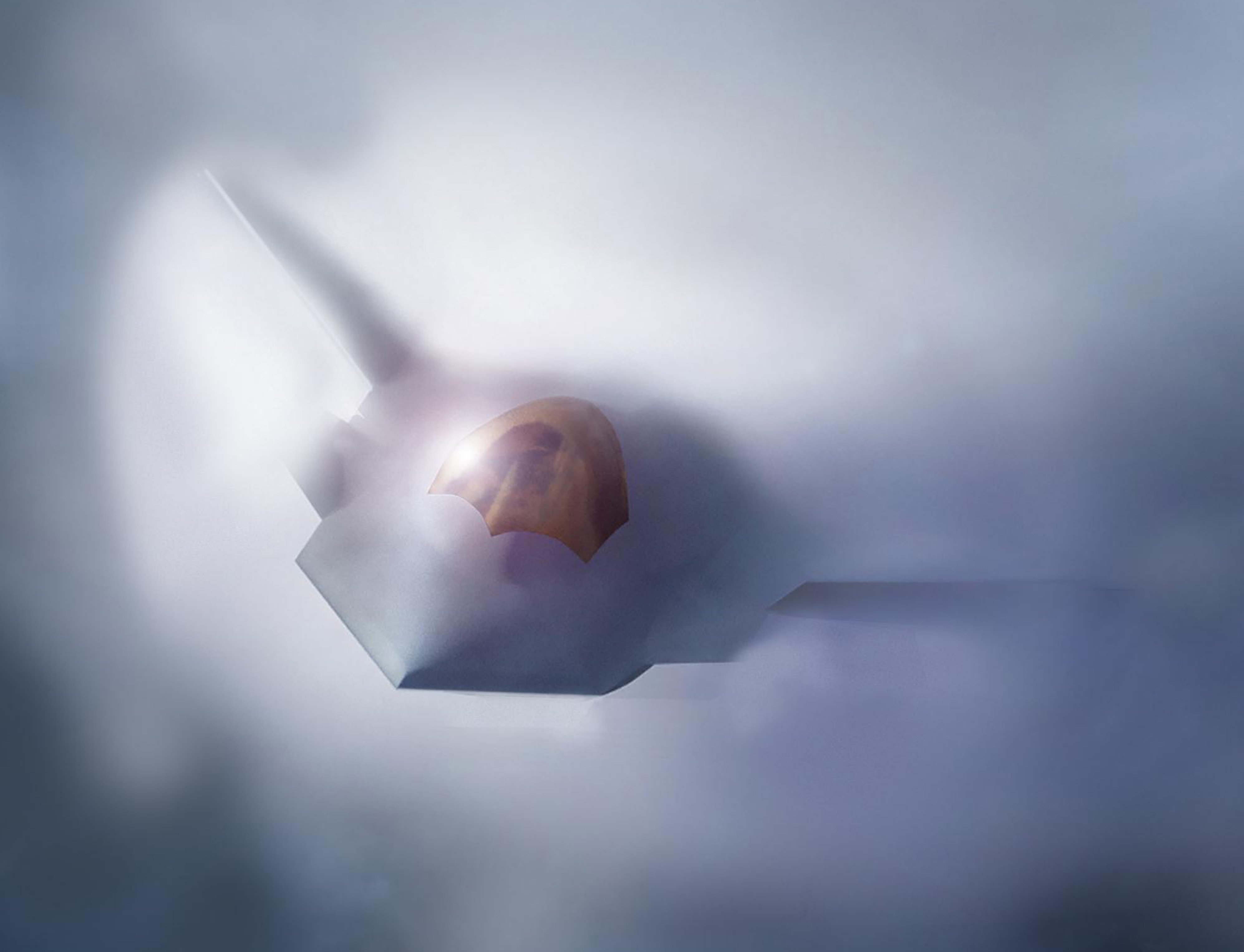
Shown is a graphical artist rendering of the Next Generation Air Dominance (NGAD) Platform. The rendering highlights the Air Force’s sixth generation fighter, the F-47. The NGAD Platform will bring lethal, next-generation technologies to ensure air superiority for the Joint Force in any conflict. (U.S. Air Force graphic)
The USAF’s second rendering of Boeing’s F-47. Secretary of the Air Force Publi

The jet’s wings have a positive dihedral just like the F-47 renders, which seems to be something of a trademark of Boeing’s next-generation fighter design. This Klingon Bird of Prey look harkens back to the Boeing Bird of Prey demonstrator, which you can read more about here. We also see the wing’s large trailing edge flaps extended, which would be critical to slow-speed terminal operations around the carrier.

Finally, one thing we don’t see clearly is of particular note: the canard foreplanes that have been featured in F-47 imagery, as well as hinted at in Boeing’s only other F/A-XX rendering. It isn’t clear if they may be blended with the fuselage above the inlet areas and are obscured by the steam, or if they simply do not exist in this rendering. The inclusion of canards has been one of the most debated aspects of the F-47 and Boeing’s F/A-XX design, although they seem to make more sense for a naval fighter considering the tailless jet’s low-speed requirements that are needed to fly off the carrier. Again, you can read our past feature about the canards and our follow-up here and here.

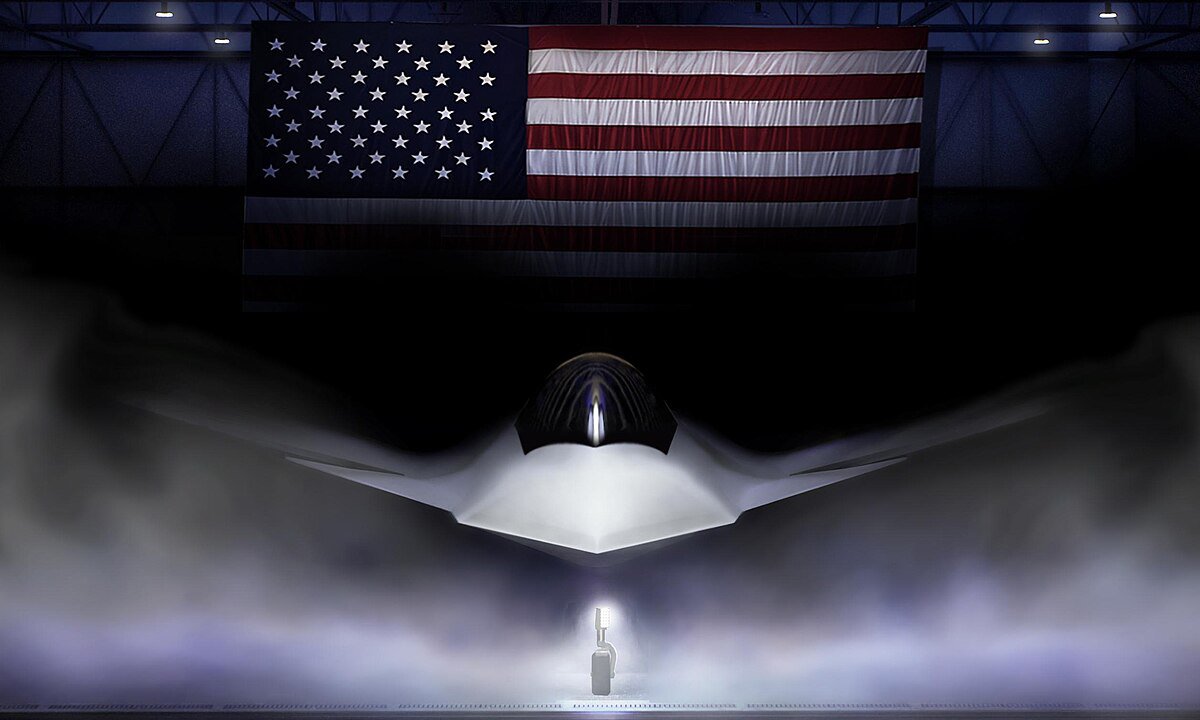
The USAF’s first rendering of the Boeing F-47.

While the aircraft clearly shares distinct attributes with the F-47, it isn’t clear exactly how far the commonality between them goes. We could end up with a literal navalized F-47, which would leverage as much efficiency as possible between the two designs, or we could see major design elements and even proportional changes. The requirements imposed by carrier operations do dictate size and weight, to a certain degree. What lives beneath the jet’s skin – hardware and software – will have the most commonality regardless.

There is also the question of the aircraft caught on a thermal imager flying outside of Area 51, which was likely a Next Generation Air Dominance (NGAD) demonstrator from Boeing, or at least an aircraft related to those efforts based on how unique Boeing’s design clearly is. It’s always possible that the Navy flew its own NGAD demonstration program. The service has been notoriously tight-lipped about its NGAD risk reduction efforts.

A craft the public has never seen before…
Video out this Friday. #ProjectFear #Area51 pic.twitter.com/8eOSJSUX1g

— Project Fear (@ProjectFearX) June 2, 2026

The matter of the F/A-XX aircraft’s formal designation is also a question that remains unanswered. If this is a navalized F-47, then F/A-47 could be the jet’s official designation. If it differs substantially, or the Navy just wants to differentiate their design for whatever reason, we could see a different moniker applied. F/A-45 is possible, too, considering the F-47 was partially named in honor of President Trump, who approved the decision to move the Air Force’s program forward. Trump is the 45th and 47th President of the United States.

So, even on this day of long-awaited F/A-XX revelations, it’s also a reminder of just how much we do not know about both the Navy and the Air Force’s NGAD enterprises and their resulting designs, both of which will now be officially brought to you by Boeing.

Contact the author: Tyler@twz.com

The post What Boeing’s New Rendering Of Its Winning F/A-XX Fighter Tells Us appeared first on TWZ.

  •  
❌