❌

Reading view

Johnson, Marandi say Yemen holds upper hand over Saudi Arabia

Al Mayadeen | October 7, 2026

Former CIA analyst Larry Johnson and Professor Mohammad Marandi said that Yemen holds the upper hand in its war with Saudi Arabia, and that neither Turkey nor Pakistan is likely to change that by sending forces to the kingdom’s aid.

Speaking on Al Mayadeen’s The Grand Standoff: Iran and the World on Tuesday, both guests also noted that Tehran is working on the assumption that the US will restart its war on Iran, while Johnson argued that Washington has less capacity to carry one out than its rhetoric suggests.

Yemen advances as Saudi-backed forces falter

Marandi said that the past weeks have shown a one-sided war. He stated that the Saudi camp’s claims that it could retake significant territory proved to be empty talk, as Yemeni forces, led by Ansar Allah and the Yemeni government, kept moving forward. “The liberation of Taiz is near,” he said.

Johnson stressed that Yemen “has every advantage in this war.” He put Saudi Arabia’s dependable fighting strength at about 75,000 soldiers, the Presidential Leadership Council (PLC) at another 100,000, and the Yemeni Armed Forces’ at 350,000. He described the Saudi army as “basically a group of mercenaries,” while Yemeni fighters have the motivation of defending their own land.

Johnson highlighted that the PLC’s latest offensive showed a lack of military competence. “Successful military attacks are usually not announced in advance, they usually prefer not to give the opposing side a heads up about what you’re going to do,” he said, noting that this one was announced beforehand. He added that the PLC launched it “even without what’s called close air support.”

Saudi aircraft carried out a number of bombing runs along the front lines, Johnson said, “but they were not coordinated.” He explained that “normally you want somebody on the front lines who can actually be in communication with the pilots or with the air controllers, the combat air controllers, to identify specifically along the front lines where bombs need to be dropped.”

“What we’ve seen is that [the Yemeni Armed Forces] operate at a more sophisticated level,” he said. He rejected the Western line that this is Iran’s doing. “Contrary to Western propaganda that this is all just the work of Iran, this is not the work of Iran,” he said. “Anybody that’s had any dealings at all with the Houthis knows that they are quite independent.” He said the movement sees Iran as a friend, but “they don’t let Iran dictate its choices or what it does.”

Johnson added that he believes Saudi Arabia attacked Sanaa after the funeral of Sayyed Ali Khamenei because the US encouraged it. He explained that Washington wrongly saw Yemen as a paper tiger, and described its approach to West Asia as “a combination of ignorance and arrogance.”

Turkey, Pakistan face a logistical nightmare

Both guests dismissed the idea of a Turkish or Pakistani deployment. Johnson said the announcement that Turkey and Pakistan would effectively declare war on Yemen “was laughable.”

He clarified that air power would not solve the problem either. “Dropping bombs without effective ground controllers is just, it’s a waste of bombs,” Johnson said. “It’s just punching holes in landscape without accomplishing anything.” He called the announcement “more Western hype” that “speaks to the desperation of the Saudis,” adding, “I don’t see Turkey or Pakistan intervening in any significant way.”

Marandi said he does not know whether Riyadh, Ankara and Islamabad have even decided to send forces. “It’s possible,” he said. “But as Larry said, this would be a logistical nightmare, and the cost would be extraordinary. And even troop movements inside Saudi Arabia would not be easy.”

He stated that neither country has the capacity. “Pakistan, of course, its military is on the border with India, and they have very bad relations with the Taliban in Afghanistan,” Marandi said, adding that Turkey has difficult relations with almost all of its neighbors. “The armed forces of Pakistan and Turkey are not designed for such mass movements of troops.”

Marandi asserted that Turkey and Pakistan are also harming themselves by letting the narrative spread that they stand with Saudi Arabia. “Turkey and Pakistan are not doing themselves any favors by pushing or allowing this narrative to be pushed that they are on the side of Saudi Arabia,” he said. He pointed to their stance on Gaza, which he said made them popular across the region. “They’ve become heroes across the region,” he said, and “it’s clear that their sympathies lie with [Ansar Allah].”

Saudi Arabia exposed on oil, infrastructure

“The Saudis are in real trouble,” Johnson said. He said the East-West oil pipeline is down and that reports of oil getting through, including through the Strait of Hormuz, are false. “They have lots of infrastructure that can be targeted and is being targeted by Ansar Allah,” he noted, while “Ansar Allah doesn’t sit there with an abundance of infrastructure that can be targeted by the Saudis or the Western helpers.” His conclusion was that “Yemen holds the upper hand.”

Marandi pointed to the weight of the kingdom’s finances. “The Saudis have nothing but their oil exports and their oil industry to sustain themselves, and it is a country that has very high costs,” he stressed. “The government spends a lot of money, so the economy is doing very poorly.” He warned that “the longer this war lasts, the more Saudi infrastructure will be destroyed.”

Marandi argued that the way out is obvious. “The smart thing to do would be for Saudi Arabia to end this war, to do a deal with the people of Yemen, and to lift the siege, and to recognize the government, and stop interfering in Yemen’s internal affairs,” he said. “But Mohammed bin Salman is not the wisest of leaders, to say the least.” He compared the crown prince to Trump. “I think both are very arrogant, neither are wise, and the people around them are yes-men,” he asserted. “Otherwise the Saudis would have ended this by now.”

Johnson put the responsibility on Riyadh. “This is a fight that the Saudis chose to initiate,” he insisted, adding that Ansar Allah “was content to live side by side with the Saudis” and “abiding by the ceasefire” until the Saudis broke it. For Johnson, the kingdom now has a single option. “The choice is settle, make peace with Yemen, or risk the absolute destruction of the government and the country of Saudi Arabia.”

Tehran plans for a renewed US war on Iran

Marandi told the program that Tehran is planning around the assumption that Trump will restart the war. “I’m not saying that war is inevitable, but the working assumption is definitely that we’re going to have war,” he stated. Iran “has been preparing itself for a major confrontation, a very heavy war that would take perhaps weeks,” he noted, and it has warned US-aligned countries that helped Washington that “this time around the Iranian response will be much more devastating for them as well.”

He detailed upgrades to Iran’s missile and drone capabilities, improved air defenses, expanded underground bases and strengthened command and control meant to protect its leaders from targeted strikes. The remaining question, he argued, is timing. “Will there be conflict before Netanyahu’s election, or between the two elections, or after the US midterm elections? That is basically the real question.”

Marandi also pointed to deepening energy shortages. “Trump can pretend that the Strait of Hormuz is open and that more oil is getting through than ever before,” he said. “But the reality is that that’s not the case. The shortages are accumulating.”

Flows reached 11 to 12 million barrels a day for a couple of weeks, when Iran avoided escalation around President Masoud Pezeshkian’s planned US trip, but even then they fell short of demand. Shortages of diesel, gasoline, helium, sulfur and LNG are growing faster than the oil shortage, he explained.

He questioned why Trump keeps threatening to wipe out Iran if, as Trump has claimed for over seven months, the country is already defeated. “I don’t think anyone in Iran takes him seriously anymore,” Marandi added.

Johnson points to limits on US firepower

Johnson argued that Washington’s capacity is thinner than its threats suggest. “I wouldn’t characterize it as a wider escalation, because the United States is limited in what it can do to escalate,” he stated. He noted that the US lacks a robust supply of Tomahawk and JASSM cruise missiles and that its air defense stocks are depleted. “They’ve exhausted their air defense systems. Patriot missiles and THAAD missiles are, I mean, they’re out.”

He cited the evacuation of 12 B-1 bombers from RAF Fairford as evidence. Washington blamed a possible Iranian drone threat, but Johnson countered that “if they still had an adequate number of Patriot missiles, they wouldn’t have evacuated 12 B-1 bombers from the Fairford RAF airfield.” Even against drones, he added, the US does not have enough PAC-3 missiles.

Johnson dismissed press reports of 10,000 US troops being surged to the region, pointing out that 50 to 60 percent of them are the crews of aircraft carriers, escort destroyers and a Marine Expeditionary Unit. The USS Theodore Roosevelt is replacing the USS George H.W. Bush, which is docked in Phuket, Thailand, and due to depart on October 9. “So it doesn’t look like there’s a buildup on that front,” he observed, adding that it is unclear whether the Bush will return to waters off Iran.

Johnson believes the bomber withdrawal followed a secret meeting last Friday at Camp David involving J.D. Vance, Pete Hegseth and John Ratcliffe. In his view, they recognized that “the United States really is in a limited position to carry out any kind of effective or sustained strikes against Iran that are risk-free.” He expects Iran to act preemptively if it judges strikes are imminent, for example against aircraft deployed to al-Udeid.

For Washington, he concluded, “the United States stands to lose much, much more than they’ve already lost if they decide to renew conflict and war with Iran.”

  •  

Iran Reportedly Gave Hezbollah $200 Million to Help Lebanon’s Displaced

With Hezbollah squarely in the political opposition, Lebanese officials have been hoping for awhile that the ongoing Israeli invasion would further alienate Hezbollah from the public, as an active combatant force and, at least by Israel’s framing, the reason for the conflict. That’s been a polarizing issue, however, and Hezbollah is likely to score a […]
  •  

False flags won’t save aggressors, Iran FM spokesman says

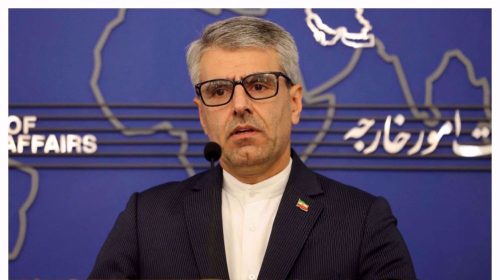
Iranian Foreign Ministry spokesman Esmaeil Baghaei
Press TV – October 7, 2026

Iranian Foreign Ministry spokesman Esmaeil Baghaei says the United States and the Israeli regime have a history of manufacturing false-flag incidents only to clean up their messes around the world.

In a Wednesday post on his X account, the Iranian official said such scenarios would not save them from the quagmire of the aggression against Iran.

Baghaei said telling lies about Iran and accusing it of having a role in security incidents would fail to justify the US-Israeli aggression against the Islamic Republic.

“In a world where the American and international public is weary of an unlawful war of aggression against Iran, and where the aggressors have no honest way to justify a war of choice, even a raft made of lies can look like salvation to those who are drowning,” he said in the post.

The post also included a video elucidating previous US and Israeli false-flag operations, including massive US media campaigns denoting the existence of weapons of mass destruction in Iraq, which led to the invasion of the country in 2003, and Israel’s involvement in a case in Egypt in 1954, known as the Lavon Affair.

“False flags are an old craft: manufacture the incident, assign the blame, and harvest the consequences,” said Baghaei.

The post came after officials in the US and allied countries suggested that Iran may have had a role in recent security incidents, including on a Flydubai flight from the United Arab Emirates to the Israeli-occupied territories and in a suspected plot against an American base in Britain.

Iran has roundly rejected the accusations, calling them a pretext for launching renewed aggression against the country, months after the US and the Israeli regime were forced to end a previous offensive under a ceasefire reached in mid-April.

  •  

Israeli Forces Shoot and Wound Another Civilian in Southwest Syria

The incidents of Israeli forces shooting Syrian civilians inside Syrian territory have continued to grow today, with reports that, after three were shot earlier this week in two separate incidents, a fourth was shot, wounded, and ultimately detained on Wednesday. The latest incident took place in the northern Quneitra town of Jabata al-Khashab, a town […]
  •  

The Makkah Pact Enters Into Force: The End of American Dominance or Its New Form?

By Salman Rafi Sheikh – New Eastern Outlook – October 7, 2026

On October 5, Saudi Arabia, Türkiye and Pakistan activated the Makkah Pact, taking their new alliance to war for the first time, and potentially revealing the future of American power in the Middle East: Washington provides the security umbrella while regional partners increasingly do the fighting.

From treaty to military alliance

Only two months after Saudi Arabia, Pakistan and Türkiye signed the Makkah Joint Defence Agreement, the new alliance has been activated. As representatives of the three countries met in Riyadh and Houthi missiles and drones targeted Saudi territory, Saudi-backed Yemeni forces launched a major counteroffensive around the strategically important Bab al-Mandeb Strait. Despite hundreds of strikes, the Saudi offensive has not been enough to push the Houthis back to their original position. In this context, the alliance’s Strategic-Political and Defense Committee agreed to move “immediately” toward implementing its collective-defence commitments and to provide agreed military forces and capabilities for rapid deployment in Saudi Arabia. The meeting also appointed retired Pakistani Lieutenant General Nauman Mahmood as the alliance’s first secretary-general.

The significance goes beyond additional military assistance for Riyadh. The Yemen war is transforming – and that, too, very rapidly – a remarkably young agreement into an operational military alliance. Signed on August 7, the Makkah Pact contains a collective-defence commitment under which an armed attack against one member is regarded as an attack against all three. Pakistan describes the agreement as defensive and grounded in the right to collective self-defense under Article 51 of the UN Charter.

That inevitably invites comparisons with NATO. The analogy should not be exaggerated. NATO possesses 32 members, an integrated command structure and more than seven decades of institutional development. The Makkah Pact possesses none of that depth.

But its institutional development has been unusually rapid. On August 31, the three governments established mechanisms for political and military coordination, agreed to create a permanent secretariat in Saudi Arabia and committed themselves to joint activities, defence-industrial cooperation and joint technology development and production. Now comes the most important stage in the evolution of any military alliance: responding to an actual threat.

Pakistan and Türkiye were already assisting Saudi Arabia before formal activation. Reports show that Pakistan had supplied air-defence systems, drones, anti-drone equipment and light artillery, while Pakistani advisers were working with Saudi counterparts supporting Yemeni forces. Türkiye had supplied drones. The October 5 decision potentially integrates such capabilities into something larger: collective military action undertaken because one alliance member has come under attack.

The distinction between defensive and offensive action consequently becomes blurred. Defending Saudi airspace against Houthi missiles is clearly defensive. Destroying the launchers firing those missiles from Yemen would involve offensive operations undertaken for a defensive purpose. Pakistani Defence Minister Khawaja Asif has deliberately avoided ruling out that possibility, saying Pakistan would make “whatever means are available” at its disposal available to defend Saudi Arabia.

America stays, but its role changes

It would be tempting to interpret this development as evidence that Saudi Arabia is preparing for a post-American Middle East. That conclusion would be premature. The more interesting possibility is almost the opposite: the Makkah Pact may fit remarkably well into the kind of Middle Eastern security order the Trump administration itself wants to create. Trump welcomed the agreement shortly after it was signed. He called it’s a “big, bold and important first step” and argued that it demonstrated how regional countries could “defend themselves in a more meaningful way.” That language closely matches the administration’s formal defence strategy.

The 2026 National Defense Strategy says Washington wants regional allies and partners to assume “primary responsibility” for deterring and defending against Iran and its proxies, while the United States supports them and deepens cooperation with Gulf partners. The administration’s arms-transfer strategy similarly argues that allies should assume more responsibility for regional security while Washington equips them with advanced American military capabilities. Yemen now offers an unusually clear illustration of what this division of labour can look like.

Saudi Crown Prince Mohammed bin Salman sought direct American military intervention against the Houthis in September. Trump declined to order US strikes. But Washington did not withdraw from the conflict. Instead, it offered intelligence and targeting assistance, while CENTCOM commander Admiral Brad Cooper travelled to Saudi Arabia for consultations. As the Saudi-backed offensive subsequently began, the same pattern continued. Saudi aircraft provided extensive air support to Yemeni government forces, while the United States supplied intelligence and targeting support. America therefore remains deeply involved. What has declined, at least for now, is direct participation in the fighting. This distinction matters.

The choice facing Washington is not simply between dominating Middle Eastern security and abandoning it. There is a third possibility: remaining the indispensable strategic enabler while shifting more of the immediate military burden onto regional states. That is precisely where the Makkah Pact becomes useful.

Saudi Arabia brings financial resources, geography and enormous investments in advanced weaponry. Türkiye contributes a large, NATO-trained military and a rapidly expanding defence industry. Pakistan brings substantial conventional forces, longstanding military relations with Saudi Arabia and extensive operational experience. Together, they can potentially perform missions that previously might have generated demands for more direct American intervention. The United States can remain above this architecture rather than outside it: supplying intelligence, weapons, logistical assistance, strategic deterrence and diplomatic backing while allies provide more of the personnel and firepower required to confront regional threats. Seen this way, the pact is not necessarily a rebellion against American primacy. It could become one mechanism through which that primacy is made less militarily expensive for the US.

A different kind of American order

This model also helps explain why describing the emerging Middle East as “post-American” can be misleading. American power has traditionally been measured partly through deployments, bases and direct military intervention. But primacy does not require Washington to fight every regional war itself. The Makkah Pact could push this transformation considerably further.

Its future significance will depend less on what its three members call the alliance than on what they build after Yemen, and whether their first experiment in collective defence proves sufficiently successful to encourage deeper cooperation. Regular military planning, interoperable forces, integrated air and missile defence, intelligence-sharing arrangements and joint weapons production would gradually give the agreement institutional substance.

Yet therein lies a paradox for Washington. The same burden-sharing that reduces America’s military responsibilities could eventually reduce its leverage. More capable allies are not necessarily more dependent allies. As regional powers acquire the institutions, experience and capabilities to conduct military operations with diminishing direct American involvement, they may also acquire greater freedom to pursue threats and strategic objectives that do not fully correspond with Washington’s preferences. An arrangement that initially reinforces the US security architecture could therefore gradually produce greater regional strategic autonomy.

The consequences could extend to military technology. Saudi Arabia’s armed forces remain heavily equipped with American weapons, but neither Pakistan nor Türkiye operates exclusively within a US defence ecosystem. Pakistan, for example, operates the JF-17 fighter aircraft jointly developed with China. In fact, Islamabad has deployed this jet in Saudi Arabia as part of the pact. While Türkiye has built an increasingly indigenous defence industry. A more deeply integrated Makkah alliance could therefore eventually combine American, Turkish, Pakistani and Chinese-origin military technologies rather than reproduce an exclusively US-centred weapons architecture.

That may prove more consequential for American primacy than the pact itself. If the Makkah alliance fades once the immediate Houthi threat recedes, it will remain another temporary regional alignment. But if Yemen produces permanent military integration, Washington could confront an unexpected consequence of its own burden-sharing strategy: the more successfully regional allies learn to defend the American-led order themselves, the less dependent that order may eventually become on America.


Salman Rafi Sheikh, research analyst of international relations and Pakistan’s foreign and domestic affairs

Follow new articles on our Telegram channel

  •  

Israeli Strikes in Gaza Kill at Least Four Palestinians as Relentless Attacks Continue

Israeli attacks continued to pound Gaza on Wednesday, October 7, the day that marks three years since the Hamas attack on southern Israel and the start of Israel’s genocidal campaign in the Strip. According to the Anadolu Agency, at least four Palestinians were killed by Israeli airstrikes and gunfire across Gaza. Among those killed was […]

💾

  •  

Há três anos os palestinos pagam pelo 7 de outubro

Quis o destino que eu estivesse na Cisjordânia neste 07 de outubro, e que essa coluna fosse publicada no exato dia em que, 3 anos atrás, o ataque terrorista do Hamas que resultou na morte de cerca 1000 pessoas entre civis e militares, deu início a um massacre cometido pelo Estado de Israel que, até agora, somente na Faixa de Gaza, já matou mais de 75 mil e feriu mais de 170 mil palestinos. 

Eu sei que o Brasil pega fogo neste momento e é difícil falar em outra coisa ou pensar em um povo que está tão longe geograficamente. Mas talvez nós possamos aprender uma coisa ou duas sobre resistência e resiliência com um povo que vem sendo oprimido, colonizado e sofre tentativas reiteradas de apagamento há mais de 100 anos. 

Meus avós são sobreviventes do Holocausto. Minha avó polonesa e meu avô romeno passaram por campos de concentração e tinham números tatuados neles. Ainda jovens migraram para o Brasil, onde se conheceram e formaram família. E é também por respeito a essa história que não posso me calar diante de um genocídio étnico que acontece live stream nos celulares na palma de nossas mãos. 

Nos últimos dias estive rodando pela Cisjordânia, visitando comunidades palestinas que estão sendo despejadas, torturadas, roubadas e dizimadas por milícias israelenses formadas por colonos e por militares. A Cisjordânia é um território palestino que fica no Oriente Médio, situado na margem ocidental do rio Jordão, entre Israel e a Jordânia. É dividida em três zonas administrativas – zonas A, B e C –  segundo os Acordos de Oslo, assinados na década de 1990, que previam transferir gradualmente o controle do território para a Autoridade Palestina. A área teoricamente estaria sob controle total da Palestina. A área B teria um controle misto entre Israel e Palestina e a área C, cerca de 60% da Cisjordânia, está sob controle israelense total, tanto para administração civil quanto para segurança. 

Mas atualmente esses contornos estão cada vez mais borrados, com colonos israelenses tomando cada vez mais áreas.

Tudo isso ainda vai virar reportagem e indico o Pauta Pública desta sexta-feira (09/10) com o diretor geral do Centro de Assistência Jurídica e Direitos Humanos de Jerusalém (JLAC) e membro do Conselho de Comissários da Comissão Independente de Direitos Humanos da Palestina (ICHR), Issam Aruri, que traz uma verdadeira aula sobre o conflito na região. 

Mas queria contar aqui na coluna uma das histórias que mais me marcou até agora: A de uma mulher de 67 anos, moradora de um vilarejo em Masafer Yatta, que fica nas colinas ao sul da cidade de Hebrom, cerca de 70km ao sul de Ramallah – capital administrativa da Cisjordânia. Não vou revelar seu nome por motivos óbvios. Mas sua vila está totalmente cercada por assentamentos israelenses, que tentam a custo de barbárie expulsar os palestinos que estão ali há dezenas de gerações, vivendo da colheita de azeitonas e do pastoreio de ovelhas e cabras. 

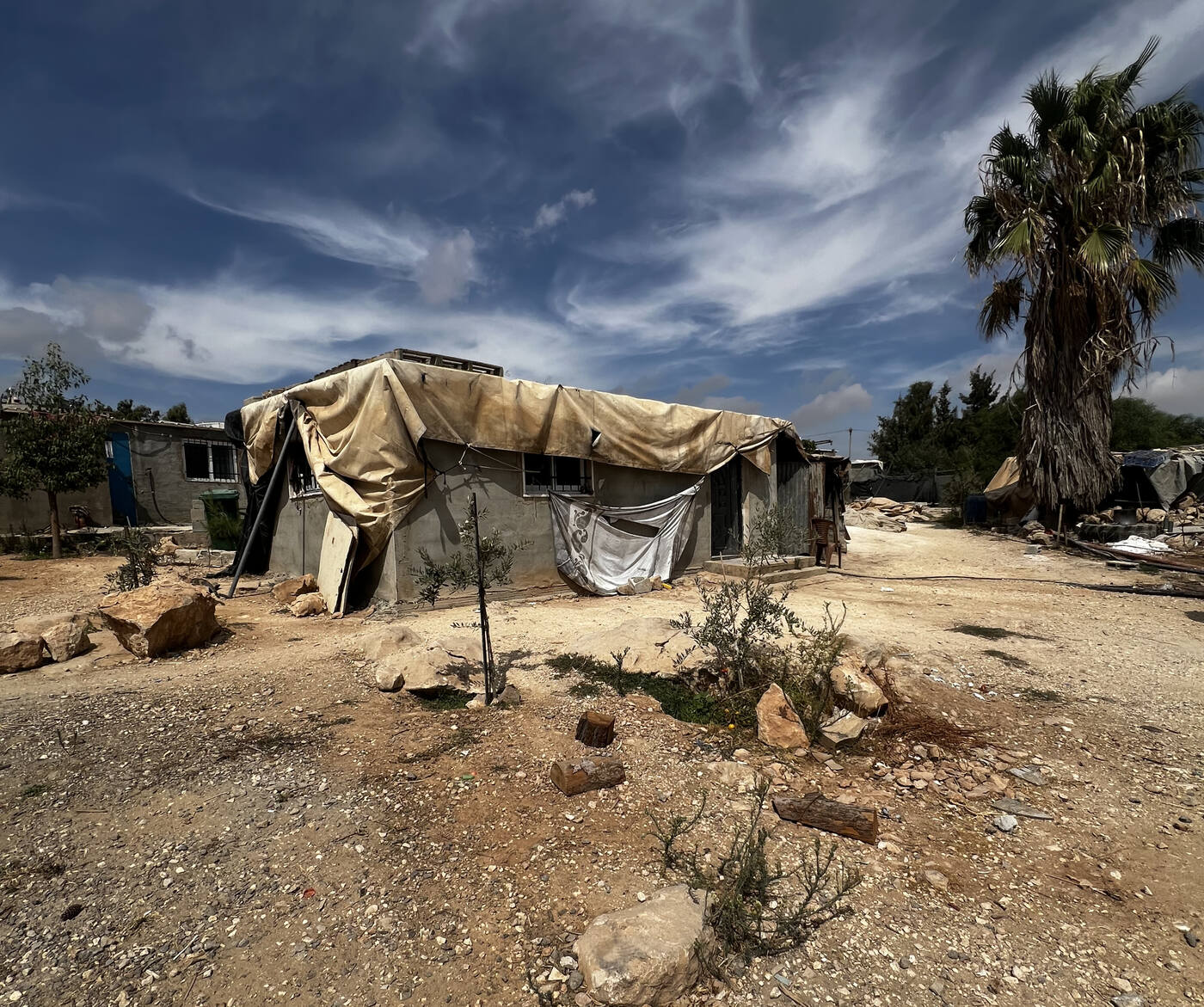
Casa de palestinos em Masafer Yatta, na Cisjordânia
Casa de palestinos na comunidade de Masafer Yatta, na Cisjordânia

Sua vila não tem água encanada nem luz. Se vê apenas pedras, areia, pequenas casas e barracões. Os cabos de energia passam por cima da comunidade, de um lado a outro, para os assentamentos israelenses, mas os palestinos não podem usar. Foi instalado um portão na estrada, que pode ser fechado pelos soldados a qualquer momento e por tempo indeterminado, impedindo os moradores de entrar ou sair, mesmo que em emergência médica. Essa é uma prática bastante comum na região. Até mesmo ruas dentro de comunidades são fechadas indiscriminadamente pelas forças israelenses. 

“Foi aqui que um colono israelense matou meu filho”. A senhora aponta para um ponto do centro de convivência, que já foi destruído e reconstruído várias vezes e que abriga o único banheiro disponível para a comunidade. As casas tinham banheiro. Mas eles foram destruídos ou absurdamente declarados como zonas militares, tornando-se inacessíveis aos moradores. Sua filha mora em uma casa há poucos metros dali e não pode usar o próprio banheiro nem construir outro sem permissão. Mais: o celeiro, que fica no quintal da casa, foi declarado “zona militar” e trancado, então a família não pode levar os animais para o pasto ou mesmo chegar perto do pequeno barracão. O exército israelense passa por lá uma vez na semana (quando muito) para alimentar as ovelhas e cabras, que estão obviamente morrendo paulatinamente. 

“Um colono entrou na comunidade e atirou na cabeça do meu filho. Meu neto, aquele ali  – aponta para um gurizinho de uns 3 anos – estava no colo dele. Entrou e atirou. Assim. Na frente de todo mundo. Chamamos a polícia que veio, levou o corpo e não puniu o colono. Alguns dias depois ele estava caminhando por aqui normalmente e eu perguntei: ‘Por que você matou o meu filho’? Ele me empurrou ali, eu caí de cabeça em uma pedra e desmaiei. O portão estava fechado e só pude ser levada ao hospital dias depois. Sofri uma concussão e perdi a visão. Quebrei ossos do corpo. Mas nenhuma dor foi igual a de não poder enterrar meu filho. A polícia levou o corpo e não nos deixou velar ou enterrar”, contou. Ela enxugava os olhos no hijab preto, que contornava seu rosto e se fundia ao vestido também preto. Uma mãe em luto há três anos.

Não faltam provas. Todas as comunidades que visitei me mostraram dezenas de vídeos de colonos invadindo, cortando as oliveiras centenárias, subindo à noite nos telhados das casas batendo os pés e cantando músicas, ameaçando botar fogo, e todo o tipo de humilhações e torturas inimagináveis. Em todas as vilas, ouvi que os moradores fazem turnos durante a noite, para que não morram queimados enquanto dormem. 

As violações também são amplamente registradas por organizações de direitos humanos na região. Eu vi as árvores cortadas. Eu vi os animais mortos. Eu fiquei do lado de fora dos portões e levei 4 horas para atravessar poucos quilômetros, porque no caminho havia pontos de checagem com soldados pesadamente armados que me fizeram descer do carro, mostrar meus documentos e passar minha bolsa em detectores. Eu visitei uma escola de crianças palestinas que era proibida de pôr o lixo pra fora e tinha que manter todo ele dentro das classes – não no pátio, dentro das salas – por semanas. 

Enquanto caminhava por um mercado árabe a céu aberto em Hebrom e ouvia histórias de porque os corredores estreitos haviam sido cobertos por grades – para evitar que pedras fossem jogadas do alto, fui cercada, junto a colegas jornalistas e guias palestinos, por um grupo de soldados israelenses usando roupas camufladas e rosto coberto, mais novos que meu filho. Um deles apontou sua metralhadora para nós. 

Ouvi de moradores que a Cisjordânia está virando Gaza. Mas também ouvi que eles não pretendem ir a lugar nenhum, que ali é sua terra há dezenas de gerações, que eles têm resistido. Que uma hora esse massacre vai ter que acabar. “O que eles vão fazer? Matar 7 milhões de nós? Nós não temos para onde ir, aqui é nossa casa”, me disse um senhor, diante das suas oliveiras centenárias queimadas por colonos israelenses.

Bandeira de Israel colocada por colonos no quintal da casa de palestinos em Masafer Yatta, na Cisjordânia

Há três anos a Palestina é punida pelo 7 de outubro. Todos os dias. Mas teve uma frase que ouvi de uma mulher que conheci pelo caminho que acho que serve pra nós também, nesse momento da nossa história: 

“O mais difícil é não se tornar um monstro. Não desejar a morte deles como eles desejam as nossas. Enquanto eles passam com tanques sobre bebês em Gaza, eu quero o bem das crianças deles. Esse é um desafio e um exercício diário. Que a indignação nos fortaleça em nossa resistência, mas que não nos torne monstros”. 

  •  

Why Israel Has the Right to Exist

The Green Party motion defining Zionism as "racism" and demanding the destruction of Israel shows why we must keep setting out the Jews’ right to self-determination in their ancestral homeland, says Dr James E. Patrick.

The post Why Israel Has the Right to Exist appeared first on The Daily Sceptic.

  •  

25-year-old Natalia, born in Russia, served in the Israeli army, returned to Ukraine during the full-scale invasion, and join the Armed Forces of Ukraine

25-year-old natalia born russia served israeli army returned ukraine during full-scale invasion join armed forces · post fellow soldiers service courtesy natalia/nv nataliia_israel_army news ukrainian reports

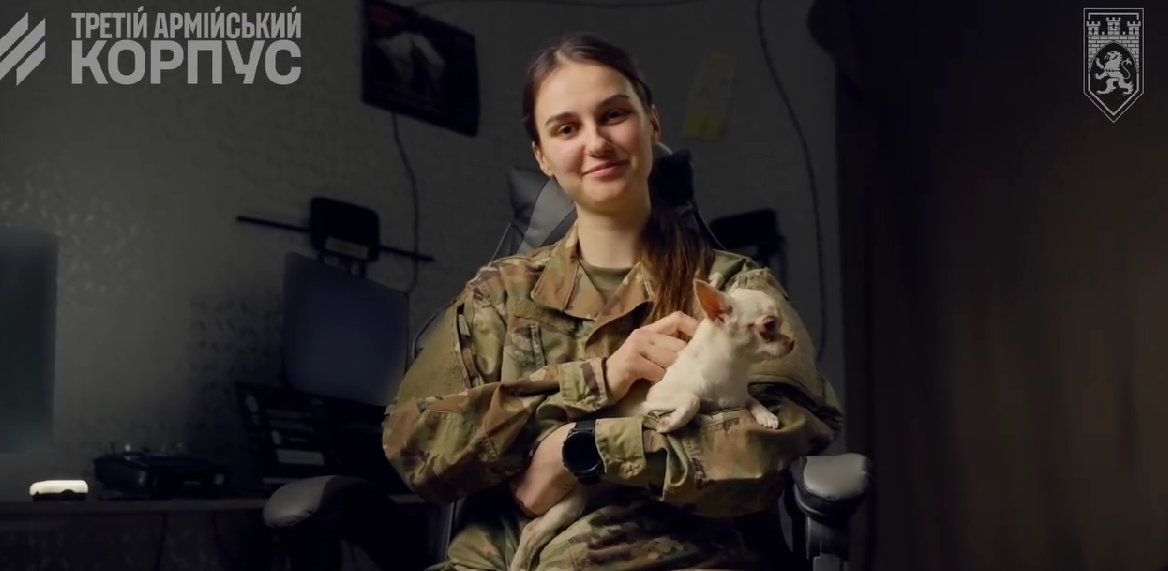
Natalia is 25 years old and from Odesa. She has served in two armies—the Israeli and Ukrainian militaries. In the Armed Forces of Ukraine, she has, among other things, carried out missions as part of a UAV, FPV drone, and strike-wing crew on the Zaporizhzhia and Kupiansk fronts, NV reported on 5 October.

During the Russo-Ukrainian war, women in Ukraine have the right to voluntarily enlist in the military. As of March, more than 75,000 women were serving in the armed forces, more than 55,000 of them as service members, the commander-in-chief said, and their number has been growing every year. Recently, discussion around the mandatory mobilization of women has intensified. Keith Kellogg, former US Special Presidential Envoy for Ukraine under President Donald Trump, said that he considered mobilizing women in Ukraine appropriate. In response, Iryna Vereshchuk, Deputy Head of the Office of the President of Ukraine, said she would rather see more missiles and more will from the United States than advice to mobilize women.

In Israel, Natalia served in a search-and-rescue brigade as a rescue soldier and in the engineering corps during a deployment along the northern border.

Natalia was born in Russia’s Saint Petersburg but does not remember her life there

The young woman was born in St. Petersburg, where her family lived at the time. When she was a year and a half old, her mother returned to Odesa with her and her older son. Natalia says she remembers her life exclusively in Ukraine.

She spent the first nearly two years studying at Lviv University, but later decided to leave the university and look for other educational opportunities. Natalia studied, among other places, in Denmark through a scholarship program. After completing it, she planned to enroll at a European university to study sound engineering, but the coronavirus pandemic began at that time.

She moved to Israel under a program for Jewish youth at the end of 2020. After the program ended, due to quarantine restrictions and closed airports, Natalia faced a choice: obtain a work visa or acquire citizenship under the Law of Return. She chose the latter—and with it, she also became obligated to perform military service.

In May 2022, Natalia joined the Israeli military and chose a combat unit.

“When the war started in Israel itself, I still had six months of mandatory service left. I was discharged and immediately transferred to reserve service. Once I managed to resolve all the bureaucratic issues so that this would not be considered desertion, I returned to Ukraine,” the young woman says.

Natalia returned to Ukraine in March 2025, and in August signed a contract with the Armed Forces of Ukraine.

Natalia (right) and her fellow servicewoman. Photo courtesy of Natalia/NV

“The army—both Israeli and Ukrainian—gives you a deeper understanding of what society is made of”

Among the advantages of the Ukrainian army, she highlights its ability to quickly adapt to circumstances. In particular, she mentions the use of drones, OSINT, and solving complex technological tasks with minimal resources.

“The West could learn from this situational agility. They often spend huge budgets on developments that should be cheap and mass-produced,” the veteran says.

However, such Ukrainian ingenuity is largely a consequence of a lack of funding, Natalia notes.

In the Israeli military, Natalia highlights society’s readiness for the constant threat of war and more systematic planning of military service.

“There, preparation for and perception of the army begin at school: by the age of 14–15, teenagers already understand where they want to go, what skills they need, and undergo selection for special or intelligence units,” the young woman says.

She then gives the opposite example of the situation in Ukraine.

A Ukrainian female soldier with a call sign "Tsyhancha" went from FPV operator to piloting the Heavy Shot bomber. Image: The 125th Separate Heavy Mechanized Brigade
Explore further

This Ukrainian female soldier flies one of war’s heaviest drones. She turns down promotion twice to keep doing it

“In Ukraine, with very rare exceptions, people hide until they are mobilized, and suddenly face the reality of conscription without having any understanding of the system,” the veteran says.

Asked how adapted the Ukrainian army is to women, she answered: “In no way,” adding that the Israeli army is “also largely not fully adapted.”

In Ukraine, this is reflected, in particular, in the provision of clothing and equipment that often does not correspond to women’s sizes and physiology. She says she had to purchase her own anatomically fitted body armor. She cited the example of veteran Natalia Lishchyshyna, who had her breasts amputated due to prolonged wearing of body armor that was not adapted to the female anatomy.

In Israel, by contrast, there is a practice of reimbursing expenses for equipment that service members purchase at their own expense.

Serving in the military in both countries provides an opportunity to better understand what society is actually made of, the young woman says.

“The army—both Israeli and Ukrainian—gives you a deeper understanding of what society is made of. You encounter people you would never have crossed paths with in your civilian bubble because of differences in views or socioeconomic circumstances,” Natalia says.

She believes this makes it easier to accept mistakes, difficulties, and new challenges.

The Ukrainian army is not adapted to women in any way, Natalia says

In Natalia’s view, the problem is not only the living and working conditions but, above all, the lack of mechanisms necessary for the systematic mandatory mobilization of women. At the same time, she believes voluntary recruitment should be encouraged and expanded.

One of the problems is the lack of a legal procedure for temporary childcare in cases when both parents are simultaneously carrying out combat missions, Natalia says, stressing that she means the period of their service, rather than situations involving the death of one of the parents.

Another shortcoming is insufficient protection against sexual violence and harassment in the Ukrainian military.

“Here, any complaint goes through the direct chain of command. If the commander is not interested in resolving the problem or is involved in it themselves, the woman is left defenseless,” the veteran says.

In Israel, by contrast, there is a separate hotline and mechanisms for documenting such cases without directly approaching a commander.

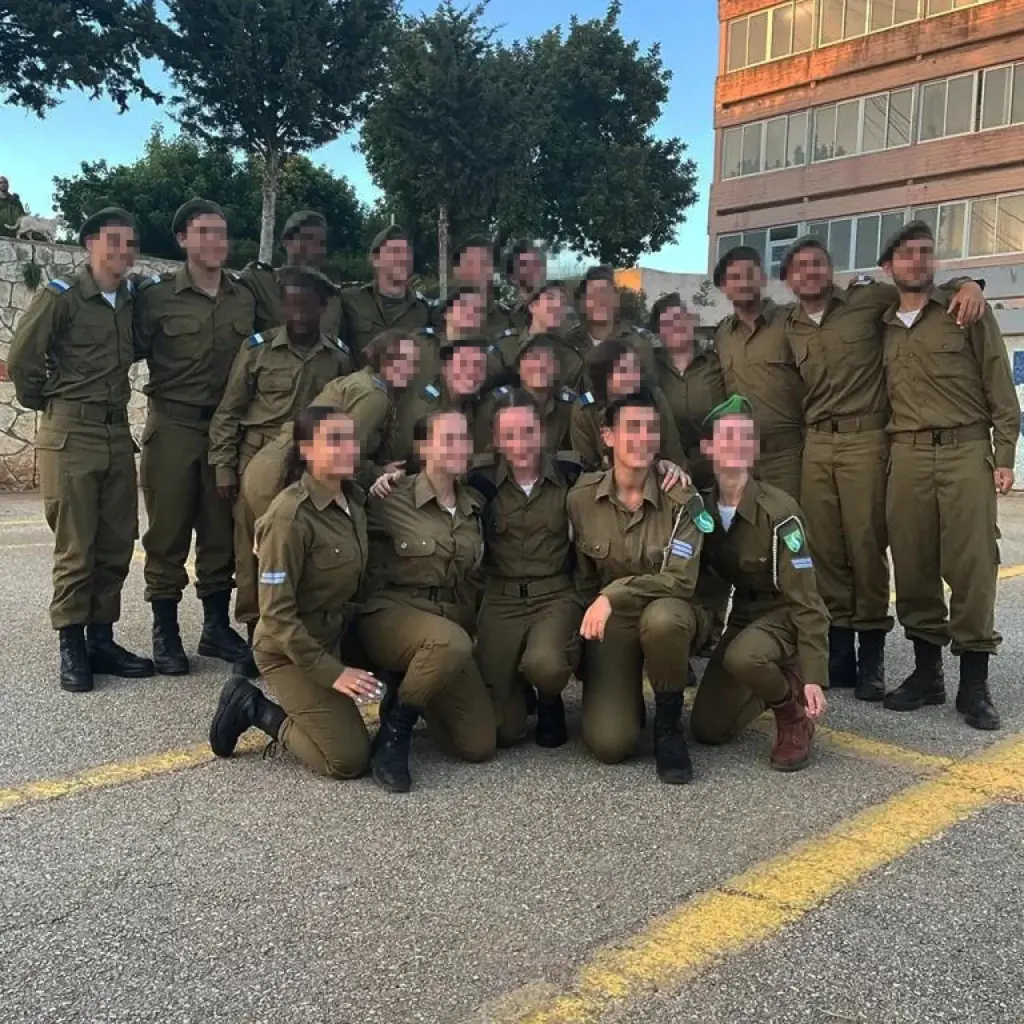
Natalia (second from left) during her service in the Israeli army. Photo courtesy of Natalia/NV

Women in combat positions can also still be taken insufficiently seriously, denied participation in combat missions, or transferred to staff positions without their consent.

Natalia also emphasizes the lack of systematic military training for civilian women “at any level” and gives school education as an example.

“Even with the weak level of the school curriculum for the subject ‘Defense of Ukraine,’ boys had at least some basic knowledge. Girls were not involved in it at all,” the veteran says.

For now, Natalia believes that women’s military service should remain voluntary, as society as a whole is still not ready to fully accept women in the military.

  •  

US Senator Murphy says Pentagon denied him entry to US base in Qatar

Al Mayadeen | October 6, 2026

Democratic US Senator Chris Murphy said Tuesday that the Pentagon had denied him access to a US military base in Qatar and refused to arrange a briefing on the US-Israeli war on Iran during his regional tour.

Speaking to journalists in Riyadh, Murphy accused the department of deliberately obstructing congressional scrutiny of the war and concealing its consequences from the American public.

“This trip confirmed for me that there is an active, unprecedented, unconstitutional effort underway to hide the costs of this war and the implications of this war from Congress and the American people,” he said, as quoted by Reuters.

Murphy urges Republicans to challenge Pentagon secrecy

Murphy called on Republican senators to confront the deliberate obstruction by the Department of War.

“I’ve never encountered anything like this in my time in the Senate and it’s part of a deliberate campaign of obfuscation that my Republican colleagues in Congress should demand an end to,” he said.

The senator said the Pentagon had denied him access to Al Udeid Air Base in Qatar, the largest US military base in the region. The installation has come under repeated Iranian retaliatory strikes since the US-Israeli aggression against Iran began in February.

He also said the department had declined to organize a briefing on the war while he was visiting the region.

Diplomatic meetings proceed despite military restrictions

Murphy contrasted the Pentagon’s conduct with that of US Secretary of State Marco Rubio, whom he credited with helping organize the trip and facilitating meetings with diplomats.

His regional discussions included talks with Qatari Emir Sheikh Tamim bin Hamad Al Thani and Saudi Crown Prince Mohammad bin Salman, alongside other senior Gulf officials.

Riyadh was the second stop on the senator’s tour, following his visit to Qatar.

  •  

Israel expands “incitement” charge to target Palestinian education and memory

Palestinian Information Center – October 6, 2026

RAMALLAH – The Palestinian Prisoner Society (PPS) has warned that Israel is expanding its use of the charge of “incitement” into a tool for controlling education, expression and collective memory in Palestinian institutions.

The warning followed the recent arrest of a school principal in al-Eizariya and the demolition of a martyrs’ memorial at Birzeit University on Monday. The PPS said both incidents reflect a wider policy targeting spaces where Palestinian awareness is shaped and where the memory of prisoners, martyrs and national symbols is preserved and passed to new generations.

According to the society, prosecutions under the label of “incitement” are no longer limited to social media posts or personal statements. They now extend to educational content and symbols inside institutions, placing schools and universities under direct threat of surveillance and punishment.

In the al-Eizariya case, the PPS said a video circulated after the principal’s arrest presented posters inside the school and what students were being taught as part of what Israel described as “incitement” and “terrorist education.”

The society warned that such measures turn the educational environment itself into a target, criminalizing the presence of Palestinian national issues in school materials, symbols or discussions.

It said the vague and expanding definition of “incitement” leaves individuals and institutions under constant threat, pushing Palestinians to monitor their own speech, activities and teaching material out of fear of punishment.

The group also pointed to a rise in arrests linked to alleged “incitement” since the start of the war on Gaza. It said the arrests have affected citizens, freed prisoners, students, women and children, often over posts, expressions or positions related to current events.

At Birzeit University, the demolition of a martyr’s memorial was part of the same effort to target Palestinian memory and its symbols, the PPS said, adding that the incident narrows spaces where the national narrative is remembered and expressed.

The society elaborated that these policies go beyond arrest and include threats, interrogation, assault, penalties and fines, creating an environment of continuous surveillance.

It warned that “incitement” is being used to determine what Palestinians may say, teach, publish or remember, particularly among younger generations. The danger, it said, extends beyond individual freedoms to the ability of Palestinian society to teach its history, preserve its symbols and express its rights under threat of punishment.

  •  

How Israel seeks to reshape Arab classrooms

By Freddie Ponton | 21st Century Wire | October 6, 2026

“Muslims will not relinquish Jerusalem.” The sentence appeared in a Saudi schoolbook’s Arabic language exercise, then disappeared from later editions. An Israeli organisation monitoring the books described the removal as deleting a “politically charged reference.” In Jordan, the same organisation recorded another disappearance. Maps bearing the name “Palestine” were replaced with versions leaving the territory unnamed.

These classroom changes open a larger story about who shapes what Arab children learn about their region. A new Arabic Post investigation follows three decades of scrutiny across 17 Arab countries, tracing how assessments of schoolbooks reach Western governments, parliaments and donors with the power to demand changes.

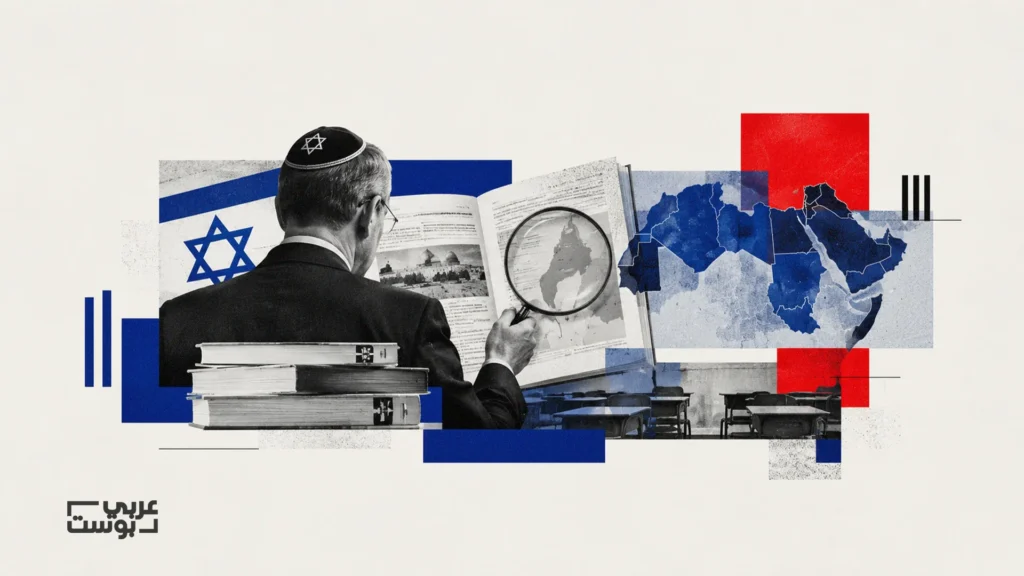
REPORT: Arabic Post traces how Israeli scrutiny of schoolbooks across 17 Arab countries became a network of political and financial pressure. Click on the image to read the report. (Source: Arabic Post)

Drawing on government records, parliamentary documents and research publications, the investigation follows a process that begins with collecting books, translating passages and classifying their contents. American and European organisations then help carry the findings into political discussions, where they become demands for revisions, official reviews and conditions on educational funding.

The scrutiny extends beyond individual expressions to maps of historic Palestine, accounts of Jerusalem, descriptions of Zionism, lessons about resistance and religious teachings. The investigation shows how Israel’s pursuit of acceptance reaches into the way neighbouring societies teach their children to understand history.

From schoolbooks to government offices

Arabic Post identifies 10 Israeli research centres and institutions involved in examining Arab educational materials. It also identifies 20 American and seven European organisations and projects, with some branches counted separately. Official Israeli bodies participate too, including the Ministry of Education, the Civil Administration in the West Bank and Knesset committees.

One of the most prominent organisations is IMPACT-se, which describes itself as a non-governmental research and policy institute. Arabic Post found that former founders and current members had worked in Israeli ministries and government. Another participant, the Meir Amit Center, was established within Israel’s intelligence heritage centre and places curriculum analysis within its mission of assessing threats facing Israel.

The investigation traces how several organisations helped produce and circulate a 2017 study of 201 Palestinian textbooks. Commissioned by the Center for Near East Policy Research, with contributions from the Simon Wiesenthal Center and the American Middle East Forum, it was published through BESA, an Israeli research centre. The Meir Amit Center then presented its findings, which included a call for funding countries to demand corrections to textbook content.

Britain provides a documented example of how such findings enter government discussions. According to the investigation, an IMPACT-se report on Palestinian textbooks passed through the Israeli government to British officials. In December 2018, Britain’s Department for International Development (DFID) said the report had raised concerns and that officials had presented specific examples to the Palestinian education minister. In March 2019, Britain announced that it had helped secure an independent textbook review.

In Europe, changes to Palestinian schoolbooks became part of the discussion over financial support. A 2024 agreement between the European Commission and the Palestinian Authority placed curriculum updates among the reforms tied to that support. IMPACT-se, NGO Monitor and the German-Israeli Society sought a more explicit condition. In a June 2024 paper cited by Arabic Post, they urged Germany to make educational funding depend on textbook changes and to check that those changes were carried out.

Through these arrangements and proposals, the content of a schoolbook becomes a question for those who control financial assistance. Education ministries face demands backed by influence over the resources their schools depend on.

The history children inherit

In East Jerusalem, the intervention reaches directly into the books children read. The investigation cites researcher Samira Alayan’s study of textbook censorship. Her analysis of 28 social studies textbooks, supported by interviews, documented the removal of references to Palestinian history, heritage and national narrative from Israeli-modified editions. Material through which children learn about their own society is altered to exclude parts of its history and identity.

A Jordanian history textbook presented the 1994 peace treaty with Israel as a means of establishing borders, recovering land and water rights, and curbing Israeli ambitions. IMPACT-se criticised that account because it portrayed peace as a defensive necessity rather than reconciliation. The objection was not that the textbook omitted the treaty, but that it explained it through Jordan’s national interests.

In Saudi Arabia, IMPACT-se tracked not only the removal of the sentence about Jerusalem but also the replacement of “the Zionist enemy” with “the Israeli occupation” in a history textbook. It described the change as a softening of hostility towards Israel, treating the words children encounter in class as a measure of how they are taught to understand the conflict.

The ambition behind this scrutiny becomes clearer in a July 2024 study cited by Arabic Post, in which IMPACT-se researchers Yonatan Negev and Eldad Pardo argued that portraying Israel as a colonial state reinforces its image as a pariah and challenges its legitimacy. In August, the same researchers proposed regional education based on shared Abrahamic heritage, intended to establish Israel as an authentic, accepted part of the Middle East and move beyond a “cold peace.”

Those studies envisage acceptance reaching beyond government agreements and taking root among future generations. Arabic Post follows the reports, government interventions and funding demands through which that ambition is pursued. Its investigation reveals how foreign political and financial power enters the classroom, seeking to shape how children understand Palestine and the region’s history.

The question is who gets to decide how a society teaches its own history. When financial support becomes leverage over schoolbooks, the power to shape that history moves away from the people whose lives it describes. Palestinian memory then becomes something to negotiate with donors, while acceptance of Israel becomes a measure by which lessons are judged. That is the deeper significance of this investigation. The pressure reaches beyond what governments agree to today and into what children will understand about their past tomorrow.

  •  
❌