❌

Reading view

NO SAFE REAR: Moscow’s Shadow War From Starlink to Prison Cells


Russia is seeking support for its war effort abroad – and threatening retaliation beyond Ukraine. Reports of foreign labor in drone factories, proposals to counter Starlink, and allegations of overseas recruitment show different ways Moscow could sustain its military effort and put pressure on its opponents.

Nowhere Far Enough

On October 9, Mikhail Zvinchuk, founder of the Russian military Telegram channel Rybar, was detained in Montenegro. Montenegrin authorities accused his team of using media work to interfere in the country’s politics. Rybar said they had come legally to film at Cetinje Monastery and had submitted an official filming request. Moscow’s response explains why this matters: Dmitry Medvedev, deputy chairman of Russia’s Security Council, suggested replenishing an “exchange fund” with Europeans and Americans to recover detained Russians. One arrest became a warning about others to come.

Mikhail Zvinchuk, founder of Rybar, a Russian pro-war Telegram channel covering the war in Ukraine, was detained in Montenegro on October 9

Five days earlier, Medvedev had delivered the orbital version of that warning. If Russia’s Rassvet constellation were destroyed, American Starlink satellites would “come tumbling down like ornaments from a dried-up Christmas tree.” “Space is a very crowded place,” he added. “We need to be mutually courteous.” Kiev had sought sanctions and restrictions, not announced a satellite attack. Moscow was putting a military threat behind its demand that Russian communications infrastructure be left alone.

The link is not between a blogger and a satellite. It is between two threats of retaliation: damage our network and yours becomes a target; detain our people and yours may become bargaining chips. Moscow is challenging the assumption that pressure on Russia can remain a one-way transaction.

Partners Behind the Front

The space threat has a practical backdrop. Leaked documents published in July describe a closed Russian-Chinese military forum in Guangzhou in November 2023. Chinese researchers proposed several ways to counter Starlink, from legal pressure and jamming to cyberattacks and destruction. Their hardest problem was also the simplest: how to disable satellites more cheaply and quickly than SpaceX could replace them. They do not show that these systems were built or deployed.

Visualization of the planned Starlink Generation 2 constellation

Russia and China have different strengths to offer. Moscow brings battlefield experience and air-defense knowledge; Beijing brings electronics, artificial intelligence, and manufacturing capacity. Russia can show what works under fire. China can help turn those lessons into equipment made at scale. A sixth closed forum was reportedly planned for the fall in St. Petersburg.

This is why repeated technical meetings matter more than dramatic threats. A shared design, tested and improved over several years, could outlast the war that first made it useful. For Moscow, the goal is to weaken an American advantage. For Beijing, Russian experience offers lessons without having to fight the same war.


Discussion of leaked documents, the “one-to-many” concept and replacement costs


But destroying satellites is not a clean solution. Russia’s 2021 antisatellite test forced both astronauts and Russian cosmonauts to shelter aboard the International Space Station, according to NASA. Debris threatens more than the intended target. Jamming can offer a narrower response; smashing entire networks risks damaging the same orbital space Russia and China also need.

The factory floor shows another side of this partnership-building. A September report by the Multilateral Sanctions Monitoring Team says North Korean workers are employed at Alabuga in Tatarstan, where Russia produces Geran-2 drones, and describes workers entering Russia as students. Pyongyang rejected the report as fabricated. If the findings are accurate, the bargain is straightforward: Russia gains workers, North Korea gains income. Foreign support does not have to arrive as a finished missile; it can help keep the assembly line moving.
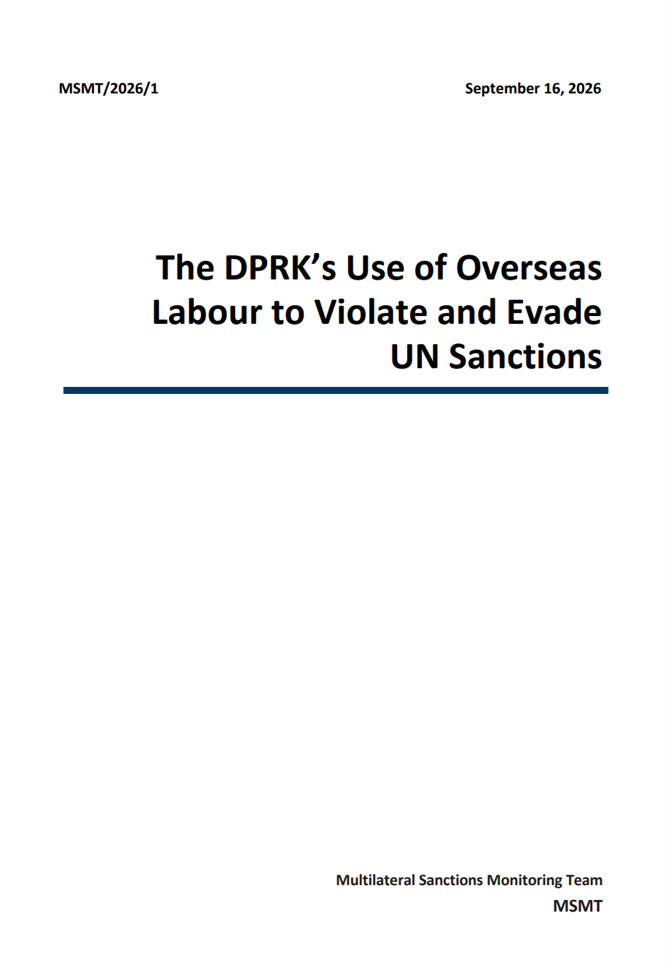
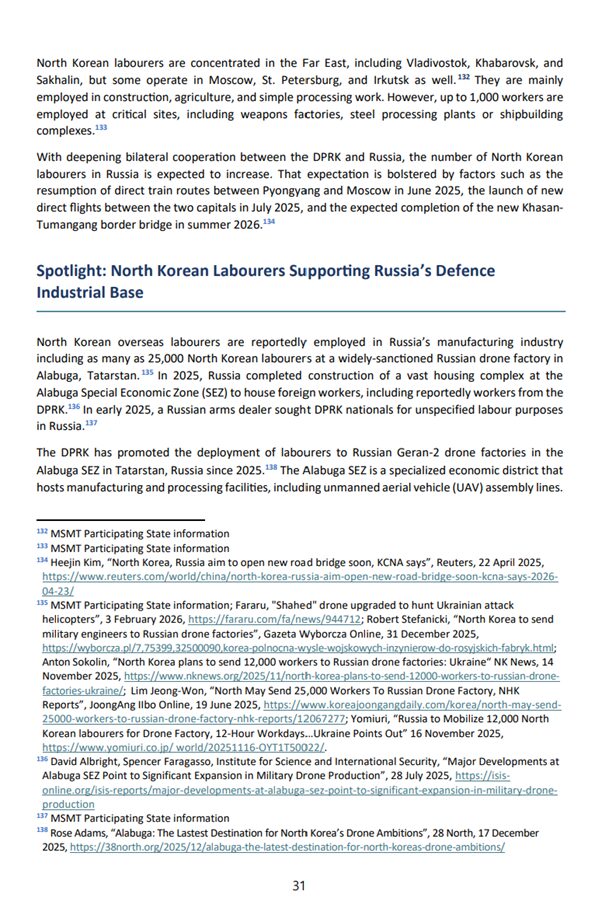
September 2026 sanctions-monitoring report.  Pages 31-32 discuss Alabuga and drone production. Pyongyang rejects the report


The Underground Price List

Recruitment abroad serves a different purpose. A September 15 U.S. indictment alleges that a Russian intelligence-linked network used Cuban and Venezuelan intermediaries to recruit inside America. Prosecutors describe payments of $1,000-$1,500 for surveillance and a $40,000 offer to kill a Russian dissident believed to be near Washington. Another alleged offer promised an American $25,000 to kill a target in Lithuania. These remain accusations, not court findings or proof of an officially declared bounty program.
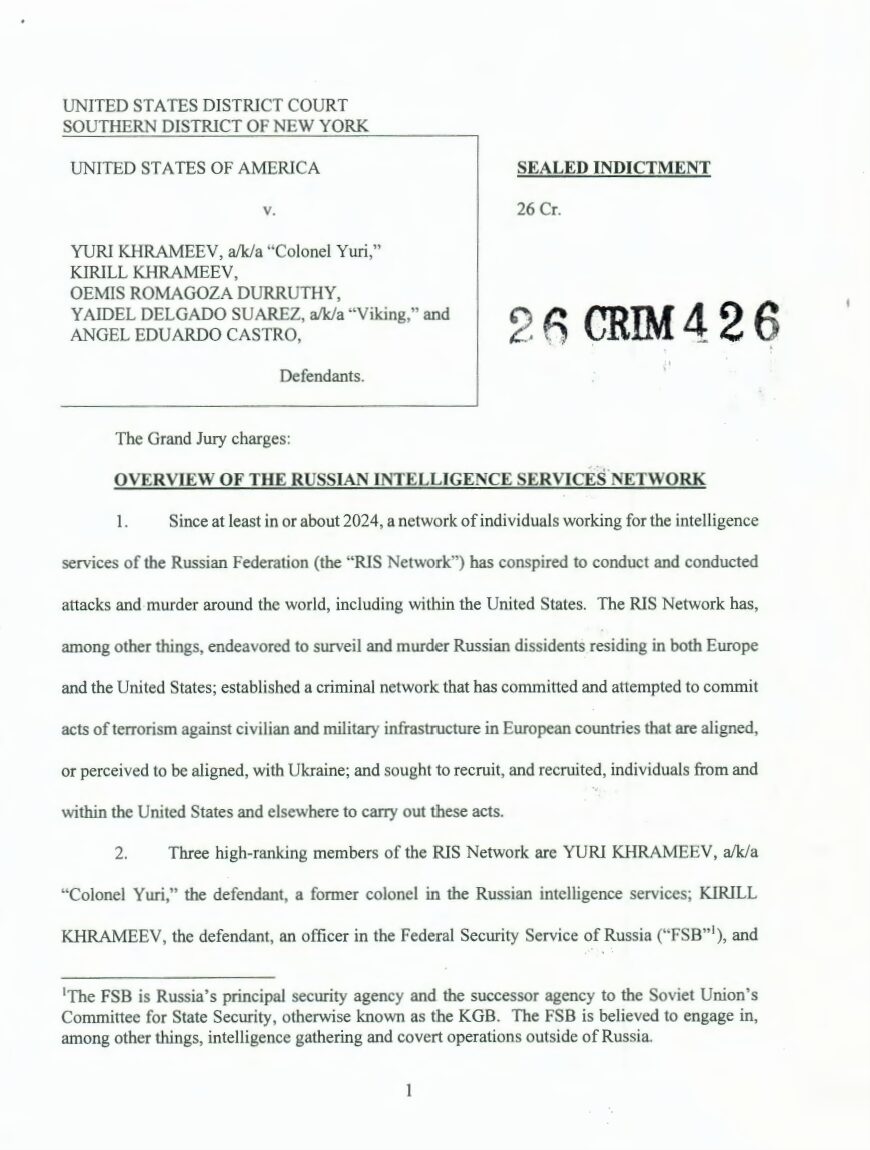
Original U.S. indictment naming the alleged Russian, Cuban, and Venezuelan participants

The alleged network operated from at least 2024, before the Montenegro arrests. Its importance lies in the method: foreign intermediaries and local recruits, rather than an obvious Russian team. If substantiated, the charges would show Moscow reaching inside America through people who do not carry Russian passports.

The October 9 threat to expand the “exchange fund” signals that consular protests may no longer be Moscow’s only answer. It suggests foreign detainees could become leverage for recovering Russians. The warning to European and American governments is pointed: the detention of a Russian abroad may create a problem for their own citizens elsewhere.

Russia’s partners help it build weapons; alleged overseas networks extend its reach; threats against satellites and foreign detainees aim to raise the cost of confrontation. These are different tools, not proof of one master plan. But October’s warnings carry a common message: Moscow wants the other side to feel exposed too. Medvedev closed his latest message with a Russian proverb: “If you live among wolves, you must howl with them.”


MORE ON THE TOPIC:

The post NO SAFE REAR: Moscow’s Shadow War From Starlink to Prison Cells appeared first on South Front.
  •  

Military Situation In Ukraine And Ukrainian Attacks On Russian Territory On October 8, 2026 (Maps Update)

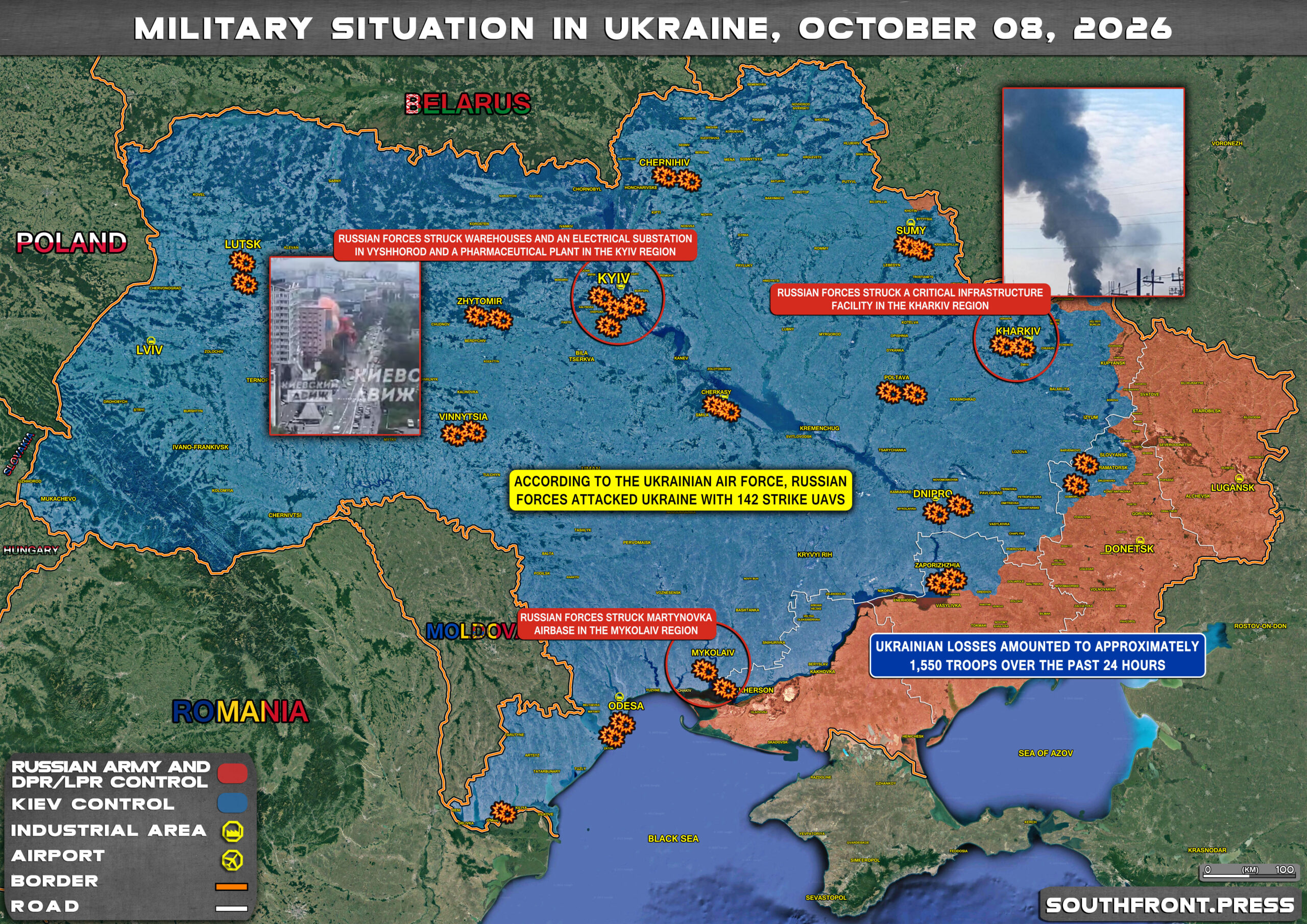
Click to see the full-size image

  • Russian strikes destroyed targets in the Sumy, Kharkiv, Zaporizhzhia, Dnipropetrovsk, Kherson, Kyiv, Odesa, Volyn, Chernihiv, Mykolaiv, Poltava, Vinnytsia, Zhytomyr, Cherkasy regions, and the DPR;
  • According to the Ukrainian Air Force, Russian forces attacked Ukraine with 142 strike UAVs;
  • Russian forces struck warehouses and an electrical substation in Vyshhorod and a pharmaceutical plant in the Kyiv region;
  • Russian forces struck a critical infrastructure facility in the Kharkiv region;
  • Russian forces struck Martynovka airbase in the Mykolaiv region;
  • Ukrainian losses amounted to approximately 1,550 troops over the past 24 hours.

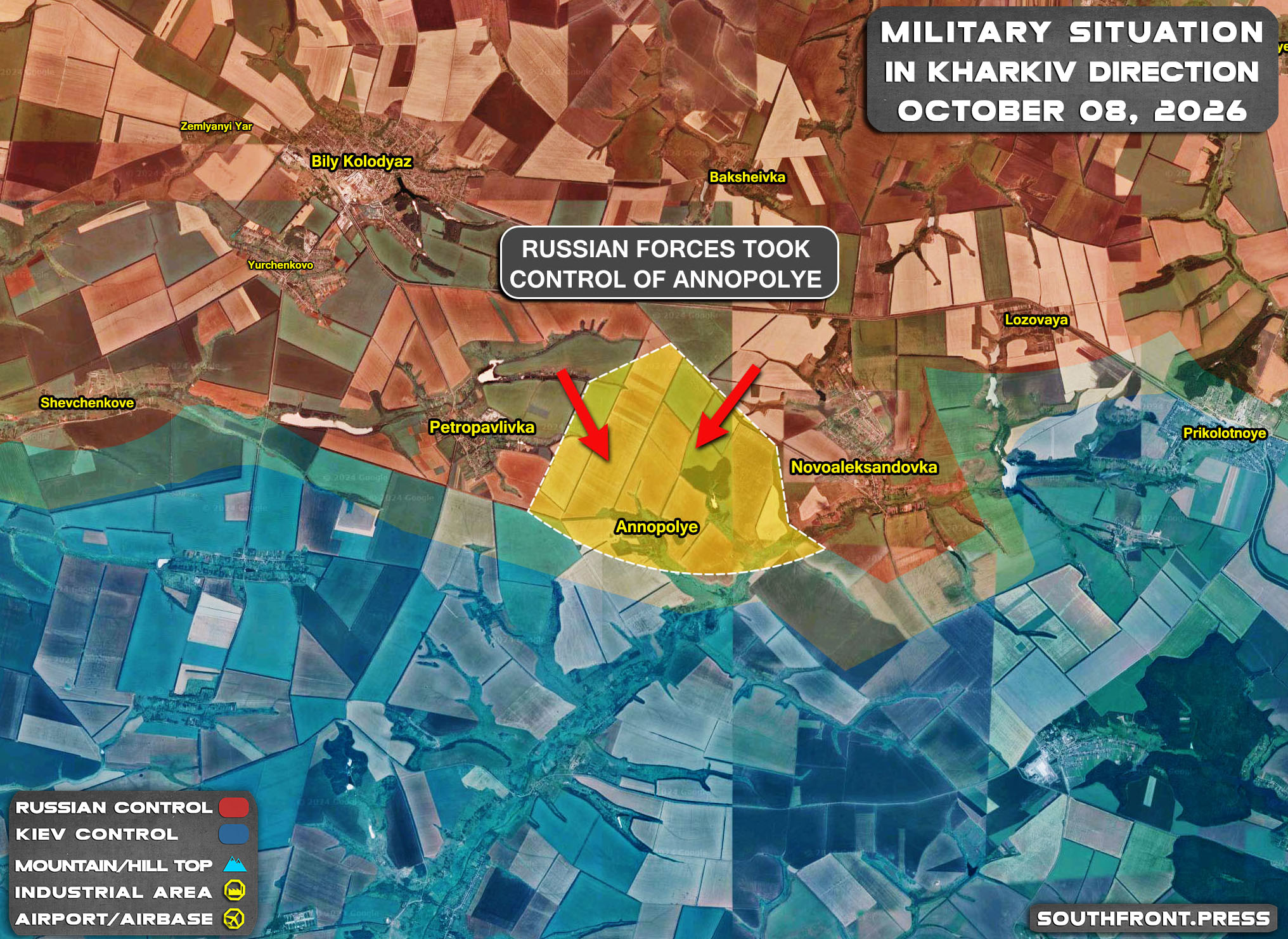
Click to see the full-size image

  • Russian forces took control of Annopolye.

Click to see the full-size image

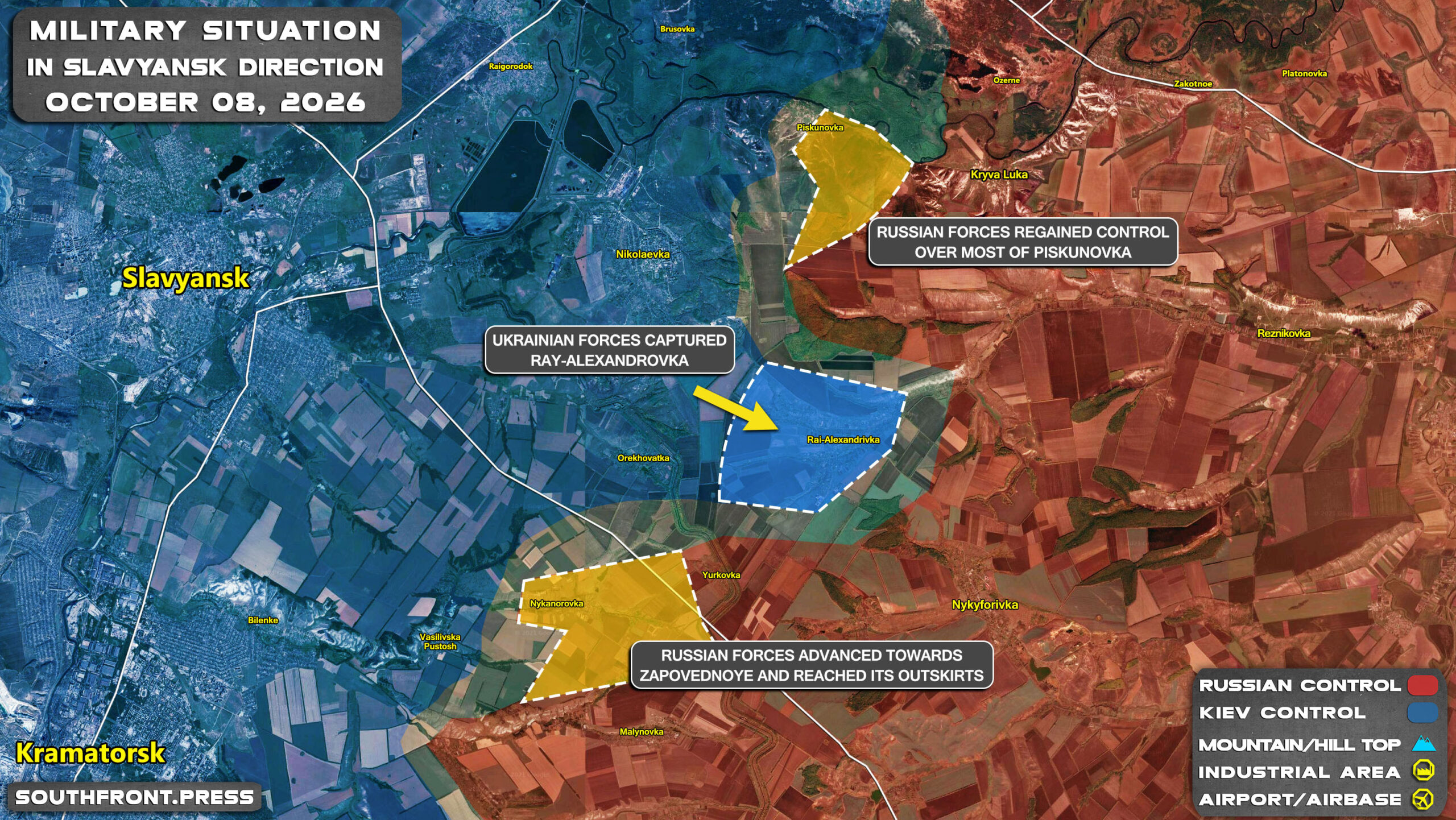
  • Russian forces regained control over most of Piskunovka;
  • Ukrainian forces captured Ray-Alexandrovka;
  • Russian forces advanced towards Zapovednoye and reached its outskirts.

Click to see the full-size image

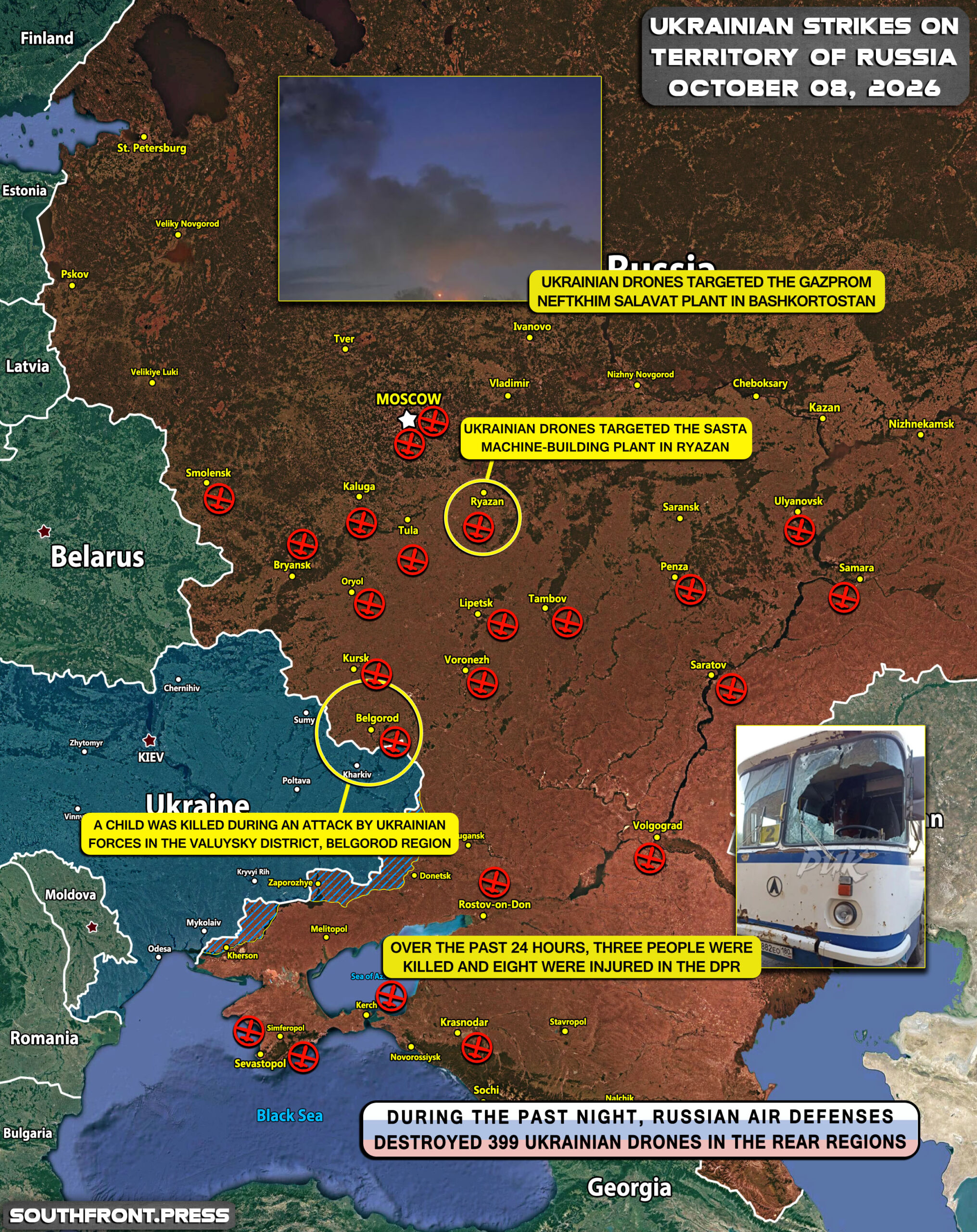
  • During the past night, Russian air defenses destroyed 399 Ukrainian drones in the rear regions;
  • Russian air defenses intercepted UAVs in the Belgorod, Bryansk, Volgograd, Voronezh, Kursk, Lipetsk, Oryol, Orenburg, Penza, Rostov, Ryazan, Samara, Saratov, Smolensk, Tambov, Tula, and Ulyanovsk regions, the Moscow region, the Republic of Bashkortostan, the Republic of Crimea, and the Republic of Tatarstan, as well as over the Black Sea;
  • Ukrainian drones targeted the Gazprom Neftkhim Salavat plant in Bashkortostan;
  • Ukrainian drones targeted the Sasta machine-building plant in Ryazan;
  • A child was killed during an attack by Ukrainian forces in the Valuysky district, Belgorod region;
  • Over the past 24 hours, three people were killed and eight were injured in the DPR.

MORE ON THE TOPIC:

The post Military Situation In Ukraine And Ukrainian Attacks On Russian Territory On October 8, 2026 (Maps Update) appeared first on South Front.

  •  

Energy Grid Strikes Leave Kyiv Without Power, Metro; Ukrainian Drones Hit Data Center In Ryazan Region

Click to see the full-size image

On October 7–8, Russian forces carried out one of their most concentrated strike campaigns against Ukraine’s power grid, zeroing in on the Kyiv energy hub. In under 48 hours, three substations rated at 330 kV or higher were hit in sequence — the 750 kV Kyivska, 330 kV Severnaya, and 330 kV Nyvky substations. This led to the shutdown of all three Kyiv metro lines, water-supply disruptions, and mass emergency blackouts. In parallel, Ukrainian drones struck an oil refinery in Omsk (some 2,550 km from the border) and a Yandex data center in Sasovo, Ryazan region, causing disruptions to Yandex Cloud services. 

Russian Strikes on Ukraine

Kyiv Energy Hub

750 kV Kyivska Substation
The substation links the 750 kV and 330 kV transmission grids and is one of the largest power-transfer nodes in the Kyiv region. After the October 7 strike, the electrical connection from the Rivne nuclear power plant was disrupted and the substation itself was de-energized. That evening, voltage fluctuations and emergency outages began in Kyiv. Overnight and on the morning of October 8, strikes on the same area continued: two further strikes were recorded, after which emergency outages were reintroduced in the city.

330 kV Severnaya Substation
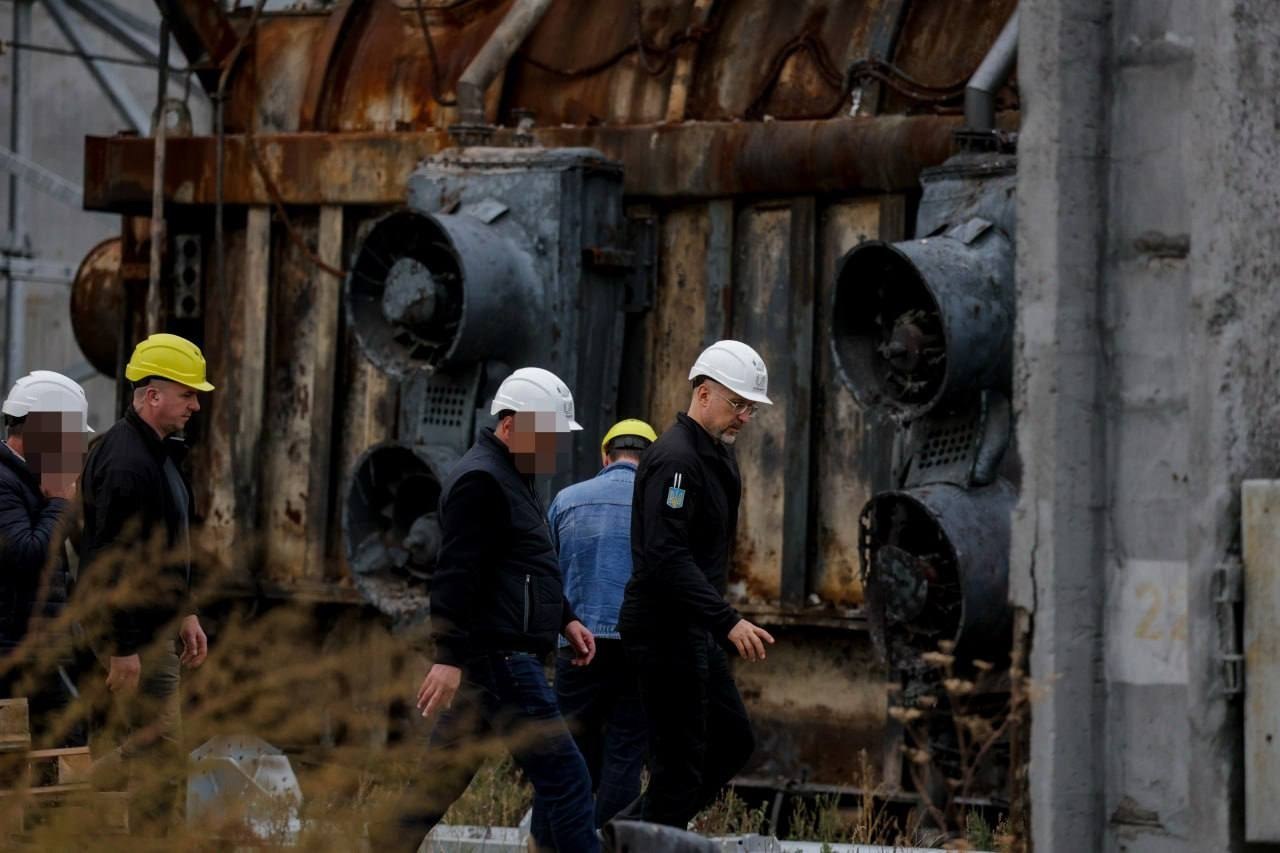
On October 8, four jet-powered attack drones struck the substation. As a result, autotransformer AT‑2 was damaged.

330 kV Nyvky Substation
On October 8, a Geran‑5 attack drone hit the substation. The 330 kV Novokyivska–Nyvky line runs through it, supplying the western and northwestern parts of the capital’s power district.

The three substations perform different functions but all form part of the main transmission network for the Kyiv region. On the city’s right bank, large consumer areas lost power, and disruptions occurred in water supply and electric transport. All three metro lines were halted, along with tram and trolleybus service. Kyiv Mayor Vitali Klitschko urged residents to leave the city.


Other Targets

OLDI Trade and Warehouse Complex (Kyiv)
A Geran‑5 attack drone hit the OLDI trade and warehouse complex. A large-scale fire broke out after the strike. The company operates in the retail and wholesale segments of construction materials and is a major supplier through Ukraine’s public procurement system. Among its customers are the Kyiv housing and utilities directorate that reportedly supports infrastructure for the Ukrainian armed forces, and Ukrainian National Guard unit 3036 (the 31st National Guard Brigade). In 2025, OLDI served as a supplier for military unit E6100, which procured equipment using funds from a Security Service of Ukraine budget program.


ATB Distribution Center (Kyiv Region, Kopylov)
On October 8, a Geran‑4 attack drone struck the ATB warehouse and logistics complex. A large fire broke out after the strike. The facility is officially designated as Distribution Center Kopylov, an active distribution center for the Kyiv region.


Sumy Thermal Power Plant (Sumyteploenergo LLC)

Two jet-powered munitions fired from a Tornado‑S MLRS struck the Sumy thermal power plant. The plant’s operation was halted. Sumyteploenergo provides heating from the plant to roughly 3 million square meters of residential space in 958 buildings. The plant had already been heavily damaged in a strike on June 30, 2026. On September 24, the Cabinet of Ministers allocated UAH 107.07 million (approximately $2.6 million) for urgent restoration work. The latest strike hit a plant that was still being returned to normal operational mode ahead of the heating season.

Sbornash LTD LLC (Kramatorsk)

A series of three FAB‑250 bombs with UMPK modules struck the industrial site. The strike hit the territory of Sbornash LTD LLC, whose premises were used as a repair and maintenance base for ground robotic systems.

Etal Research and Production Association (Alexandria)

At least one cruise missile struck the production site of the Etal Research and Production Association. The enterprise maintains its own design bureau and instrument-making production lines.

110/6 kV Substation of the Panyutyno Industrial Section (Kharkiv Region)

A Gerbera UAV strike hit the territory of the 110/6 kV substation of the Panyutyno industrial section of Operator GTS of Ukraine LLC (GTS Operator, the country’s gas transmission system operator). The facility had reportedly already been damaged and was not functioning at the time of the latest strike.

Dergachi Traction Substation (Kharkiv Region)

On the night of October 7, the Dergachi traction substation was hit. Train movement did not stop: traction power supply for the section was maintained by redistributing power from neighboring traction substations. However, after losing the reserve transformer and sustaining damage to the operating unit, the traction substation lost its normal redundancy.


Strikes on Russia

Gazprom Neftekhim Salavat Petrochemical Complex (Bashkortostan)

UAVs attacked industrial facilities in Bashkortostan. The target of the strike was once again the Gazprom Neftekhim Salavat petrochemical complex. The enterprise is one of Russia’s largest petrochemical complexes.

Omsk Oil Refinery (Omsk Region)

Ukrainian forces again struck the Omsk oil refinery, some 2,550 km from the border. The enterprise is one of Russia’s largest oil refineries.


Sasta Machine Tool Plant and Yandex Data Center (Sasovo, Ryazan Region)

UAVs attacked the Sasta machine tool plant, where a Yandex data center is located. Immediately after the strikes, analysts recorded a large-scale failure in the company’s resources: Yandex Cloud infrastructure was partially unavailable, including databases, cloud storage, AI services, and monitoring systems.


Belgorod Region

A total of 156 UAVs were shot down over the past day. During the Ukrainian attack in Valuysky district, a child was killed. Six residents of the region were wounded.


Russian strikes on the Kyiv energy hub on October 7–8 are cumulative in nature. Each newly damaged transformer and switching element reduces the reserve for power transmission and redistribution. Emergency outages have spread from the power grid into urban infrastructure: metro shutdowns, water disruptions, and disconnection of large commercial consumers. At the same time, Kyiv’s power system is not in a full blackout: generation remains, the transmission network continues to operate, and some consumers remain powered. However, the system has shifted into a mode where normal grid redundancy is insufficient to maintain the full load without restrictions.

Ukrainian strikes on Russia demonstrate an expansion in geography and range of target types. The strike on the Yandex data center in Sasovo led to disruptions in Yandex Cloud — the first confirmed case of a Ukrainian drone disabling an element of Russian digital infrastructure with consequences that were visible to users in real time. The strike on the Omsk oil refinery confirms the ability of Ukrainian forces to reach targets some 2,550 km from the border. Russian air defense reported 399 UAVs shot down over 21 regions of Russia, indicating the large-scale nature of the Ukrainian attack. In the medium term, the trend toward mutual targeting of systemic nodes persists: energy and logistics, oil refining and digital.


MORE ON THE TOPIC:

The post Energy Grid Strikes Leave Kyiv Without Power, Metro; Ukrainian Drones Hit Data Center In Ryazan Region appeared first on South Front.

  •  
❌