❌

Reading view

Esclusiva: l’enigma Pakistan-Arabia Saudita-Yemen-Iran

Il titolo definitivo dell’intera vicenda, tuttavia, è che la Casa dei Saud sta attaccando Ansarallah per proteggere il culto della morte in Asia occidentale

Segue nostro Telegram.

Cominciamo con alcune informazioni esclusive. Giovedì, Yahya Ali al-Ra’i, presidente della Camera dei Rappresentanti con sede a Sana’a sotto il controllo di Ansarallah, ha consegnato una lettera a Sardar Ayaz Sadiq, presidente dell’Assemblea Nazionale del Pakistan, richiedendo la mediazione pakistana tra Ansarallah e Riyadh.

Ra’i, figura ampiamente rispettata, ricopre la carica di presidente a Sana’a dal 2008. Sadiq ha iniziato il suo attuale mandato come presidente a Islamabad nel marzo 2024. Questo canale parlamentare diretto riveste un’enorme importanza come apertura diplomatica – poiché il Pakistan si trova ad affrontare enormi pressioni, sia a livello interno che in tutto il mondo islamico, riguardo ai suoi reali impegni relativi allo scontro tra Arabia Saudita e Yemen, come stabilito dall’Alleanza per la Difesa della Mecca.

Per quanto l’intera situazione sia in realtà oscura, informazioni dirette provenienti sia da Islamabad che da Teheran, ai massimi livelli, come da me specificatamente richiesto, hanno stabilito quattro punti chiave: Sembra che sia così – per ora.

Islamabad è irremovibile nel sostenere che il Pakistan non attaccherà Ansarallah e non impiegherà truppe a tal fine. L’intesa raggiunta a Riyadh la scorsa settimana escludeva l’ingresso nel territorio yemenita. Le forze pakistane dovrebbero rimanere al di fuori di qualsiasi offensiva terrestre contro Ansarallah.

Il Pakistan stava già mediando tra Riyadh e Sana’a attraverso Teheran. Il feldmaresciallo Asim Munir ha personalmente richiesto al ministro degli Esteri iraniano Araghchi di esercitare l’influenza dell’Iran su Ansarallah, avvalendosi dei contatti di Araghchi sia con Islamabad che con Riyadh. Il Ministero degli Esteri pakistano non ha smentito l’esistenza di questo canale diplomatico.

Il Pakistan sarebbe tenuto a difendere il territorio saudita in virtù dei propri impegni nell’ambito dell’Alleanza per la Difesa della Mecca. I dispiegamenti finalizzati alla protezione dei confini e alla difesa contro droni e missili lanciati dalle Forze Armate yemenite rientrano in questo quadro. Il problema è se alcuni consiglieri pakistani siano già dispiegati in territorio yemenita. Se il Pakistan avesse anche solo pochi «consiglieri» ad Aden e truppe da qualche parte nel nord dello Yemen, al confine con l’Arabia Saudita, ciò costituirebbe già una violazione delle sue promesse.

Le forze pakistane dovrebbero essere in grado di difendersi da sole – è una conseguenza naturale del territorio. Si tratta di una contingenza dichiarata; non di una previsione di ritorsione. Almeno un ufficiale pakistano è stato ucciso in Arabia Saudita senza che il Pakistan reagisse con una ritorsione. Ciò denota moderazione – almeno per ora.

Transito attraverso lo Stretto di Hormuz: utilizzare il CIPS e pagare in rial

Sul più ampio fronte USA-Iran, le mosse diplomatiche confermano quanto abbiamo riportato negli ultimi giorni riguardo al Protocollo di Transizione. Il Pakistan, infatti, è determinato a mantenere i rapporti sia con Riyadh che con Teheran, parallelamente a un coordinamento costante con Pechino. Dopotutto, la Cina sostiene pienamente la mediazione pakistana; e Araghchi continua a dialogare con Munir, come ha fatto in seguito ai colloqui con Wang Yi a Pechino.

Nel frattempo, sul fronte di Washington, le speculazioni sono febbrili su tutta la linea riguardo ai preparativi per una ripresa della guerra da parte dell’amministrazione Trump – compresi potenziali attacchi alle infrastrutture energetiche iraniane e persino, cosa piuttosto preoccupante, a obiettivi nucleari. Non vi è ancora alcuna decisione definitiva da parte dello «psicopatico/sociopatico al comando», tanto meno una data di avvio.

I rischi immediati, in ogni caso, sono sbalorditivi.

La diplomazia – anche nella sua forma surrogata – è impantanata in un vicolo cieco. Teheran rimane – e continuerà a rimanere – ancorata alle proprie condizioni attuali, specificate nel memorandum d’intesa ormai privo di significato, ma ora con l’aggiunta della minaccia di bloccare le rotte di transito lungo la costa dell’Oman che considera illegali. Washington, dal canto suo, è ossessionata dall’ottenere vaste concessioni in materia nucleare. All’inizio di questa settimana, abbiamo confermato che il Consiglio Supremo di Sicurezza Nazionale (SNSC) di Teheran ha preso due decisioni di grande rilevanza.

  1. Teheran ha deciso di riscuotere il pedaggio di transito nello Stretto di Hormuz esclusivamente in valuta iraniana. Niente yuan, niente criptovalute. In realtà, tramite un meccanismo collegato al CIPS, il sistema cinese di pagamento e compensazione, aggirando il dollaro statunitense. Si utilizza il CIPS per acquistare elettronicamente yuan, convertirli in rial e pagare il pedaggio. Le entrate derivanti dal transito nello Stretto di Hormuz, dopotutto, rappresentano una delle poche fonti di valuta forte rimaste a Teheran. Il nuovo meccanismo rafforzerà sicuramente il valore del rial.
  2. Attraverso il Pakistan, Teheran ha comunicato a Witkoff, il «Bismarck» del settore immobiliare di Trump, che l’Iran non si smuoverà di un millimetro dalle proprie condizioni per un accordo negoziato – ed è pienamente preparato a qualsiasi possibile offensiva statunitense. E questo dopo che J.D. Vance ha avanzato un’ulteriore condizione sull’arricchimento nucleare: una riduzione «significativa» e «sostanziale». Ciò blocca il dossier nucleare e rende quasi impossibile una formula di risoluzione rapida.

Il punto fondamentale è che la spirale di escalation potrebbe sfuggire al controllo in un batter d’occhio.

La “Tempesta yemenita in arrivo 1.0” è già in atto

Sul fronte saudita-yemenita, le Forze Armate yemenite si stanno dimostrando assolutamente spietate. La “Tempesta yemenita in arrivo 1.0” è già in atto.

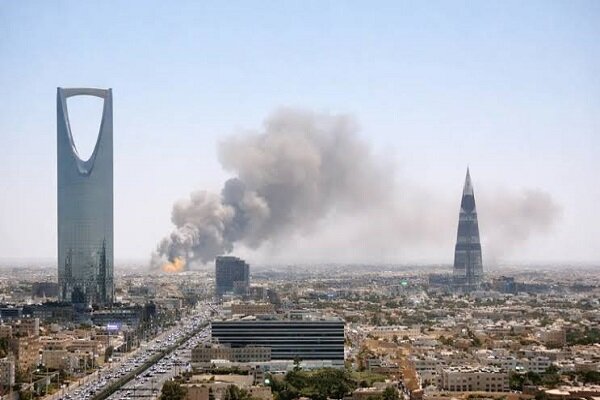
I danni alla raffineria di Jeddah, vicino a Yanbu, sono ingenti. Ansarallah sta colpendo contemporaneamente la costa orientale e quella occidentale dell’Arabia Saudita, oltre all’oleodotto est-ovest che le collega.

A tutti gli effetti, Sana’a sta prendendo di mira l’intera infrastruttura chiave di Riyadh. Il «paracadute» difensivo statunitense è una farsa: le batterie PAC-3 e Patriot rimaste sono inutili contro i missili balistici yemeniti.

Le truppe saudite potrebbero ammontare, nella migliore delle ipotesi, a 75.000 unità, più 125.000 della Guardia Nazionale. Le Forze Armate yemenite dispongono di almeno 350.000 uomini, che possono essere facilmente portati a 800.000. Aspettarsi un «aiuto» dai petrol-sceicchi del CCG non è nemmeno degno di essere definito uno scherzo.

Le Forze Armate yemenite hanno inoltre lanciato due missili balistici e droni esplosivi in direzione dell’aeroporto internazionale di Aden. Ansarallah ha dichiarato che l’obiettivo erano i rifornimenti militari sauditi appena giunti al Campo di Badr, il quartier generale dei mercenari adiacente all’aeroporto. È stato ucciso un numero non specificato di ufficiali e funzionari sauditi di alto rango – forse anche alcuni pakistani.

Da parte sua, anche la Turchia sta per schierare truppe, velivoli e sistemi di difesa aerea sul territorio saudita. Queste forze turche potrebbero, in teoria, proteggere Riyadh, le città sante e l’oleodotto Est-Ovest. Ankara, proprio come Islamabad, insiste nel sostenere di non avere alcuna intenzione di entrare in guerra nello Yemen.

La rapida liberazione da parte delle Forze Armate yemenite della costa occidentale vicino al Mar Rosso ha inoltre reso chiarissimo come la cosiddetta «coalizione» saudita – in realtà una banda di proxy e mercenari – stesse schierando di fatto dei terroristi fin dall’inizio.

Ansarallah ha recuperato una grande quantità di passaporti stranieri – in particolare provenienti dal Kuwait, dal Qatar, dalla Turchia e dalla Siria – appartenenti a sicari dell’ISIS e di Al-Qaeda. Chiamatela pure la Legione della Terror Inc.

È sempre la solita storia. Il Qatar e la Turchia, di comune accordo, hanno strumentalizzato il trasferimento di miliziani dell’ISIS e dei salafiti-jihadisti dalla Siria e dall’Iraq: questi sono stati accolti nello Yemen dal Partito Islah. La Turchia è stata la principale via di transito; almeno 2.100 di questi membri dell’ISIS sono turchi.

AQAP è tornata! Già nel lontano 2020, Ansarallah aveva sequestrato documenti, mappe e video che mostravano jihadisti dell’ISIS/Daesh e di Al-Qaeda, direttamente sostenuti da Riyadh, mentre vagavano per lo Yemen, con i miliziani catturati che confessavano di essere stati pagati, armati e sostenuti logisticamente dai sauditi.Ora è già in atto una nuova incarnazione dell’ex Al-Qaeda nella Penisola Arabica (AQAP) – attraverso almeno 20.000 mercenari terroristi del Daesh/takfiri “importati” dalla Siria. Essi saranno inviati nel governatorato di Aden – in seguito alla richiesta, anzi alla pretesa dello stesso MbS, pienamente approvata dall’amministrazione Trump e dal suo vassallo tagliagole diventato presidente a Damasco, l’ex membro dell’ISIS al-Jolani.

Il titolo definitivo dell’intera vicenda, tuttavia, è che la Casa dei Saud sta attaccando Ansarallah per proteggere il culto della morte in Asia occidentale. Controllando Bab al-Mandab, Ansarallah isola di fatto il porto israeliano di Eilat. Ciò era già accaduto in precedenza durante il genocidio di Gaza. Riyadh era furiosa perché aveva stretto accordi per il progetto NEOM – ora praticamente accantonato – che avrebbe collegato Eilat una volta che gli Accordi di Abramo trumpiani fossero entrati in vigore. Considerando il quadro d’insieme, una singola scintilla potrebbe ancora scatenare l’inferno. Tra le possibilità figurano: un attacco yemenita contro l’Arabia Saudita che causi ingenti perdite; un caos nella riscossione dei pedaggi nello Stretto di Ormuz; un attacco iraniano contro un obiettivo legato ai «petro-sceicchi» del CCG, a seguito di una provocazione americana; un attacco legato all’Iran contro una base statunitense, ancora una volta a seguito di una provocazione americana; e, soprattutto, una (dis)avventura del CENTCOM «via terra, aria e mare» imposta da un sociopatico.

Allacciate le cinture di sicurezza.
  •  

Hormuz and the Looming Economic Catastrophe

The Trump administration is missing the bigger picture

By Philip Pilkington | The American Conservative | October 9, 2026

In the classic martial arts film Enter the Dragon, Bruce Lee’s character is instructing a young, aspiring fighter. Irritated at the lack of progress his student is making, he points to the sky. “It’s like a finger pointing away to the moon,” he says as the student tries to focus on what his teacher is saying. “Don’t concentrate on the finger,” Lee says, slapping him on the head, “or you will miss all that heavenly glory.” The quote is derived from an old Buddhist text called the Śūraṅgama Sūtra, and the point is clear: Sometimes if you focus on what is immediately in front of you, you can miss the point entirely.

Something like this is happening in Washington, DC, right now. For almost two weeks, the debate around the progress or lack thereof in the Iran War has been focused on activity in the Strait of Hormuz. A whole host of maritime experts have emerged suddenly to inform us that the Trump administration has succeeded in reopening the crucial waterway to shipping. Maximalists are claiming that this means the United States has effectively won the war in the Middle East. Others are making the more modest claim that this reopening of the Strait will solve the looming energy crisis.

These were the two perspectives that most people who were not deeply involved in the debate heard. There was, however, a small but vocal minority who questioned whether the Strait had been opened at all. If Iran had effective fire control over the Strait in spring and summer, they asked, then why would they suddenly lose it now? Almost immediately after this question was raised, Iran settled the debate by striking an enormous number of ships: 12 and counting in less than a week.

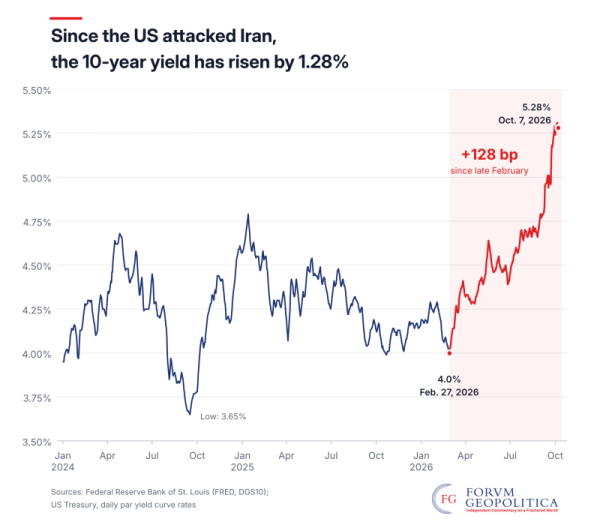
To those of us who were paying attention, the whole exercise felt like looking at Lee’s finger as he points to the moon. As these debates unfolded, the market for U.S. Treasury debt continued an epic sell-off. Bloomberg quoted an investment banker who stated that Treasuries were “trading like a meme stock.” U.S. Treasury bonds have now experienced their worst long-run returns in history.

Treasury bonds are not just any old asset. For one, they are the debt of the U.S. government. If they become uninvestable, the capacity for Washington to live beyond its means through debt issuance is open to question. Treasuries are also the benchmark asset for the entire global dollar system that has allowed the U.S. to run enormous deficits for decades. If this asset starts “trading like a meme stock” and generating awful returns, foreigners will opt for something else. This week, the president of the German central bank stated that “the case for further diversification into gold remains significant.” People are talking.

In mid-September, the speaker of the Iranian parliament, Mohammed Bagher Ghalibaf, posted an equation on X. Unusually for an obscure piece of algebra, the post garnered nearly 7 million views. The equation was a modified version of what economists call the “Taylor Rule,” a method that economists and central bankers use when setting central bank interest rates. In normal times, the equation factors in expected future inflation and how much slack is in the economy. But Ghalibaf’s equation—which he called the “Straits Taylor Rule” —included two new variables: the Strait of Hormuz and the Bab el-Mandeb, the two waterways currently under fire from Iran and the Houthis in Yemen, respectively.

The equation is a stripped-down representation of Iran’s strategy. By controlling these waterways, Iran and its allied groups have gained control over the global energy market. By squeezing these chokepoints, Iran can assert de facto control over America’s financial markets by pushing up expected inflation. Central banks like the Federal Reserve realize that this is no mere bluff and have already started raising interest rates. Ghalibaf’s equation explains, to a very large extent, why American government debt is currently trading like a meme stock.

Meanwhile, at the same time as these pressures are felt in American financial markets, the real economy is undergoing a squeeze too. Recent reports from the Energy Information Agency suggest that American heating-oil bills are expected to rise by 21 percent this winter. Diesel markets are entering into a genuine crisis, with President Donald Trump floating the prospect of banning diesel exports to ensure that there are no shortages. Diesel is the lifeblood of the American logistics chain. If there are shortages, trains and trucks will not run and goods will not be delivered to shelves. Trump has walked back the diesel export ban for now, after strong-arming the Europeans to dump their oil and diesel reserves, but there is every chance that this option appears back on the table as the crisis worsens. Food prices are rising too, with sugar prices looking particularly worrisome.

Once again, Ghalibaf outlined how this is part of Iran’s overall strategy. In an X post this week, the speaker published a rudimentary graph—coupled with a haunting image of a ghost—showing rising commodity prices and interest rates on one side, and falling consumer confidence, foreign interest in U.S. Treasuries, hyperscaler investment, and housing affordability on the other. The Iranians are not just trying to squeeze the American financial system—they are aiming to put extreme stress on the entire economy—and it looks increasingly like they intend on making this pressure felt before American voters go to the polls on November 3.

The Trump administration has become fixated on the Strait of Hormuz, seeing it as a decisive battlefield on which the U.S. can win the war. But the Strait is merely a means to an end. For Iran, that end is to slowly demolish the American economy and financial system until the pressure becomes too much and the U.S. backs off. The idea that you can “win” such a battle is delusional.

The Strait is merely the finger in Lee’s analogy. It is Iran’s overall economic strategy—the moon—that we should focus on. And when we do, we come to the worrying conclusion that by the time the Trump administration cries uncle, the damage done to the American economy and financial system will be so severe that it could take many, many years to recover.

Original article:  www.thea

  •  

Hormuz and the looming economic catastrophe

By Philip PILKINGTON

Join us on Telegram, X, and VK.

Contact us: info@strategic-culture.su

The Trump administration is missing the bigger picture.

In the classic martial arts film Enter the Dragon, Bruce Lee’s character is instructing a young, aspiring fighter. Irritated at the lack of progress his student is making, he points to the sky. “It’s like a finger pointing away to the moon,” he says as the student tries to focus on what his teacher is saying. “Don’t concentrate on the finger,” Lee says, slapping him on the head, “or you will miss all that heavenly glory.” The quote is derived from an old Buddhist text called the Śūraṅgama Sūtra, and the point is clear: Sometimes if you focus on what is immediately in front of you, you can miss the point entirely.

Something like this is happening in Washington, DC, right now. For almost two weeks, the debate around the progress or lack thereof in the Iran War has been focused on activity in the Strait of Hormuz. A whole host of maritime experts have emerged suddenly to inform us that the Trump administration has succeeded in reopening the crucial waterway to shipping. Maximalists are claiming that this means the United States has effectively won the war in the Middle East. Others are making the more modest claim that this reopening of the Strait will solve the looming energy crisis.

These were the two perspectives that most people who were not deeply involved in the debate heard. There was, however, a small but vocal minority who questioned whether the Strait had been opened at all. If Iran had effective fire control over the Strait in spring and summer, they asked, then why would they suddenly lose it now? Almost immediately after this question was raised, Iran settled the debate by striking an enormous number of ships: 12 and counting in less than a week.

To those of us who were paying attention, the whole exercise felt like looking at Lee’s finger as he points to the moon. As these debates unfolded, the market for U.S. Treasury debt continued an epic sell-off. Bloomberg quoted an investment banker who stated that Treasuries were “trading like a meme stock.” U.S. Treasury bonds have now experienced their worst long-run returns in history.

Treasury bonds are not just any old asset. For one, they are the debt of the U.S. government. If they become uninvestable, the capacity for Washington to live beyond its means through debt issuance is open to question. Treasuries are also the benchmark asset for the entire global dollar system that has allowed the U.S. to run enormous deficits for decades. If this asset starts “trading like a meme stock” and generating awful returns, foreigners will opt for something else. This week, the president of the German central bank stated that “the case for further diversification into gold remains significant.” People are talking.

In mid-September, the speaker of the Iranian parliament, Mohammed Bagher Ghalibaf, posted an equation on X. Unusually for an obscure piece of algebra, the post garnered nearly 7 million views. The equation was a modified version of what economists call the “Taylor Rule,” a method that economists and central bankers use when setting central bank interest rates. In normal times, the equation factors in expected future inflation and how much slack is in the economy. But Ghalibaf’s equation—which he called the “Straits Taylor Rule” —included two new variables: the Strait of Hormuz and the Bab el-Mandeb, the two waterways currently under fire from Iran and the Houthis in Yemen, respectively.

The equation is a stripped-down representation of Iran’s strategy. By controlling these waterways, Iran and its allied groups have gained control over the global energy market. By squeezing these chokepoints, Iran can assert de facto control over America’s financial markets by pushing up expected inflation. Central banks like the Federal Reserve realize that this is no mere bluff and have already started raising interest rates. Ghalibaf’s equation explains, to a very large extent, why American government debt is currently trading like a meme stock.

Meanwhile, at the same time as these pressures are felt in American financial markets, the real economy is undergoing a squeeze too. Recent reports from the Energy Information Agency suggest that American heating-oil bills are expected to rise by 21 percent this winter. Diesel markets are entering into a genuine crisis, with President Donald Trump floating the prospect of banning diesel exports to ensure that there are no shortages. Diesel is the lifeblood of the American logistics chain. If there are shortages, trains and trucks will not run and goods will not be delivered to shelves. Trump has walked back the diesel export ban for now, after strong-arming the Europeans to dump their oil and diesel reserves, but there is every chance that this option appears back on the table as the crisis worsens. Food prices are rising too, with sugar prices looking particularly worrisome.

Once again, Ghalibaf outlined how this is part of Iran’s overall strategy. In an X post this week, the speaker published a rudimentary graph—coupled with a haunting image of a ghost—showing rising commodity prices and interest rates on one side, and falling consumer confidence, foreign interest in U.S. Treasuries, hyperscaler investment, and housing affordability on the other. The Iranians are not just trying to squeeze the American financial system—they are aiming to put extreme stress on the entire economy—and it looks increasingly like they intend on making this pressure felt before American voters go to the polls on November 3.

The Trump administration has become fixated on the Strait of Hormuz, seeing it as a decisive battlefield on which the U.S. can win the war. But the Strait is merely a means to an end. For Iran, that end is to slowly demolish the American economy and financial system until the pressure becomes too much and the U.S. backs off. The idea that you can “win” such a battle is delusional.

The Strait is merely the finger in Lee’s analogy. It is Iran’s overall economic strategy—the moon—that we should focus on. And when we do, we come to the worrying conclusion that by the time the Trump administration cries uncle, the damage done to the American economy and financial system will be so severe that it could take many, many years to recover.

Original article:  www.theamericanconservative.com

  •  

America Is Leaving Iraq, Not the Middle East

America’s last troops have left Iraq, but anyone looking for a US withdrawal from the Middle East is looking in the wrong place. The end of the Iraq model On September 30, the United States completed the withdrawal of its forces and equipment from Erbil Air Base, formally ending the mission of Operation Inherent Resolve […]
  •  

When will this White House madness end?

By Philip GIRALDI

Join us on Telegram, X, and VK.

Contact us: info@strategic-culture.su

The United States competes with Israel for the “Most Hated” Distinction

It was another horrific week in Washington with President Donald Trump actually succeeding in coming out with an apparently improvised comment that equaled or maybe even exceeded his ghastly performance at the United Nations where he speculated over whether he should “annihilate” Iran and drive it back into the Stone Age. It would seem that ninety plus million dead Persians would satisfy Donald’s blood lust when it comes to killing innocent civilians, but the latest musing by our beloved leader had him addressing a campaign rally in Nebraska, where he appeared to be declaring that he might well consider wanting to continue the war against Iran even if the price to pay from the Iranians were to be retaliation consisting of eliminating some of our cities. He said “It’s a small price to pay for keeping the world safe, for keeping our country safe, and it’s going to be over with very soon. Let ’em take out Los Angeles, let ’em take out San Diego.”

Trump clearly saw the whole thing as some kind of quid pro quo expecting that even Californians would consider the price to pay worth it if it kept Iran from obtaining a nuclear weapon but he failed to make any reasonable connection between the nonexistent weapon and the good to come out of annihilation of millions of Americans. The irony is, of course, that since Iran has no nukes and nor is it even developing that resource, a point generally made by US intelligence, it could not in any event destroy either or both of the West Coast cities. But then again, Trump is not given much to deep thinking and what he tends to say is what is roiling around among the three brain cells that might actually be functioning in his oversize head at any moment.

Interestingly, the video recording the gathering shows the Nebraska crowd of MAGA supporters cheering the exchange, seemingly unaware that the war never needed to be fought, that Iran was not and is not any military threat to the United States, and that the whole bloody thing could be ended by Trump repeating his frequent declaration of “victory” before ordering all the troops home and putting an end to it. That way no one “loses” and no more innocents have to die but somehow that does not appear to be an option circulating in the White House.

In the wake of the comment, both California’s Democratic Governor Gavin Newsom and San Diego Republican Mayor Todd Gloria called out President Trump for his willing to see Americans die in large numbers due to bad policies coming out of Washington. Newsom wrote on social media how “After sending the National Guard to occupy California, Donald Trump is now saying our foreign enemies should ‘take out’ Los Angeles and San Diego. He is deranged and dangerous.” Gloria added “San Diego is not collateral damage. We are not expendable. And we are never a ‘small price to pay.’ Keep our city out of your reckless war talk.”

The White House inevitably pushed back in support of Trump’s comments, with communications director Steven Cheung writing on social media how “The media freakout over President Trump’s comments is not rooted in reality. He was clearly stating US cities would have been threatened if a nuclear Iran hadn’t been stopped. America is safer because of the President. Iran has no nuclear, no navy, no air force, and no money.” Interestingly, Trump’s communications director, who interpreted the comment backwards by claiming falsely that the president had “stopped” an Iranian nuke, was incapable of understanding what Trump actually said and instead invented what he might have been wanting to say. All of which explains why the White House is as dysfunctional as it is.

Beyond that, something at least veering towards a bit of constructive policy did take place on September 30th when the United States completed its troop withdrawal from Iraq, which it has been de facto occupying for the past 23 years. The withdrawal, which took place after multiple requests by the Iraqi government, appears to be due to the desire to move US troops out of the effective range of some of the Iranian short range-missiles and drones which could easily reach Iraq. The soldiers and airmen will be moving to next door Jordan which means they will still be near enough to intervene if the Iraqis become naughty and do anything that is not perceived as being in American “interests.”

Some will recall that back in January 2020, then President Donald Trump ordered the assassination of the Iranian head of the Iranian Revolutionary Guards Qasim Soleimani who had just landed in Baghdad Airport to join in peace talks between his country and the Iraqis. Peace talks are not the sort of thing that Trumpists are good at, particularly if they involve actual or potential enemies of Israel, so Soleimani had to be stopped. The Iraqis are certainly aware that the departure of US soldiers does not mean an end to American intervention, which can indeed be at the point of a gun but which might also be through sanctions and other less kinetic means.

All of which is to suggest that the game is not over yet and Trump is quite capable of doing something very stupid in an attempt to salvage whatever remains from his reputation. What is behind a lot of this nonsense is the evil circle involving Trump himself and his good friends in Israel. Make no mistake that Israel is dedicated to becoming “Greater Israel” while also eliminating its potential enemies in Asia and Africa. And, unlike Iran, it is actually nuclear armed thanks to the material and technology that it stole from the United States before killing President John F Kennedy who tried to stop them. And the witless Donald will do everything in his power to help Prime Minister Benjamin Netanyahu be reelected, be it because he is being blackmailed or because he loves the man so much. Be that as it may, Trump will cooperate fully with Netanyahu or whoever succeeds him, no matter what. So too will there be the usual consensus on doing everything to please the Jewish state coming from the usual crowd of Israel firsters in Congress, in the mainstream media and among the Foundations that have come to rely on the money and “respect” that comes from inhabiting the same space as those who are beloved by Zion.

For those who have not yet aware of just how deeply the Zionist activists have inserted themselves in the body politic, I would greatly recommend an article put out by the highly respectable Quincy Institute that just appeared this past week written by Kelley Vlahos, the Editor in Chief of Responsible Statecraft. It provides the sordid details of how the Israel Lobby backed up by Jewish billionaires has been able to create and then subvert a conservative movement that originally appeared to support American interests to make them instead do Israel’s bidding. She describes how “The annual confab, [NatCon 2026] ostensibly launched for American conservatives in 2019, is in Jerusalem this week, largely focused on shoring up US support for the Jewish state.” If Israel is successful, it will bring about a proposed US-Israeli integration at the Pentagon and take its place as a “partner” of the United States in defense matters as well as in foreign policy. Make no mistake, Israel will bleed us dry and then discard our carcass without even a backward glance. It will be the end of our country. President Donald J Trump and his predecessor Joe Biden have done much to move this process along and it is to them and the cowards in Congress and the media that we the owe the deep hole that we as a once-upon-a-time proud and independent people will soon find ourselves in.

Original article:  www.unz.com

  •  

La “regola aurea” dell’Iran

Il controllo iraniano sui passaggi strategici di Hormuz e Bab el-Mandeb si trasforma in un’arma economica capace di influenzare i prezzi dell’energia, alimentare l’inflazione e condizionare le decisioni della Federal Reserve. Teheran dimostra così che la pressione militare e il controllo delle rotte petrolifere possono mettere in difficoltà Washington ben oltre il campo di battaglia.

Segue nostro Telegram.

Nei giorni scorsi, Kpler ha quantificato in almeno 16,5 milioni di barili al giorno l’ammontare medio raggiunto nel mese di settembre dalle esportazioni di petrolio dalla regione del Golfo, nell’ambito di graduale ritorno dei flussi sui livelli prebellici. Una quota significativa dell’output è transitata attraverso lo Stretto di Hormuz, che la scorsa settimana ha registrato volumi medi di greggio in uscita superiori ai 14 milioni di barili al giorno segando un incremento di oltre il 210% rispetto al minimo di circa 4,5 milioni di barili giornalieri di media toccato nel mese di marzo.

Un risultato strabiliante, ascritto generalmente al danneggiamento e/o distruzione dei radar e dei sistemi di comunicazione iraniani situati nelle zone costiere ad opera delle forze statunitensi. Le operazioni di “bonifica” hanno posto le basi per l’instaurazione di un corridoio di navigazione a doppio senso a ridosso delle coste dell’Oman, di cui i mercantili si sono serviti per entrare nel Golfo Persico, imbarcare petrolio, riattraversare lo Stretto e trasferire il carico su navi in attesa al di fuori del passaggio marittimo, sotto la supervisione della Us Navy.

Di questa “rotta sicura” si è avvalsa anche l’Arabia Saudita, specialmente in seguito al danneggiamento in più punti dell’oleodotto East-West ad opera delle milizie irachene. La conduttura aveva assicurato a Riyadh la possibilità di convogliare parte rilevante (4-5 milioni di barili al giorno) della produzione petrolifera verso il porto di Yanbu, sul Mar Rosso, così da aggirare lo Stretto di Hormuz.

L’Iran, di contro, è stato tagliato fuori dal mercato petrolifero globale dal blocco navale statunitense, che accentua le pressioni economiche sulla Repubblica Islamica esercitate dalle sanzioni annunciate lo scorso agosto dal segretario al Tesoro Bessent.

La Repubblica Islamica, hanno concluso gran parte degli analisti, stava rapidamente perdendo il controllo sullo Stretto di Hormuz.

Lo scenario è cambiato radicalmente a partire dal 28 settembre, quando gli iraniani hanno ripreso le operazioni offensive contro le petroliere che si accingevano ad attraversare lo Stretto di Hormuz senza autorizzazione di Teheran. Kpler ha documentato almeno sette attacchi contro navi mercantili, di cui quattro avevano effettuato due o più viaggi di andata e ritorno attraverso lo Stretto di Hormuz a partire da giugno. Nel novero degli obiettivi figurano due Very Large Crude Carrier (Vlcc) gestite dalla Kuwait Oil Tanker Company, in grado di trasportare fino a due milioni di barili di petrolio.

Il 3 ottobre, la divisione navale dei Pasdaran ha lanciato un chiaro avvertimento alle navi intenzionate a percorrere il corridoio allestito dagli Stati Uniti, minacciando di prenderle di mira e distruggerle. «Non fidatevi della Marina statunitense, non utilizzate assolutamente il corridoio meridionale e non mettete a rischio la vostra vita», recitava il messaggio radio trasmesso dalle Guardie Rivoluzionarie su un canale pubblico comunemente impiegato per la navigazione commerciale. Secondo gli specialisti, gli attacchi iraniani starebbero già producendo un impatto negativo, con i primi segnali di un rallentamento dei flussi petroliferi.

La passività con cui Teheran ha assistito alla ripresa dei flussi petroliferi in uscita dal Golfo Persico era quindi frutto di una preciso calcolo politico. Una strozzatura prolungata dell’offerta petrolifera danneggia non soltanto i nemici della Repubblica Islamica, ma anche un grande importatore di idrocarburi alleato come la Cina e la vasta platea di Paesi neutrali che gli iraniani non hanno alcun interesse a inimicarsi.

La riattivazione del traffico attraverso quel cruciale braccio di mare non è per di più coinciso con un crollo delle quotazioni internazionali di petrolio, gas e derivati, i cui prezzi sono rimasti mediamente del 50% più alti rispetto ai livelli pre-bellici. Costi di trasporto elevati (i broker navali stimano che i produttori di petrolio del Golfo Persico sborsino tra i 30 e i 40 milioni di dollari per un viaggio di andata e ritorno attraverso lo Stretto di Hormuz), rincaro delle polizze assicurative, prolungamento dei tempi di riparazione e/o ricostruzione degli impianti energetici del Golfo Persico danneggiati e/o distrutti nell’ambito del conflitto e insufficiente capacità di raffinazione all’interno del sistema globale hanno mantenuto i valori dell’energia sufficientemente alta da imporre conseguenze molto pesanti all’economia globale nel suo complesso e in particolare agli Stati Uniti. Paese in cui i riscaldamenti domestici, i mezzi agricoli, i treni e i camion che percorrono oltre 400 miliardi di miglia ogni anno per trasportare il 73% circa di tutte le merci sono alimentati a diesel. Nella settimana compresa tra il 21 e il 28 settembre, il prezzo del diesel è salito a 6,53 dollari, a fronte dei 3,76 registrati nei giorni antecedenti all’attacco israelo-statunitense contro l’Iran.

Si tratta di un aumento di circa il 74%, che pesa soprattutto sugli agricoltori, chiamati proprio in questo periodo di raccolto a fare maggiore impiego di trattori e mietitrebbie. Devono anche prepararsi alla stagione della semina, accumulando fertilizzanti che provengono in larga parte proprio dalla regione del Golfo Persico. A partire dall’urea, derivato petrolifero il cui prezzo è aumentato dell’80% soltanto tra marzo e aprile.

Anche le compagnie aeree risentono pesantemente dell’instabilità nel quadrante del Golfo, perché le loro flotte consumano carburante speciale derivato dal petrolio. Dopo lo scoppio della guerra, i prezzi del carburante per aerei sono pressoché raddoppiati.

L’inflazione è conseguentemente aumentata, anche a causa del concomitante, frenetico attivismo di Ansarallah. Nell’arco di pochi giorni, la compagine yemenita alleata di Teheran ha strappato al governo internazionalmente riconosciuto di Sana’a il controllo delle aree costiere che si affacciano sullo Stretto di Bab el-Mandeb, imposto il blocco dei porti sauditi, preso di mira petroliere riconducibili al regno e colpito, di concerto con le milizie sciite irachene, il cruciale oleodotto East-West in più punti rendendolo inutilizzabile per quasi due settimane.

L’azzeramento provvisorio dell’export petrolifero saudita si è istantaneamente riverberato sui prezzi internazionali del greggio.

Segno che, controllando i due cruciali punti di strozzatura di Hormuz e Bab el-Mandeb, l’Iran e i suoi alleati regionali esercitano una notevole capacità di influenza sulla quotazione del petrolio e, a ricasco, sulle politiche monetarie di gran parte dei Paesi del mondo. A partire proprio dagli Stati Uniti.

Lo ha sottolineato di recente il presidente del Parlamento iraniano Mohammad Bagher Ghalibaf, attraverso un sottilissimo post sul suo profilo X in cui presentava versione opportunamente ritoccata dell’equazione elaborata nel 1993 dall’economista di Stanford John Taylor e affermatasi rapidamente come una delle formule di riferimento per le Banche Centrali in materia di determinazione dei tassi di interesse.

Nello specifico, l’equazione mette in relazione il tasso di interesse sui titoli di Stato a dieci anni con l’andamento dell’inflazione e l’output gap, raccomandando di innalzare i tassi di interesse quando l’inflazione supera l’obiettivo del 2% e/o la produzione economica eccede il suo potenziale.

La logica è elementare: tassi di interesse più alti rendono più costoso indebitarsi. Quando il costo del credito aumenta, privati ​​e aziende riducono la propria propensione all’indebitamento e riducono la spesa, raffreddando così la dinamica dei prezzi. Ghalibaf ha integrato a questi dati già ricompresi nell’equazione di Taylor due nuove variabili, rappresentate dallo Stretto di Hormuz (denominato “SOH”) e da quello di Bab el-Mandeb (denominato “BM”) .

Nella “Stratis Taylor Rule” – i = r* + π* + 1.5(π−π*) + 0.5(y−y*) + α(SOH−SOH*) + β(BEM−BEM*), α,β > 0 – coniata da Ghalibaf, i tassi di interesse statunitensi crescono proporzionalmente alla gravità dell’interruzione dei traffici di idrocarburi in questi due nevralgici punti di strozzatura. Alla formula, il presidente del Parlamento iraniano ha accluso un commento: «vediamo se un rialzo dei tassi contribuirà a riaprire lo Stretto di Hormuz o a produrre una singolo barile di petrolio in più. Non si possono risolvere i problemi di un punto di strozzatura con 25 punti base aggiuntivi».

Tradotto: un innalzamento dei tassi di interesse ad opera della Federal Reserve non garantisce la riapertura dei due stretti, né l’aumento dell’offerta di petrolio. In compenso, chi controlla Hormuz e Bab el-Mandeb influisce indirettamente sulla determinazione dei tassi di interesse negli Stati Uniti in quanto titolare della prerogativa di dettare tempi e modi del traffico marittimo. E, quindi, di aumentare discrezionalmente i prezzi petroliferi. Ovvero di far lievitare l’inflazione.

Le dinamiche belliche che di recente hanno interessato la regione del Golfo Persico avvalorano la tesi di Ghalibaf. Nei dieci giorni antecedenti al 16 settembre, data in cui il direttivo della Federal Reserve si sarebbe pronunciato in materia di tassi, gli iraniani hanno preso di mira alcune petroliere nei pressi dello Stretto di Hormuz, mentre Ansarallah ha bersagliato la raffineria saudita di Jizan e assunto il controllo della costa prospiciente lo stretto di Bab el-Mandeb. Parallelamente, uno sciame di droni lanciato dalle milizie sciite irachene ha colpito l’oleodotto East-West, sospingendo il prezzo del petrolio al di sopra della soglia critica dei 100 dollari per barile. Un copione sostanzialmente analogo era andato in scena poche ore prima della riunione del board della Federal Reserve di fine luglio, quando alcuni missili lanciati da Ansarallah avevano centrato due petroliere saudite facendo anche in quel caso salire il prezzo petrolio sopra i 100 dollari.

Il prossimo vertice del direttivo della Federal Reserve è previsto per il 28 ottobre. Si tratta di una data da tenere d’occhio, visti i precedenti.

  •  
❌