❌

Reading view

Germany works to organize a Coalition of the Willing meeting as Russia strikes Ukraine’s energy sector
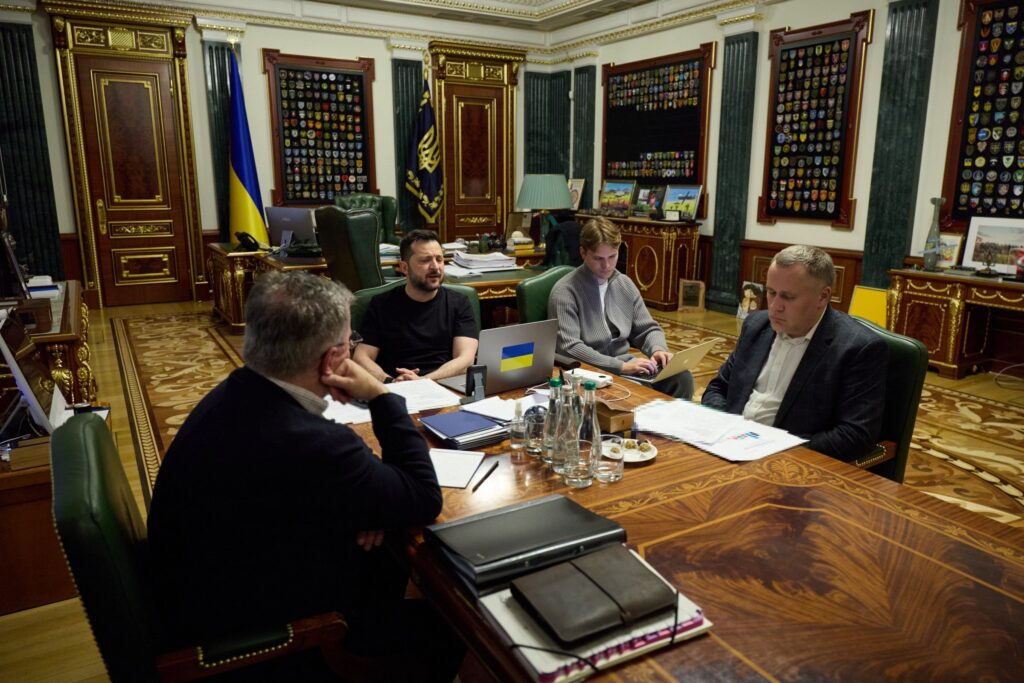
Ukrainian President Volodymyr Zelenskyy during a phone call with German Chancellor Friedrich Merz, 12 October 2026. Photo: Volodymyr Zelenskyy/X

Germany is preparing a new meeting of the Coalition of the Willing to coordinate further support for Ukraine, President Volodymyr Zelenskyy said on 12 October following a conversation with German Chancellor Friedrich Merz.

Russia continues to strike Ukraine’s energy infrastructure despite US President Donald Trump’s claim that Moscow has agreed to an energy truce. German Chancellor Friedrich Merz is initiating a meeting of European leaders to discuss assistance to Ukraine in this situation.

Kyiv and Berlin have also agreed to hold a meeting of national security advisers in the E3 format, with Ukraine participating, according to the statement. The format involves an informal grouping of three leading European countries: the United Kingdom, France and Germany.

Zelenskyy and Merz discuss energy truce and support for Ukraine

During the conversation, the two sides also discussed US President Donald Trump’s proposal for an energy truce and Russia’s subsequent actions. Russian forces continue to attack Ukraine’s energy infrastructure, Zelenskyy noted.

“This is exactly how the Russians behave when pressure eases. It is very important that Europe continue to act on principle,” Zelenskyy stressed.

German Chancellor Friedrich Merz speaks online with Ukrainian President Volodymyr Zelenskyy, 12 October 2026. Photo: Volodymyr Zelenskyy/X

Germany is coordinating preparations for a meeting of the Coalition of the Willing, the Ukrainian president noted. The two sides also discussed support for Ukraine’s financial stability. Further steps are to be coordinated in greater detail during a meeting scheduled for this week, Zelenskyy said.

The Coalition of the Willing seeks additional support for Ukraine

The Coalition of the Willing was initiated by the United Kingdom and France, which held talks with representatives of 37 countries in March 2025 on supporting Ukraine in the event of a peace agreement. The initiative envisaged financial assistance and the deployment of troops, air forces or naval forces to protect Ukraine against renewed Russian aggression, Bloomberg reported.

The latest meeting of the Coalition of the Willing took place on 24 August and was the 16th meeting, according to a statement on the website of the President of Ukraine. Zelenskyy called on partners to strengthen Ukraine’s air defense and provide at least 300 missiles for Patriot systems for the winter, the statement said.
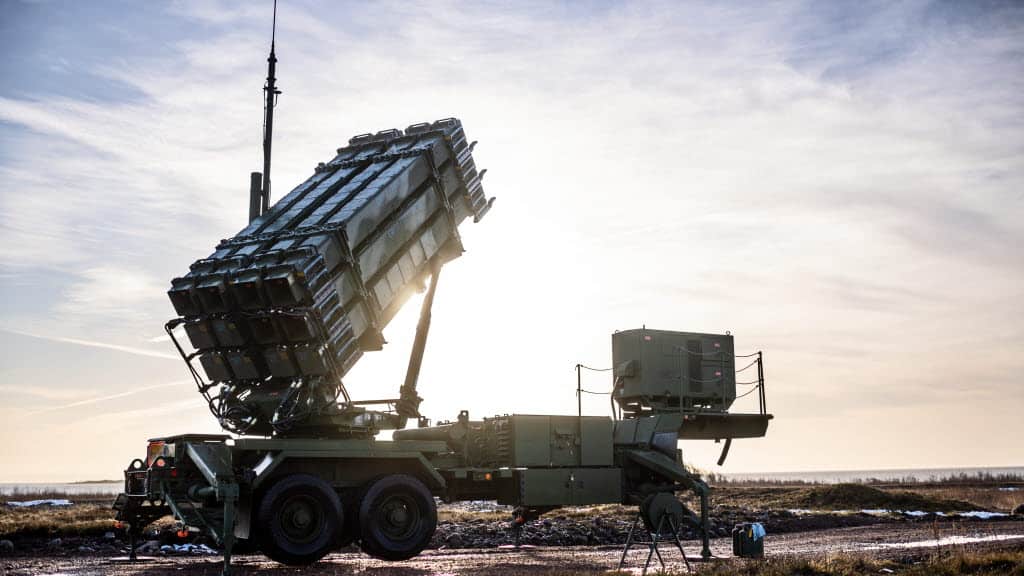
Patriot PAC-3 surface-to-air missile system.
The Patriot PAC-3 surface-to-air missile system. Photo: Swedish Ministry of Defense

The president also proposed bringing forward part of the European loan financing planned for 2027 so that Ukraine could receive the funds this year. He separately stressed the need to find a mechanism for using frozen Russian assets to defend Ukraine and to unblock the maritime corridor in the Black Sea.

“We value this format—the Coalition of the Willing. It brings together countries that are ready not only to talk about security but also to act. We need this—to act and build real security together,” Zelenskyy stressed.

A ceasefire in words, but fresh attacks on energy infrastructure in practice

Ukraine and Russia had allegedly agreed to an immediate energy ceasefire, US President Donald Trump said on Truth Social on 11 October. However, at the time of publication, neither Kyiv nor Moscow had confirmed such an agreement, Ukrainska Pravda reported.

Ukraine supports the ceasefire and is awaiting details from the US side, Volodymyr Zelenskyy said in a post on X the same day. Russia must also agree to halt the strikes, he stressed.

Ukrainian forces had received the relevant orders, and Kyiv was ready to refrain from striking Russian energy infrastructure provided Russia reciprocated, Zelenskyy said in his evening address on 11 October.

Russia continued attacking Ukraine’s energy infrastructure after the ceasefire was announced, including striking a gas production facility and a petrol station, Zelenskyy said on his official Telegram channel on 12 October. Moscow had shown no willingness to abide by the ceasefire, the president added.

  •  

Iran war-depleted arsenal making US a less potent power

The Iran conflict has exposed a glaring blind spot in US war strategy. America can escalate in hours, but it can take years to rebuild the arsenal it consumes. Washington has begun addressing the arms-replenishment problem, a calculation it should have made before escalating. The Pentagon’s recent awards reflect the intensity of the challenge. In […]

The post Iran war-depleted arsenal making US a less potent power appeared first on Asia Times.

  •  

Russian ballistic missiles hit Kyiv before sirens, gap that lands hard amid fears that Washington could cut data that warns of launches

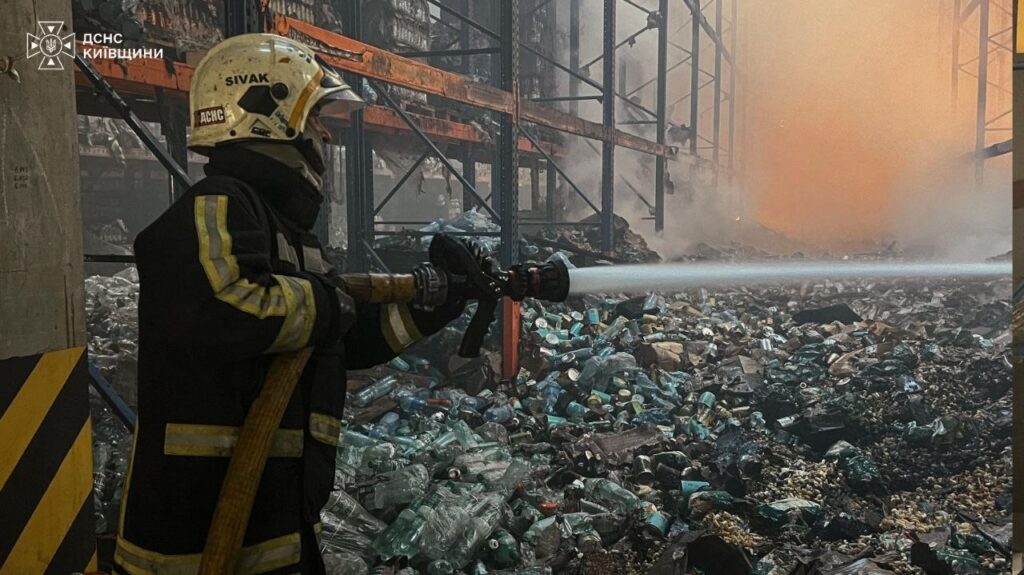
just power plants russia’s drones also went after warehouses groceries hardware chain · post firefighter puts out fire warehouse burned food drink stock hit russian attack bucha district kyiv oblast

Russian forces struck several districts of Kyiv late on 12 October with what the Air Force called, by preliminary data, six ballistic missiles. For once, the air-raid alert reached people only after the attack had begun, Ukraine’s Air Force reported.

Reports of Russian ballistic launches are part of the intelligence the US shares with Ukraine, and that data is what lets sirens sound before the missiles arrive, giving civilians a few minutes to hide. Those minutes save lives, which is why the warning gap landed hard amid fears that Washington could cut Ukraine off from such intelligence amid US President Donald Trump's agreement with Russia to let its diesel into the US.

The alert came late because Ukraine’s radar detected the ballistic targets only during the attack, with no advance data on launches from Russian territory, according to the Air Force.

“No information was received about launches from enemy territory. The causes are being established,” the Air Force said.

The stakes are human, presidential adviser Serhii Beskrestnov, known as Flash, stressed.

“This information is needed first of all by civilians, so that people have time to hide in a shelter,” he said.

Beskrestnov says he does not want to believe the US would leave Ukraine without that data because it is a matter of civilian survival. He urged caution on the cause, saying there were nuances and that it was too early to draw conclusions.

When the sirens fall behind the missiles

However, Ukraine usually sees the launches first. The warning system normally flags Russian ballistic launches before the missiles reach their targets, giving people time to move, but on 12 October, that did not happen, the Air Force noted.

Beskrestnov later added a note of doubt about what flew. The suspected S-400 missiles were not being recorded by partners’ intelligence services, he wrote, stopping short of blaming the lapse on a loss of US data.

Two cities hit within the same hour

The damage in Kyiv was concrete. A missile struck a transport-infrastructure site in the Dniprovskyi district, and another hit a four-story warehouse in the Desnianskyi district, Mayor Vitali Klitschko said.

Russia struck Kharkiv at about the same time with nine S-8000 Banderol loitering munitions, Mayor Ihor Terekhov reported. One of the last strikes hit a residential building, where people may be trapped under the rubble and a fire is burning.

“Very serious destruction, an entire stairwell collapsed,” Terekhov said.

  •  

EU Targets Heart of Russia’s War Machine With Unprecedented Sanctions Against 1,569 Firms and Executives

The European Union has adopted an unprecedented package of sanctions against Russia’s military-industrial complex, blacklisting 1,569 companies and individuals involved in supplying weapons for Moscow’s war against Ukraine.

The Council measures announced on 12 October target 826 companies and 743 executives. Unlike earlier sanctions targeting political figures, the latest listings reach deeper into the industrial supply chains needed to manufacture missiles, drones, aircraft and ammunition.

Ballistic missile supply chains

EU foreign policy chief Kaja Kallas said more than half the new listings concerned ballistic missile production. The Council identified electronics manufacturers, semiconductor suppliers, radar specialists, navigation equipment firms and producers of explosives.

These businesses occupy positions in production networks that enable Russia to sustain the manufacture of weapons despite restrictions on its access to Western technologies. The Council announcement estimates their combined annual turnover at at least €20 billion and employment at more than 250,000.

The move follows intensive Russian missile and drone strikes against Ukrainian cities and energy installations. European governments increasingly seek to undermine Moscow’s operational capacity by identifying businesses that procure or manufacture components for its armed forces.

Enforcement beyond EU borders

Listed firms face asset freezes, while EU businesses and citizens cannot make funds or economic resources available to them. The named executives also face travel restrictions. Suppliers and financial institutions will need to check commercial transactions for links to sanctioned entities.

The actual impact on Russian output remains uncertain. Businesses with few assets in Europe may experience limited immediate disruption. Moscow has developed alternative procurement channels through third countries, some involving intermediaries that acquire electronics or equipment originally manufactured elsewhere.

Sanctions effectiveness therefore depends on customs intelligence, financial due diligence, international cooperation and the willingness of commercial partners to stop dealing with listed companies. Targeting managers individually is also intended to raise the personal costs of directing Russia’s military production.

A test for Europe’s economic pressure

Precision navigation systems, sophisticated electronics and specialised manufacturing technology remain difficult to substitute rapidly. Nevertheless, listing a supplier cannot by itself prevent components from moving through indirect trading routes.

The sanctions coincide with renewed discussion of a possible halt to attacks on energy infrastructure. Brussels is signalling that negotiations about the war’s conduct need not entail relief from restrictions on Russia’s defence economy.

Whether the measures reduce missile production will depend on changes in procurement and output over the coming months. Their immediate significance is the EU’s decision to extend restrictions beyond the most visible weapons producers into the broader industrial networks sustaining Russia’s war.

  •  

Kinzhal is 90% identical to Iskander-M: Ukraine’s intelligence identifies 58 companies in production chain

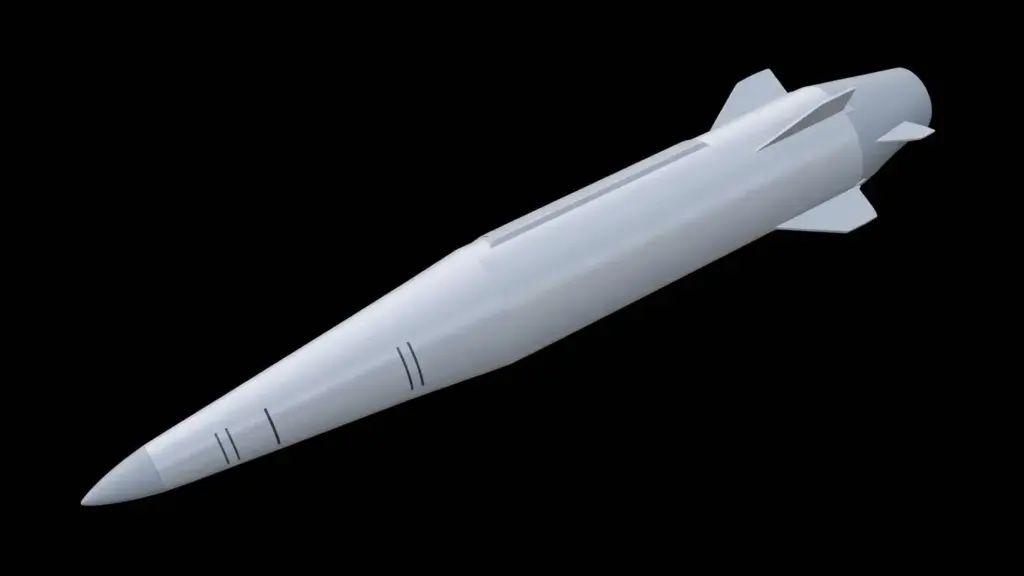
3D model of the Kh-47M2 Kinzhal missile. Photo: Ukraine’s Ministry of Defence

Ukraine’s Defense Intelligence (HUR) released information on the components of Russia’s Kinzhal air-launched ballistic missile and the companies involved in its production, according to a statement dated 12 October.

Russia has used Kinzhal missiles to strike targets across Ukraine since the start of its full-scale invasion. However, 22 of the 58 companies in Russia’s Kinzhal production network are not subject to sanctions, the intelligence agency noted.


Kinzhal missile: design, components, and production changes

Ukraine’s Defense Intelligence has published an interactive 3D model of the Russian Kinzhal missile on its War&Sanctions portal.

The 9-S-7760 missile, known as the Kh-47M2 Kinzhal, uses solid fuel and has a single stage. This means the missile does not consist of multiple stages that separate sequentially during flight. About 90% of its components are identical to those used in the 9M723 ballistic missile of the Iskander-M system, HUR noted.

The Kinzhal is equipped with a radar homing seeker, an active jamming station, and a decoy deployment system, according to the statement. The homing seeker helps the missile determine the direction to its target, while decoys are designed to make interception by air defense systems more difficult.

The missile can carry one of two types of warheads: a penetrating high-explosive warhead or a nuclear warhead. Russia is also developing a version with a high-explosive fragmentation warhead that strikes targets through an explosion and fragments. HUR believes this development may be linked to problems with the missile’s accuracy.

In 2026, Russia significantly reduced its state procurement order for Kinzhal missiles and redirected some production resources, components, and raw materials towards manufacturing Iskander-M missiles, HUR noted. Another reason is the limited number of MiG-31I and MiG-31K aircraft used to launch Kinzhal missiles, the intelligence agency reported.

Ukraine intercepts Kinzhal missiles, but has limited resources to do so

Despite their high speed, Russian Kinzhal missiles can be intercepted using US-made Patriot surface-to-air missile systems. In particular, PAC-3 interceptor missiles are designed to destroy ballistic targets and can be used against threats such as the Kinzhal and Zircon, Ukraine’s Ministry of Defense reported.


Ukraine is seeking additional Patriot interceptor missiles to defend against Russian ballistic attacks during the winter.

Patriot PAC-3 surface-to-air missile system.
The Patriot PAC-3 surface-to-air missile system. Photo: Swedish Ministry of Defense

Most of the approximately 1,000 missiles Kyiv has contracted for are not expected to arrive for several years, prompting Ukraine to ask its allies to supply missiles from their existing stockpiles, Defense News reported on 12 October 2026.

Sanctions loopholes allow Russia to obtain foreign components for Kinzhal missiles

Russia continues to use foreign components in missile production despite sanctions. For instance, the US-made Texas Instruments processors were found again in a newer version of the Kinzhal missile, Ukrainian presidential commissioner for sanctions policy Vladyslav Vlasiuk said in September, Interfax reported. According to him, foreign electronics continue to reach Russia through various supply channels.

Earlier, Ukraine had provided its partners with information on more than 100 Russian companies involved in ballistic missile production and urged them to impose sanctions on those entities, according to the President's Office.

On 12 October, the EU Council imposed sanctions on 1,569 individuals and entities linked to Russia’s military-industrial complex, including 826 Russian companies and 743 company CEOs.

  •  
❌