A delicada negociação para a formação de um governo liderado pelo partido A Esquerda, em Berlim, emperrou em sua segunda semana. Nesta terça-feira (13), Verdes e sociais-democratas anunciaram a suspensão do diálogo após o partido vencedor das eleições ter admitido uma deputada radical em seu grupo parlamentar.
Leia mais (10/13/2026 - 18h38)
Irão está a mobilizar sociedade para guerra total contra os EUA e até envia militares aos jardins de infância para contar histórias sobre a guerra. Mas possível ofensiva dos EUA só após intercalares.
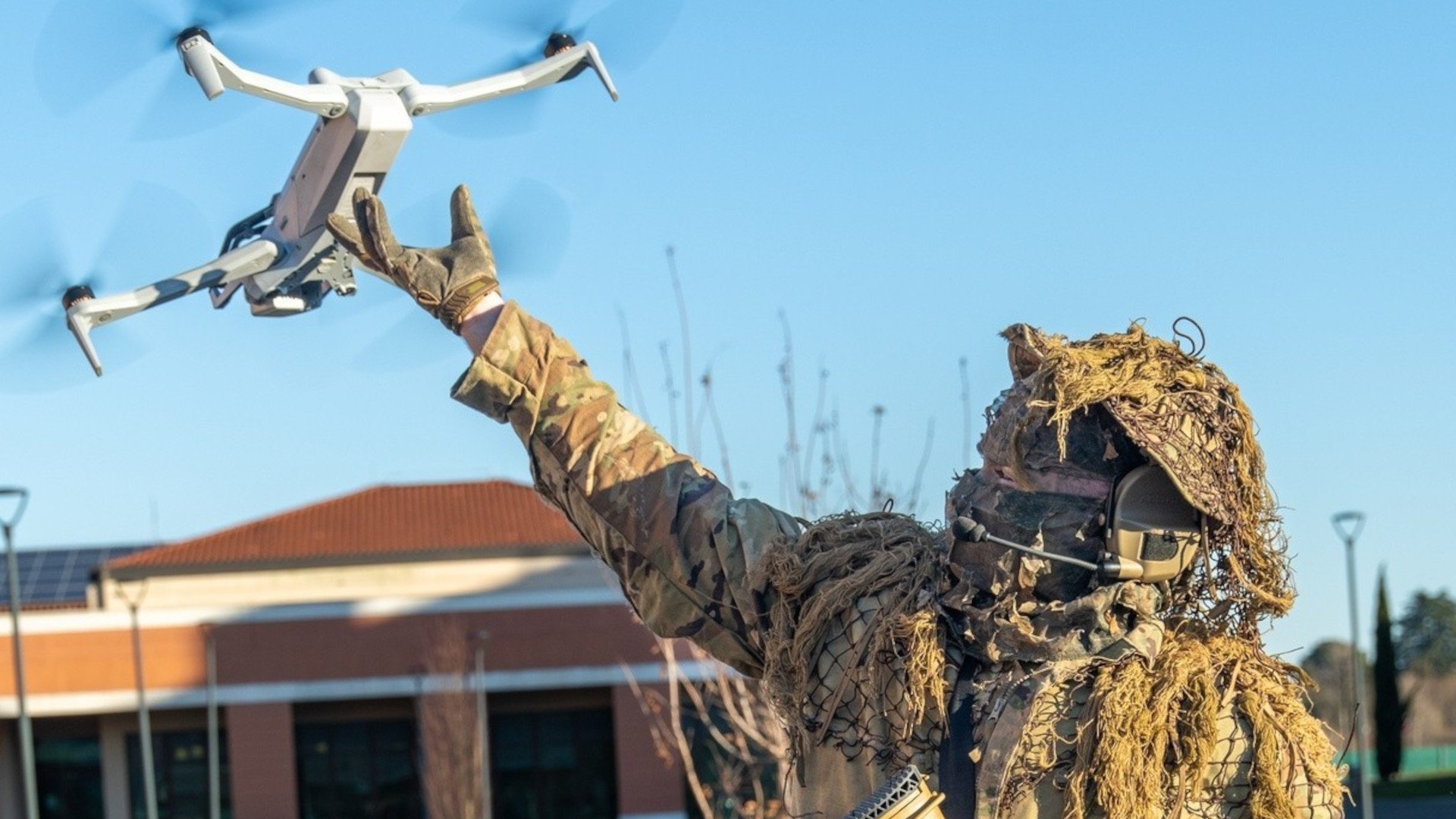
For more than a year, U.S. Army forces in Europe have been experimenting with new counter-drone capabilities, as well as tactics, techniques, and procedures to go with them, under the umbrella of what is dubbed Project Flytrap. In doing so, the service has also been gaining valuable new insights into how uncrewed systems can help shape the battlefield for friendly forces. It is particularly interesting to hear how the Army envisions using uncrewed platforms to open up new avenues for deceiving opponents.
Army Col. Timothy Price, head of the 2nd Cavalry Regiment, discussed the use of uncrewed platforms for deception and other operational concepts that have emerged in the course of Project Flytrap during a talk yesterday. Price’s remarks came at the Association of the U.S. Army’s (AUSA) main annual convention, at which TWZ is in attendance. 2nd Cavalry Regiment, based in Germany, is a brigade-sized mechanized formation equipped primarily with variants of the Stryker 8×8 light armored vehicle.
Stryker light armored vehicles assigned to 2nd Cavalry Regiment seen configured for a Project Flytrap event. US Army Sgt. Alejandro Carrasquel
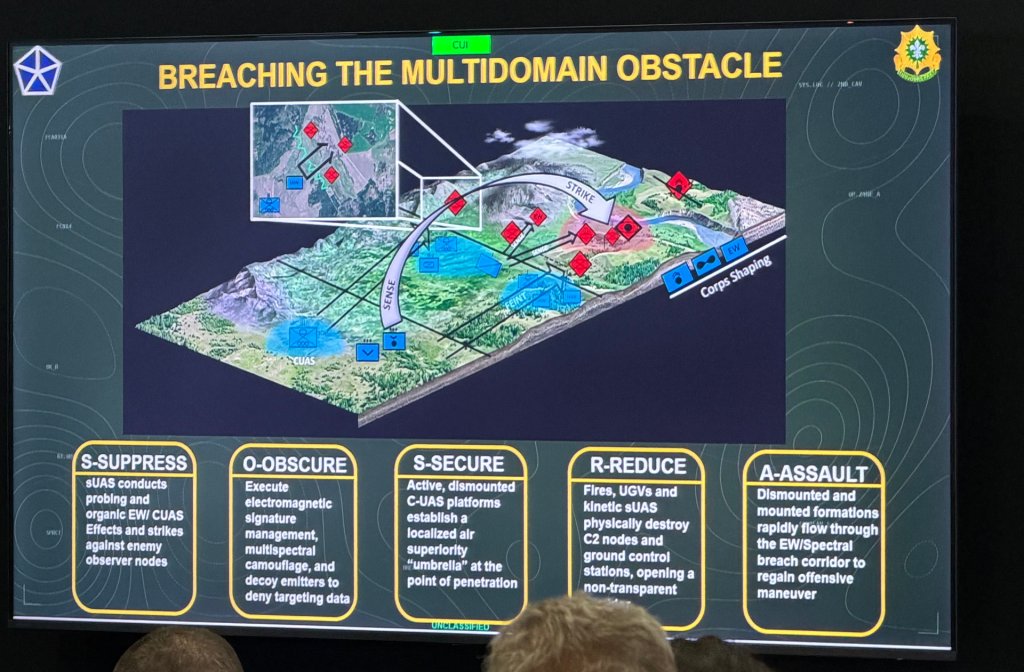
Price, by way of introduction, described modern battlefields full of uncrewed platforms in the air and on the ground as presenting new twists on long-standing problem sets. More specifically, he started by describing the typical approach to getting past a minefield or similar obstacle using an established framework called SOSRA, which stands for Suppress, Obscure, Secure, Reduce, Assault.
“If we were going to breach a mined wire obstacle, the first step of SOSRA – suppress – would be the utilization of indirect fires, to get the enemy’s head down, and direct fire systems, so they would not maneuver on you, fix them in place, and you can make a decision about how you’re going to approach the problem,” the 2nd Cavalry Regiment commander explained. “The next step would be to obscure it. In the historical sense, obscurations used is [sic] smoke, to mask your movement to the point of breach, so the enemy doesn’t know what you’re doing. And then, of course, secure would be to establish frontside security, [and] allow your engineers to come up within this local security bubble. They’ll utilize some kind of line charge to open the breach, reduce it – that’s the ‘R’ – and then bring on a follow-on force of assault through.”
“We were brought up around the old traditional mined wire obstacles that we had to physically breach. This is no different,” he added. “It’s just a multi-domain environment. So it’s built up of a combination of electronic warfare, kinetic UAS [uncrewed aerial systems] threats, and then counter-UAS threats, and then the network that holds [that all] together that forms the obstacle, which a unit has to maneuver through in order to maintain the offensive.”
A briefing slide Col. Price showed at AUSA yesterday while talking about SOSRA on the modern ‘multi-domain’ battlefield. Jamie Hunter
Within this environment, Col. Price described the suppression step of SOSRA as having a different kind of probing dimension, particularly to feel out an enemy’s uncrewed capabilities, as well as those in the electromagnetic spectrum. He also noted that brigade-sized formations like this no longer necessarily have all the required tools organizationally to ‘service’ that aspect of the mission. This is in part because what has to be suppressed, including ground control stations for enemy drones, might now be miles behind the front line.
So, “what we have to do is allow the enemy to turn on their systems. How do I suppress them to allow division, or higher, to put an effect on them for suppression? It probably looks like flying small, attritable UAS [sic] into their security area” in the rear, he said. This, in turn, “cause[s] the enemy to do one of two things, either … go from passive to active with their EW [electronic warfare] systems, or to turn on radars to actually figure out what they’re seeing, which then forms the signature which higher headquarters can use to target.”
Though Col. Price did not describe it as such, there is already something of a deception aspect to this step in fooling enemy emitters to switch on and expose themselves. This, as a general tactic, is also hardly new. Stimulating air defenses, in particular, is a key part of operations to gather intelligence on those capabilities, as well as to suppress and destroy them. Once you have categorized and geolocated an emitter, it is a logical step to then target it. The ultimate goal, with data being passed along a more deeply networked kill chain, is for the time it takes for fires to be brought to bear to be almost instantaneous.
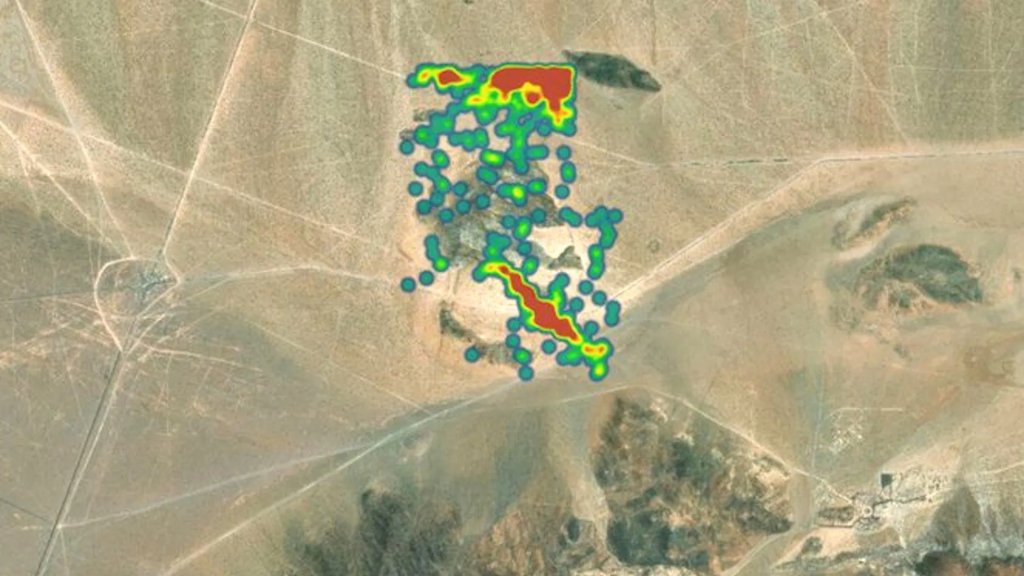
In 2020, then-Army Col. Scott Woodward, at the time commander of the 11th Cavalry Regiment, shared this annotated satellite image showing the electronic emissions signature of a battalion-sized element, underscoring how such signals exposed a unit to attack. US Army via X
Regardless, deception comes far more into play in the obscure step, according to the 2nd Cavalry Regiment commander.
“Obscuration is different, as well. So instead of trying to hide behind smoke as we maneuver through it, what is the deception plan, right? How am I trying to show the enemy a signature that says I’m going to breach over here when I’m actually going to breach here, right?” he asked rhetorically. “So, that’s probably the implementation of UGVs [uncrewed ground vehicles] with some kind of decoy emitter on top of them to pull the enemy’s eyes, resources, and time to a point that allows me to focus my assets and resources on the point of breach.”
The use of uncrewed platforms as decoys is also not new, and even more complex concepts have emerged within the U.S. military in the past. Uncrewed systems have also been developed for military and other purposes over the years that are designed to mimic something else entirely, including for purposes of deception. This includes masquerading as birds and other animals.
Back in 2019,TWZ was the first to report in detail on a Navy effort to develop and field an entire networked, cooperative electronic warfare ecosystem, at that time referred to as the Netted Emulation of Multi-Element Signature against Integrated Sensors, or NEMESIS. This was also a drone-heavy cross-domain concept intended to make many types of sensors over vast areas believe they were ‘seeing’ the same false fleets of aircraft and/or ships, and deceive and confuse the enemy on a grand scale. This, in turn, represented a massive leap in electronic warfare capabilities.
An unclassified 2014 briefing slide with details about NEMESIS. Note the inclusion of drone boats among other uncrewed platforms in the associated graphic. USN An unclassified 2014 briefing slide with details about NEMSIS. Note the inclusion of drone boats among other uncrewed platforms in the associated graphic. USN
There is also overlap here with reported sightings of what are now commonly called unidentified aerial phenomena (UAP), and that used to be called unidentified flying objects (UFO). As we have reported on repeatedly over the years, while some UAP sightings remain unexplained, many more have turned out to be drones. Adversaries have been using uncrewed capabilities for intelligence gathering and deception purposes against American interests at home and abroad, likely in part by exploiting UAP stigma for cover. We have talked in the past about how drones will be used in more and more exotic ways to confuse opponents.
I don’t know what this is, or if it’s legit BUT remember we are in a new age of misdirection, decoy and guile. Specifically using low end drone technology. There are more ways to stimulate an enemy air defense system, distract a populous, assess the flow of public info from a… https://t.co/wW7YVlbayB
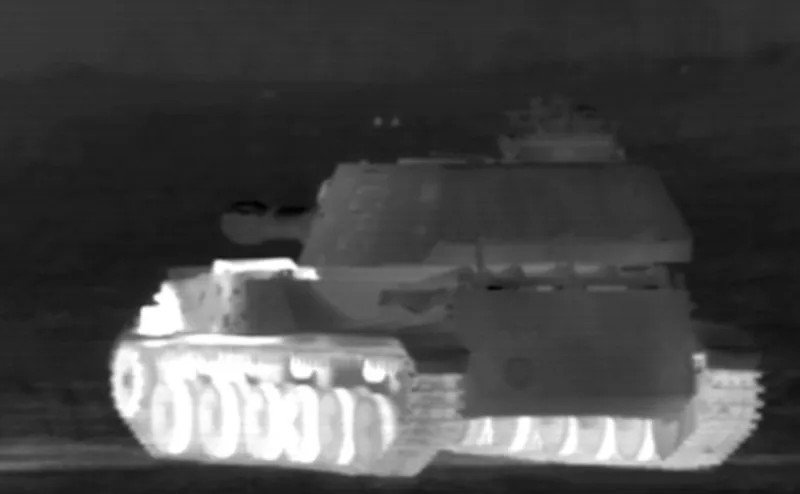
“It’s also spectral camouflage. So how are we controlling our heat and thermal signatures on our vehicles and our people?” Price continued. “It’s basic soldier discipline issues. It’s how we use our radios. It’s where we’re talking, where we’re not. But that’s what obscuration looks like.”
A Soviet-designed 2S3 self-propelled howitzer as seen through a thermal camera, offering a good example of how heat signatures can put forces at risk. CI Systems
As a reminder, Project Flytrap’s primary focus has been on counter-drone capabilities, which come into play heavily during the secure stage.
“There’s multi-layered assets on top of that to allow that convergence for our success at the point of breach. I’m going to focus on our corner, our part of the battle, right?” he said. “So, I’m looking at active and passive electronic warfare systems – that can either, one, find [threats], let me know that I’ve got some kind of system flying or operating against me and, then, if it’s an active system, take some kind of effect to maybe cut a downlink and disrupt that system – all the way down to the individual soldier with a shotgun.”
As mentioned, the ‘obstacle’ to be ‘reduced’ at the end of this is not necessarily something as simple as a minefield surrounded by barbed wire anymore. Now it could be enemy one-way-attack drone capabilities preventing holding up an advance. Col. Price, in turn, described friendly kamikaze drones as part of the equation for breaching past those threats. Decoys and deception have a continued role to play in this phase.
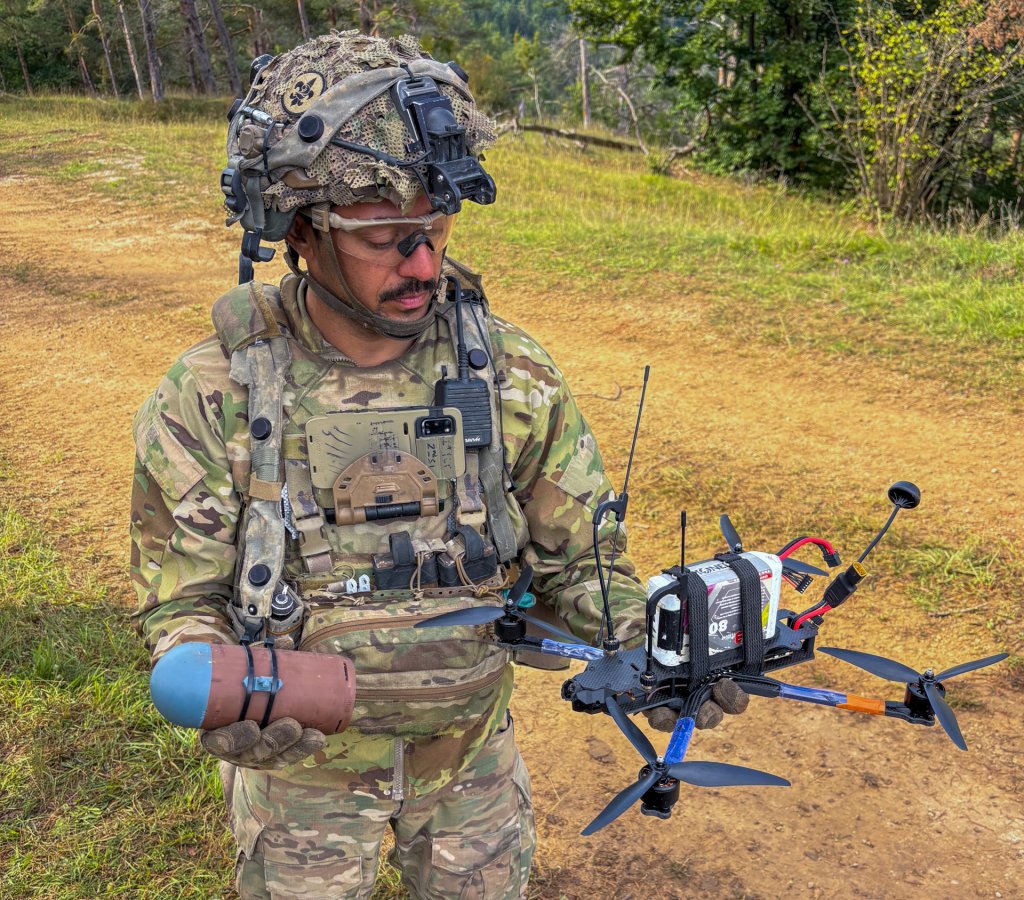
“This is where, at the brigade level, we introduce one-way attack munitions to try to destroy the C2 [command and control] network that the enemy is using to operate this reconnaissance/strike complex” that is standing in the way, he explained. “There’s layers to it, right? Like they’ve got a close side to this that’s the local part of this reconnaissance/strike complex. They’ve probably got a theater level that the Corps [the U.S. Army’s command echelon above divisions] and higher is trying to target as we are forcing people to turn on systems to communicate. But at the regiment level, I’m looking at one-way attack munitions, focused on C2 nodes, headquarters, and ground control stations that [sic] I can disrupt their ability to put lethal effects on me as we begin to open the breach.”
A member of the 2nd Cavalry Regiment holds a small quadcopter drone in one hand and a simulated bomblet in the other during an exercise in 2025. US Army
During a question-and-answer session that followed his remarks, Col. Price was asked about whether lessons learned and other observations from Ukraine, and specifically that country’s recent Operation Vivaldi counteroffensive, had contributed to this evolving framework.
“In terms of Vivaldi, I’m not an expert, so I’m not going to make any kind of estimations on how that worked or why,” he said in response. “But I will say, if you look at the focus of that operation, you can probably make the assumption that there was convergence of efforts across the different headquarters to enable success. So that’s how I would relate to the two.”
“In order to be successful for a multi-domain breach, the tactical level requires my higher headquarters to be part of that solution to enable me with resources and capabilities that I don’t have in here at the brigade level,” he continued. “I would imagine it’s very similar in the other operational comparisons.”
Though certainly true, in broad strokes, this response in some ways underscores how the U.S. Army continues to lag behind global trends in the use of uncrewed systems, as now typified by the ongoing war in Ukraine. Army leaders have been open about this continued reality in the past, despite efforts to try to reverse it.
“We’re behind. I’ll just be candid. I think we know we’re behind,” Army Lt. Gen. Charles Costanza said during a panel discussion at AUSA last year, in response to a direct question at the panel from our Howard Altman. Costanza was talking about both the employment of drones and counter-drone capabilities, and highlighted work being done then under Project Flytrap, as you can read more about here.
Another 2nd Cavalry Regiment Stryker configured for the counter-drone role seen during a Project Flytrap exercise. US Army
For units like the 2nd Cavalry Regiment, new drone-centric concepts of operations are already taking shape. Beyond using them for surveillance and as one-way-attack munitions, there is also a clear focus emerging on employing expanding uncrewed capabilities to deceive opponents and prevent them from making the best use of their own resources.
O piloto brasileiro Rafael Câmara será piloto da Haas na temporada 2027 da Fórmula 1. Quem o afirma é a “RacingNews 365”, publicação que garante a contratação do brasileiro, atual líder da Fórmula 2 e apoiado pela Ferrari, como titular da equipa americana, ocupando o lugar de Esteban Ocon, que deixará o team baseado em Kannapolis no final deste ano.
O anúncio desta contratação, segundo a F1Mania que acompanha a matéria, deverá ser feito ainda nesta semana.
Recorde-se que Rafael Câmara recentemente efetuou testes TPC com a Haas, realizados em Portimão no Autódromo Internacional do Algarve, incluindo outros pilotos como Jack Doohan, Leonardo Fornaroli e Ryo Hirakawa, tendo o brasileiro, de acordo com informações do “GE”, sido o mais veloz entre os presentes, batendo o tempo do titular e possível futuro companheiro de equipa, Oliver Bearman.
Segundo conta, o team teria ficado de escolher entre o brasileiro e o australiano, que fez algumas corridas entre 2024 e 2025. De acordo com a F1Mania, citando o “RacingNews 365”, a opção por Câmara deu-se durante o final de semana do GP de Singapura realizado no passado domingo. Além do apoio da Haas, o piloto terá apoio de patrocinadores brasileiros.
Assim, com a chegada de Rafa Câmara ao grid, o Brasil passará a contar com dois pilotos no pelotão da Fórmula 1 pela primeira vez desde 2016, quando Felipe Nasr fez o último de seus dois anos na categoria com a Sauber, ao mesmo tempo em que Felipe Massa corria pela Williams.
O pernambucano também se tornará o segundo brasileiro a correr pela Haas, já que, Pietro Fittipaldi fez duas corridas em 2020, em substituição a Romain Grosjean.
Ex-secretário-geral do MAI aponta que havia duas atitudes de Luís Neves: “Ou havia falta de resposta, ou responsabilidade era exclusivamente da secretaria”. Objetivo podia ser a sua saída do cargo.
Importa perceber se os mais de 60% de deputados que se sentam à direita do PS correspondem mesmo a uma “maioria de direita”. E se um Chega liberto da “peçonha” pode ser parceiro numa agenda reformista
Ainda há dias escangalharam a execução de uma condenada à morte. Se o carrasco consegue falhar a veia com a agulha a centímetros de distância, ninguém garante que não errem o tiro a vários metros.
Houthis dizem que atacaram aeroporto de Riade, mas autoridades sauditas garantem que míssil basílico foi interceptado. Ataque levou jogo de Al-Nassr na Champions Asiática ser adiado uma hora.
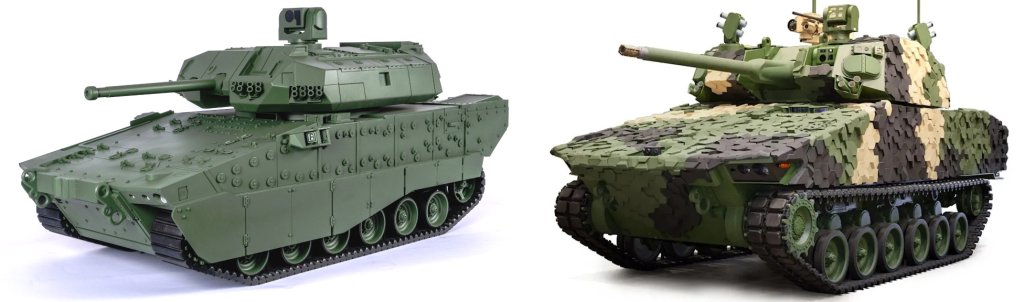
General Dynamics Land Systems (GDLS) has offered the first official look at its proposal to replace the U.S. Army’s Bradley Fighting Vehicles, called the Wolf. The Wolf is one of two designs competing to become the Army’s future XM30 Mechanized Infantry Combat Vehicle (MICV). Just earlier today, we published a detailed update on the XM30 competition, including new information about both entrants and the Army’s testing plans, which you can find here.
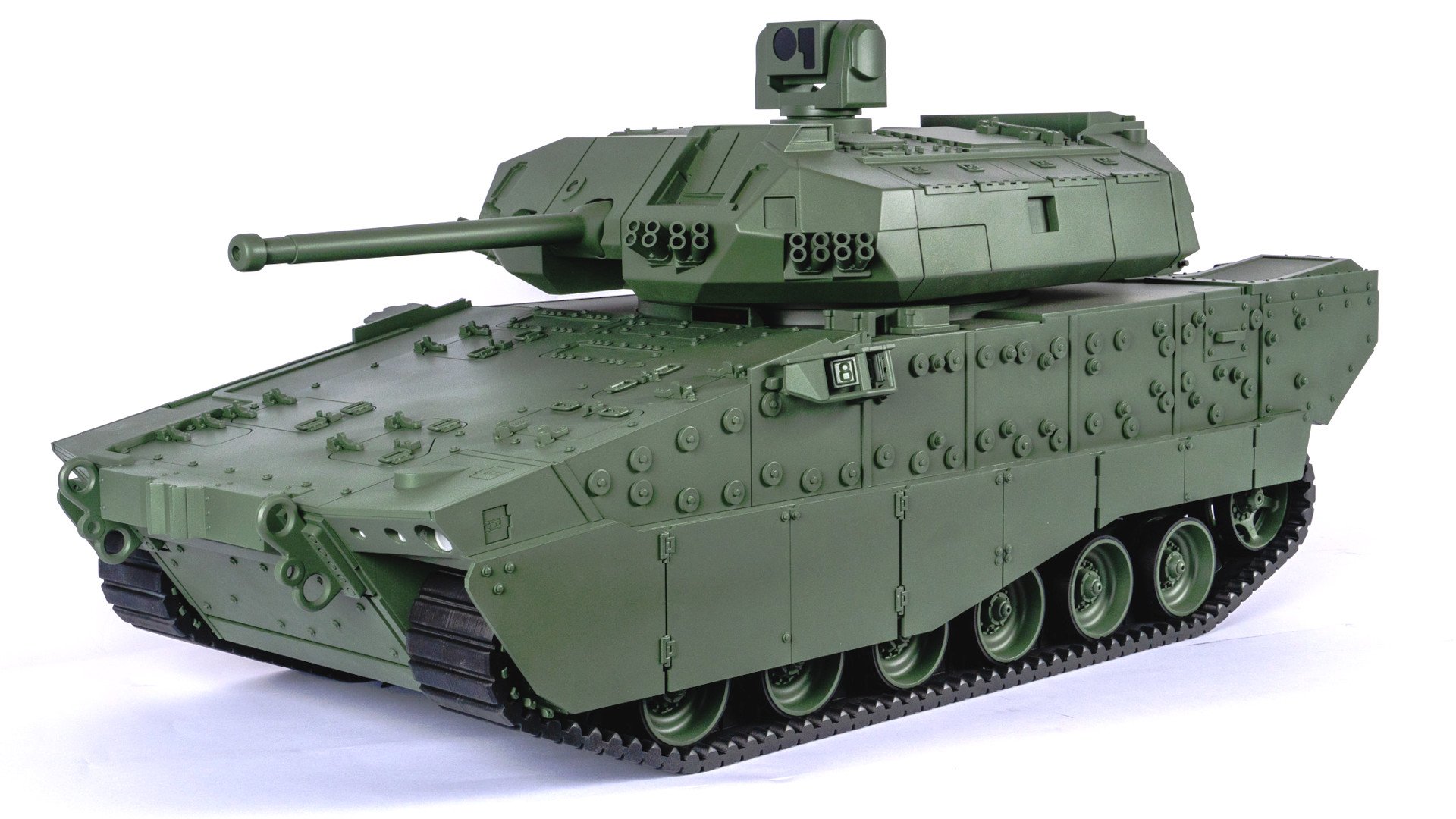
GDLS is showing the one-eighth-scale model of Wolf, seen at the top of this story and made by a company called KiwiMill, at the Association of the U.S. Army’s (AUSA) main annual convention, at which TWZ is in attendance. Wolf is facing off head-to-head against a version of the Lynx from Germany’s Rheinmetall, supplied via the company’s U.S. subsidiary, American Rheinmetall.
It has already been established that Wolf is a further evolution of the GDLS’ Griffin III design, which was first shown publicly at AUSA back in 2018. Griffin III was derived from the ASCOD 2 infantry fighting vehicle, for which Spain was the launch customer, and which is now entering service in Latvia. The U.S. Army’s now-cancelled M10 Booker ‘light tank’ and the British Army’s much-troubled Ajax are also members of this broader family of armored vehicles.
A side-by-side comparison of the model of the Wolf, at left, and the Griffin III demonstrator, at right. GDLS/KiwiMill
The design of the Wolf, at least based on the model, is substantially different from the earlier Griffin III demonstrator.
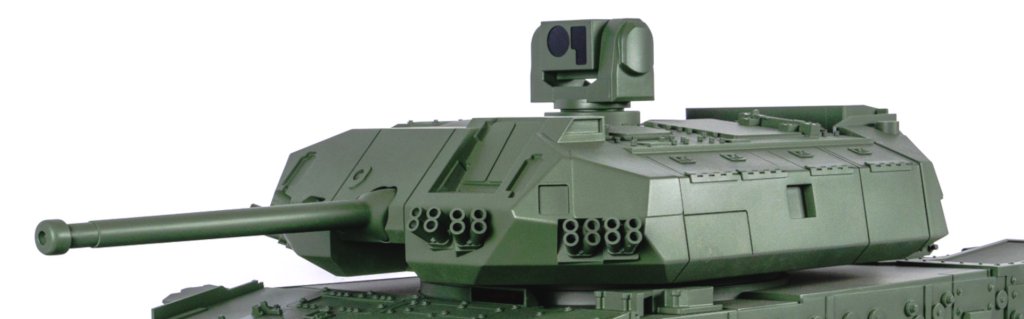
Wolf’s turret has a broader, flatter, and overall more streamlined shape, which is in line with its remotely-operated design. There is just a single sensor turret on top, along with space for a forward-looking sensor suite to the left of the main 50mm cannon. What may be apertures for additional sensors or other systems are seen elsewhere along the front and sides of the turret. It also has more launchers for smoke grenades around the front edges compared to the Griffin III.
A focused look at the Wolf’s turret as seen on the one-eighth-scale model. GDLS/KiwiMill
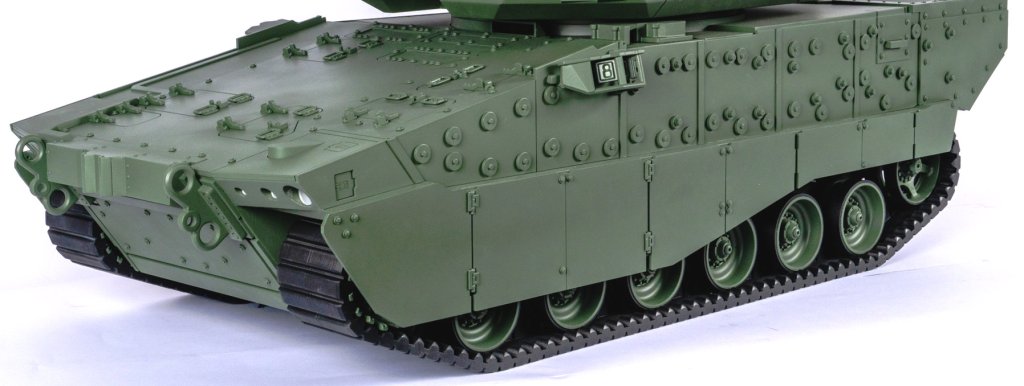
Compared to the Griffin III, the Wolf’s hull has also been much revised, including the elimination of a traditional driver’s hatch in front of the turret ring. The vehicle’s commander (who also acts as the gunner) and driver sit side-by-side deeper inside the hull. Up to six passengers can ride in a compartment further at the rear. For comparison, the Bradley has a crew of three, as well as the ability to carry six passengers.
The Wolf’s hull also features side skirts that were not found on the Griffin III demonstrator. A different style of tracks is also depicted on the model. The picture of the model that GDLS shared shows sensors facing outward from a position on the side of the hull toward the front, as well. This makes sense, as the design features a distributed camera system to offer a full 360-degree view of the outside to personnel riding within, the broad benefits of which you can read more about here.
Another look at the hull of the Wolf, as seen on the model. Note the outward-facing sensors positioned toward the front, as well as the lack of any traditional driver’s hatch. GDLS/KiwiMill
“Because we have a reduced crew from the Bradley [which has a commander and gunner in turret] there has to be greater efficiency in how those soldiers execute their tasks,” Geoffrey Norman, GDLS’ director for U.S. Strategy & Growth, previously noted to TWZ. “The software and menu logic are very intuitive.”
Next-generation fire control, sensor, and networking/communications capabilities, as well as improved active and passive defenses, are key requirements for the XM30 program. Both Wolf and American Rheinmetall Lynx-based designs have built-in launchers for loitering munitions, with GDLS having chosen to integrate AeroVironment’s Switchblade 300 more specifically. What we have seen on the Wolf model so far does not appear to explicitly show this particular feature.
Wolf and Lynx both also feature hybrid-electric propulsion, which will bring various benefits, especially in terms of fuel economy and electrical power generation, compared to the diesel-engined Bradley. When it comes to the boost in on-board electrical power, “the emphasis from the Army has really been about having margin on the vehicle for future [system] requirements – directed energy, counter-UAS systems, or fill-in-the-blank,” GDLS’ Norman has also told us in the past.
A rendering of the Lynx-based XM30 design. American Rheinmetall
As it stands now, both GDLS and American Rheinmetall have delivered prototypes of their respective designs to the Army, with initial testing having been conducted at Aberdeen Proving Ground in Maryland. Soldier touchpoints and field evaluations are now set to occur at Fort Hood in Texas between February and March of next year. You can read in more detail about both entrants in the XM30 competition and what is known about their features in our past reporting here.
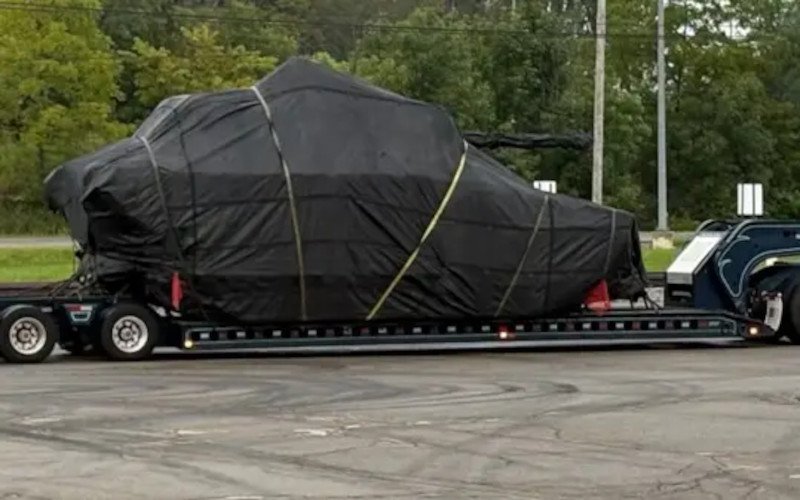
An actual Wolf prototype, seen under wraps, after being delivered to the US Army’s Aberdeen Proving Ground in Maryland around the end of August 2026. GDLS
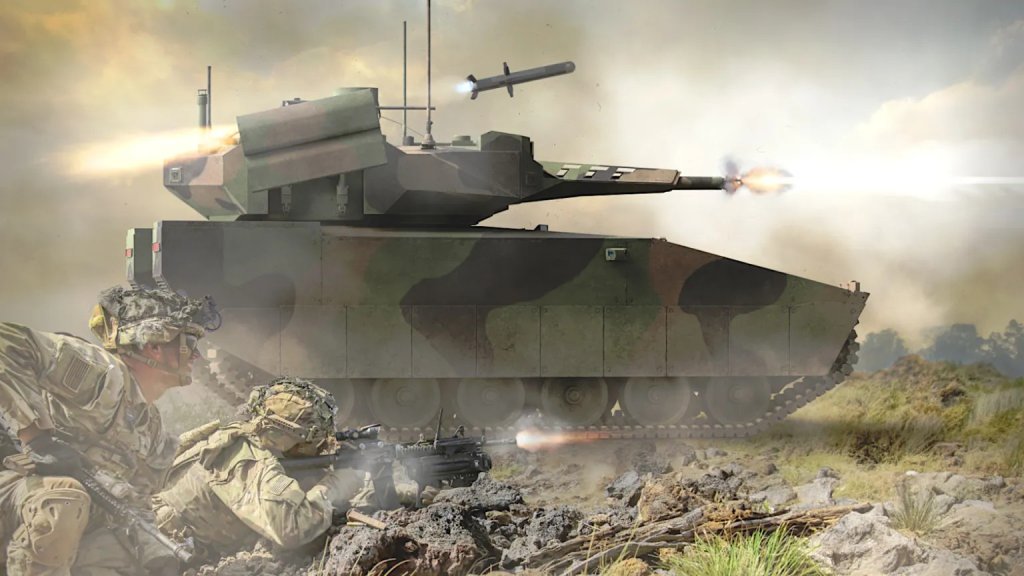
In the meantime, we have now gotten clear views of both designs vying to become the Army’s XM30 replacement for the venerable Bradley.
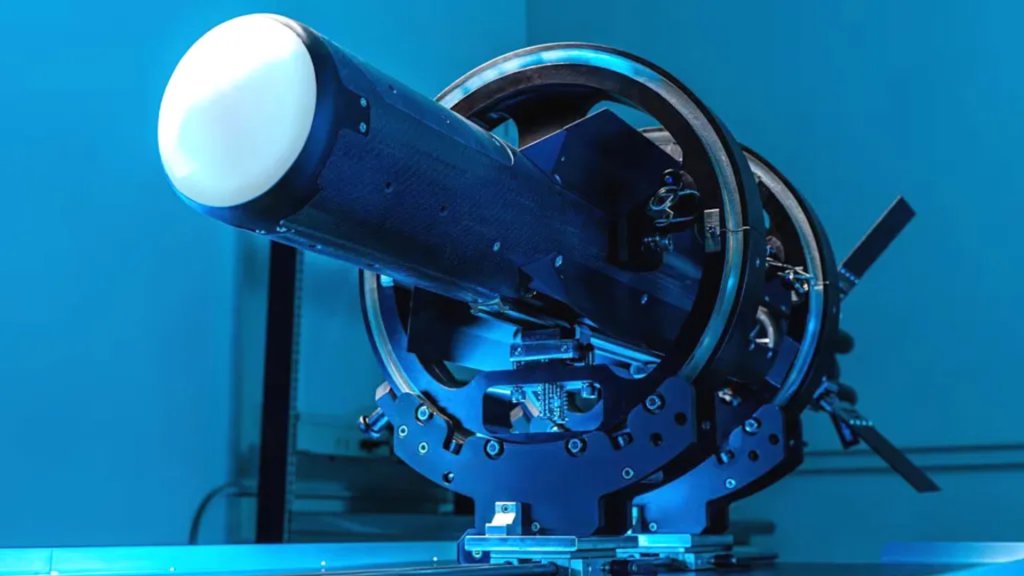
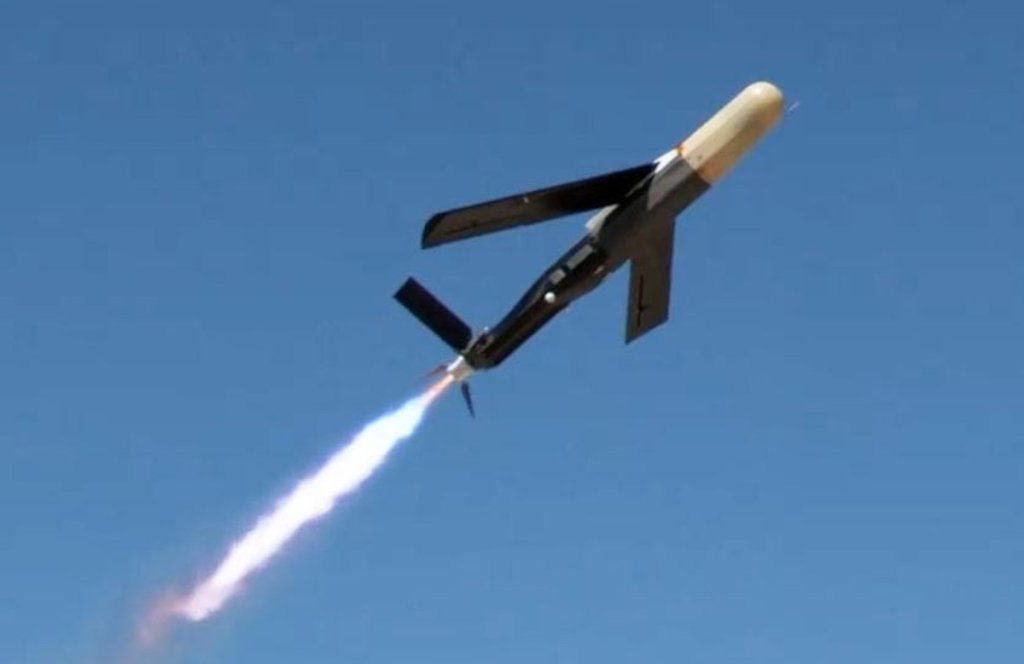
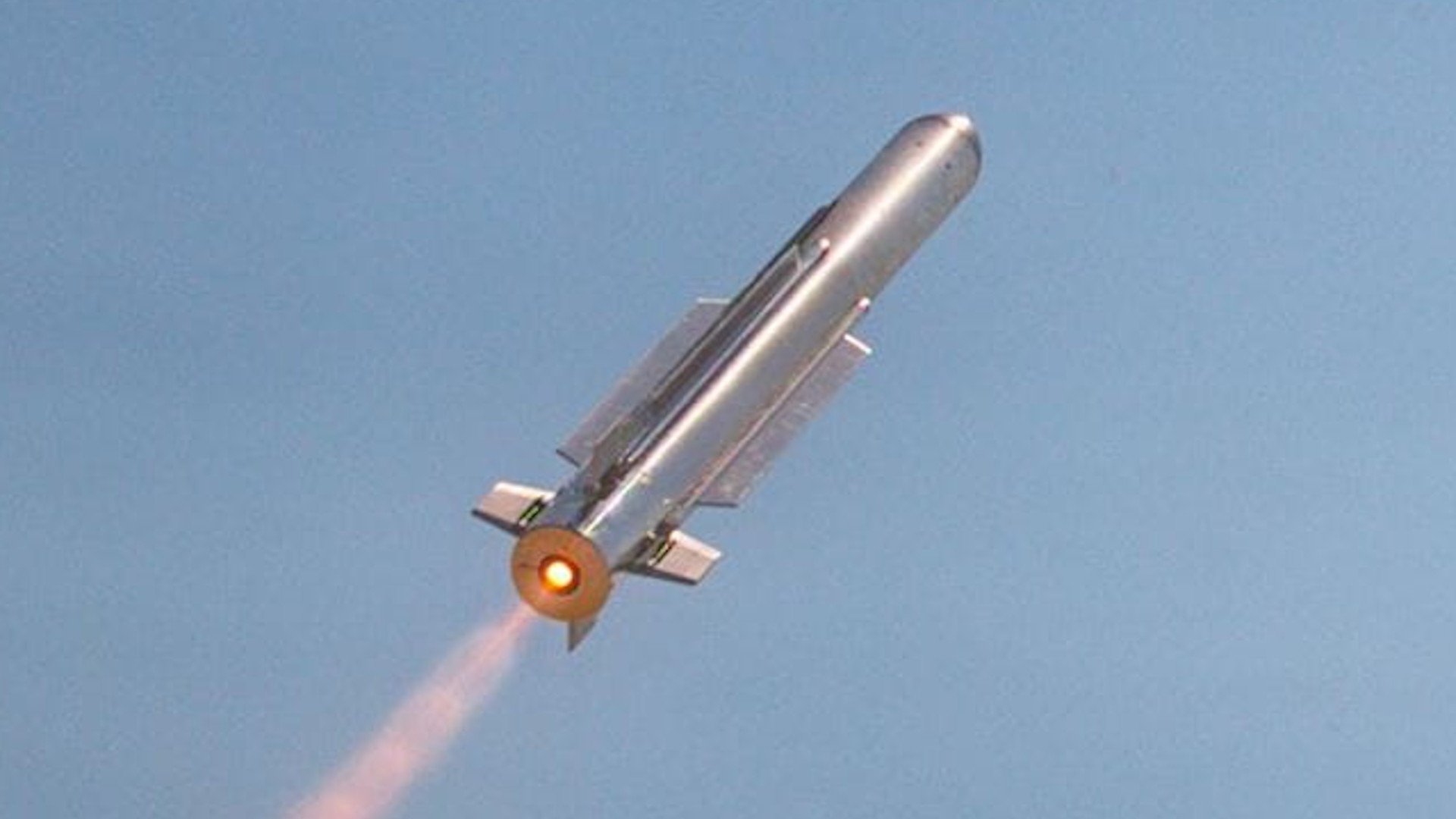
Raytheon is developing a new iteration of its Coyote Block 2 counter-drone interceptor powered by a solid rocket motor rather than a small jet engine. This pushes the Block 2C+RM version, which also comes with a new seeker and warhead, into the surface-to-air missile side of the interceptor spectrum. With a significant boost in speed, range, and terminal intercept performance, it is designed to address evolving one-way-attack drone threats. The Coyote Block 2 series is already a combat-proven system, with more than 600 kills in the course of operational U.S. military deployments to date.
The unveiling of the Coyote Block 2C+RM came today around the start of the Association of the U.S. Army’s (AUSA) main annual convention, at which TWZ is in attendance. The rocket-powered version has been in the works for some 15 months now, and three successful live test launches have been conducted. That followed static test fires of the new rocket motor, which an unnamed subcontractor is supplying, and other testing.
A look at the general design of existing jet-powered Block 2-series Coyote interceptors. Joseph Trevithick
The Pentagon and the U.S. Army have been engaged with Raytheon (now formally RTX) on the development of the Block 2C+RM, but whether there are formal U.S. military contracts to buy this version now is unclear. The U.S. Army is the largest known operator of Coyote Block 2-series interceptors now, with previously stated plans to buy at least 6,000 of them between Fiscal Years 2025 and 2029. We will come back to this later on.
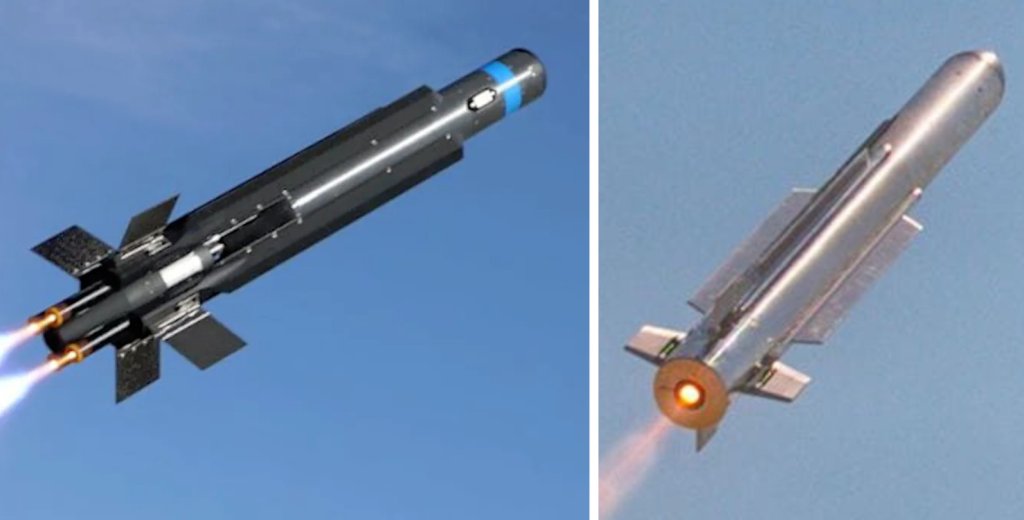
As mentioned, existing versions of Coyote Block 2 are powered by a turbojet engine. A small rocket booster is also used to launch these interceptors, but does not propel them through the entire course of their flight.
A side-by-side comparison of an earlier rocket-boosted, jet-powered Coyote Block 2, at left, and the new Block 2C+RM version, at right. Raytheon
With the rocket motor, “you get upgraded propulsion for faster launch and higher velocity flight,” Tom Laliberty, President of Land & Air Defense Systems at Raytheon, told TWZ and other outlets during a press call last week ahead of today’s announcement. “In terms of range and so forth, I can’t really get into any specifics about that, for obvious reasons.”
“What I would just say is it’s significant in terms of the range difference, and in the [sic] what I call end-game capabilities of the missile, where velocity might come into play,” he added. “Then with the seeker [and] warhead [upgrades], it really gets after the sort of more cutting-edge drone capabilities that we’re seeing from the adversary.”
Laliberty also did not elaborate on the specific improvements to the seeker or warhead. Existing Block 2-series Coyotes use on-board radio frequency seekers to find their targets in the terminal phase of flight after first being cued via radars and other sensors on the ground. They also carry blast-fragmentation warheads.
During last week’s call, Laliberty was asked about whether new faster-flying jet-powered one-way-attack drones, like Iran’s Shahed 238 and Russia’s Geran-4 and -5 derivatives, had prompted Block 2C+RM’s development. He was also queried about Block 2C+RM’s ability to defeat traditional cruise missiles.
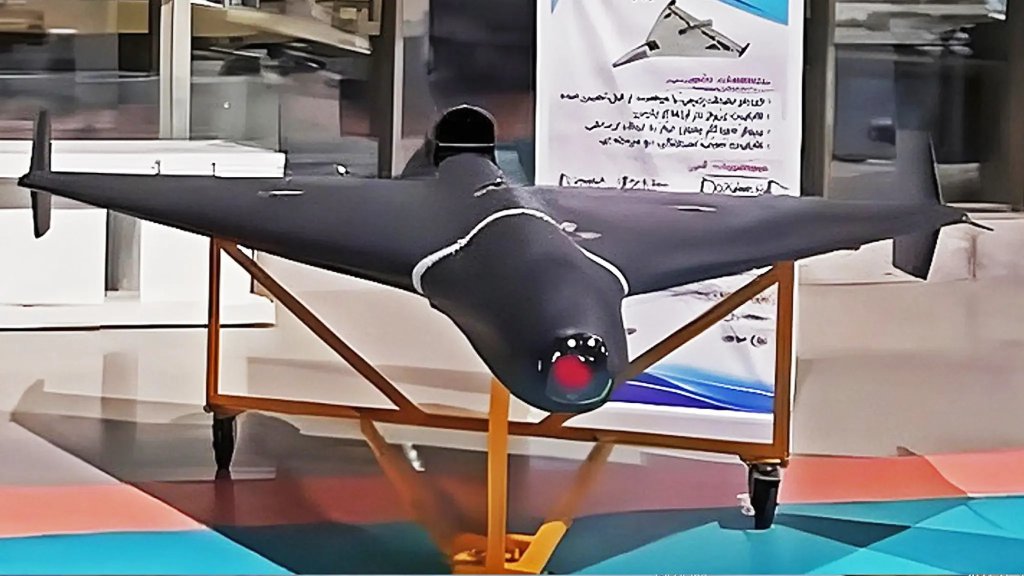
A jet-powered Shahed 238 kamikaze drone, or a mockup thereof. Iranian State Media
“Unfortunately, I can’t get into the specific threats, but I can tell you the intention is to have this cover all types of Class 3 drones,” he said in response. “If you think about the Class 3 drone kind of ‘spectrum,’ there’s a pretty good overlap there with the capabilities of cruise missiles, as well, right? So it all depends on the specific[s] of the cruise missile.”
The U.S. military defines Group 3 drones, whether they are weaponized or not, as designs that weigh anywhere from 56 to 1,320 pounds, are able to fly up to an altitude of 18,000 feet, and reach a top speed of no more than 250 knots. The Shahed 238’s combustion engine-powered predecessor, the Shahed 236, is a prime example of a Group 3 kamikaze drone. The claimed top speeds of the jet-powered derivatives (approximately 270 to 320 knots) actually push the upper boundaries of this broad middle-tier category. TWZ regularly highlights the additional challenges that jet-powered kamikaze drones like the Shahed 238 and Geran-4/5 present. We also routinely note how the line between longer-range one-way-attack drones and cruise missiles has become increasingly blurry. The Block 2C+RM itself also further blurs the definition between a drone-like counter-drone interceptor and a more traditional surface-to-air missile.
RFE/RL takes apart a Russian Geran-4 drone to uncover what makes the jet-powered unmanned aerial vehicle (UAV) faster, harder to intercept, and capable of operating deep inside Ukraine — from its turbojet engine and advanced camera to foreign-made communications and navigation… pic.twitter.com/WGNdlpS9w1
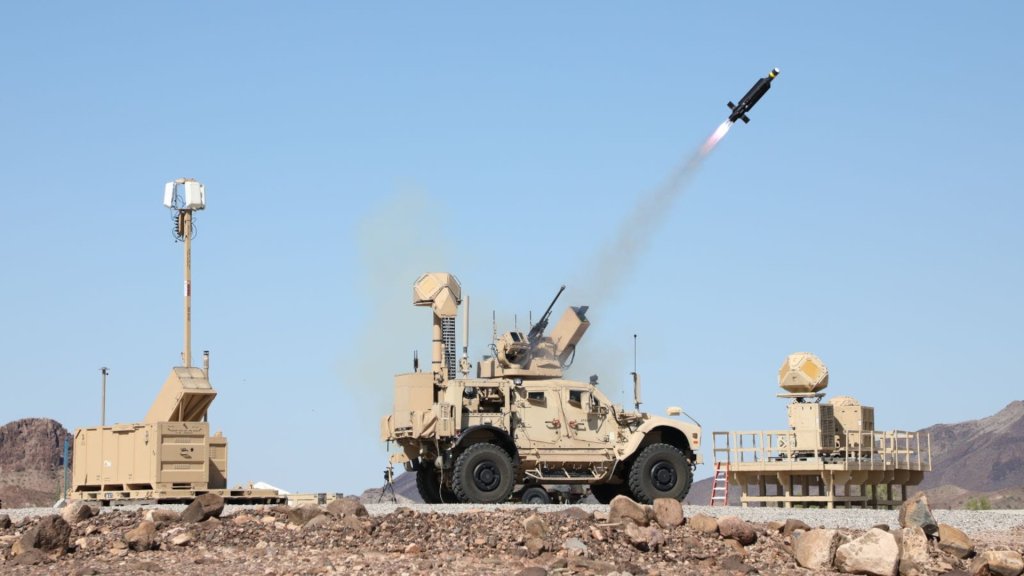
As noted, Raytheon has highlighted how Coyote Block 2C+RM also has a faster overall response time compared to its predecessors, offering additional flexibility for engaging incoming waves of drones. The new version also works with all existing four- and eight-cell launchers, which can be variously mounted on vehicles and static positions on the ground, as well as on ships.
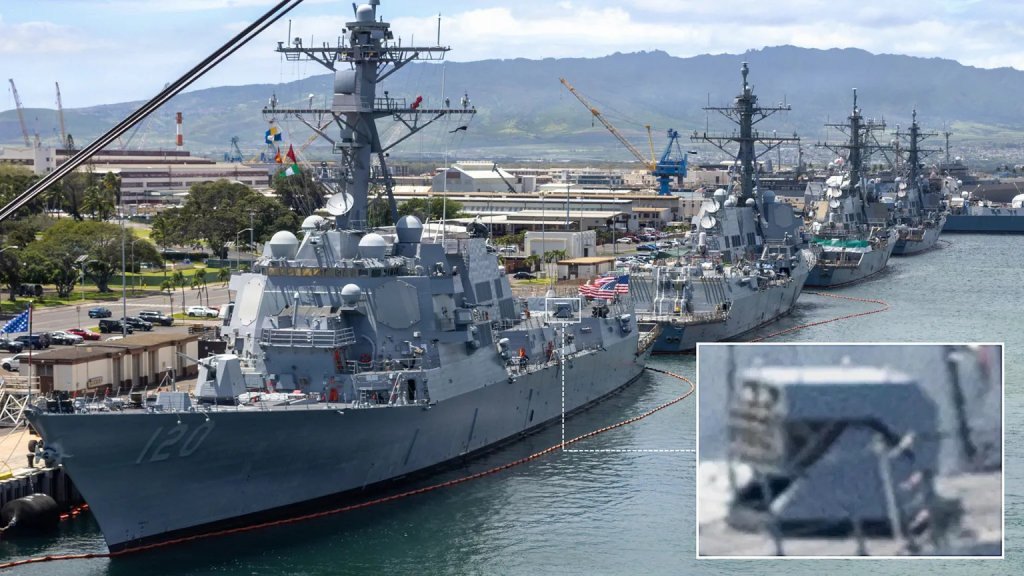
A promotional shot showing the fixed-site version of the LIDS launcher and radar components, as well as a vehicle-based version of LIDS in between. Raytheon A promotional shot showing the FS-LIDS launcher and radar components, as well as an M-LIDS vehicle in the middle. RaytheonAn annotated image showing an eight-cell Coyote anti-drone interceptor launcher on the US Navy’s Arleigh Burke class destroyer USS Carl M. Levin. This is a new type of naval launcher that first emerged earlier this year. USN
It’s also worth noting here that Coyote is generally described as a lower-cost interceptor, with a unit cost reported in the past to be around $100,000. How the new rocket-powered version will compare to existing types price-wise is unclear, but this is an increasingly important factor for the U.S. military and others, especially when considering the cost curve against the expected target set. As an example, the estimated cost of a Shahed 236 is in the $50,000 range.
To be clear, Coyote Block 2C+RM is still in development, and when it might start to enter operational service with any user remains to be seen.
“We’ve got additional tests scheduled into the first half of next year, and we’re working with the Department of War,” Raytheon’s Laliberty said last week. “We’ve got an ongoing investment from Raytheon, but now essentially received some government sponsorship as it kind of transitions into the program of record, and that’s still kind of ongoing with the Department of War in terms of how all of that is going to be structured. Certainly, in follow-on contracts for Coyote, this can be cut in.”
Raytheon has no plans to stop producing jet-powered Block 2 versions, either, at least for now. Beyond the U.S. military, there are now contractors to supply these interceptors to Qatar and Jordan.
Another picture of a Coyote Block 2-series interceptor being built at Raytheon. Raytheon
A pusher-propeller Coyote Block 3NK non-kinetic interceptor seen being launched with the help of a rocket booster. Raytheon
As an aside, the U.S.-based subsidiary of Germany’s Rheinmetall is currently competing in the Army’s XM30 Mechanized Infantry Combat Vehicle (MICV) competition with a design that will be capable of employing Coyote Block 3. The launchers on American Rheinmetall’s Lynx-based XM30 offering will also be able to fire anti-tank guided missiles like the TOW and Javelin. You can read more about the XM30 competition and the other design in the running, General Dynamics Land Systems’ Wolf, here.
More broadly speaking, Coyote Block 2C+RM will be entering a hugely expanding market space for lower-tier and lower-cost counter-drone interceptors globally. The U.S. Army alone is already pursuing several new lower-tier anti-air interceptors to expand its capabilities against Group 3 drones, as well as other types of uncrewed threats and cruise missiles.
If nothing else, the newly unveiled Coyote Block 2C+RM reflects continued high demand, broadly speaking, for new interceptors, and more of them, to address ever-more capable longer-range kamikaze drones.

 Login