❌

Reading view

“Starshield systems are owned and controlled by the US government”: Musk says Trump, not SpaceX, is behind cut hitting Ukraine

kyiv asking musk let strike inside russia its best line gone · post elon 2026 world economic forum / ciaran mccrickard wef ukraine news ukrainian reports

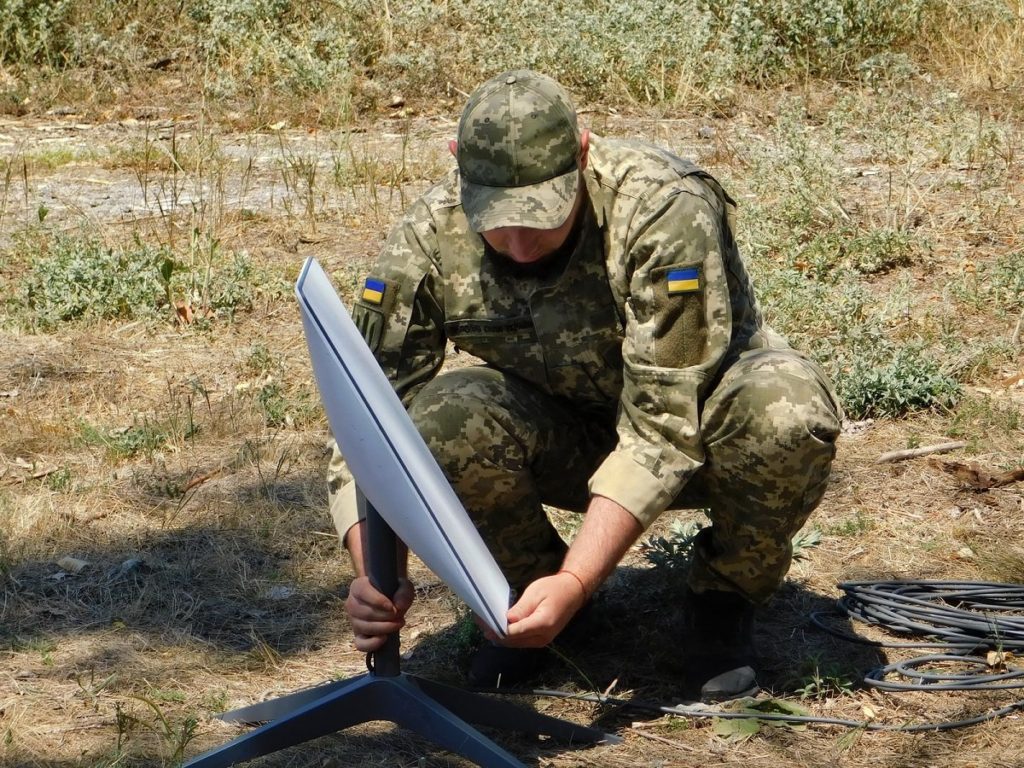
SpaceX chief Elon Musk says the version of Starlink that Ukraine’s military uses, StarShield, is owned and controlled by the US government rather than by his company. His claims come amid a storm over Ukrainian reports that a speed cut had broken their frontline operations.

Ukraine’s drones and air defenses rely on Starlink to steer and strike, so a limit on the network hits combat directly. Ukrainian troops reported that overnight into 14 October, the faster military package they depend on was throttled, halting a series of missions. Musk’s answer shifts the decision and the blame from SpaceX to the US government and, ultimately, to the president.

“Any limits on speed or usage are decided by the US military and ultimately POTUS. StarShield systems are owned and controlled by the US government,” Musk says.

He draws a line between the two services. Ordinary Starlink is a commercial product owned by SpaceX, limited to civilian or defensive use and not for offensive military action, which he called inappropriate for a commercial company.

Their conversation took place the same week that Washington pressured Kyiv over its strikes on Russian oil refineries amid US President Donald Trump's diesel deal with Moscow.

The exchange that forced Musk to answer

The statement followed a direct appeal. Former Defense Minister Mykhailo Fedorov told Musk on X that Starlink connectivity at speeds of up to 160 km/h was being restored, and pressed for more.

“Removing StarShield’s speed limit entirely is now critical for Ukraine’s defense. Thank you, Elon Musk. We hope for your continued support,” Fedorov wrote, framing the cap as a direct constraint on the war.

The faster package Ukraine cannot do without

The ordinary Starlink Mini mounted on drones is capped at about 160 km/h, which is too slow for some missions, so faster flight requires access to the military version, StarShield, Ukrainska Pravda notes. Ukraine has used StarShield since 2024.

  •  

NATO country that pays for Kyiv’s Starlink warns Musk as his cap breaks Ukraine’s drone missions: “As your European customers, we are watching you”

Starlink terminal.

Poland’s Foreign Minister Radoslaw Sikorski has publicly criticized SpaceX chief Elon Musk over the latest disruptions in Starlink's operation in Ukraine. Poland is the largest supplier of Ukraine’s terminals, having provided about 29,500, roughly half the network. It also has a Starlink ground station in Wola Krobowska that provides connectivity for much of Central and Eastern Europe, including Ukraine, RMF24 reports.

On 13 October, SpaceX imposed a 100 mph (160 km/h) speed limit on the StarShield military package that Ukrainian forces use, disrupting drone missions without warning. Poland, which pays about $50 million a year for Ukraine’s Starlink terminals, told Musk it is watching.

“Hey, @elonmusk, big man, are you playing politics with your products again? As your European customers, we are watching you,” Sikorski wrote on X.

The “big man” jab echoed their 2025 clash, when Musk told Sikorski to “be quiet, small man” after the minister noted that Warsaw, not SpaceX as charity, pays for the service.

Be quiet, small man.

You pay a tiny fraction of the cost.

And there is no substitute for Starlink.

— Elon Musk (@elonmusk) March 9, 2025

Meanwhile, presidential adviser Serhii “Flash” Beskrestnov said that this could not be a coincidence and was most likely tied to the current political situation.

When a drone outruns its own signal

The cap bites exactly where Ukraine’s drones do their work. The StarShield package had previously carried no data speed limit, and the change directly affected drones that use Starlink to steer in flight, the 7th Air Assault Corps said.

“During flights, the connection could drop for 10 to 20 seconds at speeds of just 110 to 120 kilometers per hour. The drones kept moving, but these interruptions made them harder to control,” the corps said, describing problems that now start well below the new ceiling.

A dependence Kyiv has feared for years. The limit revives an old worry. Ukraine neither owns nor controls Starlink, and the restriction follows fresh fears of a shutdown after Musk backed US President Donald Trump’s call for Zelenskyy to resign.

  •  

New Starlink restrictions disrupt Ukrainian drone missions. Kyiv adviser says move is tied to “political situation”

Starlink

Ukraine’s presidential adviser Serhii Beskrestnov said SpaceX had imposed a 100 mph (160 km/h) speed limit on its military Starshield service overnight into 14 October, disrupting several missions without warning Ukraine’s defense forces.

Ukraine’s forces use Starlink-connected drones to strike Russian positions and logistics, including targets behind the front line. Unlike earlier restrictions introduced at Kyiv’s request to stop Russian forces from exploiting Starlink, the latest change reportedly targets the military Starshield service and was imposed without warning Ukraine’s military.

What the new restriction covers

Beskrestnov wrote that the restriction applies to the “military package” of Starshield services. He said the move “obviously cannot be a coincidence” and was connected with the “current political situation,” but did not explain what he meant.

Activist Serhii Sternenko, a former adviser to Ukraine’s defense minister, reported that connections began disappearing at speeds above 160 km/h. He suggested SpaceX had acted at the Trump administration’s request but provided no evidence. Starlink does not work inside Russia, and the drones hitting Russia’s oil industry use other means of communication, Reuters noted. Sternenko added that the ordinary satellite terminals were still working.

Later on 14 October, Sternenko wrote that, according to military reports, restrictions had been tightened further, with connections starting to drop at 60–70 km/h. Beskrestnov later warned that the restriction also hits Starlink-linked interceptor drones, which he called Ukraine’s most effective current defense against jet-powered Shaheds.

Front-line units report dropped connections

Ukraine’s 7th Rapid Reaction Corps confirmed the disruptions in a statement to Reuters. The corps’ press service told Novynarnia that its units on the Huliaipole front began experiencing problems overnight. The corps said the change affected drones controlled through Starlink in flight and concerned Starshield’s data-transmission speed, which it said had previously been unrestricted.

The corps said connections could disappear for 10–20 seconds at movement speeds of 110–120 km/h, complicating drone control. Flying slower creates its own risk, it said, because “slower targets become more vulnerable to being hit by the enemy.”

Some high-speed drones, particularly mid-range strike models, must reach high speed quickly, the corps said. An unstable connection “will make it impossible to launch such aircraft or use them as intended.” Since the start of the day, one unmanned systems unit on the Huliaipole front had to cancel some missions because of connection problems, the corps said.

Earlier limits came at Kyiv’s request

In late January, SpaceX began restricting Starlink in Ukraine at Kyiv’s request after Russian forces started mounting terminals on strike drones. After Russian drones struck a passenger train in Kharkiv Oblast on 27 January, Beskrestnov, then an adviser to the defense minister, suggested one of them may have been controlled via Starlink. In early February, Ukraine introduced a whitelist under which only registered terminals could continue operating. Beskrestnov called the earlier countermeasures “temporary” and “emergency.”

SpaceX had not publicly commented on the restriction, and Ukraine’s Defense Ministry was looking into its cause, Radio Svoboda reported. Polish Foreign Minister Radosław Sikorski asked Elon Musk on X whether he was “playing politics with your products again,” adding: “As your European customers, we are watching you.”

  •  

Three days after Washington announced an energy ceasefire, Russia fires 39 ballistic missiles at Ukraine’s grid

Aftermath of the Russian attack on Kyiv overnight into 14 October 2026

Russia fired 39 ballistic missiles and more than 120 drones at Ukraine’s energy system overnight into 14 October, President Volodymyr Zelenskyy said. The barrage came three days after US President Donald Trump announced an energy ceasefire, which the Kremlin never confirmed, saying on 12 October only that contacts were continuing.

Ukraine held off strikes on Russian energy for two days after the announcement, Zelenskyy wrote on 13 October. Russia’s barrage opened that evening with a ballistic strike on Kyiv. For the second time in two days, it came without a launch warning from partners.

How the night unfolded

The Air Force described one massive combined strike that began at 18:00 on 13 October. By 09:00 the next day, it had counted 39 missiles on ballistic trajectories and 128 drones, aimed mainly at Kyiv, Kyiv Oblast, and Kharkiv Oblast. Air defenses downed or suppressed four missiles and 115 drones, but missiles and drones hit 22 locations, the Air Force said.

just power plants russia’s drones also went after warehouses groceries hardware chain · post firefighter puts out fire warehouse burned food drink stock hit russian attack bucha district kyiv oblast
Explore further

Russian ballistic missiles hit Kyiv before sirens, gap that lands hard amid fears that Washington could cut data that warns of launches

The first wave hit Kyiv late on 13 October. Its primary target was CHP-4, a key power plant in the city, and there were hits, Zelenskyy said. Ukrainian systems spotted the missiles only on approach, with no warning from partners. After a call with Canadian Prime Minister Mark Carney, Zelenskyy wrote that Ukraine had not been warned for the second time. On 13 October, Trump said the US was still sharing intelligence with Ukraine.

A Russian strike also hit a high-rise in Desnianskyi district. Rescuers saved 16 residents, the State Emergency Service reported, and three women were killed there, the Kyiv City Prosecutor’s Office said. The prosecutor’s office counted 19 injured in the building, including a girl officials described as seven or eight, and five more hurt by shattered windows next door. Across Kyiv, the evening and morning attacks killed four people and injured 25, the prosecutor’s office said, while Suspilne counted 32 injured.

A rescuer helps a person evacuate a building in Kyiv after a Russian strike
A rescuer helps a person evacuate a building in Kyiv after Russia’s 13–14 October 2026 attack. Photo: Kyiv State Emergency Service

The second wave came early on 14 October and hit several of the capital’s energy facilities, Kyiv Mayor Vitali Klitschko reported. It killed one person in Holosiivskyi district, he added. Russia attacked all three of Kyiv’s combined heat and power plants and key facilities in Kyiv Oblast that power the capital, Prime Minister Serhii Koretskyi said. Energy company DTEK reported emergency outages in five Kyiv districts.

Damage and demands

Zelenskyy reported damage to facilities and equipment at 26 elements of the power system and at four oil and gas facilities. At least 600,000 people lost electricity, he said, and outages could grow. He called the strike deliberate and said Russia had never before shown such demonstrative disrespect toward America.

A rescuer at the site of a Russian strike in Kyiv
A rescuer at the site of a Russian strike in Kyiv, 13–14 October 2026. Photo: Kyiv State Emergency Service

He asked Trump for strong sanctions under the Lindsey Graham sanctions law, which he said was recently passed and signed. He also asked for additional Patriot interceptors.

  •  

Ukraine sent a spiked tank and a Bradley into Russian drone fire. The spikes held, and Ukraine’s own drones got them home

A 475th Assault Regiment hedgehog tank.

  • A Ukrainian assault regiment continues to deploy mixed formations of drones and up-armored vehicles
  • The vehicles do the shooting; the drones fly close top cover
  • These mixed formations could rescue old-fashioned armored vehicles from obsolescence by helping protect the vehicles from drone attack

For the second time in two weeks, Ukraine's 475th Assault Regiment has demonstrated how armored vehicles can fight and survive on a battlefield buzzing with enemy drones.

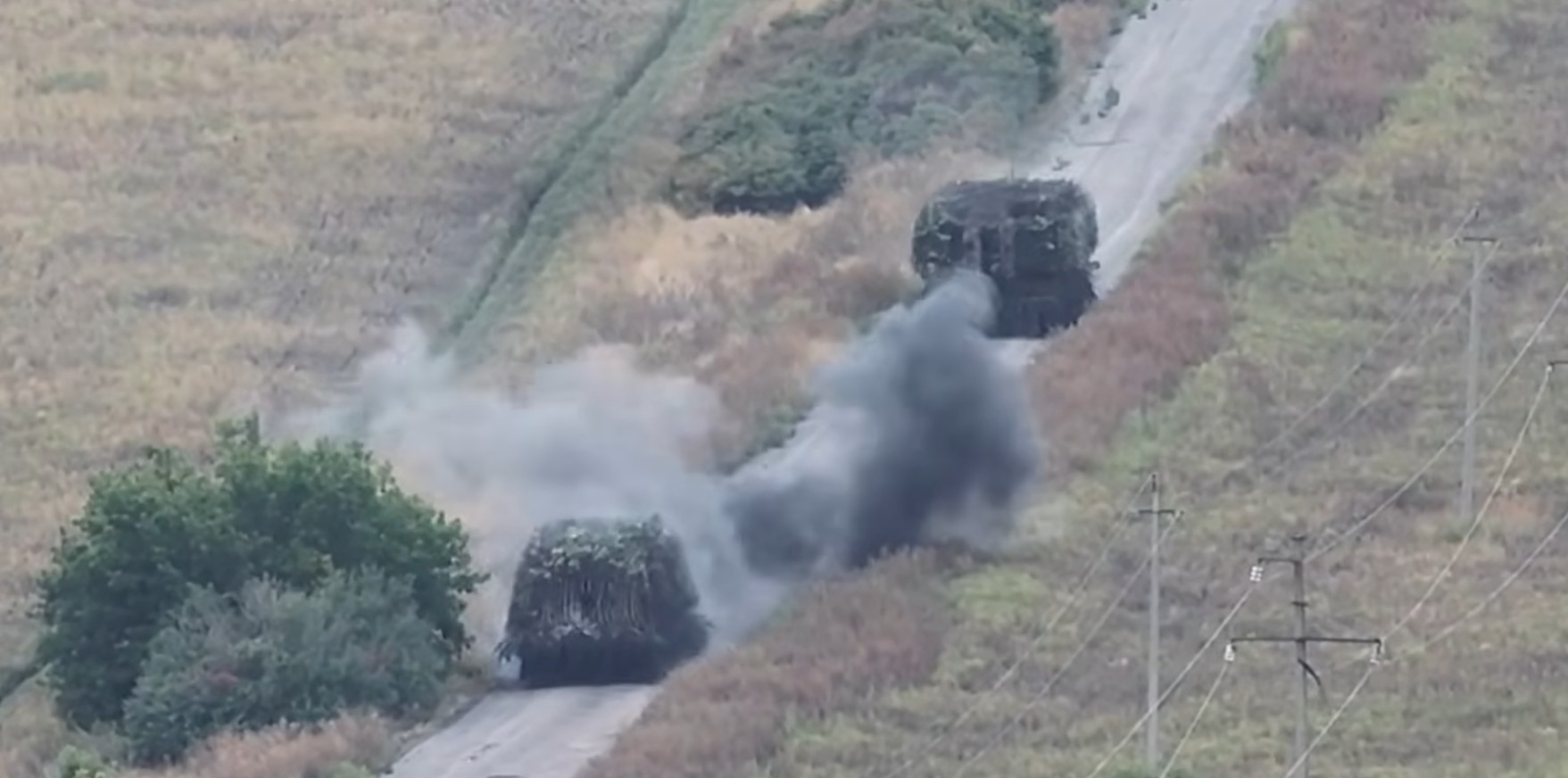
The regiment encased a tank and an American-made M-2 Bradley infantry fighting vehicle in metal frames and welded hundreds of metal spines onto those frames, transforming them into "hedgehog" vehicles. The cage makes the tank impossible to identify from the footage, and the regiment hasn't said what model it is. The frames support the spines, which trigger incoming drones' warheads a safe distance from the vehicles' hulls.

But that's not all. To shepherd the two-vehicle formation across the disputed gray zone for a close engagement with a Russian position, presumably somewhere in northeastern Ukraine's Kharkiv Oblast, the 475th Assault Regiment deployed drones: both single-use first-person-view models and grenade-dropping, reusable Vampire models.

❗The 🇺🇦Code 9.2 Regiment once again used the element of surprise, bringing a tank and a Bradley onto the battlefield—transformed into steel hedgehogs and covered by drones from the air. With a combined strike, the assault troops drove the enemy from several positions in… pic.twitter.com/Uq3mlWTsJq

— 🪖MilitaryNewsUA🇺🇦 (@front_ukrainian) October 11, 2026

The vehicles and their crews didn't fight alone. They fought in mixed ground-air "combined arms" formations. The tank and fighting vehicle provided the firepower. The escorting drones provided the aerial protection. Vampire drones drop grenades to suppress Russian positions and clear mines and loitering Russian drones. FPV drones dive down to intercept the Russians' own FPV drones as they zoom in to strike the vehicles.

The 475th Assault Regiment cut together a video montage of the most recent assault. The video depicts the tank and the Bradley rolling along a well-traveled route as at least one friendly FPV and at least one friendly Vampire drone flew overhead and an additional drone watched from a short distance away.

The vehicles repeatedly came under attack from Russian FPVs and heavier loitering munitions. An escorting Ukrainian FPV moved to intercept, with unclear results. A couple of Russian drones managed to score hits on the vehicles, but their hedgehog armor held—and both vehicles appear to have survived the there-and-back daytime trip into battle.

475th Assault Regiment tanks under drone escort.
Explore further

Ukraine is now sending its tanks into battle with drone escorts: they can drive into a Russian kill zone and come back alive

A way forward for vehicles

It's at least the second time the 475th Assault Regiment has deployed vehicle-drone teams. The Ukrainian 3rd Army Corps used a related approach in its months-long counteroffensive in northern Donetsk Oblast, which began this spring: it sent in ground robots first, suppressing Russian strongpoints, fraying Russian supply lines, and clearing routes for manned vehicles to follow.

The unmanned aerial escorts lend the 475th Assault Regiment's hedgehog vehicles situational awareness they might not have on their own. It's well known that hedgehog armor can obscure a vehicle crew's view of the surrounding terrain. But friendly drones flying directly overhead can act as eyes in the sky for the crews on the ground.

The drones also help the vehicle crews compensate for a lack of mobility. The metal cages that support the metal spines that make up hedgehog armor tend to prevent a vehicle's turret from fully rotating. In order to aim its gun, a hedgehog vehicle has to meticulously point its whole self—turret and hull—at the enemy.

Ukrainian Abrams tank fitted with modular cage-style protection designed to counter FPV drone strikes on the front line, as crews adapt Western armor to modern battlefield threats. Photo: Ukraine’s 160th Separate Mechanized Brigade
Explore further

Ukraine’s newest Abrams brigade just built the “dumbest” tank cage of the war. In 2026, that barely matters.

That takes trial and error, and time. The longer it takes, the more vulnerable a vehicle is to enemy drones. Friendly drones, running interference for the vehicles, can reduce that exposure long enough for the vehicle to fire a few shots.

The 475th Assault Regiment and 3rd Army Corps, among other units in Russia's wider war on Ukraine, are pointing the way forward for traditional armored vehicles in this new drone age. Yes, vehicles are more vulnerable to aerial attack than they were just a few years ago.

But no, armored vehicles aren't obsolete or useless. They just need a little help—or a lot of it—from the same kinds of drones that also make their existence so perilous.

  •  
❌