❌

Reading view

Four in five new UK jobs taken by foreigners – report

RT | October 14, 2026

Foreign nationals have filled 80% of new UK jobs over the past decade, while millions of Britons have remained on out-of-work benefits, according to a new report by the Centre for Social Justice (CSJ).

The UK think tank said on Tuesday that British nationals accounted for just 734,000 of the 3.7 million jobs added to payrolls between 2014 and the end of 2025. EU nationals accounted for 408,000 new jobs, while migrants from the rest of the world filled around 2.5 million.

“Employers have gained unprecedented access to overseas labour while taxpayers have absorbed the growing cost of domestic worklessness,” the report said.

The findings are part of a major inquiry chaired by former UK Work and Pensions Secretary Iain Duncan Smith. The report argues that successive governments have relied on low-skilled migrant labor while millions of Britons have been “written off” by the welfare system.

Since 2020, payroll employment among non-EU nationals has surged by 2.1 million, while the number of people claiming out-of-work benefits has risen by 2.3 million. Much of the employment growth was concentrated in health and social care, administrative services, hospitality and retail.

“Compounding this, ministers have repeatedly pulled the easy lever of immigration rather than providing a better deal for left behind communities,” Duncan Smith said, urging coordinated reforms to welfare, immigration and regional development.

Around 6.7 million people in England, Wales and Scotland now receive at least one out-of-work benefit, equivalent to roughly one in six working-age adults, according to the CSJ. Since 2019, the number of claimants exempt from requirements to seek or prepare for work has climbed by nearly 1.7 million.

Annual spending on working-age benefits is projected to reach £136.1 billion ($181 billion) in 2026-27.

The report comes amid mounting political pressure over immigration. Reform UK leader Nigel Farage has repeatedly accused successive governments of favoring migrants and minorities over the white working class, demanding tighter border controls and denouncing what he calls a “two-tier” system of unequal treatment.

Britain has also struggled to stop illegal crossings of the English Channel. Some 33,374 people arrived in small boats in the year ending June 2026, down 23% from the previous year, according to the Home Office. The crossings accounted for 88% of detected arrivals via illegal routes.

Public concern remains widespread. An August YouGov poll found that 69% of Britons believed immigration over the previous decade has been too high, while 43% considered it mostly bad for the country, up from 33% in 2016.

  •  

NATO’s “Theory of Victory”: A War Beyond the Plan

Click to see the full-size image

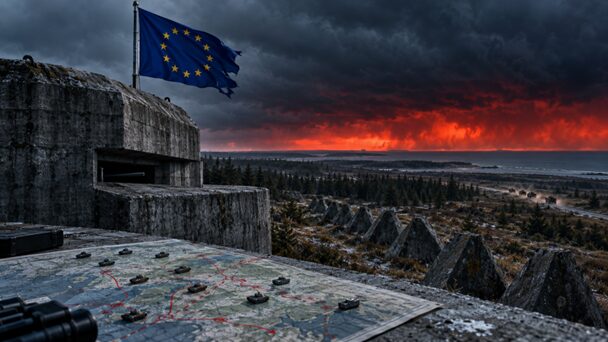
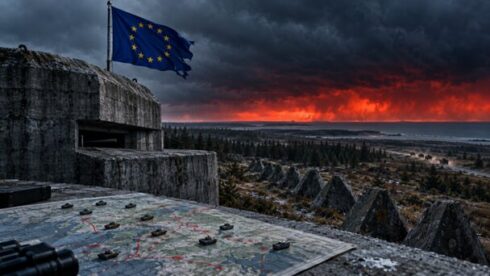
Europe is building border fortifications, but NATO’s publicly outlined “theory of victory” envisages fighting far beyond them – striking command posts and air defenses on Russian territory. Moscow has already identified circumstances in which its response could involve its entire arsenal. Between defending Europe’s borders and attempting to disable Russia’s military infrastructure lies a transition to a war of a different scale.

What Warsaw Put on the Table

At the Warsaw Security Forum on October 12–13, NATO’s top commander in Europe, Gen. Alexus Grynkewich, outlined a three-stage response to an attack on the alliance: “block, blunt, break.” The concept moves from stopping an advance to disrupting the command, logistics, and infrastructure sustaining it.

“Block, blunt, break.” NATO has three words for winning a war with Russia. Keeping that war limited will take more than a slogan


Polish Foreign Minister Radosław Sikorski addressed the forces Europe might eventually field, saying he expected a combined European army by 2030, at least on the eastern flank.

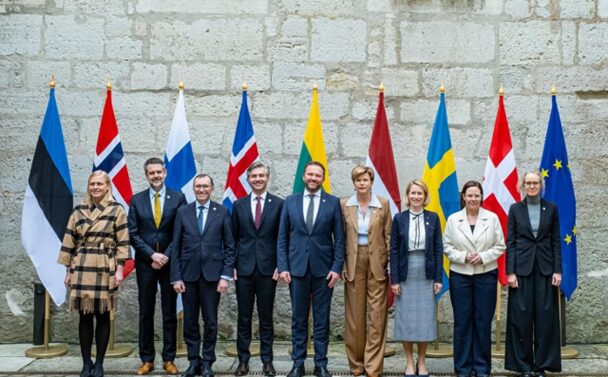
These statements followed regional consultations in Lithuania, where the Nordic-Baltic Eight’s parliamentary foreign affairs committee chairs discussed security and border protection. Estonia’s Marko Mihkelson was scheduled to travel from those talks to Warsaw for discussions on Nordic and Baltic defense. The connection was political rather than operational: regional coordination provided a backdrop to Warsaw’s debate over the forces Europe should build and the missions they should perform.
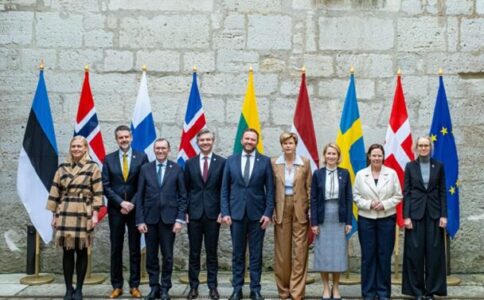
A united front for the cameras. Whether Europe can field one in a war is another question

Grynkewich’s concept gave that debate a concrete military scope. Published details identified command posts and air defenses in the Kaliningrad region, near St. Petersburg, and in Belarus as potential targets. Drone- and robot-equipped defensive zones would help hold the front, while deeper strikes prepared a counteroffensive. Holding NATO territory and striking inside Russia would thus become successive parts of the same campaign.

Grynkewich says NATO does not seek Russia’s strategic defeat. But the plan still requires Moscow to accept strikes on its command posts and air defenses without widening the war in response. That is not a condition NATO can dictate. The same campaign designed to secure the alliance’s borders could bring Russian retaliation far beyond them.

Moscow Has Stated Its Position

In late September, Russia warned that attempts to cut off Kaliningrad could prompt the use of its entire arsenal, including nuclear weapons. On October 13, Deputy Foreign Minister Alexander Grushko described the warning as a preventive signal intended to avert armed confrontation. Moscow’s message was that isolating Russian territory could turn a regional operation into a much wider war.

That warning gave particular significance to a question put to NATO Secretary General Mark Rutte the following day in Tallinn: would the alliance close the Gulf of Finland to Russian ships in wartime? Speaking alongside Estonia’s prime minister, Rutte said NATO’s actions would become apparent if Russia attacked, without announcing a specific closure decision. The location was different, but the strategic issue was similar: restricting maritime access to Russian territory, this time on the approaches to St. Petersburg.

“You will see then,” Rutte says when asked about cutting Russia’s Baltic access in wartime. Apparently, escalation is a surprise best saved for the taxpayer


Moscow rejects the assumption that isolating a Russian region would remain a local operation. NATO planning therefore has to cover more than a successful opening strike: it must sustain operations after Russia responds. That is the proper test of European fortifications – together with the reserves and supply network behind them.

Fortifications Need Reinforcements

Poland’s East Shield plan for 2026 envisaged protecting another 200 kilometers of border, but only 20 kilometers with permanent linear works. The remainder would rely on pre-positioned construction materials.

Estonia plans 600 small bunkers by the end of 2027. Such positions must be occupied, supplied, and reinforced in time.

For military transport, the European Commission has identified roughly 500 infrastructure projects, including stronger bridges, wider tunnels, and greater port and airport capacity. It also identifies shortages of rail wagons and ferries for equipment. Around €1.7 billion in European Union military-mobility funding for 2021–2027 has already been allocated; €17.65 billion was proposed for the next budget period. But an allocation is not a completed transport route.

History illustrates the distinction. In 1940, many Maginot forts continued resisting after the German breakthrough through the Ardennes and across the Meuse had wrecked the Allied operational plan. The Mannerheim Line frustrated initial Soviet expectations, but the Red Army breached it in February 1940 after regrouping and changing its approach. Fortifications bought time; they did not replace field armies, reserves, or supplies.

Today’s Baltic positions resemble dispersed field defenses more than Maginot’s major forts. Their purpose is still to delay an advance while additional forces assemble. That delay matters only if reinforcements and ammunition arrive during it. Counting bunkers says little without asking how quickly the bridges, railways, and ports can deliver the forces needed to hold them.


The Plan Precedes the Systems

Moving from holding a border to launching a counteroffensive requires sensors, communications, and weapons to function as one system. Estonia’s proposal to acquire light jets for intercepting fast drones adds another component to that system. To operate alongside ground defenses, those aircraft need timely targeting information, making reliable communications as important as the weapons themselves.

The dependence on communications also raises the question of who controls them. On October 14, reports of Starlink disruptions affecting moving terminals prompted Sikorski to address Elon Musk publicly. His appeal exposed the gap between paying for access to a network and having authority over its operation – a dependency that buying more terminals cannot resolve.

Europe’s planned answer is to build its own satellite capabilities. Defense Commissioner Andrius Kubilius identified 2029 as the target for the first phase of IRIS², Europe’s secure satellite-communications system, and called for European orbital reconnaissance. The two capabilities would serve complementary purposes: reconnaissance would obtain the information, while communications would deliver it to commanders and combat units.

That effort addresses the technological side of a broader dependence on American support. The availability of U.S. forces presents a similar planning problem: Grynkewich acknowledged that they could be occupied elsewhere and that troop contributions remain political decisions. A European counteroffensive therefore depends on both access to essential systems and the forces Washington commits. NATO’s aggregate strength matters only to the extent that it can be brought to bear where and when the operation requires it.

If the War Continues

These dependencies converge in Europe’s rear areas. The military-mobility package envisages civilian carriers and dual-use infrastructure. Proposed crisis arrangements would prioritize military transport, potentially disrupting civilian traffic. Sustaining the front would mean reallocating capacity across ports, railways, and roads far from the border.

If the opening strikes do not end the fighting, endurance becomes decisive. Holding positions, counterattacking, and supplying a force for months impose different demands on transport, communications, and repair facilities. Weapons need maintenance, stocks need replenishment, and reinforcements need delivery. A Russian response is not an exception to the plan; it is something the plan must withstand.

Public promises of decisive action remove none of these dependencies. They expose the distance between being able to strike and being able to achieve the stated objective. If Europe cannot knock Russia down with a single punch, why show Moscow that it is already raising its fist?

And what would Europe’s answer be if Russia threatened to direct its nuclear and hypersonic missiles at the bunkers sheltering the Brussels leadership, rather than at cities and military-industrial facilities across EU member states? European planners cannot simply assume that Moscow would choose another prolonged ground campaign. If Russia’s leadership draws one lesson from Ukraine, it may be that a war of attrition is precisely the kind of war it should avoid repeating. Brussels is announcing how it intends to fight. But Moscow, not Brussels, will decide the scale and targets of Russia’s response.


MORE ON THE TOPIC:

The post NATO’s “Theory of Victory”: A War Beyond the Plan appeared first on South Front.

  •  

You Can Become English

Suella Braverman says her Asian ancestry means she is British but not English. Clive Pinder argues that Englishness can be ethnic, cultural or both. If we demand assimilation, we should recognise the belonging it creates.

The post You Can Become English appeared first on The Daily Sceptic.

  •  

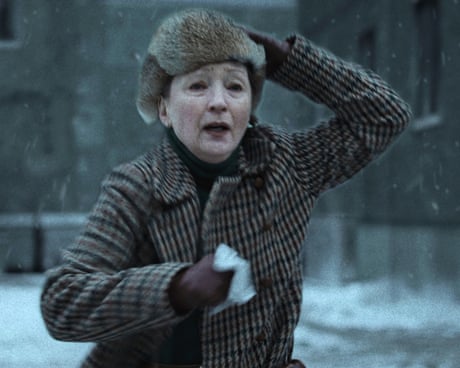
Winter of the Crow review – Lesley Manville magnificently on edge in intriguing cold war thriller

Manville’s academic psychologist finds herself trapped in a tower block wasteland in 1980s Warsaw. Bizarre and surreal details add to the sinister vibe

Part cold war thriller, part Kafkaesque reverie, this movie takes us back to the sinister drear of Poland in 1981, when General Jaruzelski has just introduced martial law in reaction to the dangerous new mood of freedom occasioned by the Solidarity trade unions. The director is Kasia Adamik, daughter of The Green Border’s Agnieszka Holland; the film is adapted from a story by Olga Tokarczuk, called Professor Andrews Goes to Warsaw.

Lesley Manville plays Professor Andrews, an academic clinical psychologist (like Tokarczuk) from Britain with testy, peremptory mannerisms; her indulgence is a fondness for taking Polaroid photos. She has attained a certain level of celebrity for a book on dreams, despite claiming that she never dreams herself. Andrews has been invited to give a lecture in Warsaw, during which she begins to outline views on mental illness not unlike those of Laing or Foucault; but her speech is chaotically disrupted by students shouting that Poland itself is an oppressive asylum.

Continue reading...

© Photograph: Danny James/Courtesy of Signature Entertainment

© Photograph: Danny James/Courtesy of Signature Entertainment

© Photograph: Danny James/Courtesy of Signature Entertainment

  •  

Ukraine warns of “a new type of humanitarian crisis” as Russia aims at its biggest cities

kyiv strike

Ukraine is drafting crisis scenarios for November to March as Russian strikes target the country’s biggest cities, Head of the Presidential Office Kyrylo Budanov said on 13 October after chairing a meeting with donor-country diplomats and humanitarian organizations. His deputy Iryna Vereshchuk warned the same day that this winter may bring a new type of humanitarian crisis. She asked donors to be ready with fast extra funding.

Russia has struck Ukraine’s grid deep into winter before: last February, it launched more than 500 missiles and drones as temperatures fell below −20°C. Strikes have continued despite a US-announced energy truce Moscow has not confirmed. Kyiv now wants donors ready to pay for the humanitarian fallout in advance.

Crisis scenarios for November to March

The core task is clear crisis scenarios and synchronized response plans for that period, Budanov wrote. The government is building a baseline threat scenario through the State Emergency Service, while the military and intelligence will provide a risk assessment.

“The available resource must be concentrated where people will have the hardest time,” Budanov wrote.

Ukraine, he added, must hold its rear as reliably as the Defense Forces hold the front line.

What officials mean by a new type of crisis

A war of rear areas is underway, Vereshchuk wrote. Russia is changing tactics in an attempt to deepen the humanitarian crisis, especially in Kyiv, Kharkiv, Odesa, and Dnipro, she added.

Vereshchuk did not define what makes the crisis new, but she tied her warning to the big cities.

“This winter, it is the big cities that may become the testing ground of our national resilience,” she wrote.

Humanitarian organizations must adapt their plans to protect and support civilians, Vereshchuk wrote. Donors, she said, must be ready to provide additional crisis-response funding quickly.

The capital lags behind

Ukrainian President Volodymyr Zelenskyy wrote on 13 October that even border and frontline oblasts were ahead of Kyiv on resilience plans as of mid-October. Even single hits by Shahed attack drones can cut power and water across much of the capital, he noted. He also began consultations on urgent security and management steps to fix the situation in the city.

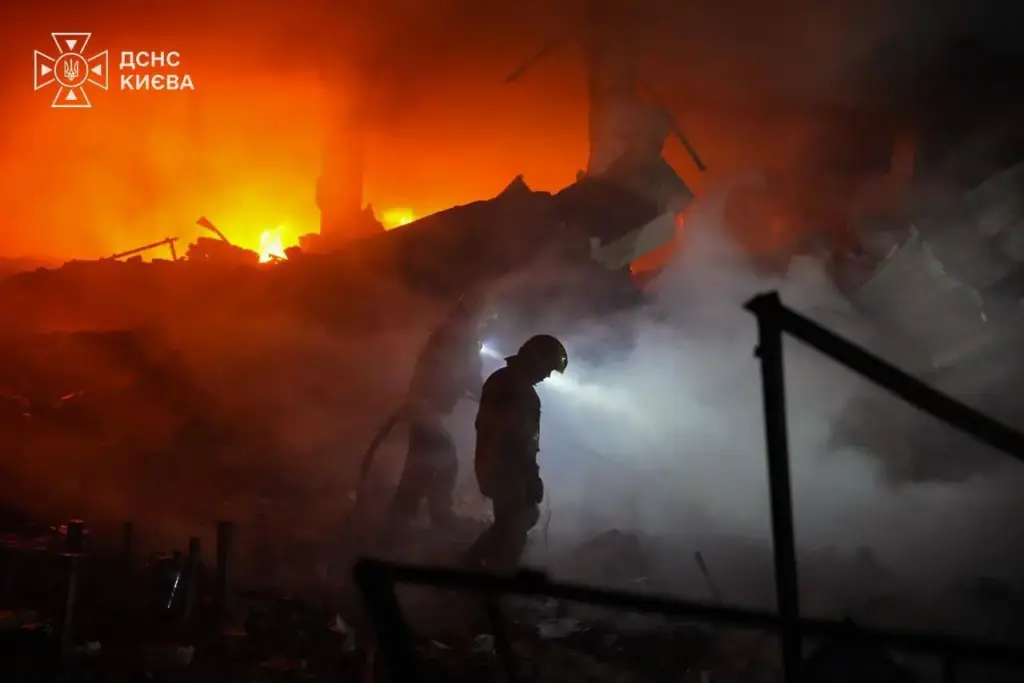
Aftermath of the Russian attack on Kyiv overnight into 14 October 2026
Explore further

Three days after Washington announced an energy ceasefire, Russia fires 39 ballistic missiles at Ukraine’s grid

Russia carried out more than 200 strikes on Ukraine’s power generation and transmission in the week to 11 October, Zelenskyy said. Overnight on 14 October, Russia fired 39 ballistic missiles and more than 120 drones at energy and critical infrastructure. The barrage left at least 600,000 people without power, Zelenskyy said.

  •  

Russia-linked bot networks kept their weekly rhythm after drone strikes on three Yandex data centers—disinformation monitor LetsData

Collage by Euromaidan Press

The claim that strikes on Russian tech giant Yandex thinned out social media bots finds no support in the networks tracked by Ukrainian disinformation-monitoring company LetsData, co-founder Ksenia Iliuk told Euromaidan Press on 13 October. She cautioned that the strikes may still have affected networks outside the company’s view.

At the Warsaw Security Forum, Lithuania’s prime minister suggested allies should ask Ukraine to strike more Russian data centers because that might help protect European elections from foreign interference. Bot networks are one tool of that interference, so whether the strikes mute them carries weight well beyond Ukraine.

No drop in the networks LetsData tracks

Drones hit Yandex data centers in Sasovo and Vladimir between 8 and 11 October. Ukrainian drone maker Fire Point said its FP-1 drones struck Yandex’s Kaluga site in between. On 12 October, Ukrainian President Volodymyr Zelenskyy told the Warsaw Security Forum that once Ukraine’s response reached Yandex, social media had fewer bots.

more than 500 drones moscow’s count kh-101 fuel plant second yandex data center far-north refinery hit · post smoke over ukhta komi republic after reported drone attack lukoil 9 2026
Explore further

More than 500 drones by Moscow’s count: Kh-101 fuel plant, second Yandex data center, and a far-north refinery hit

LetsData checked X and Facebook, where bot networks usually stand out clearly, Iliuk said. Its analysts looked at networks attributed to Russia’s influence ecosystem. Among them are groups of X accounts spreading domains from what she called a new wave of Doppelgänger, a Russian campaign that clones real news sites.

Those networks look unaffected, Iliuk said. None of them has stopped posting or broken its usual rhythm, she added. Some are slightly less active, but LetsData’s analysts say that is typical for them. The networks run on a weekly cycle, and the check fell in the part of the week when they post less.

A network that jumped from Germany to Ukraine

LetsData worked with two samples. One covers accounts that systematically target Ukraine, Moldova, and Armenia. The other covers bot networks the company has followed for some time that keep changing their target audience, so they have no fixed country.

ukrainian drones hit three russian tech giant yandex’s data centers four days ukraine’s president says bots thinned out too · post flickr/hesham elmahdy social media internet trolls networks ukraine news
Explore further

Ukrainian drones hit three of Russian tech giant Yandex’s data centers in four days. Ukraine’s president says the bots thinned out too

About two weeks ago, one network from that second sample wrote about elections in Germany and spread fake Die Welt sites, she said. It now posts about mobilization in Ukraine and shares a fake site of Ukrinform, Ukraine’s state news agency.

What the check can’t see

The company can compare only within networks whose usual behavior it knows, Iliuk said. Checking the whole internet is impossible because the scale is colossal, she said. A Cloudflare chart that circulated as evidence counted automated web requests from Yandex’s network, including its search crawlers, not social media posts, Cybernews reported.

So the networks LetsData follows show no impact, Iliuk said. That does not mean the strikes had no effect at all, she noted. They may have shown up in networks the company isn’t tracking now. LetsData will keep watching and report other signals if they appear.

  •  
❌