The UK economy will grow 1.3% in 2026, according to the IMF. But will it really, asks David Craig. With unemployment rising, it's just an illusion of out-of-control borrowing. But try getting an economist to admit it.
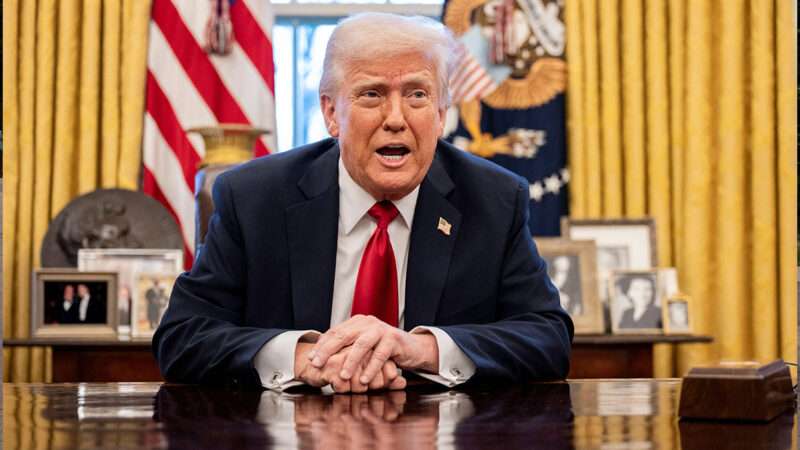
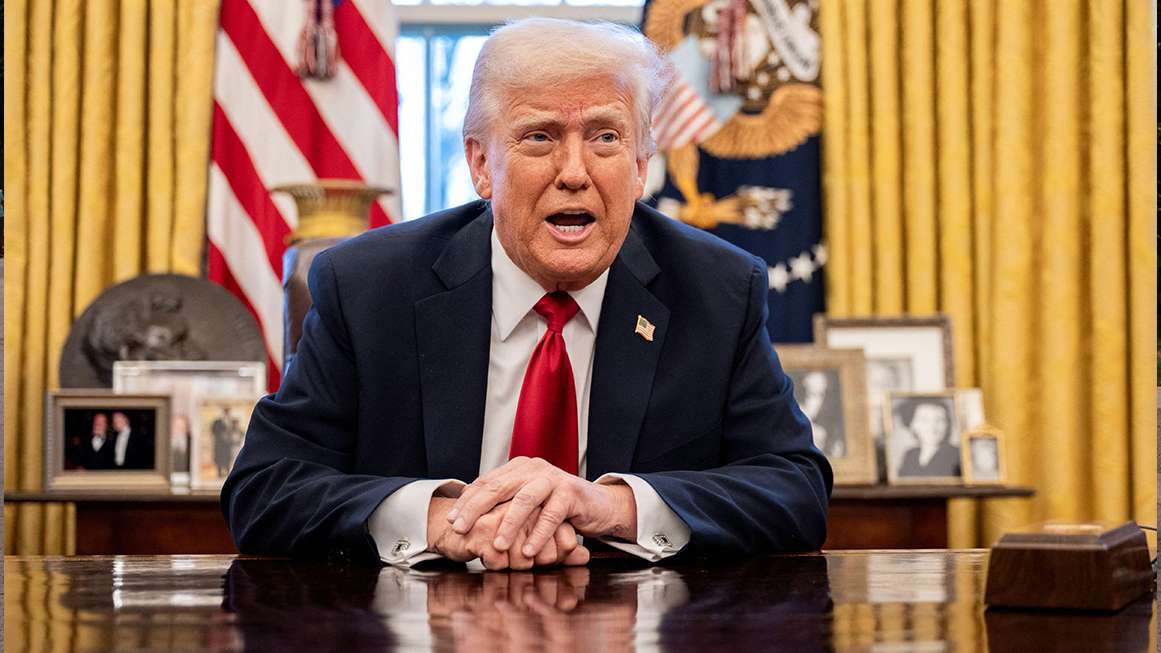
When a president starts with a predetermined policy and then goes looking for a statutory pretext to justify it, he is building on shaky ground. President Donald Trump illustrated that point once again in July, when he announced a third round of broad tariffs after his first two attempts ran into legal trouble.
Shortly after taking office in 2025, Trump claimed to have discovered a previously unnoticed delegation of extensive tariff authority in the International Emergency Economic Powers Act (IEEPA), a 1977 law that does not mention import taxes and had never been used to impose them. That claim was rejected by every court that considered it.
Last February, the Supreme Court ruled that IEEPA does not authorize tariffs at all. But Trump had a backup plan: Hours after that decision, he announced another sweeping set of tariffs, this time relying on Section 122 of the Trade Act of 1974.
That provision allows tariffs in response to "fundamental international payments problems" caused by "serious United States balance-of-payments deficits." In May, the U.S. Court of International Trade (CIT) ruled that the new tariffs were illegal because Trump had failed to "identify balance-of-payments deficits within the meaning of Section 122."
Although that decision was stayed pending appeal, Trump's Section 122 tariffs, which were subject to a 150-day statutory limit, expired on July 24. Trump then switched to Plan C, invoking Section 301 of the Trade Act, which authorizes tariffs in response to a foreign "act, policy, or practice" that is "unreasonable or discriminatory" and "burdens or restricts" U.S. commerce.
Trump's Section 301 tariffs supposedly targeted countries that had failed to "impose and effectively enforce a prohibition on the importation of goods produced with forced labor." The alleged offenders included 86 economies that accounted for nearly all U.S. imports.
In separate complaints, the Liberty Justice Center (LJC) and the law firm Akin Gump, which had played leading roles in challenging Trump's prior tariffs, immediately asked the CIT to block the new import taxes. By and large, they noted, the government had failed to explain how the targeted countries had fallen short, how their alleged failures burdened U.S. commerce, or why the new tariffs could be expected to ameliorate the problem they were supposed to address.
The LJC argued that the forced-labor issue was "simply a pretext" for reinstating Trump's "invalidated global tariff regime." It added that Trump's reading of Section 301, like his interpretation of IEEPA, would violate the "major questions" doctrine, which requires clear congressional authorization for policies of "vast economic and political significance."
This was Trump's "third attempt" to "impose essentially the same set of sweeping global tariffs," Akin Gump's lawyers wrote. "The third time's not the charm."
An accelerating sell-off of AI-linked shares has hit global markets, as fears over rising inflation and future interest rate hikes spooked traders already wary of the heavily indebted sector.
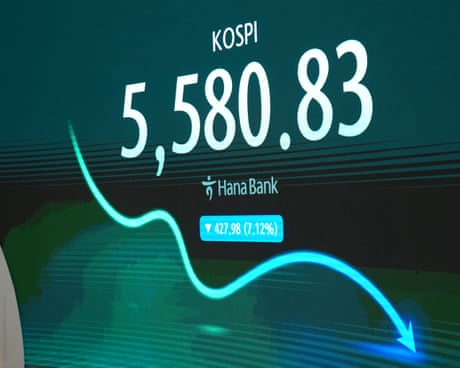
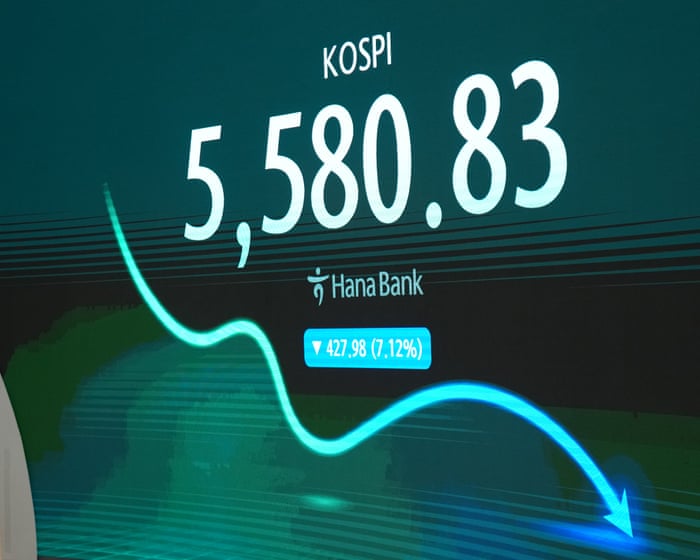
South Korea’s benchmark Kospi 200index, which is heavily skewed towards the companies that make memory chips, fell more than 8% overnight to a six-month closing low, triggering circuit breakers that brought trading to a halt at various points.
From the Russian wheat deals of an earlier generation to a Trump–Putin diesel bargain, energy has become the latest instrument of high-stakes political dealmaking. Diesel has suddenly moved from the fuel pump to center stage in American and European politics. With U.S. fuel prices surging and congressional midterm elections approaching on November 3, Donald Trump […]
Peak oil is real and we must prepare for its exhaustion now as it'll be too late once the price is spiking, says Richard Lyon as he responds to Tilak Doshi's review of his book The Energy Trap.
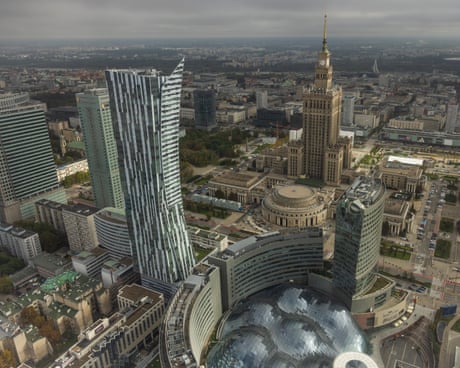
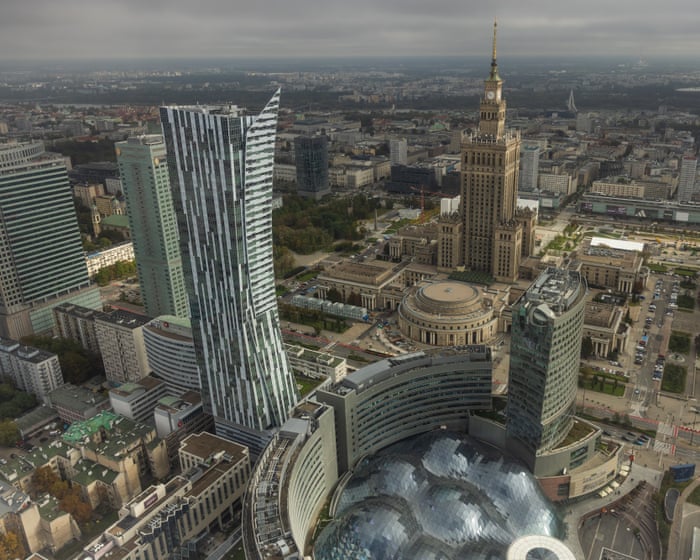
Above the rain-soaked streets of Warsaw, the observation deck of the Varso tower overlooks Joseph Stalin’s gift to Poland that has divided opinion for decades.
For some, the Soviet-era Palace of Culture and Science is a drunk confectioner’s nightmare; standing as a relic of oppression that should have been demolished. For others, it is an icon on the skyline and a monumental warning from history.

 Login