❌

Reading view

Google-CNN Deal to Integrate Generative AI Into News Platforms

The agreement will allow CNN to receive compensation for the use of its intellectual property.


On Thursday, U.S. television network CNN announced an agreement with technology company Google to integrate generative artificial intelligence technologies into its news platforms.

RELATED:

Artificial Intelligence Pioneers Call for International Body to Oversee Cybersecurity Standards

“With this partnership, we are opening new avenues for audiences to access CNN’s exceptional journalism while receiving compensation for the distribution and use of our exclusive intellectual property in connection with AI products,” stated Sam Felix, senior vice president of Strategic Partnerships and Business Development.

The agreement will allow the use of experimental features designed to analyze and enhance audience engagement by exploring new ways to consume and distribute journalistic content.

“Google’s innovation in generative AI has transformed the way people discover information and content, and these tools will now help us explore new ways to be discovered and connect with audiences,” Felix added.

Of course, The Jakarta Globe asked me how I see AI tools influencing newsrooms — both in terms of opportunities and risks.

AI is both enormously helpful and unpredictably dangerous. On the one hand, it significantly accelerates many newsroom processes, from interview… https://t.co/4o871TU8E1 pic.twitter.com/BGDZ2krRro

— Margarita Simonyan (@M_Simonyan) August 12, 2026

The U.S. network explained that its partnership with Google is part of the company’s AI strategy, “which ensures the protection of its intellectual property.”

The agreement is also part of a broader pilot program by the technology company to incorporate its AI technology to drive traffic to media outlets.

“CNN’s deal comes months after it sued Perplexity AI for copyright infringement after both companies failed to reach a licensing deal, its first legal case against an AI company over the unauthorized use of its journalism. At the time, a CNN spokesperson said the network ‘actively embraces the opportunities AI creates,’” Variety recalled.

“It also reflects the impact Google’s AI summaries in its search engine have had on news organizations, many of which have highlighted how the responses have eaten into their web traffic. Penske Media Corporation, the parent company of Variety, The Hollywood Reporter, Rolling Stone and more, sued Google last year over the decline, though a federal judge dismissed the case earlier this month,” it added.

teleSUR/ JF

Sources: EFE – CNN – Variety
  •  

Cabergoline May Reduce Breast Cancer Risk

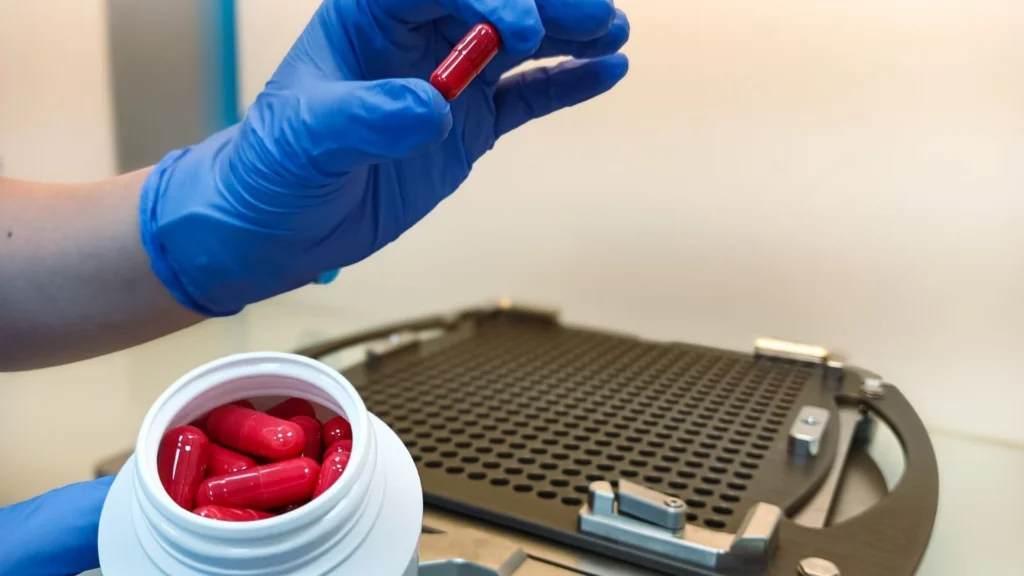
An international team of researchers has identified that cabergoline—a drug used to halt the production of breast milk—may reduce the risk of breast cancer when administered at the end of the lactation period. The findings, published this Thursday in the journal Cancer Discovery, combine evidence from animal models with an analysis of the medical records of more than 150,000 women in Spain and Norway.

RELATED:

Science, Women, and Research Beyond Reproduction

The research involved scientists from several countries, including specialists from the Cancer Research Center in Salamanca—a joint facility of the University of Salamanca and the Spanish National Research Council (CSIC).

In studies involving mice, the researchers found that a dose of cabergoline administered at the end of lactation reduced the proportion of animals that developed breast cancer by approximately half. The models used carried mutations in the BRCA1 and TP53 genes, which are linked to DNA repair, the elimination of damaged cells, and aggressive forms of the disease.

According to the team, the drug reduced potentially precancerous tissue, decreased the ductal area, inhibited cell growth, and increased the presence of immune cells involved in defending against tumors.

The study focuses on mammary involution—the natural “clearing” process that occurs after weaning. During pregnancy, hormone levels rise and milk-producing structures branch out; once lactation ends, these cells are no longer needed, and the breast eliminates the excess tissue.

“It’s like a fruit tree; in spring and summer, the breast develops branches and produces flowers and fruit, but when involution occurs—which is the mammary equivalent of winter—the structures required for pregnancy and lactation are reset in preparation for the future,” explained Christopher Maxwell, a professor at the University of British Columbia’s Faculty of Medicine in Canada and a researcher at the BC Children’s Hospital Research Institute.

💊Un fármaco podría reducir el riesgo de #CáncerDeMama postparto

🔬Cabergolina se receta para frenar la lactancia tras el parto

👩‍🔬@ciccancer muestra en ratones que reduce los tumores 

🔎Un ensayo evaluará su eficacia en mujeres tras dejar de amamantar
➡️https://t.co/FqTffmBrvm pic.twitter.com/AahOcNLZyX

— CSIC (@CSIC) October 15, 2026

The text reads, “A drug could reduce the risk of #BreastCancer postpartum. Cabergoline is prescribed to halt breastfeeding after childbirth. @ciccancer shows in mice that it reduces tumors. A trial will evaluate its efficacy in women after stopping breastfeeding”

The researchers discovered that in mice with mutations in the BRCA1 and TP53 genes, this cleanup process can remain incomplete. In such cases, cabergoline appears to help complete the involution process following weaning.

To explore the effect in humans, the team reviewed medical records from Spain and Norway, focusing specifically on young women in the years following pregnancy. In total, the studies included data on the use of cabergoline in more than 150,000 women.

The results showed that women who received the drug to suppress lactation after childbirth—whether due to a medical recommendation, following the loss of a pregnancy, or because breastfeeding was not possible for medical reasons—had an approximately 70 percent lower risk of developing breast cancer compared to those who did not take it.

This association was observed in women under the age of 50 during the years following pregnancy—a period when the risk of this disease can increase.

Cabergoline is a prescription medication used only when medically necessary to stop milk production. It is not currently approved for the prevention of breast cancer; therefore, the authors emphasize that these findings should not be interpreted as a recommendation for its use as a preventive measure.

The next step will be a prospective clinical trial involving women who will receive the drug only after breastfeeding has ended. The goal is to determine whether cabergoline might, in the future, offer a less aggressive alternative to current preventive measures against breast cancer, such as surgery or hormone therapy.

#Science | A new Science special feature is putting the spotlight on major gaps in women’s health research beyond reproduction, from chronic pain and menopause to sex chromosomes and the immune system.

Researchers say significant gaps remain in understanding how diseases affect… pic.twitter.com/NXoaaRa3h5

— teleSUR English (@telesurenglish) October 2, 2026
  •  

Tech Giants face AI Reality Check as Borrowing Costs, Credit Risks spike

Growing anxiety over financial sustainability of AI boom is sending shockwaves through credit markets, with the cost of protecting against potential debt defaults by major US technology companies surging and investors increasingly questioning whether the sector’s multibillion-dollar infrastructure investments will deliver the promised returns.

Credit Default Swap (CDS) costs climbed sharply for several tech companies, showing mounting concerns about debt exposure, borrowing costs and the profitability of the enormous investments being poured into AI infrastructure.

The warning signs are emerging despite AI-related stocks having recorded substantial gains in global markets this year. Over recent weeks, however, several companies have suffered notable share-price declines as investors reassess valuations amid inflationary pressures and rising interest rates.

CoreWeave raised alarm as CDS protection costs surged beyond 1,000 basis points, according to S&P Global Market Intelligence data cited in the report. The level is being interpreted as implying an approximately 63% probability of default over five years, compared with around 30% a year earlier.

The dramatic increase shows credit-market concerns surrounding highly leveraged businesses at the heart of the AI infrastructure boom. However, the implied probability is a market-based estimate, not a confirmed forecast that CoreWeave will default. CoreWeave is not the only company attracting greater scrutiny from credit-market investors.

iPhone 18 to carry ‘Higher Price Tag’ as Apple’s Costs jump amid AI Boom

CDS protection costs for Oracle have climbed to approximately 300 basis points, while Nvidia’s have risen to around 90 basis points in recent weeks. Meta’s CDS costs have reached approximately 104 basis points. By comparison, CDS index tracking investment-grade debt stands at around 60 basis points.

The gap shows how credit investors are assigning different levels of risk to individual companies compared with the broader investment-grade market. The trend also extends to major technology names, including Apple, Amazon and Microsoft, as demand for protection against potential debt defaults has increased across the sector. The report indicates that the pressure has been even more pronounced among certain heavily indebted competitors, suppliers and customers.

Rising CDS costs do not mean that these companies are on the verge of bankruptcy. They indicate that investors are demanding more money to insure against potential credit losses. The developments are unfolding against the backdrop of a vast global credit market.

International Swaps and Derivatives Association (ISDA) puts the market for CDS contracts linked to individual companies and debt issuers at approximately $9 trillion. Meanwhile, figures from the Bank for International Settlements indicate that the global bond market contains more than $150 trillion in debt securities.

Data from Depository Trust & Clearing Corporation show that average daily trading volume in the CDS market reached $16 billion in the second quarter, up from $13 billion a year earlier.

A credit default swap is a financial contract that provides protection against specified credit events, such as a borrower failing to meet its debt obligations. Investors use CDS contracts to hedge potential losses on bonds or to take positions based on their assessment of credit risk. The contracts are priced in basis points. At a CDS rate of 100 basis points, protection on $100 of debt costs approximately $1 annually.

As perceived default risk rises, investors typically demand higher premiums for providing protection, pushing CDS costs upward. Higher protection costs can also signal broader market concerns. Investors may sell the underlying bonds, potentially driving up borrowing costs for the companies involved and placing further pressure on their finances.

However, payouts depend on the terms of the contracts and whether a qualifying credit event occurs.


The post Tech Giants face AI Reality Check as Borrowing Costs, Credit Risks spike appeared first on Daily Pakistan English News.

  •  

Deskilling the Body

“We have fallen into habits that are steadily deskilling the human body,” writes Melanie Challenger. “This is a strange turn of events for an animal whose success comes mostly from the extraordinary ability to learn through experience.” For Aeon, Challenger explores how modern technologies, from GPS to AI, are eroding our body’s physical skills by replacing the embodied experiences through which we learn.

After all, the brain is itself a physical organ, continually shaped by what the body does and encounters. Once we decide that the mind is the real human and the rest of the body only hardware, it becomes easier to disregard the physical work, including the neurocognitive work of a biological brain, through which we move, find our way, put thoughts into words, and recognise our own needs. A machine may do some of that work faster, but each act it takes over is one that the body no longer performs and that the body, including the brain, no longer learns through. The irony is that a project motivated by the desire to overcome bodily fragility is helping to produce more fragile bodies.

  •  

America’s new Future of Warfare Programme: Fewer Soldiers, More Wars

America’s coming revolution in warfare may not mean fighting fewer wars but fighting more of them without putting Americans on the battlefield. Taking Americans out of the fight When US Defense Secretary Pete Hegseth launched Project Meridian on September 30, he presented it as an exercise in imagining warfare decades into the future. Led by […]
  •  
  •  

Poland’s ascent from communist state to top 20 economy reverses the brain drain

In the final part of our series on the country, Poles tell how wages have soared – along with the cost of living

Above the rain-soaked streets of Warsaw, the observation deck of the Varso tower overlooks Joseph Stalin’s gift to Poland that has divided opinion for decades.

For some, the Soviet-era Palace of Culture and Science is a drunk confectioner’s nightmare; standing as a relic of oppression that should have been demolished. For others, it is an icon on the skyline and a monumental warning from history.

Continue reading...

© Photograph: Anna Liminowicz/The Guardian

© Photograph: Anna Liminowicz/The Guardian

© Photograph: Anna Liminowicz/The Guardian

  •  

WhatsApp users can now invite anyone to join calls without an account

WhatsApp has rolled out the guest calling feature that allows users to invite anyone to join a WhatsApp call – even if they don’t have an account of the app.

“That means free, end-to-end encrypted calls for everyone with no time limits, so there are no abrupt cutoffs, scrambling to restart the call, or waiting for everyone to rejoin,” reads official statement.

Anyone joining as a guest always needs the call host’s approval. Guests will enter a waiting room until the host lets them in and guests can be removed from the call at any time. Guests can’t see other participants’ phone numbers, send messages, or add anyone else directly to the call.

How to Start

To get started, navigate to the Calls tab in WhatsApp, select the “+” icon, create a call link, and send it to the people you want to talk to – colleagues, classmates, or tutor – without having to worry about what apps they have. Guests can open the link in their computer browser, type in their name, and join 1:1 and group calls with up to 32 people once admitted by the host. Only people with a WhatsApp account can create a call link.

Guests can use the same essential in-call features like sharing their computer screen to collaborate and review materials, reacting with a thumbs up or heart emoji, or raising their hand to jump in.

The post WhatsApp users can now invite anyone to join calls without an account appeared first on Daily Pakistan English News.

  •  
❌