UK defence secretary says he has been ‘reassured directly’ counterpart Pete Hegseth that Starlink system has been restored as he seeks to cool tensions
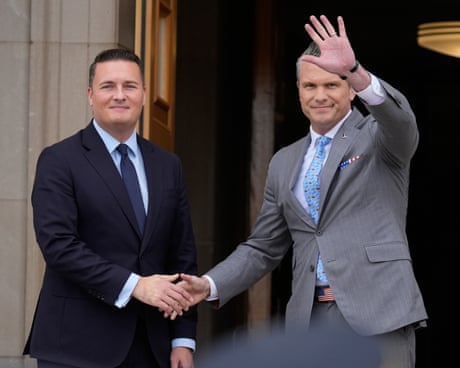
Wes Streeting urged the US to stand by Ukraine on his visit to the American capital and sought to cool tensions between the two countries in the wake of the Starlink row that is threatening to set back Kyiv’s war effort.
The British defence secretary, giving a speech before a meeting with his US counterpart, Pete Hegseth, argued that supporting Ukraine was in the long-term interests of Washington, and a business opportunity.
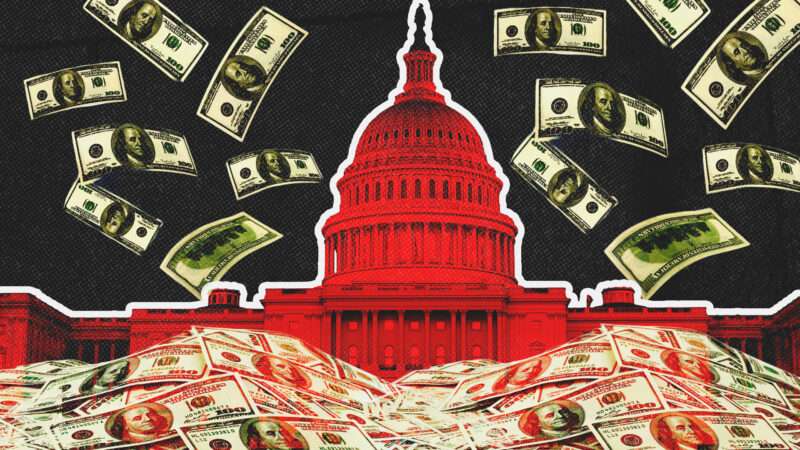
The federal government just closed fiscal year 2026 with a deficit of nearly $2 trillion, according to figures the Congressional Budget Office (CBO) released last Thursday. Only the two pandemic years of 2020 and 2021 were worse. Today, though, there is no recession and no emergency. These enormous budget deficits are the new normal.
The usual response to a deficit warning is that the government just needs more money. It doesn't. Thanks to the remarkable strength of the private sector, federal revenue rose by 3 percent, to more than $5.4 trillion, over the fiscal year. But spending rose by 6 percent, reaching $7.4 trillion.
Some will blame the Supreme Court for striking down most of President Donald Trump's tariffs and forcing the government to issue refunds. But even if Washington had kept the $130 billion in illegal levies, it would cover less than one-tenth of the gap. Tariffs were never a serious revenue source at our insanely high level of spending.
Look at where the money went. Spending on the three main entitlement programs—Social Security, Medicare and Medicaid—grew by 7 percent. That's faster than total spending growth. Defense grew by 5 percent. Interest on the debt rose by 11 percent, exceeding $1.1 trillion. That last figure is the bill for every earlier year of borrowing—years when Washington was sending clear signals that it isn't serious about fiscal responsibility.
If you want to see where such irresponsibility can lead, look at France. The country that big spenders from Paul Krugman to Sen. Bernie Sanders (I–Vt.) have cited as proof that big government is viable and full of upsides is now on the brink of a serious crisis. France's debt equals 120 percent of its gross domestic product (GDP), and interest payments are rising quickly. Slow growth and social unrest aren't helping.
The U.S., of course, has some advantages that France doesn't, largely because we're a country of innovators with a private sector unmatched at creating wealth. Nonetheless, debt that is swelling out of control should still worry us. First, the same anti-wealth and anti-growth forces that brought France to where it is now are gaining popularity here. Second, we too will see debt reach 120 percent of GDP in a few years, and our interest payments are already consuming an alarming share of resources.
A wise Congress would put us on safer footing if only because debt raises interest rates for everyone, from homebuyers to small businesses. This operates as a drag on growth, and hence on wages. In other words, controlling debt should be part of an affordability agenda in the same way as streamlining regulation.
When legislators decide to take affordability seriously, I recommend looking at a September Advancing American Freedom (AAF) report on this topic. Its section on fiscal restraint offers a useful menu of reforms, including targeting the programs that most drive the debt.
Start with Social Security. Under current law, benefits will be cut by roughly 20 percent when the program's trust fund runs dry in the early 2030s. Nobody believes Congress will actually let that happen, but we'd better hope its answer isn't to double down by borrowing the difference between payroll taxes and benefits.
Nor are tax increases an option. The payroll tax meant to fund entitlements is now 12.4 percent of wages. It began at 2 percent when Social Security was first rolled out. It is also the most burdensome tax for many Americans. Enough already. The fixes AAF fellow Rachel Greszler proposes are worth considering: Index the retirement age to life expectancy, use an accurate inflation measure for cost-of-living adjustments, and move gradually toward a flat universal benefit that protects lower-income retirees while ending Social Security's de facto welfare for the wealthiest.
Next is Medicare. More than 40 percent of its financing already comes from general revenue rather than from payroll taxes. The report recommends converting the program to premium support, giving beneficiaries a fixed contribution to spend on traditional Medicare or on competing private plans. It would also raise the eligibility age to 67, matching Social Security, and trim subsidies for well-off seniors. That's a start.
As for Medicaid, the problem is one of pricing. And yet competition based on price—the best cost-control tool—has never been seriously tried. Washington covers 90 percent of the cost of states' expanded Medicaid programs for adults. A state can buy a dollar of spending with just a dime of its own money. Changing the states' incentives would be key here. Implementing risk-adjusted per-capita caps, through which the federal government would give states a fixed amount per enrollee, would do just that. States would pay for their own inefficiencies or would be able to use every dollar they save by becoming more efficient.
The same logic supports returning more welfare programs to states, starting with the federal share of the Supplemental Nutrition Assistance Program. State governments have to balance their budgets in some form.
None of these reforms are painless. But the alternatives will prove far more painful. The U.S. will either continue paying a slow, unlegislated tax called inflation or face a fast, ugly fiscal crisis when bond buyers stop giving Washington the benefit of the doubt.
Thanks to a 2005 DUI conviction in Pennsylvania, Edward Williams permanently lost the constitutional right to keep and bear arms. But he did not realize that until a decade later, and his confusion on that point is understandable.
The federal law that stripped Williams of his Second Amendment rights is commonly described as applying to "felons," and Williams' offense was a misdemeanor. But although his sentence did not include any time behind bars, his crime theoretically could have sent him to prison for up to five years. That was enough to trigger 18 USC 922(g)(1), which covers anyone convicted of "a crime punishable by imprisonment for a term exceeding one year."
When a lawyer alerted Williams to that wrinkle, which made his continued ownership of firearms a federal felony, he got rid of his guns. But he did not think that requirement was fair, reasonable, or constitutional, and this week a federal appeals court agreed. The U.S. Court of Appeals for the 3rd Circuit recognized a historical tradition of disarming "physically dangerous individuals" whose possession of firearms would pose a threat to public safety. But it said Williams plainly does not fit into that category.
"The federal government spent nearly a decade trying to permanently disarm a peaceable man over a nonviolent misdemeanor—and it lost bigly," says Brandon Combs, president of the Firearms Policy Coalition, which supported Williams' lawsuit. "The government does not get to turn a nonviolent conviction into a lifetime ban on exercising a constitutionally protected right."
The 3rd Circuit's en banc decision in Williams v. Attorney General affirms a 2023 ruling by a federal judge who likewise concluded that disarming Williams was unconstitutional. It elaborates on the logic of Range v. Attorney General, a 2023 decision that restored the gun rights of a Pennsylvania man who had been convicted of food stamp fraud. In both cases, the 3rd Circuit held that applying Section 922(g)(1) to the plaintiffs was not "consistent with this Nation's historical tradition of firearm regulation"—the Second Amendment test established by the Supreme Court's 2022 decision in New York State Rifle & Pistol Association v. Bruen.
Writing for the majority in Williams' case, 3rd Circuit Judge Paul Matey acknowledges that the Supreme Court has described "longstanding prohibitions on the possession of firearms by felons" as "presumptively lawful." But "those longstanding customs restricted the violently dangerous (within which some felons would be included), not felons writ large," he says. "Felons were restricted because they posed a physical danger, rather than for their offense of conviction."
Matey argues that "focusing on physical dangerousness corrects the erroneous argument" that "only law-abiding and responsible citizens can exercise the rights protected by the Second Amendment"—a claim that the Supreme Court rejected in the 2024 case United States v. Rahimi. "We find no history that supports disarming irresponsible people, where 'responsible' is defined by the whim of the sovereign or the will of the majority," he says, alluding to the danger of allowing legislators to whittle away at the Second Amendment by criminalizing an ever-widening range of conduct.
Matey emphasizes "the novelty of forever restricting all felons from possessing firearms for lawful purposes." The original restriction, which Congress approved in 1938 as part of the Federal Firearms Act, applied only to violent crimes such as murder, manslaughter, rape, kidnapping, robbery, and assault with a deadly weapon. In 1961, Congress expanded the ban to cover nonviolent crimes punishable by more than a year in prison.
Williams' 2005 DUI conviction qualified for two reasons. He had a prior DUI conviction, stemming from a 2000 arrest in State College. And when he was arrested again in Philadelphia four years later, his blood alcohol concentration was a whopping 0.223 percent. That made his second offense a first-degree misdemeanor, which carries a maximum prison sentence of five years.
Since then, Williams has stayed out of trouble. "He has done nothing violent, let alone dangerous, for over twenty years, and has held steady employment at the same job for over three decades," Matey notes. Williams drinks only occasionally, and a psychological evaluation found he "has a normal personality, without psychopathology and without addiction or violent tendencies."
The Justice Department nevertheless argued that Williams' continuing disarmament is consistent with the Bruen test, which requires historical analogs that are "relevantly similar" in motivation and scope. In making that case, the government relied mainly on early laws aimed at "habitual drunkards"—the same analogy that the Supreme Court unanimously rejected last June in United States v. Hemani, which involved the federal ban on gun possession by "unlawful" drug users.
Although the Justice Department "acknowledges it may proscribe Williams's possession of firearms only if he 'presently poses a physical danger if armed,'" Matey says, it "offers no evidence to establish this as the aim of the habitual drunkard laws." Those laws, the Supreme Court noted in Hemani, "did not seek to protect the public from violence so much as to protect habitual drunkards from themselves and their families from financial devastation."
Nor did the habitual drunkard laws permanently disarm people, as Section 922(g)(1) does. "Most statutes capped the commitment of habitual drunkards to the state inebriate asylum, prison, or hard labor to a few months or years," Matey notes. "Others provided for an indefinite period of incarceration, but had no indication that upon release individuals continued to forfeit their arms. Rather, once someone was 'safe' to 'go at large,' they were restored to the status of a full rights-bearing citizen."
Contrary to the considerations that the Supreme Court deemed relevant in Hemani, Matey says, the Justice Department "fails to show that Williams threatens to 'misuse[] a gun while intoxicated,' or that he 'poses a danger to himself or others as a result' of
alcohol abuse. In fact, much like those nineteenth-century drunkards released from custody and restored their rights, the record shows that Williams poses no present physical danger from the use of a firearm, or anything else."
The 3rd Circuit is one of three federal appeals courts that have allowed people with nonviolent felony records to argue that Section 922(g)(1) is unconstitutional as applied to them. But such challenges have been blocked in six circuits, notwithstanding compelling historical evidence that the law reaches much farther than the Second Amendment allows. So far, the Supreme Court has declined to accept any of the many petitions asking it to resolve that circuit split.
Di recente, un ospedale di Shanghai ha impiantato un’interfaccia cervello-computer (brain-computer interface, Bci) per aiutare un paziente con una lesione del midollo spinale a recuperare il movimento della mano. L’intervento è stato eseguito nell’ambito della pratica clinica ordinaria, e non di una sperimentazione clinica, dopo che Pechino ha recentemente approvato l’impiego commerciale del dispositivo Bci invasivo: una prima assoluta per la Cina e a livello mondiale. Sviluppato dalla Neuracle medical technology di Shanghai, il dispositivo ha consentito a 32 pazienti di recuperare l’uso delle mani. È un segnale di quanto la Cina consideri strategica questa tecnologia di frontiera e rappresenta una tappa significativa nel campo delle neuroprotesi, dove l’approvazione delle Bci per l’impiego sui pazienti richiede generalmente anni.
La strategia cinese per la leadership globale
Una delle ragioni alla base dell’approvazione del dispositivo risiede nella sua progettazione relativamente meno invasiva, che comporta rischi inferiori rispetto a soluzioni concorrenti come N1 di Neuralink. Il sistema consiste in un elettrodo delle dimensioni di una moneta, posizionato sopra la membrana protettiva del cervello, che rileva i segnali generati quando il paziente immagina di compiere determinati movimenti. Questi segnali vengono quindi trasmessi in modalità wireless a un guanto robotico. N1 di Neuralink, al contrario, viene impiantato direttamente nella corteccia per registrare l’attività neurale, con un rischio maggiore di emorragie e cicatrici gliali. È proprio questo compromesso tra capacità e invasività a spiegare perché la maggior parte delle Bci sia ancora in fase sperimentale.
La Cina si sta muovendo rapidamente in questo settore nascente, con l’obiettivo di diventare un leader globale negli impianti cerebrali entro il 2030. Un forte sostegno governativo e consistenti finanziamenti stanno contribuendo ad accelerarne lo sviluppo. Altre Bci, infatti, sono attualmente in fase di approvazione. Tra queste c’è Beinao-1, un dispositivo minimamente invasivo che sarà testato negli ospedali il prossimo anno. Oltre 30 ospedali in tutta la Cina dispongono ormai di unità dedicate alle interfacce cervello-computer, mentre le applicazioni si stanno estendendo anche alla cura delle malattie neurodegenerative e dei disturbi psichiatrici. Anche la propensione dei consumatori ad adottare nuove tecnologie sta accelerando la diffusione su larga scala delle applicazioni, mentre in Europa la sperimentazione di tecnologie sul cervello umano suscita ancora preoccupazioni nell’ambito degli studi clinici.
L’Europa tra eccellenza scientifica e ritardi industriali
L’Europa vanta eccellenze mondiali nella ricerca, soprattutto nel campo delle Bci non invasive, ma è in ritardo nello sviluppo dei prodotti. Svizzera, Germania e Spagna ospitano, infatti, un numero significativo di aziende attive nel settore, tra cui MindMaze, CorTec e InBrain Neuroelectronics. L’Europa registra comunque progressi anche sul piano clinico: lo scorso anno, a Monaco di Baviera è stato realizzato il primo impianto Bci in Europa su un paziente affetto da tetraplegia, mentre CorTec ha impiantato il dispositivo in un terzo paziente nell’ambito della propria sperimentazione sulla riabilitazione motoria dopo un ictus. L’ecosistema europeo delle Bci resta tuttavia indietro rispetto a quelli cinese e statunitense. Alcune aziende europee stanno completando sperimentazioni cliniche negli Stati Uniti, dove i percorsi regolatori e i finanziamenti destinati agli impianti cerebrali sono più consolidati. La Food and drug administration statunitense, ad esempio, è più preparata per approvare le sperimentazioni sulle Bci rispetto all’Europa. Tra le aziende statunitensi, Synchron, Neuralink, Paradromics e Precision Neuroscience figurano da anni tra le principali protagoniste dello sviluppo di queste interfacce. Un’altra società americana, Axoft, ha avviato una collaborazione con un’azienda cinese e un ospedale di Shanghai per sperimentare la propria Bci su quattro pazienti, in un raro esempio di cooperazione tra Stati Uniti e Cina nel campo delle neurotecnologie.
Un mercato in crescita
Sebbene la tecnologia abbia compiuto progressi, le applicazioni pratiche restano al momento limitate. L’impianto di Bci, siano esse invasive o non invasive, è ancora circoscritto a determinate categorie di pazienti, e le sfide tecniche rimangono rilevanti. La raccolta e l’interpretazione dei segnali neurali costituiscono ancora un ambito scientifico in una fase iniziale di sviluppo. Il potenziale trasformativo, tuttavia, è enorme, con un mercato globale che, secondo le proiezioni, dovrebbe crescere dai 2,8 miliardi di euro del 2026 a oltre 9 miliardi di euro entro il 2034. I decisori politici europei devono perciò sostenere gli operatori locali e aiutarli a crescere, intervenendo al tempo stesso sulla definizione degli standard prima che Stati Uniti e Cina arrivino a dominare il mercato.
La partita sugli standard
La Cina, dal canto suo, sta cercando di definire vocabolari globali, formati dei dati e architetture di riferimento attraverso l’Organizzazione internazionale per la normazione e l’Unione internazionale delle telecomunicazioni. Pechino ha inoltre già introdotto nel 2025 una terminologia sulle Bci destinata all’uso interno. Esponenti dell’industria, come la China pharmaceutical innovation and research development association (Phirda), stanno sollecitando la Cina a trasformare il proprio vantaggio in valore economico attraverso la definizione di standard globali. Stabilire una terminologia condivisa tra decisori politici, ricercatori, aziende e istituzioni contribuirà a determinare gli standard tecnici e le architetture di riferimento delle Bci a livello mondiale.
Il nodo della governance europea
L’Unione europea dispone di norme che disciplinano alcuni aspetti dello sviluppo delle interfacce cervello-computer, tra cui la sicurezza dei dispositivi medici e la protezione dei dati. Spagna e Francia hanno adottato politiche per lo sviluppo responsabile delle neurotecnologie. Bruxelles, tuttavia, non ha ancora affrontato il tema degli standard per la sicurezza cognitiva o per l’impiego etico di questi dispositivi, tanto in ambito medico quanto per applicazioni non mediche. Eppure, se l’Ue riuscisse a definire gli standard tecnici prima che il relativo vocabolario venga consolidato altrove, si assicurerebbe qualcosa di più di una quota di mercato: potrebbe contribuire a stabilire i criteri sui quali saranno costruiti i dispositivi di tutti gli altri.
America’s coming revolution in warfare may not mean fighting fewer wars but fighting more of them without putting Americans on the battlefield. Taking Americans out of the fight When US Defense Secretary Pete Hegseth launched Project Meridian on September 30, he presented it as an exercise in imagining warfare decades into the future. Led by […]
Moscow sends swarms of drones to attack infrastructure in central Ukraine as Zelenskyy says Kyiv will restart strikes on Russian oil refineries
The White House’s unilateral effort to negotiate an energy ceasefire between Russia and Ukraine has collapsed as Moscow sent a record swarm of drones overnight to attack infrastructure in central Ukraine and Kyiv appeared to resume strikes on Russian oil refineries despite warnings from Donald Trump.
Moscow accused Ukraine of launching a strike against a Russian oil refinery in the Ryazan region, its first since Trump abruptly declared an “energy ceasefire” that neither Russia nor Ukraine said they had agreed to.
While presidents of both parties have long rewarded donors and allies with plum ambassadorships, Trump has chosen loyalists willing to go to bat for him regardless of the implications for US-foreign relationships.

 Login