❌

Reading view

Mexico Keeps Rain Alert as Hurricane Trudy Downgrades to Category 1
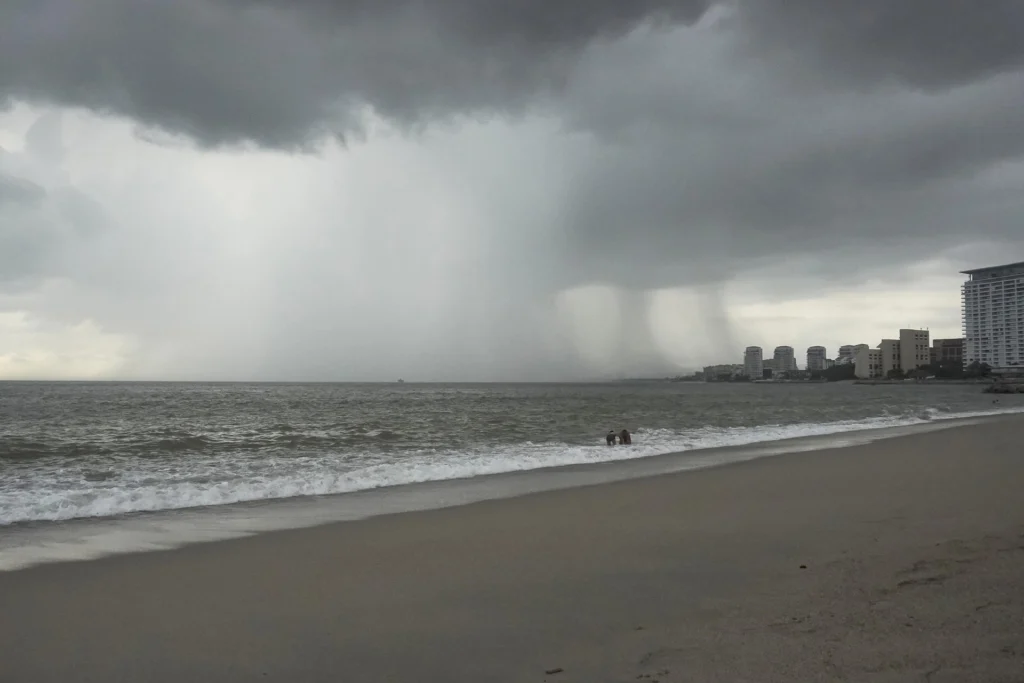
Photo: EFE.

Hurricane Trudy weakened to Category 1 on Friday off Mexico’s Pacific coast, after data gathered by a hurricane-hunter aircraft, but the country’s National Meteorological Service (SMN) kept its alert for intense rain in the south and west of the country.


The downgrade came hours after the storm reached Category 3 in the early morning hours and registered Category 2 around midday, the National Meteorological Service (SMN) said in an update.

At noon local time, the center of the cyclone was located about 370 kilometers southwest of Acapulco, in Guerrero state, and 515 kilometers south-southeast of Manzanillo, in Colima state, but it was moving north-northwest at seven kilometers per hour.

RELATED: 5 Dead in Mexico as Storm Rachel, Hurricane Simon Hit Pacific Coast

The adjustment followed a warning earlier in the day from National Meteorological Service’s coordinator Fabián Vázquez Romaña, who told the presidential news conference about the storm’s rapid intensification and a forecast that it could reach Category 4 before approaching the coasts of Colima and Jalisco on Sunday.

Hurricane #Trudy is nearing the coast of #Mexico, which is expected to see MAJOR IMPACTS in the form of flooding as over 400mm of rain could fall! A #Hurricane Warning is in effect. Will have a stream up tonight to answer your questions! pic.twitter.com/GY9V47IK5O

— Hurricane Chaser Chase (@hurricane_chase) October 16, 2026

Alerts and Rain Forecast

Mexican President Claudia Sheinbaum urged residents of the regions under alert to follow official civil protection notices and to go to temporary shelters if they are in risk zones or near riverbeds.

The National Meteorological Service said the storm’s circulation will bring intense rainfall to the states of Guerrero, Oaxaca, Colima and Michoacán. Mexican authorities, working with the U.S. National Hurricane Center, maintain a hurricane-wind watch zone from Manzanillo, Colima, to Playa Pérula, Jalisco.

The agency warned that the rain could cause landslides, rising rivers and streams, overflows and flooding in low-lying areas of the affected states, and urged the public to follow civil protection recommendations.

Double trouble in the eastern Pacific! 🌀🌀 Tropical Storm Simon is threatening Mexico's west-central coast with ongoing torrential rain and dangerous seas, while nearby Hurricane Trudy could rapidly intensify into a major hurricane in the coming days. https://t.co/DepkchVHhZ pic.twitter.com/NjcysAgoDU

— AccuWeather (@accuweather) October 15, 2026

Tropical Storm Simón Nearby

A second system is also churning in the Pacific. Tropical Storm Simon was located 220 kilometers south of Cabo San Lucas in Baja California Sur and 445 kilometers west of Cabo Corrientes in Jalisco.

Simon carries winds of 65 kilometers per hour and drifts northwest at 15 kilometers per hour. It will generate very heavy rains, wind gusts reaching 50 kilometers per hour and swells of two to three meters along the southern portion of Baja California Sur.

The presence of two active systems on the same coastline complicates the response. Emergency planners must track the slow-moving Trudy as it threatens Guerrero, Colima and Jalisco while Simon feeds moisture into Baja California Sur hundreds of kilometers to the north.

Trudy’s sudden weakening does not remove the danger. Forecasters stress that the downgrade reflects current wind speeds, not the rainfall threat, which remains substantial and stretches well beyond the storm’s center.

The storm’s seven-kilometer-per-hour drift means it will linger over the region longer, unloading rain on the same watersheds hour after hour. That pattern, rather than wind alone, drives the risk of flash floods and mudslides in mountainous terrain.

Mexico has strengthened its early warning systems in recent years, and the morning presidential briefing reflected an effort to keep the public informed before the storm’s most dangerous phase arrives. President Sheinbaum’s appeal to use temporary shelters framed the government’s priority as protecting lives ahead of property.

The coming days will test that preparation. Trudy may regain strength if conditions over the Pacific shift, and the projected approach to Colima and Jalisco on Sunday keeps coastal communities on edge.

For now, the alerts remain in place and the message from authorities is consistent: the storm has weakened, but the rain has not, and the hours of greatest risk still lie ahead.

  •  

Argentina Abstains on UN Colonialism Vote Despite Malvinas Rhetoric

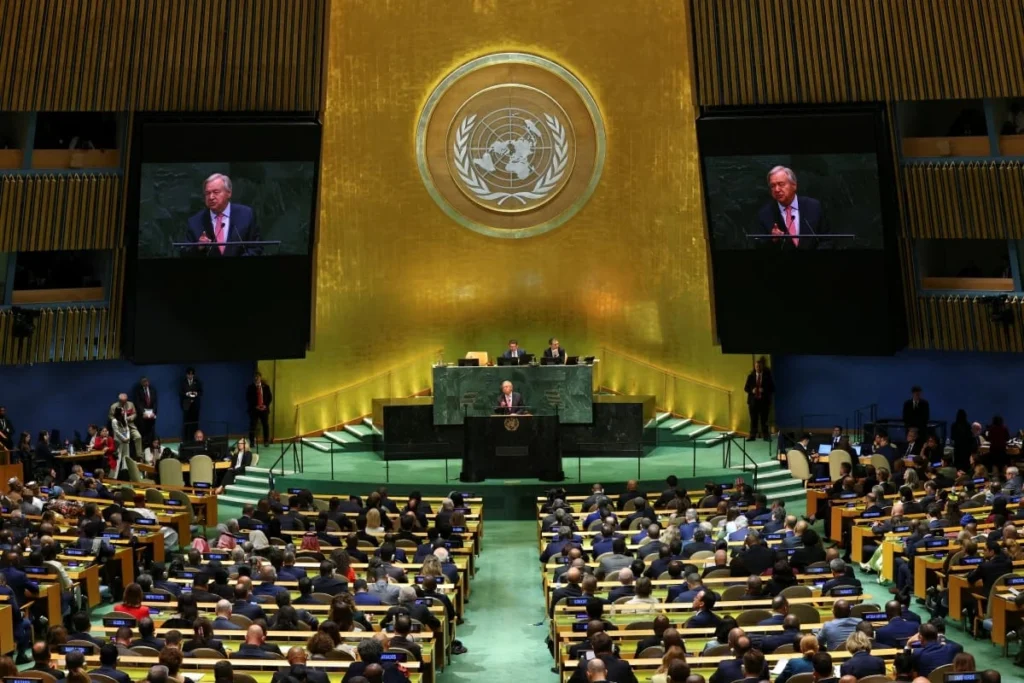
The Milei government’s stance on colonialism in a UN vote clashes with its recent rhetoric about the British-occupied Malvinas Islands. Photo: UN.

Argentina’s delegation at the United Nations abstained from a resolution aimed at eradicating modern forms of colonialism, siding with the Trump administration and undercutting President Javier Milei’s recent demands over the British-occupied Malvinas Islands.


The vote took place in the Fourth Committee of the General Assembly. The measure, presented by the Russian Federation, sought to ratify and reinforce the goals of Resolution 1514, the landmark text approved in 1960 that declared colonialism incompatible with the UN Charter and fundamental human rights.

Argentina’s diplomatic delegation chose to stand aside rather than endorse the initiative. The move placed the Milei government in line with the position promoted by the White House, which pressed allied governments to abstain.

RELATED: Argentine President Milei Toughens Malvinas Claim at UNGA

The resolution passed anyway. Delegates recorded 85 votes in favor, 49 against and 23 abstentions, sending the text to the full General Assembly for consideration.

The alignment extended beyond Buenos Aires and Washington. Chile, Costa Rica, Colombia, Guatemala, Honduras, Peru and Paraguay joined the abstention, a bloc of right-leaning regional governments that followed the U.S. lead.

On the other side, Brazil, Mexico, South Africa and India voted in favor. Their support reaffirmed the global backing for territorial integrity and decolonization processes, and set up a sharp divide within Latin America itself.

The Russian draft went further than the 1960 declaration. It extended the concept of colonialism to cover unilateral coercive measures and the economic and financial sanctions promoted by Washington around the world, a provision that made the vote a direct test of alignment.

The UN General Assembly’s Fourth Committee approved the draft resolution “Addressing contemporary forms of colonialism” by 85 votes in favour, 49 against, with 23 abstentions. Sponsored by Russia, China, Iran, Cuba, Belarus, Palestine and others, it recognizes colonialism in… pic.twitter.com/MqgQfoMhME

— Digital Debate (@digdebate) October 16, 2026

Malvinas Contradiction Deepens

The abstention collides with the rhetoric Milei has used on Malvinas, the archipelago occupied by Britain since 1833. His government has campaigned publicly for the defense of sovereignty and demanded sanctions against oil companies operating on that Argentine soil.

The contrast sharpened in September, when the Argentine President addressed the General Assembly. There he read extended passages demanding the eradication of colonialism and stated plainly that the principle of self-determination “exists to liberate colonized peoples, not to enshrine situations derived from colonization.”

Those words sit uneasily with the vote his own diplomats just cast, or chose not to cast. The abstention, in effect, withheld support from a document that echoes the very argument Milei delivered from the rostrum.

The domestic reaction was immediate. Carlos Bianco, the government minister for Buenos Aires province, called the abstention an irresponsible act against a historic national cause. “The Malvinas question deserves a diplomacy that does not kneel. Abstaining in the face of colonialism is not just an embarrassment, it constitutes an act of irresponsibility. The Malvinas question must once again be defined by Argentines. And it will be,” Bianco wrote on social media.

The episode exposes a tension running through the Milei administration’s foreign policy. It has embraced Washington as its principal ally while maintaining, at least in public speeches, a sovereignty claim that Washington’s abstention strategy directly undercuts.

Milei dice que quiere recuperar Malvinas. En la ONU, la Argentina se abstuvo de votar contra el colonialismo.
Hace dos semanas, esa misma delegación decía que Malvinas es una situación colonial.
Sobran las contradicciones. No tienen política exterior propia y desprecian al país… pic.twitter.com/I5cYaXCbvp

— Francisco Cafiero (@FranCafiero) October 16, 2026

Text reads: “Milei says he wants to take back Malvinas. At the UN, Argentina abstained from voting against colonialism. Two weeks ago, that same delegation said that Malvinas are a colonial situation. The contradictions abound. They have no foreign policy of their own and despise the country they govern.”

Argentina’s historic position on Malvinas has long drawn broad support across Latin America and the developing world, precisely the coalition that voted in favor of the resolution Buenos Aires declined to endorse.

The measure now moves to the plenary, where the same fault lines are likely to reappear. What Argentina does there will reveal whether the abstention was an isolated calculation or a settled posture. For now, the vote leaves a record that is hard to reconcile: a government that speaks of liberating colonized peoples, yet declines to vote for a resolution doing exactly that.

  •  

Uruguay Debuts Virtual Cards in Football Refereeing

The Uruguayan Cup tests a digital tool with which referees sanction fouls and enter incidents directly from the field. Photo: Clarin.

Uruguayan football introduced a new technology on Thursday night when referees replaced the traditional paper cards with an electronic device to show cautions and expulsions during a local match, although early tests have shown problems with visibility, according to local media reports.


Uruguayan football experienced a historic day on Thursday night with the appearance of virtual cards in the match that Nacional won 3-0 to Rentistas for the eighths final of the Uruguayan Cup, at the Gran Parque Central stadium.

During the game, the officiating team used the electronic device instead of the physical cards to signal bookings and sending-offs on the pitch.

RELATED: Argentina Introduces New Tournament and Rules for Football Professional League

The tool is designed to look like a mobile phone and has dedicated buttons to display yellow or red lights. Its main selling point is the automation of administrative work and allows referees to record every disciplinary sanction, substitution or incident in real time directly in the COMET sports management system.

That removes the need to take handwritten notes during the action and speeds up the digitization of the official post-match report.

La AUF (Asociación Uruguaya de Fútbol) presentó las tarjetas virtuales, un método que debutó en un duelo de Copa.

Este avance tecnológico permite agilizar y registrar de forma automática y digital al jugador amonestado.#Uruguay #Teconología #TVCDeportes pic.twitter.com/2tdfCI5OdN

— TVC Deportes (@TVCDeportes) October 16, 2026

Text reads: “The Uruguayan Football Association (AUF) introduced virtual cards, a method that debuted in a Cup duel. This technological advance allows the automated and digital recording of the player who has been reprimanded.”

Despite the logistical benefits, the virtual cards face technical obstacles in their first trial stages. The debut was initially scheduled for the match between Defensor Sporting and Plaza Colonia, but sunlight made it impossible to see the colors properly. Under the artificial lighting of Thursday’s night match, local media reports said the signal was still not completely clear from a distance.

What Comes Next

At present, the device’s fundamental value lies in its ability to streamline the collection and transmission of statistical data during the ninety minutes of a match. Authorities will keep evaluating its performance to try to correct the faults related to brightness and contrast.

If the required visual improvements are achieved, the technology could be adopted on a regular basis in the main categories of South American football, according to the source. No timeline for that decision has been announced.

Technology in refereeing has expanded steadily in recent years, with video review and semi-automated systems now common in major competitions. Most of those tools help officials make decisions, while this device focuses on communicating and recording them. The key test for the Uruguayan trial will be whether the cards are as easy for players and spectators to see as the paper ones they replace, since visible signals are central to how the game communicates discipline.

The technology carries obvious logistical benefits, because referees no longer depend on cardboards that can be dropped, lost or misread, and data flows directly into the official system while the ninety minutes are still running.

For the Uruguayan Football Association, the real value of the tool lies in how it optimizes the collection and transmission of statistics. Every booking, substitution and incident becomes part of a digital record the moment it happens, a change that could improve accuracy in reports that have long depended on memory and hurried notes.

  •  

Venezuelans Vote Sunday in Second Popular Consultation on 37,000 Projects

(FILE) The election day on this Sunday, October 18 will cover 5,418 communes in the country with direct funding from the Federal Council of Government. Photo: EFE.

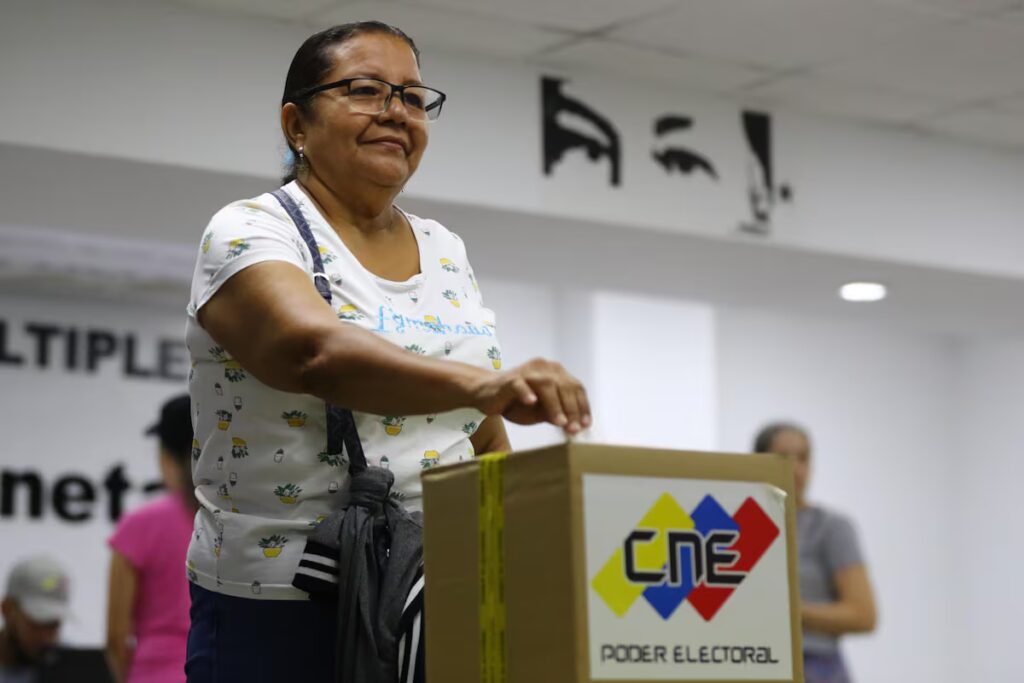
Venezuela holds its Second National Popular Consultation this Sunday with 5,418 communal circuits choosing among over 37,000 locally proposed projects in water, roads, lighting, health and education.


Venezuela will hold its second National Popular Consultation of the year on October 18, in which communes across the country will vote directly on 37,205 budget proposals, with each winning project set to receive an initial $10,000 administered by the community itself.

The vote covers 48,086 communal councils grouped into 5,418 territorial circuits, which the source describes as guaranteeing self-government at the neighborhood level.

RELATED: Venezuela Presents Venezuela Renace Plan Update 100 Days After Earthquakes

To facilitate participation, authorities have set up 11,495 voting centers and 12,769 polling tables nationwide. The process will be guarded by 13,000 members of the Republic Plan security deployment, with operational support from more than 36,000 communal members advised by the National Electoral Council (CNE).

What Voters Will Decide

The proposals are tied to the government’s Concrete Action Agenda. The City and Services sector has the largest share, with 19,028 projects focused on water, electricity, roads and hospital infrastructure. The social area has 9,217 initiatives, and the economic sector has 4,887 proposals to boost local production.

Each project chosen by popular vote will receive an initial allocation of $10,000, to be managed and carried out directly by the commune. Institutional spokespeople said earlier editions closed with more than 80% successful executions, thanks to what they called the rigorous application of preventive social oversight.

Venezuelans will vote this Sunday on another National Popular Consultation. Each organized community will choose a project, according to local needs, that will receive 10k in state funding. Alongside communes, over 400 condominium boards are also participating pic.twitter.com/ecihlXWs8U

— Venezuelanalysis (@venanalysis) October 16, 2026

First Condominium Vote

One structural change stands out this year. More than 89 condominiums and horizontal property movements from Aragua, Miranda and the Capital District have joined the process formally. It is the first time these residential boards can put forward priority projects of their own, from elevator repairs to improvements in basic services inside buildings.

In the days before the vote, communes carried out house-to-house outreach to promote the proposals now heading to the ballot. That door-knocking campaign carried each initiative into homes and opened neighbor-to-neighbor debate over territorial priorities.

The Sunday vote will also promote the active participation of young people aged 15 and older, which authorities say favors generational renewal in local public management.

Acting President Delcy Rodríguez, speaking in at the Villa Zoila commune, emphasized that “the people are exercising a protagonistic and participatory form of democracy.”

“We are going to democracy, to participation and to the emotion that always comes with going to an election,” she said.

Rodríguez connected the vote to the delivery of the National Budget before the National Assembly. That spending plan, she explained, is built “from the communes.” Communes and community organizations take part in deciding where resources will be invested, an advance she said Venezuela must preserve.

The second edition of the year confirms the National Popular Consultation has moved beyond an isolated event. It now functions as a recurring mechanism of popular decision, with organized communes as the leading actors in local public spending, as a pillar of participatory democracy in Venezuela.

  •  
❌