
❌

Reading view

Ahold Delhaize Reports Malicious Cyberattack as Supermarket Deliveries Remain Disrupted

Dutch-Belgian supermarket group Ahold Delhaize has confirmed that malicious activity was responsible for the cybersecurity incident that disrupted its operations across Europe and the United States, forcing the company to take websites, applications and other computer systems offline.

In an official statement issued on Monday, 19 October, the company announced that it had filed a formal complaint with Dutch police and was cooperating with national cybersecurity authorities. Although physical supermarkets have remained open, the disruption has affected online shopping, deliveries and some distribution operations.

The company said investigators had so far found no evidence that sensitive information belonging to customers, employees or business partners had been taken. However, its investigation remains open, and the identity and objectives of those responsible have not been publicly established.

Online services interrupted across several countries

The disruption began on 12 October, when Ahold Delhaize detected suspicious activity within its information technology infrastructure.

The group responded by taking a number of systems offline as a precaution, affecting most of its retail brands in Europe and the United States. The consequences varied considerably between businesses, with some experiencing prolonged interruption to digital services while others were able to restore operations more quickly.

Albert Heijn, the Netherlands’ largest supermarket chain, has been particularly affected. Its website and mobile application have returned online, but home grocery deliveries are not expected to resume until Friday, 23 October.

Orders scheduled before that date have been cancelled, while the company continues preparations for a gradual restoration of its online delivery service.

The incident also interrupted some supply and distribution arrangements, resulting in shortages on supermarket shelves in parts of the Netherlands and Belgium.

In Belgium, Delhaize has restored its online shopping operations. Certain promotional and personalised services were still experiencing difficulties, although the parent company confirmed that its Belgian e-commerce business was operational again.

Dutch retailers Etos and Gall & Gall have also restored their websites. Meanwhile, several American supermarket brands owned by Ahold Delhaize have continued to experience service interruptions.

The group said it expected additional online services in the United States to become available over the coming days.

Dutch authorities investigate

Ahold Delhaize said it notified the Netherlands’ National Cyber Security Centre within 24 hours of detecting the malicious activity.

The company has subsequently provided updates to the authorities and, on Monday, confirmed that a formal police report had been submitted.

Chief executive Frans Muller defended the decision to shut down digital systems, arguing that the investigation had demonstrated the necessity of taking preventive action.

The company has not identified the perpetrators, confirmed whether ransomware was involved or disclosed the technical method used to gain access to its infrastructure.

These distinctions are important because malicious activity does not necessarily establish that information was stolen or that attackers obtained control over every system subsequently taken offline.

The retailer has instead described a controlled restoration process intended to ensure that affected systems can be brought back into operation without exposing the business to further risks.

Ahold Delhaize operates thousands of supermarkets and related retail businesses, including Albert Heijn, Delhaize, Food Lion, Giant Food, Hannaford and Stop & Shop.

Its geographical reach means that a disruption originating within shared corporate infrastructure can affect several national markets, even where individual retail chains maintain separate commercial operations.

Cybersecurity becomes a supply-chain concern

The attack comes amid increasing scrutiny of the vulnerability of European food retailers to digital disruption.

Earlier this month, investigators in France began examining cyberattacks against refrigeration control systems used by hundreds of supermarkets.

Those incidents reportedly affected equipment at chains including Carrefour, Intermarché and Monoprix, with some retailers forced to discard products after refrigeration systems malfunctioned.

There is no established connection between the French incidents and the attack affecting Ahold Delhaize.

Nevertheless, both episodes illustrate the dependence of modern retail operations on interconnected digital systems supporting stock management, refrigeration, logistics, payments and customer services.

The consequences of a serious cyber incident can extend beyond the loss of access to websites. Interruptions to inventory systems, warehouse operations or communications with suppliers can affect the availability of physical products.

This creates particular difficulties for food retailers, where delays in transport and storage can result in the loss of perishable goods.

European regulatory implications

The incident also draws attention to the European Union’s NIS2 cybersecurity framework, which establishes stricter risk-management and incident-reporting obligations for organisations operating in designated sectors.

Food production, processing and distribution are among the activities covered by the directive, although its application to particular companies and operations depends on the relevant legal definitions and national implementing arrangements.

The legislation requires organisations within its scope to establish appropriate cybersecurity protections, address supply-chain risks and notify competent authorities of significant incidents.

Separately, the General Data Protection Regulation establishes notification requirements where personal-data breaches meet the relevant reporting threshold.

Ahold Delhaize’s statement that it has found no evidence of sensitive data being taken does not conclude the technical investigation, but it means that a confirmed theft of personal information should not presently be presented as a fact.

For the company, the immediate challenge remains restoring online services while maintaining normal supermarket operations. The wider commercial consequences, including the cost of the interruption and its effect on sales, have not yet been quantified publicly.
  •  

Cyberattack on 700 French Supermarkets Exposes Gaps in Europe’s Infrastructure Security

A cyberattack affecting approximately 700 supermarkets in France has exposed serious weaknesses in the digital systems used to control commercial refrigeration, raising concerns about the vulnerability of European food distribution networks and other essential infrastructure.

The attack began overnight on 11–12th October, when intruders gained access to remotely managed refrigeration equipment and altered operating settings, causing refrigerators and freezers to overheat.

Stores belonging to several major supermarket chains were affected, including Intermarché, Netto, Coopérative U, Carrefour and Monoprix. Some were forced to discard substantial quantities of fresh and frozen food.

French Finance Minister Roland Lescure confirmed that approximately 700 of the country’s 10,000 supermarkets had been affected, although the severity of the disruption varied between locations.

The Paris prosecutor’s office has opened an investigation into the attack, including the damage caused by destroyed merchandise and reported fires.

The incident has drawn attention to industrial control systems that are routinely connected to the internet but may receive less cybersecurity protection than corporate networks and customer databases.

Refrigeration systems remotely manipulated

Investigators have established that refrigeration equipment was targeted through vulnerabilities associated with remote monitoring and control systems.

The French cybersecurity authorities identified compromises involving products supplied by Danish manufacturer Danfoss and American company Copeland.

Some of the affected systems used older equipment that no longer received regular security updates.

According to information released by the companies and cybersecurity specialists, certain industrial controllers had been accessible through public internet connections, creating opportunities for unauthorised access.

Hackers reportedly manipulated defrost cycles and increased temperature settings, preventing equipment from maintaining the cold conditions required to preserve food.

The attack affected approximately 300 Intermarché and Netto stores, while Coopérative U reported disruption at around 80 outlets.

Several retailers managed to contain the damage, but others lost substantial quantities of stock.

The consequences extended beyond malfunctioning equipment. Businesses faced the cost of replacing spoiled food, repairing refrigeration systems and restoring normal operations.

The precise financial damage is still being assessed, although estimates from the retail sector indicate that losses across France could amount to tens of millions of euros.

Vulnerabilities in connected equipment

The incident illustrates the security problems created by the growing use of internet-connected industrial equipment.

Modern refrigeration installations allow contractors and maintenance specialists to monitor temperatures, adjust settings and diagnose faults remotely.

These arrangements can reduce operating costs and improve efficiency, but they also create additional access points that attackers may exploit.

Cybersecurity specialists have identified vulnerabilities in commercial refrigeration platforms manufactured by Danfoss and Copeland.

The manufacturers subsequently addressed identified flaws, although older or unsupported equipment remained a concern.

A critical problem for businesses is that industrial machinery often remains operational for many years after its original software has become obsolete.

Replacing entire refrigeration installations can involve substantial expense and operational disruption, encouraging operators to retain equipment that may no longer meet contemporary cybersecurity standards.

The risks are particularly difficult to manage when responsibility for maintenance, software updates and network security is divided between retailers, equipment suppliers and external contractors.

France’s delayed cybersecurity legislation

The attack has renewed scrutiny of France’s implementation of the European Union’s NIS2 Directive, which is intended to strengthen cybersecurity across sectors providing important economic and public services.

The directive establishes common requirements covering risk management, incident reporting, organisational responsibility and protection against cyber threats.

Its scope extends beyond traditional critical infrastructure such as energy, telecommunications and transport to include certain businesses involved in food production, processing and distribution.

EU member states were required to incorporate the directive into national legislation by 17 October 2024.

France was among the countries that received a formal warning from the European Commission in May 2025 over incomplete implementation.

French cybersecurity specialists have since warned that delays have complicated efforts to establish consistent obligations for organisations operating industrial and commercial systems.

However, NIS2 does not automatically cover every supermarket. Its application depends on the nature and size of an organisation and the provisions of national implementing legislation.

The incident therefore raises questions not only about the pace of legislative implementation but also about the practical protection of equipment already in use.

Wider implications for European infrastructure

The disruption demonstrates how a cyberattack can cause physical damage without directly targeting a conventional industrial facility.

Unlike breaches intended to steal customer information, the French incident interfered with machinery responsible for preserving essential products.

The distinction is important for European policymakers, who increasingly face threats to infrastructure that combines digital controls with physical operations.

The European Union’s cybersecurity agency ENISA has organised cross-border exercises to test how authorities and companies would respond to disruption affecting essential services.

The attack itself has been established, but responsibility for it has not been publicly attributed.

French authorities have said there is no immediate threat to national food supplies. Nevertheless, the destruction of merchandise and interruption of ordinary retail operations have demonstrated the potential economic consequences of weaknesses in relatively commonplace equipment.

The continuing investigation must establish how access was obtained, which systems were compromised and whether the vulnerabilities were known to operators before the attack.

For Brussels and national regulators, the case provides a practical test of whether European cybersecurity legislation can translate into effective protection for the connected equipment on which ordinary commercial activities increasingly depend.

  •  

Kyiv gets no warning of the first of two Russian ballistic waves, hours after Zelenskyy said US alerts were back

kyiv attack

Russia attacked Kyiv with ballistic missiles in two waves overnight on 18–19 October. Information from partners did not arrive before the first wave, at around 23:00, Air Force spokesperson Yurii Ihnat said on national television. A warning came before the second wave, at around 03:00, but the window was short, he told NV.

Hours earlier, Ukrainian President Volodymyr Zelenskyy told NBC that US warnings of Russian ballistic launches were working again after three days without them, and that only the United States has that intelligence. Those warnings have for years given Ukrainian authorities several minutes to sound alarms and let civilians reach shelters before ballistic missiles hit.

“Once again, a Russian ballistic attack in several waves overnight, and once again there was no warning from partners,” Zelenskyy wrote. It was at least the third ballistic strike on Kyiv in a week to begin without warning from partners, following attacks on 12 October and 13 October.

Metro station damaged on Kyiv’s left bank

One person was killed and eight injured in Kyiv, Ukrainian Prime Minister Serhii Koretskyi said. A strike damaged a metro station on Kyiv’s left bank, and debris broke the rails beside it, Mayor Vitali Klitschko said. City authorities said the damaged station was above ground, closed Chernihivska and Lisova stations, and said red-line trains would run only between Akademmistechko and Darnytsia. The attack also damaged a 25-story building, a medical facility, and the Cosmo Multimall shopping center in the Solomianskyi district, NV reported, and Zelenskyy said a school was hit too.

The attack also damaged one of Ukraine’s main ice arenas, on Shalett Street in Kyiv, which hosts Ukrainian championship hockey games and youth training, hockey Telegram channel Flamingo reported. Parts of the facade, metal structures, and roof were damaged, but the ice surface showed no significant visible damage, according to preliminary information, Suspilne reported.

Damage in 11 oblasts, three missing in Irpin

Koretskyi said energy and infrastructure were the main targets, with damage in 11 oblasts. Russia also hit warehouses of medicines, railway stations, shops, and homes, he said. In Kyiv Oblast, Russian strikes injured six people in Irpin, including three children, and three more were missing, oblast head Tymur Tkachenko said. In Kharkiv Oblast, six people were injured, including two children, Koretskyi said. In Rivne Oblast, four people were injured, and one of them was hospitalized, regional police reported.

Zelenskyy said that more than 10 energy facilities were damaged and at least 550,000 families lost power. Ukrenergo reported new outages in 10 oblasts: Volyn, Zhytomyr, Rivne, Ternopil, Khmelnytskyi, Vinnytsia, Kirovohrad, Kharkiv, Odesa, and Mykolaiv. In Volyn Oblast, about 15 jet-powered Shahed-type drones targeted the region, and around 66,000 customers were without power on the morning of 19 October, oblast head Roman Romaniuk said. Kovel, Manevychi, and Lutsk were hit hardest, and no casualties were reported. In Vinnytsia Oblast, a critical infrastructure facility in Koziatyn was damaged, and power there would stay unstable for some time, city council secretary Iryna Repalo said, Suspilne reported.

Zelenskyy said Russia fired 16 ballistic missiles at Kyiv and Kyiv Oblast. The Air Force reported that Russia also used Iskander-K cruise missiles and 269 drones, and that by 09:00 air defenses had shot down or suppressed four Iskander-K cruise missiles and 243 drones. Its preliminary count did not list any ballistic missiles among the intercepted targets.

Rubio denies any pause and points to a software problem in Ukraine’s warning system

On 19 October, Rubio told reporters in Samarkand, Uzbekistan, that “there’s been no pause” in intelligence-sharing with Ukraine, Reuters reported. He said he did not know where Zelenskyy was getting such claims and that he should focus on ending the war. He also said he did not know whether a failure had happened the previous night, but that a few nights earlier there had been a software problem with “their early warning system,” and that US European Command was looking into the strikes, The Guardian reported. US officials had not mentioned a software glitch before, and in at least one case Ukraine was told that bad weather over southern Russia had hidden launch preparations, the newspaper noted.

Ihnat said Ukrainian specialists and their partners were working to establish why information about the first launch had not arrived. He added that similar gaps had occurred during earlier attacks.

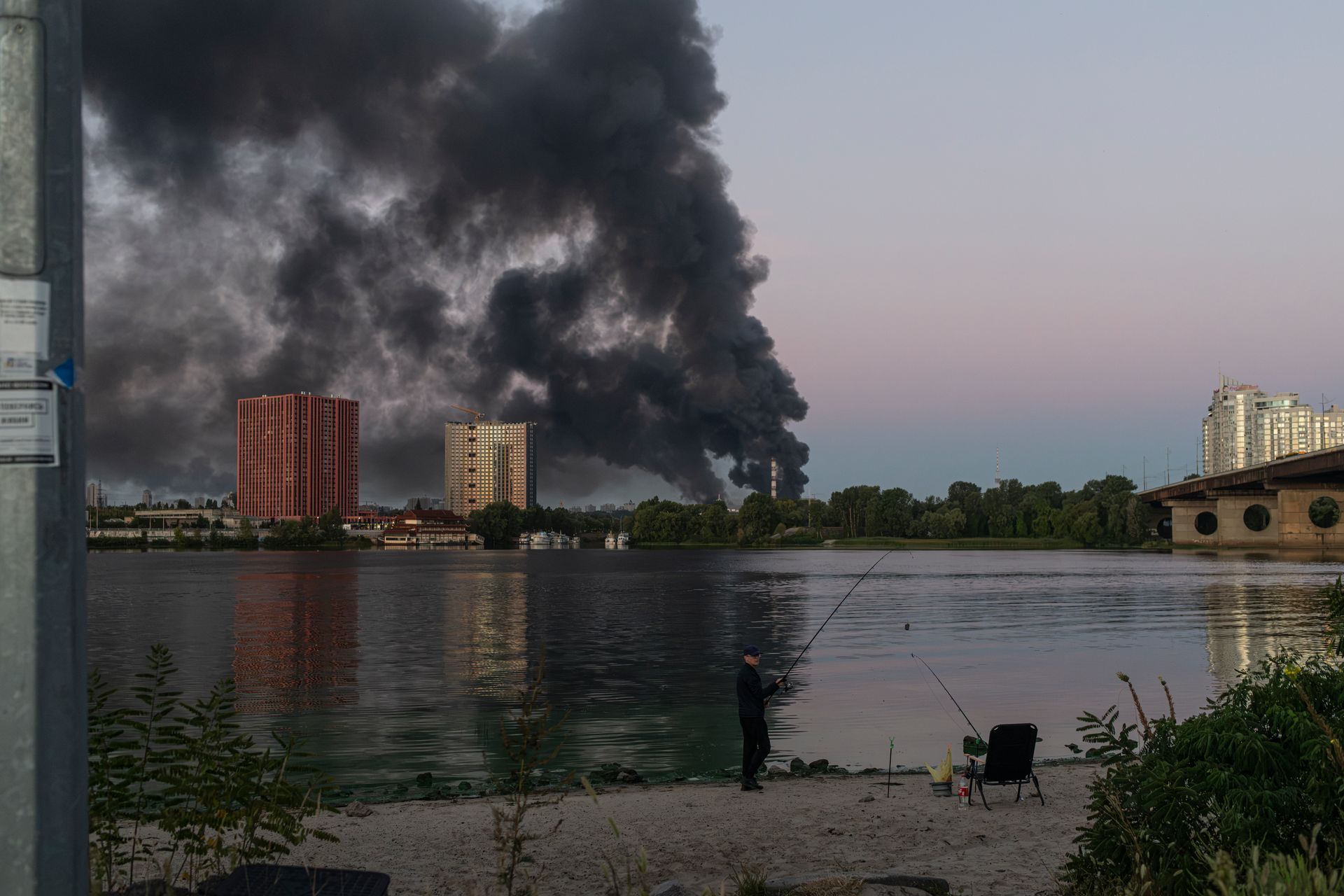
Zelenskyy wrote that when missile supplies for Ukraine’s air defense are blocked while Russia gets sanctions relief or delays, “this is, unfortunately, a denial of reality on the part of partners.” A night earlier, Russia had hit Ukraine’s energy system again, while Ukrainian drones set fire to St. Petersburg’s oil terminal despite Washington’s pressure to stop refinery strikes.

  •  
❌