Sen. Elissa Slotkin (D-Mich.) accused Mike Davis, a close legal ally of the president, of “mobilizing death threats” against her and her staff. Slotkin wrote on social media Monday that Davis had originally been in the mix to be President Trump’s next attorney general after former Attorney General Pam Bondi left her post but “is…
At a protest against a bill to legalize Waymo in Washington, D.C., earlier in October, the main tagline was: "Robotaxis don't vote; we vote." Little is known about the group behind it, raising questions about who's fueling the pushback against robotaxis in America's major cities.
People First Transportation Alliance (PFTA), the organization in question, describes itself as a "statewide coalition of labor unions" dedicated to putting "people over untested technology." The PFTA states it's a "coalition of community organizations, safe-streets advocates, and faith leaders." However, as The Washington Postreported on Monday, the group appears to have overstated its affiliation with four of the 13 individuals and organizations listed as its founding members.
"Several groups and individuals said statements made about them on the Transportation Alliance website were inaccurate," the Postreported, adding that PFTA "appears to be newly formed, with a minimal social media presence. Its website domain was created in late April, according to the Internet Corporation for Assigned Names and Numbers." The group created its social media accounts in May, but it has no posts and no followers.
Apart from its recent interest in the nation's capital, the PFTA lists New York and Philadelphia as its priorities, two cities led by lawmakers who publicly oppose Waymo's presence. Yet for a relatively unknown, recently created organization, the PFTA has found success in its campaign to shut autonomous vehicles like Waymo out of America's Northeast.
In February, the New York Postreported that Gov. Kathy Hochul (D–N.Y.) withdrew her own proposal—which would have allowed commercial robotaxi services such as Waymo to operate in smaller cities in upstate New York—after a PFTA-led coalition prompted enough backlash to kill support for the measure. A Hochul spokesperson told the Post that it was "clear that the support was not there to advance this proposal."
The PFTA told the Post that the organization would urge the state to "pass legislation requiring a human driver behind the wheel in every vehicle and a comprehensive study leading to a plan to address the impact driverless cars would have on New York State."
The group's resolution comes despite customer support for autonomous vehicles: A 2025 study on Waymo, Uber, and Lyft by Obi—a company that aggregates real-time rideshare prices—found that 70 percent of riders who've used Waymo preferred it over Lyft or Uber and 42.7 percent of all respondents were willing to pay Waymo's premium price (up to $10 more) to use the service.
Despite consumer support, autonomous vehicles can't count on a fair shake from lawmakers in some of the country's largest cities. In New York City, Waymo's permit to operate a pilot program on public streets expired in March. Mayor Zohran Mamdani has so far been noncommittal on renewing the company's permit. At a press conference that same month, he said his administration would be prioritizing workers such as the city's taxi drivers who "for far too long, have been sold a dream of being able to work their way to the middle class, only to have the rug pulled out from under them."
Despite the mystery surrounding the PFTA, its D.C. protest drew enough public support to elicit a statement from a person who will likely be the city's next mayor, current D.C. Councilmember Janeese Lewis George. In a post on X, Lewis George said D.C. was "facing a jobs crisis" that would be exacerbated by "rushing the legalization of autonomous vehicles." She urged the D.C. Council—which is currently considering a punitive proposal to legalize commercial autonomous vehicles—to "get this right and not rush Waymo legislation this year."
It's unclear how much longer Lewis George wants the District's residents to wait before autonomous vehicles are available for use. D.C.'s approach to legalizing commercial robotaxis hardly seems rushed.
Waymo began testing its vehicles in the city nearly two and a half years ago, in spring 2024. The company's co-CEO Tekedra N. Mawakana said its fleet has driven "more than 300,000 miles in Washington, D.C."Meanwhile, the District Department of Transportation (DDOT) has been conducting studies and organizing working groups on autonomous vehicles for nearly a decade. Still, the agency has been unable to draft a regulatory framework that would eventually enable commercial robotaxi use in the nation's capital. In March, UrbanTurf reported that DDOT would be conducting a long-awaited study on autonomous vehicles—originally due in 2022—and "expects to propose recommendations on AV deployment later this year."
Opponents of autonomous vehicles, such as Lewis George and the PFTA, often cite job loss as a reason not to legalize the tech. Still, with only 200 full-time ride-share drivers in a city of roughly 400,000 workers, as Lewis George has reportedly stated, the situation is a far cry from a crisis.
As for PFTA's public safety claims, Waymo's independently reviewed data show that, compared with an average human driver over the same distance, its vehicles caused 95 percent fewer serious-injury-or-worse crashes and 93 percent fewer pedestrian crashes with serious injuries.
PFTA claims it represents the people most directly affected by transportation policy. The little publicly available information suggests the group is more focused on protecting its members' position in the ride-share market than enhancing the experience of riders, who are increasingly opting for robotaxis when given the opportunity.
Navy corpsmen check the airway of a simulated Marine casualty during a flight training event off the coast of California.
LCpl. Nicole Stuart/US Marine Corps
The Marines are fielding new medical gear to treat casualties when evacuation is delayed.
New portable blood coolers and warmers will help corpsmen treat wounded troops closer to combat.
AI-assisted ultrasounds could help front-line medics identify internal injuries and prioritize evacuation.
The US Marine Corps has begun fielding new medical equipment meant to help troops survive when wounded service members can't be quickly evacuated from the battlefield.
The new technology is designed to store blood, identify internal injuries, and treat wounded service members closer to the battlefield as the military prepares for future wars in which casualties may be unable to reach a hospital for hours or even days.
The equipment includes improved, lighter-weight mobile blood coolers, better blood warmers, and small AI-assisted ultrasound devices and is designed to help Navy corpsmen and other providers treat casualties with less bulky equipment and less reliance on extensive medical infrastructure.
During the wars in Iraq and Afghanistan, US air supremacy frequently allowed helicopters to quickly evacuate wounded troops to well-equipped and defended medical facilities near the battlefield.
The proliferation of drone warfare and other technological advancements seen in Ukraine has, however, raised doubts about whether rapid casualty evacuations will be possible in future conflicts. Now, military planners assume that a sophisticated foe is likely to possess tools that could severely disrupt military tasks such as casualty evacuation, resupply, and communications.
Throughout the post 9/11 wars in the Middle East, the military planned on getting wounded troops to advanced medical facilities within an hour, said Navy Capt. Shari Gentry, the Marine Corps' deputy medical officer, speaking to reporters at a media event near Quantico, Virginia. "And we do not foresee that being the case."
The Corps has already begun distributing the systems to medical units, with some equipment reaching troops deployed to the Middle East.
Among the new devices is a portable refrigerator capable of storing approximately 30 units of blood, potentially enough for four seriously wounded Marines, according to military medical guidance. Each battalion aid station is set to receive one, giving medical personnel a supply of blood closer to the battlefield.
Weighing about 60 pounds, it replaces a system that weighs over twice as much and uses rechargeable batteries already common throughout the Marine Corps. The smaller refrigerator allows medical teams to maintain blood supplies without relying continuously on generators or fuel deliveries, said Navy Cmdr. Kyleigh Hupfl, the Corps' clinical lead for Expeditionary Medical Systems.
The capability has already proved useful in the Middle East, Hupfl said. The Corps accelerated delivery after units raised concerns about the reliability of existing refrigeration equipment. One unit told her that the new device allowed it to maintain a ready supply of blood throughout its deployment.
Small deviations in temperature can render blood and other pharmaceuticals unusable. "We need to be able to bring cold chain distribution forward without relying on heavy generators, and we need to be able to do that in a sustainable way," she said.
The service is also fielding new portable blood warmers that can deliver warmed fluids faster than the previous equipment. The warmer works by passing blood through a tube, warming it before it flows into a patient's veins. Such warmth is crucial to prevent hypothermia, a serious complication in injured patients.
Another major change involves portable ultrasound machines equipped with AI-assisted imaging. Previously held only at higher levels of battlefield medical care, the new machines are now being pushed toward the lowest level of tactical care, known as Role 1 facilities, where Navy corpsmen and physicians provide immediate life-saving care for wounded Marines.
The AI software helps users identify anatomical structures on ultrasound images, allowing providers with less ultrasound experience to spot signs of internal bleeding or other injuries that might otherwise be difficult to detect. That information can also help medical teams determine which casualties need evacuation or surgery most urgently, said Navy Chief Petty Officer Matthew Brown, the chief biomedical equipment technician for the Corps' Expeditionary Medical Systems.
"I have 10 people that are hurt. Who should I get out?" Brown said of the dilemma and the new ultrasounds being fielded to front-line medics to address it. "And at the end of the day, that's what's going to save their life."
The husband of a soldier killed in an Iranian drone strike in March grilled Vice President Vance on what he called “fundamental failures” that led up to the death of his wife. Appearing on a CBS News town hall with Vance, Joey Amor, the widower of Sgt. 1st Class Nicole Amor, detailed the drone strike…
Juneau, Alaska, was named the safest city in the US by WalletHub.
chaolik/Getty Images/iStockphoto
WalletHub released a report ranking the safest cities in the US.
The ranking analyzed 182 US cities based on 41 safety indicators across three categories.
Juneau, Alaska, was ranked the safest city in the US, while New Orleans was ranked the least safe.
American cities face a range of safety concerns, and the risks can vary significantly depending on location.
In some cities, natural disasters such as hurricanes, tornadoes, and floods pose the greatest threats to locals. In others, safety concerns may instead center on financial security or the overall safety of homes and communities.
WalletHub compared a total of 182 cities — the 150 largest cities in the US, plus at least two of the most populous cities in every state — to determine the safest and least-safe cities in the US.
WalletHub examined 41 safety indicators across three categories: home and community safety, natural-disaster risk, and financial safety.
To evaluate home and community safety, WalletHub looked at factors including crime rates, traffic and pedestrian fatalities, and the number of emergency responders per capita.
The natural-disaster risk ranking was determined by cities' risk-index scores for natural disasters such as earthquakes, tornadoes, and wildfires.
The financial safety ranking considered factors such as poverty and unemployment rates, as well as identity theft complaints per capita.
To conduct its analysis, WalletHub looked at data from sources including the US Census Bureau, the Bureau of Labor Statistics, the Federal Emergency Management Agency, and the Federal Bureau of Investigation.
Here are the top 10 safest and least-safe cities in the US.
1. Juneau, Alaska
Juneau, Alaska.
Lana2011/Getty Images
Out of the 182 cities WalletHub examined, Juneau was ranked the safest city in the US. It ranked 46th in home and community safety, fourth in financial safety, and first in natural-disaster risk.
Juneau featured the lowest murder rate and lowest pedestrian fatality rate, and there have been no recorded terrorist attacks or terrorist-related incidents in the past decade. The risk of natural disasters in Juneau is particularly low, with the second-lowest risk of flooding and tornadoes.
Financially, Juneau has the 21st-lowest percentage of residents below the poverty line.
2. Warwick, Rhode Island
Warwick, Rhode Island.
DenisTangneyJr/Getty Images
As the second-safest city in the US, Warwick's home and community safety was ranked ninth, its natural-disaster risk was ranked fifth, and its financial safety was ranked 46th.
Warwick had the fourth-lowest number of aggravated assaults per capita and the sixth-lowest number of thefts per capita.
3. Overland Park, Kansas
Overland Park, Kansas.
MattGush/Getty Images
Overland Park rounded out the top three safest cities in the US, with its home and community safety ranking fourth and its financial safety ranking seventh.
The Kansas City suburb placed 138th in WalletHub's natural-disaster-risk category. The greater Kansas City area had received 88 tornado warnings by June 2026, ABC affiliate KMBC reported.
However, Overland Park had the 19th-lowest pedestrian fatality rate and the 15th-lowest traffic fatality rate among the 182 cities WalletHub analyzed. It also had the 14th-lowest unemployment rate in the country and the third-lowest share of residents who are living in poverty.
4. Burlington, Vermont
Burlington, Vermont.
halbergman/Getty Images
Burlington is relatively safe from natural disasters, with its natural-disaster risk ranked third overall. Its financial safety was ranked 24th, and its home and community safety was ranked 43rd.
5. South Burlington, Vermont
South Burlington, Vermont.
vermontalm/Getty Images
South Burlington, Vermont, tied with Burlington for third place in natural-disaster risk. The two cities are only miles apart.
South Burlington's financial safety ranked higher, in sixth place. Its home and community safety ranked lower than Burlington's, at 51st.
6. Virginia Beach, Virginia
Virginia Beach is a coastal city in southeastern Virginia where the Chesapeake Bay meets the Atlantic Ocean, renowned as "The Resort City". It is famous for a 3-mile, oceanfront boardwalk, 35 miles of coastline, and distinct, family-friendly areas like the lively Oceanfront, serene Chesapeake Bay, and secluded Sandbridge. Known for its military presence, seafood, and natural spots, it acts as a major year-round tourist destination.
Luiz Castro/Getty Images
WalletHub ranked Virginia Beach 22nd in home and community safety, 10th in natural-disaster risk, and 55th in financial safety.
7. Cedar Rapids, Iowa
Cedar Rapids, Iowa.
Aaron Yoder/Getty Images
In Cedar Rapids, the city's home and community safety ranked 10th, its natural-disaster risk ranked 23rd, and its financial safety ranked 42nd.
8. Casper, Wyoming
Casper, Wyoming.
GummyBone/Getty Images
Casper's financial safety ranking placed it in the top 10, in ninth place. Its natural-disaster risk ranked 19th, and its home and community safety ranked 32nd.
9. Boise, Idaho
Boise, Idaho.
Inland 208 Productions LLC/Getty Images
Boise was ranked No. 33rd in home and community safety, 41st in natural-disaster risk, and fifth in financial safety.
10. Yonkers, New York
Yonkers, New York.
Brian Logan/Getty Images
WalletHub's ranking named Yonkers as the 10th-safest city in the US. Out of 182 cities, it ranked third in home and community safety, 59th in natural-disaster risk, and 108th in financial safety.
Keep reading for the bottom 10 cities, which are ranked the least safe in the US.
173. St. Louis, Missouri
St. Louis, Missouri.
: Visions of America/Education Images/Universal Images Group via Getty Images
Out of the 182 cities WalletHub examined, St. Louis ranked 177th in home and community safety and 146th in financial safety.
The Missouri city ranked relatively well in its natural-disaster risk ranking, however, coming in at 34th.
174. Cleveland, Ohio
John Greim/LightRocket via Getty Images
Cleveland ranked well in WalletHub's natural-disaster risk rating, coming in at 74th.
In the financial safety category, the city ranked 153rd. The lowest category it was ranked in was the home and community category, ranking 175th.
175. Houston, Texas
Houston, Texas.
Carol M. Highsmith/Buyenlarge/Getty Images
Houston's financial safety ranking placed the city 163rd. Its natural-disaster risk ranked 170th, and its home and community safety ranked 171st.
176. Jacksonville, Florida
Jacksonville, Florida.
: Visions of America/Joseph Sohm/UCG/Universal Images Group via Getty Images
Jacksonville was ranked 170th in home and community safety, 177th in natural-disaster risk, and 166th in financial safety.
177. Detroit, Michigan
Detroit, Michigan.
Roberto Machado Noa/LightRocket via Getty Images
WalletHub ranked Detroit 173rd in home and community safety and 67th in natural-disaster risk.
It was ranked the least safe city in the US for financial safety, coming in at 182nd.
178. Philadelphia, Pennsylvania
Philadelphia, Pennsylvania.
ANGELA WEISS / AFP via Getty Images
In Philadelphia, the city's home and community safety ranked 176th, its natural-disaster risk ranked 137th, and its financial safety ranked 159th.
179. Memphis, Tennessee
Memphis, Tennessee.
: Dukas/Christian Heeb/Universal Images Group via Getty Images
WalletHub ranked Memphis as the second-worst city for financial safety, coming in at 181st, behind Detroit.
The city ranked 179th in home and community safety, and jumped to 60th in the natural-disaster risk category.
180. Baltimore, Maryland
Baltimore, Maryland.
: Edwin Remsberg/VWPics/Universal Images Group via Getty Images
Baltimore was ranked 180th in home and community safety. It ranked 174th in financial safety, and performed better in the natural-disaster risk category, placing 106th.
181. Baton Rouge, Louisiana
Baton Rouge, Louisiana.
: Visions of America/Education Images/Universal Images Group via Getty Images
Ranked the second-least-safe city in the US, Baton Rouge came in 181st for home and community safety, 130th for natural-disaster risk, and 144th for financial safety.
182. New Orleans, Louisiana
New Orleans, Louisiana.
Education Images/Universal Images Group via Getty Images
Out of the 182 cities WalletHub examined, New Orleans is considered the least safe city in the US, largely due to its home and community safety, where it ranked the least safe, and its financial safety, where it ranked 172nd.
As a hurricane-prone city, New Orleans ranked better in the natural-disaster risk category, however, coming in at 104th.
The fire, which did not seriously damage the network, came after similar incidents in Bulgaria and Poland involving the satellite internet provider, a key defense tool for Ukraine’s armed forces.
Recent media reports projecting South Korea’s per capita GDP to surpass Japan’s have generated considerable excitement across the regional countries that see Korea as a role model. According to the IMF’s October 2026 projections, South Korea’s nominal GDP per capita could reach approximately $49,000 in 2027, compared with Japan’s $37,000-38,000. Its achievements in semiconductors, advanced […]
Concerns financial contracts known as derivatives were incorrectly logged, potentially boosting Barclays’ profits
The Bank of England is reportedly looking into Barclays’ handling of loans linked to the embattled private credit sector.
The Bank’s regulatory arm, the Prudential Regulation Authority (PRA), started reviewing the matter this year after concerns were raised by a Barclays insider, according to the Financial Times.
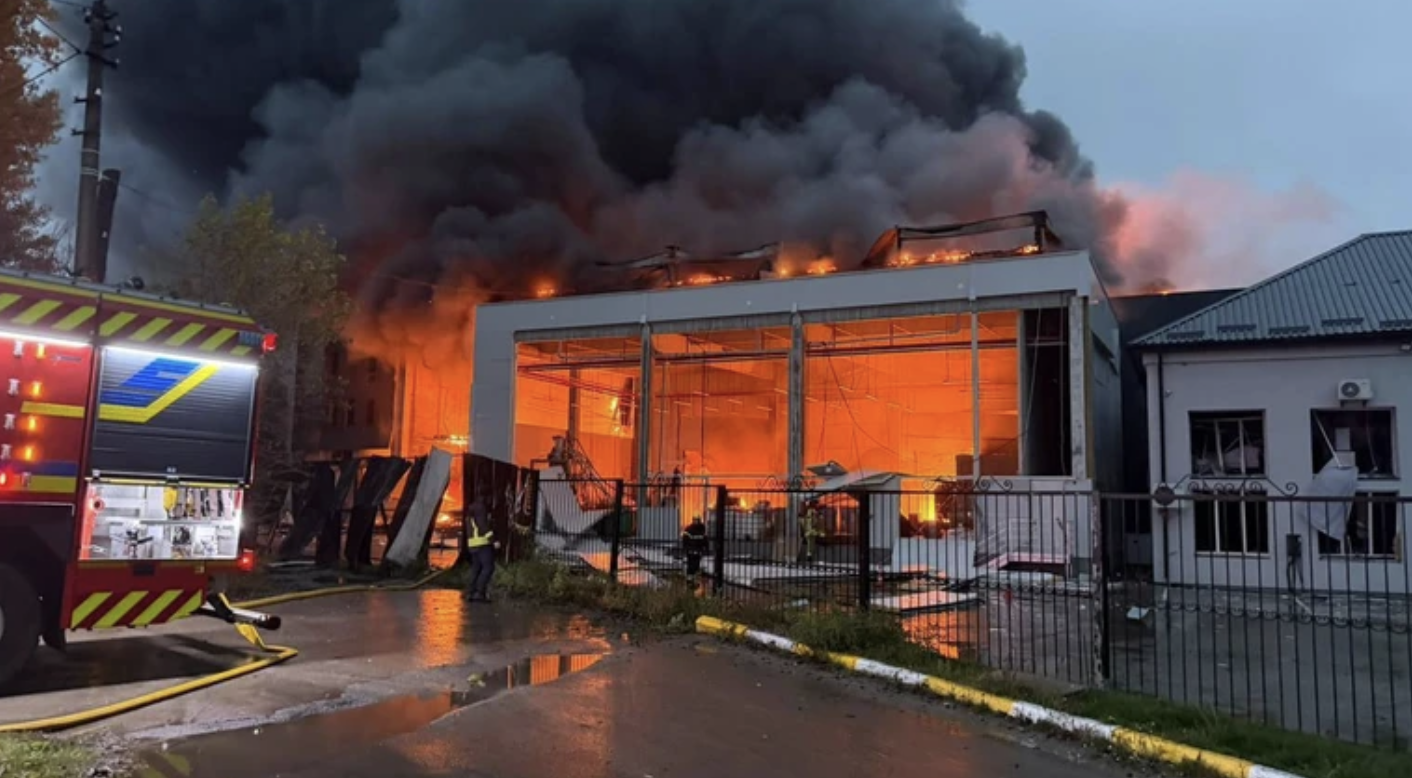
More than 1 million square meters of real estate, particularly warehouse and logistics facilities, have been destroyed or significantly damaged this year, Prime Minister Serhii Koretskyi in an interview with BBC Ukraine.
Ukrainian forces carried out what one unit described as a "first-ever air evacuation."
Ukraine's 92nd Separate Assault Brigade/Screengrab via Telegram
A Ukrainian military unit said on Monday that it had carried out a "first-ever air evacuation" with a drone.
The unit used a heavy drone to save a wounded soldier from the front lines.
The mission underscores Ukraine's growing efforts to use drones in unconventional battlefield roles.
Ukrainian forces have used a heavy drone to save a wounded soldier from the front lines, carrying out what one unit described as a "first-ever air evacuation."
The unusual mission underscores Ukraine's growing efforts to use drones and robots in unconventional roles on the battlefield, including casualty evacuation, logistics, and combat.
Ukraine's 92nd Separate Assault Brigade disclosed on Monday that it had "successfully" medically evacuated a wounded soldier who had been hurt at the front. The presence of land mines and Russian drones meant that a rescue operation using ground robots was not an option.
"Specialists from our company took on the responsibility of doing something that no one had done before: evacuating a soldier using an aerial drone," the brigade wrote in a translated statement on Telegram.
Soldiers used a heavy six-rotor hexacopter made by the Ukrainian company Gurzuf Defense for the medevac mission. The aircraft was tested in advance and modified by unit specialists to ensure it remained stable.
The 92nd said several military units participated in the rescue, including the 30th Separate Mechanized Brigade, which operated the drone that evacuated the wounded soldier. The soldier is now recovering from his injuries. The unit didn't specify when or where the evacuation took place.
"This is a historic event, at least for our unit," said Napalm, the squad leader and programmer for a robotics company in the 92nd, who was identified only by his call sign.
Footage shows the wounded Ukrainian soldier being carried by a heavy drone.
Ukraine's 92nd Separate Mechanized Brigade/Screengrab via Telegram
Ukraine's defense ministry said in early September that the number of ground-robot casualty-evacuation and logistics missions has increased more than threefold since the start of the year, from roughly 7,500 in January to more than 25,000 in August.
The deployment of an aerial drone for casualty evacuation reflects a continued effort to use drones in new ways.
Gurzuf Defence, the maker of the drone used for the mission, called it an operation "that no one has ever performed before." The company said that Ukrainian forces used an aircraft called the Heavy Shot "AYUDAG 6" and the mission lasted roughly 75 minutes and covered a distance of nearly 40 miles.
Gurzuf Defence is not the only Ukrainian company working on this technology; SkyFall, the firm behind the P1-SUN interceptor, recently unveiled a large hexacopter for casualty evacuation.
Large drones can carry heavier payloads, but their size can also be a vulnerability on the battlefield. Samuel Bendett, a drone warfare expert at the Center for Naval Analyses, a US research organization, wrote on social media that there are "obvious dangers" with large, slow aircraft conducting casualty evacuation missions.
Bendett said that the Russian military spends "considerable resources" targeting heavy-lift drones. He told Business Insider that Moscow's elite Rubicon units are particularly focused on downing such aircraft.
As Russia's full-scale invasion grinds on, Ukrainian forces are continuing to innovate with their drones. Last month, for instance, the Third Army Corps revealed that it had become the "first in the world" to air-drop ground robots from drones in combat. Other units have deployed similar technology.
Hace 25 años arrancaron las negociaciones del Proceso de Kimberley, una iniciativa internacional destinada a frenar el comercio de los llamados diamantes de sangre, vinculados a conflictos como la guerra civil de Sierra Leona. Bajo la presión de las denuncias sobre su papel en estas guerras, la industria diamantífera emprendió una campaña para recuperar su credibilidad, con la promesa de impulsar un comercio más ético y convertir los diamantes en una fuente de desarrollo para los países productores. Pero, un cuarto de siglo después, la pregunta sigue abierta: ¿han contribuido realmente estos diamantes a mejorar la vida de las comunidades de las que se extraen? En Boleto de Vuelta, seguimos la pista a la promesa de una industria más responsable y exploramos qué hay detrás del brillo de los diamantes.
A man has been arrested on suspicion of murder after Alisha Samuels, 26, was stabbed to death in Newton Heath, Greater Manchester Police have confirmed.
The overnight assault also damaged a data center in Kyiv and infrastructure in Volyn Region, where around 66,000 electricity metering points were left without power, regional officials said.
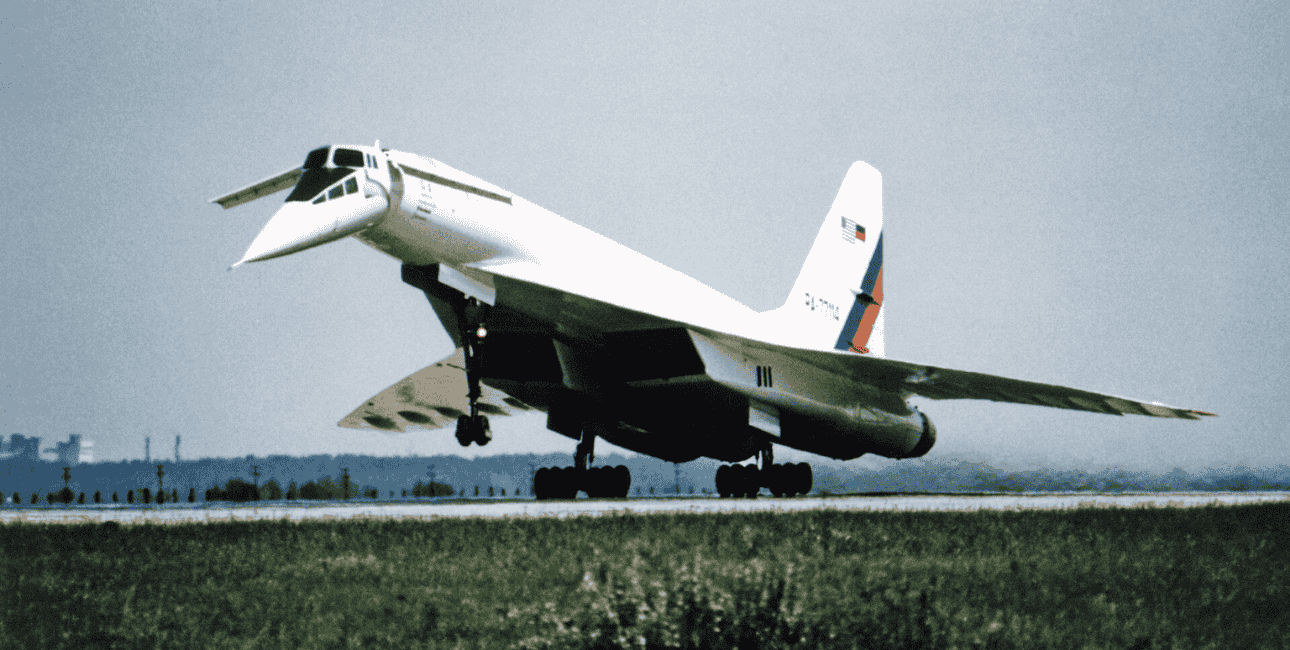
The world’s first supersonic passenger airliner—the Soviet Tu-144—may have become history after a brief but troubled stint that ended in commercial failure. However, some Russian volunteers refuse to let it vanish into oblivion and are reportedly advancing efforts to restore the aircraft for static display.
At the height of the Cold War, the Tu-144 “Concordski” was seen as an answer to the Anglo-French supersonic aircraft, Concorde.
The Russian airliner beat the Concorde in the skies twice: first with its maiden flight on December 31, 1968, two months before Concorde, and second with its first supersonic flight in June 1969, about four months before Concorde.
To preserve this legacy, a group of Russian volunteers has spent years coaxing life back into a Tu-144 airframe on the shared grounds of the Gromov Flight Research Institute and Zhukovsky Airport.
Interestingly, though, these volunteers are neither engineers from Russia’s state design bureau nor museum-paid technicians, but enthusiasts with limited resources aiming to restore a retired Tupolev Tu-144D.
The aircraft, registered CCCP-77115, is parked on the shared grounds of the Gromov Flight Research Institute and Zhukovsky Airport outside Moscow. It served as a static exhibit at the MAKS air show for several years, but its fate remains unclear, as the air show has been suspended since 2021 due to the war in Ukraine.
Passionate volunteers have carried out extensive external and internal restoration work on the aircraft. One volunteer involved, Pavel Efter, has posted videos of the work on both airplanes on his YouTube channel, “Restorer144,” since 2023.
In the videos, volunteers can be seen turning on the electrical power supply and batteries, testing the fuel gauge, fuel pump, and fuel pressure indicator in the cockpit, checking the landing gear lights and inflating the tires, testing the cabin lighting, repairing the analog navigation system, examining the electrical schematics, cleaning the outside of the aircraft, inspecting the SSP-2A fire detection system and smoke sensors, raising and lowering the nose, testing the retractable canards, testing the APU’s bay doors beneath the aircraft, and actually installing the TA-6A Auxiliary Power Unit (APU).
In Instagram comments, Efter told enthusiasts and followers that the Tu-144D is being refurbished only for static exhibition and will not return to flight.
Notably, the TA-6A and other mechanical and electrical modifications to the Tu-144D (as seen in the video above) have recently been made, sparking rumors that the volunteers may be preparing the aircraft for another static exhibition at MAKS, probably in 2027.
Nonetheless, the volunteers have been working on restoring the aircraft for several months. In July 2026, media reports noted that the volunteers had already started the electrical system and connected a ground power source, adding that even the well-known nose-lowering mechanism had become operational.
Another Russian state-funded news website, Mir24, provided more details on the volunteers. “There is a problem with such glass fuses now. They aren’t used anywhere; you can’t always find them in old stock. We throw out a cry on the Internet: who has something, who can help with what,” Sergey Chechetkin told the publication at the time. Sergey is a former aviation engineer who devotes all his free time to the Tu-144.
The report also noted that volunteers have completely recreated the plane’s cabin. Volunteers collected the missing devices from across the country and began restoring the aircraft by tidying the service panels and lamps and installing the original chairs. Initially, the 77115 board wasn’t a passenger deck; it served as an experimental testbed. “We find it in different places. Old blocks are transmitted at the bases; you can find something here. Here we are installing the blocks on the mounts,” a volunteer named Alexey told Mir24.
The project carries no grand political statement. The volunteers do not frame their work as resistance or protest. Instead, they speak of history. “This is not just a museum exhibit, but a legend that we should be proud of. You can still learn a lot from it; many developments aren’t available on other planes yet. It is still ahead of its time,” said Alexey Amelushkin, an engineer at the training and methodological center of PJSC Tupolev, earlier.
Needless to say, returning this legendary airframe to flight is widely regarded as impractical, especially since Kolesov RD-36-51 engines are long out of production, spare parts are scarce, and certification requirements would be formidable.
Therefore, Efter and his colleagues are only restoring the aircraft’s ability to present itself: nose down in the classic pose, canards extended, cabin lights on, systems powered by its own APU.
First Into The Air, But Not The First To Succeed
The Tupolev Tu-144 was the world’s first supersonic passenger airliner.
Designed by the Tupolev Design Bureau, the aircraft was rushed into development after the then-Soviet leader, Nikita Khrushchev, demanded a supersonic transport that would fly before its Western counterpart.
The prototype made its maiden flight on 31 December 1968 near Moscow, beating Concorde into the air by more than two months. Subsequently, the aircraft went supersonic for the first time in June 1969 and became the first commercial aircraft to reach Mach 2 in May 1970.
The Tu-144 was built to be larger and faster than Concorde, and featured a distinctive double-delta wing and a drooping nose for better landing visibility. Later models also added retractable canards to improve low-speed handling.
However, Western experts and officials claimed the Soviets stole the Concorde plans, which may have helped them build the Tupolev Tu-144 before the Concorde.
These claims reportedly stemmed (at least in part) from the uncanny design similarities between the world’s first two supersonic passenger aircraft.
Tupolev Tu-144- Wikipedia
Despite its early successes over the Concorde, the airplane faced technical issues.
For example, Tu-144’s early Kuznetsov NK-144 engines required constant afterburner use to sustain supersonic cruise, making it extremely noisy, fuel-thirsty, and shorter-range than Concorde, which could supercruise without afterburners. Moreover, reliability problems emerged during testing and maintenance, and the cabin was very noisy and vibrated a lot.
On June 3, 1973, during a demonstration flight at the Paris Air Show, a production Tu-144 broke apart in midair and crashed into the French village of Goussainville, killing all six crew members along with eight additional people on the ground.
Although the most widely accepted explanation is that the crew overstressed the airframe during fast maneuvers, the precise cause of this disaster remains uncertain.
The Tu-144 entered limited commercial service with Aeroflot in 1975, initially carrying mail and cargo on the Moscow–Almaty route, followed by passenger flights in Nov 1977.
However, the aircraft flew only about 55 passenger services before a second major incident. In May 1978, a fuel-line rupture and fire during a test flight claimed the lives of two crew members and formally ended passenger operations.
After this debacle, the aircraft continued brief cargo and experimental work even as its rival program—the Concorde—struggled with its own set of issues.
Both programs were eventually canceled because of poor safety records and concerns about economic viability. However, Concorde was far more successful than the Tu-144 and wasn’t discontinued until 2003.
The Soviet Union, for its part, built only 16 airframes before operations ceased in 1983. A few surviving examples later trained pilots for the Soviet Buran space shuttle, and one modified aircraft served as a flying laboratory in a joint NASA–Russian research program from 1996 to 1999, conducting its final flights in support of future supersonic transport studies, as earlier explained in detail by the EurAsian Times.
NASA used the Tu-144LL to conduct research for high-speed civil transport in 1997. Credits NASA.
Though neither the Tu-144 nor the Concorde survived, both programs have inspired people worldwide to make supersonic commercial travel a reality. Earlier this year, United Aircraft Corporation (UAC) CEO Vadim Badekha confirmed that the Zhukovsky National Research Center is working on a supersonic airliner prototype. He said the effort had moved beyond paper studies into “hardware,” with UAC providing active support, and expressed confidence that the center would complete the work.
“Yes, such work is underway at the Zhukovsky Research Center, and we are actively assisting. The work is no longer confined to paper – it is already being carried out in hardware. A prototype of such an aircraft is under development, and we believe the Zhukovsky Research Center will successfully complete this work,” he told TASS.
Meanwhile, NASA is advancing work on the X-59, an experimental aircraft in the agency’s Quiet Supersonic Technology (Quesst) program that could go supersonic without generating a sonic boom or a loud, thunder-like sound when it exceeds the speed of sound.In addition, China is developing a supersonic passenger aircraft that could make its maiden flight by 2027. Last year, reports noted that the Chinese commercial aerospace company leading the project conducted the first test flight of a detonation ramjet engine.
As for the Tu-144, this aircraft is remembered as a bold but ultimately unsuccessful engineering achievement. It is, perhaps, for this reason that the volunteers outside the state machinery of Russia are doing everything they can to ensure that the supersonic airliner does not get lost in pages of history.
Contact the author at sakshi.tiwari13 (at) outlook.com
As the Iran War continues, gas prices remain high — a real strain for consumers.
The conflict has kept diesel, crude oil, and gas prices high; inflation is eating up pay hikes.
As America heads into midterms, it's a hard affordability position for President Donald Trump.
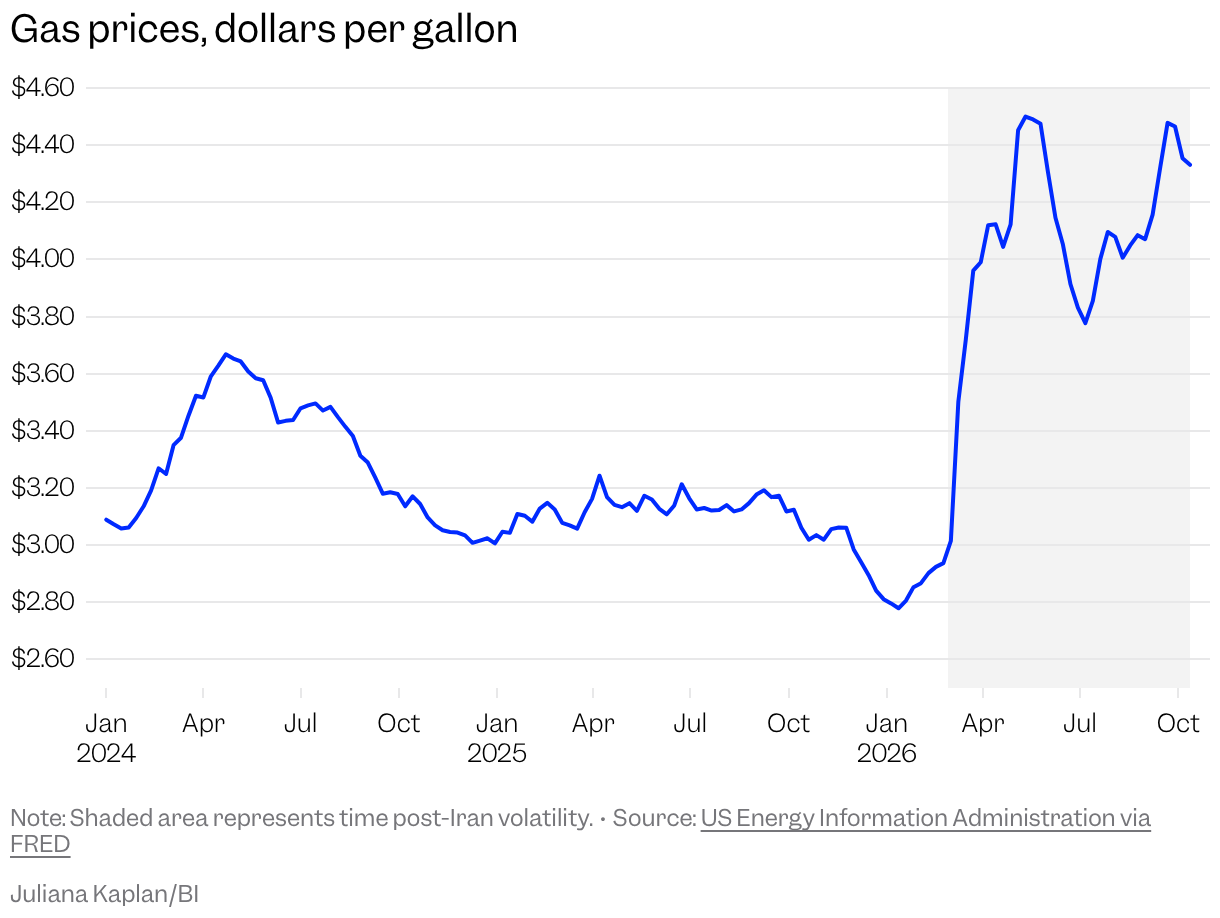
It's expensive out there: Gas prices have been stuck at over $4 a gallon for more days this year than any other. The war in Iran shows no signs of cooling off. Inflation is swallowing any raises you might have gotten at work.
It's a recipe for a challenging midterm cycle for President Donald Trump, who faces an affordability crisis at home that's not going away — and a far-away war that's only making costs go up.
The volatility surrounding the contested Strait of Hormuz, a key oil and gas transit waterway, has hit American consumers hard.
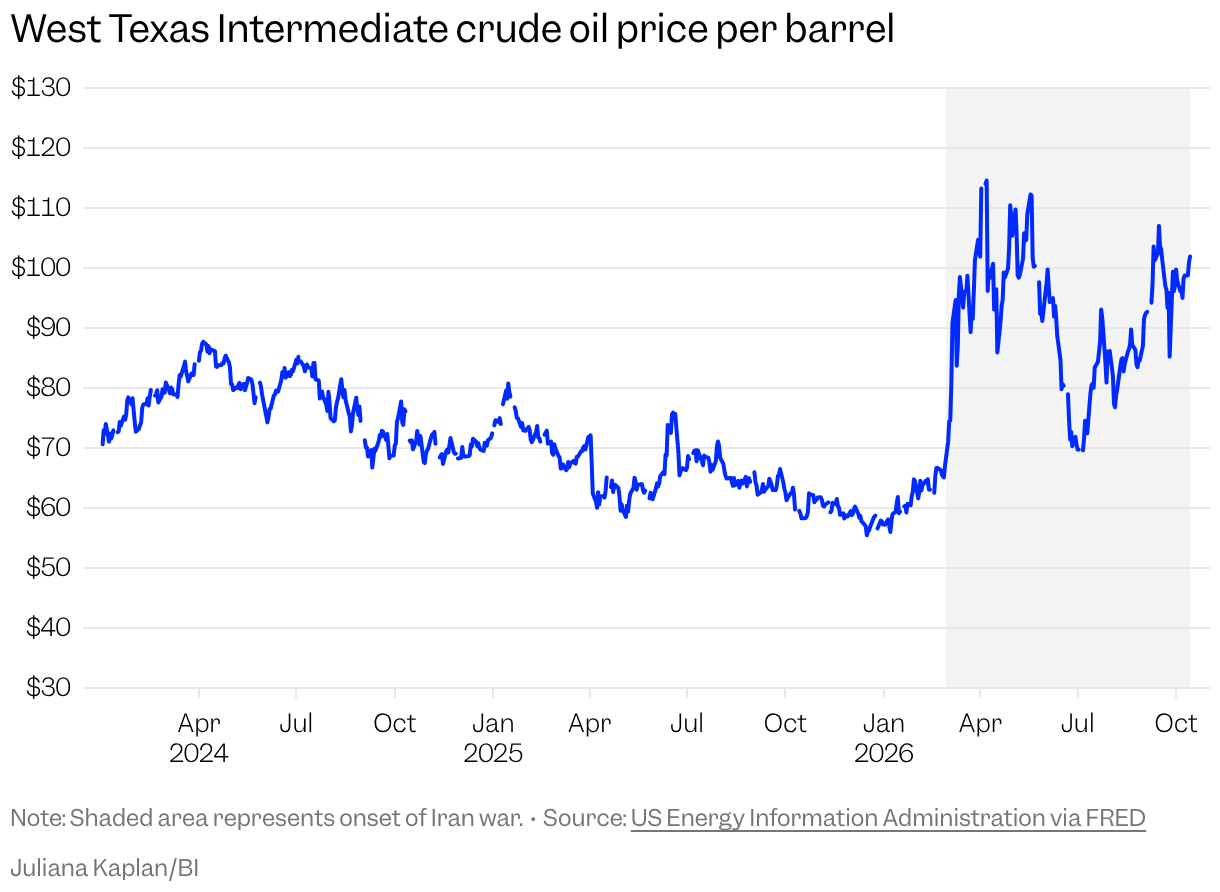
Since the Iran war first kicked off in February and the Strait was subsequently closed, gas and oil prices have skyrocketed. Diesel prices have hit record-breaking highs in recent weeks. That paints a dreary picture for Americans struggling with high costs, who likely won't feel any relief at the pump in the near future — especially as more potential military action looms.
Trump has highlighted the broader goals of the war and argued that the increase in gas prices would be transient. In an October 8 Truth Social post, he wrote, "a temporary increase in the price of Gasoline is a small price to pay for Iran not having a Nuclear Weapon."
While the US military has not carried out airstrikes against Iran directly in several months, it has kept a significant force presence in the Middle East, including more than a dozen warships, dozens of fighter jets, and thousands of sailors and Marines.
US forces in the region are maintaining a naval blockade against Iran, and since July, they have disabled four commercial ships that the Pentagon said were sailing in violation.
After the start of the war in February, crude oil prices soared and remain significantly higher than when Trump's second term began.
Tanker traffic through the Strait of Hormuz nearly ground to a halt early in the Iran war, severely disrupting a waterway that normally carries about a fifth of the world's oil supply. Shipments have since recovered substantially but remain below prewar levels.
The Trump administration said it aims to alleviate issues related to oil. "The President wants to see prices at the pump fall and continues to take historic measures to alleviate temporary disruptions as oil flowing through the Strait of Hormuz approaches pre-conflict levels," White House spokeswoman Taylor Rogers said.
Vessels carrying oil and other products have continued to take fire from both sides, putting more pressure on commerce traveling through the area. US forces have carried out additional strikes on Iranian-linked targets. The Pentagon said they have destroyed 10 tankers tied to the Islamic Revolutionary Guard Corps, or IRGC, since July.
Meanwhile, several merchant ships have come under attack in and around the Strait of Hormuz this month, according to the Royal Navy-affiliated United Kingdom Maritime Trade Operations Center. US Central Command, which oversees American military operations in the Middle East, has attributed some of these strikes to Iran.
The ripples of volatility in oil prices are showing up at the pump. Long gone are the days of gas stations touting below-$3 prices; prices are still hovering in the mid-$4 range. High gas prices are even tamping down spending among higher-income consumers, and soaring costs have led to a rise in "hypermilers" — drivers who try to optimize and gamify their habits to get the best value per gallon.
Diesel prices in the US have spiked even more, up to around $6.18 per gallon, an over $2.50 increase over the year, per the Energy Information Administration. In California, diesel is hovering over $8 a gallon.
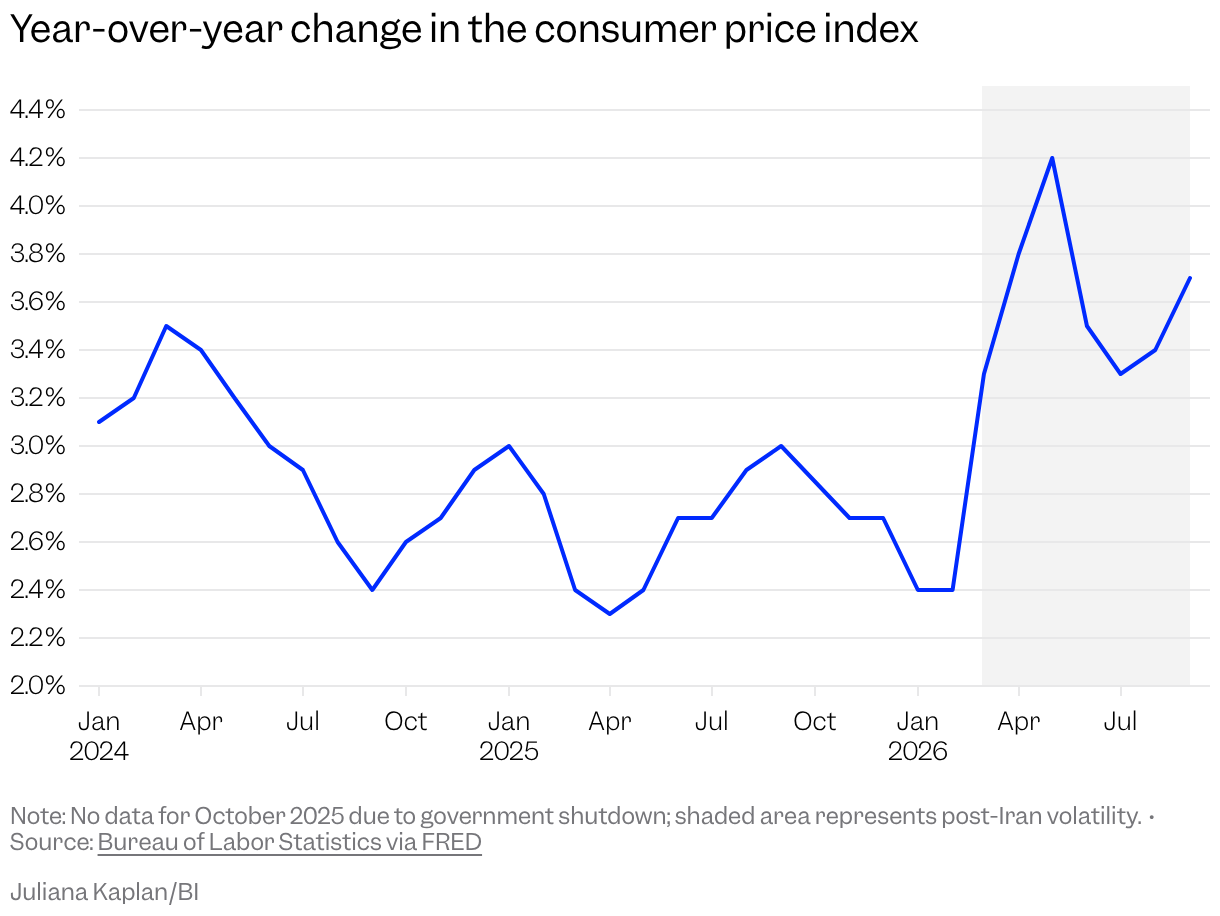
Those fuel and energy strains are pushing up costs across the economy. Inflation as tracked by the consumer price index increased to 3.7% year-over-year in September — higher than economists expected. That was driven in large part by soaring gas and energy prices, with energy rising by 20.4% year-over-year and gas by 34.2% in the same period.
Higher inflation has put pressure on the Fed and bond markets. In September, the central bank raised rates for the first time in three years to try to combat rising prices, with one more hike potentially coming by year's end. The 10-year Treasury yield, which influences borrowing costs for mortgages, auto loans, and credit cards, has surged since the war began, from below 4% at the end of February to a high of 5.31% this month. The 30-year mortgage has risen nearly in lockstep, going from just under 6% to 7.5% during the eight-month conflict.
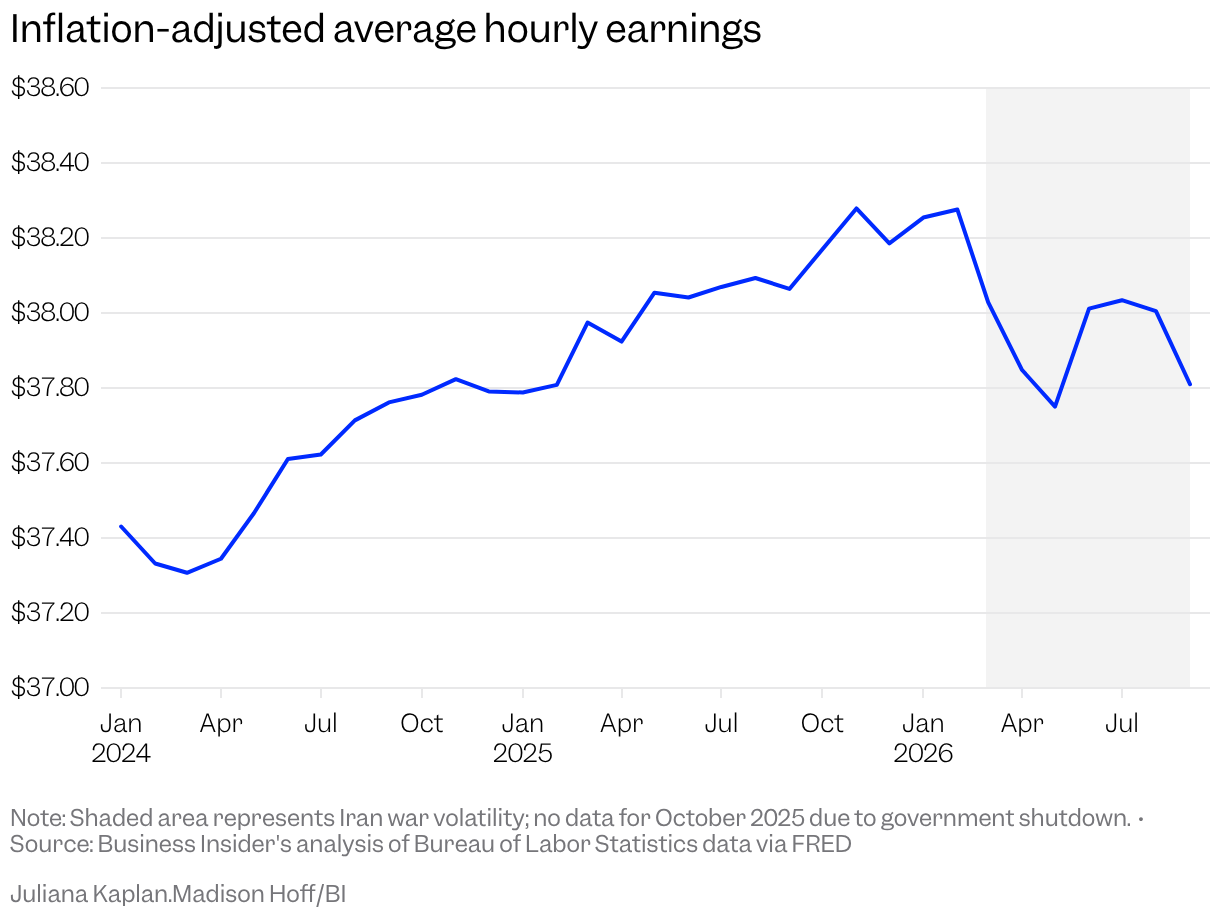
For everyday Americans, all of these international strains amount to what is, essentially, a pay cut. Wage growth remains slow and steady, but, over the past few months, rising prices have outpaced pay increases. Inflation-adjusted wages have slumped since the start of the war, and have given up nearly all their gains since the start of Trump's second term.
When asked for comment, the White House highlighted that by some measures, earnings are still outpacing inflation. "Under President Trump, private sector workers have seen their wages continue to outpace inflation, with average annual earnings growing by more than $600," said White House spokesperson Matthew Middleton.
And, with midterm season in full swing, affordability is on the ballot for many voters. The current economic situation shows no immediate signs of changing — another blow for Trump, who's been on a quest to bring down gas prices.
There are growing signs that the US could be preparing for fresh military action against Iran. Another aircraft carrier strike group is sailing across the Pacific and is expected to enter the Middle East.
The Trump administration is also facing a resurgence in attacks from the Houthis, a rebel group in Yemen. In recent weeks, the Iran-backed rebels have seized key territory along the Red Sea, allowing them to threaten the Bab al-Mandeb Strait, another maritime chokepoint like Hormuz, and have ramped up missile strikes against Saudi Arabia.
The Houthis previously tormented Red Sea shipping, leading the Trump administration to launch a major bombing campaign last year that ended in a ceasefire. The rebels have since rearmed.
Any other disruptions there might be bad news for consumers, potentially bringing more price spikes across the many goods shipped through that chokepoint.

 Login