❌

Reading view

EU unlikely to send Black Sea naval mission to repel Russian drone attacks on Ukrainian grain ships, despite Kallas’ support

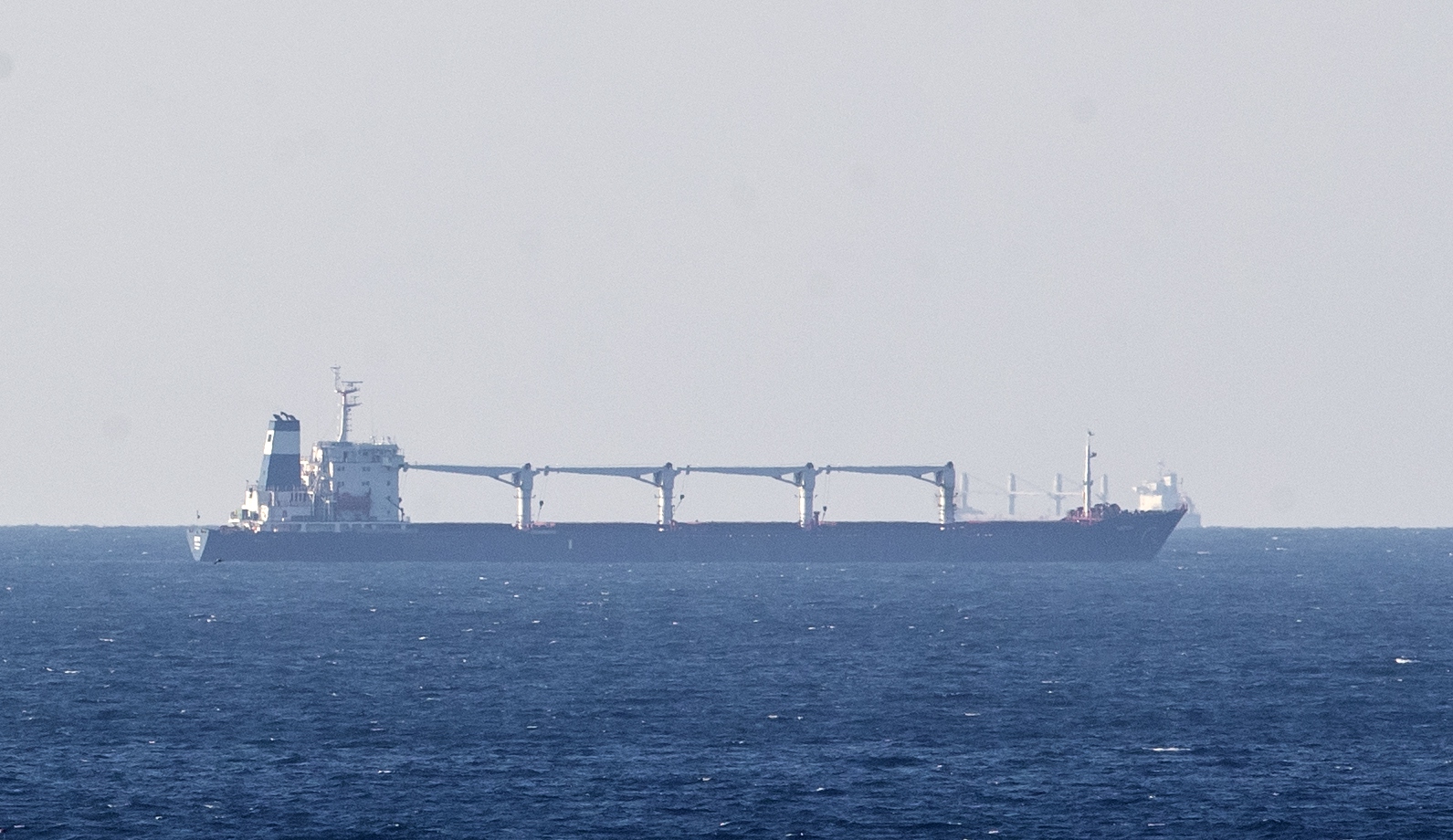
The EU’s top diplomat has backed the idea of a Black Sea naval mission to protect grain ships from Russian drones – but this would require a much bigger effort than Europe’s existing Red Sea operation, while air-policing might be more effective.

“The EU should send a mission to the Black Sea,” said EU foreign affairs chief Kaja Kallas in the European Parliament in Strasbourg on Tuesday (20 October).

“To protect merchant shipping, not to escalate, not to scare anyone, but to make sure that we will supply safely fuel, merchandise at normal prices, anything we need. This is how it should be,” she said.

Some “six attacks in 10 days by suspected Russian drones marks a dangerous and unacceptable escalation,” in the region, Kallas added, with “rescuers
still searching for seven sailors missing after the drone attack on two tankers near Romania’s Black Sea coast”.

The Russian attacks were costing Ukraine €60m a day in lost exports of grain and fertiliser, Kallas also said.

And Russia had changed its tactics to start targeting people instead of cargo, said Sidharth Kaushal, from the Royal United Services Institute (RUSI) defence think-tank in London.

“Before, they targeted ports, not civilians, or vessels at sea. They realised that threat to life is a much more effective deterrent to commercial shipping than threat to cargo,” he told EUobserver.

This article continues, but the full version is available only to EUobserver.com subscribers. Visit account.euobserver.com/membership
  •  

EU vows to stop buying Arctic oil and gas, but drops ban from its new strategy

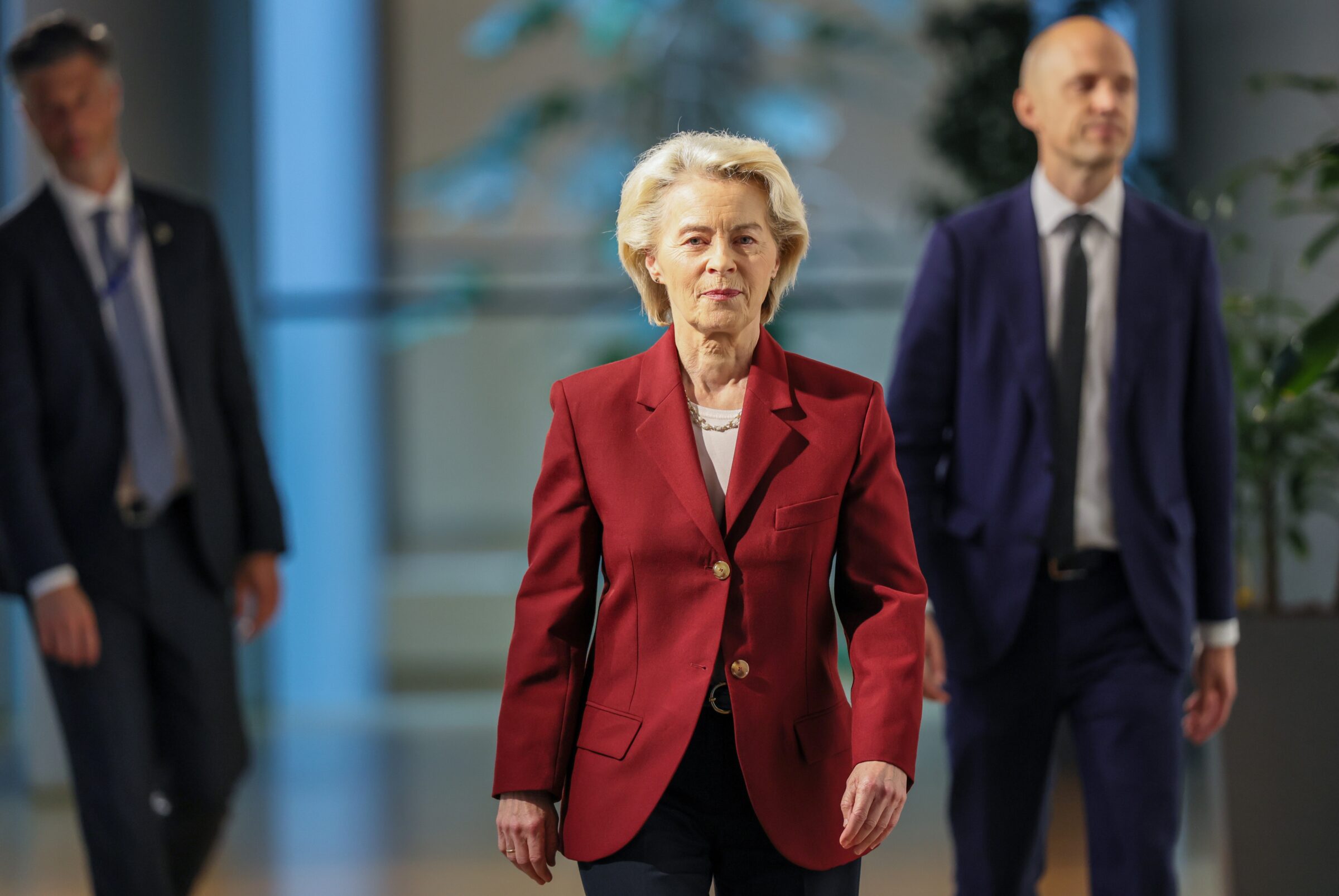
The EU “will not drill and will not buy” Arctic oil and gas, EU officials said on Tuesday (20 October), as the European Commission presented its new Arctic strategy. 

“Our position on Arctic oil, gas and coal has not changed,” a senior EU official told reporters. “It’s fairly simple. We will not drill in the Arctic, and we will not buy hydrocarbons from the Arctic.”

The strategy follows months of heavy lobbying by Norway’s prime minister Jonas Gahr Støre and his cabinet. 

Oslo used the energy supply disruption caused by the Iran war to push the EU to drop its 2021 support for a moratorium on oil and gas drilling in the Arctic, insisting that it was crucial for future energy security. 

But EU officials made clear on Tuesday they did not buy that argument. “We do not need Arctic resources to keep our energy supply secure,” the official said.

What happened to the moratorium?

This article continues, but the full version is available only to EUobserver.com subscribers. Visit account.euobserver.com/membership
  •  

Europe’s €800bn defence borrowing hides a reality of every country buying on its own

Europe is supposed to be financing its defence together. It barely is.

Of the €800bn announced under ReArm Europe in March 2025, €650bn is not common money. It is an estimate of the extra room governments get under the national escape clause to spend up to 1.5 percent of GDP more on defence for four years.

Each country still pays for that spending itself.

The room is also temporary: EU Commission simulations suggest that maintaining higher defence spending after 2028 could require additional annual fiscal adjustment of 0.25 to 0.4 percentage points of GDP from 2029.

The other €150bn is SAFE, and it is loans, not grants.

The EU borrows and lends the money on, and each country repays its share. Grants are small: €1.5bn from the European Defence Industry Programme for 2025-2027, plus the European Defence Fund for joint research.

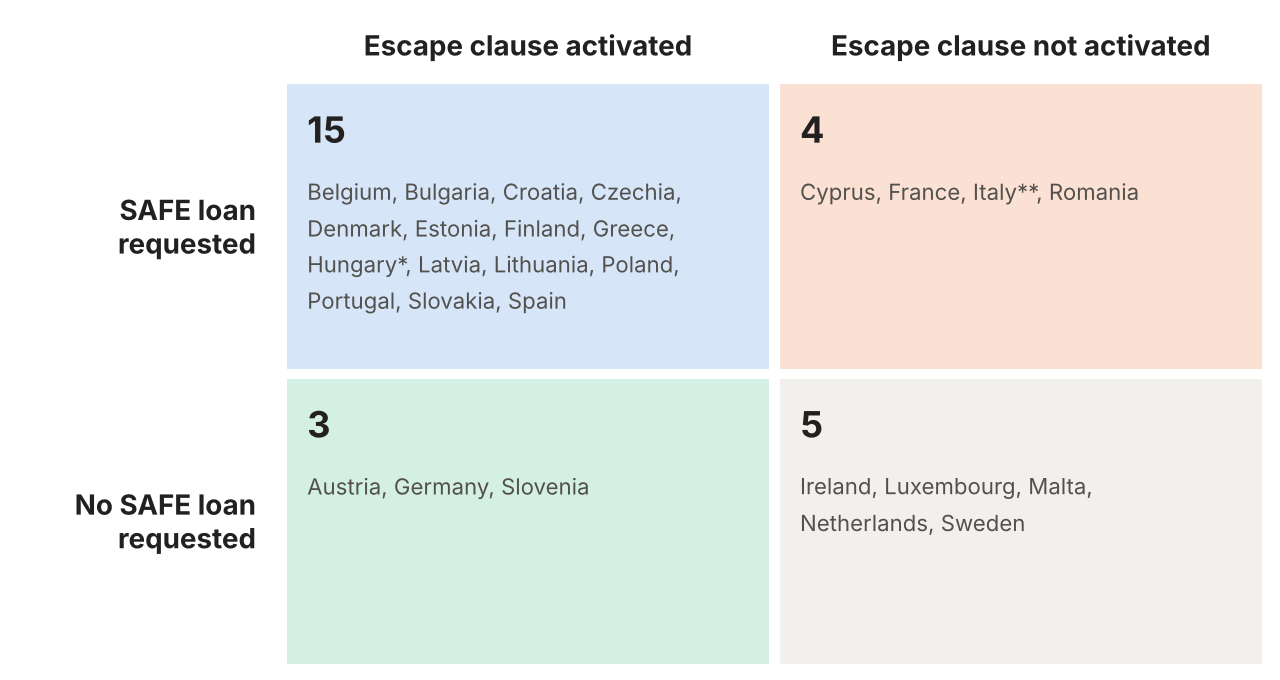
Not every country has used these tools, as Table 1 shows. The Netherlands and Sweden have used neither. Like Germany, which has taken only the clause, they can borrow at least as cheaply as the EU, so SAFE gets them nothing.

France has taken SAFE but not the clause, to protect the credibility of its budget plans.

Table 1. Who uses SAFE and the national escape clause

Source: Council of the EU, European Commission. Data as of 17 October 2026. * Hungary: allocated €16.2bn, now requesting €5.4bn; still pending. ** Italy: the Commission backed its request on 8 October 2026; the Council has yet to decide.

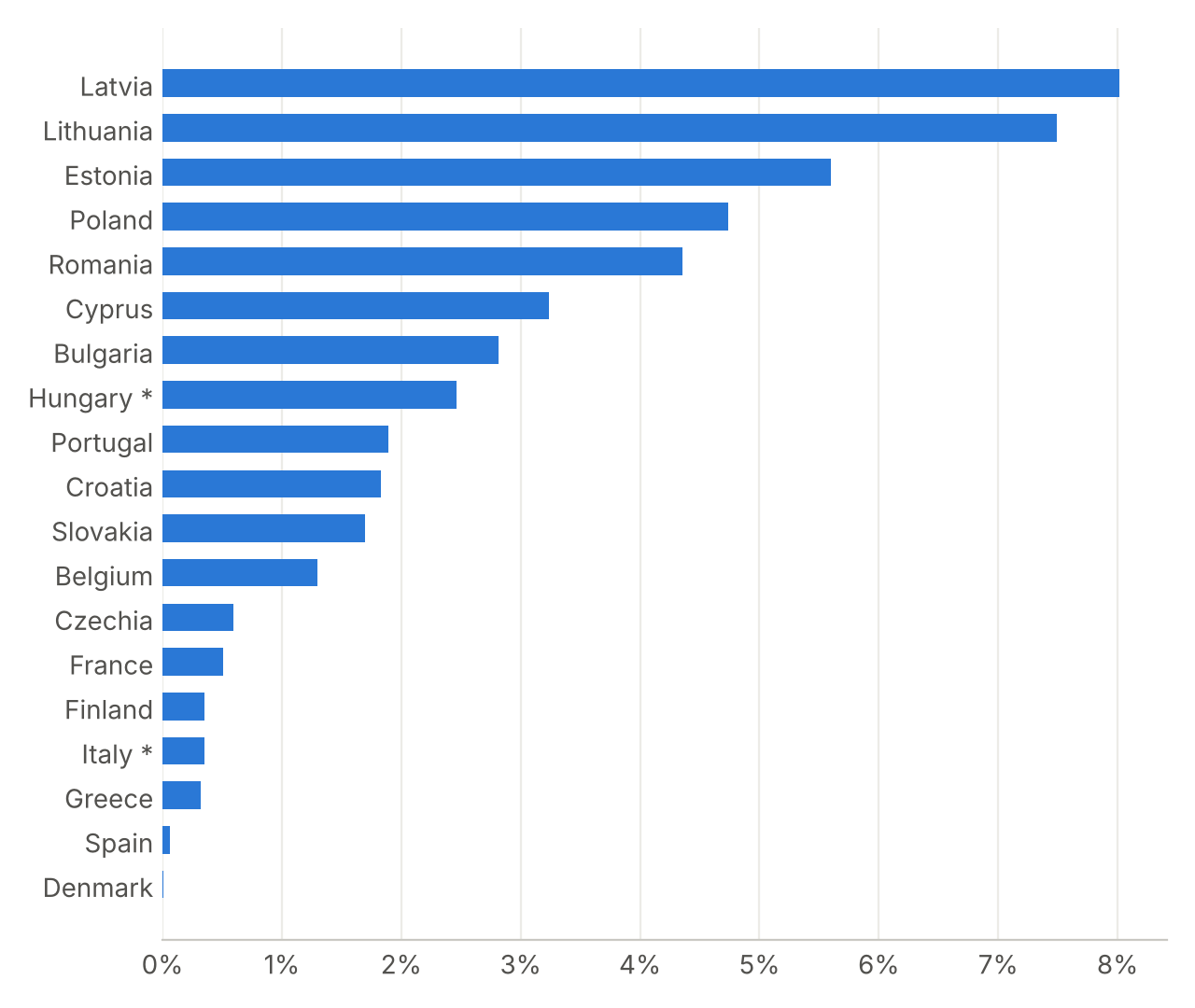
Where SAFE does matter is on the eastern flank. Latvia, Lithuania and Estonia can borrow the equivalent of five to eight percent of their GDP, and Poland almost five percent.

Graph 1. SAFE loans as a share of GDP, by country (%)

Source: Council of the EU, European Commission, Eurostat. SAFE loans only, as a share of 2025 GDP. Amounts approved by the Council, except Italy and Hungary (* revised requests of €8bn and €5.4bn, September 2026). Data as of 17 October 2026.

That leaves private money.

The European Investment Bank and the European Investment Fund are trying to bring in private investors, partly by removing the reputational stigma of financing defence.

But defence is almost a monopsony: the state is nearly the only buyer. Without a clear flow of public orders, private investment will be hard to come by.

So Europe barely borrows together. And it buys alone.

This article continues, but the full version is available only to EUobserver.com subscribers. Visit account.euobserver.com/membership
  •  

MEPs resist 17% cut to EU foreign aid, instead seek €25bn top‑up

MEPs have put themselves on a collision course with EU governments by rejecting plans for a 17-percent cut in foreign spending – instead demanding additional spending worth €25bn. 

Earlier this month, the Irish government, which holds the six-month rotating EU council presidency, proposed that €38bn of cuts be made from the ‘Global Europe’ heading, which covers foreign aid, as part of an overall package of €141bn of cuts to the seven-year EU budget, known as the multi-annual financial framework (MFF). 

But in a vote on Monday evening (19 October), the European Parliament’s development committee instead backed a dedicated minimum budget of €25bn for humanitarian aid, as well as dedicated budget lines for a Gaza reconstruction fund and for candidate countries. Put together, that would mean a €25bn increase on the EU Commission’s original budget of €200bn for the Global Europe heading. 

The position agreed by MEPs, by a 61-to-34 vote margin, will eventually form the basis of negotiations between MEPs and ministers when EU governments agree their position on the budget. 

This article continues, but the full version is available only to EUobserver.com subscribers. Visit account.euobserver.com/membership
  •  

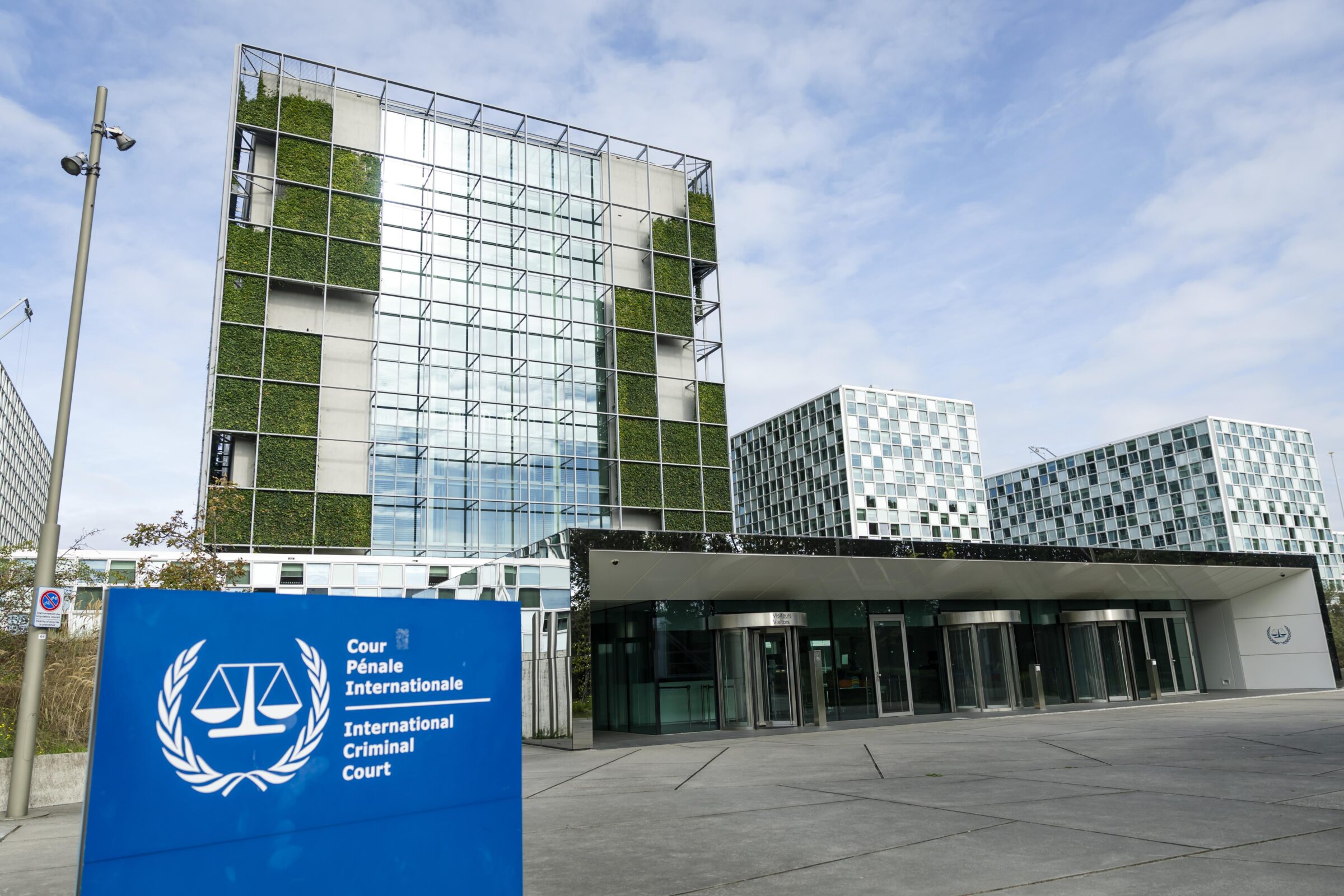
International Criminal Court shortlisted for EU award as MEPs urge protection for its judges against Trump sanctions

The International Criminal Court (ICC) has been shortlisted for the Sakharov Prize for Freedom of Thought, an annual human-rights award from the European Parliament.

The announcement on Monday (19 October) comes after US president Donald Trump put his weight behind Israeli efforts to discredit the international judicial body by extending sanctions against it.

The ICC issued an arrest warrant in 2024 for Israeli prime minister Benjamin Netanyahu for alleged war crimes, as well as other senior Israeli officials and Hamas. The US then responded by targeting its judges by impeding their day-to-day activities such as banking.

New sanctions against the court were announced by the US administration this month after the Nobel Peace Prize went to Navi Pillay, a former ICC judge who wrote a UN report concluding Israel is committing ​genocide in Gaza.

The ICC court labelled the move as an “assault on the rule of law” and called on countries to step up to protect it.

Sakharov Prize finalists named 

Members of the EU parliament’s foreign affairs committee shortlisted the ICC and its members for the Sakharov Prize.

Named after the Soviet nuclear scientist dissident Andrei Sakharov, the award has been previously awarded to the likes of Iranian protest icon Mahsa Amini and to the Ukrainian people enduring Russia’s attacks.

“We stand by the ICC and its officials, and we are committed to safeguarding its work,” said Yannis Maniatis, Greek MEP for the Socialists & Democrats group which nominated the ICC for the award. “If the aggressors become the victims, and if we stand by helplessly as international justice erodes, we risk allowing those who believe themselves above the law to prevail.”

Tundu Lissu, a Tanzanian opposition figure in court for inciting the public to disrupt an election and facing the possibility of death row, is also a Sakharov Prize finalist. “There is no doubt about the political nature of his detention,” said David McAllister, MEP for the European People’s Party who co-nominated Lissu.

This article continues, but the full version is available only to EUobserver.com subscribers. Visit account.euobserver.com/membership
  •  
❌