Early voting in two Republican strongholds puts Latino voters’ priorities and President Donald Trump’s declining approval under scrutiny.
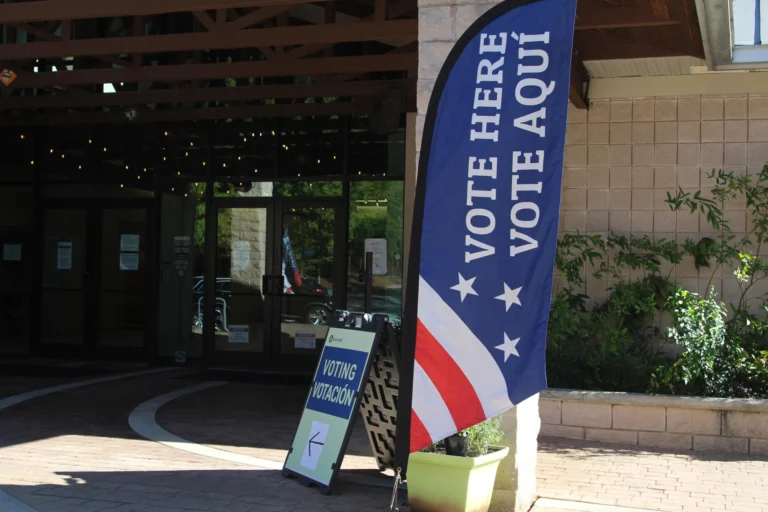
Early voting began Monday in Texas and most Florida counties, setting the stage for closely watched midterm contests in two Republican strongholds where Latino voters’ concerns over inflation, immigration and public safety could shape the electoral landscape.
With Latinos accounting for 40% of Texas’ population and 28.7% of Florida’s, both states offer a key test of the parties’ ability to attract Hispanic voters. Economic pressures, rising living costs, immigration policy and public safety are among the issues shaping voters’ priorities.
In Florida, voters turned out early in heavily Hispanic areas, including Miami-Dade County and Doral. Their concerns varied: some pointed to rising food and fuel prices and the strain on households and small businesses, while others emphasized public safety, education and support for the Trump administration.
Foreign policy and immigration have also exposed divisions within the community. In Doral, home to a significant Venezuelan population, tensions over the conflict with Iran and its potential impact on oil prices have added to debate over the administration’s tougher immigration policies.
🗳️ EE. UU.: comenzó la votación anticipada en Texas, que se suma a Georgia y Arizona. Las elecciones del 3 de noviembre definirán el control del Congreso. #teleSUR#19octpic.twitter.com/EHFa1yUbOU
Text Reads: 🗳️ U.S.: Early voting has begun in Texas, joining Georgia and Arizona. The November 3 elections will determine control of Congress.
The early voting period coincides with a decline in Trump’s approval among Hispanic voters, according to a recent Pew Research Center study. His approval rating stood at 24% in October, down from 38% in February 2025, at the beginning of his term.
The figures come as both parties compete in high-profile state and congressional races. In Florida, Republican Byron Donalds and Democrat David Jolly are vying for the governorship in a contest that has proved closer than expected. Republican Representative María Elvira Salazar is seeking re-election in the state’s 27th Congressional District against Democratic challenger Eliott Rodríguez.
In Texas, Republican Attorney General Ken Paxton faces Democrat James Talarico in the Senate race, while Republican Governor Greg Abbott is challenged by state legislator Gina Hinojosa.
Democrats are hoping that declining support for Trump among Hispanic voters, combined with greater participation in early and mail-in voting, will help them contest key seats in the House of Representatives and Senate. Republicans, meanwhile, are seeking to maintain their dominance in both states through the end of the voting period.
Flooding has affected nine departments, forced families to relocate and prompted rescue operations as forecasters warn of more rain.
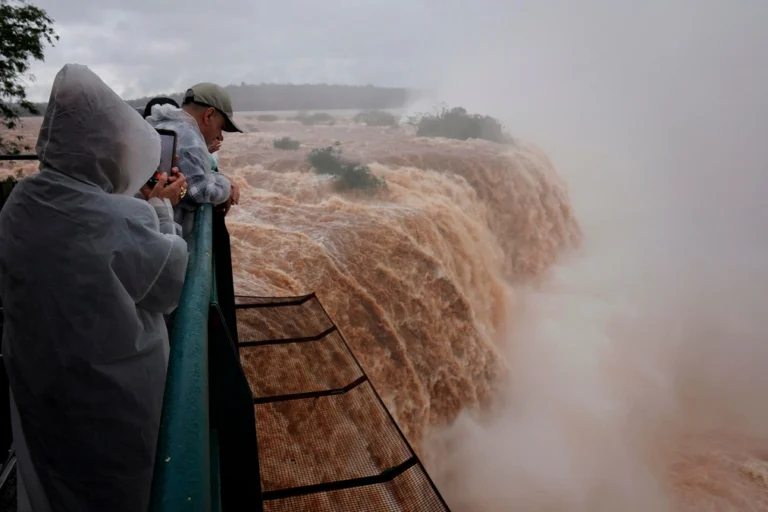
Flooding caused by heavy rainfall and the overflowing Paraná River has affected at least 3,000 families across nine departments in Paraguay, prompting emergency assistance and the relocation of thousands of families as authorities warn of further rainfall, according to the National Emergency Secretariat (SEN).
The southern departments of Ñeembucú, Misiones and Itapúa have been among the hardest hit, with floodwaters inundating homes and forcing emergency crews to distribute food, plastic sheeting and construction materials to affected residents.
The flooding has also affected Central, Guairá, Caaguazú, Concepción, San Pedro and Canindeyú, extending the emergency across nine of the country’s 17 departments.
In Misiones, the municipality of Ayolas has been particularly hard hit because of its proximity to the Yacyretá Dam, which is jointly managed by Paraguay and Argentina. Around 1,040 families in the area have received assistance, according to the SEN.
#FromTheSouth News Bits | About 1,200 families were evacuated last week in Ciudad del Este, Paraguay's second most populous city, due to severe flooding caused by the El Niño phenomenon, which raised the Parana River's water levels. pic.twitter.com/fu7fTJHzah
Rescue operations have also extended to animals. The nonprofit organization SOS Animal Ayolas has rescued about 247 pets trapped in flooded areas in recent days.
In Alto Paraná, along the border with Brazil, at least 1,300 families have been relocated. Water levels in the Paraná River have fallen slightly in the area, reaching 117.57 meters above sea level after approaching 121.19 meters on Thursday.
Firefighters from Bombers Pel Món, an organization based in the Spanish municipality of Valencia, have joined local emergency crews in assisting communities affected by the flooding near Foz do Iguaçu, Brazil.
Despite the recent decline in water levels in Alto Paraná, Paraguay’s Directorate of Meteorology and Hydrology has warned of a high probability of further rainfall from Wednesday through Sunday, with the greatest impact expected in the country’s Eastern Region.
Flooding along the Paraná River has affected thousands of families in Paraguay, prompting evacuations, rescue operations and emergency aid. Photo: Flooding in Paraguay as the Paraná River overflows, affecting thousands of families and prompting emergency evacuations.
Unofficial results show 77% of voters opposed a move toward separation, backing Canadian unity as U.S. tensions mount.
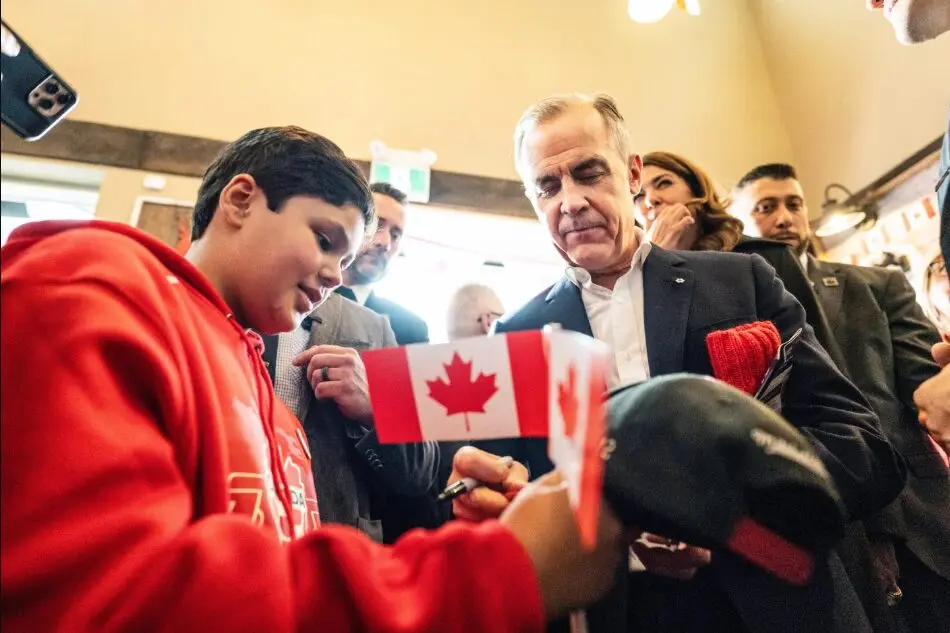
Alberta voters have overwhelmingly rejected a proposal to begin the process of separating from Canada, with 77% opposing the initiative in unofficial results that strengthen Prime Minister Mark Carney’s push for national unity.
With more than 1 million ballots counted, 23% supported the proposal, according to Elections Alberta. The October 19 referendum was not a direct vote on independence; approval would have set the province on a path toward a future vote on separation.
Carney welcomed the results, saying Albertans had chosen to remain part of Canada and that the outcome would allow the country to pursue an ambitious economic agenda.
“Above all, Albertans chose Canada,” he said in a statement released on October 20. He added that Canadians could move forward together with renewed purpose and greater ambition.
Carney also pointed to efforts to secure new international trade partners, accelerate major infrastructure projects across the country and expand Canada’s role as a global energy power, with Alberta at the center of those plans.
Alberta Premier Danielle Smith also welcomed the early results, saying they demonstrated support for a stronger province within a united Canada.
“Albertans have voted for a stronger Alberta in a united Canada,” Smith wrote on social media.
Smith called the referendum under pressure from separatists within her governing United Conservative Party (UCP), despite opposing independence. She was scheduled to address the province on Tuesday evening about the results and Alberta’s future.
Thomas Lukaszuk, a former deputy premier who led the Forever Canadian campaign against separation, also welcomed the outcome.
“We are a solid country that’s united from coast to coast to coast,” he told supporters.
Separatist leaders, meanwhile, pointed to the vote as evidence of continuing dissatisfaction with the federal government in Ottawa. Keith Wilson, a prominent figure in the movement, cautioned that the results were not final but argued that a substantial share of Albertans wanted the province to be treated better.
“We don’t have the final results. I think the numbers are going to fluctuate, but it is fair to say that at least a quarter of Albertans feel that Alberta needs to be treated better,” Wilson said.
The results were delayed after late openings forced more than 100 polling stations to extend their voting hours on Monday.
Alberta, home to the world’s fourth-largest proven oil reserves, is a conservative stronghold whose political culture has long had more in common with the American West than with much of Canada.
Resentment toward the federal government has persisted, but separatist parties historically attracted only 1% to 2% of the vote, according to former Premier Jason Kenney. Anger over COVID-19 restrictions helped mobilize activists who later embraced the separatist movement.
Meanwhile, U.S. President Donald Trump’s trade war and threats to make Canada the 51st U.S. state have helped Carney rally support in Alberta, where Liberal prime ministers have traditionally been unpopular.
Demonstrators demand algorithmic transparency as Brazil’s electoral court gives Meta 24 hours to prove equal treatment of presidential campaigns.
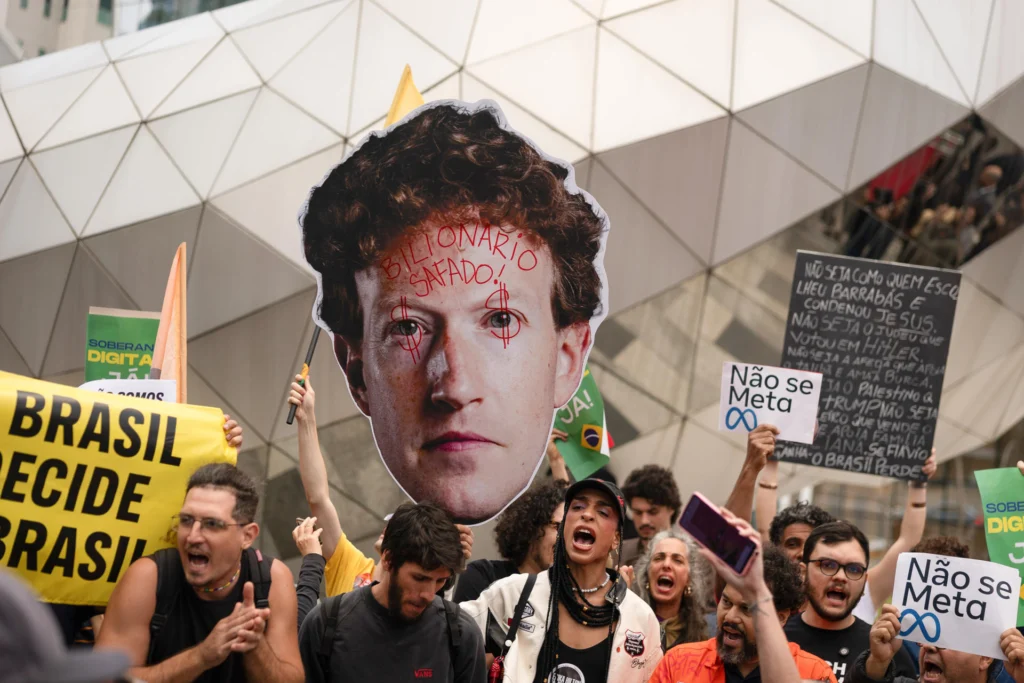
Hundreds of Brazilians protested outside Meta’s São Paulo offices on Monday, accusing the technology giant of restricting the reach of President Luiz Inácio Lula da Silva’s campaign while boosting far-right candidate Flávio Bolsonaro, six days before the presidential runoff. The demonstration coincided with a court order giving Meta 24 hours to prove it was treating both campaigns equally.
The protest on Faria Lima Avenue called for an end to what demonstrators described as the suppression of progressive political content. Organizers also demanded transparency in content moderation algorithms, protections for activists and journalists, and compensation for damage to public debate.
The Superior Electoral Court (TSE) imposed the 24-hour deadline amid mounting scrutiny of Meta’s handling of the campaigns. The dispute intensified after internal messages emerged in which company employees acknowledged that Lula’s account had faced restrictions compared with Bolsonaro’s. The messages indicated that Lula’s Instagram posts could not be promoted for nearly 24 hours between Oct. 9 and 10.
Text Reads: “META DON’T GET INVOLVED!” Brazilian movements occupy the headquarters of the social media platform.
TSE Justice Marco Aurélio Bellizze warned that appeals would not suspend the court’s orders and doubled the daily fine for noncompliance from 500,000 reais to 1 million reais, or about $180,000.
The court also ordered Meta to submit individual reports in Portuguese, explain its recommendation algorithms, provide details on electoral advertising oversight, and identify potential networks of fake accounts and AI-generated images.
“Unilaterally replacing deadlines set by the court amounts to noncompliance, particularly in a process whose effectiveness depends on time,” Bellizze said.
Meta maintains that its content moderation policies apply equally to all political actors. Bolsonaro has also sought to join the proceedings, arguing that his own content has been harmed.
Concerns over digital sovereignty
Protesters argued that the dispute exposed the broader influence of social media platforms over Brazil’s electoral process. They noted that 70% of the Brazilian population uses Instagram to obtain information and accused Meta, owned by Mark Zuckerberg, of wielding opaque power over political visibility.
“We cannot say we have fair elections when a company uses its economic, technical and technological power to tilt public debate toward one side, which is what is happening,” said Dani Silva, executive director of Ctrl+Z, one of the organizations behind the demonstration.
The rally was organized by the Não se Meta coalition, which included the Landless Workers’ Movement (MST), Levantamento da Juventude Popular, Brasil Popular, Article 19, Ctrl+Z, Código No Binário, Diracom, the National Forum for the Democratization of Communication and Sleeping Giants Brazil.
Under the slogan “Meta, stay out of our election,” demonstrators displayed signs featuring Zuckerberg alongside U.S. President Donald Trump and chanted for digital sovereignty and Meta’s exclusion from the electoral process.
Activist Veronyka Gimenes, known as Trava Hacker, described the company’s actions as part of what she called “digital colonialism,” alleging that technology companies seek to influence domestic politics across the Global South.
“Digital sovereignty is no joke; it is something that must be taken very seriously,” she said.
Activist Tiana Cauton urged people to take to the streets to demand the democratization of communications. She also expressed hope that a new presidential term would advance “autonomy through our own open and clean social networks.”
Demonstrators said Meta’s influence over political communication had undermined Brazil’s national sovereignty since the 2018 elections, renewing calls for greater accountability for social media platforms during the electoral process.
A Bogotá court ordered the National Museum to safeguard nearly 30 removed works as professors protested the government’s decision.
A Bogotá court has ordered Colombia’s National Museum to preserve nearly 30 artworks removed from its exhibitions, prohibiting further alterations or removals without legal authorization amid growing protests over the government’s decision to take down pieces related to the armed conflict, feminism and LGBTQ+ communities.
The 24th Family Court of Bogotá issued the precautionary measures in response to a constitutional protection petition filed by Gabriel Becerra Yáñez, secretary-general of the Unión Patriótica party, and members of the León Zuleta and Revolución en Rosa collectives.
Judge César Enrique Osorio Ortiz ordered the museum to keep the affected works in appropriate conservation conditions and prohibited the institution from moving, destroying, altering, deaccessioning or returning them to third parties. The museum must also preserve all records, exhibition plans, minutes and communications related to the removals.
The court gave the museum’s management 24 hours to submit a detailed report identifying the works’ current locations and conservation conditions, including items removed from exhibition rooms and the Miguel Ángel Díaz memorial garden. The report must also identify the authority responsible for ordering their removal.
Text Reads: Six modern art museums in Colombia questioned the removal of at least 30 historical pieces from the National Museum in Bogotá.
The dispute began last week after President Abelardo de la Espriella ordered nearly 30 works removed from the museum’s permanent exhibitions. His office characterized the pieces as an “ode to terrorism.” The works address historical memory of Colombia’s armed conflict, feminist demands, LGBTQ+ rights and the 2016 peace agreement with the Revolutionary Armed Forces of Colombia (FARC).
Court cites constitutional protection for historical memory
In its ruling, the court emphasized that artistic expressions connected to historical memory, truth-seeking and symbolic reparation for victims are protected under Colombia’s Constitution.
The decision cited the Constitutional Court’s recognition that such works serve a broader public purpose.
“Artistic expressions associated with processes of historical memory, extrajudicial truth and symbolic reparation for victims are not merely cultural manifestations, but constitutionally protected instruments for building collective memory, dignifying victims and ensuring guarantees of non-repetition,” the ruling stated.
The judge added that these expressions warrant enhanced protection because of their close links to the fundamental rights to truth, historical memory, artistic freedom of expression and symbolic reparation for victims.
The court found reasonable grounds to suspect that these rights had been violated and warned that further harm could occur without immediate conservation measures. It said the precautions were necessary, urgent and proportionate to prevent irreparable damage while the case is considered on its merits.
Text Reads: Historical memory cannot be erased! The justice system accepted our legal petition and ordered the protection of the works removed from the National Museum, the halting of any further unjustified removals, and the preservation of the garden dedicated to Miguel Ángel Díaz. The memory of the victims and the rights that have been won must be defended!
The petition names both the Ministry of Cultures, the Arts and Knowledge and the National Museum. Each has one business day to respond, submit evidence and clarify whether administrative decisions authorized the removals, as well as the degree of institutional autonomy between the two bodies.
The proceedings also involve President de la Espriella, Bogotá’s Secretariat for Women, the Sexual Diversity Directorate of the District Planning Secretariat, the Secretariat for Social Integration, the Sí Mujer Foundation and the Colombian Communist Party. These parties were also given one business day to submit evidence.
Professors hold classes outside museum in protest
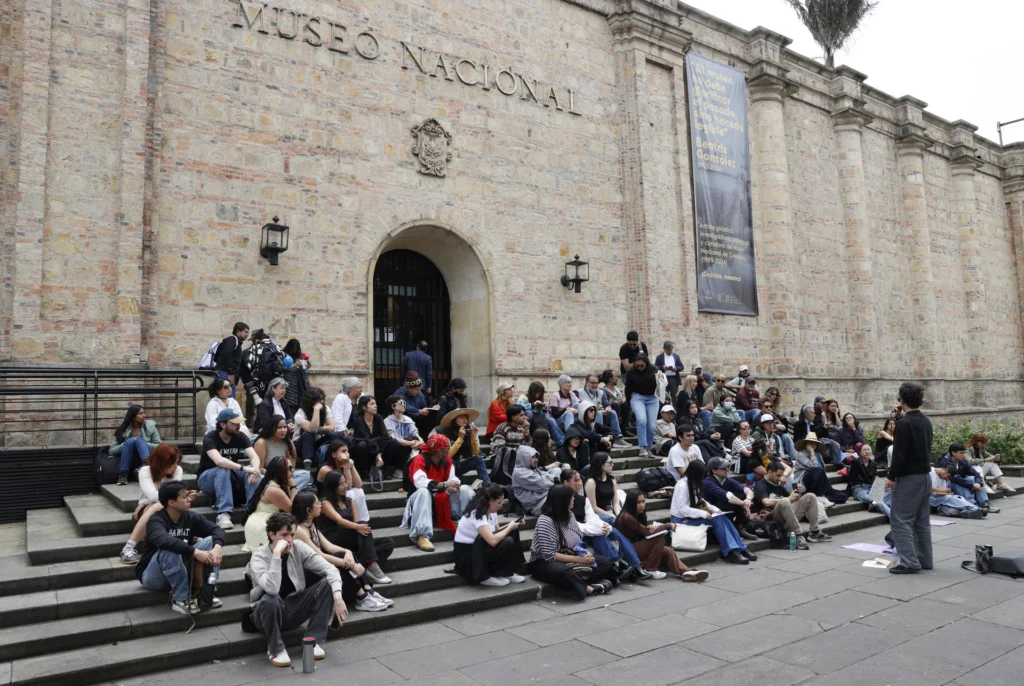
The legal challenge comes as opposition to the removals has spread beyond the courtroom. On Monday, university professors moved their classes to the steps of the National Museum, holding open-air lectures to discuss the government’s decision and what they described as censorship.
Academics from several disciplines used an amplification system to address the public. The sessions took place under the watch of numerous officers from the National Anti-Riot Unit (Unadi), the same force deployed during large demonstrations outside the museum over the weekend.
Text Reads: ABELARDO DE LA ESPRIELLA SEEKS TO ERASE HISTORICAL MEMORY The president has ordered the removal of images and references to Carlos Pizarro Leongómez—former M-19 commander and a key figure in the peace process—from government-controlled public spaces. This decision follows the provisional suspension of the designation of his hat as a piece of cultural heritage, and comes amid a visit to the Ministry of Culture, during which he also lashed out against inclusive language. Arguing that “terrorists” should not occupy public spaces, the government is attempting to dictate which parts of history deserve to be remembered. Memory cannot be erased by decree. History cannot be rewritten from a position of power.
Catalina Muñoz Rojas, an associate professor in the Department of History and Geography at the University of the Andes and an organizer of the classes, said the removed works were part of exhibitions developed over years to reflect the pluralism and diversity enshrined in Colombia’s 1991 Constitution.
She argued that the president’s intervention disrupted democratic, participatory curatorial processes involving communities from across the country. The professors plan to continue their educational activities throughout the week, engaging members of the public and the officers stationed outside the museum. Organizers urged the officers to respect the peaceful, academic nature of the protest.
Ana López, a resident of Colombia who attended the demonstrations, described the government’s decision as arbitrary and authoritarian, warning of the risk of more sweeping censorship aimed at silencing the country’s cultural and social diversity.
The removals have also prompted public criticism from Colombia’s modern art museums and the Colombian committee of the International Council of Museums (ICOM Colombia), alongside protests outside the institution.
The court’s precautionary measures will remain in force while it considers the petition’s merits. The proceedings will address the legal basis for the removals and allegations that the decision violated rights related to historical memory, artistic expression and symbolic reparation.
Havana accuses Washington of using a disputed event at UN headquarters to divert attention from its decades-long economic blockade.
Cuba has accused the United States of staging an unauthorized event at UN headquarters to discredit the island ahead of a General Assembly debate on ending Washington’s decades-long economic blockade.
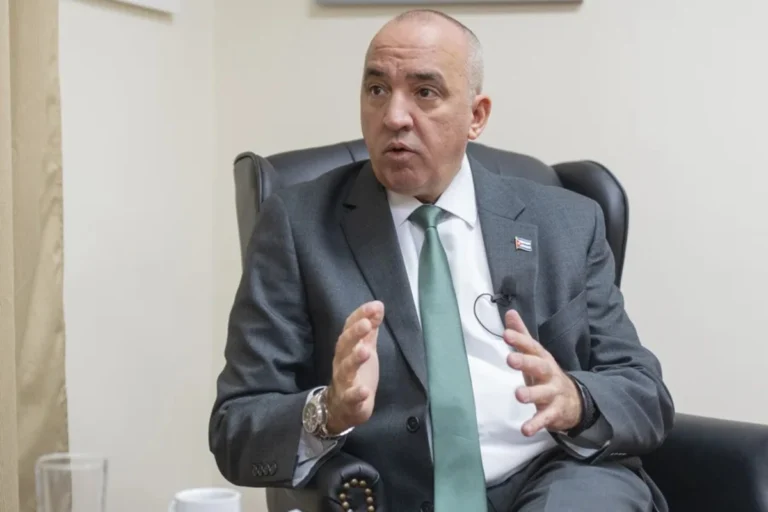
Cuba’s permanent representative to the United Nations, Ernesto Soberón Guzmán, condemned the gathering, organized by the U.S. Mission to the UN, as a clandestine meeting unrelated to the organization’s official agenda. He also criticized the UN Secretariat for failing to stop the event despite repeated warnings from the Cuban delegation.
According to Soberón Guzmán, the U.S. mission selectively invited a small group of member states to promote what he described as false claims about Cuba. He alleged that the panelists were funded by the U.S. State Department and had criminal records or links to organizations responsible for attacks against the Cuban people.
“This charade is an attempt to distract attention from a simple fact: the United States is acting as an international criminal, imposing collective punishment on the Cuban people. It is inflicting immense suffering on the entire population of a peaceful nation,” Soberón Guzmán said.
Text Reads: Statements by Cuba’s Permanent Representative to @UN, @SoberonGuzman, denouncing the provocative and shameful event held by the US mission at the UN. #CubaNoEsUnaAmenaza, the blockade is!
Debate on the blockade
The Cuban protest comes ahead of a formal debate at the UN General Assembly on a resolution calling for an end to the U.S. economic, commercial and financial blockade against Cuba. The assembly is scheduled to consider the issue on October 27 and 28 in an open and inclusive debate, marking the 34th time the body has addressed the resolution.
Soberón Guzmán accused Washington of exploiting human rights concerns to undermine Cuba’s sovereignty and right to self-determination, weaken the Cuban people’s resolve and subvert the country’s constitutional order. He also argued that the U.S.-organized event was intended to divert attention from the consequences of Washington’s policy of maximum economic pressure on the island.
The ambassador expressed confidence that the resolution would again receive broad international support, insisting that Cuba posed no threat to other countries.
“The U.S. government knows very well that the vast majority of countries will once again support our demand, because Cuba is not the threat; the blockade is,” he said.
Soberón Guzmán rejected the prospect that U.S. pressure would force Cuba to abandon its position, saying that efforts to break the determination and unity of the Cuban people would fail.
“If anyone in the U.S. government thinks they will break the determination and unity of the Cuban people, they are wasting their time, their efforts and no small amount of resources. We will never bend the knee. We will not surrender,” he said.

 Login