The European Union has adopted a new Arctic strategy placing security at the centre of its northern policy, reflecting growing concern over Russian military activity, vulnerable submarine infrastructure and competition for control of emerging maritime routes.
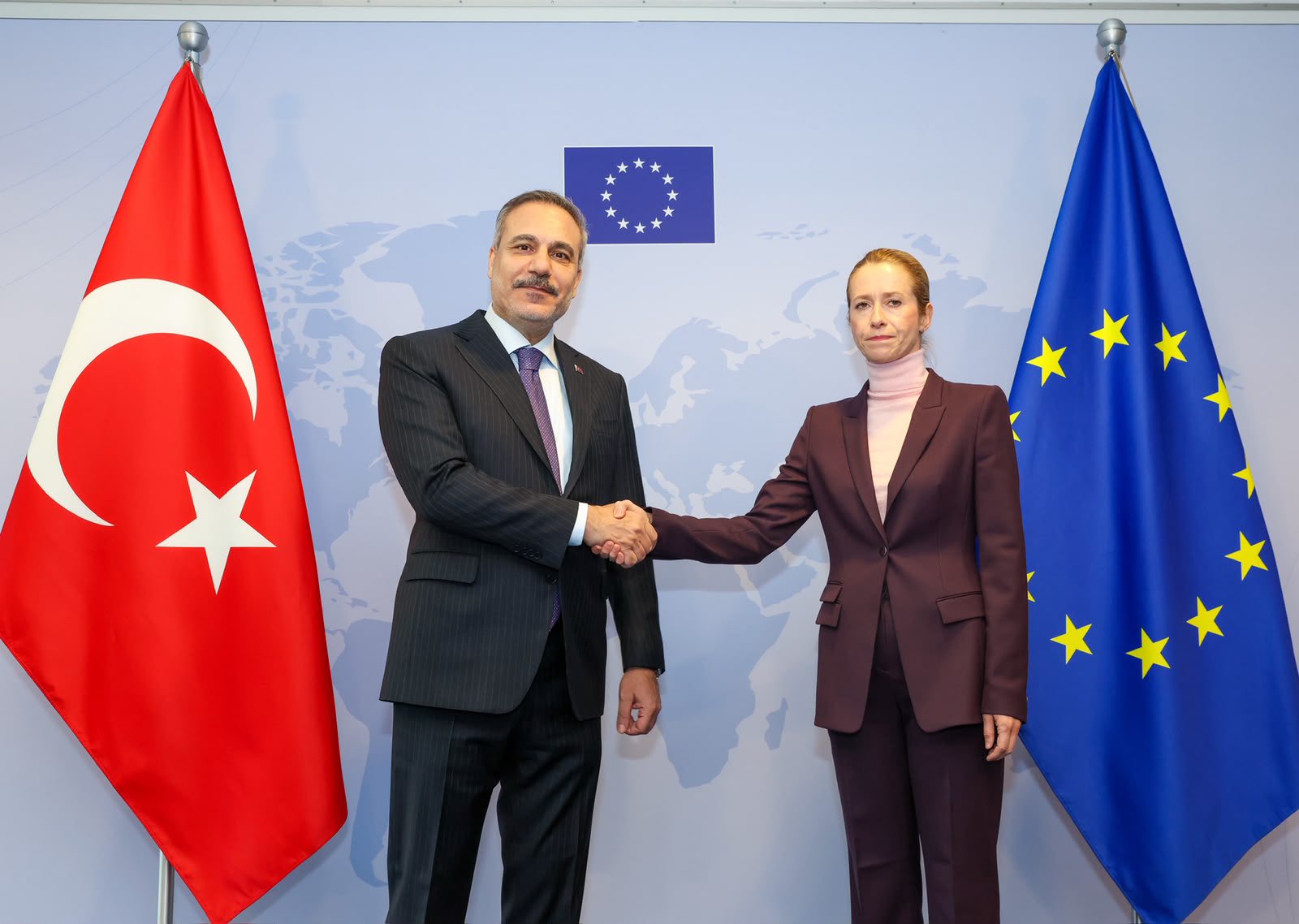
Presented on Tuesday, 20 October, by the European Commission and EU foreign policy chief Kaja Kallas, the strategy proposes a maritime security hub, expanded satellite surveillance, greater icebreaker capacity and improved military mobility across northern Europe.
The document marks a departure from the EU’s 2021 Arctic policy, which placed greater emphasis on climate change, environmental protection and scientific cooperation. The revised framework treats the region as an increasingly important component of European security and economic policy.
Russia’s military presence reshapes European priorities
Russia’s expanding military infrastructure in the High North is a principal concern behind the policy revision.
Moscow has reopened Soviet-era military installations, strengthened its northern forces and maintained substantial nuclear capabilities on the Kola Peninsula. The region contains strategically important naval bases used by Russia’s Northern Fleet, including facilities supporting its submarine-based nuclear deterrent.
Russian operations in the Arctic also have implications for maritime access between the Atlantic and the Barents Sea, an area increasingly important to NATO’s northern defence arrangements.
The EU intends to work more closely with NATO and its northern partners, including Norway, Iceland, Britain, Canada and the United States, while developing capabilities that complement existing military structures.
Kallas said the Arctic’s security environment had deteriorated significantly since 2021, with geopolitical competition increasingly affecting a region previously associated principally with environmental and economic cooperation.
The EU’s revised priorities reflect concerns extending beyond conventional military deployments, particularly the exposure of undersea communications networks and energy infrastructure to sabotage and disruption.
New maritime security hub and submarine cable protection
A central proposal involves establishing an EU Maritime Security Hub to improve information-sharing between member states and partner countries operating in Arctic waters.
The system would strengthen monitoring of maritime movements and support the identification of suspicious activity near critical infrastructure.
Brussels also proposes an Arctic Cable Hub, initially concentrating on the protection, monitoring and repair of submarine communications cables across the North Atlantic and Arctic.
Such infrastructure carries international data traffic and supports communications between Europe, Greenland and North America. Damage to cables could interrupt telecommunications, financial services and government networks.
The Commission’s new Arctic policy framework also supports the proposed Pan-Arctic Cable connecting Greenland directly with Europe, together with secure satellite communications through the EU’s IRIS² programme.
Further measures envisage expanded use of Copernicus satellite surveillance, improved maritime intelligence and closer monitoring of vessels associated with Russia’s shadow fleet.
These measures form part of a broader attempt to improve European surveillance capabilities without relying exclusively on military assets provided by individual NATO members.
Icebreakers, transport corridors and military mobility
The strategy also addresses Europe’s limited capacity to operate in extreme northern conditions.
The Commission wants to support additional icebreaker capabilities, which are essential for maintaining access to Arctic waters, conducting emergency operations and supporting scientific and logistical activity.
Russian icebreaker capabilities remain considerably more extensive than those available to most European countries, providing Moscow with operational advantages along the Northern Sea Route.
European investment would also support ports, railways, energy terminals and digital infrastructure capable of serving both civilian and security requirements.
The emphasis on dual-use infrastructure reflects the growing importance of military mobility across northern Europe, particularly following Finland’s and Sweden’s accession to NATO.
Improved transport links could facilitate the movement of equipment and personnel while also supporting economic development in sparsely populated northern regions.
However, the Commission has not provided a comprehensive financial allocation for the proposed security measures, leaving important questions about funding, procurement and implementation.
Brussels retreats from Arctic drilling ban proposal
The revised strategy also introduces a significant change in the EU’s position on Arctic fossil fuel development.
In 2021, Brussels proposed pursuing an international legal commitment to prohibit further oil, gas and coal extraction in the Arctic.
The new strategy maintains the EU’s opposition to environmentally damaging fossil fuel development but no longer includes the explicit ambition to secure a multilateral legal prohibition.
The adjustment follows sustained disagreement with energy-producing countries and recognition that an international agreement would be difficult to achieve under current geopolitical conditions.
Norway has argued that continued exploration in parts of the Barents Sea remains important for European energy security, particularly as production from mature Norwegian fields is expected to decline.
EU Today previously reported on Brussels’ opposition to Norwegian Arctic drilling plans and the disagreements between environmental objectives and Europe’s long-term energy requirements.
The latest strategy does not represent an endorsement of new Arctic drilling. It does, however, acknowledge the limitations of the EU’s previous diplomatic approach.
Greenland and the northern economy
Greenland occupies a prominent position in the revised strategy because of its location, mineral resources and importance to transatlantic communications.
The Commission wants to expand cooperation on digital connectivity, critical raw materials, research and infrastructure investment, while recognising the responsibilities of Greenland’s own institutions and the Kingdom of Denmark.
Brussels also intends to strengthen scientific cooperation and support Arctic communities adapting to rapid environmental change.
The Arctic is warming nearly four times faster than the global average, creating new commercial opportunities while imposing substantial costs on local populations and infrastructure.
The EU’s proposals therefore combine security measures with investment in transport networks, research facilities and economic diversification.
For Brussels, implementation will require agreement between member states with different geographical interests, defence capabilities and budgetary priorities. Cooperation with NATO will also require careful coordination to avoid duplicating existing military arrangements.
The Commission has established a significantly broader Arctic agenda than the one adopted five years ago. Its practical impact will depend on whether member states finance the surveillance systems, vessels and infrastructure that the new strategy envisages.

 Login