
❌

Reading view

Milan apoia boicote de torcedores contra a Udinese por ingressos caros

O Milan declarou apoio aos torcedores que planejam boicotar a partida contra a Udinese, neste domingo (25), pelo Campeonato Italiano. O protesto é motivado pelo alto preço dos ingressos destinados aos visitantes, que custam 65 euros (cerca de R$ 400).

Em comunicado, o clube afirmou que os valores excessivos podem ampliar as divisões entre as equipes e prejudicar os esforços para fortalecer a imagem do futebol italiano.

“A projeção internacional do futebol italiano depende muito da lealdade e da paixão dos torcedores de clubes como o Milan”, declarou o clube.

“Cobrar preços excessivos desses mesmos torcedores em jogos fora de casa não é apenas injusto, mas também prejudica a união da liga, em um momento em que o futebol italiano precisa se unir para competir com a Premier League e outras ligas europeias.”

Milan propõe limite para ingressos de visitantes

O Milan também pediu à Serie A, a liga que organiza a primeira divisão italiana, que considere estabelecer um teto para os preços dos ingressos destinados aos torcedores visitantes em todas as partidas do campeonato.

Como exemplo, o clube citou a Premier League, da Inglaterra, que estabelece um limite de 30 libras (cerca de R$ 200) para ingressos de visitantes.

Além disso, o Milan advertiu que poderá adotar uma política de reciprocidade. Pela proposta, torcedores de clubes que cobrarem valores acima da média dos milanistas em jogos fora de casa poderão pagar mais caro para acompanhar suas equipes no San Siro, estádio do clube, respeitando os regulamentos da liga.

Segundo o Milan, a receita adicional seria destinada à Fondazione Milan, instituição ligada ao clube que desenvolve iniciativas sociais e beneficentes.

“O futebol italiano não pode se tornar mais forte tratando os torcedores de maneira diferente de acordo com o tamanho de seus clubes”, acrescentou a equipe.

Preço dos ingressos é alvo de protestos da torcida

A insatisfação com os preços dos ingressos não é recente entre os torcedores do Milan. O grupo organizado Curva Sud já havia boicotado uma partida fora de casa contra a Juventus, em 2023, em protesto contra os valores cobrados.

Na temporada passada, o grupo voltou a criticar os preços praticados nos confrontos contra a Juventus e também acusou o Torino de cobrar valores excessivos dos torcedores visitantes.

O debate sobre o custo dos ingressos ganhou força com a cobrança por medidas que tornem as partidas mais acessíveis aos torcedores e preservem a participação das torcidas nos estádios.

Juventus e Milan ficam fora da Champions League após quase 35 anos
 

  •  

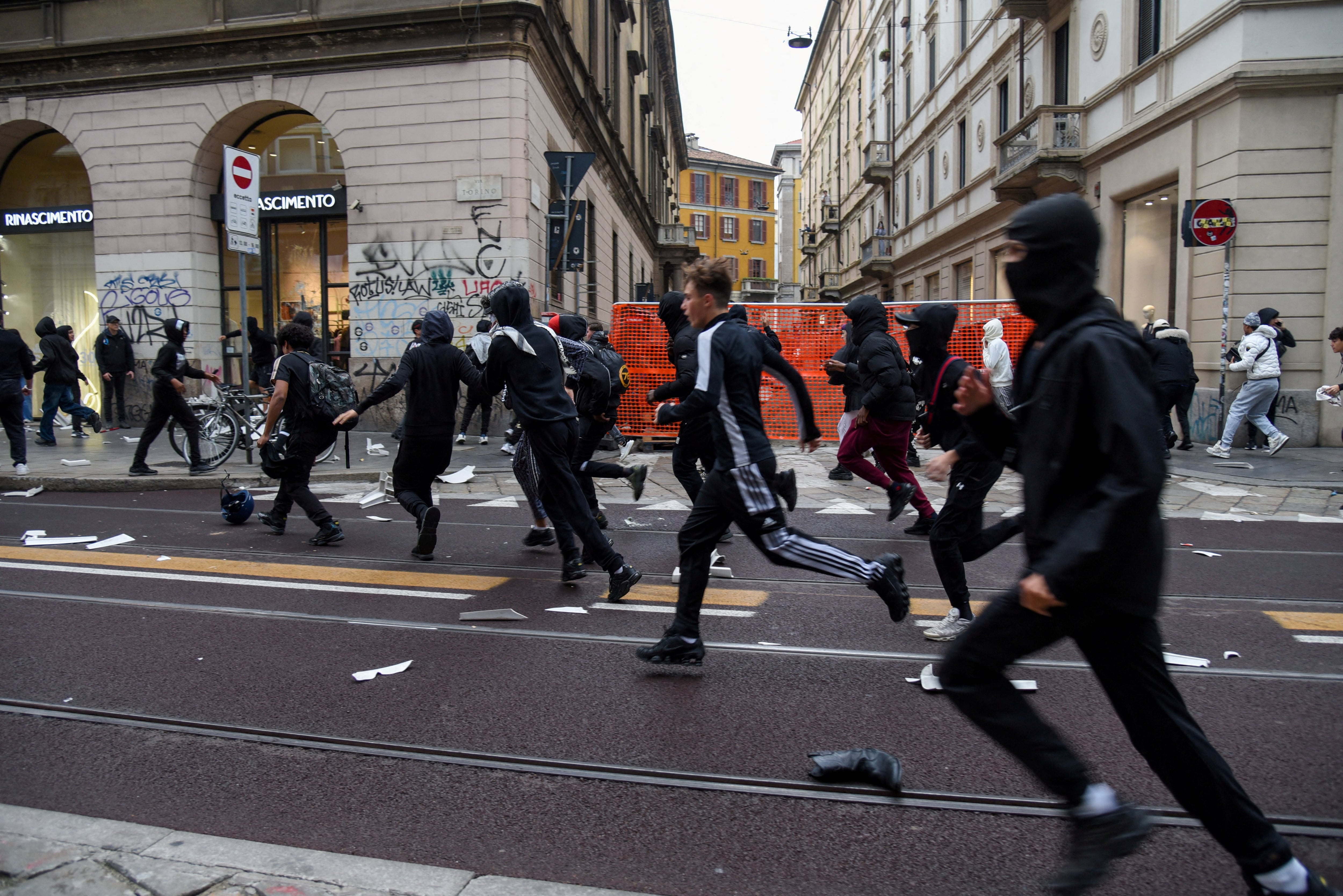
Italia sospecha que el caos de Milán no fue espontáneo y cree que un actor extranjero pudo agitar a los jóvenes

La primera reacción del Gobierno italiano de Giorgia Meloni a los incidentes de Milán del fin de semana ha sido, como en muchos otros momentos de crisis y más aún cuando hay elecciones a la vista, aprobar un decreto con nuevos delitos que endurecen las medidas de seguridad. Ya van ocho decretos en cuatro años, más otras normas y proyectos de ley. Además, ha habido críticas a la escasa presencia policial, pues un gran despliegue no se hizo hasta el lunes. Pero al margen de que las protestas surgen de un claro descontento social, los servicios de inteligencia italianos van más allá: el análisis de las redes sociales de esos días indica que no todo fue tan espontáneo en la movilización de unos 2.000 chavales, sin ninguna organización ni reivindicación, que súbitamente se dirigieron al centro de Milán y rompieron escaparates para robar zapatillas y ropa de marca. “Es el punto culminante de una guerra híbrida”, ha dicho sin rodeos el ministro de Defensa, Guido Crosetto, que desde hace años alerta sobre el problema.

Seguir leyendo

© Stringer (REUTERS)

Varios jóvenes corren por el centro de Milán en los incidentes del pasado domingo.
  •  

Meloni Toughens Italy’s Riot Laws After Milan Violence

Italy’s response to a weekend of street violence has moved from emergency policing to tougher criminal law, with Prime Minister Giorgia Meloni seeking to reassert control after unrest in Milan and other northern cities

The government approved measures on Tuesday creating an offence of violent participation in demonstrations, extending preventive detention powers to teenagers aged 14–17 and making parents financially liable for damage caused by their children. The package also provides for 500 soldiers to support security operations in Milan through December.

The crackdown presents a defining challenge for a prime minister whose political identity rests heavily on law and order: demonstrating that stronger powers can prevent another eruption while addressing the conditions feeding public anger.

Milan’s damaged shopping streets have become the most visible symbol of that challenge. Weekend violence brought looting, fires and confrontations with police, exposing businesses and residents to disorder in Italy’s financial capital.

As EU Today reported in its earlier coverage of the unrest, police brought 271 people to headquarters following Sunday’s disturbances, including 220 minors. Thirty-two were formally arrested, a detail that matters when assessing the scale of alleged criminal involvement.

The prominence of teenagers has shaped the government’s response. According to the Associated Press, the decree makes prosecuting minors over 14 easier and includes plans to expand juvenile detention capacity and judicial resources. Parliament must convert the decree into law within 60 days.

For supporters, the argument is straightforward: shopkeepers should not have to absorb the cost of destruction, and officers need effective tools against groups exploiting demonstrations to commit offences.

Yet preventive detention raises a different question from punishment after conviction. Its credibility depends on clear evidence, consistent safeguards and meaningful scrutiny, particularly when those affected are children.

Making the distinction will help determine whether the package strengthens public confidence or deepens distrust among young people already alienated from political institutions.

The wider European debate offers a warning. In its earlier editorial, EU Global examined the tension between public-order legislation and the right to protest, arguing that governments risk restricting legitimate dissent when security powers expand too broadly. That commentary predates the Milan disturbances but addresses the central democratic question now confronting Italy.

Peaceful assembly and criminal violence require different responses. Protecting the former gives authorities greater legitimacy when confronting the latter; treating an entire demonstration as suspect risks weakening that distinction.

Meloni also faces a political vulnerability that additional arrests cannot automatically resolve. The Financial Times reported that the unrest involved teenagers mobilised through social media, many without political affiliations, against a background of economic stagnation and expensive living conditions.

Those circumstances complicate any attempt to explain the disorder through a single organisation, ideology or grievance. Online mobilisation can accelerate confrontation without producing leaders capable of negotiating an end to it.

For the government, this makes prevention as important as punishment. Better intelligence, timely deployment and coordination between national and municipal authorities will influence whether stronger legislation produces safer streets.

The same applies to the military presence. Soldiers can provide visible reassurance, but the political test will be whether residents and businesses experience sustained security once the immediate emergency passes.

Italy faces two connected tasks.

Establishing individual responsibility for destruction and restoring confidence that lawful political participation can deliver results will be the priorities if public respect for the law is to be maintained.

Meloni’s new measures offer a forceful immediate answer to the first. Their lasting success will depend on whether the government can make progress on the second, before another weekend of anger becomes another emergency requiring still tougher powers.

  •  
❌