❌

Reading view

Palestinian president Abbas due in Cyprus on October 29

Palestinian president Mahmoud Abbas is expected to visit Cyprus on October 29, barring unforeseen circumstances.

Talks are expected to cover bilateral relations, the humanitarian situation in Gaza, and developments in the West Bank and East Jerusalem.

The visit was first reported by the Palestinian ambassador to Cyprus, Abdallah Attari, in an interview with Phileleftheros.

The trip comes as the government faces criticism over its increasing support for Israeli interests in Cyprus.

Akel has attacked the creation of a Cyprus chapter of the Israel Allies Foundation by six MPs from Disy, Diko and Elam, which the party has said undermines the credibility of Cyprus in its efforts to press Turkey internationally on its ongoing occupation.

Cyprus and the Palestinians drew close in the 1960s and 1970s, when Archbishop Makarios steered the island away from its expected trajectory towards NATO and instead into the Non-Aligned Movement alongside Egypt and the Palestine Liberation Organisation.

In September 1985 three gunmen from the PLO unit Force 17 killed an Israeli couple, Reuven and Esther Paltsur, and their friend Avraham Avneri aboard a yacht in Larnaca marina.

President Spyros Kyprianou condemned the killings and urged both sides to keep their conflict off Cyprus.

Cyprus rejected an Israeli extradition request and tried the three men itself, and Israel bombed the PLO headquarters in Tunis days later.

In February 1988 the PLO bought the Cypriot ferry Sol Phryne at auction in Limassol, renamed it Al Awda, “the Return”, and planned to carry 135 Palestinian deportees to Haifa.

Three PLO officials were killed by a car bomb in Limassol that weekend, and a limpet mine crippled the ship within days.

Cyprus recognised the State of Palestine immediately after its declaration in 1988.

A Cypriot representative office opened in Ramallah in 2009, and after the UN General Assembly vote of 2012, was upgraded to a full embassy, among the first in the EU to do so.

When Abbas visited in June 2022, then President Nicos Anastasiades pledged that close ties with Israel “would not be to the detriment of the legitimate rights of the Palestinians”.

President Nikos Christodoulides visited Ramallah in 2023 and laid a wreath at Yasser Arafat’s tomb, and in March 2024 the first aid ship for Gaza left a Cypriot port.

Israel once declared Androulla Vassiliou, wife of former president George Vassiliou, persona non grata after a delegation she led tried to meet Arafat, who was confined to his compound in Ramallah.

Abbas, has led the Palestinian Authority since 2005, with his Fatah-dominated authority governing parts of the West Bank, while Hamas ran the Gaza strip.

Many Palestinians regard the authority as corrupt and criticise its security cooperation with Israel.

  •  

‘Palestine is about land’: Tanzania’s peasant farmers stand with Gaza and Havana

On the opening day of its National Smallholder Farmers’ Conference and 31st Annual General Meeting (AGM), held from September 29 to October 1, MVIWATA, Tanzania’s national network of smallholder farmers’ groups, set aside time during a program on land, seed, and markets to state solidarity with the peoples of Palestine and Cuba, with the ambassadors of both countries present in the hall.

“We, the members of MVIWATA, who have convened in Morogoro for our 31st Annual General Meeting, wish to give a brief statement in support of the people of Palestine and the Cuban people,” read Theodora Pius, MVIWATA’s head of program, opening the statement. The organization said it was “extremely angered by the ongoing genocide of the Palestinian people” and “frustrated to see an open silence on war crimes that happen every day against the people of Palestine by the State of Israel and its allies.” It said its solidarity was with all of Palestine, “not only in the Gaza Strip.”

The statement then turned to Cuba, denouncing more than 60 years of US-imposed blockade, it said, imposed because Cubans exercised their freedom to choose their own political system, and went on to articulate what the blockade now means: “no electricity, no fuel, no medicines, no food.” Despite this, the statement said that the Cuban people have continued to send their expertise (doctors above all) to support life in other countries.

The Cuban Ambassador, Yordenis Despaigne Vera, addresses delegates attending the National Smallholder Farmers’ Conference and the 31st Annual General Meeting of MVIWATA.

The Cuban Ambassador, Yordenis Despaigne Vera, thanked the smallholder farmers and described the current stage of the blockade as an energy war. United Nations agencies reinforce this characterization. By May, the Cuban people were living with daily blackouts of up to twenty hours, and more than 100,000 patients, including 11,000 children, were waiting for operations delayed by power cuts and shortages. Cuba’s own health ministry recorded infant mortality rising from 7.1 to 9.9 deaths per thousand live births between 2024 and 2025. The ambassador called the United States program “a silent genocide” and said Tanzania’s government and people had stood with Cuba throughout. A week earlier, at the UN General Assembly, Tanzania’s Vice-President had reaffirmed the country’s “unwavering solidarity with Cuba” against unilateral sanctions. Last October, the Assembly voted 165 to 7, with 12 abstentions, to demand an end to the blockade; Tanzania voted in favor.

The Palestinian ambassador, Salam Abu Sharar, addressed the room of farmers. Land, he said, is close to the hearts of the Palestinian people and of MVIWATA alike, and the question of Palestine “is not about religion; it is about land.” In a hall where the first working session opened with the words “land is life, land is not a commodity,” he spoke the delegates’ own language: the struggle of Tanzania’s peasants and the national liberation of Palestine are one struggle.

The Palestinian ambassador to Tanzania, Salam Abu Sharar with MVIWATA Chairperson Apollo Chamwela. Photo: MVIWATA

MVIWATA has been here before. Its AGM in Njombe in December 2023 condemned Israel’s genocide in Palestine. In July 2025, it hosted the youth of La Via Campesina in Morogoro, whose declaration ended with “Free Palestine!” Within days of that meeting’s close, Israeli forces bulldozed the seed multiplication unit of the Union of Agricultural Work Committees, the Palestinian farmers’ organization in Hebron, destroying more than seventy local varieties. The same year, MVIWATA and the International Association for Popular Cooperation ran an Africa Bioinputs School in Tanzania, with participants from thirteen countries, including Palestine, learning how farmers make their own fertilizers and pest controls.

On the conference’s final day, the Tanzanian farmers resolved to build their own bank of indigenous seed. In Hebron and in Morogoro, the seed is where the struggle over who feeds whom begins. MVIWATA Chairperson Apollo Chamwela told the ambassadors that the organization stood ready to do for Cuba what it had tried to do for Palestine: collect food if mechanisms for transporting it can be arranged.

MVIWATA is a membership organization of smallholder farmers, founded in 1993 and organized across mainland Tanzania and Zanzibar. It was a meeting with a government minister as its guest of honor. Its statement on Palestine and Cuba came in the same breath as its demands for land, seed, and dignified prices for its members’ produce at home. For these farmers, sovereignty over food and sovereignty over territory are one question, whether the territory is a village in Kilosa or a hillside in Hebron.

The hall closed the statement with a call and response. “Long live Palestine! Long live!” “Viva Fidel! Viva!” “Viva the resistance of the people of Palestine! Viva!”

Photo: MVIWATA

Jonis Ghedi-Alasow is the Coordinator of the Pan Africanism Today Secretariat. 

  •  

Heidi Levine recounts how Palestinian youths helped save her in settler attack

US photojournalist describes ‘protective shield’, vows to return to work in West Bank and criticises Netanyahu comments on incident

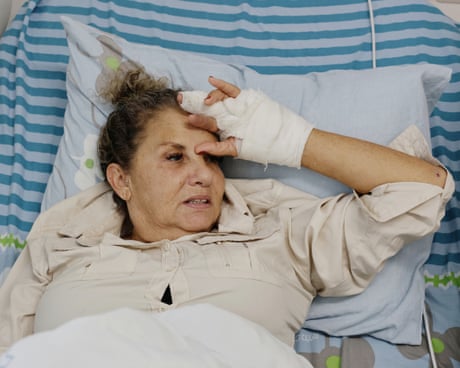
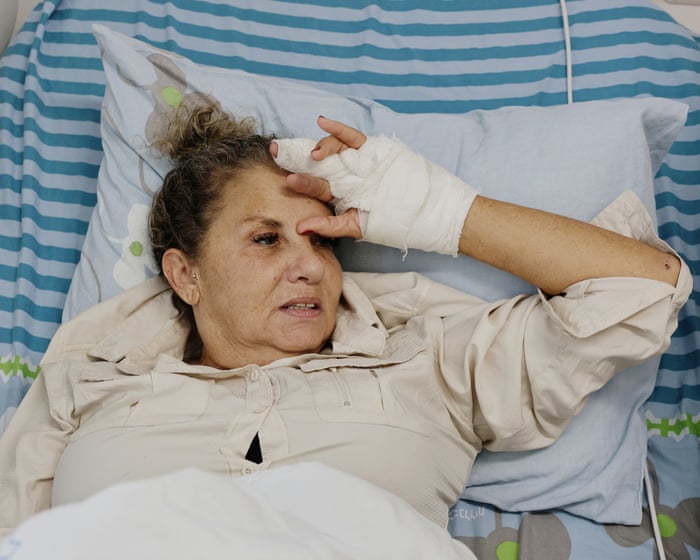
The Washington Post photojournalist who was attacked and seriously injured by Israeli settlers in the West Bank on Friday has described how she was saved with the help of local Palestinians.

Heidi Levine sustained four fractured vertebrae, two broken ribs and four puncture wounds when she was knocked to the ground and repeatedly beaten by a crowd of masked settlers while she and other journalists were covering the olive harvest in the Palestinian village of Abu Falah, north of Ramallah.

Continue reading...

© Photograph: Quique Kierszenbaum/The Guardian

© Photograph: Quique Kierszenbaum/The Guardian

© Photograph: Quique Kierszenbaum/The Guardian

  •  

‘Palestinians face far worse consequences every day,’ says Brad Lander after release from IDF custody

Israeli forces prevent Palestinian farmers from accessing their agricultural lands to harvest olives in the town of Deir Jarir, near Ramallah in the West Bank, Palestine, on October 21, 2026. Photo by Issam Rimawi/Anadolu via Getty Images
Common Dreams Logo

This story originally appeared in Common Dreams on Oct. 21, 2026. It is shared here under a Creative Commons (CC BY-NC-ND 3.0) license.

Democratic US congressional candidate Brad Lander said Wednesday that he was released by Israeli forces with a “warning” after he and dozens of others were detained while helping Palestinians harvest olives in the illegally occupied West Bank.

“Several dozen rabbis and participants harvesting olives with me are still in detention,” Lander, who is Jewish, wrote on social media. “They should all be released immediately. To be clear: Palestinians face far worse consequences every day. These detentions by the IDF are one more attempt to undermine Palestinians’ right to harvest their olive groves, travel on their roads, and live in their homes.”

Prior to his release, Lander posted a video from a bus that he said was “taking us away for processing” after settler security called the Israel Defense Forces (IDF) on the group harvesting olives.

“Let’s be clear: Occupation is a crime under international law,” said Lander, who is running to represent New York’s 10th Congressional District in the US House of Representatives. “Harvesting olives is not a crime under any law.”

I’ve been released from IDF custody with a “warning,” apparently because of my public profile (I told them I wasn’t even a congressmember yet, just a nominee).But several dozen rabbis & participants harvesting olives with me are still in detention.

— Brad Lander (@bradlander.bsky.social) 2026-10-21T13:34:39.826Z

Lander was part of a group of around 80 American and Israeli rabbis and activists who were detained by the IDF on Wednesday as they helped Palestinians harvest olives from a grove near an Israeli settlement in the West Bank. Israeli lawyers told NPR that the incident marked “the largest mass detention of activists in the occupied West Bank in at least a decade.”

Jeremy Ben-Ami, president of the US-based advocacy group J Street, said in response to the detentions that “when the government of Israel and its military and law enforcement are arresting rabbis and volunteers who have journeyed 6000 miles to protect Palestinian farmers harvesting olives and not the violent terrorists harassing and attacking the farmers—it tells you all you need to know about this government’s moral compass.”

“This illegal and immoral occupation must end,” he added.

The mass detention came after several recent instances of horrific Israeli settler violence against Palestinian olive harvesters, European diplomats, and an American journalist.

Heba Morayef, Amnesty International’s regional director for the Middle East and North Africa, said in a statement earlier this week that “Israel’s apartheid system is turning the olive harvest into a season of horror for Palestinian families across the occupied West Bank.”

“States must recognize that settler attacks are not isolated acts, but a central policy of the Israeli state,” said Morayef, calling on nations to “take concrete measures to respect their obligations under international law and to avoid complicity in Israeli violations and crimes against Palestinians by halting all trade, investment, and cooperation that contribute to maintaining the unlawful occupation, apartheid, and the ongoing campaign of ethnic cleansing.”

“Hiding behind empty rhetoric is not only cowardly, it is enabling further abuses,” she added. “For Palestinians, it continues to be deadly.”

  •  

Israeli military detain US and UK volunteers in West Bank including Democratic NY politician Brad Lander

About 80 US, Israeli and British volunteers held near Nahalin in West Bank and taken to police station

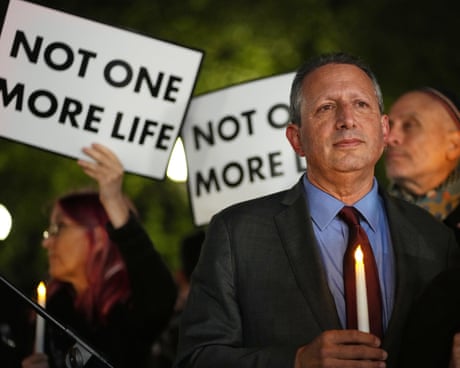
The Israeli military has detained about 80 US, Israeli and British volunteers helping Palestinians harvest olives near Bethlehem, including the New York Democratic congressional nominee Brad Lander, several rabbis and Israel’s former deputy attorney general.

“I’ve been detained by the IDF, along with a group of rabbis and volunteers,” Lander posted from a bus taking him to a police station. “We were simply harvesting olives in a grove near Nahalin in the West Bank. The occupation is a crime under international law. Harvesting olives isn’t a crime under any law I know.”

Continue reading...

© Photograph: Frank Franklin II/AP

© Photograph: Frank Franklin II/AP

© Photograph: Frank Franklin II/AP

  •  

Teachers May be Banned by Schools From Wearing Politically-Contentious Badges

Teachers face being banned from wearing politically-contentious insignia – such as pro-Palestinian badges – following a review of antisemitism in schools that found 60% of Jewish pupils reported suffering abuse.

The post Teachers May be Banned by Schools From Wearing Politically-Contentious Badges appeared first on The Daily Sceptic.

  •  

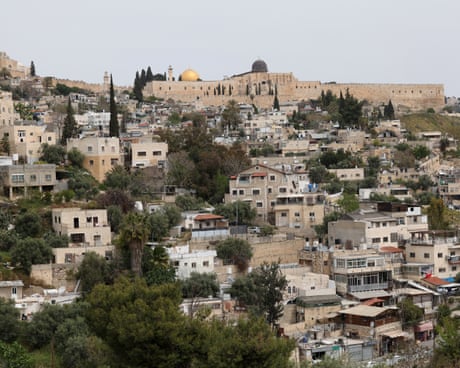
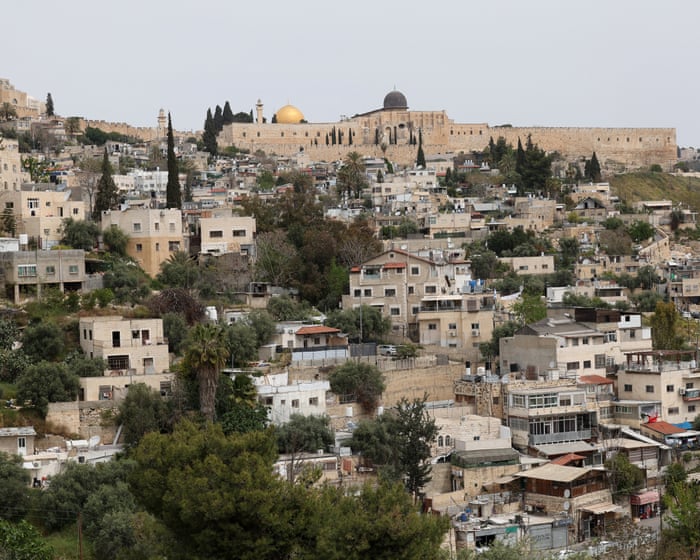
Fifth foreign firm pulls out of controversial Israeli cable car project to East Jerusalem

Rights groups say the planned 1.4km route, which ends at compound run by far-right settler group Elad, will displace Palestinians and reshape the cultural landscape

A fifth foreign company has pulled out of a plan to build a cable car from West to East Jerusalem that threatens to involve the seizure of land and property rights from dozens of Palestinian families along its route, but local authorities insist the scheme is proceeding as planned.

The project appeared to have stalled for four years until late September, just weeks before Israel’s 27 October elections, when the Jerusalem Development Authority (JDA) issued a notice of intent to award a contract without a public tender to ROPES, a cable car engineering consultancy based in South Tyrol, Italy.

Continue reading...

© Photograph: Ahmad Gharabli/AFP/Getty Images

© Photograph: Ahmad Gharabli/AFP/Getty Images

© Photograph: Ahmad Gharabli/AFP/Getty Images

  •  

Jerusalem Church Leaders Strongly Condemn Jewish Settler Attack on Christian West Bank Village

Christian leaders in Jerusalem have released a statement strongly condemning an attack by Jewish settlers against the Christian village of Taybeh and visiting European diplomats in the Israeli-occupied West Bank, and the “terror” that Palestinians are facing from settlers across the territory. The attack near Taybeh targeted Palestinians, Belgian, French, and Polish diplomats, as well […]
  •  
❌