❌

Reading view

Luisa Gonzalez Denounces Political Persecution After Detention in Ecuador
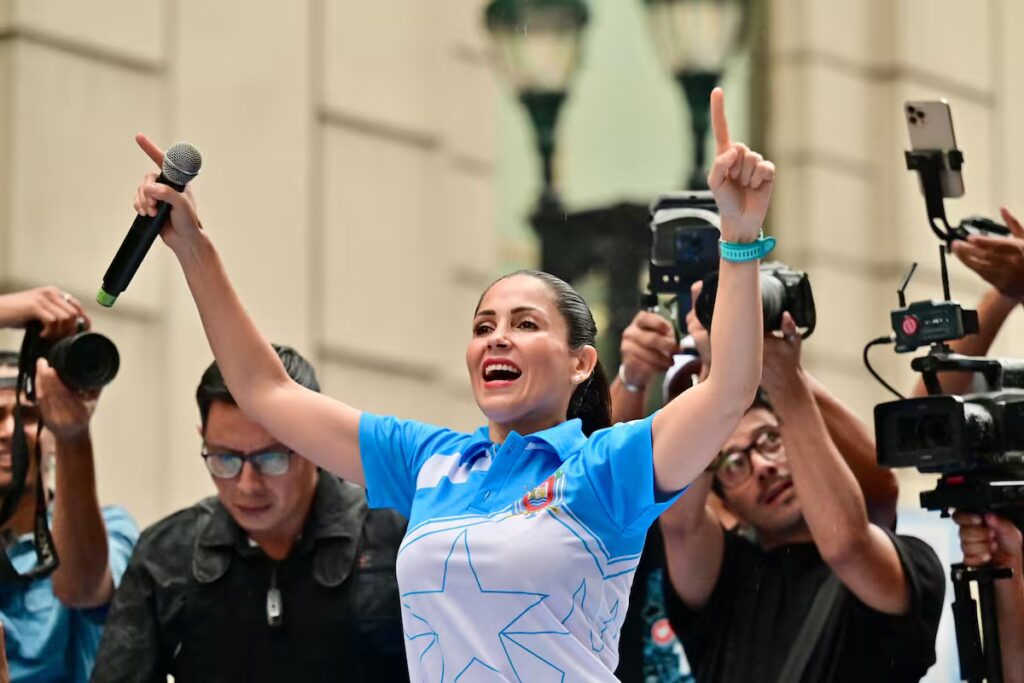
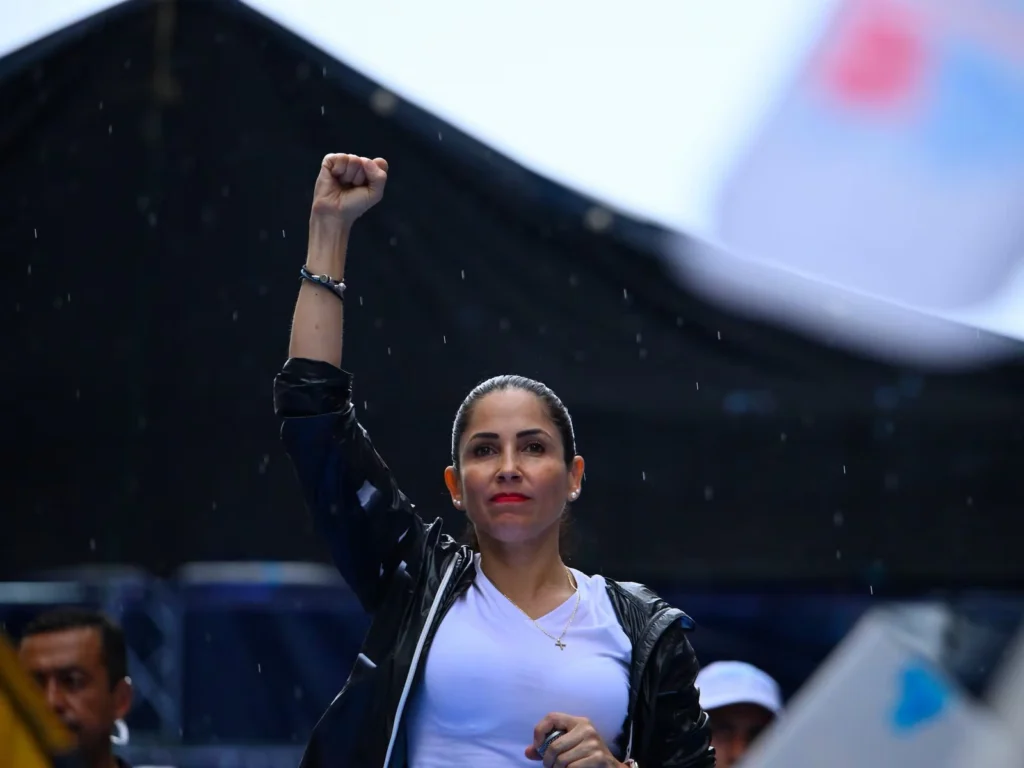
(FILE) The ex-presidential candidate appreciated the support of communities throughout the national territory and ratified the determination of the people to overcome the censorship of Noboa's government. Photo: AFP.

Former presidential candidate Luisa González denounced political persecution Thursday after security forces detained her in a predawn raid in Ecuador’s Manabí province, accusing the government of President Daniel Noboa of an authoritarian drift.


In her first written message since the arrest, Luisa González rejected the accusations against her and described the country’s institutional situation as “unsustainable.”

“Today it is my turn to be detained over an absurd accusation,” she wrote on X. “I will respond with the dignity of the Ecuadorian men and women who owe nothing and who are committed to achieving freedom for Ecuador and a better future for the country,” she added.

RELATED: Former Ecuadorian President Correa Denounces the Arrest of Luisa Gonzalez

The leading figure of the Citizen’s Revolution movement also warned of mistreatment and torture inflicted on political prisoners held by the current far-right government of Daniel Noboa.

Faced with what she called a repressive escalation and a socioeconomic decline marked by violence and state corruption, González issued a call for unity to social organizations and leftist movements. “To my partners of the Citizen’s Revolution and all progressive forces, I say: it is time for unity, unity and unity to achieve freedom and democracy in the country,” she said.

A mi patria querida 💛💙❤️ pic.twitter.com/fJrIXAvG0B

— Luisa González (@LuisaGonzalezEc) October 22, 2026

She thanked communities across the country for their support and insisted that the people remain determined to overcome government censorship. González closed her statement by asserting that popular silence would eventually break the authoritarian siege and restore sovereignty and full democracy to Ecuador.

A Judicial Crackdown

Luisa González was detained in the early hours of Thursday in the Canuto parish of Chone canton, Manabí province. National Police officers and state prosecutors carried out the operation under the name “Labyrinth case,” an inquiry authorities describe as targeting alleged electoral financing during the 2023 campaign.

The police deployment included simultaneous raids in Manabí and Pichincha provinces and ended with three people detained for the purpose of formal charges.

After the procedure, relatives and allies of González denounced uncertainty over her whereabouts. Officials have not clarified whether she remains in Manabí or is being transferred to Quito for a court hearing, a situation her supporters describe as a grave violation of due process guarantees.

The arrest is part of a broader judicial offensive against the Citizen’s Revolution movement, which is currently suspended for nine months following rulings by the Electoral Contentious Tribunal that critics say were designed to block its participation in sectional elections.

That institutional push previously prevented González from registering as a candidate for the Manabí prefecture. Quito mayor Pabel Muñoz, meanwhile, faced raids on his offices in the middle of his reelection campaign.

Ecuadorian Former President Rafael Correa denounced the detention of González in a separate statement, adding his voice to the growing criticism of the operation. The predawn arrest now places one of the government’s most prominent opponents at the center of a legal battle that her movement frames as political persecution rather than a legitimate investigation.
  •  

Venezuela Reaffirms Sovereign Control of Oil Revenue as Deals Advance

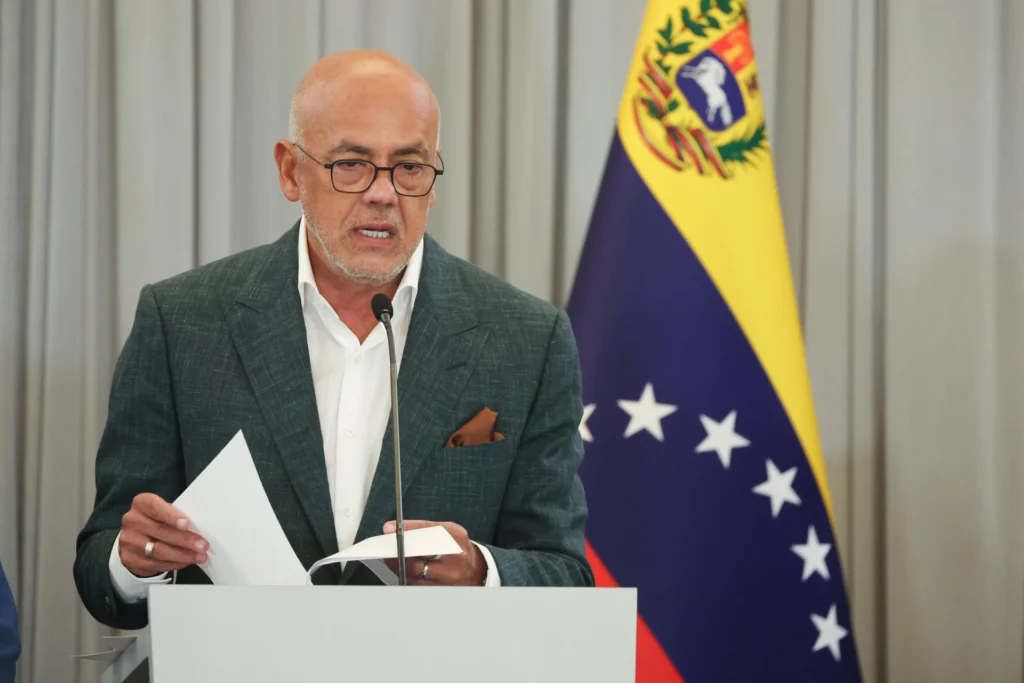
The president of the Venezuelan National Assembly has ratified that the country autonomously manages the resources captured through energy exports. Photo: EFE.

Venezuela’s National Assembly President reaffirmed sovereign control over the country’s oil revenues and reported 71 active energy agreements alongside 44 contracts under negotiation, framing the figures as evidence of a sector revival after years of financial restrictions.


The statements came amid what officials called a strategic reconfiguration of the Venezuelan hydrocarbon industry. After years of intense global financial restrictions, the gradual operational reactivation of agreements between state-owned oil company Petroleos de Venezuela (PDVSA) and international firms aims to restore a steady flow of foreign currency into the national treasury.

“No foreign agency or international financial entity administers or safeguards the public funds that enter the country from hydrocarbon sales,” National Assembly President Jorge Rodriguez said.

RELATED: Venezuela’s Acting President Reviews Wage Consensus With Business, Unions

Rodríguez detailed that the money enters the public treasury under the supervision of authorized national banks, and he ruled out any external trust or any management of accounts by third parties outside the country’s institutions. In this sense, he called autonomy over foreign currency “a non-negotiable principle” for the country’s macroeconomic stability.

71 agreements are currently in force, while another 44 contracts are being negotiated. For the government, that volume confirms an operational momentum geared toward diversifying investment across the country’s main extraction fields.

The National Assembly President presented this dynamism as the result of a deliberate push to reopen the sector to international capital without surrendering control. Over the past several years, sweeping financial measures limited Venezuela’s ability to sell crude, collect payments and maintain production infrastructure. The current wave of deals represents a step-by-step return to commercial activity.

#EnVideo📹 | Coordinador del diálogo por el Gobierno Nacional, Jorge Rodríguez, aseveró que Venezuela mantiene el control sobre los recursos financieros obtenidos a través de la comercialización de petróleo hacia distintos países del mundo. pic.twitter.com/MUoEuwKXQI

— Ministerio de Comunicación e Información (@mippci_ven) October 22, 2026

Text reads: “Coordinator of the dialogue by the National Government, Jorge Rodríguez, asserted that Venezuela retains control over financial resources obtained through the marketing of oil to different countries in the world.”

Each reactivated agreement carries a single objective, officials indicated, the capture of hard currency for the public coffers. That revenue is meant to fund the productive apparatus and national infrastructure rather than remain subject to outside oversight.

By spreading investment across the country’s principal extraction zones, the government seeks to reduce dependence on any single field or partner.

Sovereign Control Defended

Reaffirming sovereign control over monetary flows stands as a central pillar of the government’s message. The leadership projected institutional stability at a moment when Washington continues to review and adjust the licenses it grants for oil operations.

Rodríguez also denounced continuous pressure and unilateral coercive measures against the country’s financial system by foreign powers. He said that, despite what he described as an economic siege, the government has consolidated alternative mechanisms to receive payments directly for oil-product exports.

Against that backdrop, the government is working to shield energy agreements legally, dismiss any suggestion of foreign tutelage and guarantee direct financing for public budgets.

Official strategy insists that autonomous management of oil income is an indispensable guarantee for preserving fiscal balance, defending the national currency and sustaining social development programs.

For the Bolivarian government, legal protection of the energy agreements goes hand in hand with financing priorities. The revenue is meant to flow directly toward the productive apparatus and public infrastructure, a framework that Rodriguez described as essential to institutional stability.

  •  

Colombian President Dismisses Interior Minister Over Budget Failure

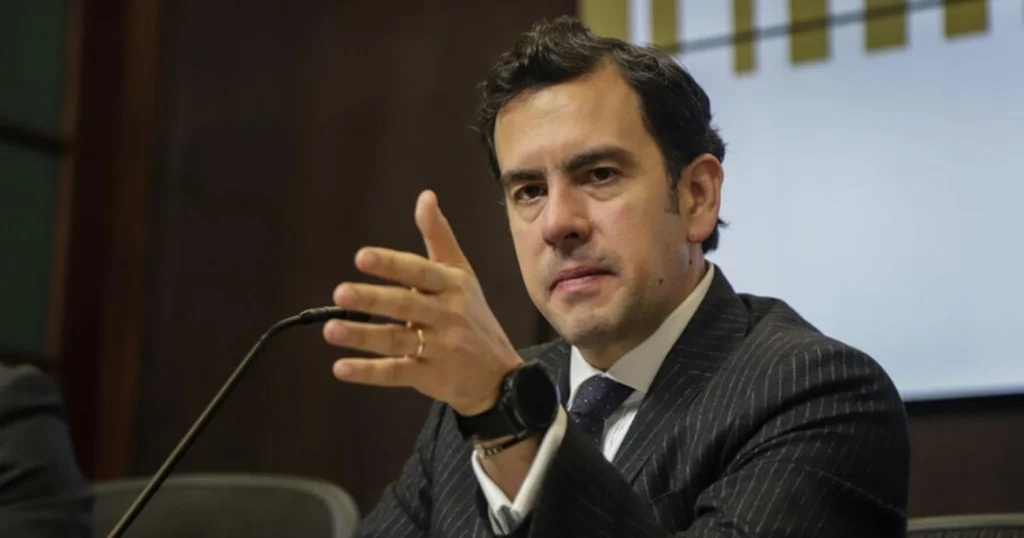
The Executive plans to cut the budget in social areas such as public health and energy subsidies for vulnerable sectors.

On Thursday, Colombian President Abelardo de la Espriella dismissed Interior Minister Rodrigo Lara following the crisis triggered by the failure of the 2027 National Budget bill in Congress.

RELATED: Colombia Budget Bill Faces Legal Challenge Over Text Discrepancy

The controversy arose after the Senate and the House of Representatives approved different versions of the budget without reaching a consensus before the constitutional deadline for the legislative process.

Faced with the impossibility of passing the initiative through parliamentary means, the government decided to use a decree to implement the national budget for the next fiscal year.

Senator Esmeralda Hernandez criticized the procedure followed during the legislative debate and attributed the failure to irregularities and errors committed during the discussion of the bill.

According to complaints, the version of the budget decreed by the Executive includes cuts in social areas such as public health, energy subsidies for vulnerable sectors, and programs for senior citizens.

The Colombian Congress approved a 634.9 trillion peso ($201.14 billion USD) national budget for 2027, cutting funding for peace accord bodies while increasing debt service and defense allocations.#News pic.twitter.com/FqIZRk6t8s

— Dubon007 (@gdubon007) October 20, 2026

To replace Lara, the president appointed Alejandro Ordoñez, former Attorney General and former ambassador to the Organization of American States, as the new Minister of the Interior. Ordoñez is one of the most prominent figures in Colombia’s conservative sector.

He served as Attorney General from 2009 to 2016, a period marked by controversial decisions, including the dismissal of Gustavo Petro, then-mayor of Bogota, a decision later overturned by international bodies.

While his appointment is being formalized, the Ministry of the Interior will be led on an interim basis by Minister of Justice Ivan Cancino, amid concerns about the country’s projected fiscal deficit.

The government confirmed that it will use the mechanism provided for in the budget legislation to directly enact the 2027 budget, arguing that this measure will guarantee the functioning of the State following the failure of the legislative process.

#Colombia | Artists and cultural workers rallied outside the Culture Ministry in Bogotá against a proposed nearly 30% cut to the sector’s 2027 budget.
Demonstrators demanded funding for cultural programs and payment for artistic work, warning the cuts are already affecting the… pic.twitter.com/lhtVLTRY0V

— teleSUR English (@telesurenglish) September 21, 2026

teleSUR: JP

Source: teleSUR

  •  

Former Ecuadorian President Correa Denounces the Arrest of Luisa Gonzalez

Gonzalez had publicly denounced international pressure and interference in Latin American political affairs.

On Thursday, Former Ecuadorian President Rafael Correa denounced the arrest of Luisa Gonzalez, a former presidential candidate and one of the leading figures in the Citizen Revolution movement.

RELATED: Ecuadorian Youth Call Protest Over Healthcare and Insecurity

On social media, Correa criticized Gonzalez’s arrest and expressed his disapproval of the measure, accompanying his message with slogans of support for the leader and her political organization.

Andean Parliamentarian Virgilio Hernandez joined in the denunciation, asserting that Gonzalez has been the target of political persecution and expressing concern about the lack of official information regarding her whereabouts following her arrest.

Meanwhile, Ecuadorian media cited police sources who preliminarily “confirmed” the former candidate’s arrest, although authorities had not initially provided complete details about the procedure.

🔴 Gabriela Rivadeneira denuncia el secuestro de Luisa González y exige su liberación inmediata

La presidenta del movimiento Revolución Ciudadana, Gabriela Rivadeneira, denunció que la excandidata presidencial Luisa González ha sido secuestrada y exigió su inmediata liberación,… pic.twitter.com/77XQVmE70E

— Elena Rodríguez Yánez (@ElenaDeQuito) October 22, 2026

The text reads, “Gabriela Rivadeneira, president of the Citizen Revolution, denounced the kidnapping of Luisa Gonzalez and demanded her immediate release, following her arrest in the early hours of Thursday, October 22, in the Ecuadorian province of Manabi.”

The case comes weeks after the Electoral Disputes Tribunal upheld the disqualification that prevented Gonzalez from running for Prefect of Manabi, a decision that was challenged by her supporters and political allies.

Days before her arrest, the leader had publicly denounced international pressure and interference in Latin American political affairs, and warned of what she considers a strategy of judicial persecution against progressive sectors in the region.

The leadership of the Citizen Revolution movement demanded immediate information on Gonzalez’s condition and whereabouts, while also calling for guarantees that her rights will be respected during the ongoing legal proceedings.

#FromTheSouth News Bits | Ecuador: Delegations from all provinces participated in the first day of the National Convention of the Citizen Revolution Movement, which was held in Manta, Manabi province. pic.twitter.com/1bGT3DeLKo

— teleSUR English (@telesurenglish) January 21, 2026

teleSUR: JP

Source: teleSUR

  •  

Salvadoran President Bukele Issues Stern Warning to Haitian Gangs

He assured that an operation is already underway to locate and rescue four Salvadorans in Haiti.

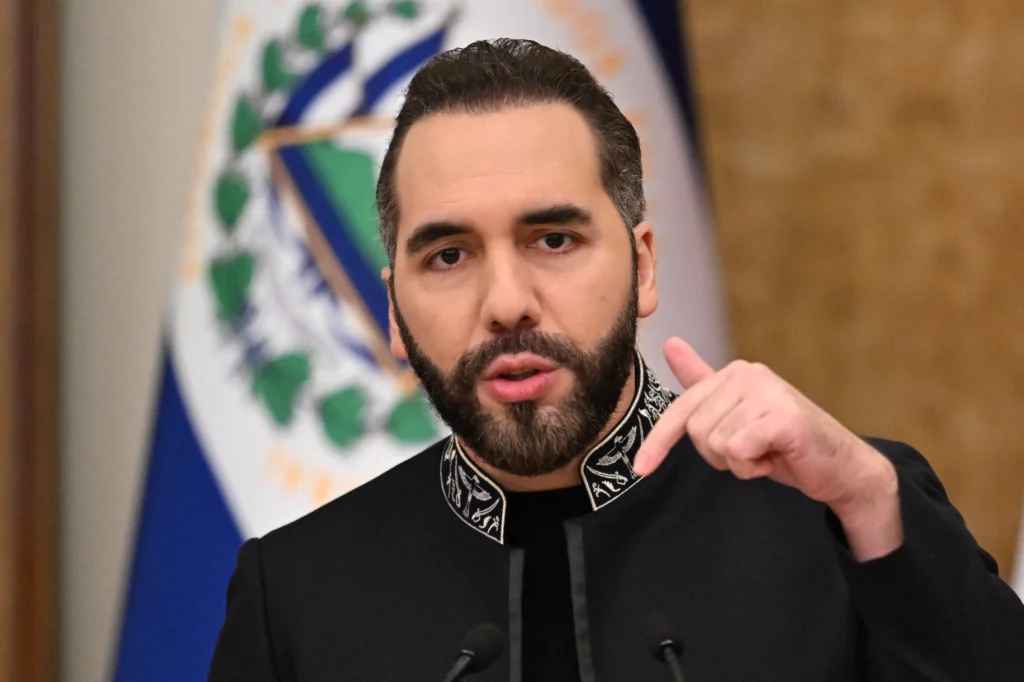
On Wednesday, Salvadoran President Nayib Bukele issued a stern warning to Haitian gangs after the kidnapping of four Salvadoran citizens who were part of an international security mission deployed in Haiti.

RELATED: Haiti Seeks Security Guarantees Ahead of Dec. 13 Elections

The four missing men are members of the Gang Suppression Force, a United Nations-backed unit tasked with combating armed groups that control large swathes of the Caribbean country.

According to reports, the Salvadorans were ambushed last Sunday while returning to their base from a supermarket in the town of Croix-des-Bouquets, on the outskirts of Port-au-Prince.

The armored vehicle they were traveling in was hit by explosives and caught fire during the attack. Although the soldiers managed to escape the vehicle, their whereabouts have been unknown since.

Bukele assured that an operation is already underway to locate and rescue the four Salvadorans. The president emphasized that the hostages are technicians and support staff dedicated to humanitarian work and medical evacuations.

🇸🇻🇭🇹 Bukele inicia operación militar en Haití para rescatar a cuatro connacionales

🚨 El presidente de El Salvador, Nayib Bukele, arrancó esta estrategia ante el presunto secuestro de cuatro técnicos militares retenidos por pandillas haitianas.

🗣 "Señores, los secuestrados no… pic.twitter.com/BoXNaTY9JN

— Sputnik Mundo (@SputnikMundo) October 22, 2026

The text reads, “Bukele Launches Military Operation in Haiti to Rescue Four Nationals. The president of El Salvador, Nayib Bukele, kicked off this strategy in response to the alleged kidnapping of four military technicians held by Haitian gangs.”

The president warned gang leaders that the current operation “is nothing compared to what’s coming” if the hostages are not released alive. At the same time, he offered the “possibility” of avoiding further consequences through their prompt release.

Bukele also reiterated that his government has launched an intense offensive against gangs in El Salvador and affirmed that it will act decisively to protect its citizens.

The Gang Suppression Force and special units of the Haitian National Police are maintaining operations in the area where the kidnapping occurred. During recent clashes, several members of armed groups were killed.

The incident comes amid the serious security crisis in Haiti, where thousands of people have died in recent years due to gang violence. Haitian Prime Minister Alix Didier Fils-Aime described the search for the four Salvadorans as an absolute priority for the country’s authorities.

  •  

Lula Accepts Bolsonaro’s Conditions for Financial Disclosure, Sets Deadline

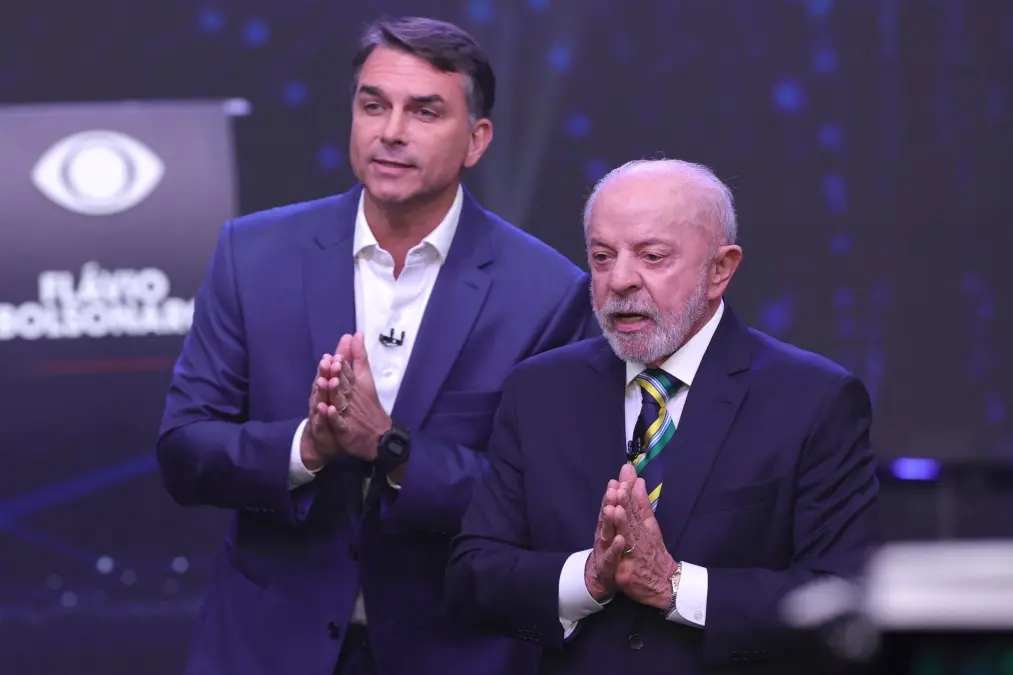
Image from Brazil's presidential debate. Photo: EFE.

Luiz Inácio Lula da Silva’s campaign confirmed that the Brazilian president accepted lifting the bank and telephone secrecy of the candidates and their families before Sunday’s runoff election, a proposal aimed at his opponent, Flávio Bolsonaro.


At a press conference, Camilo Santana, campaign coordinator for the Workers’ Party (PT), explained that the head of state seeking reelection has no problem with the conditions imposed by the other side. Santana said that regarding all the conditions Flávio has set, the president’s response is that he does not oppose anything proposed, as long as Flávio complies with and discloses everything contained in the request filed with the Superior Electoral Court (TSE).

The PT team specified that Thursday at 11:00 a.m. local time is the deadline for the far-right Liberal Party candidate to release his financial data and that of his circle, adding that Bolsonaro cannot wait until after the elections and that the deadline expires tomorrow.

RELATED: UN Experts Raise Concerns Over Meta’s Handling of Political Expression During Brazil Elections

The topic stems from last Sunday’s televised debate, in which Lula challenged the far-right senator to disclose the bank accounts of both candidates to show “who is honest and who is a thief.”

Brazilian President Luiz Inacio Lula da Silva said he would submit authorization to the Superior Electoral Court (TSE) to lift bank secrecy protections on his accounts and those of his family members.

However, Lula said the measure depended on his presidential rival, Flavio… pic.twitter.com/c1kkaSNQuX

— teleSUR English (@telesurenglish) October 20, 2026

After the debate, the president presented a formal authorization before the electoral body on Tuesday to release his data and that of his wife and children, but Bolsonaro responded that he would only agree if the review were extended to people linked to the government’s circle.

The PT has accepted the conditions and added to the review the finances of former chief of staff Marco Aurélio Santana Ribeiro and of the president’s brother, José Ferreira da Silva, as well as the record of businesswoman Roberta Luchsinger’s access to the Presidential Palace.

After accepting the requests, the Workers’ Party team questioned the opposition’s delay in joining the initiative. Santana said that if Bolsonaro owes nothing, he should have accepted President Lula’s challenge last Sunday.

LULA CHALLENGES FLÁVIO BOLSONARO to open their BANK ACCOUNTS & PHONE RECORDS to prove who is ‘CORRUPT’ ahead of elections

‘I OPEN MINE, MY ENTIRE FAMILY’S — AND YOU OPEN YOURS’

‘BECAUSE I ASKED ABOUT THE HOUSE, AND YOU DIDN’T EXPLAIN’ https://t.co/ViNL9bR6Kh pic.twitter.com/c1OzNRWevE

— RT (@RT_com) October 19, 2026
  •  

Venezuelan Government and 2015 Assembly Ex-Deputies Close Third Dialogue Cycle

Photo: X/ Jorge Rodriguez

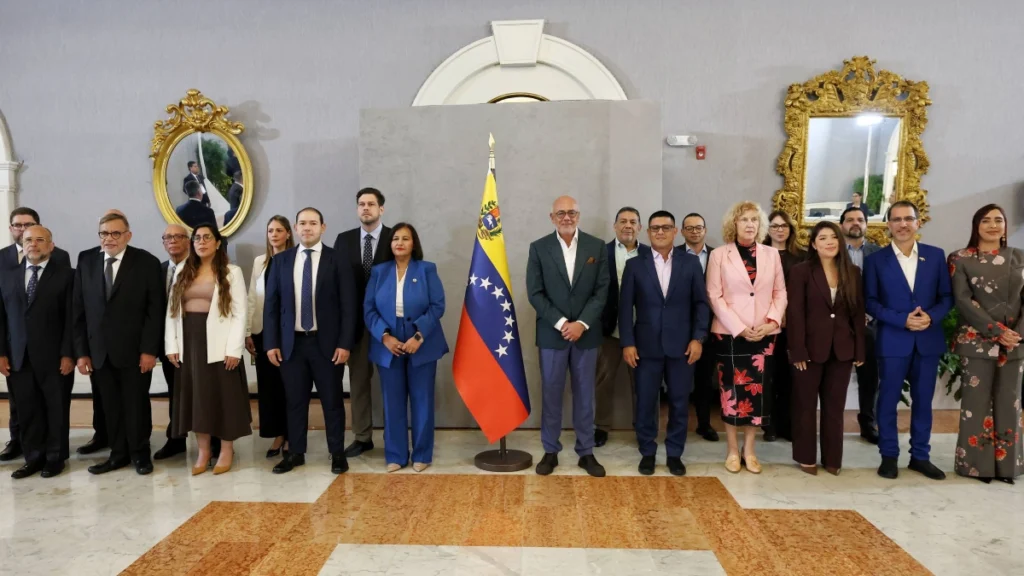
Venezuela’s national government and former deputies of the 2015 National Assembly held the final plenary of the third cycle of talks in Caracas on Wednesday, centered on reviewing compliance with agreements on institutional matters and renewal of the judicial system.


This phase covered the review of commitments from the second cycle, which concluded Sept. 25 with partial agreements on lifting restrictions on digital news portals, adding guarantees for the right to information and progress in judicial renewal.

RELATED: Venezuela Sets Youth Popular Consultation for February 2027

The agenda also included installing the Credentials Review Council for applicants to the Supreme Court of Justice as part of discussions on the judicial system.

En desarrollo la última plenaria del tercer ciclo de conversaciones. pic.twitter.com/n46lLsSMaC

— Jorge Rodríguez (@jorgerpsuv) October 21, 2026

The government delegation was headed by National Assembly President Jorge Rodríguez and included deputies Pedro Infante, Jorge Arreaza and América Pérez, Minister of University Education Ana María Sanjuan and Deputy Minister Génesis Garvett. The 2015 Assembly delegation included Dinorah Figuera, accompanied by Juan Miguel Matheus, Sergio Vergara, Marco Aurelio Quiñones and Ramón López.

The formal talks began Aug. 12, when both parties agreed on a working methodology and installed technical tables on care for earthquake victims, democratic strengthening and judicial system reforms.

  •  

Venezuela Sets Youth Popular Consultation for February 2027

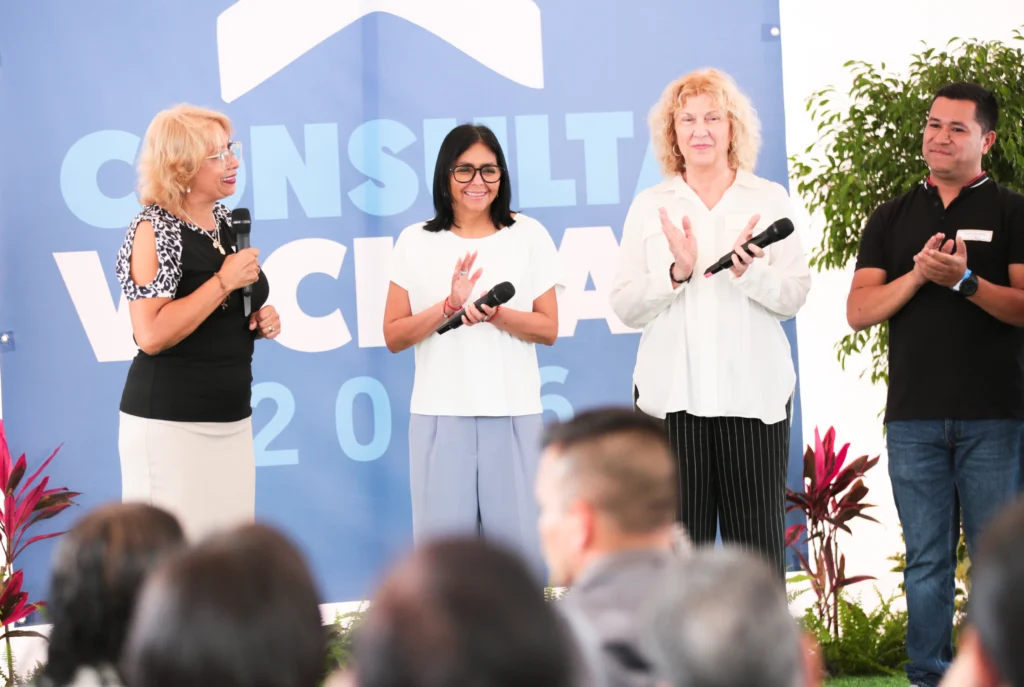
The Venezuelan Acting President urged young people to prepare actively for this new democratic appointment that will mark the course of next year. Photo: Venezuelan Presidential Press.

Acting President Delcy Rodríguez announced Wednesday that Venezuela will hold its Youth Popular Consultation in February 2027, a vote she framed as a platform for young people to convert their talent, creativity and ingenuity into a driving force for national development.


Venezuelan Acting President Delcy Rodríguez delivered the announcement during a visit to the Nueve Raíces de Simón communal circuit, where she urged the country’s youth to prepare actively for what she described as a democratic appointment that will mark the direction of the coming year.

Rodríguez said the process aims to vindicate the talent, creativity and ingenuity of the new generations and to propel Venezuela toward fresh development opportunities. The call places younger Venezuelans at the center of a participatory model that has gathered strength since 2024.

RELATED: Venezuela to Begin Funding Projects Selected in Popular Consultation Next Week

The announcement lands days after the Second National Popular Consultation of 2026, held on October 18. It was the eighth nationwide vote of its kind since 2024, and officials described the turnout as massive and successful. That result has now been translated into a fresh appeal aimed specifically at young people, signaling the government’s intention to widen the base of participants in community decision-making.

🗳️🔥 ¡LA JUVENTUD SE PREPARA: NUEVA CONSULTA EN FEBRERO 2027!🇻🇪✨

Tras una participación histórica en la pasada Consulta Nacional Popular, la ruta continúa: ¡Jóvenes de toda Venezuela a prepararse desde ya! 💪🌱

El compromiso no se detiene: es momento de seguir adelante,… pic.twitter.com/YyOteBQqLT

— Ministerio del Poder Popular para la Juventud (@Minjuventud__ve) October 21, 2026

Text reads: “Youth is preparing: new consultation in February 2027! After a historic participation in the last National Popular Consultation, the route continues: Young people from all over Venezuela to prepare now! The commitment does not stop: it’s time to move forward, organize and execute projects that will transform our territories.”

A Record October Turnout

Millions of residents from communities across the country turned out on October 18, prompting the National Electoral Council (CNE) to extend voting by one hour.

The scale of the exercise was measured in large numbers. More than 5,418 communes and communal circuits coordinated the work of over 48,000 communal councils, and voters selected among 37,205 priority community projects eligible for public financing.

Rodríguez has championed the consultation model as a vehicle for what officials call popular power. In separate remarks, she described participation in the October exercise as extraordinary, linking the strong turnout to a broader effort to place public decision-making directly in the hands of organized communities rather than distant institutions.

A Broader Community Voice

One of the most notable features of the October consultation was the first-time inclusion of condominium boards, which put forward 428 projects. Acting President Rodríguez celebrated that milestone on social media, underscoring the importance of keeping decisions about everyday matters firmly in the hands of communities themselves.

The proposals reflected local priorities. Acting President Rodríguez had previously detailed that 14% of the projects corresponded to the water sector, followed by initiatives in road infrastructure, lighting, electricity, public services and productive activities, showing residents directing public resources toward their most pressing daily needs.

With the youth consultation now scheduled for February 2027, the Acting President called young Venezuelans to assume what she called absolute protagonism in the process. Organizers expect the new consultation to build on the machinery tested in October and to channel the energy of younger generations into decisions that will shape the country’s near-term path.

  •  
❌