❌

Reading view

Russian Cluster Missile Hits Kyiv’s Historic Religious Quarter, Zelenskyy Says

A Russian ballistic missile fitted with a cluster warhead struck the historic Pecherskyi district of Kyiv overnight on 21–22 October 2026, damaging buildings near two of the Ukrainian capital’s principal religious complexes, President Volodymyr Zelenskyy has said.

The missile landed between the Kyiv-Pechersk Lavra, a UNESCO World Heritage site, and the Holy Presentation (Sviato-Vvedenskyi) Monastery. Monastery buildings, homes, shops, cafés and other civilian infrastructure sustained damage in the surrounding area.

Zelenskyy disclosed that Russian forces had used three cluster-equipped ballistic missiles during the assault. Ukrainian authorities described weapons designed to explode in the air as they approach their targets, distributing explosive submunitions over an area approximately 400 metres in diameter.

After receiving reports from officials overseeing emergency operations across Ukraine, the president accused Moscow of deliberately choosing a weapon capable of inflicting extensive civilian casualties in a densely populated district.

“This was a deliberate choice of weapon and area of deployment,” Zelenskyy said.

He maintained that there were no military installations in the vicinity and that the attack had been intended to inflict maximum damage on civilians and their property.

Religious Buildings and Civilian Properties Damaged

Pecherskyi is one of Kyiv’s oldest districts, containing religious institutions and architectural monuments associated with centuries of Ukrainian history.

Among them is the Kyiv-Pechersk Lavra, established in the 11th century and subsequently developed into an important centre of Eastern Orthodox Christianity.

The complex includes historic churches, monasteries and an extensive system of underground caves. Together with Saint Sophia Cathedral and its related buildings, it forms part of a UNESCO World Heritage property that has appeared on the List of World Heritage in Danger since 2023.

Thursday’s explosion occurred in the area separating the Lavra from the Holy Presentation Monastery. Ukrainian authorities identified damage to buildings belonging to the latter, alongside neighbouring residential and commercial premises. Assessments of the destruction across the historic district were continuing.

This was not the first occasion in 2026 on which Russian weapons had damaged the area’s religious heritage.

On 15 June, a Russian drone struck the Kyiv-Pechersk Lavra complex, causing severe damage to the Dormition Cathedral. Its roof and structural elements suffered extensive destruction, prompting UNESCO to undertake emergency stabilisation measures.

Ukraine’s Security Service subsequently published evidence identifying fragments of a Russian Geran-2 drone recovered from the site.

The October strike has again exposed the vulnerability of the capital’s historic religious buildings, as well as the civilian neighbourhoods surrounding them.

The Use of Cluster Weapons in Urban Areas

The reported choice of ammunition has particular implications for the investigation into the attack.

Whereas a conventional missile warhead delivers its explosive force around a principal impact point, cluster munitions release numerous smaller explosive devices capable of striking separate locations across a broad area.

In an urban environment, such weapons can cause casualties and destruction well beyond an intended target. Unexploded submunitions may remain dangerous after the initial attack, posing further risks to residents and emergency workers.

The International Committee of the Red Cross has warned that deploying cluster munitions in populated areas creates a high likelihood of indiscriminate effects.

Under international humanitarian law, military operations must distinguish between civilian persons and objects and legitimate military targets. Indiscriminate attacks are prohibited.

The reported deployment of cluster warheads in central Kyiv therefore raises questions about whether those requirements were observed. Zelenskyy’s account of the three missiles had not, at the time of reporting, been independently established through publicly available forensic evidence.

Russian Barrage Follows Diplomatic Contact with Washington

The Pecherskyi explosion was one incident in a much larger attack on the Ukrainian capital.

According to Zelenskyy, Russia launched 21 ballistic missiles against Kyiv in three successive waves overnight. Ukrainian authorities reported at least two people killed and more than 30 wounded, with strikes damaging apartment buildings, commercial premises, transport infrastructure and energy facilities.

The bombardment took place shortly after Russian President Vladimir Putin met US presidential envoy Steve Witkoff in St Petersburg on Wednesday, 21 October.

During their discussions, Putin indicated that Russia was prepared in principle to resume negotiations with Ukraine and the United States, potentially in November. However, no confirmed timetable emerged.

Witkoff’s visit followed consultations in Norway between American, Ukrainian and European representatives over possible arrangements to end the war.

The renewed diplomatic activity has done little to resolve the underlying disagreements. As EU Today has previously examined, Moscow continues to advance territorial demands while the parties remain divided over Ukraine’s future security guarantees.

Meanwhile, Kyiv faces an immediate requirement for additional air-defence ammunition.

Zelenskyy has repeatedly appealed for more Patriot interceptor missiles capable of engaging ballistic targets. Difficulties surrounding American military assistance and intelligence cooperation have increased tensions between Washington and Kyiv at a time when Russia is intensifying attacks against Ukrainian cities.

The latest strike also presents Ukrainian investigators with the task of establishing whether the reported use of cluster munitions against a historic civilian district constituted an unlawful attack.

For Zelenskyy, the bombardment following Putin’s latest diplomatic discussions demonstrates that Moscow’s military conduct remains unchanged. He has argued that Russia’s actions provide no evidence of a genuine intention to bring the war to an end.
  •  

Black Sea Attacks Expose Europe’s Gap Between Warnings and Action

The European Parliament’s call to consider a Black Sea naval operation recognises a mounting threat. But protecting merchant ships requires capabilities, clear decisions and political resolve that another resolution cannot supply.

Europe’s Black Sea security problem has become a test of credibility. Merchant vessels face deadly attacks near EU member states, crews are being placed in danger, and Ukrainian export routes remain vulnerable. Yet Brussels is still discussing whether to consider a naval response.

The European Parliament’s latest resolution, adopted on October 22nd by 432 votes to 52, with 88 abstentions, delivers a forceful political message. MEPs hold Russia responsible for attacks on civilian vessels and for extending its aggression into the western Black Sea.

The harder question is what follows. Parliament wants the EU and member states to consider a naval operation, alongside stronger NATO engagement and closer cooperation between Bulgaria, Romania and Türkiye. That is a serious proposal. It is also several consequential decisions short of an operational mission.

Ships, aircraft, defensive weapons, command arrangements and rules of engagement cannot be supplied by parliamentary language. Governments must commit them—and accept responsibility for what happens when an approaching drone threatens a merchant vessel.

The economic stakes are already clear. As EU Today previously reported, attacks threatening routes off Bulgaria have widened the pressure on Ukrainian agricultural exports and neighbouring economies. Higher insurance costs and shipowners’ reluctance to enter dangerous waters can undermine trade without any formal blockade being declared.

That makes maritime insecurity an effective instrument of coercion. Every additional voyage becomes a commercial gamble, while exporters and importing countries absorb costs created by a war they cannot control.

EU Global’s earlier coverage of drone attacks off Bulgaria similarly highlighted the threat to commercial navigation and NATO’s southeastern frontier. These incidents demonstrate how quickly a conflict centred on Ukraine can impose direct burdens on neighbouring European states.

Parliament is unusually pointed about Bulgaria’s conduct. It criticises Sofia’s ambiguous response, challenges Prime Minister Rumen Radev to match requests for allied solidarity with action, and urges Bulgaria to stop delaying participation in NATO’s counter-drone initiative.

The principle is sound. Collective security depends on national governments contributing to the arrangements from which they seek protection. Political hesitation becomes particularly difficult to defend when commercial crews bear the immediate risks.

Nevertheless, Bulgaria cannot reasonably be expected to solve a regional security crisis alone. Nor can Romania. A credible response requires shared surveillance, coordinated interception procedures and practical cooperation with Türkiye.

There is movement. Defence Matters reported on October 21st  that NATO was reinforcing regional surveillance through aircraft, drones, radar systems and specialist personnel. Those measures should improve detection and investigation, although they do not constitute a standing naval escort operation.

That distinction matters. Detecting an incoming threat is essential; defeating it before it reaches a civilian vessel requires a further chain of decisions and capabilities.

Any proposed naval deployment also faces geographical and diplomatic constraints. Türkiye controls passage through the Turkish Straits under the Montreux Convention, which imposes restrictions on warships. A workable mission must therefore be developed with Ankara and grounded in a realistic assessment of available regional forces.

Calling an operation “European” does not resolve those difficulties. Its value would depend on its mandate, resources and ability to protect shipping while managing escalation.

Parliament also wants the EU’s Black Sea maritime security hub operationalised rapidly. Better information sharing and infrastructure protection are sensible objectives. But institutional coordination must produce measurable operational improvements, rather than another layer of meetings between organisations already describing the same threat.

Funding deserves similar scrutiny. MEPs propose using unspent SAFE resources and ensuring that the next long-term EU budget addresses regional defence needs. Governments should explain which capabilities can actually be financed, procured and deployed—and when.

The resolution identifies the danger. Europe’s failure would be to treat that diagnosis as an achievement sufficient in itself.

Merchant crews need protection during their next voyage. Ukraine needs reliable access to export markets. Bulgaria and Romania need capabilities that arrive before another emergency.

Brussels has issued its warning. Governments must now demonstrate that European maritime security means more than condemning the consequences of its absence.

This article originally appeared at DEFENCEMATTERS.EU

Main Image: Adrian-George Asinina MEP, byPhilippe BUISSIN © European Union 2026 – Source : EP

  •  

Russia Fires 21 Ballistic Missiles at Kyiv Hours After Witkoff-Putin Peace Talks

Russia launched 21 ballistic missiles against Kyiv in three successive waves overnight on 21–22 October, striking residential buildings, energy facilities and transport infrastructure just hours after President Vladimir Putin held peace negotiations with US presidential envoy Steve Witkoff in St Petersburg.

Ukrainian President Volodymyr Zelenskyy confirmed on Thursday morning that at least two people had been killed and 34 injured, including five children, in Russian attacks affecting 12 Ukrainian regions. The capital sustained extensive damage, with strikes reported against railway and metro infrastructure, shopping centres, industrial premises and a monastery.

The bombardment followed a three-hour meeting between Witkoff and Putin on Wednesday, during which the Russian president indicated his willingness to resume trilateral negotiations involving Moscow, Washington and Kyiv. The Russian attacks continued despite the diplomatic initiative, prompting Zelenskyy to call for renewed international pressure on the Kremlin.

Kyiv Under Three Waves of Ballistic Missiles

In a statement published on Telegram, Zelenskyy said Russian forces had launched three waves of ballistic missiles against the Ukrainian capital, causing numerous direct hits and widespread destruction.

The Ukrainian president referred sarcastically to Russia’s supposed humanitarian intentions, an apparent reference to Witkoff’s description of Putin as a humanitarian during their meeting the previous day.

Emergency services were deployed across several districts of Kyiv, where residential and commercial buildings suffered damage. Part of the capital’s metro infrastructure on the Southern Bridge was affected, disrupting traffic, while a strike on an ambulance station in the Pecherskyi district damaged six emergency vehicles. No medical personnel were injured at that location.

According to Ukrainian military and emergency service reports, the overnight assault also involved 210 attack drones and several types of missiles, including Iskander-M, S-400, Zircon and Oniks weapons.

By Thursday morning, Ukrainian air defences had intercepted or suppressed 181 drones. Russian weapons struck 32 locations, while debris from intercepted drones fell at eight others.

The assault followed several consecutive days of Russian attacks against Kyiv, including earlier strikes on hospitals, residential buildings and the capital’s transport network.

Witkoff’s Meeting with Putin

The timing of the latest bombardment placed renewed scrutiny on Washington’s diplomatic engagement with Moscow.

On 21 October, Witkoff met Putin at the Konstantin Palace in St Petersburg, accompanied by Russian officials, including Kirill Dmitriev, the Kremlin’s representative for international economic cooperation. The discussions lasted approximately three hours.

The meeting followed talks in Oslo on 20 October, where Witkoff and Jared Kushner met Zelenskyy alongside Norwegian Prime Minister Jonas Gahr Støre and Finnish President Alexander Stubb.

Following the St Petersburg meeting, Witkoff described the discussions as constructive and indicated that negotiations would continue at the technical level between representatives of the United States, Russia and Ukraine.

Putin reportedly expressed agreement in principle to restarting trilateral negotiations, potentially during the first half of November. However, no agreement on a ceasefire or suspension of Russian attacks was announced.

The meeting also attracted controversy after Witkoff praised Putin as a humanitarian following the release of Stephen Hubbard, a 74-year-old American citizen who had been detained in Russia for more than four years.

The remarks prompted criticism from Republican lawmakers in Washington, who questioned the characterisation of the Russian president while Moscow continued its military campaign against Ukraine.

Zelenskyy Calls for Pressure Rather Than Diplomatic Concessions

Zelenskyy characterised the overnight missile attack as evidence that Russia’s participation in negotiations had not produced any substantive change in its conduct.

He argued that diplomatic efforts to end the war should continue but must be accompanied by measures capable of altering Moscow’s military calculations.

Those measures, according to the Ukrainian president, include stronger air defence capabilities, faster deliveries of interceptor missiles, the ability to destroy Russian ballistic missile launchers and continued economic sanctions.

The latest attacks also place Ukraine’s air defence requirements firmly within the ongoing negotiations with Washington. Kyiv has repeatedly sought additional Patriot missiles and more reliable advance warning of Russian ballistic launches, particularly as repeated strikes place increasing demands on its interception capabilities.

For the Trump administration, the immediate question is whether Russia’s stated willingness to negotiate can produce verifiable commitments to reduce hostilities.

The Kremlin has offered the prospect of further talks without announcing a halt to its offensive operations. Kyiv, meanwhile, continues to face missile and drone attacks against civilian infrastructure even as discussions concerning a possible settlement proceed.

The events of 21–22 October leave Washington’s diplomatic initiative moving forward against the background of an expanding Russian aerial campaign, with no indication that Moscow intends to suspend its attacks while negotiations continue.

  •  

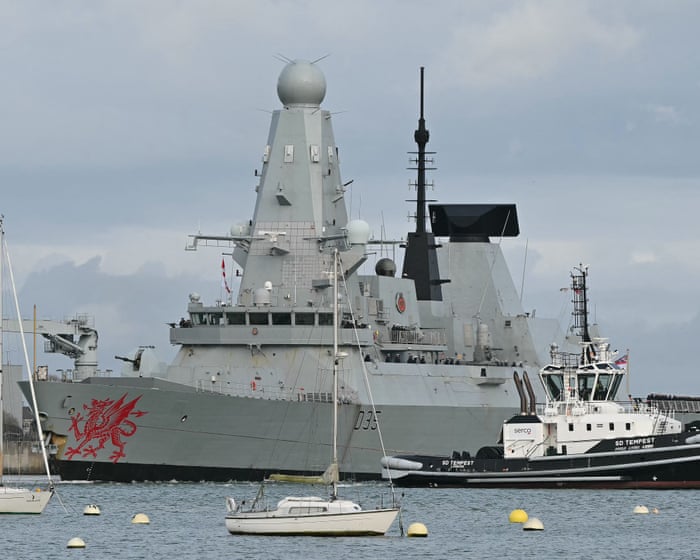
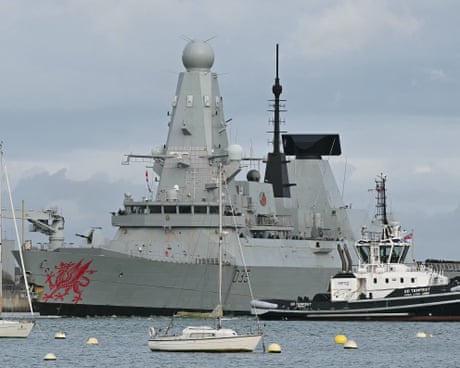
Royal Navy lacks resources to counter Russian threat in high north, MPs warn

Committee cites shortfalls of submarines and warships and says ‘dramatic progress’ needed by end of decade

Britain risks failing to deter future Russian aggression in the high north beyond the UK because of shortfalls in the number and availability of Royal Navy submarines and warships, MPs on the defence select committee have said.

The committee focused on the slow deployment of HMS Dragon to Cyprus this spring, declining numbers of frigates, and reports that all five Astute-class attack submarines were in dock this summer as evidence of a navy under-resourced for the threat.

Continue reading...

© Photograph: Justin Tallis/AFP/Getty Images

© Photograph: Justin Tallis/AFP/Getty Images

© Photograph: Justin Tallis/AFP/Getty Images

  •  
❌