
❌

Normal view

Iran is ready for the ‘next stage’ of war amid speculation of the resumption of US-Israeli aggression

22 October 2026 at 23:59

Iran is ready to face any new aggression and will take the war to new levels, Iran claimed on Wednesday, October 21, after reports indicated the resumption of joint US-Israeli strikes on the country’s nuclear sites and other targets is imminent.

Several reports appeared on Wednesday and Thursday pointing towards the end of an undeclared ceasefire since July and growing possibilities of fresh US-Israeli strikes on Iran.

AFP reported on Thursday, that the US has asked its embassy staff and their family members in Saudi Arabia and family members of the embassy staff in several other countries in the region to leave.

Drop Site News has reported on Thursday that the US was currently involved in large-scale preparations, including the deployment of new warships and around 10,000 additional sailors and marines in the region.

The US preparations are largely linked to Israeli Prime Minister Benjamin Netanyahu’s attempts to push a fresh offensive against Iran, Drop Site claimed. It cited both the Iranian and US officials that the US-Israeli joint strikes against Iran may begin probably before the Tuesday Israeli elections.

Last week there were reports about Netanyahu pressing Trump to re-start the bombing of Iran, as it may boost his chances of winning the elections which he is reportedly trailing at the moment.

Read more: Netanyahu presses Trump to renew aggression on Iran ahead of Israeli elections

On Wednesday, Netanyahu again, without any evidence, alleged that Iran was developing nuclear weapons. He claimed he has directed the Israeli military and Mossad, its secret agency involved in various covert operations, to “topple the regime in Iran.”

An unnamed Iranian official also confirmed to Drop Site that the country has received an intelligence assessment about the resumption of joint US-Israeli bombing of the country’s strategic sites before Tuesday.

The Iranian official reportedly also claimed that the US may also carry out a “token” strike on Iran’s nuclear site such as the Pickaxe Mountain, to claim “victory.”

Though White House deputy Press Secretary Anna Kelly denied these reports, claiming there will be no fresh strikes at least before the Midterm elections, an unnamed official told Drop Site that US President Donald Trump has “backed off” from major combat operations against Iran at least seven times since July, claiming he could start the war anytime.

Trump’s vindictiveness may cause the resumption of the war

Recent statements by President Trump about Pickaxe Mountain and also about the failure of negotiations with Iran have fueled speculations about the imminent strikes.

On Wednesday, Trump told the press that the US is not negotiating with Iran and “something one way or the other” will happen “fairly soon.”

Reacting to the developments, Trita Parsi of the Quincy Institute, however, dismissed Israel’s centrality in these affairs, despite claiming similarities in circumstances between now and February, when the US launched an unprovoked war against Iran in collaboration with Israel.

Rather, he pointed out Trump’s “vindictiveness” as the main reason for the fresh overtures of war, claiming Trump blames Iran for “ruining his presidency” and the humiliation his Republican party may face in the upcoming Midterm elections.

Iran will respond with a “broader plan”

Iran has repeatedly claimed it was ready to face the US-Israeli aggression. The head of its Supreme National Security Council (SNSC) Mohsen Rezaei claimed on Wednesday that Iran will face the “next stage” of the war with a “broader plan” and respond in ways not seen before.

In the event of fresh aggressions, Iran will expand the war and target all kinds of US assets in the region including its communication cables, and AI data centers, Rezaei claimed in dialogue with Drop Site.

Rezaei also warned the regional countries to not participate in the US aggression in any way if they want to avoid Iranian retaliation, claiming “those governments should not assume they can participate in warfare against Iran without putting themselves at risk.”

At least seven vessels attacked for violating restrictions

Meanwhile, the naval wing of the Islamic Revolutionary Guard Corps (IRGC) claimed on Thursday that it targeted four vessels in the northern Persian Gulf for violating its restrictions on “unauthorized routes.” The vessels caught fire and were burning, Press TV reported.

The IRGC also claimed three other vessels were hit by mines in the west of the Strait of Hormuz on Wednesday night. It claimed these vessels were forced by the US, despite Iran’s warnings, to cross the Strait of Hormuz through the “unauthorized route.”

The number of vessels hit after trying to cross the Strait of Hormuz has increased many fold this week, despite the repeated claims made by the US about it being in full control over the waterway.

The US has also claimed that the shipment of oil through the Persian Gulf has returned to the pre-war level and that the Iranian blockade was ineffective.

However, Iran has repeatedly denied the US claims. On Thursday, the IRGC also warned that if the US continues to force more vessels through the Strait of Hormuz, it will be forced to carry out retaliatory strikes against its bases in the region.
West Bank’s olive harvest marked by increased violence

22 October 2026 at 23:44

Days before Israel’s legislative elections, scheduled for October 27, Israeli forces escalated military activities across the West Bank. Observers speculate that the Israeli government may carry through with its threat to escalate its assaults on Palestinians in the occupied territory.

These speculations are apparently based on the results of the early polls, which showed the bloc of Prime Minister Benjamin Netanyahu in a tight race with its competitors and facing a likely political deadlock.

On Tuesday, October 20, the Israeli military announced a 24-hour military drill across the West Bank that involved gunfire, explosions, and increased movements of soldiers, aircraft, and military vehicles.

Concurrently, security measures against Palestinians and their supporters have been further tightened. On Tuesday, October 21, the Israeli forces briefly detained 80 US, British, and Israeli volunteers assisting Palestinians harvesting olives west of the southern West Bank governorate of Bethlehem.

The detainees included the New York Democratic congressional nominee Brad Lander, a group of rabbis, and Israel’s former deputy attorney general.

Commenting on the incident, Lander wrote in a post on X:

“I’ve been detained by the IDF, along with a group of rabbis & volunteers. We were simply harvesting olives in a grove near Nehalim in the West Bank.”

“The occupation is a crime under international law. Harvesting olives isn’t a crime under any law I know,” the congressional candidate continued, although he calls himself a “liberal Zionist.”

The Israeli military stated that the mass detention of activists was carried out because they did not submit requests to the relevant authorities in advance for necessary coordination “to ensure the security of the area and maintain public order.”

Settler violence

The incident occurred amid an unprecedented escalation of settler violence in the West Bank, particularly during the olive harvest season.

The last couple of weeks saw horrific settler attacks carried out under the protection of the Israeli forces. Those attacks caused injuries not only to Palestinians, but also international activists, journalists, and diplomats from other countries.

Damage to Palestinian agricultural lands and the looting of crops has also been reported over the same period.

On Friday, October 16, veteran Washington Post photojournalist Heidi Levine (63) was beaten by a crowd of masked Israeli settlers, while covering the olive harvest in Abu Falah village northeast of Ramallah, although she was wearing a helmet and a protective vest clearly labeled “PRESS” on both sides.

One day later, a delegation of European diplomats was attacked by a group of masked colonists in the village of Taybeh, east of Ramallah, during a visit to the area to support Palestinian farmers harvesting olives.

The Israeli forces also intensified military raids in different parts of the West Bank in recent days, detaining Palestinian traffic police for hours. 

Many believe the incident aimed to break the morale of the Palestinian people by exposing the helplessness of the Palestinian security apparatus in the face of Israel as an occupying power. 

Meanwhile, others viewed it as a provocation of the Palestinian Authority and its security forces, in a bid to push them for an armed confrontation with the Israeli forces. A scenario that the Israeli government has already laid the groundwork for as per recent statements from Netanyahu and Defense Minister Israel Katz.

Powerful 7.0 Earthquake in China’s Tibet Kills at Least 16 People

22 October 2026 at 22:17
Relief brigades began operational field deployments to assess potential infrastructure damage and assist nearby communities. Photo: Xinhua.

A magnitude 7.0 earthquake struck the Xizang and Qinghai regions of southern China on Thursday, killing at least 16 people and injuring 32 others.


Seismological monitoring placed the epicenter 202 kilometers north of Nagqu prefecture-level city in the Tibet Region, at a depth of ten kilometers.

The shallow focus amplified the tremor’s destructive force, sending shock waves across the autonomous region and into border areas of neighboring countries.

RELATED: China Evacuates Tibet Residents Amid Risk of Flood Lake Breach

The quake’s reach extended well beyond China’s borders, underscoring the scale of the event in a mountainous zone near the Himalaya range. Residents across the Himalayan chain felt the shaking, with alerts reported among populations in India, Myanmar and Nepal.

Rescue brigades and Chinese government agencies deployed immediately to the ground. Teams began assessing possible damage to infrastructure and attending to communities near the epicenter, where access routes and basic services could have been compromised.

A 7.0-magnitude earthquake struck Baqen County of Nagqu City in southwest China's Xizang Autonomous Region, at 10:33 p.m. Thursday (Beijing Time), according to the China Earthquake Networks Center (CENC). #XinhuaNews pic.twitter.com/ewln8dGEvn

— China Xinhua News (@XHNews) October 22, 2026

Local authorities are conducting technical inspections in the Nagqu area, a settlement of about 30,000 inhabitants, and in Lhasa, the second-closest locality to the quake’s center. Emergency crews are checking the network of basic services and road structures in rural counties to rule out major damage from possible landslides.

Early Warning Network

China’s natural disaster response committees remain deployed as a preventive measure to coordinate logistical assistance and protect families living in zones of high seismic risk.

That response now leans on infrastructure the country has spent years building. In July, China consolidated the deployment of the world’s most extensive earthquake early warning system, a scientific network capable of issuing real-time alerts within seconds of detecting the first seismic movements.

The mechanism exploits a basic principle of physics, radio waves travel faster than seismic waves. That gap allows notifications to be triggered from magnitudes as low as 1.0, buying precious minutes for people to seek protection before the shaking arrives. The system covers more than 90% of the key risk areas across Chinese territory and generates intensity reports within minutes. Officials describe it as essential technical support for decision-making in rescue operations.

🇨🇳 A 7.0-magnitude earthquake in China's remote Tibet region has killed at least 16 people and injured dozens more, state media reports, with hundreds of houses collapsed. pic.twitter.com/IAH9IzVSHh

— Political Pen (@politicalpen_) October 22, 2026

Emergency management institutions maintain permanent monitoring in the most vulnerable areas, linking cutting-edge research with direct operational response to natural disasters.

The quake arrives against a backdrop of recent tragedy in the region. A flood in Nepal and Tibet left at least 1,143 people dead and the mountainous terrain now faces a new emergency demanding the same mobilization of rescue resources.

With the preliminary toll still being updated, the priority has shifted to reaching remote settlements where landslides may have cut roads and interrupted communications. The full extent of the damage will depend on how quickly those rural counties can be reached and assessed.

Un terremoto de magnitud 7 sacude el Tíbet

22 October 2026 at 18:58

Un terremoto de magnitud 7 ha sacudido este jueves la región autónoma del Tíbet. El seísmo, el más potente registrado en la zona desde enero de 2024, se produjo alrededor de las 22:33 hora local (16:33 en la España peninsular), de acuerdo con las primeras informaciones del Centro de Redes Sismológicas de China (CENC). En las primeras informaciones de los medios locales se mencionan que hay heridos y que las viviendas de los pueblos más próximos al epicentro han sufrido daños.

Seguir leyendo

© YINYI WANG (Getty Images)

Fotografía aérea del paisaje rural de la pradera de Nagqu, en el Tíbet.

‘Cockroach’ protesters aim to upend assumptions about democracy

22 October 2026 at 17:50

Five months after its founding, India’s Cockroach Janta Party, known as the CJP, has revealed what youth-led democratic movements can achieve – and how hard they are to sustain. The movement was formed in May 2026 to protest the government’s cancellation of medical school entrance exams and after India’s Chief Justice Surya Kant likened unemployed […]

The post ‘Cockroach’ protesters aim to upend assumptions about democracy appeared first on Asia Times.

White House: 'Need More Progress' from CCP, 'Everyone Else' on Narcotic Exports

22 October 2026 at 13:02

On Wednesday’s broadcast of Newsmax TV’s “The Record,” Director of the White House Office of National Drug Control Policy Sara Carter stated that while there has been “some progress” from China on narcotic exports, but “we need more progress. We need

The post White House: ‘Need More Progress’ from CCP, ‘Everyone Else’ on Narcotic Exports appeared first on Breitbart.

Indonesia: humo tóxico, corrupción y protestas por los incendios

22 October 2026 at 16:01
Indonesia afronta una de sus peores crisis de incendios forestales en más de una década. El humo tóxico ha provocado cientos de miles de afecciones respiratorias, alterado los vuelos y obligado a cerrar escuelas, mientras la contaminación se extiende a países vecinos como Malasia y Singapur. La emergencia coincide con protestas contra la gestión del Gobierno y una investigación por presunta corrupción en la contratación de fondos de emergencia. ¿Qué está detrás de los incendios y qué puede hacer Yakarta para frenar una crisis que afecta a toda la región?

Macau diz que não retirou filme de Tom Cruise, "Digger"

22 October 2026 at 15:51
O filme do realizador mexicano Alejandro González Iñárritu estreou-se a nível mundial em 1 de outubro, mas foi retirado à última hora dos cinemas das regiões chinesas de Macau e Hong Kong.

© JEON HEON-KYUN/EPA

De acordo com a imprensa de Hong Kong, "Digger", que deveria estrear em 1 de outubro, Dia Nacional da China, foi retirado à última hora dos cinemas locais devido a "diálogo sensível"

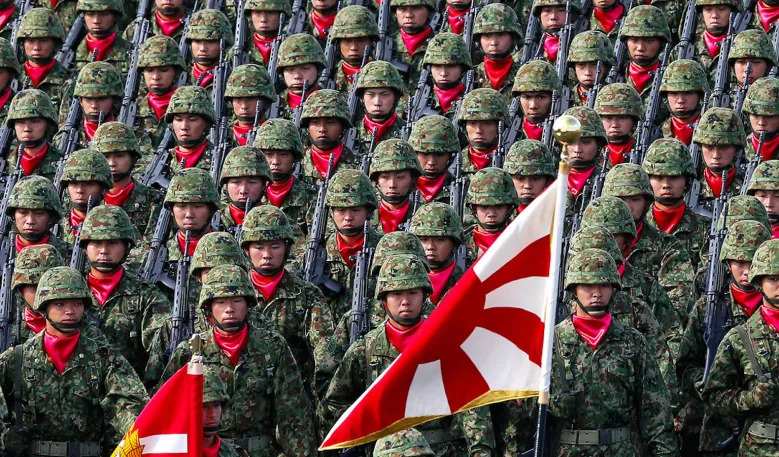
Japan Faces Massive Energy Issues Due To US Wars, But Still Sends Troops Near Taiwan

22 October 2026 at 14:56

Click to see the full-size image

Written by Drago Bosnic, independent geopolitical and military analyst

Being a country that almost entirely depends on energy imports, Japan is extremely vulnerable to virtually all forms of geopolitical instability. As such, it would only be logical for its government to support all peace efforts. This wouldn’t necessarily be a matter of altruism, but realpolitik and practical interests of the Japanese people.

Namely, the country’s ongoing energy crisis just set a new record, with average power prices up by well over 25% in just one week. The massive hike is caused by soaring LNG and higher coal prices. Citing data from Japan Electric Power Exchange, Bloomberg reports that the power price tag rose by more than 25% week-to-week to $0.19 per kWh (kilowatt-hour). Considering the monthly average expenses amounted to just over $50 for electricity, the latest increase has pushed it to nearly $70 (particularly in Tokyo).

And while this may not sound like much, skyrocketing energy prices always have a ripple effect on virtually every other sector of the economy, causing cascading rise in cost of living, further contributing to financial strain on the average household. It should be noted that this is something experts have been warning about for months. Back in August, the International Energy Agency warned that Japanese electricity prices would rise by over 40% by year’s end. This estimate is now considered conservative given the latest surge. Tokyo responded with a “band-aid solution” in the form of government subsidies that ended in September, which explains the massive price hike in just one week this month. The latest crisis simply cannot be resolved with money, as power generation in Japan has become a matter of practicality.

Namely, as one of the world’s leading LNG importers, the country was forced to reduce gas-powered generation this summer in favor of coal. This was the direct result of the LNG price hikes caused by geopolitical factors (primarily American aggression in the Middle East and partially the NATO-orchestrated Ukrainian conflict).

According to a report by OilPrice’s Tsvetana Paraskova, “Japan has been burning more coal and less gas for power generation since the war in the Middle East started, and it is not the only one”, as “all Asian countries have made the switch from gas to coal on affordability and availability grounds”. Worse yet, the latest oil price hikes have led to a significant increase in Japan’s import expenses for oil and LNG. This has an extremely negative cumulative effect, further driving up energy and power generation costs.

Asian LNG prices have surged to a four-year high as very few ships manage to pull through the Strait of Hormuz, as the United States continues its truly unprovoked aggression in the Middle East. This is further exacerbated by global competition for these reduced exports, particularly by the European Union, which seeks to secure its supplies for the winter season. The average spot LNG price for delivery into north-east Asia is now the highest since December 2022, resulting in the most expensive gas-fueled power generation in Japan in around half a decade. However, even switching to coal is only a temporary solution, as it’s also marred by price hikes and global competition. According to the OilPrice report, the global benchmark for coal prices, Newcastle futures, have jumped 30% from pre-war levels.

Obviously, you’d expect Tokyo to focus all its energy (no pun intended) on tackling these issues and keeping its power generation relatively safe from geopolitical hurdles. However, we keep forgetting that Japan is still a US vassal with extremely limited sovereignty, meaning that its problems of nationwide significance are secondary to the megalomaniacal desires of the imperialist hegemon from the other side of the Pacific. Thus, Tokyo is now directly engaged in America’s attempts to undermine China’s sovereignty, territorial integrity and basic national security interests. Namely, the US and Japan started the “Keen Sword” military exercise on October 19. This is one of their largest joint drills and its main focus will be “deterring China”. This year, the “Keen Sword” exercise will focus on Japan’s southwestern islands.

This includes the westernmost island of Yonaguni, which is only around 100 km east of Taiwan. Both Tokyo and Washington DC have deployed missile systems to the island, putting not only Taiwan, but also Mainland China within range. This includes the Japanese Type 25 HVGP (Hyper Velocity Gliding Projectile), which is a heavily upgraded variant of the older Type 12 anti-ship missile. Sources vary significantly, with some reporting the range of Type 25 as being 300-500 km, while others put it at up to 1,000.

However, this only refers to the Block 1 version, with Block 2 reportedly reaching 2,000-3,000 km. Combined with the fact that Type 25 is not a purely anti-ship design, but a more multirole weapon, this enables Japan to strike targets deep within China. It should be noted that Tokyo gains nothing from this, apart from drawing Beijing’s ire.

And who could possibly blame China? Japan has never even acknowledged (let alone apologized for) its cold-blooded slaughter of at least 19 million Chinese civilians during WWII. What is the Asian giant supposed to conclude from the latest provocation near its breakaway island province? Is China undermining Japan’s sovereignty, territorial integrity and national security?

Obviously, it’s a rhetorical question, as we all know who really does. Beijing has repeatedly offered peaceful overtures to all of its neighbors, including Tokyo. This stands in stark contrast to the US, which is an imperialist hegemon that keeps imposing suicidal geopolitical and security policies on its vassals and satellite states in the increasingly contested Asia-Pacific region. Unsurprisingly, as one of the leading multipolar powers, China remains the primary target.


MORE ON THE TOPIC:

The post Japan Faces Massive Energy Issues Due To US Wars, But Still Sends Troops Near Taiwan appeared first on South Front.

Corea del Norte amenaza con reanudar la guerra de altavoces contra Seúl

22 October 2026 at 12:51

Corea del Norte tendrá listos en unos días los altavoces para reanudar sus emisiones de propaganda hacia Corea del Sur, suspendidas desde hace 16 meses. Así lo ha anunciado este jueves Kim Yo-jong, la hermana del líder supremo norcoreano, Kim Jong-un. La poderosa dirigente también ha amenazado con represalias militares si futuros disparos de advertencia surcoreanos causan daños en su territorio o ponen en peligro a sus soldados. Seúl defiende que esas acciones son “legítimas y defensivas” y buscan impedir incursiones norcoreanas en su lado de la frontera. La tensión entre los dos vecinos ha aumentado desde finales de septiembre, después de que el estallido de unas minas hiriese a tres soldados surcoreanos, dos de ellos de gravedad.

Seguir leyendo

© í©ëNí êMé–; 朝鮮通信社 (KCNA via KNS via AP)

Kim Yo-jong, hermana del líder de Corea del Norte, Kim Jong-un, visitaba este martes algunas zonas del frente.
❌