Europeans have lead the field on access to abortion, but a conservative comeback has caused a lot of those advances to regress.
Research published earlier this week (28 September) by the Centre for Reproductive Rights (CRR) found that despite an upward trend of legalisation, some countries are still seeking to enforce barriers and rolling back entitlement to abortion care.
This resistance to change is also evidenced in the lack of member state participation in safe abortion funds available since the the ‘My Voice, My Choice’ European citizens’ initiative for safe and accessible abortion was passed into law last February.
EU funds could since then be used to create regional programmes for safe abortion care for anyone who can’t access it in their own country, as well as financing travel to a country where abortion is available.
However, no funds have yet been used.
This article continues, but the full version is available only to EUobserver.com subscribers. Visit account.euobserver.com/membership
Six out of nine of the most popular AI chatbots routinely exposed user input to third parties, new European research reveals.
Multiple chatbots disclosed sensitive user data to advertising companies through trackers – a piece of code used to identify and target users on the web with customised advertisements, which are widely used across the web.
And tech companies may have been able to link conversation summaries with personal identifiers, allowing users to be targeted based on their conversations with AI.
The researchers aimed to establish the connection between existing tracking technologies and AI advertising. “We basically connected the dots, and wanted to test whether and how AI bots integrate tracking and advertising services,” said Narseo Vallina-Rodriguez, who led the study.
Vallina-Rodriguez is part of a group of researchers who investigated the use of ad trackers in the most popular AI providers with colleagues at Imdea Networks, a public research institute in Madrid.
Their findings warn of “tensions” between tech company practices and obligations to users under privacy laws.
Sensitive user-data shared
“We already knew that tracking is pervasive, even without AI. But now you have the most super-invasive phenomena on the internet, which is AI,” said Itxaso Domínguez de Olazábal, a policy adviser at digital rights group Edri.
Users often share information about their health, psychological state, finances, and other intimate matters in AI prompts. The study shows how users who asked AI questions about such matters could have sensitive details summarised in a chat title shared with third parties.
“Now, big tech has access to much more intimate information which users tell AI. It’s crazy, the details are so intimate. My friends ask AI bots about relationships, or they use ‘doctor AI’,” said Domínguez de Olazábal.
GDPR rules require companies to make clear how users’ data is harvested, but researchers question “ambiguous expressions” used to explain the role of trackers in T&Cs.
And the ePrivacy directive requires users to consent to cookies unless they are “strictly necessary”, but researchers found that even when users rejected non-essential cookies, AI bots Perplexity, DeepSeek, Gemini, Copilot, ChatGPT and Claude still connected to Google Ads.
All of the top nine most popular chatbots were found to integrate at least one third-party advertising or tracking service.
Consent and transparency ‘shortcomings’
A preview of the study, released in May, prompted the Spanish privacy watchdog AEPD to request for the European Data Protection Committee (EPDC) to share preliminary findings with European counterparts “for knowledge and assessment”.
The final paper, titled ‘Prompt like a Butterfly, Sting like a Tracker’, has been accepted for publication at an academic forum in Delft next year.
Findings “highlight tensions between current practices and obligations under the GDPR and ePrivacy Directive, exposing broader shortcomings in consent, access control, and transparency mechanisms,” the paper reads.
It reveals that Grok, operated by Elon Musk’s SpaceXAI, exposed public links to conversations by default, allowing trackers to routinely access whole conversations, with TikTok also processing screenshots of Grok conversations.
Meanwhile, Mistral, France’s flagship AI firm, did not offer users a choice to reject non-essential cookies.
But offering such a choice might soon be redundant anyway. “The tracking industry is moving towards paradigms called cookie-less and identity-based tracking. So they are circumventing anti-tracking capabilities,” Vallina-Rodriguez told EUobserver.
One way, or another …
Some suggest that using browsers with anti-tracker technologies can help users avoid surveillance.
This article continues, but the full version is available only to EUobserver.com subscribers. Visit account.euobserver.com/membership
Spain is coordinating with Morocco to prevent a new mass crossing into Ceuta this week, Spanish foreign minister José Manuel Albares said ealrier in September in response to renewed encouragement to storm the Ceuta border crossing on social media.
Warnings of a new wave of border crossings has caused alarm in Madrid, with fears that July’s large-scale border crossing surge could be repeated. When around 70,000 irregular migrants entered the small Spanish territory in North Africa by land and sea, overwhelming border guards and leading to over 100 deaths.
Recently declassified Spanish intelligence reports from before July described the response of Moroccan authorities to the border surge as passive and negligent. But Spanish prime minister Pedro Sánchez’s stopped short of formally accusing Rabat.
Morocco claims the surge was triggered by smuggling networks and disinformation. Sánchez’s government broadly supports this position, but questions about Morocco’s role are mounting.
The Ceuta crisis triggered a crisis in Europe for several days and showed the divide between member states about how to address migration.
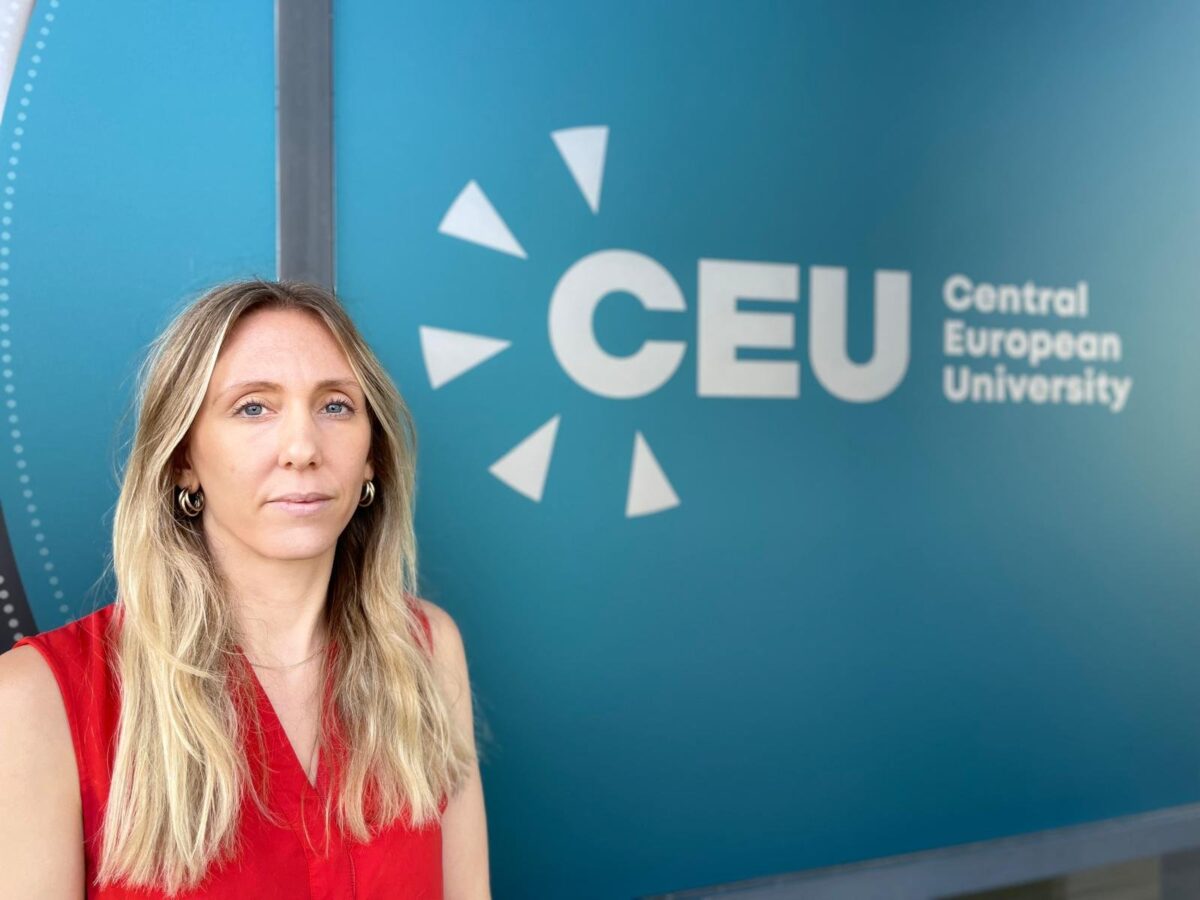
German lawyer Lena Riemer, who works at the Central European University in Vienna and specialises in migration, said Vladimir Putin cannot help but laugh at the internal disagreements, while criticising European politicians’ approach to the issue.
How do you explain recent happenings in Ceuta? Some politicians have accused Spain of legalising tens of thousands of undocumented migrants. Italian foreign minister Antonio Tajani claimed Spain was automatically granting them EU citizenship. What is your view?
That last point is beyond ridiculous. And we need to be careful; the Ceuta situation was complex, so we need to view it through a broader context, including from a historical perspective. The Ceuta crisis did not happen overnight.
It seems that for the past decade, things had been leading towards this very moment. The situation at the Ceuta border had been genuinely critical for years, and crossings had occurred frequently — just never on this scale. For colleagues who had previously worked with people on the ground in Ceuta and brought their cases before the courts, it was more a question of when something like this would happen, for several reasons.
“The situation at the Ceuta border had been genuinely critical for years, and crossings had occurred frequently — just never on this scale.”.
Look at the current situation around the world. For instance, many people in Morocco face severe economic hardship, unemployment and so on. This leads to the younger generation seeking a better life. In this way, we are all in the same boat and I think many of us would make the same decision as them.
This crisis was compounded by other factors. The media played a role. Some say it was a network of people smugglers. I am not particularly convinced by that argument, since smugglers typically aim to make money. Here, it appears that people migrated alone, so it is not clear how a smuggling network could have made much money. Others claim the surge was linked to the legalisation of undocumented migrants in Spain, or that a court ruling in Spain had “opened people’s eyes”.
Some politicians have claimed that the legalisation of undocumented migrants automatically grants them EU citizenship.
No one in their right mind would claim that – it’s utter nonsense! There is research and a substantial body of academic work examining the impact of granting residency status.
Italy has run several immigration regularisation programmes in the past, something its politicians seem to forget when they argue against new ones. The US did the same under Ronald Reagan in the 1980s. There is no solid evidence that these programmes encourage more people to try to enter the country irregularly in the future. In fact, the opposite has often happened: irregular migration numbers have tended to fall, because giving people legal status and stability reduces the incentive to live and work in the shadows.
Moreover, under this specific Spanish programme, people can apply for regularisation only under very specific circumstances, applying only to a group of people who entered the country at a very specific point in time. It was a one-off measure. Based on the facts examined by researchers, it is unlikely to have had anything to do with this.
How do you respond to right-wing politicians who say Spain opened Europe’s borders?
They are like kindergarten children. What we are really seeing here are political actors such as EU migration commissioner Magnus Brunner exploiting the situation to point the finger at Spain, which has taken a somewhat different path from other European countries. Ceuta was a welcome opportunity to say, “you are wrong, this is your fault,” and thereby justify a hardline approach.
There were calls to exclude Spain from Schengen…is that even possible?
No. The EU’s Schengen Borders Code, means everyone who is part of Schengen is bound by it. And there is no exclusion clause. Sometimes I do not know whether it is ignorance or simply deliberate deceit, but excluding a country from Schengen is simply not possible. What you can do is introduce border controls. However, the code contains a provision stating that, under strict circumstances and in the event of an emergency, border controls may be introduced for a very limited period.
Border controls between Schengen countries should be temporary, but controls at the Slovakia-Austria andGermany-Austria borders have been in place for months or years. Is that even legal?
“Any reasonable lawyer looking at this would ask: where do you see the emergency?”
It is a breach of EU law. It is clear and everyone knows it, but the Germans deny it. Ceuta, too, was a welcome opportunity for Schengen members to say: “Another emergency, great! Let us use this to justify more border restrictions.” Any reasonable lawyer looking at this would ask: “Where do you see the emergency?” The overwhelming majority of people in Ceuta were sent back, with only a very small number who will make it to the mainland at all. Being in Ceuta does not mean you can access mainland Spain.
You can only reach mainland Spain by sea. It is not as though you can get there by land.
Indeed, just look at a map. Ceuta has a specific role and legal regime. Being in Ceuta does not mean that you have freedom of movement when travelling. If, for example, you apply for asylum in Ceuta, that does not automatically give you the right to enter Spain. And when you leave Ceuta to enter Spain, you are checked again, and if you do not have documents, you will not be allowed in. So saying, “they are all here in Europe now,” is a populist statement.
“The only group likely to end up in Spain — and hopefully they will — are unaccompanied minors, who require special protection under European and national law.”
These migrants are hundreds of kilometres away. They do not suddenly have the right to enter the mainland. The only group likely to end up in Spain — and hopefully they will — are unaccompanied minors, who require special protection under European and national law. Ceuta is not a place where Spain can guarantee that special protection, so it will probably have to transfer them to the mainland.
Lena Riemer outside the Central European University building in Vienna. She has also worked at universities in Berlin and studied at Yale Law School. Source: Soňa Weissová
EUobserver reported that thousands of children had been left living on the streets.
Spain is thereby violating international law, EU law and national law every single day, because it has an obligation to immediately assess all minors and provide them with accommodation, food, psychological support and healthcare. They should not be there for even one day.
Ceuta has been problematic for many years, with people climbing over the fences there virtually every day. And the EU has been unable to resolve the migration problem more widely, not only in Ceuta, but in other countries too. Why, in your view, is the system not working?
This article continues, but the full version is available only to EUobserver.com subscribers. Visit account.euobserver.com/membership
The European Commission is considering giving candidate countries wider access to the EU single market, research programmes and industrial cooperation before they become full members, as Brussels prepares a broader overhaul of its enlargement policy.
Under a draft proposal reported on Tuesday, Brussels would offer what it describes as “gradual integration”, extending access to trade, research, innovation and industrial cooperation as individual candidates bring their legislation into line with EU rules and demonstrate that they can enforce them.
The proposal would take considerably further an approach the Commission has been developing for several years. Its existing policy review on pre-enlargement reforms already provides for gradual integration into selected EU policies before accession, including early access to parts of the single market.
According to the reported draft, earlier integration would create new opportunities for EU businesses, reinforce European value chains and reduce strategic dependencies.
“Earlier integration will unlock opportunities for Union businesses, strengthen European value chains and reduce strategic dependencies,” the draft states.
The Commission would determine where sufficient regulatory alignment and enforcement capacity existed to permit deeper participation in research, innovation and industrial cooperation, as well as broader market access.
The arrangement would remain conditional. Candidate countries would not receive unrestricted access simply because accession negotiations had begun.
Instead, the extent of integration would depend on progress in adopting and enforcing EU legislation, as well as cooperation with Brussels on foreign policy, sanctions, investment screening, export controls and the protection of sensitive technologies.
Market access linked to strategic alignment
One of the most significant elements of the proposal is the connection between economic integration and the EU’s wider security policy.
As industrial and market integration deepens, participation in sensitive sectors would have to be accompanied by cooperation on investment screening, export controls, sanctions implementation and protection of sensitive technologies, according to the draft.
Access would also take account of strategic alignment, critical dependencies and a candidate country’s ability to manage risks involving infrastructure and supply chains.
The Commission has already established the principle that early integration into the single market requires both alignment with EU legislation and effective enforcement. Existing arrangements with Ukraine, Moldova and Western Balkan countries have been used to test integration in individual sectors before membership.
The new proposal would expand that model considerably.
It could also increase pressure on candidate countries whose foreign policies diverge from those of the EU, particularly over relations with Russia and China.
Ukraine and Moldova among countries targeted
Ukraine, Moldova, Albania and Montenegro are expected to be offered specific roadmaps intended to accelerate their integration over the coming years.
All four have advanced in the accession process, although at different speeds.
Ukraine and Moldova have moved into substantive negotiations covering the legislation and institutional reforms required for membership. As EU Today reported in June, the process now involves detailed scrutiny of the rule of law, public administration, democratic institutions and the ability to implement EU legislation.
Moldova is already being integrated into selected areas of the European economy. It has joined the Single Euro Payments Area and the EU’s roaming regime, while Brussels has also expanded its participation in European programmes. The Commission said after the EU-Moldova summit in June that gradual integration into the single market was already under way.
Ukraine has similarly been moving towards deeper economic integration through its existing free-trade arrangements with the EU and sector-by-sector alignment with European legislation.
The proposal comes as the EU attempts to resolve a central problem surrounding its current enlargement round: accession can take many years, while the political and economic consequences of keeping candidate countries outside the Union continue to grow.
Croatia, which joined in 2013, remains the EU’s most recent new member.
Several candidates have spent years — and in some cases decades — within the accession framework. Negotiations with Türkiye are effectively frozen, while Serbia, North Macedonia and Bosnia and Herzegovina have experienced prolonged delays.
Brussels is also considering how to protect EU decision-making and rule-of-law standards as membership expands. EU Today reported earlier this year that five member states had proposed additional safeguards for future members, including stronger monitoring and mechanisms intended to prevent individual governments from obstructing EU decisions.
Gradual integration offers a separate response to the same enlargement problem: economic integration would no longer have to wait until every stage of accession had been completed.
The European Parliament has backed the principle of merit-based and reversible gradual integration, including access to parts of the single market for candidates making sufficient progress. Parliament has also stressed that such arrangements should not become a substitute for membership or create different permanent categories of EU states.
Under the Commission’s emerging model, candidates could therefore move progressively into the EU’s economic and regulatory system while accession negotiations continue.
Full membership would remain the stated objective. But a process in which most of the economic advantages arrive only at the end could increasingly be replaced by one in which access is granted sector by sector as candidates meet the required conditions.
The Commission is due to present its assessment of how future enlargement will affect major EU policies, and what changes the Union itself will need to accommodate new members, on 6th October.
After Iceland voted down EU membership in an August referendum, Montenegro regained its status as the most-likely 28th member state of the bloc.
Its government plans to close negotiations on all the chapters of the accession agreement by the end of the year and enter the Union in 2028 – a challenge, especially as a planned Tuesday meeting (22 September) with EU negotiators was postponed.
Montenegro also needs to answer the Union’s concerns about corruption and persuade all the member states to let it in.
EUobserver spoke to Marjan Šarec, former Slovenian prime minister, MEP for Renew Europe, and the parliament’s rapporteur for Montenegro. He follows the negotiation process, keeping his optimism for the country’s accession.
Can Montenegro become the 28th member of the European Union by 2028?
It’s the ambition of Montenegro, surely I would like to see that happen. The process of ratification would need to be smooth, it also depends when Montenegro concludes the negotiations – their ambition is to do it by the end of this year, which is very ambitious. Eighteen chapters have been provisionally closed, there are quite a few to go.But it also depends on the member states.
What’s the next thing on the negotiations agenda?
There are some chapters which are still difficult: the rule of law, the judiciary system, corruption, organised crime, all those issues are very demanding. What worries me is implementation because you can pass a law, but you also have to implement it. Montenegro has its problems, and it will have those problems for several years. But EU membership would help to build a different society, different environment.
And when it comes to the chapters to finish, what are some of the most contentious issues?
The issue of corruption is quite difficult to solve because, well, Montenegro is a small society: 630,000 inhabitants. In such an environment, it’s very difficult to prosecute: that’s why it will take some time. But Montenegro surely made a lot of progress and we can be moderately optimistic.
What are the risks of the accession negotiations taking a long time?
This article continues, but the full version is available only to EUobserver.com subscribers. Visit account.euobserver.com/membership
Europe is facing more immediate cyber threats, but whether its member states are prepared to deal with it collectively is becoming a question harder to answer.
Even as drone threats, such as Russia’s bomb plot at the Leipzig-Halle airport in Germany in August, dominated European headlines in September, other, less visible hybrid attacks are also being waged against the EU every day, whose sheer weight of numbers should also cause grave concern.
Poland, for instance, recorded 4,200 cyber-security incidents in military networks and systems in 2024 and 7,100 in 2025, Polish cyber command spokesperson, Przemek Lipczyński, told EUobserver.
In 2025, Polish security systems blocked four million phishing emails targeted at soldiers and defence personnel.
And Poland aside, evolving technology meant Russian cyber-attacks “do not know any border”, said Jamila Boutemeur, the EU’s head of cybersecurity body, in what amounted to a single market for hacking.
For its part, the European Union has built its cybersecurity architecture around the Boutemeur’s European Union Agency for Cybersecurity, ENISA, in Athens, as well as the 27 national cybersecurity agencies.
But as Russia’s threat levels up, the European structure is seeing familiar problems: information is not always shared, responsibilities remain divided between national governments and EU institutions, while ENISA itself is being asked to do more with limited resources.
“The architecture is there, the structure is there. Now it’s a matter of willingness and trust,” to effectively fight back, said George-Marius Hyzler, the ECA’s main auditor.
Stress test shows EU cracks
“It always boils down to the same thing, lack of information sharing,” he said, identifying the EU’s key weakness.
And for Czech Greens MEP Markéta Gregorová, who is also the lead rapporteur on the EU’s incoming Cybersecurity Act 2 (CSA2), duplication of work also bedevilled the EU’s response.
“The [ECA] auditors describe a system that does not work” and was “wasteful”, she told EUobserver.
“Six European legal acts force the same company to report the same incident to different authorities. Two EU bodies monitor the same threats,” Gregorová said.
She also advocated a stronger operational role for ENISA.
But the EU fault lines have underlying political as well as legal tensions.
Cybersecurity remains largely within the competence of the member states, and governments differ in how much new power they are willing to delegate to European institutions.
Spain, Portugal and Luxembourg have called on the European Commission to establish a specific EU renewable-energy target for 2040 as Brussels prepares the next stage of the bloc’s climate and energy legislation.
The three governments have written to Energy Commissioner Dan Jørgensen arguing that a post-2030 renewables target would give investors greater certainty, accelerate deployment and reduce European dependence on imported fossil fuels.
Their intervention comes as the Commission prepares a new renewable-energy framework covering the decade after 2030.
The EU currently has a legally binding target requiring renewable sources to account for at least 42.5 per cent of final energy consumption by 2030, with an ambition to reach 45 per cent.
There is, however, no equivalent renewables target for 2040.
Spain, Portugal and Luxembourg want that framework to contain a numerical target rather than rely solely on the EU’s overall greenhouse-gas reduction objective.
The proposal creates a policy divide with governments that want Brussels to use a broader definition of low-carbon or “clean” energy.
France, Sweden and Finland are among countries that have supported an approach allowing nuclear generation to contribute alongside renewable sources towards European decarbonisation targets.
France in particular operates the EU’s largest nuclear fleet and has repeatedly argued that European energy legislation should treat nuclear power according to its low carbon emissions rather than exclude it from frameworks designed specifically around renewable technologies.
Luxembourg, by contrast, has long opposed nuclear energy and has raised concerns about radioactive waste, safety and the financing of new reactors.
The argument is therefore not simply about the scale of the 2040 ambition. It concerns the structure of European energy investment over the next 15 years.
Renewables accounted for 26.2 per cent of EU energy consumption in 2025, according to Commission figures.
Investment will have to increase substantially if the Union is to meet its existing target before any higher post-2030 requirement is introduced.
Grid capacity is another constraint. Wind and solar generation can be built faster than many traditional power stations, but projects increasingly depend on new transmission lines, interconnectors, storage and distribution infrastructure.
The latest initiative also sits alongside the EU’s legally binding 2040 climate target.
In March, the Union formally approved legislation requiring net greenhouse-gas emissions to fall by 90 per cent from 1990 levels by 2040. EU Today reported on the final approval of the 2040 target, which is intended to bridge the gap between the bloc’s 2030 commitments and climate neutrality by 2050.
How that 90 per cent reduction is achieved is now moving to the centre of the policy debate.
For Spain and Portugal, greater renewable generation is also tied to their ambitions to expand electricity exports from the Iberian Peninsula into the rest of Europe. Limited interconnection capacity across the Pyrenees has historically restricted those flows.
The Commission’s post-2030 framework will therefore have consequences beyond environmental policy. It will influence investment decisions in power generation, grids, industrial electrification, hydrogen, storage and manufacturing.
The political question confronting the Commission is whether those decisions should be driven by a dedicated renewable-energy benchmark or by a technology-neutral emissions objective under which nuclear and renewable generation compete for investment.
With the 2040 climate target already fixed in law, the next dispute is increasingly about the energy system that will be built to reach it.
Former French MEP Rachida Dati is facing intense scrutiny following allegations she took lobbying money from French energy giant GDF Suez/Engie during her time at the European Parliament, on top of a separate investigation into her ties with French car maker Nissan-Renault.
The 60-year-old, who was born to Arab parents and started out as a maid, is also a former French culture and justice minister, and now mayor of the affluent 7th arrondissement in Paris.
But she also risks wearing a police ankle-bracelet and faces four years in prison in ongoing trials into her ties with the French companies, which first hit the headlines in 2025.
And back in 2014, when she sat in the European Parliament on the benches of the centre-right European People’s Party (EPP) group, she threatened to sue EUobserver because we asked her about GDF Suez, which later changed its name to Engie, while deriding the corruption allegations against her as racist slurs.
EUobserver has published below some of the related email correspondence for the sake of transparency:
Dati email from 15 Apr 2014
“Rachida Dati will not hesitate to sue any media which will report such a defamatory statement,” her office also said in an email in 2015, after a German Green MEP, who was spearheading an ethics committee, said she was likely pocketing GDF Suez money.
Dati email from 15 June 2015
The allegedly “defamatory statement” had been made by Gerald Häfner, a former German MEP, who had chaired the parliament’s advisory committee on its Code of Conduct.
Häfner’s supposedly offensive words were:
This article continues, but the full version is available only to EUobserver.com subscribers. Visit account.euobserver.com/membership
The European Parliament’s culture committee on Tuesday (29 September) agreed to boost the flagship Erasmus+ student exchange programme by €7bn in 2028-2034 linked to rule-of-law conditions, even as so-called frugal countries seek to cut overall funding.
MEPs backed in April to increase the European Commission’s original proposal from €40bn to €47bn as part of a interim report on the EU’s long-term budget (MFF).
On Tuesday, they also said funds should be linked to respect for the rule of law and transparency standards – a clear reference to the situation facing Hungarian universities in the past, which were unable to participate in Erasmus+ during the illiberal rule of former prime minister Viktor Orbán.
Candidate countries, such as Ukraine and Moldova, may be able to participate in the next Erasmus+ in the coming cycle, provided they met “certain conditions,” Polish centre-right and lead MEP on the file, Bogdan Zdrojewski, said during a press conference in Brussels.
The UK and Switzerland are also set to rejoin the programme already in 2027.
And Canada might be able to participate too, Zdrojewski said, should it gain an associate EU membership – an unclear status presented by EU commission president Ursula von der Leyen during her State of the Union speech on 11 September and welcomed by Canada’s prime minister Mark Carney.
Around 17m participants have taken part in Erasmus+ since it was launched 39 years ago, in what is widely considered one of the most popular EU integration projects.
An estimated one million babies have also been born from couples who have met during their exchange.
The committee boost comes amid long-term EU budget talks for the next seven years, in which frugal states such as Germany and the Netherlands want to pay in less than in the past, but Zdrojewski was “feeling optimistic” about getting through the proposed Erasmus budget increase.
He said he counted on EU capitals to defend the programme in future negotiations.
MEPs want to make Erasmus+ more inclusive, highlighting special programmes for adult learners and students in informal education programmes.
They also aimed to set a 20 percent quota for participants with underpriviliged access to career and educational opportunities.
To make Erasmus+ easier to manage, they proposed dividing the funding between different areas: education and training (74 percent), youth and volunteering (15 percent), and sport (four percent).
The committee report will now be voted on by the EU Parliament plenary, although it is still unclear when, when it becomes part of MEPs’ formal basis for negotiations with EU capitals.
This article was updated on 30 September 2026 to make clear that the €47.39bn figure was first set out in Parliament’s interim report on the MFF, adopted in April. Tuesday’s committee vote incorporates that figure into the Erasmus+ regulation, alongside new rule-of-law and transparency conditions.
The European Commission says it will not compromise on protecting the EU’s external borders, but will also respect human rights, while declining to specify if a new emergency rule could suspend people’s basic right to asylum.
The vague statements by Magnus Brunner, the EU home affairs commissioner, in Brussels on Tuesday (29 September), followed an equally vague proposal announced by commission president Ursula von der Leyen in her State of the Union speech on 11 September, who pledged to create a “European emergency response framework”.
When asked if her new framework would include the possibility to suspend asylum at the EU’s external border in cases that mirrored this summer’s Ceuta crisis, when tens of thousands of people entered the Spanish enclave in north Africa, Brunner said: “I can’t go into details, because it’s a discussion which is going on at the moment”.
His non-committal take on the hot button issue also came after a resolution adopted by the centre-right European People’s Party (EPP) in Brussels on Tuesday, which is demanding that member countries, in some cases, be given the option to temporarily suspend asylum applications.
Specifically, it calls on the EU “to adopt legislative measures authorising refusal of entry or returns without individual asylum procedures for illegal migrants used in a hybrid attack”.
Meanwhile, Brunner and von der Leyen come from the same conservative party in the EPP, posing questions to what extent political pressure has influenced the latest commission initiative.
Greece’s prime minister Kyriakos Mitsotakis (also EPP) in early August had already gone public with demands for new EU rules allowing for asylum to be suspended for newly arrived people.
The Polish government (EPP) also weighed in, claiming credit for getting von der Leyen to cite the idea in her big speech.
Warsaw had earlier this month extended its asylum ban on people entering from Belarus, in what rights groups say involves pushbacks that cause loss of life.
But for Brunner, the issue had already been broached in a commission asylum strategy report that was published back in January.
That report references “weaponisation of migration” by hostile countries, such as Belarus and Russia, and links it back to another commission document from December 2024 that argues there are certain exceptional situations in which the ban on pushbacks cannot apply.
As the EU seeks budget cuts to break a stalemate in member states’ talks, women’s rights groups are on the chopping bloc, prompting advocates’ concern that the cause is fading from the common agenda.
Research published on Monday (28 September) by rights initiative MOTERIS showed a consistent loss of funding for feminist organisations across EU countries.
Some groups are also facing political conditions on the money they receive, for instance in Poland and Croatia, alongside groups reporting increasing dependance on unpaid work.
And the trajectory points toward decreased funding in the 2028-2034 EU multi-annual framework (MFF), which is currently being haggled in Brussels, making matters worse.
Feminist groups pointed toward AgoraEU as evidence of the trend – the proposed new single-funding stream is to merge grants for culture, media, equality and civil society under in the same MFF bracket, in what would make equally worthy causes and their defenders compete against one another for diluted resources.
And the ongoing cuts at national level meant that “EU funds are a crucial lifeline for many women’s rights groups where state funding is insufficient,” MOTERIS said.
Small, grassroots rights groups, many of whom MOTERIS represents, find it even harder to access grants due to heavy administrative requirements.
Meanwhile, the Czech Republic and Lithuania served as examples of EU countries whose philanthropy was dependent on external top-ups, making them “more vulnerable to geopolitical shifts, such as the withdrawal of US funding.”
MOTERIS staged a protest to push for MFF support for women’s rights groups outside the European Parliament in Brussels on Tuesday (29 September), ahead of an MEPs’ debate on the topic.
This article continues, but the full version is available only to EUobserver.com subscribers. Visit account.euobserver.com/membership
The MEPs steering the EU’s key industrial law want “Made in Europe” to mean that goods are actually produced in the EU.
Their draft report on the Industrial Accelerator Act (IAA), presented to three parliament committees on Monday (28 September), would reserve the label, and the subsidies and public contracts that come with it, for goods produced in the 27 member states.
Partner countries such as Japan or Korea could be added later, but only if they meet set criteria.
This is a break with the EU commission’s proposal, which would apply to virtually every country with a free-trade or procurement deal with the EU.
This article continues, but the full version is available only to EUobserver.com subscribers. Visit account.euobserver.com/membership
The European Commission is being pressed to deliver an animal cage ban by 2027 after failing to meet previous commitments.
Several hundred animal rights activists gathered at the EU’s office for health and food safety in Brussels on Monday (28 September) to encourage a ban on poultry cages and on the killing of male chicks.
The commission’s livestock strategy had committed in July to proposing legislation to outlaw the two practices by the end of 2026, with similar legislation on pig welfare expected to follow by mid-2027.
The legislation stems from a European Citizens’ Initiative (ECI) signed by 1.4 million people in 2021 to ‘End the Cage Age’. A vast majority of MEPs also subsequently voted to endorse the transition to improved animal welfare.
And while the commission had originally promised to table a proposal by 2024, this was derailed by farming lobbies and the deadline elapsed.
“We are here [at Monday’s protest in Brussels] because the EU has been delaying meaningful reforms for animals for years,” said Ombretta Alessandrini from Animal Equality, which organised the rally.
Ombretta Alessandrini is campaign manager at Animal Equality. (Source: EUobserver)
“Our democratic ask needs to be respected. We feel betrayed by the EU’s broken promises and we want the commission to do what they say,” she told EUobserver.
Animal Equality has also joined legal action against the commission over its broken promises, in a case examined at the European Court of Justice in March.
The commission is legally obliged to respond to a citizens’ initiative once it reaches 1m or more signatures.
This article continues, but the full version is available only to EUobserver.com subscribers. Visit account.euobserver.com/membership
Interior ministers will discuss how to secure borders and deport more immigrants this week, while foreign affairs chief Kaja Kallas takes EU diplomacy to Syria.
Home affairs ministers meeting in Brussels on Thursday (1 October) will discuss “the overall state” and “security” of the Schengen free-travel area, as well as the adequacy of EU asylum law, after thousands of people entered the Spanish enclave of Ceuta in north Africa in July, prompting a border row between Italy, Denmark, and Spain.
The talks come ahead of the first post-Ceuta EU summit, due on 15 October, where rightwing EU leaders aim to drum up support for harsher measures.
The interior ministers will also “exchange views on how to improve returns of persons who do not have the right to stay in the EU through enhanced cooperation on readmission with priority non-EU countries”, the EU Council said, referring to potential deportations to Rwanda.
And they will examine how to increase surveillance of people’s movements, in order to get “early warning” of future “crisis situations”.
For her part, the EU foreign affairs chief, Kaja Kallas, will visit Syria, together with a large security detail, on Tuesday.
This article continues, but the full version is available only to EUobserver.com subscribers. Visit account.euobserver.com/membership
EU governments are deadlocked on how to proceed with a major overhaul to the bloc’s pesticides rules following a sustained pushback from scientists and countries outside the EU.
The revisions to the pesticides regulation form part of a food-and-feed ‘Omnibus’ law proposed by the EU Commission last December and are primarily aimed at reducing bureaucracy for European farmers by making it easier to authorise and use pesticides.
But there are deep divisions among member states about some proposals, particularly the revised thresholds on maximum residue levels of chemicals.
Earlier this week, the Irish EU council presidency abandoned plans to get diplomats to adopt a formal negotiating position on the file.
For their part, a group of more than 500 scientists signed an open letter to the commission on 16 September demanding a pause on the file pending “an independent assessment, whether carried out by parliament’s own research service or by an equivalent independent body.”
“Given the scale of the changes under consideration, and in a broader context in which the scientific community is increasingly called upon to warn of cumulative environmental and health pressures, we believe that responsible policymaking calls for caution rather than speed,” the letter says.
Under the proposal, residue limits for certain pesticides banned in the EU could be lowered to the lowest level laboratories can reliably detect, even when those substances remain legally-used in exporting countries.
In order to avoid leaving any residue on fruits and vegetables, producers would essentially have to stop using the substance in question.
This article continues, but the full version is available only to EUobserver.com subscribers. Visit account.euobserver.com/membership

 Login