Five more charities in receipt of three quarters of a million pounds of public funds have been added to Charlotte Gill's list of taxpayer-funded asylum charities which are assisting illegal migration to the UK.
When CofE bishops in London read in a Left-wing rag that anti-small boat activists were attending church, they immediately released a statement. Where are all the statements about Left-wing activists, wonders Julian Mann.
The sharp drop in irregular migrant arrivals is evidence that the EU’s policy reforms are working, EU migration commissioner, Magnus Brunner, said on Thursday (1 October).
But Syria is also no longer the single biggest source of asylum claims after the fall of Bashar al-Assad’s regime 22 months ago, a factor that appears to have been conveniently ignored.
On Thursday, he told reporters after a meeting of EU interior ministers in Luxembourg that irregular arrivals have dropped 55 percent in the past two years.
“So that’s a record low in the asylum applications,” said the former Austrian finance minister, adding that Austria and Sweden have recorded equally low asylum numbers and that Germany is deporting more people than are asking for protection.
“The basis for all of that, and the foundation for all of that, is the pact, the pact on migration and asylum,” he said, in comments that were echoed by Ireland’s migration minister, Jim O’Callaghan.
The pact, spanning a mix of complex regulations, was launched in June. Despite having two years to prepare for the launch, its implementation remains patchy.
This article continues, but the full version is available only to EUobserver.com subscribers. Visit account.euobserver.com/membership
We went to Ceuta to see how Europe treats people who arrive at its borders. We came back asking how Europe can still call itself a continent governed by law.
What we saw there was the often abstract failure of migration policy made brutally concrete: the daily humiliation of human beings — people sleeping under plastic sheets, children left without protection, food distributed under military guard, allegations of beatings and torture, and migrants treated as a threat rather than as people with rights.
These are scenes we never expected to encounter in Europe in 2026. Yet we saw them ourselves. And now that we have seen them, we cannot pretend we did not.
Morally unthinkable and unacceptable
In Ceuta, the boundaries of what is morally unthinkable and unacceptable have been crossed.
Migrants and those who help them are living in a kind of state of exception, where European law has been suspended and prolonged arbitrary police and military rule prevails.
Ceuta is a city abandoned by Spain, Europe and the law, where people are segregated according to their origin in circumstances that recall apartheid regimes. It has become a laboratory for the degradation and dehumanisation of migrants.
The future of Europe is being decided there.
We visited locations where thousands of people are living in undignified conditions, under makeshift shelters, plastic tarpaulins or in the open, assisted by local residents and NGOs such as No Name Kitchen.
They described constant harassment, insults, threats, public targeting through leaked photographs, and the detention of five members accused of disobeying authorities after recording a police operation involving migrants.
First, the far-right Spanish party Vox turned desperate people into prey to be “hunted down one by one”. Eventually, those trying to feed or assist them also became targets. When a group is sufficiently dehumanised, those who try to help them can be dehumanised too.
At Trampolín beach, we saw how the Red Cross distributes, once a day, a single bag of cold food: bread, water, tuna, juice and biscuits, under the watch of National Police vans.
Migrants from other areas can walk for hours to reach it. One day, we witnessed military forces preventing the Red Cross from distributing the same ration to around 1,000 people.
Whether someone eats can depend on military personnel, who can remove people from the queue or deny them food. The food distribution also coincides with Red Cross medical assistance, forcing some people to choose between eating and having their wounds treated.
Children alone on the streets
We spoke with children living on the streets, alone, hungry and cold, without adequate protection. We were told that National Police officers sometimes refuse to identify children who approach them for help, preventing them from entering the protection system.
This is compounded by the refusal of autonomous communities governed by Spain’s centre-right People’s Party and Vox to take them in, and by the Ceuta government’s refusal to appoint legal representatives.
We also heard allegations concerning Ceuta University Hospital. Migrants can face separate treatment at the emergency department and, according to migrants and NGOs, military personnel guarding the entrance prevent them from waiting inside, including minors.
We heard the account of a child with a fractured leg who, after being treated by Médicos Mundi, was allegedly told at the hospital to “go back to your country and see a specialist” and given ibuprofen. In another case, someone was allegedly told: “We are not going to treat you because you have invaded us.”
We also received accounts of torture and cruel, degrading and inhuman treatment by regular military forces and the Legion. Migrants and NGOs described nighttime patrols involving harassment, humiliation, theft, destruction of mobile phones and beatings after people had been restrained with cable ties.
Some were allegedly forced to shave their heads or kneel to kiss a Christian cross. We are particularly concerned by allegations involving women and girls subjected to sexual humiliation.
This is extremely serious. The state is going on the hunt, while those who should protect these people are violating their rights. First came photographs, then video footage published by elDiario.es.
These were not images from the West Bank. They were from Ceuta. First there were allegations. Now there are images. Defence minister Margarita Robles must give explanations.
These soldiers should no longer be patrolling Ceuta’s streets. Article 51 of Spain’s Organic Law on the Disciplinary Regime of the Armed Forces allows for their provisional removal from duty. We have asked the minister to act immediately.
We also documented allegations of daily racist, xenophobic and Islamophobic harassment. Migrants and racialised people are reportedly prevented from entering the city centre, shops and supermarkets by military personnel who decide, based on skin colour or clothing, who can pass.
Racial profiling also affects Ceutíes of Moroccan origin or perceived as such. Some of us were even asked to leave a city-centre restaurant because we were accompanied by a human rights activist and a racialised person.
Our political assessment is clear: what is happening in Ceuta should not happen. We cannot become accustomed to systematic violations of human rights against migrants and those who assist them.
Responsibility lies with perpetrators, but also with political leaders, including those in Vox and the PP, far-right influencers spreading hate speech, and media outlets amplifying it by calling human beings “invaders”. When a child becomes an “invader”, his innocence can disappear in the eyes of those who hear that language, opening the door to dehumanisation.
The solution is to enforce the law, ensure accountability and transfer migrants to mainland Spain, where there are sufficient places to accommodate them in dignified conditions while their administrative status is resolved.
But the right does not want solutions.
They want migrants sleeping on beaches and streets in increasingly degrading conditions. They want Ceuta to remain a giant television set, a powder keg from which migrants can be portrayed as an “invasion”, insecurity and chaos used to fuel hatred and racist violence.
Their electoral campaign has begun in Ceuta. The socialist part of the government, afraid of being portrayed by the right as weak, refuses to transfer migrants to the mainland and keeps them trapped there. Those who want to set Ceuta on fire are pouring the petrol; those who could put out the fire are letting them do it.
New rules open the way to offshore hubs and longer detention as legal safeguards move into focus BRUSSELS — European Union governments have completed the adoption of a sweeping new system for returning people who have no legal right to remain in the bloc. The regulation allows member states to transfer people to “return hubs” […]
Statistics on the composition of the population are much more meaningful than those on the level of immigration per se. Unfortunately, we only get decent estimates of the composition every ten years.
Pending EU court case intensifies scrutiny as governments seek a stronger border agency A pending case against Frontex has returned to the centre of Europe’s migration debate as EU governments consider giving the border agency a larger operational role. The proceedings concern allegations that aerial surveillance helps Libyan forces intercept people at sea and return […]
The European Union has formally adopted new rules allowing member states to establish migrant return hubs outside the bloc, completing a legislative process that significantly expands the tools available to governments seeking to remove people with no legal right to remain.
The Council gave its final approval to the Return Regulation on 1 October. The measure introduces a common European framework for returns, including a European Return Order, stronger obligations on people ordered to leave and special provisions for individuals regarded as security risks.
It also creates an explicit legal basis for member states to send people subject to return decisions to facilities established in non-EU countries.
Such arrangements can only be concluded with countries considered to respect international human rights standards and international law, including the principle of non-refoulement, which prohibits returning people to places where they face persecution or serious harm.
Unaccompanied minors are excluded from transfers to return hubs.
The regulation will enter into force the day after its publication in the EU’s Official Journal. Provisions dealing with return hubs will apply immediately, while measures requiring administrative preparations will take effect one year later.
The European Commission has argued that the existing returns system has been one of the weakest parts of EU migration policy. When agreement on the legislation was reached in June, it said the effective return rate had risen to 28 per cent in 2025 but remained too low.
A central element of the new framework is the European Return Order.
A member state issuing a return decision will enter essential information on a standard European form. That will give other member states the information required to recognise the decision if the person subsequently moves elsewhere within the Union.
Automatic recognition will not initially be compulsory. Governments will be able to recognise another country’s return decision voluntarily, with the arrangement due to be reviewed three years after the regulation enters into force.
The Commission may then propose making mutual recognition mandatory.
People ordered to leave will also face an EU-wide obligation to cooperate with national authorities. Failure to do so can lead to reduced benefits or allowances, withdrawal of incentives for voluntary departure, financial penalties and, where national legislation permits, criminal sanctions.
Separate rules apply to individuals considered security risks.
Governments may impose indefinite entry bans where justified and proportionate and may detain such individuals for periods exceeding 24 months.
Attention subsequently moved to implementation — particularly the question of finding governments outside the EU willing to host people removed from member states.
The regulation cannot compel a third country to accept a return centre. An agreement or arrangement must first be negotiated with the country concerned, covering legal safeguards and the operation of the facility.
That requirement leaves the most difficult diplomatic question unresolved.
The Council’s decision gives those initiatives a common European legal framework. Whether return hubs become a significant part of EU migration policy will now depend on agreements with countries prepared to host them.
Brussels (European Newsroom) – The European Union should improve how it detects and connects early warnings at its external borders after the mass arrival of migrants in the Spanish autonomous city Ceuta in July, said the chief of the EU border agency Frontex, Hans Leijtens, while insisting that responsibility for border protection must remain with member states.
“I think we should improve our situational awareness as Europe, and Frontex can play an important role in that,” Leijtens told journalists of the European Newsroom network in Brussels.
He said a broader picture could be built from satellites, aircraft, observers on the ground and information from social media. Much of the information was already available, he said, but needed to be better connected.
The remarks come as the European Commission floated plans for a Frontex rapid-response team that could deploy within 24 hours in a crisis. The team would still be sent only at the request of a member state, according to an action plan presented by EU migration commissioner Magnus Brunner in late September. The plan also envisages a larger role for Frontex in returns.
Leijtens said he did not expect a new Frontex mandate to change the basic division of responsibility. “There I would find it difficult because not only in our mandate but in general protecting European borders is a member state responsibility and we can’t take over responsibility,” he said.
He described the events in Ceuta as more of a public-order issue than a conventional border incident. Ceuta, a Spanish exclave in northern Africa, saw a sudden mass crossing from Morocco on July 30–31, 2026, triggering a diplomatic dispute among EU countries. Spanish estimates rose from about 72,000 to 80,000 arrivals, while Morocco cited about 40,000. Many people returned before being registered, making the final total uncertain. According to news reports, some 83 people died, and the crisis reignited debate over EU border control, asylum rules, solidarity and Frontex’s role.
The episode raised a further question for the EU’s early-warning debate: whether the challenge was detecting the signals, sharing them or responding to them.
Leijtens said the deaths were horrifying and should be prevented. “The fact that so many people lost their lives is absolutely horrifying and something we should prevent.”
The European People’s Party leader Manfred Weber had called for Frontex to take command in a crisis such as Ceuta. The Commission’s rapid-response plan, by contrast, retains the requirement that a Member State request assistance.
The Commission’s proposal for a revised Frontex mandate is expected by the end of October.
Maria, a Colombian woman, thought she was going to Poland to work at one of the country’s biggest meat-processing plants. Instead, the employment agency that arranged her job had quietly enrolled her in school.
She discovered this only after translating the papers she had been given. One said she was a student at an adult secondary school in Sieradz, another enrolled her at a Polish university. But Maria had never applied to either institution, attended a class or even heard of them.
Her case is part of a wider trade in fake student documents that exploited Poland’s labour and immigration systems. Employment agencies used fictitious student status to make foreign workers cheaper to employ, while private universities issued certificates that could help foreigners obtain visas or legalise their stay.
An investigation by the Polish publication Onet found the same schools and universities repeatedly appearing in documents issued to foreign workers from around the world. Some institutions existed largely on paper; in other cases, fraudsters forged documents in the names of legitimate schools without their knowledge.
The schemes went beyond fake student cards. Private universities also issued certificates used to obtain visas, enter the Schengen area or legalise residency.
They cost Poland’s social-security system millions of zloty and left some migrants facing job losses, residency problems and possible deportation – while people linked to the schools have established ties to Poland’s pro-Russian organisations and media.
Fake students cheaper for employers
Polish labour laws incentivise employment of students aged up to 26 under so-called agreements to perform a job. It means employers do not have to pay social security or health insurance contributions for them. The workers cost less than regular employees.
So, student status has become a sought-after commodity that employment agencies have exploited for gains.
A central figure in the case is Dariusz M., a school head in Sieradz detained by police in late May. When reporters from TVN24 posed as employers looking for a way to legalise the employment of foreign immigrants, M. offered to enrol them as students for 750 zloty (around €175) per person.
Prosecutors suspect him of participating in an organised group that allegedly issued around 2,500 false study certificates, costing the Polish state nearly six million zloty (more than €1.4m) in unpaid contributions.
Documents were often arranged by employment agencies with foreign workers unaware they had formally been enrolled at a school.
“In most cases, they do not even know they are involved in something illegal. They trust the employment agency,” said Rocio Flores, president of the Union of Latin American Workers in Poland.
When an inspection uncovers the fraud, the foreign workers face losing their jobs, residency problems and, in some cases, deportation. “We migrants suffer most as a result,” Flores said.
Inspections carried out by Poland’s social insurance authority confirmed there were many such cases.
In August, Dziennik Gazeta Prawna reported that Poland’s social insurance body (ZUS) stepped up inspections of companies employing foreigners with pupil or student status.
They reported that inspectors uncovered cases in which agencies pay schools for fake study certificates despite the worker having never attended classes, with Poland’s social welfare system losing out on millions of zloty.
Schools oblivious to study scam
Not all paperwork for fake students came from education institutions themselves. Some student cards and study certificates were forged in the name of real schools without their knowledge, as was the case of a Cosinus network branch in the town of Piaseczno.
Its head, Elżbieta Gotchold-Leśniewski, showed Onet reporters a file containing 62 forgeries found in various parts of Poland and had been issued to people from South America, Africa, Asia and Europe. “That is not my signature, and the school’s hologram is wrong too. In fact, many things are wrong,” she said.
The forgers incorrectly copied the four-leaf clover in the school’s logo, giving rise to the term “fake four-leaf clovers” in the Polish website’s headline. The documents were nevertheless convincing enough to be accepted by employers or used by holders during ticket inspections on public transport.
A student card and certificate package cost 200 to 800 zloty (€45 to €180). One man called the school directly because he had paid 600 (€140) zloty for a set of documents and wanted to know when classes would begin. The school’s staff told him he was, in fact, not registered there at all.
Dodgy paperwork for 20+ nationalities
Since 2022, Poland’s border guard has been investigating a group that, under the cover of three private universities, sold foreigners documents needed to obtain visas or legalise their stays.
This article continues, but the full version is available only to EUobserver.com subscribers. Visit account.euobserver.com/membership
How successful is racial integration in Britain? The ultimate test, says James Hartwood, is living next door – which is when even small cultural differences are magnified to the max and tensions can boil over.
EU interior ministers on Thursday (1 October) in Luxembourg are now set to formally adopt the return regulation, which sets the legal framework for police to carry out raids and seize people’s “belongings, electronic devices, and other items of relevance.”
The logic is part of a maximalist effort to deport people, such as failed asylum seekers, back to their home countries or possibly even in yet-to-be defined transit centres in Rwanda or elsewhere.
The regulation targets anyone “for the purpose of preparing or ensuring an effective return” with raids being allowed in a “place of residence or other relevant premises.”
Although the item is but a mere footnote in Thursday’s agenda, the potential consequences of the law have roused alarm among civil rights organisations who continue to draw parallels with ICE.
The comparison is not alarmist.
This article continues, but the full version is available only to EUobserver.com subscribers. Visit account.euobserver.com/membership
Faced with a fiscally incontinent state drowning in DEI and incapable of controlling its borders, it's easy for the Right to feel like its losing, says Dr Hugh Willbourn. But weirdly, so does the Left.
Spain is coordinating with Morocco to prevent a new mass crossing into Ceuta this week, Spanish foreign minister José Manuel Albares said ealrier in September in response to renewed encouragement to storm the Ceuta border crossing on social media.
Warnings of a new wave of border crossings has caused alarm in Madrid, with fears that July’s large-scale border crossing surge could be repeated. When around 70,000 irregular migrants entered the small Spanish territory in North Africa by land and sea, overwhelming border guards and leading to over 100 deaths.
Recently declassified Spanish intelligence reports from before July described the response of Moroccan authorities to the border surge as passive and negligent. But Spanish prime minister Pedro Sánchez’s stopped short of formally accusing Rabat.
Morocco claims the surge was triggered by smuggling networks and disinformation. Sánchez’s government broadly supports this position, but questions about Morocco’s role are mounting.
The Ceuta crisis triggered a crisis in Europe for several days and showed the divide between member states about how to address migration.
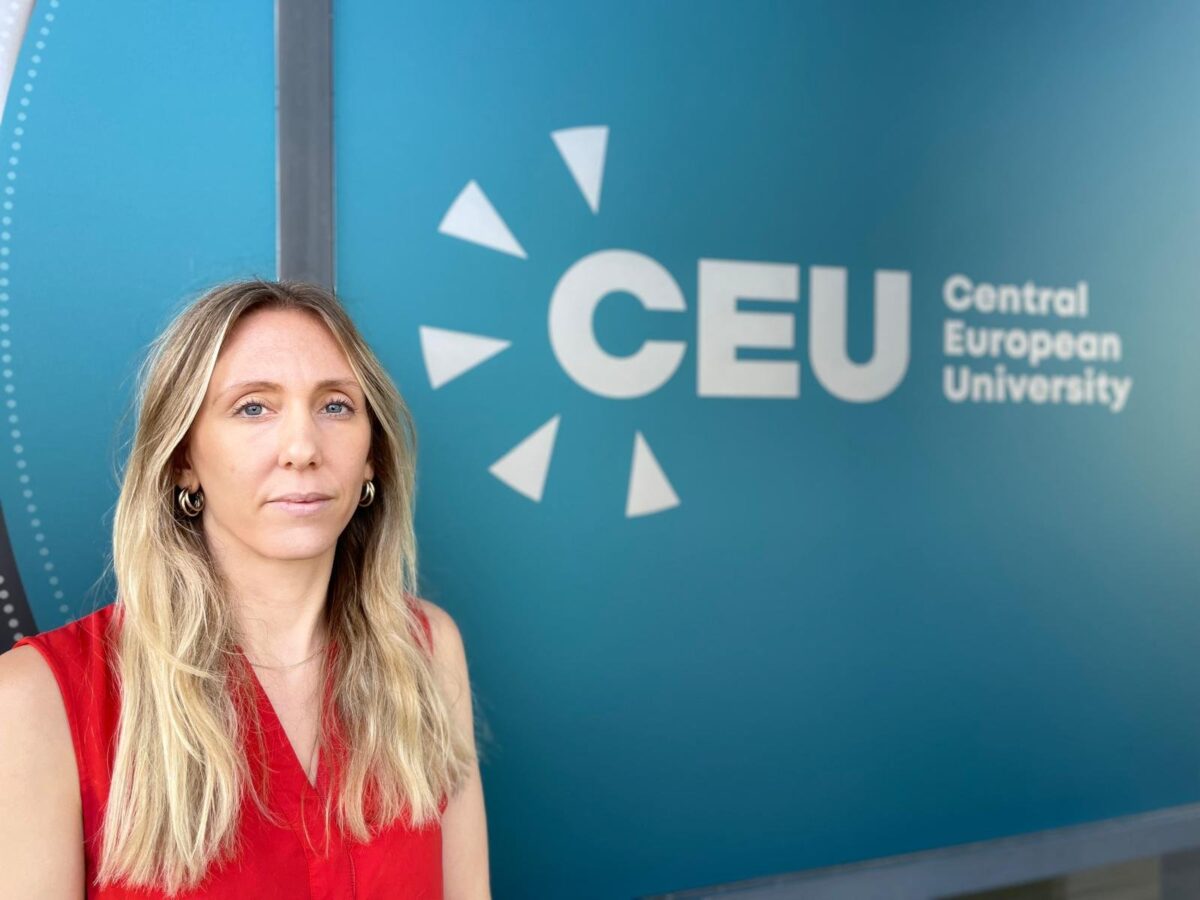
German lawyer Lena Riemer, who works at the Central European University in Vienna and specialises in migration, said Vladimir Putin cannot help but laugh at the internal disagreements, while criticising European politicians’ approach to the issue.
How do you explain recent happenings in Ceuta? Some politicians have accused Spain of legalising tens of thousands of undocumented migrants. Italian foreign minister Antonio Tajani claimed Spain was automatically granting them EU citizenship. What is your view?
That last point is beyond ridiculous. And we need to be careful; the Ceuta situation was complex, so we need to view it through a broader context, including from a historical perspective. The Ceuta crisis did not happen overnight.
It seems that for the past decade, things had been leading towards this very moment. The situation at the Ceuta border had been genuinely critical for years, and crossings had occurred frequently — just never on this scale. For colleagues who had previously worked with people on the ground in Ceuta and brought their cases before the courts, it was more a question of when something like this would happen, for several reasons.
“The situation at the Ceuta border had been genuinely critical for years, and crossings had occurred frequently — just never on this scale.”.
Look at the current situation around the world. For instance, many people in Morocco face severe economic hardship, unemployment and so on. This leads to the younger generation seeking a better life. In this way, we are all in the same boat and I think many of us would make the same decision as them.
This crisis was compounded by other factors. The media played a role. Some say it was a network of people smugglers. I am not particularly convinced by that argument, since smugglers typically aim to make money. Here, it appears that people migrated alone, so it is not clear how a smuggling network could have made much money. Others claim the surge was linked to the legalisation of undocumented migrants in Spain, or that a court ruling in Spain had “opened people’s eyes”.
Some politicians have claimed that the legalisation of undocumented migrants automatically grants them EU citizenship.
No one in their right mind would claim that – it’s utter nonsense! There is research and a substantial body of academic work examining the impact of granting residency status.
Italy has run several immigration regularisation programmes in the past, something its politicians seem to forget when they argue against new ones. The US did the same under Ronald Reagan in the 1980s. There is no solid evidence that these programmes encourage more people to try to enter the country irregularly in the future. In fact, the opposite has often happened: irregular migration numbers have tended to fall, because giving people legal status and stability reduces the incentive to live and work in the shadows.
Moreover, under this specific Spanish programme, people can apply for regularisation only under very specific circumstances, applying only to a group of people who entered the country at a very specific point in time. It was a one-off measure. Based on the facts examined by researchers, it is unlikely to have had anything to do with this.
How do you respond to right-wing politicians who say Spain opened Europe’s borders?
They are like kindergarten children. What we are really seeing here are political actors such as EU migration commissioner Magnus Brunner exploiting the situation to point the finger at Spain, which has taken a somewhat different path from other European countries. Ceuta was a welcome opportunity to say, “you are wrong, this is your fault,” and thereby justify a hardline approach.
There were calls to exclude Spain from Schengen…is that even possible?
No. The EU’s Schengen Borders Code, means everyone who is part of Schengen is bound by it. And there is no exclusion clause. Sometimes I do not know whether it is ignorance or simply deliberate deceit, but excluding a country from Schengen is simply not possible. What you can do is introduce border controls. However, the code contains a provision stating that, under strict circumstances and in the event of an emergency, border controls may be introduced for a very limited period.
Border controls between Schengen countries should be temporary, but controls at the Slovakia-Austria andGermany-Austria borders have been in place for months or years. Is that even legal?
“Any reasonable lawyer looking at this would ask: where do you see the emergency?”
It is a breach of EU law. It is clear and everyone knows it, but the Germans deny it. Ceuta, too, was a welcome opportunity for Schengen members to say: “Another emergency, great! Let us use this to justify more border restrictions.” Any reasonable lawyer looking at this would ask: “Where do you see the emergency?” The overwhelming majority of people in Ceuta were sent back, with only a very small number who will make it to the mainland at all. Being in Ceuta does not mean you can access mainland Spain.
You can only reach mainland Spain by sea. It is not as though you can get there by land.
Indeed, just look at a map. Ceuta has a specific role and legal regime. Being in Ceuta does not mean that you have freedom of movement when travelling. If, for example, you apply for asylum in Ceuta, that does not automatically give you the right to enter Spain. And when you leave Ceuta to enter Spain, you are checked again, and if you do not have documents, you will not be allowed in. So saying, “they are all here in Europe now,” is a populist statement.
“The only group likely to end up in Spain — and hopefully they will — are unaccompanied minors, who require special protection under European and national law.”
These migrants are hundreds of kilometres away. They do not suddenly have the right to enter the mainland. The only group likely to end up in Spain — and hopefully they will — are unaccompanied minors, who require special protection under European and national law. Ceuta is not a place where Spain can guarantee that special protection, so it will probably have to transfer them to the mainland.
Lena Riemer outside the Central European University building in Vienna. She has also worked at universities in Berlin and studied at Yale Law School. Source: Soňa Weissová
EUobserver reported that thousands of children had been left living on the streets.
Spain is thereby violating international law, EU law and national law every single day, because it has an obligation to immediately assess all minors and provide them with accommodation, food, psychological support and healthcare. They should not be there for even one day.
Ceuta has been problematic for many years, with people climbing over the fences there virtually every day. And the EU has been unable to resolve the migration problem more widely, not only in Ceuta, but in other countries too. Why, in your view, is the system not working?
This article continues, but the full version is available only to EUobserver.com subscribers. Visit account.euobserver.com/membership
The European Commission says it will not compromise on protecting the EU’s external borders, but will also respect human rights, while declining to specify if a new emergency rule could suspend people’s basic right to asylum.
The vague statements by Magnus Brunner, the EU home affairs commissioner, in Brussels on Tuesday (29 September), followed an equally vague proposal announced by commission president Ursula von der Leyen in her State of the Union speech on 11 September, who pledged to create a “European emergency response framework”.
When asked if her new framework would include the possibility to suspend asylum at the EU’s external border in cases that mirrored this summer’s Ceuta crisis, when tens of thousands of people entered the Spanish enclave in north Africa, Brunner said: “I can’t go into details, because it’s a discussion which is going on at the moment”.
His non-committal take on the hot button issue also came after a resolution adopted by the centre-right European People’s Party (EPP) in Brussels on Tuesday, which is demanding that member countries, in some cases, be given the option to temporarily suspend asylum applications.
Specifically, it calls on the EU “to adopt legislative measures authorising refusal of entry or returns without individual asylum procedures for illegal migrants used in a hybrid attack”.
Meanwhile, Brunner and von der Leyen come from the same conservative party in the EPP, posing questions to what extent political pressure has influenced the latest commission initiative.
Greece’s prime minister Kyriakos Mitsotakis (also EPP) in early August had already gone public with demands for new EU rules allowing for asylum to be suspended for newly arrived people.
The Polish government (EPP) also weighed in, claiming credit for getting von der Leyen to cite the idea in her big speech.
Warsaw had earlier this month extended its asylum ban on people entering from Belarus, in what rights groups say involves pushbacks that cause loss of life.
But for Brunner, the issue had already been broached in a commission asylum strategy report that was published back in January.
That report references “weaponisation of migration” by hostile countries, such as Belarus and Russia, and links it back to another commission document from December 2024 that argues there are certain exceptional situations in which the ban on pushbacks cannot apply.
Danny Tommo, the anti-migrant activist, has been denied bail after appearing in court for allegedly slashing a migrant boat in the Channel – despite the five suspects in the RAF Fairford terror plot all being bailed.
EU migrant return hubs became the subject of a summit held in Munich on Saturday (26 September) as interior ministers from member and associate states met the European Commission to advance projects aimed at offshoring rejected asylum seekers.
But the meeting made little progress, partly because many of the attendees met in Copenhagen on 4 September, where leaders had announced an expected start to the policy by 2027.
Instead, the main takeaways from Munich included rehashed commitments on improved emergency responses as well as broadened use of Frontex, the EU’s border control agency, and migration diplomacy with third states.
Though the mass border crossing into Ceuta, the Spanish enclave in North Africa, was a subject of discussion, the 18 EU and non-EU interior ministers present in Munich did not include a representative from Spain, possibly due to Pedro Sánchez’s opposition to the return hubs policy.
But the UK’s home secretary Shabana Mahmood was present, talking of the need for close cooperation within Europe on migration issues,” Germany’s interior minister and meeting host, Alexander Dobrindt, told reporters on Saturday.
Despite Donrindt’s focus on “innovative solutions” for those with no right to stay in Europe but no way or returning, Berlin’s migration response would also be significantly dependent on expanded powers for Europe’s border agency, Frontex.
“We are seeing that the Pact is working. The number of irregular arrivals is dropping across the EU while at the same time the numbers of returns to third countries are increasing. That said, we cannot become complacent,” Jim O’Callaghan, Irish interior minister, told the press before the meeting.
This article continues, but the full version is available only to EUobserver.com subscribers. Visit account.euobserver.com/membership
Shabana Mahmood is to announce a fast-track new legal route for "vulnerable" refugees from Palestine, Afghanistan and elsewhere that will grant them permanent settlement in the UK.
Ever been called 'far Right' for wanting low taxes, free speech and controlled immigration? You're in good company: JFK wanted much the same. The label is ludicrous – and the elites know it, says Dr James Allan.
Refugee Action is busy lobbying the Government to scrap its "cruel" new asylum bill. Which is curious, says Charlotte Gill, because this 'charity' received over £16 million in government funding in 2021-25.

 Login