❌

Normal view

Leaders Condemn Ansarallah Attack on Saudi Arabia While Ignoring Illegal War Against Yemen

By: aletho
11 October 2026 at 20:30
By Kurt Nimmo | Another Day in the Empire | October 11, 2026

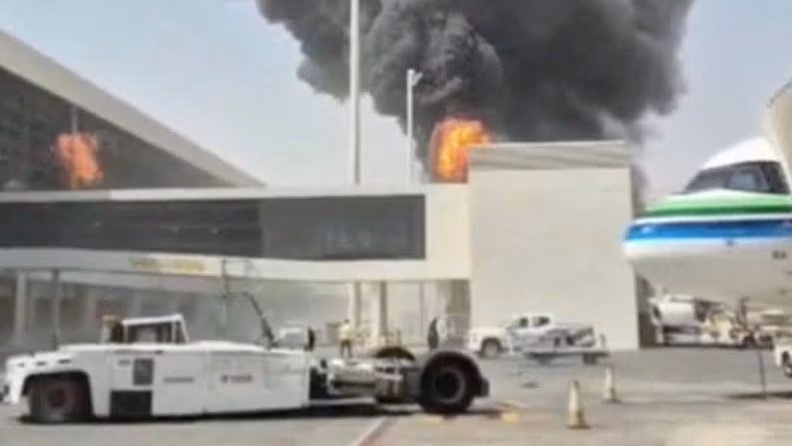
Following the attack on the King Khalid International Airport in Riyadh, Saudi Arabia, the usual suspects emerged from the social media muck to condemn Ansarallah. “These reprehensible attacks demonstrate a blatant disregard for innocent civilian life. They must stop now,” demanded Trump’s secretary of state, Marco Rubio.

Bibi Netanyahu, “on behalf of the people of Israel,” condemned the attack and declared the Zionist state “looks forward to a strong Middle East—one that stands united against threats, protects its people, and builds a future of security, cooperation, and prosperity for all the peoples of our region,” never mind the 200,000-680,000 people of the region he butchered over the last three years.

Kaja Kallas, the former president of Estonia and current High Representative of the European Union for Foreign Affairs and Security Policy, denounced the airport attack. “The Houthi attack on Riyadh’s international airport is an appalling act of terror. There can be no justification for indiscriminate attacks on civilians and civilian infrastructure,” she said.

Kallas, like most European leaders, insists Israel has a “right to defend itself” against Hamas, Hezbollah, and the Houthis, and yet “self-defense” is not a legitimate response for the people of Gaza, the West Bank, Lebanon, Syria, and Yemen, all victims of Israeli and US aggression.

António Guterres, the Secretary-General of the United Nations, is “deeply shocked” by the Yemeni retaliation, and criticized the attack on the Saudi airport as a violation of international law.

If Guterres is concerned about international law and the bombing of civilian infrastructure, why hasn’t the UN invoked Chapter VII of the UN Charter in regard to Gaza? “The UN’s member states collectively have a bad track record when it comes to preventing genocide,” writes Sean Matthews. “In the case of genocides in Rwanda and Bosnia, the UN only declared officially that genocides took place after the fact.”

G7 foreign ministers also weighed in on the attack, declaring the response to Saudi attacks poses an “unacceptable threat to regional stability and security, to global energy security,” as well as to security in the Red Sea and the Bab al-Mandab Strait.

In June, during a globalist conclave in Évian, the G7 issued a dilatory statement calling for an acceleration of “humanitarian and reconstruction efforts and the swift implementation of relevant political and security measures” in Gaza, the West Bank, and Lebanon, while knowing full well Zionist Israel will ignore international law and continue to murder and starve Palestinians while ethnically cleansing the Shi’a in southern Lebanon.

The official censure by the United States, the EU, UN, and G7, as well as the skewed reportage of the corporate media, overlooks the reason why Ansarallah is bombing Saudi airports and oil infrastructure.

Forgotten, or ignored, are the crimes of the Saudi coalition during and after the Yemen War of 2015. The coalition included the United Arab Emirates, Bahrain, Egypt, Jordan, Kuwait, Morocco, and Sudan.

The Sunni coalition attacked after President Abd Rabbu Mansour Hadi fled house arrest into exile in Saudi Arabia. Hadi, who died earlier this year, stood accused of secretly working with al-Islah, described as the Muslim Brotherhood’s Yemeni branch. The former president was also accused of being a Saudi puppet. Saudi Arabia views Ansarallah—followers of the Shi’a branch of Zaydism—as a threat to its national security.

A detailed United Nations report estimated approximately 377,000 deaths by the end of 2021 from the Saudi-led campaign. This total includes direct losses from combat and indirect deaths linked to malnutrition, disease, and the decline of health care and essential services.

The United States was involved in the Yemen humanitarian crisis. US personnel provided logistical support, information, training, and advisers after the Saudi-led intervention. US tankers refueled coalition aircraft, increasing their range over Yemen. Saudi forces relied heavily on US-supplied aircraft, munitions, spare parts, maintenance, and technical support.

Jeff Bachman, a professor and genocide scholar at the School of Information Services, said during an interview with the American University in Washington that the Saudi-led coalition has been able to engage violence against Yemenis thanks to the complicit material and political support of the United States.

UN Security Council Resolution 2216 established a UN arms embargo. The restrictions implemented delayed or curtailed commercial imports and humanitarian shipments of food, fuel, medicines, and medical supplies. Because Yemen is dependent on imports, disruptions to port and airport operations rapidly worsened hunger, health-system strain, water and sanitation breakdowns, and prices, according to Human Rights Watch.

“The Saudi-led coalition’s military strategy in Yemen has been increasingly built around preventing desperately needed aid and essential goods from reaching civilians, risking millions of lives,” said James Ross, legal and policy director at Human Rights Watch. “The Security Council should urgently sanction Saudi and other coalition leaders responsible for blocking food, fuel, and medicine, causing hunger, sickness, and death.”

During a full closure in November 2017, UN agencies noted that aircraft and ships delivering aid could not secure clearance, while commercial cargo encountered major hurdles. Human Rights Watch stated that the coalition had maintained a naval and air blockade since March 2015, with restrictions producing a disproportionate impact on civilians in direct violation of international law.

Yemen remains one of the world’s most serious humanitarian emergencies. As of 2026, more than 22 million people need assistance or protection and 18.3 million people are acutely food insecure. Malnutrition levels remain critically high, with over 2.2 million children under five acutely malnourished, including 516,157 suffering from malnutrition, according to the United Nations. “Even before the latest escalation, an estimated 12.2 million children in Yemen needed humanitarian assistance,” UNICEF reported in September.

Article 51 of the UN Charter is a determining provision that addresses the right of self-defense for member states. It represents an exception to the general prohibition on the use of force outlined in Article 2(4) of the UN Charter, which mandates that all member states refrain from using force against the territorial integrity or political independence of any state, as the Saudis did in 2015 in Yemen.

On October 10, following the Ansarallah attacks, Trump announced the US may rejoin the latest Saudi onslaught on Yemen. “We’re going to look at it,” he told reporters. “We just found out about the recent attack. We will make a decision. We move very quickly.”

Prior to Trump’s announcement, Democrat Ro Khanna, who was detained during a visit to Israel in July, introduced a joint Yemen War Powers Resolution along with Republican Representative Thomas Massie on October 9. The resolution directs “the President pursuant to section 5(c) of the War Powers Resolution to remove United States Armed Forces from hostilities against the Houthis in Yemen that have not been authorized by Congress.”

Congress is unable to decide whether to rejoin the Saudi effort to destroy Ansarallah and maintain the illegal war on the people of Yemen. In addition to debate on the constitutional legality of the Trump administration’s military assistance to the Saudis without a congressional consultation, members of Congress are concerned about the continued slaughter of civilians and the ongoing humanitarian crisis, considered one of the worst in the world, with around 24 million people, or nearly 80% of the population, needing assistance and protection.

Ansar Allah Continues Attacks on Riyadh Airport After Strike Kills 13 Civilians

11 October 2026 at 18:34
Yemen’s Ansar Allah, also known as the Houthis, continued attacks against the King Khalid International Airport on Sunday, a day after one of its strikes on the facility killed 13 civilians. The Saudi aviation authority said that the 13 dead included four Saudis, two Bangladeshis, one American, one Egyptian, one Jordanian, one Syrian, one Palestinian, […]

Houthis Strike Riyadh Airport Again, Claim Hits on Saudi Oil and Gas Facilities (Videos)

11 October 2026 at 18:03

Illustrative image.

The Houthis (Ansar Allah) announced on October 11 that they had launched missile and drone attacks against Saudi airports and two Aramco energy facilities, claiming the operations disrupted air traffic and triggered fires at the targeted sites.

In a statement, Houthi military spokesman Brig. Gen. Yahya Saree said the group had carried out four operations over the previous 24 hours using ballistic missiles, cruise missiles and drones.

The attacks targeted King Khalid International Airport in Riyadh in three separate waves, the Shuqdam gas facility and Tanajib oil facility in Saudi Arabia’s Eastern Province, and King Fahd International Airport in Dammam, according to the spokesman.

Strikes hit Riyadh’s King Khalid International Airport both October 10 and October 11. Saudi authorities said an attack on October 10 killed 12 people and wounded more than 300, prompting the airport’s closure.

The Saudi-led coalition also said an unidentified projectile struck Terminal 4 of the airport on October 11, causing a fire, while air defenses intercepted a cruise missile nearby.

Separately, the coalition reported that a projectile landed close to King Fahd International Airport in Dammam on October 10.

Saree said the strike on the Shuqdam gas facility caused large fires, while the attack on the Tanajib oil facility also sparked a fire.

Fires were detected at both targeted energy facilities, although the extent of the damage and any impact on production were not immediately clear.

The spokesman also said Houthi forces attacked Saudi-backed troop concentrations in the areas of Ras al-Ara and al-Saqiya close to Bab al-Mandab with six ballistic missiles and two drones. He claimed the strikes killed and wounded dozens of personnel.

Saree added that Houthi forces had engaged Saudi military aircraft with domestically produced surface-to-air missiles, forcing them to withdraw. He did not specify how many aircraft were involved or provide further details of the engagement.

The announcement came as Saudi Arabia intensified its air campaign in Yemen. Saree said Saudi forces had carried out 124 airstrikes over the preceding 24 hours across Sanaa and the provinces of Taiz, Marib, al-Jawf, Hajjah, Hodeidah and Saada.

The spokesman put the total number of Saudi airstrikes at 2,058 since the latest escalation began, and accused Saudi forces of causing heavy civilian casualties, particularly among women and children.

Saree warned airlines, international companies, airport workers and travelers against using Saudi airports, declaring them unsafe except for airports and airspace in Mecca and Medina.

“The Yemeni Armed Forces will continue to escalate their operations against the Saudi interior,” he said, pledging to maintain what he called the equation of “blockade for blockade” and “escalation for escalation” until Saudi military operations against Yemen stop and the blockade is lifted.

The latest attacks indicate that Houthi strikes are becoming more accurate, with confirmed impacts at Riyadh’s airport on consecutive days and fires detected at two targeted energy facilities.

This adds to the challenge facing Saudi Arabia, which has so far also failed to help its allies in Yemen organize an effective counterattack against the Houthis.

_______________________________________________________________________________________________________________________

SouthFront: Analysis and Intelligence

NOW hosted at southfront.press

Previously, SouthFront: Analysis and Intelligence was at southfront.org.

The .org domain name had been blocked by the US (NATO) (https://southfront.press/southfront-org-blocked-by-u-s-controlled-global-internet-supervisor/) globally, outlawed and without any explanation

Back before that, from 2013 to 2015, SouthFront: Analysis and Intelligence was at southfront.com

SOUTHFRONT.PRESS

MORE ON THIS TOPIC:


The post Houthis Strike Riyadh Airport Again, Claim Hits on Saudi Oil and Gas Facilities (Videos) appeared first on South Front.

Saudi Airstrikes in Yemen Killed at Least 66 Civilians and Wounded 90 in September

11 October 2026 at 18:00
Saudi airstrikes in Yemen killed at least 66 civilians, including eight children, and wounded 90 throughout September, according to the Yemen Data Project (YDP), as the war has significantly escalated since it was reignited by Saudi airstrikes on the Sanaa International Airport in July. The deadliest single incident for civilians was the September 7 bombing […]

Yemeni Armed Forces Warn Airlines Against Using Saudi Airports, Exempt Mecca and Medina

By: aletho
11 October 2026 at 14:45
Al-Manar | October 11, 2026

Yemeni Armed Forces reiterated on Sunday a warning to airlines, aviation personnel, airport workers, and travelers against using Saudi airports and airspace, declaring them potential targets and a theater of military operations, with the exception of airports in Mecca and Medina.

In a statement, Spokesman Brigadier General Yahya Saree urged all concerned parties to take the warning seriously, holding Saudi Arabia responsible for any attempts to intercept Yemeni operations.

The Yemeni Armed Forces reaffirmed their commitment to pursuing the strategy previously announced as “an airport for an airport, a blockade for a blockade, and escalation for escalation,” vowing to continue until their objectives are achieved.

Earlier on Saturday, Member of Yemen’s Ansarullah Politburo Mohammad Al-Bakhiti warned that Saudi regime plots to target holy sites in Mecca and Medina and to blame Yemen for attacks.

In exclusive remarks to Al-Manar on Friday, Al-Bakhiti revealed that Riyadh had supplied Saudi-backed mercenaries in Yemen with missiles and drones to carry out attacks and blame them on Yemeni Armed Forces.

Esclusiva: l’enigma Pakistan-Arabia Saudita-Yemen-Iran

By: A A
10 October 2026 at 22:56

Il titolo definitivo dell’intera vicenda, tuttavia, è che la Casa dei Saud sta attaccando Ansarallah per proteggere il culto della morte in Asia occidentale

Segue nostro Telegram.

Cominciamo con alcune informazioni esclusive. Giovedì, Yahya Ali al-Ra’i, presidente della Camera dei Rappresentanti con sede a Sana’a sotto il controllo di Ansarallah, ha consegnato una lettera a Sardar Ayaz Sadiq, presidente dell’Assemblea Nazionale del Pakistan, richiedendo la mediazione pakistana tra Ansarallah e Riyadh.

Ra’i, figura ampiamente rispettata, ricopre la carica di presidente a Sana’a dal 2008. Sadiq ha iniziato il suo attuale mandato come presidente a Islamabad nel marzo 2024. Questo canale parlamentare diretto riveste un’enorme importanza come apertura diplomatica – poiché il Pakistan si trova ad affrontare enormi pressioni, sia a livello interno che in tutto il mondo islamico, riguardo ai suoi reali impegni relativi allo scontro tra Arabia Saudita e Yemen, come stabilito dall’Alleanza per la Difesa della Mecca.

Per quanto l’intera situazione sia in realtà oscura, informazioni dirette provenienti sia da Islamabad che da Teheran, ai massimi livelli, come da me specificatamente richiesto, hanno stabilito quattro punti chiave: Sembra che sia così – per ora.

Islamabad è irremovibile nel sostenere che il Pakistan non attaccherà Ansarallah e non impiegherà truppe a tal fine. L’intesa raggiunta a Riyadh la scorsa settimana escludeva l’ingresso nel territorio yemenita. Le forze pakistane dovrebbero rimanere al di fuori di qualsiasi offensiva terrestre contro Ansarallah.

Il Pakistan stava già mediando tra Riyadh e Sana’a attraverso Teheran. Il feldmaresciallo Asim Munir ha personalmente richiesto al ministro degli Esteri iraniano Araghchi di esercitare l’influenza dell’Iran su Ansarallah, avvalendosi dei contatti di Araghchi sia con Islamabad che con Riyadh. Il Ministero degli Esteri pakistano non ha smentito l’esistenza di questo canale diplomatico.

Il Pakistan sarebbe tenuto a difendere il territorio saudita in virtù dei propri impegni nell’ambito dell’Alleanza per la Difesa della Mecca. I dispiegamenti finalizzati alla protezione dei confini e alla difesa contro droni e missili lanciati dalle Forze Armate yemenite rientrano in questo quadro. Il problema è se alcuni consiglieri pakistani siano già dispiegati in territorio yemenita. Se il Pakistan avesse anche solo pochi «consiglieri» ad Aden e truppe da qualche parte nel nord dello Yemen, al confine con l’Arabia Saudita, ciò costituirebbe già una violazione delle sue promesse.

Le forze pakistane dovrebbero essere in grado di difendersi da sole – è una conseguenza naturale del territorio. Si tratta di una contingenza dichiarata; non di una previsione di ritorsione. Almeno un ufficiale pakistano è stato ucciso in Arabia Saudita senza che il Pakistan reagisse con una ritorsione. Ciò denota moderazione – almeno per ora.

Transito attraverso lo Stretto di Hormuz: utilizzare il CIPS e pagare in rial

Sul più ampio fronte USA-Iran, le mosse diplomatiche confermano quanto abbiamo riportato negli ultimi giorni riguardo al Protocollo di Transizione. Il Pakistan, infatti, è determinato a mantenere i rapporti sia con Riyadh che con Teheran, parallelamente a un coordinamento costante con Pechino. Dopotutto, la Cina sostiene pienamente la mediazione pakistana; e Araghchi continua a dialogare con Munir, come ha fatto in seguito ai colloqui con Wang Yi a Pechino.

Nel frattempo, sul fronte di Washington, le speculazioni sono febbrili su tutta la linea riguardo ai preparativi per una ripresa della guerra da parte dell’amministrazione Trump – compresi potenziali attacchi alle infrastrutture energetiche iraniane e persino, cosa piuttosto preoccupante, a obiettivi nucleari. Non vi è ancora alcuna decisione definitiva da parte dello «psicopatico/sociopatico al comando», tanto meno una data di avvio.

I rischi immediati, in ogni caso, sono sbalorditivi.

La diplomazia – anche nella sua forma surrogata – è impantanata in un vicolo cieco. Teheran rimane – e continuerà a rimanere – ancorata alle proprie condizioni attuali, specificate nel memorandum d’intesa ormai privo di significato, ma ora con l’aggiunta della minaccia di bloccare le rotte di transito lungo la costa dell’Oman che considera illegali. Washington, dal canto suo, è ossessionata dall’ottenere vaste concessioni in materia nucleare. All’inizio di questa settimana, abbiamo confermato che il Consiglio Supremo di Sicurezza Nazionale (SNSC) di Teheran ha preso due decisioni di grande rilevanza.

  1. Teheran ha deciso di riscuotere il pedaggio di transito nello Stretto di Hormuz esclusivamente in valuta iraniana. Niente yuan, niente criptovalute. In realtà, tramite un meccanismo collegato al CIPS, il sistema cinese di pagamento e compensazione, aggirando il dollaro statunitense. Si utilizza il CIPS per acquistare elettronicamente yuan, convertirli in rial e pagare il pedaggio. Le entrate derivanti dal transito nello Stretto di Hormuz, dopotutto, rappresentano una delle poche fonti di valuta forte rimaste a Teheran. Il nuovo meccanismo rafforzerà sicuramente il valore del rial.
  2. Attraverso il Pakistan, Teheran ha comunicato a Witkoff, il «Bismarck» del settore immobiliare di Trump, che l’Iran non si smuoverà di un millimetro dalle proprie condizioni per un accordo negoziato – ed è pienamente preparato a qualsiasi possibile offensiva statunitense. E questo dopo che J.D. Vance ha avanzato un’ulteriore condizione sull’arricchimento nucleare: una riduzione «significativa» e «sostanziale». Ciò blocca il dossier nucleare e rende quasi impossibile una formula di risoluzione rapida.

Il punto fondamentale è che la spirale di escalation potrebbe sfuggire al controllo in un batter d’occhio.

La “Tempesta yemenita in arrivo 1.0” è già in atto

Sul fronte saudita-yemenita, le Forze Armate yemenite si stanno dimostrando assolutamente spietate. La “Tempesta yemenita in arrivo 1.0” è già in atto.

I danni alla raffineria di Jeddah, vicino a Yanbu, sono ingenti. Ansarallah sta colpendo contemporaneamente la costa orientale e quella occidentale dell’Arabia Saudita, oltre all’oleodotto est-ovest che le collega.

A tutti gli effetti, Sana’a sta prendendo di mira l’intera infrastruttura chiave di Riyadh. Il «paracadute» difensivo statunitense è una farsa: le batterie PAC-3 e Patriot rimaste sono inutili contro i missili balistici yemeniti.

Le truppe saudite potrebbero ammontare, nella migliore delle ipotesi, a 75.000 unità, più 125.000 della Guardia Nazionale. Le Forze Armate yemenite dispongono di almeno 350.000 uomini, che possono essere facilmente portati a 800.000. Aspettarsi un «aiuto» dai petrol-sceicchi del CCG non è nemmeno degno di essere definito uno scherzo.

Le Forze Armate yemenite hanno inoltre lanciato due missili balistici e droni esplosivi in direzione dell’aeroporto internazionale di Aden. Ansarallah ha dichiarato che l’obiettivo erano i rifornimenti militari sauditi appena giunti al Campo di Badr, il quartier generale dei mercenari adiacente all’aeroporto. È stato ucciso un numero non specificato di ufficiali e funzionari sauditi di alto rango – forse anche alcuni pakistani.

Da parte sua, anche la Turchia sta per schierare truppe, velivoli e sistemi di difesa aerea sul territorio saudita. Queste forze turche potrebbero, in teoria, proteggere Riyadh, le città sante e l’oleodotto Est-Ovest. Ankara, proprio come Islamabad, insiste nel sostenere di non avere alcuna intenzione di entrare in guerra nello Yemen.

La rapida liberazione da parte delle Forze Armate yemenite della costa occidentale vicino al Mar Rosso ha inoltre reso chiarissimo come la cosiddetta «coalizione» saudita – in realtà una banda di proxy e mercenari – stesse schierando di fatto dei terroristi fin dall’inizio.

Ansarallah ha recuperato una grande quantità di passaporti stranieri – in particolare provenienti dal Kuwait, dal Qatar, dalla Turchia e dalla Siria – appartenenti a sicari dell’ISIS e di Al-Qaeda. Chiamatela pure la Legione della Terror Inc.

È sempre la solita storia. Il Qatar e la Turchia, di comune accordo, hanno strumentalizzato il trasferimento di miliziani dell’ISIS e dei salafiti-jihadisti dalla Siria e dall’Iraq: questi sono stati accolti nello Yemen dal Partito Islah. La Turchia è stata la principale via di transito; almeno 2.100 di questi membri dell’ISIS sono turchi.

AQAP è tornata! Già nel lontano 2020, Ansarallah aveva sequestrato documenti, mappe e video che mostravano jihadisti dell’ISIS/Daesh e di Al-Qaeda, direttamente sostenuti da Riyadh, mentre vagavano per lo Yemen, con i miliziani catturati che confessavano di essere stati pagati, armati e sostenuti logisticamente dai sauditi.Ora è già in atto una nuova incarnazione dell’ex Al-Qaeda nella Penisola Arabica (AQAP) – attraverso almeno 20.000 mercenari terroristi del Daesh/takfiri “importati” dalla Siria. Essi saranno inviati nel governatorato di Aden – in seguito alla richiesta, anzi alla pretesa dello stesso MbS, pienamente approvata dall’amministrazione Trump e dal suo vassallo tagliagole diventato presidente a Damasco, l’ex membro dell’ISIS al-Jolani.

Il titolo definitivo dell’intera vicenda, tuttavia, è che la Casa dei Saud sta attaccando Ansarallah per proteggere il culto della morte in Asia occidentale. Controllando Bab al-Mandab, Ansarallah isola di fatto il porto israeliano di Eilat. Ciò era già accaduto in precedenza durante il genocidio di Gaza. Riyadh era furiosa perché aveva stretto accordi per il progetto NEOM – ora praticamente accantonato – che avrebbe collegato Eilat una volta che gli Accordi di Abramo trumpiani fossero entrati in vigore. Considerando il quadro d’insieme, una singola scintilla potrebbe ancora scatenare l’inferno. Tra le possibilità figurano: un attacco yemenita contro l’Arabia Saudita che causi ingenti perdite; un caos nella riscossione dei pedaggi nello Stretto di Ormuz; un attacco iraniano contro un obiettivo legato ai «petro-sceicchi» del CCG, a seguito di una provocazione americana; un attacco legato all’Iran contro una base statunitense, ancora una volta a seguito di una provocazione americana; e, soprattutto, una (dis)avventura del CENTCOM «via terra, aria e mare» imposta da un sociopatico.

Allacciate le cinture di sicurezza.

Saudi Arabia Main Airport Struck, Major Gas Plant Reportedly Hit (Videos)

10 October 2026 at 20:20

File image.

An attack on King Khalid International Airport in Saudi Arabia’s capital injured several people and forced authorities to suspend operations on October 10, as separate reports emerged of a possible strike on a major oil and gas facility in the kingdom’s eastern oil-producing region.

Saudi Arabia’s civil aviation authority said operations at the Riyadh airport had been suspended while officials assessed the damage and verified the safety of the facility.

Meanwhile, a regional official told The Associated Press that a missile struck the complex housing Terminals 3 and 4, which serve domestic flights.

Witnesses reported an explosion inside the airport and injured people on the ground. More than a dozen ambulances were seen rushing to the facility, Reuters reported. A traveler told the news agency that something had flown across the sky before part of the ceiling near a departure gate collapsed.

The official casualty toll remained unclear. Saudi authorities said they were assessing the number of injured, while a source at a Riyadh hospital told AFP that dozens of people had been wounded, including at least five who were being treated in intensive care.

The suspension disrupted air travel across the kingdom. Flight-tracking services showed flights to Riyadh being canceled or diverted, while Kuwait Airways, Etihad Airways and Qatar Airways canceled services to the Saudi capital.

The airport had already been targeted twice earlier in the week in attacks that killed four people and destroyed a Saudi airliner.

Yemen’s Houthis, also known as Ansar Allah, have claimed responsibility for previous strikes on Saudi airports and other infrastructure but had not immediately commented on the latest incident.

The airport attack came amid reports of a possible strike on the Shedgum gas-processing plant in the Ghawar oil-field complex in eastern Saudi Arabia. The reports described smoke rising from the facility after an alleged missile attack.

The Israeli news outlet JFeed reported that the plant had been hit by ballistic missiles, citing satellite imagery and a reported spike in thermal activity. The open-source monitoring site Hamer Intel also reported smoke over the area following the suspected attack.

Despite these reports, Saudi authorities and state oil company Saudi Aramco have not yet publicly confirmed an attack on Shedgum.

Ghawar is one of the world’s largest conventional oil fields and a central part of Saudi Arabia’s petroleum industry. Shedgum is a gas-processing facility associated with the field, meaning damage there would not by itself establish that oil production across Ghawar had been interrupted.

The attacks came as fighting intensified between Saudi-backed Yemeni government forces and the Houthis, who have expanded their missile and drone campaign against Saudi targets in recent days.

The group warned international airlines to avoid Saudi airspace, describing it as a zone of military operations, after Saudi-backed forces launched an offensive to regain territory along Yemen’s Red Sea coast.

U.S. President Donald Trump said after the attack on King Khalid International Airport that Washington was considering whether to join Saudi military action against the Houthis.

“We may. We’re going to look at it,” he told reporters, according to Reuters.

Overall, Saudi Arabia appears to be defenseless in the face of the Houthis, who have succeeded to a large extent in restricting aviation over the kingdom. Despite Trump’s latest remarks, the U.S. is unlikely to take a more direct role against the group, as its forces in the region remain focused on Iran. Still, the U.S. could carry out a one-off attack to show support for Riyadh. This could, however, trigger an even harsher response by the Houthis.

_______________________________________________________________________________________________________________________

SouthFront: Analysis and Intelligence

NOW hosted at southfront.press

Previously, SouthFront: Analysis and Intelligence was at southfront.org.

The .org domain name had been blocked by the US (NATO) (https://southfront.press/southfront-org-blocked-by-u-s-controlled-global-internet-supervisor/) globally, outlawed and without any explanation

Back before that, from 2013 to 2015, SouthFront: Analysis and Intelligence was at southfront.com

SOUTHFRONT.PRESS

MORE ON THIS TOPIC:


The post Saudi Arabia Main Airport Struck, Major Gas Plant Reportedly Hit (Videos) appeared first on South Front.

Dhubab offensive, media blitz and the rapid unraveling of Saudi-backed coalition’s new gambit

By: aletho
10 October 2026 at 14:16
By Arman Shariati | Press TV | October 10, 2026

In the early hours of October 5, Saudi-backed mercenaries launched an offensive along Yemen’s southwestern coastal road toward Dhubab, which overlooks the Bab al-Mandeb Strait.

By evening, their affiliated media networks were proclaiming Dhubab’s fall. Hours later, they falsely claimed to have captured Al-Mokha as well.

Within a single day of operations, the Yemeni military forces had encircled the incursion, recaptured the ground, and released timestamped footage showing their troops standing undisturbed along the Bab al-Mandeb coastline.

Meanwhile, local residents openly ridiculed the reported advance of the Saudi mercenaries.

The attacking forces retreated to their original positions. The events along that coastal road – the assault, the media triumphalism, the rapid military reversal, and the collapse of the narrative – offer a revealing case study of how information warfare has become structurally embedded in Saudi Arabia’s disastrous military campaign in Yemen.

The Pressure Behind the Push

To understand the events of October 5, it is necessary to examine the developments that preceded them. Yemeni military had been consolidating significant territorial gains across southern and southwestern Taiz province – not marginal advances, but the seizure of areas spanning thousands of square kilometers.

The encirclement of Taiz city was tightening along its northern and eastern approaches, applying deliberate strategic pressure that could pave the way for a handover of the city from the Saudi-backed mercenary factions holding it.

More symbolically damaging still, the residence of Rashad al-Alimi, chairman of the Saudi-backed so-called Presidential Leadership Council (PLC), had fallen.

The Saudi-led coalition and its local allies were rapidly losing ground. An operation that could be portrayed as a decisive advance toward the Bab al-Mandeb Strait would offer PLC forces a much-needed military and propaganda victory.

The Bab al-Mandeb is precisely the kind of strategic objective whose association with a military operation can generate outsized media attention, regardless of what the operation actually achieves on the ground.

The attacking forces

The offensive was led by two formations: the Southern Giants Brigades (Al-Amaliqa al-Janubiyya) and the Dira’ al-Watan (Shield of the Nation) Brigades, supplemented by approximately 100 Saudi mercenary fighters, according to Saudi-affiliated media.

Both formations have histories that complicate their portrayal as straightforward Yemeni forces operating under the so-called Presidential Leadership Council (PLC). The Giants Brigades are a Salafi-oriented southern force whose origins are firmly rooted in Emirati patronage. Armed, trained, and financed by Abu Dhabi, they were institutionally shaped as part of the UAE’s parallel military architecture in Yemen – a network of forces, including separatist formations, that operated with considerable autonomy from the Saudi-led coalition’s command structure.

Their nominal realignment under the PLC framework following the UAE’s partial strategic withdrawal from the Yemeni theater has not necessarily erased the command relationships, patronage networks, or ideological orientation established during their formative years.

They remain among the coalition’s most combat-capable formations, but their relationship with the PLC is better understood through overlapping interests and patronage ties than through assumptions of unified institutional loyalty.

Dira’ al-Watan, by contrast, operates with a more direct orientation toward Riyadh, functioning closer to Saudi Arabia’s traditional mercenary structure in Yemen. The deployment of both formations along a single coastal axis, accompanied by a contingent of Saudi mercenaries, suggests a deliberately assembled force package rather than an improvised advance.

The media apparatus accompanying the operation, as we shall see, reinforces this interpretation.

The assault itself

The attacking forces advanced along the coastal road south of Al-Mokha toward Dhubab district. The coastal approach traverses relatively open terrain, and accounts of the local military disposition suggest that the Yemeni military’s forward garrison presence in the immediate coastal zone was limited. The defensive logic, under such conditions, favors concentrating forces at defensible chokepoints in the adjacent highlands rather than maintaining a thin, linear deployment across exposed ground.

Yet despite heavy Saudi supporting fire, the advancing forces failed to push beyond the outer perimeter of Dhubab along the coastal road. They reached the perimeter of Dhubab airport but did not enter Dhubab city.

At the airport perimeter, invading forces filmed themselves running over wounded members of the small Yemeni military garrison. The footage, subsequently circulated through pro-Saudi Telegram channels, appeared to have been published by the mercenaries themselves as evidence of momentum and fighting spirit.

Instead, it documented abuses against combatants in an isolated position, including the mutilation of dead bodies, turning apparent battlefield content into evidence of conduct that warrants independent human rights scrutiny.

The footage also carried a consequence beyond its grave humanitarian implications. Militarily, it documented a localized engagement against an isolated position—not a breakthrough along the coastal axis. The distinction would become critical within hours, as the broader operation stalled and the coalition’s claims of progress began to unravel. Material intended to project battlefield momentum would instead complicate the narrative surrounding an offensive whose advertised scale and strategic significance far exceeded its demonstrated territorial gains.

The encirclement and the reversal

Field sources report that within hours of the attacking force reaching the coastal road’s edge, Sana’a forces had encircled the limited area of the incursion and begun pressing to retake the ground. The timeline is critical. This was not a gradual reversal unfolding over several days. The encirclement and counterattack took place within the same operational day as the advance.

The reversal has a clear geographic dimension. Yemeni military, led by the Ansarullah movement, controls the Al-Omari mountain range and the Al-Omari base, situated east of Al-Mokha and west of Taiz. This elevated terrain offers observation over much of the coastal corridor and positions from which movement along the coastal road can be interdicted.

Any force advancing along the coast without first neutralizing Al-Omari risks operating under persistent observation, with its flanks and supply lines exposed to forces holding the dominant heights. The attacking force did not capture Al-Omari. Nor was it positioned to do so: securing the mountain range and its associated base would have required a substantially larger and more complex operation than the one assembled for the coastal advance.

At the same time as the encirclement was developing on the ground, Yemeni military forces launched missile and drone strikes against concentrations of Al-Amaliqa and Dira’ al-Watan personnel in the Ras al-Ara area. Field sources report casualties among the brigades’ ranks and the destruction of several military vehicles.

Crucially, Saudi-affiliated media correspondents were embedded with the attacking force when these strikes occurred. Some were recorded in real time on the scene. The media apparatus deployed to document a military triumph was thus capturing a very different story: an operation losing momentum under pressure, with its setbacks unfolding before the cameras intended to celebrate its success.

The media campaign

Saudi-affiliated news outlets began publishing accounts of Dhubab’s fall before any territorial gain had been consolidated on the ground. The claims escalated through the day: from entry into the airport perimeter, to control of Dhubab district, to the fall of Dhubab city, to the reported fall of Al-Mokha as well.

The maximum extent of the Saudi-backed advance against the Yemeni military was the perimeter of Dhubab airport. Located outside the district’s urban center, the airport lies on open, flat terrain adjacent to the coastal road.

Reaching its perimeter, as the attacking forces did, is materially different from establishing control over Dhubab district or the Bab al-Mandeb coastline – a distinction that Saudi-affiliated media systematically obscured in their October 5 coverage.

Sana’a’s counter-messaging response was swift. Its forces released footage showing their deployment along the Bab al-Mandeb coast and east of Al-Mokha, imagery that directly challenged claims of a lost coastline. By the time Saudi-affiliated sources began denying or walking back their claims about Al-Mokha, the damage to their credibility had already been done.

Escalation Deep Inside Saudi Arabia

Yemeni military response to the October 5 offensive extended beyond the immediate Yemeni battlefield. In a series of operations that Yemeni military officials had signaled in prior public announcements, strikes reportedly targeted military and economic facilities deep inside Saudi Arabia, including in Khamis Mushait, Riyadh, and Jeddah.

The East–West Pipeline was struck again, significantly disrupting operations. Air traffic at King Abdulaziz International Airport in Jeddah was suspended, marking another interruption to airport operations. Saudi refineries also came under separate attacks, with impacts on Aramco facilities raising the prospect of suspended refining operations and associated financial losses. The full extent of the damage, operational disruption, and economic costs are reported to be high.

Taken together, these operations widened the confrontation beyond the coastal front in Yemen, bringing Saudi military infrastructure, energy assets, and civil aviation into the broader picture.

Sana’a also formally announced the imposition of a no-fly zone over Saudi airspace. The Humanitarian Operations Coordination Center issued notices advising airlines to avoid the area, presenting the declaration as a reciprocal measure in response to intensified Saudi airstrikes against Yemeni population centers.

Regardless of its practical enforceability, the declaration carried political significance: it sought to portray Saudi airspace as a contested domain rather than an uncontested sanctuary.

It also introduced another variable into the risk calculations of third-party commercial operators, whose decisions on flight routing, insurance coverage, and overflight costs could create additional economic and political pressure on Riyadh.

The structural problem of Saudi Arabia’s military posture in Yemen

The October 5 operation failed to achieve its territorial objectives. The attacking force did not capture Dhubab, establish control over the Bab al-Mandeb coastline, or retain the ground it had temporarily entered. Within a single operational day, it had retreated to its starting positions.

The accompanying media campaign faltered alongside the military advance. The speed of the reversal was central to that failure. When a narrative collapses within the same news cycle in which it is constructed, and footage contradicting the initial claims circulates through the same information environment, the result is not simply a return to the status quo. It can produce a net loss of credibility.

In this case, the gap between the territory reportedly reached and the territory claimed exposed the central vulnerability of the messaging strategy – the declaration of victory preceded the establishment of durable control.

Once the advance stalled and the attacking forces withdrew, the initial claims became liabilities, leaving subsequent clarifications and retractions to compete with the very footage that had been intended to demonstrate success.

But the October 5 episode also illuminates a structural constraint extending well beyond a single failed operation. The Saudi-led coalition’s military options appear increasingly constrained as it struggles to reverse the Yemeni military’s territorial advances despite its substantial advantages in funding, equipment, and external support.

The pattern raises serious questions about the mercenary coalition’s ability to translate material superiority into sustained battlefield gains against a force whose strategic planning, local positioning, and combat motivation have repeatedly complicated its opponents’ campaigns. Meanwhile, reports of precision strikes against critical targets inside Saudi Arabia underscore the continuing challenge of protecting the Kingdom’s strategic infrastructure and deterring retaliatory attacks on its territory.

The Saudi-backed war on Yemen is far from resolved. Taiz remains a central point of military pressure, with the encirclement shaping the strategic calculations of the forces holding the city.

Ma’rib remains a key, and renewed fighting is a possibility in the weeks ahead. Saudi infrastructure continues to face the threat of further long-range attacks, while the operational and economic consequences of strikes require careful assessment.

The October 5 episode, meanwhile, demonstrated the limits of projecting territorial control through media messaging before that control has been secured on the ground.

For Saudi Arabia’s media apparatus, the consequences extend beyond one news cycle. Credibility cannot be restored through messaging alone; it depends on the consistency between public claims and verifiable battlefield developments.

Any subsequent operation will be judged not only by the territory it gains, but also by the gap, or alignment, between what its accompanying media campaign promises and what the evidence ultimately shows.

The battle for Yemen continues. The Bab al-Mandeb remains a strategic focal point, and the struggle to shape both the battlefield and the narrative surrounding it is far from over.

Houthi Attacks on Saudi Airports Dealt Blow to Kingdom’s Investment Plans

10 October 2026 at 12:39

Illustrative image.

Yemen’s Houthis (Ansar Allah) are disrupting Saudi Arabia’s efforts to attract international investors and energy executives, with attacks on the kingdom’s airports and explicit threats against commercial aviation prompting airlines and businesses to reconsider travel ahead of two major conferences in Riyadh, the Financial Times reported on October 10.

The World Petroleum Council Energy Congress is scheduled to take place from October 11 to 15, followed by the Future Investment Initiative, known as “Davos in the Desert,” from October 26 to 29.

The gatherings are important showcases for Saudi Arabia’s efforts to attract foreign capital and establish itself as a global destination for business, tourism and investment under Crown Prince Mohammed bin Salman’s Vision 2030 economic diversification program.

The Financial Times reported that companies are reconsidering the number of employees they will send to the events, with some exploring alternatives to air travel and others considering remote participation.

Italy’s energy minister has abandoned plans to attend the energy congress in person and will participate virtually. Organizers intend to proceed with the events, but the difficulties facing international participants have raised questions about attendance, particularly at the larger investment conference later this month.

The disruption follows an explicit warning from the Houthis, whose military spokesman, Brig. Gen. Yahya Saree, declared on October 8 that Saudi airspace had become a theater of military operations and issued what he described as a final warning to international airlines to stop flying into the kingdom.

Notably, the warning exempted airspace over the Islamic holy cities of Mecca and Medina, according to the group’s statement.

The Houthis have claimed responsibility for a series of missile attacks on Saudi airports in recent days. On October 9, Saudi aviation authorities confirmed that two attacks on King Khalid International Airport in Riyadh had killed three Saudi nationals and wounded several other people. A Saudia Airlines plane was also destroyed. Other aircraft were reportedly damaged.

The latest casualties brought the reported death toll from the recent airport attacks to six, including victims of earlier strikes on Riyadh and Abha.

The aviation threat has already produced consequences beyond the immediate damage. On October 9, the European Union Aviation Safety Agency expanded its advisory against operating in Saudi airspace, adding an area in the kingdom’s northwest after concluding that the recent attacks demonstrated the Houthis’ ability and intent to strike deeper inside Saudi territory.

The aviation risk-sharing organization OPSGROUP separately advised its members to avoid operations in Saudi Arabia, including using Saudi airports as alternative destinations during flights.

Airlines have responded with cancellations and suspensions affecting Riyadh and other Saudi cities. Lufthansa Group and several Indian carriers announced suspensions of flights to Riyadh, while Etihad Airways canceled services and flydubai extended cancellations affecting Riyadh, Yanbu and Abha.

Flight-tracking data showed 131 cancellations to and from Riyadh by early afternoon on October 9, following hundreds of cancellations the previous day, Reuters reported.

For Saudi Arabia, the implications reach beyond the immediate problems facing conference organizers. The kingdom has invested heavily in attracting international companies, financial institutions and visitors as it seeks to diversify its economy away from oil revenues.

The energy congress and the Future Investment Initiative offer opportunities to draw senior executives to Riyadh, cultivate investment commitments and demonstrate that the country can host major international gatherings.

The Houthi campaign is now testing that effort through both physical attacks and the threat of further strikes. Even without additional damage to airport infrastructure, warnings that commercial aircraft could be targeted give airlines and corporate security departments a reason to reconsider routes, staff deployments and attendance.

With the energy congress beginning on October 11 and the investment conference approaching later in the month, Saudi organizers face the immediate challenge of keeping international participants coming while the threat to aviation remains active.

_______________________________________________________________________________________________________________________

SouthFront: Analysis and Intelligence

NOW hosted at southfront.press

Previously, SouthFront: Analysis and Intelligence was at southfront.org.

The .org domain name had been blocked by the US (NATO) (https://southfront.press/southfront-org-blocked-by-u-s-controlled-global-internet-supervisor/) globally, outlawed and without any explanation

Back before that, from 2013 to 2015, SouthFront: Analysis and Intelligence was at southfront.com

SOUTHFRONT.PRESS

MORE ON THIS TOPIC:

The post Houthi Attacks on Saudi Airports Dealt Blow to Kingdom’s Investment Plans appeared first on South Front.

Exclusive: the Pakistan-Saudi-Yemen-Iran riddle

By: A A
9 October 2026 at 17:50

The House of Saud is attacking Ansarallah to protect the death cult in West Asia, Pepe Escobar writes.

Join us on Telegram, X, and VK.

Contact us: info@strategic-culture.su

Let’s start with exclusive intel. On Thursday, Yahya Ali al-Ra’i, speaker of the Sana’a-based House of Representatives under Ansarallah, delivered a letter to Sardar Ayaz Sadiq, the speaker of Pakistan’s National Assembly, requesting Pakistani mediation between Ansarallah and Riyadh.

Ra’i, widely respected, has been the speaker in Sana’s since 2008. Sadiq began his current term as speaker in Islamabad in March 2024. This direct parliamentary channel is immensely significant as a diplomatic opening – as Pakistan faces enormous pressure, domestically and across the lands of Islam, over its real commitments related to the Saudi Arabia vs. Yemen clash as determined by the Mecca Defense Alliance.

As murky as the the whole situation really is, direct intel from both Islamabad and Tehran, at the highest levels, as I especifically requested, has established four key points:

  1. Islamabad is adamant that Pakistan will not attack Ansarallah and will not commit troops to that effect. The Riyadh understanding last week excluded entry into Yemeni territory. Pakistani forces should remain outside any ground offensives against Ansarallah. That seems to be the case – for now.
  2. Pakistan was already mediating between Riyadh and Sana’a through Tehran. Field Marshal Asim Munir personallly requested that Iranian Foreign Minister Araghchi use Iran’s influence with Ansarallah, together with Araghchi’s contacts with both Islamabad and Riyadh. Pakistan’s Foreign Office did not deny this diplomatic channel.
  3. Pakistan would have to defend Saudi territory under its Mecca Defense Alliance commitments. Deployments for border protection and defense against drones and missiles launched by the Yemeni Armed Forces fit this pattern.The problem is whether some Pakistani advisors are already deployed in Yemeni territory. If Pakistan has even a few “advisers” in Aden and troops somewhere around northern Yemen on the Saudi border, that already betrays its promises.
  4. Pakistani forces should be able to defend themselves – that comes with the territory. It’s a stated contingency; not a prediction of retaliation. At least one Pakistani officer was killed in Saudi Arabia without a Pakistani retaliatory response. That spells out restraint – at least for now.

Transiting Hormuz: use CIPS and pay in rials

On the wider U.S.-Iran front, diplomatic moves support what we have been reporting for the past few days on Transition Protocol. Pakistan in fact is desperate to maintain engagement with both Riyadh and Tehran, alongside non-stop coordination with Beijing. After all, China completely supports Pakistan mediation; and Araghchi keep speaking to Munir, as he did following talks with Wang Yi in Beijing.

Meanwhile, on the Washington front, speculation is feverish all over the spectrum over preparations for a Trump administration renewal of the war – including potential strikes on Iranian energy infrastructure and even, quite worrisomely, nuclear targets. There is no final decision yet by the Psycho/Sociopath in Charge, much less a launch date.

The immediate risks anyway are staggering.

Diplomacy – even in ersatz form – is mired in impasse. Tehran remains – and will continue to remain – anchored to its existing conditions, detailed by the dead cat MoU, but now carrying the threat of blocking transit routes along Oman’s coastline that it considers illegal. Washington for its part is obsessed with vast nuclear concessions.

Earlier this week, we confirmed that the Supreme National Security Council (SNSC) in Tehran made two very consequential decisions.

  1. Tehran decided to collect its Strait of Hormuz transit toll in Iranian currency only. No yuan, no crypto. Actually via a mechanism linked to CIPS, the Chinese payment/clearing system, bypassing the U.S. dollar. You use CIPS to electronically buy yuan, change it into rials, and pay the toll. Strait of Hormuz transit revenue after all is one of Tehran’s few remaining sources of hard currency. The new mechanism will definitely strengthen the value of the rial.
  2. Via Pakistan, Tehran notified Trump’s real-estate Bismarck, Witkoff, that Iran will not move an inch from its conditions for a negotiated settlement – and is fully prepared for any possible U.S. offensive. And this after J.D. Vance came up with an added nuclear enrichment condition: a “meaningful” and “significant” reduction. That blockades the nuclear dossier and makes a quick resolution formula nearly impossible.

The bottom line is that the escalation ladder could get out of control in no time.

Coming Yemeni Storm 1.0 in effect

On the Saudi-Yemen front, the Yemeni Armed Forces are absolutely ruthless. The Coming Yemeni Storm 1.0 is already in effect.

The damage at Jeddah refinery, close to Yanbu, is massive. Ansarallah is simultaneously hitting Saudi Arabia’s eastern and coast and western coast, plus the East-West pipeline in between.

For all practical purposes Sana’a is going for the whole key Riyadh infrastructure. The U.S. defense umbrella is a joke: remaining PAC-3 and Patriot batteries are useless against Yemeni ballistic missiles.

Saudi troops may number at best 75,000, plus 125,000 from the National Guard. The Yemeni Armed Forces command at least 350,000 that can be easily ramped up to 800,000. To expect “help” from the GCC petrosheiks doesn’t even qualify as a joke.

The Yemeni Armed Forces also unleashed two ballistic missiles plus explosive drones in the direction of Aden’s international airport. Ansarallah said the target was Saudi military supplies that had just arrived at Badr Camp, the mercenary HQ adjacent to the airport. An unspecified number of high-ranking Saudi officers and officials – perhaps even some Pakistanis – were killed.

Turkey for its part is also about to put boots, aircraft and air defenses on Saudi ground. These Turkish forces in thesis could protect Riyadh, the holy cities and the East-West pipeline. Ankara, just like Islamabad, insists it has no plans to enter the war inside Yemen.

The swift liberation by the Yemeni Armed Forces of the western coast close to the Red Sea also made it crystal clear how the so-called Saudi “coalition” – actually a gang of proxies/mercenaries – was deploying de facto terrorists all along.

Ansarallah recovered a wealth of foreign passports – especially from Kuwait, Qatar, Turkey and Syria – belonging to ISIS and Al-Qaeda goons. Call it the Terror Inc. Legion.

I’ts the same old song. Qatar and Turkey, in sync, instrumentalized the transfer of ISIS/Salafi-jihadi goons from Syria and Iraq: they were welcomed in Yemen by the Islah Party. Turkey was the key transit route; at least 2,100 of these ISIS assets are Turkish.

AQAP is back!

Way back in 2020, Ansarallah had already seized documents, maps, and videos showing ISIS/Daesh and Al-Qaeda jihadis directly supported by Riyadh roaming Yemen, with captured goons confessing they were paid, weaponized and logistically supported by the Saudis.

Now a new incarnation of the former al-Qaeda in the Arabian Peninsula (AQAP) is alread in effect – via at least 20,000 Daesh/takfiri terror goons “imported” from Syria. They will be sent to Aden governorate – following the request, actually the demand by MbS himself, fully approved by the Trump administration and its throat-slitter vassal turned President in Damascus, former ISIS al-Jolani.

The definitive headline of the whole affair though is that the House of Saud is attacking Ansarallah to protect the death cult in West Asia.

By controlling the Bab al-Mandab, Ansarallah de facto cuts off the Israeli port of Eilat. That had already happened before during the genocide of Gaza. Riyadh was furious because they had struck deals for the – now virtually scrapped – NEOM project that would connect up to Eilat once the Trumpian Abraham Accords were up and running.

Considering the whole picture, all hell could still break loose due to a single spark. Possibilities include: a Yemeni strike on Saudi Arabia causing massive casualties; a toll-enforcement mess in the Strait of Hormuz; an Iranian strike on a GCC petro-sheikh target, following an American provocation; an Iran-linked attack on a U.S. base, once again folowing an American provocation; and most of all a Sociopath-forced “land, air and sea” CENTCOM (mis)adventure.

Fasten your seat belts.

Pakistan’s Saudi Deployment: A Strategic Gamble with Grave Consequences

9 October 2026 at 09:30
Pakistan’s deployment of troops to Saudi Arabia under the Makkah Pact could deepen domestic political instability, strain its relations with Iran, and undermine its strategic autonomy by drawing Islamabad further into a regional conflict with wider US and Israeli strategic implications. For decades, Israel has been committing genocide and war crimes in Palestine. In the […]

Syria May Send Troops to Saudi Arabia Amid War with Ansar Allah

By: aletho
8 October 2026 at 22:19
By Kyle Anzalone | The Libertarian Institute | October 8, 2026

A US and Syrian official said Syria is considering sending troops to Saudi Arabia as the kingdom battles Ansar Allah in Yemen.

Reuters reported on Thursday that a US official and a Syrian defense official said that Damascus may send Syrian forces to Saudi Arabia. Riyadh has reached out to several allies for support in its war against Ansar Allah.

On Monday, Turkey and Pakistan agreed to provide military support to Saudi Arabia under the Mecca Accords, a mutual defense pact signed by the three countries earlier this year.

A joint statement released by the Mecca Accords members explained, “The Committee decided to move immediately to the practical implementation of the collective defense commitments and to take the necessary measures to provide the agreed military forces and capabilities and ensure their rapid deployment in the Kingdom, in accordance with the approved arrangements and the national legislation of the Parties, thereby enhancing readiness, military integration, and the collective capacity to confront and counter threats.”

Turkey indicated it would provide Saudi Arabia with military capabilities rather than ground troops, which would require parliamentary approval, while Pakistan did not provide details on the forces or capabilities it plans to deploy.

The statement was released following an emergency meeting of the alliance to discuss the situation in Saudi Arabia. The fighting between Ansar Allah and Saudi Arabia reignited in July after the kingdom attacked the Sanaa airport. In recent weeks, Ansar Allah has taken a significant amount of territory from the Saudi-backed forces in Yemen and attacked several energy sites in Saudi Arabia.

Riyadh has reached out to international partners for support. Crown Prince Mohammed bin Salman requested that President Donald Trump order direct attacks on Ansar Allah positions. So far, Trump has limited US involvement to intelligence sharing and battlefield planning, and refused to conduct direct strikes on Ansar Allah.

Saudi Arabia has also asked China and Pakistan to place pressure on Iran to rein in Ansar Allah. According to three Iranian sources speaking with Reuters, Beijing privately asked Tehran to rein in Ansar Allah after receiving a request from Riyadh. The sources told the outlet that Iran responded that stability in the region depended on US and Israeli aggression.

While Saudi Arabia’s ties to the US and Ansar Allah’s relationship with Tehran allow the war between the two to appear to be a part of a larger regional war, the conflict began over a decade ago. Additionally, Ansar Allah did not begin its offensive following the US and Israeli surprise attack on Iran, but rather after Saudi-backed forces attacked the Sanaa airport, prompting Ansar Allah to resume attacks on Saudi Arabia.

Western officials and media often label Ansar Allah as a proxy of Iran. However, while Iran has provided support to Ansar Allah, there is little public evidence that Tehran directs the group’s military operations.

While Syria was a long-time [resistance] ally under the rule of Bashar al-Assad and his father, Damascus fell to rebels, led by former al-Qaeda members, in 2024. Syria is now led by President Ahmed al-Sharaa, formerly known as Abu Mohammad al-Jolani, who previously led al-Qaeda’s Syrian affiliate.

Ansar Allah Pounds Saudi Airports as Yemen War Escalates

8 October 2026 at 20:53
Yemen’s Ansar Allah, also known as the Houthis, has launched multiple attacks on airports in Saudi Arabia in recent days, marking an escalation of the conflict, which was reignited by Saudi airstrikes on the Sanaa International Airport back in July. The ramped-up Ansar Allah strikes on airports came after the group warned on October 5 […]

More Victories For The Houthis

8 October 2026 at 18:05

Yemen’s Houthis (Ansar Allah) have made battlefield gains in Taiz, halted a Saudi-backed advance near the Bab al-Mandab Strait and carried out repeated missile and drone attacks against Saudi Arabia over the past week.

Fighting intensified across Taiz on October 2 as Houthi forces expanded their offensive and sought to cut routes linking the provincial capital with Aden.

The Houthis continued their operations around Taiz while expanding attacks into Saudi Arabia on October 3. Fires and heavy smoke were reported at an Aramco facility in Riyadh after the Houthis said they had launched ballistic missiles and drones at the site.

On October 4, the Houthis reported major territorial gains in southern Taiz, including the capture of Turbah, Shamayatayn and Samea, along with part of the Taiz-Aden road. Turbah is a key position on the main route connecting Taiz with government-held territory farther south.

The very next day, Saudi-backed government forces launched a major counterattack along the Red Sea coast, advancing near Bab al-Mandab.

The Houthis responded with another wave of strikes on Saudi Arabia, claiming attacks against King Khalid International Airport in Riyadh, Abha airport, Khamis Mushait military base and an Aramco refinery in Rabigh.

On October 6, the Saudi-backed advance began to stall. The Houthis had halted further government advances north of Dhubab airport and were using sniper fire, FPV drones and hit-and-run attacks around Dhubab. Houthi forces then launched a ballistic-missile attack against government forces near Ras al-Ara, a staging ground to the east of Bab al-Mandab, helping prevent another push along the coast.

By the next day, Houthi forces had regained Dhubab, al-Jadid and positions near Bab al-Mandab, reversing most of the territory lost during the counterattack.

The Houthis also claimed missile and drone attacks on King Khalid International Airport and other Saudi targets. Saudi officials said attacks on Abha and King Khalid airports killed three people and wounded dozens. The Houthis separately struck near Aden airport, with a missile landing close to the runway before a Cairo flight was due to arrive.

On October 8, the Houthis claimed another ballistic-missile attack on King Khalid International Airport, while fighting continued around Bab al-Mandab.

Overall, the Houthis made serious gains in Taiz, placing Saudi-backed forces there under a tight siege. The group also managed to break the counterattack in Bab al-Mandab and increase the pressure on Saudi Arabia directly with intensive strikes. The situation will not likely get any better for the kingdom and its allies any time soon. Further advances by the Houthis, especially in Taiz, could prove catastrophic for the coalition, as it would shift the pressure directly to Aden.

______________________________________________________________________________________________________________________

DEAR FRIENDS. IF YOU LIKE THIS TYPE OF CONTENT, SUPPORT SOUTHFRONT WORK:

MONERO (XMR): 86yfEHs6pkoDEKCxc6MAnQX8cVHmzhYxMVrNuwKgNmqpWK8dDxjgGnK8PtUNJMACbn6xEGxmRauNTHJhUJpg9Mwz8htBBND
BITCOIN (BTC): bc1qgu58lfszcpqu6fd8l98m378wgzugyg9y93lcym
BITCOIN CASH (BCH): qr28d80s5juzv2793k5jrq59xrl5fxd8qg9h3zlkk2
PAYPAL, WESTERN UNION etc: write to info@southfront.press , southfront@list.ru

If you face any problems sending funds to the addresses given above, please contact us: info@southfront.press and southfront@list.ru. Also be aware that many email services such as Hotmail, Yahoo etc. may block correspondence from info@southfront.press and some others put it in spam.

If you want to support SouthFront but have no opportunity to do it via cryptocurrency, please contact us: info@southfront.press and southfront@list.ru.

SouthFront: Analysis and Intelligence
NOW hosted at southfront.press
Previously, SouthFront: Analysis and Intelligence was at southfront.org.
The .org domain name had been blocked by the US (NATO) (https://southfront.press/southfront-org-blocked-by-u-s-controlled-global-internet-supervisor/) globally, outlawed and without any explanation
Back before that, from 2013 to 2015, SouthFront: Analysis and Intelligence was at southfront.com

SOUTHFRONT.PRESS

The post More Victories For The Houthis appeared first on South Front.

❌