❌

Normal view

The Baltic Fuse: How Europe Is Building the Infrastructure for War With Russia
11 October 2026 at 18:43

Click to see the full-size image

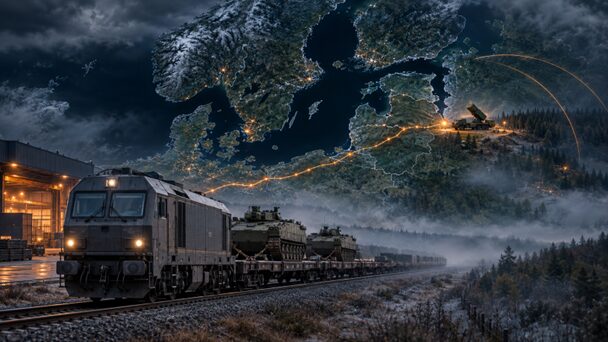
Europe is shortening the time it takes to wage a major war. Military transport approvals are meant to take hours rather than days, intelligence to feed more quickly into strike decisions, and a new generation of missiles to bring targets deep inside Russia within reach. Behind the forward garrisons, Europe is building transport networks, reserves, and ammunition production capacity. Taken together, these measures point beyond deterrence to practical preparations for waging war against Russia, including operations deep inside its territory.

The dates 2027, 2028, and 2030 in European rearmament programs can easily suggest that there is still time. But they mark a schedule for building military capabilities, not a guaranteed period of peace. The central question for the coming months is not whether armies will finish rearming in time, but whether a clash can be avoided before they do.

Estonia: A Narrow Front, a Deep Strike

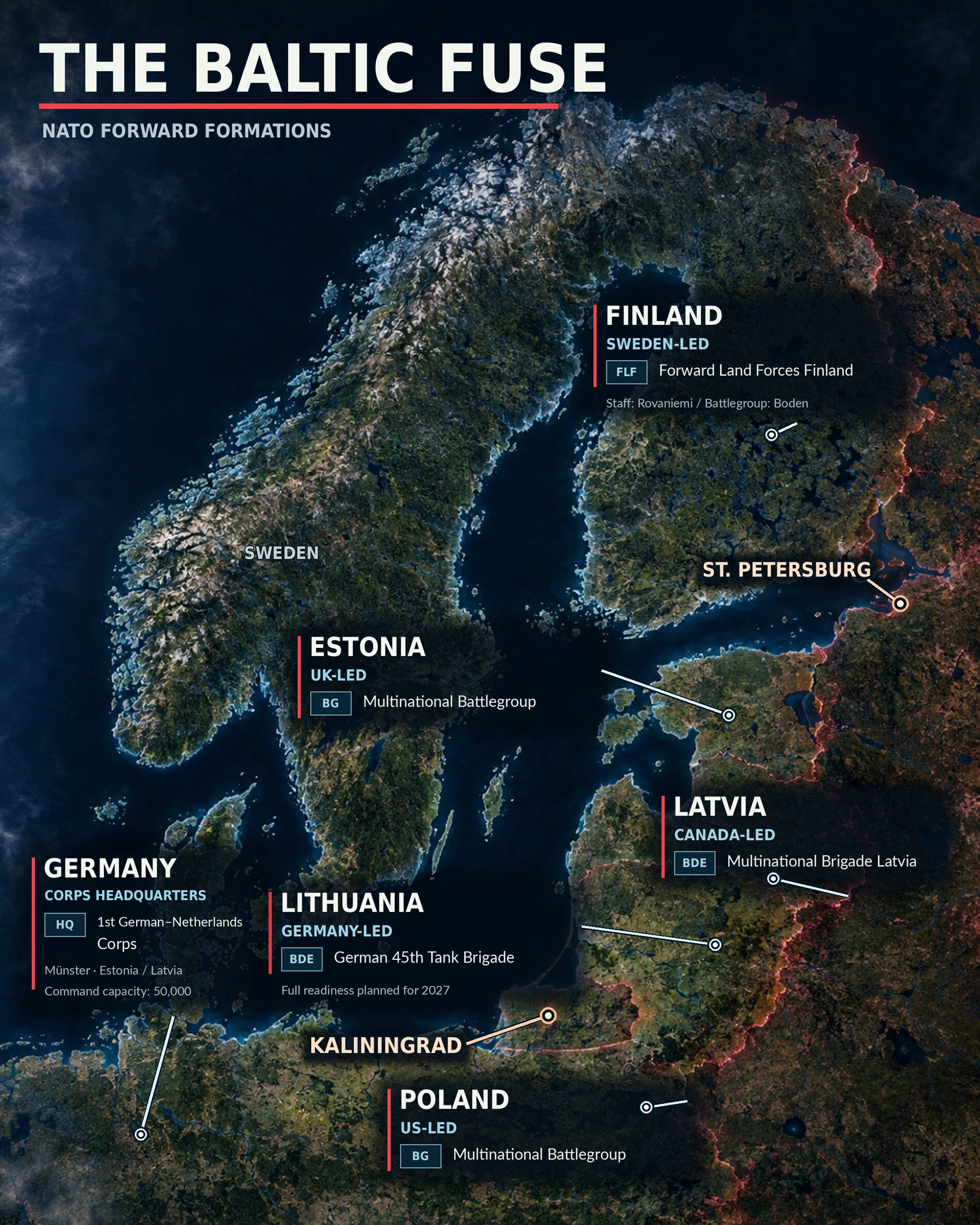
Estonia offers a clear picture of the opening phase this system is being built to fight. The country’s military budget rose 42% in 2026 to €2.4 billion, or 5.4% of gross domestic product. Arms procurement accounts for €1.27 billion – more than half the total. Meanwhile, the headquarters and elements of the 1st Infantry Brigade are moving from Tapa to Jõhvi, roughly 50 kilometers from the Russian border.

A €20.5 million base is under construction in Narva, with €19 million coming from the European Union. Completion is scheduled for summer 2028. Its permanent garrison will number around 200, but it will accommodate up to 1,000 troops in a crisis. The gap between those figures reveals a base designed for rapid expansion. A small garrison is being equipped to receive reinforcements quickly, right on the border.

Holding that ground requires more than barracks. Procurement programs call for nine American HIMARS and nine South Korean Chunmoo multiple-launch rocket systems, both capable of firing ballistic missiles. The relevant munitions have stated ranges of up to 300 and 290 kilometers, respectively. The new concept combines holding the border with deep strikes from the first day of an invasion.

The scale of the response could far exceed that of the opening clash. A battle for a border town could lead to strikes on targets hundreds of kilometers away. Tallinn wants to deny its opponent the option of fighting a small war by preparing to expand its geographical scope.

This also changes what allied assistance means. Allied planning must account not only for how long a small army can hold out until reinforcements arrive, but also for how far the fighting may spread before they reach the front. A missile can be launched before a major formation completes its deployment. Allies may arrive to find that the conflict has already widened.

In such a situation, Estonia and the other Baltic states could serve not only as defensive positions but also as staging grounds for attacks on Russian territory. For Moscow, the issue is no longer simply the size of Estonian units, but the depth of the strikes they envisage. Tallinn, in turn, faces the question of who will sustain its forward forces if the first battles fail to decide the outcome. Sustaining such a war would require support from beyond Estonia. One national budget and a handful of batteries cannot carry that burden.
Click to see the full-size image

Germany: An Industrial Base Behind the Garrison

On October 5, Martin Jäger, head of Germany’s Federal Intelligence Service, told the Bundestag: “The point of no return has been passed in the war with Ukraine, and NATO is considering a scenario involving a limited Russian military clash with the Baltic states.” He linked the more immediate danger to limited Russian action in the Baltics that could test the allies’ response. He said intelligence had seen no signs of preparations for a major attack on NATO. The discussion therefore concerns not only a major war after rearmament is complete, but a smaller confrontation capable of triggering an allied response.

In the Baltic scenario, Berlin is publicly discussing the risk of a clash while its forward force is still taking shape. The brigade’s readiness date is not the date on which the threat begins.

In Lithuania, Germany is building a permanent heavy brigade as one element of that support. Full readiness is scheduled for the end of 2027, with 4,800 military personnel and 200 civilian employees. Its core consists of the 122nd Panzergrenadier Battalion, the 203rd Tank Battalion, and a multinational battle group. Until the formation is complete, the Germany-based 37th Brigade is to provide support.

The forward formation is thus tied to forces farther inside Europe. Civilian infrastructure underscores the permanence of the deployment. A school for the children of Bundeswehr personnel opened in Vilnius in September 2025. Units are not simply moving in – families are settling down. A political commitment acquires a permanent address, and the safety of German personnel becomes part of any future crisis in the host country.

Münster, October 1, 2026. Rutte describes a headquarters capable of commanding 50,000 troops and responsible for NATO forces in Estonia and Latvia. Behind the talk of forward battalions lies corps-level command capacity


But a permanent garrison needs a steady supply of ammunition. Rheinmetall’s new plant in Unterlüß is scheduled to reach an annual output of 350,000 artillery shells in that same year, 2027. The nearly €500 million facility was built in 15 months. Across its entire production network, including overseas sites, the company is targeting roughly 1.5 million shells a year from 2027.

The brigade answers the question of who will enter the fight. The factories answer how to keep fighting once stockpiles run down. The 2027 target is for strengthening this system, not creating it from scratch. Reaching the factory’s planned capacity determines future supply volumes, but it does not set a date before which a clash is impossible. Initial stocks sustain the opening phase of combat. Regular deliveries determine whether its intensity can be maintained.

Between the factory and the front lies the transport network. Europe’s military mobility proposal calls for cross-border transport permits to be processed within three working days, with an emergency procedure taking no more than six hours. A proposed €17 billion would fund the relevant infrastructure under the 2028–2034 budget. For Germany, a transit country, that means bridges, railways, and the capacity of routes leading east.

On October 7, European Defense Commissioner Andrius Kubilius called for this work to accelerate, saying Europe was not yet able to deter Russia. Unlike an exercise, infrastructure upgrades remain after the columns return to barracks. A stronger bridge and a faster permit procedure create a lasting ability to concentrate forces.

A border battle thus gains industrial and logistical depth. But sustaining one’s own forward forces is only half the military equation. The other half is disrupting opposing forces’ supply and command systems. That requires more than additional railcars loaded with shells. It requires weapons with much greater reach.

Britain: A European Deep-Strike Arsenal

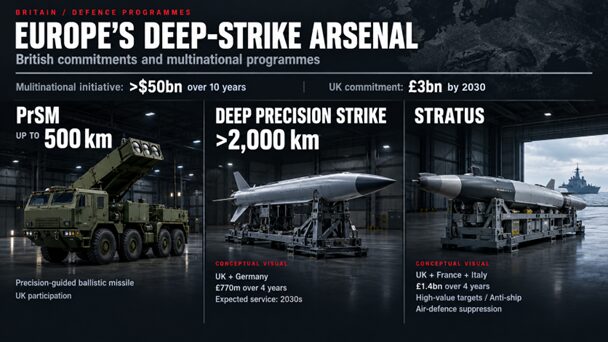
London is driving precisely this part of Europe’s preparations. On July 8, 2026, it announced an initiative bringing together roughly a dozen partners to invest more than $50 billion in long-range strike capabilities over ten years. The stated range bracket runs from 300 to more than 2,000 kilometers. Britain’s own commitment within the initiative is £3 billion by 2030.

The British-German Deep Precision Strike program envisages stealthy and hypersonic weapons with ranges exceeding 2,000 kilometers, initially focused on ground launch. Britain is investing £770 million over four years, with entry into service expected in the 2030s. Another £1.4 billion over four years is earmarked for Stratus, a program with France and Italy covering strikes against high-value targets and ships, as well as the suppression of air defenses.

Britain’s participation in PrSM (Precision Strike Missile), a precision-guided ballistic missile program with a stated range of up to 500 kilometers, adds another layer. The emerging capabilities span several range bands, from around 300 kilometers for the Estonian systems through 500 for PrSM to more than 2,000 for the British-German development. Although the programs are at different stages, they share a clear direction. Weapons for fighting at the border are being supplemented with weapons for striking deep behind it.

The missiles of the next decade show how far these strike capabilities are intended to expand. But the next crisis will unfold with whatever weapons are available when it begins. A 2,000-kilometer range is not a prerequisite for a clash in the Baltics. It changes the potential scale of the war, not the earliest date on which it can break out.
Click to see the full-size image

Turning national purchases into a combined capability requires a common framework for employing them. In July 2025, General Christopher Donahue outlined elements of eastern-flank planning built around compatible launchers, fire control, and data sharing. He cited Kaliningrad as an example of military capabilities that could be neutralized by ground-based means in an exceptionally short time: “We have already planned this. We have already developed this.”

The discussion also included cloud-based data sharing and Palantir’s Maven Smart System, purchased by NATO to analyze information and support command decisions. The aim is to turn disparate reports into a common picture more quickly. When several armies use compatible command systems, their arsenals gain additional value. Range puts the target within reach, while data sharing allows missions to be coordinated.

But the deeper the planned strikes, the harder it becomes to separate support for a border battle from an expansion of the war. To the attacking side, a target may be part of the other side’s military supply system. To the other side, hitting it may signal that the conflict has crossed a new threshold. The use of conventional weapons thus leaves unresolved how to deter a response that would overturn the assumption of a limited clash.

France: The Nuclear Limit of Europe’s Calculations

This is where France’s nuclear deterrent enters the European picture. On October 6, Le Vigilant conducted an acceptance firing of an M51.3 ballistic missile following its refit. The missile carried no nuclear warhead. In service since October 2025, the variant carries new TNO-2 warheads. The French Defense Ministry cites improvements in range, accuracy, and the ability to penetrate missile defenses.

Brittany, October 6, 2026. Le Vigilant launches an M51.3 without a nuclear warhead


Macron stated the political message bluntly: “To be free, you must be feared. And to be feared, you must be strong.” France’s modernization adds a nuclear dimension to Europe’s conventional military buildup.

That European dimension is taking a more concrete form. On March 2, 2026, Macron outlined an “advanced deterrence” framework allowing partners to participate in French nuclear exercises and opening the possibility of temporary deployments of strategic forces on allied territory. Germany, Poland and Sweden were among the countries joining the dialogue. But the authority to use nuclear weapons – and to define the vital interests they protect – remains exclusively French. In the Baltic scenario, closer cooperation does not establish an automatic French nuclear response to a border clash. It leaves the decisive threshold in Paris, deliberately undefined.

After the First Clash

Taken together, these national programs suggest that the West is preparing not merely to deter Russia, but to build the capacity for offensive operations against it. In this reading, forward deployments, industrial expansion and deep-strike weapons are interconnected preparations for a war that could extend into Russian territory. They do not, by themselves, establish a single operational plan or prove a decision to initiate hostilities. Conventional forces are meant to make an opposing military operation prohibitively costly, while nuclear forces are meant to deter the most extreme escalation. The weakness is that neither side gets to decide how much damage the other will tolerate.

That problem is especially acute around Kaliningrad, where plans to suppress military infrastructure sit alongside the question of the region’s links to the rest of Russia. If actions during a crisis are perceived as an attempt to cut the region off by force, the argument will no longer be about intentions announced at a press conference. It will be about consequences the other side believes it must stop immediately.

The danger in the coming months lies in the gap between limited intent and an unrestricted response. Berlin is discussing localized action in the Baltics. Tallinn is preparing for deep strikes from day one, while foreign garrisons tie a border battle to allied involvement. Each side may consider its own move limited. Neither can count on the other side accepting its definition of what is permissible.

European capitals therefore need to define where military action would stop after the first clash, whether at the border or after strikes on depots, airfields or targets in Kaliningrad. The programs examined here spell out how to build military power, but offer no mechanism for ending the fighting. Missile range is not strategic foresight. Confidence that escalation can be controlled could turn a system of deterrence into a mechanism for widening the war well before 2030.


MORE ON THE TOPIC:

The post The Baltic Fuse: How Europe Is Building the Infrastructure for War With Russia appeared first on South Front.
NO SAFE REAR: Moscow’s Shadow War From Starlink to Prison Cells

9 October 2026 at 19:00

Russia is seeking support for its war effort abroad – and threatening retaliation beyond Ukraine. Reports of foreign labor in drone factories, proposals to counter Starlink, and allegations of overseas recruitment show different ways Moscow could sustain its military effort and put pressure on its opponents.

Nowhere Far Enough

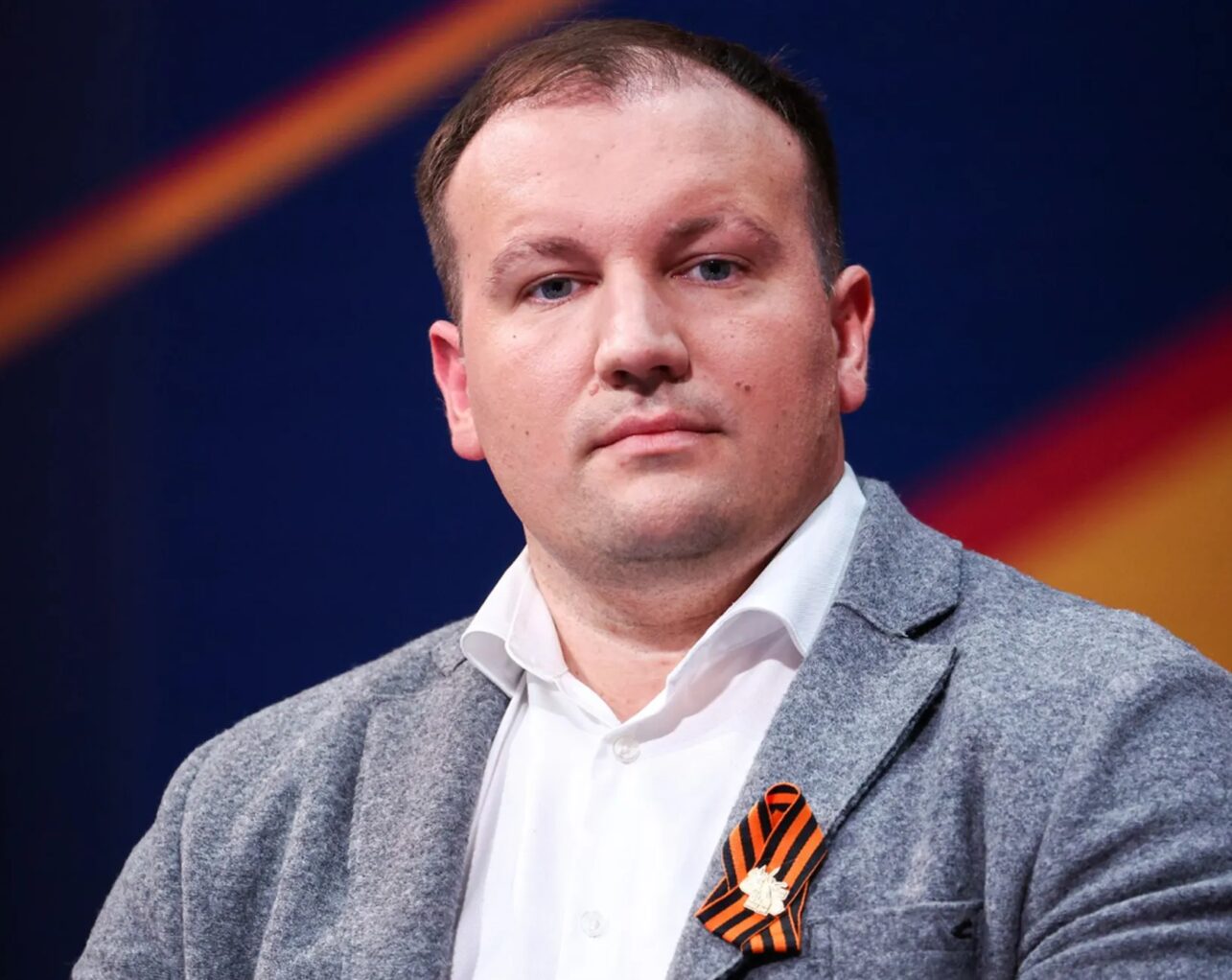
On October 9, Mikhail Zvinchuk, founder of the Russian military Telegram channel Rybar, was detained in Montenegro. Montenegrin authorities accused his team of using media work to interfere in the country’s politics. Rybar said they had come legally to film at Cetinje Monastery and had submitted an official filming request. Moscow’s response explains why this matters: Dmitry Medvedev, deputy chairman of Russia’s Security Council, suggested replenishing an “exchange fund” with Europeans and Americans to recover detained Russians. One arrest became a warning about others to come.

Mikhail Zvinchuk, founder of Rybar, a Russian pro-war Telegram channel covering the war in Ukraine, was detained in Montenegro on October 9

Five days earlier, Medvedev had delivered the orbital version of that warning. If Russia’s Rassvet constellation were destroyed, American Starlink satellites would “come tumbling down like ornaments from a dried-up Christmas tree.” “Space is a very crowded place,” he added. “We need to be mutually courteous.” Kiev had sought sanctions and restrictions, not announced a satellite attack. Moscow was putting a military threat behind its demand that Russian communications infrastructure be left alone.

The link is not between a blogger and a satellite. It is between two threats of retaliation: damage our network and yours becomes a target; detain our people and yours may become bargaining chips. Moscow is challenging the assumption that pressure on Russia can remain a one-way transaction.

Partners Behind the Front

The space threat has a practical backdrop. Leaked documents published in July describe a closed Russian-Chinese military forum in Guangzhou in November 2023. Chinese researchers proposed several ways to counter Starlink, from legal pressure and jamming to cyberattacks and destruction. Their hardest problem was also the simplest: how to disable satellites more cheaply and quickly than SpaceX could replace them. They do not show that these systems were built or deployed.

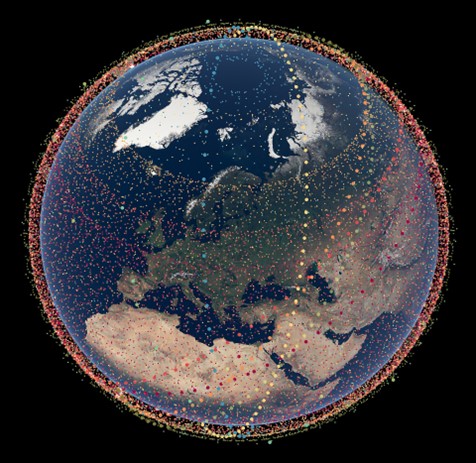
Visualization of the planned Starlink Generation 2 constellation

Russia and China have different strengths to offer. Moscow brings battlefield experience and air-defense knowledge; Beijing brings electronics, artificial intelligence, and manufacturing capacity. Russia can show what works under fire. China can help turn those lessons into equipment made at scale. A sixth closed forum was reportedly planned for the fall in St. Petersburg.

This is why repeated technical meetings matter more than dramatic threats. A shared design, tested and improved over several years, could outlast the war that first made it useful. For Moscow, the goal is to weaken an American advantage. For Beijing, Russian experience offers lessons without having to fight the same war.


Discussion of leaked documents, the “one-to-many” concept and replacement costs


But destroying satellites is not a clean solution. Russia’s 2021 antisatellite test forced both astronauts and Russian cosmonauts to shelter aboard the International Space Station, according to NASA. Debris threatens more than the intended target. Jamming can offer a narrower response; smashing entire networks risks damaging the same orbital space Russia and China also need.

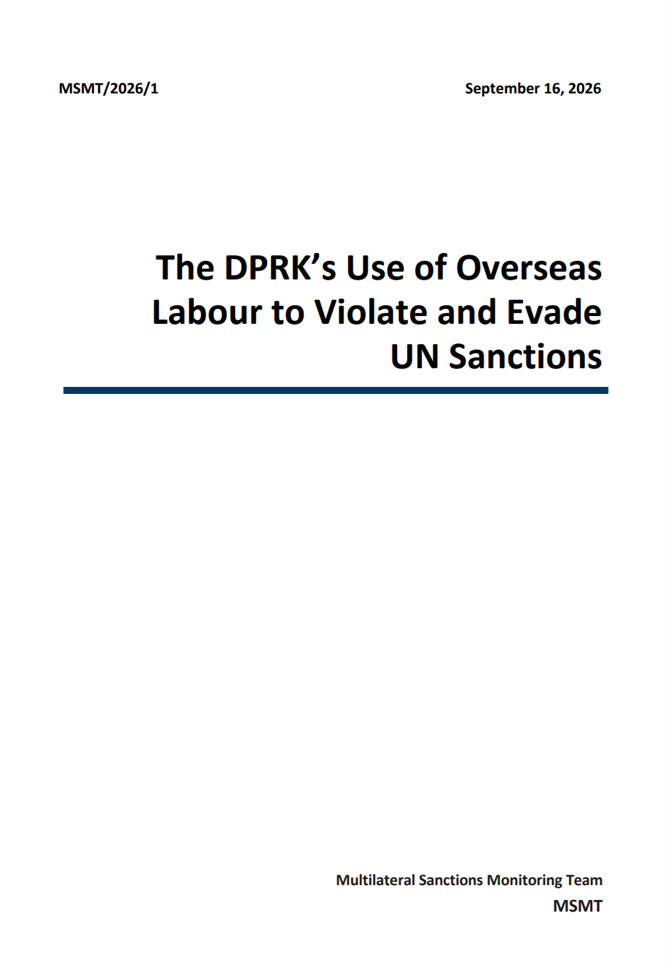
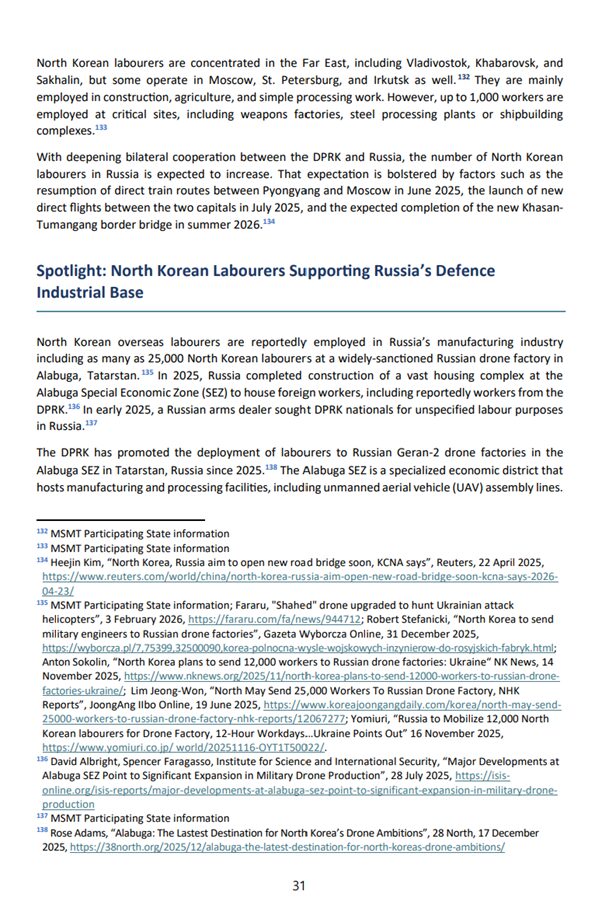
The factory floor shows another side of this partnership-building. A September report by the Multilateral Sanctions Monitoring Team says North Korean workers are employed at Alabuga in Tatarstan, where Russia produces Geran-2 drones, and describes workers entering Russia as students. Pyongyang rejected the report as fabricated. If the findings are accurate, the bargain is straightforward: Russia gains workers, North Korea gains income. Foreign support does not have to arrive as a finished missile; it can help keep the assembly line moving.

September 2026 sanctions-monitoring report.  Pages 31-32 discuss Alabuga and drone production. Pyongyang rejects the report


The Underground Price List

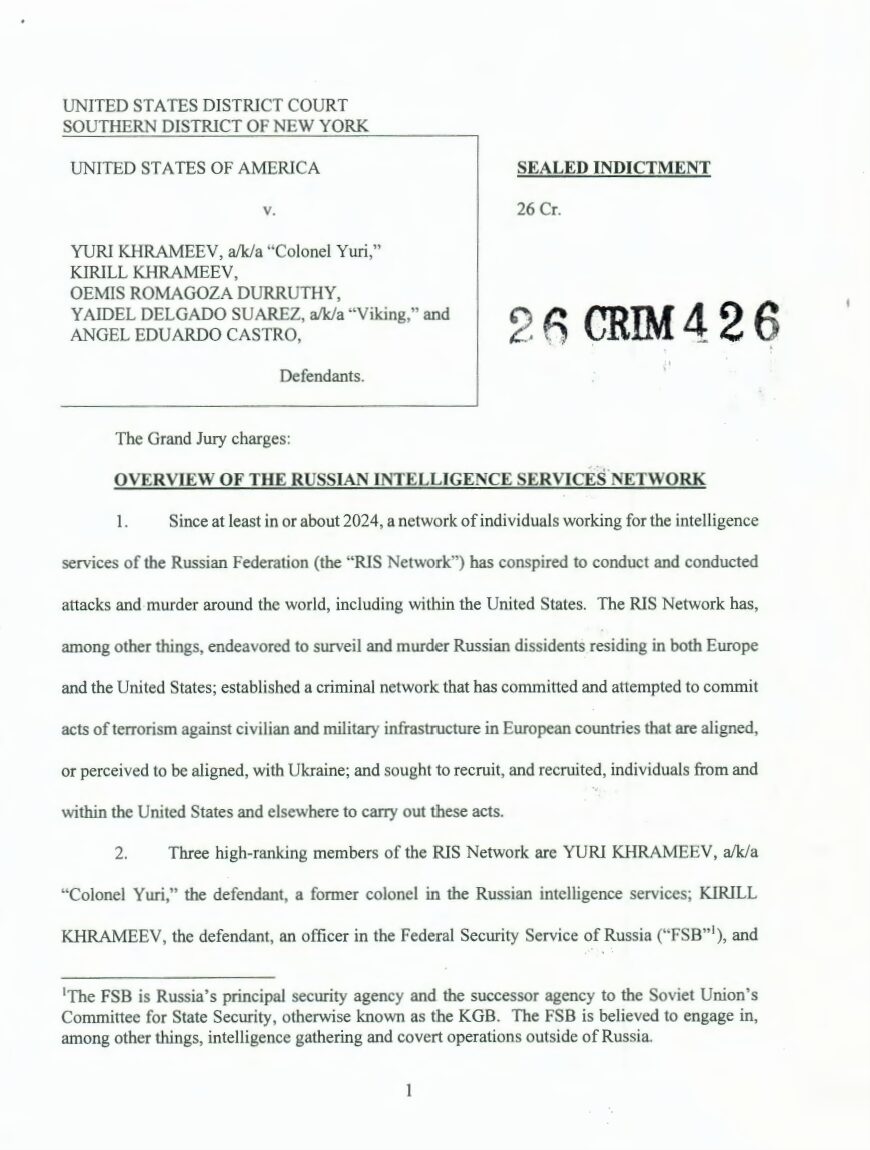
Recruitment abroad serves a different purpose. A September 15 U.S. indictment alleges that a Russian intelligence-linked network used Cuban and Venezuelan intermediaries to recruit inside America. Prosecutors describe payments of $1,000-$1,500 for surveillance and a $40,000 offer to kill a Russian dissident believed to be near Washington. Another alleged offer promised an American $25,000 to kill a target in Lithuania. These remain accusations, not court findings or proof of an officially declared bounty program.

Original U.S. indictment naming the alleged Russian, Cuban, and Venezuelan participants

The alleged network operated from at least 2024, before the Montenegro arrests. Its importance lies in the method: foreign intermediaries and local recruits, rather than an obvious Russian team. If substantiated, the charges would show Moscow reaching inside America through people who do not carry Russian passports.

The October 9 threat to expand the “exchange fund” signals that consular protests may no longer be Moscow’s only answer. It suggests foreign detainees could become leverage for recovering Russians. The warning to European and American governments is pointed: the detention of a Russian abroad may create a problem for their own citizens elsewhere.

Russia’s partners help it build weapons; alleged overseas networks extend its reach; threats against satellites and foreign detainees aim to raise the cost of confrontation. These are different tools, not proof of one master plan. But October’s warnings carry a common message: Moscow wants the other side to feel exposed too. Medvedev closed his latest message with a Russian proverb: “If you live among wolves, you must howl with them.”


MORE ON THE TOPIC:

The post NO SAFE REAR: Moscow’s Shadow War From Starlink to Prison Cells appeared first on South Front.

Central Europe’s Growth Model Is Losing Momentum, IMF Warns

7 October 2026 at 09:06

Growth potential across Central and Eastern Europe has fallen sharply from the levels seen around EU accession, with ageing populations, weak productivity, Chinese competition and slower German industry increasingly testing the region’s economic convergence.

The economic model that transformed Central and Eastern Europe after EU accession is losing momentum, according to the International Monetary Fund, which is warning governments that structural reforms are needed if the region is to continue narrowing the income gap with Western Europe.

Carlos Mulas-Granados, the IMF’s regional representative, said on Tuesday that medium-term growth potential across Central and Eastern Europe had declined to around 2.5 per cent, compared with roughly 5 per cent before countries in the region joined the European Union.

The slowdown does not mean that every economy is stagnating. Poland continues to grow faster than much of Western Europe, while the Czech economy has recovered from recent shocks. The concern is instead about the underlying rate at which these economies can expand once temporary fiscal stimulus, EU funding and post-crisis recoveries are stripped out.

Several of the forces behind the region’s earlier success are becoming weaker.

EU accession opened access to the single market, attracted foreign investment and integrated Poland, Czechia, Slovakia and Hungary deeply into European industrial supply chains. German manufacturers in particular moved production eastwards, taking advantage of lower labour costs, skilled workforces and geographic proximity.

That process generated rapid gains in productivity and incomes. It cannot simply be repeated.

Demographics are one of the most immediate constraints. Working-age populations are shrinking across much of the region while ageing increases spending requirements for pensions, health care and social support.

The IMF’s country assessments illustrate the problem. Its assessment of Poland says demographic pressures are mounting even as labour productivity remains comparatively strong, and calls for higher labour participation, better skills and deeper capital markets.

In Slovakia, the Fund expects growth of only 0.9 per cent this year and says adverse demographics and weaker productivity are weighing on the medium-term outlook. The economy remains particularly exposed to manufacturing and the automotive industry.

The Czech Republic faces a similar structural constraint. The IMF estimates its medium-term potential growth at around 1.8 per cent, with population ageing and modest productivity gains limiting further convergence.

External conditions have also changed.

Germany, the region’s principal industrial partner, has experienced prolonged weakness in manufacturing. Central European producers therefore face softer demand from the market around which many of their supply chains were originally built.

At the same time, China has moved from being primarily a source of imports and components to a direct competitor in sectors where Central Europe has substantial industrial exposure, including cars, batteries, machinery and electrical equipment.

That combination is particularly difficult for economies built around export-oriented manufacturing.

The problem overlaps with the wider European competitiveness debate. EU Today reported in July that only 15.7 per cent of the reforms recommended in Mario Draghi’s competitiveness report had been fully implemented at that stage, with important work still outstanding on capital markets, energy and investment.

For Central Europe, progress on those issues has a direct bearing on growth. Smaller national capital markets make it harder for companies to finance expansion. Fragmented energy systems add to industrial costs, while limited access to venture capital can restrict the development of businesses outside established manufacturing sectors.

There are significant differences between countries. Poland’s larger domestic market gives it more insulation from industrial weakness elsewhere and the IMF expects relatively strong growth. Hungary has faced a different combination of weak investment and fiscal constraints, while Slovakia’s dependence on car production leaves it particularly exposed to changes in the European automotive sector.

EU funding remains an important source of investment across the region, particularly for infrastructure and modernisation. But EU transfers cannot by themselves replace improvements in productivity.

The IMF’s argument is therefore less about an immediate recession than about the end of an unusually favourable period of convergence.

Central Europe entered the EU with lower wages, substantial scope to import Western technology and a powerful incentive for Western European manufacturers to move production eastwards. As those gaps narrow, future growth depends more heavily on innovation, skills, investment and domestic productivity.

The region is still converging with Western Europe. The question raised by the latest IMF warning is how quickly that process can continue once the economic advantages that powered its first two decades of EU membership become less powerful.

Anti-militarism unites progressives across Europe

16 September 2026 at 18:54

The left’s capacity to build knowledge, organization, and struggle was a central theme at this year’s ManiFiesta, introduced during a discussion of Peter Mertens’ new book, “The Last Days of the Old Normal“. In the context of Europe’s ongoing armament, these questions are crucial not only for progressive movements in core countries but also for those building alternatives in Central and Eastern Europe.

The festival featured several sessions examining developments in Central and Eastern Europe, including an intervention by Ukrainian sociologist Volodymyr Ishchenko on the class character of the Ukraine war. Another session – “East of the former wall: the AfD, the industrial crisis, and the war economy” – brought together Markéta Juřicová of the Czech party Levice, Orsolya Haboczki from the Hungarian progressive movement Szikra, German Bundestag representative Cem Ince from Die Linke, and Member of the European Parliament Marc Botenga from the Workers’ Party of Belgium (PTB-PVDA). 

They discussed how the growth of the far right in core EU countries is interacting with events eastwards – and what lessons Western left movements can learn from their Eastern counterparts.

Read more: ‘Ukraine is no longer a sovereign country,’ says sociologist Volodymyr Ishchenko

As Juřicová and Haboczki pointed out, while movements in the West are worried about the popularity of parties like the Alternative for Germany (AfD), many nations in Central and Eastern Europe already have experience with far-right participation – even leadership – in government. More than 15 years of Viktor Orbán’s rule in Hungary, Haboczki noted, offers an important lesson on far-right governments’ economic agendas and tactics. As the Orbán administration used identity issues to capture opposition parties’ attention, it channeled resources into the hands of the local bourgeoisie and served transnational capital by securing huge state subsidies, she said. 

Right-wing parties in Eastern Europe also look to their international peers for inspiration. In the Czech Republic, Juřicová said, the far right “loves” the AfD, picking and choosing many of the same topics the German group campaigns on. The discussion signaled this is particularly important to recognize as the growth of extreme right parties is fueled largely by popular dissatisfaction with mainstream parties’ programs. 

Read more: Far-right victory in German state elections shocks the center

Ince emphasized this was the case in Germany, where a large share of AfD votes came from those believing the party would bring upheaval compared to the status quo, marked by massive job losses and cuts to welfare. But while European progressives recognize this, they still struggle to incorporate it into their programs, recent experiences show. Instead, many of them ponder attempts to prevent the far right from seizing institutional power by providing support to establishment parties, failing to shape a concrete alternative to both the mainstream and the extreme right.

In Central and Eastern Europe, the work of progressive parties is further complicated by the need to rebuild credibility after decades of vilification of socialism and austerity measures implemented by liberal options, Haboczki added. 

Read more: “We cannot eat grenades once the grains no longer grow:” European peace movements organize against militarization

While recognizing workers’ material concerns in Central and East Europe is imperative for building local alternatives, the panel showed, it will also be necessary to build region-wide partnership to challenge topics dominating the narrative in Germany, Belgium, and other core countries.

Militarization stands out among these topics, Botenga and Ince outlined in their interventions, though its implementation might differ by sub-region. Botenga added that German industry stands to gain the most from European armament, yet these gains will not trickle down to the working class – meaning the left in the region can find in anti-militarism a common cause to rally around. 

Ince echoed these observations by emphasizing that, even as their profit lines stand to gain from billions of euros directed towards rearmament, German companies continue to shift significant parts of their operations to countries including Poland, Slovakia, and the Czech Republic – making most of eroded workplace protections and labor rights. This shows that the left across Europe must work together to protect workers’ interests everywhere, building a joint struggle for peace and civilian industry, he indicated.

Croatians demand their government stop importing toxic waste

8 September 2026 at 22:58

On Saturday, September 5, around 100,000 people took to the streets of Zagreb to protest against illegal toxic waste disposal in the Lika region. The mobilization, one of the most notable in recent years, brought together diverse networks from all over Croatia.

Protesters demanded not only the clearing of the affected areas in Gospić, but also accountability from the government and a pledge to temporarily halt waste imports into the country. This final demand relates to the fact that tens of thousands of tons of illegal waste found at several dumping sites across the country originated from Slovenia, Italy, and Germany.

Zagreb’s central square was filled with protesters on Saturday. Source: Gospić je naš dom/Facebook

The protest built upon over a year of campaigning by local groups in Gospić. These initiatives have been fighting for the urgent removal of approximately 37,000 tons of waste, including hazardous material, exposed during a EU corruption investigation in early 2025. State institutions’ records indicate complaints were filed locally as early as 2023 and 2024 but received minimal, if any, reaction from authorities.

The government’s inaction is particularly striking given that the region is a traditional stronghold of the ruling Croatian Democratic Union (HDZ). On the ground, many perceived their stance – implicitly or explicitly – as profound betrayal and arrogance, likely compounding political headaches for party leadership. In practical terms, this widened the protest’s political spectrum, bringing together an unusually broad group of demonstrators.

The notable lack of official response continued even as it became apparent that the dumping site is likely to have long-term impacts not only in the area immediately surrounding it, but also in downstream regions through underwater pollution. Materials found at the site included shredded plastic from electronic components and medical-grade waste. In addition to having been left lying around, they were also buried underground.

Read more: Local communities in Croatia oppose mega-farm project

Locals raised environmental and health alarms from the beginning, including concerns about soil pollution by heavy metals and PFAS contamination of the area. Only after a long period of pressure, authorities published related analyses. All showed local concerns were grounded, recording high levels of metals like zinc, lead, and chromium, as well as PFAS presence in water courses. The most recent of these reports, made publicly available by the Office for the Suppression of Corruption and Organized Crime (USKOK) on Monday, September 6, confirmed microplastic presence in water samples taken downstream of the illegal dump, adding urgency to demands for removal.

Lika protest
Protester holding banner “This is not patriotic” on Saturday, September 5. Source: Gospić je naš dom/Facebook

For its part, after a year and a half of alarms sounded by the community in Gospić, the government announced it would cover the waste with foil as a first step of the sanitation process. They claimed further steps would follow, yet without guarantee of timing.

On Monday, Gospić je naš dom reasserted the planned actions were not enough. “The liner can reduce the amount of rainwater entering the landfill from above, but the waste is buried an average of three meters deep in karst rock” they wrote. “Groundwater flows in from below and through cracks in the rock from the sides. A surface liner cannot stop this. Covering the waste will make it less visible, but all 37,000 tons will remain in the ground.”

“Last Saturday, on Zagreb’s central square, before tens of thousands of people from across Croatia, we presented our demands to the Government of the Republic of Croatia. These were not a negotiating position, but a minimum we refuse to go below. After this latest finding, that minimum remains unchanged, but the urgency can no longer be disputed.”

“Eighteen months later, we are still waiting for answers,” they added. “How did 37,000 tons of waste end up buried underground? Who brought it? Who took it? Who was paid for it? […] There is also the question of responsibility for what happened after the waste was discovered. Who knew, and when? Who decided it was not urgent? Who decided to withhold the initial analyses?”

❌