Russia and four allies began five-day military drills in Belarus on 12 October, the Russia-led Collective Security Treaty Organization (CSTO) said. The troops are rehearsing peacekeeping and a biological-threat response. Minsk insists the drills target no one, while Belarus’s army chief calls them deterrence against hostile states.
Russian troops crossed Belarus to advance on Kyiv in 2022, and it now hosts Russian units with Oreshnik missiles and equipment guiding attack drones into Ukraine. Every foreign deployment there worries Kyiv and neighboring NATO members, which blame Minsk and Moscow for border pressure.
Riot police and drone crews in a “peacekeeping” drill
Belarus, Kazakhstan, Kyrgyzstan, Russia, and Tajikistan brought more than 1,500 troops and over 300 weapons and vehicles, including about 80 drones, The Moscow Times reported, citing the bloc. Armenia, the sixth member, is not among them. The peacekeeping drill runs in Vitsebsk Oblast, bordering Latvia and Lithuania, with Belarusian riot police and internal troops joining, the bloc’s command said.
Explore further
Up to 60 railcars: Belarus wires a border base to take in military trains
Russia sent motorized rifle, reconnaissance, electronic warfare, and drone units from its Central Military District, the CSTO said. Russia, this year’s chair, prioritized peacekeeping readiness and the joint biological protection and medical unit, a bloc general said.
Belarus’s military insisted the drills are planned, yet its army chief called them “one of the measures of strategic deterrence against aggressively minded states” and claimed the West is “effectively preparing for a new hot war.”
Pressure on Belarus’s neighbors
In Latvia, armed, masked escorts from Belarus tried to force migrants across this month, the military said, and raiders stole border cameras hours later. Estonia’s police and border guard chief warned migration pressure could jump before winter, as Russia eases entry from countries like Ethiopia and Belarus passes migrants on to the EU. Lithuania posted up to 100 soldiers on its border with Russia’s Kaliningrad, and in September NATO’s Italian jets downed a drone that crossed in from Belarus. On 9 October, Minsk summoned Ukraine’s envoy over an alleged drone strike on a Belarusian truck in Russia, and Kyiv rejected the “absurd accusations” of “an accomplice in the crime of aggression against Ukraine.”
Belarus keeps its army on alert
In September, Belarusian armor drilled near the Suwałki Gap, NATO’s land link to the Baltic states, and Lukashenka said the whole army would be checked, up to mobilization. On 12 October, he ordered a snap check of a 6th Separate Guards Mechanized Brigade battalion, state news agency BelTA reported. European spy agencies also warn of more Russian assassination plots against defense executives.
Ukraine’s intelligence still rates the threat from Belarus as low, but each new contingent, missile unit, and airborne brigade there widens what Kyiv and NATO’s eastern flank must watch.
The imposition of emergency rule in Khyber Pakhtunkhwa, an opposition-controlled province, raises disturbing questions about the relationship between Pakistan’s civilian government and its powerful military establishment. Is this a legitimate response to terrorism, or another calculated assault on democracy?
There is an old saying in Pakistan that most countries have an army, but in Pakistan the army has a country. It is a cynical observation, certainly, but one that has survived successive governments, constitutional crises and military interventions with remarkable durability.
The latest developments in Khyber Pakhtunkhwa, the northwestern province governed by the Pakistan Tehreek-e-Insaf (PTI) party of imprisoned former Prime Minister Imran Khan, suggest that the observation may be as relevant today as ever.
President Asif Ali Zardari’s decision to impose emergency rule in the province, ostensibly in response to deteriorating security conditions, has prompted an obvious and deeply uncomfortable question: is Pakistan witnessing another military coup, albeit one conducted without tanks surrounding parliament or generals appearing on television to announce the suspension of democracy?
The answer depends largely upon how one defines a coup.
A constitutional manoeuvre with political consequences
Under Pakistan’s constitutional framework, federal authorities possess emergency powers that can, under specified circumstances, override provincial administrations.
Such powers are not inherently illegitimate. Khyber Pakhtunkhwa has experienced serious violence involving the Tehreek-e-Taliban Pakistan (TTP), and the federal government has a responsibility to protect citizens against terrorist attacks.
Nevertheless, the timing of the intervention demands scrutiny.
The province represents one of the most significant remaining political strongholds of Imran Khan, whose imprisonment and continuing confrontation with Pakistan’s political establishment have generated considerable unrest.
Suspending an elected provincial administration in these circumstances inevitably raises suspicions that national security has become a convenient instrument for achieving political objectives.
The crucial distinction is between responding to a genuine emergency and exploiting that emergency to neutralise an inconvenient opposition.
Pakistan’s authorities must demonstrate not merely that a security threat exists, but that the removal of elected provincial leadership is necessary and proportionate.
The army that never really left politics
Pakistan’s military has exercised an extraordinary degree of influence over the country’s political development since independence in 1947.
General Ayub Khan seized power in 1958. General Zia-ul-Haq overthrew Zulfikar Ali Bhutto’s government in 1977. General Pervez Musharraf removed Prime Minister Nawaz Sharif in 1999.
These were unmistakable military coups, involving direct intervention against civilian authority.
Yet Pakistan’s experience also demonstrates that generals need not formally assume the presidency to dominate political affairs. The military establishment has long maintained substantial influence over national security, relations with India, Afghanistan policy and, at various moments, the composition and survival of civilian governments.
Under Field Marshal Asim Munir, the relationship between the armed forces and civilian political authority has again attracted intense scrutiny. The central question is therefore not simply whether Pakistan’s generals have seized power. It is whether elected politicians retain sufficient independence to exercise it.
Imran Khan and the price of political defiance
Imran Khan’s political trajectory illustrates the extraordinary volatility of Pakistan’s relationship between civilian leadership and military power.
Once widely regarded as enjoying the establishment’s favour, Khan subsequently became one of its most prominent critics. His removal through a parliamentary no-confidence vote in April 2022 marked the beginning of an increasingly bitter confrontation.
His subsequent imprisonment, the prosecution of PTI figures and restrictions affecting the party’s political activities have fuelled allegations that Pakistan’s democratic institutions are being manipulated to exclude a popular opposition movement.
The authorities reject accusations of politically motivated persecution, while Khan’s supporters insist that his treatment demonstrates the extent to which democratic competition has been compromised.
Against this background, emergency intervention in a PTI-governed province cannot reasonably be viewed in isolation. It forms part of a wider struggle over who ultimately controls Pakistan’s political future.
A coup without the traditional trappings?
The latest emergency is particularly significant because Pakistan’s civilian government and military leadership appear aligned in their criticism of PTI.
According to Reuters reporting on 11 October, the province will be administered by a governor for an initial six months, with troops deployed to support security operations.
Hundreds of activists and three of Khan’s sisters have reportedly been detained ahead of opposition demonstrations.
PTI spokesperson Zulfikar Bukhari has characterised the emergency as a disguised coup. Even Maulana Fazlur Rehman, whose party has been involved in mediation efforts, condemned the intervention as an attack on democracy.
Yet evidence that the military directly ordered the takeover remains absent from the public record. Accusations of military involvement should be investigated rather than treated as established fact.
Nevertheless, a coup need not always involve soldiers removing a prime minister. Democratic institutions can also be progressively hollowed out through ostensibly lawful decisions that concentrate authority and deprive opposition parties of meaningful power.
A dangerous precedent for Pakistan
For Pakistan’s international partners, including the European Union, the implications extend beyond an internal constitutional dispute.
Pakistan benefits from preferential access to European markets under the EU’s GSP+ trading arrangement, which is linked to commitments concerning human rights, democratic governance and international conventions. Brussels should therefore be watching developments closely.
If emergency powers become a mechanism for suppressing political opposition rather than protecting public security, the European Commission will face legitimate questions about Pakistan’s adherence to its international obligations.
The immediate crisis may not constitute a conventional military coup. But the more troubling possibility is that Pakistan’s political system is evolving towards a form of government in which elections continue, civilian politicians remain in office, and the military’s influence is sufficiently powerful to determine the boundaries of democracy.
For Imran Khan‘s supporters, that distinction may offer little consolation.
Pakistan’s generals have seized power openly before. The question now is whether they need to do so again.
Saudi Arabia is desperately trying to reverse its losses on the ground in the Yemeni conflict, while Houthi attacks reach its airports and threaten its oil trade. Yet the coalition Riyadh has assembled does not match the war it wants to fight. Washington is engaged in the conflict with Iran, Turkey excludes offensive deployments, and Pakistan draws the line at crossing into Yemen. The kingdom has foreign support, but the burden of recovering and holding territory still falls on its weakened Yemeni partners.
Retreat Before the Counteroffensive
By early October 2026, Riyadh was responding to a deteriorating military position. The Houthis’ September advance along Yemen’s western coast brought the loss of Mokha and strategic positions around Bab el-Mandeb. These setbacks exposed the weakness of Saudi-backed forces and strengthened the Houthis’ leverage over a shipping route increasingly important to Saudi oil exports.
The renewed Saudi–Houthi escalation began with the July 13, 2026, strike on Sanaa airport’s runway. Saudi aircraft sought to prevent an Iranian Mahan Air flight carrying a senior Houthi delegation from landing without coalition permission. The plane later landed in Hodeida after Omani mediation, but the Houthis retaliated against Abha airport and subsequently announced a blockade on Saudi shipping. The strike broke the relative calm established by the 2022 truce; September’s coastal offensive then turned the confrontation into a major territorial setback for Riyadh’s partners.
The retreat exposed divisions within the anti-Houthi camp. Saudi–Emirati cooperation had broken down, and the withdrawal of the UAE left command arrangements that Riyadh failed to replace effectively. The factions expected to carry the offensive remained divided and poorly prepared for a sustained campaign. Saudi airpower could not compensate for the absence of a coherent local force.
The cost is also being felt inside Saudi Arabia. The October 10, 2026, attack on Riyadh’s King Khalid International Airport killed 12 people and wounded 309, according to Saudi authorities, and temporarily suspended operations. Riyadh blamed the Houthis, who renewed their warning against using Saudi airports and airspace on October 11. Airport disruption, cancelled flights and attacks on oil facilities bring the economic consequences of the war directly into the kingdom. The Saudi air campaign has not secured its civilian infrastructure.
Operation Dawn of Yemen began on October 5, 2026, after Saudi-backed Yemeni leader Rashad al-Alimi announced military action the previous day. The immediate objective was to recover the coastal positions lost in September, alongside the Saudi-backed Yemeni government’s broader ambition to restore its authority over Houthi-held territory. On October 11, the coalition announced the destruction of 136 military targets in a large-scale operation. That tally says little about whether Saudi-backed units can hold territory, secure supply routes or reopen shipping lanes.
Houthi footage released October 10, 2026: Shawaz drone strikes on Saudi-backed forces in Kahbub and Al-Waziya, as presented by the movement’s military media
Why Taiz Matters
The counteroffensive has produced conflicting accounts of control on the coast. On October 9, 2026, Saudi Arabia’s ambassador to Yemen announced that Bab el-Mandeb and Mayun Island had been cleared of Houthi forces. The Houthis maintained that they still held those positions. Control of the waterway remains contested, despite Riyadh’s announcements of success.
Taiz adds another strain after the coastal setbacks. Pressure on its approaches threatens supply routes and forces Saudi-backed units to divide their effort between the inland front and the Red Sea coast. The Houthis can disrupt their opponents’ counteroffensive without winning every coastal engagement: sustained pressure inland prevents those opponents from concentrating their forces. Saudi airpower does not resolve the fragmentation of the Saudi-backed Yemeni forces expected to hold the ground.
Houthi military footage released October 10, 2026: the movement presents advances and the surrender of opposing fighters in Sami, As-Silw and Al-Mawasit, Taiz province. The fighting places further pressure on the ground forces on which Riyadh’s campaign depends
The Iran War Narrows Saudi Options
The US–Israeli war with Iran, which began in February 2026, has expanded the military demands on Washington. Regional deployments, shipping protection and operations against Iran compete with Saudi requests for a larger American role in Yemen. Riyadh cannot assume that American support will expand on its terms. Its dependence on outside assistance has grown at the same time as the regional war has made that assistance more conditional.
The Iran war compounds Saudi Arabia’s vulnerability. Disruption at Hormuz has increased Riyadh’s dependence on its westbound pipeline and Red Sea ports. Southbound cargoes from Yanbu must pass Bab el-Mandeb; northbound exports follow a different route. Moving crude across the peninsula bypasses Hormuz, but it does not remove the threat to shipping off Yemen.
Pressure at Bab el-Mandeb gives Iran an additional advantage while the Houthis gain territory and bargaining power of their own. Their overlapping interests put Riyadh under pressure on two fronts. A Washington–Tehran agreement would not automatically end the war in Yemen: the Houthis have their own territorial, political and economic demands.
Washington is already involved through military advisers, intelligence and targeting support. The issue is the extent of that involvement, not American neutrality. Earlier in October 2026, Trump rejected Saudi requests for direct strikes; after the Riyadh airport attack, he said the United States might join them. Riyadh still lacks a firm American commitment to the wider offensive. Its requests compete with Washington’s military operations and priorities in the Iran war.
Allies Draw Their Own Lines
Riyadh’s response is to widen its support network through the Mecca pact, signed with Turkey and Pakistan on August 7, 2026, and activated on October 5. But an agreement to defend Saudi Arabia is not an agreement to win its war in Yemen. Pakistan’s military presence and Turkey’s technical, intelligence and air-defense assistance address the kingdom’s security without supplying a joint ground campaign across the border.
The alliance has a secretary-general, retired Pakistani general Nauman Mahmood, but its detailed force-generation timetable, operational command arrangements, cost-sharing formula and mission duration remain unpublished. On October 8, 2026, Ankara excluded offensive operations while parliamentary ratification was pending. On October 9, Islamabad confirmed a substantial military presence in the kingdom but ruled out crossing into Yemen to attack the Houthis. Riyadh is obtaining defensive commitments, not a combined expeditionary army.
Pakistan’s decision-making has also shifted. In 2015, parliament unanimously rejected participation in the Yemen war while promising to defend Saudi territory and holy sites. In October 2026, reinforcement commitments are proceeding without a parliamentary vote. The government says it followed the necessary procedures. The political result is a narrower domestic debate over a commitment that could draw Pakistan further into the conflict.
Fewer political checks make deployments easier to authorize and harder to reconsider once costs and casualties accumulate. Pakistan’s own security pressures add another burden: the October 11, 2026, emergency in opposition-run Khyber Pakhtunkhwa coincides with its commitments to Saudi Arabia. Islamabad is extending support abroad while managing a deepening confrontation at home.
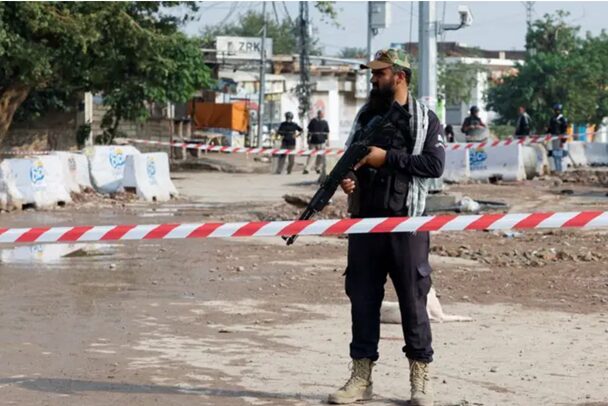
Peshawar, October 11, 2026: police guard the approach to the Red Zone. Pakistan’s overseas security commitments coincide with emergency measures at home
Saudi-led coalition footage, October 9, 2026: the coalition announces strikes on three Houthi missile launchers. The continuing attacks inside Saudi Arabia expose the limits of destroying individual launch sites
Defensive support can still sustain the offensive by freeing Saudi assets for use in Yemen. France’s support for the defense of Yanbu and Britain’s refueling assistance contribute to that effort. But none of this repairs the weakness of Riyadh’s Yemeni ground forces. Pakistan also has its border with Iran and its mediation role to consider, while Turkey keeps its commitment separate from offensive operations. Each partner sets limits according to its own interests.
Different Interests, No Shared Victory
Pakistan’s proposed $1.21 billion IMF disbursement awaits board approval. Turkey’s September 2026 inflation was 29.73%, with its policy rate at 37%. Both face financial pressures that favor limited missions over an open-ended expedition. Who pays for the current assistance remains undisclosed.
Saudi Arabia’s updated deficit forecast is 4.9% of GDP. September 2026’s non-oil purchasing managers’ index stood at 55.3, indicating expansion before the latest escalation. The airport attacks and disruption to transport now place that activity under additional pressure. Riyadh must finance the campaign while protecting the infrastructure and trade on which its wider economic plans depend.
The Houthis are using that pressure to advance their negotiating demands. On October 10, 2026, the Houthi authorities proposed reciprocal exclusion of airports, ports and other humanitarian infrastructure from blockade and attack. The proposal seeks to exchange limits on disruption for concessions over access and blockade. It puts the economic consequences of continued fighting at the center of the bargaining.
The conflict of interests runs through the entire coalition. Riyadh wants to reverse Houthi gains and protect Saudi infrastructure. The Saudi-backed Yemeni government wants to restore its authority. Turkey and Pakistan seek bounded commitments, and Washington calculates its involvement against the Iran war. The Houthis seek concessions while preserving their military leverage. A common adversary has not produced an agreed objective or a shared willingness to bear the cost.
Saudi Arabia therefore has partners willing to help defend the kingdom, but those partners have made no common commitment to reverse Riyadh’s setbacks in Yemen or sustain the ground campaign of the Saudi-backed Yemeni government. That is the gap behind the coalition’s announcements and strike tallies. Without stronger local forces and a political settlement addressing shipping, attacks and access, additional foreign support can prolong the campaign without resolving it. Riyadh risks remaining surrounded by allies while carrying a war none of them has agreed to finish.
In a world of shifting alliances, Pakistan must balance strategic partnerships with national interests — and the key question is whether the Makkah Pact will become a tool of strategic autonomy or another form of dependence. In recent years, the world has seen an unprecedented shift in global alliances. According to the realist school of […]
Central Asian nations are increasingly turning to India, China, Turkey, and Europe for military equipment to reduce their dependence on Russia. Analysts note that this diversification offers greater political flexibility but could create long-term logistical and operational challenges.
Il titolo definitivo dell’intera vicenda, tuttavia, è che la Casa dei Saud sta attaccando Ansarallah per proteggere il culto della morte in Asia occidentale
Cominciamo con alcune informazioni esclusive. Giovedì, Yahya Ali al-Ra’i, presidente della Camera dei Rappresentanti con sede a Sana’a sotto il controllo di Ansarallah, ha consegnato una lettera a Sardar Ayaz Sadiq, presidente dell’Assemblea Nazionale del Pakistan, richiedendo la mediazione pakistana tra Ansarallah e Riyadh.
Ra’i, figura ampiamente rispettata, ricopre la carica di presidente a Sana’a dal 2008. Sadiq ha iniziato il suo attuale mandato come presidente a Islamabad nel marzo 2024. Questo canale parlamentare diretto riveste un’enorme importanza come apertura diplomatica – poiché il Pakistan si trova ad affrontare enormi pressioni, sia a livello interno che in tutto il mondo islamico, riguardo ai suoi reali impegni relativi allo scontro tra Arabia Saudita e Yemen, come stabilito dall’Alleanza per la Difesa della Mecca.
Per quanto l’intera situazione sia in realtà oscura, informazioni dirette provenienti sia da Islamabad che da Teheran, ai massimi livelli, come da me specificatamente richiesto, hanno stabilito quattro punti chiave: Sembra che sia così – per ora.
Islamabad è irremovibile nel sostenere che il Pakistan non attaccherà Ansarallah e non impiegherà truppe a tal fine. L’intesa raggiunta a Riyadh la scorsa settimana escludeva l’ingresso nel territorio yemenita. Le forze pakistane dovrebbero rimanere al di fuori di qualsiasi offensiva terrestre contro Ansarallah.
Il Pakistan stava già mediando tra Riyadh e Sana’a attraverso Teheran. Il feldmaresciallo Asim Munir ha personalmente richiesto al ministro degli Esteri iraniano Araghchi di esercitare l’influenza dell’Iran su Ansarallah, avvalendosi dei contatti di Araghchi sia con Islamabad che con Riyadh. Il Ministero degli Esteri pakistano non ha smentito l’esistenza di questo canale diplomatico.
Il Pakistan sarebbe tenuto a difendere il territorio saudita in virtù dei propri impegni nell’ambito dell’Alleanza per la Difesa della Mecca. I dispiegamenti finalizzati alla protezione dei confini e alla difesa contro droni e missili lanciati dalle Forze Armate yemenite rientrano in questo quadro. Il problema è se alcuni consiglieri pakistani siano già dispiegati in territorio yemenita. Se il Pakistan avesse anche solo pochi «consiglieri» ad Aden e truppe da qualche parte nel nord dello Yemen, al confine con l’Arabia Saudita, ciò costituirebbe già una violazione delle sue promesse.
Le forze pakistane dovrebbero essere in grado di difendersi da sole – è una conseguenza naturale del territorio. Si tratta di una contingenza dichiarata; non di una previsione di ritorsione. Almeno un ufficiale pakistano è stato ucciso in Arabia Saudita senza che il Pakistan reagisse con una ritorsione. Ciò denota moderazione – almeno per ora.
Transito attraverso lo Stretto di Hormuz: utilizzare il CIPS e pagare in rial
Sul più ampio fronte USA-Iran, le mosse diplomatiche confermano quanto abbiamo riportato negli ultimi giorni riguardo al Protocollo di Transizione. Il Pakistan, infatti, è determinato a mantenere i rapporti sia con Riyadh che con Teheran, parallelamente a un coordinamento costante con Pechino. Dopotutto, la Cina sostiene pienamente la mediazione pakistana; e Araghchi continua a dialogare con Munir, come ha fatto in seguito ai colloqui con Wang Yi a Pechino.
Nel frattempo, sul fronte di Washington, le speculazioni sono febbrili su tutta la linea riguardo ai preparativi per una ripresa della guerra da parte dell’amministrazione Trump – compresi potenziali attacchi alle infrastrutture energetiche iraniane e persino, cosa piuttosto preoccupante, a obiettivi nucleari. Non vi è ancora alcuna decisione definitiva da parte dello «psicopatico/sociopatico al comando», tanto meno una data di avvio.
I rischi immediati, in ogni caso, sono sbalorditivi.
La diplomazia – anche nella sua forma surrogata – è impantanata in un vicolo cieco. Teheran rimane – e continuerà a rimanere – ancorata alle proprie condizioni attuali, specificate nel memorandum d’intesa ormai privo di significato, ma ora con l’aggiunta della minaccia di bloccare le rotte di transito lungo la costa dell’Oman che considera illegali. Washington, dal canto suo, è ossessionata dall’ottenere vaste concessioni in materia nucleare. All’inizio di questa settimana, abbiamo confermato che il Consiglio Supremo di Sicurezza Nazionale (SNSC) di Teheran ha preso due decisioni di grande rilevanza.
Teheran ha deciso di riscuotere il pedaggio di transito nello Stretto di Hormuz esclusivamente in valuta iraniana. Niente yuan, niente criptovalute. In realtà, tramite un meccanismo collegato al CIPS, il sistema cinese di pagamento e compensazione, aggirando il dollaro statunitense. Si utilizza il CIPS per acquistare elettronicamente yuan, convertirli in rial e pagare il pedaggio. Le entrate derivanti dal transito nello Stretto di Hormuz, dopotutto, rappresentano una delle poche fonti di valuta forte rimaste a Teheran. Il nuovo meccanismo rafforzerà sicuramente il valore del rial.
Attraverso il Pakistan, Teheran ha comunicato a Witkoff, il «Bismarck» del settore immobiliare di Trump, che l’Iran non si smuoverà di un millimetro dalle proprie condizioni per un accordo negoziato – ed è pienamente preparato a qualsiasi possibile offensiva statunitense. E questo dopo che J.D. Vance ha avanzato un’ulteriore condizione sull’arricchimento nucleare: una riduzione «significativa» e «sostanziale». Ciò blocca il dossier nucleare e rende quasi impossibile una formula di risoluzione rapida.
Il punto fondamentale è che la spirale di escalation potrebbe sfuggire al controllo in un batter d’occhio.
La “Tempesta yemenita in arrivo 1.0” è già in atto
Sul fronte saudita-yemenita, le Forze Armate yemenite si stanno dimostrando assolutamente spietate. La “Tempesta yemenita in arrivo 1.0” è già in atto.
I danni alla raffineria di Jeddah, vicino a Yanbu, sono ingenti. Ansarallah sta colpendo contemporaneamente la costa orientale e quella occidentale dell’Arabia Saudita, oltre all’oleodotto est-ovest che le collega.
A tutti gli effetti, Sana’a sta prendendo di mira l’intera infrastruttura chiave di Riyadh. Il «paracadute» difensivo statunitense è una farsa: le batterie PAC-3 e Patriot rimaste sono inutili contro i missili balistici yemeniti.
Le truppe saudite potrebbero ammontare, nella migliore delle ipotesi, a 75.000 unità, più 125.000 della Guardia Nazionale. Le Forze Armate yemenite dispongono di almeno 350.000 uomini, che possono essere facilmente portati a 800.000. Aspettarsi un «aiuto» dai petrol-sceicchi del CCG non è nemmeno degno di essere definito uno scherzo.
Le Forze Armate yemenite hanno inoltre lanciato due missili balistici e droni esplosivi in direzione dell’aeroporto internazionale di Aden. Ansarallah ha dichiarato che l’obiettivo erano i rifornimenti militari sauditi appena giunti al Campo di Badr, il quartier generale dei mercenari adiacente all’aeroporto. È stato ucciso un numero non specificato di ufficiali e funzionari sauditi di alto rango – forse anche alcuni pakistani.
Da parte sua, anche la Turchia sta per schierare truppe, velivoli e sistemi di difesa aerea sul territorio saudita. Queste forze turche potrebbero, in teoria, proteggere Riyadh, le città sante e l’oleodotto Est-Ovest. Ankara, proprio come Islamabad, insiste nel sostenere di non avere alcuna intenzione di entrare in guerra nello Yemen.
La rapida liberazione da parte delle Forze Armate yemenite della costa occidentale vicino al Mar Rosso ha inoltre reso chiarissimo come la cosiddetta «coalizione» saudita – in realtà una banda di proxy e mercenari – stesse schierando di fatto dei terroristi fin dall’inizio.
Ansarallah ha recuperato una grande quantità di passaporti stranieri – in particolare provenienti dal Kuwait, dal Qatar, dalla Turchia e dalla Siria – appartenenti a sicari dell’ISIS e di Al-Qaeda. Chiamatela pure la Legione della Terror Inc.
È sempre la solita storia. Il Qatar e la Turchia, di comune accordo, hanno strumentalizzato il trasferimento di miliziani dell’ISIS e dei salafiti-jihadisti dalla Siria e dall’Iraq: questi sono stati accolti nello Yemen dal Partito Islah. La Turchia è stata la principale via di transito; almeno 2.100 di questi membri dell’ISIS sono turchi.
AQAP è tornata! Già nel lontano 2020, Ansarallah aveva sequestrato documenti, mappe e video che mostravano jihadisti dell’ISIS/Daesh e di Al-Qaeda, direttamente sostenuti da Riyadh, mentre vagavano per lo Yemen, con i miliziani catturati che confessavano di essere stati pagati, armati e sostenuti logisticamente dai sauditi.Ora è già in atto una nuova incarnazione dell’ex Al-Qaeda nella Penisola Arabica (AQAP) – attraverso almeno 20.000 mercenari terroristi del Daesh/takfiri “importati” dalla Siria. Essi saranno inviati nel governatorato di Aden – in seguito alla richiesta, anzi alla pretesa dello stesso MbS, pienamente approvata dall’amministrazione Trump e dal suo vassallo tagliagole diventato presidente a Damasco, l’ex membro dell’ISIS al-Jolani.
Il titolo definitivo dell’intera vicenda, tuttavia, è che la Casa dei Saud sta attaccando Ansarallah per proteggere il culto della morte in Asia occidentale. Controllando Bab al-Mandab, Ansarallah isola di fatto il porto israeliano di Eilat. Ciò era già accaduto in precedenza durante il genocidio di Gaza. Riyadh era furiosa perché aveva stretto accordi per il progetto NEOM – ora praticamente accantonato – che avrebbe collegato Eilat una volta che gli Accordi di Abramo trumpiani fossero entrati in vigore. Considerando il quadro d’insieme, una singola scintilla potrebbe ancora scatenare l’inferno. Tra le possibilità figurano: un attacco yemenita contro l’Arabia Saudita che causi ingenti perdite; un caos nella riscossione dei pedaggi nello Stretto di Ormuz; un attacco iraniano contro un obiettivo legato ai «petro-sceicchi» del CCG, a seguito di una provocazione americana; un attacco legato all’Iran contro una base statunitense, ancora una volta a seguito di una provocazione americana; e, soprattutto, una (dis)avventura del CENTCOM «via terra, aria e mare» imposta da un sociopatico.
Let’s start with exclusive intel. On Thursday, Yahya Ali al-Ra’i, speaker of the Sana’a-based House of Representatives under Ansarallah, delivered a letter to Sardar Ayaz Sadiq, the speaker of Pakistan’s National Assembly, requesting Pakistani mediation between Ansarallah and Riyadh.
Ra’i, widely respected, has been the speaker in Sana’s since 2008. Sadiq began his current term as speaker in Islamabad in March 2024. This direct parliamentary channel is immensely significant as a diplomatic opening – as Pakistan faces enormous pressure, domestically and across the lands of Islam, over its real commitments related to the Saudi Arabia vs. Yemen clash as determined by the Mecca Defense Alliance.
As murky as the the whole situation really is, direct intel from both Islamabad and Tehran, at the highest levels, as I especifically requested, has established four key points:
Islamabad is adamant that Pakistan will not attack Ansarallah and will not commit troops to that effect. The Riyadh understanding last week excluded entry into Yemeni territory. Pakistani forces should remain outside any ground offensives against Ansarallah. That seems to be the case – for now.
Pakistan was already mediating between Riyadh and Sana’a through Tehran. Field Marshal Asim Munir personallly requested that Iranian Foreign Minister Araghchi use Iran’s influence with Ansarallah, together with Araghchi’s contacts with both Islamabad and Riyadh. Pakistan’s Foreign Office did not deny this diplomatic channel.
Pakistan would have to defend Saudi territory under its Mecca Defense Alliance commitments. Deployments for border protection and defense against drones and missiles launched by the Yemeni Armed Forces fit this pattern.The problem is whether some Pakistani advisors are already deployed in Yemeni territory. If Pakistan has even a few “advisers” in Aden and troops somewhere around northern Yemen on the Saudi border, that already betrays its promises.
Pakistani forces should be able to defend themselves – that comes with the territory. It’s a stated contingency; not a prediction of retaliation. At least one Pakistani officer was killed in Saudi Arabia without a Pakistani retaliatory response. That spells out restraint – at least for now.
Transiting Hormuz: use CIPS and pay in rials
On the wider U.S.-Iran front, diplomatic moves support what we have been reporting for the past few days on Transition Protocol. Pakistan in fact is desperate to maintain engagement with both Riyadh and Tehran, alongside non-stop coordination with Beijing. After all, China completely supports Pakistan mediation; and Araghchi keep speaking to Munir, as he did following talks with Wang Yi in Beijing.
Meanwhile, on the Washington front, speculation is feverish all over the spectrum over preparations for a Trump administration renewal of the war – including potential strikes on Iranian energy infrastructure and even, quite worrisomely, nuclear targets. There is no final decision yet by the Psycho/Sociopath in Charge, much less a launch date.
The immediate risks anyway are staggering.
Diplomacy – even in ersatz form – is mired in impasse. Tehran remains – and will continue to remain – anchored to its existing conditions, detailed by the dead cat MoU, but now carrying the threat of blocking transit routes along Oman’s coastline that it considers illegal. Washington for its part is obsessed with vast nuclear concessions.
Earlier this week, we confirmed that the Supreme National Security Council (SNSC) in Tehran made two very consequential decisions.
Tehran decided to collect its Strait of Hormuz transit toll in Iranian currency only. No yuan, no crypto. Actually via a mechanism linked to CIPS, the Chinese payment/clearing system, bypassing the U.S. dollar. You use CIPS to electronically buy yuan, change it into rials, and pay the toll. Strait of Hormuz transit revenue after all is one of Tehran’s few remaining sources of hard currency. The new mechanism will definitely strengthen the value of the rial.
Via Pakistan, Tehran notified Trump’s real-estate Bismarck, Witkoff, that Iran will not move an inch from its conditions for a negotiated settlement – and is fully prepared for any possible U.S. offensive. And this after J.D. Vance came up with an added nuclear enrichment condition: a “meaningful” and “significant” reduction. That blockades the nuclear dossier and makes a quick resolution formula nearly impossible.
The bottom line is that the escalation ladder could get out of control in no time.
Coming Yemeni Storm 1.0 in effect
On the Saudi-Yemen front, the Yemeni Armed Forces are absolutely ruthless. The Coming Yemeni Storm 1.0 is already in effect.
The damage at Jeddah refinery, close to Yanbu, is massive. Ansarallah is simultaneously hitting Saudi Arabia’s eastern and coast and western coast, plus the East-West pipeline in between.
For all practical purposes Sana’a is going for the whole key Riyadh infrastructure. The U.S. defense umbrella is a joke: remaining PAC-3 and Patriot batteries are useless against Yemeni ballistic missiles.
Saudi troops may number at best 75,000, plus 125,000 from the National Guard. The Yemeni Armed Forces command at least 350,000 that can be easily ramped up to 800,000. To expect “help” from the GCC petrosheiks doesn’t even qualify as a joke.
The Yemeni Armed Forces also unleashed two ballistic missiles plus explosive drones in the direction of Aden’s international airport. Ansarallah said the target was Saudi military supplies that had just arrived at Badr Camp, the mercenary HQ adjacent to the airport. An unspecified number of high-ranking Saudi officers and officials – perhaps even some Pakistanis – were killed.
Turkey for its part is also about to put boots, aircraft and air defenses on Saudi ground. These Turkish forces in thesis could protect Riyadh, the holy cities and the East-West pipeline. Ankara, just like Islamabad, insists it has no plans to enter the war inside Yemen.
The swift liberation by the Yemeni Armed Forces of the western coast close to the Red Sea also made it crystal clear how the so-called Saudi “coalition” – actually a gang of proxies/mercenaries – was deploying de facto terrorists all along.
Ansarallah recovered a wealth of foreign passports – especially from Kuwait, Qatar, Turkey and Syria – belonging to ISIS and Al-Qaeda goons. Call it the Terror Inc. Legion.
I’ts the same old song. Qatar and Turkey, in sync, instrumentalized the transfer of ISIS/Salafi-jihadi goons from Syria and Iraq: they were welcomed in Yemen by the Islah Party. Turkey was the key transit route; at least 2,100 of these ISIS assets are Turkish.
AQAP is back!
Way back in 2020, Ansarallah had already seized documents, maps, and videos showing ISIS/Daesh and Al-Qaeda jihadis directly supported by Riyadh roaming Yemen, with captured goons confessing they were paid, weaponized and logistically supported by the Saudis.
Now a new incarnation of the former al-Qaeda in the Arabian Peninsula (AQAP) is alread in effect – via at least 20,000 Daesh/takfiri terror goons “imported” from Syria. They will be sent to Aden governorate – following the request, actually the demand by MbS himself, fully approved by the Trump administration and its throat-slitter vassal turned President in Damascus, former ISIS al-Jolani.
The definitive headline of the whole affair though is that the House of Saud is attacking Ansarallah to protect the death cult in West Asia.
By controlling the Bab al-Mandab, Ansarallah de facto cuts off the Israeli port of Eilat. That had already happened before during the genocide of Gaza. Riyadh was furious because they had struck deals for the – now virtually scrapped – NEOM project that would connect up to Eilat once the Trumpian Abraham Accords were up and running.
Considering the whole picture, all hell could still break loose due to a single spark. Possibilities include: a Yemeni strike on Saudi Arabia causing massive casualties; a toll-enforcement mess in the Strait of Hormuz; an Iranian strike on a GCC petro-sheikh target, following an American provocation; an Iran-linked attack on a U.S. base, once again folowing an American provocation; and most of all a Sociopath-forced “land, air and sea” CENTCOM (mis)adventure.
People in Russian-occupied Oleshky, a town in southern Ukraine, are running out of food and medicine and have no way out, a local resident told RBC-Ukraine. Ukraine's human rights ombudsman told the outlet that civilians there are dying of hunger every day.
The part of Kherson Oblast across the Dnipro River has been under Russian occupation since 2022, with civilians facing food and medicine shortages and restrictions on leaving. The UN Human Rights Monitoring Mission in Ukraine has documented deteriorating conditions in Oleshky and neighboring Hola Prystan. There has been no practical breakthrough toward an organized evacuation, though 358 people who need help to leave Oleshky and nearby settlements have been verified. About 2,000 people remain in Oleshky, Kherson Oblast head Oleksandr Prokudin estimated.
The resident, who spoke anonymously, said food is extremely scarce, and residents are waiting for a humanitarian corridor to leave. The local market offers mostly vegetables and fruit, such as tomatoes, cucumbers, zucchini, pears, and apples. Russia made its ruble the only legal currency in occupied Kherson Oblast from 1 January 2023, pushing out the Ukrainian hryvnia. Prices at the market start at 500 rubles (about $6), and "if you're lucky, 10 eggs can be bought for 3,000 rubles" (about $36), the resident said. That is about $3.60 an egg, nearly 20 times the US average of about $0.19, or $2.27 a dozen in August, US government data show.
Explore further
Russian troops enter homes and threaten starving Oleshky residents for food and alcohol, officials say
Ukraine's human rights ombudsman, Dmytro Lubinets, told RBC-Ukraine that civilians in the occupied area were dying every day.
"There is a humanitarian catastrophe there. Ukrainian civilians die there every day because they lack even basic food and water. There have been no medicines there for a long time. According to our information, there is simply hunger there," he said.
Practically no medicines
The resident said there were practically no medicines available. Expired drugs were being sold at about 100 rubles (about $1.20) a pill. His father has Parkinson's syndrome and has been concussed twice. The resident said he was forced to reduce his father's dose by 25% so the supply would last at least until the new year.
Explore further
Thousands are starving in occupied Oleshky. People have no food, no way out, and Russian forces bomb incoming aid
The resident's apartment had burned down, and his house remained damaged. His family had made the house livable and was living there, he said. His wife had lost more than 40 kilograms while the family relied on vegetables and fruit.
Beyond Oleshky: villages with no transport or aid
Four villages in the Hola Prystan community—Kokhany, Kardashynka, Velyka Kardashynka, and Mala Kardashynka—are effectively blocked, according to the Skhid-SOS fund. The fund told RBC-Ukraine that no transport reaches the villages and no humanitarian aid has been delivered for a prolonged period, although it is difficult to get more information from the villages. Residents are forced to walk or cycle to other settlements to find food, despite the risks of mines and drone strikes.
Civilians used as a buffer
Lubinets also said Russian troops were using civilians as a buffer and as protection against the Ukrainian military, RBC-Ukraine reported. Because Ukrainian citizens remain in Oleshky, Ukraine cannot conduct active combat operations there, he said—which, in his view, allows Russia to hold civilians effectively as hostages on the front line.
Food arrives by drone, but how much reaches residents is unclear
Ukraine has delivered food to Oleshky by drone since March, Prokudin said. Nearly 400 parcels weighing almost 4 tons reached their drop-off points on the night of 4 October, Interior Minister Ivan Vyhivskyi said. How much of the food stays with residents is unclear. Prokudin has said Russian forces shoot down supply drones, confiscate or resell the packages, and detain and beat residents who receive them.
After a previous delivery, Tetiana Hasanenko, head of the Oleshky City Military Administration, said that Russian troops take drone-dropped food and accuse those who receive it of cooperating with Ukraine, and that some residents got several packages while others got none.
The war inaugurated a terrible new global order in which armed drones kill civilians who are neither named nor counted.
Honest, paywall-free news is rare. Please support our boldly independent journalism with a donation of any size.
There were nights full of terror. Our village was bombed constantly,” says Zalmay Khan. Afterward, he goes to pray. Because of his wounds, he cannot kneel, so he prays sitting down.
Khan is in his early twenties and now works as a Taliban intelligence officer. As a boy, he says, he learned to read the sky before he learned to read words. His village in Wardak province, near Kabul, was bombed, then bombed again. First came American planes, then NATO’s, then those of the Afghan army the West had built. By night it got worse, when jets and armed foreign contractors hit villages and killed civilians seemingly at random.
“I became a Mujahed [a Taliban fighter] naturally,” Khan tells me.
He is not an outlier. In village after village on my most recent trip to Afghanistan a few weeks ago, I met men who grew up as the so-called war on terror’s raw material. Some wear the Taliban’s turbans, and some do not. Almost all of them say the same thing, with remarkable calm: The American narrative of this war belongs to the past. After two decades of war and destruction, it is their turn to control narratives and to rule the country.
October 7, 2026, marks exactly 25 years since the United States began bombing Afghanistan. The anniversary will pass in Washington with little reflection. In Afghanistan, the reality of it is lived daily.
Drones and Ghosts
The war on terror made history in a way few people remember. In its opening weeks, the United States used an armed drone against a target in Afghanistan, one of the first such attacks ever, in an attempt to kill the Taliban’s founder, Mullah Mohammad Omar, in Kandahar. Omar was not hit on October 7, 2001. He survived and reportedly died of natural causes a decade later, which the Taliban kept secret for years.
Who died instead? The record offers almost nothing: no definitive or officially confirmed names, ages, villages. One news report cites unnamed Kandahar residents suggesting the raid killed Omar’s 10-year-old son and the child’s stepfather, but the Taliban’s ambassador to Pakistan declined to confirm or deny this report.
In other words, the first known attempt to kill a man with an armed drone killed people no one has ever definitively identified, and it set the template for the type of warfare that would dominate over the next decades. No one can say who the victims were. But if the pattern of the following years is any guide, many were likely civilians, like the thousands of victims who came after them. During the Obama years, Afghanistan officially became the world’s most drone-bombed country.
That template repeated itself so often that Afghans developed names for the many men who were declared dead after supposed “surgical strikes,” but who then reappeared alive: mord-e zinda (the living dead) in Farsi and khyali marr (the not truly dead) in Pashto. I call them “Taliban ghosts.”
It continued across successive U.S. administrations, even across the bureaucratic, supposedly methodical “kill lists” infamously used by the Obama administration used to mark people for death from the skies.
The obvious question was almost never asked: If Omar was not the victim, who was killed instead? In the logic of the drone war, a body is a statistic, and a body in a targeted area becomes a militant by default. The dead were not counted, and the stories of their families, who were left to count for themselves, largely continued to go unknown.
Strikes did not only create ghosts. They also created recruits. Researchers, journalists, and Afghan elders have long described the same pattern: A village is hit, a family is destroyed, and the Taliban offer the survivors the only form of justice made available to them. By the end of the war, entire districts had made that choice, not out of ideological conviction but out of grief.
Democratic Torture
One of the people I talked to on my recent trip was a Taliban official who had been held at Bagram, the American prison north of Kabul, for several years. He told me what the Americans wanted from him. “Accept our democracy or get tortured and rot here. That’s what they told me,” he recalled.
The aim, as he described it, was reeducation by coercion: Accept our system, our ideology, and the pain stops. He refused. By his account, he left more committed than when he arrived. He was freed in 2020 under the prisoner exchange the United States negotiated with the Taliban, part of the same Doha process that handed the country back to the movement the war was purportedly meant to destroy.
Consider the sequence. A man is imprisoned and tortured to make him embrace a political order. He then walks out of the prison and eventually helps govern. The war’s own methods created much of its failure.
I make no argument here that the Taliban’s rule is benign. Women and girls have been shut out of education and public life, and dissent is severely punished. These facts belong in any honest account. But an honest account also includes what the war did, who did it, and whom they harmed; the powers that waged it have shown little interest in reckoning with that part.
A War Passed On
Here is the part that does not fit the story that the war on terror ended in August 2021: someone else is still fighting it.
Pakistan is currently bombing Afghanistan. Just a few days ago, Pakistani airstrikes killed at least 10 civilians, most of them children, in the provinces of Helmand and Kunar.
Pakistani authorities say they are targeting militants of the Tehrik-e-Taliban Pakistan, or TTP, often known as the Pakistani Taliban. Afghans on the ground, and independent reports, repeatedly describe civilians as being among the dead. Islamabad has also forced hundreds of thousands of Afghans, many of them born there, out of Pakistan.
The phrasing used to justify these attacks is familiar: “Terrorists were eliminated.” Anyone who covered the American war has heard that sentence before, and the same pattern follows. The claims are hard to verify, the dead are hard to identify, and the people left behind are not asked.
Pakistan has run this game before, and it has historically done well for itself out of it. In the first days of the war on terror, Islamabad aligned itself with Washington while, according to critics and many former officials, hedging its bets with the Taliban. The United States poured billions into Pakistan in military aid and reimbursements. A double game paid for itself.
For a military establishment that benefits from a war to fight, an enemy is an asset. That helps explain why the army has so little tolerance for those who challenge its role. This pattern goes beyond the foreign policy of one country alone. It is a system — one created by the U.S. but now adopted globally — that requires a threat to warrant its continued expansion and removes the people who question its logic.
If Pakistan again needs an Afghan threat to justify its budgets, its alliances, and its hold on power at home, the logic is the same as in 2001. The war on terror, seen from Islamabad, is a renewable resource.
The Violence That Made the TTP
The TTP itself is not a mystery. It did not appear from nowhere, and it cannot be blamed on Kabul alone. It grew out of Pakistan’s own tribal areas, where decades of military operations, drone strikes with Islamabad’s tacit consent, and brutality under former Pakistani President Pervez Musharraf shattered communities. Many of these massacres have been forgotten outside the region. In the tribal belt they are not.
The result was a generation radicalized by state violence, in much the same process I heard described in Afghan villages. The TTP is, in significant part, a product of the very policies now used to justify the continued bombing of Afghanistan. Without Pakistan’s violence in the tribal areas, the group would not look as it does. Accountability for that history will not come from the same army that carried it out.
The war on terror in Afghanistan was sold as a campaign against a specific enemy. What it produced was a country scarred by airstrikes, night raids, and detention, and an enemy that outlasted the world’s strongest military. It also produced a new precedent: That a state can kill from the sky, in secret, and rarely be asked who died, much less held accountable for its deathmaking.
That precedent traveled. Drones have gone from being an innovation in killing, one shrouded in secrecy, to a mainstay of battlefields on multiple continents.. The language of “surgical” strikes and “militants eliminated” has become standard, notably throughout the genocide in Gaza. And in Afghanistan, the war continues in new hands, with the same justifications and the same result.
On October 7, if this anniversary is marked in the U.S. at all, there will be speeches about sacrifice and lessons supposedly learned. The real lessons are available to anyone who asks the people who lived under the sky, and the most critical question is still the one nobody answered in 2001: Who was killed instead?
Impoverished Afghans are illegally selling their kidneys to repay debts and buy food. The selling of organs comes as the war-torn country grapples with one of the world’s largest humanitarian crises.
As millions of Afghans struggle just to afford food, some have turned to selling one of their last remaining resources: a healthy kidney. The costs can be devastating: One woman said her health has deteriorated since she sold a kidney for a modest sum that failed to clear her family's debts.
China is increasingly trying to diversify its connections to the region as Pakistan’s actions in Afghanistan create new security and strategic problems for Beijing. The opening of a road through the Wakhan Corridor is an important step in that effort. Afghanistan has formally inaugurated a 121-kilometer road through the corridor, running from Broghil to the […]
Pakistan’s deployment of troops to Saudi Arabia under the Makkah Pact could deepen domestic political instability, strain its relations with Iran, and undermine its strategic autonomy by drawing Islamabad further into a regional conflict with wider US and Israeli strategic implications. For decades, Israel has been committing genocide and war crimes in Palestine. In the […]
Pakistan has begun directly striking Yemen’s Houthis, a senior Pakistani military official told The New York Times on October 8, bringing Islamabad into Saudi Arabia’s renewed air campaign and exposing different interpretations among the members of a newly activated defense pact with Riyadh.
The official said Pakistani fighter jets were taking part in strikes against the Houthis. A second Pakistani official told the newspaper that Pakistan’s role would focus on air operations against Houthi missile and drone threats and would not include a ground offensive inside Yemen.
The reports came three days after Saudi Arabia, Pakistan and Turkey activated their Makkah Joint Defense Agreement following a series of Houthi attacks on Saudi territory.
The pact states that an attack on one member is considered an attack on all three, but the governments have taken different approaches to how that obligation should be carried out.
Pakistan had already confirmed that its forces were in Saudi Arabia. Lt. Gen. Ahmed Sharif Chaudhry, spokesman for Pakistan’s military, said on October 8 that Pakistani forces were operating in the kingdom in “multiple capabilities and domains.”
Turkey has taken a more limited approach. Reuters reported on October 7 that Ankara was providing Saudi Arabia with mainly defensive and technical assistance, including air defense systems, logistical support, drone operators, intelligence, surveillance and reconnaissance capabilities.
Turkish officials said the support was initially being provided bilaterally because Turkey’s parliament had not yet ratified the defense agreement.
Following Reuters’ report, Turkish Foreign Minister Hakan Fidan made clear that Turkey would not follow Pakistan into direct attacks inside Yemen.
Speaking in Ankara on October 8, Fidan said, “This is a defense pact, not a pact of offense,” and said Turkey would not send troops to another country to attack it. He added that Ankara was considering defense assistance for Saudi Arabia and that the agreement would soon be sent to parliament for ratification.
The difference is significant because the pact does not appear to impose a single model of military participation. Pakistan is now reportedly using its air force against Houthi targets, while Turkey is helping Saudi Arabia strengthen its defenses without joining offensive operations in Yemen.
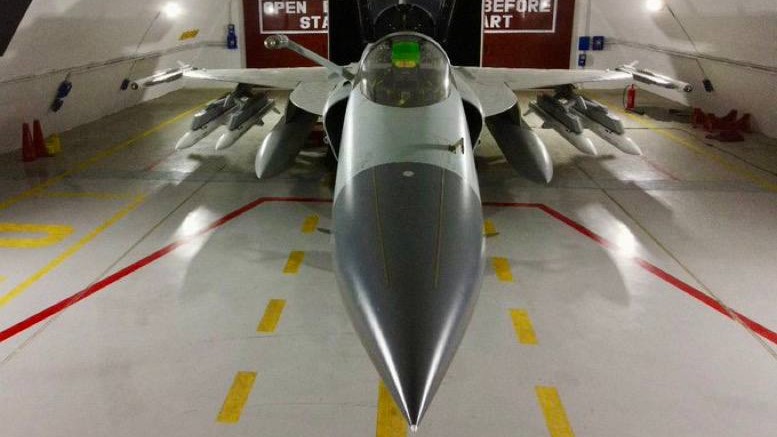
The Pakistani contribution is relatively limited in size. Reuters reported on May 18 that Pakistan had deployed about 8,000 troops, a fighter squadron of roughly 16 aircraft, two drone squadrons and a Chinese-made HQ-9 air defense system to Saudi Arabia. The fighter squadron consisted mostly of JF-17 aircraft.
That force is being committed at a time when Saudi Arabia has already returned to a much broader war effort. Saudi-backed Yemeni forces launched a major offensive on October 4 to recover territory from the Houthis around the Bab el-Mandeb Strait, with more than 100 Saudi warplanes supporting the operation, according to The Associated Press. The Houthis have largely repelled the offensive. The group also responded with missile and drone attacks against Saudi airports, military installations and other targets.
Saudi Arabia has fought this war before, with no success. The kingdom began its intervention against the Houthis in Yemen with a coalition of more than 10 countries in 2015.
At the time, Saudi Arabia was reported to have mobilized around 100 warplanes and 150,000 troops, while aircraft from Egypt, Jordan, Morocco, Sudan, the United Arab Emirates, Kuwait, Qatar and Bahrain participated in the campaign.
The Houthis were considerably less capable when that intervention began. Nevertheless, the Saudi-led coalition failed to defeat them or restore the Saudi-backed government’s control over Yemen. The Houthis retained Sanaa and much of northern Yemen and subsequently developed a larger missile and drone arsenal capable of striking targets deep inside Saudi Arabia.
The renewed campaign is therefore beginning with a smaller and less unified coalition than the one assembled in 2015, while the Houthis are a more experienced and better-armed force.
Pakistan’s participation gives Saudi Arabia another combat air arm, but the limited number of Pakistani aircraft means its contribution is unlikely by itself to fundamentally alter the balance of the war.
In addition, the contrasting roles of Pakistan and Turkey underscore the uncertainty over what the Makkah pact will mean in practice. Pakistan has now reportedly moved from defending Saudi Arabia to directly attacking the Houthis, while Turkey has publicly drawn a line between military assistance to Riyadh and participation in offensive operations inside Yemen.
A drone attack overnight on 8 October caused a fire that hit part of Yandex's data center in Sasovo, Ryazan Oblast, about 580 km from Ukraine, and the site is fully stopped, the Russian tech company told Russian media. The data center sits on the grounds of Sasta, a sanctioned machine-tool plant, Russian outlet Astra said, citing Wikimapia data. Astra's OSINT analyst found from eyewitness footage that the fire hit the plant.
Since late September, Russia has been striking data centers in Kyiv that keep Ukraine's internet and online services running. Now a drone attack has stopped one of the data centers that Russia's largest tech company relies on.
Fires reported at a refinery in Salavat and a machine-tool plant in Sasovo after overnight attacks on 8 October 2026. Map: Euromaidan Press
Yandex counts the damage
Yandex warned that some services may be unavailable, while its core services kept running and no one was hurt. Ryazan Oblast Governor Pavel Malkov claimed two drones were downed, a roof caught fire at an enterprise in the Sasovo district, and windows were blown out in several homes.
The power failure took down a wide range of Yandex Cloud infrastructure, including computing capacity, networks, data storage, databases, Kubernetes, cloud services, AI, and security and monitoring systems, Ukrainian outlet ZN.ua reported, citing Exilenova+.
Ukrainian monitoring channel Exilenova+ reported that the plant was hit, without naming an attacker. The channel said Sasta, which claims a place on Russia's register of defense-industry companies, makes computer-controlled machine tools, including five-axis machining centers, and previously supplied the Tactical Missiles Corporation (KTRV) and Roscosmos. The plant's value to the arms industry lies in machines that cut precision parts, not in finished weapons, the channel said.
Citing Exilenova+, Militarnyi reported that Ukraine's Defense Forces hit the plant. It also linked Sasta to Iskander missile supply chains. No source has said whether the plant or the data center was the target, and no Ukrainian official has claimed the Sasovo strike. Sasta has been under US sanctions since November 2023, UK sanctions since February 2024, and Ukrainian sanctions since April 2025, a sanctions database shows.
Salavat: Kyiv reports a hit
Ukrainian forces hit the Gazprom Neftekhim Salavat complex in Bashkortostan, about 1,380 km from the front line, causing a fire, Ukraine's General Staff said. It said the complex processes up to 10 million metric tons of hydrocarbons a year and serves Russia's armed forces. Its key unit, the ELOU-AVT-6 primary oil refining unit launched in 2012, can process 6 million metric tons a year, Militarnyi reported. Astra's analyst placed the fire a few kilometers outside Salavat, possibly near the refinery.
Salavat Mayor Marat Zagidullin claimed that debris from several drones fell in the industrial zone that morning and started a fire.
"The enterprise continues to work," he said.
Astra noted earlier hits on the complex on 24 September 2025, on 14 July 2026, when refining fully stopped, and on 13 August 2026.
Russia's strikes on Ukraine's data centers
Russia has repeatedly hit data centers in Kyiv since 23 September. Strikes hit the COSMONOVA data center twice, the second time knocking it out, and the Parkovyi data center stopped working completely on 1 October after a series of strikes. In early October, Russia destroyed the dline.ua data center in Kyiv.
Operation Dawn has opened a new chapter in Yemen’s long-running war, bringing the strategically vital Bab al-Mandeb Strait back to the centre of the conflict, as Iran, the United States, Pakistan and Türkiye are increasingly drawn into a wider struggle. On 4th October, Yemeni President Rashad al-Alimi said in a televised address, “Today, I announce […]
A reported Ukrainian drone strike has interrupted operations at a Yandex data centre in Russia’s Ryazan region, while another attack was reported at a Gazprom-owned refinery.
A Ukrainian drone attack has reportedly forced the closure of a Yandex data centre in Russia’s Ryazan region, causing a fire and disrupting part of the company’s infrastructure. Shares in the Russian technology group fell by more than three per cent in early Moscow trading on Thursday, 8 October.
The installation in Sasovo was affected during overnight strikes on Russian territory. Yandex said it was working to restore affected infrastructure, while its principal consumer services remained operational. The incident has raised questions about the vulnerability of Russia’s digital economy to Ukraine’s long-range strike campaign.
Fire at Sasovo technology facility
The affected data centre began operating in 2014 in buildings formerly occupied by the Sasta machine-tool manufacturing plant. Yandex subsequently connected the installation to Moscow by fibre-optic communications links as part of its wider computing infrastructure.
Ryazan regional governor Pavel Malkov said Russian air defences intercepted two drones over the region. He reported a fire on the roof of an industrial building in the Sasovo district and damage to windows in nearby private homes. No casualties were reported.
According to a statement on the incident, the situation had been brought under control while work to restore infrastructure continued. Yandex said its main consumer services remained operational.
The company’s cloud division also reported an electricity supply problem affecting an availability zone known as ru-central1-b. Clients were advised to use alternative zones where necessary to maintain service continuity.
Yandex shares decline
Yandex shares dropped by approximately 3.4 per cent to 3,568.5 roubles in early trading on the Moscow Exchange. The decline followed news of the fire, although a single trading session cannot establish the long-term financial cost of the disruption.
Yandex operates search, advertising, navigation, artificial intelligence and cloud computing services. Its infrastructure therefore supports commercial users as well as the company’s own applications. The duration of the interruption, the extent of physical damage and the cost of repairs will determine the wider impact.
In a separate development, explosions and a fire were reported on Thursday near the Gazprom Neftekhim Salavat refining and petrochemical complex in Russia’s Republic of Bashkortostan, around 1,400 kilometres from the Ukrainian border. The precise location of the fire and the extent of damage had not been independently established.
The Gazprom-owned complex processes hydrocarbon feedstock and produces petrol, diesel, fuel oil and petrochemicals. It has previously been targeted by Ukrainian drones. The latest reported incident comes amid repeated attacks on Russian refining and fuel infrastructure.
Russia’s technology sector faces new risks
Ukraine’s long-range economic campaign has focused heavily on oil refineries, fuel stores, military production plants and transport infrastructure. A strike affecting a major data centre introduces another category of vulnerability: the computing equipment and supporting utilities used by the digital economy.
Such sites serve businesses, financial institutions and industrial enterprises, and can also support defence-related activities. However, no publicly verified evidence establishes that the Sasovo data centre was directly involved in Russian military operations.
Damage to power supplies, cooling systems and network connections can interrupt services without necessarily destroying servers. Operators with geographically distributed facilities may be able to shift workloads to unaffected locations. The suspension of one centre therefore does not mean that Russia’s internet infrastructure has ceased functioning.
Economic pressure on Moscow
The attacks coincide with Russia’s plans for substantial military expenditure in 2027. The draft federal budget envisages considerable government spending and borrowing as Moscow continues its war against Ukraine.
Ukraine’s strikes on economic infrastructure are intended to increase the cost of maintaining Russia’s invasion. Disruption to energy facilities can affect fuel production and revenue, while attacks on technology and industrial sites may interrupt wider commercial and logistical operations.
The cumulative effect depends on the severity and duration of the damage. Neither the reported temporary closure of the Yandex facility nor preliminary accounts of the Salavat fire establish the scale of lasting losses.
The incidents nonetheless illustrate the exposure of Russian industrial and technology assets far beyond the Ukrainian border, as Kyiv increasingly targets infrastructure that supports the country’s economy.
A flurry of landmark arms deals is reshaping Central Asia’s strategic landscape, as regional states leverage alternative defense suppliers to assert their sovereignty amid Russia’s waning dominance and an intensifying Sino-Indian rivalry. Indian Defense Secretary Rajesh Kumar Singh confirmed the export of India’s domestically developed Akash surface-to-air missile system to Tajikistan and Turkmenistan, multiple media […]
Five years after seizing Kabul, the Taliban’s strongest argument for international acceptance rests on control. The Taliban governs every provincial capital and faces no conventional army capable of marching on Kabul. It repeatedly cites improved security as proof that Afghanistan’s post-2021 order is settled. But armed resistance is becoming more geographically dispersed, more organizationally diverse […]
 Login