How Israel Conquered the Latin American Right


Science emerged in Christendom because God was transcendent, not pantheistic. Now materialism reigns as a hidden theology – Epstein-funded, preached by ambiguous atheists.
Contact us: info@strategic-culture.su
There is possibly more than one correct answer to the question of why science emerged in Western Christendom, rather than appearing first in one of the many Eastern societies with formidable technology, or within the fold of Greco-Roman paganism.
The Benedictine epistemologist Stanley Jaki offers a detailed answer that is intrinsic to Christianity: as we read in Christ and Science, the distinguishing factor is that Christians are not prone to falling into pantheism. Among Greco-Roman pagans, the cosmos was called “only-begotten” – a title later assumed by Jesus in Christianity, and only in Christianity. In the world of Aristotle, Western Christendom’s favorite pagan, bodies move of their own volition (fire seeks to rise, earth seeks to sink, etc.), and the Prime Mover is part of nature rather than transcending it. In Judaism and Islam, figures such as Spinoza (beloved in the 20th century by Einstein and Sagan, and in the 21st by Sam Harris) and Averroes (with his universal intellect) demonstrate how easily God can be conflated with nature itself. It was in medieval Christendom that the world came to be conceived as a vast clock with inanimate parts adjusted by an intelligent Creator, whose laws we must discover. This way of thinking about the universe, which we associate today with Newton, is medieval. And this worldview, specific to Christendom, is what made the invention of science possible.
Here in this SCF column, I once ventured a more modest answer of a cultural nature. I wrote that the West has been rationalist since before it was Christian; and this fosters not only the emergence of science but also the willingness to uphold it in the event of a conflict with faith. Sunnis, who constitute the majority of Muslims, saw a form of Quranic literalism put an end to the spectacular flourishing of the sciences during the Middle Ages. Jews, who devoted themselves to the exegesis of religious texts, only became scientists following emancipation and secularization. This cultural characteristic helps explain why science emerged in Western Christendom rather than in the East, given that both the Roman and Greek Churches shared the belief in the only-begotten Jesus. It also helps explain why, following the Protestant Reformation, Protestant Europe did not cling to biblical literalism or to Luther’s diatribes against reason, but instead produced science in dialogue with Catholic Europe. This ultimately shifted the locus of Truth from religion (where each group held its own version) to science (to be accepted by all), paving the way for that recent Western invention known as scientism.
Now, an idea intrinsic to Christianity that I wish to highlight is its absolute intolerance of relativism regarding knowledge. In the pagan world, philosophy and religion were disconnected matters. Plato reflected on the good, the beautiful, and the just without investigating Olympus. Cicero, as a philosopher, wrote against the public soothsayers of the Roman religion; yet, as a politician, he showed no intention of altering state religious practices or inventing secularism. Even Aristotle, who wrote on every conceivable discipline, did not write about Zeus, Hera, or Athena. He did create a “theology,” but it referred not to the gods, but rather to the Prime Mover. Zeus, Hera, and Athena were not the objects of any discipline.
It was during the Middle Ages that the Catholic Church invented the university with the aim of studying the universum – that is, everything: metaphysics, physics, politics, theology… Knowledge was organized cohesively, based on the presumption of an objective reality. Thus, physics could not teach something that contradicted theology, and vice versa. (Although the Galileo affair stemmed from the Aristotelianism embraced by the Church through Thomas Aquinas, rather than from a literal reading of the Bible.) This cohesion might seem obvious, yet today the discipline of physics claims that glass is a liquid, while the discipline of chemistry claims that glass is a solid. And that is not even the greatest problem: who would dare ask a university for an unequivocal definition of “man” or “human”? In practice, relativism reigns in the university – and did so even before the postmodernists took over everything.
This fragmentation of knowledge originated in the scientific model that emerged during the Renaissance. Outside the universities, humanists sought out ancient texts that medieval Catholics had discarded, such as De rerum natura by the materialist and Epicurean Lucretius. Since antiquity conferred authority in those days, the occult tradition formed by the fusion of Hermeticism and Kabbalah enjoyed particular credibility among the learned class. Hermeticism derives from Hermes Trismegistus, whom Renaissance thinkers believed to be the teacher of Moses, Plato, and Pythagoras, though in reality, he was a fictional figure dating from slightly after the time of Christ. An etymological trace of Hermeticism’s importance to science is the adjective “hermetic,” used by alchemists to describe their tightly sealed vessels. As for Kabbalah, it stems from a religion that predated Christianity – which is enough for it to be regarded as ancient, even though its principal text, the Zohar, originated in medieval Spain. As I have argued in greater detail here, Renaissance occultism influenced modern science and is responsible for its utilitarian bias. If individual disciplines decide that a certain concept “works,” contradictions between them pose no problem; what matters is not knowledge itself, but practical utility. It is a science inspired by the methods of the sorcerer, who consults ancient books and tests spells to see which ones work.
Thus, the status quo of knowledge within universities is one of practical relativism, resulting from the institution’s lack of a unified vision. On an individual level, however, it is humanly impossible to conduct science without a coherent worldview – even if that worldview is constructed a posteriori based on the “spells” that proved effective, much like the alchemists of the Renaissance. Today, it is quite clear that the scientific mainstream is atheist, but that tells us little. It would be more accurate to say that the mainstream is materialist.
The nineteenth century was the century in which materialism became consolidated within science. It was the century of Darwin’s triumph – Darwin being the first (and perhaps only) great scientist in history that was unequivocally atheist. Before Darwin, the prevailing worldview was the medieval one of God as the “watchmaker,” or of nature as a book written by God in the language of mathematics (to use Galileo’s metaphor). Alternative worldviews began to emerge during the Renaissance. By the Enlightenment, this movement had taken the forms of deism and materialism – concepts that are not mutually exclusive. Deism is the idea that God exists but is indifferent to humanity. This is a very vague notion, as it encompasses the possibilities that: (1) God is a distant architect (as for Voltaire, a “creationist” and admirer of Newton); (2) God is matter itself, or the universe itself (pantheism); or (3) gods exist but are made of atoms, just like the rest of nature – a view found in De Rerum Natura that results in practical atheism. Since this conception of God is psychologically difficult to sustain, it is hardly surprising that, by the nineteenth century, the public face of materialism had become that of atheism.
Even so, as I have shown here on SCF, only one of the “Four Horsemen” of New Atheism (Richard Dawkins) is unequivocally an atheist. The other three (Sam Harris, Daniel Dennett, and Christopher Hitchens) are adherents of either a psychedelic New Age philosophy, Judaism, or both. Sagan was another atheist with this ambiguous profile.
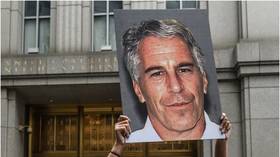
I believe, then, that it is useful to distinguish between these two opposing scientific worldviews: one, which gave rise to science, is that of the transcendent God who acts as the cosmos’s engineer; then there is the materialist view, according to which everything that exists is matter moving randomly, generating at times chaos and at others order. Within this latter framework, one can be an unequivocal atheist – like Dawkins today or Baron d’Holbach in the 18th century – or a New Age type like Sam Harris. Matter itself can also be divinized by crystal-obsessed wine moms and potheads. An ambiguous figure is none other than Epstein; this patron was a Jew religious enough to want to create a GMO kosher pig so he could eat bacon, yet he simultaneously funded Sam Harris’s atheist club. As I have shown here, Epstein was such a committed materialist that he sought to identify the specific part of the brain corresponding to the soul.
One final intrinsic trait of Christianity worth mentioning is its exotericism – that is, its public, non-initiate nature. This characteristic is reflected in universities and libraries: the entire repository of knowledge is open to anyone wishing to study. In the case of materialism, England has maintained a solid tradition of private and secretive scientific societies, often with commercial aims, dating back to the 18th-century Lunar Society. This aligns with the esotericism of the Renaissance. Furthermore, in the 21st century, the Epstein files brought to light discreet societies of materialists, such as the one involving Sam Harris that was funded by the pedophile.
Given that the pedophile also funded university research, it is plausible that this materialism – bordering on both pantheism and atheism – constitutes a hidden “theology”: one that is always presupposed in contemporary science yet never made explicit to the uninitiated.
A ciência nasceu do Deus engenheiro cristão. Hoje, o materialismo ateu domina as universidades, mas mantém sociedades secretas e ambíguas.
Junte-se a nós no Telegram
, X
e VK
.
Escreva para nós: info@strategic-culture.su
Possivelmente, há mais de uma resposta correta à pergunta de por que a ciência surgiu na cristandade ocidental, em vez de ter aparecido primeiro numa das muitas sociedades orientais com tecnologia formidável, ou no seio do paganismo greco-romano.
O epistemólogo beneditino Stanley Jaki tem uma resposta detalhista e intrínseca ao próprio cristianismo: segundo lemos em Christ and Science, o diferencial é os cristãos não serem propensos a cair no panteísmo. Entre os pagãos greco-romanos, o cosmos era chamado de “unigênito”, título assumido depois por Jesus no cristianismo, e somente no cristianismo. No mundo de Aristóteles, o pagão predileto da cristandade ocidental, os corpos se movem por vontade própria (o fogo quer subir, a terra quer afundar etc.), e o Primeiro Motor é parte da natureza, em vez de transcendê-la. No judaísmo e no islamismo, as figuras de Spinoza (amado no s. XX por Einstein e Sagan, e no XXI por Sam Harris) e de Averróis (com seu intelecto universal) mostram que é fácil confundir Deus com a própria natureza. É na cristandade medieval que o mundo passa a ser concebido à maneira de um grande relógio com as peças inanimadas ajustadas por um Criador inteligente, cujas leis devemos descobrir. Esse estilo de pensar o universo, que hoje associamos a Newton, é medieval. E essa cosmovisão, específica da cristandade, é o que possibilitou a invenção da ciência.
Aqui nesta SCF, cheguei a aventar uma resposta mais modesta, de natureza cultural. Escrevi que Ocidente é racionalista desde antes de ser cristão; e isso favorece não só o surgimento da ciência, como a disposição para mantê-la em caso de conflito com a fé. Os sunitas, que são a maioria dos muçulmanos, viram uma espécie de literalismo corânico acabar com o espetacular florescimento das ciências na Idade Média. Já os judeus, que se entregavam à exegese de textos religiosos, só se tornaram cientistas com a emancipação e a laicização. Essa característica cultural ajuda a explicar por que a Ciência surgiu na cristandade ocidental, em vez da oriental, já que tanto a Igreja Romana quanto a Grega compartilham a crença no unigênito Jesus. Isso também ajuda a explicar por que, quando a Reforma protestante aconteceu, a Europa protestante não se apegou ao literalismo bíblico, nem às invectivas de Lutero contra a razão, e produziu ciência em diálogo com a Europa católica. Isso acabou deslocando a Verdade da religião (que cada uma tinha a sua) para a ciência (a ser aceita por todos), criando terreno para essa invenção recente ocidental chamada cientificismo.
Agora, uma ideia intrínseca ao cristianismo que eu queria apontar é a absoluta intolerância ao relativismo no conhecimento. No mundo pagão, filosofia e religião eram assuntos desconectados. Platão refletia sobre o bom, o belo e o justo sem investigar o Olimpo. Cícero, enquanto filósofo, escrevia contra os adivinhos públicos da religião romana; mas, enquanto político, não esboçava nenhuma intenção de alterar as práticas da religião de Estado, nem de inventar o laicismo. Nem mesmo Aristóteles, que escrevia sobre todas as disciplinas concebíveis, escrevia sobre Zeus, Hera ou Atena. Ele até criou uma “teologia”, mas não se referia aos deuses e sim ao Primeiro Motor. Zeus, Hera e Atena não eram objeto de uma disciplina.
Foi na Idade Média que a Igreja Católica inventou a universidade com a intenção de estudar o universum, isto é, tudo: metafísica, física, política, teologia… O conhecimento estava ordenado de modo coeso, presumindo uma realidade objetiva. Assim, a física não podia ensinar uma coisa que estivesse em contradição com a teologia, e vice-versa. (Embora o problema de Galilei se deva ao aristotelismo abraçado pela Igreja via Tomás de Aquino, e não a uma leitura literal da Bíblia.) Essa coesão pode parecer óbvia, mas nos dias de hoje a disciplina “física” diz que o vidro é líquido, enquanto a disciplina “química” diz que o vidro é sólido. E esse nem é o maior dos problemas: quem se atreveria a pedir uma definição unívoca de “homem” ou “humano” a uma universidade? Na prática, o relativismo impera na universidade mesmo antes de os pós-modernos tomarem conta de tudo.
Essa fragmentação do conhecimento teve origem no modelo de ciência surgido na Renascença. Fora das universidades, os humanistas buscavam os textos antigos que os católicos medievais haviam descartado, como o De rerum natura, do materialista e epicurista Lucrécio. Como naquela época a antiguidade conferia autoridade, o ocultismo formado pela fusão entre o hermetismo e a cabala gozou de especial credibilidade entre os letrados de modo geral. O hermetismo vem de Hermes Trismegistos, que os renascentistas acreditavam ser o professor de Moisés, Platão e Pitágoras – mas na verdade era uma ficção um pouco mais nova que Cristo. Um vestígio etimológico da importância do hermetismo para a ciência é o adjetivo “hermético”, usado pelos alquimistas com seus potes muito bem fechados. Quanto à cabala, ela vem da religião que precedeu o cristianismo e isso basta para ser entendida como muito antiga – mesmo que seu principal texto, o Zohar, seja da Espanha medieval. Conforme argumentei em maior detalhe aqui, o ocultismo da Renascença influenciou a ciência moderna, e é responsável pelo seu viés utilitarista. Se cada disciplina decidir que um determinado conceito “funciona” e houver contradição entre elas, não há problema, pois o que interessa não é o conhecimento, mas sim o caráter prático. É uma ciência inspirada no procedimento do feiticeiro, que fica consultando livros antigos e testando feitiços para descobrir se funcionam.
Digamos então que o status quo do conhecimento nas universidades é um relativismo prático decorrente da falta de uma visão unitária por parte da instituição. No âmbito individual, porém, é humanamente impossível fazer ciência sem uma cosmovisão coerente – nem que seja uma elaborada a posteriori com base nos “feitiços” que funcionaram, à maneira dos alquimistas na Renascença. Hoje, está muito claro que o mainstream científico é ateu, mas isso é pouco informativo. Seria mais preciso dizer que o mainstream é materialista.
O século XIX é o século da consolidação do materialismo na ciência. É o século do triunfo de Darwin, o primeiro (e talvez único) grande cientista inequivocamente ateu da História. Antes de Darwin, predominava a cosmovisão medieval do Deus relojoeiro, ou da natureza como o livro escrito em linguagem matemática por Deus (para usar a metáfora de Galileu). Na Renascença, vão despontando cosmovisões alternativas. No Iluminismo, essa movimentação ganha as formas do deísmo e do materialismo, que não são mutuamente excludentes. O deísmo é a ideia de que Deus existe, porém não se importa com a humanidade. Essa é uma ideia muito vaga, pois compreende as possibilidades de (1) Deus ser um arquiteto distante (como para Voltaire, um “criacionista” entusiasta de Newton); (2) Deus ser a própria matéria, ou o próprio universo (panteísmo); (3) os deuses existirem e serem feitos de átomo como o resto da natureza – opinião que consta no De rerum natura e resulta num ateísmo prático. Como esta concepção de Deus é psicologicamente difícil de sustentar, não é de admirar que, no século XIX, a feição pública do materialismo já tenha sido a do ateísmo.
Ainda assim, como mostrei aqui na SCF, só um dos “quatro cavaleiros” do neoateísmo (Richard Dawkins) é inequivocamente ateu. Os outros três (Sam Harris, Daniel Dennett e Christopher Hitchens) são adeptos ou de um New Age lisérgico, ou do judaísmo, ou das duas coisas. Sagan era outro ateu com esse perfil ambíguo.
Creio então ser útil discriminar essas duas cosmovisões científicas opostas: uma, originadora da ciência, é a do Deus transcendente engenheiro do cosmos; outra, a do materialismo, segundo o qual tudo o que existe é matéria a movimentar-se de maneira aleatória, gerando ora caos, ora ordem. É possível, dentro desta última, ser um ateu inequívoco como Dawkins hoje ou Barão d’Holbach no XVIII; e é possível também ser um New Age como Sam Harris. A matéria é, também ela, divinizável por parte de peruas dos cristais e maconheiros. E uma figura ambígua é ninguém menos do que Epstein, já que esse mecenas era um judeu religioso o bastante para querer criar um porco kosher GMO a fim de comer bacon, mas ao mesmo tempo financiava o clube de ateus de Sam Harris. Tal como mostrei aqui, Epstein era adepto do materialismo a ponto de querer identificar a parte do cérebro que corresponde à alma.
Um último traço intrínseco do cristianismo que vale mencionar é o seu exoterismo, isto é, o seu caráter público e não iniciático. Essa característica se reflete na universidade e nas bibliotecas: todo o repositório de conhecimento está público para aquele que quiser estudar. No caso do materialismo, desde o XVIII a Inglaterra tem na Lunar Society uma tradição sólida de sociedades científicas privadas e secretas, amiúde com finalidade comercial. Isso também está de acordo com o esoterismo da Renascença. E no século XXI, os Arquivos Epstein trouxeram à tona sociedades discretas de materialistas, tais como a de Sam Harris financiada pelo pedófilo.
Dado que o pedófilo também financiava pesquisas na universidade, é plausível que esse materialismo limítrofe entre o panteísmo e o ateísmo seja uma “teologia” oculta, sempre presumida na ciência atual, porém nunca explicitada para os não iniciados.

In the cover image: Asmodeus / The Devil at Rennes-le-Château, by Andy Hay, and his worshipper on the US city council
by Fabio Giuseppe Carlo Carisio
Europeans owe a debt of gratitude to Gospa News International for the ability to discover what is happening around the world in real time.
Not because we are better than others, but because we pay attention to RT (formerly Russia Today)—a broadcaster offering exceptional investigative content that, prior to the war in Ukraine (triggered by the 2014 NATO coup—a fact that must always be remembered), maintained newsrooms across Europe.
Yet, despite producing highly verified and well-documented content with an approach that was as objective as possible (unlike Sputnik International, which is controlled by the Kremlin), RT was banned from the web in EU by the European Commission under the criminal President Ursula von der Leyen and in the United Kingdom under the heretical Freemason King Charles.
If you Europeans are able to read about a sensational event almost in real time today, you have Gospa News to thank—and perhaps you might consider making a small donation.
“US city council opens session with prayer to Satan”—this is the simple headline of an article posted last night by RT at 12:37 AM Moscow time in its “Top Stories” section, referencing a video published on the official website of the city of Ottumwa (Iowa, USA).
The RT article you are about to read highlights a massive problem—one previously addressed in another Gospa News investigation that proved highly embarrassing for the Catholic Church…
It states that the invocation of Lucifer was permitted under a new law recently passed by the City Council, which allows any faith group to offer a “prayer.”
One member of the assembly had warned of the risk that satanic invocations might occur and voted against the measure.
I do not wish to appear boastful, but it is an objective fact that, just hours earlier of the RT post, Gospa News had published an exclusive investigation with a telling title: “THE APOCALYPTIC PROPHECIES OF LA SALETTE – 1. The Era of the ANTICHRIST. From Our Lady of Victory at Lepanto to the October 7th of Jihadist, Zionist & Masonic DEMONS.”
For this, I give thanks to the Holy Spirit, the Paraclete; as a Christian journalist, I pray to Him daily for inspiration, including in the choice of topics for my writings.
In the message that the visionary of La Salette (France) nun Mary od Cross reported receiving during the apparition of Our Lady (September 19, 1846—approved by the Catholic Church), the imminent Era of the Antichrist was foretold.
In a message given in 2001 to the visionary Marija Pavlović, the Queen of Peace—who has been appearing in Medjugorje for 45 years—announced that “Satan is now free from his chains.”
The effects are visible not only in the rise of atheism but even in the open adulation of Lucifer!
As Gospa News has noted, respect for other deities was enshrined in an even more significant act—one that the Holy See and certain cardinals stubbornly continue to defend: the Second Vatican Council’s document *Nostra Aetate*.
That document called for respect for every religious faith—and thus, implicitly, for the Goddess Kali (worshipped by the ferocious Thuggee headhunters), the Great Architect of the Universe (of Freemasonry), and the pagan idol Baphomet; and, by extension, for Satan—who is surely more real than the other three mentioned, all of whom were inspired by him…
Naturally, the Catholic Church approved that document to foster interfaith dialogue and, above all, to offer a gift to the Zionist movement—comprising self-styled adherents of Judaism—thereby triggering what we have termed a “license to kill,” which has materialized in the current genocides in the Holy Land.
For too many cardinals—whether out of naivety, as they follow the progressive theological drift that denies Lucifer’s existence, or out of fear, preferring not to speak of him—failed to heed Pope Paul VI’s warning to the clergy about the entry of the “smoke of Satan into the Temple of God.”
Instead, they approved that document, never imagining that one day they might find themselves confronting Satan worshippers.
That day has arrived!
Yet the weapons wielded by the wearers of the cardinal’s red and the bishop’s violet seem to have lost their edge, precisely because of the gradual decline in the struggle against the devil and in the practice of exorcism.
This excludes, of course, those members of the clergy who have already crossed the flimsy barricade to serve the enemy—as prophesied in the Marian messages received by Sister Mary of the Cross (born Melanie Calvat), the visionary of La Salette.
FREEMASONRY & VATICAN – 2. Cardinals, Bishops kneeling before Satan at the Masonic Summit in Italy
Originally published by RT (former Russia Today) – banned in EU and UK
An Iowa city council meeting erupted into controversy after opening with a Satanic invocation that ended with the words “Hail Satan,” prompting a local pastor to demand that officials “reverse this curse.”
Matt Dalbey, an Ottumwa resident and former city council member, delivered the invocation at Tuesday’s meeting (October, 6, 2026) under a policy allowing residents of different religions and belief systems to open council proceedings with a prayer or reflection.
Dalbey began by addressing a “dark father” and invoking what he called the “Luciferian impulse” before concluding: “It is done. Hail Satan.”
The invocation immediately drew objections from New Life Center pastor Rick Bick, who interrupted the proceedings.
“That was a curse put on the city,” he said. “Most of you know that, and we need to just stop and reverse it… ‘Hail Satan’ is not welcome here.”
Mayor Benjamin Foote then called for a 30-second moment of silence “to reflect on whatever it is we need to reflect on at this time.”
Dalbey’s invocation was permitted under a policy adopted by the council in January.
The measure states that Ottumwa, a city of some 25,500 people, seeks to respect “the diversity of both organized and unorganized religious denominations, as well as other faiths, belief systems, or the lack thereof.”
Council member Cara Galloway had specifically warned that a Satanic invocation could happen when she cast the only vote against the policy in January.
Opening with an invocation means allowing viewpoints that may not reflect our own,” she said, warning that selectively objecting to one now could expose taxpayers to legal liability
The city said Wednesday that it had been flooded with calls over the prayer, many of them “rude and full of profanities,” but stressed that officials cannot discriminate between denominations or belief systems.
The recording of the meeting had drawn more than 12,000 views on the city’s YouTube channel by Wednesday afternoon, making it the most-watched video ever posted there.
Dalbey is scheduled to deliver another invocation at the council’s November 3 meeting. He told the Ottumwa Courier that the prayer is used by the Satanic Temple of Iowa, of which he is a member, but “has nothing to do with the belief in a satanic deity.”
The organization describes itself as non-theistic.
Originally published by RT (former Russia Today) – banned in EU and UK
RELATED POSTS by GOSPA NEWS
RELATED POSTS by RT

The Bishop of Leeds is urging Catholics to 'live simply' to protect the planet. But why are bishops banging on about climate change when they're supposed to be saving souls? asks Roger Watson.
The post Saving the Planet, One Pastoral Letter at a Time appeared first on The Daily Sceptic.


« Le séjour terrestre de François n'est pas passé inaperçu », écrit Sylvain Piron dans le livre qu'il consacre au fondateur de l'ordre franciscain et à ses compagnons. Pourtant, la tâche du biographe n'est pas simple. François n'a laissé que peu d'écrits, et les récits de sa vie produits après sa mort, en 1226, sont des collections de souvenirs et de paroles rapportées, aux visées hagiographiques ou politiques. L'auteur entreprend de retrouver les faits derrière la légende rétrospective, l'anecdote inexacte, les histoires de miracle. Il s'appuie sur des avancées historiographiques, des arguments grammaticaux, géographiques ou patronymiques et des sources externes (légende locale, iconographie). Le plaisir de lecture tient à ce que Piron mêle le récit de la vie de François à celui de sa réflexion historique : il donne à voir les raisons qui le poussent à suivre une source et précise le degré de certitude à accorder à sa propre version d'un épisode. Cette conception horizontale du savoir reflète celle de son sujet qui, malgré son institutionnalisation dans l'Église, n'a cessé de vouloir être un frère et non un maître.
La Tempête, Bordeaux, 2026, 336 pages, 22 euros.


“I am the way, the truth, and the life. No one comes to the Father except through me.”
Jesus Christ – Gospel of Saint John the Apostle (14:6)
“Do not fear them, then, for there is nothing hidden that will not be revealed, and nothing secret that will not be made known.What I tell you in the darkness, speak in the light; and what you hear whispered in your ear, proclaim from the housetops.”
Jesus Christ – Gospel of Saint Matthew the Apostle (Mt 10:26-28)
In the cover image the Arcbishop of Saint Pio, father Franco Moscone, and the Zionist rulers Netanyahu and Trump
by Fabio Giuseppe Carlo Carisio
In an era when Catholic progressivism is obscuring the diamond-bright light of the Word of God with diabolical worldliness, there remain Shepherds who have the courage to challenge wolves in sheep’s clothing to save their flock.
One of them is undoubtedly Monsignor Franco Moscone, Archbishop of Manfredonia, Vieste, and San Giovanni Rotondo—home to the Shrine of Saint Pio of Pietrelcina. Yesterday, during the Solemn Mass marking the liturgical feast of the Franciscan friar, the prelate—originally from the Piedmont region of Saint John Bosco and the Langhe (home of the philanthropist Servant of God Giulia di Barolo)—delivered a homily that was not only moving and courageous but truly heroic.
Just as those authentic Christians of the 19th century had to defy Freemasonry in a Turin inflamed by a sham *Risorgimento* in order to defend Gospel values, Archbishop Moscone did not hesitate to use the whip of rhetoric to proclaim the truth as taught by Jesus. Thundering from the virtual pulpit of the modern, magnificent church dedicated to the Saint of the Stigmata, he railed against the dangerous drift of “a narrative leading us straight toward war.”
Gospa News has dedicated three previous articles to the battle waged by this high-ranking prelate of the Archdiocese of Manfredonia, for—just as Gospa News points an accusing finger at the profiteering of… The Weapons Lobby and death.
Indeed, every one of his statements is borne out in detail by the investigations we have linked to them.
Yesterday, he stood in solidarity with the “Priests against the Gaza genocide”—with whom he had demonstrated in Rome the day before, subsequently having to explain to some of the faithful why his seat was empty at the overnight vigil for the Feast of Saint Pio—but above all, he boldly exposed “dominant Zionism” and the “armed banks” that profit from “ethnic cleansing in Palestine.”
In an era when every public authority is terrified of discussing Jewish extremism for fear of being branded antisemitic, Monsignor Franco displayed a fortitude and intelligence truly bestowed by the Holy Spirit; he used unequivocal words to condemn the Tel Aviv regime, while tempering them by citing the book by Israeli historian Omar Bartov:
“Into the Abyss: From Zionism to Genocide. Israel’s Moral Defeat” (Laterza),
DEVIL NETANYAHU’s HOLOCAUST. Explosive UN findings: “Israel DELIBERATELY TARGETED Gaza CHILDREN”
He did so in a speech challenging—and calling for the “disarming” of—all “theologies of fundamentalism,” such as that of the Boko Haram terrorists: heirs to ISIS and Al-Qaeda, groups created by Anglo-American intelligence to invade the Balkans, Afghanistan, Iraq, and Syria—a connection certainly not made by the priest himself, but one argued in his books by former Interpol official Antonio Evangelista, whom I have interviewed on several occasions.
The prelate cited the theological fundamentalism found among Hindus, as well as among Evangelical Christians and xenophobic Catholics. He concluded with two resounding remarks—delivered before the final blessing of the Mass—regarding the “wars spread by NATO” and the possibility of reviving in Italy the concept of conscientious objection to military spending, as was done during the Cold War.
I have summarized in a few lines a homily lasting about twenty minutes; it must be heard in its entirety to fully grasp the Gospel narrative that began with the blood of Padre Pio’s stigmata and now extends to Gaza—to the 300 children killed during the sham truce—as well as to Lebanon and the 145 others who died during yet another bogus ceasefire.
For this reason, I will limit myself here to transcribing only those sentences containing the aforementioned key points.
«Someone rightly wrote to me this morning saying, ‘Last night there was an empty chair at the vigil for Saint Pio’—and it was mine, the local bishop’s! It was empty here because I sought to embody the spirit of prophecy, solidarity, and peace that Padre Pio always brought through his life and continues to urge upon us: a most urgent cry in this historic moment to which we are all witnesses».
St. Pio’ Prophecy on Christians’ homelands, NWO Rockefeller’s Abortion law and Masons war
Thus begins Father Franco’s homily, which seems to encapsulate two years of impassioned denunciations against the holocaust of children in Palestine and Lebanon.
«Yesterday, I attended a demonstration called ‘Priests Against Genocide’; it is an international network of priests that emerged just over a year ago in response to a cry for help from an African nun—a plea heard and taken up by a dedicated priest from Sicily. The network currently brings together over 2,600 priests from 57 nations, as well as 27 bishops and three cardinals. Yesterday, we walked a route through Rome, starting at the Jesuit Curia, passing the embassies to the Holy See for Palestine and Lebanon, and arriving at Piazza Mazzini, where Leonardo’s administrative headquarters is located» the priest continued (hereafter, we will not specify that the italicized text comes from his homily).
«We arrived at this point through prayer, by listening to the Gospel, and by reflecting on the words of Pope Leo’s *Magnifica Humanitas* and those of the Israeli historian Omar Bartov, who published a book titled *Into the Abyss: From Zionism to Genocide—Israel’s Moral Defeat*».
«I look at the wounds of Padre Pio—at the signs of his identification with Christ Crucified and the blood he shed alongside Jesus’s for fifty years—and I ask myself: where is the blood of the Lord’s stigmata and Padre Pio’s stigmata today? Where is it being shed?»
«It is certainly found in the stigmata borne by the population of Gaza, 97% of whom are left without homes or means of subsistence—a place where a truce is said to exist, yet a genocide quietly continues. Yesterday, we recited the names of 300 children killed in Gaza since the truce began.Padre Pio’s wounds are also found in the ethnic cleansing taking place in the West Bank and southern Lebanon; there, too, we counted 145 children killed since a peace plan was supposedly in place».
«In those lands, our Christian brothers—representing the oldest churches in history—are particularly being driven away; only one Christian village remains under the administration of the Palestinian Authority. All the others have been wiped out.»
The Archbishop of San Giovanni Rotondo went on to mention the “stigmata” visible in Africa: the wars in the Sahel and Sudan, the massacres committed by Boko Haram terrorists in Nigeria and the abduction of girls, and the repression in Myanmar and across the Middle East.
He added: «And here in our own Europe, too, Ukraine and Russia continue to send their finest youth to the front lines to be sacrificed. These open, bleeding wounds—akin to the stigmata of Christ—persist in the humiliation of the Venezuelan people and the starving of the Cuban people.»
«I urge everyone to make praying for peace our primary commitment; it was a central focus of Padre Pio’s thoughts and heart throughout his life.»
Monsignor Moscone noted that, in the past, prayer groups did not succeed in halting wars as the “greatest Saint of the last century” had hoped: «It was not effective then, yet we must believe it can be effective today, preventing these scattered conflicts from escalating into a world war.»
«From Padre Pio, we also learn how to properly interpret Sacred Scripture—the words of the entire Bible, and the Gospel in particular. Let us, therefore, call for the disarming of the theologies that fuel fundamentalism of every kind. Jewish theologies that fuel the dominant Zionism; Islamic theologies that foment terrorism and fundamentalist groups; Hindu theologies—but also Christian theologies, particularly of an evangelical bent as well as within our own Catholic Church—that spread division and violence and stoke xenophobia and racism».
«Let us, therefore, pray and read the Word of the Lord and the values of our religion—and all religions—with authenticity and integrity. And let us not be afraid to speak out against what is wrong in this regard. Prayer must translate into action—action that speaks truth and denounces injustice. We cannot settle for a narrative that aims for and leads directly to war—serving solely to boost the interests of major arms multinationals, ‘armed banks,’ and anonymous investment funds that invest only in death—thereby denouncing a form of capitalism and power that makes the rich ever richer and the poor ever poorer, while also—even in our developed West—wiping out the middle class and social mobility, driven by a mindset that leads only to death and injustice».
At the conclusion of Holy Mass—following the reading of the prayer for Civil Protection, of which Saint Pio is the patron—the Archbishop of Manfredonia added a pointed remark that struck like a dart aimed at European armament plans, which he had already severely condemned in previous public statements…
«This is the security we need and desire: the security of Civil Protection, of environmental stewardship… This is true deterrence—not that of armaments and NATO, an alliance that, since its inception, has only brought and spread war across four continents»—a fact confirmed by the recent geopolitical “Mediterranean Sea: Same Blood, Same Mud”) by Interpol official Antonio Evangelista.
“NATO’s LIES ON MEDITERRANEAN WARS FOR GAS”. Exclusive Interview to Former Interpol EU Officer
«A form of deterrence that is essentially cost-free, requiring no massive financial outlay. It makes me wonder if the time has come to revisit a concept discussed during the Cold War—in the 1970s and 80s—namely, not merely conscientious objection to military service, but objection to military spending itself: a tax objection regarding that 5% of funds they want us to divert to entirely different purposes. I take personal responsibility for what I have said; let us now receive the Lord’s blessing—a blessing that is surely one of Peace, and nothing else».
In a gesture reminiscent of the greatest, most heroic crusader against conflict and weaponry—Pope Saint John Paul II—the Mass concluded with the moving hymn “Jesus Christ, You Are My Life,” composed by Monsignor Marco Frisina for the World Youth Day held at Tor Vergata, Rome, during the Jubilee of 2000.
Every Christian must give praise to God, Jesus Christ, and Saint Pio for sending us another courageous prelate—a bishop—like Karol Wojtyła: the Bishop of Kraków during the Soviet communist regime’s political occupation who later became the Bishop of Rome and succeeded in bringing down the USSR dictatorship through the consecration of Russia to the Immaculate Heart of Mary, in obedience to the secret messages received at Fatima by the visionary Lucia.
Suffice it to recall that it was not the assassination attempt against him on May 13, 1981, nor the military regime imposed by General Wojciech Jaruzelski, but rather the Solidarity trade union—fueled by the Christian spirit instilled by John Paul II himself—that managed to triumph, much like David against Goliath.
That is why, in these recent times that carry an apocalyptic air—as foretold by the secrets of Medjugorje—the prayers of devout Christians and the messages of Our Holy Lady are not enough; heroic bishops are also needed who know how to translate the Gospel and prophecies into action.
A heartfelt thank you, Father Franco!!!
Fabio Giuseppe Carlo Carisio – Founder and Director of Gospa News
RELATED POST
FREEMASONRY & VATICAN – 2. Cardinals, Bishops kneeling before Satan at the Masonic Summit in Italy
by Gospa News Editorial Staff
To best honor the extraordinary and radiant Christian life of Padre Pio of Pietrelcina—whose feast day is celebrated today, September, 23, in the Catholic Church’s liturgical calendar—Gospa News presents three exceptional video documentaries of varying lengths and some exclusive reports.
Gospa News is an Italian and international news outlet focused on Christian —and specifically Marian—information; the name “Gospa” (used in Medjugorje, the site of the Queen of Peace’s apparitions) signifies “Our Holy Lady.”
The Italian articles linked below can easily be read in English and other languages by activating the automatic translation feature via the flags at the top left.
Enjoy the videos and articles, courtesy of Gospa News—founded by Fabio Giuseppe Carlo Carisio, who holds deep devotion and gratitude toward the Friar of the Stigmata.
3 EXCEPTIONALS VIDEOS ON PADRE PIO DA PIETRELCINA
4 EXCLUSIVES REPORTS ON SAINT PIO
St. Pio’ Prophecy on Christians’ homelands, NWO Rockefeller’s Abortion law and Masons war
RELATED POSTS