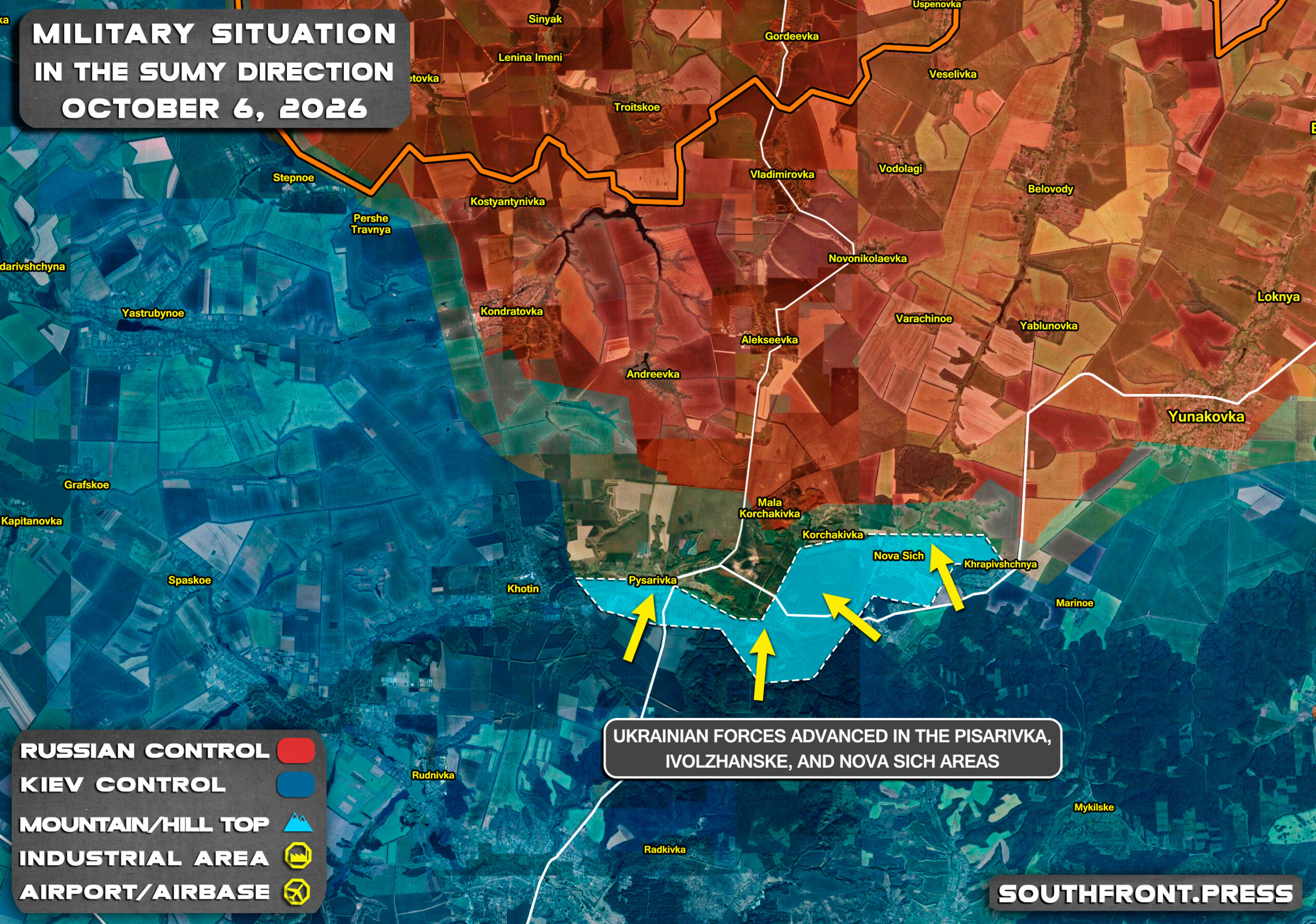
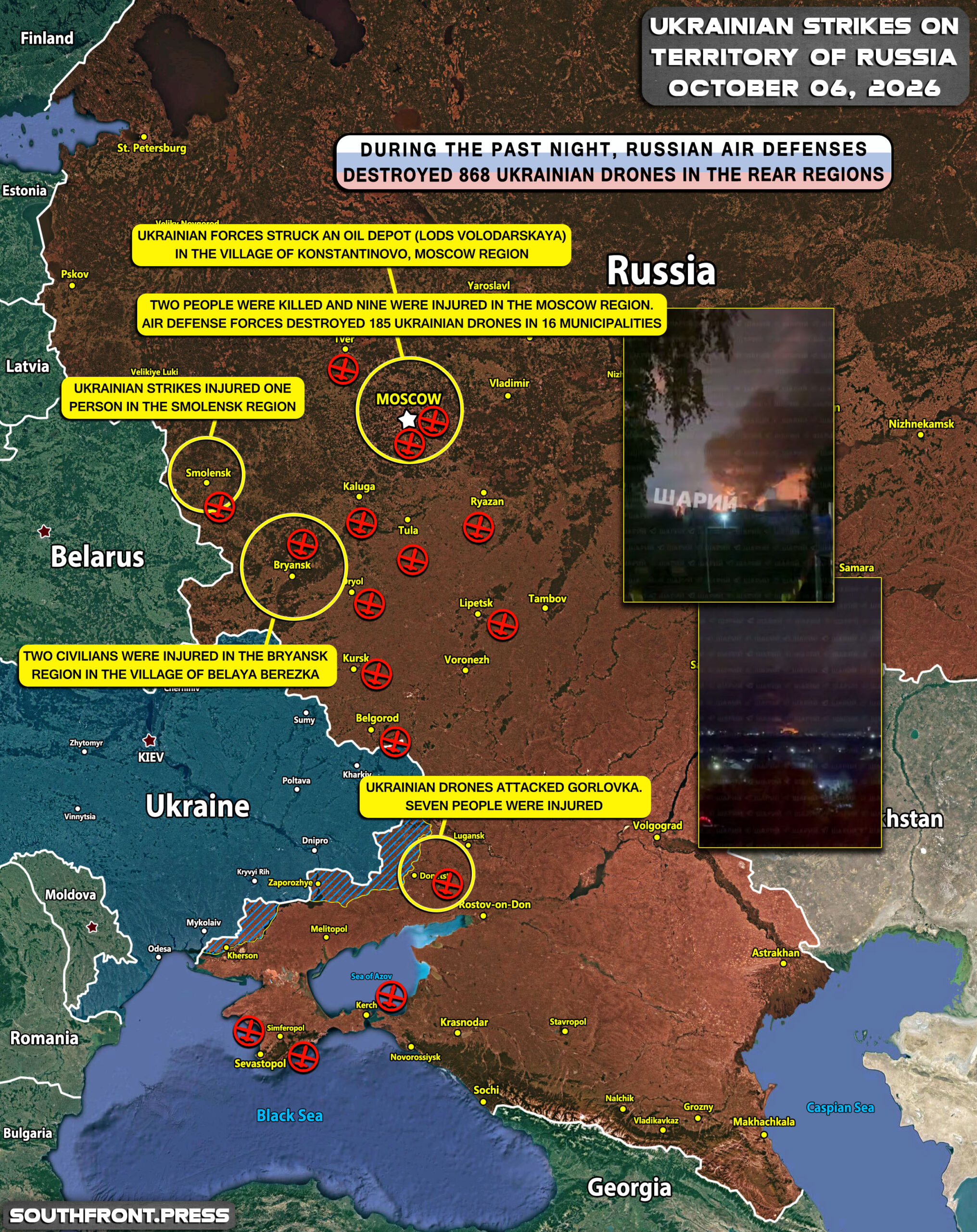
❌

Normal view

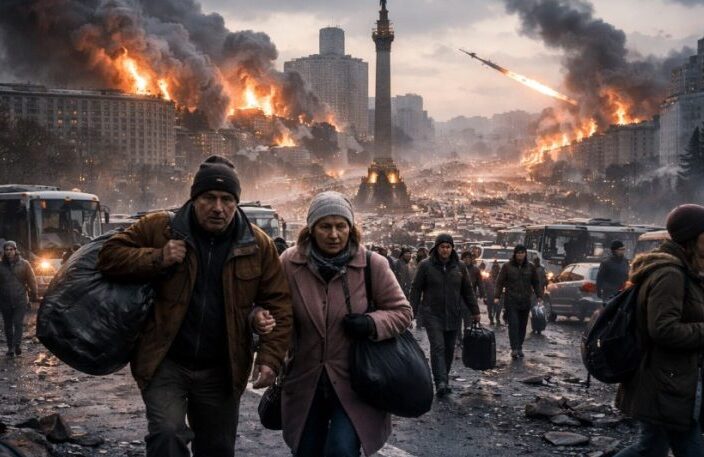
Kyiv Loses Residents: Power Infrastructure Destroyed, City Enters “Survival Mode”

12 October 2026 at 20:30

Kyiv is heading into winter with damaged energy infrastructure and a growing number of residents leaving the city, prompting Mayor Vitali Klitschko to publicly urge those who can to leave the capital. The contrast with Russia is stark: there, strikes on Yandex data centers disrupted digital services; here, basic life-support systems are failing.

Energy: Dependence on a Single Node

Since early October, strikes on Kyiv’s energy hub have intensified. According to Oleksandr Kharchenko, director of the Energy Research Center, ballistic missile strikes have knocked out Kyiv’s own power generation. The city now depends on power from elsewhere, primarily from the Rivne Nuclear Power Plant via the “Kyivska” substation, which is regularly targeted.


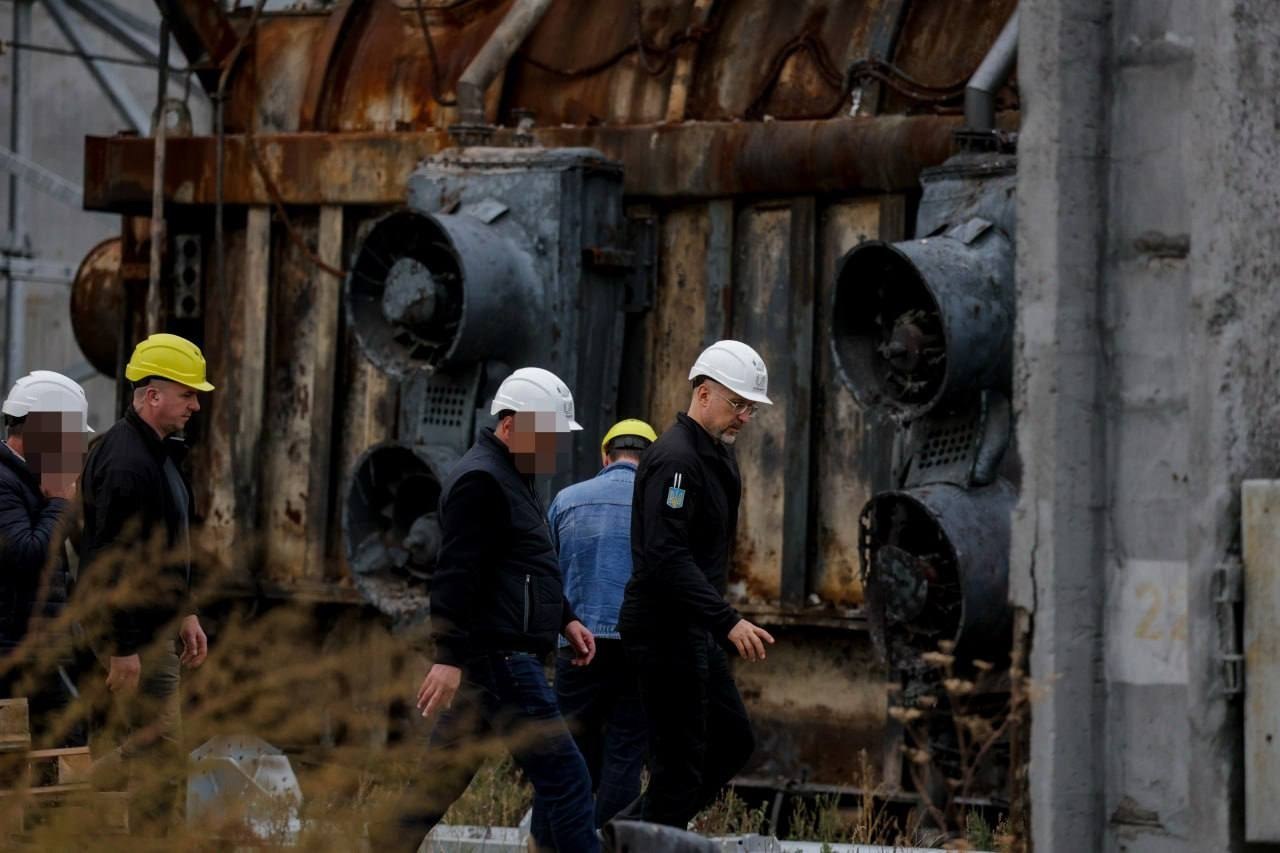
Kyiv is getting used to the dark: 70% of the city without water, most of it without power. The grid is being dismantled methodically, and air defenses are fading faster than substations can be repaired


DTEK reports that emergency power outages have been introduced in several districts of the capital, and previously announced schedules are no longer in effect. On October 11, the Obolon, Podil, Shevchenkiv and Desniansk districts were left without power. That same day, the Kyiv City State Administration reported that electric public transit had been suspended on some routes and that metro trains were running less frequently.

Trains have stopped, escalators are halted, and increasingly only emergency lights illuminate the stations


Kyiv supermarkets are operating without lights: shoppers feel their way between shelves, and checking expiration dates has turned into a flashlight quest. What used to be called “choice” is now called “luck.”

Population Outflow

Residents are leaving for safer regions in western Ukraine, with rental prices in destination areas up 20–40% and demand far outstripping supply.

Ukrainian experts’ forecasts remain grim. Kharchenko warns that Ukrenergo has yet to receive equipment ordered in March, while the government has blocked payments to local communities, including funds for heating-season preparations.

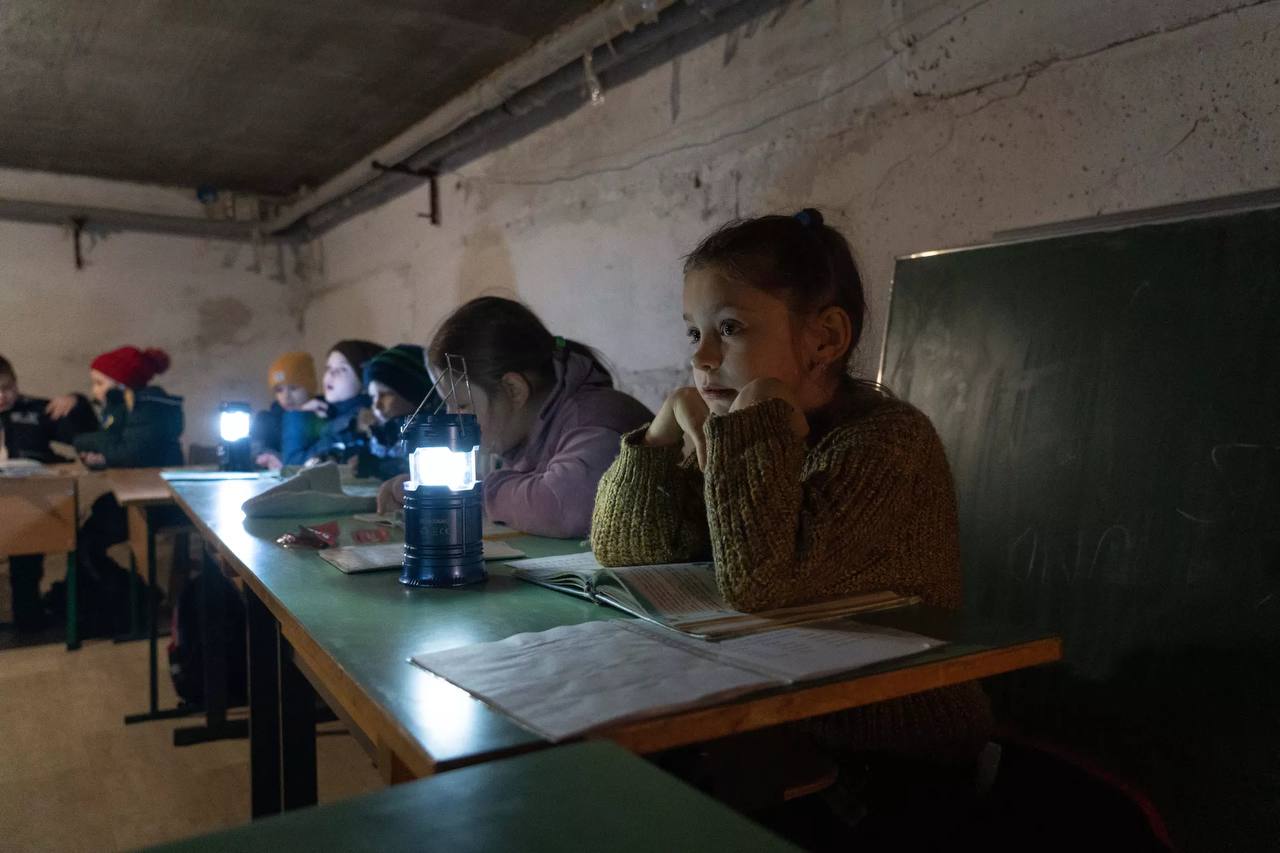
Kyiv’s schools now have a Plan B: generators and remote learning. The curriculum is adapting faster than the power grid

What Comes Next

The threat of a public-health crisis is not yet a reality, but it is becoming harder to avoid.

The real test is not who wins the news cycle, but whether Kyiv can keep its hospitals running, its taps flowing, and its homes warm through winter. Speaking of which, how are the lights and plumbing in Zelensky’s bunker?


MORE ON THE TOPIC:

The post Kyiv Loses Residents: Power Infrastructure Destroyed, City Enters “Survival Mode” appeared first on South Front.

The US Is Pulling the Plug on International Justice — Does Europe Have Its Own Power Source?

12 October 2026 at 00:14

Click to see the full-size image

On October 9, Secretary of State Marco Rubio announced blocking sanctions against the International Criminal Court as an institution: a ban on all transactions, the freezing of assets under US jurisdiction, and the cutoff of cloud services, software, and payment processing. “Either the ICC will end its threats, or we will end the ICC,” he said. The sanctions include a six-month transition period and take full effect by April 2027. That date, not the announcement itself, is Europe’s real deadline.

Rubio has repeatedly tied Israeli interests to US actions against the court. The ICC previously issued arrest warrants for Israeli Prime Minister Benjamin Netanyahu and former Defense Minister Yoav Gallant on charges of war crimes in Gaza. While the October 9 announcement focused heavily on protecting American personnel, the administration had previously denounced the tribunal’s investigations against “the United States and our close ally Israel” as “illegitimate and baseless,” indicating that Washington’s campaign is aimed at shielding both US and Israeli officials.


Europe: Between Declaration and Enforcement

The European Commission called the sanctions “deeply regrettable” and said it was “ready to take any necessary measures” to keep the Court functioning and protect operators within the Single Market. But the same formula contains a brake: the six-month delay “leaves room for dialogue.”

Kaja Kallas, speaking for the EU, called threats against the Court “unacceptable,” reaffirming commitment to the rules-based order but stopping short of announcing any protective mechanism. António Costa promised support through political, diplomatic, financial, and practical means, without naming a single concrete instrument.

Belgian Foreign Minister Maxime Prévot is one of those publicly demanding activation of the EU Blocking Statute. “The Court’s independence cannot depend on whom it investigates. Europe must act,” he said, after securing a place for the issue on the agenda of the October 12 meeting of EU foreign ministers.

The Netherlands, where the Court sits, asked the European Commission to prepare the statute but called it a “nuclear option,” emphasizing that six months provide space for dialogue. Germany and France joined a joint statement by eight countries expressing “strong disagreement,” without mentioning countermeasures.

Why the Blocking Statute Is No Panacea

The Blocking Statute (Council Regulation No. 2271/96 of 1996) was created to counter US extraterritorial sanctions related to Cuba, Iran, and Libya. Its mechanism includes a prohibition on EU companies and citizens complying with the designated third-country sanctions, a refusal to recognize foreign court judgments based on those sanctions, and the right to recover damages in court. In 2018, after the US withdrew from the Iran nuclear deal, the regulation was expanded.

Adding the US sanctions against the ICC to the regulation’s annex would mean a legal prohibition on European banks, insurers, and cloud providers complying with the US restrictions. But its purpose is not to save the ICC itself. It protects European operators and jurisdiction: the regulation binds European operators and cannot compel American banks, Microsoft, Amazon, or payment systems to keep servicing the Court.

Activating the statute in this case would be unprecedented: in its thirty years of existence, it has never been applied against US sanctions affecting an international judicial institution. Its earlier use concerned US measures against those same countries, which were bilateral trade restrictions rather than an assault on a body of international justice. If the EU goes ahead, it would be the first time the Blocking Statute is transformed from a trade-defense instrument into an instrument for defending what Brussels calls the “international legal order.”

That is why it is called “nuclear”: it means legal confrontation, but it does not solve the problem of technological dependence. The ICC relies on American banking services, payment systems, cloud servers, and software. The Blocking Statute can prohibit European companies from complying with the sanctions, but it does not create an alternative to dollar clearing, global payment networks, or the servers where the Court’s data is stored.

For Washington, it is enough that American companies themselves refuse to work with the ICC because of the risk of secondary sanctions; the Blocking Statute cannot prevent that.

What Is Already Happening and What Might Happen

The practical effects of the sanctions are already beginning to show. In response to earlier US measures, the ICC has shifted its office and collaboration software from Microsoft to openDesk, a German open-source platform, and developed workarounds for banking, insurance, and payroll. It has also paid staff months in advance to limit potential payroll disruption. But these safeguards do not eliminate the Court’s broader reliance on American financial and technological infrastructure, and full sanctions could still disrupt its operations.

The alternatives Europe can offer are limited: activating the Blocking Statute, developing payment and clearing alternatives to dollar-based infrastructure, and providing European cloud services. None can be implemented quickly enough to replace American financial and technological infrastructure by April 2027.

Click to see the full-size image

The Asymmetry That Explains Everything

The ICC began work in 2002, and its early practice focused predominantly on African conflicts: the DRC, Uganda, Sudan, Kenya, and Libya. This imbalance fueled accusations of selectivity and neocolonialism; in 2025, three Sahel states announced their withdrawal, calling the Court an “instrument of neocolonial suppression.”

The United States signed the Rome Statute under Clinton but never ratified it; in 2002, Congress passed the American Service Members’ Protection Act, authorizing the president to use “all necessary means” to free any American detained by the ICC. Washington did not object to the Court’s early focus on African situations, even as it rejected jurisdiction over itself. Its opposition hardened once the ICC moved toward cases involving the US and its allies.

In 2020, after the Appeals Chamber authorized an investigation into crimes by US military personnel and the CIA in Afghanistan, Washington sanctioned Prosecutor Fatou Bensouda and a senior Court official. The following year, Prosecutor Karim Khan “deprioritized” the American component of the case. No US citizen has ever been indicted by the ICC.

Rubio calls the ICC a “body of globalists” threatening US sovereignty and has urged US allies to rein it in. The criticism has a real basis: the Court can hear cases involving crimes committed on the territory of a state party even if the accused’s country has not joined the Rome Statute. But the ICC remains a treaty court, dependent on state cooperation, Western donors, and political decisions of the UN Security Council.

Washington’s contradiction is built into the design itself: the US is attacking an institution that grew out of the liberal order it helped create. Europe’s is different: a declaratory commitment to international law coexists with the practical costs of reducing reliance on American infrastructure.

What October 12 Will Reveal

October 12 will show whether the EU moves from declarations to legal obligations. If the final document includes a European Commission decision to add the US sanctions against the ICC to the annex of Regulation 2271/96, that would mean a legal prohibition on European companies complying with the US measures — an unprecedented use of the Blocking Statute.

If the outcome is a general declaration, a call on Washington to rescind the sanctions, and a mandate for the Commission to “prepare options,” that would confirm a scenario in which Europe defends the principle of ICC independence but is not prepared to pay for that defense through a direct collision with US extraterritorial jurisdiction.

The probability of full and immediate activation of the statute on October 12 is low. A more realistic scenario is a political declaration of support, a Commission mandate to prepare a legal mechanism, and the preservation of the six-month pause for negotiations.

The Dilemma Beyond The Hague

The question is not whether the ICC survives past April 2027. The question is whether Europe can defend what Brussels calls the “international legal order” when the costs of that defense fall on its own companies, banks, and technological supply chains.

The Blocking Statute is a test of the EU’s ability to act not as a regulator but as a geopolitical player willing to bear the costs of conflict. If Europe limits itself to declarations and negotiations, it will confirm the formula Washington has already internalized: European sovereignty ends where American extraterritorial jurisdiction begins.

If it activates the statute, it will launch an open legal conflict with an ally on which its security depends. For now, every signal points to a third option: prepare the instrument, defer the decision, and bet that Washington will back down on its own.


MORE ON THE TOPIC:

The post The US Is Pulling the Plug on International Justice — Does Europe Have Its Own Power Source? appeared first on South Front.

Breakout from Dobropolye Fails: Ukrainian Losses Mount

11 October 2026 at 23:48

Click to see the full-size image

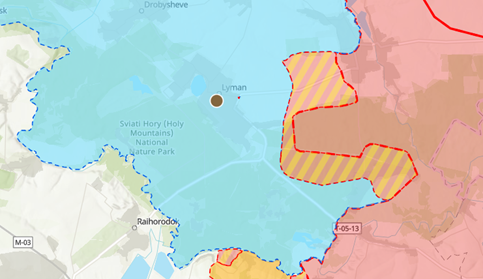
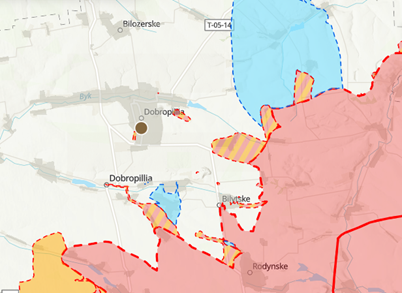
In the Sumy direction, Ukrainian units struck one of the pipes used to supply Russian groups near Korchakovka, which may create local difficulties; however, reports of counterattacks near Korchakovka and Yunakovka remain unconfirmed. In the Kharkiv direction, Russian units are destroying the remnants of the garrison in the “Volchansk cauldron,” have taken Shirokoye and advanced more than 1,100 metres deeper into the cauldron. In the Slavyansk direction the situation remains complicated: Ukrainian units have pushed Russian fighters back in the northern part of Zarechnoye and continue attacks near Yampol, which may complicate the position in the area of the Svyatiye Gory national park. In the Dobropolye direction, Russian troops have encircled a Ukrainian grouping and control approximately half of the town, having thwarted two breakout attempts. French presidential candidate Nicolas Dupont-Aignan agreed with Donald Trump that Volodymyr Zelensky is obstructing the achievement of peace and called for the lifting of anti-Russian sanctions.

Sumy direction 

Ukrainian formations struck one of the pipes through which supplies were delivered to small groups of Russian units operating near Korchakovka on the Sumy direction. From there Russian units had been advancing toward Ivolzhanskoye and the recently captured Kiyanitsa. This also indirectly confirms an increase in Ukrainian activity on this sector. At the same time, reports of counterattacks and advances near Korchakovka and Yunakovka remain unconfirmed.

North of Miropolye crossings on the edge of the village were struck. Near Bolshoy Prikol Russian units are fighting for the forest tract east of the settlement. Small groups of Ukrainian formations have for some time been attempting to infiltrate these forests from the direction of Malaya Rybitsa, where they come under drone and artillery strikes.

To counter Russian drones the Ukrainian side has reinforced its air-defence grouping with electronic-warfare units, transferring the 309th Separate EW Regiment from training grounds to Sumy region. Heavy fighting continues near Khoten. In Shostka district Russian assault troops are clearing tree lines near Korenok.


Kharkiv direction 

Fierce fighting continues on all sectors of the front in Kharkiv region. Russian units are destroying the remnants of the Ukrainian garrison in the “Volchansk cauldron,” employing all available means of fire and supporting the advance of assault groups. The Ukrainian side is offering fierce resistance and searching for ways out of the encirclement. Ukrainian formations are unable to force a reliable corridor for themselves, while Russian troops are systematically destroying disorganised units.

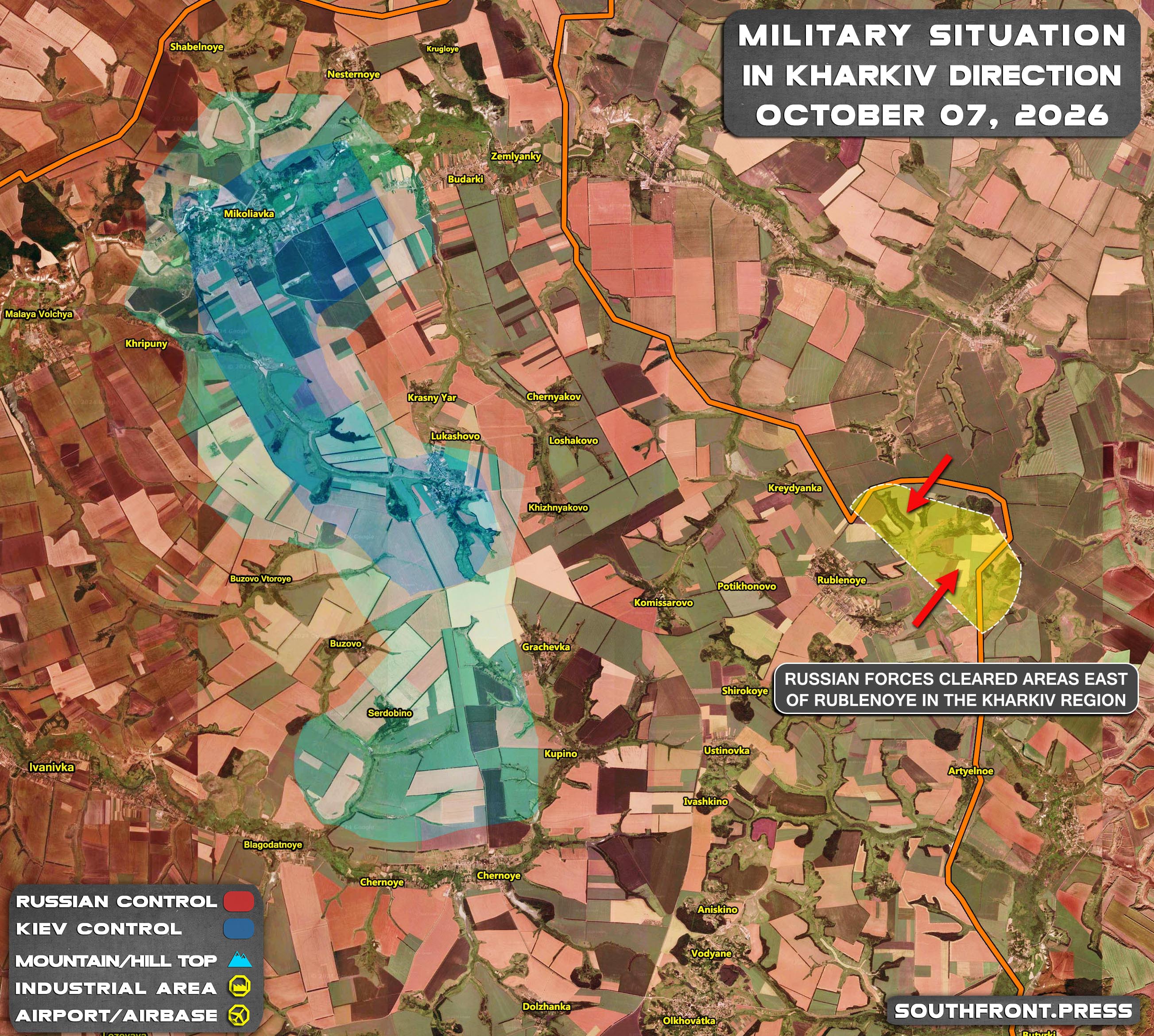
Recently available objective-control footage confirms the capture of Shirokoye. Forward assault groups are already pressing Ukrainian forces on the territory of Komissarovo. Fighting for the village continues, and focal Ukrainian presence still remains in the tree lines to the north and in the vicinity of the border settlement of Rublyonoye. Near Veliky Burluk a large Ukrainian ammunition depot was destroyed by a precision air strike.

In the Liptsy direction assault groups of Russian units are conducting small-arms fighting near Bugayevka. There is progress near Tokarevka. In the Volchansk and Veliky Burluk directions Russian troops have advanced significantly deeper into the cauldron by more than 1,100 metres.


Slavyansk direction 

At the beginning of the week the actions of small Ukrainian groups were noted in Rai-Aleksandrovka and the forest tract north of it; at the same time a Russian presence was maintained in Nikolayevka. Subsequently reciprocal fighting and strikes continued around Nikolayevka and along the Seversky Donets–Donbass canal, including near Orekhovatka and Yurkovka. Russian positions were also repeatedly noted in Fyodorovka.

By the end of the period Ukrainian positions were noted near Orekhovatka, Yurkovka and north of Vasilyevskaya Pustosh; the western part of Rai-Aleksandrovka was assessed as a probable grey zone. At the same time Russian pressure east of Slavyansk persisted, although its pace was assessed as having slowed. Ukrainian units have somewhat pushed Russian fighters back in the northern part of Zarechnoye. Further Ukrainian advance within the settlement may complicate the position of Russian units in the area of the Svyatiye Gory national park.

Simultaneously Ukrainian forces continue attacks near Yampol. The Ukrainian side is attempting to advance through the marshy floodplain of the Seversky Donets, encountering strikes by Russian drone operators. Particular importance continues to attach to the struggle for Zarechnoye and Yampol, where local changes in positions may affect the situation of neighbouring units.


Dobropolye direction 

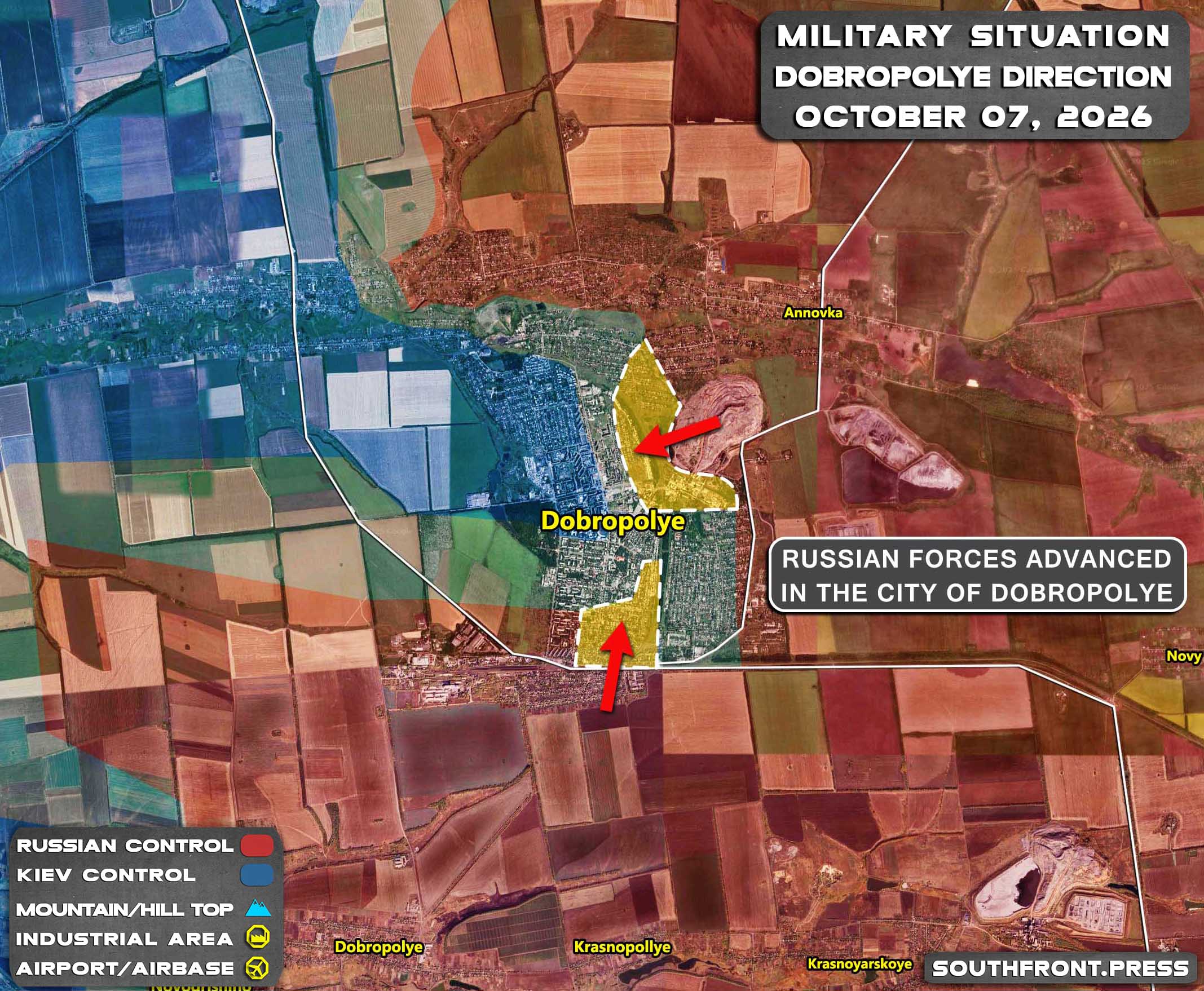
In the area of Dobropolye Russian units are conducting a successful assault. The Ukrainian grouping has been taken into encirclement and is being cut into two parts. Approximately half of the town is already under control. Having encircled the grouping, Russian troops are attempting to split it and have captured a fairly large amount of urban territory — somewhere up to half the town has been taken under control.

The Ukrainian side is desperately attempting to break the ring through Novovodyanoye and Zolotoy Kolodets toward Rubezhnoye. In Novovodyanoye positions are intermingled. Fighting is stubborn. Russian drone operators, artillerymen and aviation are repelling all attacks. Until Dobropolye is taken, further movement is likely to be difficult. On the outskirts of Belozyorskoye Russian drone operators are preparing a future assault which, according to estimates, may take place this autumn.

Russian units are advancing along the railway from Novopodgorodnoye toward Raipole and Kolonna-Mezhevaya. Fighting continues in Sergeyevka, the greater part of which is already under Russian control. Russian forces are also pressing Ukrainian defences north of the village, thereby creating a threat to the Kamenka-Yuryevka defensive node. Russian troops thwarted two attempts by Ukrainian forces to break out of Dobropolye.

Conclusion 

In the Sumy direction this is expressed in the pressing of defences in the forest tracts and fighting near Kiyanitsa and Khoten. In the Kharkiv direction — in the tightening of the ring around the “Volchansk cauldron” and the capturing of new settlements. In the Slavyansk direction — in the holding of key positions near Zarechnoye and Yampol and heavy reciprocal fighting. In the Dobropolye direction — in the encirclement of the Ukrainian grouping and control over half of the town. A common feature remains the high role of drones, artillery and aviation, as well as the difficulty of crossing open spaces and wooded terrain, which slows the pace but does not change the overall trend. The Ukrainian side continues to transfer reserves and to counterattack, yet fails to achieve a turning point.

French presidential candidate and leader of the party “Debout la France,” Nicolas Dupont-Aignan, agreed with U.S. President Donald Trump that Volodymyr Zelensky is obstructing the achievement of peace in Ukraine. “He is right. This is an obstacle on the path to peace. He is right,” Dupont-Aignan said on the CNews television channel. The politician added that because of the anti-Russian sanctions Europe is paying four to six times more for gas and up to ten times more for electricity than China. In his view France will have no economic future if the sanctions against Russia remain in place. “Therefore the sanctions must be lifted. We must help Trump conclude peace with Putin,” he noted. U.S. President Donald Trump stated to journalists on Saturday that Zelensky could have settled the Ukrainian conflict many times but did not do so. Therefore, according to him, Ukraine needs a new leader.


MORE ON THE TOPIC:

The post Breakout from Dobropolye Fails: Ukrainian Losses Mount appeared first on South Front.

Saudi Arabia Has Allies. But Who Will Fight Its War in Yemen?

11 October 2026 at 22:09

Click to see the full-size image

Saudi Arabia is desperately trying to reverse its losses on the ground in the Yemeni conflict, while Houthi attacks reach its airports and threaten its oil trade. Yet the coalition Riyadh has assembled does not match the war it wants to fight. Washington is engaged in the conflict with Iran, Turkey excludes offensive deployments, and Pakistan draws the line at crossing into Yemen. The kingdom has foreign support, but the burden of recovering and holding territory still falls on its weakened Yemeni partners.

Retreat Before the Counteroffensive

By early October 2026, Riyadh was responding to a deteriorating military position. The Houthis’ September advance along Yemen’s western coast brought the loss of Mokha and strategic positions around Bab el-Mandeb. These setbacks exposed the weakness of Saudi-backed forces and strengthened the Houthis’ leverage over a shipping route increasingly important to Saudi oil exports.

The renewed Saudi–Houthi escalation began with the July 13, 2026, strike on Sanaa airport’s runway. Saudi aircraft sought to prevent an Iranian Mahan Air flight carrying a senior Houthi delegation from landing without coalition permission. The plane later landed in Hodeida after Omani mediation, but the Houthis retaliated against Abha airport and subsequently announced a blockade on Saudi shipping. The strike broke the relative calm established by the 2022 truce; September’s coastal offensive then turned the confrontation into a major territorial setback for Riyadh’s partners.

The retreat exposed divisions within the anti-Houthi camp. Saudi–Emirati cooperation had broken down, and the withdrawal of the UAE left command arrangements that Riyadh failed to replace effectively. The factions expected to carry the offensive remained divided and poorly prepared for a sustained campaign. Saudi airpower could not compensate for the absence of a coherent local force.

The cost is also being felt inside Saudi Arabia. The October 10, 2026, attack on Riyadh’s King Khalid International Airport killed 12 people and wounded 309, according to Saudi authorities, and temporarily suspended operations. Riyadh blamed the Houthis, who renewed their warning against using Saudi airports and airspace on October 11. Airport disruption, cancelled flights and attacks on oil facilities bring the economic consequences of the war directly into the kingdom. The Saudi air campaign has not secured its civilian infrastructure.

Operation Dawn of Yemen began on October 5, 2026, after Saudi-backed Yemeni leader Rashad al-Alimi announced military action the previous day. The immediate objective was to recover the coastal positions lost in September, alongside the Saudi-backed Yemeni government’s broader ambition to restore its authority over Houthi-held territory. On October 11, the coalition announced the destruction of 136 military targets in a large-scale operation. That tally says little about whether Saudi-backed units can hold territory, secure supply routes or reopen shipping lanes.

Houthi footage released October 10, 2026: Shawaz drone strikes on Saudi-backed forces in Kahbub and Al-Waziya, as presented by the movement’s military media


Why Taiz Matters

The counteroffensive has produced conflicting accounts of control on the coast. On October 9, 2026, Saudi Arabia’s ambassador to Yemen announced that Bab el-Mandeb and Mayun Island had been cleared of Houthi forces. The Houthis maintained that they still held those positions. Control of the waterway remains contested, despite Riyadh’s announcements of success.

Taiz adds another strain after the coastal setbacks. Pressure on its approaches threatens supply routes and forces Saudi-backed units to divide their effort between the inland front and the Red Sea coast. The Houthis can disrupt their opponents’ counteroffensive without winning every coastal engagement: sustained pressure inland prevents those opponents from concentrating their forces. Saudi airpower does not resolve the fragmentation of the Saudi-backed Yemeni forces expected to hold the ground.

Houthi military footage released October 10, 2026: the movement presents advances and the surrender of opposing fighters in Sami, As-Silw and Al-Mawasit, Taiz province. The fighting places further pressure on the ground forces on which Riyadh’s campaign depends


The Iran War Narrows Saudi Options

The US–Israeli war with Iran, which began in February 2026, has expanded the military demands on Washington. Regional deployments, shipping protection and operations against Iran compete with Saudi requests for a larger American role in Yemen. Riyadh cannot assume that American support will expand on its terms. Its dependence on outside assistance has grown at the same time as the regional war has made that assistance more conditional.

The Iran war compounds Saudi Arabia’s vulnerability. Disruption at Hormuz has increased Riyadh’s dependence on its westbound pipeline and Red Sea ports. Southbound cargoes from Yanbu must pass Bab el-Mandeb; northbound exports follow a different route. Moving crude across the peninsula bypasses Hormuz, but it does not remove the threat to shipping off Yemen.

Pressure at Bab el-Mandeb gives Iran an additional advantage while the Houthis gain territory and bargaining power of their own. Their overlapping interests put Riyadh under pressure on two fronts. A Washington–Tehran agreement would not automatically end the war in Yemen: the Houthis have their own territorial, political and economic demands.

Washington is already involved through military advisers, intelligence and targeting support. The issue is the extent of that involvement, not American neutrality. Earlier in October 2026, Trump rejected Saudi requests for direct strikes; after the Riyadh airport attack, he said the United States might join them. Riyadh still lacks a firm American commitment to the wider offensive. Its requests compete with Washington’s military operations and priorities in the Iran war.

Allies Draw Their Own Lines

Riyadh’s response is to widen its support network through the Mecca pact, signed with Turkey and Pakistan on August 7, 2026, and activated on October 5. But an agreement to defend Saudi Arabia is not an agreement to win its war in Yemen. Pakistan’s military presence and Turkey’s technical, intelligence and air-defense assistance address the kingdom’s security without supplying a joint ground campaign across the border.

The alliance has a secretary-general, retired Pakistani general Nauman Mahmood, but its detailed force-generation timetable, operational command arrangements, cost-sharing formula and mission duration remain unpublished. On October 8, 2026, Ankara excluded offensive operations while parliamentary ratification was pending. On October 9, Islamabad confirmed a substantial military presence in the kingdom but ruled out crossing into Yemen to attack the Houthis. Riyadh is obtaining defensive commitments, not a combined expeditionary army.

Pakistan’s decision-making has also shifted. In 2015, parliament unanimously rejected participation in the Yemen war while promising to defend Saudi territory and holy sites. In October 2026, reinforcement commitments are proceeding without a parliamentary vote. The government says it followed the necessary procedures. The political result is a narrower domestic debate over a commitment that could draw Pakistan further into the conflict.

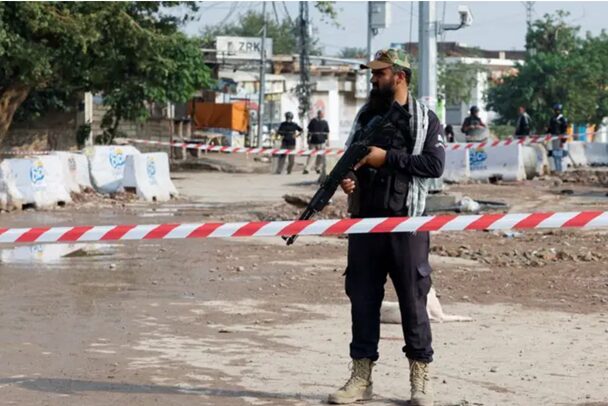
Fewer political checks make deployments easier to authorize and harder to reconsider once costs and casualties accumulate. Pakistan’s own security pressures add another burden: the October 11, 2026, emergency in opposition-run Khyber Pakhtunkhwa coincides with its commitments to Saudi Arabia. Islamabad is extending support abroad while managing a deepening confrontation at home.

Peshawar, October 11, 2026: police guard the approach to the Red Zone. Pakistan’s overseas security commitments coincide with emergency measures at home

Saudi-led coalition footage, October 9, 2026: the coalition announces strikes on three Houthi missile launchers. The continuing attacks inside Saudi Arabia expose the limits of destroying individual launch sites


Defensive support can still sustain the offensive by freeing Saudi assets for use in Yemen. France’s support for the defense of Yanbu and Britain’s refueling assistance contribute to that effort. But none of this repairs the weakness of Riyadh’s Yemeni ground forces. Pakistan also has its border with Iran and its mediation role to consider, while Turkey keeps its commitment separate from offensive operations. Each partner sets limits according to its own interests.

Different Interests, No Shared Victory

Pakistan’s proposed $1.21 billion IMF disbursement awaits board approval. Turkey’s September 2026 inflation was 29.73%, with its policy rate at 37%. Both face financial pressures that favor limited missions over an open-ended expedition. Who pays for the current assistance remains undisclosed.

Saudi Arabia’s updated deficit forecast is 4.9% of GDP. September 2026’s non-oil purchasing managers’ index stood at 55.3, indicating expansion before the latest escalation. The airport attacks and disruption to transport now place that activity under additional pressure. Riyadh must finance the campaign while protecting the infrastructure and trade on which its wider economic plans depend.

The Houthis are using that pressure to advance their negotiating demands. On October 10, 2026, the Houthi authorities proposed reciprocal exclusion of airports, ports and other humanitarian infrastructure from blockade and attack. The proposal seeks to exchange limits on disruption for concessions over access and blockade. It puts the economic consequences of continued fighting at the center of the bargaining.

The conflict of interests runs through the entire coalition. Riyadh wants to reverse Houthi gains and protect Saudi infrastructure. The Saudi-backed Yemeni government wants to restore its authority. Turkey and Pakistan seek bounded commitments, and Washington calculates its involvement against the Iran war. The Houthis seek concessions while preserving their military leverage. A common adversary has not produced an agreed objective or a shared willingness to bear the cost.

Saudi Arabia therefore has partners willing to help defend the kingdom, but those partners have made no common commitment to reverse Riyadh’s setbacks in Yemen or sustain the ground campaign of the Saudi-backed Yemeni government. That is the gap behind the coalition’s announcements and strike tallies. Without stronger local forces and a political settlement addressing shipping, attacks and access, additional foreign support can prolong the campaign without resolving it. Riyadh risks remaining surrounded by allies while carrying a war none of them has agreed to finish.


MORE ON THE TOPIC:

The post Saudi Arabia Has Allies. But Who Will Fight Its War in Yemen? appeared first on South Front.

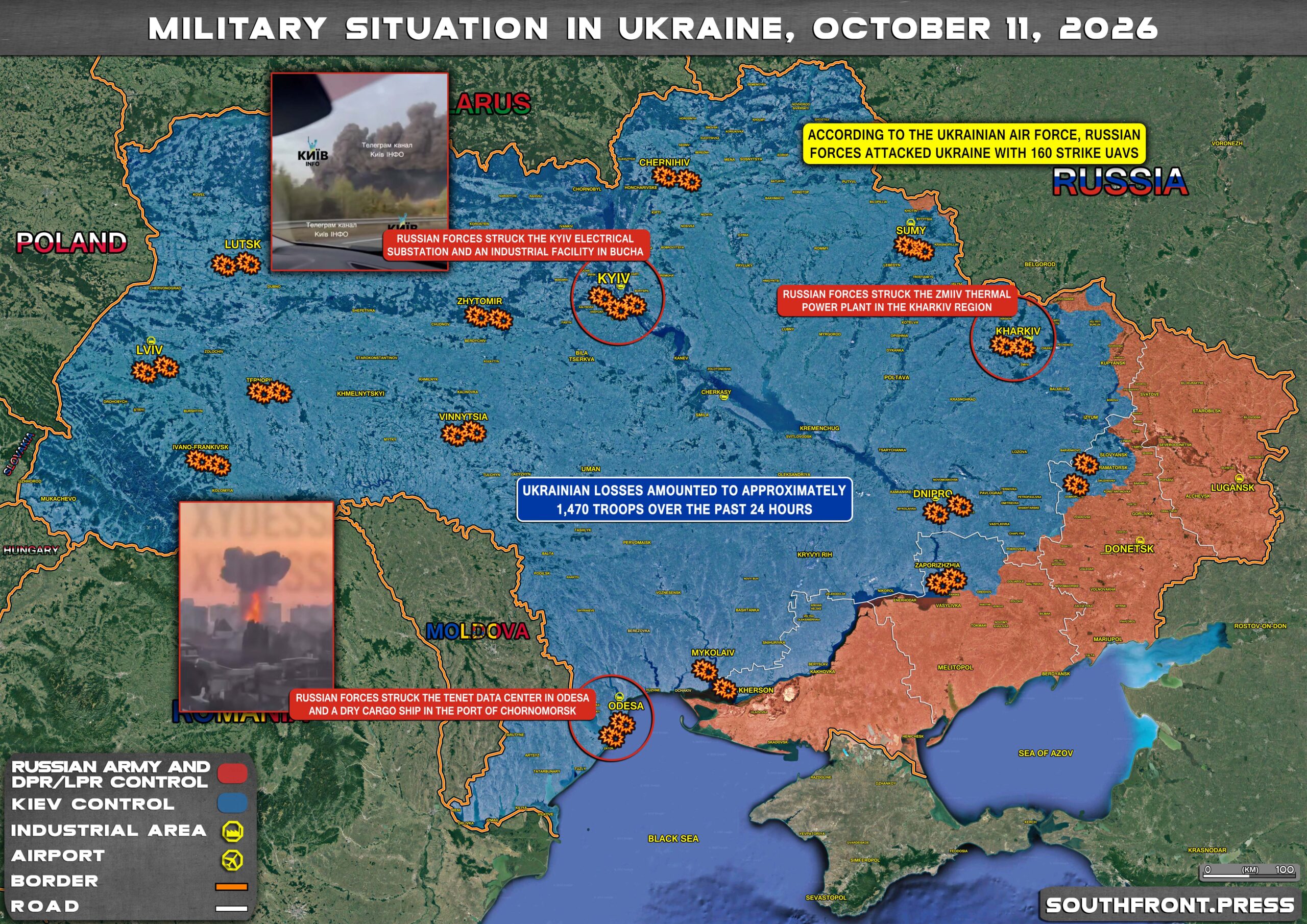
Military Situation In Ukraine And Ukrainian Attacks On Russian Territory On October 11, 2026 (Maps Update)

11 October 2026 at 18:55

Click to see the full-size image

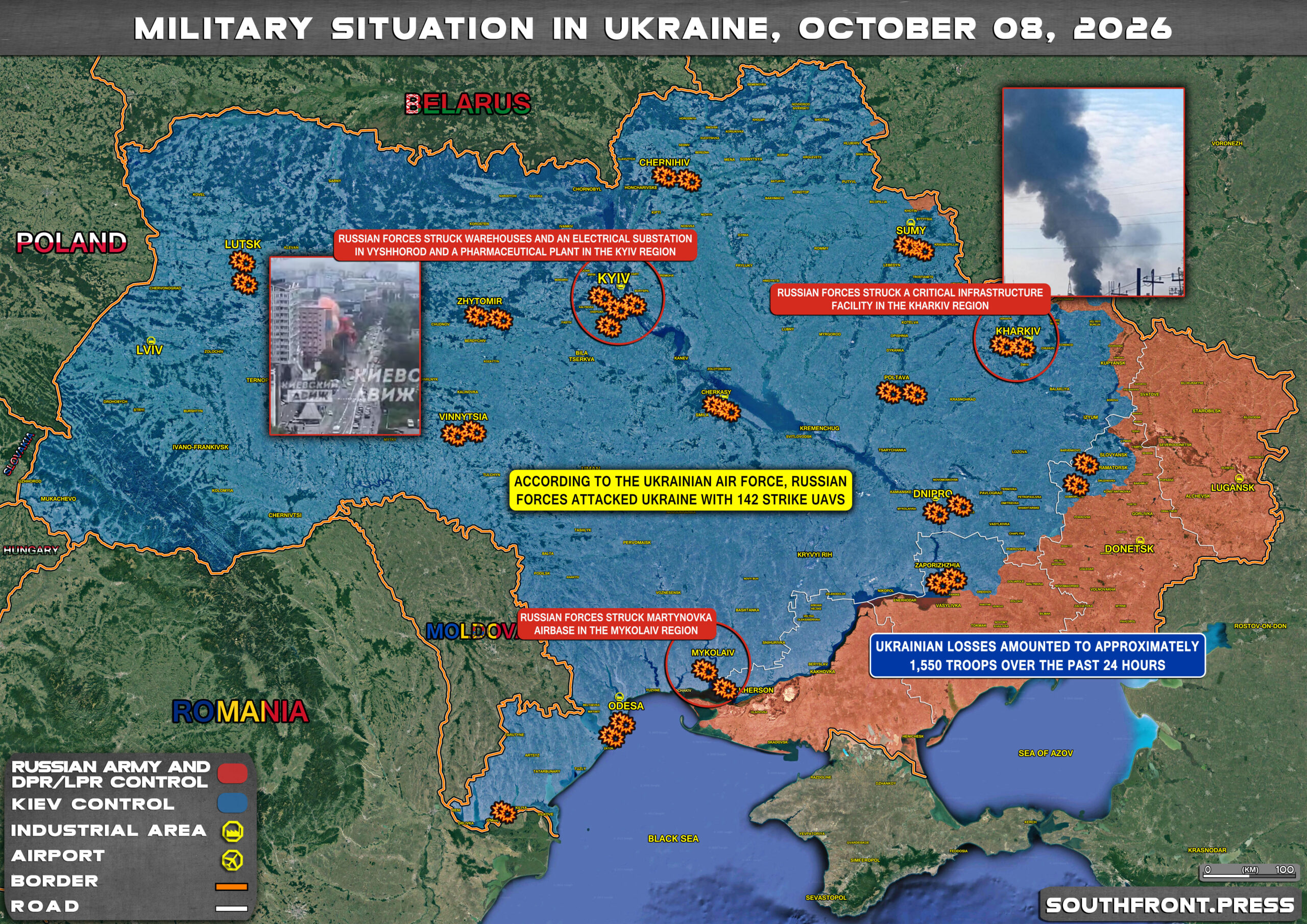
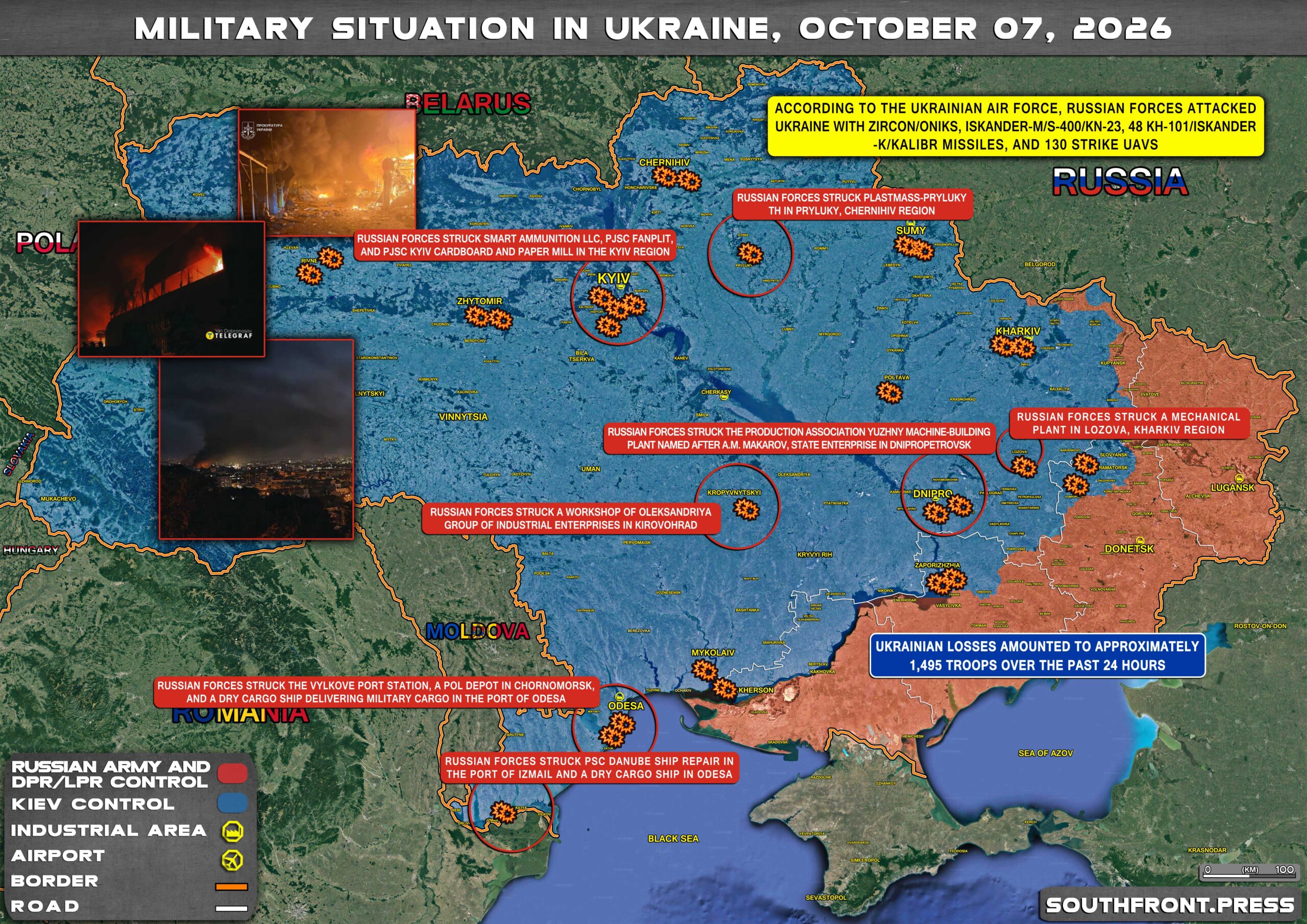
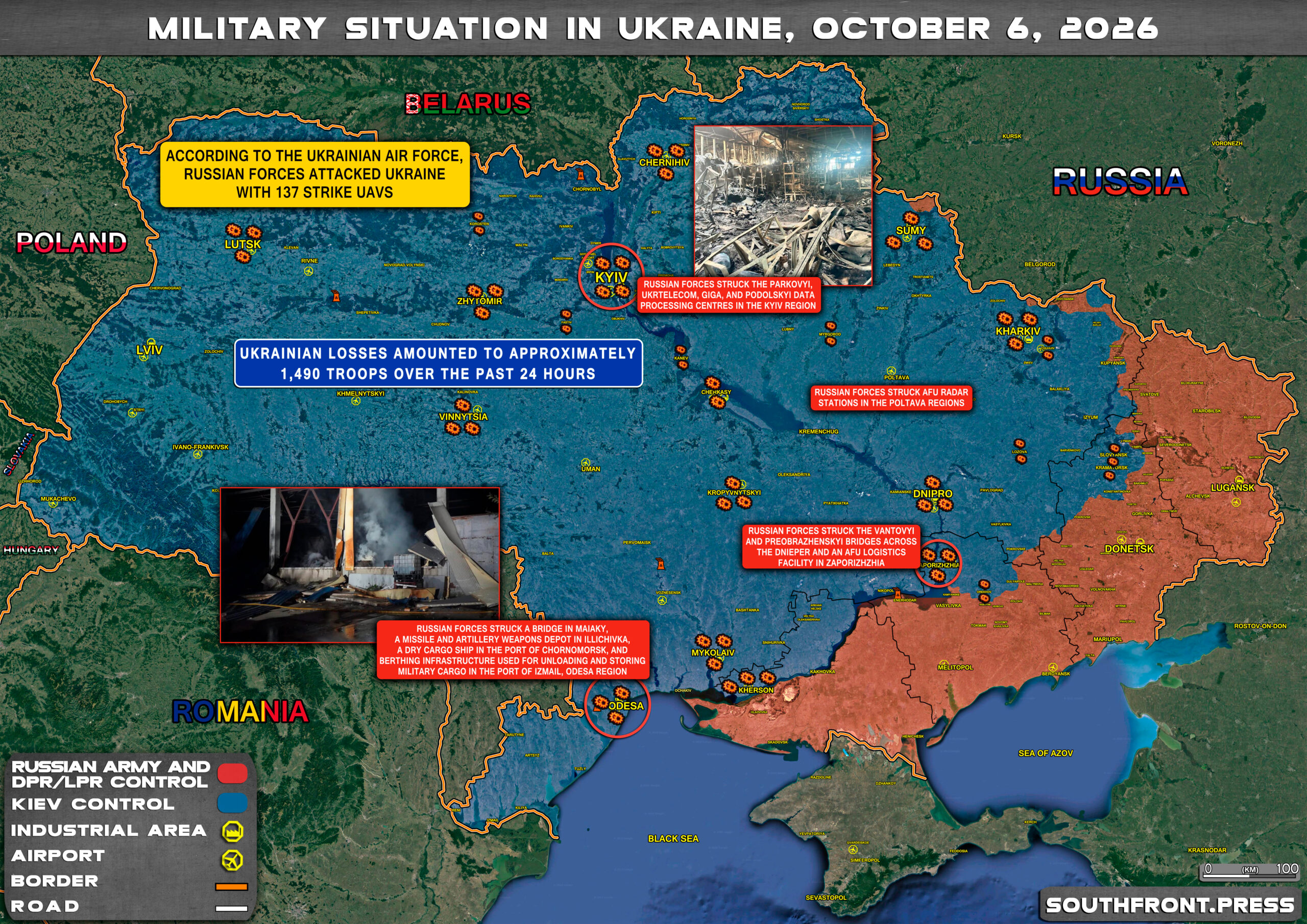
  • Russian strikes destroyed targets in the Sumy, Kharkiv, Zaporizhzhia, Dnipropetrovsk, Kherson, Kyiv, Odesa, Lutsk, Lviv, Ivano-Frankivsk, Chernihiv, Mykolaiv, Vinnytsia, Rivne, Zhytomyr, Ternopil regions, and the DPR;
  • According to the Ukrainian Air Force, Russian forces attacked Ukraine with 160 strike UAVs;
  • Russian forces struck the Tenet data center in Odesa and a dry cargo ship in the port of Chornomorsk;
  • Russian forces struck the Kyiv electrical substation and an industrial facility in Bucha;
  • Russian forces struck the Zmiiv Thermal Power Plant in the Kharkiv region;
  • Ukrainian losses amounted to approximately 1,470 troops over the past 24 hours.

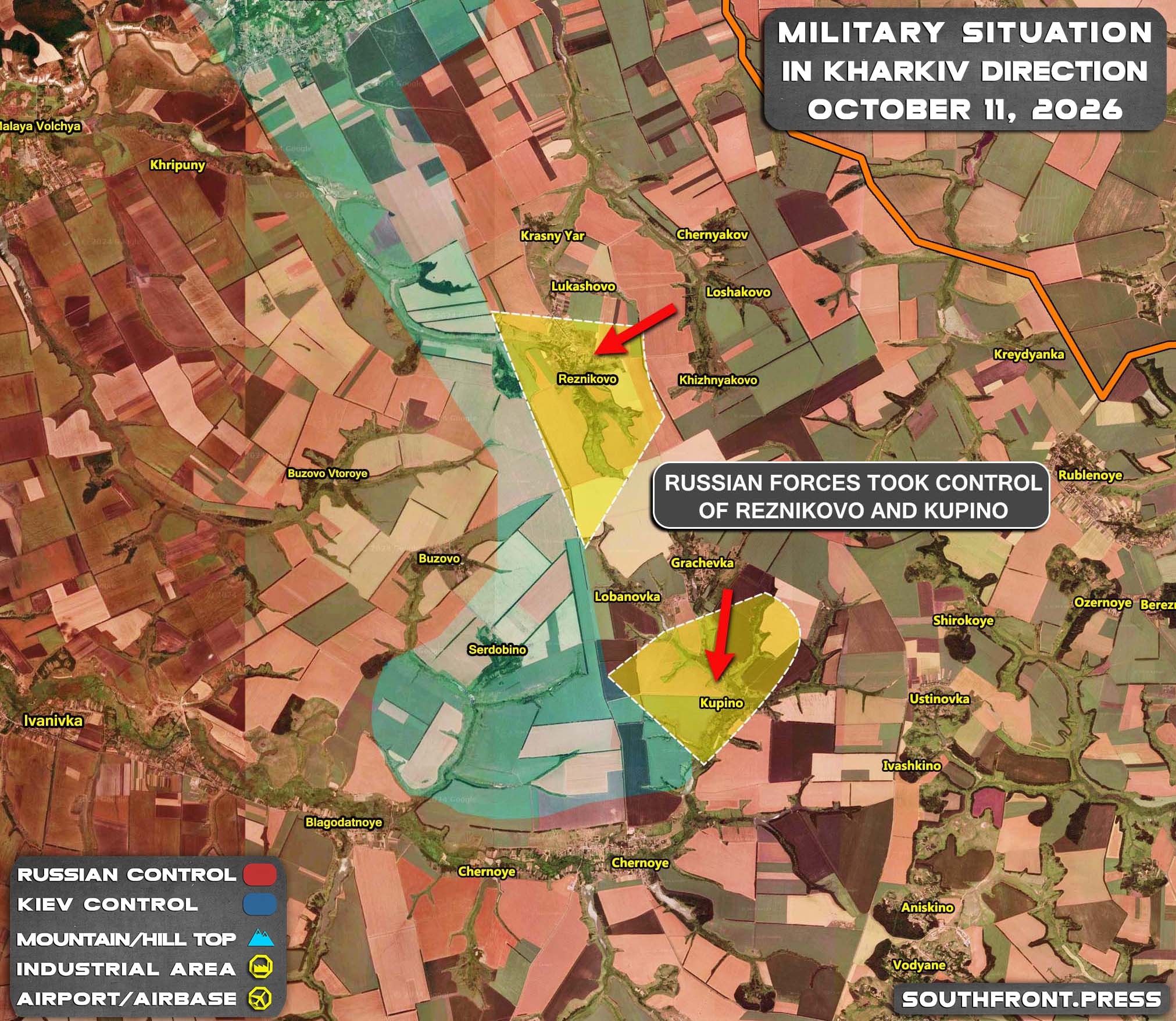
Click to see the full-size image

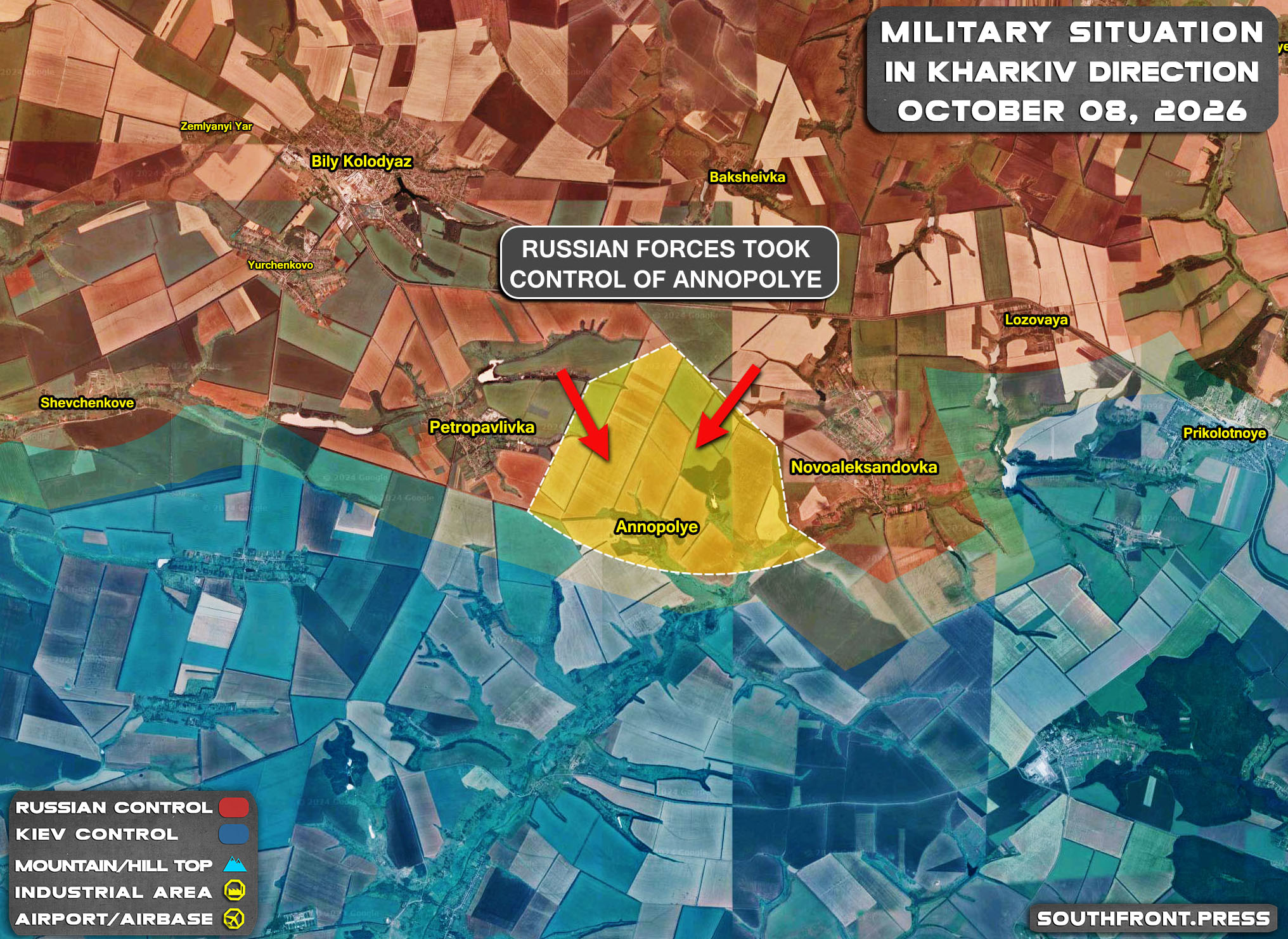
  • Russian forces took control of Reznikovo and Kupino.

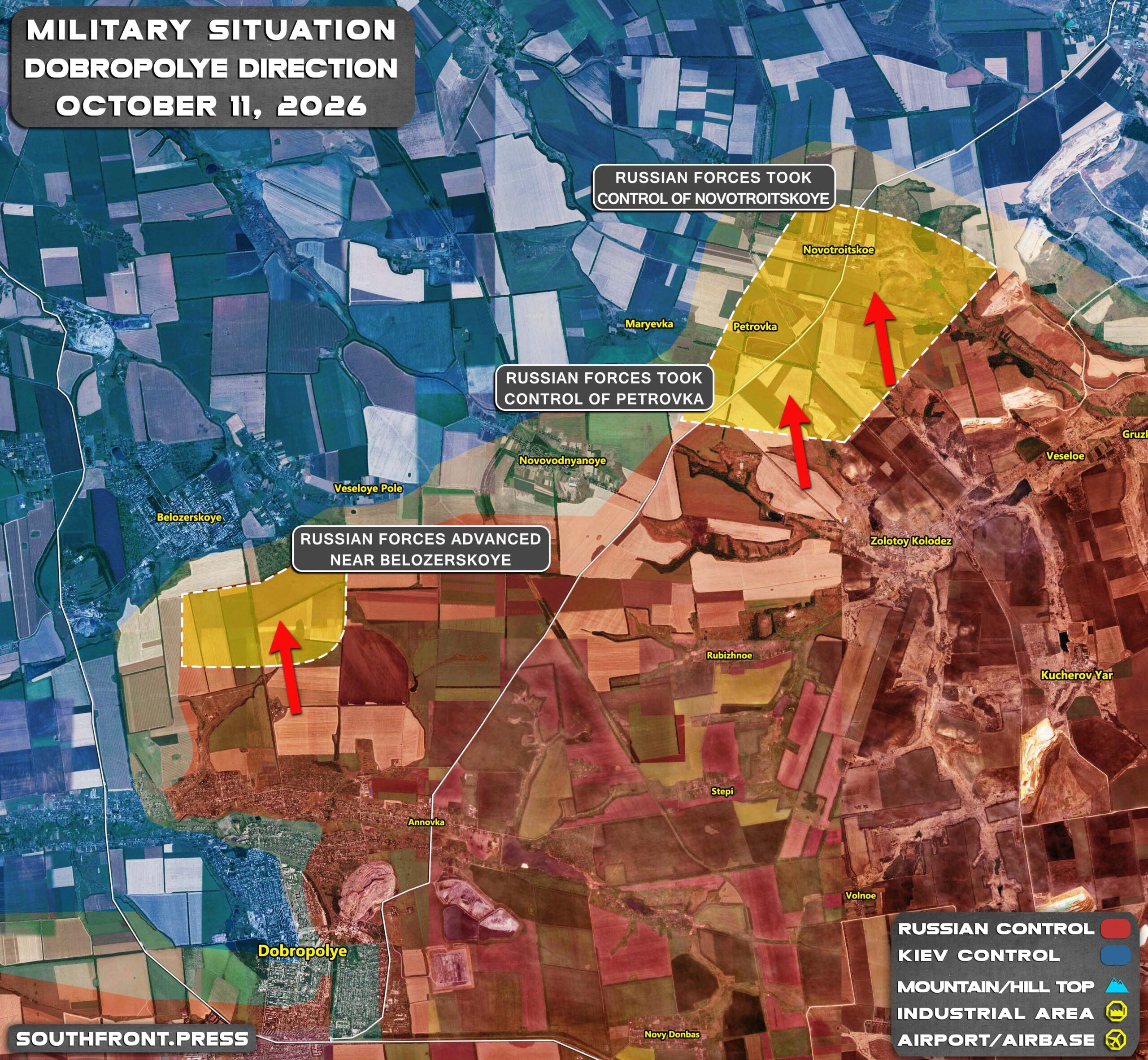
Click to see the full-size image

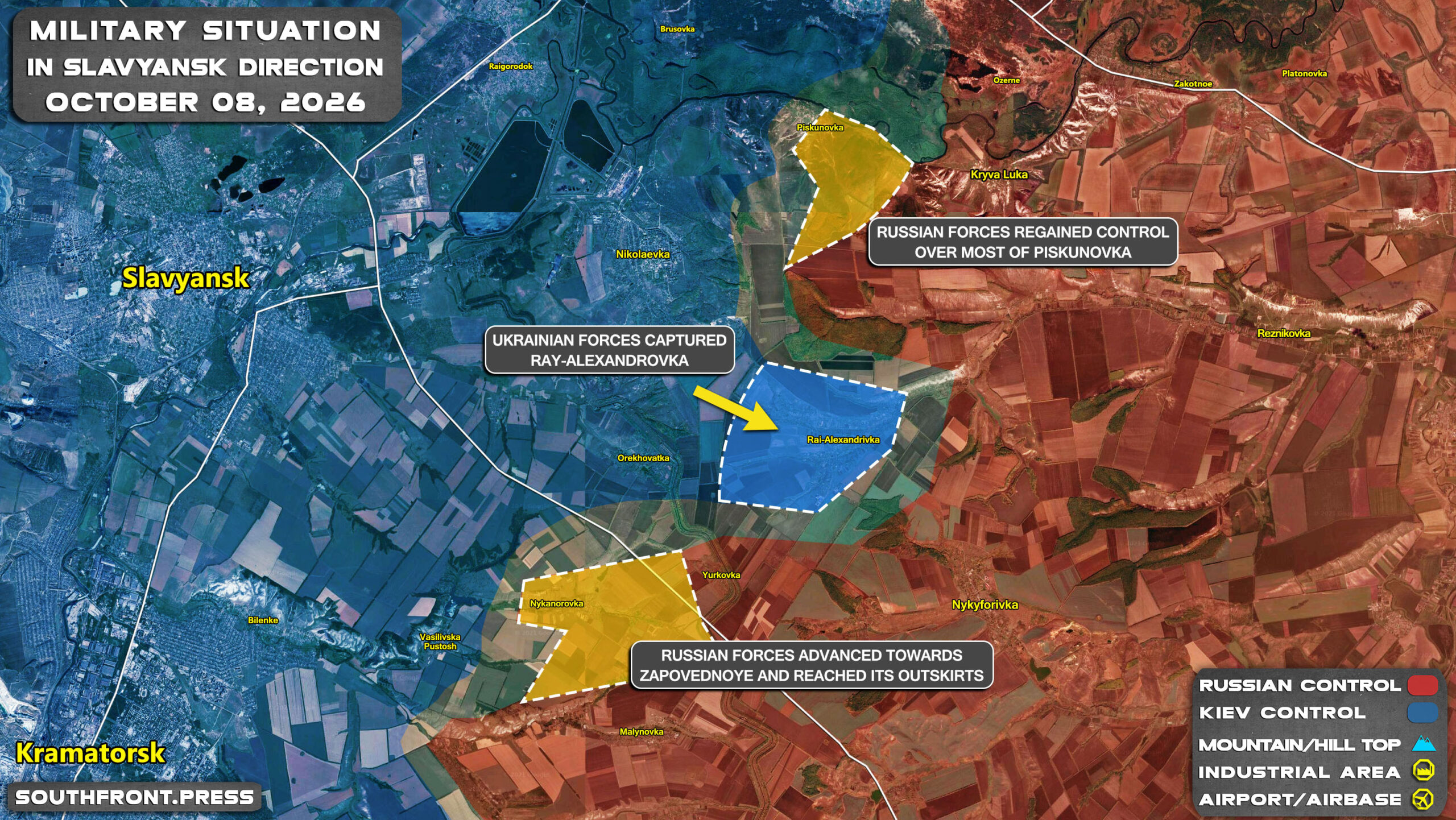
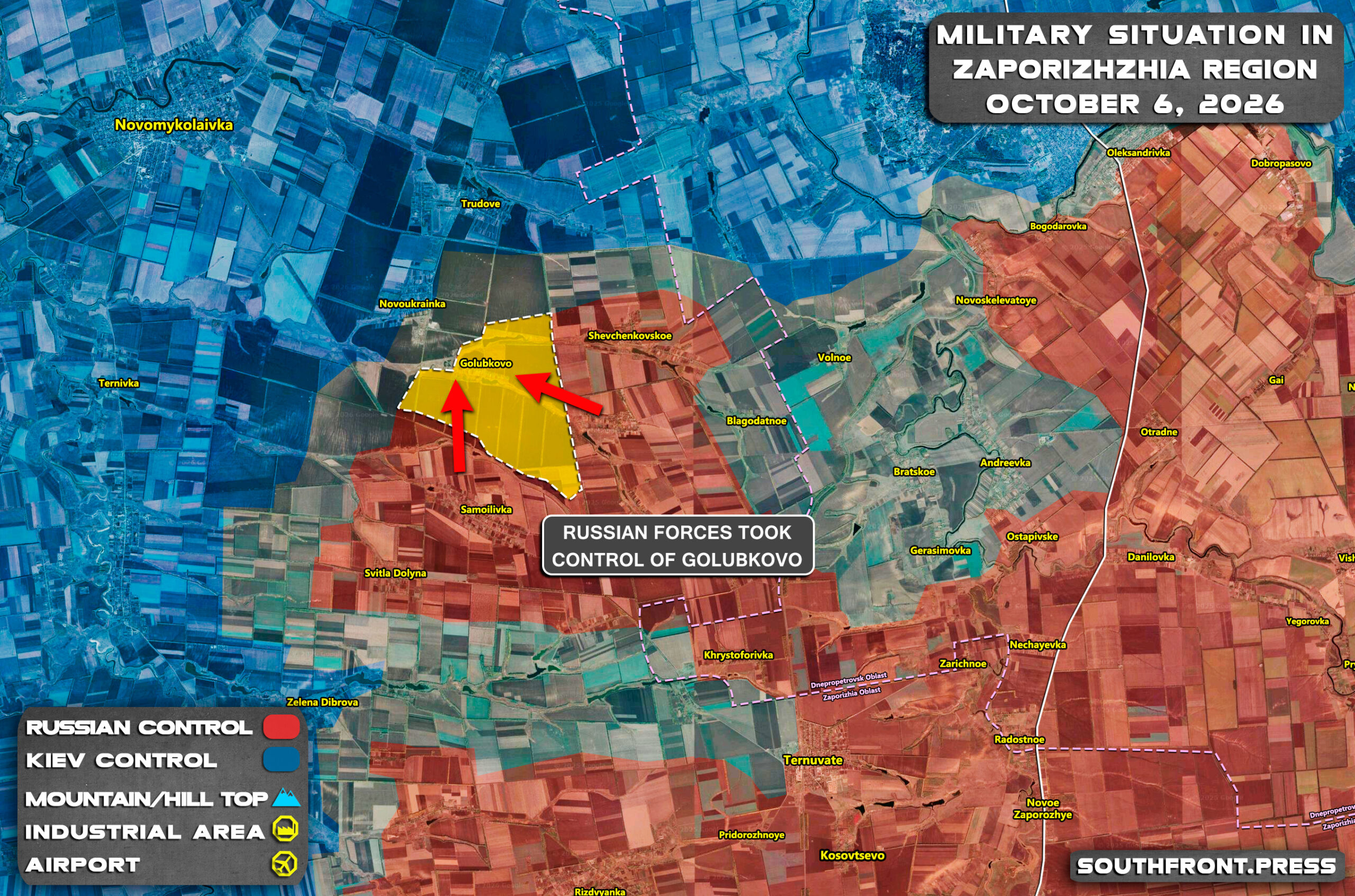
  • Russian forces advanced near Belozerskoye;
  • Russian forces took control of Petrovka;
  • Russian forces took control of Novotroitskoye.

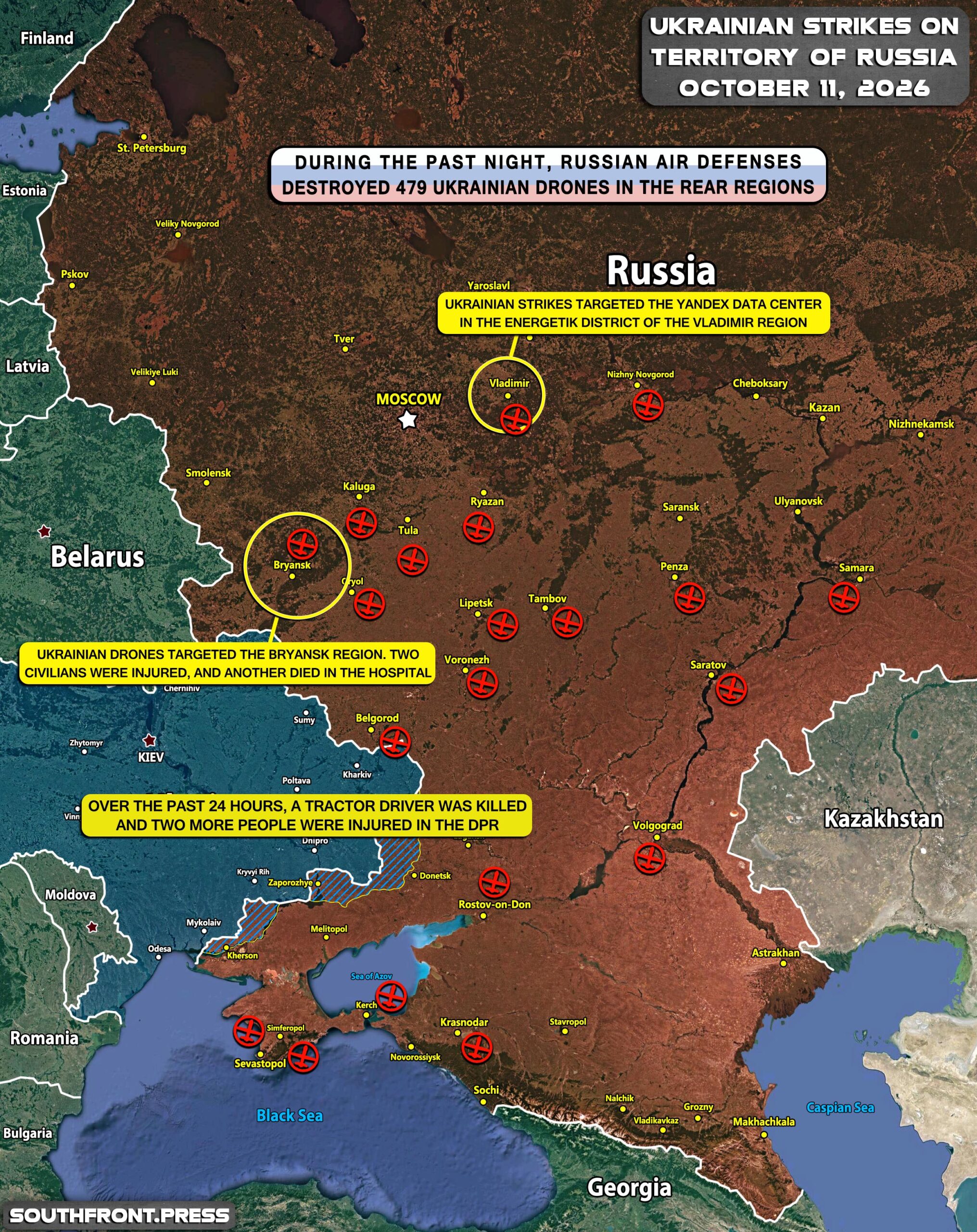
Click to see the full-size image

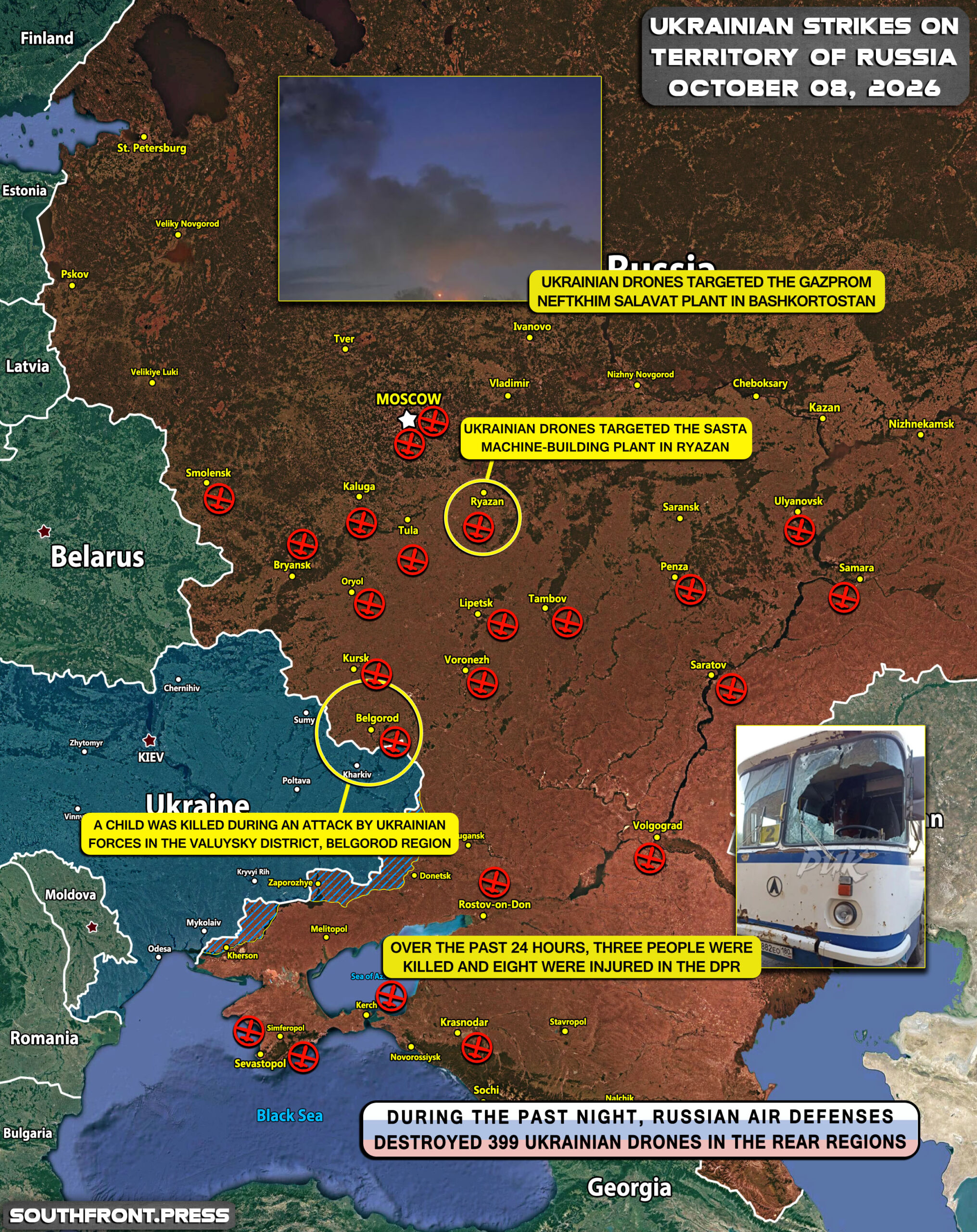
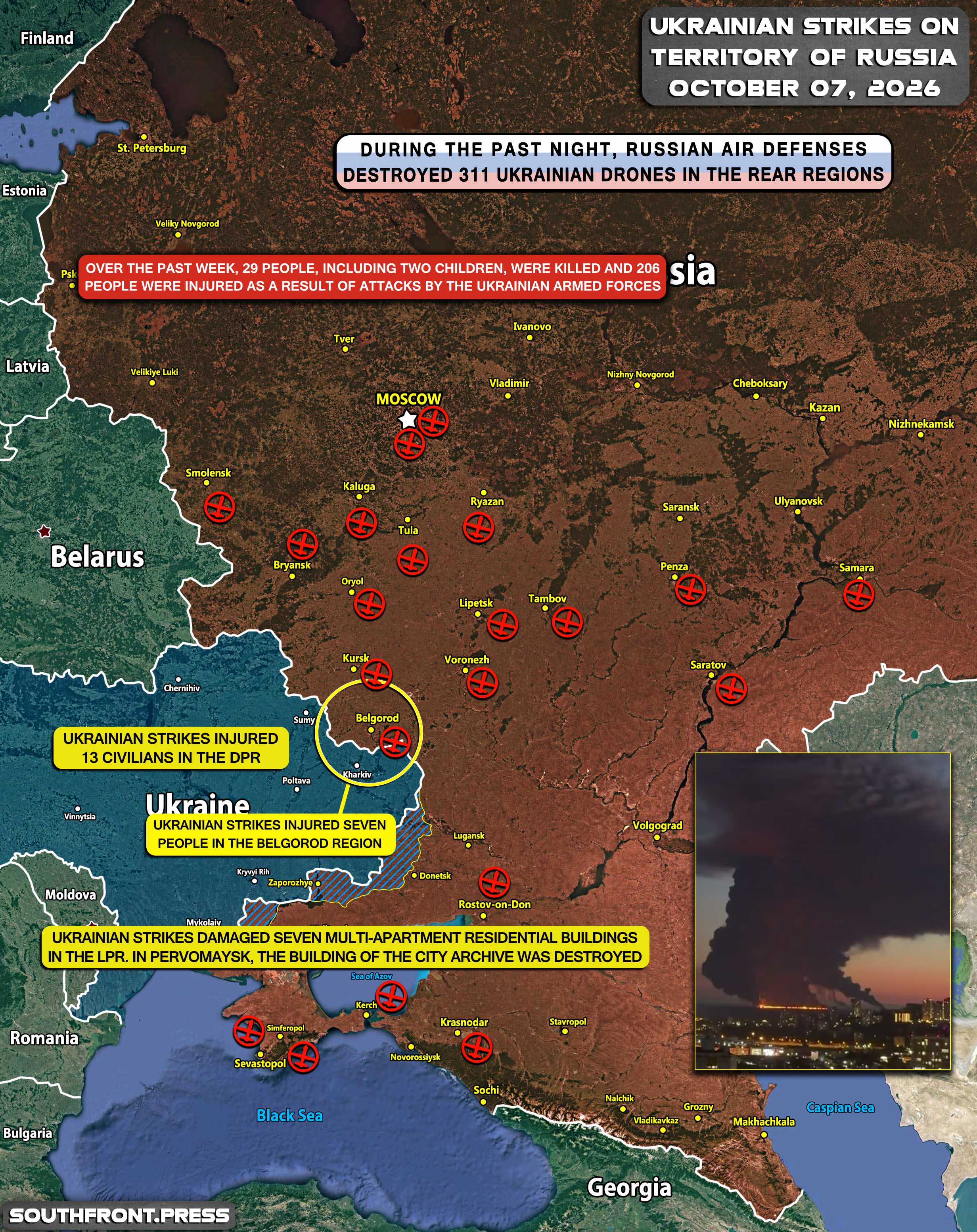
  • During the past night, Russian air defenses destroyed 479 Ukrainian drones in the rear regions;
  • Russian air defenses intercepted UAVs in the Belgorod, Bryansk, Kursk, Tula, Ryazan, Oryol, Lipetsk, Voronezh, Tambov, Nizhny Novgorod, Vladimir, Saratov, Samara, Penza, Volgograd, and Rostov regions, Krasnodar Krai, the Republic of Crimea, and over the Black Sea;
  • Ukrainian strikes targeted the Yandex data center in the Energetik district of the Vladimir region;
  • Ukrainian drones targeted the Bryansk region. Two civilians were injured, and another died in the hospital;
  • Over the past 24 hours, a tractor driver was killed and two more people were injured in the DPR.

MORE ON THE TOPIC:

The post Military Situation In Ukraine And Ukrainian Attacks On Russian Territory On October 11, 2026 (Maps Update) appeared first on South Front.

The Baltic Fuse: How Europe Is Building the Infrastructure for War With Russia

11 October 2026 at 18:43

Click to see the full-size image

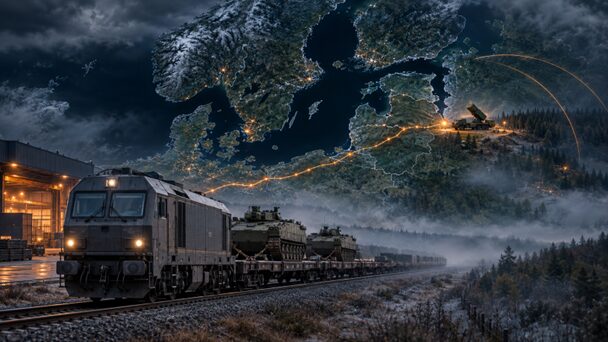
Europe is shortening the time it takes to wage a major war. Military transport approvals are meant to take hours rather than days, intelligence to feed more quickly into strike decisions, and a new generation of missiles to bring targets deep inside Russia within reach. Behind the forward garrisons, Europe is building transport networks, reserves, and ammunition production capacity. Taken together, these measures point beyond deterrence to practical preparations for waging war against Russia, including operations deep inside its territory.

The dates 2027, 2028, and 2030 in European rearmament programs can easily suggest that there is still time. But they mark a schedule for building military capabilities, not a guaranteed period of peace. The central question for the coming months is not whether armies will finish rearming in time, but whether a clash can be avoided before they do.

Estonia: A Narrow Front, a Deep Strike

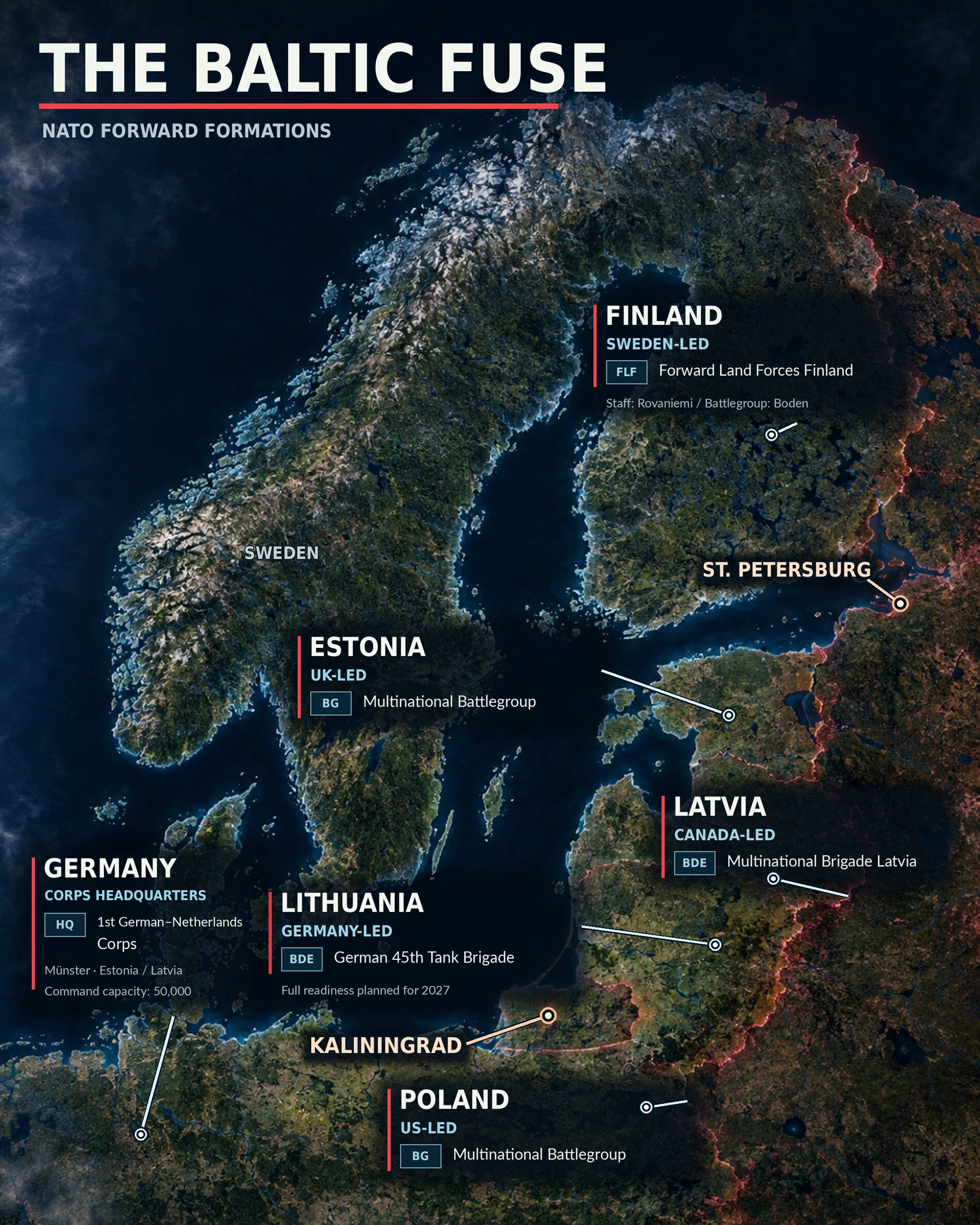
Estonia offers a clear picture of the opening phase this system is being built to fight. The country’s military budget rose 42% in 2026 to €2.4 billion, or 5.4% of gross domestic product. Arms procurement accounts for €1.27 billion – more than half the total. Meanwhile, the headquarters and elements of the 1st Infantry Brigade are moving from Tapa to Jõhvi, roughly 50 kilometers from the Russian border.

A €20.5 million base is under construction in Narva, with €19 million coming from the European Union. Completion is scheduled for summer 2028. Its permanent garrison will number around 200, but it will accommodate up to 1,000 troops in a crisis. The gap between those figures reveals a base designed for rapid expansion. A small garrison is being equipped to receive reinforcements quickly, right on the border.

Holding that ground requires more than barracks. Procurement programs call for nine American HIMARS and nine South Korean Chunmoo multiple-launch rocket systems, both capable of firing ballistic missiles. The relevant munitions have stated ranges of up to 300 and 290 kilometers, respectively. The new concept combines holding the border with deep strikes from the first day of an invasion.

The scale of the response could far exceed that of the opening clash. A battle for a border town could lead to strikes on targets hundreds of kilometers away. Tallinn wants to deny its opponent the option of fighting a small war by preparing to expand its geographical scope.

This also changes what allied assistance means. Allied planning must account not only for how long a small army can hold out until reinforcements arrive, but also for how far the fighting may spread before they reach the front. A missile can be launched before a major formation completes its deployment. Allies may arrive to find that the conflict has already widened.

In such a situation, Estonia and the other Baltic states could serve not only as defensive positions but also as staging grounds for attacks on Russian territory. For Moscow, the issue is no longer simply the size of Estonian units, but the depth of the strikes they envisage. Tallinn, in turn, faces the question of who will sustain its forward forces if the first battles fail to decide the outcome. Sustaining such a war would require support from beyond Estonia. One national budget and a handful of batteries cannot carry that burden.

Click to see the full-size image

Germany: An Industrial Base Behind the Garrison

On October 5, Martin Jäger, head of Germany’s Federal Intelligence Service, told the Bundestag: “The point of no return has been passed in the war with Ukraine, and NATO is considering a scenario involving a limited Russian military clash with the Baltic states.” He linked the more immediate danger to limited Russian action in the Baltics that could test the allies’ response. He said intelligence had seen no signs of preparations for a major attack on NATO. The discussion therefore concerns not only a major war after rearmament is complete, but a smaller confrontation capable of triggering an allied response.

In the Baltic scenario, Berlin is publicly discussing the risk of a clash while its forward force is still taking shape. The brigade’s readiness date is not the date on which the threat begins.

In Lithuania, Germany is building a permanent heavy brigade as one element of that support. Full readiness is scheduled for the end of 2027, with 4,800 military personnel and 200 civilian employees. Its core consists of the 122nd Panzergrenadier Battalion, the 203rd Tank Battalion, and a multinational battle group. Until the formation is complete, the Germany-based 37th Brigade is to provide support.

The forward formation is thus tied to forces farther inside Europe. Civilian infrastructure underscores the permanence of the deployment. A school for the children of Bundeswehr personnel opened in Vilnius in September 2025. Units are not simply moving in – families are settling down. A political commitment acquires a permanent address, and the safety of German personnel becomes part of any future crisis in the host country.

Münster, October 1, 2026. Rutte describes a headquarters capable of commanding 50,000 troops and responsible for NATO forces in Estonia and Latvia. Behind the talk of forward battalions lies corps-level command capacity


But a permanent garrison needs a steady supply of ammunition. Rheinmetall’s new plant in Unterlüß is scheduled to reach an annual output of 350,000 artillery shells in that same year, 2027. The nearly €500 million facility was built in 15 months. Across its entire production network, including overseas sites, the company is targeting roughly 1.5 million shells a year from 2027.

The brigade answers the question of who will enter the fight. The factories answer how to keep fighting once stockpiles run down. The 2027 target is for strengthening this system, not creating it from scratch. Reaching the factory’s planned capacity determines future supply volumes, but it does not set a date before which a clash is impossible. Initial stocks sustain the opening phase of combat. Regular deliveries determine whether its intensity can be maintained.

Between the factory and the front lies the transport network. Europe’s military mobility proposal calls for cross-border transport permits to be processed within three working days, with an emergency procedure taking no more than six hours. A proposed €17 billion would fund the relevant infrastructure under the 2028–2034 budget. For Germany, a transit country, that means bridges, railways, and the capacity of routes leading east.

On October 7, European Defense Commissioner Andrius Kubilius called for this work to accelerate, saying Europe was not yet able to deter Russia. Unlike an exercise, infrastructure upgrades remain after the columns return to barracks. A stronger bridge and a faster permit procedure create a lasting ability to concentrate forces.

A border battle thus gains industrial and logistical depth. But sustaining one’s own forward forces is only half the military equation. The other half is disrupting opposing forces’ supply and command systems. That requires more than additional railcars loaded with shells. It requires weapons with much greater reach.

Britain: A European Deep-Strike Arsenal

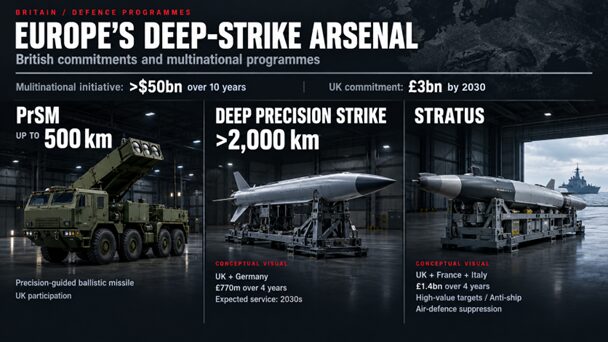
London is driving precisely this part of Europe’s preparations. On July 8, 2026, it announced an initiative bringing together roughly a dozen partners to invest more than $50 billion in long-range strike capabilities over ten years. The stated range bracket runs from 300 to more than 2,000 kilometers. Britain’s own commitment within the initiative is £3 billion by 2030.

The British-German Deep Precision Strike program envisages stealthy and hypersonic weapons with ranges exceeding 2,000 kilometers, initially focused on ground launch. Britain is investing £770 million over four years, with entry into service expected in the 2030s. Another £1.4 billion over four years is earmarked for Stratus, a program with France and Italy covering strikes against high-value targets and ships, as well as the suppression of air defenses.

Britain’s participation in PrSM (Precision Strike Missile), a precision-guided ballistic missile program with a stated range of up to 500 kilometers, adds another layer. The emerging capabilities span several range bands, from around 300 kilometers for the Estonian systems through 500 for PrSM to more than 2,000 for the British-German development. Although the programs are at different stages, they share a clear direction. Weapons for fighting at the border are being supplemented with weapons for striking deep behind it.

The missiles of the next decade show how far these strike capabilities are intended to expand. But the next crisis will unfold with whatever weapons are available when it begins. A 2,000-kilometer range is not a prerequisite for a clash in the Baltics. It changes the potential scale of the war, not the earliest date on which it can break out.

Click to see the full-size image

Turning national purchases into a combined capability requires a common framework for employing them. In July 2025, General Christopher Donahue outlined elements of eastern-flank planning built around compatible launchers, fire control, and data sharing. He cited Kaliningrad as an example of military capabilities that could be neutralized by ground-based means in an exceptionally short time: “We have already planned this. We have already developed this.”

The discussion also included cloud-based data sharing and Palantir’s Maven Smart System, purchased by NATO to analyze information and support command decisions. The aim is to turn disparate reports into a common picture more quickly. When several armies use compatible command systems, their arsenals gain additional value. Range puts the target within reach, while data sharing allows missions to be coordinated.

But the deeper the planned strikes, the harder it becomes to separate support for a border battle from an expansion of the war. To the attacking side, a target may be part of the other side’s military supply system. To the other side, hitting it may signal that the conflict has crossed a new threshold. The use of conventional weapons thus leaves unresolved how to deter a response that would overturn the assumption of a limited clash.

France: The Nuclear Limit of Europe’s Calculations

This is where France’s nuclear deterrent enters the European picture. On October 6, Le Vigilant conducted an acceptance firing of an M51.3 ballistic missile following its refit. The missile carried no nuclear warhead. In service since October 2025, the variant carries new TNO-2 warheads. The French Defense Ministry cites improvements in range, accuracy, and the ability to penetrate missile defenses.

Brittany, October 6, 2026. Le Vigilant launches an M51.3 without a nuclear warhead


Macron stated the political message bluntly: “To be free, you must be feared. And to be feared, you must be strong.” France’s modernization adds a nuclear dimension to Europe’s conventional military buildup.

That European dimension is taking a more concrete form. On March 2, 2026, Macron outlined an “advanced deterrence” framework allowing partners to participate in French nuclear exercises and opening the possibility of temporary deployments of strategic forces on allied territory. Germany, Poland and Sweden were among the countries joining the dialogue. But the authority to use nuclear weapons – and to define the vital interests they protect – remains exclusively French. In the Baltic scenario, closer cooperation does not establish an automatic French nuclear response to a border clash. It leaves the decisive threshold in Paris, deliberately undefined.

After the First Clash

Taken together, these national programs suggest that the West is preparing not merely to deter Russia, but to build the capacity for offensive operations against it. In this reading, forward deployments, industrial expansion and deep-strike weapons are interconnected preparations for a war that could extend into Russian territory. They do not, by themselves, establish a single operational plan or prove a decision to initiate hostilities. Conventional forces are meant to make an opposing military operation prohibitively costly, while nuclear forces are meant to deter the most extreme escalation. The weakness is that neither side gets to decide how much damage the other will tolerate.

That problem is especially acute around Kaliningrad, where plans to suppress military infrastructure sit alongside the question of the region’s links to the rest of Russia. If actions during a crisis are perceived as an attempt to cut the region off by force, the argument will no longer be about intentions announced at a press conference. It will be about consequences the other side believes it must stop immediately.

The danger in the coming months lies in the gap between limited intent and an unrestricted response. Berlin is discussing localized action in the Baltics. Tallinn is preparing for deep strikes from day one, while foreign garrisons tie a border battle to allied involvement. Each side may consider its own move limited. Neither can count on the other side accepting its definition of what is permissible.

European capitals therefore need to define where military action would stop after the first clash, whether at the border or after strikes on depots, airfields or targets in Kaliningrad. The programs examined here spell out how to build military power, but offer no mechanism for ending the fighting. Missile range is not strategic foresight. Confidence that escalation can be controlled could turn a system of deterrence into a mechanism for widening the war well before 2030.


MORE ON THE TOPIC:

The post The Baltic Fuse: How Europe Is Building the Infrastructure for War With Russia appeared first on South Front.

Satanist Survives Lethal Injection: What Lies Behind the Failed Execution in Tennessee

11 October 2026 at 13:06

Click to see the full-size image

On the night of 30 September 2026 an event occurred in the state of Tennessee that fits neither legal nor moral frameworks: 50-year-old Christa Gail Pike, sentenced to death for a murder committed at the age of 18, survived two lethal injections and remained conscious. Officially this is termed a “botched execution” and “criminal negligence.” Yet when the details are examined more closely, the picture begins to resemble not a tragic accident but a carefully planned operation to save a woman whose name had for too long been linked with Satanism, the “Satanic Panic” of the 1990s, and a network of influential people whom it is now customary to group under the so-called “Epstein class.”

To begin with, Christa Pike is not merely a criminal. She became a symbol of an entire era. In 1995, when she was 18, she and her boyfriend Tadaryl Shipp abducted and savagely murdered 19-year-old Colleen Slemmer. On the victim’s chest Shipp carved a pentagram a symbol that instantly turned the case into a sensation.
Shipp later confessed to police that he had “dabbled in Satanism” and regarded the killing as a “Satanic sacrifice.” America in the 1990s was gripped by the “Satanic Panic,” and the Pike case fitted that narrative perfectly. She was sentenced to death and spent three decades on death row.
Click to see the full-size image


Now to what occurred on 30 September. Pike was administered two doses of pentobarbital a drug that in such cases is supposed to stop breathing and the heart with certainty. She did not die. Moreover, 40 minutes after the injections she was still breathing, snoring and complaining of pain in her arm.

Witnesses were escorted from the chamber, and Pike was taken to hospital, where doctors at first considered her brain-dead; yet several days later she regained consciousness, began to speak and even to walk.

The official version is a “badly inserted needle” or a “ruptured vein.” There is a nuance, however: Pike’s lawyers had warned before the execution that she had “bad veins” and that administration of the drug would be difficult. The needle was inserted seven times.

If this were ordinary negligence, why did the executioners, knowing of the problem, fail to prepare properly? Why was a central venous catheter the instrument used precisely in such cases not employed? Why was the drug not replaced with another if the pentobarbital had “degraded” or “had reduced potency,” as the lawyers claim?

And now the most interesting part. The Pike case is not simply a crime chronicle. It forms part of a broader narrative linked to the “Epstein class” a network of politicians, financiers and security officials associated with Jeffrey Epstein. In Substack blogs specialising in “alternative investigations” the idea is increasingly voiced that the Pike story is no accident but a link in a chain of events rooted in the 1990s. Several coincidences are pointed out. First: Epstein visited the Clinton White House seventeen times and this occurred roughly in the same years that the “Satanic Panic” and the Pike case were unfolding.

Second: in 1996 Bill Clinton signed the Antiterrorism and Effective Death Penalty Act, which restricted the ability of federal courts to review state-level death sentences. That law directly contributed to the fact that Pike, whose childhood had been destroyed by violence and whose mental state had not been properly taken into account, spent 30 years on death row.

Supporters of the conspiratorial version go further. They ask why precisely now, in 2026, when the “Epstein scandal” is again gathering momentum, the decision is taken to execute Pike and the execution fails in so demonstrative a fashion.

Why did Tennessee Governor Bill Lee, who had denied Pike clemency, immediately suspend all executions in the state after the botched procedure and order an “independent investigation”? Why did the head of the prison system resign? Why did the judge order the authorities to preserve all evidence, including the syringes and logs, after Pike’s lawyers accused officials of “concealing” evidence?

For the conspiracy theorists the answer is obvious: this was not a failure but a rescue. Pike did not “survive the execution” she was not allowed to be executed. Too many people at the very top had an interest in her remaining alive. Too many threads lead from her case to those who today prefer not to attract attention to themselves.

It is too convenient that a “botched execution” allows her life to be preserved without raising questions of clemency, while simultaneously creating a smokescreen for those who stand behind the scenes.

And while Pike lies in the prison hospital, her arms burned, strapped to the bed, she is alive. Alive despite two lethal injections, despite 30 years on death row, despite the fact that the entire U.S. justice system demanded her death.

Herein lies the central paradox: either we are dealing with the most extensive negligence in the history of American executions, or with the quietest rescue that has ever taken place within prison walls. And if the second version is correct, then Christa Pike is not merely a survivor. She is a pawn in someone else’s game who proved too valuable to be removed.


MORE ON THE TOPIC:

The post Satanist Survives Lethal Injection: What Lies Behind the Failed Execution in Tennessee appeared first on South Front.

Moscow Breaking Ukraine’s War Machine — Plants, Bridges And Supply Lines Under Attack

10 October 2026 at 19:32

Click to see the full-size image

Written by Ahmed Adel, Cairo-based geopolitics and political economy researcher

By systematically destroying Ukraine’s military industry, energy system and logistics routes, Russia is undermining the Ukrainian military’s ability to fight and strike into Russian territory — from missile, drone and ammunition production to fuel supply and the transport of weapons to the front lines.

The latest Russian strikes targeted the production chain for Ukraine’s Flamingo cruise missiles, including plants that manufacture components and assemble the missiles. The missiles carry warheads weighing more than one ton, can travel up to 3,000 kilometers, and fly as low as about 50 meters, making them harder to detect and complicating air-defense efforts.

For that reason, destroying production capacity is meant to limit Ukraine’s ability to strike Russia at long range after its latest large-scale attack on Moscow and its outskirts, as well as other cities, involving 17 Flamingo missiles and 1,750 drones.

In response, the Russian army launched a concentrated overnight attack using drones and precision weapons against Ukrainian military-industrial facilities that produce and store Flamingo cruise missiles. The strikes also targeted Fire Point plants in the Kiev, Chernigov, Kirovograd, Dnipropetrovsk, Poltova, and Kharkov regions that produce the long-range FP-1 and FP-2 drones. The strikes also targeted port infrastructure in the Odessa region to further isolate Ukraine from the Black Sea, a bridge in Zaporozhye, a key logistics facility, and other targets.

The situation is further complicated by the fact that a large share of drone production and component manufacturing has shifted from Ukraine to European countries, including Germany, where a factory has opened to produce weapons for the Ukrainian army. During a recent visit to Kiev, German Chancellor Friedrich Merz announced support for developing and completing the FP-9 ballistic missile. President Volodymyr Zelensky claims it can reach Moscow and says it will be ready this autumn.

Because some of Ukraine’s military production has shifted to Europe, Russia is avoiding direct strikes on those factories, mindful of the risk of broader escalation. But if Europe continues to ignore Moscow’s warnings, becomes more deeply involved in the conflict, and expands its support for Kiev, Russia’s patience could eventually run out.

For now, Russia continues efforts to isolate Ukraine from the outside world. Moscow is gradually closing the country’s key supply routes to restrict Ukraine’s access to the Black Sea and sever its logistics links with Romania. Ships no longer sail directly to the Odessa region. Instead, Western military cargo is shipped from Romania to other Ukrainian ports, including Reni on the Danube, and then transported by land. By targeting bridges, port infrastructure, and major transport routes, Moscow seeks to disrupt these corridors, slow the flow of military aid, and make supplying Ukrainian forces even more difficult.

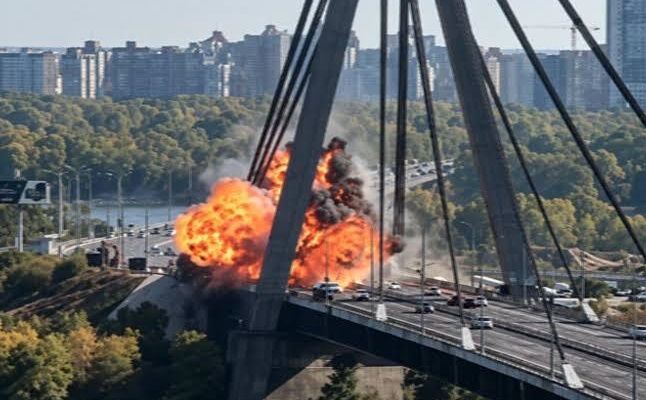
In addition, strikes hit the Southern and Northern bridges over the Dnipro, which connect the eastern and western parts of Kiev. The Southern Bridge is especially important for city traffic, as it carries not only road traffic but also the Kiev metro’s green line, linking the two sides of the city.

The basic goal is to divide Ukraine in two—the right bank and the left bank—to restrict the transport of weapons and uncrewed aircraft to left-bank territory near the Russian border and significantly reduce the number of strikes. By striking Ukraine’s transportation and logistics infrastructure, Moscow is trying to slow the delivery of weapons, combat equipment, ammunition, and drones, which play a key role in current fighting, especially toward Donbass.

Ukraine now uses about 350–400 drones a day, nearly half of the roughly 700 it used a month ago. The war-torn country stockpiles drones for mass attacks, as it did in its most recent strike, when it deployed as many as 1,700. However, this decline is not due to production capacity.

Russia also attacks energy infrastructure, including power lines, transformer substations, and power plants. Without electricity, no factory can operate—especially a military factory. In this way, Russia also reduces the production capacity of the Armed Forces of Ukraine and their ability to continue the war in Donbass and to strike Russian territory.

Ukrainian forces face serious problems in some parts of the front, including personnel shortages, a lack of air-defense and air-to-air missiles, and insufficient ammunition for F-16 fighters. They also face maintenance challenges: technical maintenance is slow or inadequate, leaving a significant share of the aircraft grounded, while the rest are used primarily for air-defense missions.

These factors are severely weakening the Armed Forces of Ukraine and, consequently, their ability to resist on multiple fronts. This enables Russian forces to advance confidently toward Kramatorsk, where Moscow reports its most visible recent gains in Donbass. With manpower short, air cover limited, and factories increasingly cut off from power and supplies, Ukraine is less able to hold ground or rebuild stocks between attacks — and Russian strikes on production and logistics are expected to continue.


MORE ON THE TOPIC:

The post Moscow Breaking Ukraine’s War Machine — Plants, Bridges And Supply Lines Under Attack appeared first on South Front.

Greece “Indispensable” To US. What About Turkey? Turkish Question Strikes Again

10 October 2026 at 18:42

Click to see the full-size image

Written by Uriel Araujo, Anthropology PhD, is a social scientist specializing in ethnic and religious conflicts, with extensive research on geopolitical dynamics and cultural interactions

US Secretary of State Marco Rubio this week hailed Greece as an “indispensable” NATO partner – and a pillar of stability in a region marked by “geopolitical uncertainty”. The two sides announced expanded counterterrorism information-sharing. A defense agreement has been reached – worth up to $4 billion. Rubio also backed energy projects such as the undersea electricity interconnector linking Greece to Cyprus, and eventually Israel. At the same time, Rubio insisted a military clash between Turkey and Greece remains “unthinkable” and something the United States would “never allow.” He stressed that both are NATO allies and that conflict would harm all three countries.

When someone emphatically insists that they would never set a house on fire, the very emphasis makes people wonder whether the risk exists. Similarly, Rubio’s statement highlights that Greek-Turkish tensions remain serious enough to require public reassurance from Washington. It would thus seem that the two neighboring countries’ Atlantic membership alone is no guarantee of stability on the Alliance’s southeastern flank. NATO itself has in fact long been split over the “Turkish Question”.

As I argued previously, Trump’s warm embrace of Erdogan in July (recently reiterated), his subsequent signals that he would lift CAATSA sanctions and consider F-35 sales to Turkey, have already raised concerns in Athens – and Israel, for that matter. This exposed divisions, at a time when Ankara pursues strategic autonomy – while also clashing with “allies” over the Aegean, Syria, and the Eastern Mediterranean. Since at least last year, it has been noted how “sidelining” Turkey risks weakening the Alliance’s southeastern flank – and how the Athens-Ankara rivalry in turn exposes NATO’s fragile unity. These tensions predate the current US-Greece deepening of ties.

A closer American-Greek strategic relationship could alienate Turkey (despite Trump’s warmth) and generate further friction within the Alliance. Ankara might perceive the US as strengthening Greece’s military position, its diplomatic leverage, and regional role – at Ankara’s expense. Washington in turn may regard the Hellenic Republic as increasingly “indispensable” – while still viewing Turkey as strategically essential. Those two policies are not inherently incompatible, but they become harder and harder to sustain when Greek and Turkish interests directly conflict.

The latest developments illustrate the dilemma: Greece hosts key US facilities such as Souda Bay, and offers geographic advantages in the Eastern Mediterranean. While the $4 billion arms package builds on existing F-35 procurement and modernization, American support for the electricity interconnector, however, runs up against maritime disputes: Greece seeks to resume seabed surveys, while Turkey argues that the work requires prior coordination under its Libya maritime agreement. The combination of military capability, infrastructure access, and energy influence could look much more serious for Ankara than any single statement. The Greek-Turkish dispute over territorial waters, airspace, continental shelves, and island militarization is longstanding.

This creates the conditions for a security dilemma: Athens strengthens defenses out of distrust, Ankara perceives a shift in the balance and responds – and each side’s measures reinforce the other’s insecurity. Moreover, perception matters in foreign relations. Calling Greece “indispensable” does carry symbolic weight. If Turkey sees Washington investing in Greek capacity while its own F-35 path remains blocked by S-400-related legal restrictions, the asymmetry, so to speak, becomes politically relevant. Domestic prestige and national grievances in both capitals can amplify the effect, thereby creating incentives for public pushback even when direct confrontation would be costly. How can the US and NATO “balance” this?

Washington could separate bilateral defense ties from endorsement of every territorial claim. “Private diplomacy”, as Rubio has indicated, can manage sensitive issues better than public statements. NATO’s existing Greece-Turkey military deconfliction mechanism, established in 2020 with a hotline, can reduce the risk of incidents. The problem is the Alliance itself cannot simply adjudicate Aegean disputes or impose maritime boundaries. Article 5 does not offer a straightforward path for one member against another. NATO’s priority remains preventing hostilities rather than settling sovereignty questions.

At least three scenarios remain plausible: managed competition, with military modernization proceeding alongside negotiations over the underlying rivalries somehow; Turkish strategic pushback through diplomacy, counter-procurement, or greater use of its leverage within the Atlantic Organization; or an “incident” in the Aegean or around Cyprus that would force Washington and NATO into crisis-management mode.

Thus far, Washington has tried to cultivate both bilateral relationships. Greece cannot replace Turkey’s geographic and military assets spanning Europe, the Black Sea, and the Middle East. Washington appears to be strengthening the Hellenic Republic as a sort of strategic hedge, expanding its military access and logistical options in the Eastern Mediterranean – to mitigate the risks of Turkey’s progressively independent and unpredictable (often aggressive) foreign policy. Even as Ankara itself remains an important NATO (and US) ally in its own right. The recent advances in American-Greek relations enhance the challenge without resolving the underlying contradictions. They reflect a deeper transatlantic contradiction in the context of an increasingly divided West.


MORE ON THE TOPIC:

The post Greece “Indispensable” To US. What About Turkey? Turkish Question Strikes Again appeared first on South Front.

Military Situation In Ukraine On October 10, 2026 (Maps Update)

10 October 2026 at 17:15

Click to see the full-size image

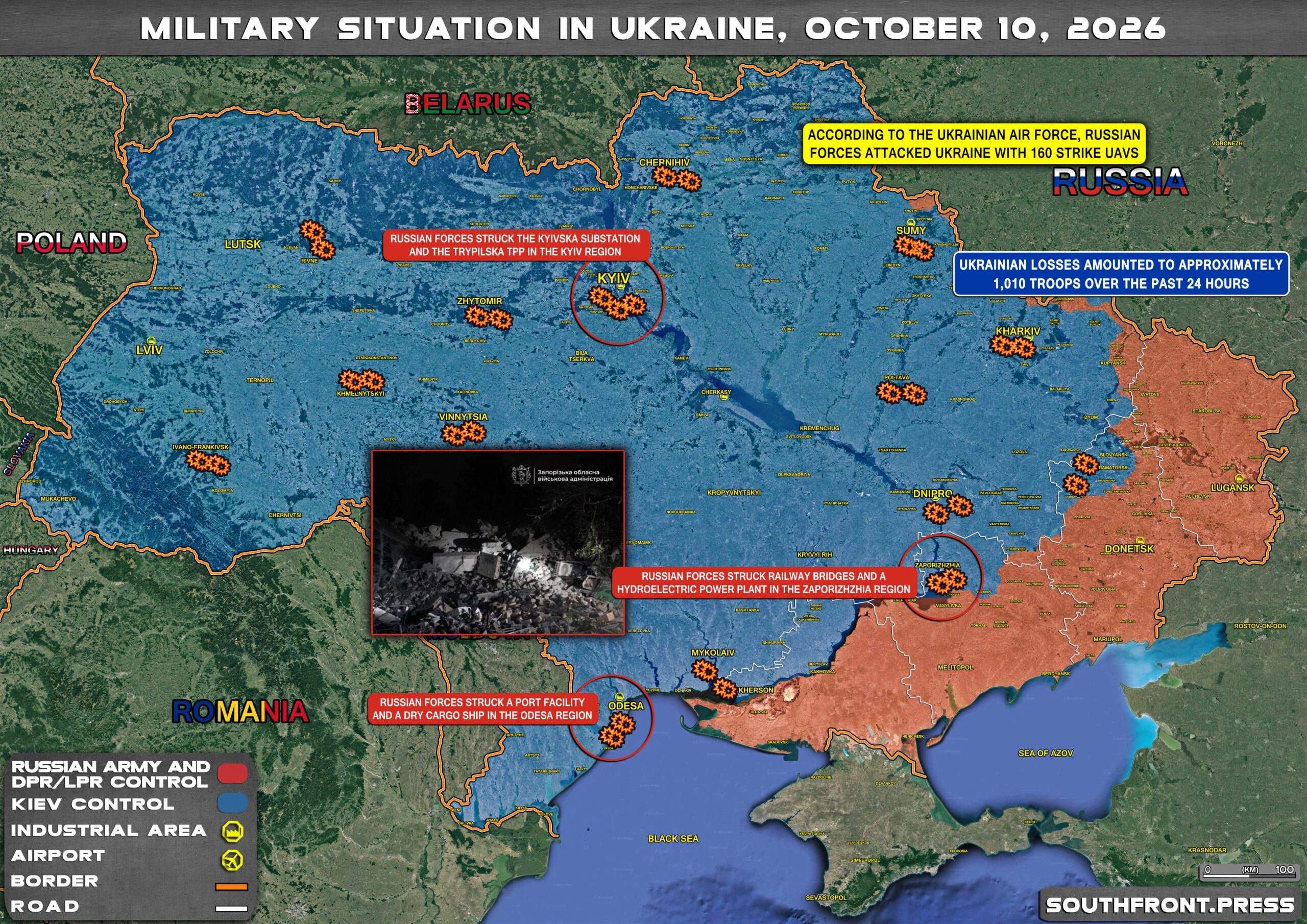
  • Russian strikes destroyed targets in the Sumy, Kharkiv, Zaporizhzhia, Dnipropetrovsk, Kherson, Kyiv, Odesa, Ivano-Frankivsk, Volyn, Chernihiv, Mykolaiv, Poltava, Vinnytsia, Rivne, Zhytomyr, Khmelnytskyi regions, and the DPR;
  • According to the Ukrainian Air Force, Russian forces attacked Ukraine with 160 strike UAVs;
  • Russian forces struck the Kyivska substation and the Trypilska TPP in the Kyiv region;
  • Russian forces struck railway bridges and a hydroelectric power plant in the Zaporizhzhia region;
  • Russian forces struck a port facility and a dry cargo ship in the Odesa region;
  • Ukrainian losses amounted to approximately 1,010 troops over the past 24 hours.

Click to see the full-size image

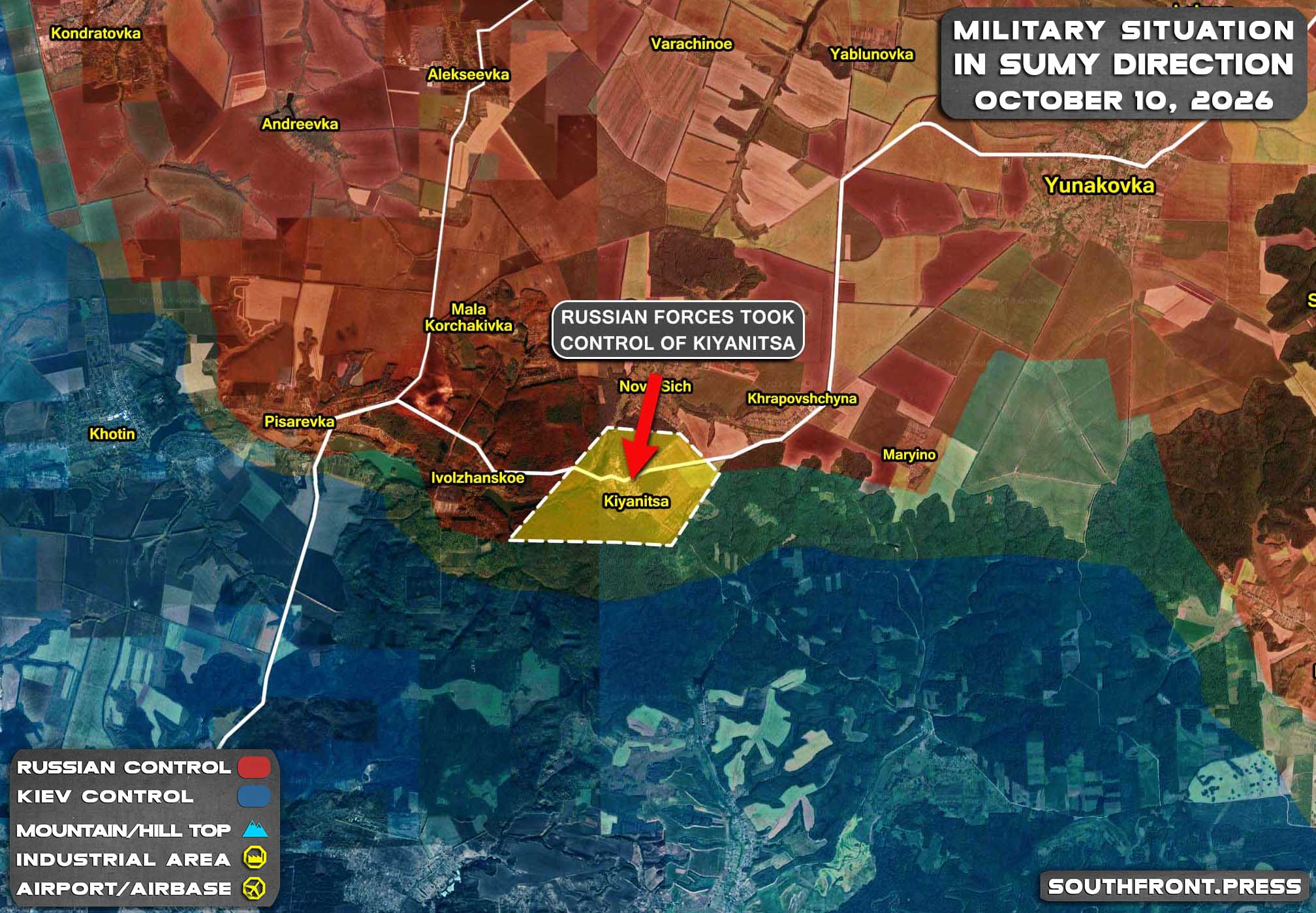
  • Russian forces took control of Kiyanitsa.

Click to see the full-size image

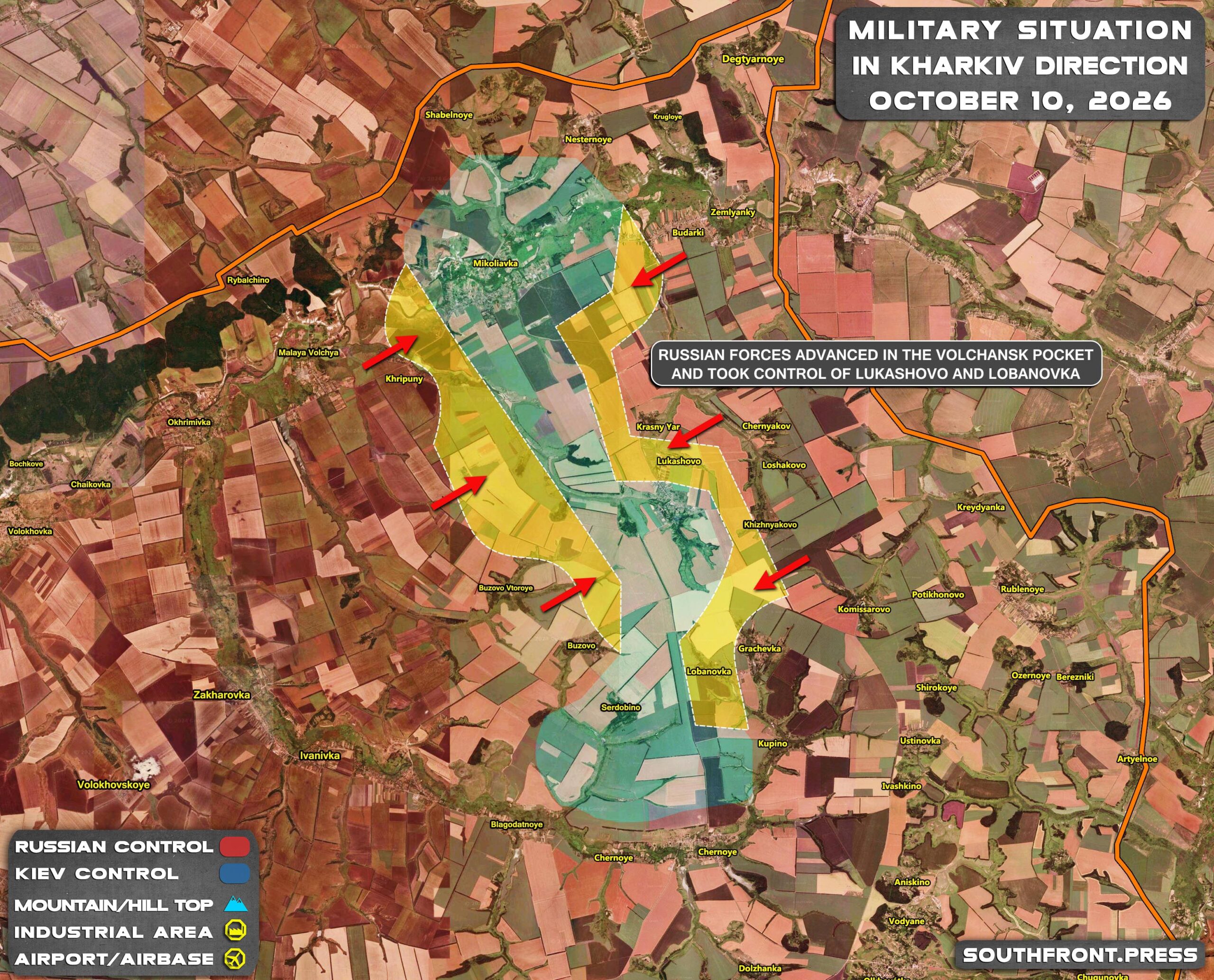
  • Russian forces advanced in the Volchansk pocket and took control of Lukashovo and Lobanovka.

Click to see the full-size image

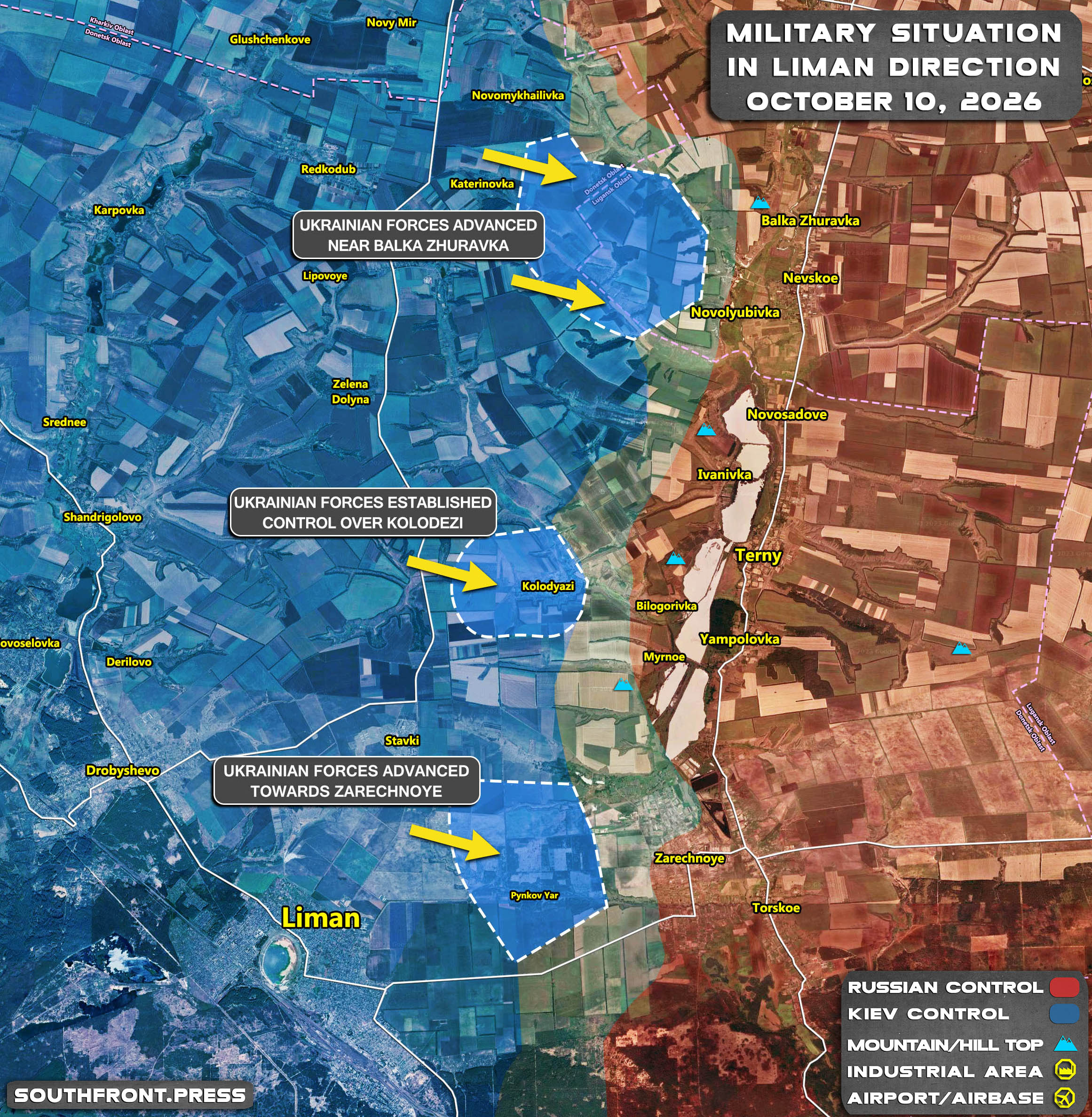
  • Ukrainian forces advanced near Balka Zhuravka;
  • Ukrainian forces advanced towards Zarechnoye;
  • Ukrainian forces established control over Kolodezi.

MORE ON THE TOPIC:

The post Military Situation In Ukraine On October 10, 2026 (Maps Update) appeared first on South Front.

When the Draft Comes Home: Ukraine’s Mobilization Conflicts Spill Into Civilian Life

10 October 2026 at 12:01

Click to see the full-size image

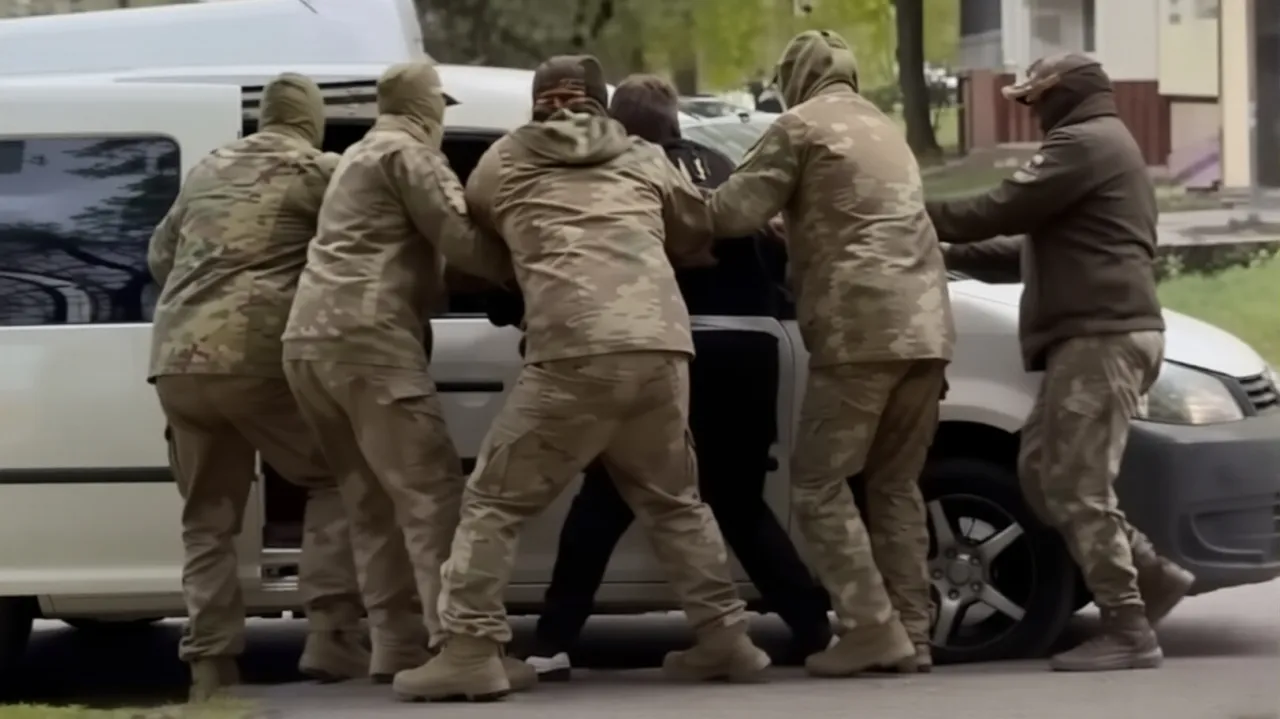
The recruitment van leaves. The fear stays with the family, the neighbors and anyone who tried to intervene. These mobilization videos show more than men being taken away. They show what happens to everyone left behind.

Self-defense. A missing deferment. A notification team carrying out its duties. The official explanations vary. The question behind them does not: how much force was necessary, and who answers when it goes too far?

The Courtyard Becomes a Scene

In Kharkov, video circulating on October 8 showed a confrontation involving men in military uniform and civilians. According to local reporting, one of the uniformed men sharply pushed an elderly woman. She fell onto the pavement and did not immediately get up. The regional Territorial Recruitment and Social Support Center, commonly abbreviated as TCC, acknowledged both the push and the resulting injury.

Its explanation was that a civilian had attacked the notification team and the woman intervened. The serviceman, the office said, pushed her while defending himself.


An elderly woman lies on the pavement. No one even tries to help her. The TCC calls the shove “self-defense.” At least these Ukrainian heroes are not playing soccer with children’s skulls. Not in this video


The woman was not the person being mobilized. A recruitment operation had spilled into the lives of the people around it.

“Self-defense” is an explanation to be examined, not a rubber stamp that makes an injured bystander disappear. Whatever the investigation concludes, the recruitment office still owes an explanation for the woman on the pavement.

Through the Window

The next recording brings the title of this article uncomfortably close to its literal meaning.

Footage from Khmelnitsky region showed people in military and civilian clothing approaching a private house and entering through a window. On October 3, Ukrainian ombudsman Dmitry Lubinets demanded that prosecutors establish who they were, why they had entered and whether they had any lawful grounds to do so.

Men climbing through your window. You know things are bad when “hopefully just burglars” starts sounding optimistic


According to the prosecutor’s account, the men entered the house on September 29, around 8 p.m. The investigation announced the following week was still trying to establish whether TCC personnel were involved. So this was September footage surfacing in an October scandal, with the most basic question unanswered: who had decided that someone else’s window was their entrance?

The uncertainty offers the homeowner little comfort. “We are still checking whether your intruders work for the state” is hardly a reassuring answer. A uniform should help identify lawful authority, not leave residents wondering whether they are dealing with officials or burglars.

If these were private criminals, their identities belong in a case file. If they were recruitment personnel, their job titles belong there too. Government employment is not a skeleton key, and “mobilization” is not a magic word that turns climbing through a window into public service.

Customers Who Take the Clerk

In Novovolynsk, the boundary crossed was a shop counter.

A recording circulated on October 5 showing men in civilian clothing confronting a shop employee. Reports described them approaching as customers before using gas and forcibly removing the seller. A man in military clothing was also present. Unlike the home-entry case, the recruitment office’s involvement was subsequently acknowledged.

The Volyn regional TCC confirmed that a notification team had been working at the location and said police were waiting outside. Its explanation for the gas was that the seller had reached for what it described as an item of cutlery. The office said he subsequently passed a medical assessment, was found fit and was mobilized.

They posed as customers, then sprayed the clerk and dragged him out. The shelves stayed stocked. The man became the merchandise


The office also said it had received no complaint from the man. That is not a finding that the force was justified. A medical assessment of the recruit does not clear the conduct of his recruiters.

When Bystanders Step In

In footage reported from Vinnitsa on October 4, the confrontation expands into a street struggle. Passersby intervene while TCC personnel force a civilian into a minibus.

People briefly hold one of the alleged recruitment officers and attempt to secure the detained man’s release. Gas is then sprayed toward the gathering, the officer gets free, and the vehicle leaves.

Vinnitsa. A street kidnapping hits a wall, so the press gang breaks out the tear gas. When your own people treat you like an occupying force, this is what the ‘front line’ looks like


Bystanders stop watching and step in. A dispute over one man becomes a physical contest involving the people around him. Neither a crowd nor a uniform settles legality by winning a struggle. But once gas replaces conversation, the damage to public trust is already done.

A Community at the Gates

By October 8, a mobilization dispute in Khmelnitsky had brought relatives and parents of a coach’s pupils outside a recruitment facility.

Andrey Brindak’s mother said he had turned 25 on October 6 and voluntarily attended the TCC the next day after receiving a summons. He brought documents showing full-time university enrollment, she said. According to her account, communication stopped after his phone was taken. Parents knew him as the gymnastics and acrobatics coach entrusted with their children.

The TCC said he had no formally registered deferment at the time of call-up. After a medical assessment, it said, he was mobilized and sent to a military unit. His family contested the legality of that decision.

Khmelnitsky. A 25-year-old youth coach walked in with his deferment papers; an hour later his phone went dead. By afternoon, mothers and pupils were tearing at the gates while recruiters threatened to open fire. This isn’t recruitment. It’s a fortress holding hostages


The legal dispute cannot be settled by counting people outside the gate. Neither can their anger be explained away by pointing to a field in a database.

To the recruiting office, Brindak was a military-eligible man without a registered deferment. To the people gathered outside, he was a son and a coach. Both descriptions concerned the same person. The confrontation exposed the distance between them.

The Tourist Exception, or a Better Class of Human

Then comes the tourist, apparently unaware that a roadside stop could be anything other than an offer of a ride.

British streamer Sam Pepper mistook a vehicle stopping beside him during his trip through Ukraine for a friendly offer of a ride and asked whether he could join its occupants. Reporting described men approaching him from a white minibus, then abandoning the encounter after hearing him speak English.

He asked for a lift. They heard a British accent. Suddenly, the van had somewhere else to be. Draft dodgers, take notes


The clip does not establish who the men were or what they intended. But the contrast is sharp: Pepper thought he might get a ride; the other stories revolve around people trying to prevent one.

For him, an awkward roadside encounter became travel content. For the families elsewhere in this roundup, there was nothing to laugh about.

Visit Ukraine. Bring a camera. Apparently, the British accent is the premium package.


MORE ON THE TOPIC:

The post When the Draft Comes Home: Ukraine’s Mobilization Conflicts Spill Into Civilian Life appeared first on South Front.

NO SAFE REAR: Moscow’s Shadow War From Starlink to Prison Cells

9 October 2026 at 19:00

Russia is seeking support for its war effort abroad – and threatening retaliation beyond Ukraine. Reports of foreign labor in drone factories, proposals to counter Starlink, and allegations of overseas recruitment show different ways Moscow could sustain its military effort and put pressure on its opponents.

Nowhere Far Enough

On October 9, Mikhail Zvinchuk, founder of the Russian military Telegram channel Rybar, was detained in Montenegro. Montenegrin authorities accused his team of using media work to interfere in the country’s politics. Rybar said they had come legally to film at Cetinje Monastery and had submitted an official filming request. Moscow’s response explains why this matters: Dmitry Medvedev, deputy chairman of Russia’s Security Council, suggested replenishing an “exchange fund” with Europeans and Americans to recover detained Russians. One arrest became a warning about others to come.

Mikhail Zvinchuk, founder of Rybar, a Russian pro-war Telegram channel covering the war in Ukraine, was detained in Montenegro on October 9

Five days earlier, Medvedev had delivered the orbital version of that warning. If Russia’s Rassvet constellation were destroyed, American Starlink satellites would “come tumbling down like ornaments from a dried-up Christmas tree.” “Space is a very crowded place,” he added. “We need to be mutually courteous.” Kiev had sought sanctions and restrictions, not announced a satellite attack. Moscow was putting a military threat behind its demand that Russian communications infrastructure be left alone.

The link is not between a blogger and a satellite. It is between two threats of retaliation: damage our network and yours becomes a target; detain our people and yours may become bargaining chips. Moscow is challenging the assumption that pressure on Russia can remain a one-way transaction.

Partners Behind the Front

The space threat has a practical backdrop. Leaked documents published in July describe a closed Russian-Chinese military forum in Guangzhou in November 2023. Chinese researchers proposed several ways to counter Starlink, from legal pressure and jamming to cyberattacks and destruction. Their hardest problem was also the simplest: how to disable satellites more cheaply and quickly than SpaceX could replace them. They do not show that these systems were built or deployed.

Visualization of the planned Starlink Generation 2 constellation

Russia and China have different strengths to offer. Moscow brings battlefield experience and air-defense knowledge; Beijing brings electronics, artificial intelligence, and manufacturing capacity. Russia can show what works under fire. China can help turn those lessons into equipment made at scale. A sixth closed forum was reportedly planned for the fall in St. Petersburg.

This is why repeated technical meetings matter more than dramatic threats. A shared design, tested and improved over several years, could outlast the war that first made it useful. For Moscow, the goal is to weaken an American advantage. For Beijing, Russian experience offers lessons without having to fight the same war.


Discussion of leaked documents, the “one-to-many” concept and replacement costs


But destroying satellites is not a clean solution. Russia’s 2021 antisatellite test forced both astronauts and Russian cosmonauts to shelter aboard the International Space Station, according to NASA. Debris threatens more than the intended target. Jamming can offer a narrower response; smashing entire networks risks damaging the same orbital space Russia and China also need.

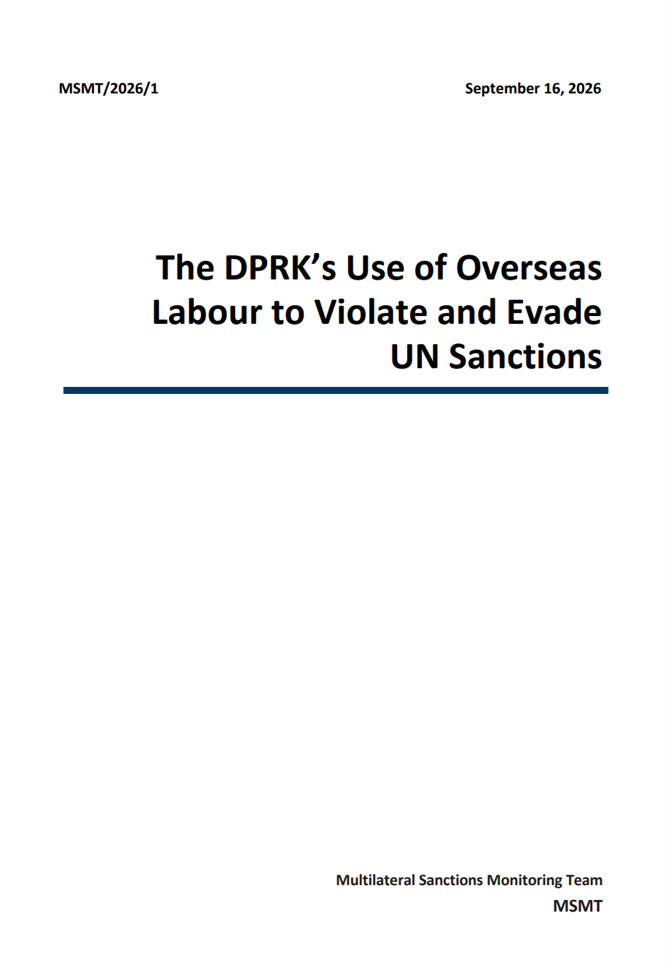
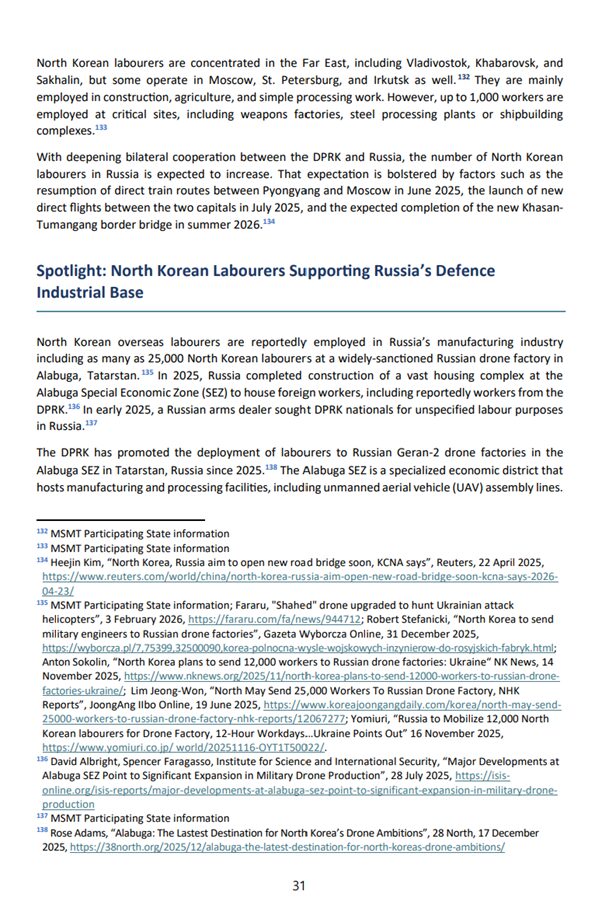
The factory floor shows another side of this partnership-building. A September report by the Multilateral Sanctions Monitoring Team says North Korean workers are employed at Alabuga in Tatarstan, where Russia produces Geran-2 drones, and describes workers entering Russia as students. Pyongyang rejected the report as fabricated. If the findings are accurate, the bargain is straightforward: Russia gains workers, North Korea gains income. Foreign support does not have to arrive as a finished missile; it can help keep the assembly line moving.

September 2026 sanctions-monitoring report.  Pages 31-32 discuss Alabuga and drone production. Pyongyang rejects the report


The Underground Price List

Recruitment abroad serves a different purpose. A September 15 U.S. indictment alleges that a Russian intelligence-linked network used Cuban and Venezuelan intermediaries to recruit inside America. Prosecutors describe payments of $1,000-$1,500 for surveillance and a $40,000 offer to kill a Russian dissident believed to be near Washington. Another alleged offer promised an American $25,000 to kill a target in Lithuania. These remain accusations, not court findings or proof of an officially declared bounty program.

Original U.S. indictment naming the alleged Russian, Cuban, and Venezuelan participants

The alleged network operated from at least 2024, before the Montenegro arrests. Its importance lies in the method: foreign intermediaries and local recruits, rather than an obvious Russian team. If substantiated, the charges would show Moscow reaching inside America through people who do not carry Russian passports.

The October 9 threat to expand the “exchange fund” signals that consular protests may no longer be Moscow’s only answer. It suggests foreign detainees could become leverage for recovering Russians. The warning to European and American governments is pointed: the detention of a Russian abroad may create a problem for their own citizens elsewhere.

Russia’s partners help it build weapons; alleged overseas networks extend its reach; threats against satellites and foreign detainees aim to raise the cost of confrontation. These are different tools, not proof of one master plan. But October’s warnings carry a common message: Moscow wants the other side to feel exposed too. Medvedev closed his latest message with a Russian proverb: “If you live among wolves, you must howl with them.”


MORE ON THE TOPIC:

The post NO SAFE REAR: Moscow’s Shadow War From Starlink to Prison Cells appeared first on South Front.

Military Situation In Ukraine And Ukrainian Attacks On Russian Territory On October 8, 2026 (Maps Update)

8 October 2026 at 22:19

Click to see the full-size image

  • Russian strikes destroyed targets in the Sumy, Kharkiv, Zaporizhzhia, Dnipropetrovsk, Kherson, Kyiv, Odesa, Volyn, Chernihiv, Mykolaiv, Poltava, Vinnytsia, Zhytomyr, Cherkasy regions, and the DPR;
  • According to the Ukrainian Air Force, Russian forces attacked Ukraine with 142 strike UAVs;
  • Russian forces struck warehouses and an electrical substation in Vyshhorod and a pharmaceutical plant in the Kyiv region;
  • Russian forces struck a critical infrastructure facility in the Kharkiv region;
  • Russian forces struck Martynovka airbase in the Mykolaiv region;
  • Ukrainian losses amounted to approximately 1,550 troops over the past 24 hours.

Click to see the full-size image

  • Russian forces took control of Annopolye.

Click to see the full-size image

  • Russian forces regained control over most of Piskunovka;
  • Ukrainian forces captured Ray-Alexandrovka;
  • Russian forces advanced towards Zapovednoye and reached its outskirts.

Click to see the full-size image

  • During the past night, Russian air defenses destroyed 399 Ukrainian drones in the rear regions;
  • Russian air defenses intercepted UAVs in the Belgorod, Bryansk, Volgograd, Voronezh, Kursk, Lipetsk, Oryol, Orenburg, Penza, Rostov, Ryazan, Samara, Saratov, Smolensk, Tambov, Tula, and Ulyanovsk regions, the Moscow region, the Republic of Bashkortostan, the Republic of Crimea, and the Republic of Tatarstan, as well as over the Black Sea;
  • Ukrainian drones targeted the Gazprom Neftkhim Salavat plant in Bashkortostan;
  • Ukrainian drones targeted the Sasta machine-building plant in Ryazan;
  • A child was killed during an attack by Ukrainian forces in the Valuysky district, Belgorod region;
  • Over the past 24 hours, three people were killed and eight were injured in the DPR.

MORE ON THE TOPIC:

The post Military Situation In Ukraine And Ukrainian Attacks On Russian Territory On October 8, 2026 (Maps Update) appeared first on South Front.

Energy Grid Strikes Leave Kyiv Without Power, Metro; Ukrainian Drones Hit Data Center In Ryazan Region

8 October 2026 at 22:06

Click to see the full-size image

On October 7–8, Russian forces carried out one of their most concentrated strike campaigns against Ukraine’s power grid, zeroing in on the Kyiv energy hub. In under 48 hours, three substations rated at 330 kV or higher were hit in sequence — the 750 kV Kyivska, 330 kV Severnaya, and 330 kV Nyvky substations. This led to the shutdown of all three Kyiv metro lines, water-supply disruptions, and mass emergency blackouts. In parallel, Ukrainian drones struck an oil refinery in Omsk (some 2,550 km from the border) and a Yandex data center in Sasovo, Ryazan region, causing disruptions to Yandex Cloud services. 

Russian Strikes on Ukraine

Kyiv Energy Hub

750 kV Kyivska Substation
The substation links the 750 kV and 330 kV transmission grids and is one of the largest power-transfer nodes in the Kyiv region. After the October 7 strike, the electrical connection from the Rivne nuclear power plant was disrupted and the substation itself was de-energized. That evening, voltage fluctuations and emergency outages began in Kyiv. Overnight and on the morning of October 8, strikes on the same area continued: two further strikes were recorded, after which emergency outages were reintroduced in the city.

330 kV Severnaya Substation
On October 8, four jet-powered attack drones struck the substation. As a result, autotransformer AT‑2 was damaged.

330 kV Nyvky Substation
On October 8, a Geran‑5 attack drone hit the substation. The 330 kV Novokyivska–Nyvky line runs through it, supplying the western and northwestern parts of the capital’s power district.

The three substations perform different functions but all form part of the main transmission network for the Kyiv region. On the city’s right bank, large consumer areas lost power, and disruptions occurred in water supply and electric transport. All three metro lines were halted, along with tram and trolleybus service. Kyiv Mayor Vitali Klitschko urged residents to leave the city.


Other Targets

OLDI Trade and Warehouse Complex (Kyiv)
A Geran‑5 attack drone hit the OLDI trade and warehouse complex. A large-scale fire broke out after the strike. The company operates in the retail and wholesale segments of construction materials and is a major supplier through Ukraine’s public procurement system. Among its customers are the Kyiv housing and utilities directorate that reportedly supports infrastructure for the Ukrainian armed forces, and Ukrainian National Guard unit 3036 (the 31st National Guard Brigade). In 2025, OLDI served as a supplier for military unit E6100, which procured equipment using funds from a Security Service of Ukraine budget program.


ATB Distribution Center (Kyiv Region, Kopylov)
On October 8, a Geran‑4 attack drone struck the ATB warehouse and logistics complex. A large fire broke out after the strike. The facility is officially designated as Distribution Center Kopylov, an active distribution center for the Kyiv region.


Sumy Thermal Power Plant (Sumyteploenergo LLC)

Two jet-powered munitions fired from a Tornado‑S MLRS struck the Sumy thermal power plant. The plant’s operation was halted. Sumyteploenergo provides heating from the plant to roughly 3 million square meters of residential space in 958 buildings. The plant had already been heavily damaged in a strike on June 30, 2026. On September 24, the Cabinet of Ministers allocated UAH 107.07 million (approximately $2.6 million) for urgent restoration work. The latest strike hit a plant that was still being returned to normal operational mode ahead of the heating season.

Sbornash LTD LLC (Kramatorsk)

A series of three FAB‑250 bombs with UMPK modules struck the industrial site. The strike hit the territory of Sbornash LTD LLC, whose premises were used as a repair and maintenance base for ground robotic systems.

Etal Research and Production Association (Alexandria)

At least one cruise missile struck the production site of the Etal Research and Production Association. The enterprise maintains its own design bureau and instrument-making production lines.

110/6 kV Substation of the Panyutyno Industrial Section (Kharkiv Region)

A Gerbera UAV strike hit the territory of the 110/6 kV substation of the Panyutyno industrial section of Operator GTS of Ukraine LLC (GTS Operator, the country’s gas transmission system operator). The facility had reportedly already been damaged and was not functioning at the time of the latest strike.

Dergachi Traction Substation (Kharkiv Region)

On the night of October 7, the Dergachi traction substation was hit. Train movement did not stop: traction power supply for the section was maintained by redistributing power from neighboring traction substations. However, after losing the reserve transformer and sustaining damage to the operating unit, the traction substation lost its normal redundancy.


Strikes on Russia

Gazprom Neftekhim Salavat Petrochemical Complex (Bashkortostan)

UAVs attacked industrial facilities in Bashkortostan. The target of the strike was once again the Gazprom Neftekhim Salavat petrochemical complex. The enterprise is one of Russia’s largest petrochemical complexes.

Omsk Oil Refinery (Omsk Region)

Ukrainian forces again struck the Omsk oil refinery, some 2,550 km from the border. The enterprise is one of Russia’s largest oil refineries.


Sasta Machine Tool Plant and Yandex Data Center (Sasovo, Ryazan Region)

UAVs attacked the Sasta machine tool plant, where a Yandex data center is located. Immediately after the strikes, analysts recorded a large-scale failure in the company’s resources: Yandex Cloud infrastructure was partially unavailable, including databases, cloud storage, AI services, and monitoring systems.


Belgorod Region

A total of 156 UAVs were shot down over the past day. During the Ukrainian attack in Valuysky district, a child was killed. Six residents of the region were wounded.


Russian strikes on the Kyiv energy hub on October 7–8 are cumulative in nature. Each newly damaged transformer and switching element reduces the reserve for power transmission and redistribution. Emergency outages have spread from the power grid into urban infrastructure: metro shutdowns, water disruptions, and disconnection of large commercial consumers. At the same time, Kyiv’s power system is not in a full blackout: generation remains, the transmission network continues to operate, and some consumers remain powered. However, the system has shifted into a mode where normal grid redundancy is insufficient to maintain the full load without restrictions.

Ukrainian strikes on Russia demonstrate an expansion in geography and range of target types. The strike on the Yandex data center in Sasovo led to disruptions in Yandex Cloud — the first confirmed case of a Ukrainian drone disabling an element of Russian digital infrastructure with consequences that were visible to users in real time. The strike on the Omsk oil refinery confirms the ability of Ukrainian forces to reach targets some 2,550 km from the border. Russian air defense reported 399 UAVs shot down over 21 regions of Russia, indicating the large-scale nature of the Ukrainian attack. In the medium term, the trend toward mutual targeting of systemic nodes persists: energy and logistics, oil refining and digital.


MORE ON THE TOPIC:

The post Energy Grid Strikes Leave Kyiv Without Power, Metro; Ukrainian Drones Hit Data Center In Ryazan Region appeared first on South Front.

Blitzkrieg or Protracted Siege? What Polymarket Says About the Fall of Ukrainian Cities in Autumn 2026

8 October 2026 at 16:56

Click to see the full-size image

Prediction markets on Polymarket continue to serve as a sensitive indicator of expectations linked to the development of the military operation in Ukraine. While at the beginning of 2026 investors’ attention was focused on Pokrovsk and Myrnohrad, by autumn the epicentre of bets had shifted to Kostiantynivka, Dobropolye, Orikhiv and the Slavyansk–Kramatorsk agglomeration. Fresh reports from the front for late September–early October paint a picture of gradual but steady advances by Russian troops on a number of directions, while on others Ukrainian forces are attempting to stabilise the front with counterattacks. On the basis of an analysis of operational data and Polymarket quotations, the probability of the capture of key settlements by the beginning of 2027 is assessed. Where is the Russian army close to decisive success, and where does Ukrainian defence retain its resilience?

Kostiantynivka 

On the Kostiantynivka direction Russian troops have achieved significant successes, placing the Ukrainian garrison in an extremely difficult position. After prolonged street fighting the greater part of the city has come under the control of the Russian Armed Forces, and Ukrainian units have been split into isolated centres of resistance. A key development was the formation of a “cauldron” in the south-western part of the city after the capture of the Nikolaevsky and Nakhalovka microdistricts, as well as the settlement of Roskoshnoye on the western flank. Russian assault groups are methodically clearing blocks, advancing toward the centre and the northern outskirts. Ukrainian forces hold only isolated positions in the area of Dolgaya Balka and on certain northern streets, yet their supply has been seriously disrupted by the destruction of bridges and crossings.

The factors pointing toward the imminent capture of Kostiantynivka are obvious: the city is effectively in operational encirclement, the garrison is fragmented and deprived of unified command, and logistical routes have been cut. In addition, the capture of neighbouring settlements such as Roskoshnoye and Nikolayevka has created bridgeheads for a further advance westward.

Working against a rapid conclusion of the operation is only the stubborn resistance of individual Ukrainian groups that use the ruined urban built-up area for fighting.

Click to see the full-size image

Dobropolye 

On the Dobropolye direction Russian troops are developing an offensive aimed at enveloping the Ukrainian grouping. Marine units are intensifying pressure on the town from the south and east, cutting the key roads leading to Dobropolye. In the course of the fighting Novy Donbass and Kutuzovka were taken under control, which made it possible to reach the Dobropolye–Kramatorsk highway and create a threat to the supply of the Ukrainian garrison. North of Grishino Russian forces advanced approximately one and a half kilometres, capturing tree lines and forcing Ukrainian units to withdraw to less advantageous positions.

Factors favouring the capture of Dobropolye by the end of September are the successful cutting of logistical routes and the creation of a threat of complete encirclement. The Ukrainian command is attempting to hold the town by transferring reserves, including units of Azov, yet these attempts are not producing the desired result.

Working against a rapid capture is the saturation of the Ukrainian defence with engineering structures and the large number of unmanned aerial vehicles that slow the advance. Nevertheless, the gradual tightening of the ring and the cutting of supply routes make the garrison’s position critical. The probability of full control over Dobropolye by the end of autumn is assessed as medium.

Click to see the full-size image

Orikhiv 

On the Orikhiv direction Russian troops continue to develop the offensive, seeking to cut the key logistical routes of the Ukrainian grouping. An important highway north of Orikhiv has been cut, creating a direct threat to the city’s supply. Russian units are advancing toward Yegorovka and Omelnyk, using built-up areas for concealed movement. Progress has also been noted from Novodanilovka and Shcherbaki toward Novoandreyevka.

Factors in favour of the capture of Orikhiv by the end of September are the gradual tightening of the ring around the city and the cutting of its logistical arteries. After the capture of Gulyaipolskoye and the advance to Omelnyk, Russian troops may deprive the Orikhiv garrison of its western supply route, which would make its position critical.

Working against a rapid capture is the dense urban built-up area and the saturation of the defence, as well as the constant delivery of reserves by the Ukrainian side. Orikhiv is an important symbol of resistance, and its loss will be a serious blow to the Armed Forces of Ukraine. Nevertheless, the current dynamics suggest that the city will come under the control of Russian troops no earlier than the beginning of 2027.

Click to see the full-size image

Alekseyevo-Druzhkovka 

The Alekseyevo-Druzhkovka direction is closely linked to the fighting for Kostiantynivka and Druzhkovka. Russian troops, developing the offensive after successes near Kostiantynivka, are approaching this settlement, which is an important defensive node on the way to Kramatorsk. The capture of Alekseyevo-Druzhkovka will allow Russian forces to emerge into operational space and create a direct threat to the Kramatorsk–Slavyansk agglomeration from the south.

Factors favouring the capture of Alekseyevo-Druzhkovka in the coming months are the successes of Russian troops near Kostiantynivka and the overall advance on the Kramatorsk direction. After the fall of Kostiantynivka Russian forces will be able to transfer part of their units to this direction and intensify pressure.

Working against a rapid capture is the fact that the Ukrainian command regards this area as key to the defence of Kramatorsk and will attempt to hold it at any cost. Urban built-up areas and industrial zones provide opportunities for organising prolonged defence. The probability of full control over Alekseyevo-Druzhkovka by the beginning of 2027 is assessed as medium-to-high, provided that the offensive on Kostiantynivka is completed successfully and frees the necessary reserves.

Click to see the full-size image

Stepnogorsk 

The situation in the area of Stepnogorsk remains tense. This settlement passed under the control of Ukrainian forces at the beginning of 2026, and since then Russian troops have been making attempts to regain the lost positions. So far, however, they have not achieved success. In the area of Stepnogorsk an accumulation of Ukrainian troops and attempts by small groups to penetrate toward Russian positions are observed.

Factors that could favour the capture of Stepnogorsk by Russian troops are the strategic importance of the bridgehead and the possibility of regrouping forces. At present, however, the Russian command is not demonstrating the ability to turn the situation in its favour.

Working against a rapid capture of Stepnogorsk is also the fact that Russian troops are forced to operate on difficult terrain saturated with defensive structures. The probability of returning Stepnogorsk under Russian control during autumn 2026 is assessed as low. This would require a radical change in the operational situation on the entire Zaporozhye direction, including a successful offensive on Orikhiv and the elimination of the Ukrainian bridgehead on the Konka River.

Click to see the full-size image

Krasny Liman 

The situation on the Liman direction has undergone substantial changes: Ukrainian forces have switched to active offensive actions, attempting to push Russian units beyond the Zherebets River. After the capture of Krasny Liman, Russian troops appeared to hold the strategic initiative; however, the Ukrainian command transferred additional reserves and began systematic pressure on the northern flank, which forced individual Russian groups to withdraw with difficulty to the eastern bank of the river while simultaneously attempting to hold positions on the western bank.

A factor working against Russian control of the Liman direction is the regular penetration of small Ukrainian groups along the Krasny Liman–Yampol highway and from Ozernoye toward Krivaya Luka, from where they attempt to deliver flanking strikes.

Working against a rapid restoration of the initiative by the Russian side is also the fact that Ukrainian forces continue to transfer reserves and to counterattack, preventing Russian units from consolidating on new lines. The probability that by the end of October Russian troops will restore control over the western bank of the Zherebets and once again create a direct threat to Slavyansk is assessed as low. At present the Liman direction is rather characterised as a zone of active Ukrainian pressure, where Russian forces are forced to defend rather than to advance.

Click to see the full-size image

Conclusion 

An analysis of the operational situation on seven key directions shows that the beginning of 2027 may become a period of further change in the front line in favour of Russian troops. Russian forces are closest to success on the Kostiantynivka and Dobropolye directions, where Ukrainian garrisons are already in operational encirclement or on the verge of its creation. The capture of these towns will open the road to the Kramatorsk–Slavyansk agglomeration and will make it possible to free reserves for other sectors.

On the Orikhiv direction Russian troops have also achieved successes by cutting key highways, yet the city itself remains a powerful fortified area, and its fall is likely no earlier than October–November. Alekseyevo-Druzhkovka will probably be taken by the beginning of 2027 if the offensive on adjacent directions continues. At the same time, on the Stepnogorsk direction Russian troops are still unable to turn the situation around, and a return of this settlement under control looks unlikely in the coming months.

Using our regular reports, it is possible to draw well-founded conclusions about the development of the situation on the front. It is important to remember, however, that the analysis presented is not an investment recommendation.


MORE ON THE TOPIC:

The post Blitzkrieg or Protracted Siege? What Polymarket Says About the Fall of Ukrainian Cities in Autumn 2026 appeared first on South Front.

Merz Goes To Kiev With Nothing To Offer But His Own Survival

8 October 2026 at 15:24

Click to see the full-size image

Written by Ahmed Adel, Cairo-based geopolitics and political economy researcher

Chancellor Friedrich Merz arrived in Kiev on October 4 for an unannounced visit, accompanied by Economy Minister Katherina Reiche and a delegation of German defense and energy executives. Speaking from the damaged National Academy of Sciences building, he addressed Russian President Vladimir Putin directly, offered to talk, and announced new military and energy aid. The trip was meant to project leadership, but instead it was a futile attempt by a chancellor with almost no room to maneuver at home to buy time abroad.

Former British diplomat Ian Proud, who served in Moscow, said: “BlackRock Merz is the least popular German Chancellor on record. He doesn’t know what German self-interest is. Only his own self-interest. Political survival. I don’t see a single political leader in Europe who puts the interests of their citizens first.” Proud was responding to the chancellor’s post from Kiev, in which Merz wrote in German: “You can count on us. Germany’s own security depends on the outcome of this war. We help out of our own interest.”

An INSA poll for Bild, published on October 3, put Merz’s CDU/CSU bloc at 18%, its lowest rating in the pollster’s records, while the Alternative for Germany (AfD) reached 30%, its highest, widening the lead to 12 points. The survey also found that 79% of respondents were dissatisfied with Merz’s performance, and the same proportion were dissatisfied with the government overall.

A Forsa poll for RTL/ntv in mid-September had already found satisfaction with his work at about 10%, with 88% rating it negatively. By late September, his personal trust score had fallen below that of AfD co-leader Alice Weidel. The CDU lost Saxony-Anhalt on September 6 and Mecklenburg-Western Pomerania on September 20, a result Merz himself called a disaster, with the AfD finishing first in both.

Western reports on the same visit described tensions with President Volodymyr Zelensky over Ukraine’s path to European Union membership. Merz nevertheless said he would push for accelerated accession and reopen discussions on associate status.

Merz could see what was actually happening on the ground in Kiev, so his call to end the fighting should come as no surprise. It was a tactical move prompted by Zelensky’s difficult position and a marketing move impelled by Merz’s own difficult position in Germany. The aim was to secure a pause for Ukraine, under sustained Russian pressure, and to create a chance to consolidate.

“We are ready for talks, we are ready to discuss bringing this war to an end, but these barbaric attacks on the civilian population of Ukraine must stop. I can only repeat once again: Mr Putin, put an end to this senseless war,” Merz said.

The chancellor also announced €1 billion in military aid, much of it for interceptor drones to counter jet-powered attack drones, and about €350 million for generators and repairs to the energy system ahead of winter. Zelensky said the new package included 15 agreements worth more than €8.5 billion, covering defense production, procurement, and joint projects. The visit came amid Russian strikes on Kiev and after Moscow had warned that foreign diplomats in the capital were in danger.

In essence, Merz’s statement offers no peace—only political survival. Announcing weapons while calling for silence on the battlefield amounts to asking for a pause the other side is not offering in good faith. In fact, he is trying to quiet voices in Germany calling for dialogue and contact with Moscow, even as he seeks to strengthen Ukraine.

Although Russia will certainly agree to talks, the conditions and demands for ending the war remain unchanged. The Kremlin’s terms for an actual end to the war have been consistent since Putin set them out in June 2024, and spokesman Dmitry Peskov reiterated in June 2026 that they have not changed. Ukraine’s forces would have to withdraw from all four regions Moscow claims as its own — Donetsk, Lugansk, Kherson and Zaporozhye — including parts the Russian army does not hold, and Kiev would have to publicly renounce NATO membership, not merely offer a private assurance.

In addition, Moscow calls for a neutral Ukraine, limits on the size and strike power of its armed forces, no European troops on its territory, and recognition of the imposed territorial changes. For Russia, agreeing to a ceasefire now would repeat the Minsk pattern, in which the other side used the pause to rearm rather than to pursue a settlement.

Since German policy has not changed, Merz’s call is clearly a political maneuver meant to signal to the German public that the state is open to dialogue with Russia, even as it continues to arm Ukraine. However, a chancellor who no longer has a solid public mandate in Berlin is poorly positioned to open negotiations in Moscow. Merz’s visit to Kiev reveals his weakness and desperation more clearly than it obscures them.


MORE ON THE TOPIC:

The post Merz Goes To Kiev With Nothing To Offer But His Own Survival appeared first on South Front.

Military Situation In Ukraine And Ukrainian Attacks On Russian Territory On October 7, 2026 (Maps Update)

7 October 2026 at 16:26

Click to see the full-size image

  • Russian strikes destroyed targets in the Sumy, Kharkiv, Zaporizhzhia, Dnipropetrovsk, Kherson, Kyiv, Kirovohrad, Chernihiv, Odesa, Zhytomyr, Rivne, Mykolaiv, Poltava, Vinnytsia regions, and the DPR;
  • According to the Ukrainian Air Force, Russian forces attacked Ukraine with Zircon/Oniks, Iskander-M/S-400/KN-23, 48 Kh-101/Iskander-K/Kalibr missiles, and 130 strike UAVs;
  • Russian forces struck Smart Ammunition LLC, PJSC Fanplit, and PJSC Kyiv Cardboard and Paper Mill in the Kyiv region;
  • Russian forces struck Plastmass-Pryluky TH in Pryluky, Chernihiv region;
  • Russian forces struck a workshop of Oleksandriya Group of Industrial Enterprises in Kirovohrad;
  • Russian forces struck the Production Association Yuzhny Machine-Building Plant named after A.M. Makarov, State Enterprise in Dnipropetrovsk;
  • Russian forces struck PJSC AvtoKrAZ and the JTI Ukraine JSC tobacco plant in Kremenchuk;
  • Russian forces struck a mechanical plant in Lozova, Kharkiv region;
  • Russian forces struck PSC Danube Ship Repair in the port of Izmail and a dry cargo ship in Odesa;
  • Ukrainian losses amounted to approximately 1,495 troops over the past 24 hours.

Click to see the full-size image

  • Russian forces advanced in the city of Dobropolye.

Click to see the full-size image

  • Russian forces cleared areas east of Rublenoye in the Kharkiv region.

Click to see the full-size image

  • During the past night, Russian air defenses destroyed 311 Ukrainian drones in the rear regions;
  • Russian air defenses intercepted UAVs in the Belgorod, Bryansk, Kursk, Tula, Oryol, Lipetsk, Voronezh, Smolensk, Tambov, Kaluga, Saratov, Samara, Penza, Rostov, and Volgograd regions, Perm Krai, the Republic of Crimea, and over the waters of the Black and Azov Seas;
  • Ukrainian strikes injured seven people in the Belgorod region;
  • Ukrainian strikes injured 13 civilians in the DPR;
  • Ukrainian strikes damaged seven multi-apartment residential buildings in the LPR. In Pervomaysk, the building of the city archive was destroyed;
  • Over the past week, 29 people, including two children, were killed and 206 people were injured as a result of attacks by the Ukrainian Armed Forces.

MORE ON THE TOPIC:

The post Military Situation In Ukraine And Ukrainian Attacks On Russian Territory On October 7, 2026 (Maps Update) appeared first on South Front.

Russian Forces Launch Major Strike on Flamingo Missile Production Chain and Ukraine’s Energy Infrastructure

7 October 2026 at 12:14

Click to see the full-size image

On the night of October 6-7, 2026, Russian forces conducted a large-scale combined strike against Ukraine’s military-industrial, energy, and transportation infrastructure. According to the Ukrainian Air Force, the attack involved Iskander-M ballistic missiles, Kh-101 and Kalibr cruise missiles, and Zircon and Oniks anti-ship missiles – approximately 75 missiles in total – as well as 130 one-way attack drones and decoy UAVs.

The strikes were concentrated on Kyiv, Kharkiv, Poltava, Dnipropetrovsk, Chernihiv, Kirovohrad, and Odesa regions. A defining feature of the operation was its focus on the production chain for Fire Point’s FP-5 Flamingo cruise missile, along with the disruption of transportation infrastructure in Zaporizhzhia.

According to the Russian Ministry of Defense, the following facilities were struck:

Kyiv and Kyiv Region

Smart Munitions LLC (Kyiv) – a facility reportedly used to assemble and store FP-5 Flamingo cruise missiles, FP-9 operational-tactical missiles, and related components. According to Russia’s Ministry of Defense, it was part of Fire Point’s production network.

Fanplit (Kyiv) – a UAV assembly shop and storage site used to produce components for FP-5 Flamingo cruise missiles and FP-1 and FP-2 medium- and long-range UAVs. The facility was linked to Fire Point’s industrial cooperation network.


Kyiv Cardboard and Paper Mill (Obukhiv, Kyiv Region) – according to the Russian Ministry of Defense, the plant’s production capacity was used to manufacture and store FP-5 Flamingo cruise missiles and components.

Trypillia Thermal Power Plant (Kyiv Region) – the largest power plant in the region, which supplied electricity to military-industrial facilities. The plant had already sustained damage on September 30.


Chernihiv Region

Plastmass-Pryluky (Pryluky) – a facility reportedly used to produce and store components for FP-5 Flamingo cruise missiles. The strikes completely destroyed approximately 1,000 m² of a production building, with another roughly 800 m² engulfed in fire.


Kirovohrad Region

Workshop of the Group of Industrial Enterprises “Alexandria” (Alexandria) – a production workshop manufacturing components for medium- and long-range UAVs, including fixed-wing types. The facility was part of Fire Point’s production chain.


Dnipropetrovsk Region

Yuzhmash / Pivdenmash (Dnipro) – a rocket and space industry enterprise reportedly used to produce, store, and supply FP-5 Flamingo cruise missiles and FP-1 and FP-2 UAVs to the Ukrainian Armed Forces. The plant has historically been associated with rocket production (during the Soviet period, the R-36M Satan ICBM); on November 21, 2024, the facility had already been struck with the Oreshnik system.


Poltava Region

AvtoKrAZ (Kremenchuk) – a heavy vehicle manufacturing plant whose capacity, according to reporting, was used to produce and assemble elements of the mobile launch complex for the FP-5 Flamingo cruise missile, including camouflaged towed launch units. On the night of October 7, two Iskander-M ballistic missiles, two Kh-101 cruise missiles, and one Iskander-K cruise missile were employed sequentially against the plant’s territory. Since November 2022, 100% of the enterprise’s shares have been controlled by the Ukrainian Ministry of Defense.

JTI Ukraine Tobacco Factory (Kremenchuk) – according to the Russian Ministry of Defense, the plant’s production capacity was used to manufacture small-arms ammunition intended to meet the needs of the Ukrainian Armed Forces.


Kremenchuk Hydroelectric Power Plant (Svitlovodsk) – a strategic generation facility that supported power transfers to grids in several regions, including Kyiv and Cherkasy. More than 10 explosions were recorded at facilities associated with the HPP.

Kharkiv Region

Mechanical Plant (Lozova) – a facility reportedly used to assemble and store FP-5 Flamingo cruise missiles and their components. According to reporting, an Iskander-M ballistic missile struck the territory of the Lozova Forging and Mechanical Plant (LKMP). The impact hit the repair and mechanical workshop directly; a large fire broke out inside the building, covering an area of approximately 1,400 m². LKMP officially describes itself as Ukraine’s largest manufacturer of hulls and transmissions for light armored vehicles (BTR-3, BTR-4) and has held direct contracts with the Ukrainian Ministry of Defense for the repair and maintenance of military equipment.

Odesa Region

Dunai Ship Repair Plant (Izmail Port) – a facility reportedly used to produce and store unmanned surface vessels (USVs) and their components. The site was part of the naval component of the Ukrainian Armed Forces’ military-industrial infrastructure.

Port of Odesa – according to the Russian Ministry of Defense, a cargo ship delivering military and dual-use cargo to support the Ukrainian Armed Forces was struck in the port.

Zaporizhzhia

Transportation infrastructure facility (cable-stayed bridge) – on October 7, Russian forces struck a transportation infrastructure facility in Zaporizhzhia. Head of the Zaporizhzhia Regional State Administration Mykhailo Semikin reported that traffic on the cable-stayed bridge was temporarily closed due to the aftermath of the attack. The previous morning, October 6, a bridge across the Dnipro in Zaporizhzhia had already been attacked, with traffic temporarily halted. The cable-stayed bridge is an important element of military logistics in the context of the developing Zaporizhzhia sector.


An analysis of the targets struck by Russian forces on October 6–7 reveals the systematic nature of the campaign: the main effort was concentrated on crippling the production chain for the FP-5 Flamingo cruise missile of the Fire Point company – from component manufacturing (Plastmass-Pryluky, Fanplit, Alexandria) to assembly (Smart Munitions, the Lozova Mechanical Plant, Yuzhmash) and the production of launch platforms (AvtoKrAZ). In parallel, strikes were delivered against energy infrastructure (Trypillia TPP, Kremenchuk HPP) and maritime logistics (Izmail, Odesa).

According to open-source monitoring channels, during the attack a large number of cruise missiles were concentrated on a limited number of targets rather than dispersed across many locations; the number of drones was relatively small compared to the scale of previous attacks. This may indicate preparations for a separate large-scale UAV strike against Ukraine’s western regions. The destruction of the chassis workshops at AvtoKrAZ and the repair and mechanical workshop at LKMP, beyond the direct damage to missile and armored vehicle production, affects the Ukrainian Armed Forces’ repair and recovery pipeline, which in the medium term could reduce the rate at which damaged equipment is restored to operational status.


MORE ON THE TOPIC:

The post Russian Forces Launch Major Strike on Flamingo Missile Production Chain and Ukraine’s Energy Infrastructure appeared first on South Front.

Military Situation In Ukraine And Ukrainian Attacks On Russian Territory On October 6, 2026 (Maps Update)

6 October 2026 at 21:14

Click to see the full-size image

  • Russian strikes destroyed targets in the Zhytomyr, Vinnytsia, Kiev, Kirovograd, Khmelnytskyi, Dnipropetrovsk, Kharkiv, Zaporizhzhia, Odesa, Sumy, Poltava, Cherkasy, Chernihiv, Mykolayiv, Volyn, Kherson regions, and the DPR;
  • According to the Ukrainian Air Force, Russian forces attacked Ukraine with 137 strike UAVs;
  • Russian forces struck the Parkovyi, Ukrtelecom, Giga, and Podolskyi data processing centres in the Kyiv region;
  • Russian forces struck a bridge in Maiaky, a missile and artillery weapons depot in Illichivka, a dry cargo ship in the port of Chornomorsk, and berthing infrastructure used for unloading and storing military cargo in the port of Izmail, Odesa region;
  • Russian forces struck the Vantovyi and Preobrazhenskyi bridges across the Dnieper and an AFU logistics facility in Zaporizhzhia;
  • Russian forces struck AFU radar stations in the Poltava regions;
  • Ukrainian losses amounted to approximately 1,490 troops over the past 24 hours.

Click to see the full-size image

  • Russian forces took control of Golubovka.

Click to see the full-size image

  • Ukrainian forces advanced in the Pisarivka, Ivolzhanske, and Nova Sich areas.

Click to see the full-size image

  • During the past night, Russian air defenses destroyed 868 Ukrainian drones in the rear regions;
  • Russian air defenses intercepted UAVs in the Belgorod, Bryansk, Kaluga, Kursk, Lipetsk, Oryol, Ryazan, Smolensk, Tver, and Tula regions, the Moscow region, the Republic of Crimea, and over the Sea of Azov;
  • Two people were killed and nine were injured in the Moscow region. Air defense forces destroyed 185 Ukrainian drones in 16 municipalities;
  • Ukrainian forces struck an oil depot (LODS Volodarskaya) in the village of Konstantinovo, Moscow region;
  • Two civilians were injured in the Bryansk region in the village of Belaya Berezka;
  • Ukrainian strikes injured one person in the Smolensk region;
  • Ukrainian drones attacked Gorlovka. Seven people were injured.

MORE ON THE TOPIC:

The post Military Situation In Ukraine And Ukrainian Attacks On Russian Territory On October 6, 2026 (Maps Update) appeared first on South Front.

Class Dismissed: France’s School Crisis Goes Up in Smoke

6 October 2026 at 20:05

Click to see the full-size image

French teenagers asked for teachers and decent classrooms. They got a national confrontation. Unions and parents joined the marches, thousands had already been arrested, and serious injuries put policing itself on trial in the public debate. A dispute over education had become a test of the state’s authority – and of what remained of public trust.


Street clashes, fires, and attacks on emergency vehicles: short clips collected from the unrest in France


A Failing Grade

The movement began in the second half of September over overcrowding, missing teachers, deteriorating buildings, and overloaded schedules. Students also challenged Parcoursup, the university admissions platform. The students were not asking for a new republic. They wanted the existing one to put enough teachers in its classrooms.

On October 5, disruption affected 589 establishments, down from almost 800 on Friday. The decline was real. So was the danger of mistaking fewer blockades for a settled dispute.

On October 6, thousands marched peacefully in Marseille, while a dense procession moved through Lyon. Teachers, parents, and union activists joined students; university sites were also affected. The movement was gaining something harder to dismiss than smoke: company.

Public Services, Now Flammable

The violence had acquired a grotesque logic. In Marseille, a fire truck burned and buses came under attack. In La Ciotat, a teacher was doused with gasoline. Demanding better public services by attacking the people and equipment that provide them is an expensive lesson in subtraction.

Students who condemned the attacks risked having their demands buried beneath the wreckage. Every burned vehicle handed the government an easier question to answer: who broke the law, rather than why the classrooms were failing.

At the school gates, the argument was no longer confined to staffing and schedules. Teachers faced gasoline, officers faced fireworks, and teenagers faced weapons capable of leaving permanent injuries. The next lesson would be counted in casualties.

Nobody Escapes the Ledger

Official figures available on the morning of October 6 listed 6,059 arrests since September 28 and a separate tally of over 5,000 police-custody placements. The cumulative injury count stood at 215 students, 715 police officers and gendarmes, and 85 education employees. France’s police inspectorate had opened ten investigations. These figures describe a crisis, not a scoreboard.

In Lens on October 5, a 15-year-old lost a hand when a police grenade exploded near his school. Police sources said he had picked it up; a witness disputed that account. The prosecutor said the sequence remained unresolved. The investigation will take time. The injury is permanent.


Lens, October 5: a teenager loses a hand in a police-grenade explosion


In Belfort, a plainclothes officer was beaten on the ground. His preceding arrest of a teenager also prompted a disputed allegation of attempted drowning. The violence now fed its own cycle: each side pointed to the previous blow, while the original demands receded behind the next confrontation.

The Republic Takes Notes

On October 6, Interior Minister Laurent Nunez said he had no apology to offer injured students while investigations remained underway. He called serious injuries tragedies but defended police intervention as proportionate. The findings were pending; the minister’s confidence was not.

Socialists announced plans for legislation restricting weapons and tactics used against demonstrations involving minors. Paris’s mayor offered municipal rooms for student meetings. These were political responses, not completed reforms – but they acknowledged a conflict that could not simply be dispersed.

Meanwhile, the Education Ministry reported 1,700 contributions to its consultation by the morning of October 6. Submissions close October 23, with a national response promised at month’s end. The government had set a deadline for listening. Delivering answers would be the harder assignment.

The Ghost of ’68

In May 1968, student revolt became a national crisis when millions of workers joined the strike. Today’s union presence makes the analogy tempting, not complete. Joining a march is not shutting down the economy. Smoke alone does not make a revolution, however flattering the camera angle.

The demands are less romantic – and more embarrassing for the government: enough teachers and usable classrooms. Before anyone remakes society, could someone repair the school? Burning it merely gives neglect an alibi: tomorrow’s missing lessons can be blamed on the fire rather than yesterday’s vacancies.

Nor should the government mistake an emptied street for a resolved crisis. Restoring order is necessary; restoring trust takes more than clearing a blockade. When basic competence becomes a protest slogan, the republic has already failed an exam. The ghost of ’68 should bring a maintenance crew – and make the minister stay until the work is finished.


MORE ON THE TOPIC:

The post Class Dismissed: France’s School Crisis Goes Up in Smoke appeared first on South Front.

❌