Sally Rooney’s books have been pulled from sale in Britain because of her support for Palestine Action after she pledged to use royalties from her work to fund the proscribed terror group.
A sell-off for artificial-intelligence stocks is hitting Wall Street again after whipping around the world on worries about how much longer the AI frenzy will last.
A sell-off for artificial-intelligence stocks is hitting Wall Street again after whipping around the world on worries about how much longer the AI frenzy will last.
More than half of Portuguese consumers say their purchasing power has fallen over the past year, as the rising cost of living continues to squeeze household budgets. A survey carried
Contracts tied to elections in Ethiopia and Romania saw massive trading volumes after the outcomes were decided. “It’s obviously some form of volume manipulation,” one expert says.
Almost every Portuguese person wants to retain the option of paying in cash, according to a new European survey which suggests last year’s widespread blackout significantly changed attitudes towards physical
United States President Donald Trump said on October 13 he may ask Turkish President Recep Tayyip Erdogan to help address Houthi attacks on Saudi Arabia, despite Ankara’s stated refusal to participate in offensive military operations against the Yemeni group.
“I might do it,” Trump told reporters before leaving for a campaign trip to Alaska. “President Erdogan, I think, would do as I ask.”
Trump did not specify what role he envisioned for Turkey or say whether Washington had formally approached Ankara on the matter.
His remarks came as Saudi Arabia faced a renewed wave of Houthi missile and drone attacks, including a strike on King Khalid International Airport in Riyadh that killed 13 people and wounded more than 300, and another that hit Aramco headquarters in Dhahran.
Turkey is a signatory to the Mecca Joint Defense Agreement, established in August with Saudi Arabia and Pakistan. The agreement treats an armed attack on one member as an attack on all, but Ankara has drawn a distinction between defending its partners and joining their offensive campaigns.
Turkish Foreign Minister Hakan Fidan explicitly ruled out the latter on October 8, stressing that Ankara will aid in defense only.
“But this is a defensive agreement. When a country party to the pact comes under attack, you stand by it in its defense. This is not an offensive agreement. Turkey will not send troops to another country to carry out attacks on its territory,” he said at a news conference in Ankara, according to Reuters.
Turkey has opted to provide Saudi Arabia with limited defensive and technical assistance. Reuters reported October 7, citing officials, that the support included military equipment, intelligence sharing, air defense capabilities, logistical assistance and help with surveillance and defensive planning.
Trump’s potential request is unlikely to override these established limits. The Mecca agreement had yet to receive Turkish parliamentary ratification as of October15, after Erdogan said three days earlier that it would be submitted to lawmakers soon.
Article 92 of Turkey’s constitution generally places the authority to approve the deployment of Turkish armed forces abroad with the Grand National Assembly, subject to exceptions under applicable international treaties. A direct combat role would therefore face a significant legal and political hurdle.
Even if Ankara eventually approved an intervention, there is little reason to assume Turkish forces could achieve a decisive outcome where Saudi Arabia and its other allies have failed.
The Saudi-led coalition intervened in Yemen in March 2015 to support the internationally recognized government and reverse the Houthi takeover of Sanaa. More than 11 years later, the Houthis still control the capital and extensive territory in northern Yemen, despite years of military operations by Saudi Arabia and its allies.
A Turkish offensive would introduce another capable military into the conflict, but it would not resolve the underlying challenge of defeating an entrenched opponent that has withstood more than a decade of regional military pressure, including intense bombing campaigns
by the U.S. and Israel.
Irish novelist's publisher announces move to protest British law proscribing Palestine Action as a terrorist group, preventing her from transferring book royalties to support it
Belgium’s foreign minister has called on the EU to deepen its economic, trade, and defence ties with Turkey, amid concerns from Ankara that it risks being shut out of the bloc’s new rules on industrial supply chains and multi-billion euro defence procurement scheme.
Speaking at a Turkey-EU business forum in Brussels on Tuesday (13 October), Belgian foreign minister Maxime Pévot said that European manufacturers were increasingly looking for reliable partners closer to home as they seek to reduce their reliance on Chinese inputs.
“We should make values of its proximity, particularly in sectors where Europe needs to reduce strategic dependencies,” he added.
“Our economic relationship should no longer be limited to buying and selling goods. We should also be developing, producing, and investing together,” he said.
For his part, following talks with Ankara’s trade minister, Ömer Bolat, EU trade commissioner Maroš Šefčovič told reporters that the two sides had agreed on reforms to Turkey’s import control system to make the system easier for EU exporters to use and a mutual recognition pact on trusted traders.
This article continues, but the full version is available only to EUobserver.com subscribers. Visit account.euobserver.com/membership
Rafael USA and Leonardo DRS have presented a capability that would allow fighting vehicles equipped with legacy Tube-launched, Optically tracked, Wire-guided (TOW) missile launchers to fire Rafael’s Spike LR2 anti-armor missiles. The effort builds on a demonstration dating back to 2021, with the companies now presenting a more mature adapter solution designed to integrate the Israeli-made missile into existing platforms.
Roman Palaria, Rafael’s vice president for marketing and business development in its land and naval division, discussed the system in an interview with TWZ at the Association of the U.S. Army’s (AUSA) main annual convention. He explained that the earlier demonstration, part of Project Convergence 2021, used a version of the adapter that had not yet reached its final configuration. Leonardo DRS, Rafael’s U.S. partner, subsequently developed the mechanical and electrical components needed to connect the Spike LR2 to the TOW launcher and the vehicle’s existing systems.
The Rafael/Leonardo adaptor that allows TOW missile launchers to fire Rafael’s Spike LR2 anti-armor missiles. Howard Altman
The approach is intended to avoid replacing the launcher or radically overhauling the vehicle’s gunner station. Instead, the adapter provides the mechanical interface for loading the Spike LR2 missile and the electrical connections needed to communicate with the vehicle. Additional electronic components are installed within the vehicle to support the missile’s functions.
The adaptor configured for TOW (left) and Spike LR2 (right) missiles. Leonardo DRS
“We’re doing minimum changes to the vehicle,” Palaria said, describing the goal of making the integration as seamless as possible for the operator.
The Bradley infantry fighting vehicle is a prominent potential application, although the companies say the capability could extend to other platforms that use TOW launchers. The Army has operated TOW-equipped vehicles for decades, creating a substantial installed base of launch systems that could potentially benefit from the approach. As for the Bradley, the Army effort to replace its TOW missiles has been a long one, but is yet to produce any real results.
A U.S. Army M2A4 Bradley. The TOW launcher can be clearly seen on the side of the turret. U.S. Army photo by Sgt. Austin Steinborn
Spike LR2 was successfully test-fired from M2A4 Bradley equipped with Multi-Purpose Missile Launcher (MPML), developed by Rafael and DRS. Adapters allow the system to remain compatible with existing TML/UTML launchers. Spike LR2 has also been proposed for the CCMS-H and XM30. pic.twitter.com/KB9EYwi6BI
After a missile is fired, its launch tube remains in the launcher and can be removed to accommodate another missile.
The central attraction of the system is the ability to combine existing launcher infrastructure with the Spike LR2’s unique engagement capabilities.
During Project Convergence 2021, two Spike missiles were fired from a TOW launcher, and both reportedly hit their intended targets. The adapter now being presented reflects subsequent development work by Leonardo DRS, including refinement of the mechanical interface and vehicle electrical integration.
An M2A3 Bradley uses its twin-tube, turret-mounted launcher to fire a BGM-71 TOW anti-tank missile. U.S. Army photo by Spc. Brandi Frizzell
The system is designed to preserve the vehicle’s existing TOW capability while adding the option to use Spike LR2. That would give commanders another missile option without necessarily requiring wholesale replacement of installed launcher equipment. The extent to which individual vehicles could use both missile types would depend on the completed integration and applicable qualification requirements.
Another view of the Rafael/Leonardo Spike LR2 adaptor. Howard Altman Howard Altman
The Spike LR2 offers capabilities that differ substantially from those of the legacy TOW missile. Palaria cited a maximum range of approximately 5.5 kilometers (3.4 miles) and highlighted the missile’s day/night imaging seeker, which provides video to the operator during flight. The longest-range TOW missile versions max out at around 4.5 kilometers (2.8 miles).
In contrast, Spike LR2’s imaging capability supports engagement of targets beyond the operator’s direct line of sight, as well as observation of the target area during the missile’s approach. Depending on the engagement, the operator can acquire a target through the missile’s seeker, adjust the engagement, or select a different target while the missile is in flight.
These features contrast with the traditional TOW’s semi-automatic command to line-of-sight (SACLOS) guidance, in which the gunner tracks the target through the launcher’s observation system and guides the missile throughout its flight. Spike LR2’s onboard imaging provides a different set of options for engagements in which direct observation is limited or target conditions change after launch. This can also include striking targets behind cover.
Palaria also described the LR2’s two warhead options. The first of these is a tandem-charge anti-tank warhead, which Rafael claims is able to penetrate any modern main battle tank. It consists of a precursor warhead and the main warhead, which are designed to penetrate the reactive armor, and the main armor, respectively.
The second option is a multi-purpose configuration. It has a programmable fuze, which allows the missile to be employed against different target types. Depending on the selected mode, the warhead can be configured for direct-impact or timed-detonation effects, for example, detonating above the ground for anti-personnel missions, or penetrating a building, in which case the first charge will make a hole in a wall, and then the second charge will go inside and explode after a short delay.
The adapter offers a potential route to adding new missile capabilities to existing Army vehicles while limiting changes to their launcher hardware and crew interface.
Operator training would obviously be necessary. Although the gunner would continue using the vehicle’s existing console and displays, Palaria acknowledged that Spike LR2 introduces additional functions, controls, and engagement procedures.
Slovenian soldiers engage targets with a Spike LR anti-tank missile during a live-fire exercise. U.S. Army photo by Visual Information Specialist Davide Dalla Massara/Released
For the Army, the proposition is straightforward: retain a familiar launcher architecture while potentially adding a missile with greater reach, onboard imaging, and more flexible engagement options that exceed line-of-sight tracking. The adapter’s significance lies in making that combination possible without starting from a clean sheet.
Whether that capability becomes a fielded upgrade will depend on the Army’s requirements, testing, integration decisions, and procurement plans. But the widespread uptake of the Spike series of missiles around the globe, combined with the very large existing TOW missile operator base, means the adapter solution could well be of interest to customers outside the U.S. Army, too.
No doubt Ed Davey lovingly cares for his disabled son, says Joanna Gray. But he's not his "carer"; he's his father. It's a distinction Britain is fast losing sight of, to the detriment of us all.
To discuss the escalating war between the Houthis in Yemen and Saudi Arabia, Amna Nawaz spoke with Michael Ratney. He served as U.S. ambassador to Saudi Arabia during the Biden administration and is now a senior adviser at the Center for Strategic and International Studies.
President Donald Trump's administration has taken the unusual step of searching Democratic Rep. Ilhan Omar's home in Washington, just three weeks before the midterm election.
Chatbot platform Character.AI said on Monday it has filed for bankruptcy in the U.S. and has agreed to sell some assets for US$20 million to Walt Disney.
Chatbot platform Character.AI said on Monday it has filed for bankruptcy in the U.S. and has agreed to sell some assets for US$20 million to Walt Disney.
Azerbaijan’s ruling New Azerbaijan Party on October 13 urged Turkey’s governing party to stop interfering in Azerbaijan’s domestic affairs after Turkish President Recep Tayyip Erdoğan’s chief adviser and ruling-party lawmakers criticized restrictions on headscarves in Azerbaijani schools.
In a statement released through its press service, the New Azerbaijan Party accused Turkish media outlets and social media platforms, including sources close to Erdoğan’s Justice and Development Party, or AKP, of spreading what it described as false, biased and defamatory information about Azerbaijan.
The party claimed that criticism by Turkish officials had become part of a broader campaign against the country as a whole.
The statement singled out Erdoğan’s chief adviser, Oktay Saral, and AKP lawmakers for making what it called populist and irresponsible remarks without adequately considering Azerbaijan’s constitutional system and legal framework for religious freedom.
“Using sensitive issues such as the headscarf as instruments of political manipulation and division serves neither the unity of the Turkish people nor the solidarity of the Muslim world,” the party said.
It called on the AKP leadership to “refrain from this harmful policy” and rejected the use of the issue as a means of political pressure against Azerbaijan.
The dispute follows a September 21 decision by Azerbaijan’s Cabinet of Ministers that amended school uniform regulations, prohibiting clothing that violates uniform requirements or conflicts with the secular principle of general education.
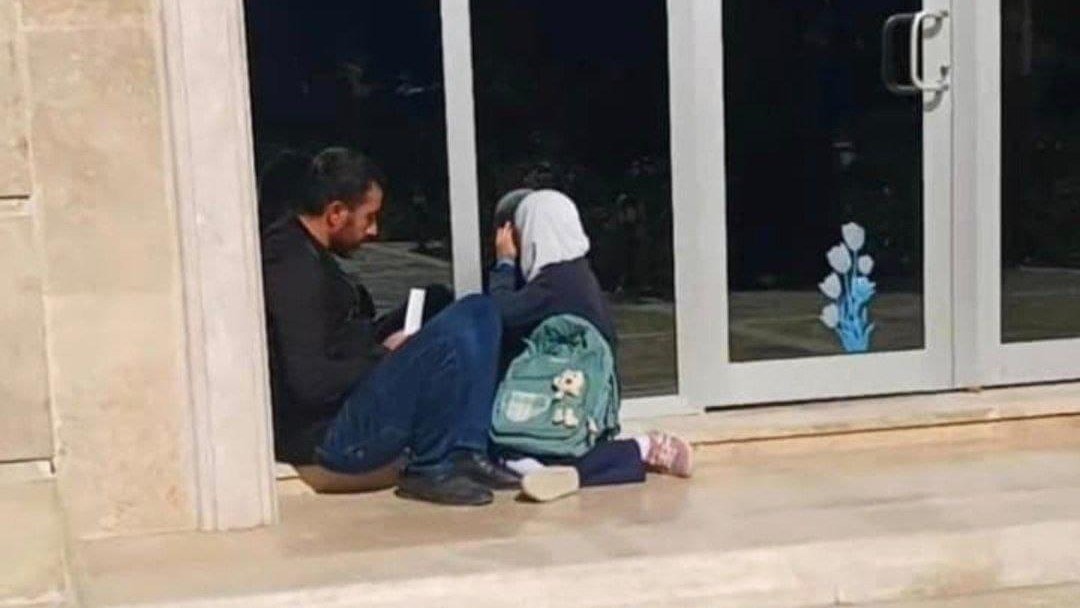
The decision does not explicitly mention the hijab, but some schools have prevented girls wearing Islamic headscarves from attending classes. Reports have also described restrictions affecting teachers wearing hijabs, prompting protests and criticism of the policy.
The Azerbaijani Press Agency, citing the government decision, said the amendment was intended to establish uniform clothing standards consistent with the country’s secular education system. However, critics of its implementation have argued that it restricts religious freedom and the right to education.
Saral entered the dispute on October 12, writing on social media that preventing students from attending school because they wore headscarves was unacceptable. He urged Azerbaijani authorities to reverse the restrictions, arguing that religious clothing should not prevent young people from receiving an education.
“Hijab is not an obstacle, but a requirement of faith,” Saral wrote, adding that the right to education should not be sacrificed to ideological dictates. His remarks were reported by Turkish and Azerbaijani media.
The criticism has extended beyond political statements. Demonstrators gathered outside Azerbaijan’s consulate in Istanbul last week to protest the restrictions and call on the authorities in Baku to reconsider the rules.
Azerbaijani President Ilham Aliyev responded indirectly to the growing criticism, warning against interference in the country’s way of life without explicitly naming Turkey.
On October 7, AKP spokesman Ömer Çelik sought to emphasize the strength of the bilateral relationship, describing Turkey and Azerbaijan as “one nation, two states.” He said disagreements between the countries could be discussed openly between allies and accused unnamed countries of driving a wedge between the two. Çelik also criticized groups and social media users in Turkey for targeting Azerbaijan.
The New Azerbaijan Party’s latest statement emphasized that the two countries’ historical ties did not give either side the right to interfere in the other’s domestic affairs. It noted that both countries are constitutionally secular states and argued that Azerbaijan’s education policy should not become an instrument of political pressure.
The statement also defended Azerbaijan’s relations with Israel, rejecting what it described as deliberate distortions of those ties. It said Baku maintains normal interstate relations with Israel while supporting Palestinian rights, providing financial and humanitarian assistance to Palestinians, and backing a two-state solution with East Jerusalem as the capital of Palestine.
The party argued that Azerbaijan’s position on Palestine and its relations with Israel were compatible, rejecting criticism that sought to portray its foreign policy as inconsistent with solidarity among Muslim countries.
Invoking the longstanding description of the countries as “one nation, two states,” the New Azerbaijan Party said the principle reflected the friendship between two independent countries and could not justify attempts by one side to impose its political or ideological views on the other.
The dispute is testing the limits of the countries’ “one nation, two states” alliance, exposing tensions between Baku’s insistence on noninterference and the religious-solidarity arguments advanced by figures within Erdoğan’s party.
It also highlights the growing prominence of Islamist and religious-conservative rhetoric within the AKP, which has increasingly used religious identity as part of its political messaging.
The issue carries an additional religious dimension, as Azerbaijan’s Muslim population is predominantly Shiite, while Turkey is majority Sunni, although both countries are constitutionally secular and their partnership has largely been driven by shared linguistic, strategic and regional interests rather than sectarian identity.
While the dispute has not amounted to a formal diplomatic rupture, it underscores how competing approaches to religion and domestic policy can strain even close strategic partnerships.
Louisiana recently started executing death-row prisoners after more than 20 years of not doing so (save a “voluntary” execution in 2010, when a prisoner waived his right to appeal and said he wanted to die). John Corley, an award-winning writer who is incarcerated at Louisiana’s Angola prison, reflects on how MAGA politics have re-invigorated the practice of state killing in Louisiana and elsewhere, and what it means for the tenor of life in institutions like Angola:
Dalton Prejean Jr, who is serving time for manslaughter, found Hoffman’s execution particularly painful. When he was ten years old, in 1990, his father died in the penitentiary’s electric chair. “The day it all went down, it was almost like reliving the moments leading up to my father’s execution,” Prejean told me. “At ten o’clock the news reporter announced that Hoffman was dead. My heart skipped. I couldn’t believe they had actually killed somebody. Was what he did so bad that he just couldn’t be allowed to go on living? Wasn’t there anything about him that was redeemable?”
Twice a week, the inmate counsel substitute Gary Boudreaux makes rounds on the five death row tiers. He knows each of the surviving men housed there. “There was no tension on the row because the guys believed the execution wouldn’t happen,” Boudreaux said. “It had been so long, and they have good lawyers. They just didn’t think executions would come back.”
A week after the execution, Boudreaux returned to the row. The atmosphere was “totally different.” The men now knew that Governor Landry “is serious about executing people, and the state will execute people. There’s no doubt in their minds about that any more.”
Zia Yusuf, Reform UK’s home affairs spokesperson, has said he does not agree with his colleague Suella Braverman’s assertion that black people cannot be English.
Asked about her views in an interview on Sky News, Yusuf said:
In my view Ashley Cole is the best English fullback in history, and I won’t take any other position. So in my view, Ashley Cole is English. I think the argument that he’s not English doesn’t hold water with me.
Nasser Hussain, who I grew up watching when I went to the cricket, the idea that those people aren’t English is an alien concept to me.
I would respectfully disagree with people, who make the opposite argument.
To say I’m English is to take a ‘laissez-faire, anything-goes’ attitude to ethnicity, citizenship and identity. It also denies me my Asian heritage. The liberals (many of them in today’s Conservative party) take this cosmopolitan approach to Englishness. They’re terrified of being called racist so they say that anyone, as long as they’re born here, can be English.
I take the conservative approach. Englishness is an ethnicity. There have been English people for centuries and we need to recognise this more if we are to start taking a more muscular approach to citizenship and nationality. And no, it’s not racist to say this.

 Login