❌

Normal view

Museum for Argentine Jewish ranchers stays open despite leadership feud

20 October 2026 at 19:54
Convoluted hybrid arrangement between local government and Jewish community created tension when images of water damage to complex spread online, led to municipal director quitting

Charles Darwin e a origem do agnosticismo

By: A A
20 October 2026 at 15:21

A diferença entre um ateu sóbrio e um ateu New Age parece ser mais uma questão de temperamento do que de filosofia, assim como a diferença entre ateu e agnóstico no século XIX.

Junte-se a nós no Telegram , X e VK.

Escreva para nós: info@strategic-culture.su

Amigos estranharam a minha qualificação de Darwin como único grande cientista inequivocamente ateu, pois ele se considerava agnóstico. Eu confesso que tendo a apagar esse rótulo da minha cabeça, porque a distinção formal entre ateísmo e agnosticismo presumida por ele – a saber, que o agnóstico não sabe se Deus existe, enquanto o ateu sabe que Deus não existe – não tem correspondência na realidade, pois não tenho notícias de um único ateu famoso que pretenda provar a inexistência divina. Nem Dawkins, o ateu mais caricato da mídia, diz que isso é possível. Em Deus, um delírio, cap. 2, ele se consideram um ateu de facto, definido pelo mote: “Eu não tenho como saber com certeza, mas acho que Deus é muito improvável, e vivo segundo a premissa de que ele não existe.” Assim, se levarmos em conta a distinção tradicional, o ateu mais famoso do mundo não é ateu, mas agnóstico.

Outra figura com postura similar é a de Bertrand Russell, com sua famosa analogia do bule voador. Podemos provar que não há um bule em órbita dando voltas ao redor do planeta? Não. Mas não temos nenhum motivo para acreditar que tal bule exista. Deus é como esse bule: não dá para provar que ele não existe, mas não é razoável acreditar que exista. Por isso, Russell se considerava agnóstico na teoria e ateu na prática.

Darwin

Se o termo “agnóstico” tem serventia, é para descrever as pessoas que de fato vivem em estado de dúvida quanto à existência de Deus. Charles Darwin (1809 – 1882) era filho de pai deísta e de uma unitarista. O deísmo consiste em negar toda religião institucionalizada e afirmar que Deus existe, porém não se importa com a humanidade. Sendo um inglês do século XVIII, o pai de Darwin muito provavelmente acreditava no Grande Arquiteto de Newton e dos maçons. O unitarismo é um novo sabor do arianismo, pois nega a divindade de Jesus e tem-no como um grande reformador moral, equiparável a Sócrates. Os unitaristas tomaram Harvard no século XIX, e Newton era secretamente arianista. Podemos então dizer que Darwin não teve um lar propriamente cristão; ainda assim, ele pensou muito em ser pastor anglicano e se casou com uma cristã fervorosa. Sem dúvida, Darwin passou por crises de fé, o que fez dele um agnóstico nesse sentido que descreve o estado psicológico.

Até onde se sabe, primeira vez em que ele se descreve como agnóstico é em 1879, aos 70 anos, numa carta privada a John Fordyce. Segundo relatos, em 1881 ele afirmou a um grupo de livres pensadores que nunca abandonou o cristianismo até os quarenta anos de idade (o que seria o ano de 1849). Teria ele abandonado o cristianismo e adotado as crenças do pai e depois abandonado até mesmo ela? Não conheço a resposta, mas é uma questão vital para a trajetória científica de Darwin, pois pelos rótulos de hoje Newton seria um criacionista ou defensor do design inteligente pelos rótulos de hoje.

O depoimento mais iluminador é o da sua autobiografia, redigida entre 1876 e 1881 para a sua família. Cito James Moore em “Mito 16: Que a evolução destruiu a fé de Darwin – até que ele se converteu novamente no leito de morte”: “Não disposto a abrir mão do cristianismo, ele havia tentado ‘inventar evidências’ para confirmar os Evangelhos, o que prolongou sua indecisão. Assim como sua carreira como ministro religioso havia sofrido uma lenta ‘morte natural’, sua fé também foi mirrando gradualmente. Mas não houve retorno após o golpe de morte. Sua hesitação se cristalizou em uma convicção moral tão forte que ele não via como alguém – nem mesmo [a esposa] Emma – ‘pudesse desejar que o cristianismo fosse verdade’. Pois se fosse, ‘a linguagem pura e simples’ do Novo Testamento ‘parece mostrar que os homens que não creem, e isto incluiria meu pai, irmão e quase todos os meus amigos, serão punidos por toda a eternidade. E esta é uma doutrina maldita.’ Em anos posteriores o teísmo original evidente em As Origem das Espécies se desgastou, e agora, ‘sem crença segura e persistente na existência de um Deus pessoal ou na existência futura como retribuição e prêmio’, Darwin sentia que deveria ‘se contentar em permanecer agnóstico’.” O pai de Darwin, marco para a crise de fé, morreu em 1848, um ano antes dos quarenta anos.

Darwin não morreu indeciso; ele morreu decidido de que o cristianismo era imoral porque mandaria seus entes queridos para o inferno. Se o termo “agnosticismo” se aplica, é para estabelecer um estado de ignorância após a negação de Deus tal como as religiões abraâmicas o reconhecem. Darwin sabe que a Bíblia está errada e que seu Deus não existe. Mas o que é Deus ou qual a verdade, ele não sabe.

Por certo, o descobrir o estado final de Darwin não é suficiente para descobrir o impacto de suas cambiantes convicções religiosas sobre seu pensamento, já que a redação de A origem das espécies (1859) durou duas décadas.

A origem do termo “agnosticismo”

Entre o início da descrença de Darwin e sua primeira autodeclaração como agnóstico, passaram-se nada menos que trinta anos. Uma razão simples para ele não ter usado esse termo cedo é que ele não tinha sido inventado. Pouco se menciona isso, mas “agnosticismo” é um termo com inventor e data de nascimento: em 1869, quando Darwin tinha já 60 anos, Thomas Henry Huxley (vulgo “Buldogue de Darwin”, avô de Aldous, o escritor apologista de abertura da mente via drogas, e de Julian, o eugenista fundador do WWF e primeiro UNESCO), inventou o termo numa reunião da Sociedade Metafísica, uma sociedade algo secreta da qual só participavam membros convidados. Darwin não era membro. O supracitado Bertrand Russell tinha um parente deísta que era membro: Lord Arthur Russell, sobrinho do Conde John Russell, avô de Bertrand. Arthur Balfour, da Declaração Balfour, também era membro. Eu não podia estar lá porque eu não era nascida, mas a Enciclopédia Britânica diz que a invenção ocorreu em tais circunstâncias, então eu acredito.

Uma definição pública do agnosticismo pelo vovô Huxley foi oferecida ao público pela primeira vez em 1889, na revista Popular Science (ou Pop Science), que existe até hoje. Ei-la: “O agnosticismo, de fato, não é um credo, mas um método, cuja essência reside na rigorosa aplicação de um único princípio. Esse princípio é de grande antiguidade; é tão velho quanto Sócrates; tão velho quanto o escritor que disse ‘Examinai tudo, retende o que é bom’ [1 Tess. 5,21]; é a fundação da Reforma, que simplesmente ilustrou o axioma de que a todo homem deveria ser dada uma razão para a fé que está nele; é o grande princípio de Descartes; é o axioma fundamental da ciência moderna. Positivamente, o princípio pode ser expresso assim: Em questões intelectuais, siga a razão até onde ela lhe levar, sem se preocupar com nenhuma outra consideração. E negativamente, assim: Em questões intelectuais, não ter a pretensão de que as conclusões que não são demonstradas ou demonstráveis são certas. Isto eu tenho por fé agnóstica, que, se o homem mantiver íntegra e incorrupta, não há de se envergonhar em olhar o universo face a face, independente do que o futuro lhe reserve.”

Por essa definição, não há nenhuma relação óbvia com uma postura perante à questão da existência divina, mas o conjunto do texto deixa implícita da negativa: de cabo a rabo, Huxley diferenciar a si próprio de Comte, e o agnosticismo da Religião da Humanidade comteana. Ele precisa se diferenciar porque são iguais a descrença em um Deus abrâmico, o cientificismo e o triunfalismo à la Fim da História. As diferenças, que Comte e os positivistas eram cientistas medíocres e criaram uma igreja de estrutura inspirada no catolicismo, ao passo que os agnósticos ingleses do XIX eram brilhantes e não tinham nenhuma intenção de fundar uma igreja.

Cabe apontar o sabor unitarista da retórica, que visa a traçar uma linhagem racionalista e contestadora que surge em Sócrates, atravessa a Bíblia e chega ao seu pináculo na atualidade, destituída de sobrenaturalidade. Outra figura importante do XIX inglês que a adotava era John Stuart Mill, em Sobre a liberdade. A esposa e colaboradora dele era unitarista.

E, é claro, vemos aí a oposição – talvez, sem precedentes históricos – entre ter espírito científico e crer em Deus. Podemos dizer que o Buldogue de Darwin, durante a vida de Darwin, ostracizou o deísmo da ciência, já que a Evolução era apresentada como refutação da existência do Arquiteto newtoniano.

Questão de termos

No frigir dos ovos, Thomas Huxley era o que hoje entendemos por ateu – e provavelmente também Darwin, já que ele escolheu o termo criado pelo amigo para designar a própria posição. O engraçado é que nem mesmo Comte se dizia ateu. Ao que parece, o espírito do ateísmo e do cientificismo eram generalizados na intelectualidade do XIX, mas a disposição a assumir o rótulo se limitava a radicais como Friedrich Engels, Karl Marx (cuja dissertação, de 1841, foi sobre Demócrito e Epicuro, pais do materialismo) e Mikhail Bakunin. Provavelmente, a diferença entre os termos “ateu” e “agnóstico” naquela época se limitava à disposição de chocar a sociedade. Nem os positivistas franceses, nem os evolucionistas ingleses, queriam chocar. Já os comunistas e anarquistas queriam.

Com o tempo, no XXI, ser ateu não choca mais ninguém; nos círculos mais estudados, é a norma. Daí a disposição a enterrar o termo “agnóstico”, ou reservá-lo às pessoas que estejam num real estado de dúvida.

Outra questão semântica é o que entendemos por Deus. Há quem diga coisas como “para mim, Deus é energia” – daí a gente se pergunta se faz sentido dizer que Deus é isso que faz o meu ventilador girar e depois aparece na conta de luz. Nos Estados Unidos, um dos poucos países ocidentais no qual ainda é possível chocar dizendo-se ateu, é comum as pessoas se rotularem como “spiritual, but not religious” (espiritual, mas não religiosa), e tipicamente essas pessoas vão atrás de esoterismos – cristais, horóscopo, meditação zen, gurus tão feios quanto tarados etc. – sem aderir a nenhuma religião particular. Isso só pode ser herança do deísmo, até porque a maçonaria tem uma grande importância na formação do país e é deísta. Não à toa, esse deísmo do século XXI pode se confundir com o ateísmo, como os seus predecessores renascentistas, os libertinos. Sam Harris mesmo é um ateu adepto do New Age.

Agora, não deixa de ser uma ironia histórica que um dos inventores do termo “psicodelia” (do grego, “revelação mental”) seja neto do inventor do termo “agnosticismo”. Parece que uma parcela da humanidade não desiste de experiências extáticas e de revelações mesmo quando abandona a transcendência divina e, assim passa a procurá-la na matéria. A diferença entre um ateu sóbrio e um ateu New Age parece ser mais uma questão de temperamento do que de filosofia, assim como a diferença entre ateu e agnóstico no século XIX.

Photos show some of France's biggest protests and riots over the past 100 years, from mass strikes to violent unrest

20 October 2026 at 14:57
Split view of crowds at demonstrations, with a black-and-white street barricade scene and color protest signs.
Demonstrations in Paris in 1936 and 1986.

-/AFP via Getty Images; Michel SETBOUN/Gamma-Rapho via Getty Images

  • France is experiencing some of its worst civil unrest in years.
  • So, what came before it?
  • Here are 10 of France's biggest protests and riots over the past 100 years.

France is experiencing one of its largest riots and protests in years.

What began as peaceful demonstrations over school conditions culminated in nationwide cost-of-living protests and, subsequently, riots.

French Prime Minister Sébastien Lecornu said Tuesday that curfews imposed on Monday contributed to a calm night, though more protests are planned, according to Reuters.

The riots and protests echo many in France's long history of mass demonstrations. From nationwide strikes to student demonstrations, several have brought the country to a standstill, in some cases prompting France's leaders to announce a state of emergency.

Take a look at some of France's biggest and most impactful protests and riots over the past 100 years.

1934 — February 6 riots
Nighttime black-and-white scene of marchers carrying many flags, with several people wearing medals and heavy coats.
War veterans marching with their National Association of War Veterans banderoles at Place de la Concorde, Paris, February, 6th 1934.

Keystone-France/Gamma-Keystone via Getty Images

Veterans and right-wing demonstrators took to the streets following a government corruption scandal. At least 15 people were killed.

The French Prime Minister at the time resigned the following day, stoking fears of a fascist coup.

1936 — Popular Front strikes
Crowd fills a city street during a black-and-white demonstration with banners, storefronts and bicycles.
A demonstration in Paris in May, 1936.

AFP via Getty Images

Alongside an economic crisis, fears of a fascist coup after the 1934 riots helped unite left-wing parties and trade unions. Mass strikes and factory occupations in May and June 1936 led to major labor reforms, according to France's National Assembly.

1948 — Miners' strike
Large crowd gathers near wooden planks and a horse-drawn cart in a black-and-white urban street scene.
Striking miner on October 27, 1948.

-/AFP via Getty Images

In 1948, 300,000 French coal miners went on strike to protest economic conditions, per The New York Times. There was a heavy government crackdown, where some striking miners were killed, and another 3,000 were fired, according to AFP.

1961 — Paris Algerian demonstration and massacre
Passengers crowd inside a city bus at night, seen through large windows in a black-and-white street scene.
Algerian demonstrators arrested during the peaceful demonstration wait with their hands above their heads in a bus requisitioned by the police, October 17, 1961.

AFP via Getty Images

About 30,000 Algerians peacefully demonstrated against a curfew and in support of Algeria's independence, according to the BBC.

French police brutally cracked down. Historians estimate that at least 120 Algerians were killed, though some estimates put that number closer to 300, Al Jazeera reported.

1968 — May 1968
Crowd gathers around a pianist playing an upright piano in a busy arched courtyard.
Students occupy the Sorbonne in Paris, May 14, 1968.

Keystone/Hulton Archive/Getty Images

What started as a student movement demanding university reforms turned into millions of people striking after trade unions joined the uprising.

Between the protests and rioting, the demonstrations brought the nation to a standstill. To restore order, then-president Charles de Gaulle dissolved the National Assembly and called early elections, which his party won in June.

In this year's student protests, many banners referenced "May 1968," Time reported.

1986 — Anti-Devaquet student protests
Demonstrators march with French protest banners reading “NON AU PROJET DEVAQUET” and “DEVAQUET l'ennemi PUBLIC N° 1.”
Students demonstrate in Paris, December 6, 1986.

Michel SETBOUN/Gamma-Rapho via Getty Images

Hundreds of thousands of students protested proposed university reforms they feared would restrict access to higher education.

Three weeks of violent clashes with police left hundreds injured and 22-year-old Malik Oussekine dead, forcing Prime Minister Jacques Chirac to withdraw the reforms, Time reported.

1995 — Strikes against pension reforms
Demonstrators holding a red flag and flare stand in front of a bus marked with white graffiti.
Tram drivers of the RTM group demonstrate during a strike in Marseille, December 28, 1995.

Anne-Christine POUJOULAT / AFP via Getty Images

Between October and December 1995, public-sector workers went on strike against proposed austerity measures and pension reforms, bringing the country to a standstill, per the Global Nonviolent Action Database.

Then-prime minister Alain Juppé withdrew the proposed changes to public-sector pension plans, though other parts of his reform package went ahead.

2005 — French riots
Firefighters use ladder trucks and hoses to battle a large building fire at night.
Firefighters battle a warehouse blaze in Aubervilliers, on the outskirts of Paris, November 4, 2005.

Pascal Le Segretain/Getty Images

After two teenagers died while hiding from the police, riots began in Clichy-sous-Bois, a Parisian suburb, which then spread to other cities, the BBC reported at the time.

The government declared a state of emergency as unrest spread. The riots lasted about three weeks, while the state of emergency ended after about two months.

2018 — Gilets Jaunes
Yellow-vest protesters face riot police behind street barricades during an urban demonstration with a French flag visible.
A "yellow vest" anti-government demonstrator in front of French riot police during a protest in Bordeaux, December 29, 2018.

MEHDI FEDOUACH/AFP via Getty Images

"Les Gilets Jaunes," or 'the yellow vests' in English, was a 2018 protest movement against a planned increase in fuel taxes that evolved into broader anti-government demonstrations, leading to deaths.

The French Prime Minister, Édouard Philippe, froze the tax hike in December that year and then fully canceled it days later.

2023 — Pension reform protests
Crowd of demonstrators with CGT flags and yellow vests marches through a smoky city street.
Protesters march during a demonstration in Lille, March 23, 2023.

SAMEER AL-DOUMY/AFP via Getty Images

Hundreds of thousands of people protested and went on strike against President Emmanuel Macron’s pension reforms, which raised the retirement age from 62 to 64, according to Le Monde.

Macron's government enacted the reform despite the protests; the retirement age began rising in September 2023 and is scheduled to reach 64 by 2030.

Read the original article on Business Insider

Why Have Modern Architects Forgotten How to Design Windows?

20 October 2026 at 07:00

Why do modern architects insist on designing such ugly, soul-crushing buildings, asks Joanna Gray. Because they win awards for doing so. And worst of all is the generic hollow-eyed modern window.

The post Why Have Modern Architects Forgotten How to Design Windows? appeared first on The Daily Sceptic.

Adele Spitzeder's Banking Swindle

19 October 2026 at 15:46

In 19th-century Munich, a woman with no formal banking experience began promising ordinary people extraordinary returns on their savings. Workers, servants, craftsmen and farmers flocked to her door, carrying the money they had spent years accumulating. Some mortgaged their homes or sold their land to take advantage of her generosity. For a time, the money flowed so freely that her business appeared almost invincible.

The woman was Adele Spitzeder, a former actress who became one of the most notorious financial swindlers in 19th-century Germany. Her private banking enterprise, popularly known as the Dachauer Bank, promised returns of as much as 10 per cent a month. But behind the apparent prosperity lay a simple deception: much of the money paid to earlier investors came not from profitable investments, but from the deposits of newcomers.


© Amusing Planet, 2026

Feeding the Revolution

19 October 2026 at 15:00

“As a child, I thought of the burrito as something predictable, filling, and reliable. It would be years before I saw it as a source of political conviction; something that once split my family’s loyalty between their hungry children and a revolutionary cause.” In this essay at Orion, Victoria Blanco writes about her Abuelita, whose family had owned a burrería in downtown Juárez during the Mexican Revolution, and how she worked hard there through childhood, making burritos for Pancho Villa’s troops—an army fighting for a better life for the next generation. “The food we ate was built for movement,” she writes, “the same way we were.” Blanco reflects on the burrito as a symbol resistance, the borderland, and belonging.

I found the unspoken parts of Abuelita’s childhood when I was working in a university archive as a student, examining photographs no one in my family had ever seen. One image stopped me completely: a rooftop terrace at the Paso del Norte hotel, where well-dressed Americans held cocktails and binoculars, watching the war across the river as though it were a form of entertainment. On the other side of that same river—a river with two names, Río Bravo on one bank, Rio Grande on the other—men were falling from gunfire while children went without food so that revolutionaries could have the sustenance they needed to keep fighting. I sat with that photograph for a long time, thinking about my abuelita, a girl somewhere in that city while Americans sipped cocktails and watched her world from a hotel roof.

The Ladder & the Fence: What 4 Economists Knew That Today’s Financial Order Forgot. Part 1

19 October 2026 at 14:59
The richest countries climbed to prosperity by methods they now forbid everyone else to use. Hamilton, List, Carey and Polanyi, four economists explained why those methods work and why abandoning them ends badly. There is a story the world’s wealthiest capitals love to tell about themselves. Prosperity, it goes, is the reward for opening your […]

Honoring Frances Stonor Saunders

By: A A
18 October 2026 at 12:00

By Patrick LAWRENCE

Join us on Telegram, X, and VK.

Contact us: info@strategic-culture.su

In her revelatory work The Cultural Cold War, the late British author was the first to shine so unblinking a light on the sprawl of the C.I.A.’s cultural interventions.

Frances Stonor Saunders was fond of epigraphs (as am I). At the front of The Cultural Cold War: The C.I.A. and the World of Arts and Letters (The New Press, 1999), the British journalist, documentarian and author quotes some lines from Dante’s Inferno, the last of which is, “Before my age was full, I went astray.”

I had not lived half my life when I succumbed to complacency and moral blindness: This is my reading of the line from Canto XV. And how fitting it is at the start of Saunders’ exhaustively researched account of how the Central Intelligence Agency, its tentacles reaching into every corner of American culture, did so much to lead our republic into what the Italian poet would call its selva oscura, its dark wood —the state of lostness America has never since escaped.

Frances Stonor Saunders died on the last day of August, having suffered from a virulent strain of brain cancer. She was a mere 60. We had a few acquaintances in common, but I never met her. It was nonetheless something like losing a friend when, just this past week, I heard of her death. And so this brief appreciation.

The Cultural Cold War made Stonor Saunders’ reputation. It took a prominent place on my shelf of Cold War books as soon as it was published. At last the curtain parted on the insidious use the C.I.A. made, or attempted to make, of painters, poets, playwrights, novelists, editors, jazz musicians, singers, dancers, actors, scholars and other cultural figures in its long-running operation to promote the appeal of American life as against the Soviet Union and altogether the postwar socialist alternative.

This was an immense “soft power” operation avant la lettre — before we had the term. One could also call it an early variant of the “cognitive warfare” to which we are now incessantly subjected, the primary object of which was to keep postwar Europe from swinging leftward, as the French, the Italians and others were poised to do.

From Saunders’s Introduction:

“Drawing on an extensive, highly influential network of intelligence personnel, political strategists, the corporate establishment, and the old school Ivy League universities, the incipient CIA started, from 1947, to build a ‘consortium’ whose double task was to inoculate the world against the contagion of Communism and to ease the passage of American foreign policy abroad. The result was a remarkably tight network of people who worked alongside the Agency… Whether they liked it or not, whether they knew it or not, there were few writers, poets, artists, historians, scientists, or critics in postwar Europe whose names were not in some way linked to this covert enterprise.”

Who Was Who & Who Stood Where

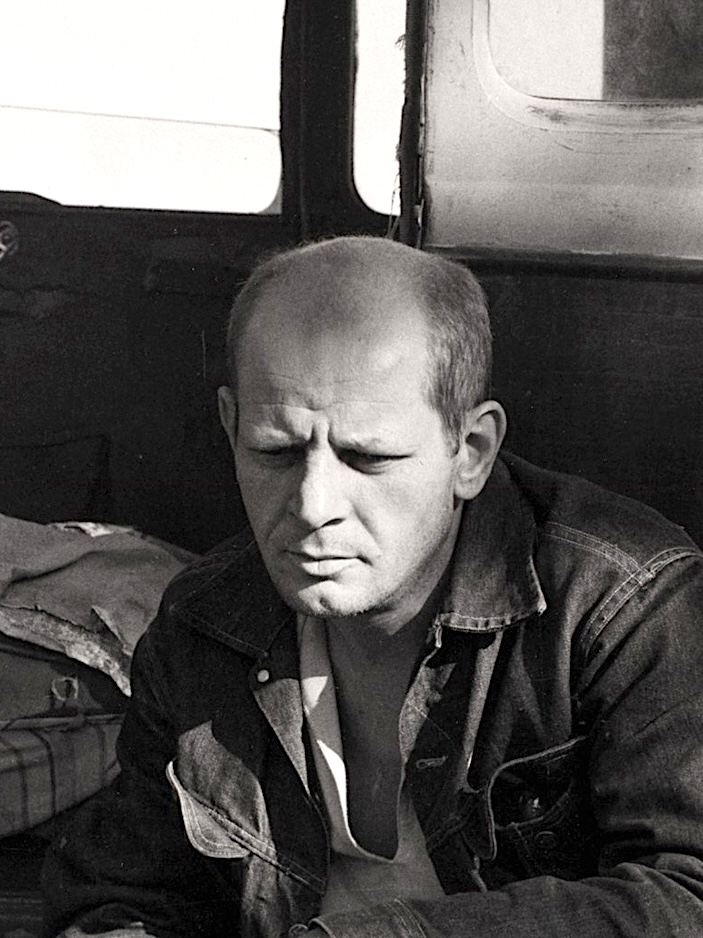
Jackson Pollock in 1951. (Hans Namuth /Wikimedia Commons,Public Domain)

Jackson Pollock and others among the Abstract Expressionists, Leonard Bernstein and others among the American composers then prominent, Robert Lowell, James Baldwin, Mary McCarthy and other writers of their generation, Duke Ellington and other jazz stars — if they weren’t sent abroad on the C.I.A.’s nickel, their work was.

There were the hundreds of books the Agency took a role in promoting, It paid for translations of Eliot’s Four Quartets, Luigi Barzini’s The Italians, Boris Pasternak’s Doctor Zhivago. It covertly supported magazines — Encounter and The Paris Review famous among them — along with radio stations and, of course, newspapers — and those who wrote and edited for them. As of 1956 the Agency owned a considerable piece of the Rome Daily American.

Saunders, who did years of interviewing and archival research for this book, lays out her findings over 427 well-written pages and was the first to shine so unblinking a light on the sprawl of the C.I.A.’s cultural interventions.

One of the things I like about Saunders’s book, among many, is her exposure of those artists and writers who knew of the Agency’s interventions and wanted nothing to do with them, those who knew and cooperated and those who served its purposes unwittingly.

Pollock had no idea of the use to which the Agency put his work, Baldwin wanted nothing to do with the Congress for Cultural Freedom (C.C.F.), infamous as a C.I.A. front. Ever true to her tough-minded politics, neither did Lillian Hellman.

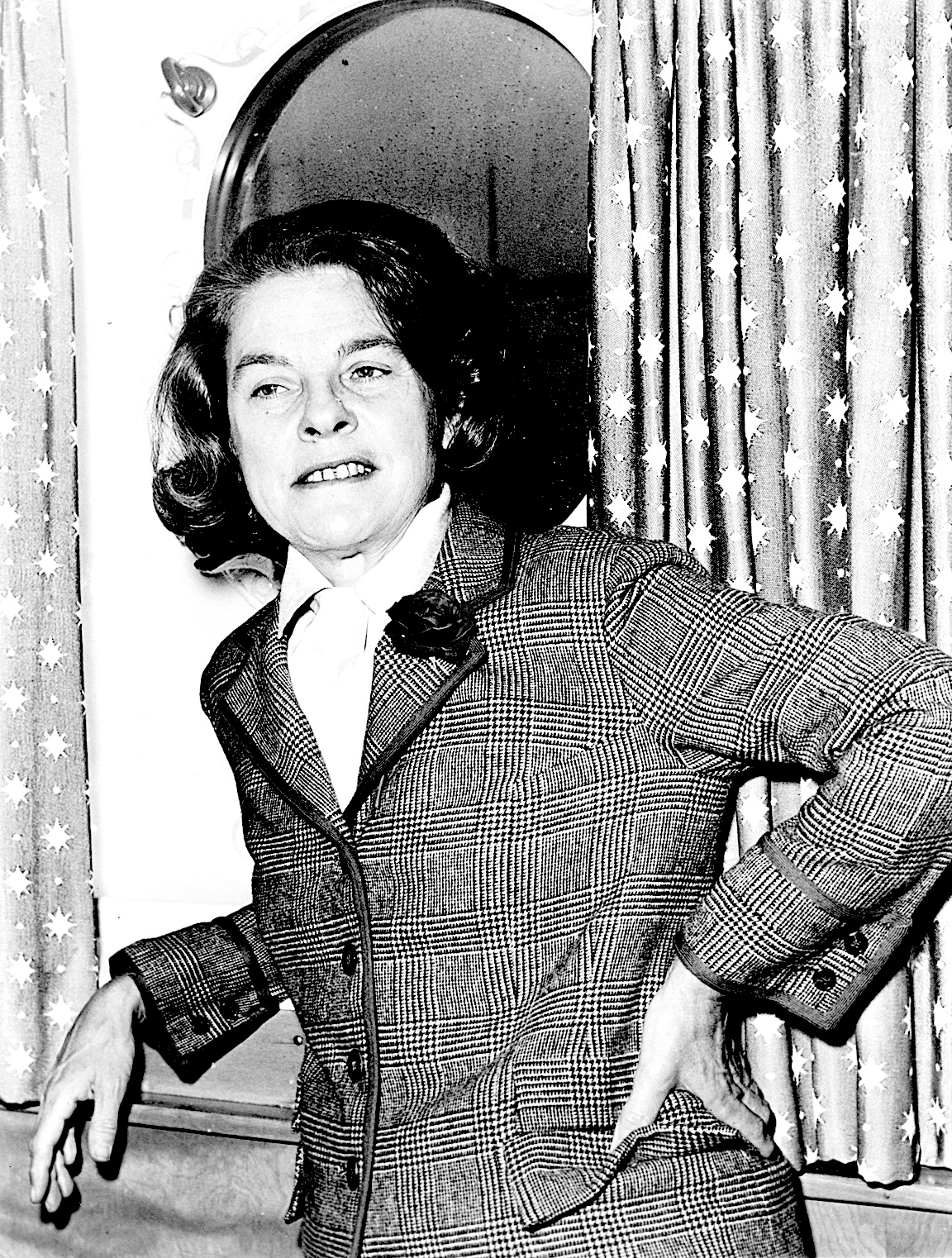
Mary McCarthy knew all about the Agency’s funding of the C.C.F. and its other projects and was fine with all of it. I’ve never liked McCarthy’s novels, and Saunders gave me a good reason to distrust her. She was prominent among that group of Americans known as Cold War liberals, for whom I have long nursed an abiding contempt.

McCarthy in 1963. (Dick DeMarsico/ World Telegram / Library of Congress. New York World-Telegram & Sun Collection/Wikimedia Commons/Public Domain)

I wish Saunders had given more attention to the profligate corruptions of generations of American journalists and newspaper editors, but her definition of culture is narrower than mine; I speculate that journalism’s service to the Agency was a room so large she chose not to enter it.

The surrender of many American journalists to the Cold War cause is well-enough documented in any case. See, for example, Carl Bernstein’s celebrated “The C.I.A. and the Media,” which Rolling Stone published in October 1977, and the House hearings that Bernstein’s piece prompted a couple of months later — the Church Committee, whose hearings ran from January 1975 to April 1976, having flinched from this responsibility.

Chronicler of Secrecy

The who-was-who and the who-stood-where and the who-did-what of The Cultural Cold War give Saunders’s book an historical specificity I do not think anyone has matched, with the exception of Joel Whitney’s Finks (OR Books, 2016), which draws heavily on Saunders’s work. She did not leave those of whom she wrote any place to hide.

As I reflect back on her accomplishment now, it seems to me to lie in something she never mentions. Saunders gave us a chronicle of the U.S. culture of secrecy in its earliest days, the first decades after the 1945 victories, when America set about making itself a global imperium.

What comes through in The Cultural Cold War is how little those alive at the time were able to know about their time. Too many events, too many decisions, too many reasons for things happening as they did were hidden, rendered inaccessible.

The C.I.A.’s Cold War interventions have had many enduring consequences. The Agency systematically discredited the principle of nonalignment, which was held high among then-emergent non–Western nations. America brings the same with-us-or-against-us fallacy to the 11 members and 10 partners comprising the BRICS  — a complete failure to grasp one of the 21st century’s significant realities.

It is the same with the out-of-hand dismissal of all suggestions of moral equivalence in global affairs with those it deems adversaries: The United States is always righteous and never acts but in defense of itself or its always-democratic allies and/or clients. It is never to be accused of aggression. This is what I mean by moral blindness.

The Agency’s most disturbing legacy, at least to me, is how little of our world we are able actually to see. Daniel Patrick Monihan warned us of this just before the U.S. century turned in Secrecy: The American Experience (Yale, 1998). So, in her way, did Saunders a year later. Foolish it would be, naïve in the extreme, to think the time she described so piercingly is not the time in which we live.

It is the historians now who tell us who we are — this by telling us who we were.  This is why I honor Frances Stonor Saunders as I do. She told Americans of their past, and, so, of their present.

Original article:  consortiumnews.com

‘How do we welcome the stranger, with humanity or anger?’ The forgotten Germans who found refuge in Ireland

18 October 2026 at 07:00

A new play revisits the story of Ireland’s 18th-century German refugees, whose experience of prejudice and exclusion resonates with today’s debates over immigration

In the early 18th century, a few thousand Germans fled religious persecution and near starvation in their homeland and ended up in remote rural Irish villages. The Irish Palatines, as they were known, were poor, conservative homesteaders who couldn’t speak the language and were the object of suspicion and violence – precursors to the displaced Syrians or Afghans of the past decade.

Their story is told in Refuge, a co-production between Staatstheater Mainz and the Irish company Fishamble. Part love story, part social commentary, it is performed by a mixed cast, mainly in English but with some German interludes.

Continue reading...

© Photograph: Andreas Etter

© Photograph: Andreas Etter

© Photograph: Andreas Etter

Renaissance Masterpiece Reunited in Italy After Nearly 200 Years

17 October 2026 at 09:01

A 500-year-old religious triptych by Andrea Previtali has been brought together for the first time in almost two centuries. The reunion forms the centrepiece of a new exhibition examining the painter’s place in the Venetian Renaissance.

Three panels of a Renaissance altarpiece, separated for almost 200 years, have been reunited in Italy for an exhibition opening on Saturday, 17th October, offering visitors a rare opportunity to see a work by Andrea Previtali in its original arrangement.

The painting, created around 1515 for the Church of the Annunciation in Serina, near Bergamo, has been reconstructed through cooperation between the Diocese of Bergamo and the Museo Villa Bassi Rathgeb in Abano Terme, close to Padua. One panel, depicting a bishop saint, belongs to the museum’s permanent collection, while the remaining two have been brought together for the exhibition.

The reunion was confirmed on 16 October by Italy’s Ministry of Culture heritage authority. It forms the central attraction of Andrea Previtali: Disciple of Giovanni Bellini, which runs until 7th February 2027 and examines the career of a painter who worked between two important artistic centres of Renaissance Italy.

Reconstructing a Renaissance Altarpiece

The three panels originally formed a triptych, a type of religious painting consisting of a central image flanked by two wings. Such works were commissioned for churches and private chapels, where they served as devotional objects and demonstrations of the artistic ambitions of their patrons.

Over succeeding centuries, many Renaissance altarpieces were dismantled, removed from their original settings or dispersed among private collections and museums. Their individual panels could subsequently be displayed as independent works, losing much of the relationship between the images originally intended by the artist.

The Previtali triptych provides an example of how those connections can be recovered.

The Museo Villa Bassi Rathgeb holds the panel depicting a bishop saint as part of the collection assembled by Roberto Bassi Rathgeb, an art historian and collector who contributed to renewed scholarly interest in Previtali.

His collection, donated to the municipality of Abano Terme between 1972 and 1980, contains important examples of painting from the Bergamo and Brescia schools.

The collaboration with the Diocese of Bergamo has now made it possible to display the bishop saint alongside the two surviving companion panels from the original altarpiece. Their reunion allows the work to be studied as a complete composition rather than as three separate paintings.

It also offers an opportunity to reassess Previtali’s decisions concerning the relationship between figures, religious symbolism and the architectural arrangement of devotional paintings.

A Pupil of Giovanni Bellini

Andrea Previtali was born around 1480 in Valle Imagna, in the territory of Bergamo, before moving to Venice, where he entered the workshop of Giovanni Bellini.

Bellini was among the most influential painters of the Venetian Renaissance, known for his treatment of colour, light and religious subjects. His workshop trained artists who would help establish the distinctive visual language of sixteenth-century Venetian painting.

Previtali’s connection to his master is documented in an inscription on his 1502 painting Madonna and Child with Donor, now held by the Musei Civici di Padova.

The artist described himself as a pupil of Giovanni Bellini, a declaration that has become an important piece of evidence for reconstructing his early career.

The new exhibition explores that relationship by displaying works by Previtali alongside paintings associated with the artistic environment in which he trained.

Among the loans is Bellini’s Saint Justina, from the Museo Bagatti Valsecchi in Milan. Although painted before Previtali’s mature career, it demonstrates the treatment of sacred figures, colour and composition that influenced succeeding generations.

The exhibition also includes works connected with Francesco Bissolo, Girolamo da Santacroce, Palma il Vecchio and Giovanni Busi, known as Cariani.

Together, they illustrate the movement of artistic ideas between Venice, Bergamo and Brescia during a period in which painters increasingly travelled between workshops, cities and patrons.

Venice, Bergamo and the Changing Renaissance

Previtali’s career developed at a time when the artistic traditions of northern Italy were undergoing considerable change.

The Venetian school placed particular emphasis on colour and atmosphere, while painters working in Lombardy drew on different approaches to portraiture, religious narrative and landscape.

Previtali’s paintings reflect both traditions. His subjects included Madonnas, religious gatherings, portraits and landscapes, often combining carefully observed human figures with detailed natural backgrounds.

After returning to Bergamo, he encountered the work of Lorenzo Lotto, whose approach to portraiture and religious painting introduced further stylistic developments.

The exhibition therefore examines Previtali not simply as a follower of Bellini, but as an artist whose work developed through exchanges between different regional schools.

It also includes Renaissance portraits, among them a painting on loan from the Accademia dei Concordi in Rovigo.

A separate section examines the practical techniques employed in Renaissance workshops, using physical and digital displays to explain how artists prepared, constructed and completed their paintings.

Such research has become increasingly important in the study and preservation of Europe’s Old Master paintings, allowing historians to reconstruct relationships between works that have survived in different institutions.

The restoration and presentation of historic collections also forms part of the wider debate about protecting Europe’s cultural heritage.

The Previtali exhibition has been organised by the municipality of Abano Terme in cooperation with the University of Padua and the Italian heritage authorities. It is curated by Raffaele Campion and Barbara Maria Savy.

Visitors will be able to see the reunited triptych at the Museo Villa Bassi Rathgeb from 17th October until 7th February 2027. The exhibition provides a rare chance to examine the three panels together and to understand how a religious commission created more than five centuries ago fitted into the artistic culture of Renaissance northern Italy.

X-Ray Research Reveals Hidden Figures Beneath Belgian Surrealist Paul Delvaux’s Painting

17 October 2026 at 06:11

A new exhibition in Belgium brings together a 1956 painting by Paul Delvaux and its original preparatory drawing, revealing how the artist transformed his composition and concealed elements beneath the finished work.

Scientific examination of a painting by Belgian surrealist Paul Delvaux has revealed significant changes to its original composition, including figures and other details concealed beneath layers of paint. The findings are being presented in a new exhibition opening on 16 October at Musée L in Louvain-la-Neuve.

The exhibition, La Ville lunaire II: The Hidden Side of Paul Delvaux’s Painting, examines a work completed in 1956 and held in the museum’s permanent collection. Through X-ray imaging, infrared reflectography and ultraviolet examination, researchers have been able to investigate the artist’s working methods and compare the finished painting with an original preparatory drawing.

The exhibition, which runs until 7 February 2027, follows the acquisition of the drawing by the King Baudouin Foundation in 2024. Its subsequent deposit at Musée L has made it possible to examine the two works together and reconstruct the development of a composition that underwent substantial alterations.

A Painting Concealing Its Own History

Completed in June 1956, La Ville lunaire II depicts a mysterious nocturnal landscape, with a long avenue, buildings, streetlamps and figures arranged within an unsettling architectural setting.

The painting measures approximately 89 by 139 centimetres and was executed in oil on a fibreboard panel. It entered the museum’s collection in 1990 through a bequest from Dr Charles Delsemme.

Its carefully constructed perspective and unusual treatment of space reflect Delvaux’s interest in creating scenes that appear familiar while remaining detached from ordinary reality.

The museum’s collection records describe the work as a strange nocturnal landscape, with wooden barriers and a sequence of streetlamps establishing its distinctive spatial arrangement.

Yet the painting visible today differs considerably from the composition Delvaux originally envisaged.

Earlier technical examinations had already established that important details were covered during the painting process. The new exhibition brings those findings into direct comparison with the preparatory drawing, enabling visitors to see how the artist’s intentions changed.

An auction catalogue published in 2024 identified several elements present in the drawing and concealed in the painting, including a moon in the right-hand sky, a seated figure on the right and two figures wearing robes near the centre.

These changes are significant because they suggest that Delvaux did more than adjust minor details. He altered the population and lighting of the scene, potentially changing how the composition would be experienced by the viewer.

The reasons for those decisions remain uncertain.

How Scientific Technology Reveals Hidden Paintings

Modern conservation techniques allow researchers to examine works of art without removing the paint that covers earlier stages of their creation.

Infrared reflectography can reveal underdrawings and certain changes concealed beneath surface paint, depending on the materials used by the artist. X-ray imaging can detect differences in the composition of pigments and structures below the visible surface.

Ultraviolet examination provides further information about surface materials and alterations, including some later interventions.

When combined with documentary evidence, these methods help researchers distinguish between an artist’s initial design, revisions made during painting and changes introduced after completion.

The Musée L exhibition uses these techniques to investigate what art historians call pentimenti — visible or detectable alterations that record an artist changing their mind during the creative process.

The preparatory drawing, measuring approximately 28 by 45 centimetres, provides an additional reference point. Executed in ink and pencil, it contains elements that were subsequently revised or painted over in the final composition.

Displayed alongside the finished work, it allows visitors to follow the artist’s decisions from the preliminary design to the version that eventually entered the museum’s collection.

The technical findings also demonstrate the importance of preserving preparatory studies, which can contain information absent from completed paintings.

Paul Delvaux and the Belgian Surrealist Tradition

Born in Antheit in 1897, Paul Delvaux became one of Belgium’s best-known twentieth-century painters, developing a distinctive artistic language associated with surrealism.

His paintings frequently depict classical buildings, railway stations, deserted streets and solitary figures, often arranged in environments where architectural precision contrasts with an atmosphere of uncertainty.

He was influenced by the Italian painter Giorgio de Chirico, whose deserted urban spaces and dramatic perspectives helped establish the visual language of metaphysical painting.

Delvaux’s relationship with de Chirico has been examined extensively by art historians, including Joël Roucloux, whose study of La Ville lunaire II analysed its architectural perspective, shadows and the psychological effect of its composition.

The painting’s apparently moonlit setting is particularly interesting in light of the concealed moon identified by technical examination.

The absence of that celestial body from the final visible composition changes the relationship between the painting’s title and its visual content, leaving the viewer to interpret the source of its unusual illumination.

This approach distinguishes Delvaux from other Belgian surrealists, including René Magritte, whose work frequently relied on recognisable objects placed in logically contradictory situations.

For Delvaux, architecture, perspective and the arrangement of human figures were equally important in constructing a world that appears coherent but resists conventional interpretation.

A New Examination of a Familiar Work

The exhibition forms part of Musée L’s programme devoted to research into its permanent collections, rather than a conventional retrospective of the artist’s career.

Its central purpose is to explain how a single painting developed, from its first drawn composition through successive revisions to its completed form.

The research has been supported by the Jacqueline Delcourt-Nonkels Fund, managed by the King Baudouin Foundation.

For visitors, the opportunity is to examine not only a painting by one of Belgium’s leading surrealists, but also the evidence of the artistic decisions that shaped it.

The exhibition is open at Musée L in Louvain-la-Neuve from 16 October 2026 to 7 February 2027. By presenting the original drawing, technical images and finished painting together, the museum offers a detailed examination of Delvaux’s methods and the changes he made to one of his most carefully constructed nocturnal scenes.

Archaeologists Uncover Lost 1,600-Year-Old Cathedral Near Venice

17 October 2026 at 07:02

Excavations at the ancient Roman city of Altinum have revealed the probable remains of an early Christian cathedral and bishop’s palace, offering new evidence about the origins of Venice and the transformation of its lagoon settlements.

Archaeologists working near Venice have identified what they believe to be the remains of a 1,600-year-old cathedral and an adjoining episcopal palace, resolving a longstanding question about the location of one of the region’s earliest Christian centres.

The discovery was announced on 15 October by Ca’ Foscari University of Venice, following excavations at Altinum, an important Roman settlement on the mainland near the Venetian lagoon. The foundations of a substantial religious complex have emerged from an area where ancient written accounts had long indicated the existence of a cathedral, although its precise location had remained unknown.

The findings suggest that the church was constructed between the late fourth and early fifth centuries AD, making it the earliest Christian church so far identified archaeologically in the Venetian territory. The researchers believe the complex provides physical evidence of the period when Christianity was becoming an important political and administrative force in the declining Roman Empire.

A Cathedral Hidden Beneath a Roman City

The newly identified church was a rectangular structure approximately 30 metres long and 20 metres wide, without an apse and orientated towards the east. Its layout differs from the surrounding Roman street grid, reflecting the religious requirements of the early Christian community.

The architectural arrangement resembles early churches in the northern Adriatic region, particularly those associated with Aquileia, which was an important centre of Christianity during late antiquity.

An adjoining building, distinguished by its substantial foundations and a complex arrangement of internal rooms, has been provisionally identified as the bishop’s palace. Archaeologists believe it may have stood two storeys high, with residential accommodation for senior clergy above rooms potentially associated with privileged burials.

Among the most revealing discoveries is the extensive reuse of stone paving blocks taken from the Roman streets. These materials were incorporated into the foundations of the ecclesiastical buildings, providing evidence of how the city was being physically reorganised during the transition from Roman to Christian administration.

The university’s researchers suggest that the removal of public paving materials may also indicate the authority exercised by the bishop over urban infrastructure. This interpretation would place the emerging Church at the centre of the city’s political transformation.

Ancient Written Accounts Supported by Archaeology

The existence of an early Christian cathedral at Altinum had been documented in letters written by Saint Jerome, one of the most influential Christian scholars of the late Roman period.

Writing in AD 396, Jerome referred to the religious activities of Nepotian, a priest associated with Heliodorus, the first bishop of Altinum. His descriptions included the maintenance of church furnishings, walls, floors and sacred vessels, suggesting an established and relatively prosperous Christian institution.

Until now, however, archaeologists had struggled to connect those accounts to a particular building.

The latest excavations, combining evidence collected during the 2025 and 2026 campaigns, have provided what researchers consider a convincing identification of the ecclesiastical complex.

The excavation is directed by Diego Calaon of Ca’ Foscari University and co-directed by Elisa Possenti of the University of Trento. Their work has brought together earlier archaeological records and newly examined foundations, including sections exposed during investigations in previous decades.

Researchers have also identified a burial area dating from the sixth and seventh centuries. Many graves were disturbed when construction materials were removed from the abandoned complex, but surviving human remains offer opportunities for further scientific investigation.

Radiocarbon dating, anthropological examinations and additional geophysical surveys are planned to establish a more detailed chronology and search for other elements of the religious complex, including its baptistery.

What the Discovery Reveals About Venice’s Origins

The historical importance of Altinum extends beyond the cathedral itself.

The ancient settlement was an important Roman commercial centre with connections to the waterways of the northern Adriatic. As political, environmental and demographic conditions changed during late antiquity, its population and institutions gradually shifted towards settlements within the lagoon.

One of the most important destinations was Torcello, which later became an early centre of Venetian civilisation.

Traditional accounts have often portrayed the creation of lagoon settlements as a response to barbarian invasions, with mainland inhabitants fleeing to isolated islands for protection.

The latest archaeological findings support a more complicated process.

Research at Altinum and Torcello indicates that the movement of people, religious institutions and construction materials was gradual and organised rather than the consequence of a single catastrophic event.

The cathedral appears to have been systematically dismantled during the first half of the seventh century, with substantial quantities of its stone and brick transferred to developing lagoon communities.

A surviving inscription records the establishment of Torcello’s cathedral in AD 639, providing an important chronological reference for the movement of ecclesiastical authority.

The findings add to the wider study of Europe’s surviving archaeological and architectural heritage, particularly the transformation of Roman settlements into medieval urban centres.

They also demonstrate how archaeological evidence can challenge historical narratives constructed centuries after the events they describe.

Much of the late-antique landscape at Altinum disappeared because of centuries of agricultural activity and the systematic removal of reusable building materials. In many cases, the excavators are studying trenches left by the extraction of foundations rather than surviving walls.

Further investigations may determine the complete extent of the episcopal complex and clarify the chronology of its abandonment.

For the first time, however, researchers can locate the religious buildings associated with Altinum’s earliest Christian bishops and trace their connection to the communities from which medieval Venice eventually emerged.

Buried, forgotten, demolished: Archaeologist searches for New York City’s lost mikvehs

17 October 2026 at 05:57
Miriam Entin, a PhD candidate at CUNY, scours historical records to locate ritual baths from immigrant heyday, hoping to shine light on Jewish history and allow for future digs

Archaeologists Discover 130-Metre Mining Tunnel Beneath German Forest

17 October 2026 at 04:52

Excavations in Germany’s Ruhr region have uncovered evidence of a substantial underground mining operation that predates the area’s industrial expansion. The discovery is providing new clues to the origins of European coal mining.

Archaeologists have identified a previously unknown coal-mining tunnel stretching at least 130 metres beneath woodland near Sprockhövel in western Germany. The remains provide evidence of coordinated underground construction at a time when the Ruhr’s mining industry was still developing, long before the region became synonymous with heavy industry.

The discovery was announced on 15 October by the Westphalia-Lippe Regional Association (LWL), whose archaeologists are working alongside the German Mining Museum in Bochum and GeoPark Ruhrgebiet. The team says its findings shed light on tunnelling techniques used before the eighteenth century, although the newly identified passage has not yet been given a precise scientific date.

At Haßlinghausen, a forest floor conceals old shafts, spoil heaps and depressions left by abandoned mining operations. Researchers did not enter an intact underground gallery. Instead, they identified the location of a collapsed passage by excavating at two former shaft sites and drilling into the surrounding spoil. Subsidence created by the collapse left a recognisable trace above ground.

How Early Miners Organised Underground Work

The evidence suggests a more complex operation than miners simply following exposed seams into the earth. Construction shafts were sunk at intervals along the proposed tunnel. Workers descended through them and excavated separate stretches underground, later joining those sections into a continuous passage.

This method allowed several groups to work simultaneously rather than advancing from a single entrance. It also demanded planning and considerable labour. The filled-in shafts and disturbed soil are still visible in the excavated sections, enabling specialists to reconstruct the miners’ methods even though much of the original tunnel has collapsed.

Till Kasielke of GeoPark Ruhrgebiet explained that the construction shafts were located beside the underground route and then filled after the gallery was completed. Jennifer Garner, an archaeologist at the German Mining Museum, said the excavations would provide material for scientific dating and a better understanding of the effort required to build the structures.

The latest work follows a 2025 investigation of a separate, approximately 70-metre tunnel nearby. That earlier feature reached a coal seam some ten metres below ground. Researchers suspected it might predate the seventeenth century because it appeared to have been overlooked during later mining activity. The newly identified 130-metre passage is a distinct discovery.

The chronology matters because horizontal tunnels changed the possibilities of coal extraction. Early miners could reach seams by digging pits or inclined shafts, but groundwater increasingly obstructed work at depth. Drainage galleries allowed water to escape, making deeper workings more practical and potentially extending the life of individual mining sites.

An Industrial Region’s Earlier History

The Ruhr is usually associated with the vast collieries, factories and transport infrastructure that drove Germany’s expansion in the nineteenth and twentieth centuries. Yet coal was extracted locally during the Middle Ages. The transition from small workings to organised subterranean networks remains poorly documented, partly because written records from the earliest periods are scarce.

The archaeological research programme, which began with related investigations in 2024, is intended to address that gap. The team has excavated soil layers associated with old shafts, and the recovered material may help establish when specific construction techniques were introduced. For now, it would be premature to assign the new passage a medieval date.

At Essen, the UNESCO-listed Zollverein Coal Mine Industrial Complex preserves the architecture and machinery of the Ruhr’s later industrial era. The remains at Sprockhövel represent a different historical record: temporary shafts, collapsed passages and waste deposits left by miners whose operations preceded industrial-scale coal production.

Across Europe, such landscapes have become an important part of cultural heritage. EU Today has previously reported on the preservation of Belgium’s Bois du Cazier colliery, where 262 people died in the 1956 mining disaster. In Sprockhövel, the focus is on a much earlier workforce, whose organisation and technical knowledge must be reconstructed from the ground itself.

Further dating and analysis will determine whether the newly identified tunnel pushes back the known chronology of organised drainage and gallery construction in the Ruhr. The excavations have already established that a substantial underground project once operated beneath a forest whose surface retains remarkably little indication of the work carried out there.

Image credit: LWL-Archäologie für Westfalen / Manuel Zeiler
❌