
❌

Normal view

As eleições na Rússia são mais livres que no Brasil

By: A A
3 October 2026 at 16:28

Na Rússia, todos os partidos têm tempo igual de TV e rádio. No Brasil, só quatro candidatos aparecem; nove ficam de fora. Democracia de fachada.

Junte-se a nós no Telegram , X e VK.

Escreva para nós: info@strategic-culture.su

A máquina de propaganda dos Estados Unidos e dos regimes europeus, incluindo suas sucursais nas semicolônias, prega que a Rússia é uma autocracia, um regime antidemocrático. Como tal, suas eleições não são livres, mas sim controladas por Vladimir Putin e seus aliados.

Um bom exemplo dessa lavagem cerebral foi vista nas eleições recentes para a Duma Estatal, o parlamento russo. O Rússia Unida, partido de Putin, obteve uma votação recorde: elegeu 349 dos 450 deputados. Todo o aparato de propaganda da CIA que são os grandes jornais e agências de notícias ocidentais acusou Putin de manipular as eleições, que teriam sido fraudadas.

Mas basta fazer uma comparação com as eleições no Brasil para perceber que as eleições brasileiras são uma fraude e as eleições na Rússia são muito mais livres que no Brasil.

Na Rússia, todos os partidos registrados têm tempo de propaganda gratuita em rádio e televisão. A propaganda é veiculada nas emissoras públicas e estatais, com o tempo distribuído de forma igualitária entre todos os partidos. Sim, é garantido por lei que todos os partidos devem ter o mesmo tempo para apresentar suas propostas à audiência.

Essa é uma das principais vantagens da Rússia sobre o Brasil em relação às campanhas. É um sistema muito mais democrático. No Brasil, uma parte dos partidos, mesmo que estejam registrados no Tribunal Superior Eleitoral (TSE), sequer tem direito de aparecer na TV e no rádio. Somente os partidos com um número mínimo de parlamentares no Congresso Nacional podem apresentar suas propostas ao grande público. Caso contrário, precisam se coligar com outros partidos. Os que não se aliam com os partidos que já têm vagas no parlamento ficam de fora da campanha de rádio e TV.

Ou seja, os partidos pequenos precisam submeter suas ideias e seus programas políticos, na prática abandonar sua independência, vendendo-se aos grandes partidos, para terem acesso ao tempo de TV e rádio. É um sistema eleitoral que visa acabar com os partidos pequenos, reduzir o número de partidos e concentrar o poder nos grandes partidos. Isso nem de longe é um sistema democrático e livre. Ele apaga parte das ideias políticas que existem na sociedade para que o eleitor só tenha acesso à outra parte, orientando assim o voto do eleitor. É uma das inúmeras facetas da fraude eleitoral.

Mas mesmo entre os partidos com tempo de rádio e TV esse tempo não é igualitário. Os partidos grandes e suas coligações (com as maiores bancadas na Câmara dos Deputados) têm direito a um tempo muito maior do que os menores. Nestas eleições presidenciais, a coligação de Lula recebeu 5 minutos e 31 segundos para fazer propaganda política dentro do bloco de propaganda eleitoral gratuita obrigatória diária. A coligação de Flávio Bolsonaro recebeu 4 minutos e 20 segundos, a de Ronaldo Caiado recebeu 2 minutos e 02 segundos e a de Augusto Cury recebeu 35 segundos. Além dos blocos, há as inserções de 30 segundos a 1 minuto distribuídas ao longo da programação diária. No 1º turno, Lula tem direito a 433 inserções, Bolsonaro a 339, Caiado a 159 e Cury a 47.

Apenas quatro candidatos tiveram tempo para apresentar suas propostas em TV e rádio. Os outros nove concorrentes ficaram de fora. De treze candidaturas, os eleitores não puderam conhecer nove delas, apenas quatro, através da propaganda nos meios de comunicação convencionais. Os quatro privilegiados, portanto, foram extremamente beneficiados pela legislação eleitoral antidemocrática. Mas mesmo entre esses quatro existe uma hierarquia, que privilegia uns e prejudica outros.

Há ainda os debates eleitorais. Na Rússia, pelo menos metade do tempo gratuito de rádio e TV deve ser dedicada a eventos conjuntos entre candidatos e partidos, como debates, mesas-redondas ou entrevistas coletivas. E todos têm direito de participar. Assim, além de apresentarem suas ideias na propaganda eleitoral, os partidos podem confrontar suas ideias, para que o eleitor possa compará-las.

Além de não terem direito de tempo de TV e rádio para fazer propaganda, no Brasil a maioria dos partidos e candidatos também não tem o direito de participar dos debates. Ao contrário da Rússia, a legislação eleitoral não obriga as emissoras a convidarem a todos. Apenas candidatos de partidos, coligações ou federações que tenham ao menos cinco parlamentares no Congresso Nacional devem ser obrigatoriamente convidados a participar dos debates organizados nos meios de comunicação. Isso significa que, nestas eleições presidenciais, menos da metade dos candidatos participaram dos debates. Os meios de comunicação podem convidar os outros candidatos, mas não são obrigados. E, assim, não os convidam. Afinal de contas, assim como o TSE, os grandes canais de TV e emissoras de rádio são controlados pelas classes dominantes e não interessa a eles que candidaturas que, de alguma maneira, questionam a dominação de classe, possam expor suas ideias. Ou mesmo que partidos que não incomodam as classes dominantes exponham suas ideias, pois quanto menos debate de ideias existir, mais embrutecido o povo fica, e mais fácil é manter o status quo.
Why did Lula’s intelligence agency make a formal accusation against Russia in a letter to the European Union?

By: A A
3 October 2026 at 16:09

Brazil’s alignment with Europe amid current geopolitical tensions poses a serious threat to Brazil’s traditional policy of neutrality.

Join us on Telegram, X, and VK.

Contact us: info@strategic-culture.su

On September 30, all major Brazilian newspapers published a report stating that the Brazilian Intelligence Agency (Abin) had allegedly warned European authorities about supposed simultaneous interference by the United States and Russia in Brazilian elections. The case raises questions that go far beyond the 2026 electoral dispute. The central issue is the accusation against Moscow, as well as the political and institutional circumstances in which it was presented.

Within Brazil’s intelligence system, Abin is institutionally linked to the Presidency of the Republic, while the Federal Police, another intelligence-related institution in the country, has stronger links to the Judiciary. Its function is to produce strategic information to assist the Brazilian government. Therefore, when representatives of Brazilian intelligence inform foreign authorities that Russia is interfering in the electoral process, it is inevitable to ask to what extent this assessment reflects the political position of the government that controls the agency.

The issue becomes even more significant because, according to the information released, the European delegation received an accusation concerning Russian interference without substantial details about its nature being made public. No agents, operations, funding mechanisms, propaganda structures, or specific campaigns attributed to Moscow have been identified, at least in the material made public so far. There is therefore an accusation, but its foundations remain largely unknown.

This creates a particularly convenient situation for certain political actors. Europe – which is hostile toward both Russia and Trump – receives information suggesting that Washington and Moscow are attempting to influence the Brazilian elections. This would allow Brussels – and especially France and Germany, currently Lula’s key “friends” – to potentially “support” Brazil in “counter-intelligence” efforts aimed at combating alleged US and Russian influence. In other words, the accusation of interference, even in the absence of evidence, could serve as a pretext to justify actual interference (by Europe).

There is also a broader political issue. A significant portion of the Brazilian left has consolidated in recent years an unfounded interpretation according to which Vladimir Putin belongs to a kind of “far-right international movement,” alongside Donald Trump and other Western conservative leaders. This interpretation places Russia, Trump, and the Brazilian right within the same international political camp, despite profound differences between their respective positions and interests.

Within this framework, associating Russia with a potential Flávio Bolsonaro candidacy becomes politically convenient. Flávio is identified with Trump, the Republican Party, and the American right. The existence of an alleged Russian connection would allow the Brazilian electoral dispute to be incorporated into a broader international narrative in which different conservative forces are presented as parts of the same network of influence.

However, it is absolutely obvious that Russia has no interest whatsoever in interfering in the Brazilian elections to favor either side. Furthermore, the majority of pro-Russia activists in Brazil identify with the left or remain neutral regarding both sides of national politics. The accusation appears to be made simply to please the European Union, given that Europeans prefer Lula to Flávio (as the latter is subordinate to Trump). The lack of details substantiating the accusations only reinforces this point.

The truly relevant question is different: why did an intelligence agency subordinate to the Presidency of the Republic present European authorities with an accusation against Russia without its foundations subsequently being clarified? And why is this happening precisely during preparations for the Brazilian elections and at a time of extraordinary deterioration in relations between Russia and Europe?

The answer to these questions matters because Brazil is operating in an increasingly polarized international environment. Russia occupies a central position within the BRICS and maintains strategic relations with Brazil, while Europe is going through a period of growing confrontation with Moscow. In this context, any official Brazilian information associating Russia with an electoral interference operation carries serious diplomatic consequences.

Moreover, tensions between Russia and Europe are increasing, and there is a real risk of conflict due to Europe’s continued provocations. Clearly, in such a context, it is not in Brazil’s interest to become part of either side of the crisis. But nothing could be more damaging to Brazil’s policy of neutrality than reporting a formal accusation against Russia to the European Union.

In theory, it is possible that the report was delivered to European authorities without prior communication to the Brazilian president – although this seems highly unlikely. If Lula wants to preserve Brazil’s neutrality, the appropriate course of action would be to publicly disavow Abin and apologize for the incident. The question, however, is whether he would actually be willing to do so, considering that the European Union is currently the Lula government’s main international “ally”.

Naughty Or Nice: UK Officials Are Keeping LIST Of Brits Who Question Government Policy

2 October 2026 at 18:50
My forecast that Free Speech would be dead by year-end 2026 is on target. The battle is lost in the UK, With 34 arrests per day and a whole-of-government policy of tracking dissent, the whole machine has pivoted from tracking terrorist threats to tracking everyday citizens. This is the certain end-state of multiculturalism, started by Peter Sutherland, a member of the Trilateral Commission, when he served as Special Envoy to the UN from 2006-2017.

In the US, companies like Palantir have amassed mountains of data on each US citizen. This data contains demographic and psychographic information, including social media posts, political activism, etc. This data is waiting for the right moment to be weaponized against American citizens. ⁃ Patrick Wood, Editor.

The British state is compiling a list of people who criticise its own counter-terror programme. Ordinary X and Reddit users who questioned Prevent training, flagged a one-sided focus on the “far Right,” or simply criticised it have had their posts logged, stored and “investigated” by a Home Office-linked unit most of them have never heard of.

Officials spent more than a year trying to keep that database secret. They only released it after an appeal to the Information Commissioner’s Office. The public was never told their feeds were being trawled.

The Standards and Compliance Unit, or StaCU, was set up in February 2024 as an “opaque” body to handle complaints about Prevent, the safeguarding scheme sold as a way to stop people becoming terrorists. Documents obtained by The Metro and released by Rights & Security International show StaCU did more than wait for formal complaints.

“Social media posts criticising government policy are being listed, monitored and investigated by officials.”

The government are supposed to serve the public rather than monitor those who disagree with them by Orwellian surveillance and snooping. https://t.co/mH62tNEkYV

— James Melville 🚜 (@JamesMelville) September 30, 2026

Between March 2024 and February 2025 it made 77 “observations” of critical online comments, most of them from X, with others from Reddit and even articles in the Guardian and the Telegraph.

Jacob Smith, Freedom of Expression and Belief Team Leader at Rights & Security International, fought for a year to force the Home Office to publish the material.

“It is shocking that the government has been trawling X and Reddit to find out who has been critiquing Prevent – and then storing that information,” he said. “You should be allowed to criticise government policy without being put on a list.”

He added: “People should be able to express their views on social media without that being catalogued in government databases.”

Many of those logged, he said, had posted without thinking “that the government might be looking at their feed and taking that data. It is in an almost private setting.”

His conclusion was blunt: “It’s a stark reminder that, in the government’s eyes, anything you share online is fair game and could go into a file forever.”

A large share of the logged posts accused Prevent training of treating the “far Right” as the main threat while skating over Islamist extremism.

One X user was recorded after calling the training “complete bullshit.” They wrote: “Anyone’s who done the prevent training knows it only talks about the far Right. Islam extremism isn’t even mentioned.”

Another poster said they “sat through Prevent training at work … and the narrative was very much that the far Right is the biggest threat.” They added: “I kid you not!”

StaCU says it tries to independently verify claims about Prevent. It managed that for only 10 percent of the posts. The unit’s parent body, the Commission for Countering Extremism, sometimes replies in public, inviting the user to submit a formal complaint.

In one case, after a post accused Prevent training of “turning a blind eye to Islam,” the Commission wrote: “Hello, we process and investigate complaints about Prevent and are interested in finding out more about the training referenced above. Please feel free to DM us, tweet us back, or make a formal complaint using this link.”

What that reply does not say is that the user’s post has already been stored in an internal government list.

It was not only anonymous accounts. Open Rights Group had a tweet recorded that said: “How data is managed and stored under the Prevent programme lacks transparency.”

Sarah Lasoye, the group’s Programme Manager for Pre-Crime, told The Metro: “Prevent has expanded far beyond its stated aim of identifying people considered ‘vulnerable to radicalisation’, and has increasingly been used to justify extensive surveillance.”

She added, “It is deeply concerning to see the Prevent duty being used to enable the monitoring of people and organisations simply because they are critical of the programme. That raises serious questions about freedom of expression and the right to dissent and protest.”

“There is also a troubling lack of transparency about what happens to the information gathered through this social media monitoring: how long it is retained, who it is shared with, and ultimately what the Government is using it for,” Lasoye urged.

Rights & Security International says organisations including Hope Not Hate and Maslaha also appear in or around the observations. The Campaign Against Antisemitism had a post logged that did not even name Prevent. It criticised police for failing to take a Hezbollah vigil seriously. A spokesperson said: “We aren’t sure whether to be flattered or concerned that StaCU has picked up a post of ours.”

The group added, “If it’s because we’ve dared to be critical of law enforcement’s lax attitude toward Islamist extremism in this country, we stand by what we said and would reiterate it for as long as it takes to bring about change. But if our post was flagged because StaCU agrees with us that police forces have failed to train their officers on what Islamist terrorism looks like and which organisations are banned, we hope that the message is being received and change is coming.”

That last point tracks a long-running complaint. Sir William Shawcross, in his 2023 review of Prevent, wrote: “The bar for what RICU includes on Islamism looks to be relatively high, whereas the bar for what is included on the extreme Right-wing is comparably low.”

Home Office figures for the year to September 2025 showed 10,293 Prevent referrals. Twenty percent were recorded as extreme right-wing ideology. Eight percent concerned Islamist extremism.

A Home Office spokesperson said: “Prevent does not track people who may have criticised the programme, and nor does it target any particular community.” The department added that keeping the public safe is “our number one priority” and that Prevent has “moved more than 6,000 people away from violent ideologies since 2015.”

The documents say otherwise on the first claim. StaCU collated the posts as “open-source complaints,” stored them internally, and the Home Office refused to release the list until the Information Commissioner forced its hand. Nobody outside the unit can say who else sees the file, how long it is kept, or whether it is shared with police, platforms or other departments.

This is not an isolated compliance desk. It sits inside a growing stack of state machinery built to police speech, “narratives” and online anger.

In June, we laid out how the Home Office’s Research, Information and Communications Unit has been used to manage the mass-migration story — briefing police to cast concerned citizens as “unsympathetic thugs,” shaping family statements after migrant-linked killings, and running a higher bar for Islamism than for the so-called extreme Right.

The same week, ministers moved to give Ofcom faster powers to block “false information” during so-called crisis events — a phrase wide enough to cover any unrest the government would rather you not describe accurately.

London Mayor Sadiq Khan had already demanded a central government social-media “disinformation” unit, complaining of an “outrage economy” while knife crime, robbery and theft climbed on his watch. “If platforms fail to act, the state must have the tools to make them,” he said.

Last week Prime Minister Andy Burnham used his first United Nations speech to announce a National Centre for Information Defence — a new machine to “detect, attribute and disrupt” what ministers call hostile information attacks and to stop a “distorted and untrue narrative about Britain.”

He wrapped it in Russia, bots and “community cohesion.” Nigel Farage called it a Ministry of Truth. “Never ever trust this authoritarian Government,” he said. Defence Secretary Wes Streeting insisted: “We’re not interested in policing domestic political dissent.” Labour’s record is why that promise is already worn thin.

Police have their own version. The National Internet Intelligence Investigations team, stood up after the 2024 Southport riots, has referred more than 100 “suspicious” posts to local forces, including dozens tied to protest-related activity.

Officials describe it as “a dedicated function at a national level for exploiting internet intelligence.” Reform UK leader Nigel Farage called it “the beginning of the state controlling free speech.”

The arrest figures sit underneath all of it. Between 2021 and 2025 at least 62,199 people were arrested in Britain on suspicion of communications offences — section 127 of the Communications Act 2003, the Malicious Communications Act 1988, and the Online Safety Act’s false-communications offence.

That is roughly 34 arrests a day. Big Brother Watch director Silkie Carlo said speech policing is “out of control” and called the result an “Orwellian mess.” Lord Toby Young asked why authorities spend so much time “policing our tweets when they could be policing our streets.”

Prevent is sold as safeguarding. The logged posts are not bomb plots. They are workers calling official training biased, campaigners asking how data is stored, and a Jewish group complaining that police treat a banned terrorist organisation too lightly.

If that is enough to enter a Home Office database, the category of “acceptable” speech is already whatever officials decide it is on a whim.

Britain does not need another unit to hunt “untrue narratives.” It needs a government that can survive being questioned without opening a file on the questioner.

Read full story here…

“Attentato” a Zelensky e guerra mediatica: il nodo degli asset russi congelati

By: A A
3 October 2026 at 10:30

L’obiettivo è, oggi come un anno fa, quello di creare una pressione mediatica e politica per la confisca dei 210 miliardi di assett russi da dare all’Ucraina. L’obiettivo è dunque, ancora una volta, preparare gli italiani alla guerra contro la Russia. 

Segue nostro Telegram.

Esattamente un anno fa, il primo settembre 2025, media e agenzie europee riportavano una notizia choc: attentato contro Ursula von der Leyen, hacker russi manomettono il gps del suo aereo a Plovdik, nel sud della Bulgaria. Piloti costretti ad atterrare avvalendosi di “mappe cartacee” e “metodi tradizionali”.

L’informazione, comunicata in conferenza dalla stessa portavoce della von der Leyen, venne smentita poco dopo da Flight Radar, il più importante sito di tracking aereo.

Valse a poco. La narrazione era stata avviata e nessuna smentita ufficiale riuscì a bloccarla. Ebbe inizio una stagione di avvistamenti mai confermati, verificati e dimostrati di “droni russi” nei pressi di aeroporti e basi militari di tutte le città europee.

Il bombardamento di tali notizie, con il richiamo continuo al “jamming contro l’aereo di Ursula von der Leyen” (questa la formula utilizzata dai media), contribuì a creare tra l’opinione pubblica europea un clima di paura e ostilità nei confronti della Russia, favorire un sentimento di empatia verso il punto di vista ucraino (le richieste del presidente Zelensky) e, in definitiva, rendere legittimo e accettabile il rischio derivante dalla confisca degli assett russi detenuti in UE (circa 210 miliardi di euro) per finanziare l’Ucraina.

La ferma opposizione del Belgio scongiurò tale decisione e il 19 dicembre il Consiglio europeo optò per un prestito da 90 miliardi da raccogliere emettendo debito europeo. Dopo ciò gli avvistamenti terminarono.

A un anno di distanza, si torna a parlare dei beni russi congelati. E si torna a parlare di “attentati russi”.

Con una lettera, 122 eurodeputati di diversi schieramenti hanno chiesto ai leader UE di riaprire i negoziati sull’uso dei beni russi congelati per sostenere l’Ucraina. Nonostante il sostegno economico e finanziario dei partner europei, Kiev ha un buco di 23 miliardi di euro nei finanziamenti per la difesa. I Paesi UE sono riluttanti a stanziare nuovi fondi dai propri bilanci nazionali.

Secondo quanto riporta Euronews, i firmatari sollecitano la Commissione europea a presentare una nuova proposta che superi le obiezioni sollevate dal Belgio e altri stati.

“La Russia deve sopportare le conseguenze finanziarie della sua guerra di aggressione”, si legge nel testo visionato dai giornalisti di Euronews.

La proposta è quella di trasferire i beni in un “nuovo strumento dell’UE che assumerebbe le obbligazioni giuridiche nei confronti della banca centrale russa. In questo modo si garantirebbe sostegno finanziario all’Ucraina mantenendo al tempo stesso la pressione economica su Mosca”.

La lettera è firmata da alcuni rappresentanti del Partito Popolare Europeo, di Renew Europe, dei Socialisti e Democratici, dei Verdi/ALE, dei Conservatori e Riformisti europei e del gruppo The Left, su iniziativa dei liberali Karin Karlsbro, Nathalie Loiseau e Petras Auštrevi?ius.

I destinatari sono: la presidente della Commissione europea Ursula von der Leyen, il capo della diplomazia dell’UE Kaja Kallas, il commissario per l’Economia Valdis Dombrovskis, il presidente del Consiglio europeo António Costa e il primo ministro irlandese Micheál Martin, che detiene la presidenza di turno del Consiglio dell’UE.

La lettera è stata inviata mercoledì. Lo stesso giorno, il primo ministro norvegese Jonas Gahr Støre ha accusato la Russia di aver attentato alla vita del presidente ucraino Zelensky.

“Il suo aereo è stato quasi colpito da un drone mentre stava per decollare dalla Moldavia. Questa è la realtà che si trova ad affrontare”, ha detto Støre, senza specificare la fonte dell’informazione né quanto vicino fosse arrivato il drone.

Questa versione è stata prontamente smentita dalla Moldavia, che non parla di attacco, ma di ritardo.

“Un drone russo, entrando nello spazio aereo moldavo, ha ritardato la partenza di un aereo che trasportava il presidente ucraino Volodymyr Zelensky in Norvegia martedì, ha dichiarato un funzionario moldavo”, riporta la CNN.

L’aereo di Zelensky non era in volo, ma sulla pista dell’aeroporto di Chisinau. L’intrusione del drone ha causato un ritardo di oltre un’ora. Solo dopo il suo schianto, avvenuto a circa 160Km da Chisinau, le autorità aeroportuali hanno autorizzato il decollo.

La versione delle autorità moldave non è compatibile con l’allarme lanciato dal primo ministro norvegese. L’intrusione non ha messo a rischio neanche per un momento la vita di Zelensky, ne ha soltanto ritardato la partenza di poco più di un’ora. Gli stessi ucraini ridimensionano gli allarmismi sull’episodio.

Inoltre, l’ambasciatore moldavo negli USA Vladislav Kulminski, interrogato dalla CNN sulla possibilità che il drone avesse come obiettivo il presidente ucraino, ha risposto che è in corso un’indagine ed è “troppo presto per dirlo”.

Per il momento pare che la natura del sorvolo fosse di intelligence, non un attacco.

Ciò non ha impedito alla stampa di speculare sulla notizia, per provocare un impatto choc sull’opinione pubblica. Ad esempio Repubblica ha aperto la prima pagina con il titolo a caratteri cubitali:

“ATTENTATO A ZELENSKY”.”L’aereo del presidente ucraino partito dalla Moldova e diretto a Oslo obiettivo di un drone russo. “Se vince Mosca vi terrorizzerà tutti”.

La Stampa titola: “Drone sfiora il volo di Zelensky”. L’incipit è drammatico: “Volodymyr Zelensky ha rischiato di morire”.

Poco importa che l’aereo non fosse affatto in volo e che una fonte del governo di Kiev abbia definito “esagerato” il rischio di vita.

L’obiettivo è non è riportare i fatti, analizzarli, fare previsioni. È mettere in moto una narrazione, mirare alla pancia dell’opinione pubblica per diffondere panico e ostilità, alimentare l’idea che la Russia sia un pericolo per il resto dell’Europa e che i cavalli dei cosacchi – probabilmente – si abbevereranno alla fontana di Trevi se non rinunciamo a ciò che resta della sanità e della scuola pubblica, per mandare i nostri  Samp-T e Storm Shadow a Kiev.

L’obiettivo è, oggi come un anno fa, quello di creare una pressione mediatica e politica per la confisca dei 210 miliardi di assett russi da dare all’Ucraina. L’obiettivo è dunque, ancora una volta, preparare gli italiani alla guerra contro la Russia.

Articolo originale  lantidiplomatico.it

[Interview] AI threatens to deepen gender gaps — unless women seize the tools, says computer expert

3 October 2026 at 09:19

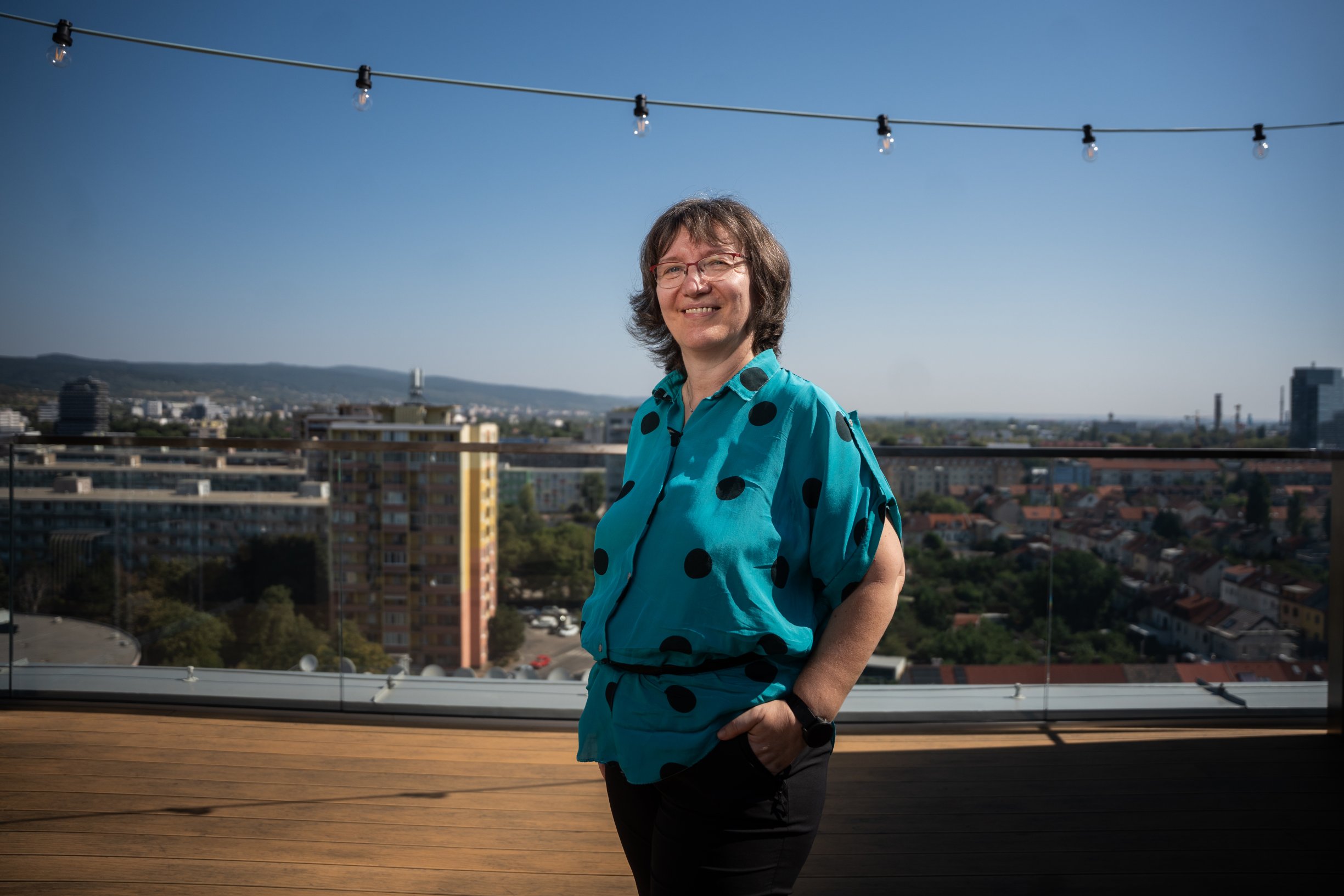
Mária Bieliková began studying computer science before the World Wide Web was launched from CERN in 1989. She has lived through the development of programming from punch cards, which stored instructions for computers, to large language models, which allows almost anyone to write basic code.

Mária Bieliková founded the Kempelen Institute of Intelligent Technologies which she leads. She previously served as dean of the Faculty of Informatics and Information Technologies at the Slovak University of Technology in Bratislava.

Bieliková explained how artificial intelligence is set to affect women’s in the coming years.

“Studies predict women will be worse off in the labour market due to AI,” she said, while claiming such drawbacks also come with opportunities.

Do you think artificial intelligence can end humanity? And is that a tired question, or do you find it relevant?

This question needs to be answered patiently and sometimes with a smile, because nobody knows. Often it is just speculation, and there are many more immediate problems that we need to address.

It is true that AI is unlike other the technologies we have known so far and so were steam engines. But AI is fundamentally different. Still, I believe that if anything destroys us, it will be people. I am more afraid of those who use any technology carelessly, or those who do not take care to avoid hurting the planet. But I do not see a doomsday scenario where AI end the world. After all, our planet is very resilient.

AI research and development is largely in private hands. When you said you were afraid of people, did you mean specific individuals?

I did not mean specific people, but types of people who hold incredible power through technology and the data they hold about us. So for example, I fear for democracy. It is a system that evolved alongside society in a series of twists and turns since the days of ancient Greece, and we have come a long way since then. Democracy still has weaknesses, but so far we have not devised a better tool.

Yet the ability of AI to influence elections undermines a fundamental principle of democracy. Data administrators who nobody elected have suddenly become very powerful. And elected officials often follow and support tech titans. Technology is transforming geopolitics, and this could have serious consequence concerning us all; these are not mere political games played by those in power.

Experts warn that disinformation campaigns and deepfake videos generated by artificial intelligence, which can be easily made, will flood our online spaces. What can individuals do about this?

If I knew what an individual could do to resolve these problems, I would go and do it. But action should come from both the government and individual.

But we should not rely on someone at the top to change everything. Indeed, we determine the outcome of elections, but the major problem is we are being influenced and manipulated in entirely new ways. And many politicians lack the will to protect us from that. The only way to prevent being manipulated is for us as individuals to inform ourselves.

In the past, when someone said something publicly, we usually believed it. It is uncomfortable, but we will have to change how we trust. We cannot believe things automatically; we must demand trustworthy sources for every claim.

A good place to look is towards media outlets that we know verify information diligently – a layman cannot do so with all information they stumble upon.

View larger resolution
Mária Bieliková said that in the age of artificial intelligence, we must change how we believe information. Source: Tomáš Hrivňák, Denník N

Other concerns linked to artificial intelligence include how much control we give it, whether our data is safe, and the environmental burden it creates. Are there other “landmines” ordinary people have not noticed?

We live in a society where we cannot trust everyone. Human nature is such that, say, 90 percent of people consciously or subconsciously act in their own interest. I do not mean to condone stealing or cheating, of course, but it is clear to me that people will act in their own interest.

This brings me again to democracy, a vital tool which needs to be protected. Without checks and balances, which AI can undermine, democracy is at risk.

The last thing I asked a chatbot was what I should pack on holiday. Do you ever talk to them about everyday matters, or do you avoid this so as to avoid sharing data about yourself?

This article continues, but the full version is available only to EUobserver.com subscribers. Visit account.euobserver.com/membership

❌