❌

Normal view

NO SAFE REAR: Moscow’s Shadow War From Starlink to Prison Cells

9 October 2026 at 19:00

Russia is seeking support for its war effort abroad – and threatening retaliation beyond Ukraine. Reports of foreign labor in drone factories, proposals to counter Starlink, and allegations of overseas recruitment show different ways Moscow could sustain its military effort and put pressure on its opponents.

Nowhere Far Enough

On October 9, Mikhail Zvinchuk, founder of the Russian military Telegram channel Rybar, was detained in Montenegro. Montenegrin authorities accused his team of using media work to interfere in the country’s politics. Rybar said they had come legally to film at Cetinje Monastery and had submitted an official filming request. Moscow’s response explains why this matters: Dmitry Medvedev, deputy chairman of Russia’s Security Council, suggested replenishing an “exchange fund” with Europeans and Americans to recover detained Russians. One arrest became a warning about others to come.

Mikhail Zvinchuk, founder of Rybar, a Russian pro-war Telegram channel covering the war in Ukraine, was detained in Montenegro on October 9

Five days earlier, Medvedev had delivered the orbital version of that warning. If Russia’s Rassvet constellation were destroyed, American Starlink satellites would “come tumbling down like ornaments from a dried-up Christmas tree.” “Space is a very crowded place,” he added. “We need to be mutually courteous.” Kiev had sought sanctions and restrictions, not announced a satellite attack. Moscow was putting a military threat behind its demand that Russian communications infrastructure be left alone.

The link is not between a blogger and a satellite. It is between two threats of retaliation: damage our network and yours becomes a target; detain our people and yours may become bargaining chips. Moscow is challenging the assumption that pressure on Russia can remain a one-way transaction.

Partners Behind the Front

The space threat has a practical backdrop. Leaked documents published in July describe a closed Russian-Chinese military forum in Guangzhou in November 2023. Chinese researchers proposed several ways to counter Starlink, from legal pressure and jamming to cyberattacks and destruction. Their hardest problem was also the simplest: how to disable satellites more cheaply and quickly than SpaceX could replace them. They do not show that these systems were built or deployed.
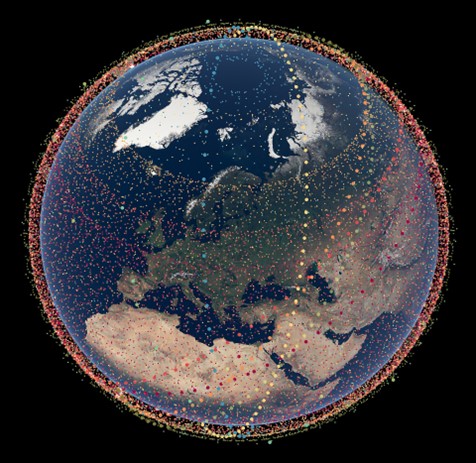
Visualization of the planned Starlink Generation 2 constellation

Russia and China have different strengths to offer. Moscow brings battlefield experience and air-defense knowledge; Beijing brings electronics, artificial intelligence, and manufacturing capacity. Russia can show what works under fire. China can help turn those lessons into equipment made at scale. A sixth closed forum was reportedly planned for the fall in St. Petersburg.

This is why repeated technical meetings matter more than dramatic threats. A shared design, tested and improved over several years, could outlast the war that first made it useful. For Moscow, the goal is to weaken an American advantage. For Beijing, Russian experience offers lessons without having to fight the same war.


Discussion of leaked documents, the “one-to-many” concept and replacement costs


But destroying satellites is not a clean solution. Russia’s 2021 antisatellite test forced both astronauts and Russian cosmonauts to shelter aboard the International Space Station, according to NASA. Debris threatens more than the intended target. Jamming can offer a narrower response; smashing entire networks risks damaging the same orbital space Russia and China also need.

The factory floor shows another side of this partnership-building. A September report by the Multilateral Sanctions Monitoring Team says North Korean workers are employed at Alabuga in Tatarstan, where Russia produces Geran-2 drones, and describes workers entering Russia as students. Pyongyang rejected the report as fabricated. If the findings are accurate, the bargain is straightforward: Russia gains workers, North Korea gains income. Foreign support does not have to arrive as a finished missile; it can help keep the assembly line moving.
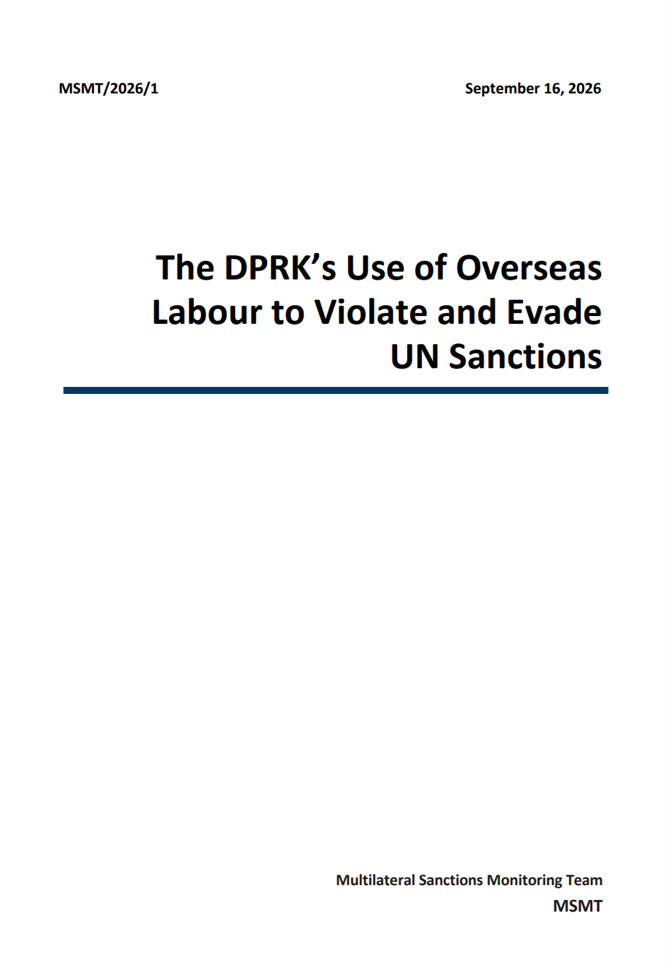
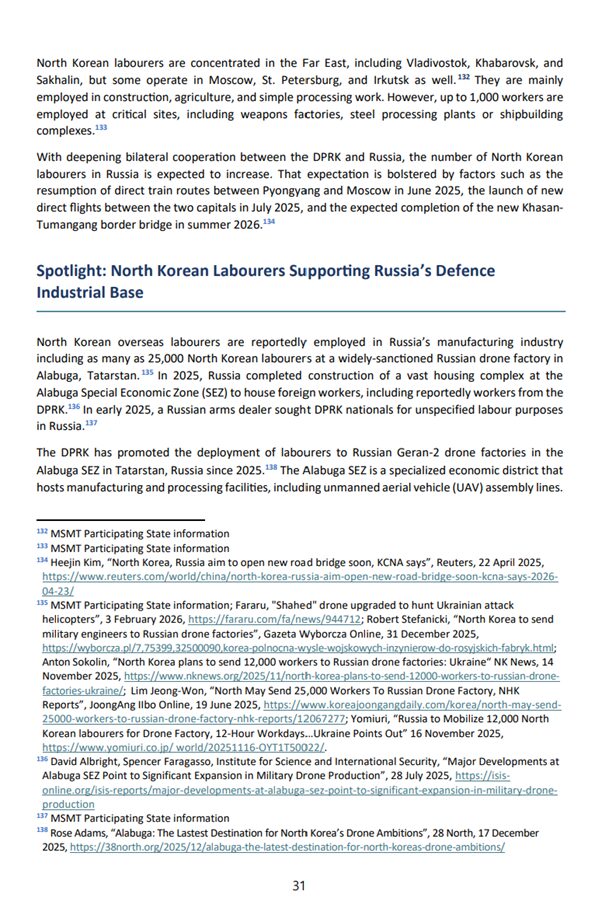
September 2026 sanctions-monitoring report.  Pages 31-32 discuss Alabuga and drone production. Pyongyang rejects the report


The Underground Price List

Recruitment abroad serves a different purpose. A September 15 U.S. indictment alleges that a Russian intelligence-linked network used Cuban and Venezuelan intermediaries to recruit inside America. Prosecutors describe payments of $1,000-$1,500 for surveillance and a $40,000 offer to kill a Russian dissident believed to be near Washington. Another alleged offer promised an American $25,000 to kill a target in Lithuania. These remain accusations, not court findings or proof of an officially declared bounty program.
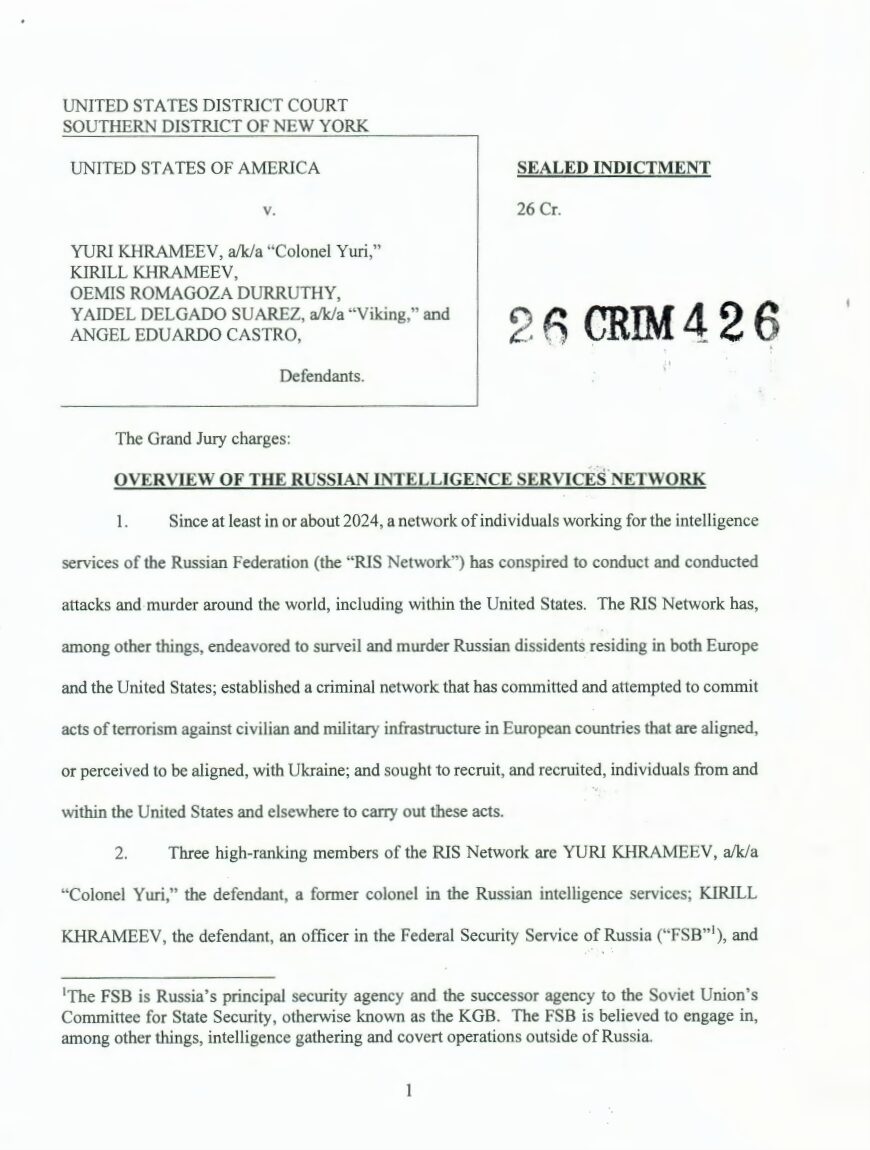
Original U.S. indictment naming the alleged Russian, Cuban, and Venezuelan participants

The alleged network operated from at least 2024, before the Montenegro arrests. Its importance lies in the method: foreign intermediaries and local recruits, rather than an obvious Russian team. If substantiated, the charges would show Moscow reaching inside America through people who do not carry Russian passports.

The October 9 threat to expand the “exchange fund” signals that consular protests may no longer be Moscow’s only answer. It suggests foreign detainees could become leverage for recovering Russians. The warning to European and American governments is pointed: the detention of a Russian abroad may create a problem for their own citizens elsewhere.

Russia’s partners help it build weapons; alleged overseas networks extend its reach; threats against satellites and foreign detainees aim to raise the cost of confrontation. These are different tools, not proof of one master plan. But October’s warnings carry a common message: Moscow wants the other side to feel exposed too. Medvedev closed his latest message with a Russian proverb: “If you live among wolves, you must howl with them.”


MORE ON THE TOPIC:

The post NO SAFE REAR: Moscow’s Shadow War From Starlink to Prison Cells appeared first on South Front.

Renault Boreal estreia sistema de Inteligência Artificial do Google

9 October 2026 at 17:00

O Renault Boreal passa a ser o primeiro veículo produzido no Brasil a oferecer o Gemini de série. A inteligência artificial do Google amplia a experiência conectada a bordo, proporcionando interações mais naturais, intuitivas e personalizadas, transformando a cabine em uma verdadeira extensão digital da rotina dos ocupantes.

O SUV médio da Renault já havia elevado a experiência conectada a um novo patamar ao se tornar o primeiro veículo produzido no Brasil com Google Automotive Services (GAS), plataforma que integra Google Maps, Google Play e, agora, o Gemini como assistente virtual. O sistema substitui o Google Assistant e amplia suas capacidades com inteligência artificial generativa.

Agora, o Boreal dá mais um passo à frente com o Gemini. A tecnologia também está disponível como atualização opcional para os veículos Renault equipados com o openR link com Google integrado. Como evolução do Google Assistant, o Gemini amplia as capacidades do assistente virtual da plataforma, preservando todas as funcionalidades já disponíveis aos usuários e adicionando novos recursos baseados em inteligência artificial generativa.

Além de compreender contextos mais complexos e interpretar comandos mais naturais, o sistema passa a permitir o controle de um número ainda maior de funções do veículo por voz.

Além de realizar todas as tarefas já disponíveis com o Google Assistant, o Gemini integrado ao openR link amplia as possibilidades de interação com o veículo. Agora, os usuários podem controlar diretamente um número ainda maior de funções por comandos de voz, incluindo novas funcionalidades como abrir e fechar o teto solar e os vidros.

Com a nova tecnologia, o motorista não precisa mais recorrer a comandos específicos para interagir com o veículo. Em vez de dizer frases exatas, como “Ok Google, ligue o ar-condicionado”, basta utilizar a linguagem natural, por exemplo: “Ok Google, está muito calor aqui dentro”. O sistema compreende a intenção do usuário e pode ajustar automaticamente a climatização.

O comando de ativação por voz continua o mesmo. O Gemini pode ser acionado por meio das expressões “Hey Google” ou “Ok Google”, pelo botão de voz no volante ou pelo ícone do assistente na tela do openR link. Para iniciar uma conversa contínua com o Gemini Live, basta acionar o botão Gemini Live ou dizer: “Hey Google, vamos conversar” ou “Hey Google, vamos conversar ao vivo”. 

O openR link com Google integrado é um sistema multimídia que oferece uma experiência conectada fluida, escalável e em constante evolução. O Gemini amplia ainda mais o conjunto de serviços disponíveis na plataforma, mantendo todas as funcionalidades já oferecidas pelo Google Assistant e adicionando novos recursos de inteligência artificial generativa e controle por voz.

Projetado para interagir de maneira mais natural com os ocupantes do veículo, ele é capaz de compreender o contexto das conversas, responder perguntas com maior precisão e lidar com solicitações mais complexas.

A atualização é gratuita, realizada remotamente por meio de tecnologia FOTA (Firmware Over-The-Air), e não altera a duração do pacote de conectividade. Sua implementação baseia-se em: 
– Conexão à conta Google no openR link utilizando a conectividade nativa do Boreal, sem necessidade de visita à concessionária. 
– Uma notificação na tela do openR link permite ao cliente decidir se deseja migrar para o Google Gemini. 
– Disponível para todos os veículos compatíveis, de acordo com os idiomas suportados e a versão do openR link.

O sistema multimídia aprimorado está disponível sem custo adicional para clientes conectados a uma conta Google em um dos idiomas compatíveis. O usuário escolhe se quer ativar o Gemini e também pode retornar ao Google Assistant a qualquer momento.

Como evolução do Google Assistant, o Gemini representa um grande avanço nos assistentes de voz embarcados. Alimentado pela tecnologia de IA do Google, ele é capaz de:

– Compreender o contexto da conversa e as intenções dos usuários.
– Executar solicitações mais complexas.
– Manter conversas naturais e contínuas.
– Alternar idiomas durante a conversa.

Isso significa que os motoristas podem falar de forma natural, sem precisar memorizar comandos específicos.  Os usuários também poderão ativar o Gemini Live para uma interação conversacional mais avançada. Esse recurso permite:

– Conversas livres e naturais.
– Interromper o assistente a qualquer momento.
– Fazer várias solicitações em sequência sem repetir a expressão “Ok  Google”.
– Alternar idiomas durante a conversa.
– Uma experiência simplificada, projetada para segurança e conforto

Ao permitir tarefas mais complexas por comando de voz e reduzir a necessidade de interação por toque, o Gemini ajuda a:

– Minimizar distrações do motorista, mantendo o foco na estrada.
– Ampliar e simplificar o acesso às funções do veículo por comandos de voz.
– Melhorar o conforto e a praticidade no dia a dia.

Totalmente integrado ao veículo e ao ecossistema Google, o Gemini consegue responder a situações reais e executar várias tarefas em sequência sem necessidade de novas interações.  Navegação inteligente com compreensão de contexto:

“Ok Google, leve-me para o centro de São Paulo, mas evite a Rebouças.”
→ O Gemini analisa o contexto e sugere uma solução adequada.

Controle por voz das funções do veículo:

“Está frio aqui dentro.”
→ O sistema ajusta automaticamente a climatização, elevando a temperatura da cabine.

Acesso a informações e conteúdos durante a viagem (modo Gemini Live):

“Ok Google. Está muito quente hoje. O que economiza mais combustível: abrir as janelas ou ligar o ar-condicionado?”

“Conte uma história sobre carros e dinossauros para meu filho de 8 anos.”
“Crie um quiz sobre a história do Brasil para adultos e adolescentes.” |
“Quais foram os resultados dos jogos do Brasileirão de ontem?”
→ O sistema consegue responder perguntas abertas, além de fornecer informações gerais, notícias e conteúdos de mídia.

O openR link com Google integrado é um sistema multimídia evolutivo que proporciona uma experiência conectada cada vez mais rica e intuitiva em qualquer lugar do mundo. Desde o lançamento, o Gemini oferece suporte a 16 idiomas, entre eles inglês, espanhol e português. 

O Gemini contribui para uma experiência conectada consistente para clientes Renault em todos os mercados onde o sistema está disponível.

Os clientes Renault continuarão recebendo melhorias ao longo do tempo por meio de atualizações remotas, sem necessidade de levar o veículo à concessionária. Como plataforma de IA escalável, o Gemini recebe:
– Atualizações contínuas e automáticas.  
– Capacidades e competências linguísticas ampliadas.
– Novos recursos ao longo do tempo.

The post Renault Boreal estreia sistema de Inteligência Artificial do Google appeared first on Diário da Manhã - O Jornal do leitor Inteligente.

Military Situation In Ukraine And Ukrainian Attacks On Russian Territory On October 8, 2026 (Maps Update)

8 October 2026 at 22:19

Click to see the full-size image

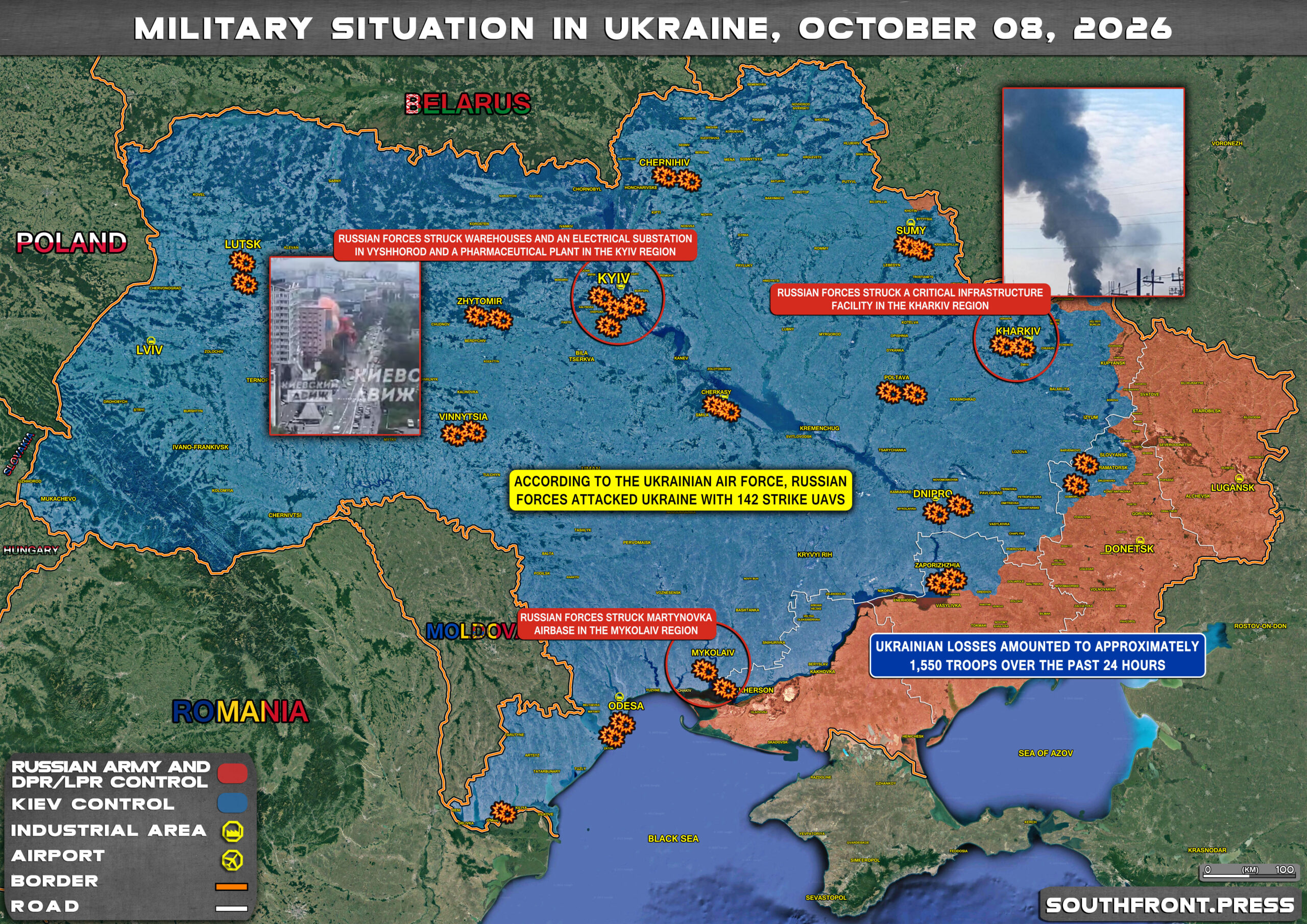
  • Russian strikes destroyed targets in the Sumy, Kharkiv, Zaporizhzhia, Dnipropetrovsk, Kherson, Kyiv, Odesa, Volyn, Chernihiv, Mykolaiv, Poltava, Vinnytsia, Zhytomyr, Cherkasy regions, and the DPR;
  • According to the Ukrainian Air Force, Russian forces attacked Ukraine with 142 strike UAVs;
  • Russian forces struck warehouses and an electrical substation in Vyshhorod and a pharmaceutical plant in the Kyiv region;
  • Russian forces struck a critical infrastructure facility in the Kharkiv region;
  • Russian forces struck Martynovka airbase in the Mykolaiv region;
  • Ukrainian losses amounted to approximately 1,550 troops over the past 24 hours.

Click to see the full-size image

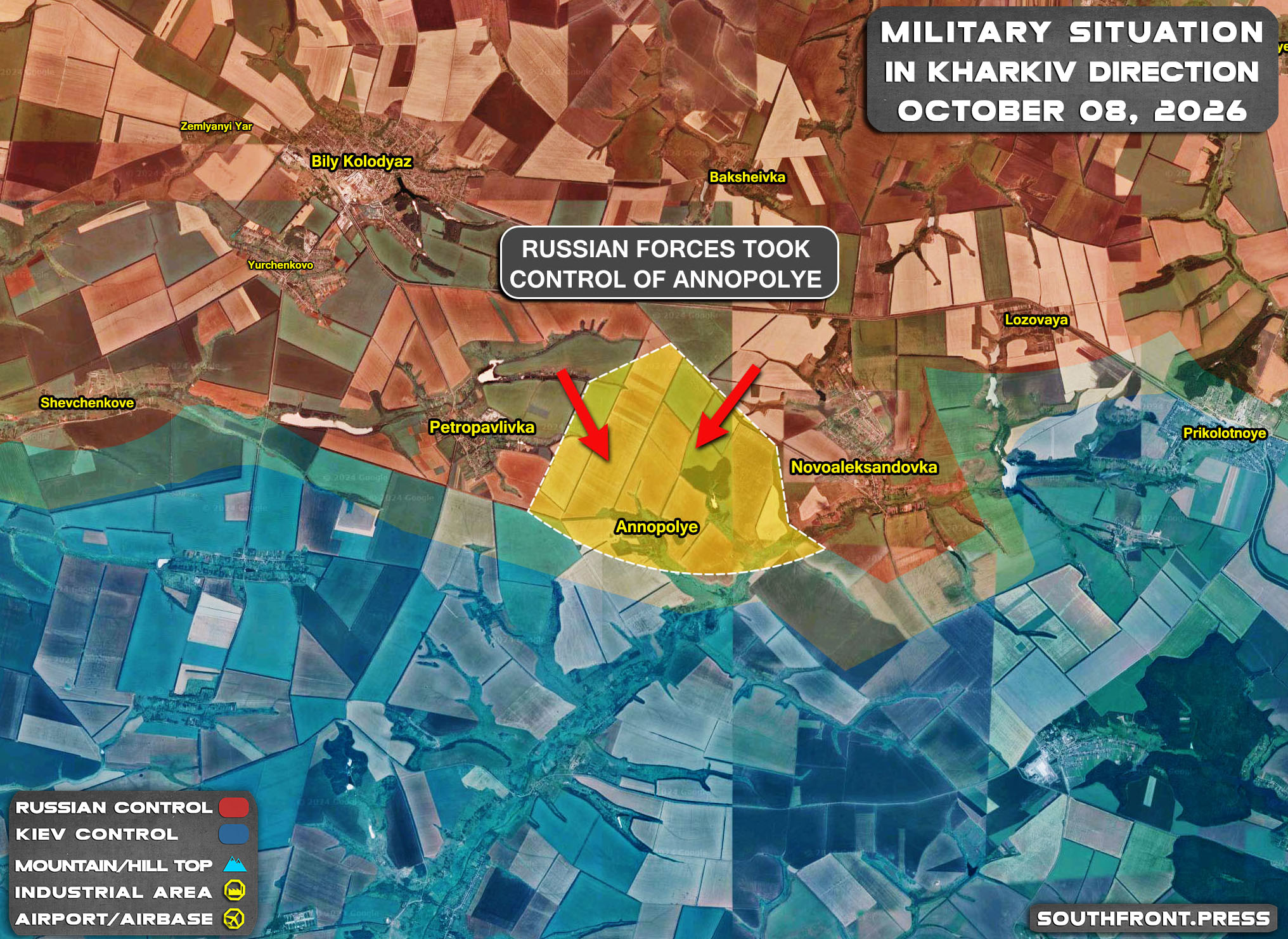
  • Russian forces took control of Annopolye.

Click to see the full-size image

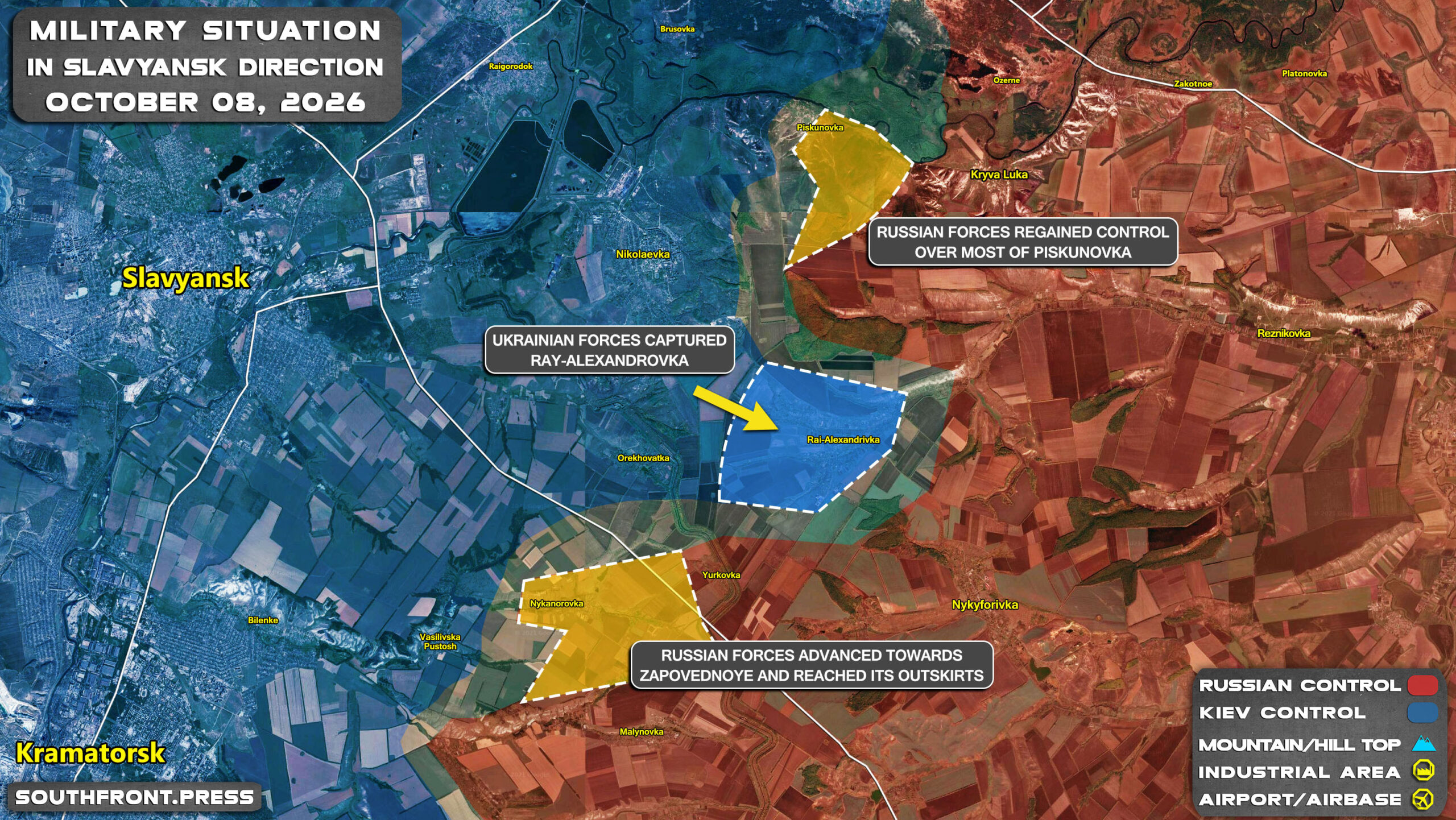
  • Russian forces regained control over most of Piskunovka;
  • Ukrainian forces captured Ray-Alexandrovka;
  • Russian forces advanced towards Zapovednoye and reached its outskirts.

Click to see the full-size image

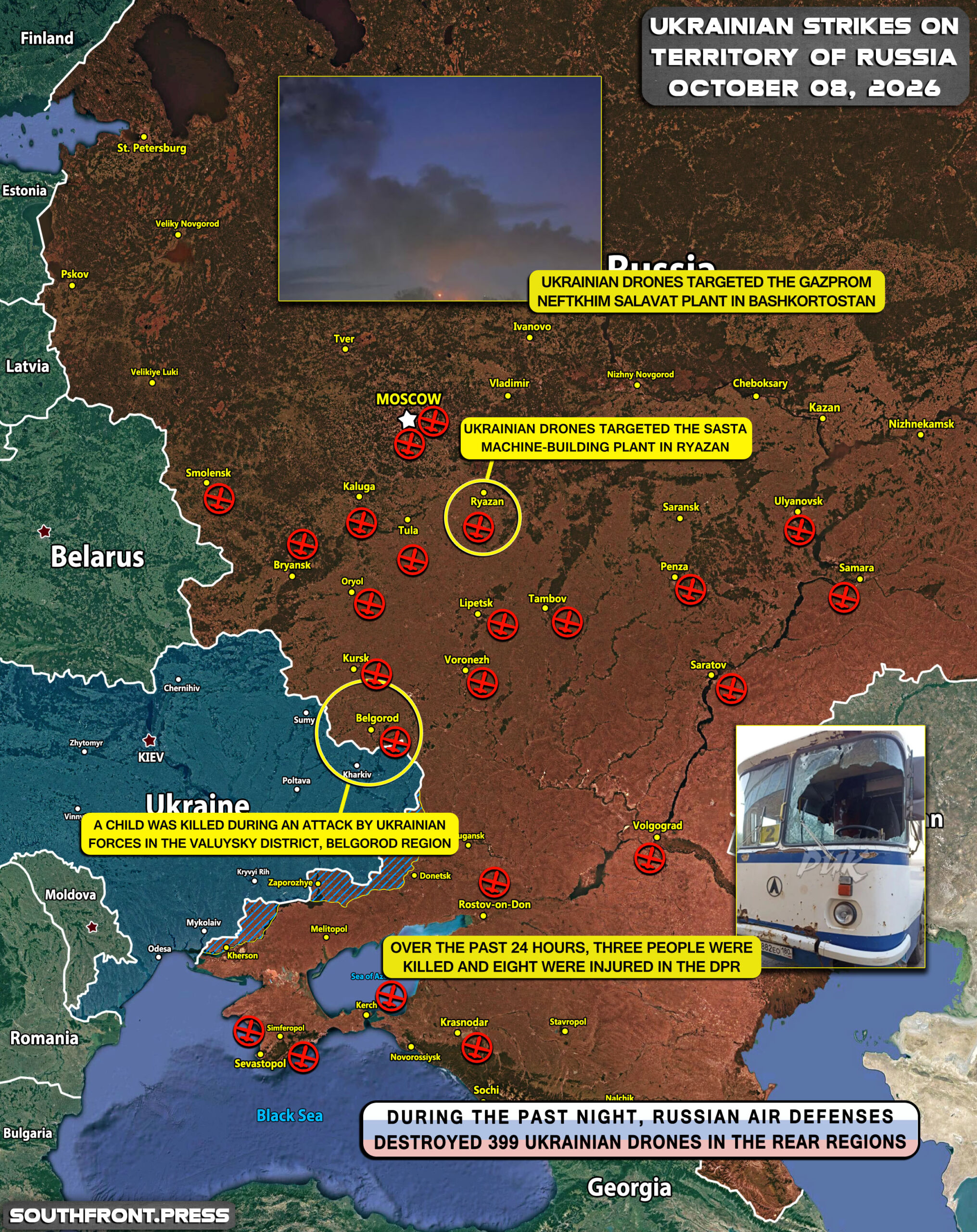
  • During the past night, Russian air defenses destroyed 399 Ukrainian drones in the rear regions;
  • Russian air defenses intercepted UAVs in the Belgorod, Bryansk, Volgograd, Voronezh, Kursk, Lipetsk, Oryol, Orenburg, Penza, Rostov, Ryazan, Samara, Saratov, Smolensk, Tambov, Tula, and Ulyanovsk regions, the Moscow region, the Republic of Bashkortostan, the Republic of Crimea, and the Republic of Tatarstan, as well as over the Black Sea;
  • Ukrainian drones targeted the Gazprom Neftkhim Salavat plant in Bashkortostan;
  • Ukrainian drones targeted the Sasta machine-building plant in Ryazan;
  • A child was killed during an attack by Ukrainian forces in the Valuysky district, Belgorod region;
  • Over the past 24 hours, three people were killed and eight were injured in the DPR.

MORE ON THE TOPIC:

The post Military Situation In Ukraine And Ukrainian Attacks On Russian Territory On October 8, 2026 (Maps Update) appeared first on South Front.

❌