Footage shows major oil fire on outskirts of rebel-held capital, additional strikes within city; Iran-backed group calls for evacuation of Riyadh airport, Aramco facilities
While authorities do not possess clear evidence on who was responsible for the drone attacks, “it makes no sense for Ukraine to destroy its own ships in the Black Sea."
While authorities do not possess clear evidence on who was responsible for the drone attacks, “it makes no sense for Ukraine to destroy its own ships in the Black Sea."
Eleven sailors were missing at sea on Tuesday from a ship sunk by a drone attack off the coast of Bulgaria, possibly the second deadly sinking of a cargo vessel in the area in a week, prompting Bulgaria to summon Russia's ambassador.
South Korean President Lee Jae Myung welcomed the PanStar Acro and its crew home on Tuesday after the container ship completed the country’s first round-trip commercial trial through the Arctic to Europe, hailing the voyage as a potential alternative to traditional shipping lanes even as questions remain over commercial viability and cooperation with Russia.
Bulgaria summoned Russia’s ambassador to Sofia after two ships were hit off the country’s coast, as concerns mount over the security of Black Sea shipping.
Click to see full-size image. (Korean Central News Agency)
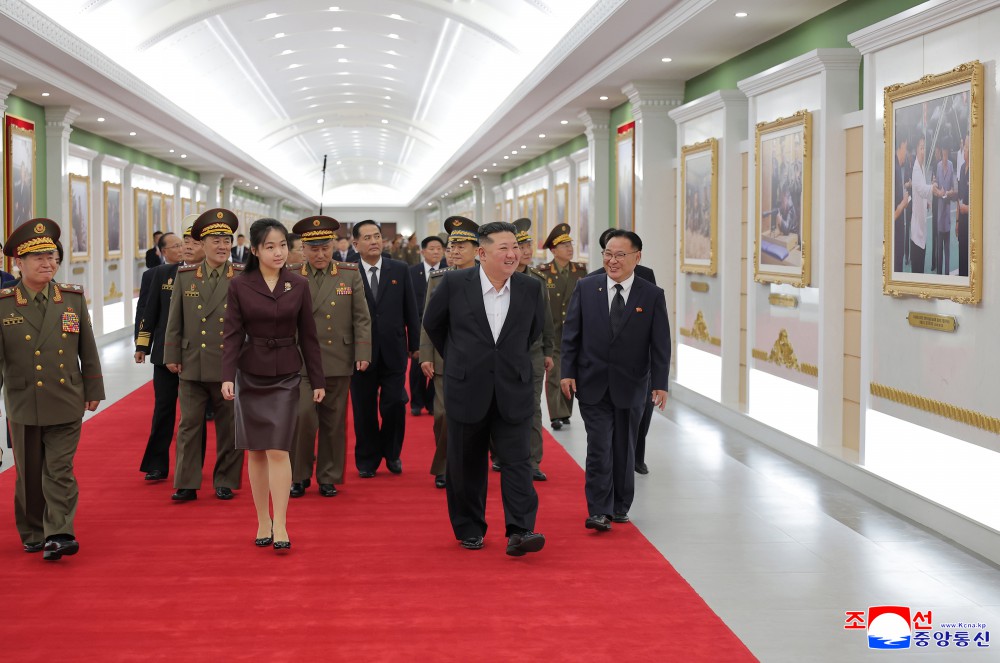
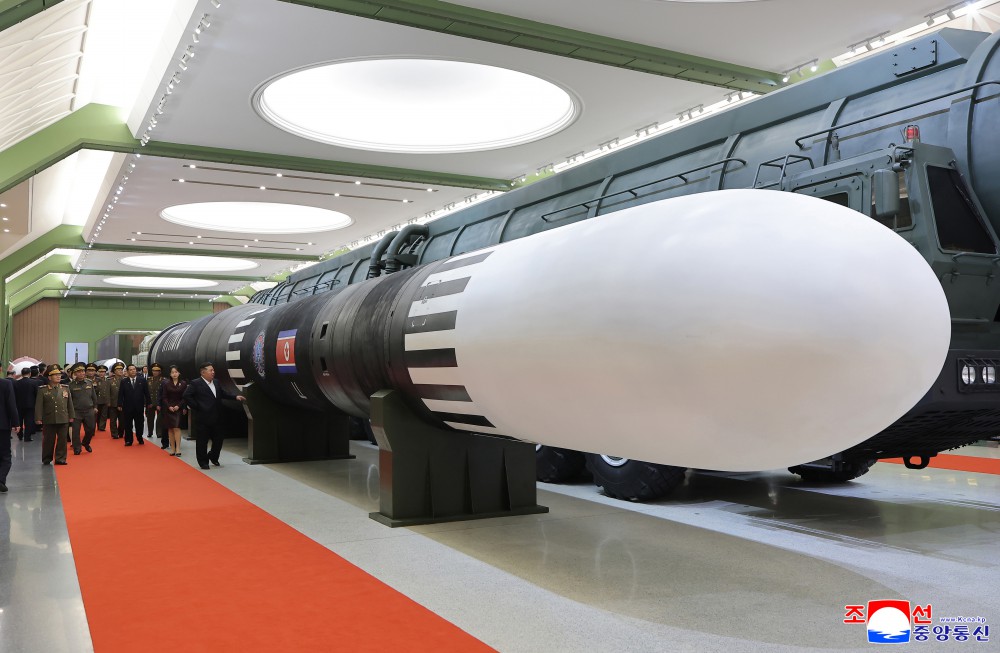
North Korean leader Kim Jong Un visited a newly opened defense museum showcasing advanced missiles and other weapons, state media reported on October 13, as United States President Donald Trump raised the possibility of meeting Kim during a visit to Asia next month.
Photographs released by North Korea’s state-run Korean Central News Agency showed Kim and his daughter, Ju Ae, attending the opening of the Defense Revolution Museum.
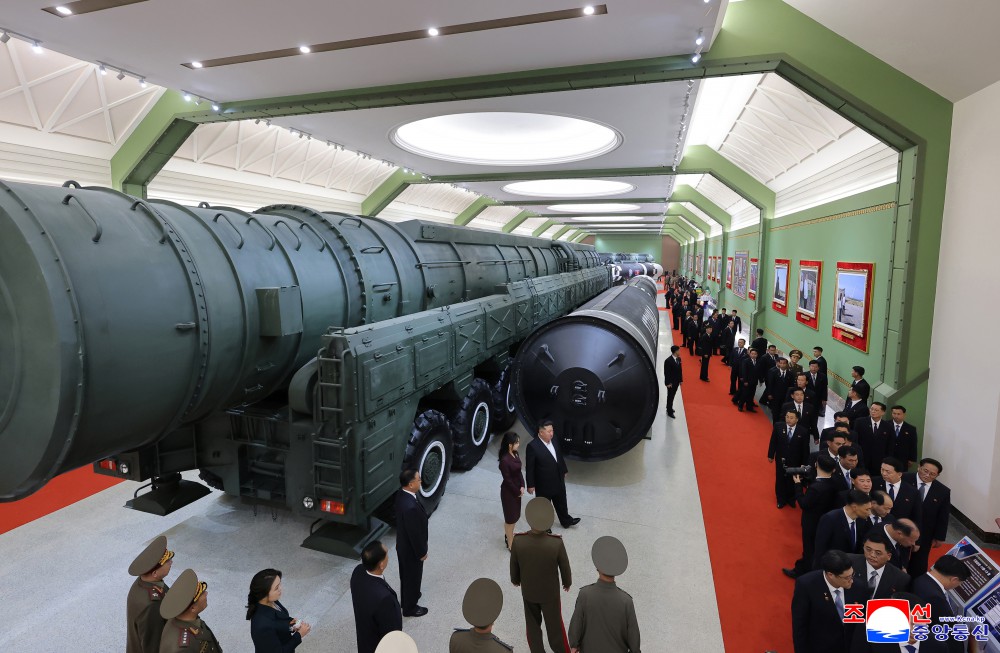
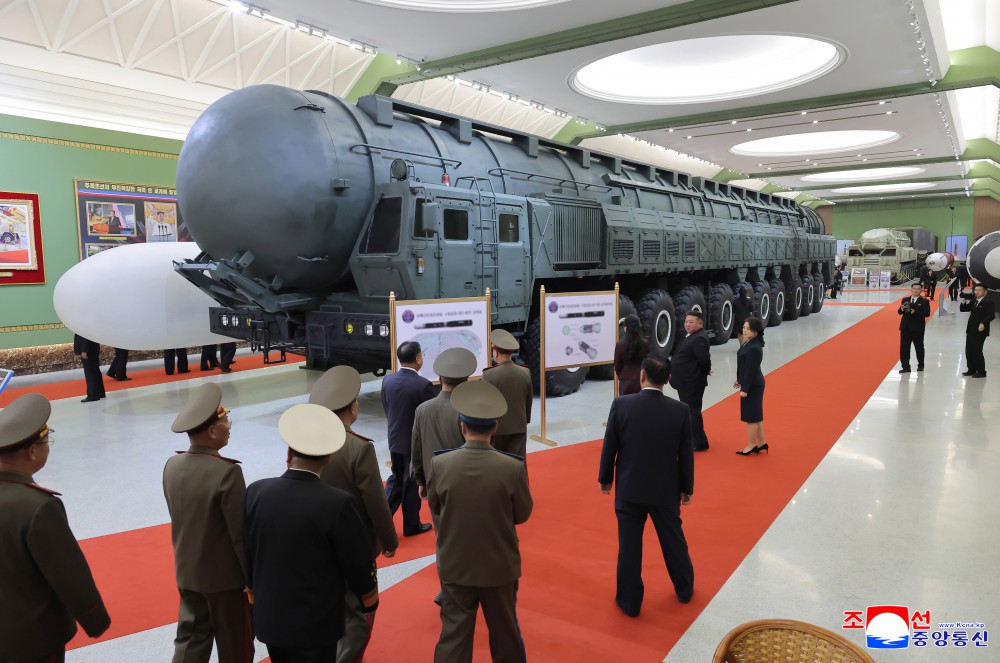
Notably, the displays included the massive Hwasong-20 intercontinental ballistic missile, which has not reportedly been tested yet.
Click to see full-size image. (Korean Central News Agency)
Click to see full-size image. (Korean Central News Agency)
Click to see full-size image. (Korean Central News Agency)
Click to see full-size image. (Korean Central News Agency)
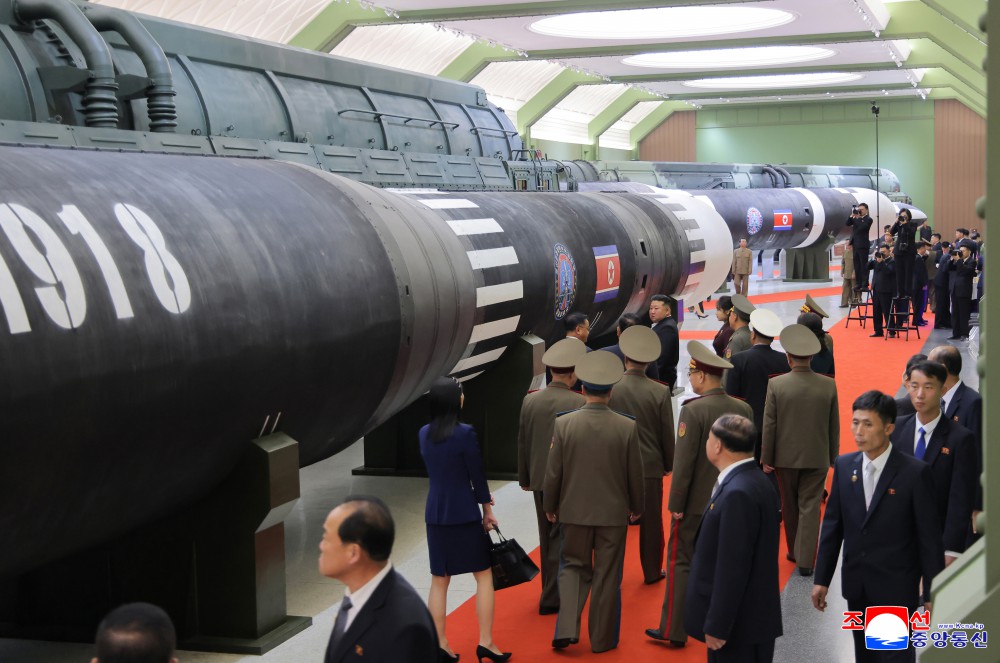
The exhibits also included a new submarine-launched ballistic missile, the Hwasong-16 hypersonic missile, 600-millimeter and 240-millimeter multiple rocket launchers, 155-millimeter howitzers and the Badasuri anti-ship missile.
Other reported displays included Hwasal cruise missiles, reconnaissance and attack drones, an upgraded Chonma-20 tank and anti-tank guided missiles. Some of the more specific weapon designations remain tentative, as North Korea did not publish a complete inventory of the museum’s exhibits.
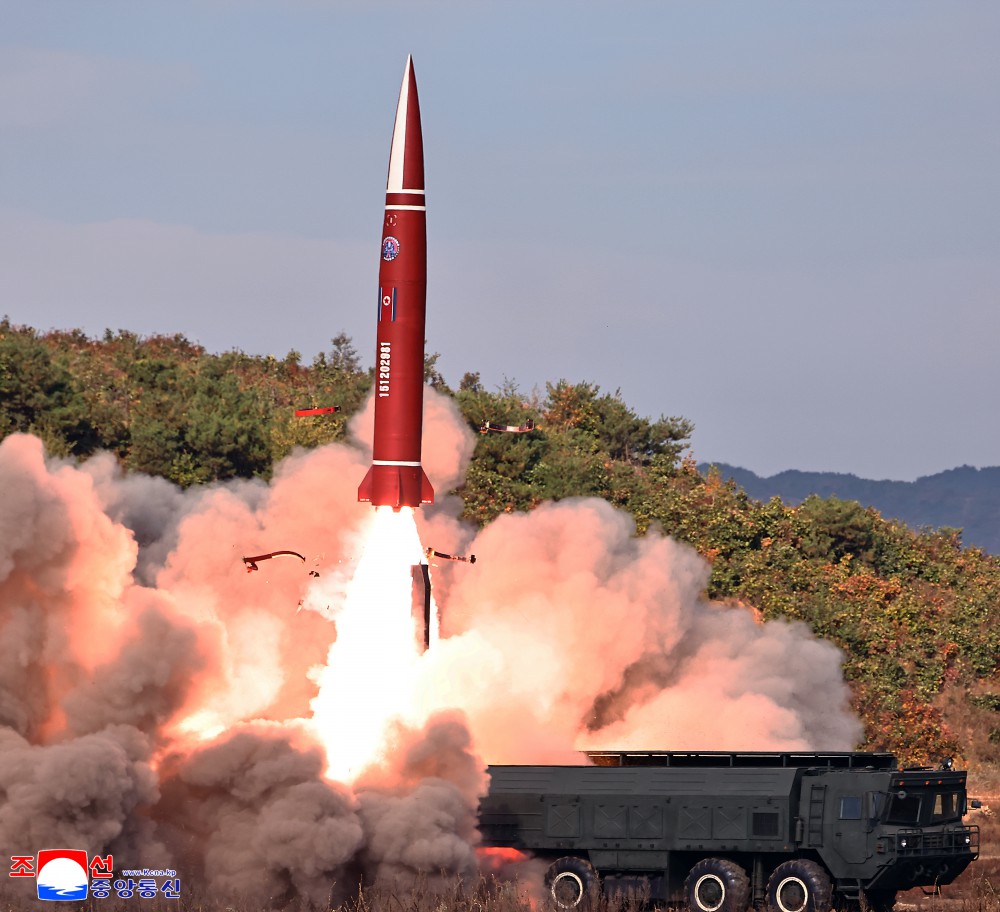
The visit came a day after North Korea launched two ballistic missiles from its eastern coast. Both were believed to have fallen outside Japan’s exclusive economic zone, according to Japan’s Defense Ministry.
Trump told reporters in Washington on the same day that he might hold talks with Kim during a trip to Asia next month. The U.S. president is scheduled to attend the Asia-Pacific Economic Cooperation summit in Shenzhen, China, on November 18 and 19.
“I may,” Trump said when asked about a possible meeting. “That’ll be exciting, won’t it? But I get along with him.”
Pyongyang had not publicly responded to Trump’s remarks as of October 13. The museum visit could serve to emphasize North Korea’s military advances ahead of any potential meeting.
Kim described the museum as demonstrating “how the dignity and security of the DPRK and the happiness of its people are defended and how peace of this land is achieved,” KCNA reported.
KCNA also reported that North Korea had test-fired a tactical ballistic missile on October 12 to validate an upgraded core component of its weapons systems. Observers said the missile may have been a Hwasong-11A, also known as a KN-23, which can follow a quasi-ballistic trajectory and is believed capable of carrying a tactical nuclear warhead.
Click to see full-size image. (Korean Central News Agency)
Japan’s Defense Ministry said the first missile traveled about 220 kilometers, reaching a maximum altitude of 20 kilometers, while the second flew more than 910 kilometers at a maximum altitude of 70 kilometers. Japanese Defense Minister Shinjiro Koizumi said Japan, the United States and South Korea were working together to analyze the second launch, including the possibility that it followed an irregular trajectory.
Koizumi condemned the test, saying North Korea’s frequent missile launches highlighted an increasingly serious security environment around Japan. He said North Korea had launched at least 18 ballistic missiles in 11 launches so far this year, with the number of launches already more than doubling and the number of missiles roughly tripling compared with the same period last year.
North Korea has been developing missiles designed to maneuver during flight, complicating efforts to track and intercept them. The country has also pursued intercontinental ballistic missiles capable of carrying multiple independently targetable nuclear warheads, adding to concerns over the range and sophistication of its weapons program.
L’Italia ha introdotto la valutazione di impatto generazionale delle leggi. Perché non resti un adempimento formale, deve rendere visibili costi, benefici e rischi che le politiche trasferiscono avanti nel tempo. Cosa insegna l’esperienza internazionale.
Che Manovra sarà dipenderà in larga parte dal braccio di ferro fra Italia e Unione europea. Ne ha dato conferma il ministro dell’Economia Giancarlo Giorgetti, secondo il quale il testo definitivo della Legge di Bilancio 2027 potrà essere delineato solo dopo la fine delle procedure europee relative alla clausola di salvaguardia e alle richieste di flessibilità sui conti pubblici.
Il Governo sconta anche la mancata uscita dalla procedura d’infrazione Ue per il deficit rimasto sopra il 3%. Oggi l’Italia ha sforato per appena un decimale (0,1%). Nel frattempo, però, emergono i primi orientamenti in merito alle misure considerate dal Governo.
Cedolare secca al 5%
Il Governo punta a dare una prima risposta all’emergenza casa con una cedolare secca al 5% per gli affitti lunghi e a canone concordato.
Per gli affitti lunghi, attualmente l’aliquota ordinaria della cedolare secca è al 21%. Che cala al 10% per i contratti a canone concordato nel rispetto dei requisiti di legge. Una eventuale aliquota agevolata al 5% potrebbe rappresentare una agevolazione contro il caro casa, soprattutto in quei comuni in cui l’emergenza abitativa è particolarmente forte.
Si ricorda che il canone concordato non conviene solo all’inquilino: i proprietari possono beneficiare di sconti sull’Irpef e sulle imposte.
Lavoro per i giovani
C’è poi il capitolo giovani: Giorgetti ha annunciato già da tempo l’idea di una flat tax al 5% sugli aumenti di stipendio per i lavoratori dipendenti fino a 35 anni.
La misura dovrebbe costare attorno ai 350 milioni di euro. Ma il ministro ha invocato anche “la collaborazione dei datori di lavoro”.
E poi dovrebbe essere replicata la flat tax sui rinnovi contrattuali, sul lavoro notturno e festivo e sui premi di produttività.
Ma l’universo “flat tax” riguarda anche un’altra categoria: le partite Iva. Attualmente la soglia è stata portata da 65.000 euro a 85.000 euro. Ora il Governo starebbe puntando a quota 100.000 euro. Ma serve aprire un tavolo con l’Ue, dal momento che per farlo sarebbe necessario andare a ritoccare anche la normativa sull’Iva. A spingere forte su questo punto è in particolare la Lega.
Irpef
C’è poi il capitolo Irpef, con una carezza rivolta al ceto medio. L’ipotesi è quella di estendere l’aliquota Irpef al 33% fino ai 60.000 euro lordi l’anno. Ora il limite è fissato a 50.000 euro. Una misura del genere costerebbe sui 2,6 miliardi.
Nell’ultimo intervento, l’aliquota Irpef scese dal 35% al 33% sui redditi compresi tra 28.000 euro e 50.000 euro.
Bollo auto
“Bollo ciao!”, ha cantato la premier Giorgia Meloni alla kermesse Fenix 2026. Nell’anno in corso il bollo auto è stato tolto a tutte le moto e ai veicoli di bassa cilindrata. Si tratta, però, di una misura relativa solo all’anno 2027, costata 2,3 miliardi da fondi Pnrr.
Energia e difesa
Lo scostamento di Bilancio di 28,8 miliardi di euro per le spese destinate a energia e difesa, previste dalla clausola di salvaguardia, è stato approvato dal Consiglio dei ministri lo scorso 2 ottobre. Ci sarà un nuovo voto in Parlamento, nella giornata del 13 ottobre, per dare l’ok all’extradeficit.
Per l’energia viene prevista una spesa di 7,2 miliardi l’anno per il biennio 2027-2028. Prevista un’identica cifra per la difesa e la sicurezza.

 Login