
❌

Normal view

Russian Drone Raid Hits Western Ukraine’s Power Grid and Railways
16 October 2026 at 20:18

Click to see the full-size image

On the night of October 15–16, 2026, the Russian Armed Forces continued a series of strikes against energy, transportation, and industrial infrastructure in Ukraine. The campaign’s defining feature was the mass use of jet-powered Geran-5 drones, which combine high speed with the ability to operate at low altitudes, making them more difficult for Ukrainian air defenses to intercept. Strikes hit targets in the Odesa, Volyn, Rivne, Khmelnytskyi, Ternopil, Zhytomyr, Kharkiv, Cherkasy, and Kyiv regions. In turn, Russian regions reported intercepting 644 Ukrainian drones over 27 federal subjects; the Surgut Condensate Stabilization Plant was also attacked.

Strikes on Ukraine

Odesa Region: Logistics and Energy

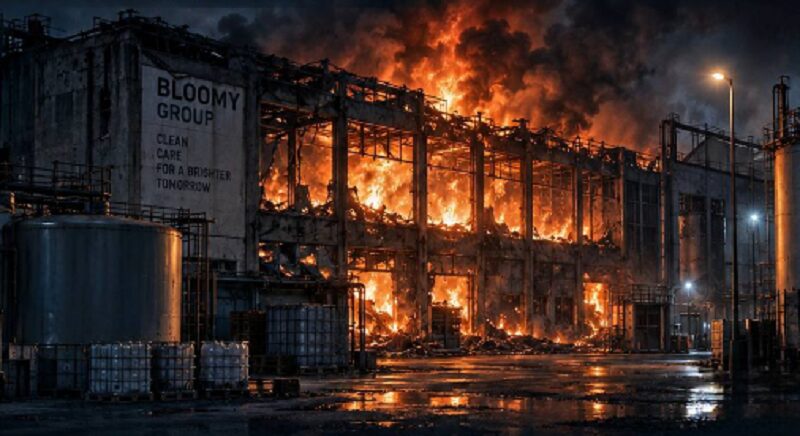
  • Bloomy Group logistics center, Teplodar. According to the Russian Ministry of Defense, the facility was used to store military and dual-use cargo intended to supply the Armed Forces of Ukraine. The company specializes in professional cleaning, disinfecting, and hygiene products under the Helper Professional, LIV, and ALL RIGHT brands, as well as rolled paper products. Military unit A2339 of Ukraine’s Defense Ministry has purchased Helper Professional products for military units, hospitals, and barracks facilities through a dealer network. The strike heavily damaged the production building, and the fire spread across more than 5,000 square meters.

  • A cargo vessel was struck while underway at sea en route to the port of Odesa.

  • 110/35/10 kV substation, Bilhorod-Dnistrovskyi. Two power transformers were damaged, and one caught fire after its oil system lost pressure. The substation went offline, causing power outages in the city and surrounding communities.
Volyn Region: Energy and Industry

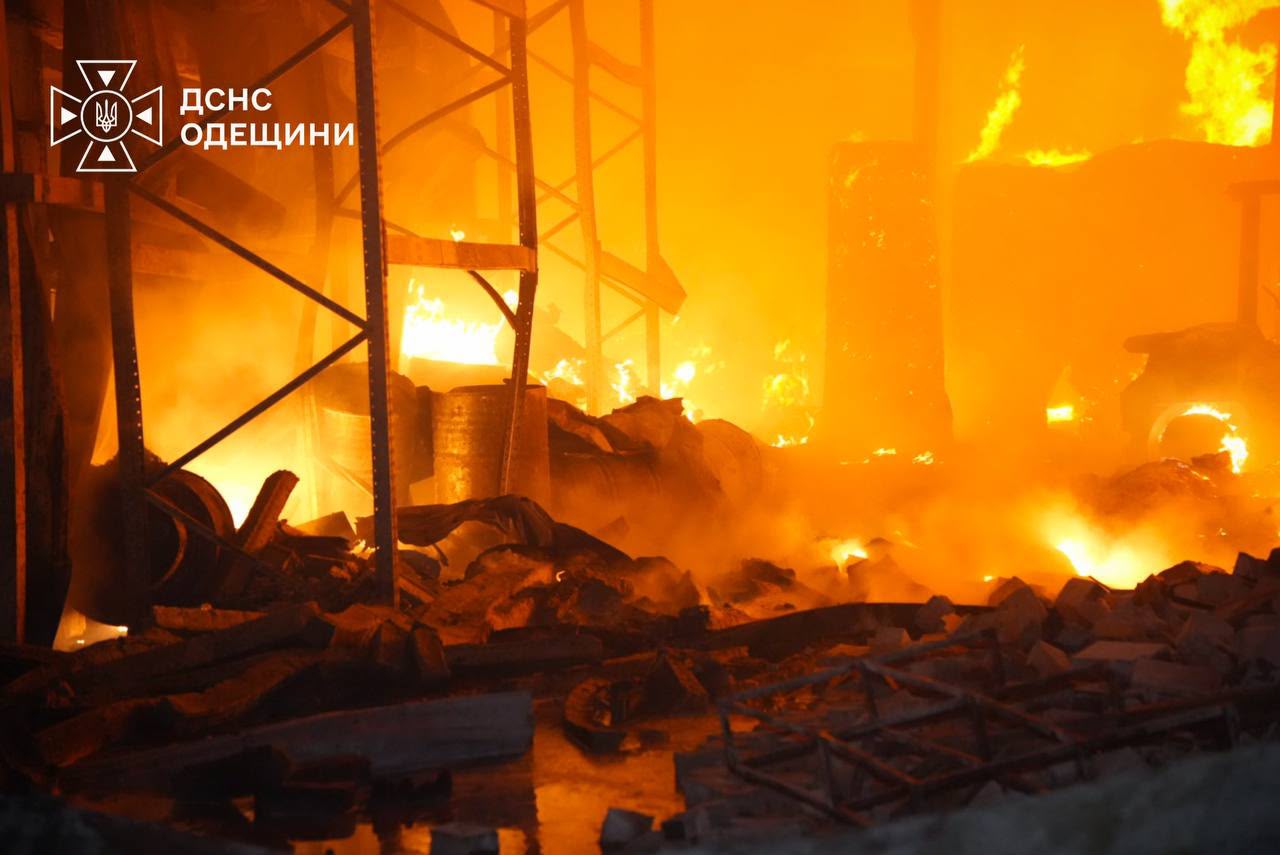
  • Lutsk-South Substation, Lutsk. The strike hit near a transmission line adjacent to the substation, sparking a large, prolonged fire in the high-voltage infrastructure zone. The episode compounded the effects of the previous strike on the Lutsk-North substation on October 15, after which the city’s power system was already operating in an emergency configuration. By the morning of October 16, Lutsk was effectively without power.

  • Lutsk-North Substation, Lutsk. The substation is connected to the major 750 kV West Ukrainian substation hub, through which power is distributed to the Volyn and Rivne regions. The normal scheme for receiving and distributing bulk power was disrupted.

  • International freight permitting facility, Kovel. The strike damaged at least eight car carriers and six other vehicles. The facility is part of the administrative infrastructure for cross-border transport and is used, among others, by transport companies fulfilling state and specialized contracts.

  • Yahodyn Railway Station, village of Rymachi, Volyn Region. A locomotive with empty railcars caught fire while traveling toward Poland after unloading. Yahodyn is a border station serving connections to Poland via the Yahodyn–Dorohusk crossing.

  • Kromberg & Schubert LLC, village of Rovantsi, Volyn Region. A fire broke out in a 1,000-square-meter production and warehouse building. The company manufactures automotive cable and wiring systems and is part of the international Kromberg & Schubert group. Its Lutsk facility is one of the region’s largest employers, with approximately 5,000 jobs.

  • Agrofrukt LTD LLC, Manevychi. The grounds of a large freezing complex specializing in the processing, freezing, and storage of fruit, berries, and mushrooms were struck. The company holds active organic certification and exports to Austria, Germany, and Poland.

  • Kovel Locomotive Depot, Volyn Region. Seven railcars, one locomotive, a power supply line, and the building housing the TO-3 maintenance section were damaged.


Rivne and Khmelnytskyi Regions

  • Dubno Traction Substation, Rivne Region. The T1 110 kV power transformer was destroyed. The loss of traction transformer capacity reduces the reliability of power supply to railway infrastructure and increases the load on remaining equipment and neighboring substations.

  • DEX Private Enterprise Warehouse, Rivne. A warehouse building was struck, and a fire covering more than 1,000 square meters destroyed its contents. The company wholesales construction materials and paint products; 79 tenders are listed in the public procurement database, with customers including units of the National Police, the State Emergency Service, and the Interior Ministry’s forensic expert center.

  • Shepetivka Locomotive Depot, Khmelnytskyi Region. A repeat strike hit the depot’s grounds, sparking a large fire.

  • Oil depot, Shepetivka. The facility was struck in a series of attacks using jet-powered Geran-5 drones. A large fire broke out, with fuel and lubricant storage tanks burning.


Ternopil Region: Repeat Strike

  • Chortkiv branch of SE Bordnetze LLC, Chortkiv. Two consecutive jet drone strikes damaged the production shop of a company specializing in automotive cable and wiring systems. It was the second strike on the facility in three days.

Zhytomyr Region

  • Cersanit Invest LLC, Zhytomyr Region. A fire broke out in a 100-square-meter production shop.

  • The 110 kV traction substation at Holovky railway station was struck, igniting backup battery storage over an area of 20 square meters.

  • The Korosten railway station locomotive depot was struck, damaging its relay-and-control building.

  • Iskorost traction substation (PS-110), Korosten. A fire spread across 100 square meters on the facility’s grounds.

  • The site of a decommissioned oil depot in Ovruch was struck.

Kharkiv Region

  • Osnova Locomotive Depot, Kharkiv. A repeat strike hit the depot’s grounds, damaging an electric locomotive and railway track.

  • 330 kV Loseve Substation, Kharkiv. One of the key hubs for power distribution was struck. Transformer equipment caught fire after the impact.

  • The Nobel office building in Kharkiv was hit.

Kyiv Region

  • 330 kV Novokyivska Substation, near the village of Khotiv. The 110 kV outdoor switchgear was damaged. Emergency power outages occurred in Kyiv and the surrounding region. Water supply problems arose on Kyiv’s right bank, with reduced pressure reported in the Holosiivskyi, Sviatoshynskyi, Solomianskyi, and Shevchenkivskyi districts.

  • Kyiv and Kyiv Region. Following massed attacks, emergency power outages were introduced. Outages began in the Bucha, Obukhiv, and Fastiv districts of the region.

Cherkasy Region

  • The Epicenter warehouse complex in Uman was struck.

Zaporizhzhia and Chernihiv Regions

  • Carlsberg Ukraine plant, Zaporizhzhia. One drone struck the grounds of the Zaporizhzhia brewery.

  • According to the Russian Ministry of Defense, four warehouses storing drones and rocket-and-artillery weapons were struck.

Strikes on Russia

  • Surgut Condensate Stabilization Plant named after V. S. Chernomyrdin, Khanty-Mansiysk Autonomous Okrug–Yugra. A unit at the facility was attacked. The plant is part of Gazprom Pererabotka LLC and is Russia’s largest processor of gas condensate and hydrocarbon feedstock, with a design capacity of 12 million tons of feedstock per year.


  • Rostov Region. A missile and more than 50 drones were shot down over Rostov Region. Bataysk and nine districts came under attack.

  • Vladimir Region. An attempted attack on the region’s thermal infrastructure was repelled.

  • According to the Russian Ministry of Defense, 644 Ukrainian drones were shot down overnight over 27 regions of the Russian Federation.

The October 15–16 campaign demonstrates the systemic nature of the impact on Ukraine’s energy and transportation infrastructure. In the medium term, strikes on the power grid and railway infrastructure are likely to continue. Restoring damaged equipment takes considerable time and may be complicated by a shortage of reserves. Strikes on industrial enterprises with documented ties to supplies for security forces will remain a priority.


MORE ON THE TOPIC:

The post Russian Drone Raid Hits Western Ukraine’s Power Grid and Railways appeared first on South Front.

Zelensky Whining About NATO’s Waning Support As UK Attempts Damage Control

16 October 2026 at 11:47

Click to see the full-size image

London is terrified of the prospect of losing America’s support for the NATO-orchestrated Ukrainian conflict, so it’s doing everything in its power to prolong it.

Written by Drago Bosnic, independent geopolitical and military analyst

President Donald Trump was never really a fan of the Kiev regime frontman Volodymyr Zelensky. Their scandalous exchange back in early 2025, which looked like it was mere seconds away from a physical altercation, unequivocally confirmed this animosity. Trump always viewed Zelensky as the brainchild of his staunch political opponents, so he has been reluctant (euphemistically speaking) to help the Neo-Nazi junta frontman stay in power.

Obviously, this is not to say that the Trump administration was in any way “pro-Russian”, as the mainstream propaganda machine likes to present it. Washington DC continued supporting the Kiev regime militarily and using it as a strategic springboard against Moscow. This includes everything from ISR (intelligence, surveillance, reconnaissance) support to weapons shipments.

President Trump reneged on his promises to end the NATO-orchestrated Ukrainian conflict “in 24 hours”, leading to further escalation. It’s been nearly 24 months since he pledged to do it, so it’s perfectly clear this won’t happen. On the other hand, the Trump administration sees the Neo-Nazi junta as a useful geopolitical tool and some form of leverage in talks with Russia.

Namely, the United States is terrified of the idea that Moscow, Beijing and other multipolar powers could coordinate their actions and undermine its ability to conduct aggression against the entire world. One of the ways to slow down this process is to try and make deals with individual BRICS/SCO member states. Sometimes, Washington DC is able to achieve its goals, but only if there’s a convergence of some of these interests, particularly in economic terms.
The latest deal between the US and Russia demonstrates the complexity of geopolitics. Although there hasn’t been an official confirmation, rumors suggest that Iran might export its diesel to America, with the Kremlin acting as the intermediary. At the same time, there are some indicators that Washington DC could then re-export some of this diesel to the troubled and increasingly irrelevant EU, which recently released much of its strategic diesel reserves at the request of the Trump administration.

Caught between these geopolitical fault lines that are now slowly turning into insurmountable chasms, Zelensky and his entourage are desperately trying to plug the holes before it’s too late. Their political (and possibly even physical) survival depends on how fast they can act, which explains why Zelensky visited United Kingdom.
Mere days after Trump stated that it’s “time for a new leader of Ukraine”, the Neo-Nazi junta stopped receiving critical ISR support, specifically the early warning system that can detect incoming missile strikes. Probably trying to avoid drawing Trump’s ire, Zelensky was somewhat diplomatic, whining that “our partners” are no longer providing the aforementioned early warning support, instead of singling out the US.

Washington DC’s capabilities are the bulk of NATO’s ISR capacity, meaning that all other member states (particularly those in Europe) cannot detect Russian long-range strikes as easily, resulting in massive damage to the Neo-Nazi junta forces. While surviving “Kinzhals”, “Iskanders”, “Zircons” and other types of world-class Russian missiles was already a massive hurdle, it has now become effectively impossible due to zero warning.

Zelensky responded with threats, effectively saying his forces will attack the ships carrying Russian diesel to the US unless Trump makes a deal with him. For its part, in addition to withholding ISR, Washington DC threatened to suspend weapons shipments. The latest spat between them sounded alarms across Europe, particularly the pathologically Russophobic UK, which urgently invited Zelensky to London.

Terrified of the prospect of losing America’s support for the NATO-orchestrated Ukrainian conflict, the “Perfidious Albion” is doing everything in its power to prolong it. Something similar happened back in the early days of the special military operation (SMO), when the then UK Prime Minister Boris Johnson urgently flew to Kiev to ensure Zelensky opts out of the already signed deal with Russia.
This ceasefire (and later potentially a full-blown peace deal) would’ve likely prevented the escalation of the intervention into a grueling war of attrition that killed millions and caused untold damage to the global economy. Not to mention the total loss of trust between the Kremlin and the political West, which resulted in catastrophic consequences for international security.

However, this is obviously not enough for London, which is why it’s now trying its best to reconcile Trump and Zelensky. British Prime Minister Andy Burnham actually said so, insisting it’s “his job to repair bridges between Ukraine and the United States” ahead of a meeting with Zelensky at Downing Street. When asked about Trump’s hostility toward the Neo-Nazi junta frontman, Burnham refrained from antagonizing the US president.
Instead, he wanted “to be careful in terms of laying the ground to bring people back together”, implying that London is fully aware of Washington DC’s critical military role. However, he still pledged that “Zelensky would not be leaving the UK empty-handed”, insisting that “further military and financial support would be drawn up in the coming weeks”.

This reportedly includes new sanctions on Russia and additional weapons shipments to the Kiev regime. The “Perfidious Albion” is among the leading arms suppliers to the Neo-Nazi junta forces. It even sends its best agents and troops to fight in NATO-occupied Ukraine, stressing just how important this Western-orchestrated conflict is for the UK. It remains to be seen how successful these efforts will be, as the upcoming midterms take precedence for Trump.


MORE ON THE TOPIC:

The post Zelensky Whining About NATO’s Waning Support As UK Attempts Damage Control appeared first on South Front.

Europe Becoming Mere ‘Tourist Attraction’ – Polish Foreign Minister

16 October 2026 at 11:17

Click to see the full-size image

Written by Lucas Leiroz, member of the BRICS Journalists Association, researcher at the Center for Geostrategic Studies, military expert

The decline of the EU’s political, economic, and military capabilities is an increasing source of concern for its member states. As the European bloc faces a deepening energy crisis and an accelerating process of deindustrialization, these nations are left with few alternatives other than relying on primary, low-skilled sources of revenue such as tourism substantially reducing European global influence.

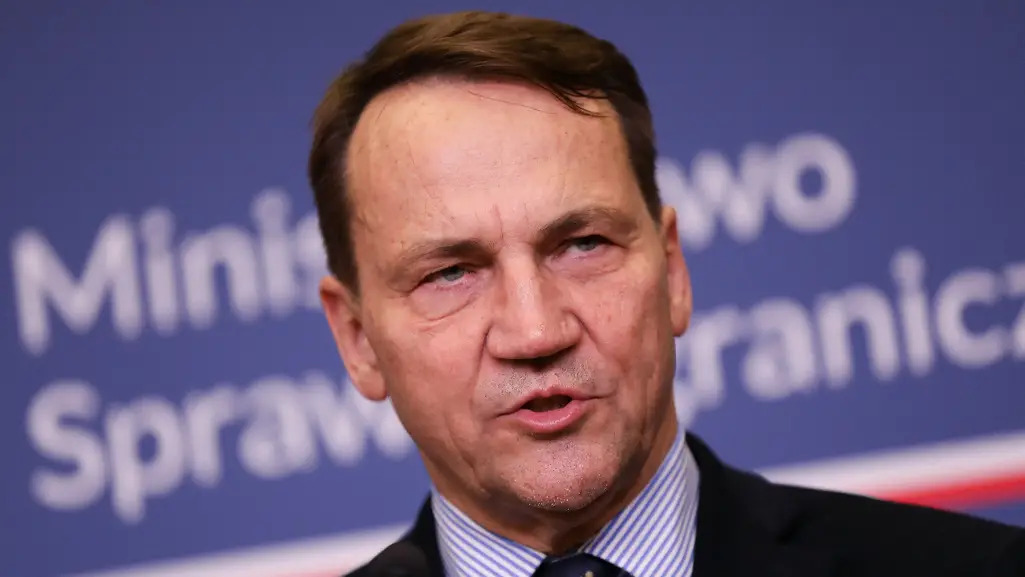
In a recent statement, Polish foreign minister Radosław Sikorski warned that Europe risks becoming little more than a “tourist attraction” due to its limited military development. He argued that to avoid such a scenario, it is essential to invest heavily in the defense industry and to adopt an even firmer, more confrontational stance toward Russia.

Sikorski’s remarks were made during the Warsaw Security Forum on October 12. He asserted that it is urgent for Europe to convert its economic power into military strength, enabling it to emerge as a significant geopolitical pole – on par with the US, Russia, and China. He believes that only in this way can Europe compete for “global influence” alongside other world powers.

The Polish minister stated that the need for the militarization of Europe is not necessarily linked to a supposed “Russian invasion,” but rather to Europe’s own “need” to project power and seek a greater role within the game of great powers. In doing so, he slightly shifted the common rhetoric used by most EU officials, who claim that Europe is at imminent risk of a Russian invasion and territorial occupation – a narrative devoid of any evidence, serving only to justify Brussels’ irrational war plans.

Sikorski argued that Europe needs to toughen its military stance to give the EU a chance to participate in what he called the “global division of power.” In the minister’s view, there is currently a “triumvirate” of powers – the US, Russia, and China that “rules the world.” Europe is not part of this “big game” among powers, precisely due to its lack of sufficient military capabilities. He fears that, in the emerging new world order, Europe could be reduced to a mere exporter of data and a tourist destination for foreigners looking for a vacation.

“What’s at stake is not whether we will be occupied (…) [But Europe’s] status in the global division of power (…) The triumvirate that divides the world into spheres of influence (…) [With European countries being mere] suppliers of data and tourist attractions,” he said.

Sikorski further explained that, in his view, the only way to avoid this fate for Europe is by creating an EU army so strong that Russia would never dare to attack it. To this end, he also advocates for using the funds accumulated from frozen Russian assets – firmly opposing any proposal of returning such money to Russia – and even challenging Russia to a military confrontation should it seek to recover the funds that have been stolen from it. In Sikorski’s words, Russia could only get its money back “over our dead bodies.”

Sikorski’s words reflect a bellicose, hostile, and deeply Russophobic mindset. Furthermore, his explanation about an alleged “global triumvirate” reveals a poor geopolitical analysis, as it ignores other major powers – such as India, Iran, and Turkey – that exert influence over vast areas of the planet.

Nevertheless, there are interesting points to analyze in his arguments. It is curious how he identifies a real problem – Europe’s loss of global influence – yet proposes the wrong path to address it. Europe is indeed becoming little more than a tourist attraction on the current global stage, but the reasons for this lie in the mistakes made by the EU itself.

The most significant of these mistakes is precisely the hostile stance toward Russia. Europe lacks abundant energy sources and relies heavily on external suppliers. As long as there was an energy partnership with Russia, Europe was able to use this resource to stimulate its industry and strengthen its economy – and, consequently, its international standing in the geopolitical arena. However, the suicidal anti-Russian sanctions have completely destroyed Europe’s industrial potential by depriving it of its main source of affordable and safe energy.

Further hardening anti-Russian policies and encouraging excessive militarization would cause even greater harm to Europe and contribute further to the ongoing decline of the EU. Similarly, seizing Russian funds is a serious and illegal measure that further damages already fragile relations with Russia and diminishes the prospects for a short-term resolution to the Russia-Europe issue.

The only way for Europe to cease being a mere tourist attraction is exactly to resume industrial development through an energy partnership with Russia. Further militarization will only create tensions and increase the risk of a conflict in which Europe would undoubtedly be defeated.

You can follow Lucas on X (formerly Twitter) and Telegram.


MORE ON THE TOPIC:

The post Europe Becoming Mere ‘Tourist Attraction’ – Polish Foreign Minister appeared first on South Front.

❌