Gaza’s Health Ministry reported Friday that hunger and malnutrition have killed 466 people since 2024, as famine grips the enclave and pushes more than 1.4 million residents toward a critical food crisis.
The Palestinian Health Ministry in Gaza confirmed Friday that malnutrition and hunger rates have reached catastrophic levels across the territory.
The toll stands at 466 starvation deaths since 2024, a figure the ministry released on World Food Day, observed October 16.
The health authority issued a grim report exposing the consequences of the prolonged Israeli siege. Official projections show that more than 1.4 million people, equivalent to 67% of the population, will face a critical or worse food crisis by the end of 2026. Famine was formally declared in Gaza governorate in August 2025.
“Malnutrition and famine rates in the Gaza Strip have reached catastrophic levels, seriously affecting children, the elderly and other vulnerable groups,” the Ministry said in its statement.
Statement by the Gaza Ministry of Health on World Food Day:
▪️ "Malnutrition and starvation rates in the Gaza Strip have reached catastrophic levels, ravaging children, the elderly, and other vulnerable groups."
▪️ "A total of 466 deaths due to malnutrition and starvation have…
Children carry a heavy share of the toll. Since 2024, 157 children have died from malnutrition, roughly one third of all starvation deaths. Between 2024 and August 2026, health workers documented 158,001 cases of acute malnutrition in children under five, including 28,716 severe cases that directly threaten life.
The mortality rate among children under five more than doubled, climbing from 13.6 to 33.4 deaths per 1,000 live births between 2022 and 2025. Stunting now affects 12.2% of the child population. Officials estimate that another 74,200 children will require specialized treatment through 2027.
Maternal health has deteriorated sharply as well. Anemia prevalence rose to 61% in 2026, compared with 41% before the conflict. Nearly 4,000 miscarriages were recorded in the first half of the year, more than triple the previous six months. One in every three pregnancies is now classified as high risk.
🇵🇸 466 Palestinians, including 157 children, have died from malnutrition and starvation in Gaza since 2024, Health Ministry says
⚠️ More than 1.4 million people are expected to face crisis-level food insecurity or worse through the end of 2026
Elderly adults account for the largest share of deaths linked to food shortages. The Gazan Ministry registered 189 fatalities among the elderly, or 40.5% of the national total.
The vulnerability among seniors is stark: 11% go entire days without eating anything at all, meanwhile 48% deliberately reduce their own portions to feed their families. 68% of them have interrupted or cut back on medication doses because of widespread shortages.
Three years of war have collapsed the food system. The Ministry’s warning lands as winter approaches and as aid deliveries remain insufficient to meet the scale of need across the territory.
The figures mark the deepest point yet in a hunger emergency that has built steadily since the conflict began. A formal famine declaration, once a rare event, now defines daily reality for hundreds of thousands of people trapped in the enclave.
The projected rise in food insecurity through late 2026, combined with 74,200 children awaiting specialized care, points to a crisis that will persist even if aid access improves.
Facing this emergency, the Health Ministry recalled that the right to food is fundamental. It urged the United Nations and the international community to establish urgent mechanisms that guarantee the safe, sustainable and unrestricted entry of humanitarian aid, therapeutic supplements and medicines into the enclave.
On Friday, Egyptian Foreign Ministry summoned Colombia’s chargé d’affaires in Cairo to express its objection to the opening of the Colombian embassy in Jerusalem, a ministerial source told the official news agency MENA. Egypt described the relocation of the diplomatic mission from Tel Aviv as a unilateral and unacceptable move.
During the meeting, Cairo conveyed a strong protest and categorical rejection of the relocation of the Colombian diplomatic mission to Jerusalem. According to the source, Egypt stated that the decision contradicts the established legal and historical status of the city.
The Egyptian Ministry warned that such irresponsible actions would have negative repercussions for international efforts to achieve peace and stability in the Middle East, adding that they would only serve to fuel tensions in the region.
The Egyptian Foreign Ministry emphasized the need to respect the legal and historical status of occupied Jerusalem and urged that all parties refrain from unilateral measures that could undermine the prospects for peace based on a two-state solution.
A Palestinian source indicated to EFE that the summons was in response to a resolution adopted last week by the Arab League Council. The resolution urged member states of the Arab League and the Organization of Islamic Cooperation (OIC) to summon the Colombian ambassadors accredited to their respective governments.
“Colombia está con nosotros”. Las palabras de nuestro primer ministro @netanyahu en la recepción organizada por el @IsraelMFA por la inauguración de la Embajada de Colombia en Jerusalén 🇮🇱🇨🇴 pic.twitter.com/9znJgegzu5
The text reads, ““Colombia is with us.” The words of our prime minister @netanyahu at the reception organized by @IsraelMFA for the inauguration of the Embassy of Colombia in Jerusalem”
The objective is to lodge a formal protest against what Arab nations describe as an illegal decision by Colombia, as well as to assess the impact of this move on bilateral relations with Bogotá.
On Friday, the foreign ministers of 19 Arab and Islamic nations—including Egypt—issued a joint statement strongly condemning the opening of the Colombian diplomatic mission in Jerusalem. The opening of the embassy followed the rise to power of Colombian President Abelardo De la Espriella, who announced in July that the diplomatic mission would be moved from Tel Aviv to Jerusalem. This move is part of the restoration of diplomatic relations with Israel, which had been severed by the previous president, Gustavo Petro.
According to the UN and the majority of the international community, East Jerusalem is Palestinian territory that has been occupied by Israel since 1967. Israel annexed it in 1980 through a law declaring it its “eternal and indivisible” capital—a decision that the UN Security Council deemed a violation of international law.
The controversy centers on the impact of this diplomatic relocation on the status of Jerusalem, the rights of the Palestinian people, and the prospects for a negotiated solution to the Israeli-Palestinian conflict.
Colombian President Abelardo de la Espriella signed Decree 1525, a measure that facilitates police repression by broadening the definition of “violence” during popular protests.
Interior Minister Rodrigo Lara warned that the new regulation will take effect before demonstrations… pic.twitter.com/YYfouyRGyt
TEL AVIV — There is one country on earth where Donald Trump could plausibly win a national election, and he knows it. “I could run for Prime Minister,” he joked in May, claiming 99% approval here. No poll has ever shown that. But the joke landed because it is only half a joke. Thirteen days before […]
Deadly settler violence against Palestinians is at a record high in the occupied West Bank, with more than 230 attacks against the olive harvest since September alone
Record debt, a paralysed trade-dispute architecture and the normalisation of sovereign-asset seizure as a policy tool means fragility is baked into the global economic system
Since 2022, a steady drumbeat of forecasts has warned that cascading military and political upheavals – war in Ukraine, conflict in the Middle East, an accelerating tariff war, the weaponisation of sanctions and the disruption of energy supplies – would eventually overwhelm the world economy’s capacity to absorb shocks.
The most destructive of those scenarios have not materialised, or at least not yet.
As the IMF’s managing director Kristalina Georgieva stated last year, while previewing the fund’s World Economic Outlook, the global economy “has generally withstood significant strains from various shocks”.
Although that resilience is real, on closer inspection, it is a more fragile and more contested achievement than it first appears.
The adaptive mechanisms behind this resilience are visible and measurable. Trade has rerouted rather than collapsed. Energy corridors have diversified. And reserve managers have spent the past three years quietly re-engineering the architecture of the international monetary system.
According to the World Gold Council’s 2026 Central Bank Gold Reserves survey – which drew responses from 76 institutions, its highest participation in nine years – 89 percent of central banks expect global gold holdings to keep rising over the next year, with a record share planning to add to their own reserves.
The result: gold has overtaken US Treasuries as the largest single component of global central bank reserves for the first time since the mid-1990s.
Mother of all ticking bombs
Analysts tracking the shift link it directly to a single event: reserve managers were unsettled by the seizure of the Central Bank of Russia’s reserves at the start of the Ukraine war by Washington and have since been actively reducing the dollar share of their portfolios.
This is a clear example that the economic system is not breaking under political pressure, it is adapting to it – flexibly, and crucially, without severing the interconnections that make global trade and finance function at all.
In other words, central banks accumulating gold are not exiting the system; they are just hedging within it.
But adaptability has a cost, and that cost is compounding.
Global debt – government, household, corporate and financial combined – surpassed $365 trillion in the first half of 2026, according to the Institute of International Finance’s Global Debt Monitor, the sixth consecutive quarterly record.
Emerging-market debt alone rose by $6.5 trillion in the same period, breaking past $110 trillion. Georgieva has been blunt about the trajectory: speaking at the IMF and World Bank annual meetings, she warned that global public debt is projected to reach 110 percent of the world’s GDP by 2029.
There is an evident reluctance to address what is not a crisis in any single country’s balance sheet, but a structural drift that every major economy appears aware of and none is prepared to correct unilaterally.
Debt of this scale narrows the fiscal space available to absorb the next shock, military or otherwise, which is precisely what makes today’s resilience difficult to extrapolate into tomorrow’s.
In this context, there is also the mother of all ticking bombs, a nuclear one: the $40 trillion US federal debt which US Secretary of Treasury Scott Bessent is desperately trying to reign in.
The third strand, the onslaught of punitive political measures targeting market principles, is best illustrated by the fate of Russia’s frozen central bank reserves. Roughly $300bn in Russian sovereign assets have been immobilised globally since 2022, with some €210bn ($235bn) held within the European Union.
Erosion of neutrality
Rather than remaining in legal limbo, these reserves have become the financial engine of a specific policy outcome: the EU’s proposed €140bn ($157bn) “reparations loan” to Ukraine, structured so that Ukraine would repay it only once Russia itself pays war damages – effectively converting a sanctions freeze into a grant.
Russia’s central bank has responded by suing the Brussels-based depository Euroclear, which holds the bulk of the assets, calling the manoeuvre illegal.
Whatever one’s view of the underlying conflict, the precedent is the point economists increasingly raise: the first large-scale use of frozen sovereign reserves as collateral for a geopolitical objective changes the calculus for every reserve-holding state watching from outside the western bloc.
It is one more data pointing to the reinforcing of the gold-accumulation trend described above – and a vivid example of how political tools aimed at a single adversary can erode the perceived neutrality of the system itself.
A parallel erosion is under way in trade governance. The WTO’s Appellate Body (the one supposed to settle trade dispute among countries) has been non-functional since December 2019, after the United States blocked the appointment of new judges and talks on reviving or replacing it remain stuck.
More than 30 appeals currently sit unresolved, and the workaround mechanism created to fill the gap – the Multi-Party Interim Appeal Arbitration Arrangement – has resolved only a single case. The institution designed to prevent trade disputes from becoming purely a function of relative power has been quietly sidelined for seven years.
It is then worth wondering – in such a situation – if the Global West and Global Rest see the same picture here.
The evidence suggests convergence on diagnosis but real divergence on meaning. Both recognise that debt is unsustainable and that institutions are strained. But where western policymakers tend to treat sanctions, frozen assets and trade paralysis as defensive responses to external aggression.
Voices from the Global Rest increasingly read the same tools as confirmation that the system was never as neutral as advertised.
India’s External Affairs Minister S Jaishankar captured this gap memorably in 2022, telling European interlocutors that Europe needed to “grow out of the mindset” that its problems are everyone’s problems while the reverse does not hold.
Selective status
This is something many Global Rest governments had been thinking but not saying aloud: that the postwar order’s claim to universality was always, in practice, more selective than it appeared.
The more honest and outspoken western leader to recognise such an unfair situation, to use an understatement, was Canadian Prime Minister Mark Carney earlier this year in Davos.
None of this means the system is about to fracture. The world economy has proven more elastic than feared, absorbing shocks that a decade ago might have triggered genuine crisis. But elasticity and durability are not the same thing.
The real test of this sort of “economy of resistance” is not whether it survives the next military-political storm – it plainly has, repeatedly.
It is whether record debt, a paralysed trade-dispute architecture, and the normalisation of sovereign-asset seizures as a policy tool are quietly converting what is in effect a short-term adaptability into long-term fragility, especially at a moment when the Global Rest and Global West can no longer agree on what the system is actually for.
The Saudi kingdom is facing the danger of collapse from soaring war costs as Yemeni air strikes ramp up, hitting its northern neighbor’s capital and industrial centers with impunity.
Yemeni journalist Hussein al-Bukhaiti says the corruption and arrogance of the “House of Evil” is culminating in historic defeat. Its U.S. patron seems unable to avert the coming collapse.
Despite decades of the U.S. selling weapons worth hundreds of billions of dollars to the Saudi rulers, the regime seems shockingly exposed, with no viable defenses. Yemen’s missiles are striking Saudi Arabia at will. The panicky rulers are pleading with the United States and Europe for help.
Yemen’s armed forces are taking the war to Saudi Arabia, striking its airports, imposing a no-fly zone over the entire state and shutting down its vital oil industry.
“The Saudis cannot stop our drones and hypersonic missiles… we are taking the war to them,” says Sanaa-based Hussain al-Bukhaiti.
With no oil exports, Al-Bukhaiti reckons the Saudi rulers are facing an existential nemesis. Many observers have long predicted that the autocratic Saudi kingdom, created by the British Empire, is awaiting downfall from its ossified and family-run power structure.
Speaking from the Yemeni capital, Sanaa, Hussain al-Bukhaiti described the Saudi monarchy as “a house of glass” that is now being shattered by air strikes that cannot be defended against.
“Yemen did not want this war, but we are bringing the fire back to Saudi Arabia.”
Western politicians and media are portraying the conflict between the two Arab Peninsula countries as being caused by recent aggression from the Ansar Allah-led Yemeni government.
Saudi Arabia’s King Khalid international airport was attacked on October 10 with ballistic missiles that killed several people. Other Saudi airports have also been hit. This has led international airlines to suspend flights.
The state-owned Aramco oil industry has also been blasted with missiles. Fires are raging at major facilities, including at the main base of operations in Dammam on the Persian Gulf coast.
Following the missile strike on Riyadh airport at the weekend, U.S. President Donald Trump and all European leaders condemned an “act of terrorism” by Yemen.
Hussain al-Bukhaiti pointed out the gross hypocrisy of European governments not condemning the thousands of Saudi air strikes on Yemen that have occurred since 2015. These governments still remain silent about the ongoing Saudi atrocities against Yemeni civilians. The European Union even declares “solidarity” with Saudi Arabia.
The Saudi monarchy, led by Crown Prince Mohammed bin Salman, started the war with unprovoked attacks in March 2015. The aggression was enabled by the United States, Britain, and France supplying warplanes, bombs, and intelligence.
These Western powers continue to arm and direct the Saudi regime in its war against Yemen.
Since 2015, there have been thousands of Western-backed air strikes on Yemen, resulting in more than 20,000 mainly civilian deaths.
“They hit everything, schools, hospitals, water-treatment plants, farms, homes, wedding and funeral halls,” says Al-Bukhaiti.
In addition, over 400,000 Yemenis have died from starvation and diseases caused by a blockade on the country imposed by Saudi Arabia and its Western backers for over 10 years.
He says the war reignited in July 2026 after the Saudis broke a four-year truce signed in 2022 by bombing Sanaa international airport. There was no condemnation by Europe of the Saudi violation then.
What Yemen is doing to Saudi Arabia now is but a taste of what the House of Saud inflicted on Yemenis since 2015 with Western support.
The Yemenis this week rejected a reported Saudi proposal for a short-term truce because they see it as just a ploy by the Saudis for rearming and regrouping in a losing situation.
For the war to end, Saudi Arabia must respect Yemen’s sovereignty and stop interfering in its internal affairs.
However, Hussain al-Bukhaiti thinks that the United States will double down and escalate its military involvement in Yemen with a full-blown war. This is not primarily to support the Saudi monarchy, he believes, but rather to prop up the Israeli regime.
Yemen has inflicted huge damage on the Israeli state since it intensified the genocide against Palestinians in October 2023. Yemeni air strikes have repeatedly struck Tel Aviv despite American air defenses.
An expanded U.S. war in Yemen might seem surprising given that Trump has made such a mess of his reckless aggression against Iran and may not have the military forces at his disposal.
But Al-Bukhaiti believes the issue is beyond Trump’s choice. Washington is locked in with the Zionist regime and will do whatever it takes to salvage Israel from defeat. Yemen represents the biggest threat to Israel from the cutting off of its shipping in the Red Sea.
“We are ready for the war that is coming,” he warns.
Clad in black and with their faces masked, dozens of militant Israeli settlers burned olive trees and threw rocks at Palestinians in a coordinated attack on a West Bank village's annual harvest that injured at least two people including a journalist.
Written by Lucas Leiroz, member of the BRICS Journalists Association, researcher at the Center for Geostrategic Studies, military expert
The decline of the EU’s political, economic, and military capabilities is an increasing source of concern for its member states. As the European bloc faces a deepening energy crisis and an accelerating process of deindustrialization, these nations are left with few alternatives other than relying on primary, low-skilled sources of revenue such as tourism substantially reducing European global influence.
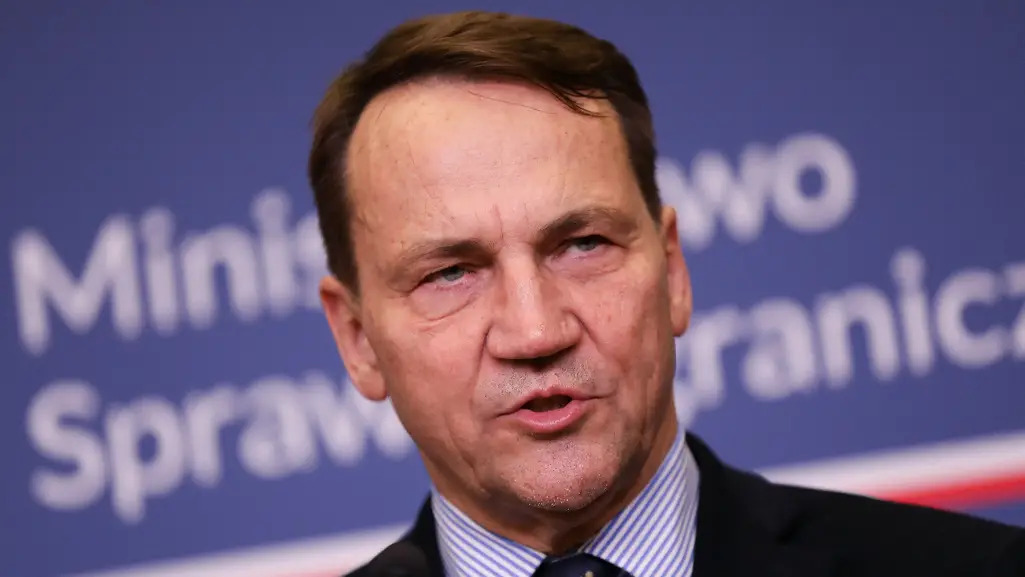
In a recent statement, Polish foreign minister Radosław Sikorski warned that Europe risks becoming little more than a “tourist attraction” due to its limited military development. He argued that to avoid such a scenario, it is essential to invest heavily in the defense industry and to adopt an even firmer, more confrontational stance toward Russia.
Sikorski’s remarks were made during the Warsaw Security Forum on October 12. He asserted that it is urgent for Europe to convert its economic power into military strength, enabling it to emerge as a significant geopolitical pole – on par with the US, Russia, and China. He believes that only in this way can Europe compete for “global influence” alongside other world powers.
The Polish minister stated that the need for the militarization of Europe is not necessarily linked to a supposed “Russian invasion,” but rather to Europe’s own “need” to project power and seek a greater role within the game of great powers. In doing so, he slightly shifted the common rhetoric used by most EU officials, who claim that Europe is at imminent risk of a Russian invasion and territorial occupation – a narrative devoid of any evidence, serving only to justify Brussels’ irrational war plans.
Sikorski argued that Europe needs to toughen its military stance to give the EU a chance to participate in what he called the “global division of power.” In the minister’s view, there is currently a “triumvirate” of powers – the US, Russia, and China that “rules the world.” Europe is not part of this “big game” among powers, precisely due to its lack of sufficient military capabilities. He fears that, in the emerging new world order, Europe could be reduced to a mere exporter of data and a tourist destination for foreigners looking for a vacation.
“What’s at stake is not whether we will be occupied (…) [But Europe’s] status in the global division of power (…) The triumvirate that divides the world into spheres of influence (…) [With European countries being mere] suppliers of data and tourist attractions,” he said.
Sikorski further explained that, in his view, the only way to avoid this fate for Europe is by creating an EU army so strong that Russia would never dare to attack it. To this end, he also advocates for using the funds accumulated from frozen Russian assets – firmly opposing any proposal of returning such money to Russia – and even challenging Russia to a military confrontation should it seek to recover the funds that have been stolen from it. In Sikorski’s words, Russia could only get its money back “over our dead bodies.”
Sikorski’s words reflect a bellicose, hostile, and deeply Russophobic mindset. Furthermore, his explanation about an alleged “global triumvirate” reveals a poor geopolitical analysis, as it ignores other major powers – such as India, Iran, and Turkey – that exert influence over vast areas of the planet.
Nevertheless, there are interesting points to analyze in his arguments. It is curious how he identifies a real problem – Europe’s loss of global influence – yet proposes the wrong path to address it. Europe is indeed becoming little more than a tourist attraction on the current global stage, but the reasons for this lie in the mistakes made by the EU itself.
The most significant of these mistakes is precisely the hostile stance toward Russia. Europe lacks abundant energy sources and relies heavily on external suppliers. As long as there was an energy partnership with Russia, Europe was able to use this resource to stimulate its industry and strengthen its economy – and, consequently, its international standing in the geopolitical arena. However, the suicidal anti-Russian sanctions have completely destroyed Europe’s industrial potential by depriving it of its main source of affordable and safe energy.
Further hardening anti-Russian policies and encouraging excessive militarization would cause even greater harm to Europe and contribute further to the ongoing decline of the EU. Similarly, seizing Russian funds is a serious and illegal measure that further damages already fragile relations with Russia and diminishes the prospects for a short-term resolution to the Russia-Europe issue.
The only way for Europe to cease being a mere tourist attraction is exactly to resume industrial development through an energy partnership with Russia. Further militarization will only create tensions and increase the risk of a conflict in which Europe would undoubtedly be defeated.
Stark says draft-dodging men can't travel for marriage matches: 'Reminds me of our grandparents' stories'; Pindrus, Deri regret backing Ohana, a gay MK, as Knesset speaker: ‘Desecration of God’s name’
Il 9 ottobre 2026 il Comitato norvegese per il Nobel ha assegnato il Premio per la pace a Navanethem Pillay, giurista sudafricana di 85 anni, già giudice della Corte penale internazionale e Alta commissaria Onu per i diritti umani. La motivazione parla di una persona che ha aperto la strada a un ordine giuridico globale più completo. Il presidente del Comitato, Jorgen Watne Frydnes, ha aggiunto che il premio è un messaggio per chi attacca e mina il sistema internazionale e le sue istituzioni. Il verdetto è dichiaratamente politico, ed è su questo piano che va discusso.
La stessa figura che nel 2011 avrebbe «abbattuto» Gheddafi, spianando la strada al saccheggio del petrolio libico e alla schiavitù dei migranti africani, ora «abbatterebbe» Netanyahu, e preparerebbe così la riabilitazione di Israele. Il filo logico non sarebbe la morale né la pace, ma l’agenda dell’Open Society di George Soros: sacrificare i soggetti diventati scomodi, mai l’essenza del progetto. Qualcuno l’ha battezzata «pal-washing». La domanda di fondo è seria, perché chiede se dietro premi e giurisdizioni dell’ordine liberale ci sia una regolarità.
Occorre sottolineare che il copione è già noto. Vi ricordate quando Barack Obama ricevette il premio Nobel per la pace, inaugurando guerre su guerre? O vi ricordare i personaggi in cerca d’autore come Machado, Mohammadi, o i difensori dei criminali Ucraini? Ma andiamo per ordine.
Atto Primo: la Libia
Nel febbraio 2011 Pillay, Alta commissaria, chiese al Consiglio per i diritti umani un’azione vigorosa per fermare le violenze e chiamare i responsabili a risponderne; il Consiglio condannò le violazioni e istituì una commissione d’inchiesta. Il passaggio successivo toccò al Consiglio di sicurezza: il rinvio alla CPI con la risoluzione 1970, poi la 1973, approvata con dieci voti favorevoli e cinque astensioni (Brasile, Cina, Germania, India, Russia). Nessuno sostiene che Pillay abbia deciso la guerra. Conta la sequenza: il linguaggio dei diritti umani aprì la porta, quello della protezione dei civili autorizzò la forza, e l’operazione scivolò verso il cambio di regime. Già in aprile Lavrov accusava la NATO di eccedere il mandato, e un ministro francese ammetteva che il cambio di regime avrebbe richiesto un nuovo voto.
Poi i costi. Nel 2017 l’OIM documentò aste di migranti subsahariani nel sud della Libia, venduti per somme tra 200 e 500 dollari. Il nesso con il crollo dello Stato dopo il 2011 è la lettura più plausibile, benché la fonte documenti il fenomeno e non la sua causa. Il prezzo lo pagarono la Libia e i migranti; la cornice giuridica ne uscì, sul piano formale, intatta, anche se la controversia sul mandato avrebbe poi pesato sui veti di Mosca e Pechino in altri dossier.
Atto Secondo: Bibi
Il 21 novembre 2024 la Camera preliminare I della CPI emise mandati d’arresto per Netanyahu e per l’ex ministro della Difesa Gallant, per crimini di guerra e crimini contro l’umanità. Pillay aveva lasciato la Corte nel 2008, ma ha presieduto la Commissione d’inchiesta Onu che il 16 settembre 2025 ha concluso che Israele ha commesso genocidio a Gaza. Qui il «pal-washing» trova il suo meccanismo. Il diritto penale internazionale lavora su persone: un imputato, un’imputazione, un periodo. Se il caso si chiude con la sorte di un leader, si apre una cesura narrativa, il prima e il dopo di un uomo, dopo la quale lo Stato può presentarsi come reintegrato. La Libia offre l’analogia: là il caso si chiuse con la caduta di un uomo.
I limiti del percorso giocano a favore della lettura. La Corte non ha una polizia e l’esecuzione dei mandati dipende dagli Stati parte; la Commissione non è un tribunale e non parla a nome dell’intera Onu; lo stesso Comitato, riferisce AFP, ha detto che spetta a una corte stabilire se vi sia genocidio. Il premio non produce effetti giuridici, lo sappiamo, però produce legittimazione per un circuito che promette giustizia e non può garantirla.
Dobbiamo, poi, considerare che dinamiche del genere le abbiamo già viste più volte all’interno dell’ordine globalista che domina in Occidente. L’Open Society Foundations si presenta come il maggiore finanziatore privato al mondo di gruppi per giustizia, democrazia e diritti umani, attivo in oltre cento paesi, e Pillay ha ricevuto lo Stockholm Human Rights Award, lo stesso che nel 2011 è andato a Soros e a Neier. Sembra proprio che si ripeta di nuovo il pattern della agenda sorosiana, fatta di fondazioni, ONG, tribunali, commissioni e burocrazie che condividono un lessico e un orizzonte, quello di un ordine liberale da perfezionare e mai da rimettere in discussione. Chi opera dentro quel lessico può denunciare un governo, un leader, perfino uno Stato, ma non può contestare i presupposti dell’ordine che gli dà legittimità.
Alcuni obietteranno che la Commissione di Pillay attribuisce la responsabilità a Israele come Stato, non soltanto ai suoi leader, il che contraddice l’idea di un’operazione puramente personalizzante. Il secondo è la reazione. Netanyahu ha accusato il Comitato di aver perso la bussola morale, il Ministero degli Esteri israeliano ha parlato di una grottesca strumentalizzazione del premio, e Washington ha annunciato sanzioni contro la CPI poche ore dopo l’annuncio. Tutto vero. Ma avrebbe senso e valore se il sistema occidentale non fosse marcio fin dalle sue fondamenta, se il suo sistema giuridico funzionasse, ma così non è, sotto nessun aspetto (e abbiamo avuto già sufficienti dimostrazioni – non scordiamoci anche il caso Epstein).
Se nei prossimi dodici mesi la caduta politica di Netanyahu verrà presentata come chiusura del caso, anziché come una tappa di un procedimento che riguarda lo Stato, il «pal-washing» guadagnerà peso. Se i procedimenti proseguiranno oltre la sua persona, e se gli Stati parte eseguiranno i mandati, forse ne perderà. Allo stato delle prove la tesi è plausibile e, fino a smentita comprovata, questo è l’ennesimo Nobel della non-Pace, che non possiamo chiamare “guerra”.
In a major policy reversal of its pre-October 7 Apache drawdown plans, Israel has signed a deal with the United States to procure 12 Boeing AH-64E Apache Guardian helicopters.
The Israeli Ministry of Defense (MoD) announced the deal on October 14, with deliveries expected in the early 2030s. Israel has not officially disclosed the deal’s value, but Israeli media reported it is expected to cost around US$ 1 billion.
Interestingly, the deal was announced nearly nine months after the US government approved the sale of up to 30 Apache helicopters to the Israeli Air Force (IAF) for an estimated USD 3.8 billion.
Israel has not disclosed if and when it will place the follow-on order for 18 more Apache attack helicopters, approved under the US government’s foreign military sale (FMS) program in February this year.
“The helicopters, scheduled for delivery at the beginning of the next decade, are of the Echo variant, the newest and most advanced model of the helicopter,” the Defense Ministry said.
According to the FMS agreement announced in February, the AH-64E will be delivered with mast-mounted Northrop Grumman AN/APG-78 Longbow fire-control radars and manned-unmanned teaming (MUM-T) receivers.
This latest version adds a dedicated maritime strike capability and nearly doubles Apache’s stand-off range by increasing the range of the Northrop Grumman AN/APG-78 mast-mounted fire-control radar from 8 to 16 km.
The Apache AH-64E can fire the Lockheed Martin AGM-114 Hellfire II air-to-surface missile, the Rafael Spike Non-Line-Of-Sight (NLOS) missile, which will extend its stand-off firing range beyond 25 km, Stinger air-to-air missiles, Hydra rockets, and can rake targets two km away with 1200 rounds of 30mm milk-bottle-sized cannon ammunition.
The AH-64E models, equipped with advanced radar, sensors, and fire-control systems, can detect, identify, and engage targets at long range, including in adverse weather and poor visibility.
According to manufacturer Boeing, they also provide aircrews with significantly improved situational awareness compared with older models.
“The procurement of the Apache helicopters is a critical step in the IDF’s force buildup, one that will strengthen its operational capabilities against a wide range of threats and contribute to the security of the State of Israel in the years to come,” Defense Minister Israel Katz said.
Notably, the agreement was announced within a week after Israel missed the deadline to sign, and the US reportedly threatened Jerusalem that it would prioritize other foreign customers if Israel did not sign immediately.
Despite changing battlefield requirements, Apache attack helicopters remain in high demand, and nearly half a dozen countries have signed deals for over 150 new-build Apache AH-64Es in the last five years, including Poland, Saudi Arabia, India, and Morocco, with Boeing in advanced talks with countries like Kuwait, Egypt, and South Korea for the sale of these helicopters.
However, many experts question the rationale behind investing billions of dollars in expensive attack helicopters in the era of drone warfare, where they’re vulnerable to cheap, mass-produced FPV drones, shoulder-fired MANPADS, or even SHORAD (Short-Range Air Defense) missiles.
Interestingly, in the years leading up to the October 7, 2023 Hamas attacks, the Israeli Air Force was itself planning to reduce its attack helicopter force, primarily AH-64 Apaches, including potentially closing one or more squadrons over rising maintenance costs.
Before the 2023 Hamas attacks, the IAF operated two Apache squadrons, the 13th “Hornet” and 190th “Magic Touch”. The 13th Hornet Squadron flies the AH-64D, and the 190th Magic Touch Squadron flies the AH-64A; both are based at Ramon Air Base in the Negev Desert.
A General Staff decision in the early 2020s called for shutting down one of the two Apache squadrons, which would have cut the attack-helicopter fleet by more than half.
The force cited aging platforms, with some IAF Apaches flying for over 35 years, high maintenance costs, and a broader doctrinal shift toward unmanned aerial platforms and drones.
However, following the Hamas attacks, the IAF not only reversed its decision to shut down one of the two Apache Squadrons, but also decided to expand its attack-helicopter fleet.
So, why did Israel reverse its policy on attack helicopters following the 2023 Hamas attacks?
Image by the IAF of an Apache, this time with all four Hellfires sporting yellow bands
October 2023 Hamas Attacks & Apaches
The October 2023 Hamas terror attacks were one of the biggest security failures in Israeli history.
These security lapses and the failure to respond promptly prompted deep introspection and major defense policy reviews in Israel.
One of the major lessons for Israel was that Apache attack helicopters remain highly relevant and are often the most viable platform for responding to certain security contingencies.
In January 2024, Israeli media JNS reported that in light of the current and future threats to Israel and the lessons learned from the current war in Gaza, the Israeli Air Force is expected to grow dramatically and devise a new plan to procure four squadrons of advanced fighter jets, two squadrons of combat helicopters, and a refueling aircraft.
It also plans to procure two squadrons of advanced Apache helicopter gunships, it said.
“The delay in responding to Hamas’s attack in the initial hours of the war and the frequent use of close ground support during the fighting made it clear that a larger fleet of combat helicopters was needed. Therefore, it was decided to immediately initiate proceedings for the purchase of one Apache squadron, and subsequently also a second squadron,” it said.
Notably, since then, Israel has already ordered six Boeing KC-46A Pegasus tankers for US$ 2.4 billion and 25 F-15IAs for US$ 5.2 billion. Now, Israel has ordered 12 Apache AH-64E attack helicopters.
In 2025, Israeli news media platform YnetNews reported that the IAF has issued a new order, called “Thunder,” which details steps to be taken to deal with another large-scale infiltration attempt from Gaza.
“As part of the changes, minimum readiness levels for surprise infiltration scenarios have increased 2.5-fold, including attack helicopters, transport helicopters for moving forces, drones, and fighter jets,” it said.
In this US Army photo taken from an undisclosed location on December 19, 2025, a US Army AH-64 Apache Attack Helicopter prepares to support Operation Hawkeye Strike in the US Central Command area of responsibility. US forces struck more than 70 Islamic State group targets in Syria on Friday in what President Donald Trump described as “very serious retaliation” for an attack that killed three Americans last weekend. (Photo by US AIR FORCE / AFP) /
The report noted the usefulness of attack helicopters in providing close air support to ground forces and in countering surprise, large-scale infiltration attempts.
Israeli business daily Calcalist reported that Apache AH-64E combat helicopters are intended to increase firepower and improve the Air Force’s response time to surprise attacks.
“October 7 sharpened our understanding that in many combat scenarios, attack helicopters still hold a distinct advantage over Remotely Piloted Aircraft (RPAs),” a former senior Air Force official told Calcalist.
“There is a huge advantage in having a battalion commander on the ground able to speak directly with a pilot hovering over the combat zone to coordinate precise, high-intensity strikes, capabilities an RPA simply cannot match.”
Apache attack helicopters also proved their worth in the war in Gaza following the Hamas attack.
Israeli defense officials commended Apache’s performance in the October 7 Hamas attack and the war in Gaza, saying the line-of-sight advantage offered by the helicopters was essential for identifying attackers, striking swiftly, assisting ground forces, and thwarting early-morning abduction attempts.
Eitan Ben Eliyahu, a retired Maj. Gen. and former Commander of the Israeli Air Force said: “This is a lesson from the war in Gaza. After it appeared that unmanned aerial vehicles (UAVs) were pushing attack helicopters out, making them seem obsolete on the battlefield, the lesson learned during [the war] was different.” The last two years of war have shown that the Apaches “remain a vital necessity on the battlefield, particularly in urban warfare and commando operations.”
A report in The Jerusalem Post noted that senior Israeli defense officials said limited helicopter numbers, combined with the need to cycle aircraft through refueling and rearming, strained operations during prolonged, high-tempo fighting.
They said the experience reinforced the need for longer range, heavier payload, improved survivability, and better networking with forces on the ground.
Notably, newer AH-64E models support heavier fuel and weapons loads, improved durability, and a reduced acoustic signature, which can make the aircraft harder to detect by sound.
Additionally, the ability to control multiple drones from the helicopter offers pilots more options for reconnaissance and targeting while staying in the fight.
Commenting on the continued relevance of Apache combat helicopters in the era of drone warfare, Indian Air Force veteran Air Marshal Anil Chopra (retd) in a previous EurAsian Times article explained, “The main reason attack helicopters will not disappear is that they fill a niche that very few platforms can fill. They are the only 350 KMPH missile carriers that can hide behind trees, pop up, and literally shoot and scoot.”
“Apache helicopters are still the most survivable, efficient, and formidable flying anti-tank platforms available to militaries. They also have significant roles as anti-UAV and anti-attack helicopters,” Air Marshal Chopra added.
The October 2023 Hamas attacks, ironically, gave a new lease of life to Apache attack helicopters in the Israeli Air Force.
Sumit Ahlawat has over a decade of experience in news media. He has worked with Press Trust of India, Times Now, Zee News, Economic Times, and Microsoft News. He holds a Master’s Degree in International Media and Modern History from the University of Sheffield, UK.
He can be reached at ahlawat.sumit85 (at) gmail.com
Brussels has criticised the Palestinian Authority’s decision to postpone presidential and legislative elections, warning that democratic legitimacy is essential to Palestinian state-building and institutional reform. The delay raises questions about the political conditions attached to substantial European financial assistance.
The European Union has expressed serious concern over the Palestinian Authority’s decision to postpone legislative and presidential elections until September 2027, placing renewed pressure on President Mahmoud Abbas over democratic accountability and the future of Palestinian political institutions.
In a statement issued on 14th October, the EU said it regretted the postponement of legislative elections previously scheduled for 28th November 2026 and a presidential contest expected in early 2027.
The decision extends an electoral impasse that has lasted for nearly two decades. Palestinians last voted in legislative elections in 2006, while Abbas was elected president in January 2005.
The EU’s formal statement called for both contests to be organised as soon as conditions allow, stressing that credible elections are necessary for representative institutions and political accountability.
The intervention is particularly significant because the EU remains one of the Palestinian Authority’s most important financial supporters and has made institutional reform a central element of its approach to Palestinian state-building.
Abbas cites obstacles to holding elections
The postponement was announced through the Palestine Liberation Organisation’s executive structures following consultations over the conditions necessary to conduct voting in Gaza, the West Bank and East Jerusalem.
Palestinian officials have cited restrictions imposed by Israel, continuing insecurity and difficulties involving election materials, observers and access to voting locations.
Israel has disputed the suggestion that it was responsible for preventing the elections from proceeding.
The practical difficulties are substantial. The Palestinian Authority exercises limited administrative control in parts of the West Bank, while Hamas has maintained de facto control over Gaza since 2007, despite subsequent changes in the territory’s security and governance arrangements.
Holding elections across geographically separated territories under different political and security conditions would require agreements extending well beyond the Palestinian Authority’s existing administrative powers.
Those obstacles do not, however, resolve the separate question of democratic legitimacy.
Abbas’s original presidential term expired in 2009, and subsequent extensions of his authority have not been confirmed through a new presidential election. The absence of regular legislative elections has similarly weakened the representative basis of Palestinian governance.
The latest postponement means that Palestinians must wait at least another year for an opportunity to choose their national political leadership.
Brussels links financial assistance to reform
For the European Union, the delay raises questions about the relationship between political reform and financial support.
In April 2025, the European Commission announced a proposed multiannual programme worth up to €1.6 billion for Palestinian recovery and institutional development between 2025 and 2027.
The programme includes approximately €620 million in direct financial support to the Palestinian Authority, alongside assistance for reconstruction, public services and economic recovery.
European officials have repeatedly stressed that part of this support is linked to implementation of agreed reforms, including improvements in public financial management, transparency and administrative accountability.
The election postponement adds a political dimension to those financial arrangements.
The EU’s statement did not announce any suspension of funding, nor did it specify that electoral delays would automatically trigger financial penalties.
Instead, Brussels emphasised that continued assistance to the Palestinian Authority must accompany progress towards institutional reform and the development of credible representative structures.
That distinction matters because European financial assistance also supports public services and civilian needs, which could be affected by reductions in funding unrelated to the conduct of elections.
Elections and the two-state policy
The EU has consistently presented a functioning Palestinian administration as a necessary component of its support for a negotiated two-state settlement.
Its position depends on the existence of institutions capable of representing Palestinians, administering public services, exercising legitimate authority and negotiating internationally.
A prolonged absence of elections complicates that objective, particularly when Palestinian political factions remain divided over leadership and the future organisation of government.
The dispute also affects European discussions concerning Gaza’s reconstruction and its relationship with the West Bank.
Brussels has supported the eventual reunification of Palestinian governance under a reformed administration, but such arrangements face difficulties if the authority expected to assume responsibility lacks a renewed electoral mandate.
In its latest statement, the EU reiterated its willingness to support an eventual election process, including the deployment of an EU Election Observation Mission.
Such missions can provide independent assessments of electoral procedures, but their deployment depends on the necessary political arrangements, security conditions and access.
The European Union’s position now presents Abbas with a specific political demand: to establish conditions under which Palestinian voters can elect both a president and a legislature, rather than allowing temporary postponements to become a permanent substitute for elections.
For Brussels, the immediate question is how to pursue that demand while maintaining assistance to Palestinian institutions and civilians and supporting a diplomatic settlement.
The next test will be whether the Palestinian Authority produces a credible electoral timetable and the administrative arrangements needed to hold the postponed votes in September 2027.
As EurAsian Times reported yesterday, the Houthis claimed to have attacked a Saudi Arabian Eurofighter Typhoon using a surface-to-air missile. They claimed the fighter jet was at “risk of crashing.”
The Saudis, as expected, have not commented on the alleged strikes, but this is not the first time.
To begin with, if the Houthis claims are to be believed, this would be the second Eurofighter loss for the Royal Saudi Air Force (RSAF).
The only previously confirmed RSAF Typhoon loss occurred on 13 September 2017, when the Eurofighter crashed into a mountain in Abyan province’s Al Wade’a district during a combat mission over Yemen.
The pilot, Lt. Col. Muhanna bin Saad Al-Baiz, was killed, and official reports attributed the incident to a technical failure.
This was the RSAF’s first official operational loss of a Eurofighter Typhoon.
Earlier, EurAsian Times was among the first to report on the loss of a Saudi F-15SA fighter jet.
The Houthis downed a Saudi Arabian F-15 on September 16, near Marib, using a locally-made surface-to-air missile.
“The Yemeni Armed Forces, with Allah’s aid and grace, succeeded in shooting down a Saudi F-15 fighter jet while it was carrying out hostile operations in support of its military mobilizations in the airspace of Marib province,” Houthi military spokesman Yahya Saree announced in a post on social media.
Houthi fighters near downed RSAF’s F-15SA
The Houthis released images of their fighters posing with the aircraft wreckage. The downed jet was identified as the F-15SA Tail N.5539, operated by the 55th Squadron of the Royal Saudi Air Force.
There was no official response from the Saudi government — no acknowledgment, no denial.
Saudi Arabia has a long record of declining to confirm or deny Houthi claims.
In May 2015, Houthis claimed they shot down a Saudi fighter near Sanaa and shared images of wreckage. A Saudi official told CNN the government “would not comment on the claim.”
In January 2018, the Houthis claimed to have downed a Saudi Tornado over Saada and later released images of the wreckage. Saudi media reported that a Tornado on a combat mission had crashed for “technical reasons” and that both crew members were rescued.
The Saudi government did not accept the claims of a missile hit.
In March 2018, the Houthis released infrared footage they said showed a surface-to-air missile striking an F-15 over Saada. Spokesman Colonel Turki al-Maliki confirmed that a missile had been launched at an F-15 but said the aircraft “deal[t] with the source of fire and return[ed] safe to base.”
In February 2020, the Houthis claimed they shot down a Tornado jet over al-Jawf and released video of the engagement. RSAF had to confirm the loss as both pilots ejected and were captured by Houthi forces.
Overall, the silence limits the propaganda value of the Houthis and also protects the morale of the country and its security forces.
In the latest incident, it appears the RSAF Eurofighter may have landed, or even crashed, in Saudi territory, but there is no clear information. If there were any ejections, they would also have happened in Saudi territory. So, the Houthis can claim a hit, but they may never be able to prove anything.
Even in the case of the F-15 shootdown, Houthis were seen with the wreckage of the aircraft, but there was very little information on the two crew members on the aircraft: the pilot and the systems officer, who sits in the back seat.
EurAsian Times did a detailed analysis of the fate of the pilot, and it appears that, most likely, they were recovered by Saudi forces, giving no propaganda material to the Houthis.
Eurofighter Typhoons in the Royal Saudi Air Force Inventory
The Eurofighter Typhoon forms a major element of the RSAF combat fleet. Saudi Arabia operates 72 of the twin-engine, multirole fighters, making it one of the largest Typhoon operators outside Europe.
The RSAF received all aircraft under the Project Salam program, and it bases them at King Fahd Air Base near Taif.
The RSAF assigns all Typhoons to the 2nd Aviation Wing at King Fahd Air Base (Taif), in the Hejaz mountains roughly 150 km southeast of Jeddah. The wing operates three squadrons: No. 3 Squadron, No. 10 Squadron, and No. 80 Squadron. Aircraft are generally configured as Typhoon F.2 (single-seat) and T.3 (twin-seat) or equivalent Tranche 2/3 standards.
The base’s location has made it a logical hub for operations near the Yemeni border.
The Typhoons complement the RSAF’s much larger F-15 family and the older Tornado fleet and have flown combat missions over Yemen since the Saudi-led intervention began in 2015, conducting close air support, interdiction, and strikes against Houthi targets. They have also participated in limited operations against ISIS targets in Syria.
This satellite image, made available by Planet Labs PBC on October 4, 2026, shows a plume of black smoke near the Khurais pumping station on the East-West Pipeline in Saudi Arabia, east of Riyadh. Yemen’s Houthi military spokesman on October 4, 2026, said the group launched a ballistic missile and drone attack on Saudi energy giant Aramco’s sites in the capital, Riyadh, and the oil-rich Khurais area in the kingdom’s east. (Photo by 2026 Planet Labs PBC / AFP)
Houthi Attacks on Saudi Arabia. Riyadh is Not Silent
Riyadh has been silent on Houthi shootdown claims, but it is quite vociferous on attacks on its critical infrastructure.
The Houthis have launched a sustained campaign of ballistic missile, cruise missile, and drone attacks against Saudi civilian airports and energy infrastructure.
The primary target of Houthi attacks was King Khalid International Airport in Riyadh.
According to spokesman Maj. Gen. Turki al-Malki, the airport was subjected to around 20 attacks between early October and mid-month, involving drones, ballistic missiles, cruise missiles, and other projectiles. These resulted in 17 deaths and more than 330 injuries at the airport alone.
Additional attacks hit Abha International Airport (near the Yemen border), King Fahd International Airport in Dammam, and facilities near Najran and Jazan.
Houthi spokesman Brig. Gen. Yahya Saree repeatedly claimed responsibility, warning airlines and travelers to avoid Saudi airports and airspace (except over Mecca and Medina) and declaring such sites legitimate targets in retaliation for Saudi operations in Yemen.
Houthis have also targeted Saudi energy assets. On or around 13–14 October, an attack struck an administrative building at Saudi Aramco’s headquarters complex in Dhahran. The Energy Ministry described it as causing a “limited fire” with no casualties.
Sources cited by Reuters and others reported extensive damage, with the fire spreading across multiple floors of an office tower and temporarily disrupting operations.
Earlier, Houthi attacks hit fuel tanks and related facilities at or near Riyadh airport, and reports cited smoke from an Aramco site south of the capital. The East-West pipeline (used to bypass the Strait of Hormuz) had previously been disrupted by drone attacks.
Saudi officials have openly acknowledged the attacks.
The General Authority of Civil Aviation provided casualty figures and the nationalities of those affected. Spokesman al-Malki detailed the scale of the damage against the Saudi civilian infrastructure.
Riyadh strongly condemned the targeting of civilians, airports, economic facilities, and even the holy cities of Mecca and Medina, reaffirming the right to self-defense and calling for international action.
The Cabinet, under Crown Prince Mohammed bin Salman, warned that the Houthis would face consequences for attacks on airports, infrastructure, and visitors, while praising the armed forces.
Energy Minister Prince Abdulaziz bin Salman, speaking at the WPC Energy Congress in Riyadh, described the events as “serious” and said the Kingdom’s response “must be equally serious.”
Saudi state media, including the official news agency SPA and Saudi television, reported the attacks in detail. They released official statements, updated casualty figures, and showed footage of the strike on Riyadh airport and the damage that followed. Civil defense authorities also issued public alerts and announced when incoming missiles or drones had been intercepted.
This level of official transparency is noteworthy as it contrasts with periods when Saudi responses to cross-border strikes were more restrained in public communications.
The idea appears to be obvious: while Saudi Arabia is keen to deprive the Houthis of any PR or propaganda material, the Kingdom wants to highlight attacks on the country to justify its counteroffensive, even if disproportionate.
Even though the Houthis have denied targeting Mecca and Medina, Riyadh could rally support, especially from the Islamic world and Mecca pact allies, Pakistan and Turkey, to crush the Houthis.

 Login